Dhanteras Mantra
मृत्युना पाशदण्डाभ्यां कालेन श्यामया सह । त्रयोदश्यां दीपदानात् सूर्यजः प्रीयतां मम ॥Also known as Yama Deepdaan Mantra
In Devanagari, Tamil, Telugu, Kannada, Malayalam and English — with the meaning of every word, and the one syllable most people pronounce wrongly.
 The Dhanvantari Homam, performed for youBook →
What the Dhanteras Mantra is
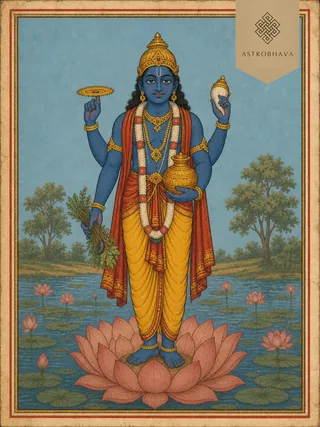
The Dhanteras mantra most families say is really two texts, one for each of the observances that share the evening of Dhanatrayodashi, the thirteenth day of the dark fortnight of Kartika. Verse 1 is the Yama-deepadana shloka, spoken while a lamp is set out facing south for Yama, the son of the Sun. Rite manuals head it as a verse of the Skanda Purana, and a near twin of the line also stands in the Uttara Khanda of the Padma Purana. In two short lines it names the whole company the lamp is offered to, Mrityu, Yama's noose and staff, Kala and Shyama, and asks that Yama be pleased. Mantra 1 belongs to the second observance, Dhanvantari Jayanti, kept on the same tithi. It is a long namaskara mantra from the traditional manuals that greets Vasudeva as Dhanvantari, the bearer of the nectar pot whom it calls the destroyer of every ailment, and closes by saluting Maha Vishnu himself.
A lamp at the door for Yama
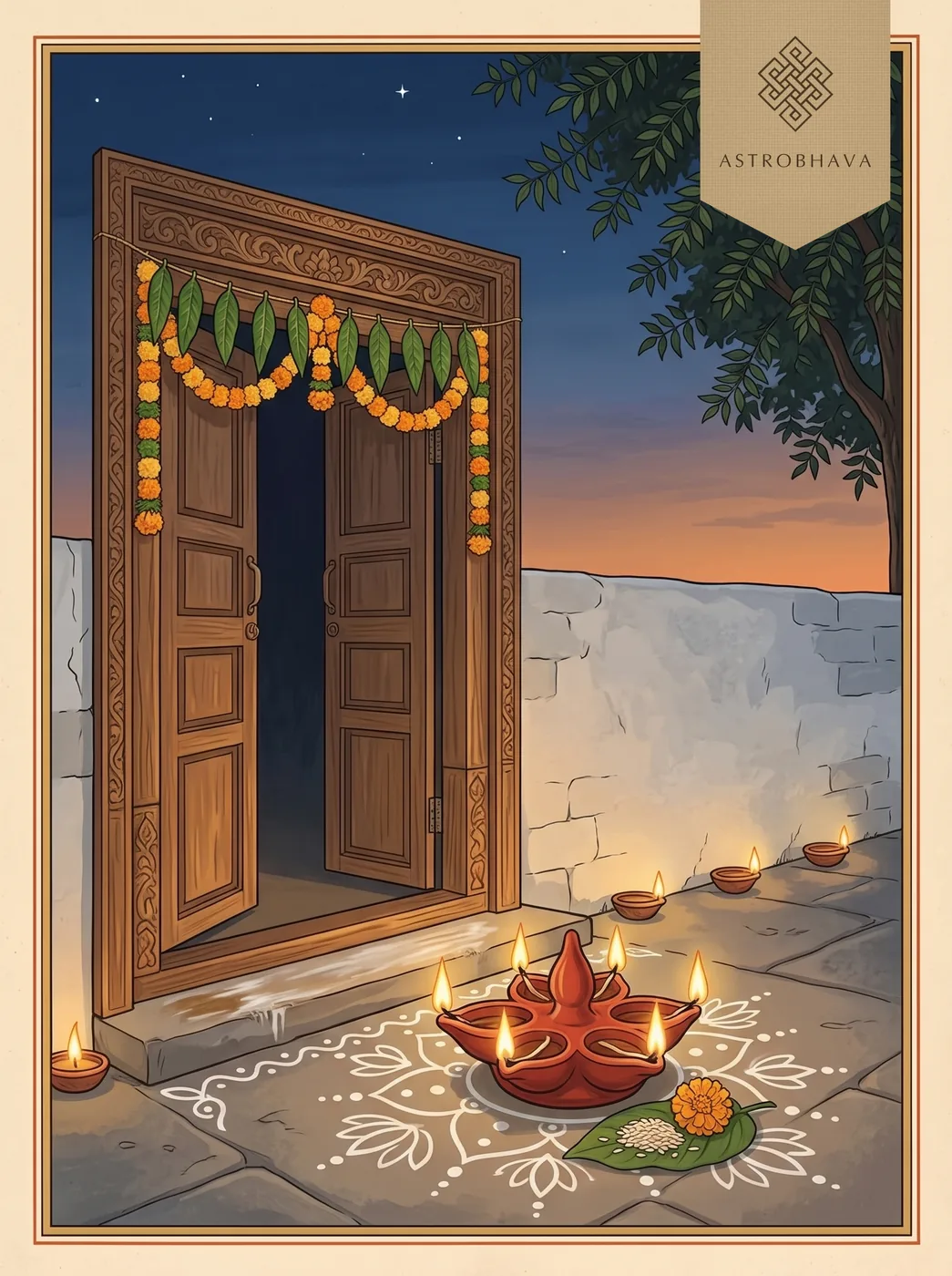
The Skanda Purana, in its chapter in praise of the month of Kartika, has Brahma set out the festival days that run from the thirteenth of the dark fortnight to the new moon. For the first of them he prescribes a lamp offered to Yama at the main door at pradosha, the hour after sunset, together with a food offering, so that, the chapter says, no one in the family is taken by an untimely death. The words given there are those of this verse, ending in the prayer that the son of the Sun be pleased by the gift of a lamp on the trayodashi. Household practice keeps that outline closely. A single earthen lamp, often with four faces or wicks, is placed outside the entrance with its flame turned south, the quarter that belongs to Yama, and many households count it among thirteen lamps lit around the house that evening. According to a story widely told on the day, a prince was foretold to die of snakebite on the fourth night of his marriage. Yama came in serpent form, found the doorway blazing with lamps and heaped with ornaments, and sat listening to the bride's songs until the fatal hour had gone by. The Purana itself gives the rule without the tale.
The mantra, in six scripts
- मृत्युना
- mṛtyunā — with Mrityu (Death)
- पाशदण्डाभ्यां
- pāśadaṇḍābhyāṃ — with the noose and staff
- कालेन
- kālena — with Kala (Time)
- श्यामया
- śyāmayā — with Shyama
- सह
- saha — together
- त्रयोदश्यां
- trayodaśyāṃ — on the thirteenth lunar day
- दीपदानात्
- dīpadānāt — by the gift of a lamp
- सूर्यजः
- sūryajaḥ — the Sun-born one (Yama)
- प्रीयतां
- prīyatāṃ — may he be pleased
- मम
- mama — with me
- ॐ
- oṃ — Om
- नमो
- namo — salutations
- भगवते
- bhagavate — to the Blessed One
- वासुदेवाय
- vāsudevāya — to Vasudeva
- धन्वन्तरये
- dhanvantaraye — to Dhanvantari
- अमृतकलशहस्ताय
- amṛtakalaśahastāya — who holds the nectar pot
- सर्वामयविनाशनाय
- sarvāmayavināśanāya — destroyer of all ailments
- त्रैलोक्यनाथाय
- trailokyanāthāya — master of the three worlds
- श्रीमहाविष्णवे
- śrīmahāviṣṇave — to Sri Maha Vishnu
- नमः
- namaḥ — salutations
Dhanteras Mantra lyrics in full
The Yama-deepadana verse in the form recited at the doorway lamp, followed by the long Dhanvantari namaskara mantra.
All 2 verses, in Sanskrit, Tamil, Telugu, Kannada, Malayalam and English, each with its meaning. Choose a script:
Download the Dhanteras Mantra PDFAll 2 verses with their meanings, in Sanskrit. Free to print and keep.
मृत्युना पाशदण्डाभ्यां कालेन श्यामया सह ।
त्रयोदश्यां दीपदानात् सूर्यजः प्रीयतां मम ॥
ம்ருத்யுநா பாஶதண்டாப்யாம் காலேந ஶ்யாமயா ஸஹ ।
த்ரயோதஶ்யாம் தீபதாநாத் ஸூர்யஜஃ ப்ரீயதாம் மம ॥
మృత్యునా పాశదణ్డాభ్యాం కాలేన శ్యామయా సహ ।
త్రయోదశ్యాం దీపదానాత్ సూర్యజః ప్రీయతాం మమ ॥
ಮೃತ್ಯುನಾ ಪಾಶದಣ್ಡಾಭ್ಯಾಂ ಕಾಲೇನ ಶ್ಯಾಮಯಾ ಸಹ ।
ತ್ರಯೋದಶ್ಯಾಂ ದೀಪದಾನಾತ್ ಸೂರ್ಯಜಃ ಪ್ರೀಯತಾಂ ಮಮ ॥
മൃത്യുനാ പാശദണ്ഡാഭ്യാം കാലേന ശ്യാമയാ സഹ ।
ത്രയോദശ്യാം ദീപദാനാത് സൂര്യജഃ പ്രീയതാം മമ ॥
mṛtyunā pāśadaṇḍābhyāṃ kālena śyāmayā saha |
trayodaśyāṃ dīpadānāt sūryajaḥ prīyatāṃ mama ||
By this gift of a lamp on the thirteenth lunar day, may Yama, the son of the Sun, be pleased with me, together with Mrityu (Death), his noose and staff, Kala (Time) and his consort Shyama.
ॐ नमो भगवते वासुदेवाय धन्वन्तरये अमृतकलशहस्ताय सर्वामयविनाशनाय त्रैलोक्यनाथाय श्रीमहाविष्णवे नमः ॥
ௐ நமோ பகவதே வாஸுதேவாய தந்வந்தரயே அம்ருதகலஶஹஸ்தாய ஸர்வாமயவிநாஶநாய த்ரைலோக்யநாதாய ஶ்ரீமஹாவிஷ்ணவே நமஃ ॥
ఓం నమో భగవతే వాసుదేవాయ ధన్వన్తరయే అమృతకలశహస్తాయ సర్వామయవినాశనాయ త్రైలోక్యనాథాయ శ్రీమహావిష్ణవే నమః ॥
ಓಂ ನಮೋ ಭಗವತೇ ವಾಸುದೇವಾಯ ಧನ್ವನ್ತರಯೇ ಅಮೃತಕಲಶಹಸ್ತಾಯ ಸರ್ವಾಮಯವಿನಾಶನಾಯ ತ್ರೈಲೋಕ್ಯನಾಥಾಯ ಶ್ರೀಮಹಾವಿಷ್ಣವೇ ನಮಃ ॥
ഓം നമോ ഭഗവതേ വാസുദേവായ ധന്വന്തരയേ അമൃതകലശഹസ്തായ സര്വാമയവിനാശനായ ത്രൈലോക്യനാഥായ ശ്രീമഹാവിഷ്ണവേ നമഃ ॥
oṃ namo bhagavate vāsudevāya dhanvantaraye amṛtakalaśahastāya sarvāmayavināśanāya trailokyanāthāya śrīmahāviṣṇave namaḥ ||
Om, salutations to Vasudeva as Dhanvantari, who holds the pot of nectar in his hand and destroys every illness, master of the three worlds; salutations to Sri Maha Vishnu.
The syllable people get wrong
In sūryajaḥ (सूर्यजः), keep the final syllable with its light breath, SOOR-ya-jah, 'born of the Sun', a name of Yama. Clipping it to sūryaḥ turns the prayer toward the Sun god instead.
When the Dhanteras Mantra is chanted
Weekday. Thursday
Festival. Dhanteras (Dhanatrayodashi), Kartika Krishna Trayodashi
Questions
Have your chart read before you decide
Chanting is yours to do, and free. But which deity your situation calls for — and whether a mantra alone is the right response — depends on your chart. Sometimes it is; sometimes it is not.
- Over 30 years in the Guru–Sishya Parampara, from the age of five
- He reads every chart himself — 60 minutes, one to one, never delegated
- Charts are read only between sunrise and sunset, following tradition
