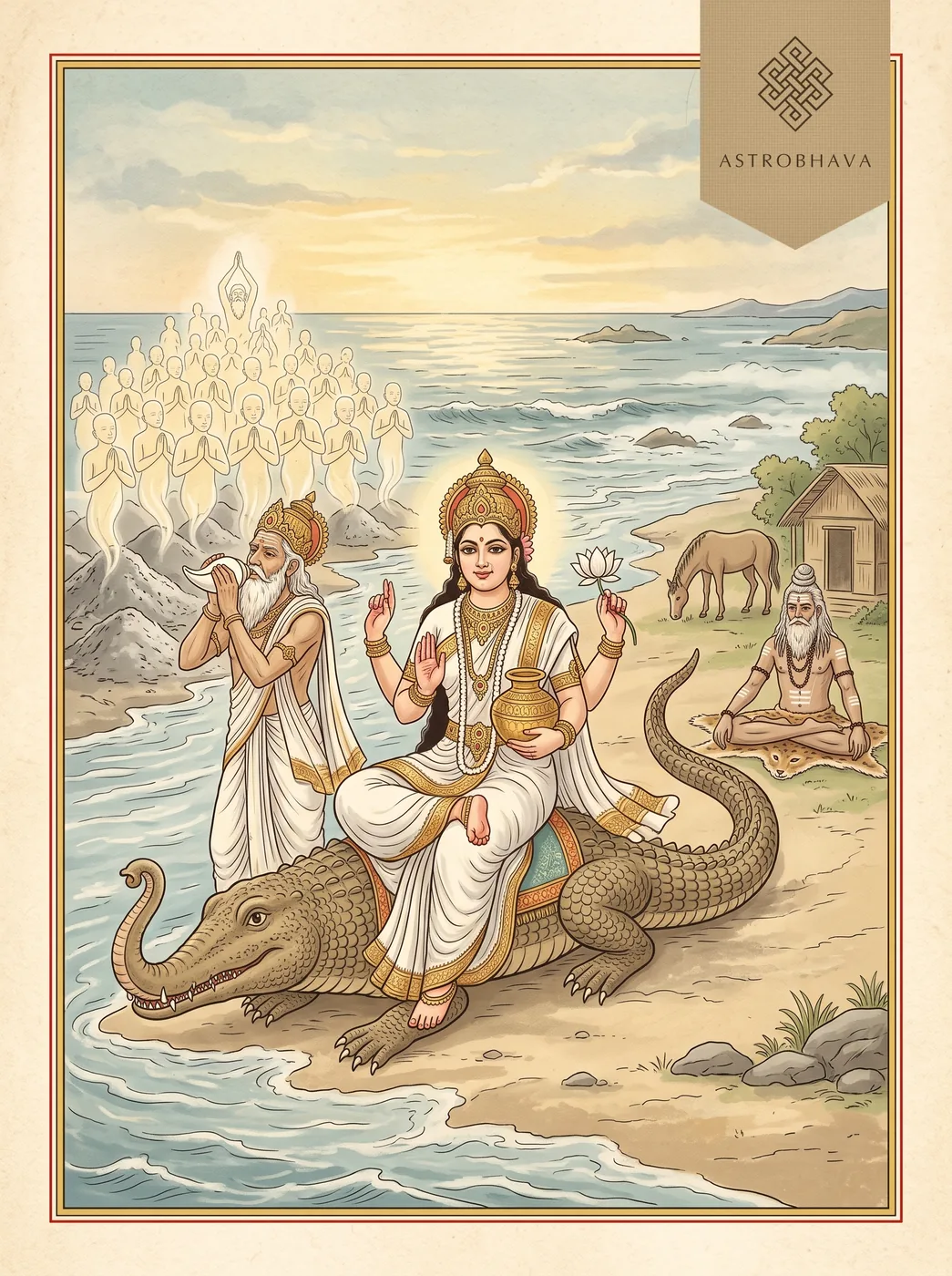
Ganga Aarti
ॐ जय गंगे माता, श्री जय गंगे माता । जो नर तुमको ध्याता, मनवांछित फल पाता ॥Also known as Om Jai Gange Mata
In Devanagari, Tamil, Telugu, Kannada, Malayalam and English — with the meaning of every word, and the one syllable most people pronounce wrongly.
What the Ganga Aarti is
Ganga Aarti, the Hindi lamp-song that opens 'Om Jai Gange Mata', is sung to the river Ganga as a mother while a flame is circled before her. It is an anonymous folk aarti: no printed version names a poet, and the words carry no signature line. It follows the 'Om Jai' pattern and melody of Om Jai Jagdish Hare, the Vishnu aarti written by Shardha Ram Phillauri around 1870, so anyone who knows that tune already knows this one. The text is short, a two-line refrain and four stanzas, with the refrain returning after each. The stanzas move from what the eye sees to what the river is said to give. The first describes her moon-like radiance and clear water; the second recalls that she delivered the sons of King Sagara; the third says that a single act of refuge in her removes the dread of Yama; the fourth turns to the singer, calling the one who sings this aarti daily her true servant.
Sixty thousand sons and a river crossing
No one recorded when or where this aarti was first sung. It belongs to the ghat and household singing of the Gangetic plain, and it was already in print by the early 1940s in Hindi pilgrim booklets, among them one issued at Mathura for the Prayag Kumbh, set beside the bathing calendar. One older printed form even reads 'bhav sagar se tare', carried across the ocean of worldly life, where the usual text names Sagara. The second stanza compresses a long epic episode into four words, putra sagar ke tare. The Ramayana, the Mahabharata and the Puranas relate that King Sagara began a horse sacrifice, that Indra hid the horse beside the sage Kapila in the netherworld, and that Sagara's sixty thousand sons, disturbing the sage's meditation as they searched, were burned to ashes by his gaze. Only when the Ganga's waters reached those ashes, generations later, were the sons released. The verb tare means 'ferried across', and the same root returns in the first stanza, where whoever falls at her refuge 'tar jata', crosses over. According to tradition, Kapila's hermitage stood where the river meets the Bay of Bengal, at Gangasagar, where a Kapil Muni temple stands and pilgrims gather each Makar Sankranti.
The mantra, in six scripts
- ॐ
- oṃ — Om, the sacred syllable
- जय
- jaya — victory to
- गंगे
- gaṃge — O Ganga
- माता
- mātā — mother
- श्री
- śrī — revered
- जय
- jaya — victory to
- गंगे
- gaṃge — O Ganga
- माता
- mātā — mother
- जो
- jo — whoever
- नर
- nara — person
- तुमको
- tumako — on you
- ध्याता
- dhyātā — meditates
- मनवांछित
- manavāṃchita — heart-desired
- फल
- phala — fruit
- पाता
- pātā — obtains
Ganga Aarti lyrics in full
The refrain and four stanzas of the 'Shri Jai Gange Mata' form; the refrain is sung again after each stanza and at the close.
All 5 verses, in Hindi, Tamil, Telugu, Kannada, Malayalam and English, each with its meaning. Choose a script:
Download the Ganga Aarti PDFAll 5 verses with their meanings, in Hindi. Free to print and keep.
ॐ जय गंगे माता, श्री जय गंगे माता ।
जो नर तुमको ध्याता, मनवांछित फल पाता ॥
ௐ ஜய கம்கே மாதா, ஶ்ரீ ஜய கம்கே மாதா ।
ஜோ நர துமகோ த்யாதா, மநவாம்சித பல பாதா ॥
ఓం జయ గంగే మాతా, శ్రీ జయ గంగే మాతా ।
జో నర తుమకో ధ్యాతా, మనవాంఛిత ఫల పాతా ॥
ಓಂ ಜಯ ಗಂಗೇ ಮಾತಾ, ಶ್ರೀ ಜಯ ಗಂಗೇ ಮಾತಾ ।
ಜೋ ನರ ತುಮಕೋ ಧ್ಯಾತಾ, ಮನವಾಂಛಿತ ಫಲ ಪಾತಾ ॥
ഓം ജയ ഗംഗേ മാതാ, ശ്രീ ജയ ഗംഗേ മാതാ ।
ജോ നര തുമകോ ധ്യാതാ, മനവാംഛിത ഫല പാതാ ॥
oṃ jaya gaṃge mātā, śrī jaya gaṃge mātā |
jo nara tumako dhyātā, manavāṃchita phala pātā ||
Om, victory to you, Mother Ganga; victory to you, revered Mother Ganga. The verse says that whoever meditates on you receives the fruit their heart desires. This opening couplet is sung again after each stanza.
चंद्र सी जोत तुम्हारी, जल निर्मल आता ।
शरण पड़े जो तेरी, सो नर तर जाता ॥
சம்த்ர ஸீ ஜோத தும்ஹாரீ, ஜல நிர்மல ஆதா ।
ஶரண படே ஜோ தேரீ, ஸோ நர தர ஜாதா ॥
చంద్ర సీ జోత తుమ్హారీ, జల నిర్మల ఆతా ।
శరణ పడే జో తేరీ, సో నర తర జాతా ॥
ಚಂದ್ರ ಸೀ ಜೋತ ತುಮ್ಹಾರೀ, ಜಲ ನಿರ್ಮಲ ಆತಾ ।
ಶರಣ ಪಡೇ ಜೋ ತೇರೀ, ಸೋ ನರ ತರ ಜಾತಾ ॥
ചംദ്ര സീ ജോത തുമ്ഹാരീ, ജല നിര്മല ആതാ ।
ശരണ പഡേ ജോ തേരീ, സോ നര തര ജാതാ ॥
caṃdra sī jota tumhārī, jala nirmala ātā |
śaraṇa paṛe jo terī, so nara tara jātā ||
Your radiance is like the moon's, and your water flows down pure. The verse says that whoever falls at your refuge is carried across (the ocean of worldly life).
पुत्र सगर के तारे, सब जग को ज्ञाता ।
कृपा दृष्टि तुम्हारी, त्रिभुवन सुख दाता ॥
புத்ர ஸகர கே தாரே, ஸப ஜக கோ ஜ்ஞாதா ।
க்ருபா த்ருஷ்டி தும்ஹாரீ, த்ரிபுவந ஸுக தாதா ॥
పుత్ర సగర కే తారే, సబ జగ కో జ్ఞాతా ।
కృపా దృష్టి తుమ్హారీ, త్రిభువన సుఖ దాతా ॥
ಪುತ್ರ ಸಗರ ಕೇ ತಾರೇ, ಸಬ ಜಗ ಕೋ ಜ್ಞಾತಾ ।
ಕೃಪಾ ದೃಷ್ಟಿ ತುಮ್ಹಾರೀ, ತ್ರಿಭುವನ ಸುಖ ದಾತಾ ॥
പുത്ര സഗര കേ താരേ, സബ ജഗ കോ ജ്ഞാതാ ।
കൃപാ ദൃഷ്ടി തുമ്ഹാരീ, ത്രിഭുവന സുഖ ദാതാ ॥
putra sagara ke tāre, saba jaga ko jñātā |
kṛpā dṛṣṭi tumhārī, tribhuvana sukha dātā ||
You delivered the sons of King Sagara, as the whole world knows. Your gracious glance gives happiness to the three worlds.
एक ही बार जो तेरी, शरणागति आता ।
यम की त्रास मिटा कर, परमगति पाता ॥
ஏக ஹீ பார ஜோ தேரீ, ஶரணாகதி ஆதா ।
யம கீ த்ராஸ மிடா கர, பரமகதி பாதா ॥
ఏక హీ బార జో తేరీ, శరణాగతి ఆతా ।
యమ కీ త్రాస మిటా కర, పరమగతి పాతా ॥
ಏಕ ಹೀ ಬಾರ ಜೋ ತೇರೀ, ಶರಣಾಗತಿ ಆತಾ ।
ಯಮ ಕೀ ತ್ರಾಸ ಮಿಟಾ ಕರ, ಪರಮಗತಿ ಪಾತಾ ॥
ഏക ഹീ ബാര ജോ തേരീ, ശരണാഗതി ആതാ ।
യമ കീ ത്രാസ മിടാ കര, പരമഗതി പാതാ ॥
eka hī bāra jo terī, śaraṇāgati ātā |
yama kī trāsa miṭā kara, paramagati pātā ||
The verse says that whoever comes to take refuge in you even once is freed from the terror of Yama, the lord of death, and reaches the highest state.
आरती मात तुम्हारी, जो जन नित्य गाता ।
दास वही सहज में, मुक्ति को पाता ॥
ஆரதீ மாத தும்ஹாரீ, ஜோ ஜந நித்ய காதா ।
தாஸ வஹீ ஸஹஜ மேம், முக்தி கோ பாதா ॥
ఆరతీ మాత తుమ్హారీ, జో జన నిత్య గాతా ।
దాస వహీ సహజ మేం, ముక్తి కో పాతా ॥
ಆರತೀ ಮಾತ ತುಮ್ಹಾರೀ, ಜೋ ಜನ ನಿತ್ಯ ಗಾತಾ ।
ದಾಸ ವಹೀ ಸಹಜ ಮೇಂ, ಮುಕ್ತಿ ಕೋ ಪಾತಾ ॥
ആരതീ മാത തുമ്ഹാരീ, ജോ ജന നിത്യ ഗാതാ ।
ദാസ വഹീ സഹജ മേം, മുക്തി കോ പാതാ ॥
āratī māta tumhārī, jo jana nitya gātā |
dāsa vahī sahaja meṃ, mukti ko pātā ||
Mother, the person who sings your aarti every day is truly your servant; the verse says that such a person attains liberation with ease.
The syllable people get wrong
In the first stanza, पड़े (paṛe, 'fall, lie at') is often sung as 'pade' with a plain d, and many printed copies even drop the dot beneath the letter. ड़ is a retroflex flap: curl the tongue tip back and flick it forward once against the roof of the mouth, close to a quickly said American 'tt' in 'butter', giving 'PUH-ṛay'.
When the Ganga Aarti is chanted
Weekday. Friday
Festival. Ganga Saptami
Questions
Have your chart read before you decide
Chanting is yours to do, and free. But which deity your situation calls for — and whether a mantra alone is the right response — depends on your chart. Sometimes it is; sometimes it is not.
- Over 30 years in the Guru–Sishya Parampara, from the age of five
- He reads every chart himself — 60 minutes, one to one, never delegated
- Charts are read only between sunrise and sunset, following tradition