Ganga Stotram
देवि सुरेश्वरि भगवति गङ्गे त्रिभुवनतारिणि तरलतरङ्गे । शङ्करमौलिविहारिणि विमले मम मतिरास्तां तव पदकमले ॥Also known as Ganga Mantra
In Devanagari, Tamil, Telugu, Kannada, Malayalam and English — with the meaning of every word, and the one syllable most people pronounce wrongly.
 A reading of your birth chartBook →
What the Ganga Stotram is
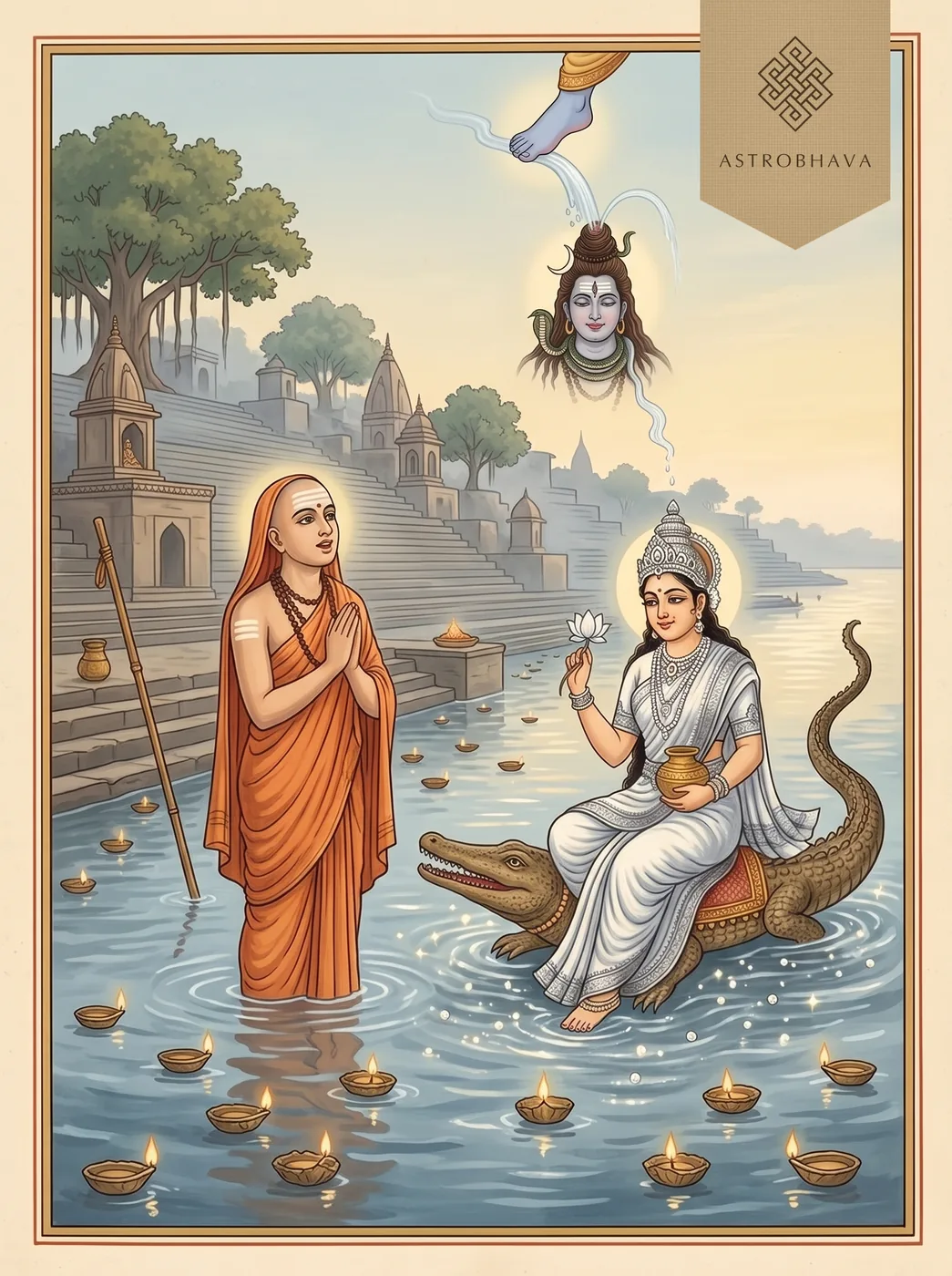
The Ganga Stotram, the Sanskrit hymn many people look for as a Ganga mantra, is a prayer to the river as goddess and mother, opening 'Devi Sureshvari Bhagavati Gange'. Tradition attributes it to Adi Shankaracharya, and the text signs itself: verse 14 calls its author 'Shankara, the servant of Shankara', that is, of Shiva. It runs to fourteen couplets in the pajjhatika metre, which verse 13 names outright, a measure counted in syllable lengths, sixteen to each quarter, and each line rhymes across its halves, gange with tarange, vimale with kamale. Verses 1 to 3 greet her by her names and ask that the mind rest at her feet. Verses 4 to 10 say what drinking her water, bathing in her stream and living on her banks are held to bring. Verse 11 wishes only to be near her in any form, and verses 12 to 14 give the hymn's own phala. The page then adds the separate bathing shloka 'Gange cha Yamune', which calls seven rivers into any water.
A river's whole legend in fourteen couplets
The hymn carries no account of its own writing, and no traditional source says where it was composed. Tradition does place Shankara at Kashi on the Ganga's bank, where, after a bath in the river, he is said to have met an outcaste with four dogs and answered him with the Manisha Panchakam. Verse 11 of this hymn uses the same word, shvapaca, when it says that even an unclean outcaste near the Ganga is better placed than a king far from her. What the verses do instead is gather the river's legends into her names. Verse 3 calls her the water that washed Hari's feet; the Bhagavata Purana relates that when Vishnu as Vamana took his great stride, his toenail pierced the shell of the universe and the waters beyond poured in as the Ganga. Verse 1 places her on Shiva's head, and verse 2 names her Bhagirathi. Verse 5 calls her mother of Bhishma, recalling the Mahabharata account in which she married King Shantanu and bore eight Vasus cursed by the sage Vasishtha, of whom only the eighth, Bhishma, was spared. Verse 10 names her Alakananda, the Himalayan stream that meets the Bhagirathi at Devprayag, and verse 6 follows her at last into the ocean.
The mantra, in six scripts
- देवि
- devi — O Goddess
- सुरेश्वरि
- sureśvari — queen of the gods
- भगवति
- bhagavati — blessed one
- गङ्गे
- gaṅge — O Ganga
- त्रिभुवनतारिणि
- tribhuvanatāriṇi — who carries the three worlds across
- तरलतरङ्गे
- taralataraṅge — with rippling waves
- शङ्करमौलिविहारिणि
- śaṅkaramaulivihāriṇi — who plays on Shiva's head
- विमले
- vimale — O pure one
- मम
- mama — my
- मतिरास्तां
- matirāstāṃ — may my mind rest
- तव
- tava — your
- पदकमले
- padakamale — at the lotus feet
Ganga Stotram lyrics in full
Fourteen verses in the pajjhatika metre; the printed closing line follows verse 14, and the bathing shloka Gange cha Yamune is given last.
All 16 verses, in Sanskrit, Tamil, Telugu, Kannada, Malayalam and English, each with its meaning. Choose a script:
Download the Ganga Stotram PDFAll 16 verses with their meanings, in Sanskrit. Free to print and keep.
देवि सुरेश्वरि भगवति गङ्गे त्रिभुवनतारिणि तरलतरङ्गे ।
शङ्करमौलिविहारिणि विमले मम मतिरास्तां तव पदकमले ॥
தேவி ஸுரேஶ்வரி பகவதி கங்கே த்ரிபுவநதாரிணி தரலதரங்கே ।
ஶங்கரமௌலிவிஹாரிணி விமலே மம மதிராஸ்தாம் தவ பதகமலே ॥
దేవి సురేశ్వరి భగవతి గఙ్గే త్రిభువనతారిణి తరలతరఙ్గే ।
శఙ్కరమౌలివిహారిణి విమలే మమ మతిరాస్తాం తవ పదకమలే ॥
ದೇವಿ ಸುರೇಶ್ವರಿ ಭಗವತಿ ಗಙ್ಗೇ ತ್ರಿಭುವನತಾರಿಣಿ ತರಲತರಙ್ಗೇ ।
ಶಙ್ಕರಮೌಲಿವಿಹಾರಿಣಿ ವಿಮಲೇ ಮಮ ಮತಿರಾಸ್ತಾಂ ತವ ಪದಕಮಲೇ ॥
ദേവി സുരേശ്വരി ഭഗവതി ഗങ്ഗേ ത്രിഭുവനതാരിണി തരലതരങ്ഗേ ।
ശങ്കരമൌലിവിഹാരിണി വിമലേ മമ മതിരാസ്താം തവ പദകമലേ ॥
devi sureśvari bhagavati gaṅge tribhuvanatāriṇi taralataraṅge |
śaṅkaramaulivihāriṇi vimale mama matirāstāṃ tava padakamale ||
O Goddess, queen of the gods, blessed Ganga, who carries the three worlds across, with your restless, rippling waves. O pure one who plays on the head of Shiva, may my mind rest at your lotus feet.
भागीरथि सुखदायिनि मातस्तव जलमहिमा निगमे ख्यातः ।
नाहं जाने तव महिमानं पाहि कृपामयि मामज्ञानम् ॥
பாகீரதி ஸுகதாயிநி மாதஸ்தவ ஜலமஹிமா நிகமே க்யாதஃ ।
நாஹம் ஜாநே தவ மஹிமாநம் பாஹி க்ருபாமயி மாமஜ்ஞாநம் ॥
భాగీరథి సుఖదాయిని మాతస్తవ జలమహిమా నిగమే ఖ్యాతః ।
నాహం జానే తవ మహిమానం పాహి కృపామయి మామజ్ఞానమ్ ॥
ಭಾಗೀರಥಿ ಸುಖದಾಯಿನಿ ಮಾತಸ್ತವ ಜಲಮಹಿಮಾ ನಿಗಮೇ ಖ್ಯಾತಃ ।
ನಾಹಂ ಜಾನೇ ತವ ಮಹಿಮಾನಂ ಪಾಹಿ ಕೃಪಾಮಯಿ ಮಾಮಜ್ಞಾನಮ್ ॥
ഭാഗീരഥി സുഖദായിനി മാതസ്തവ ജലമഹിമാ നിഗമേ ഖ്യാതഃ ।
നാഹം ജാനേ തവ മഹിമാനം പാഹി കൃപാമയി മാമജ്ഞാനമ് ॥
bhāgīrathi sukhadāyini mātastava jalamahimā nigame khyātaḥ |
nāhaṃ jāne tava mahimānaṃ pāhi kṛpāmayi māmajñānam ||
O Bhagirathi, giver of happiness, O Mother, the glory of your waters is proclaimed in the Vedas. I do not know your greatness; O compassionate one, protect me, ignorant as I am.
हरिपदपाद्यतरङ्गिणि गङ्गे हिमविधुमुक्ताधवलतरङ्गे ।
दूरीकुरु मम दुष्कृतिभारं कुरु कृपया भवसागरपारम् ॥
ஹரிபதபாத்யதரங்கிணி கங்கே ஹிமவிதுமுக்தாதவலதரங்கே ।
தூரீகுரு மம துஷ்க்ருதிபாரம் குரு க்ருபயா பவஸாகரபாரம் ॥
హరిపదపాద్యతరఙ్గిణి గఙ్గే హిమవిధుముక్తాధవలతరఙ్గే ।
దూరీకురు మమ దుష్కృతిభారం కురు కృపయా భవసాగరపారమ్ ॥
ಹರಿಪದಪಾದ್ಯತರಙ್ಗಿಣಿ ಗಙ್ಗೇ ಹಿಮವಿಧುಮುಕ್ತಾಧವಲತರಙ್ಗೇ ।
ದೂರೀಕುರು ಮಮ ದುಷ್ಕೃತಿಭಾರಂ ಕುರು ಕೃಪಯಾ ಭವಸಾಗರಪಾರಮ್ ॥
ഹരിപദപാദ്യതരങ്ഗിണി ഗങ്ഗേ ഹിമവിധുമുക്താധവലതരങ്ഗേ ।
ദൂരീകുരു മമ ദുഷ്കൃതിഭാരം കുരു കൃപയാ ഭവസാഗരപാരമ് ॥
haripadapādyataraṅgiṇi gaṅge himavidhumuktādhavalataraṅge |
dūrīkuru mama duṣkṛtibhāraṃ kuru kṛpayā bhavasāgarapāram ||
O Ganga, river that flows as the water which washed the feet of Vishnu, whose waves are white as snow, the moon and pearls. Take away the burden of my wrong deeds, and in your kindness carry me across the ocean of worldly existence.
तव जलममलं येन निपीतं परमपदं खलु तेन गृहीतम् ।
मातर्गङ्गे त्वयि यो भक्तः किल तं द्रष्टुं न यमः शक्तः ॥
தவ ஜலமமலம் யேந நிபீதம் பரமபதம் கலு தேந க்ருஹீதம் ।
மாதர்கங்கே த்வயி யோ பக்தஃ கில தம் த்ரஷ்டும் ந யமஃ ஶக்தஃ ॥
తవ జలమమలం యేన నిపీతం పరమపదం ఖలు తేన గృహీతమ్ ।
మాతర్గఙ్గే త్వయి యో భక్తః కిల తం ద్రష్టుం న యమః శక్తః ॥
ತವ ಜಲಮಮಲಂ ಯೇನ ನಿಪೀತಂ ಪರಮಪದಂ ಖಲು ತೇನ ಗೃಹೀತಮ್ ।
ಮಾತರ್ಗಙ್ಗೇ ತ್ವಯಿ ಯೋ ಭಕ್ತಃ ಕಿಲ ತಂ ದ್ರಷ್ಟುಂ ನ ಯಮಃ ಶಕ್ತಃ ॥
തവ ജലമമലം യേന നിപീതം പരമപദം ഖലു തേന ഗൃഹീതമ് ।
മാതര്ഗങ്ഗേ ത്വയി യോ ഭക്തഃ കില തം ദ്രഷ്ടും ന യമഃ ശക്തഃ ॥
tava jalamamalaṃ yena nipītaṃ paramapadaṃ khalu tena gṛhītam |
mātargaṅge tvayi yo bhaktaḥ kila taṃ draṣṭuṃ na yamaḥ śaktaḥ ||
Whoever has drunk your pure water has surely attained the highest state. O Mother Ganga, the verse says that Yama, lord of death, cannot even look upon one who is devoted to you.
पतितोद्धारिणि जाह्नवि गङ्गे खण्डितगिरिवरमण्डितभङ्गे ।
भीष्मजननि हे मुनिवरकन्ये पतितनिवारिणि त्रिभुवनधन्ये ॥
பதிதோத்தாரிணி ஜாஹ்நவி கங்கே கண்டிதகிரிவரமண்டிதபங்கே ।
பீஷ்மஜநநி ஹே முநிவரகந்யே பதிதநிவாரிணி த்ரிபுவநதந்யே ॥
పతితోద్ధారిణి జాహ్నవి గఙ్గే ఖణ్డితగిరివరమణ్డితభఙ్గే ।
భీష్మజనని హే మునివరకన్యే పతితనివారిణి త్రిభువనధన్యే ॥
ಪತಿತೋದ್ಧಾರಿಣಿ ಜಾಹ್ನವಿ ಗಙ್ಗೇ ಖಣ್ಡಿತಗಿರಿವರಮಣ್ಡಿತಭಙ್ಗೇ ।
ಭೀಷ್ಮಜನನಿ ಹೇ ಮುನಿವರಕನ್ಯೇ ಪತಿತನಿವಾರಿಣಿ ತ್ರಿಭುವನಧನ್ಯೇ ॥
പതിതോദ്ധാരിണി ജാഹ്നവി ഗങ്ഗേ ഖണ്ഡിതഗിരിവരമണ്ഡിതഭങ്ഗേ ।
ഭീഷ്മജനനി ഹേ മുനിവരകന്യേ പതിതനിവാരിണി ത്രിഭുവനധന്യേ ॥
patitoddhāriṇi jāhnavi gaṅge khaṇḍitagirivaramaṇḍitabhaṅge |
bhīṣmajanani he munivarakanye patitanivāriṇi tribhuvanadhanye ||
O Jahnavi Ganga, uplifter of the fallen, whose breaking waves are adorned by the great mountains they cut through. O mother of Bhishma, daughter of the great sage, you who stop the fallen from falling further, blessed in all three worlds.
कल्पलतामिव फलदां लोके प्रणमति यस्त्वां न पतति शोके ।
पारावारविहारिणि गङ्गे विमुखयुवतिकृततरलापाङ्गे ॥
கல்பலதாமிவ பலதாம் லோகே ப்ரணமதி யஸ்த்வாம் ந பததி ஶோகே ।
பாராவாரவிஹாரிணி கங்கே விமுகயுவதிக்ருததரலாபாங்கே ॥
కల్పలతామివ ఫలదాం లోకే ప్రణమతి యస్త్వాం న పతతి శోకే ।
పారావారవిహారిణి గఙ్గే విముఖయువతికృతతరలాపాఙ్గే ॥
ಕಲ್ಪಲತಾಮಿವ ಫಲದಾಂ ಲೋಕೇ ಪ್ರಣಮತಿ ಯಸ್ತ್ವಾಂ ನ ಪತತಿ ಶೋಕೇ ।
ಪಾರಾವಾರವಿಹಾರಿಣಿ ಗಙ್ಗೇ ವಿಮುಖಯುವತಿಕೃತತರಲಾಪಾಙ್ಗೇ ॥
കല്പലതാമിവ ഫലദാം ലോകേ പ്രണമതി യസ്ത്വാം ന പതതി ശോകേ ।
പാരാവാരവിഹാരിണി ഗങ്ഗേ വിമുഖയുവതികൃതതരലാപാങ്ഗേ ॥
kalpalatāmiva phaladāṃ loke praṇamati yastvāṃ na patati śoke |
pārāvāravihāriṇi gaṅge vimukhayuvatikṛtataralāpāṅge ||
The verse says that whoever bows to you, who grant fruits in this world like the wish-fulfilling creeper, does not fall into sorrow. O Ganga, who flows playfully into the ocean, your restless side-glance is like that of a young woman who has turned her face away.
तव चेन्मातः स्रोतः स्नातः पुनरपि जठरे सोऽपि न जातः ।
नरकनिवारिणि जाह्नवि गङ्गे कलुषविनाशिनि महिमोत्तुङ्गे ॥
தவ சேந்மாதஃ ஸ்ரோதஃ ஸ்நாதஃ புநரபி ஜடரே ஸோபி ந ஜாதஃ ।
நரகநிவாரிணி ஜாஹ்நவி கங்கே கலுஷவிநாஶிநி மஹிமோத்துங்கே ॥
తవ చేన్మాతః స్రోతః స్నాతః పునరపి జఠరే సోఽపి న జాతః ।
నరకనివారిణి జాహ్నవి గఙ్గే కలుషవినాశిని మహిమోత్తుఙ్గే ॥
ತವ ಚೇನ್ಮಾತಃ ಸ್ರೋತಃ ಸ್ನಾತಃ ಪುನರಪಿ ಜಠರೇ ಸೋಽಪಿ ನ ಜಾತಃ ।
ನರಕನಿವಾರಿಣಿ ಜಾಹ್ನವಿ ಗಙ್ಗೇ ಕಲುಷವಿನಾಶಿನಿ ಮಹಿಮೋತ್ತುಙ್ಗೇ ॥
തവ ചേന്മാതഃ സ്രോതഃ സ്നാതഃ പുനരപി ജഠരേ സോഽപി ന ജാതഃ ।
നരകനിവാരിണി ജാഹ്നവി ഗങ്ഗേ കലുഷവിനാശിനി മഹിമോത്തുങ്ഗേ ॥
tava cenmātaḥ srotaḥ snātaḥ punarapi jaṭhare so'pi na jātaḥ |
narakanivāriṇi jāhnavi gaṅge kaluṣavināśini mahimottuṅge ||
O Mother, the verse says that one who has bathed in your stream is not born again from a womb. O Jahnavi Ganga, you who keep people from hell, destroyer of impurity, lofty in your greatness.
पुनरसदङ्गे पुण्यतरङ्गे जय जय जाह्नवि करुणापाङ्गे ।
इन्द्रमुकुटमणिराजितचरणे सुखदे शुभदे भृत्यशरण्ये ॥
புநரஸதங்கே புண்யதரங்கே ஜய ஜய ஜாஹ்நவி கருணாபாங்கே ।
இந்த்ரமுகுடமணிராஜிதசரணே ஸுகதே ஶுபதே ப்ருத்யஶரண்யே ॥
పునరసదఙ్గే పుణ్యతరఙ్గే జయ జయ జాహ్నవి కరుణాపాఙ్గే ।
ఇన్ద్రముకుటమణిరాజితచరణే సుఖదే శుభదే భృత్యశరణ్యే ॥
ಪುನರಸದಙ್ಗೇ ಪುಣ್ಯತರಙ್ಗೇ ಜಯ ಜಯ ಜಾಹ್ನವಿ ಕರುಣಾಪಾಙ್ಗೇ ।
ಇನ್ದ್ರಮುಕುಟಮಣಿರಾಜಿತಚರಣೇ ಸುಖದೇ ಶುಭದೇ ಭೃತ್ಯಶರಣ್ಯೇ ॥
പുനരസദങ്ഗേ പുണ്യതരങ്ഗേ ജയ ജയ ജാഹ്നവി കരുണാപാങ്ഗേ ।
ഇന്ദ്രമുകുടമണിരാജിതചരണേ സുഖദേ ശുഭദേ ഭൃത്യശരണ്യേ ॥
punarasadaṅge puṇyataraṅge jaya jaya jāhnavi karuṇāpāṅge |
indramukuṭamaṇirājitacaraṇe sukhade śubhade bhṛtyaśaraṇye ||
O you who spare us from taking an impure body again, whose waves are holy: victory, victory to you, Jahnavi, whose glance is full of compassion. Your feet shine with the jewels of Indra's crown; you give happiness and auspiciousness and are the refuge of your servants.
रोगं शोकं तापं पापं हर मे भगवति कुमतिकलापम् ।
त्रिभुवनसारे वसुधाहारे त्वमसि गतिर्मम खलु संसारे ॥
ரோகம் ஶோகம் தாபம் பாபம் ஹர மே பகவதி குமதிகலாபம் ।
த்ரிபுவநஸாரே வஸுதாஹாரே த்வமஸி கதிர்மம கலு ஸம்ஸாரே ॥
రోగం శోకం తాపం పాపం హర మే భగవతి కుమతికలాపమ్ ।
త్రిభువనసారే వసుధాహారే త్వమసి గతిర్మమ ఖలు సంసారే ॥
ರೋಗಂ ಶೋಕಂ ತಾಪಂ ಪಾಪಂ ಹರ ಮೇ ಭಗವತಿ ಕುಮತಿಕಲಾಪಮ್ ।
ತ್ರಿಭುವನಸಾರೇ ವಸುಧಾಹಾರೇ ತ್ವಮಸಿ ಗತಿರ್ಮಮ ಖಲು ಸಂಸಾರೇ ॥
രോഗം ശോകം താപം പാപം ഹര മേ ഭഗവതി കുമതികലാപമ് ।
ത്രിഭുവനസാരേ വസുധാഹാരേ ത്വമസി ഗതിര്മമ ഖലു സംസാരേ ॥
rogaṃ śokaṃ tāpaṃ pāpaṃ hara me bhagavati kumatikalāpam |
tribhuvanasāre vasudhāhāre tvamasi gatirmama khalu saṃsāre ||
O blessed Goddess, take away my illness, grief, suffering and sin, and the whole crowd of my wrong thoughts. O essence of the three worlds, necklace of the earth, you alone are my refuge in this worldly life.
अलकानन्दे परमानन्दे कुरु करुणामयि कातरवन्द्ये ।
तव तटनिकटे यस्य निवासः खलु वैकुण्ठे तस्य निवासः ॥
அலகாநந்தே பரமாநந்தே குரு கருணாமயி காதரவந்த்யே ।
தவ தடநிகடே யஸ்ய நிவாஸஃ கலு வைகுண்டே தஸ்ய நிவாஸஃ ॥
అలకానన్దే పరమానన్దే కురు కరుణామయి కాతరవన్ద్యే ।
తవ తటనికటే యస్య నివాసః ఖలు వైకుణ్ఠే తస్య నివాసః ॥
ಅಲಕಾನನ್ದೇ ಪರಮಾನನ್ದೇ ಕುರು ಕರುಣಾಮಯಿ ಕಾತರವನ್ದ್ಯೇ ।
ತವ ತಟನಿಕಟೇ ಯಸ್ಯ ನಿವಾಸಃ ಖಲು ವೈಕುಣ್ಠೇ ತಸ್ಯ ನಿವಾಸಃ ॥
അലകാനന്ദേ പരമാനന്ദേ കുരു കരുണാമയി കാതരവന്ദ്യേ ।
തവ തടനികടേ യസ്യ നിവാസഃ ഖലു വൈകുണ്ഠേ തസ്യ നിവാസഃ ॥
alakānande paramānande kuru karuṇāmayi kātaravandye |
tava taṭanikaṭe yasya nivāsaḥ khalu vaikuṇṭhe tasya nivāsaḥ ||
O Alakananda, supreme bliss, compassionate one worshipped by the distressed, show me your mercy. The verse says that one who lives near your banks surely lives in Vaikuntha.
वरमिह नीरे कमठो मीनः किं वा तीरे शरटः क्षीणः ।
अथवा श्वपचो मलिनो दीनस्तव न हि दूरे नृपतिकुलीनः ॥
வரமிஹ நீரே கமடோ மீநஃ கிம் வா தீரே ஶரடஃ க்ஷீணஃ ।
அதவா ஶ்வபசோ மலிநோ தீநஸ்தவ ந ஹி தூரே ந்ருபதிகுலீநஃ ॥
వరమిహ నీరే కమఠో మీనః కిం వా తీరే శరటః క్షీణః ।
అథవా శ్వపచో మలినో దీనస్తవ న హి దూరే నృపతికులీనః ॥
ವರಮಿಹ ನೀರೇ ಕಮಠೋ ಮೀನಃ ಕಿಂ ವಾ ತೀರೇ ಶರಟಃ ಕ್ಷೀಣಃ ।
ಅಥವಾ ಶ್ವಪಚೋ ಮಲಿನೋ ದೀನಸ್ತವ ನ ಹಿ ದೂರೇ ನೃಪತಿಕುಲೀನಃ ॥
വരമിഹ നീരേ കമഠോ മീനഃ കിം വാ തീരേ ശരടഃ ക്ഷീണഃ ।
അഥവാ ശ്വപചോ മലിനോ ദീനസ്തവ ന ഹി ദൂരേ നൃപതികുലീനഃ ॥
varamiha nīre kamaṭho mīnaḥ kiṃ vā tīre śaraṭaḥ kṣīṇaḥ |
athavā śvapaco malino dīnastava na hi dūre nṛpatikulīnaḥ ||
Better to be a tortoise or a fish here in your water, or a thin lizard on your bank, or even a poor and unclean outcaste near you, than to be born in a royal family far away from you.
भो भुवनेश्वरि पुण्ये धन्ये देवि द्रवमयि मुनिवरकन्ये ।
गङ्गास्तवमिमममलं नित्यं पठति नरो यः स जयति सत्यम् ॥
போ புவநேஶ்வரி புண்யே தந்யே தேவி த்ரவமயி முநிவரகந்யே ।
கங்காஸ்தவமிமமமலம் நித்யம் படதி நரோ யஃ ஸ ஜயதி ஸத்யம் ॥
భో భువనేశ్వరి పుణ్యే ధన్యే దేవి ద్రవమయి మునివరకన్యే ।
గఙ్గాస్తవమిమమమలం నిత్యం పఠతి నరో యః స జయతి సత్యమ్ ॥
ಭೋ ಭುವನೇಶ್ವರಿ ಪುಣ್ಯೇ ಧನ್ಯೇ ದೇವಿ ದ್ರವಮಯಿ ಮುನಿವರಕನ್ಯೇ ।
ಗಙ್ಗಾಸ್ತವಮಿಮಮಮಲಂ ನಿತ್ಯಂ ಪಠತಿ ನರೋ ಯಃ ಸ ಜಯತಿ ಸತ್ಯಮ್ ॥
ഭോ ഭുവനേശ്വരി പുണ്യേ ധന്യേ ദേവി ദ്രവമയി മുനിവരകന്യേ ।
ഗങ്ഗാസ്തവമിമമമലം നിത്യം പഠതി നരോ യഃ സ ജയതി സത്യമ് ॥
bho bhuvaneśvari puṇye dhanye devi dravamayi munivarakanye |
gaṅgāstavamimamamalaṃ nityaṃ paṭhati naro yaḥ sa jayati satyam ||
O ruler of the world, holy and blessed Goddess whose form is flowing water, daughter of the great sage. The verse says that the person who recites this pure hymn to Ganga every day truly wins.
येषां हृदये गङ्गाभक्तिस्तेषां भवति सदा सुखमुक्तिः ।
मधुराकान्तापज्झटिकाभिः परमानन्दकलितललिताभिः ॥
யேஷாம் ஹ்ருதயே கங்காபக்திஸ்தேஷாம் பவதி ஸதா ஸுகமுக்திஃ ।
மதுராகாந்தாபஜ்சடிகாபிஃ பரமாநந்தகலிதலலிதாபிஃ ॥
యేషాం హృదయే గఙ్గాభక్తిస్తేషాం భవతి సదా సుఖముక్తిః ।
మధురాకాన్తాపజ్ఝటికాభిః పరమానన్దకలితలలితాభిః ॥
ಯೇಷಾಂ ಹೃದಯೇ ಗಙ್ಗಾಭಕ್ತಿಸ್ತೇಷಾಂ ಭವತಿ ಸದಾ ಸುಖಮುಕ್ತಿಃ ।
ಮಧುರಾಕಾನ್ತಾಪಜ್ಝಟಿಕಾಭಿಃ ಪರಮಾನನ್ದಕಲಿತಲಲಿತಾಭಿಃ ॥
യേഷാം ഹൃദയേ ഗങ്ഗാഭക്തിസ്തേഷാം ഭവതി സദാ സുഖമുക്തിഃ ।
മധുരാകാന്താപജ്ഝടികാഭിഃ പരമാനന്ദകലിതലലിതാഭിഃ ॥
yeṣāṃ hṛdaye gaṅgābhaktisteṣāṃ bhavati sadā sukhamuktiḥ |
madhurākāntāpajjhaṭikābhiḥ paramānandakalitalalitābhiḥ ||
The verse says that those who hold devotion to Ganga in their hearts always have happiness and liberation. This praise is sung in sweet and lovely verses of the pajjhatika metre, graceful and filled with supreme joy.
गङ्गास्तोत्रमिदं भवसारं वाञ्छितफलदं विमलं सारम् ।
शङ्करसेवकशङ्कररचितं पठति सुखी स्तव इति च समाप्तः ॥
கங்காஸ்தோத்ரமிதம் பவஸாரம் வாஞ்சிதபலதம் விமலம் ஸாரம் ।
ஶங்கரஸேவகஶங்கரரசிதம் படதி ஸுகீ ஸ்தவ இதி ச ஸமாப்தஃ ॥
గఙ్గాస్తోత్రమిదం భవసారం వాఞ్ఛితఫలదం విమలం సారమ్ ।
శఙ్కరసేవకశఙ్కరరచితం పఠతి సుఖీ స్తవ ఇతి చ సమాప్తః ॥
ಗಙ್ಗಾಸ್ತೋತ್ರಮಿದಂ ಭವಸಾರಂ ವಾಞ್ಛಿತಫಲದಂ ವಿಮಲಂ ಸಾರಮ್ ।
ಶಙ್ಕರಸೇವಕಶಙ್ಕರರಚಿತಂ ಪಠತಿ ಸುಖೀ ಸ್ತವ ಇತಿ ಚ ಸಮಾಪ್ತಃ ॥
ഗങ്ഗാസ്തോത്രമിദം ഭവസാരം വാഞ്ഛിതഫലദം വിമലം സാരമ് ।
ശങ്കരസേവകശങ്കരരചിതം പഠതി സുഖീ സ്തവ ഇതി ച സമാപ്തഃ ॥
gaṅgāstotramidaṃ bhavasāraṃ vāñchitaphaladaṃ vimalaṃ sāram |
śaṅkarasevakaśaṅkararacitaṃ paṭhati sukhī stava iti ca samāptaḥ ||
This hymn to Ganga is the essence of existence, pure and precious, and the verse says it grants what one desires. Composed by Shankara, the servant of Shiva, it makes happy the one who recites it; so the hymn is complete.
इति श्रीमच्छङ्कराचार्यविरचितं गङ्गास्तोत्रं सम्पूर्णम् ॥
இதி ஶ்ரீமச்சங்கராசார்யவிரசிதம் கங்காஸ்தோத்ரம் ஸம்பூர்ணம் ॥
ఇతి శ్రీమచ్ఛఙ్కరాచార్యవిరచితం గఙ్గాస్తోత్రం సమ్పూర్ణమ్ ॥
ಇತಿ ಶ್ರೀಮಚ್ಛಙ್ಕರಾಚಾರ್ಯವಿರಚಿತಂ ಗಙ್ಗಾಸ್ತೋತ್ರಂ ಸಮ್ಪೂರ್ಣಮ್ ॥
ഇതി ശ്രീമച്ഛങ്കരാചാര്യവിരചിതം ഗങ്ഗാസ്തോത്രം സമ്പൂര്ണമ് ॥
iti śrīmacchaṅkarācāryaviracitaṃ gaṅgāstotraṃ sampūrṇam ||
Thus ends the Ganga Stotram composed by the revered Shankaracharya.
गङ्गे च यमुने चैव गोदावरि सरस्वति ।
नर्मदे सिन्धु कावेरि जलेऽस्मिन् संनिधिं कुरु ॥
கங்கே ச யமுநே சைவ கோதாவரி ஸரஸ்வதி ।
நர்மதே ஸிந்து காவேரி ஜலேஸ்மிந் ஸம்நிதிம் குரு ॥
గఙ్గే చ యమునే చైవ గోదావరి సరస్వతి ।
నర్మదే సిన్ధు కావేరి జలేఽస్మిన్ సంనిధిం కురు ॥
ಗಙ್ಗೇ ಚ ಯಮುನೇ ಚೈವ ಗೋದಾವರಿ ಸರಸ್ವತಿ ।
ನರ್ಮದೇ ಸಿನ್ಧು ಕಾವೇರಿ ಜಲೇಽಸ್ಮಿನ್ ಸಂನಿಧಿಂ ಕುರು ॥
ഗങ്ഗേ ച യമുനേ ചൈവ ഗോദാവരി സരസ്വതി ।
നര്മദേ സിന്ധു കാവേരി ജലേഽസ്മിന് സംനിധിം കുരു ॥
gaṅge ca yamune caiva godāvari sarasvati |
narmade sindhu kāveri jale'smin saṃnidhiṃ kuru ||
O Ganga, Yamuna, and also Godavari and Sarasvati, O Narmada, Sindhu and Kaveri: be present in this water. It is recited while bathing or when water is taken for worship.
The syllable people get wrong
Jāhnavi (जाह्नवि, verses 5, 7 and 8) is often said 'jahn-vi' or 'jaan-havi'. The h comes before the n: say JAAH-na-vi, a long aa, a breathed h, then a light n, with three syllables.
When the Ganga Stotram is chanted
Festival. Ganga Dussehra
Questions
Have your chart read before you decide
Chanting is yours to do, and free. But which deity your situation calls for — and whether a mantra alone is the right response — depends on your chart. Sometimes it is; sometimes it is not.
- Over 30 years in the Guru–Sishya Parampara, from the age of five
- He reads every chart himself — 60 minutes, one to one, never delegated
- Charts are read only between sunrise and sunset, following tradition
