Garuda Mantra
नमः पन्नगनद्धाय वैकुण्ठवशवर्तिने । श्रुतिसिन्धुसुधोत्पादमन्दराय गरुत्मते ॥Also known as Garuda Dandakam
In Devanagari, Tamil, Telugu, Kannada, Malayalam and English — with the meaning of every word, and the one syllable most people pronounce wrongly.
 The Garuda Homam, performed for youBook →
What the Garuda Mantra is
The Garuda Dandakam is Vedanta Desika's hymn to Garuda, and the Garuda mantra sits in its fifth verse, the last of the long dandaka sections, which prays that Garuda's own five-syllable mantra, opening with Om and closing with Svaha, may protect the reciter. Desika, the fourteenth-century Sri Vaishnava teacher born Venkatanatha, signs the work as Venkatesha in its closing verse. Seven verses make it up. A short opening salutation calls Garuda the Mandara mountain that churned nectar from the ocean of the Vedas. Verses 2 to 5 are counted as one vast verse, each quarter 108 syllables long: Garuda carrying Vishnu on his shoulder and welcomed home by his consorts Rudra and Sukirti; the theft of nectar and the scar of Indra's thunderbolt; the wingbeat that makes the oceans overflow into the netherworld; and the mantra verse, which asks for steady knowledge of the truth and devotion to Mukunda. A verse on the metre and a signature verse close it.
A snake charmer's challenge at Kanchipuram
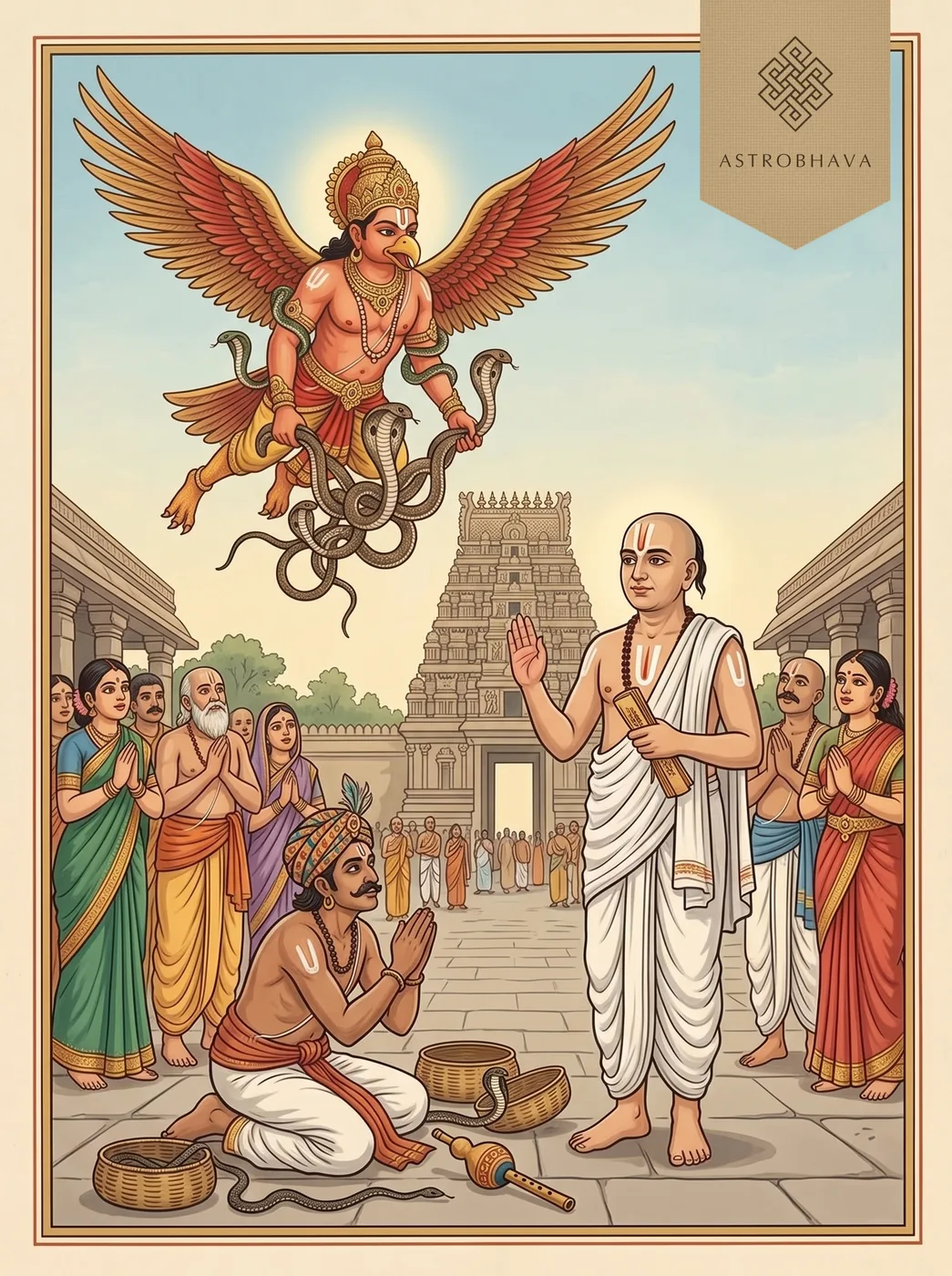
According to Sri Vaishnava tradition, Desika received the Garuda mantra from his teacher Appullar, for whose family it was a hereditary mantra. After Appullar's death Desika settled at Thiruvahindrapuram, beside the temple of Devanatha Perumal, and recited the mantra at length under an ashvattha tree on the hillock called Aushadhagiri. Tradition holds that Garuda appeared to him there, taught him the Hayagriva mantra and gave him an image of Hayagriva, which the town still shows beside Desika's own image. The Dandakam belongs to a later episode, set at Kanchipuram. A snake charmer, disputing Desika's title Sarvatantra Svatantra, master of every art, challenged him to a contest and set venomous snakes upon him. In one telling Desika drew seven lines on the ground; snake after snake died at the lines until the deadliest, Shankhapala, crossed all seven and rose to strike. Desika recited the Garuda mantra, and Garuda swooped down and carried the snakes away. Left without his snakes or his living, the charmer fell at Desika's feet. Desika forgave him, asked Garuda to give the snakes back, and composed the Dandakam as thanks. Tellings vary: some give a different number of lines, and some say it was the Garuda Panchashat that brought the snakes back.
The mantra, in six scripts
- नमः
- namaḥ — salutations
- पन्नगनद्धाय
- pannaganaddhāya — to him bound with serpents
- वैकुण्ठवशवर्तिने
- vaikuṇṭhavaśavartine — who moves at Vishnu's will
- श्रुतिसिन्धुसुधोत्पादमन्दराय
- śrutisindhusudhotpādamandarāya — the Mandara that churned nectar from the Veda-ocean
- गरुत्मते
- garutmate — to Garuda, the winged one
Garuda Mantra lyrics in full
Seven verses: a salutation, the four long dandaka sections that form a single verse, a verse describing the metre, and the poet's closing signature.
All 7 verses, in Sanskrit, Tamil, Telugu, Kannada, Malayalam and English, each with its meaning. Choose a script:
Download the Garuda Mantra PDFAll 7 verses with their meanings, in Sanskrit. Free to print and keep.
नमः पन्नगनद्धाय वैकुण्ठवशवर्तिने ।
श्रुतिसिन्धुसुधोत्पादमन्दराय गरुत्मते ॥
நமஃ பந்நகநத்தாய வைகுண்டவஶவர்திநே ।
ஶ்ருதிஸிந்துஸுதோத்பாதமந்தராய கருத்மதே ॥
నమః పన్నగనద్ధాయ వైకుణ్ఠవశవర్తినే ।
శ్రుతిసిన్ధుసుధోత్పాదమన్దరాయ గరుత్మతే ॥
ನಮಃ ಪನ್ನಗನದ್ಧಾಯ ವೈಕುಣ್ಠವಶವರ್ತಿನೇ ।
ಶ್ರುತಿಸಿನ್ಧುಸುಧೋತ್ಪಾದಮನ್ದರಾಯ ಗರುತ್ಮತೇ ॥
നമഃ പന്നഗനദ്ധായ വൈകുണ്ഠവശവര്തിനേ ।
ശ്രുതിസിന്ധുസുധോത്പാദമന്ദരായ ഗരുത്മതേ ॥
namaḥ pannaganaddhāya vaikuṇṭhavaśavartine |
śrutisindhusudhotpādamandarāya garutmate ||
Salutations to Garuda, who wears serpents bound upon him, who always moves at the will of the Lord of Vaikuntha, and who was the churning mountain Mandara that brought up nectar from the ocean of the Vedas.
गरुडमखिलवेदनीडाधिरूढं द्विषत्पीडनोत्कण्ठिताकुण्ठवैकुण्ठपीठीकृतस्कन्धमीडे स्वनीडागतिप्रीतरुद्रासुकीर्तिस्तनाभोगगाढोपगूढस्फुरत्कण्टकव्रात वेधव्यथावेपमान द्विजिह्वाधिपाकल्पविष्फार्यमाण स्फटावाटिका रत्नरोचिश्छटा राजिनीराजितं कान्तिकल्लोलिनीराजितम् ॥
கருடமகிலவேதநீடாதிரூடம் த்விஷத்பீடநோத்கண்டிதாகுண்டவைகுண்டபீடீக்ருதஸ்கந்தமீடே ஸ்வநீடாகதிப்ரீதருத்ராஸுகீர்திஸ்தநாபோககாடோபகூடஸ்புரத்கண்டகவ்ராத வேதவ்யதாவேபமாந த்விஜிஹ்வாதிபாகல்பவிஷ்பார்யமாண ஸ்படாவாடிகா ரத்நரோசிஶ்சடா ராஜிநீராஜிதம் காந்திகல்லோலிநீராஜிதம் ॥
గరుడమఖిలవేదనీడాధిరూఢం ద్విషత్పీడనోత్కణ్ఠితాకుణ్ఠవైకుణ్ఠపీఠీకృతస్కన్ధమీడే స్వనీడాగతిప్రీతరుద్రాసుకీర్తిస్తనాభోగగాఢోపగూఢస్ఫురత్కణ్టకవ్రాత వేధవ్యథావేపమాన ద్విజిహ్వాధిపాకల్పవిష్ఫార్యమాణ స్ఫటావాటికా రత్నరోచిశ్ఛటా రాజినీరాజితం కాన్తికల్లోలినీరాజితమ్ ॥
ಗರುಡಮಖಿಲವೇದನೀಡಾಧಿರೂಢಂ ದ್ವಿಷತ್ಪೀಡನೋತ್ಕಣ್ಠಿತಾಕುಣ್ಠವೈಕುಣ್ಠಪೀಠೀಕೃತಸ್ಕನ್ಧಮೀಡೇ ಸ್ವನೀಡಾಗತಿಪ್ರೀತರುದ್ರಾಸುಕೀರ್ತಿಸ್ತನಾಭೋಗಗಾಢೋಪಗೂಢಸ್ಫುರತ್ಕಣ್ಟಕವ್ರಾತ ವೇಧವ್ಯಥಾವೇಪಮಾನ ದ್ವಿಜಿಹ್ವಾಧಿಪಾಕಲ್ಪವಿಷ್ಫಾರ್ಯಮಾಣ ಸ್ಫಟಾವಾಟಿಕಾ ರತ್ನರೋಚಿಶ್ಛಟಾ ರಾಜಿನೀರಾಜಿತಂ ಕಾನ್ತಿಕಲ್ಲೋಲಿನೀರಾಜಿತಮ್ ॥
ഗരുഡമഖിലവേദനീഡാധിരൂഢം ദ്വിഷത്പീഡനോത്കണ്ഠിതാകുണ്ഠവൈകുണ്ഠപീഠീകൃതസ്കന്ധമീഡേ സ്വനീഡാഗതിപ്രീതരുദ്രാസുകീര്തിസ്തനാഭോഗഗാഢോപഗൂഢസ്ഫുരത്കണ്ടകവ്രാത വേധവ്യഥാവേപമാന ദ്വിജിഹ്വാധിപാകല്പവിഷ്ഫാര്യമാണ സ്ഫടാവാടികാ രത്നരോചിശ്ഛടാ രാജിനീരാജിതം കാന്തികല്ലോലിനീരാജിതമ് ॥
garuḍamakhilavedanīḍādhirūḍhaṃ dviṣatpīḍanotkaṇṭhitākuṇṭhavaikuṇṭhapīṭhīkṛtaskandhamīḍe svanīḍāgatiprītarudrāsukīrtistanābhogagāḍhopagūḍhasphuratkaṇṭakavrāta vedhavyathāvepamāna dvijihvādhipākalpaviṣphāryamāṇa sphaṭāvāṭikā ratnarociśchaṭā rājinīrājitaṃ kāntikallolinīrājitam ||
I praise Garuda, who sits on the Vedas as his nest, whose shoulder becomes the seat of Vishnu when the Lord sets out eager to crush his foes. When his consorts Rudra and Sukirti, glad at his return home, hold him close, his feathers stand on end and prick the serpent-kings he wears; as they writhe and spread their hoods, the rays of their gems seem to wave lamps before him, and he shines in waves of radiance.
जय गरुड सुपर्ण दर्वीकराहार देवाधिपाहारहारिन् दिवौकस्पतिक्षिप्तदम्भोळिधाराकिणाकल्प कल्पान्तवातूल कल्पोदयानल्पवीरायितोद्यच्चमत्कार दैत्यारि जैत्रध्वजारोहनिर्धारितोत्कर्ष संकर्षणात्मन् गरुत्मन् मरुत्पञ्चकाधीश सत्यादिमूर्ते न कश्चित् समस्ते नमस्ते पुनस्ते नमः ॥
ஜய கருட ஸுபர்ண தர்வீகராஹார தேவாதிபாஹாரஹாரிந் திவௌகஸ்பதிக்ஷிப்ததம்போளிதாராகிணாகல்ப கல்பாந்தவாதூல கல்போதயாநல்பவீராயிதோத்யச்சமத்கார தைத்யாரி ஜைத்ரத்வஜாரோஹநிர்தாரிதோத்கர்ஷ ஸம்கர்ஷணாத்மந் கருத்மந் மருத்பஞ்சகாதீஶ ஸத்யாதிமூர்தே ந கஶ்சித் ஸமஸ்தே நமஸ்தே புநஸ்தே நமஃ ॥
జయ గరుడ సుపర్ణ దర్వీకరాహార దేవాధిపాహారహారిన్ దివౌకస్పతిక్షిప్తదమ్భోళిధారాకిణాకల్ప కల్పాన్తవాతూల కల్పోదయానల్పవీరాయితోద్యచ్చమత్కార దైత్యారి జైత్రధ్వజారోహనిర్ధారితోత్కర్ష సంకర్షణాత్మన్ గరుత్మన్ మరుత్పఞ్చకాధీశ సత్యాదిమూర్తే న కశ్చిత్ సమస్తే నమస్తే పునస్తే నమః ॥
ಜಯ ಗರುಡ ಸುಪರ್ಣ ದರ್ವೀಕರಾಹಾರ ದೇವಾಧಿಪಾಹಾರಹಾರಿನ್ ದಿವೌಕಸ್ಪತಿಕ್ಷಿಪ್ತದಮ್ಭೋಳಿಧಾರಾಕಿಣಾಕಲ್ಪ ಕಲ್ಪಾನ್ತವಾತೂಲ ಕಲ್ಪೋದಯಾನಲ್ಪವೀರಾಯಿತೋದ್ಯಚ್ಚಮತ್ಕಾರ ದೈತ್ಯಾರಿ ಜೈತ್ರಧ್ವಜಾರೋಹನಿರ್ಧಾರಿತೋತ್ಕರ್ಷ ಸಂಕರ್ಷಣಾತ್ಮನ್ ಗರುತ್ಮನ್ ಮರುತ್ಪಞ್ಚಕಾಧೀಶ ಸತ್ಯಾದಿಮೂರ್ತೇ ನ ಕಶ್ಚಿತ್ ಸಮಸ್ತೇ ನಮಸ್ತೇ ಪುನಸ್ತೇ ನಮಃ ॥
ജയ ഗരുഡ സുപര്ണ ദര്വീകരാഹാര ദേവാധിപാഹാരഹാരിന് ദിവൌകസ്പതിക്ഷിപ്തദമ്ഭോളിധാരാകിണാകല്പ കല്പാന്തവാതൂല കല്പോദയാനല്പവീരായിതോദ്യച്ചമത്കാര ദൈത്യാരി ജൈത്രധ്വജാരോഹനിര്ധാരിതോത്കര്ഷ സംകര്ഷണാത്മന് ഗരുത്മന് മരുത്പഞ്ചകാധീശ സത്യാദിമൂര്തേ ന കശ്ചിത് സമസ്തേ നമസ്തേ പുനസ്തേ നമഃ ॥
jaya garuḍa suparṇa darvīkarāhāra devādhipāhārahārin divaukaspatikṣiptadambhoḷidhārākiṇākalpa kalpāntavātūla kalpodayānalpavīrāyitodyaccamatkāra daityāri jaitradhvajārohanirdhāritotkarṣa saṃkarṣaṇātman garutman marutpañcakādhīśa satyādimūrte na kaścit samaste namaste punaste namaḥ ||
Victory to you, Garuda, Suparna, eater of serpents, who carried away the nectar from the king of the gods; the scar left by Indra's thunderbolt is your ornament, and you are like the wind at the end of an age. Your wondrous valour, your greatness proven by riding on the victory banner of Vishnu, foe of the demons; you are a form of Sankarshana, lord of the five vital airs, with Satya and other forms. None is equal to you; salutations to you, and again salutations.
नम इदमजहत्सपर्याय पर्यायनिर्यातपक्षानिलास्फालनोद्वेलपाथोधि वीचीचपेटाहतागाधपाताळभांकारसंक्रुद्धनागेन्द्रपीडासृणीभावभास्वन्नखश्रेणये चण्डतुण्डाय नृत्यद्भुजङ्गभ्रुवे वज्रिणे दंष्ट्रया तुभ्यमध्यात्मविद्या विधेया विधेया भवद्दास्यमापादयेथा दयेथाश्च मे ॥
நம இதமஜஹத்ஸபர்யாய பர்யாயநிர்யாதபக்ஷாநிலாஸ்பாலநோத்வேலபாதோதி வீசீசபேடாஹதாகாதபாதாளபாம்காரஸம்க்ருத்தநாகேந்த்ரபீடாஸ்ருணீபாவபாஸ்வந்நகஶ்ரேணயே சண்டதுண்டாய ந்ருத்யத்புஜங்கப்ருவே வஜ்ரிணே தம்ஷ்ட்ரயா துப்யமத்யாத்மவித்யா விதேயா விதேயா பவத்தாஸ்யமாபாதயேதா தயேதாஶ்ச மே ॥
నమ ఇదమజహత్సపర్యాయ పర్యాయనిర్యాతపక్షానిలాస్ఫాలనోద్వేలపాథోధి వీచీచపేటాహతాగాధపాతాళభాంకారసంక్రుద్ధనాగేన్ద్రపీడాసృణీభావభాస్వన్నఖశ్రేణయే చణ్డతుణ్డాయ నృత్యద్భుజఙ్గభ్రువే వజ్రిణే దంష్ట్రయా తుభ్యమధ్యాత్మవిద్యా విధేయా విధేయా భవద్దాస్యమాపాదయేథా దయేథాశ్చ మే ॥
ನಮ ಇದಮಜಹತ್ಸಪರ್ಯಾಯ ಪರ್ಯಾಯನಿರ್ಯಾತಪಕ್ಷಾನಿಲಾಸ್ಫಾಲನೋದ್ವೇಲಪಾಥೋಧಿ ವೀಚೀಚಪೇಟಾಹತಾಗಾಧಪಾತಾಳಭಾಂಕಾರಸಂಕ್ರುದ್ಧನಾಗೇನ್ದ್ರಪೀಡಾಸೃಣೀಭಾವಭಾಸ್ವನ್ನಖಶ್ರೇಣಯೇ ಚಣ್ಡತುಣ್ಡಾಯ ನೃತ್ಯದ್ಭುಜಙ್ಗಭ್ರುವೇ ವಜ್ರಿಣೇ ದಂಷ್ಟ್ರಯಾ ತುಭ್ಯಮಧ್ಯಾತ್ಮವಿದ್ಯಾ ವಿಧೇಯಾ ವಿಧೇಯಾ ಭವದ್ದಾಸ್ಯಮಾಪಾದಯೇಥಾ ದಯೇಥಾಶ್ಚ ಮೇ ॥
നമ ഇദമജഹത്സപര്യായ പര്യായനിര്യാതപക്ഷാനിലാസ്ഫാലനോദ്വേലപാഥോധി വീചീചപേടാഹതാഗാധപാതാളഭാംകാരസംക്രുദ്ധനാഗേന്ദ്രപീഡാസൃണീഭാവഭാസ്വന്നഖശ്രേണയേ ചണ്ഡതുണ്ഡായ നൃത്യദ്ഭുജങ്ഗഭ്രുവേ വജ്രിണേ ദംഷ്ട്രയാ തുഭ്യമധ്യാത്മവിദ്യാ വിധേയാ വിധേയാ ഭവദ്ദാസ്യമാപാദയേഥാ ദയേഥാശ്ച മേ ॥
nama idamajahatsaparyāya paryāyaniryātapakṣānilāsphālanodvelapāthodhi vīcīcapeṭāhatāgādhapātāḷabhāṃkārasaṃkruddhanāgendrapīḍāsṛṇībhāvabhāsvannakhaśreṇaye caṇḍatuṇḍāya nṛtyadbhujaṅgabhruve vajriṇe daṃṣṭrayā tubhyamadhyātmavidyā vidheyā vidheyā bhavaddāsyamāpādayethā dayethāśca me ||
This salutation is to you, whose service never ceases: the wind of your beating wings makes the ocean overflow, its waves strike the depths of the netherworld, and your shining talons are a goad to the angered serpent-kings there. To you of fierce beak, with dancing serpents for eyebrows, armed with tusks hard as a thunderbolt: grant me the knowledge of the Self, make me your servant, and have mercy on me.
मनुरनुगत पक्षिवक्त्र स्फुरत्तारकस्तावकश्चित्रभानुप्रियाशेखरस्त्रायतां नस्त्रिवर्गापवर्गप्रसूतिः परव्योमधामन् वलद्वेषिदर्पज्वलद्वालखिल्यप्रतिज्ञावतीर्ण स्थिरां तत्त्वबुद्धिं परां भक्तिधेनुं जगन्मूलकन्दे मुकुन्दे महानन्ददोग्ध्रीं दधीथा मुधाकामहीनामहीनामहीनान्तक ॥
மநுரநுகத பக்ஷிவக்த்ர ஸ்புரத்தாரகஸ்தாவகஶ்சித்ரபாநுப்ரியாஶேகரஸ்த்ராயதாம் நஸ்த்ரிவர்காபவர்கப்ரஸூதிஃ பரவ்யோமதாமந் வலத்வேஷிதர்பஜ்வலத்வாலகில்யப்ரதிஜ்ஞாவதீர்ண ஸ்திராம் தத்த்வபுத்திம் பராம் பக்திதேநும் ஜகந்மூலகந்தே முகுந்தே மஹாநந்ததோக்த்ரீம் ததீதா முதாகாமஹீநாமஹீநாமஹீநாந்தக ॥
మనురనుగత పక్షివక్త్ర స్ఫురత్తారకస్తావకశ్చిత్రభానుప్రియాశేఖరస్త్రాయతాం నస్త్రివర్గాపవర్గప్రసూతిః పరవ్యోమధామన్ వలద్వేషిదర్పజ్వలద్వాలఖిల్యప్రతిజ్ఞావతీర్ణ స్థిరాం తత్త్వబుద్ధిం పరాం భక్తిధేనుం జగన్మూలకన్దే ముకున్దే మహానన్దదోగ్ధ్రీం దధీథా ముధాకామహీనామహీనామహీనాన్తక ॥
ಮನುರನುಗತ ಪಕ್ಷಿವಕ್ತ್ರ ಸ್ಫುರತ್ತಾರಕಸ್ತಾವಕಶ್ಚಿತ್ರಭಾನುಪ್ರಿಯಾಶೇಖರಸ್ತ್ರಾಯತಾಂ ನಸ್ತ್ರಿವರ್ಗಾಪವರ್ಗಪ್ರಸೂತಿಃ ಪರವ್ಯೋಮಧಾಮನ್ ವಲದ್ವೇಷಿದರ್ಪಜ್ವಲದ್ವಾಲಖಿಲ್ಯಪ್ರತಿಜ್ಞಾವತೀರ್ಣ ಸ್ಥಿರಾಂ ತತ್ತ್ವಬುದ್ಧಿಂ ಪರಾಂ ಭಕ್ತಿಧೇನುಂ ಜಗನ್ಮೂಲಕನ್ದೇ ಮುಕುನ್ದೇ ಮಹಾನನ್ದದೋಗ್ಧ್ರೀಂ ದಧೀಥಾ ಮುಧಾಕಾಮಹೀನಾಮಹೀನಾಮಹೀನಾನ್ತಕ ॥
മനുരനുഗത പക്ഷിവക്ത്ര സ്ഫുരത്താരകസ്താവകശ്ചിത്രഭാനുപ്രിയാശേഖരസ്ത്രായതാം നസ്ത്രിവര്ഗാപവര്ഗപ്രസൂതിഃ പരവ്യോമധാമന് വലദ്വേഷിദര്പജ്വലദ്വാലഖില്യപ്രതിജ്ഞാവതീര്ണ സ്ഥിരാം തത്ത്വബുദ്ധിം പരാം ഭക്തിധേനും ജഗന്മൂലകന്ദേ മുകുന്ദേ മഹാനന്ദദോഗ്ധ്രീം ദധീഥാ മുധാകാമഹീനാമഹീനാമഹീനാന്തക ॥
manuranugata pakṣivaktra sphurattārakastāvakaścitrabhānupriyāśekharastrāyatāṃ nastrivargāpavargaprasūtiḥ paravyomadhāman valadveṣidarpajvaladvālakhilyapratijñāvatīrṇa sthirāṃ tattvabuddhiṃ parāṃ bhaktidhenuṃ jaganmūlakande mukunde mahānandadogdhrīṃ dadhīthā mudhākāmahīnāmahīnāmahīnāntaka ||
O bird-faced one, may your mantra protect us - the mantra that shines with the sacred syllable and is crowned with Svaha, the source of the three aims of life and of liberation. O dweller in the highest heaven, born to fulfil the vow of the Valakhilya sages against the pride of Indra, O great destroyer of serpents: grant to us, who are free of vain desires, a steady knowledge of the truth and a supreme devotion to Mukunda, the root of the world, a devotion that yields great bliss like a wish-giving cow.
षट्त्रिंशद्गणचरणो नरपरिपाटीनवीनगुम्भगणः ।
विष्णुरथदण्डकोऽयं विघटयतु विपक्षवाहिनीव्यूहम् ॥
ஷட்த்ரிம்ஶத்கணசரணோ நரபரிபாடீநவீநகும்பகணஃ ।
விஷ்ணுரததண்டகோயம் விகடயது விபக்ஷவாஹிநீவ்யூஹம் ॥
షట్త్రింశద్గణచరణో నరపరిపాటీనవీనగుమ్భగణః ।
విష్ణురథదణ్డకోఽయం విఘటయతు విపక్షవాహినీవ్యూహమ్ ॥
ಷಟ್ತ್ರಿಂಶದ್ಗಣಚರಣೋ ನರಪರಿಪಾಟೀನವೀನಗುಮ್ಭಗಣಃ ।
ವಿಷ್ಣುರಥದಣ್ಡಕೋಽಯಂ ವಿಘಟಯತು ವಿಪಕ್ಷವಾಹಿನೀವ್ಯೂಹಮ್ ॥
ഷട്ത്രിംശദ്ഗണചരണോ നരപരിപാടീനവീനഗുമ്ഭഗണഃ ।
വിഷ്ണുരഥദണ്ഡകോഽയം വിഘടയതു വിപക്ഷവാഹിനീവ്യൂഹമ് ॥
ṣaṭtriṃśadgaṇacaraṇo naraparipāṭīnavīnagumbhagaṇaḥ |
viṣṇurathadaṇḍako'yaṃ vighaṭayatu vipakṣavāhinīvyūham ||
This dandaka on Garuda, the chariot of Vishnu, has thirty-six syllable groups in each quarter, freshly woven in a sequence of na and ra groups. May it break apart the ranks of hostile armies.
विचित्रसिद्धिदः सोऽयं वेङ्कटेशविपश्चिता ।
गरुडध्वजतोषाय गीतो गरुडदण्डकः ॥
விசித்ரஸித்திதஃ ஸோயம் வேங்கடேஶவிபஶ்சிதா ।
கருடத்வஜதோஷாய கீதோ கருடதண்டகஃ ॥
విచిత్రసిద్ధిదః సోఽయం వేఙ్కటేశవిపశ్చితా ।
గరుడధ్వజతోషాయ గీతో గరుడదణ్డకః ॥
ವಿಚಿತ್ರಸಿದ್ಧಿದಃ ಸೋಽಯಂ ವೇಙ್ಕಟೇಶವಿಪಶ್ಚಿತಾ ।
ಗರುಡಧ್ವಜತೋಷಾಯ ಗೀತೋ ಗರುಡದಣ್ಡಕಃ ॥
വിചിത്രസിദ്ധിദഃ സോഽയം വേങ്കടേശവിപശ്ചിതാ ।
ഗരുഡധ്വജതോഷായ ഗീതോ ഗരുഡദണ്ഡകഃ ॥
vicitrasiddhidaḥ so'yaṃ veṅkaṭeśavipaścitā |
garuḍadhvajatoṣāya gīto garuḍadaṇḍakaḥ ||
This Garuda Dandaka, which the verse says grants wondrous attainments, was sung by the learned Venkatesha to please the Lord who bears Garuda on his banner.
The syllable people get wrong
In verse 2, dvijihvā (द्विजिह्वा, 'two-tongued', a name for serpents) is often said 'dvi-jiv-ha'; the h comes before the v, so say dvi-JIH-vaa, letting the breath of the h run into the v.
When the Garuda Mantra is chanted
Weekday. Thursday
Festival. Garuda Panchami
Questions
Have your chart read before you decide
Chanting is yours to do, and free. But which deity your situation calls for — and whether a mantra alone is the right response — depends on your chart. Sometimes it is; sometimes it is not.
- Over 30 years in the Guru–Sishya Parampara, from the age of five
- He reads every chart himself — 60 minutes, one to one, never delegated
- Charts are read only between sunrise and sunset, following tradition
