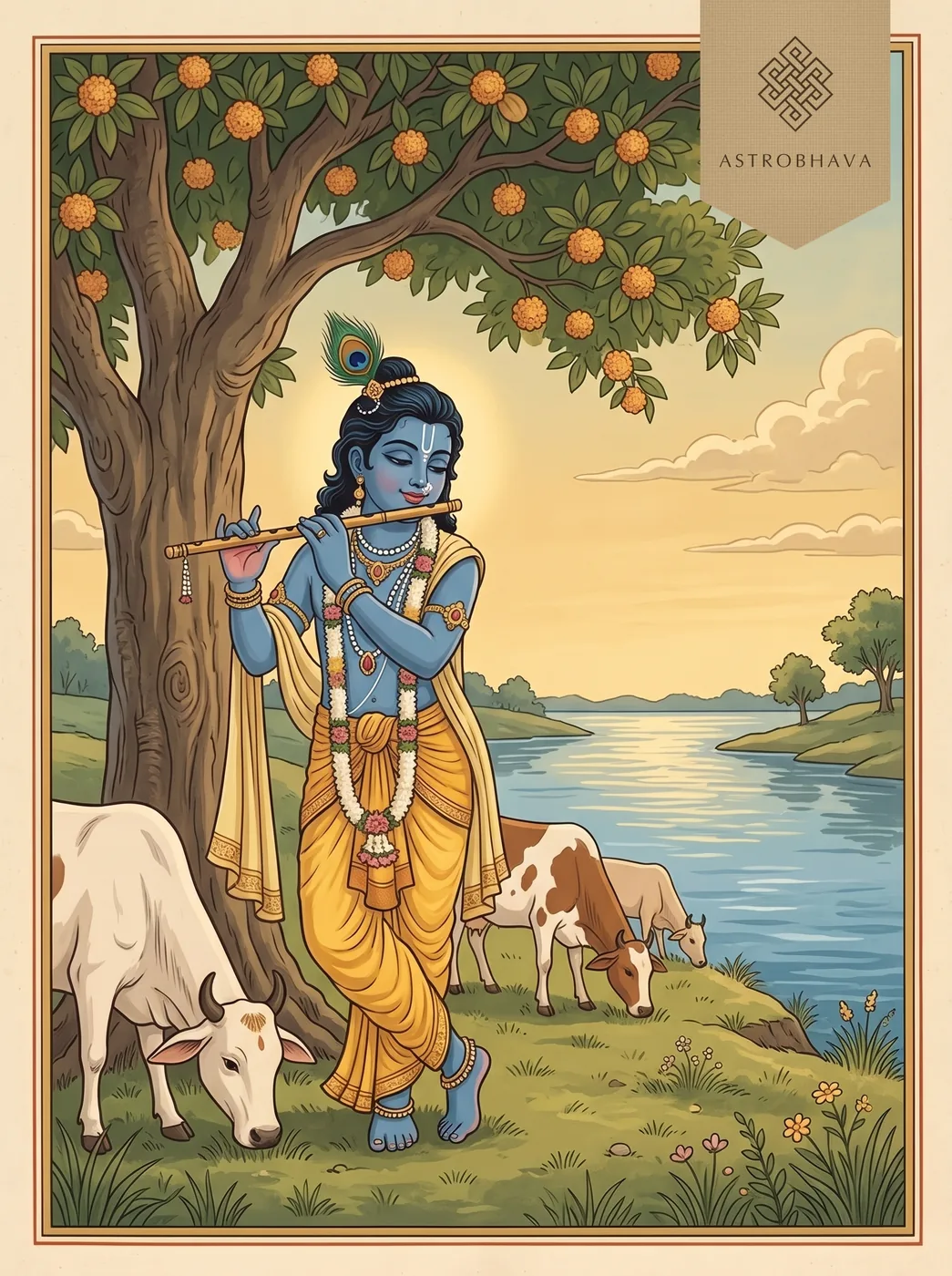
Gopala Sahasranamam
कैलासशिखरे रम्ये गौरी पृच्छति शङ्करम् । ब्रह्माण्डाखिलनाथस्त्वं सृष्टिसंहारकारकः ॥Also known as Gopala Sahasranama
In Devanagari, Tamil, Telugu, Kannada, Malayalam and English — with the meaning of every word, and the one syllable most people pronounce wrongly.
 The Sammohana Gopala Homam, performed for youBook →
What the Gopala Sahasranamam is
The Gopala Sahasranama, often searched as Gopala Sahasranamam, is a hymn of a thousand names of Krishna as Gopala, the cowherd of Vrindavana, and this page prints its Sammohana Tantra form, which opens kailasashikhare ramye, 'on a lovely peak of Kailasa'. It is a dialogue between Parvati and Shiva. In twenty-three opening verses Parvati asks whose hymn Shiva himself recites every day, and Shiva reveals that it is Gopala's. Two dhyana verses then picture Gopala with the flute, the Kaustubha gem, the peacock-feather crown and yellow silk, among cows and gopis. The names fill 142 verses and begin om klim devah kamadevah, with the seed syllable klim. They pass freely from the childhood deeds at Gokula to avatars such as the Fish, the Boar, Vamana and Narasimha, to Rama and Balarama, to rivers from the Ganga to the Kaveri, and to the formless Brahman, with Radha named again and again. Twenty-six verses of phala shruti close the hymn. A different Gopala Sahasranama, of the Narada Pancharatra, shares the name.
Parvati asks whose hymn Shiva recites
The hymn tells its own origin in the dialogue that opens it. On Kailasa, Parvati wonders aloud that Shiva, whom Brahma, Vishnu and every god worship, should himself recite some hymn every day, and she asks whose it is. Shiva praises the question as touching the secret of secrets and warns three times over that the hymn must be guarded, since, he says, its power is lost when it is handed out carelessly. He then names its subject: Janardana, formless consciousness, who took the form of Gopala to play in Vrindavana, born to Nanda and Yashoda at the prayer of Devaki and Vasudeva, the flute that pours out the Veda coming to earth with him. A striking passage follows. Shiva says the dark radiance of Krishna must never be worshipped apart from the fair radiance of Radha, because one light became twofold as Radha and Madhava, and the text ranks dividing them with the gravest sins. The occasion of the teaching is placed at the rasa dance in the month of Kartika: the sage Durvasa was bewildered there, and Radha put her own doubt to Krishna. The phala shruti later gives the line of teaching in full. Krishna told the names to Radhika, she told them to Shiva, Shiva told Narada, and Narada made them known to a few Vaishnavas of the Kali age.
The mantra, in six scripts
- कैलासशिखरे
- kailāsaśikhare — on the peak of Kailasa
- रम्ये
- ramye — lovely
- गौरी
- gaurī — Gauri (Parvati)
- पृच्छति
- pṛcchati — asks
- शङ्करम्
- śaṅkaram — Shankara (Shiva)
- ब्रह्माण्डाखिलनाथस्त्वं
- brahmāṇḍākhilanāthastvaṃ — you are the master of the whole universe
- सृष्टिसंहारकारकः
- sṛṣṭisaṃhārakārakaḥ — the maker of creation and dissolution
Gopala Sahasranamam lyrics in full
Twenty-three verses of the Parvati-Shiva dialogue, two dhyana verses, 142 verses of names and twenty-six of phala shruti. The printed closing line is given at the end.
All 194 verses, in Sanskrit, Tamil, Telugu, Kannada, Malayalam and English, each with its meaning. Choose a script:
Download the Gopala Sahasranamam PDFAll 194 verses with their meanings, in Sanskrit. Free to print and keep.
कैलासशिखरे रम्ये गौरी पृच्छति शङ्करम् ।
ब्रह्माण्डाखिलनाथस्त्वं सृष्टिसंहारकारकः ॥
கைலாஸஶிகரே ரம்யே கௌரீ ப்ருச்சதி ஶங்கரம் ।
ப்ரஹ்மாண்டாகிலநாதஸ்த்வம் ஸ்ருஷ்டிஸம்ஹாரகாரகஃ ॥
కైలాసశిఖరే రమ్యే గౌరీ పృచ్ఛతి శఙ్కరమ్ ।
బ్రహ్మాణ్డాఖిలనాథస్త్వం సృష్టిసంహారకారకః ॥
ಕೈಲಾಸಶಿಖರೇ ರಮ್ಯೇ ಗೌರೀ ಪೃಚ್ಛತಿ ಶಙ್ಕರಮ್ ।
ಬ್ರಹ್ಮಾಣ್ಡಾಖಿಲನಾಥಸ್ತ್ವಂ ಸೃಷ್ಟಿಸಂಹಾರಕಾರಕಃ ॥
കൈലാസശിഖരേ രമ്യേ ഗൌരീ പൃച്ഛതി ശങ്കരമ് ।
ബ്രഹ്മാണ്ഡാഖിലനാഥസ്ത്വം സൃഷ്ടിസംഹാരകാരകഃ ॥
kailāsaśikhare ramye gaurī pṛcchati śaṅkaram |
brahmāṇḍākhilanāthastvaṃ sṛṣṭisaṃhārakārakaḥ ||
On a lovely peak of Mount Kailasa, Gauri asked Shankara: You are the lord of the whole universe and the cause of its creation and dissolution.
त्वमेव पूज्यसे लोकैर्ब्रह्मविष्णुसुरादिभिः ।
नित्यं पठसि देवेश कस्य स्तोत्रं महेश्वर ॥
த்வமேவ பூஜ்யஸே லோகைர்ப்ரஹ்மவிஷ்ணுஸுராதிபிஃ ।
நித்யம் படஸி தேவேஶ கஸ்ய ஸ்தோத்ரம் மஹேஶ்வர ॥
త్వమేవ పూజ్యసే లోకైర్బ్రహ్మవిష్ణుసురాదిభిః ।
నిత్యం పఠసి దేవేశ కస్య స్తోత్రం మహేశ్వర ॥
ತ್ವಮೇವ ಪೂಜ್ಯಸೇ ಲೋಕೈರ್ಬ್ರಹ್ಮವಿಷ್ಣುಸುರಾದಿಭಿಃ ।
ನಿತ್ಯಂ ಪಠಸಿ ದೇವೇಶ ಕಸ್ಯ ಸ್ತೋತ್ರಂ ಮಹೇಶ್ವರ ॥
ത്വമേവ പൂജ്യസേ ലോകൈര്ബ്രഹ്മവിഷ്ണുസുരാദിഭിഃ ।
നിത്യം പഠസി ദേവേശ കസ്യ സ്തോത്രം മഹേശ്വര ॥
tvameva pūjyase lokairbrahmaviṣṇusurādibhiḥ |
nityaṃ paṭhasi deveśa kasya stotraṃ maheśvara ||
You are worshipped by all the worlds, by Brahma, Vishnu and the other gods. O lord of the gods, O great lord, whose hymn do you recite every day?
आश्चर्यमिदमत्यन्तं जायते मम शङ्कर ।
तत्प्राणेश महाप्राज्ञ संशयं छिन्धि शङ्कर ॥
ஆஶ்சர்யமிதமத்யந்தம் ஜாயதே மம ஶங்கர ।
தத்ப்ராணேஶ மஹாப்ராஜ்ஞ ஸம்ஶயம் சிந்தி ஶங்கர ॥
ఆశ్చర్యమిదమత్యన్తం జాయతే మమ శఙ్కర ।
తత్ప్రాణేశ మహాప్రాజ్ఞ సంశయం ఛిన్ధి శఙ్కర ॥
ಆಶ್ಚರ್ಯಮಿದಮತ್ಯನ್ತಂ ಜಾಯತೇ ಮಮ ಶಙ್ಕರ ।
ತತ್ಪ್ರಾಣೇಶ ಮಹಾಪ್ರಾಜ್ಞ ಸಂಶಯಂ ಛಿನ್ಧಿ ಶಙ್ಕರ ॥
ആശ്ചര്യമിദമത്യന്തം ജായതേ മമ ശങ്കര ।
തത്പ്രാണേശ മഹാപ്രാജ്ഞ സംശയം ഛിന്ധി ശങ്കര ॥
āścaryamidamatyantaṃ jāyate mama śaṅkara |
tatprāṇeśa mahāprājña saṃśayaṃ chindhi śaṅkara ||
This fills me with very great wonder, O Shankara. O lord of my life, O wise one, cut away my doubt, O Shankara.
धन्यासि कृतपुण्यासि पार्वति प्राणवल्लभे ।
रहस्यातिरहस्यं च यत्पृच्छसि वरानने ॥
தந்யாஸி க்ருதபுண்யாஸி பார்வதி ப்ராணவல்லபே ।
ரஹஸ்யாதிரஹஸ்யம் ச யத்ப்ருச்சஸி வராநநே ॥
ధన్యాసి కృతపుణ్యాసి పార్వతి ప్రాణవల్లభే ।
రహస్యాతిరహస్యం చ యత్పృచ్ఛసి వరాననే ॥
ಧನ್ಯಾಸಿ ಕೃತಪುಣ್ಯಾಸಿ ಪಾರ್ವತಿ ಪ್ರಾಣವಲ್ಲಭೇ ।
ರಹಸ್ಯಾತಿರಹಸ್ಯಂ ಚ ಯತ್ಪೃಚ್ಛಸಿ ವರಾನನೇ ॥
ധന്യാസി കൃതപുണ്യാസി പാര്വതി പ്രാണവല്ലഭേ ।
രഹസ്യാതിരഹസ്യം ച യത്പൃച്ഛസി വരാനനേ ॥
dhanyāsi kṛtapuṇyāsi pārvati prāṇavallabhe |
rahasyātirahasyaṃ ca yatpṛcchasi varānane ||
Shiva said: You are blessed and rich in merit, O Parvati, dear to me as life, for you ask about the secret of all secrets, O lovely-faced one.
स्त्रीस्वभावान्महादेवि पुनस्त्वं परिपृच्छसि ।
गोपनीयं गोपनीयं गोपनीयं प्रयत्नतः ॥
ஸ்த்ரீஸ்வபாவாந்மஹாதேவி புநஸ்த்வம் பரிப்ருச்சஸி ।
கோபநீயம் கோபநீயம் கோபநீயம் ப்ரயத்நதஃ ॥
స్త్రీస్వభావాన్మహాదేవి పునస్త్వం పరిపృచ్ఛసి ।
గోపనీయం గోపనీయం గోపనీయం ప్రయత్నతః ॥
ಸ್ತ್ರೀಸ್ವಭಾವಾನ್ಮಹಾದೇವಿ ಪುನಸ್ತ್ವಂ ಪರಿಪೃಚ್ಛಸಿ ।
ಗೋಪನೀಯಂ ಗೋಪನೀಯಂ ಗೋಪನೀಯಂ ಪ್ರಯತ್ನತಃ ॥
സ്ത്രീസ്വഭാവാന്മഹാദേവി പുനസ്ത്വം പരിപൃച്ഛസി ।
ഗോപനീയം ഗോപനീയം ഗോപനീയം പ്രയത്നതഃ ॥
strīsvabhāvānmahādevi punastvaṃ paripṛcchasi |
gopanīyaṃ gopanīyaṃ gopanīyaṃ prayatnataḥ ||
Out of a woman's nature, great goddess, you ask again and again. This is to be guarded, guarded, guarded with every care.
दत्ते च सिद्धिहानिः स्यात्तस्माद्यत्नेन गोपयेत् ।
इदं रहस्यं परमं पुरुषार्थप्रदायकम् ॥
தத்தே ச ஸித்திஹாநிஃ ஸ்யாத்தஸ்மாத்யத்நேந கோபயேத் ।
இதம் ரஹஸ்யம் பரமம் புருஷார்தப்ரதாயகம் ॥
దత్తే చ సిద్ధిహానిః స్యాత్తస్మాద్యత్నేన గోపయేత్ ।
ఇదం రహస్యం పరమం పురుషార్థప్రదాయకమ్ ॥
ದತ್ತೇ ಚ ಸಿದ್ಧಿಹಾನಿಃ ಸ್ಯಾತ್ತಸ್ಮಾದ್ಯತ್ನೇನ ಗೋಪಯೇತ್ ।
ಇದಂ ರಹಸ್ಯಂ ಪರಮಂ ಪುರುಷಾರ್ಥಪ್ರದಾಯಕಮ್ ॥
ദത്തേ ച സിദ്ധിഹാനിഃ സ്യാത്തസ്മാദ്യത്നേന ഗോപയേത് ।
ഇദം രഹസ്യം പരമം പുരുഷാര്ഥപ്രദായകമ് ॥
datte ca siddhihāniḥ syāttasmādyatnena gopayet |
idaṃ rahasyaṃ paramaṃ puruṣārthapradāyakam ||
If it is given away, spiritual attainment is lost, so it should be carefully kept hidden. This is the highest secret, granting the aims of human life.
धनरत्नौघमाणिक्यतुरङ्गमगजादिकम् ।
ददाति स्मरणादेव महामोक्षप्रदायकम् ॥
தநரத்நௌகமாணிக்யதுரங்கமகஜாதிகம் ।
ததாதி ஸ்மரணாதேவ மஹாமோக்ஷப்ரதாயகம் ॥
ధనరత్నౌఘమాణిక్యతురఙ్గమగజాదికమ్ ।
దదాతి స్మరణాదేవ మహామోక్షప్రదాయకమ్ ॥
ಧನರತ್ನೌಘಮಾಣಿಕ್ಯತುರಙ್ಗಮಗಜಾದಿಕಮ್ ।
ದದಾತಿ ಸ್ಮರಣಾದೇವ ಮಹಾಮೋಕ್ಷಪ್ರದಾಯಕಮ್ ॥
ധനരത്നൌഘമാണിക്യതുരങ്ഗമഗജാദികമ് ।
ദദാതി സ്മരണാദേവ മഹാമോക്ഷപ്രദായകമ് ॥
dhanaratnaughamāṇikyaturaṅgamagajādikam |
dadāti smaraṇādeva mahāmokṣapradāyakam ||
Merely remembering it, it gives wealth, heaps of gems and rubies, horses, elephants and the like, and it grants the great liberation.
तत्तेऽहं सम्प्रवक्ष्यामि शृणुष्वावहिता प्रिये ।
योऽसौ निरञ्जनो देवश्चित्स्वरूपी जनार्दनः ॥
தத்தேஹம் ஸம்ப்ரவக்ஷ்யாமி ஶ்ருணுஷ்வாவஹிதா ப்ரியே ।
யோஸௌ நிரஞ்ஜநோ தேவஶ்சித்ஸ்வரூபீ ஜநார்தநஃ ॥
తత్తేఽహం సమ్ప్రవక్ష్యామి శృణుష్వావహితా ప్రియే ।
యోఽసౌ నిరఞ్జనో దేవశ్చిత్స్వరూపీ జనార్దనః ॥
ತತ್ತೇಽಹಂ ಸಮ್ಪ್ರವಕ್ಷ್ಯಾಮಿ ಶೃಣುಷ್ವಾವಹಿತಾ ಪ್ರಿಯೇ ।
ಯೋಽಸೌ ನಿರಞ್ಜನೋ ದೇವಶ್ಚಿತ್ಸ್ವರೂಪೀ ಜನಾರ್ದನಃ ॥
തത്തേഽഹം സമ്പ്രവക്ഷ്യാമി ശൃണുഷ്വാവഹിതാ പ്രിയേ ।
യോഽസൌ നിരഞ്ജനോ ദേവശ്ചിത്സ്വരൂപീ ജനാര്ദനഃ ॥
tatte'haṃ sampravakṣyāmi śṛṇuṣvāvahitā priye |
yo'sau nirañjano devaścitsvarūpī janārdanaḥ ||
So I shall tell it to you; listen attentively, my dear. That stainless god whose very nature is consciousness is Janardana.
संसारसागरोत्तारकारणाय सदा नृणाम् ।
श्रीरङ्गादिकरूपेण त्रैलोक्यं व्याप्य तिष्ठति ॥
ஸம்ஸாரஸாகரோத்தாரகாரணாய ஸதா ந்ருணாம் ।
ஶ்ரீரங்காதிகரூபேண த்ரைலோக்யம் வ்யாப்ய திஷ்டதி ॥
సంసారసాగరోత్తారకారణాయ సదా నృణామ్ ।
శ్రీరఙ్గాదికరూపేణ త్రైలోక్యం వ్యాప్య తిష్ఠతి ॥
ಸಂಸಾರಸಾಗರೋತ್ತಾರಕಾರಣಾಯ ಸದಾ ನೃಣಾಮ್ ।
ಶ್ರೀರಙ್ಗಾದಿಕರೂಪೇಣ ತ್ರೈಲೋಕ್ಯಂ ವ್ಯಾಪ್ಯ ತಿಷ್ಠತಿ ॥
സംസാരസാഗരോത്താരകാരണായ സദാ നൃണാമ് ।
ശ്രീരങ്ഗാദികരൂപേണ ത്രൈലോക്യം വ്യാപ്യ തിഷ്ഠതി ॥
saṃsārasāgarottārakāraṇāya sadā nṛṇām |
śrīraṅgādikarūpeṇa trailokyaṃ vyāpya tiṣṭhati ||
To carry people across the ocean of worldly existence at all times, he pervades the three worlds in forms such as Sri Ranga.
ततो लोका महामूढा विष्णुभक्तिविवर्जिताः ।
निश्चयं नाधिगच्छन्ति पुनर्नारायणो हरिः ॥
ததோ லோகா மஹாமூடா விஷ்ணுபக்திவிவர்ஜிதாஃ ।
நிஶ்சயம் நாதிகச்சந்தி புநர்நாராயணோ ஹரிஃ ॥
తతో లోకా మహామూఢా విష్ణుభక్తివివర్జితాః ।
నిశ్చయం నాధిగచ్ఛన్తి పునర్నారాయణో హరిః ॥
ತತೋ ಲೋಕಾ ಮಹಾಮೂಢಾ ವಿಷ್ಣುಭಕ್ತಿವಿವರ್ಜಿತಾಃ ।
ನಿಶ್ಚಯಂ ನಾಧಿಗಚ್ಛನ್ತಿ ಪುನರ್ನಾರಾಯಣೋ ಹರಿಃ ॥
തതോ ലോകാ മഹാമൂഢാ വിഷ്ണുഭക്തിവിവര്ജിതാഃ ।
നിശ്ചയം നാധിഗച്ഛന്തി പുനര്നാരായണോ ഹരിഃ ॥
tato lokā mahāmūḍhā viṣṇubhaktivivarjitāḥ |
niścayaṃ nādhigacchanti punarnārāyaṇo hariḥ ||
Yet the deluded people of the world, devoid of devotion to Vishnu, do not grasp with certainty that he is Narayana, Hari.
निरञ्जनो निराकारो भक्तानां प्रीतिकामदः ।
वृन्दावनविहाराय गोपालं रूपमुद्वहन् ॥
நிரஞ்ஜநோ நிராகாரோ பக்தாநாம் ப்ரீதிகாமதஃ ।
வ்ருந்தாவநவிஹாராய கோபாலம் ரூபமுத்வஹந் ॥
నిరఞ్జనో నిరాకారో భక్తానాం ప్రీతికామదః ।
వృన్దావనవిహారాయ గోపాలం రూపముద్వహన్ ॥
ನಿರಞ್ಜನೋ ನಿರಾಕಾರೋ ಭಕ್ತಾನಾಂ ಪ್ರೀತಿಕಾಮದಃ ।
ವೃನ್ದಾವನವಿಹಾರಾಯ ಗೋಪಾಲಂ ರೂಪಮುದ್ವಹನ್ ॥
നിരഞ്ജനോ നിരാകാരോ ഭക്താനാം പ്രീതികാമദഃ ।
വൃന്ദാവനവിഹാരായ ഗോപാലം രൂപമുദ്വഹന് ॥
nirañjano nirākāro bhaktānāṃ prītikāmadaḥ |
vṛndāvanavihārāya gopālaṃ rūpamudvahan ||
The stainless, formless one, who grants the loving wishes of his devotees, took the form of Gopala to play in Vrindavana.
मुरलीवादनाधारी राधायै प्रीतिमावहन् ।
अंशांशेभ्यः समुन्मील्य पूर्णरूपकलायुतः ॥
முரலீவாதநாதாரீ ராதாயை ப்ரீதிமாவஹந் ।
அம்ஶாம்ஶேப்யஃ ஸமுந்மீல்ய பூர்ணரூபகலாயுதஃ ॥
మురలీవాదనాధారీ రాధాయై ప్రీతిమావహన్ ।
అంశాంశేభ్యః సమున్మీల్య పూర్ణరూపకలాయుతః ॥
ಮುರಲೀವಾದನಾಧಾರೀ ರಾಧಾಯೈ ಪ್ರೀತಿಮಾವಹನ್ ।
ಅಂಶಾಂಶೇಭ್ಯಃ ಸಮುನ್ಮೀಲ್ಯ ಪೂರ್ಣರೂಪಕಲಾಯುತಃ ॥
മുരലീവാദനാധാരീ രാധായൈ പ്രീതിമാവഹന് ।
അംശാംശേഭ്യഃ സമുന്മീല്യ പൂര്ണരൂപകലായുതഃ ॥
muralīvādanādhārī rādhāyai prītimāvahan |
aṃśāṃśebhyaḥ samunmīlya pūrṇarūpakalāyutaḥ ||
Holding the flute and delighting Radha, he unfolded out of his portions and their portions a form complete with every power.
श्रीकृष्णचन्द्रो भगवान् नन्दगोपवरोद्यतः ।
धरणीरूपिणीमातृयशोदानन्ददायकः ॥
ஶ்ரீக்ருஷ்ணசந்த்ரோ பகவாந் நந்தகோபவரோத்யதஃ ।
தரணீரூபிணீமாத்ருயஶோதாநந்ததாயகஃ ॥
శ్రీకృష్ణచన్ద్రో భగవాన్ నన్దగోపవరోద్యతః ।
ధరణీరూపిణీమాతృయశోదానన్దదాయకః ॥
ಶ್ರೀಕೃಷ್ಣಚನ್ದ್ರೋ ಭಗವಾನ್ ನನ್ದಗೋಪವರೋದ್ಯತಃ ।
ಧರಣೀರೂಪಿಣೀಮಾತೃಯಶೋದಾನನ್ದದಾಯಕಃ ॥
ശ്രീകൃഷ്ണചന്ദ്രോ ഭഗവാന് നന്ദഗോപവരോദ്യതഃ ।
ധരണീരൂപിണീമാതൃയശോദാനന്ദദായകഃ ॥
śrīkṛṣṇacandro bhagavān nandagopavarodyataḥ |
dharaṇīrūpiṇīmātṛyaśodānandadāyakaḥ ||
He is the blessed Lord Sri Krishnachandra, born to the noble cowherd Nanda, giving joy to his mother Yashoda, who was the earth in human form.
द्वाभ्यां प्रयाचितो नाथो देवक्यां वसुदेवतः ।
ब्राह्मणाभ्यर्थितो देवो देवैरपि सुरेश्वरि ॥
த்வாப்யாம் ப்ரயாசிதோ நாதோ தேவக்யாம் வஸுதேவதஃ ।
ப்ராஹ்மணாப்யர்திதோ தேவோ தேவைரபி ஸுரேஶ்வரி ॥
ద్వాభ్యాం ప్రయాచితో నాథో దేవక్యాం వసుదేవతః ।
బ్రాహ్మణాభ్యర్థితో దేవో దేవైరపి సురేశ్వరి ॥
ದ್ವಾಭ್ಯಾಂ ಪ್ರಯಾಚಿತೋ ನಾಥೋ ದೇವಕ್ಯಾಂ ವಸುದೇವತಃ ।
ಬ್ರಾಹ್ಮಣಾಭ್ಯರ್ಥಿತೋ ದೇವೋ ದೇವೈರಪಿ ಸುರೇಶ್ವರಿ ॥
ദ്വാഭ്യാം പ്രയാചിതോ നാഥോ ദേവക്യാം വസുദേവതഃ ।
ബ്രാഹ്മണാഭ്യര്ഥിതോ ദേവോ ദേവൈരപി സുരേശ്വരി ॥
dvābhyāṃ prayācito nātho devakyāṃ vasudevataḥ |
brāhmaṇābhyarthito devo devairapi sureśvari ||
Prayed for by the two, Devaki and Vasudeva, besought by the Brahmins and by the gods too, O queen of the gods, the Lord came forth.
जातोऽवन्यां मुकुन्दोऽपि मुरली वेदरेचिका ।
तया सार्द्धं वचः कृत्वा ततो जातो महीतले ॥
ஜாதோவந்யாம் முகுந்தோபி முரலீ வேதரேசிகா ।
தயா ஸார்த்தம் வசஃ க்ருத்வா ததோ ஜாதோ மஹீதலே ॥
జాతోఽవన్యాం ముకున్దోఽపి మురలీ వేదరేచికా ।
తయా సార్ద్ధం వచః కృత్వా తతో జాతో మహీతలే ॥
ಜಾತೋಽವನ್ಯಾಂ ಮುಕುನ್ದೋಽಪಿ ಮುರಲೀ ವೇದರೇಚಿಕಾ ।
ತಯಾ ಸಾರ್ದ್ಧಂ ವಚಃ ಕೃತ್ವಾ ತತೋ ಜಾತೋ ಮಹೀತಲೇ ॥
ജാതോഽവന്യാം മുകുന്ദോഽപി മുരലീ വേദരേചികാ ।
തയാ സാര്ദ്ധം വചഃ കൃത്വാ തതോ ജാതോ മഹീതലേ ॥
jāto'vanyāṃ mukundo'pi muralī vedarecikā |
tayā sārddhaṃ vacaḥ kṛtvā tato jāto mahītale ||
Mukunda too was born on earth, and the flute that pours out the Veda came with him; having spoken with her, he was born upon the earth.
संसारसारसर्वस्वं श्यामलं महदुज्ज्वलम् ।
एतज्ज्योतिरहं वेद्यं चिन्तयामि सनातनम् ॥
ஸம்ஸாரஸாரஸர்வஸ்வம் ஶ்யாமலம் மஹதுஜ்ஜ்வலம் ।
ஏதஜ்ஜ்யோதிரஹம் வேத்யம் சிந்தயாமி ஸநாதநம் ॥
సంసారసారసర్వస్వం శ్యామలం మహదుజ్జ్వలమ్ ।
ఏతజ్జ్యోతిరహం వేద్యం చిన్తయామి సనాతనమ్ ॥
ಸಂಸಾರಸಾರಸರ್ವಸ್ವಂ ಶ್ಯಾಮಲಂ ಮಹದುಜ್ಜ್ವಲಮ್ ।
ಏತಜ್ಜ್ಯೋತಿರಹಂ ವೇದ್ಯಂ ಚಿನ್ತಯಾಮಿ ಸನಾತನಮ್ ॥
സംസാരസാരസര്വസ്വം ശ്യാമലം മഹദുജ്ജ്വലമ് ।
ഏതജ്ജ്യോതിരഹം വേദ്യം ചിന്തയാമി സനാതനമ് ॥
saṃsārasārasarvasvaṃ śyāmalaṃ mahadujjvalam |
etajjyotirahaṃ vedyaṃ cintayāmi sanātanam ||
I meditate on that eternal light, dark and greatly radiant, the whole essence of worldly life, the light to be known.
गौरतेजो विना यस्तु श्यामतेजः समर्चयेत् ।
जपेद्वा ध्यायते वापि स भवेत् पातकी शिवे ॥
கௌரதேஜோ விநா யஸ்து ஶ்யாமதேஜஃ ஸமர்சயேத் ।
ஜபேத்வா த்யாயதே வாபி ஸ பவேத் பாதகீ ஶிவே ॥
గౌరతేజో వినా యస్తు శ్యామతేజః సమర్చయేత్ ।
జపేద్వా ధ్యాయతే వాపి స భవేత్ పాతకీ శివే ॥
ಗೌರತೇಜೋ ವಿನಾ ಯಸ್ತು ಶ್ಯಾಮತೇಜಃ ಸಮರ್ಚಯೇತ್ ।
ಜಪೇದ್ವಾ ಧ್ಯಾಯತೇ ವಾಪಿ ಸ ಭವೇತ್ ಪಾತಕೀ ಶಿವೇ ॥
ഗൌരതേജോ വിനാ യസ്തു ശ്യാമതേജഃ സമര്ചയേത് ।
ജപേദ്വാ ധ്യായതേ വാപി സ ഭവേത് പാതകീ ശിവേ ॥
gauratejo vinā yastu śyāmatejaḥ samarcayet |
japedvā dhyāyate vāpi sa bhavet pātakī śive ||
Whoever worships, chants or meditates on the dark radiance without the fair radiance becomes a sinner, O Shiva.
स ब्रह्महा सुरापी च स्वर्णस्तेयी च पञ्चमः ।
एतैर्दोषैर्विलिप्येत तेजोभेदान्महेश्वरि ॥
ஸ ப்ரஹ்மஹா ஸுராபீ ச ஸ்வர்ணஸ்தேயீ ச பஞ்சமஃ ।
ஏதைர்தோஷைர்விலிப்யேத தேஜோபேதாந்மஹேஶ்வரி ॥
స బ్రహ్మహా సురాపీ చ స్వర్ణస్తేయీ చ పఞ్చమః ।
ఏతైర్దోషైర్విలిప్యేత తేజోభేదాన్మహేశ్వరి ॥
ಸ ಬ್ರಹ್ಮಹಾ ಸುರಾಪೀ ಚ ಸ್ವರ್ಣಸ್ತೇಯೀ ಚ ಪಞ್ಚಮಃ ।
ಏತೈರ್ದೋಷೈರ್ವಿಲಿಪ್ಯೇತ ತೇಜೋಭೇದಾನ್ಮಹೇಶ್ವರಿ ॥
സ ബ്രഹ്മഹാ സുരാപീ ച സ്വര്ണസ്തേയീ ച പഞ്ചമഃ ।
ഏതൈര്ദോഷൈര്വിലിപ്യേത തേജോഭേദാന്മഹേശ്വരി ॥
sa brahmahā surāpī ca svarṇasteyī ca pañcamaḥ |
etairdoṣairvilipyeta tejobhedānmaheśvari ||
Such a person is stained with the faults of the slayer of a Brahmin, the drinker, the stealer of gold, and the fifth, their companion, because he divides the one radiance, O great goddess.
तस्माज्ज्योतिरभूद् द्वेधा राधामाधवरूपकम् ।
तस्मादिदं महादेवि गोपालेनैव भाषितम् ॥
தஸ்மாஜ்ஜ்யோதிரபூத் த்வேதா ராதாமாதவரூபகம் ।
தஸ்மாதிதம் மஹாதேவி கோபாலேநைவ பாஷிதம் ॥
తస్మాజ్జ్యోతిరభూద్ ద్వేధా రాధామాధవరూపకమ్ ।
తస్మాదిదం మహాదేవి గోపాలేనైవ భాషితమ్ ॥
ತಸ್ಮಾಜ್ಜ್ಯೋತಿರಭೂದ್ ದ್ವೇಧಾ ರಾಧಾಮಾಧವರೂಪಕಮ್ ।
ತಸ್ಮಾದಿದಂ ಮಹಾದೇವಿ ಗೋಪಾಲೇನೈವ ಭಾಷಿತಮ್ ॥
തസ്മാജ്ജ്യോതിരഭൂദ് ദ്വേധാ രാധാമാധവരൂപകമ് ।
തസ്മാദിദം മഹാദേവി ഗോപാലേനൈവ ഭാഷിതമ് ॥
tasmājjyotirabhūd dvedhā rādhāmādhavarūpakam |
tasmādidaṃ mahādevi gopālenaiva bhāṣitam ||
Therefore that light became twofold, in the form of Radha and Madhava; and therefore, great goddess, this was spoken by Gopala himself.
दुर्वाससो मुनेर्मोहे कार्तिक्यां रासमण्डले ।
ततः पृष्टवती राधा सन्देहं भेदमात्मनः ॥
துர்வாஸஸோ முநேர்மோஹே கார்திக்யாம் ராஸமண்டலே ।
ததஃ ப்ருஷ்டவதீ ராதா ஸந்தேஹம் பேதமாத்மநஃ ॥
దుర్వాససో మునేర్మోహే కార్తిక్యాం రాసమణ్డలే ।
తతః పృష్టవతీ రాధా సన్దేహం భేదమాత్మనః ॥
ದುರ್ವಾಸಸೋ ಮುನೇರ್ಮೋಹೇ ಕಾರ್ತಿಕ್ಯಾಂ ರಾಸಮಣ್ಡಲೇ ।
ತತಃ ಪೃಷ್ಟವತೀ ರಾಧಾ ಸನ್ದೇಹಂ ಭೇದಮಾತ್ಮನಃ ॥
ദുര്വാസസോ മുനേര്മോഹേ കാര്തിക്യാം രാസമണ്ഡലേ ।
തതഃ പൃഷ്ടവതീ രാധാ സന്ദേഹം ഭേദമാത്മനഃ ॥
durvāsaso munermohe kārtikyāṃ rāsamaṇḍale |
tataḥ pṛṣṭavatī rādhā sandehaṃ bhedamātmanaḥ ||
When the sage Durvasa was bewildered at the rasa dance in the month of Kartika, Radha asked about her own doubt and the difference within herself.
निरञ्जनात्समुत्पन्नं मयाधीतं जगन्मयि ।
श्रीकृष्णेन ततः प्रोक्तं राधायै नारदाय च ॥
நிரஞ்ஜநாத்ஸமுத்பந்நம் மயாதீதம் ஜகந்மயி ।
ஶ்ரீக்ருஷ்ணேந ததஃ ப்ரோக்தம் ராதாயை நாரதாய ச ॥
నిరఞ్జనాత్సముత్పన్నం మయాధీతం జగన్మయి ।
శ్రీకృష్ణేన తతః ప్రోక్తం రాధాయై నారదాయ చ ॥
ನಿರಞ್ಜನಾತ್ಸಮುತ್ಪನ್ನಂ ಮಯಾಧೀತಂ ಜಗನ್ಮಯಿ ।
ಶ್ರೀಕೃಷ್ಣೇನ ತತಃ ಪ್ರೋಕ್ತಂ ರಾಧಾಯೈ ನಾರದಾಯ ಚ ॥
നിരഞ്ജനാത്സമുത്പന്നം മയാധീതം ജഗന്മയി ।
ശ്രീകൃഷ്ണേന തതഃ പ്രോക്തം രാധായൈ നാരദായ ച ॥
nirañjanātsamutpannaṃ mayādhītaṃ jaganmayi |
śrīkṛṣṇena tataḥ proktaṃ rādhāyai nāradāya ca ||
Sprung from the stainless one, it was learned by me, O you who are the world; it was then told by Sri Krishna to Radha and to Narada.
ततो नारदतः सर्वं विरला वैष्णवास्तथा ।
कलौ जानन्ति देवेशि गोपनीयं प्रयत्नतः ॥
ததோ நாரததஃ ஸர்வம் விரலா வைஷ்ணவாஸ்ததா ।
கலௌ ஜாநந்தி தேவேஶி கோபநீயம் ப்ரயத்நதஃ ॥
తతో నారదతః సర్వం విరలా వైష్ణవాస్తథా ।
కలౌ జానన్తి దేవేశి గోపనీయం ప్రయత్నతః ॥
ತತೋ ನಾರದತಃ ಸರ್ವಂ ವಿರಲಾ ವೈಷ್ಣವಾಸ್ತಥಾ ।
ಕಲೌ ಜಾನನ್ತಿ ದೇವೇಶಿ ಗೋಪನೀಯಂ ಪ್ರಯತ್ನತಃ ॥
തതോ നാരദതഃ സര്വം വിരലാ വൈഷ്ണവാസ്തഥാ ।
കലൌ ജാനന്തി ദേവേശി ഗോപനീയം പ്രയത്നതഃ ॥
tato nāradataḥ sarvaṃ viralā vaiṣṇavāstathā |
kalau jānanti deveśi gopanīyaṃ prayatnataḥ ||
Then, from Narada, only a few Vaishnavas came to know it all in the Kali age, O queen of the gods; it is to be guarded with care.
शठाय कृपणायाथ दाम्भिकाय सुरेश्वरि ।
ब्रह्महत्यामवाप्नोति तस्माद्यत्नेन गोपयेत् ॥
ஶடாய க்ருபணாயாத தாம்பிகாய ஸுரேஶ்வரி ।
ப்ரஹ்மஹத்யாமவாப்நோதி தஸ்மாத்யத்நேந கோபயேத் ॥
శఠాయ కృపణాయాథ దామ్భికాయ సురేశ్వరి ।
బ్రహ్మహత్యామవాప్నోతి తస్మాద్యత్నేన గోపయేత్ ॥
ಶಠಾಯ ಕೃಪಣಾಯಾಥ ದಾಮ್ಭಿಕಾಯ ಸುರೇಶ್ವರಿ ।
ಬ್ರಹ್ಮಹತ್ಯಾಮವಾಪ್ನೋತಿ ತಸ್ಮಾದ್ಯತ್ನೇನ ಗೋಪಯೇತ್ ॥
ശഠായ കൃപണായാഥ ദാമ്ഭികായ സുരേശ്വരി ।
ബ്രഹ്മഹത്യാമവാപ്നോതി തസ്മാദ്യത്നേന ഗോപയേത് ॥
śaṭhāya kṛpaṇāyātha dāmbhikāya sureśvari |
brahmahatyāmavāpnoti tasmādyatnena gopayet ||
Whoever gives it to a deceiver, a miser or a hypocrite, O queen of the gods, incurs the sin of slaying a Brahmin; so it should be carefully guarded.
कस्तूरीतिलकं ललाटपटले वक्षःस्थले कौस्तुभं नासाग्रे वरमौक्तिकं करतले वेणुं करे कङ्कणम् ।
सर्वाङ्गे हरिचन्दनं सुललितं कण्ठे च मुक्तावलिम् गोपस्त्रीपरिवेष्टितो विजयते गोपालचूडामणिः ॥
கஸ்தூரீதிலகம் லலாடபடலே வக்ஷஃஸ்தலே கௌஸ்துபம் நாஸாக்ரே வரமௌக்திகம் கரதலே வேணும் கரே கங்கணம் ।
ஸர்வாங்கே ஹரிசந்தநம் ஸுலலிதம் கண்டே ச முக்தாவலிம் கோபஸ்த்ரீபரிவேஷ்டிதோ விஜயதே கோபாலசூடாமணிஃ ॥
కస్తూరీతిలకం లలాటపటలే వక్షఃస్థలే కౌస్తుభం నాసాగ్రే వరమౌక్తికం కరతలే వేణుం కరే కఙ్కణమ్ ।
సర్వాఙ్గే హరిచన్దనం సులలితం కణ్ఠే చ ముక్తావలిమ్ గోపస్త్రీపరివేష్టితో విజయతే గోపాలచూడామణిః ॥
ಕಸ್ತೂರೀತಿಲಕಂ ಲಲಾಟಪಟಲೇ ವಕ್ಷಃಸ್ಥಲೇ ಕೌಸ್ತುಭಂ ನಾಸಾಗ್ರೇ ವರಮೌಕ್ತಿಕಂ ಕರತಲೇ ವೇಣುಂ ಕರೇ ಕಙ್ಕಣಮ್ ।
ಸರ್ವಾಙ್ಗೇ ಹರಿಚನ್ದನಂ ಸುಲಲಿತಂ ಕಣ್ಠೇ ಚ ಮುಕ್ತಾವಲಿಮ್ ಗೋಪಸ್ತ್ರೀಪರಿವೇಷ್ಟಿತೋ ವಿಜಯತೇ ಗೋಪಾಲಚೂಡಾಮಣಿಃ ॥
കസ്തൂരീതിലകം ലലാടപടലേ വക്ഷഃസ്ഥലേ കൌസ്തുഭം നാസാഗ്രേ വരമൌക്തികം കരതലേ വേണും കരേ കങ്കണമ് ।
സര്വാങ്ഗേ ഹരിചന്ദനം സുലലിതം കണ്ഠേ ച മുക്താവലിമ് ഗോപസ്ത്രീപരിവേഷ്ടിതോ വിജയതേ ഗോപാലചൂഡാമണിഃ ॥
kastūrītilakaṃ lalāṭapaṭale vakṣaḥsthale kaustubhaṃ nāsāgre varamauktikaṃ karatale veṇuṃ kare kaṅkaṇam |
sarvāṅge haricandanaṃ sulalitaṃ kaṇṭhe ca muktāvalim gopastrīpariveṣṭito vijayate gopālacūḍāmaṇiḥ ||
Gopala, crest-jewel of the cowherds, triumphs: musk mark on his forehead, the Kaustubha gem on his chest, a fine pearl at the tip of his nose, the flute in his hand and a bangle on his wrist. Sandal paste covers his graceful limbs, a string of pearls hangs at his neck, and the cowherd women surround him.
फुल्लेन्दीवरकान्तिमिन्दुवदनं बर्हावतंसप्रियं श्रीवत्साङ्कमुदारकौस्तुभधरं पीताम्बरं सुन्दरम् ।
गोपीनां नयनोत्पलार्चिततनुं गोगोपसङ्घावृतं गोविन्दं कलवेणुवादनपरं दिव्याङ्गभूषं भजे ॥
புல்லேந்தீவரகாந்திமிந்துவதநம் பர்ஹாவதம்ஸப்ரியம் ஶ்ரீவத்ஸாங்கமுதாரகௌஸ்துபதரம் பீதாம்பரம் ஸுந்தரம் ।
கோபீநாம் நயநோத்பலார்சிததநும் கோகோபஸங்காவ்ருதம் கோவிந்தம் கலவேணுவாதநபரம் திவ்யாங்கபூஷம் பஜே ॥
ఫుల్లేన్దీవరకాన్తిమిన్దువదనం బర్హావతంసప్రియం శ్రీవత్సాఙ్కముదారకౌస్తుభధరం పీతామ్బరం సున్దరమ్ ।
గోపీనాం నయనోత్పలార్చితతనుం గోగోపసఙ్ఘావృతం గోవిన్దం కలవేణువాదనపరం దివ్యాఙ్గభూషం భజే ॥
ಫುಲ್ಲೇನ್ದೀವರಕಾನ್ತಿಮಿನ್ದುವದನಂ ಬರ್ಹಾವತಂಸಪ್ರಿಯಂ ಶ್ರೀವತ್ಸಾಙ್ಕಮುದಾರಕೌಸ್ತುಭಧರಂ ಪೀತಾಮ್ಬರಂ ಸುನ್ದರಮ್ ।
ಗೋಪೀನಾಂ ನಯನೋತ್ಪಲಾರ್ಚಿತತನುಂ ಗೋಗೋಪಸಙ್ಘಾವೃತಂ ಗೋವಿನ್ದಂ ಕಲವೇಣುವಾದನಪರಂ ದಿವ್ಯಾಙ್ಗಭೂಷಂ ಭಜೇ ॥
ഫുല്ലേന്ദീവരകാന്തിമിന്ദുവദനം ബര്ഹാവതംസപ്രിയം ശ്രീവത്സാങ്കമുദാരകൌസ്തുഭധരം പീതാമ്ബരം സുന്ദരമ് ।
ഗോപീനാം നയനോത്പലാര്ചിതതനും ഗോഗോപസങ്ഘാവൃതം ഗോവിന്ദം കലവേണുവാദനപരം ദിവ്യാങ്ഗഭൂഷം ഭജേ ॥
phullendīvarakāntiminduvadanaṃ barhāvataṃsapriyaṃ śrīvatsāṅkamudārakaustubhadharaṃ pītāmbaraṃ sundaram |
gopīnāṃ nayanotpalārcitatanuṃ gogopasaṅghāvṛtaṃ govindaṃ kalaveṇuvādanaparaṃ divyāṅgabhūṣaṃ bhaje ||
I worship Govinda, bright as a blooming blue lotus, moon-faced, fond of his peacock-feather crown, marked with the Srivatsa, wearing the great Kaustubha gem and yellow silk, beautiful; his body is honoured by the lotus eyes of the gopis, he is surrounded by cows and cowherds, absorbed in playing the sweet flute, and his limbs are adorned with divine ornaments.
ॐ क्लीं देवः कामदेवः कामबीजशिरोमणिः ।
श्रीगोपालो महीपालः सर्ववेदान्तपारगः ॥
ௐ க்லீம் தேவஃ காமதேவஃ காமபீஜஶிரோமணிஃ ।
ஶ்ரீகோபாலோ மஹீபாலஃ ஸர்வவேதாந்தபாரகஃ ॥
ఓం క్లీం దేవః కామదేవః కామబీజశిరోమణిః ।
శ్రీగోపాలో మహీపాలః సర్వవేదాన్తపారగః ॥
ಓಂ ಕ್ಲೀಂ ದೇವಃ ಕಾಮದೇವಃ ಕಾಮಬೀಜಶಿರೋಮಣಿಃ ।
ಶ್ರೀಗೋಪಾಲೋ ಮಹೀಪಾಲಃ ಸರ್ವವೇದಾನ್ತಪಾರಗಃ ॥
ഓം ക്ലീം ദേവഃ കാമദേവഃ കാമബീജശിരോമണിഃ ।
ശ്രീഗോപാലോ മഹീപാലഃ സര്വവേദാന്തപാരഗഃ ॥
oṃ klīṃ devaḥ kāmadevaḥ kāmabījaśiromaṇiḥ |
śrīgopālo mahīpālaḥ sarvavedāntapāragaḥ ||
Om Klim. He is the god, the god of love, the crest-jewel of the seed syllable of love; he is Sri Gopala, protector of the earth, who has crossed to the far shore of all Vedanta.
कृष्णः कमलपत्राक्षः पुण्डरीकः सनातनः ।
गोपतिर्भूपतिः शास्ता प्रहर्ता विश्वतोमुखः ॥
க்ருஷ்ணஃ கமலபத்ராக்ஷஃ புண்டரீகஃ ஸநாதநஃ ।
கோபதிர்பூபதிஃ ஶாஸ்தா ப்ரஹர்தா விஶ்வதோமுகஃ ॥
కృష్ణః కమలపత్రాక్షః పుణ్డరీకః సనాతనః ।
గోపతిర్భూపతిః శాస్తా ప్రహర్తా విశ్వతోముఖః ॥
ಕೃಷ್ಣಃ ಕಮಲಪತ್ರಾಕ್ಷಃ ಪುಣ್ಡರೀಕಃ ಸನಾತನಃ ।
ಗೋಪತಿರ್ಭೂಪತಿಃ ಶಾಸ್ತಾ ಪ್ರಹರ್ತಾ ವಿಶ್ವತೋಮುಖಃ ॥
കൃഷ്ണഃ കമലപത്രാക്ഷഃ പുണ്ഡരീകഃ സനാതനഃ ।
ഗോപതിര്ഭൂപതിഃ ശാസ്താ പ്രഹര്താ വിശ്വതോമുഖഃ ॥
kṛṣṇaḥ kamalapatrākṣaḥ puṇḍarīkaḥ sanātanaḥ |
gopatirbhūpatiḥ śāstā prahartā viśvatomukhaḥ ||
He is Krishna with eyes like lotus petals, the white lotus, the eternal; lord of cows and of the earth, the ruler, the striker of the wicked, facing every direction.
आदिकर्ता महाकर्ता महाकालः प्रतापवान् ।
जगज्जीवो जगद्धाता जगद्भर्ता जगद्वसुः ॥
ஆதிகர்தா மஹாகர்தா மஹாகாலஃ ப்ரதாபவாந் ।
ஜகஜ்ஜீவோ ஜகத்தாதா ஜகத்பர்தா ஜகத்வஸுஃ ॥
ఆదికర్తా మహాకర్తా మహాకాలః ప్రతాపవాన్ ।
జగజ్జీవో జగద్ధాతా జగద్భర్తా జగద్వసుః ॥
ಆದಿಕರ್ತಾ ಮಹಾಕರ್ತಾ ಮಹಾಕಾಲಃ ಪ್ರತಾಪವಾನ್ ।
ಜಗಜ್ಜೀವೋ ಜಗದ್ಧಾತಾ ಜಗದ್ಭರ್ತಾ ಜಗದ್ವಸುಃ ॥
ആദികര്താ മഹാകര്താ മഹാകാലഃ പ്രതാപവാന് ।
ജഗജ്ജീവോ ജഗദ്ധാതാ ജഗദ്ഭര്താ ജഗദ്വസുഃ ॥
ādikartā mahākartā mahākālaḥ pratāpavān |
jagajjīvo jagaddhātā jagadbhartā jagadvasuḥ ||
He is the first maker and the great maker, great Time, full of majesty; the life, the sustainer, the support and the wealth of the world.
मत्स्यो भीमः कुहूभर्ता हर्ता वाराहमूर्तिमान् ।
नारायणो हृषीकेशो गोविन्दो गरुडध्वजः ॥
மத்ஸ்யோ பீமஃ குஹூபர்தா ஹர்தா வாராஹமூர்திமாந் ।
நாராயணோ ஹ்ருஷீகேஶோ கோவிந்தோ கருடத்வஜஃ ॥
మత్స్యో భీమః కుహూభర్తా హర్తా వారాహమూర్తిమాన్ ।
నారాయణో హృషీకేశో గోవిన్దో గరుడధ్వజః ॥
ಮತ್ಸ್ಯೋ ಭೀಮಃ ಕುಹೂಭರ್ತಾ ಹರ್ತಾ ವಾರಾಹಮೂರ್ತಿಮಾನ್ ।
ನಾರಾಯಣೋ ಹೃಷೀಕೇಶೋ ಗೋವಿನ್ದೋ ಗರುಡಧ್ವಜಃ ॥
മത്സ്യോ ഭീമഃ കുഹൂഭര്താ ഹര്താ വാരാഹമൂര്തിമാന് ।
നാരായണോ ഹൃഷീകേശോ ഗോവിന്ദോ ഗരുഡധ്വജഃ ॥
matsyo bhīmaḥ kuhūbhartā hartā vārāhamūrtimān |
nārāyaṇo hṛṣīkeśo govindo garuḍadhvajaḥ ||
He is the Fish, the formidable one, lord of the new-moon night, the remover, the one in Boar form; he is Narayana, Hrishikesha, Govinda, whose banner bears Garuda.
गोकुलेन्द्रो महाचन्द्रः शर्वरीप्रियकारकः ।
कमलामुखलोलाक्षः पुण्डरीकः शुभावहः ॥
கோகுலேந்த்ரோ மஹாசந்த்ரஃ ஶர்வரீப்ரியகாரகஃ ।
கமலாமுகலோலாக்ஷஃ புண்டரீகஃ ஶுபாவஹஃ ॥
గోకులేన్ద్రో మహాచన్ద్రః శర్వరీప్రియకారకః ।
కమలాముఖలోలాక్షః పుణ్డరీకః శుభావహః ॥
ಗೋಕುಲೇನ್ದ್ರೋ ಮಹಾಚನ್ದ್ರಃ ಶರ್ವರೀಪ್ರಿಯಕಾರಕಃ ।
ಕಮಲಾಮುಖಲೋಲಾಕ್ಷಃ ಪುಣ್ಡರೀಕಃ ಶುಭಾವಹಃ ॥
ഗോകുലേന്ദ്രോ മഹാചന്ദ്രഃ ശര്വരീപ്രിയകാരകഃ ।
കമലാമുഖലോലാക്ഷഃ പുണ്ഡരീകഃ ശുഭാവഹഃ ॥
gokulendro mahācandraḥ śarvarīpriyakārakaḥ |
kamalāmukhalolākṣaḥ puṇḍarīkaḥ śubhāvahaḥ ||
He is the lord of Gokula, the great moon, who pleases the night; his eyes linger on Lakshmi's face, he is the white lotus who brings what is good.
दुर्वासाः कपिलो भौमः सिन्धुसागरसङ्गमः ।
गोविन्दो गोपतिर्गोत्रः कालिन्दीप्रेमपूरकः ॥
துர்வாஸாஃ கபிலோ பௌமஃ ஸிந்துஸாகரஸங்கமஃ ।
கோவிந்தோ கோபதிர்கோத்ரஃ காலிந்தீப்ரேமபூரகஃ ॥
దుర్వాసాః కపిలో భౌమః సిన్ధుసాగరసఙ్గమః ।
గోవిన్దో గోపతిర్గోత్రః కాలిన్దీప్రేమపూరకః ॥
ದುರ್ವಾಸಾಃ ಕಪಿಲೋ ಭೌಮಃ ಸಿನ್ಧುಸಾಗರಸಙ್ಗಮಃ ।
ಗೋವಿನ್ದೋ ಗೋಪತಿರ್ಗೋತ್ರಃ ಕಾಲಿನ್ದೀಪ್ರೇಮಪೂರಕಃ ॥
ദുര്വാസാഃ കപിലോ ഭൌമഃ സിന്ധുസാഗരസങ്ഗമഃ ।
ഗോവിന്ദോ ഗോപതിര്ഗോത്രഃ കാലിന്ദീപ്രേമപൂരകഃ ॥
durvāsāḥ kapilo bhaumaḥ sindhusāgarasaṅgamaḥ |
govindo gopatirgotraḥ kālindīpremapūrakaḥ ||
He is Durvasa, Kapila, the son of the earth, the meeting of river and sea; Govinda, lord of cows, the clan itself, who fills the Yamuna with love.
गोपस्वामी गोकुलेन्द्रो गोवर्धनवरप्रदः ।
नन्दादिगोकुलत्राता दाता दारिद्र्यभञ्जनः ॥
கோபஸ்வாமீ கோகுலேந்த்ரோ கோவர்தநவரப்ரதஃ ।
நந்தாதிகோகுலத்ராதா தாதா தாரித்ர்யபஞ்ஜநஃ ॥
గోపస్వామీ గోకులేన్ద్రో గోవర్ధనవరప్రదః ।
నన్దాదిగోకులత్రాతా దాతా దారిద్ర్యభఞ్జనః ॥
ಗೋಪಸ್ವಾಮೀ ಗೋಕುಲೇನ್ದ್ರೋ ಗೋವರ್ಧನವರಪ್ರದಃ ।
ನನ್ದಾದಿಗೋಕುಲತ್ರಾತಾ ದಾತಾ ದಾರಿದ್ರ್ಯಭಞ್ಜನಃ ॥
ഗോപസ്വാമീ ഗോകുലേന്ദ്രോ ഗോവര്ധനവരപ്രദഃ ।
നന്ദാദിഗോകുലത്രാതാ ദാതാ ദാരിദ്ര്യഭഞ്ജനഃ ॥
gopasvāmī gokulendro govardhanavarapradaḥ |
nandādigokulatrātā dātā dāridryabhañjanaḥ ||
He is master of the cowherds and lord of Gokula, who blessed Govardhana; protector of Nanda and all of Gokula, the giver who breaks poverty.
सर्वमङ्गलदाता च सर्वकामप्रदायकः ।
आदिकर्ता महीभर्ता सर्वसागरसिन्धुजः ॥
ஸர்வமங்கலதாதா ச ஸர்வகாமப்ரதாயகஃ ।
ஆதிகர்தா மஹீபர்தா ஸர்வஸாகரஸிந்துஜஃ ॥
సర్వమఙ్గలదాతా చ సర్వకామప్రదాయకః ।
ఆదికర్తా మహీభర్తా సర్వసాగరసిన్ధుజః ॥
ಸರ್ವಮಙ್ಗಲದಾತಾ ಚ ಸರ್ವಕಾಮಪ್ರದಾಯಕಃ ।
ಆದಿಕರ್ತಾ ಮಹೀಭರ್ತಾ ಸರ್ವಸಾಗರಸಿನ್ಧುಜಃ ॥
സര്വമങ്ഗലദാതാ ച സര്വകാമപ്രദായകഃ ।
ആദികര്താ മഹീഭര്താ സര്വസാഗരസിന്ധുജഃ ॥
sarvamaṅgaladātā ca sarvakāmapradāyakaḥ |
ādikartā mahībhartā sarvasāgarasindhujaḥ ||
He is the giver of every blessing and the granter of every wish; the first maker, the bearer of the earth, born of every sea and ocean.
गजगामी गजोद्धारी कामी कामकलानिधिः ।
कलङ्करहितश्चन्द्रो बिम्बास्यो बिम्बसत्तमः ॥
கஜகாமீ கஜோத்தாரீ காமீ காமகலாநிதிஃ ।
கலங்கரஹிதஶ்சந்த்ரோ பிம்பாஸ்யோ பிம்பஸத்தமஃ ॥
గజగామీ గజోద్ధారీ కామీ కామకలానిధిః ।
కలఙ్కరహితశ్చన్ద్రో బిమ్బాస్యో బిమ్బసత్తమః ॥
ಗಜಗಾಮೀ ಗಜೋದ್ಧಾರೀ ಕಾಮೀ ಕಾಮಕಲಾನಿಧಿಃ ।
ಕಲಙ್ಕರಹಿತಶ್ಚನ್ದ್ರೋ ಬಿಮ್ಬಾಸ್ಯೋ ಬಿಮ್ಬಸತ್ತಮಃ ॥
ഗജഗാമീ ഗജോദ്ധാരീ കാമീ കാമകലാനിധിഃ ।
കലങ്കരഹിതശ്ചന്ദ്രോ ബിമ്ബാസ്യോ ബിമ്ബസത്തമഃ ॥
gajagāmī gajoddhārī kāmī kāmakalānidhiḥ |
kalaṅkarahitaścandro bimbāsyo bimbasattamaḥ ||
He walks like an elephant and rescued the elephant; he is the lover, the treasury of the art of love; he is a moon without a stain, with a face like the bimba fruit, the finest of reflections.
मालाकारः कृपाकारः कोकिलास्वरभूषणः ।
रामो नीलाम्बरो देवो हली दुर्दममर्दनः ॥
மாலாகாரஃ க்ருபாகாரஃ கோகிலாஸ்வரபூஷணஃ ।
ராமோ நீலாம்பரோ தேவோ ஹலீ துர்தமமர்தநஃ ॥
మాలాకారః కృపాకారః కోకిలాస్వరభూషణః ।
రామో నీలామ్బరో దేవో హలీ దుర్దమమర్దనః ॥
ಮಾಲಾಕಾರಃ ಕೃಪಾಕಾರಃ ಕೋಕಿಲಾಸ್ವರಭೂಷಣಃ ।
ರಾಮೋ ನೀಲಾಮ್ಬರೋ ದೇವೋ ಹಲೀ ದುರ್ದಮಮರ್ದನಃ ॥
മാലാകാരഃ കൃപാകാരഃ കോകിലാസ്വരഭൂഷണഃ ।
രാമോ നീലാമ്ബരോ ദേവോ ഹലീ ദുര്ദമമര്ദനഃ ॥
mālākāraḥ kṛpākāraḥ kokilāsvarabhūṣaṇaḥ |
rāmo nīlāmbaro devo halī durdamamardanaḥ ||
He wears a garland and is mercy itself, adorned with a voice like the cuckoo; he is Rama in blue garments, the god with the plough who crushes the untamable.
सहस्राक्षपुरीभेत्ता महामारीविनाशनः ।
शिवः शिवतमो भेत्ता बलारातिप्रपूजकः ॥
ஸஹஸ்ராக்ஷபுரீபேத்தா மஹாமாரீவிநாஶநஃ ।
ஶிவஃ ஶிவதமோ பேத்தா பலாராதிப்ரபூஜகஃ ॥
సహస్రాక్షపురీభేత్తా మహామారీవినాశనః ।
శివః శివతమో భేత్తా బలారాతిప్రపూజకః ॥
ಸಹಸ್ರಾಕ್ಷಪುರೀಭೇತ್ತಾ ಮಹಾಮಾರೀವಿನಾಶನಃ ।
ಶಿವಃ ಶಿವತಮೋ ಭೇತ್ತಾ ಬಲಾರಾತಿಪ್ರಪೂಜಕಃ ॥
സഹസ്രാക്ഷപുരീഭേത്താ മഹാമാരീവിനാശനഃ ।
ശിവഃ ശിവതമോ ഭേത്താ ബലാരാതിപ്രപൂജകഃ ॥
sahasrākṣapurībhettā mahāmārīvināśanaḥ |
śivaḥ śivatamo bhettā balārātiprapūjakaḥ ||
He breaks the city of the thousand-eyed Indra and destroys great plagues; he is Shiva, most auspicious, the breaker, the one who honours Indra.
कुमारीवरदायी च वरेण्यो मीनकेतनः ।
नरो नारायणो धीरो राधापतिरुदारधीः ॥
குமாரீவரதாயீ ச வரேண்யோ மீநகேதநஃ ।
நரோ நாராயணோ தீரோ ராதாபதிருதாரதீஃ ॥
కుమారీవరదాయీ చ వరేణ్యో మీనకేతనః ।
నరో నారాయణో ధీరో రాధాపతిరుదారధీః ॥
ಕುಮಾರೀವರದಾಯೀ ಚ ವರೇಣ್ಯೋ ಮೀನಕೇತನಃ ।
ನರೋ ನಾರಾಯಣೋ ಧೀರೋ ರಾಧಾಪತಿರುದಾರಧೀಃ ॥
കുമാരീവരദായീ ച വരേണ്യോ മീനകേതനഃ ।
നരോ നാരായണോ ധീരോ രാധാപതിരുദാരധീഃ ॥
kumārīvaradāyī ca vareṇyo mīnaketanaḥ |
naro nārāyaṇo dhīro rādhāpatirudāradhīḥ ||
He grants boons to maidens, he is the most worthy, he bears the fish banner; he is Nara and Narayana, the steadfast, Radha's lord of generous mind.
श्रीपतिः श्रीनिधिः श्रीमान् मापतिः प्रतिराजहा ।
वृन्दापतिः कुलग्रामी धामी ब्रह्म सनातनः ॥
ஶ்ரீபதிஃ ஶ்ரீநிதிஃ ஶ்ரீமாந் மாபதிஃ ப்ரதிராஜஹா ।
வ்ருந்தாபதிஃ குலக்ராமீ தாமீ ப்ரஹ்ம ஸநாதநஃ ॥
శ్రీపతిః శ్రీనిధిః శ్రీమాన్ మాపతిః ప్రతిరాజహా ।
వృన్దాపతిః కులగ్రామీ ధామీ బ్రహ్మ సనాతనః ॥
ಶ್ರೀಪತಿಃ ಶ್ರೀನಿಧಿಃ ಶ್ರೀಮಾನ್ ಮಾಪತಿಃ ಪ್ರತಿರಾಜಹಾ ।
ವೃನ್ದಾಪತಿಃ ಕುಲಗ್ರಾಮೀ ಧಾಮೀ ಬ್ರಹ್ಮ ಸನಾತನಃ ॥
ശ്രീപതിഃ ശ്രീനിധിഃ ശ്രീമാന് മാപതിഃ പ്രതിരാജഹാ ।
വൃന്ദാപതിഃ കുലഗ്രാമീ ധാമീ ബ്രഹ്മ സനാതനഃ ॥
śrīpatiḥ śrīnidhiḥ śrīmān māpatiḥ pratirājahā |
vṛndāpatiḥ kulagrāmī dhāmī brahma sanātanaḥ ||
He is the lord of Sri, her treasure and her bearer, the husband of Ma, slayer of rival kings; lord of Vrinda, who dwells among the clans, the radiant one, the eternal Brahman.
रेवतीरमणो रामश्चञ्चलश्चारुलोचनः ।
रामायणशरीरोऽयं रामी रामः श्रियःपतिः ॥
ரேவதீரமணோ ராமஶ்சஞ்சலஶ்சாருலோசநஃ ।
ராமாயணஶரீரோயம் ராமீ ராமஃ ஶ்ரியஃபதிஃ ॥
రేవతీరమణో రామశ్చఞ్చలశ్చారులోచనః ।
రామాయణశరీరోఽయం రామీ రామః శ్రియఃపతిః ॥
ರೇವತೀರಮಣೋ ರಾಮಶ್ಚಞ್ಚಲಶ್ಚಾರುಲೋಚನಃ ।
ರಾಮಾಯಣಶರೀರೋಽಯಂ ರಾಮೀ ರಾಮಃ ಶ್ರಿಯಃಪತಿಃ ॥
രേവതീരമണോ രാമശ്ചഞ്ചലശ്ചാരുലോചനഃ ।
രാമായണശരീരോഽയം രാമീ രാമഃ ശ്രിയഃപതിഃ ॥
revatīramaṇo rāmaścañcalaścārulocanaḥ |
rāmāyaṇaśarīro'yaṃ rāmī rāmaḥ śriyaḥpatiḥ ||
He is Rama the husband of Revati, playful and with lovely eyes; this is he whose body is the Ramayana, the delightful one, Rama, the lord of Sri.
शर्वरः शर्वरी शर्वः सर्वत्र शुभदायकः ।
राधाराधयिताराधी राधाचित्तप्रमोदकः ॥
ஶர்வரஃ ஶர்வரீ ஶர்வஃ ஸர்வத்ர ஶுபதாயகஃ ।
ராதாராதயிதாராதீ ராதாசித்தப்ரமோதகஃ ॥
శర్వరః శర్వరీ శర్వః సర్వత్ర శుభదాయకః ।
రాధారాధయితారాధీ రాధాచిత్తప్రమోదకః ॥
ಶರ್ವರಃ ಶರ್ವರೀ ಶರ್ವಃ ಸರ್ವತ್ರ ಶುಭದಾಯಕಃ ।
ರಾಧಾರಾಧಯಿತಾರಾಧೀ ರಾಧಾಚಿತ್ತಪ್ರಮೋದಕಃ ॥
ശര്വരഃ ശര്വരീ ശര്വഃ സര്വത്ര ശുഭദായകഃ ।
രാധാരാധയിതാരാധീ രാധാചിത്തപ്രമോദകഃ ॥
śarvaraḥ śarvarī śarvaḥ sarvatra śubhadāyakaḥ |
rādhārādhayitārādhī rādhācittapramodakaḥ ||
He is the night, the one of the night, Sharva, giving good everywhere; he worships Radha and is worshipped by her, and he gladdens Radha's heart.
राधारतिसुखोपेतो राधामोहनतत्परः ।
राधावशीकरो राधाहृदयाम्भोजषट्पदः ॥
ராதாரதிஸுகோபேதோ ராதாமோஹநதத்பரஃ ।
ராதாவஶீகரோ ராதாஹ்ருதயாம்போஜஷட்பதஃ ॥
రాధారతిసుఖోపేతో రాధామోహనతత్పరః ।
రాధావశీకరో రాధాహృదయామ్భోజషట్పదః ॥
ರಾಧಾರತಿಸುಖೋಪೇತೋ ರಾಧಾಮೋಹನತತ್ಪರಃ ।
ರಾಧಾವಶೀಕರೋ ರಾಧಾಹೃದಯಾಮ್ಭೋಜಷಟ್ಪದಃ ॥
രാധാരതിസുഖോപേതോ രാധാമോഹനതത്പരഃ ।
രാധാവശീകരോ രാധാഹൃദയാമ്ഭോജഷട്പദഃ ॥
rādhāratisukhopeto rādhāmohanatatparaḥ |
rādhāvaśīkaro rādhāhṛdayāmbhojaṣaṭpadaḥ ||
He is filled with the joy of Radha's love and intent on enchanting her; he holds Radha under his charm, the bee at the lotus of her heart.
राधालिङ्गनसम्मोहो राधानर्तनकौतुकः ।
राधासञ्जातसम्प्रीती राधाकामफलप्रदः ॥
ராதாலிங்கநஸம்மோஹோ ராதாநர்தநகௌதுகஃ ।
ராதாஸஞ்ஜாதஸம்ப்ரீதீ ராதாகாமபலப்ரதஃ ॥
రాధాలిఙ్గనసమ్మోహో రాధానర్తనకౌతుకః ।
రాధాసఞ్జాతసమ్ప్రీతీ రాధాకామఫలప్రదః ॥
ರಾಧಾಲಿಙ್ಗನಸಮ್ಮೋಹೋ ರಾಧಾನರ್ತನಕೌತುಕಃ ।
ರಾಧಾಸಞ್ಜಾತಸಮ್ಪ್ರೀತೀ ರಾಧಾಕಾಮಫಲಪ್ರದಃ ॥
രാധാലിങ്ഗനസമ്മോഹോ രാധാനര്തനകൌതുകഃ ।
രാധാസഞ്ജാതസമ്പ്രീതീ രാധാകാമഫലപ്രദഃ ॥
rādhāliṅganasammoho rādhānartanakautukaḥ |
rādhāsañjātasamprītī rādhākāmaphalapradaḥ ||
He is enraptured by Radha's embrace and delighted by her dance; he takes joy in what is born of Radha and grants the fruits she longs for.
वृन्दापतिः कोशनिधिः कोकशोकविनाशकः ।
चन्द्रापतिश्चन्द्रपतिश्चण्डकोदण्डभञ्जनः ॥
வ்ருந்தாபதிஃ கோஶநிதிஃ கோகஶோகவிநாஶகஃ ।
சந்த்ராபதிஶ்சந்த்ரபதிஶ்சண்டகோதண்டபஞ்ஜநஃ ॥
వృన్దాపతిః కోశనిధిః కోకశోకవినాశకః ।
చన్ద్రాపతిశ్చన్ద్రపతిశ్చణ్డకోదణ్డభఞ్జనః ॥
ವೃನ್ದಾಪತಿಃ ಕೋಶನಿಧಿಃ ಕೋಕಶೋಕವಿನಾಶಕಃ ।
ಚನ್ದ್ರಾಪತಿಶ್ಚನ್ದ್ರಪತಿಶ್ಚಣ್ಡಕೋದಣ್ಡಭಞ್ಜನಃ ॥
വൃന്ദാപതിഃ കോശനിധിഃ കോകശോകവിനാശകഃ ।
ചന്ദ്രാപതിശ്ചന്ദ്രപതിശ്ചണ്ഡകോദണ്ഡഭഞ്ജനഃ ॥
vṛndāpatiḥ kośanidhiḥ kokaśokavināśakaḥ |
candrāpatiścandrapatiścaṇḍakodaṇḍabhañjanaḥ ||
He is lord of Vrinda, treasury of wealth, remover of the sorrow of the chakravaka bird; lord of Chandra and of the moon, breaker of the fierce bow.
रामो दाशरथी रामो भृगुवंशसमुद्भवः ।
आत्मारामो जितक्रोधो मोहो मोहान्धभञ्जनः ॥
ராமோ தாஶரதீ ராமோ ப்ருகுவம்ஶஸமுத்பவஃ ।
ஆத்மாராமோ ஜிதக்ரோதோ மோஹோ மோஹாந்தபஞ்ஜநஃ ॥
రామో దాశరథీ రామో భృగువంశసముద్భవః ।
ఆత్మారామో జితక్రోధో మోహో మోహాన్ధభఞ్జనః ॥
ರಾಮೋ ದಾಶರಥೀ ರಾಮೋ ಭೃಗುವಂಶಸಮುದ್ಭವಃ ।
ಆತ್ಮಾರಾಮೋ ಜಿತಕ್ರೋಧೋ ಮೋಹೋ ಮೋಹಾನ್ಧಭಞ್ಜನಃ ॥
രാമോ ദാശരഥീ രാമോ ഭൃഗുവംശസമുദ്ഭവഃ ।
ആത്മാരാമോ ജിതക്രോധോ മോഹോ മോഹാന്ധഭഞ്ജനഃ ॥
rāmo dāśarathī rāmo bhṛguvaṃśasamudbhavaḥ |
ātmārāmo jitakrodho moho mohāndhabhañjanaḥ ||
He is Rama son of Dasharatha, and Rama born of Bhrigu's line; content in the Self, conqueror of anger, the enchanter who breaks the blindness of delusion.
वृषभानुभवो भावः काश्यपिः करुणानिधिः ।
कोलाहलो हली हाली हेली हलधरप्रियः ॥
வ்ருஷபாநுபவோ பாவஃ காஶ்யபிஃ கருணாநிதிஃ ।
கோலாஹலோ ஹலீ ஹாலீ ஹேலீ ஹலதரப்ரியஃ ॥
వృషభానుభవో భావః కాశ్యపిః కరుణానిధిః ।
కోలాహలో హలీ హాలీ హేలీ హలధరప్రియః ॥
ವೃಷಭಾನುಭವೋ ಭಾವಃ ಕಾಶ್ಯಪಿಃ ಕರುಣಾನಿಧಿಃ ।
ಕೋಲಾಹಲೋ ಹಲೀ ಹಾಲೀ ಹೇಲೀ ಹಲಧರಪ್ರಿಯಃ ॥
വൃഷഭാനുഭവോ ഭാവഃ കാശ്യപിഃ കരുണാനിധിഃ ।
കോലാഹലോ ഹലീ ഹാലീ ഹേലീ ഹലധരപ്രിയഃ ॥
vṛṣabhānubhavo bhāvaḥ kāśyapiḥ karuṇānidhiḥ |
kolāhalo halī hālī helī haladharapriyaḥ ||
He is born in Vrishabhanu's line, he is feeling itself, the descendant of Kashyapa, an ocean of compassion; he is the uproar, the ploughman, the jubilant one, dear to Balarama.
राधामुखाब्जमार्तण्डो भास्करो रविजो विधुः ।
विधिर्विधाता वरुणो वारुणो वारुणीप्रियः ॥
ராதாமுகாப்ஜமார்தண்டோ பாஸ்கரோ ரவிஜோ விதுஃ ।
விதிர்விதாதா வருணோ வாருணோ வாருணீப்ரியஃ ॥
రాధాముఖాబ్జమార్తణ్డో భాస్కరో రవిజో విధుః ।
విధిర్విధాతా వరుణో వారుణో వారుణీప్రియః ॥
ರಾಧಾಮುಖಾಬ್ಜಮಾರ್ತಣ್ಡೋ ಭಾಸ್ಕರೋ ರವಿಜೋ ವಿಧುಃ ।
ವಿಧಿರ್ವಿಧಾತಾ ವರುಣೋ ವಾರುಣೋ ವಾರುಣೀಪ್ರಿಯಃ ॥
രാധാമുഖാബ്ജമാര്തണ്ഡോ ഭാസ്കരോ രവിജോ വിധുഃ ।
വിധിര്വിധാതാ വരുണോ വാരുണോ വാരുണീപ്രിയഃ ॥
rādhāmukhābjamārtaṇḍo bhāskaro ravijo vidhuḥ |
vidhirvidhātā varuṇo vāruṇo vāruṇīpriyaḥ ||
He is the sun to the lotus of Radha's face, the shining one, the child of the sun, the moon; he is the ordainer and creator, Varuna, the son of Varuna, fond of Varuni.
रोहिणीहृदयानन्दी वसुदेवात्मजो बलिः ।
नीलाम्बरो रौहिणेयो जरासन्धवधोऽमलः ॥
ரோஹிணீஹ்ருதயாநந்தீ வஸுதேவாத்மஜோ பலிஃ ।
நீலாம்பரோ ரௌஹிணேயோ ஜராஸந்தவதோமலஃ ॥
రోహిణీహృదయానన్దీ వసుదేవాత్మజో బలిః ।
నీలామ్బరో రౌహిణేయో జరాసన్ధవధోఽమలః ॥
ರೋಹಿಣೀಹೃದಯಾನನ್ದೀ ವಸುದೇವಾತ್ಮಜೋ ಬಲಿಃ ।
ನೀಲಾಮ್ಬರೋ ರೌಹಿಣೇಯೋ ಜರಾಸನ್ಧವಧೋಽಮಲಃ ॥
രോഹിണീഹൃദയാനന്ദീ വസുദേവാത്മജോ ബലിഃ ।
നീലാമ്ബരോ രൌഹിണേയോ ജരാസന്ധവധോഽമലഃ ॥
rohiṇīhṛdayānandī vasudevātmajo baliḥ |
nīlāmbaro rauhiṇeyo jarāsandhavadho'malaḥ ||
He is the joy of Rohini's heart, the son of Vasudeva, the strong one; Balarama in blue, the son of Rohini, the pure one who slew Jarasandha.
नागो नवाम्भो विरुदो वीरहा वरदो बली ।
गोपथो विजयी विद्वान् शिपिविष्टः सनातनः ॥
நாகோ நவாம்போ விருதோ வீரஹா வரதோ பலீ ।
கோபதோ விஜயீ வித்வாந் ஶிபிவிஷ்டஃ ஸநாதநஃ ॥
నాగో నవామ్భో విరుదో వీరహా వరదో బలీ ।
గోపథో విజయీ విద్వాన్ శిపివిష్టః సనాతనః ॥
ನಾಗೋ ನವಾಮ್ಭೋ ವಿರುದೋ ವೀರಹಾ ವರದೋ ಬಲೀ ।
ಗೋಪಥೋ ವಿಜಯೀ ವಿದ್ವಾನ್ ಶಿಪಿವಿಷ್ಟಃ ಸನಾತನಃ ॥
നാഗോ നവാമ്ഭോ വിരുദോ വീരഹാ വരദോ ബലീ ।
ഗോപഥോ വിജയീ വിദ്വാന് ശിപിവിഷ്ടഃ സനാതനഃ ॥
nāgo navāmbho virudo vīrahā varado balī |
gopatho vijayī vidvān śipiviṣṭaḥ sanātanaḥ ||
He is the serpent, the fresh water, the renowned, the slayer of heroes, the giver of boons, the mighty one; the path of the cows, the victor, the learned one, the one pervaded by rays, the eternal.
पर्शुरामवचोग्राही वरग्राही शृगालहा ।
दमघोषोपदेष्टा च रथग्राही सुदर्शनः ॥
பர்ஶுராமவசோக்ராஹீ வரக்ராஹீ ஶ்ருகாலஹா ।
தமகோஷோபதேஷ்டா ச ரதக்ராஹீ ஸுதர்ஶநஃ ॥
పర్శురామవచోగ్రాహీ వరగ్రాహీ శృగాలహా ।
దమఘోషోపదేష్టా చ రథగ్రాహీ సుదర్శనః ॥
ಪರ್ಶುರಾಮವಚೋಗ್ರಾಹೀ ವರಗ್ರಾಹೀ ಶೃಗಾಲಹಾ ।
ದಮಘೋಷೋಪದೇಷ್ಟಾ ಚ ರಥಗ್ರಾಹೀ ಸುದರ್ಶನಃ ॥
പര്ശുരാമവചോഗ്രാഹീ വരഗ്രാഹീ ശൃഗാലഹാ ।
ദമഘോഷോപദേഷ്ടാ ച രഥഗ്രാഹീ സുദര്ശനഃ ॥
parśurāmavacogrāhī varagrāhī śṛgālahā |
damaghoṣopadeṣṭā ca rathagrāhī sudarśanaḥ ||
He accepted Parashurama's word, accepted boons, slew the jackal; he taught Damaghosha, he seized the chariot, he is Sudarshana.
वीरपत्नीयशस्त्राता जराव्याधिविघातकः ।
द्वारकावासतत्त्वज्ञो हुताशनवरप्रदः ॥
வீரபத்நீயஶஸ்த்ராதா ஜராவ்யாதிவிகாதகஃ ।
த்வாரகாவாஸதத்த்வஜ்ஞோ ஹுதாஶநவரப்ரதஃ ॥
వీరపత్నీయశస్త్రాతా జరావ్యాధివిఘాతకః ।
ద్వారకావాసతత్త్వజ్ఞో హుతాశనవరప్రదః ॥
ವೀರಪತ್ನೀಯಶಸ್ತ್ರಾತಾ ಜರಾವ್ಯಾಧಿವಿಘಾತಕಃ ।
ದ್ವಾರಕಾವಾಸತತ್ತ್ವಜ್ಞೋ ಹುತಾಶನವರಪ್ರದಃ ॥
വീരപത്നീയശസ്ത്രാതാ ജരാവ്യാധിവിഘാതകഃ ।
ദ്വാരകാവാസതത്ത്വജ്ഞോ ഹുതാശനവരപ്രദഃ ॥
vīrapatnīyaśastrātā jarāvyādhivighātakaḥ |
dvārakāvāsatattvajño hutāśanavarapradaḥ ||
He guards the fame of heroes' wives and destroys old age and illness; he knows the truth of dwelling in Dvaraka and blessed the fire god.
यमुनावेगसंहारी नीलाम्बरधरः प्रभुः ।
विभुः शरासनो धन्वी गणेशो गणनायकः ॥
யமுநாவேகஸம்ஹாரீ நீலாம்பரதரஃ ப்ரபுஃ ।
விபுஃ ஶராஸநோ தந்வீ கணேஶோ கணநாயகஃ ॥
యమునావేగసంహారీ నీలామ్బరధరః ప్రభుః ।
విభుః శరాసనో ధన్వీ గణేశో గణనాయకః ॥
ಯಮುನಾವೇಗಸಂಹಾರೀ ನೀಲಾಮ್ಬರಧರಃ ಪ್ರಭುಃ ।
ವಿಭುಃ ಶರಾಸನೋ ಧನ್ವೀ ಗಣೇಶೋ ಗಣನಾಯಕಃ ॥
യമുനാവേഗസംഹാരീ നീലാമ്ബരധരഃ പ്രഭുഃ ।
വിഭുഃ ശരാസനോ ധന്വീ ഗണേശോ ഗണനായകഃ ॥
yamunāvegasaṃhārī nīlāmbaradharaḥ prabhuḥ |
vibhuḥ śarāsano dhanvī gaṇeśo gaṇanāyakaḥ ||
He stopped the rushing Yamuna, the lord dressed in blue; he is all-pervading, the archer with the bow, Ganesha, the leader of the hosts.
लक्ष्मणो लक्षणो लक्ष्यो रक्षोवंशविनाशनः ।
वामनो वामनीभूतो वमनो वमनारुहः ॥
லக்ஷ்மணோ லக்ஷணோ லக்ஷ்யோ ரக்ஷோவம்ஶவிநாஶநஃ ।
வாமநோ வாமநீபூதோ வமநோ வமநாருஹஃ ॥
లక్ష్మణో లక్షణో లక్ష్యో రక్షోవంశవినాశనః ।
వామనో వామనీభూతో వమనో వమనారుహః ॥
ಲಕ್ಷ್ಮಣೋ ಲಕ್ಷಣೋ ಲಕ್ಷ್ಯೋ ರಕ್ಷೋವಂಶವಿನಾಶನಃ ।
ವಾಮನೋ ವಾಮನೀಭೂತೋ ವಮನೋ ವಮನಾರುಹಃ ॥
ലക്ഷ്മണോ ലക്ഷണോ ലക്ഷ്യോ രക്ഷോവംശവിനാശനഃ ।
വാമനോ വാമനീഭൂതോ വമനോ വമനാരുഹഃ ॥
lakṣmaṇo lakṣaṇo lakṣyo rakṣovaṃśavināśanaḥ |
vāmano vāmanībhūto vamano vamanāruhaḥ ||
He is Lakshmana, the mark, the goal, destroyer of the demon race; he is Vamana, who became the dwarf, the one who casts forth and rises from it.
यशोदानन्दनः कर्त्ता यमलार्जुनमुक्तिदः ।
उलूखली महामानी दामबद्धाह्वयी शमी ॥
யஶோதாநந்தநஃ கர்த்தா யமலார்ஜுநமுக்திதஃ ।
உலூகலீ மஹாமாநீ தாமபத்தாஹ்வயீ ஶமீ ॥
యశోదానన్దనః కర్త్తా యమలార్జునముక్తిదః ।
ఉలూఖలీ మహామానీ దామబద్ధాహ్వయీ శమీ ॥
ಯಶೋದಾನನ್ದನಃ ಕರ್ತ್ತಾ ಯಮಲಾರ್ಜುನಮುಕ್ತಿದಃ ।
ಉಲೂಖಲೀ ಮಹಾಮಾನೀ ದಾಮಬದ್ಧಾಹ್ವಯೀ ಶಮೀ ॥
യശോദാനന്ദനഃ കര്ത്താ യമലാര്ജുനമുക്തിദഃ ।
ഉലൂഖലീ മഹാമാനീ ദാമബദ്ധാഹ്വയീ ശമീ ॥
yaśodānandanaḥ karttā yamalārjunamuktidaḥ |
ulūkhalī mahāmānī dāmabaddhāhvayī śamī ||
He is Yashoda's delight, the doer, who freed the twin Arjuna trees; tied to the mortar, greatly honoured, called the one bound with a rope, the calm one.
भक्तानुकारी भगवान् केशवोऽचलधारकः ।
केशिहा मधुहा मोही वृषासुरविघातकः ॥
பக்தாநுகாரீ பகவாந் கேஶவோசலதாரகஃ ।
கேஶிஹா மதுஹா மோஹீ வ்ருஷாஸுரவிகாதகஃ ॥
భక్తానుకారీ భగవాన్ కేశవోఽచలధారకః ।
కేశిహా మధుహా మోహీ వృషాసురవిఘాతకః ॥
ಭಕ್ತಾನುಕಾರೀ ಭಗವಾನ್ ಕೇಶವೋಽಚಲಧಾರಕಃ ।
ಕೇಶಿಹಾ ಮಧುಹಾ ಮೋಹೀ ವೃಷಾಸುರವಿಘಾತಕಃ ॥
ഭക്താനുകാരീ ഭഗവാന് കേശവോഽചലധാരകഃ ।
കേശിഹാ മധുഹാ മോഹീ വൃഷാസുരവിഘാതകഃ ॥
bhaktānukārī bhagavān keśavo'caladhārakaḥ |
keśihā madhuhā mohī vṛṣāsuravighātakaḥ ||
He follows his devotees, he is the blessed Keshava who held up the mountain; slayer of Keshi and Madhu, the enchanter, destroyer of the bull demon.
अघासुरविनाशी च पूतनामोक्षदायकः ।
कुब्जाविनोदी भगवान् कंसमृत्युर्महामखी ॥
அகாஸுரவிநாஶீ ச பூதநாமோக்ஷதாயகஃ ।
குப்ஜாவிநோதீ பகவாந் கம்ஸம்ருத்யுர்மஹாமகீ ॥
అఘాసురవినాశీ చ పూతనామోక్షదాయకః ।
కుబ్జావినోదీ భగవాన్ కంసమృత్యుర్మహామఖీ ॥
ಅಘಾಸುರವಿನಾಶೀ ಚ ಪೂತನಾಮೋಕ್ಷದಾಯಕಃ ।
ಕುಬ್ಜಾವಿನೋದೀ ಭಗವಾನ್ ಕಂಸಮೃತ್ಯುರ್ಮಹಾಮಖೀ ॥
അഘാസുരവിനാശീ ച പൂതനാമോക്ഷദായകഃ ।
കുബ്ജാവിനോദീ ഭഗവാന് കംസമൃത്യുര്മഹാമഖീ ॥
aghāsuravināśī ca pūtanāmokṣadāyakaḥ |
kubjāvinodī bhagavān kaṃsamṛtyurmahāmakhī ||
He destroyed Aghasura and gave release to Putana; the blessed one who played with Kubja, death to Kamsa, lord of great sacrifices.
अश्वमेधो वाजपेयो गोमेधो नरमेधवान् ।
कन्दर्पकोटिलावण्यश्चन्द्रकोटिसुशीतलः ॥
அஶ்வமேதோ வாஜபேயோ கோமேதோ நரமேதவாந் ।
கந்தர்பகோடிலாவண்யஶ்சந்த்ரகோடிஸுஶீதலஃ ॥
అశ్వమేధో వాజపేయో గోమేధో నరమేధవాన్ ।
కన్దర్పకోటిలావణ్యశ్చన్ద్రకోటిసుశీతలః ॥
ಅಶ್ವಮೇಧೋ ವಾಜಪೇಯೋ ಗೋಮೇಧೋ ನರಮೇಧವಾನ್ ।
ಕನ್ದರ್ಪಕೋಟಿಲಾವಣ್ಯಶ್ಚನ್ದ್ರಕೋಟಿಸುಶೀತಲಃ ॥
അശ്വമേധോ വാജപേയോ ഗോമേധോ നരമേധവാന് ।
കന്ദര്പകോടിലാവണ്യശ്ചന്ദ്രകോടിസുശീതലഃ ॥
aśvamedho vājapeyo gomedho naramedhavān |
kandarpakoṭilāvaṇyaścandrakoṭisuśītalaḥ ||
He is the horse sacrifice, the Vajapeya, the cow and the man sacrifice; he has the beauty of ten million Kamadevas and the coolness of ten million moons.
रविकोटिप्रतीकाशो वायुकोटिमहाबलः ।
ब्रह्मा ब्रह्माण्डकर्ता च कमलावाञ्छितप्रदः ॥
ரவிகோடிப்ரதீகாஶோ வாயுகோடிமஹாபலஃ ।
ப்ரஹ்மா ப்ரஹ்மாண்டகர்தா ச கமலாவாஞ்சிதப்ரதஃ ॥
రవికోటిప్రతీకాశో వాయుకోటిమహాబలః ।
బ్రహ్మా బ్రహ్మాణ్డకర్తా చ కమలావాఞ్ఛితప్రదః ॥
ರವಿಕೋಟಿಪ್ರತೀಕಾಶೋ ವಾಯುಕೋಟಿಮಹಾಬಲಃ ।
ಬ್ರಹ್ಮಾ ಬ್ರಹ್ಮಾಣ್ಡಕರ್ತಾ ಚ ಕಮಲಾವಾಞ್ಛಿತಪ್ರದಃ ॥
രവികോടിപ്രതീകാശോ വായുകോടിമഹാബലഃ ।
ബ്രഹ്മാ ബ്രഹ്മാണ്ഡകര്താ ച കമലാവാഞ്ഛിതപ്രദഃ ॥
ravikoṭipratīkāśo vāyukoṭimahābalaḥ |
brahmā brahmāṇḍakartā ca kamalāvāñchitapradaḥ ||
He shines like ten million suns and has the strength of ten million winds; he is Brahma, maker of the cosmos, who grants what Lakshmi desires.
कमली कमलाक्षश्च कमलामुखलोलुपः ।
कमलाव्रतधारी च कमलाभः पुरन्दरः ॥
கமலீ கமலாக்ஷஶ்ச கமலாமுகலோலுபஃ ।
கமலாவ்ரததாரீ ச கமலாபஃ புரந்தரஃ ॥
కమలీ కమలాక్షశ్చ కమలాముఖలోలుపః ।
కమలావ్రతధారీ చ కమలాభః పురన్దరః ॥
ಕಮಲೀ ಕಮಲಾಕ್ಷಶ್ಚ ಕಮಲಾಮುಖಲೋಲುಪಃ ।
ಕಮಲಾವ್ರತಧಾರೀ ಚ ಕಮಲಾಭಃ ಪುರನ್ದರಃ ॥
കമലീ കമലാക്ഷശ്ച കമലാമുഖലോലുപഃ ।
കമലാവ്രതധാരീ ച കമലാഭഃ പുരന്ദരഃ ॥
kamalī kamalākṣaśca kamalāmukhalolupaḥ |
kamalāvratadhārī ca kamalābhaḥ purandaraḥ ||
He is the one with Lakshmi, lotus-eyed, eager for Lakshmi's face; he keeps a vow to Lakshmi, shines like a lotus, and is the breaker of forts.
सौभाग्याधिकचित्तोऽयं महामायी महोत्कटः ।
तारकारिः सुरत्राता मारीचक्षोभकारकः ॥
ஸௌபாக்யாதிகசித்தோயம் மஹாமாயீ மஹோத்கடஃ ।
தாரகாரிஃ ஸுரத்ராதா மாரீசக்ஷோபகாரகஃ ॥
సౌభాగ్యాధికచిత్తోఽయం మహామాయీ మహోత్కటః ।
తారకారిః సురత్రాతా మారీచక్షోభకారకః ॥
ಸೌಭಾಗ್ಯಾಧಿಕಚಿತ್ತೋಽಯಂ ಮಹಾಮಾಯೀ ಮಹೋತ್ಕಟಃ ।
ತಾರಕಾರಿಃ ಸುರತ್ರಾತಾ ಮಾರೀಚಕ್ಷೋಭಕಾರಕಃ ॥
സൌഭാഗ്യാധികചിത്തോഽയം മഹാമായീ മഹോത്കടഃ ।
താരകാരിഃ സുരത്രാതാ മാരീചക്ഷോഭകാരകഃ ॥
saubhāgyādhikacitto'yaṃ mahāmāyī mahotkaṭaḥ |
tārakāriḥ suratrātā mārīcakṣobhakārakaḥ ||
This one is rich beyond measure in good fortune, the great magician, the intensely powerful; enemy of Taraka, protector of the gods, who shook Maricha.
विश्वामित्रप्रियो दान्तो रामो राजीवलोचनः ।
लङ्काधिपकुलध्वंसी विभीषणवरप्रदः ॥
விஶ்வாமித்ரப்ரியோ தாந்தோ ராமோ ராஜீவலோசநஃ ।
லங்காதிபகுலத்வம்ஸீ விபீஷணவரப்ரதஃ ॥
విశ్వామిత్రప్రియో దాన్తో రామో రాజీవలోచనః ।
లఙ్కాధిపకులధ్వంసీ విభీషణవరప్రదః ॥
ವಿಶ್ವಾಮಿತ್ರಪ್ರಿಯೋ ದಾನ್ತೋ ರಾಮೋ ರಾಜೀವಲೋಚನಃ ।
ಲಙ್ಕಾಧಿಪಕುಲಧ್ವಂಸೀ ವಿಭೀಷಣವರಪ್ರದಃ ॥
വിശ്വാമിത്രപ്രിയോ ദാന്തോ രാമോ രാജീവലോചനഃ ।
ലങ്കാധിപകുലധ്വംസീ വിഭീഷണവരപ്രദഃ ॥
viśvāmitrapriyo dānto rāmo rājīvalocanaḥ |
laṅkādhipakuladhvaṃsī vibhīṣaṇavarapradaḥ ||
He is dear to Vishvamitra, self-controlled, Rama with lotus eyes; destroyer of the Lanka king's line, giver of boons to Vibhishana.
सीतानन्दकरो रामो वीरो वारिधिबन्धनः ।
खरदूषणसंहारी साकेतपुरवासनः ॥
ஸீதாநந்தகரோ ராமோ வீரோ வாரிதிபந்தநஃ ।
கரதூஷணஸம்ஹாரீ ஸாகேதபுரவாஸநஃ ॥
సీతానన్దకరో రామో వీరో వారిధిబన్ధనః ।
ఖరదూషణసంహారీ సాకేతపురవాసనః ॥
ಸೀತಾನನ್ದಕರೋ ರಾಮೋ ವೀರೋ ವಾರಿಧಿಬನ್ಧನಃ ।
ಖರದೂಷಣಸಂಹಾರೀ ಸಾಕೇತಪುರವಾಸನಃ ॥
സീതാനന്ദകരോ രാമോ വീരോ വാരിധിബന്ധനഃ ।
ഖരദൂഷണസംഹാരീ സാകേതപുരവാസനഃ ॥
sītānandakaro rāmo vīro vāridhibandhanaḥ |
kharadūṣaṇasaṃhārī sāketapuravāsanaḥ ||
He is Rama who brings joy to Sita, the hero who bridged the ocean; slayer of Khara and Dushana, dweller in the city of Saketa.
चन्द्रावलीपतिः कूलः केशिकंसवधोऽमरः ।
माधवो मधुहा माध्वी माध्वीको माधवी विभुः ॥
சந்த்ராவலீபதிஃ கூலஃ கேஶிகம்ஸவதோமரஃ ।
மாதவோ மதுஹா மாத்வீ மாத்வீகோ மாதவீ விபுஃ ॥
చన్ద్రావలీపతిః కూలః కేశికంసవధోఽమరః ।
మాధవో మధుహా మాధ్వీ మాధ్వీకో మాధవీ విభుః ॥
ಚನ್ದ್ರಾವಲೀಪತಿಃ ಕೂಲಃ ಕೇಶಿಕಂಸವಧೋಽಮರಃ ।
ಮಾಧವೋ ಮಧುಹಾ ಮಾಧ್ವೀ ಮಾಧ್ವೀಕೋ ಮಾಧವೀ ವಿಭುಃ ॥
ചന്ദ്രാവലീപതിഃ കൂലഃ കേശികംസവധോഽമരഃ ।
മാധവോ മധുഹാ മാധ്വീ മാധ്വീകോ മാധവീ വിഭുഃ ॥
candrāvalīpatiḥ kūlaḥ keśikaṃsavadho'maraḥ |
mādhavo madhuhā mādhvī mādhvīko mādhavī vibhuḥ ||
He is the husband of Chandravali, the riverbank, the immortal slayer of Keshi and Kamsa; Madhava, slayer of Madhu, the sweet one, sweetness itself, the one of spring, the all-pervading.
मुञ्जाटवीगाहमानो धेनुकारिर्धरात्मजः ।
वंशीवटविहारी च गोवर्धनवनाश्रयः ॥
முஞ்ஜாடவீகாஹமாநோ தேநுகாரிர்தராத்மஜஃ ।
வம்ஶீவடவிஹாரீ ச கோவர்தநவநாஶ்ரயஃ ॥
ముఞ్జాటవీగాహమానో ధేనుకారిర్ధరాత్మజః ।
వంశీవటవిహారీ చ గోవర్ధనవనాశ్రయః ॥
ಮುಞ್ಜಾಟವೀಗಾಹಮಾನೋ ಧೇನುಕಾರಿರ್ಧರಾತ್ಮಜಃ ।
ವಂಶೀವಟವಿಹಾರೀ ಚ ಗೋವರ್ಧನವನಾಶ್ರಯಃ ॥
മുഞ്ജാടവീഗാഹമാനോ ധേനുകാരിര്ധരാത്മജഃ ।
വംശീവടവിഹാരീ ച ഗോവര്ധനവനാശ്രയഃ ॥
muñjāṭavīgāhamāno dhenukārirdharātmajaḥ |
vaṃśīvaṭavihārī ca govardhanavanāśrayaḥ ||
He roams the munja grass forest, slew Dhenuka, is the son of the earth; he plays at the Vamshivata tree and takes shelter in the woods of Govardhana.
तथा तालवनोद्देशी भाण्डीरवनशङ्खहा ।
तृणावर्तकथाकारी वृषभानुसुतापतिः ॥
ததா தாலவநோத்தேஶீ பாண்டீரவநஶங்கஹா ।
த்ருணாவர்தகதாகாரீ வ்ருஷபாநுஸுதாபதிஃ ॥
తథా తాలవనోద్దేశీ భాణ్డీరవనశఙ్ఖహా ।
తృణావర్తకథాకారీ వృషభానుసుతాపతిః ॥
ತಥಾ ತಾಲವನೋದ್ದೇಶೀ ಭಾಣ್ಡೀರವನಶಙ್ಖಹಾ ।
ತೃಣಾವರ್ತಕಥಾಕಾರೀ ವೃಷಭಾನುಸುತಾಪತಿಃ ॥
തഥാ താലവനോദ്ദേശീ ഭാണ്ഡീരവനശങ്ഖഹാ ।
തൃണാവര്തകഥാകാരീ വൃഷഭാനുസുതാപതിഃ ॥
tathā tālavanoddeśī bhāṇḍīravanaśaṅkhahā |
tṛṇāvartakathākārī vṛṣabhānusutāpatiḥ ||
He frequents the palm forest and blew the conch in the Bhandira forest; he is the subject of the Trinavarta tale, and the husband of Vrishabhanu's daughter.
राधाप्राणसमो राधावदनाब्जमधुव्रतः ।
गोपीरञ्जनदैवज्ञो लीलाकमलपूजितः ॥
ராதாப்ராணஸமோ ராதாவதநாப்ஜமதுவ்ரதஃ ।
கோபீரஞ்ஜநதைவஜ்ஞோ லீலாகமலபூஜிதஃ ॥
రాధాప్రాణసమో రాధావదనాబ్జమధువ్రతః ।
గోపీరఞ్జనదైవజ్ఞో లీలాకమలపూజితః ॥
ರಾಧಾಪ್ರಾಣಸಮೋ ರಾಧಾವದನಾಬ್ಜಮಧುವ್ರತಃ ।
ಗೋಪೀರಞ್ಜನದೈವಜ್ಞೋ ಲೀಲಾಕಮಲಪೂಜಿತಃ ॥
രാധാപ്രാണസമോ രാധാവദനാബ്ജമധുവ്രതഃ ।
ഗോപീരഞ്ജനദൈവജ്ഞോ ലീലാകമലപൂജിതഃ ॥
rādhāprāṇasamo rādhāvadanābjamadhuvrataḥ |
gopīrañjanadaivajño līlākamalapūjitaḥ ||
He is equal to Radha's life, the bee at the lotus of Radha's face; the diviner who delights the gopis, worshipped with the play lotus.
क्रीडाकमलसन्दोहो गोपिकाप्रीतिरञ्जनः ।
रञ्जको रञ्जनो रङ्गो रङ्गी रङ्गमहीरुहः ॥
க்ரீடாகமலஸந்தோஹோ கோபிகாப்ரீதிரஞ்ஜநஃ ।
ரஞ்ஜகோ ரஞ்ஜநோ ரங்கோ ரங்கீ ரங்கமஹீருஹஃ ॥
క్రీడాకమలసన్దోహో గోపికాప్రీతిరఞ్జనః ।
రఞ్జకో రఞ్జనో రఙ్గో రఙ్గీ రఙ్గమహీరుహః ॥
ಕ್ರೀಡಾಕಮಲಸನ್ದೋಹೋ ಗೋಪಿಕಾಪ್ರೀತಿರಞ್ಜನಃ ।
ರಞ್ಜಕೋ ರಞ್ಜನೋ ರಙ್ಗೋ ರಙ್ಗೀ ರಙ್ಗಮಹೀರುಹಃ ॥
ക്രീഡാകമലസന്ദോഹോ ഗോപികാപ്രീതിരഞ്ജനഃ ।
രഞ്ജകോ രഞ്ജനോ രങ്ഗോ രങ്ഗീ രങ്ഗമഹീരുഹഃ ॥
krīḍākamalasandoho gopikāprītirañjanaḥ |
rañjako rañjano raṅgo raṅgī raṅgamahīruhaḥ ||
He is the cluster of sporting lotuses who pleases the gopis with his love; he delights and is delight, he is the stage, the player, the tree of the stage.
कामः कामारिभक्तोऽयं पुराणपुरुषः कविः ।
नारदो देवलो भीमो बालो बालमुखाम्बुजः ॥
காமஃ காமாரிபக்தோயம் புராணபுருஷஃ கவிஃ ।
நாரதோ தேவலோ பீமோ பாலோ பாலமுகாம்புஜஃ ॥
కామః కామారిభక్తోఽయం పురాణపురుషః కవిః ।
నారదో దేవలో భీమో బాలో బాలముఖామ్బుజః ॥
ಕಾಮಃ ಕಾಮಾರಿಭಕ್ತೋಽಯಂ ಪುರಾಣಪುರುಷಃ ಕವಿಃ ।
ನಾರದೋ ದೇವಲೋ ಭೀಮೋ ಬಾಲೋ ಬಾಲಮುಖಾಮ್ಬುಜಃ ॥
കാമഃ കാമാരിഭക്തോഽയം പുരാണപുരുഷഃ കവിഃ ।
നാരദോ ദേവലോ ഭീമോ ബാലോ ബാലമുഖാമ്ബുജഃ ॥
kāmaḥ kāmāribhakto'yaṃ purāṇapuruṣaḥ kaviḥ |
nārado devalo bhīmo bālo bālamukhāmbujaḥ ||
He is love, devoted to Shiva the enemy of love, the ancient being, the seer; he is Narada, Devala, Bhima, the child with the lotus face.
अम्बुजो ब्रह्मसाक्षी च योगी दत्तवरो मुनिः ।
ऋषभः पर्वतो ग्रामो नदीपवनवल्लभः ॥
அம்புஜோ ப்ரஹ்மஸாக்ஷீ ச யோகீ தத்தவரோ முநிஃ ।
ருஷபஃ பர்வதோ க்ராமோ நதீபவநவல்லபஃ ॥
అమ్బుజో బ్రహ్మసాక్షీ చ యోగీ దత్తవరో మునిః ।
ఋషభః పర్వతో గ్రామో నదీపవనవల్లభః ॥
ಅಮ್ಬುಜೋ ಬ್ರಹ್ಮಸಾಕ್ಷೀ ಚ ಯೋಗೀ ದತ್ತವರೋ ಮುನಿಃ ।
ಋಷಭಃ ಪರ್ವತೋ ಗ್ರಾಮೋ ನದೀಪವನವಲ್ಲಭಃ ॥
അമ്ബുജോ ബ്രഹ്മസാക്ഷീ ച യോഗീ ദത്തവരോ മുനിഃ ।
ഋഷഭഃ പര്വതോ ഗ്രാമോ നദീപവനവല്ലഭഃ ॥
ambujo brahmasākṣī ca yogī dattavaro muniḥ |
ṛṣabhaḥ parvato grāmo nadīpavanavallabhaḥ ||
He is lotus-born, the witness of Brahman, the yogi, the sage who gives boons; he is Rishabha, the mountain, the village, beloved of rivers and winds.
पद्मनाभः सुरज्येष्ठो ब्रह्मा रुद्रोऽहिभूषितः ।
गणानां त्राणकर्ता च गणेशो ग्रहिलो ग्रही ॥
பத்மநாபஃ ஸுரஜ்யேஷ்டோ ப்ரஹ்மா ருத்ரோஹிபூஷிதஃ ।
கணாநாம் த்ராணகர்தா ச கணேஶோ க்ரஹிலோ க்ரஹீ ॥
పద్మనాభః సురజ్యేష్ఠో బ్రహ్మా రుద్రోఽహిభూషితః ।
గణానాం త్రాణకర్తా చ గణేశో గ్రహిలో గ్రహీ ॥
ಪದ್ಮನಾಭಃ ಸುರಜ್ಯೇಷ್ಠೋ ಬ್ರಹ್ಮಾ ರುದ್ರೋಽಹಿಭೂಷಿತಃ ।
ಗಣಾನಾಂ ತ್ರಾಣಕರ್ತಾ ಚ ಗಣೇಶೋ ಗ್ರಹಿಲೋ ಗ್ರಹೀ ॥
പദ്മനാഭഃ സുരജ്യേഷ്ഠോ ബ്രഹ്മാ രുദ്രോഽഹിഭൂഷിതഃ ।
ഗണാനാം ത്രാണകര്താ ച ഗണേശോ ഗ്രഹിലോ ഗ്രഹീ ॥
padmanābhaḥ surajyeṣṭho brahmā rudro'hibhūṣitaḥ |
gaṇānāṃ trāṇakartā ca gaṇeśo grahilo grahī ||
He has the lotus navel, he is eldest of the gods, Brahma, Rudra adorned with serpents; protector of the hosts, Ganesha, the seizer and the holder.
गणाश्रयो गणाध्यक्षः क्रोडीकृतजगत्रयः ।
यादवेन्द्रो द्वारकेन्द्रो मथुरावल्लभो धुरी ॥
கணாஶ்ரயோ கணாத்யக்ஷஃ க்ரோடீக்ருதஜகத்ரயஃ ।
யாதவேந்த்ரோ த்வாரகேந்த்ரோ மதுராவல்லபோ துரீ ॥
గణాశ్రయో గణాధ్యక్షః క్రోడీకృతజగత్రయః ।
యాదవేన్ద్రో ద్వారకేన్ద్రో మథురావల్లభో ధురీ ॥
ಗಣಾಶ್ರಯೋ ಗಣಾಧ್ಯಕ್ಷಃ ಕ್ರೋಡೀಕೃತಜಗತ್ರಯಃ ।
ಯಾದವೇನ್ದ್ರೋ ದ್ವಾರಕೇನ್ದ್ರೋ ಮಥುರಾವಲ್ಲಭೋ ಧುರೀ ॥
ഗണാശ്രയോ ഗണാധ്യക്ഷഃ ക്രോഡീകൃതജഗത്രയഃ ।
യാദവേന്ദ്രോ ദ്വാരകേന്ദ്രോ മഥുരാവല്ലഭോ ധുരീ ॥
gaṇāśrayo gaṇādhyakṣaḥ kroḍīkṛtajagatrayaḥ |
yādavendro dvārakendro mathurāvallabho dhurī ||
He is the refuge and the overseer of the hosts, who holds the three worlds in his lap; lord of the Yadavas and of Dvaraka, beloved of Mathura, the bearer of the yoke.
भ्रमरः कुन्तली कुन्तीसुतरक्षी महामखी ।
यमुनावरदाता च काश्यपस्य वरप्रदः ॥
ப்ரமரஃ குந்தலீ குந்தீஸுதரக்ஷீ மஹாமகீ ।
யமுநாவரதாதா ச காஶ்யபஸ்ய வரப்ரதஃ ॥
భ్రమరః కున్తలీ కున్తీసుతరక్షీ మహామఖీ ।
యమునావరదాతా చ కాశ్యపస్య వరప్రదః ॥
ಭ್ರಮರಃ ಕುನ್ತಲೀ ಕುನ್ತೀಸುತರಕ್ಷೀ ಮಹಾಮಖೀ ।
ಯಮುನಾವರದಾತಾ ಚ ಕಾಶ್ಯಪಸ್ಯ ವರಪ್ರದಃ ॥
ഭ്രമരഃ കുന്തലീ കുന്തീസുതരക്ഷീ മഹാമഖീ ।
യമുനാവരദാതാ ച കാശ്യപസ്യ വരപ്രദഃ ॥
bhramaraḥ kuntalī kuntīsutarakṣī mahāmakhī |
yamunāvaradātā ca kāśyapasya varapradaḥ ||
He is the roaming bee, the one with curling locks, protector of Kunti's sons, lord of great sacrifices; he gave a boon to the Yamuna and to Kashyapa.
शङ्खचूडवधोद्दामो गोपीरक्षणतत्परः ।
पाञ्चजन्यकरो रामी त्रिरामी वनजो जयः ॥
ஶங்கசூடவதோத்தாமோ கோபீரக்ஷணதத்பரஃ ।
பாஞ்சஜந்யகரோ ராமீ த்ரிராமீ வநஜோ ஜயஃ ॥
శఙ్ఖచూడవధోద్దామో గోపీరక్షణతత్పరః ।
పాఞ్చజన్యకరో రామీ త్రిరామీ వనజో జయః ॥
ಶಙ್ಖಚೂಡವಧೋದ್ದಾಮೋ ಗೋಪೀರಕ್ಷಣತತ್ಪರಃ ।
ಪಾಞ್ಚಜನ್ಯಕರೋ ರಾಮೀ ತ್ರಿರಾಮೀ ವನಜೋ ಜಯಃ ॥
ശങ്ഖചൂഡവധോദ്ദാമോ ഗോപീരക്ഷണതത്പരഃ ।
പാഞ്ചജന്യകരോ രാമീ ത്രിരാമീ വനജോ ജയഃ ॥
śaṅkhacūḍavadhoddāmo gopīrakṣaṇatatparaḥ |
pāñcajanyakaro rāmī trirāmī vanajo jayaḥ ||
He was fierce in slaying Shankhachuda and intent on protecting the gopis; he holds the Panchajanya conch, he is the delightful one, the thrice-Rama, born of the forest, victory.
फाल्गुनः फाल्गुनसखो विराधवधकारकः ।
रुक्मिणीप्राणनाथश्च सत्यभामाप्रियङ्करः ॥
பால்குநஃ பால்குநஸகோ விராதவதகாரகஃ ।
ருக்மிணீப்ராணநாதஶ்ச ஸத்யபாமாப்ரியங்கரஃ ॥
ఫాల్గునః ఫాల్గునసఖో విరాధవధకారకః ।
రుక్మిణీప్రాణనాథశ్చ సత్యభామాప్రియఙ్కరః ॥
ಫಾಲ್ಗುನಃ ಫಾಲ್ಗುನಸಖೋ ವಿರಾಧವಧಕಾರಕಃ ।
ರುಕ್ಮಿಣೀಪ್ರಾಣನಾಥಶ್ಚ ಸತ್ಯಭಾಮಾಪ್ರಿಯಙ್ಕರಃ ॥
ഫാല്ഗുനഃ ഫാല്ഗുനസഖോ വിരാധവധകാരകഃ ।
രുക്മിണീപ്രാണനാഥശ്ച സത്യഭാമാപ്രിയങ്കരഃ ॥
phālgunaḥ phālgunasakho virādhavadhakārakaḥ |
rukmiṇīprāṇanāthaśca satyabhāmāpriyaṅkaraḥ ||
He is Arjuna and Arjuna's friend, the slayer of Viradha; the lord of Rukmini's life and the one who pleases Satyabhama.
कल्पवृक्षो महावृक्षो दानवृक्षो महाफलः ।
अङ्कुशो भूसुरो भामो भामको भ्रामको हरिः ॥
கல்பவ்ருக்ஷோ மஹாவ்ருக்ஷோ தாநவ்ருக்ஷோ மஹாபலஃ ।
அங்குஶோ பூஸுரோ பாமோ பாமகோ ப்ராமகோ ஹரிஃ ॥
కల్పవృక్షో మహావృక్షో దానవృక్షో మహాఫలః ।
అఙ్కుశో భూసురో భామో భామకో భ్రామకో హరిః ॥
ಕಲ್ಪವೃಕ್ಷೋ ಮಹಾವೃಕ್ಷೋ ದಾನವೃಕ್ಷೋ ಮಹಾಫಲಃ ।
ಅಙ್ಕುಶೋ ಭೂಸುರೋ ಭಾಮೋ ಭಾಮಕೋ ಭ್ರಾಮಕೋ ಹರಿಃ ॥
കല്പവൃക്ഷോ മഹാവൃക്ഷോ ദാനവൃക്ഷോ മഹാഫലഃ ।
അങ്കുശോ ഭൂസുരോ ഭാമോ ഭാമകോ ഭ്രാമകോ ഹരിഃ ॥
kalpavṛkṣo mahāvṛkṣo dānavṛkṣo mahāphalaḥ |
aṅkuśo bhūsuro bhāmo bhāmako bhrāmako hariḥ ||
He is the wish-granting tree, the great tree, the tree of giving with great fruit; the goad, the god on earth, the radiant one, the shining one, the one who sets the world turning, Hari.
सरलः शाश्वतो वीरो यदुवंशी शिवात्मकः ।
प्रद्युम्नो बलकर्ता च प्रहर्ता दैत्यहा प्रभुः ॥
ஸரலஃ ஶாஶ்வதோ வீரோ யதுவம்ஶீ ஶிவாத்மகஃ ।
ப்ரத்யும்நோ பலகர்தா ச ப்ரஹர்தா தைத்யஹா ப்ரபுஃ ॥
సరలః శాశ్వతో వీరో యదువంశీ శివాత్మకః ।
ప్రద్యుమ్నో బలకర్తా చ ప్రహర్తా దైత్యహా ప్రభుః ॥
ಸರಲಃ ಶಾಶ್ವತೋ ವೀರೋ ಯದುವಂಶೀ ಶಿವಾತ್ಮಕಃ ।
ಪ್ರದ್ಯುಮ್ನೋ ಬಲಕರ್ತಾ ಚ ಪ್ರಹರ್ತಾ ದೈತ್ಯಹಾ ಪ್ರಭುಃ ॥
സരലഃ ശാശ്വതോ വീരോ യദുവംശീ ശിവാത്മകഃ ।
പ്രദ്യുമ്നോ ബലകര്താ ച പ്രഹര്താ ദൈത്യഹാ പ്രഭുഃ ॥
saralaḥ śāśvato vīro yaduvaṃśī śivātmakaḥ |
pradyumno balakartā ca prahartā daityahā prabhuḥ ||
He is straightforward, eternal, heroic, of the Yadu line, Shiva in essence; he is Pradyumna, the maker of strength, the striker, the slayer of demons, the lord.
महाधनो महावीरो वनमालाविभूषणः ।
तुलसीदामशोभाढ्यो जालन्धरविनाशनः ॥
மஹாதநோ மஹாவீரோ வநமாலாவிபூஷணஃ ।
துலஸீதாமஶோபாட்யோ ஜாலந்தரவிநாஶநஃ ॥
మహాధనో మహావీరో వనమాలావిభూషణః ।
తులసీదామశోభాఢ్యో జాలన్ధరవినాశనః ॥
ಮಹಾಧನೋ ಮಹಾವೀರೋ ವನಮಾಲಾವಿಭೂಷಣಃ ।
ತುಲಸೀದಾಮಶೋಭಾಢ್ಯೋ ಜಾಲನ್ಧರವಿನಾಶನಃ ॥
മഹാധനോ മഹാവീരോ വനമാലാവിഭൂഷണഃ ।
തുലസീദാമശോഭാഢ്യോ ജാലന്ധരവിനാശനഃ ॥
mahādhano mahāvīro vanamālāvibhūṣaṇaḥ |
tulasīdāmaśobhāḍhyo jālandharavināśanaḥ ||
He is greatly rich and greatly heroic, adorned with a forest garland; splendid with a garland of tulasi, destroyer of Jalandhara.
शूरः सूर्यो मृकण्डश्च भास्करो विश्वपूजितः ।
रविस्तमोहा वह्निश्च वाडवो वडवानलः ॥
ஶூரஃ ஸூர்யோ ம்ருகண்டஶ்ச பாஸ்கரோ விஶ்வபூஜிதஃ ।
ரவிஸ்தமோஹா வஹ்நிஶ்ச வாடவோ வடவாநலஃ ॥
శూరః సూర్యో మృకణ్డశ్చ భాస్కరో విశ్వపూజితః ।
రవిస్తమోహా వహ్నిశ్చ వాడవో వడవానలః ॥
ಶೂರಃ ಸೂರ್ಯೋ ಮೃಕಣ್ಡಶ್ಚ ಭಾಸ್ಕರೋ ವಿಶ್ವಪೂಜಿತಃ ।
ರವಿಸ್ತಮೋಹಾ ವಹ್ನಿಶ್ಚ ವಾಡವೋ ವಡವಾನಲಃ ॥
ശൂരഃ സൂര്യോ മൃകണ്ഡശ്ച ഭാസ്കരോ വിശ്വപൂജിതഃ ।
രവിസ്തമോഹാ വഹ്നിശ്ച വാഡവോ വഡവാനലഃ ॥
śūraḥ sūryo mṛkaṇḍaśca bhāskaro viśvapūjitaḥ |
ravistamohā vahniśca vāḍavo vaḍavānalaḥ ||
He is the brave one, the sun, Mrikanda, the shining one honoured by all; the sun that dispels darkness, the fire, the fire beneath the ocean.
दैत्यदर्पविनाशी च गरुडो गरुडाग्रजः ।
गोपीनाथो महीनाथो वृन्दानाथोऽवरोधकः ॥
தைத்யதர்பவிநாஶீ ச கருடோ கருடாக்ரஜஃ ।
கோபீநாதோ மஹீநாதோ வ்ருந்தாநாதோவரோதகஃ ॥
దైత్యదర్పవినాశీ చ గరుడో గరుడాగ్రజః ।
గోపీనాథో మహీనాథో వృన్దానాథోఽవరోధకః ॥
ದೈತ್ಯದರ್ಪವಿನಾಶೀ ಚ ಗರುಡೋ ಗರುಡಾಗ್ರಜಃ ।
ಗೋಪೀನಾಥೋ ಮಹೀನಾಥೋ ವೃನ್ದಾನಾಥೋಽವರೋಧಕಃ ॥
ദൈത്യദര്പവിനാശീ ച ഗരുഡോ ഗരുഡാഗ്രജഃ ।
ഗോപീനാഥോ മഹീനാഥോ വൃന്ദാനാഥോഽവരോധകഃ ॥
daityadarpavināśī ca garuḍo garuḍāgrajaḥ |
gopīnātho mahīnātho vṛndānātho'varodhakaḥ ||
He destroys the pride of demons, he is Garuda and Garuda's elder; lord of the gopis, lord of the earth, lord of Vrinda, the one who holds back.
प्रपञ्ची पञ्चरूपश्च लतागुल्मश्च गोपतिः ।
गङ्गा च यमुनारूपो गोदा वेत्रवती तथा ॥
ப்ரபஞ்சீ பஞ்சரூபஶ்ச லதாகுல்மஶ்ச கோபதிஃ ।
கங்கா ச யமுநாரூபோ கோதா வேத்ரவதீ ததா ॥
ప్రపఞ్చీ పఞ్చరూపశ్చ లతాగుల్మశ్చ గోపతిః ।
గఙ్గా చ యమునారూపో గోదా వేత్రవతీ తథా ॥
ಪ್ರಪಞ್ಚೀ ಪಞ್ಚರೂಪಶ್ಚ ಲತಾಗುಲ್ಮಶ್ಚ ಗೋಪತಿಃ ।
ಗಙ್ಗಾ ಚ ಯಮುನಾರೂಪೋ ಗೋದಾ ವೇತ್ರವತೀ ತಥಾ ॥
പ്രപഞ്ചീ പഞ്ചരൂപശ്ച ലതാഗുല്മശ്ച ഗോപതിഃ ।
ഗങ്ഗാ ച യമുനാരൂപോ ഗോദാ വേത്രവതീ തഥാ ॥
prapañcī pañcarūpaśca latāgulmaśca gopatiḥ |
gaṅgā ca yamunārūpo godā vetravatī tathā ||
He is the whole world spread out, the five forms, the creepers and bushes, the lord of cows; he is the Ganga and takes the form of the Yamuna, the Godavari and the Vetravati.
कावेरी नर्मदा तापी गण्डकी सरयूस्तथा ।
राजसस्तामसः सत्त्वी सर्वाङ्गी सर्वलोचनः ॥
காவேரீ நர்மதா தாபீ கண்டகீ ஸரயூஸ்ததா ।
ராஜஸஸ்தாமஸஃ ஸத்த்வீ ஸர்வாங்கீ ஸர்வலோசநஃ ॥
కావేరీ నర్మదా తాపీ గణ్డకీ సరయూస్తథా ।
రాజసస్తామసః సత్త్వీ సర్వాఙ్గీ సర్వలోచనః ॥
ಕಾವೇರೀ ನರ್ಮದಾ ತಾಪೀ ಗಣ್ಡಕೀ ಸರಯೂಸ್ತಥಾ ।
ರಾಜಸಸ್ತಾಮಸಃ ಸತ್ತ್ವೀ ಸರ್ವಾಙ್ಗೀ ಸರ್ವಲೋಚನಃ ॥
കാവേരീ നര്മദാ താപീ ഗണ്ഡകീ സരയൂസ്തഥാ ।
രാജസസ്താമസഃ സത്ത്വീ സര്വാങ്ഗീ സര്വലോചനഃ ॥
kāverī narmadā tāpī gaṇḍakī sarayūstathā |
rājasastāmasaḥ sattvī sarvāṅgī sarvalocanaḥ ||
He is the Kaveri, Narmada, Tapi, Gandaki and Sarayu; he is the quality of passion, of darkness and of purity, whole in every limb, with eyes everywhere.
सुधामयोऽमृतमयो योगिनीवल्लभः शिवः ।
बुद्धो बुद्धिमतां श्रेष्ठो विष्णुर्जिष्णुः शचीपतिः ॥
ஸுதாமயோம்ருதமயோ யோகிநீவல்லபஃ ஶிவஃ ।
புத்தோ புத்திமதாம் ஶ்ரேஷ்டோ விஷ்ணுர்ஜிஷ்ணுஃ ஶசீபதிஃ ॥
సుధామయోఽమృతమయో యోగినీవల్లభః శివః ।
బుద్ధో బుద్ధిమతాం శ్రేష్ఠో విష్ణుర్జిష్ణుః శచీపతిః ॥
ಸುಧಾಮಯೋಽಮೃತಮಯೋ ಯೋಗಿನೀವಲ್ಲಭಃ ಶಿವಃ ।
ಬುದ್ಧೋ ಬುದ್ಧಿಮತಾಂ ಶ್ರೇಷ್ಠೋ ವಿಷ್ಣುರ್ಜಿಷ್ಣುಃ ಶಚೀಪತಿಃ ॥
സുധാമയോഽമൃതമയോ യോഗിനീവല്ലഭഃ ശിവഃ ।
ബുദ്ധോ ബുദ്ധിമതാം ശ്രേഷ്ഠോ വിഷ്ണുര്ജിഷ്ണുഃ ശചീപതിഃ ॥
sudhāmayo'mṛtamayo yoginīvallabhaḥ śivaḥ |
buddho buddhimatāṃ śreṣṭho viṣṇurjiṣṇuḥ śacīpatiḥ ||
He is made of nectar and immortality, the beloved of the yoginis, Shiva; the Buddha, best of the wise, Vishnu, the victorious, the husband of Shachi.
वंशी वंशधरो लोको विलोको मोहनाशनः ।
रवरावो रवो रावो बलो बालो बलाहकः ॥
வம்ஶீ வம்ஶதரோ லோகோ விலோகோ மோஹநாஶநஃ ।
ரவராவோ ரவோ ராவோ பலோ பாலோ பலாஹகஃ ॥
వంశీ వంశధరో లోకో విలోకో మోహనాశనః ।
రవరావో రవో రావో బలో బాలో బలాహకః ॥
ವಂಶೀ ವಂಶಧರೋ ಲೋಕೋ ವಿಲೋಕೋ ಮೋಹನಾಶನಃ ।
ರವರಾವೋ ರವೋ ರಾವೋ ಬಲೋ ಬಾಲೋ ಬಲಾಹಕಃ ॥
വംശീ വംശധരോ ലോകോ വിലോകോ മോഹനാശനഃ ।
രവരാവോ രവോ രാവോ ബലോ ബാലോ ബലാഹകഃ ॥
vaṃśī vaṃśadharo loko viloko mohanāśanaḥ |
ravarāvo ravo rāvo balo bālo balāhakaḥ ||
He is the flute and its bearer, the world, the onlooker who removes delusion; he is sound and its echo, the cry and the call, the strong one, the child, the rain cloud.
शिवो रुद्रो नलो नीलो लाङ्गुली लाङ्गुलाश्रयः ।
पारदः पावनो हंसो हंसारूढो जगत्पतिः ॥
ஶிவோ ருத்ரோ நலோ நீலோ லாங்குலீ லாங்குலாஶ்ரயஃ ।
பாரதஃ பாவநோ ஹம்ஸோ ஹம்ஸாரூடோ ஜகத்பதிஃ ॥
శివో రుద్రో నలో నీలో లాఙ్గులీ లాఙ్గులాశ్రయః ।
పారదః పావనో హంసో హంసారూఢో జగత్పతిః ॥
ಶಿವೋ ರುದ್ರೋ ನಲೋ ನೀಲೋ ಲಾಙ್ಗುಲೀ ಲಾಙ್ಗುಲಾಶ್ರಯಃ ।
ಪಾರದಃ ಪಾವನೋ ಹಂಸೋ ಹಂಸಾರೂಢೋ ಜಗತ್ಪತಿಃ ॥
ശിവോ രുദ്രോ നലോ നീലോ ലാങ്ഗുലീ ലാങ്ഗുലാശ്രയഃ ।
പാരദഃ പാവനോ ഹംസോ ഹംസാരൂഢോ ജഗത്പതിഃ ॥
śivo rudro nalo nīlo lāṅgulī lāṅgulāśrayaḥ |
pāradaḥ pāvano haṃso haṃsārūḍho jagatpatiḥ ||
He is Shiva, Rudra, Nala, Nila, the one with the tail and the shelter of the tailed ones; he is mercury, the purifier, the swan, the rider on the swan, the lord of the world.
मोहिनीमोहनो मायी महामायो महामखी ।
वृषो वृषाकपिः कालः कालीदमनकारकः ॥
மோஹிநீமோஹநோ மாயீ மஹாமாயோ மஹாமகீ ।
வ்ருஷோ வ்ருஷாகபிஃ காலஃ காலீதமநகாரகஃ ॥
మోహినీమోహనో మాయీ మహామాయో మహామఖీ ।
వృషో వృషాకపిః కాలః కాలీదమనకారకః ॥
ಮೋಹಿನೀಮೋಹನೋ ಮಾಯೀ ಮಹಾಮಾಯೋ ಮಹಾಮಖೀ ।
ವೃಷೋ ವೃಷಾಕಪಿಃ ಕಾಲಃ ಕಾಲೀದಮನಕಾರಕಃ ॥
മോഹിനീമോഹനോ മായീ മഹാമായോ മഹാമഖീ ।
വൃഷോ വൃഷാകപിഃ കാലഃ കാലീദമനകാരകഃ ॥
mohinīmohano māyī mahāmāyo mahāmakhī |
vṛṣo vṛṣākapiḥ kālaḥ kālīdamanakārakaḥ ||
He enchants even Mohini, he is the master of illusion, the great illusionist, lord of great sacrifices; the bull, Vrishakapi, Time, the subduer of Kali.
कुब्जाभाग्यप्रदो वीरो रजकक्षयकारकः ।
कोमलो वारुणो राजा जलजो जलधारकः ॥
குப்ஜாபாக்யப்ரதோ வீரோ ரஜகக்ஷயகாரகஃ ।
கோமலோ வாருணோ ராஜா ஜலஜோ ஜலதாரகஃ ॥
కుబ్జాభాగ్యప్రదో వీరో రజకక్షయకారకః ।
కోమలో వారుణో రాజా జలజో జలధారకః ॥
ಕುಬ್ಜಾಭಾಗ್ಯಪ್ರದೋ ವೀರೋ ರಜಕಕ್ಷಯಕಾರಕಃ ।
ಕೋಮಲೋ ವಾರುಣೋ ರಾಜಾ ಜಲಜೋ ಜಲಧಾರಕಃ ॥
കുബ്ജാഭാഗ്യപ്രദോ വീരോ രജകക്ഷയകാരകഃ ।
കോമലോ വാരുണോ രാജാ ജലജോ ജലധാരകഃ ॥
kubjābhāgyaprado vīro rajakakṣayakārakaḥ |
komalo vāruṇo rājā jalajo jaladhārakaḥ ||
He gave good fortune to Kubja, the hero who destroyed the washerman; he is gentle, the son of Varuna, the king, born of water and the holder of water.
हारकः सर्वपापघ्नः परमेष्ठी पितामहः ।
खड्गधारी कृपाकारी राधारमणसुन्दरः ॥
ஹாரகஃ ஸர்வபாபக்நஃ பரமேஷ்டீ பிதாமஹஃ ।
கட்கதாரீ க்ருபாகாரீ ராதாரமணஸுந்தரஃ ॥
హారకః సర్వపాపఘ్నః పరమేష్ఠీ పితామహః ।
ఖడ్గధారీ కృపాకారీ రాధారమణసున్దరః ॥
ಹಾರಕಃ ಸರ್ವಪಾಪಘ್ನಃ ಪರಮೇಷ್ಠೀ ಪಿತಾಮಹಃ ।
ಖಡ್ಗಧಾರೀ ಕೃಪಾಕಾರೀ ರಾಧಾರಮಣಸುನ್ದರಃ ॥
ഹാരകഃ സര്വപാപഘ്നഃ പരമേഷ്ഠീ പിതാമഹഃ ।
ഖഡ്ഗധാരീ കൃപാകാരീ രാധാരമണസുന്ദരഃ ॥
hārakaḥ sarvapāpaghnaḥ parameṣṭhī pitāmahaḥ |
khaḍgadhārī kṛpākārī rādhāramaṇasundaraḥ ||
He is the remover, destroyer of all sins, the supreme one, the grandsire; bearer of the sword, merciful, the beautiful lover of Radha.
द्वादशारण्यसम्भोगी शेषनागफणालयः ।
कामः श्यामः सुखश्रीदः श्रीपतिः श्रीनिधिः कृतिः ॥
த்வாதஶாரண்யஸம்போகீ ஶேஷநாகபணாலயஃ ।
காமஃ ஶ்யாமஃ ஸுகஶ்ரீதஃ ஶ்ரீபதிஃ ஶ்ரீநிதிஃ க்ருதிஃ ॥
ద్వాదశారణ్యసమ్భోగీ శేషనాగఫణాలయః ।
కామః శ్యామః సుఖశ్రీదః శ్రీపతిః శ్రీనిధిః కృతిః ॥
ದ್ವಾದಶಾರಣ್ಯಸಮ್ಭೋಗೀ ಶೇಷನಾಗಫಣಾಲಯಃ ।
ಕಾಮಃ ಶ್ಯಾಮಃ ಸುಖಶ್ರೀದಃ ಶ್ರೀಪತಿಃ ಶ್ರೀನಿಧಿಃ ಕೃತಿಃ ॥
ദ്വാദശാരണ്യസമ്ഭോഗീ ശേഷനാഗഫണാലയഃ ।
കാമഃ ശ്യാമഃ സുഖശ്രീദഃ ശ്രീപതിഃ ശ്രീനിധിഃ കൃതിഃ ॥
dvādaśāraṇyasambhogī śeṣanāgaphaṇālayaḥ |
kāmaḥ śyāmaḥ sukhaśrīdaḥ śrīpatiḥ śrīnidhiḥ kṛtiḥ ||
He enjoys the twelve forests and rests on the hoods of the serpent Shesha; he is love, the dark one, giver of happiness and fortune, lord of Sri, her treasure, the accomplished one.
हरिर्हरो नरो नारो नरोत्तम इषुप्रियः ।
गोपालीचित्तहर्ता च कर्ता संसारतारकः ॥
ஹரிர்ஹரோ நரோ நாரோ நரோத்தம இஷுப்ரியஃ ।
கோபாலீசித்தஹர்தா ச கர்தா ஸம்ஸாரதாரகஃ ॥
హరిర్హరో నరో నారో నరోత్తమ ఇషుప్రియః ।
గోపాలీచిత్తహర్తా చ కర్తా సంసారతారకః ॥
ಹರಿರ್ಹರೋ ನರೋ ನಾರೋ ನರೋತ್ತಮ ಇಷುಪ್ರಿಯಃ ।
ಗೋಪಾಲೀಚಿತ್ತಹರ್ತಾ ಚ ಕರ್ತಾ ಸಂಸಾರತಾರಕಃ ॥
ഹരിര്ഹരോ നരോ നാരോ നരോത്തമ ഇഷുപ്രിയഃ ।
ഗോപാലീചിത്തഹര്താ ച കര്താ സംസാരതാരകഃ ॥
harirharo naro nāro narottama iṣupriyaḥ |
gopālīcittahartā ca kartā saṃsāratārakaḥ ||
He is Hari and Hara, Nara and Narayana, the best of men, fond of arrows; he steals the hearts of the cowherd girls, he is the doer who carries beings across worldly life.
आदिदेवो महादेवो गौरीगुरुरनाश्रयः ।
साधुर्मधुर्विधुर्धाता भ्राताऽक्रूरपरायणः ॥
ஆதிதேவோ மஹாதேவோ கௌரீகுருரநாஶ்ரயஃ ।
ஸாதுர்மதுர்விதுர்தாதா ப்ராதாக்ரூரபராயணஃ ॥
ఆదిదేవో మహాదేవో గౌరీగురురనాశ్రయః ।
సాధుర్మధుర్విధుర్ధాతా భ్రాతాఽక్రూరపరాయణః ॥
ಆದಿದೇವೋ ಮಹಾದೇವೋ ಗೌರೀಗುರುರನಾಶ್ರಯಃ ।
ಸಾಧುರ್ಮಧುರ್ವಿಧುರ್ಧಾತಾ ಭ್ರಾತಾಽಕ್ರೂರಪರಾಯಣಃ ॥
ആദിദേവോ മഹാദേവോ ഗൌരീഗുരുരനാശ്രയഃ ।
സാധുര്മധുര്വിധുര്ധാതാ ഭ്രാതാഽക്രൂരപരായണഃ ॥
ādidevo mahādevo gaurīgururanāśrayaḥ |
sādhurmadhurvidhurdhātā bhrātā'krūraparāyaṇaḥ ||
He is the first god, the great god, teacher of Gauri, who needs no support; he is good, sweet, the moon, the creator, the brother, the refuge of Akrura.
रोलम्बी च हयग्रीवो वानरारिर्वनाश्रयः ।
वनं वनी वनाध्यक्षो महावन्द्यो महामुनिः ॥
ரோலம்பீ ச ஹயக்ரீவோ வாநராரிர்வநாஶ்ரயஃ ।
வநம் வநீ வநாத்யக்ஷோ மஹாவந்த்யோ மஹாமுநிஃ ॥
రోలమ్బీ చ హయగ్రీవో వానరారిర్వనాశ్రయః ।
వనం వనీ వనాధ్యక్షో మహావన్ద్యో మహామునిః ॥
ರೋಲಮ್ಬೀ ಚ ಹಯಗ್ರೀವೋ ವಾನರಾರಿರ್ವನಾಶ್ರಯಃ ।
ವನಂ ವನೀ ವನಾಧ್ಯಕ್ಷೋ ಮಹಾವನ್ದ್ಯೋ ಮಹಾಮುನಿಃ ॥
രോലമ്ബീ ച ഹയഗ്രീവോ വാനരാരിര്വനാശ്രയഃ ।
വനം വനീ വനാധ്യക്ഷോ മഹാവന്ദ്യോ മഹാമുനിഃ ॥
rolambī ca hayagrīvo vānarārirvanāśrayaḥ |
vanaṃ vanī vanādhyakṣo mahāvandyo mahāmuniḥ ||
He is the bee, Hayagriva, the enemy of the monkeys, the forest-dweller; he is the forest and its owner and overseer, greatly honoured, the great sage.
स्यमन्तकमणिप्राज्ञो विज्ञो विघ्नविघातकः ।
गोवर्द्धनो वर्द्धनीयो वर्द्धनी वर्द्धनप्रियः ॥
ஸ்யமந்தகமணிப்ராஜ்ஞோ விஜ்ஞோ விக்நவிகாதகஃ ।
கோவர்த்தநோ வர்த்தநீயோ வர்த்தநீ வர்த்தநப்ரியஃ ॥
స్యమన్తకమణిప్రాజ్ఞో విజ్ఞో విఘ్నవిఘాతకః ।
గోవర్ద్ధనో వర్ద్ధనీయో వర్ద్ధనీ వర్ద్ధనప్రియః ॥
ಸ್ಯಮನ್ತಕಮಣಿಪ್ರಾಜ್ಞೋ ವಿಜ್ಞೋ ವಿಘ್ನವಿಘಾತಕಃ ।
ಗೋವರ್ದ್ಧನೋ ವರ್ದ್ಧನೀಯೋ ವರ್ದ್ಧನೀ ವರ್ದ್ಧನಪ್ರಿಯಃ ॥
സ്യമന്തകമണിപ്രാജ്ഞോ വിജ്ഞോ വിഘ്നവിഘാതകഃ ।
ഗോവര്ദ്ധനോ വര്ദ്ധനീയോ വര്ദ്ധനീ വര്ദ്ധനപ്രിയഃ ॥
syamantakamaṇiprājño vijño vighnavighātakaḥ |
govarddhano varddhanīyo varddhanī varddhanapriyaḥ ||
He knows the Syamantaka jewel, he is wise and destroys obstacles; he is Govardhana, the one to be increased, the increaser, fond of increase.
वर्द्धन्यो वर्द्धनो वर्द्धी वार्द्धिन्यः सुमुखप्रियः ।
वर्द्धितो वृद्धको वृद्धो वृन्दारकजनप्रियः ॥
வர்த்தந்யோ வர்த்தநோ வர்த்தீ வார்த்திந்யஃ ஸுமுகப்ரியஃ ।
வர்த்திதோ வ்ருத்தகோ வ்ருத்தோ வ்ருந்தாரகஜநப்ரியஃ ॥
వర్ద్ధన్యో వర్ద్ధనో వర్ద్ధీ వార్ద్ధిన్యః సుముఖప్రియః ।
వర్ద్ధితో వృద్ధకో వృద్ధో వృన్దారకజనప్రియః ॥
ವರ್ದ್ಧನ್ಯೋ ವರ್ದ್ಧನೋ ವರ್ದ್ಧೀ ವಾರ್ದ್ಧಿನ್ಯಃ ಸುಮುಖಪ್ರಿಯಃ ।
ವರ್ದ್ಧಿತೋ ವೃದ್ಧಕೋ ವೃದ್ಧೋ ವೃನ್ದಾರಕಜನಪ್ರಿಯಃ ॥
വര്ദ്ധന്യോ വര്ദ്ധനോ വര്ദ്ധീ വാര്ദ്ധിന്യഃ സുമുഖപ്രിയഃ ।
വര്ദ്ധിതോ വൃദ്ധകോ വൃദ്ധോ വൃന്ദാരകജനപ്രിയഃ ॥
varddhanyo varddhano varddhī vārddhinyaḥ sumukhapriyaḥ |
varddhito vṛddhako vṛddho vṛndārakajanapriyaḥ ||
He is to be increased, the increaser, the growing, the ocean-like, dear to the fair-faced; he is grown, the elder, the aged, dear to the gods.
गोपालरमणीभर्ता साम्बकुष्ठविनाशनः ।
रुक्मिणीहरणः प्रेमप्रेमी चन्द्रावलीपतिः ॥
கோபாலரமணீபர்தா ஸாம்பகுஷ்டவிநாஶநஃ ।
ருக்மிணீஹரணஃ ப்ரேமப்ரேமீ சந்த்ராவலீபதிஃ ॥
గోపాలరమణీభర్తా సామ్బకుష్ఠవినాశనః ।
రుక్మిణీహరణః ప్రేమప్రేమీ చన్ద్రావలీపతిః ॥
ಗೋಪಾಲರಮಣೀಭರ್ತಾ ಸಾಮ್ಬಕುಷ್ಠವಿನಾಶನಃ ।
ರುಕ್ಮಿಣೀಹರಣಃ ಪ್ರೇಮಪ್ರೇಮೀ ಚನ್ದ್ರಾವಲೀಪತಿಃ ॥
ഗോപാലരമണീഭര്താ സാമ്ബകുഷ്ഠവിനാശനഃ ।
രുക്മിണീഹരണഃ പ്രേമപ്രേമീ ചന്ദ്രാവലീപതിഃ ॥
gopālaramaṇībhartā sāmbakuṣṭhavināśanaḥ |
rukmiṇīharaṇaḥ premapremī candrāvalīpatiḥ ||
He is husband of the cowherd women and cured Samba's leprosy; he carried off Rukmini, he is love and the lover, the husband of Chandravali.
श्रीकर्ता विश्वभर्ता च नरो नारायणो बली ।
गणो गणपतिश्चैव दत्तात्रेयो महामुनिः ॥
ஶ்ரீகர்தா விஶ்வபர்தா ச நரோ நாராயணோ பலீ ।
கணோ கணபதிஶ்சைவ தத்தாத்ரேயோ மஹாமுநிஃ ॥
శ్రీకర్తా విశ్వభర్తా చ నరో నారాయణో బలీ ।
గణో గణపతిశ్చైవ దత్తాత్రేయో మహామునిః ॥
ಶ್ರೀಕರ್ತಾ ವಿಶ್ವಭರ್ತಾ ಚ ನರೋ ನಾರಾಯಣೋ ಬಲೀ ।
ಗಣೋ ಗಣಪತಿಶ್ಚೈವ ದತ್ತಾತ್ರೇಯೋ ಮಹಾಮುನಿಃ ॥
ശ്രീകര്താ വിശ്വഭര്താ ച നരോ നാരായണോ ബലീ ।
ഗണോ ഗണപതിശ്ചൈവ ദത്താത്രേയോ മഹാമുനിഃ ॥
śrīkartā viśvabhartā ca naro nārāyaṇo balī |
gaṇo gaṇapatiścaiva dattātreyo mahāmuniḥ ||
He is maker of fortune and sustainer of the universe, Nara and Narayana, the strong; he is the host and its lord, Dattatreya, the great sage.
व्यासो नारायणो दिव्यो भव्यो भावुकधारकः ।
श्वःश्रेयसं शिवं भद्रं भावुकं भविकं शुभम् ॥
வ்யாஸோ நாராயணோ திவ்யோ பவ்யோ பாவுகதாரகஃ ।
ஶ்வஃஶ்ரேயஸம் ஶிவம் பத்ரம் பாவுகம் பவிகம் ஶுபம் ॥
వ్యాసో నారాయణో దివ్యో భవ్యో భావుకధారకః ।
శ్వఃశ్రేయసం శివం భద్రం భావుకం భవికం శుభమ్ ॥
ವ್ಯಾಸೋ ನಾರಾಯಣೋ ದಿವ್ಯೋ ಭವ್ಯೋ ಭಾವುಕಧಾರಕಃ ।
ಶ್ವಃಶ್ರೇಯಸಂ ಶಿವಂ ಭದ್ರಂ ಭಾವುಕಂ ಭವಿಕಂ ಶುಭಮ್ ॥
വ്യാസോ നാരായണോ ദിവ്യോ ഭവ്യോ ഭാവുകധാരകഃ ।
ശ്വഃശ്രേയസം ശിവം ഭദ്രം ഭാവുകം ഭവികം ശുഭമ് ॥
vyāso nārāyaṇo divyo bhavyo bhāvukadhārakaḥ |
śvaḥśreyasaṃ śivaṃ bhadraṃ bhāvukaṃ bhavikaṃ śubham ||
He is Vyasa, Narayana, divine, splendid, bearer of welfare; he is the highest good, the auspicious, the blessed, the welfare, the prosperity, the good.
शुभात्मकः शुभः शास्ता प्रशास्ता मेघनादहा ।
ब्रह्मण्यदेवो दीनानामुद्धारकरणक्षमः ॥
ஶுபாத்மகஃ ஶுபஃ ஶாஸ்தா ப்ரஶாஸ்தா மேகநாதஹா ।
ப்ரஹ்மண்யதேவோ தீநாநாமுத்தாரகரணக்ஷமஃ ॥
శుభాత్మకః శుభః శాస్తా ప్రశాస్తా మేఘనాదహా ।
బ్రహ్మణ్యదేవో దీనానాముద్ధారకరణక్షమః ॥
ಶುಭಾತ್ಮಕಃ ಶುಭಃ ಶಾಸ್ತಾ ಪ್ರಶಾಸ್ತಾ ಮೇಘನಾದಹಾ ।
ಬ್ರಹ್ಮಣ್ಯದೇವೋ ದೀನಾನಾಮುದ್ಧಾರಕರಣಕ್ಷಮಃ ॥
ശുഭാത്മകഃ ശുഭഃ ശാസ്താ പ്രശാസ്താ മേഘനാദഹാ ।
ബ്രഹ്മണ്യദേവോ ദീനാനാമുദ്ധാരകരണക്ഷമഃ ॥
śubhātmakaḥ śubhaḥ śāstā praśāstā meghanādahā |
brahmaṇyadevo dīnānāmuddhārakaraṇakṣamaḥ ||
He is good in nature and goodness itself, the ruler and the commander, slayer of Meghanada; the god who loves the Brahmins, able to lift up the lowly.
कृष्णः कमलपत्राक्षः कृष्णः कमललोचनः ।
कृष्णः कामी सदा कृष्णः समस्तप्रियकारकः ॥
க்ருஷ்ணஃ கமலபத்ராக்ஷஃ க்ருஷ்ணஃ கமலலோசநஃ ।
க்ருஷ்ணஃ காமீ ஸதா க்ருஷ்ணஃ ஸமஸ்தப்ரியகாரகஃ ॥
కృష్ణః కమలపత్రాక్షః కృష్ణః కమలలోచనః ।
కృష్ణః కామీ సదా కృష్ణః సమస్తప్రియకారకః ॥
ಕೃಷ್ಣಃ ಕಮಲಪತ್ರಾಕ್ಷಃ ಕೃಷ್ಣಃ ಕಮಲಲೋಚನಃ ।
ಕೃಷ್ಣಃ ಕಾಮೀ ಸದಾ ಕೃಷ್ಣಃ ಸಮಸ್ತಪ್ರಿಯಕಾರಕಃ ॥
കൃഷ്ണഃ കമലപത്രാക്ഷഃ കൃഷ്ണഃ കമലലോചനഃ ।
കൃഷ്ണഃ കാമീ സദാ കൃഷ്ണഃ സമസ്തപ്രിയകാരകഃ ॥
kṛṣṇaḥ kamalapatrākṣaḥ kṛṣṇaḥ kamalalocanaḥ |
kṛṣṇaḥ kāmī sadā kṛṣṇaḥ samastapriyakārakaḥ ||
He is Krishna with eyes like lotus petals, Krishna with lotus eyes; Krishna the lover, ever Krishna, who does what is dear to all.
नन्दो नन्दी महानन्दी मादी मादनकः किली ।
मिली हिली गिली गोली गोलो गोलालयो गुली ॥
நந்தோ நந்தீ மஹாநந்தீ மாதீ மாதநகஃ கிலீ ।
மிலீ ஹிலீ கிலீ கோலீ கோலோ கோலாலயோ குலீ ॥
నన్దో నన్దీ మహానన్దీ మాదీ మాదనకః కిలీ ।
మిలీ హిలీ గిలీ గోలీ గోలో గోలాలయో గులీ ॥
ನನ್ದೋ ನನ್ದೀ ಮಹಾನನ್ದೀ ಮಾದೀ ಮಾದನಕಃ ಕಿಲೀ ।
ಮಿಲೀ ಹಿಲೀ ಗಿಲೀ ಗೋಲೀ ಗೋಲೋ ಗೋಲಾಲಯೋ ಗುಲೀ ॥
നന്ദോ നന്ദീ മഹാനന്ദീ മാദീ മാദനകഃ കിലീ ।
മിലീ ഹിലീ ഗിലീ ഗോലീ ഗോലോ ഗോലാലയോ ഗുലീ ॥
nando nandī mahānandī mādī mādanakaḥ kilī |
milī hilī gilī golī golo golālayo gulī ||
He is Nanda, the joyful, the greatly joyful, the intoxicating, the delighting, the playful; he is the meeting one, the swaying one, the swallowing one, the sphere, the round, the dweller in the sphere, the ball player.
गुग्गुली मारकी शाखी वटः पिप्पलकः कृती ।
म्लेच्छहा कालहर्ता च यशोदायश एव च ॥
குக்குலீ மாரகீ ஶாகீ வடஃ பிப்பலகஃ க்ருதீ ।
ம்லேச்சஹா காலஹர்தா ச யஶோதாயஶ ஏவ ச ॥
గుగ్గులీ మారకీ శాఖీ వటః పిప్పలకః కృతీ ।
మ్లేచ్ఛహా కాలహర్తా చ యశోదాయశ ఏవ చ ॥
ಗುಗ್ಗುಲೀ ಮಾರಕೀ ಶಾಖೀ ವಟಃ ಪಿಪ್ಪಲಕಃ ಕೃತೀ ।
ಮ್ಲೇಚ್ಛಹಾ ಕಾಲಹರ್ತಾ ಚ ಯಶೋದಾಯಶ ಏವ ಚ ॥
ഗുഗ്ഗുലീ മാരകീ ശാഖീ വടഃ പിപ്പലകഃ കൃതീ ।
മ്ലേച്ഛഹാ കാലഹര്താ ച യശോദായശ ഏവ ച ॥
guggulī mārakī śākhī vaṭaḥ pippalakaḥ kṛtī |
mlecchahā kālahartā ca yaśodāyaśa eva ca ||
He is the one fragrant with guggulu, the slayer, the branching tree, the banyan, the pippal tree, the skilful; the slayer of barbarians, the remover of time, and Yashoda's glory as well.
अच्युतः केशवो विष्णुर्हरिः सत्यो जनार्दनः ।
हंसो नारायणो लीलो नीलो भक्तिपरायणः ॥
அச்யுதஃ கேஶவோ விஷ்ணுர்ஹரிஃ ஸத்யோ ஜநார்தநஃ ।
ஹம்ஸோ நாராயணோ லீலோ நீலோ பக்திபராயணஃ ॥
అచ్యుతః కేశవో విష్ణుర్హరిః సత్యో జనార్దనః ।
హంసో నారాయణో లీలో నీలో భక్తిపరాయణః ॥
ಅಚ್ಯುತಃ ಕೇಶವೋ ವಿಷ್ಣುರ್ಹರಿಃ ಸತ್ಯೋ ಜನಾರ್ದನಃ ।
ಹಂಸೋ ನಾರಾಯಣೋ ಲೀಲೋ ನೀಲೋ ಭಕ್ತಿಪರಾಯಣಃ ॥
അച്യുതഃ കേശവോ വിഷ്ണുര്ഹരിഃ സത്യോ ജനാര്ദനഃ ।
ഹംസോ നാരായണോ ലീലോ നീലോ ഭക്തിപരായണഃ ॥
acyutaḥ keśavo viṣṇurhariḥ satyo janārdanaḥ |
haṃso nārāyaṇo līlo nīlo bhaktiparāyaṇaḥ ||
He is Achyuta, Keshava, Vishnu, Hari, the true, Janardana; the swan, Narayana, the playful, the blue one, devoted to devotion.
जानकीवल्लभो रामो विरामो विघ्ननाशनः ।
सहस्रांशुर्महाभानुर्वीरबाहुर्महोदधिः ॥
ஜாநகீவல்லபோ ராமோ விராமோ விக்நநாஶநஃ ।
ஸஹஸ்ராம்ஶுர்மஹாபாநுர்வீரபாஹுர்மஹோததிஃ ॥
జానకీవల్లభో రామో విరామో విఘ్ననాశనః ।
సహస్రాంశుర్మహాభానుర్వీరబాహుర్మహోదధిః ॥
ಜಾನಕೀವಲ್ಲಭೋ ರಾಮೋ ವಿರಾಮೋ ವಿಘ್ನನಾಶನಃ ।
ಸಹಸ್ರಾಂಶುರ್ಮಹಾಭಾನುರ್ವೀರಬಾಹುರ್ಮಹೋದಧಿಃ ॥
ജാനകീവല്ലഭോ രാമോ വിരാമോ വിഘ്നനാശനഃ ।
സഹസ്രാംശുര്മഹാഭാനുര്വീരബാഹുര്മഹോദധിഃ ॥
jānakīvallabho rāmo virāmo vighnanāśanaḥ |
sahasrāṃśurmahābhānurvīrabāhurmahodadhiḥ ||
He is Rama, beloved of Janaki, the rest of all, who destroys obstacles; the thousand-rayed great sun, the strong-armed hero, the great ocean.
समुद्रोऽब्धिरकूपारः पारावारः सरित्पतिः ।
गोकुलानन्दकारी च प्रतिज्ञापरिपालकः ॥
ஸமுத்ரோப்திரகூபாரஃ பாராவாரஃ ஸரித்பதிஃ ।
கோகுலாநந்தகாரீ ச ப்ரதிஜ்ஞாபரிபாலகஃ ॥
సముద్రోఽబ్ధిరకూపారః పారావారః సరిత్పతిః ।
గోకులానన్దకారీ చ ప్రతిజ్ఞాపరిపాలకః ॥
ಸಮುದ್ರೋಽಬ್ಧಿರಕೂಪಾರಃ ಪಾರಾವಾರಃ ಸರಿತ್ಪತಿಃ ।
ಗೋಕುಲಾನನ್ದಕಾರೀ ಚ ಪ್ರತಿಜ್ಞಾಪರಿಪಾಲಕಃ ॥
സമുദ്രോഽബ്ധിരകൂപാരഃ പാരാവാരഃ സരിത്പതിഃ ।
ഗോകുലാനന്ദകാരീ ച പ്രതിജ്ഞാപരിപാലകഃ ॥
samudro'bdhirakūpāraḥ pārāvāraḥ saritpatiḥ |
gokulānandakārī ca pratijñāparipālakaḥ ||
He is the sea, the ocean, the boundless deep, the far shore and the near, the lord of rivers; he brings joy to Gokula and keeps his promise.
सदारामः कृपारामो महारामो धनुर्धरः ।
पर्वतः पर्वताकारो गयो गेयो द्विजप्रियः ॥
ஸதாராமஃ க்ருபாராமோ மஹாராமோ தநுர்தரஃ ।
பர்வதஃ பர்வதாகாரோ கயோ கேயோ த்விஜப்ரியஃ ॥
సదారామః కృపారామో మహారామో ధనుర్ధరః ।
పర్వతః పర్వతాకారో గయో గేయో ద్విజప్రియః ॥
ಸದಾರಾಮಃ ಕೃಪಾರಾಮೋ ಮಹಾರಾಮೋ ಧನುರ್ಧರಃ ।
ಪರ್ವತಃ ಪರ್ವತಾಕಾರೋ ಗಯೋ ಗೇಯೋ ದ್ವಿಜಪ್ರಿಯಃ ॥
സദാരാമഃ കൃപാരാമോ മഹാരാമോ ധനുര്ധരഃ ।
പര്വതഃ പര്വതാകാരോ ഗയോ ഗേയോ ദ്വിജപ്രിയഃ ॥
sadārāmaḥ kṛpārāmo mahārāmo dhanurdharaḥ |
parvataḥ parvatākāro gayo geyo dvijapriyaḥ ||
He is ever delightful, delightful in mercy, greatly delightful, the bearer of the bow; the mountain and the mountain-shaped, Gaya, the one to be sung, dear to the twice-born.
कम्बलाश्वतरो रामो रामायणप्रवर्तकः ।
द्यौर्दिवो दिवसो दिव्यो भव्यो भावि भयापहः ॥
கம்பலாஶ்வதரோ ராமோ ராமாயணப்ரவர்தகஃ ।
த்யௌர்திவோ திவஸோ திவ்யோ பவ்யோ பாவி பயாபஹஃ ॥
కమ్బలాశ్వతరో రామో రామాయణప్రవర్తకః ।
ద్యౌర్దివో దివసో దివ్యో భవ్యో భావి భయాపహః ॥
ಕಮ್ಬಲಾಶ್ವತರೋ ರಾಮೋ ರಾಮಾಯಣಪ್ರವರ್ತಕಃ ।
ದ್ಯೌರ್ದಿವೋ ದಿವಸೋ ದಿವ್ಯೋ ಭವ್ಯೋ ಭಾವಿ ಭಯಾಪಹಃ ॥
കമ്ബലാശ്വതരോ രാമോ രാമായണപ്രവര്തകഃ ।
ദ്യൌര്ദിവോ ദിവസോ ദിവ്യോ ഭവ്യോ ഭാവി ഭയാപഹഃ ॥
kambalāśvataro rāmo rāmāyaṇapravartakaḥ |
dyaurdivo divaso divyo bhavyo bhāvi bhayāpahaḥ ||
He is Kambala and Ashvatara, Rama who set the Ramayana going; he is heaven, the sky, the day, divine, splendid, the future, the remover of fear.
पार्वतीभाग्यसहितो भ्राता लक्ष्मीविलासवान् ।
विलासी साहसी सर्वी गर्वी गर्वितलोचनः ॥
பார்வதீபாக்யஸஹிதோ ப்ராதா லக்ஷ்மீவிலாஸவாந் ।
விலாஸீ ஸாஹஸீ ஸர்வீ கர்வீ கர்விதலோசநஃ ॥
పార్వతీభాగ్యసహితో భ్రాతా లక్ష్మీవిలాసవాన్ ।
విలాసీ సాహసీ సర్వీ గర్వీ గర్వితలోచనః ॥
ಪಾರ್ವತೀಭಾಗ್ಯಸಹಿತೋ ಭ್ರಾತಾ ಲಕ್ಷ್ಮೀವಿಲಾಸವಾನ್ ।
ವಿಲಾಸೀ ಸಾಹಸೀ ಸರ್ವೀ ಗರ್ವೀ ಗರ್ವಿತಲೋಚನಃ ॥
പാര്വതീഭാഗ്യസഹിതോ ഭ്രാതാ ലക്ഷ്മീവിലാസവാന് ।
വിലാസീ സാഹസീ സര്വീ ഗര്വീ ഗര്വിതലോചനഃ ॥
pārvatībhāgyasahito bhrātā lakṣmīvilāsavān |
vilāsī sāhasī sarvī garvī garvitalocanaḥ ||
He is with Parvati's fortune, the brother, rich in Lakshmi's grace; playful, bold, all, proud, with proud eyes.
मुरारिर्लोकधर्मज्ञो जीवनो जीवनान्तकः ।
यमो यमादिर्यमनो यामी यामविधायकः ॥
முராரிர்லோகதர்மஜ்ஞோ ஜீவநோ ஜீவநாந்தகஃ ।
யமோ யமாதிர்யமநோ யாமீ யாமவிதாயகஃ ॥
మురారిర్లోకధర్మజ్ఞో జీవనో జీవనాన్తకః ।
యమో యమాదిర్యమనో యామీ యామవిధాయకః ॥
ಮುರಾರಿರ್ಲೋಕಧರ್ಮಜ್ಞೋ ಜೀವನೋ ಜೀವನಾನ್ತಕಃ ।
ಯಮೋ ಯಮಾದಿರ್ಯಮನೋ ಯಾಮೀ ಯಾಮವಿಧಾಯಕಃ ॥
മുരാരിര്ലോകധര്മജ്ഞോ ജീവനോ ജീവനാന്തകഃ ।
യമോ യമാദിര്യമനോ യാമീ യാമവിധായകഃ ॥
murārirlokadharmajño jīvano jīvanāntakaḥ |
yamo yamādiryamano yāmī yāmavidhāyakaḥ ||
He is Murari, who knows the dharma of the world, life itself and the end of life; Yama, the restrainer of Yama and the rest, the ruler of the hours, the maker of the watches.
वसुली पांसुली पांसुः पाण्डुरर्जुनवल्लभः ।
ललिता चन्द्रिकामाली माली मालाम्बुजाश्रयः ॥
வஸுலீ பாம்ஸுலீ பாம்ஸுஃ பாண்டுரர்ஜுநவல்லபஃ ।
லலிதா சந்த்ரிகாமாலீ மாலீ மாலாம்புஜாஶ்ரயஃ ॥
వసులీ పాంసులీ పాంసుః పాణ్డురర్జునవల్లభః ।
లలితా చన్ద్రికామాలీ మాలీ మాలామ్బుజాశ్రయః ॥
ವಸುಲೀ ಪಾಂಸುಲೀ ಪಾಂಸುಃ ಪಾಣ್ಡುರರ್ಜುನವಲ್ಲಭಃ ।
ಲಲಿತಾ ಚನ್ದ್ರಿಕಾಮಾಲೀ ಮಾಲೀ ಮಾಲಾಮ್ಬುಜಾಶ್ರಯಃ ॥
വസുലീ പാംസുലീ പാംസുഃ പാണ്ഡുരര്ജുനവല്ലഭഃ ।
ലലിതാ ചന്ദ്രികാമാലീ മാലീ മാലാമ്ബുജാശ്രയഃ ॥
vasulī pāṃsulī pāṃsuḥ pāṇḍurarjunavallabhaḥ |
lalitā candrikāmālī mālī mālāmbujāśrayaḥ ||
He is the giver of wealth, the dusty one, the dust, the pale one, beloved of Arjuna; the lovely one wearing a moonlight garland, the garlanded one, who rests on lotus garlands.
अम्बुजाक्षो महायक्षो दक्षश्चिन्तामणिप्रभुः ।
मणिर्दिनमणिश्चैव केदारो बदरीश्रयः ॥
அம்புஜாக்ஷோ மஹாயக்ஷோ தக்ஷஶ்சிந்தாமணிப்ரபுஃ ।
மணிர்திநமணிஶ்சைவ கேதாரோ பதரீஶ்ரயஃ ॥
అమ్బుజాక్షో మహాయక్షో దక్షశ్చిన్తామణిప్రభుః ।
మణిర్దినమణిశ్చైవ కేదారో బదరీశ్రయః ॥
ಅಮ್ಬುಜಾಕ್ಷೋ ಮಹಾಯಕ್ಷೋ ದಕ್ಷಶ್ಚಿನ್ತಾಮಣಿಪ್ರಭುಃ ।
ಮಣಿರ್ದಿನಮಣಿಶ್ಚೈವ ಕೇದಾರೋ ಬದರೀಶ್ರಯಃ ॥
അമ്ബുജാക്ഷോ മഹായക്ഷോ ദക്ഷശ്ചിന്താമണിപ്രഭുഃ ।
മണിര്ദിനമണിശ്ചൈവ കേദാരോ ബദരീശ്രയഃ ॥
ambujākṣo mahāyakṣo dakṣaścintāmaṇiprabhuḥ |
maṇirdinamaṇiścaiva kedāro badarīśrayaḥ ||
He is lotus-eyed, the great Yaksha, the able one, lord of the wish-granting gem; the jewel, the jewel of the day, Kedara, who dwells at Badari.
बदरीवनसम्प्रीतो व्यासः सत्यवतीसुतः ।
अमरारिनिहन्ता च सुधासिन्धुविधूदयः ॥
பதரீவநஸம்ப்ரீதோ வ்யாஸஃ ஸத்யவதீஸுதஃ ।
அமராரிநிஹந்தா ச ஸுதாஸிந்துவிதூதயஃ ॥
బదరీవనసమ్ప్రీతో వ్యాసః సత్యవతీసుతః ।
అమరారినిహన్తా చ సుధాసిన్ధువిధూదయః ॥
ಬದರೀವನಸಮ್ಪ್ರೀತೋ ವ್ಯಾಸಃ ಸತ್ಯವತೀಸುತಃ ।
ಅಮರಾರಿನಿಹನ್ತಾ ಚ ಸುಧಾಸಿನ್ಧುವಿಧೂದಯಃ ॥
ബദരീവനസമ്പ്രീതോ വ്യാസഃ സത്യവതീസുതഃ ।
അമരാരിനിഹന്താ ച സുധാസിന്ധുവിധൂദയഃ ॥
badarīvanasamprīto vyāsaḥ satyavatīsutaḥ |
amarārinihantā ca sudhāsindhuvidhūdayaḥ ||
He delights in the Badari forest, he is Vyasa son of Satyavati; slayer of the enemies of the gods, the moon rising from the ocean of nectar.
चन्द्रो रविः शिवः शूली चक्री चैव गदाधरः ।
श्रीकर्ता श्रीपतिः श्रीदः श्रीदेवो देवकीसुतः ॥
சந்த்ரோ ரவிஃ ஶிவஃ ஶூலீ சக்ரீ சைவ கதாதரஃ ।
ஶ்ரீகர்தா ஶ்ரீபதிஃ ஶ்ரீதஃ ஶ்ரீதேவோ தேவகீஸுதஃ ॥
చన్ద్రో రవిః శివః శూలీ చక్రీ చైవ గదాధరః ।
శ్రీకర్తా శ్రీపతిః శ్రీదః శ్రీదేవో దేవకీసుతః ॥
ಚನ್ದ್ರೋ ರವಿಃ ಶಿವಃ ಶೂಲೀ ಚಕ್ರೀ ಚೈವ ಗದಾಧರಃ ।
ಶ್ರೀಕರ್ತಾ ಶ್ರೀಪತಿಃ ಶ್ರೀದಃ ಶ್ರೀದೇವೋ ದೇವಕೀಸುತಃ ॥
ചന്ദ്രോ രവിഃ ശിവഃ ശൂലീ ചക്രീ ചൈവ ഗദാധരഃ ।
ശ്രീകര്താ ശ്രീപതിഃ ശ്രീദഃ ശ്രീദേവോ ദേവകീസുതഃ ॥
candro raviḥ śivaḥ śūlī cakrī caiva gadādharaḥ |
śrīkartā śrīpatiḥ śrīdaḥ śrīdevo devakīsutaḥ ||
He is moon, sun, Shiva who holds the trident, the bearer of the discus and the mace; maker of fortune, lord of Sri, giver of Sri, the divine one of Sri, son of Devaki.
श्रीपतिः पुण्डरीकाक्षः पद्मनाभो जगत्पतिः ।
वासुदेवोऽप्रमेयात्मा केशवो गरुडध्वजः ॥
ஶ்ரீபதிஃ புண்டரீகாக்ஷஃ பத்மநாபோ ஜகத்பதிஃ ।
வாஸுதேவோப்ரமேயாத்மா கேஶவோ கருடத்வஜஃ ॥
శ్రీపతిః పుణ్డరీకాక్షః పద్మనాభో జగత్పతిః ।
వాసుదేవోఽప్రమేయాత్మా కేశవో గరుడధ్వజః ॥
ಶ್ರೀಪತಿಃ ಪುಣ್ಡರೀಕಾಕ್ಷಃ ಪದ್ಮನಾಭೋ ಜಗತ್ಪತಿಃ ।
ವಾಸುದೇವೋಽಪ್ರಮೇಯಾತ್ಮಾ ಕೇಶವೋ ಗರುಡಧ್ವಜಃ ॥
ശ്രീപതിഃ പുണ്ഡരീകാക്ഷഃ പദ്മനാഭോ ജഗത്പതിഃ ।
വാസുദേവോഽപ്രമേയാത്മാ കേശവോ ഗരുഡധ്വജഃ ॥
śrīpatiḥ puṇḍarīkākṣaḥ padmanābho jagatpatiḥ |
vāsudevo'prameyātmā keśavo garuḍadhvajaḥ ||
He is lord of Sri, lotus-eyed, lotus-naveled, lord of the world; Vasudeva of immeasurable self, Keshava with the Garuda banner.
नारायणः परं धाम देवदेवो महेश्वरः ।
चक्रपाणिः कलापूर्णो वेदवेद्यो दयानिधिः ॥
நாராயணஃ பரம் தாம தேவதேவோ மஹேஶ்வரஃ ।
சக்ரபாணிஃ கலாபூர்ணோ வேதவேத்யோ தயாநிதிஃ ॥
నారాయణః పరం ధామ దేవదేవో మహేశ్వరః ।
చక్రపాణిః కలాపూర్ణో వేదవేద్యో దయానిధిః ॥
ನಾರಾಯಣಃ ಪರಂ ಧಾಮ ದೇವದೇವೋ ಮಹೇಶ್ವರಃ ।
ಚಕ್ರಪಾಣಿಃ ಕಲಾಪೂರ್ಣೋ ವೇದವೇದ್ಯೋ ದಯಾನಿಧಿಃ ॥
നാരായണഃ പരം ധാമ ദേവദേവോ മഹേശ്വരഃ ।
ചക്രപാണിഃ കലാപൂര്ണോ വേദവേദ്യോ ദയാനിധിഃ ॥
nārāyaṇaḥ paraṃ dhāma devadevo maheśvaraḥ |
cakrapāṇiḥ kalāpūrṇo vedavedyo dayānidhiḥ ||
He is Narayana, the highest abode, god of gods, the great lord; discus in hand, full of every art, known through the Vedas, an ocean of mercy.
भगवान् सर्वभूतेशो गोपालः सर्वपालकः ।
अनन्तो निर्गुणोऽनन्तो निर्विकल्पो निरञ्जनः ॥
பகவாந் ஸர்வபூதேஶோ கோபாலஃ ஸர்வபாலகஃ ।
அநந்தோ நிர்குணோநந்தோ நிர்விகல்போ நிரஞ்ஜநஃ ॥
భగవాన్ సర్వభూతేశో గోపాలః సర్వపాలకః ।
అనన్తో నిర్గుణోఽనన్తో నిర్వికల్పో నిరఞ్జనః ॥
ಭಗವಾನ್ ಸರ್ವಭೂತೇಶೋ ಗೋಪಾಲಃ ಸರ್ವಪಾಲಕಃ ।
ಅನನ್ತೋ ನಿರ್ಗುಣೋಽನನ್ತೋ ನಿರ್ವಿಕಲ್ಪೋ ನಿರಞ್ಜನಃ ॥
ഭഗവാന് സര്വഭൂതേശോ ഗോപാലഃ സര്വപാലകഃ ।
അനന്തോ നിര്ഗുണോഽനന്തോ നിര്വികല്പോ നിരഞ്ജനഃ ॥
bhagavān sarvabhūteśo gopālaḥ sarvapālakaḥ |
ananto nirguṇo'nanto nirvikalpo nirañjanaḥ ||
He is the blessed lord of all beings, Gopala, protector of all; endless, beyond qualities, endless, free of division and stainless.
निराधारो निराकारो निराभासो निराश्रयः ।
पुरुषः प्रणवातीतो मुकुन्दः परमेश्वरः ॥
நிராதாரோ நிராகாரோ நிராபாஸோ நிராஶ்ரயஃ ।
புருஷஃ ப்ரணவாதீதோ முகுந்தஃ பரமேஶ்வரஃ ॥
నిరాధారో నిరాకారో నిరాభాసో నిరాశ్రయః ।
పురుషః ప్రణవాతీతో ముకున్దః పరమేశ్వరః ॥
ನಿರಾಧಾರೋ ನಿರಾಕಾರೋ ನಿರಾಭಾಸೋ ನಿರಾಶ್ರಯಃ ।
ಪುರುಷಃ ಪ್ರಣವಾತೀತೋ ಮುಕುನ್ದಃ ಪರಮೇಶ್ವರಃ ॥
നിരാധാരോ നിരാകാരോ നിരാഭാസോ നിരാശ്രയഃ ।
പുരുഷഃ പ്രണവാതീതോ മുകുന്ദഃ പരമേശ്വരഃ ॥
nirādhāro nirākāro nirābhāso nirāśrayaḥ |
puruṣaḥ praṇavātīto mukundaḥ parameśvaraḥ ||
He is without support, without form, without appearance, without refuge; the Person beyond the syllable Om, Mukunda, the supreme lord.
क्षणावनिः सार्वभौमो वैकुण्ठो भक्तवत्सलः ।
विष्णुर्दामोदरः कृष्णो माधवो मथुरापतिः ॥
க்ஷணாவநிஃ ஸார்வபௌமோ வைகுண்டோ பக்தவத்ஸலஃ ।
விஷ்ணுர்தாமோதரஃ க்ருஷ்ணோ மாதவோ மதுராபதிஃ ॥
క్షణావనిః సార్వభౌమో వైకుణ్ఠో భక్తవత్సలః ।
విష్ణుర్దామోదరః కృష్ణో మాధవో మథురాపతిః ॥
ಕ್ಷಣಾವನಿಃ ಸಾರ್ವಭೌಮೋ ವೈಕುಣ್ಠೋ ಭಕ್ತವತ್ಸಲಃ ।
ವಿಷ್ಣುರ್ದಾಮೋದರಃ ಕೃಷ್ಣೋ ಮಾಧವೋ ಮಥುರಾಪತಿಃ ॥
ക്ഷണാവനിഃ സാര്വഭൌമോ വൈകുണ്ഠോ ഭക്തവത്സലഃ ।
വിഷ്ണുര്ദാമോദരഃ കൃഷ്ണോ മാധവോ മഥുരാപതിഃ ॥
kṣaṇāvaniḥ sārvabhaumo vaikuṇṭho bhaktavatsalaḥ |
viṣṇurdāmodaraḥ kṛṣṇo mādhavo mathurāpatiḥ ||
He protects in an instant, rules all lands, is Vaikuntha, loving to devotees; Vishnu, Damodara, Krishna, Madhava, lord of Mathura.
देवकीगर्भसम्भूतो यशोदावत्सलो हरिः ।
शिवः सङ्कर्षणः शम्भुर्भूतनाथो दिवस्पतिः ॥
தேவகீகர்பஸம்பூதோ யஶோதாவத்ஸலோ ஹரிஃ ।
ஶிவஃ ஸங்கர்ஷணஃ ஶம்புர்பூதநாதோ திவஸ்பதிஃ ॥
దేవకీగర్భసమ్భూతో యశోదావత్సలో హరిః ।
శివః సఙ్కర్షణః శమ్భుర్భూతనాథో దివస్పతిః ॥
ದೇವಕೀಗರ್ಭಸಮ್ಭೂತೋ ಯಶೋದಾವತ್ಸಲೋ ಹರಿಃ ।
ಶಿವಃ ಸಙ್ಕರ್ಷಣಃ ಶಮ್ಭುರ್ಭೂತನಾಥೋ ದಿವಸ್ಪತಿಃ ॥
ദേവകീഗര്ഭസമ്ഭൂതോ യശോദാവത്സലോ ഹരിഃ ।
ശിവഃ സങ്കര്ഷണഃ ശമ്ഭുര്ഭൂതനാഥോ ദിവസ്പതിഃ ॥
devakīgarbhasambhūto yaśodāvatsalo hariḥ |
śivaḥ saṅkarṣaṇaḥ śambhurbhūtanātho divaspatiḥ ||
He came from Devaki's womb and is cherished by Yashoda, Hari; Shiva, Sankarshana, Shambhu, lord of beings, lord of heaven.
अव्ययः सर्वधर्मज्ञो निर्मलो निरुपद्रवः ।
निर्वाणनायको नित्यो नीलजीमूतसन्निभः ॥
அவ்யயஃ ஸர்வதர்மஜ்ஞோ நிர்மலோ நிருபத்ரவஃ ।
நிர்வாணநாயகோ நித்யோ நீலஜீமூதஸந்நிபஃ ॥
అవ్యయః సర్వధర్మజ్ఞో నిర్మలో నిరుపద్రవః ।
నిర్వాణనాయకో నిత్యో నీలజీమూతసన్నిభః ॥
ಅವ್ಯಯಃ ಸರ್ವಧರ್ಮಜ್ಞೋ ನಿರ್ಮಲೋ ನಿರುಪದ್ರವಃ ।
ನಿರ್ವಾಣನಾಯಕೋ ನಿತ್ಯೋ ನೀಲಜೀಮೂತಸನ್ನಿಭಃ ॥
അവ്യയഃ സര്വധര്മജ്ഞോ നിര്മലോ നിരുപദ്രവഃ ।
നിര്വാണനായകോ നിത്യോ നീലജീമൂതസന്നിഭഃ ॥
avyayaḥ sarvadharmajño nirmalo nirupadravaḥ |
nirvāṇanāyako nityo nīlajīmūtasannibhaḥ ||
He is imperishable, knower of all dharma, pure and untroubled; leader to liberation, eternal, like a dark rain cloud.
कलाक्षयश्च सर्वज्ञः कमलारूपतत्परः ।
हृषीकेशः पीतवासा वसुदेवप्रियात्मजः ॥
கலாக்ஷயஶ்ச ஸர்வஜ்ஞஃ கமலாரூபதத்பரஃ ।
ஹ்ருஷீகேஶஃ பீதவாஸா வஸுதேவப்ரியாத்மஜஃ ॥
కలాక్షయశ్చ సర్వజ్ఞః కమలారూపతత్పరః ।
హృషీకేశః పీతవాసా వసుదేవప్రియాత్మజః ॥
ಕಲಾಕ್ಷಯಶ್ಚ ಸರ್ವಜ್ಞಃ ಕಮಲಾರೂಪತತ್ಪರಃ ।
ಹೃಷೀಕೇಶಃ ಪೀತವಾಸಾ ವಸುದೇವಪ್ರಿಯಾತ್ಮಜಃ ॥
കലാക്ഷയശ്ച സര്വജ്ഞഃ കമലാരൂപതത്പരഃ ।
ഹൃഷീകേശഃ പീതവാസാ വസുദേവപ്രിയാത്മജഃ ॥
kalākṣayaśca sarvajñaḥ kamalārūpatatparaḥ |
hṛṣīkeśaḥ pītavāsā vasudevapriyātmajaḥ ||
He is the waning of the moon's digits, all-knowing, intent on Lakshmi's form; Hrishikesha in yellow clothes, the beloved son of Vasudeva.
नन्दगोपकुमारार्यो नवनीताशनः प्रभुः ।
पुराणपुरुषः श्रेष्ठः शङ्खपाणिः सुविक्रमः ॥
நந்தகோபகுமாரார்யோ நவநீதாஶநஃ ப்ரபுஃ ।
புராணபுருஷஃ ஶ்ரேஷ்டஃ ஶங்கபாணிஃ ஸுவிக்ரமஃ ॥
నన్దగోపకుమారార్యో నవనీతాశనః ప్రభుః ।
పురాణపురుషః శ్రేష్ఠః శఙ్ఖపాణిః సువిక్రమః ॥
ನನ್ದಗೋಪಕುಮಾರಾರ್ಯೋ ನವನೀತಾಶನಃ ಪ್ರಭುಃ ।
ಪುರಾಣಪುರುಷಃ ಶ್ರೇಷ್ಠಃ ಶಙ್ಖಪಾಣಿಃ ಸುವಿಕ್ರಮಃ ॥
നന്ദഗോപകുമാരാര്യോ നവനീതാശനഃ പ്രഭുഃ ।
പുരാണപുരുഷഃ ശ്രേഷ്ഠഃ ശങ്ഖപാണിഃ സുവിക്രമഃ ॥
nandagopakumārāryo navanītāśanaḥ prabhuḥ |
purāṇapuruṣaḥ śreṣṭhaḥ śaṅkhapāṇiḥ suvikramaḥ ||
He is the noble son of the cowherd Nanda, the eater of fresh butter, the lord; the ancient Person, the best, conch in hand, mighty in valour.
अनिरुद्धश्चक्ररथः शार्ङ्गपाणिश्चतुर्भुजः ।
गदाधरः सुरार्तिघ्नो गोविन्दो नन्दकायुधः ॥
அநிருத்தஶ்சக்ரரதஃ ஶார்ங்கபாணிஶ்சதுர்புஜஃ ।
கதாதரஃ ஸுரார்திக்நோ கோவிந்தோ நந்தகாயுதஃ ॥
అనిరుద్ధశ్చక్రరథః శార్ఙ్గపాణిశ్చతుర్భుజః ।
గదాధరః సురార్తిఘ్నో గోవిన్దో నన్దకాయుధః ॥
ಅನಿರುದ್ಧಶ್ಚಕ್ರರಥಃ ಶಾರ್ಙ್ಗಪಾಣಿಶ್ಚತುರ್ಭುಜಃ ।
ಗದಾಧರಃ ಸುರಾರ್ತಿಘ್ನೋ ಗೋವಿನ್ದೋ ನನ್ದಕಾಯುಧಃ ॥
അനിരുദ്ധശ്ചക്രരഥഃ ശാര്ങ്ഗപാണിശ്ചതുര്ഭുജഃ ।
ഗദാധരഃ സുരാര്തിഘ്നോ ഗോവിന്ദോ നന്ദകായുധഃ ॥
aniruddhaścakrarathaḥ śārṅgapāṇiścaturbhujaḥ |
gadādharaḥ surārtighno govindo nandakāyudhaḥ ||
He is Aniruddha with the discus chariot, Sharnga bow in hand, four-armed; mace-bearer, remover of the gods' distress, Govinda armed with the sword Nandaka.
वृन्दावनचरः शौरिर्वेणुवाद्यविशारदः ।
तृणावर्तान्तको भीमसाहसो बहुविक्रमः ॥
வ்ருந்தாவநசரஃ ஶௌரிர்வேணுவாத்யவிஶாரதஃ ।
த்ருணாவர்தாந்தகோ பீமஸாஹஸோ பஹுவிக்ரமஃ ॥
వృన్దావనచరః శౌరిర్వేణువాద్యవిశారదః ।
తృణావర్తాన్తకో భీమసాహసో బహువిక్రమః ॥
ವೃನ್ದಾವನಚರಃ ಶೌರಿರ್ವೇಣುವಾದ್ಯವಿಶಾರದಃ ।
ತೃಣಾವರ್ತಾನ್ತಕೋ ಭೀಮಸಾಹಸೋ ಬಹುವಿಕ್ರಮಃ ॥
വൃന്ദാവനചരഃ ശൌരിര്വേണുവാദ്യവിശാരദഃ ।
തൃണാവര്താന്തകോ ഭീമസാഹസോ ബഹുവിക്രമഃ ॥
vṛndāvanacaraḥ śaurirveṇuvādyaviśāradaḥ |
tṛṇāvartāntako bhīmasāhaso bahuvikramaḥ ||
He wanders in Vrindavana, the hero of the Shura line, skilled at the flute; ender of Trinavarta, of fearsome daring and great valour.
शकटासुरसंहारी बकासुरविनाशनः ।
धेनुकासुरसङ्घातः पूतनारिर्नृकेसरी ॥
ஶகடாஸுரஸம்ஹாரீ பகாஸுரவிநாஶநஃ ।
தேநுகாஸுரஸங்காதஃ பூதநாரிர்ந்ருகேஸரீ ॥
శకటాసురసంహారీ బకాసురవినాశనః ।
ధేనుకాసురసఙ్ఘాతః పూతనారిర్నృకేసరీ ॥
ಶಕಟಾಸುರಸಂಹಾರೀ ಬಕಾಸುರವಿನಾಶನಃ ।
ಧೇನುಕಾಸುರಸಙ್ಘಾತಃ ಪೂತನಾರಿರ್ನೃಕೇಸರೀ ॥
ശകടാസുരസംഹാരീ ബകാസുരവിനാശനഃ ।
ധേനുകാസുരസങ്ഘാതഃ പൂതനാരിര്നൃകേസരീ ॥
śakaṭāsurasaṃhārī bakāsuravināśanaḥ |
dhenukāsurasaṅghātaḥ pūtanārirnṛkesarī ||
He slew the cart demon Shakata and destroyed the crane demon Baka; he crushed the demon Dhenuka, he is Putana's foe, the man-lion.
पितामहो गुरुः साक्षी प्रत्यगात्मा सदाशिवः ।
अप्रमेयः प्रभुः प्राज्ञोऽप्रतर्क्यः स्वप्नवर्द्धनः ॥
பிதாமஹோ குருஃ ஸாக்ஷீ ப்ரத்யகாத்மா ஸதாஶிவஃ ।
அப்ரமேயஃ ப்ரபுஃ ப்ராஜ்ஞோப்ரதர்க்யஃ ஸ்வப்நவர்த்தநஃ ॥
పితామహో గురుః సాక్షీ ప్రత్యగాత్మా సదాశివః ।
అప్రమేయః ప్రభుః ప్రాజ్ఞోఽప్రతర్క్యః స్వప్నవర్ద్ధనః ॥
ಪಿತಾಮಹೋ ಗುರುಃ ಸಾಕ್ಷೀ ಪ್ರತ್ಯಗಾತ್ಮಾ ಸದಾಶಿವಃ ।
ಅಪ್ರಮೇಯಃ ಪ್ರಭುಃ ಪ್ರಾಜ್ಞೋಽಪ್ರತರ್ಕ್ಯಃ ಸ್ವಪ್ನವರ್ದ್ಧನಃ ॥
പിതാമഹോ ഗുരുഃ സാക്ഷീ പ്രത്യഗാത്മാ സദാശിവഃ ।
അപ്രമേയഃ പ്രഭുഃ പ്രാജ്ഞോഽപ്രതര്ക്യഃ സ്വപ്നവര്ദ്ധനഃ ॥
pitāmaho guruḥ sākṣī pratyagātmā sadāśivaḥ |
aprameyaḥ prabhuḥ prājño'pratarkyaḥ svapnavarddhanaḥ ||
He is the grandsire, the teacher and the witness, the inner Self, Sadashiva; immeasurable, the lord, the wise, beyond reasoning, the one who increases dreams.
धन्यो मान्यो भवो भावो धीरः शान्तो जगद्गुरुः ।
अन्तर्यामीश्वरो दिव्यो दैवज्ञो देवतागुरुः ॥
தந்யோ மாந்யோ பவோ பாவோ தீரஃ ஶாந்தோ ஜகத்குருஃ ।
அந்தர்யாமீஶ்வரோ திவ்யோ தைவஜ்ஞோ தேவதாகுருஃ ॥
ధన్యో మాన్యో భవో భావో ధీరః శాన్తో జగద్గురుః ।
అన్తర్యామీశ్వరో దివ్యో దైవజ్ఞో దేవతాగురుః ॥
ಧನ್ಯೋ ಮಾನ್ಯೋ ಭವೋ ಭಾವೋ ಧೀರಃ ಶಾನ್ತೋ ಜಗದ್ಗುರುಃ ।
ಅನ್ತರ್ಯಾಮೀಶ್ವರೋ ದಿವ್ಯೋ ದೈವಜ್ಞೋ ದೇವತಾಗುರುಃ ॥
ധന്യോ മാന്യോ ഭവോ ഭാവോ ധീരഃ ശാന്തോ ജഗദ്ഗുരുഃ ।
അന്തര്യാമീശ്വരോ ദിവ്യോ ദൈവജ്ഞോ ദേവതാഗുരുഃ ॥
dhanyo mānyo bhavo bhāvo dhīraḥ śānto jagadguruḥ |
antaryāmīśvaro divyo daivajño devatāguruḥ ||
He is blessed and honoured, being and feeling, steadfast and calm, teacher of the world; the indwelling lord, divine, the knower of fate, teacher of the gods.
क्षीराब्धिशयनो धाता लक्ष्मीवांल्लक्ष्मणाग्रजः ।
धात्रीपतिरमेयात्मा चन्द्रशेखरपूजितः ॥
க்ஷீராப்திஶயநோ தாதா லக்ஷ்மீவாம்ல்லக்ஷ்மணாக்ரஜஃ ।
தாத்ரீபதிரமேயாத்மா சந்த்ரஶேகரபூஜிதஃ ॥
క్షీరాబ్ధిశయనో ధాతా లక్ష్మీవాంల్లక్ష్మణాగ్రజః ।
ధాత్రీపతిరమేయాత్మా చన్ద్రశేఖరపూజితః ॥
ಕ್ಷೀರಾಬ್ಧಿಶಯನೋ ಧಾತಾ ಲಕ್ಷ್ಮೀವಾಂಲ್ಲಕ್ಷ್ಮಣಾಗ್ರಜಃ ।
ಧಾತ್ರೀಪತಿರಮೇಯಾತ್ಮಾ ಚನ್ದ್ರಶೇಖರಪೂಜಿತಃ ॥
ക്ഷീരാബ്ധിശയനോ ധാതാ ലക്ഷ്മീവാംല്ലക്ഷ്മണാഗ്രജഃ ।
ധാത്രീപതിരമേയാത്മാ ചന്ദ്രശേഖരപൂജിതഃ ॥
kṣīrābdhiśayano dhātā lakṣmīvāṃllakṣmaṇāgrajaḥ |
dhātrīpatirameyātmā candraśekharapūjitaḥ ||
He lies on the ocean of milk, the sustainer, the one with Lakshmi, Lakshmana's elder brother; lord of the earth, of immeasurable self, worshipped by moon-crested Shiva.
लोकसाक्षी जगच्चक्षुः पुण्यचारित्रकीर्तनः ।
कोटिमन्मथसौन्दर्यो जगन्मोहनविग्रहः ॥
லோகஸாக்ஷீ ஜகச்சக்ஷுஃ புண்யசாரித்ரகீர்தநஃ ।
கோடிமந்மதஸௌந்தர்யோ ஜகந்மோஹநவிக்ரஹஃ ॥
లోకసాక్షీ జగచ్చక్షుః పుణ్యచారిత్రకీర్తనః ।
కోటిమన్మథసౌన్దర్యో జగన్మోహనవిగ్రహః ॥
ಲೋಕಸಾಕ್ಷೀ ಜಗಚ್ಚಕ್ಷುಃ ಪುಣ್ಯಚಾರಿತ್ರಕೀರ್ತನಃ ।
ಕೋಟಿಮನ್ಮಥಸೌನ್ದರ್ಯೋ ಜಗನ್ಮೋಹನವಿಗ್ರಹಃ ॥
ലോകസാക്ഷീ ജഗച്ചക്ഷുഃ പുണ്യചാരിത്രകീര്തനഃ ।
കോടിമന്മഥസൌന്ദര്യോ ജഗന്മോഹനവിഗ്രഹഃ ॥
lokasākṣī jagaccakṣuḥ puṇyacāritrakīrtanaḥ |
koṭimanmathasaundaryo jaganmohanavigrahaḥ ||
He is the witness of the world and its eye, whose holy deeds are sung; with the beauty of ten million Kamadevas, a form that enchants the world.
मन्दस्मिततमो गोपो गोपिकापरिवेष्टितः ।
फुल्लारविन्दनयनश्चाणूरान्ध्रनिषूदनः ॥
மந்தஸ்மிததமோ கோபோ கோபிகாபரிவேஷ்டிதஃ ।
புல்லாரவிந்தநயநஶ்சாணூராந்த்ரநிஷூதநஃ ॥
మన్దస్మితతమో గోపో గోపికాపరివేష్టితః ।
ఫుల్లారవిన్దనయనశ్చాణూరాన్ధ్రనిషూదనః ॥
ಮನ್ದಸ್ಮಿತತಮೋ ಗೋಪೋ ಗೋಪಿಕಾಪರಿವೇಷ್ಟಿತಃ ।
ಫುಲ್ಲಾರವಿನ್ದನಯನಶ್ಚಾಣೂರಾನ್ಧ್ರನಿಷೂದನಃ ॥
മന്ദസ്മിതതമോ ഗോപോ ഗോപികാപരിവേഷ്ടിതഃ ।
ഫുല്ലാരവിന്ദനയനശ്ചാണൂരാന്ധ്രനിഷൂദനഃ ॥
mandasmitatamo gopo gopikāpariveṣṭitaḥ |
phullāravindanayanaścāṇūrāndhraniṣūdanaḥ ||
He is the cowherd with the gentlest smile, surrounded by the gopis; with eyes like blooming lotuses, the slayer of Chanura and Andhra.
इन्दीवरदलश्यामो बर्हिबर्हावतंसकः ।
मुरलीनिनदाह्लादो दिव्यमाल्याम्बराश्रयः ॥
இந்தீவரதலஶ்யாமோ பர்ஹிபர்ஹாவதம்ஸகஃ ।
முரலீநிநதாஹ்லாதோ திவ்யமால்யாம்பராஶ்ரயஃ ॥
ఇన్దీవరదలశ్యామో బర్హిబర్హావతంసకః ।
మురలీనినదాహ్లాదో దివ్యమాల్యామ్బరాశ్రయః ॥
ಇನ್ದೀವರದಲಶ್ಯಾಮೋ ಬರ್ಹಿಬರ್ಹಾವತಂಸಕಃ ।
ಮುರಲೀನಿನದಾಹ್ಲಾದೋ ದಿವ್ಯಮಾಲ್ಯಾಮ್ಬರಾಶ್ರಯಃ ॥
ഇന്ദീവരദലശ്യാമോ ബര്ഹിബര്ഹാവതംസകഃ ।
മുരലീനിനദാഹ്ലാദോ ദിവ്യമാല്യാമ്ബരാശ്രയഃ ॥
indīvaradalaśyāmo barhibarhāvataṃsakaḥ |
muralīninadāhlādo divyamālyāmbarāśrayaḥ ||
He is dark as a blue lotus petal, crowned with peacock plumes; delighting all with his flute's sound, clad in divine garlands and robes.
सुकपोलयुगः सुभ्रूयुगलः सुललाटकः ।
कम्बुग्रीवो विशालाक्षो लक्ष्मीवाञ्छुभलक्षणः ॥
ஸுகபோலயுகஃ ஸுப்ரூயுகலஃ ஸுலலாடகஃ ।
கம்புக்ரீவோ விஶாலாக்ஷோ லக்ஷ்மீவாஞ்சுபலக்ஷணஃ ॥
సుకపోలయుగః సుభ్రూయుగలః సులలాటకః ।
కమ్బుగ్రీవో విశాలాక్షో లక్ష్మీవాఞ్ఛుభలక్షణః ॥
ಸುಕಪೋಲಯುಗಃ ಸುಭ್ರೂಯುಗಲಃ ಸುಲಲಾಟಕಃ ।
ಕಮ್ಬುಗ್ರೀವೋ ವಿಶಾಲಾಕ್ಷೋ ಲಕ್ಷ್ಮೀವಾಞ್ಛುಭಲಕ್ಷಣಃ ॥
സുകപോലയുഗഃ സുഭ്രൂയുഗലഃ സുലലാടകഃ ।
കമ്ബുഗ്രീവോ വിശാലാക്ഷോ ലക്ഷ്മീവാഞ്ഛുഭലക്ഷണഃ ॥
sukapolayugaḥ subhrūyugalaḥ sulalāṭakaḥ |
kambugrīvo viśālākṣo lakṣmīvāñchubhalakṣaṇaḥ ||
He has lovely cheeks, lovely brows and a lovely forehead; a neck like a conch, wide eyes, the one with Lakshmi, bearing auspicious marks.
पीनवक्षाश्चतुर्बाहुश्चतुर्मूर्तिस्त्रिविक्रमः ।
कलङ्करहितः शुद्धो दुष्टशत्रुनिबर्हणः ॥
பீநவக்ஷாஶ்சதுர்பாஹுஶ்சதுர்மூர்திஸ்த்ரிவிக்ரமஃ ।
கலங்கரஹிதஃ ஶுத்தோ துஷ்டஶத்ருநிபர்ஹணஃ ॥
పీనవక్షాశ్చతుర్బాహుశ్చతుర్మూర్తిస్త్రివిక్రమః ।
కలఙ్కరహితః శుద్ధో దుష్టశత్రునిబర్హణః ॥
ಪೀನವಕ್ಷಾಶ್ಚತುರ್ಬಾಹುಶ್ಚತುರ್ಮೂರ್ತಿಸ್ತ್ರಿವಿಕ್ರಮಃ ।
ಕಲಙ್ಕರಹಿತಃ ಶುದ್ಧೋ ದುಷ್ಟಶತ್ರುನಿಬರ್ಹಣಃ ॥
പീനവക്ഷാശ്ചതുര്ബാഹുശ്ചതുര്മൂര്തിസ്ത്രിവിക്രമഃ ।
കലങ്കരഹിതഃ ശുദ്ധോ ദുഷ്ടശത്രുനിബര്ഹണഃ ॥
pīnavakṣāścaturbāhuścaturmūrtistrivikramaḥ |
kalaṅkarahitaḥ śuddho duṣṭaśatrunibarhaṇaḥ ||
He is broad-chested, four-armed, of four forms, Trivikrama; without a stain, pure, the destroyer of wicked enemies.
किरीटकुण्डलधरः कटकाङ्गदमण्डितः ।
मुद्रिकाभरणोपेतः कटिसूत्रविराजितः ॥
கிரீடகுண்டலதரஃ கடகாங்கதமண்டிதஃ ।
முத்ரிகாபரணோபேதஃ கடிஸூத்ரவிராஜிதஃ ॥
కిరీటకుణ్డలధరః కటకాఙ్గదమణ్డితః ।
ముద్రికాభరణోపేతః కటిసూత్రవిరాజితః ॥
ಕಿರೀಟಕುಣ್ಡಲಧರಃ ಕಟಕಾಙ್ಗದಮಣ್ಡಿತಃ ।
ಮುದ್ರಿಕಾಭರಣೋಪೇತಃ ಕಟಿಸೂತ್ರವಿರಾಜಿತಃ ॥
കിരീടകുണ്ഡലധരഃ കടകാങ്ഗദമണ്ഡിതഃ ।
മുദ്രികാഭരണോപേതഃ കടിസൂത്രവിരാജിതഃ ॥
kirīṭakuṇḍaladharaḥ kaṭakāṅgadamaṇḍitaḥ |
mudrikābharaṇopetaḥ kaṭisūtravirājitaḥ ||
He wears a crown and earrings and is adorned with bracelets and armlets; he wears rings and shines with a golden waistband.
मञ्जीररञ्जितपदः सर्वाभरणभूषितः ।
विन्यस्तपादयुगलो दिव्यमङ्गलविग्रहः ॥
மஞ்ஜீரரஞ்ஜிதபதஃ ஸர்வாபரணபூஷிதஃ ।
விந்யஸ்தபாதயுகலோ திவ்யமங்கலவிக்ரஹஃ ॥
మఞ్జీరరఞ్జితపదః సర్వాభరణభూషితః ।
విన్యస్తపాదయుగలో దివ్యమఙ్గలవిగ్రహః ॥
ಮಞ್ಜೀರರಞ್ಜಿತಪದಃ ಸರ್ವಾಭರಣಭೂಷಿತಃ ।
ವಿನ್ಯಸ್ತಪಾದಯುಗಲೋ ದಿವ್ಯಮಙ್ಗಲವಿಗ್ರಹಃ ॥
മഞ്ജീരരഞ്ജിതപദഃ സര്വാഭരണഭൂഷിതഃ ।
വിന്യസ്തപാദയുഗലോ ദിവ്യമങ്ഗലവിഗ്രഹഃ ॥
mañjīrarañjitapadaḥ sarvābharaṇabhūṣitaḥ |
vinyastapādayugalo divyamaṅgalavigrahaḥ ||
His feet are reddened by anklets and he is decked with every ornament; his two feet set forward, his form is divine and auspicious.
गोपिकानयनानन्दः पूर्णचन्द्रनिभाननः ।
समस्तजगदानन्दः सुन्दरो लोकनन्दनः ॥
கோபிகாநயநாநந்தஃ பூர்ணசந்த்ரநிபாநநஃ ।
ஸமஸ்தஜகதாநந்தஃ ஸுந்தரோ லோகநந்தநஃ ॥
గోపికానయనానన్దః పూర్ణచన్ద్రనిభాననః ।
సమస్తజగదానన్దః సున్దరో లోకనన్దనః ॥
ಗೋಪಿಕಾನಯನಾನನ್ದಃ ಪೂರ್ಣಚನ್ದ್ರನಿಭಾನನಃ ।
ಸಮಸ್ತಜಗದಾನನ್ದಃ ಸುನ್ದರೋ ಲೋಕನನ್ದನಃ ॥
ഗോപികാനയനാനന്ദഃ പൂര്ണചന്ദ്രനിഭാനനഃ ।
സമസ്തജഗദാനന്ദഃ സുന്ദരോ ലോകനന്ദനഃ ॥
gopikānayanānandaḥ pūrṇacandranibhānanaḥ |
samastajagadānandaḥ sundaro lokanandanaḥ ||
He is the delight of the gopis' eyes, his face like the full moon; the joy of the whole world, the beautiful one who gladdens all people.
यमुनातीरसञ्चारी राधामन्मथवैभवः ।
गोपनारीप्रियो दान्तो गोपीवस्त्रापहारकः ॥
யமுநாதீரஸஞ்சாரீ ராதாமந்மதவைபவஃ ।
கோபநாரீப்ரியோ தாந்தோ கோபீவஸ்த்ராபஹாரகஃ ॥
యమునాతీరసఞ్చారీ రాధామన్మథవైభవః ।
గోపనారీప్రియో దాన్తో గోపీవస్త్రాపహారకః ॥
ಯಮುನಾತೀರಸಞ್ಚಾರೀ ರಾಧಾಮನ್ಮಥವೈಭವಃ ।
ಗೋಪನಾರೀಪ್ರಿಯೋ ದಾನ್ತೋ ಗೋಪೀವಸ್ತ್ರಾಪಹಾರಕಃ ॥
യമുനാതീരസഞ്ചാരീ രാധാമന്മഥവൈഭവഃ ।
ഗോപനാരീപ്രിയോ ദാന്തോ ഗോപീവസ്ത്രാപഹാരകഃ ॥
yamunātīrasañcārī rādhāmanmathavaibhavaḥ |
gopanārīpriyo dānto gopīvastrāpahārakaḥ ||
He roams the banks of the Yamuna, the glory of love for Radha; dear to the cowherd women, self-controlled, the one who took the gopis' clothes.
शृङ्गारमूर्तिः श्रीधामा तारको मूलकारणम् ।
सृष्टिसंरक्षणोपायः क्रूरासुरविभञ्जनः ॥
ஶ்ருங்காரமூர்திஃ ஶ்ரீதாமா தாரகோ மூலகாரணம் ।
ஸ்ருஷ்டிஸம்ரக்ஷணோபாயஃ க்ரூராஸுரவிபஞ்ஜநஃ ॥
శృఙ్గారమూర్తిః శ్రీధామా తారకో మూలకారణమ్ ।
సృష్టిసంరక్షణోపాయః క్రూరాసురవిభఞ్జనః ॥
ಶೃಙ್ಗಾರಮೂರ್ತಿಃ ಶ್ರೀಧಾಮಾ ತಾರಕೋ ಮೂಲಕಾರಣಮ್ ।
ಸೃಷ್ಟಿಸಂರಕ್ಷಣೋಪಾಯಃ ಕ್ರೂರಾಸುರವಿಭಞ್ಜನಃ ॥
ശൃങ്ഗാരമൂര്തിഃ ശ്രീധാമാ താരകോ മൂലകാരണമ് ।
സൃഷ്ടിസംരക്ഷണോപായഃ ക്രൂരാസുരവിഭഞ്ജനഃ ॥
śṛṅgāramūrtiḥ śrīdhāmā tārako mūlakāraṇam |
sṛṣṭisaṃrakṣaṇopāyaḥ krūrāsuravibhañjanaḥ ||
He is love in bodily form, the abode of Sri, the saviour, the root cause; the means of creating and protecting, the breaker of cruel demons.
नरकासुरहारी च मुरारिर्वैरिमर्दनः ।
आदितेयप्रियो दैत्यभीकरश्चेन्दुशेखरः ॥
நரகாஸுரஹாரீ ச முராரிர்வைரிமர்தநஃ ।
ஆதிதேயப்ரியோ தைத்யபீகரஶ்சேந்துஶேகரஃ ॥
నరకాసురహారీ చ మురారిర్వైరిమర్దనః ।
ఆదితేయప్రియో దైత్యభీకరశ్చేన్దుశేఖరః ॥
ನರಕಾಸುರಹಾರೀ ಚ ಮುರಾರಿರ್ವೈರಿಮರ್ದನಃ ।
ಆದಿತೇಯಪ್ರಿಯೋ ದೈತ್ಯಭೀಕರಶ್ಚೇನ್ದುಶೇಖರಃ ॥
നരകാസുരഹാരീ ച മുരാരിര്വൈരിമര്ദനഃ ।
ആദിതേയപ്രിയോ ദൈത്യഭീകരശ്ചേന്ദുശേഖരഃ ॥
narakāsurahārī ca murārirvairimardanaḥ |
āditeyapriyo daityabhīkaraścenduśekharaḥ ||
He slew the demon Naraka, he is Murari who crushes foes; dear to the sons of Aditi, terror of demons, crowned with the moon.
जरासन्धकुलध्वंसी कंसारातिः सुविक्रमः ।
पुण्यश्लोकः कीर्तनीयो यादवेन्द्रो जगन्नुतः ॥
ஜராஸந்தகுலத்வம்ஸீ கம்ஸாராதிஃ ஸுவிக்ரமஃ ।
புண்யஶ்லோகஃ கீர்தநீயோ யாதவேந்த்ரோ ஜகந்நுதஃ ॥
జరాసన్ధకులధ్వంసీ కంసారాతిః సువిక్రమః ।
పుణ్యశ్లోకః కీర్తనీయో యాదవేన్ద్రో జగన్నుతః ॥
ಜರಾಸನ್ಧಕುಲಧ್ವಂಸೀ ಕಂಸಾರಾತಿಃ ಸುವಿಕ್ರಮಃ ।
ಪುಣ್ಯಶ್ಲೋಕಃ ಕೀರ್ತನೀಯೋ ಯಾದವೇನ್ದ್ರೋ ಜಗನ್ನುತಃ ॥
ജരാസന്ധകുലധ്വംസീ കംസാരാതിഃ സുവിക്രമഃ ।
പുണ്യശ്ലോകഃ കീര്തനീയോ യാദവേന്ദ്രോ ജഗന്നുതഃ ॥
jarāsandhakuladhvaṃsī kaṃsārātiḥ suvikramaḥ |
puṇyaślokaḥ kīrtanīyo yādavendro jagannutaḥ ||
He destroyed Jarasandha's line, he is Kamsa's enemy, mighty in valour; of holy fame, worthy of praise, lord of the Yadavas, praised by the world.
रुक्मिणीरमणः सत्यभामाजाम्बवतीप्रियः ।
मित्रविन्दानाग्नजितीलक्ष्मणासमुपासितः ॥
ருக்மிணீரமணஃ ஸத்யபாமாஜாம்பவதீப்ரியஃ ।
மித்ரவிந்தாநாக்நஜிதீலக்ஷ்மணாஸமுபாஸிதஃ ॥
రుక్మిణీరమణః సత్యభామాజామ్బవతీప్రియః ।
మిత్రవిన్దానాగ్నజితీలక్ష్మణాసముపాసితః ॥
ರುಕ್ಮಿಣೀರಮಣಃ ಸತ್ಯಭಾಮಾಜಾಮ್ಬವತೀಪ್ರಿಯಃ ।
ಮಿತ್ರವಿನ್ದಾನಾಗ್ನಜಿತೀಲಕ್ಷ್ಮಣಾಸಮುಪಾಸಿತಃ ॥
രുക്മിണീരമണഃ സത്യഭാമാജാമ്ബവതീപ്രിയഃ ।
മിത്രവിന്ദാനാഗ്നജിതീലക്ഷ്മണാസമുപാസിതഃ ॥
rukmiṇīramaṇaḥ satyabhāmājāmbavatīpriyaḥ |
mitravindānāgnajitīlakṣmaṇāsamupāsitaḥ ||
He is Rukmini's beloved, dear to Satyabhama and Jambavati; served by Mitravinda, Nagnajiti and Lakshmana.
सुधाकरकुले जातोऽनन्तप्रबलविक्रमः ।
सर्वसौभाग्यसम्पन्नो द्वारकायामुपस्थितः ॥
ஸுதாகரகுலே ஜாதோநந்தப்ரபலவிக்ரமஃ ।
ஸர்வஸௌபாக்யஸம்பந்நோ த்வாரகாயாமுபஸ்திதஃ ॥
సుధాకరకులే జాతోఽనన్తప్రబలవిక్రమః ।
సర్వసౌభాగ్యసమ్పన్నో ద్వారకాయాముపస్థితః ॥
ಸುಧಾಕರಕುಲೇ ಜಾತೋಽನನ್ತಪ್ರಬಲವಿಕ್ರಮಃ ।
ಸರ್ವಸೌಭಾಗ್ಯಸಮ್ಪನ್ನೋ ದ್ವಾರಕಾಯಾಮುಪಸ್ಥಿತಃ ॥
സുധാകരകുലേ ജാതോഽനന്തപ്രബലവിക്രമഃ ।
സര്വസൌഭാഗ്യസമ്പന്നോ ദ്വാരകായാമുപസ്ഥിതഃ ॥
sudhākarakule jāto'nantaprabalavikramaḥ |
sarvasaubhāgyasampanno dvārakāyāmupasthitaḥ ||
Born in the lunar line, of endless mighty valour; endowed with every good fortune, he is present in Dvaraka.
भद्रासूर्यसुतानाथो लीलामानुषविग्रहः ।
सहस्रषोडशस्त्रीशो भोगमोक्षैकदायकः ॥
பத்ராஸூர்யஸுதாநாதோ லீலாமாநுஷவிக்ரஹஃ ।
ஸஹஸ்ரஷோடஶஸ்த்ரீஶோ போகமோக்ஷைகதாயகஃ ॥
భద్రాసూర్యసుతానాథో లీలామానుషవిగ్రహః ।
సహస్రషోడశస్త్రీశో భోగమోక్షైకదాయకః ॥
ಭದ್ರಾಸೂರ್ಯಸುತಾನಾಥೋ ಲೀಲಾಮಾನುಷವಿಗ್ರಹಃ ।
ಸಹಸ್ರಷೋಡಶಸ್ತ್ರೀಶೋ ಭೋಗಮೋಕ್ಷೈಕದಾಯಕಃ ॥
ഭദ്രാസൂര്യസുതാനാഥോ ലീലാമാനുഷവിഗ്രഹഃ ।
സഹസ്രഷോഡശസ്ത്രീശോ ഭോഗമോക്ഷൈകദായകഃ ॥
bhadrāsūryasutānātho līlāmānuṣavigrahaḥ |
sahasraṣoḍaśastrīśo bhogamokṣaikadāyakaḥ ||
He is lord of Bhadra and of the sun's daughter, wearing a human form in play; lord of sixteen thousand wives, the one giver of enjoyment and liberation.
वेदान्तवेद्यः संवेद्यो वैधब्रह्माण्डनायकः ।
गोवर्द्धनधरो नाथः सर्वजीवदयापरः ॥
வேதாந்தவேத்யஃ ஸம்வேத்யோ வைதப்ரஹ்மாண்டநாயகஃ ।
கோவர்த்தநதரோ நாதஃ ஸர்வஜீவதயாபரஃ ॥
వేదాన్తవేద్యః సంవేద్యో వైధబ్రహ్మాణ్డనాయకః ।
గోవర్ద్ధనధరో నాథః సర్వజీవదయాపరః ॥
ವೇದಾನ್ತವೇದ್ಯಃ ಸಂವೇದ್ಯೋ ವೈಧಬ್ರಹ್ಮಾಣ್ಡನಾಯಕಃ ।
ಗೋವರ್ದ್ಧನಧರೋ ನಾಥಃ ಸರ್ವಜೀವದಯಾಪರಃ ॥
വേദാന്തവേദ്യഃ സംവേദ്യോ വൈധബ്രഹ്മാണ്ഡനായകഃ ।
ഗോവര്ദ്ധനധരോ നാഥഃ സര്വജീവദയാപരഃ ॥
vedāntavedyaḥ saṃvedyo vaidhabrahmāṇḍanāyakaḥ |
govarddhanadharo nāthaḥ sarvajīvadayāparaḥ ||
He is known through Vedanta and is to be known, the lawful lord of the cosmos; the lord who held up Govardhana, devoted to kindness for all beings.
मूर्तिमान् सर्वभूतात्मा आर्तत्राणपरायणः ।
सर्वज्ञः सर्वसुलभः सर्वशास्त्रविशारदः ॥
மூர்திமாந் ஸர்வபூதாத்மா ஆர்தத்ராணபராயணஃ ।
ஸர்வஜ்ஞஃ ஸர்வஸுலபஃ ஸர்வஶாஸ்த்ரவிஶாரதஃ ॥
మూర్తిమాన్ సర్వభూతాత్మా ఆర్తత్రాణపరాయణః ।
సర్వజ్ఞః సర్వసులభః సర్వశాస్త్రవిశారదః ॥
ಮೂರ್ತಿಮಾನ್ ಸರ್ವಭೂತಾತ್ಮಾ ಆರ್ತತ್ರಾಣಪರಾಯಣಃ ।
ಸರ್ವಜ್ಞಃ ಸರ್ವಸುಲಭಃ ಸರ್ವಶಾಸ್ತ್ರವಿಶಾರದಃ ॥
മൂര്തിമാന് സര്വഭൂതാത്മാ ആര്തത്രാണപരായണഃ ।
സര്വജ്ഞഃ സര്വസുലഭഃ സര്വശാസ്ത്രവിശാരദഃ ॥
mūrtimān sarvabhūtātmā ārtatrāṇaparāyaṇaḥ |
sarvajñaḥ sarvasulabhaḥ sarvaśāstraviśāradaḥ ||
He is embodied, the self of all beings, devoted to saving the distressed; all-knowing, easily reached by all, expert in every scripture.
षड्गुणैश्वर्यसम्पन्नः पूर्णकामो धुरन्धरः ।
महानुभावः कैवल्यदायको लोकनायकः ॥
ஷட்குணைஶ்வர்யஸம்பந்நஃ பூர்ணகாமோ துரந்தரஃ ।
மஹாநுபாவஃ கைவல்யதாயகோ லோகநாயகஃ ॥
షడ్గుణైశ్వర్యసమ్పన్నః పూర్ణకామో ధురన్ధరః ।
మహానుభావః కైవల్యదాయకో లోకనాయకః ॥
ಷಡ್ಗುಣೈಶ್ವರ್ಯಸಮ್ಪನ್ನಃ ಪೂರ್ಣಕಾಮೋ ಧುರನ್ಧರಃ ।
ಮಹಾನುಭಾವಃ ಕೈವಲ್ಯದಾಯಕೋ ಲೋಕನಾಯಕಃ ॥
ഷഡ്ഗുണൈശ്വര്യസമ്പന്നഃ പൂര്ണകാമോ ധുരന്ധരഃ ।
മഹാനുഭാവഃ കൈവല്യദായകോ ലോകനായകഃ ॥
ṣaḍguṇaiśvaryasampannaḥ pūrṇakāmo dhurandharaḥ |
mahānubhāvaḥ kaivalyadāyako lokanāyakaḥ ||
He is endowed with the six divine excellences, his wishes fulfilled, the bearer of burdens; of great power, giver of liberation, leader of the world.
आदिमध्यान्तरहितः शुद्धसात्त्विकविग्रहः ।
असमानः समस्तात्मा शरणागतवत्सलः ॥
ஆதிமத்யாந்தரஹிதஃ ஶுத்தஸாத்த்விகவிக்ரஹஃ ।
அஸமாநஃ ஸமஸ்தாத்மா ஶரணாகதவத்ஸலஃ ॥
ఆదిమధ్యాన్తరహితః శుద్ధసాత్త్వికవిగ్రహః ।
అసమానః సమస్తాత్మా శరణాగతవత్సలః ॥
ಆದಿಮಧ್ಯಾನ್ತರಹಿತಃ ಶುದ್ಧಸಾತ್ತ್ವಿಕವಿಗ್ರಹಃ ।
ಅಸಮಾನಃ ಸಮಸ್ತಾತ್ಮಾ ಶರಣಾಗತವತ್ಸಲಃ ॥
ആദിമധ്യാന്തരഹിതഃ ശുദ്ധസാത്ത്വികവിഗ്രഹഃ ।
അസമാനഃ സമസ്താത്മാ ശരണാഗതവത്സലഃ ॥
ādimadhyāntarahitaḥ śuddhasāttvikavigrahaḥ |
asamānaḥ samastātmā śaraṇāgatavatsalaḥ ||
He has no beginning, middle or end, a pure form of goodness; without equal, the self of all, tender to those who take refuge.
उत्पत्तिस्थितिसंहारकारणं सर्वकारणम् ।
गम्भीरः सर्वभावज्ञः सच्चिदानन्दविग्रहः ॥
உத்பத்திஸ்திதிஸம்ஹாரகாரணம் ஸர்வகாரணம் ।
கம்பீரஃ ஸர்வபாவஜ்ஞஃ ஸச்சிதாநந்தவிக்ரஹஃ ॥
ఉత్పత్తిస్థితిసంహారకారణం సర్వకారణమ్ ।
గమ్భీరః సర్వభావజ్ఞః సచ్చిదానన్దవిగ్రహః ॥
ಉತ್ಪತ್ತಿಸ್ಥಿತಿಸಂಹಾರಕಾರಣಂ ಸರ್ವಕಾರಣಮ್ ।
ಗಮ್ಭೀರಃ ಸರ್ವಭಾವಜ್ಞಃ ಸಚ್ಚಿದಾನನ್ದವಿಗ್ರಹಃ ॥
ഉത്പത്തിസ്ഥിതിസംഹാരകാരണം സര്വകാരണമ് ।
ഗമ്ഭീരഃ സര്വഭാവജ്ഞഃ സച്ചിദാനന്ദവിഗ്രഹഃ ॥
utpattisthitisaṃhārakāraṇaṃ sarvakāraṇam |
gambhīraḥ sarvabhāvajñaḥ saccidānandavigrahaḥ ||
He is the cause of creation, preservation and dissolution, the cause of all; profound, the knower of every feeling, a form of being, consciousness and bliss.
विष्वक्सेनः सत्यसन्धः सत्यवान् सत्यविक्रमः ।
सत्यव्रतः सत्यसंज्ञः सर्वधर्मपरायणः ॥
விஷ்வக்ஸேநஃ ஸத்யஸந்தஃ ஸத்யவாந் ஸத்யவிக்ரமஃ ।
ஸத்யவ்ரதஃ ஸத்யஸம்ஜ்ஞஃ ஸர்வதர்மபராயணஃ ॥
విష్వక్సేనః సత్యసన్ధః సత్యవాన్ సత్యవిక్రమః ।
సత్యవ్రతః సత్యసంజ్ఞః సర్వధర్మపరాయణః ॥
ವಿಷ್ವಕ್ಸೇನಃ ಸತ್ಯಸನ್ಧಃ ಸತ್ಯವಾನ್ ಸತ್ಯವಿಕ್ರಮಃ ।
ಸತ್ಯವ್ರತಃ ಸತ್ಯಸಂಜ್ಞಃ ಸರ್ವಧರ್ಮಪರಾಯಣಃ ॥
വിഷ്വക്സേനഃ സത്യസന്ധഃ സത്യവാന് സത്യവിക്രമഃ ।
സത്യവ്രതഃ സത്യസംജ്ഞഃ സര്വധര്മപരായണഃ ॥
viṣvaksenaḥ satyasandhaḥ satyavān satyavikramaḥ |
satyavrataḥ satyasaṃjñaḥ sarvadharmaparāyaṇaḥ ||
He is Vishvaksena, true to his word, truthful and truly valiant; true to his vow, known as truth, devoted to all dharma.
आपन्नार्तिप्रशमनो द्रौपदीमानरक्षकः ।
कन्दर्पजनकः प्राज्ञो जगन्नाटकवैभवः ॥
ஆபந்நார்திப்ரஶமநோ த்ரௌபதீமாநரக்ஷகஃ ।
கந்தர்பஜநகஃ ப்ராஜ்ஞோ ஜகந்நாடகவைபவஃ ॥
ఆపన్నార్తిప్రశమనో ద్రౌపదీమానరక్షకః ।
కన్దర్పజనకః ప్రాజ్ఞో జగన్నాటకవైభవః ॥
ಆಪನ್ನಾರ್ತಿಪ್ರಶಮನೋ ದ್ರೌಪದೀಮಾನರಕ್ಷಕಃ ।
ಕನ್ದರ್ಪಜನಕಃ ಪ್ರಾಜ್ಞೋ ಜಗನ್ನಾಟಕವೈಭವಃ ॥
ആപന്നാര്തിപ്രശമനോ ദ്രൌപദീമാനരക്ഷകഃ ।
കന്ദര്പജനകഃ പ്രാജ്ഞോ ജഗന്നാടകവൈഭവഃ ॥
āpannārtipraśamano draupadīmānarakṣakaḥ |
kandarpajanakaḥ prājño jagannāṭakavaibhavaḥ ||
He relieves the pain of the afflicted and protected Draupadi's honour; father of Kama, wise, the splendour of the world's drama.
भक्तिवश्यो गुणातीतः सर्वैश्वर्यप्रदायकः ।
दमघोषसुतद्वेषी बाणबाहुविखण्डनः ॥
பக்திவஶ்யோ குணாதீதஃ ஸர்வைஶ்வர்யப்ரதாயகஃ ।
தமகோஷஸுதத்வேஷீ பாணபாஹுவிகண்டநஃ ॥
భక్తివశ్యో గుణాతీతః సర్వైశ్వర్యప్రదాయకః ।
దమఘోషసుతద్వేషీ బాణబాహువిఖణ్డనః ॥
ಭಕ್ತಿವಶ್ಯೋ ಗುಣಾತೀತಃ ಸರ್ವೈಶ್ವರ್ಯಪ್ರದಾಯಕಃ ।
ದಮಘೋಷಸುತದ್ವೇಷೀ ಬಾಣಬಾಹುವಿಖಣ್ಡನಃ ॥
ഭക്തിവശ്യോ ഗുണാതീതഃ സര്വൈശ്വര്യപ്രദായകഃ ।
ദമഘോഷസുതദ്വേഷീ ബാണബാഹുവിഖണ്ഡനഃ ॥
bhaktivaśyo guṇātītaḥ sarvaiśvaryapradāyakaḥ |
damaghoṣasutadveṣī bāṇabāhuvikhaṇḍanaḥ ||
He is won by devotion, beyond qualities, giver of all wealth and power; foe of Damaghosha's son, the one who cut off Bana's arms.
भीष्मभक्तिप्रदो दिव्यः कौरवान्वयनाशनः ।
कौन्तेयप्रियबन्धुश्च पार्थस्यन्दनसारथिः ॥
பீஷ்மபக்திப்ரதோ திவ்யஃ கௌரவாந்வயநாஶநஃ ।
கௌந்தேயப்ரியபந்துஶ்ச பார்தஸ்யந்தநஸாரதிஃ ॥
భీష్మభక్తిప్రదో దివ్యః కౌరవాన్వయనాశనః ।
కౌన్తేయప్రియబన్ధుశ్చ పార్థస్యన్దనసారథిః ॥
ಭೀಷ್ಮಭಕ್ತಿಪ್ರದೋ ದಿವ್ಯಃ ಕೌರವಾನ್ವಯನಾಶನಃ ।
ಕೌನ್ತೇಯಪ್ರಿಯಬನ್ಧುಶ್ಚ ಪಾರ್ಥಸ್ಯನ್ದನಸಾರಥಿಃ ॥
ഭീഷ്മഭക്തിപ്രദോ ദിവ്യഃ കൌരവാന്വയനാശനഃ ।
കൌന്തേയപ്രിയബന്ധുശ്ച പാര്ഥസ്യന്ദനസാരഥിഃ ॥
bhīṣmabhaktiprado divyaḥ kauravānvayanāśanaḥ |
kaunteyapriyabandhuśca pārthasyandanasārathiḥ ||
He gave devotion to Bhishma, the divine one who ended the Kaurava line; the dear kinsman of Kunti's sons, the driver of Arjuna's chariot.
नारसिंहो महावीरः स्तम्भजातो महाबलः ।
प्रह्लादवरदः सत्यो देवपूज्योऽभयङ्करः ॥
நாரஸிம்ஹோ மஹாவீரஃ ஸ்தம்பஜாதோ மஹாபலஃ ।
ப்ரஹ்லாதவரதஃ ஸத்யோ தேவபூஜ்யோபயங்கரஃ ॥
నారసింహో మహావీరః స్తమ్భజాతో మహాబలః ।
ప్రహ్లాదవరదః సత్యో దేవపూజ్యోఽభయఙ్కరః ॥
ನಾರಸಿಂಹೋ ಮಹಾವೀರಃ ಸ್ತಮ್ಭಜಾತೋ ಮಹಾಬಲಃ ।
ಪ್ರಹ್ಲಾದವರದಃ ಸತ್ಯೋ ದೇವಪೂಜ್ಯೋಽಭಯಙ್ಕರಃ ॥
നാരസിംഹോ മഹാവീരഃ സ്തമ്ഭജാതോ മഹാബലഃ ।
പ്രഹ്ലാദവരദഃ സത്യോ ദേവപൂജ്യോഽഭയങ്കരഃ ॥
nārasiṃho mahāvīraḥ stambhajāto mahābalaḥ |
prahlādavaradaḥ satyo devapūjyo'bhayaṅkaraḥ ||
He is Narasimha, the great hero born from a pillar, of great strength; giver of boons to Prahlada, the true one, honoured by the gods, who removes fear.
उपेन्द्र इन्द्रावरजो वामनो बलिबन्धनः ।
गजेन्द्रवरदः स्वामी सर्वदेवनमस्कृतः ॥
உபேந்த்ர இந்த்ராவரஜோ வாமநோ பலிபந்தநஃ ।
கஜேந்த்ரவரதஃ ஸ்வாமீ ஸர்வதேவநமஸ்க்ருதஃ ॥
ఉపేన్ద్ర ఇన్ద్రావరజో వామనో బలిబన్ధనః ।
గజేన్ద్రవరదః స్వామీ సర్వదేవనమస్కృతః ॥
ಉಪೇನ್ದ್ರ ಇನ್ದ್ರಾವರಜೋ ವಾಮನೋ ಬಲಿಬನ್ಧನಃ ।
ಗಜೇನ್ದ್ರವರದಃ ಸ್ವಾಮೀ ಸರ್ವದೇವನಮಸ್ಕೃತಃ ॥
ഉപേന്ദ്ര ഇന്ദ്രാവരജോ വാമനോ ബലിബന്ധനഃ ।
ഗജേന്ദ്രവരദഃ സ്വാമീ സര്വദേവനമസ്കൃതഃ ॥
upendra indrāvarajo vāmano balibandhanaḥ |
gajendravaradaḥ svāmī sarvadevanamaskṛtaḥ ||
He is Upendra, younger brother of Indra, Vamana who bound Bali; giver of boons to the elephant king, the master saluted by all the gods.
शेषपर्यङ्कशयनो वैनतेयरथो जयी ।
अव्याहतबलैश्वर्यसम्पन्नः पूर्णमानसः ॥
ஶேஷபர்யங்கஶயநோ வைநதேயரதோ ஜயீ ।
அவ்யாஹதபலைஶ்வர்யஸம்பந்நஃ பூர்ணமாநஸஃ ॥
శేషపర్యఙ్కశయనో వైనతేయరథో జయీ ।
అవ్యాహతబలైశ్వర్యసమ్పన్నః పూర్ణమానసః ॥
ಶೇಷಪರ್ಯಙ್ಕಶಯನೋ ವೈನತೇಯರಥೋ ಜಯೀ ।
ಅವ್ಯಾಹತಬಲೈಶ್ವರ್ಯಸಮ್ಪನ್ನಃ ಪೂರ್ಣಮಾನಸಃ ॥
ശേഷപര്യങ്കശയനോ വൈനതേയരഥോ ജയീ ।
അവ്യാഹതബലൈശ്വര്യസമ്പന്നഃ പൂര്ണമാനസഃ ॥
śeṣaparyaṅkaśayano vainateyaratho jayī |
avyāhatabalaiśvaryasampannaḥ pūrṇamānasaḥ ||
He rests on the serpent couch and rides on Garuda, the victorious; endowed with unchecked strength and lordship, with a mind ever full.
योगेश्वरेश्वरः साक्षी क्षेत्रज्ञो ज्ञानदायकः ।
योगिहृत्पङ्कजावासो योगमायासमन्वितः ॥
யோகேஶ்வரேஶ்வரஃ ஸாக்ஷீ க்ஷேத்ரஜ்ஞோ ஜ்ஞாநதாயகஃ ।
யோகிஹ்ருத்பங்கஜாவாஸோ யோகமாயாஸமந்விதஃ ॥
యోగేశ్వరేశ్వరః సాక్షీ క్షేత్రజ్ఞో జ్ఞానదాయకః ।
యోగిహృత్పఙ్కజావాసో యోగమాయాసమన్వితః ॥
ಯೋಗೇಶ್ವರೇಶ್ವರಃ ಸಾಕ್ಷೀ ಕ್ಷೇತ್ರಜ್ಞೋ ಜ್ಞಾನದಾಯಕಃ ।
ಯೋಗಿಹೃತ್ಪಙ್ಕಜಾವಾಸೋ ಯೋಗಮಾಯಾಸಮನ್ವಿತಃ ॥
യോഗേശ്വരേശ്വരഃ സാക്ഷീ ക്ഷേത്രജ്ഞോ ജ്ഞാനദായകഃ ।
യോഗിഹൃത്പങ്കജാവാസോ യോഗമായാസമന്വിതഃ ॥
yogeśvareśvaraḥ sākṣī kṣetrajño jñānadāyakaḥ |
yogihṛtpaṅkajāvāso yogamāyāsamanvitaḥ ||
He is lord of the lords of yoga, the witness, the knower of the field, giver of knowledge; dwelling in the lotus heart of yogis, joined with Yogamaya.
नादबिन्दुकलातीतश्चतुर्वर्गफलप्रदः ।
सुषुम्नामार्गसञ्चारी देहस्यान्तरसंस्थितः ॥
நாதபிந்துகலாதீதஶ்சதுர்வர்கபலப்ரதஃ ।
ஸுஷும்நாமார்கஸஞ்சாரீ தேஹஸ்யாந்தரஸம்ஸ்திதஃ ॥
నాదబిన్దుకలాతీతశ్చతుర్వర్గఫలప్రదః ।
సుషుమ్నామార్గసఞ్చారీ దేహస్యాన్తరసంస్థితః ॥
ನಾದಬಿನ್ದುಕಲಾತೀತಶ್ಚತುರ್ವರ್ಗಫಲಪ್ರದಃ ।
ಸುಷುಮ್ನಾಮಾರ್ಗಸಞ್ಚಾರೀ ದೇಹಸ್ಯಾನ್ತರಸಂಸ್ಥಿತಃ ॥
നാദബിന്ദുകലാതീതശ്ചതുര്വര്ഗഫലപ്രദഃ ।
സുഷുമ്നാമാര്ഗസഞ്ചാരീ ദേഹസ്യാന്തരസംസ്ഥിതഃ ॥
nādabindukalātītaścaturvargaphalapradaḥ |
suṣumnāmārgasañcārī dehasyāntarasaṃsthitaḥ ||
He is beyond sound, point and digit, and grants the fruit of the four aims of life; he moves along the Sushumna path and abides within the body.
देहेन्द्रियमनःप्राणसाक्षी चेतःप्रसादकः ।
सूक्ष्मः सर्वगतो देही ज्ञानदर्पणगोचरः ॥
தேஹேந்த்ரியமநஃப்ராணஸாக்ஷீ சேதஃப்ரஸாதகஃ ।
ஸூக்ஷ்மஃ ஸர்வகதோ தேஹீ ஜ்ஞாநதர்பணகோசரஃ ॥
దేహేన్ద్రియమనఃప్రాణసాక్షీ చేతఃప్రసాదకః ।
సూక్ష్మః సర్వగతో దేహీ జ్ఞానదర్పణగోచరః ॥
ದೇಹೇನ್ದ್ರಿಯಮನಃಪ್ರಾಣಸಾಕ್ಷೀ ಚೇತಃಪ್ರಸಾದಕಃ ।
ಸೂಕ್ಷ್ಮಃ ಸರ್ವಗತೋ ದೇಹೀ ಜ್ಞಾನದರ್ಪಣಗೋಚರಃ ॥
ദേഹേന്ദ്രിയമനഃപ്രാണസാക്ഷീ ചേതഃപ്രസാദകഃ ।
സൂക്ഷ്മഃ സര്വഗതോ ദേഹീ ജ്ഞാനദര്പണഗോചരഃ ॥
dehendriyamanaḥprāṇasākṣī cetaḥprasādakaḥ |
sūkṣmaḥ sarvagato dehī jñānadarpaṇagocaraḥ ||
He is the witness of body, senses, mind and breath, who brings clarity to thought; subtle, all-pervading, embodied, seen in the mirror of knowledge.
तत्त्वत्रयात्मकोऽव्यक्तः कुण्डली समुपाश्रितः ।
ब्रह्मण्यः सर्वधर्मज्ञः शान्तो दान्तो गतक्लमः ॥
தத்த்வத்ரயாத்மகோவ்யக்தஃ குண்டலீ ஸமுபாஶ்ரிதஃ ।
ப்ரஹ்மண்யஃ ஸர்வதர்மஜ்ஞஃ ஶாந்தோ தாந்தோ கதக்லமஃ ॥
తత్త్వత్రయాత్మకోఽవ్యక్తః కుణ్డలీ సముపాశ్రితః ।
బ్రహ్మణ్యః సర్వధర్మజ్ఞః శాన్తో దాన్తో గతక్లమః ॥
ತತ್ತ್ವತ್ರಯಾತ್ಮಕೋಽವ್ಯಕ್ತಃ ಕುಣ್ಡಲೀ ಸಮುಪಾಶ್ರಿತಃ ।
ಬ್ರಹ್ಮಣ್ಯಃ ಸರ್ವಧರ್ಮಜ್ಞಃ ಶಾನ್ತೋ ದಾನ್ತೋ ಗತಕ್ಲಮಃ ॥
തത്ത്വത്രയാത്മകോഽവ്യക്തഃ കുണ്ഡലീ സമുപാശ്രിതഃ ।
ബ്രഹ്മണ്യഃ സര്വധര്മജ്ഞഃ ശാന്തോ ദാന്തോ ഗതക്ലമഃ ॥
tattvatrayātmako'vyaktaḥ kuṇḍalī samupāśritaḥ |
brahmaṇyaḥ sarvadharmajñaḥ śānto dānto gataklamaḥ ||
He is the self of the three principles, the unmanifest, sought by the coiled power; devoted to the Brahmins, knower of all dharma, calm, restrained and free of weariness.
श्रीनिवासः सदानन्दी विश्वमूर्तिर्महाप्रभुः ।
सहस्रशीर्षा पुरुषः सहस्राक्षः सहस्रपात् ॥
ஶ்ரீநிவாஸஃ ஸதாநந்தீ விஶ்வமூர்திர்மஹாப்ரபுஃ ।
ஸஹஸ்ரஶீர்ஷா புருஷஃ ஸஹஸ்ராக்ஷஃ ஸஹஸ்ரபாத் ॥
శ్రీనివాసః సదానన్దీ విశ్వమూర్తిర్మహాప్రభుః ।
సహస్రశీర్షా పురుషః సహస్రాక్షః సహస్రపాత్ ॥
ಶ್ರೀನಿವಾಸಃ ಸದಾನನ್ದೀ ವಿಶ್ವಮೂರ್ತಿರ್ಮಹಾಪ್ರಭುಃ ।
ಸಹಸ್ರಶೀರ್ಷಾ ಪುರುಷಃ ಸಹಸ್ರಾಕ್ಷಃ ಸಹಸ್ರಪಾತ್ ॥
ശ്രീനിവാസഃ സദാനന്ദീ വിശ്വമൂര്തിര്മഹാപ്രഭുഃ ।
സഹസ്രശീര്ഷാ പുരുഷഃ സഹസ്രാക്ഷഃ സഹസ്രപാത് ॥
śrīnivāsaḥ sadānandī viśvamūrtirmahāprabhuḥ |
sahasraśīrṣā puruṣaḥ sahasrākṣaḥ sahasrapāt ||
He is the dwelling of Sri, ever blissful, the universe in form, the great lord; the Person with a thousand heads, a thousand eyes and a thousand feet.
समस्तभुवनाधारः समस्तप्राणरक्षकः ।
समस्तसर्वभावज्ञो गोपिकाप्राणवल्लभः ॥
ஸமஸ்தபுவநாதாரஃ ஸமஸ்தப்ராணரக்ஷகஃ ।
ஸமஸ்தஸர்வபாவஜ்ஞோ கோபிகாப்ராணவல்லபஃ ॥
సమస్తభువనాధారః సమస్తప్రాణరక్షకః ।
సమస్తసర్వభావజ్ఞో గోపికాప్రాణవల్లభః ॥
ಸಮಸ್ತಭುವನಾಧಾರಃ ಸಮಸ್ತಪ್ರಾಣರಕ್ಷಕಃ ।
ಸಮಸ್ತಸರ್ವಭಾವಜ್ಞೋ ಗೋಪಿಕಾಪ್ರಾಣವಲ್ಲಭಃ ॥
സമസ്തഭുവനാധാരഃ സമസ്തപ്രാണരക്ഷകഃ ।
സമസ്തസര്വഭാവജ്ഞോ ഗോപികാപ്രാണവല്ലഭഃ ॥
samastabhuvanādhāraḥ samastaprāṇarakṣakaḥ |
samastasarvabhāvajño gopikāprāṇavallabhaḥ ||
He is the support of all worlds and protector of every life; the knower of every feeling of all, beloved as life to the gopis.
नित्योत्सवो नित्यसौख्यो नित्यश्रीर्नित्यमङ्गलः ।
व्यूहार्चितो जगन्नाथः श्रीवैकुण्ठपुराधिपः ॥
நித்யோத்ஸவோ நித்யஸௌக்யோ நித்யஶ்ரீர்நித்யமங்கலஃ ।
வ்யூஹார்சிதோ ஜகந்நாதஃ ஶ்ரீவைகுண்டபுராதிபஃ ॥
నిత్యోత్సవో నిత్యసౌఖ్యో నిత్యశ్రీర్నిత్యమఙ్గలః ।
వ్యూహార్చితో జగన్నాథః శ్రీవైకుణ్ఠపురాధిపః ॥
ನಿತ್ಯೋತ್ಸವೋ ನಿತ್ಯಸೌಖ್ಯೋ ನಿತ್ಯಶ್ರೀರ್ನಿತ್ಯಮಙ್ಗಲಃ ।
ವ್ಯೂಹಾರ್ಚಿತೋ ಜಗನ್ನಾಥಃ ಶ್ರೀವೈಕುಣ್ಠಪುರಾಧಿಪಃ ॥
നിത്യോത്സവോ നിത്യസൌഖ്യോ നിത്യശ്രീര്നിത്യമങ്ഗലഃ ।
വ്യൂഹാര്ചിതോ ജഗന്നാഥഃ ശ്രീവൈകുണ്ഠപുരാധിപഃ ॥
nityotsavo nityasaukhyo nityaśrīrnityamaṅgalaḥ |
vyūhārcito jagannāthaḥ śrīvaikuṇṭhapurādhipaḥ ||
His festival never ends, his joy is constant, his splendour and blessing eternal; worshipped in his four forms, lord of the world, ruler of the city of Vaikuntha.
पूर्णानन्दघनीभूतो गोपवेषधरो हरिः ।
कलापकुसुमश्यामः कोमलः शान्तविग्रहः ॥
பூர்ணாநந்தகநீபூதோ கோபவேஷதரோ ஹரிஃ ।
கலாபகுஸுமஶ்யாமஃ கோமலஃ ஶாந்தவிக்ரஹஃ ॥
పూర్ణానన్దఘనీభూతో గోపవేషధరో హరిః ।
కలాపకుసుమశ్యామః కోమలః శాన్తవిగ్రహః ॥
ಪೂರ್ಣಾನನ್ದಘನೀಭೂತೋ ಗೋಪವೇಷಧರೋ ಹರಿಃ ।
ಕಲಾಪಕುಸುಮಶ್ಯಾಮಃ ಕೋಮಲಃ ಶಾನ್ತವಿಗ್ರಹಃ ॥
പൂര്ണാനന്ദഘനീഭൂതോ ഗോപവേഷധരോ ഹരിഃ ।
കലാപകുസുമശ്യാമഃ കോമലഃ ശാന്തവിഗ്രഹഃ ॥
pūrṇānandaghanībhūto gopaveṣadharo hariḥ |
kalāpakusumaśyāmaḥ komalaḥ śāntavigrahaḥ ||
He is bliss made solid, Hari in the dress of a cowherd; dark as the peacock-tail flower, tender, of peaceful form.
गोपाङ्गनावृतोऽनन्तो वृन्दावनसमाश्रयः ।
वेणुवादरतः श्रेष्ठो देवानां हितकारकः ॥
கோபாங்கநாவ்ருதோநந்தோ வ்ருந்தாவநஸமாஶ்ரயஃ ।
வேணுவாதரதஃ ஶ்ரேஷ்டோ தேவாநாம் ஹிதகாரகஃ ॥
గోపాఙ్గనావృతోఽనన్తో వృన్దావనసమాశ్రయః ।
వేణువాదరతః శ్రేష్ఠో దేవానాం హితకారకః ॥
ಗೋಪಾಙ್ಗನಾವೃತೋಽನನ್ತೋ ವೃನ್ದಾವನಸಮಾಶ್ರಯಃ ।
ವೇಣುವಾದರತಃ ಶ್ರೇಷ್ಠೋ ದೇವಾನಾಂ ಹಿತಕಾರಕಃ ॥
ഗോപാങ്ഗനാവൃതോഽനന്തോ വൃന്ദാവനസമാശ്രയഃ ।
വേണുവാദരതഃ ശ്രേഷ്ഠോ ദേവാനാം ഹിതകാരകഃ ॥
gopāṅganāvṛto'nanto vṛndāvanasamāśrayaḥ |
veṇuvādarataḥ śreṣṭho devānāṃ hitakārakaḥ ||
He is the endless one surrounded by the cowherd women, at home in Vrindavana; delighting in the flute, the best, who works the good of the gods.
बालक्रीडासमासक्तो नवनीतस्य तस्करः ।
गोपालकामिनीजारश्चौरजारशिखामणिः ॥
பாலக்ரீடாஸமாஸக்தோ நவநீதஸ்ய தஸ்கரஃ ।
கோபாலகாமிநீஜாரஶ்சௌரஜாரஶிகாமணிஃ ॥
బాలక్రీడాసమాసక్తో నవనీతస్య తస్కరః ।
గోపాలకామినీజారశ్చౌరజారశిఖామణిః ॥
ಬಾಲಕ್ರೀಡಾಸಮಾಸಕ್ತೋ ನವನೀತಸ್ಯ ತಸ್ಕರಃ ।
ಗೋಪಾಲಕಾಮಿನೀಜಾರಶ್ಚೌರಜಾರಶಿಖಾಮಣಿಃ ॥
ബാലക്രീഡാസമാസക്തോ നവനീതസ്യ തസ്കരഃ ।
ഗോപാലകാമിനീജാരശ്ചൌരജാരശിഖാമണിഃ ॥
bālakrīḍāsamāsakto navanītasya taskaraḥ |
gopālakāminījāraścaurajāraśikhāmaṇiḥ ||
He is absorbed in childhood play, the thief of fresh butter; the lover of the cowherd women, the crest-jewel of thieves and lovers.
परञ्ज्योतिः पराकाशः परावासः परिस्फुटः ।
अष्टादशाक्षरो मन्त्रो व्यापको लोकपावनः ॥
பரஞ்ஜ்யோதிஃ பராகாஶஃ பராவாஸஃ பரிஸ்புடஃ ।
அஷ்டாதஶாக்ஷரோ மந்த்ரோ வ்யாபகோ லோகபாவநஃ ॥
పరఞ్జ్యోతిః పరాకాశః పరావాసః పరిస్ఫుటః ।
అష్టాదశాక్షరో మన్త్రో వ్యాపకో లోకపావనః ॥
ಪರಞ್ಜ್ಯೋತಿಃ ಪರಾಕಾಶಃ ಪರಾವಾಸಃ ಪರಿಸ್ಫುಟಃ ।
ಅಷ್ಟಾದಶಾಕ್ಷರೋ ಮನ್ತ್ರೋ ವ್ಯಾಪಕೋ ಲೋಕಪಾವನಃ ॥
പരഞ്ജ്യോതിഃ പരാകാശഃ പരാവാസഃ പരിസ്ഫുടഃ ।
അഷ്ടാദശാക്ഷരോ മന്ത്രോ വ്യാപകോ ലോകപാവനഃ ॥
parañjyotiḥ parākāśaḥ parāvāsaḥ parisphuṭaḥ |
aṣṭādaśākṣaro mantro vyāpako lokapāvanaḥ ||
He is the supreme light, the supreme sky, the supreme abode, fully manifest; the eighteen-syllable mantra, all-pervading, the purifier of the world.
सप्तकोटिमहामन्त्रशेखरो देवशेखरः ।
विज्ञानज्ञानसन्धानस्तेजोराशिर्जगत्पतिः ॥
ஸப்தகோடிமஹாமந்த்ரஶேகரோ தேவஶேகரஃ ।
விஜ்ஞாநஜ்ஞாநஸந்தாநஸ்தேஜோராஶிர்ஜகத்பதிஃ ॥
సప్తకోటిమహామన్త్రశేఖరో దేవశేఖరః ।
విజ్ఞానజ్ఞానసన్ధానస్తేజోరాశిర్జగత్పతిః ॥
ಸಪ್ತಕೋಟಿಮಹಾಮನ್ತ್ರಶೇಖರೋ ದೇವಶೇಖರಃ ।
ವಿಜ್ಞಾನಜ್ಞಾನಸನ್ಧಾನಸ್ತೇಜೋರಾಶಿರ್ಜಗತ್ಪತಿಃ ॥
സപ്തകോടിമഹാമന്ത്രശേഖരോ ദേവശേഖരഃ ।
വിജ്ഞാനജ്ഞാനസന്ധാനസ്തേജോരാശിര്ജഗത്പതിഃ ॥
saptakoṭimahāmantraśekharo devaśekharaḥ |
vijñānajñānasandhānastejorāśirjagatpatiḥ ||
He crowns the seventy million great mantras and is the crown of the gods; the union of wisdom and knowledge, a mass of radiance, lord of the world.
भक्तलोकप्रसन्नात्मा भक्तमन्दारविग्रहः ।
भक्तदारिद्र्यदमनो भक्तानां प्रीतिदायकः ॥
பக்தலோகப்ரஸந்நாத்மா பக்தமந்தாரவிக்ரஹஃ ।
பக்ததாரித்ர்யதமநோ பக்தாநாம் ப்ரீதிதாயகஃ ॥
భక్తలోకప్రసన్నాత్మా భక్తమన్దారవిగ్రహః ।
భక్తదారిద్ర్యదమనో భక్తానాం ప్రీతిదాయకః ॥
ಭಕ್ತಲೋಕಪ್ರಸನ್ನಾತ್ಮಾ ಭಕ್ತಮನ್ದಾರವಿಗ್ರಹಃ ।
ಭಕ್ತದಾರಿದ್ರ್ಯದಮನೋ ಭಕ್ತಾನಾಂ ಪ್ರೀತಿದಾಯಕಃ ॥
ഭക്തലോകപ്രസന്നാത്മാ ഭക്തമന്ദാരവിഗ്രഹഃ ।
ഭക്തദാരിദ്ര്യദമനോ ഭക്താനാം പ്രീതിദായകഃ ॥
bhaktalokaprasannātmā bhaktamandāravigrahaḥ |
bhaktadāridryadamano bhaktānāṃ prītidāyakaḥ ||
His heart is gracious to his devotees and his form is a wish-granting tree for them; he subdues their poverty and gives them joy.
भक्ताधीनमनाः पूज्यो भक्तलोकशिवङ्करः ।
भक्ताभीष्टप्रदः सर्वभक्ताघौघनिकृन्तनः ॥
பக்தாதீநமநாஃ பூஜ்யோ பக்தலோகஶிவங்கரஃ ।
பக்தாபீஷ்டப்ரதஃ ஸர்வபக்தாகௌகநிக்ருந்தநஃ ॥
భక్తాధీనమనాః పూజ్యో భక్తలోకశివఙ్కరః ।
భక్తాభీష్టప్రదః సర్వభక్తాఘౌఘనికృన్తనః ॥
ಭಕ್ತಾಧೀನಮನಾಃ ಪೂಜ್ಯೋ ಭಕ್ತಲೋಕಶಿವಙ್ಕರಃ ।
ಭಕ್ತಾಭೀಷ್ಟಪ್ರದಃ ಸರ್ವಭಕ್ತಾಘೌಘನಿಕೃನ್ತನಃ ॥
ഭക്താധീനമനാഃ പൂജ്യോ ഭക്തലോകശിവങ്കരഃ ।
ഭക്താഭീഷ്ടപ്രദഃ സര്വഭക്താഘൌഘനികൃന്തനഃ ॥
bhaktādhīnamanāḥ pūjyo bhaktalokaśivaṅkaraḥ |
bhaktābhīṣṭapradaḥ sarvabhaktāghaughanikṛntanaḥ ||
His mind is held by his devotees, he is worthy of worship and brings them welfare; he grants what devotees desire and cuts away the flood of all their sins.
अपारकरुणासिन्धुर्भगवान् भक्ततत्परः ॥
அபாரகருணாஸிந்துர்பகவாந் பக்ததத்பரஃ ॥
అపారకరుణాసిన్ధుర్భగవాన్ భక్తతత్పరః ॥
ಅಪಾರಕರುಣಾಸಿನ್ಧುರ್ಭಗವಾನ್ ಭಕ್ತತತ್ಪರಃ ॥
അപാരകരുണാസിന്ധുര്ഭഗവാന് ഭക്തതത്പരഃ ॥
apārakaruṇāsindhurbhagavān bhaktatatparaḥ ||
He is the blessed Lord, a shoreless ocean of compassion, devoted to his devotees.
इति श्रीराधिकानाथसहस्रनामकीर्तितम् ।
स्मरणात् पापराशीनां खण्डनं मृत्युनाशनम् ॥
இதி ஶ்ரீராதிகாநாதஸஹஸ்ரநாமகீர்திதம் ।
ஸ்மரணாத் பாபராஶீநாம் கண்டநம் ம்ருத்யுநாஶநம் ॥
ఇతి శ్రీరాధికానాథసహస్రనామకీర్తితమ్ ।
స్మరణాత్ పాపరాశీనాం ఖణ్డనం మృత్యునాశనమ్ ॥
ಇತಿ ಶ್ರೀರಾಧಿಕಾನಾಥಸಹಸ್ರನಾಮಕೀರ್ತಿತಮ್ ।
ಸ್ಮರಣಾತ್ ಪಾಪರಾಶೀನಾಂ ಖಣ್ಡನಂ ಮೃತ್ಯುನಾಶನಮ್ ॥
ഇതി ശ്രീരാധികാനാഥസഹസ്രനാമകീര്തിതമ് ।
സ്മരണാത് പാപരാശീനാം ഖണ്ഡനം മൃത്യുനാശനമ് ॥
iti śrīrādhikānāthasahasranāmakīrtitam |
smaraṇāt pāparāśīnāṃ khaṇḍanaṃ mṛtyunāśanam ||
Thus are told the thousand names of Radha's lord. The verse says that remembering them breaks up heaps of sin and destroys death.
वैष्णवानां प्रियकरं महारोगनिवारणम् ।
ब्रह्महत्यासुरापानं परस्त्रीगमनं तथा ॥
வைஷ்ணவாநாம் ப்ரியகரம் மஹாரோகநிவாரணம் ।
ப்ரஹ்மஹத்யாஸுராபாநம் பரஸ்த்ரீகமநம் ததா ॥
వైష్ణవానాం ప్రియకరం మహారోగనివారణమ్ ।
బ్రహ్మహత్యాసురాపానం పరస్త్రీగమనం తథా ॥
ವೈಷ್ಣವಾನಾಂ ಪ್ರಿಯಕರಂ ಮಹಾರೋಗನಿವಾರಣಮ್ ।
ಬ್ರಹ್ಮಹತ್ಯಾಸುರಾಪಾನಂ ಪರಸ್ತ್ರೀಗಮನಂ ತಥಾ ॥
വൈഷ്ണവാനാം പ്രിയകരം മഹാരോഗനിവാരണമ് ।
ബ്രഹ്മഹത്യാസുരാപാനം പരസ്ത്രീഗമനം തഥാ ॥
vaiṣṇavānāṃ priyakaraṃ mahāroganivāraṇam |
brahmahatyāsurāpānaṃ parastrīgamanaṃ tathā ||
The verse says the hymn is dear to Vaishnavas and wards off great illness; it then begins to list the gravest sins, the killing of a Brahmin, drinking liquor and going to another's wife.
परद्रव्यापहरणं परद्वेषसमन्वितम् ।
मानसं वाचिकं कायं यत्पापं पापसम्भवम् ॥
பரத்ரவ்யாபஹரணம் பரத்வேஷஸமந்விதம் ।
மாநஸம் வாசிகம் காயம் யத்பாபம் பாபஸம்பவம் ॥
పరద్రవ్యాపహరణం పరద్వేషసమన్వితమ్ ।
మానసం వాచికం కాయం యత్పాపం పాపసమ్భవమ్ ॥
ಪರದ್ರವ್ಯಾಪಹರಣಂ ಪರದ್ವೇಷಸಮನ್ವಿತಮ್ ।
ಮಾನಸಂ ವಾಚಿಕಂ ಕಾಯಂ ಯತ್ಪಾಪಂ ಪಾಪಸಮ್ಭವಮ್ ॥
പരദ്രവ്യാപഹരണം പരദ്വേഷസമന്വിതമ് ।
മാനസം വാചികം കായം യത്പാപം പാപസമ്ഭവമ് ॥
paradravyāpaharaṇaṃ paradveṣasamanvitam |
mānasaṃ vācikaṃ kāyaṃ yatpāpaṃ pāpasambhavam ||
It continues: stealing another's property, hatred toward others, and whatever sin is born of mind, speech or body.
सहस्रनामपठनात् सर्वं नश्यति तत्क्षणात् ।
महादारिद्र्ययुक्तो यो वैष्णवो विष्णुभक्तिमान् ॥
ஸஹஸ்ரநாமபடநாத் ஸர்வம் நஶ்யதி தத்க்ஷணாத் ।
மஹாதாரித்ர்யயுக்தோ யோ வைஷ்ணவோ விஷ்ணுபக்திமாந் ॥
సహస్రనామపఠనాత్ సర్వం నశ్యతి తత్క్షణాత్ ।
మహాదారిద్ర్యయుక్తో యో వైష్ణవో విష్ణుభక్తిమాన్ ॥
ಸಹಸ್ರನಾಮಪಠನಾತ್ ಸರ್ವಂ ನಶ್ಯತಿ ತತ್ಕ್ಷಣಾತ್ ।
ಮಹಾದಾರಿದ್ರ್ಯಯುಕ್ತೋ ಯೋ ವೈಷ್ಣವೋ ವಿಷ್ಣುಭಕ್ತಿಮಾನ್ ॥
സഹസ്രനാമപഠനാത് സര്വം നശ്യതി തത്ക്ഷണാത് ।
മഹാദാരിദ്ര്യയുക്തോ യോ വൈഷ്ണവോ വിഷ്ണുഭക്തിമാന് ॥
sahasranāmapaṭhanāt sarvaṃ naśyati tatkṣaṇāt |
mahādāridryayukto yo vaiṣṇavo viṣṇubhaktimān ||
The verse says all of this perishes at once through reciting the thousand names. A Vaishnava devoted to Vishnu who is weighed down by great poverty...
कार्तिक्यां सम्पठेद्रात्रौ शतमष्टोत्तरं क्रमात् ।
पीताम्बरधरो धीमान् सुगन्धिपुष्पचन्दनैः ॥
கார்திக்யாம் ஸம்படேத்ராத்ரௌ ஶதமஷ்டோத்தரம் க்ரமாத் ।
பீதாம்பரதரோ தீமாந் ஸுகந்திபுஷ்பசந்தநைஃ ॥
కార్తిక్యాం సమ్పఠేద్రాత్రౌ శతమష్టోత్తరం క్రమాత్ ।
పీతామ్బరధరో ధీమాన్ సుగన్ధిపుష్పచన్దనైః ॥
ಕಾರ್ತಿಕ್ಯಾಂ ಸಮ್ಪಠೇದ್ರಾತ್ರೌ ಶತಮಷ್ಟೋತ್ತರಂ ಕ್ರಮಾತ್ ।
ಪೀತಾಮ್ಬರಧರೋ ಧೀಮಾನ್ ಸುಗನ್ಧಿಪುಷ್ಪಚನ್ದನೈಃ ॥
കാര്തിക്യാം സമ്പഠേദ്രാത്രൌ ശതമഷ്ടോത്തരം ക്രമാത് ।
പീതാമ്ബരധരോ ധീമാന് സുഗന്ധിപുഷ്പചന്ദനൈഃ ॥
kārtikyāṃ sampaṭhedrātrau śatamaṣṭottaraṃ kramāt |
pītāmbaradharo dhīmān sugandhipuṣpacandanaiḥ ||
...should recite it one hundred and eight times in order on a night of Kartika, wearing yellow cloth, wise, with fragrant flowers and sandal paste.
पुस्तकं पूजयित्वा तु नैवेद्यादिभिरेव च ।
राधाध्यानाङ्कितो धीरो वनमालाविभूषितः ॥
புஸ்தகம் பூஜயித்வா து நைவேத்யாதிபிரேவ ச ।
ராதாத்யாநாங்கிதோ தீரோ வநமாலாவிபூஷிதஃ ॥
పుస్తకం పూజయిత్వా తు నైవేద్యాదిభిరేవ చ ।
రాధాధ్యానాఙ్కితో ధీరో వనమాలావిభూషితః ॥
ಪುಸ್ತಕಂ ಪೂಜಯಿತ್ವಾ ತು ನೈವೇದ್ಯಾದಿಭಿರೇವ ಚ ।
ರಾಧಾಧ್ಯಾನಾಙ್ಕಿತೋ ಧೀರೋ ವನಮಾಲಾವಿಭೂಷಿತಃ ॥
പുസ്തകം പൂജയിത്വാ തു നൈവേദ്യാദിഭിരേവ ച ।
രാധാധ്യാനാങ്കിതോ ധീരോ വനമാലാവിഭൂഷിതഃ ॥
pustakaṃ pūjayitvā tu naivedyādibhireva ca |
rādhādhyānāṅkito dhīro vanamālāvibhūṣitaḥ ||
Having worshipped the book with food offerings and the like, steady, marked by meditation on Radha and wearing a forest garland.
शतमष्टोत्तरं देवि पठेन्नामसहस्रकम् ।
चैत्रशुक्ले च कृष्णे च कुहूसङ्क्रान्तिवासरे ॥
ஶதமஷ்டோத்தரம் தேவி படேந்நாமஸஹஸ்ரகம் ।
சைத்ரஶுக்லே ச க்ருஷ்ணே ச குஹூஸங்க்ராந்திவாஸரே ॥
శతమష్టోత్తరం దేవి పఠేన్నామసహస్రకమ్ ।
చైత్రశుక్లే చ కృష్ణే చ కుహూసఙ్క్రాన్తివాసరే ॥
ಶತಮಷ್ಟೋತ್ತರಂ ದೇವಿ ಪಠೇನ್ನಾಮಸಹಸ್ರಕಮ್ ।
ಚೈತ್ರಶುಕ್ಲೇ ಚ ಕೃಷ್ಣೇ ಚ ಕುಹೂಸಙ್ಕ್ರಾನ್ತಿವಾಸರೇ ॥
ശതമഷ്ടോത്തരം ദേവി പഠേന്നാമസഹസ്രകമ് ।
ചൈത്രശുക്ലേ ച കൃഷ്ണേ ച കുഹൂസങ്ക്രാന്തിവാസരേ ॥
śatamaṣṭottaraṃ devi paṭhennāmasahasrakam |
caitraśukle ca kṛṣṇe ca kuhūsaṅkrāntivāsare ||
O goddess, one should recite the thousand names one hundred and eight times in the bright and dark halves of Chaitra, on the new-moon day and on the day of the sun's transit.
पठितव्यं प्रयत्नेन त्रैलोक्यं मोहयेत् क्षणात् ।
तुलसीमालया युक्तो वैष्णवो भक्तितत्परः ॥
படிதவ்யம் ப்ரயத்நேந த்ரைலோக்யம் மோஹயேத் க்ஷணாத் ।
துலஸீமாலயா யுக்தோ வைஷ்ணவோ பக்திதத்பரஃ ॥
పఠితవ్యం ప్రయత్నేన త్రైలోక్యం మోహయేత్ క్షణాత్ ।
తులసీమాలయా యుక్తో వైష్ణవో భక్తితత్పరః ॥
ಪಠಿತವ್ಯಂ ಪ್ರಯತ್ನೇನ ತ್ರೈಲೋಕ್ಯಂ ಮೋಹಯೇತ್ ಕ್ಷಣಾತ್ ।
ತುಲಸೀಮಾಲಯಾ ಯುಕ್ತೋ ವೈಷ್ಣವೋ ಭಕ್ತಿತತ್ಪರಃ ॥
പഠിതവ്യം പ്രയത്നേന ത്രൈലോക്യം മോഹയേത് ക്ഷണാത് ।
തുലസീമാലയാ യുക്തോ വൈഷ്ണവോ ഭക്തിതത്പരഃ ॥
paṭhitavyaṃ prayatnena trailokyaṃ mohayet kṣaṇāt |
tulasīmālayā yukto vaiṣṇavo bhaktitatparaḥ ||
The verse says it should be recited with care, and the reciter then charms the three worlds in a moment, wearing a tulasi garland and devoted to the Lord.
रविवारे च शुक्रे च द्वादश्यां श्राद्धवासरे ।
ब्राह्मणं पूजयित्वा च भोजयित्वा विधानतः ॥
ரவிவாரே ச ஶுக்ரே ச த்வாதஶ்யாம் ஶ்ராத்தவாஸரே ।
ப்ராஹ்மணம் பூஜயித்வா ச போஜயித்வா விதாநதஃ ॥
రవివారే చ శుక్రే చ ద్వాదశ్యాం శ్రాద్ధవాసరే ।
బ్రాహ్మణం పూజయిత్వా చ భోజయిత్వా విధానతః ॥
ರವಿವಾರೇ ಚ ಶುಕ್ರೇ ಚ ದ್ವಾದಶ್ಯಾಂ ಶ್ರಾದ್ಧವಾಸರೇ ।
ಬ್ರಾಹ್ಮಣಂ ಪೂಜಯಿತ್ವಾ ಚ ಭೋಜಯಿತ್ವಾ ವಿಧಾನತಃ ॥
രവിവാരേ ച ശുക്രേ ച ദ്വാദശ്യാം ശ്രാദ്ധവാസരേ ।
ബ്രാഹ്മണം പൂജയിത്വാ ച ഭോജയിത്വാ വിധാനതഃ ॥
ravivāre ca śukre ca dvādaśyāṃ śrāddhavāsare |
brāhmaṇaṃ pūjayitvā ca bhojayitvā vidhānataḥ ||
On Sundays and Fridays, on the twelfth lunar day and on days of ancestral rites, having honoured a Brahmin and fed him as prescribed...
पठेन्नामसहस्रं च ततः सिद्धिः प्रजायते ।
महानिशायां सततं वैष्णवो यः पठेत् सदा ॥
படேந்நாமஸஹஸ்ரம் ச ததஃ ஸித்திஃ ப்ரஜாயதே ।
மஹாநிஶாயாம் ஸததம் வைஷ்ணவோ யஃ படேத் ஸதா ॥
పఠేన్నామసహస్రం చ తతః సిద్ధిః ప్రజాయతే ।
మహానిశాయాం సతతం వైష్ణవో యః పఠేత్ సదా ॥
ಪಠೇನ್ನಾಮಸಹಸ್ರಂ ಚ ತತಃ ಸಿದ್ಧಿಃ ಪ್ರಜಾಯತೇ ।
ಮಹಾನಿಶಾಯಾಂ ಸತತಂ ವೈಷ್ಣವೋ ಯಃ ಪಠೇತ್ ಸದಾ ॥
പഠേന്നാമസഹസ്രം ച തതഃ സിദ്ധിഃ പ്രജായതേ ।
മഹാനിശായാം സതതം വൈഷ്ണവോ യഃ പഠേത് സദാ ॥
paṭhennāmasahasraṃ ca tataḥ siddhiḥ prajāyate |
mahāniśāyāṃ satataṃ vaiṣṇavo yaḥ paṭhet sadā ||
...one should recite the thousand names, and the verse says success then follows. A Vaishnava who always recites it in the deep of night...
देशान्तरगता लक्ष्मीः समायाति न संशयः ।
त्रैलोक्ये च महादेवि सुन्दर्यः काममोहिताः ॥
தேஶாந்தரகதா லக்ஷ்மீஃ ஸமாயாதி ந ஸம்ஶயஃ ।
த்ரைலோக்யே ச மஹாதேவி ஸுந்தர்யஃ காமமோஹிதாஃ ॥
దేశాన్తరగతా లక్ష్మీః సమాయాతి న సంశయః ।
త్రైలోక్యే చ మహాదేవి సున్దర్యః కామమోహితాః ॥
ದೇಶಾನ್ತರಗತಾ ಲಕ್ಷ್ಮೀಃ ಸಮಾಯಾತಿ ನ ಸಂಶಯಃ ।
ತ್ರೈಲೋಕ್ಯೇ ಚ ಮಹಾದೇವಿ ಸುನ್ದರ್ಯಃ ಕಾಮಮೋಹಿತಾಃ ॥
ദേശാന്തരഗതാ ലക്ഷ്മീഃ സമായാതി ന സംശയഃ ।
ത്രൈലോക്യേ ച മഹാദേവി സുന്ദര്യഃ കാമമോഹിതാഃ ॥
deśāntaragatā lakṣmīḥ samāyāti na saṃśayaḥ |
trailokye ca mahādevi sundaryaḥ kāmamohitāḥ ||
The verse says Lakshmi returns even from a distant land, without doubt; and, great goddess, beautiful women in the three worlds, moved by love...
मुग्धाः स्वयं समायान्ति वैष्णवं च भजन्ति ताः ।
रोगी रोगात् प्रमुच्येत बद्धो मुच्येत बन्धनात् ॥
முக்தாஃ ஸ்வயம் ஸமாயாந்தி வைஷ்ணவம் ச பஜந்தி தாஃ ।
ரோகீ ரோகாத் ப்ரமுச்யேத பத்தோ முச்யேத பந்தநாத் ॥
ముగ్ధాః స్వయం సమాయాన్తి వైష్ణవం చ భజన్తి తాః ।
రోగీ రోగాత్ ప్రముచ్యేత బద్ధో ముచ్యేత బన్ధనాత్ ॥
ಮುಗ್ಧಾಃ ಸ್ವಯಂ ಸಮಾಯಾನ್ತಿ ವೈಷ್ಣವಂ ಚ ಭಜನ್ತಿ ತಾಃ ।
ರೋಗೀ ರೋಗಾತ್ ಪ್ರಮುಚ್ಯೇತ ಬದ್ಧೋ ಮುಚ್ಯೇತ ಬನ್ಧನಾತ್ ॥
മുഗ്ധാഃ സ്വയം സമായാന്തി വൈഷ്ണവം ച ഭജന്തി താഃ ।
രോഗീ രോഗാത് പ്രമുച്യേത ബദ്ധോ മുച്യേത ബന്ധനാത് ॥
mugdhāḥ svayaṃ samāyānti vaiṣṇavaṃ ca bhajanti tāḥ |
rogī rogāt pramucyeta baddho mucyeta bandhanāt ||
...come of their own accord, charmed, and honour that Vaishnava. The verse says the sick are freed from sickness and the bound from their bonds.
गुर्विणी जनयेत्पुत्रं कन्या विन्दति सत्पतिम् ।
राजानो वश्यतां यान्ति किं पुनः क्षुद्रमानवाः ॥
குர்விணீ ஜநயேத்புத்ரம் கந்யா விந்ததி ஸத்பதிம் ।
ராஜாநோ வஶ்யதாம் யாந்தி கிம் புநஃ க்ஷுத்ரமாநவாஃ ॥
గుర్విణీ జనయేత్పుత్రం కన్యా విన్దతి సత్పతిమ్ ।
రాజానో వశ్యతాం యాన్తి కిం పునః క్షుద్రమానవాః ॥
ಗುರ್ವಿಣೀ ಜನಯೇತ್ಪುತ್ರಂ ಕನ್ಯಾ ವಿನ್ದತಿ ಸತ್ಪತಿಮ್ ।
ರಾಜಾನೋ ವಶ್ಯತಾಂ ಯಾನ್ತಿ ಕಿಂ ಪುನಃ ಕ್ಷುದ್ರಮಾನವಾಃ ॥
ഗുര്വിണീ ജനയേത്പുത്രം കന്യാ വിന്ദതി സത്പതിമ് ।
രാജാനോ വശ്യതാം യാന്തി കിം പുനഃ ക്ഷുദ്രമാനവാഃ ॥
gurviṇī janayetputraṃ kanyā vindati satpatim |
rājāno vaśyatāṃ yānti kiṃ punaḥ kṣudramānavāḥ ||
The verse says a pregnant woman bears a son, a maiden finds a good husband, and even kings come under one's influence, to say nothing of ordinary people.
सहस्रनामश्रवणात् पठनात् पूजनात् प्रिये ।
धारणात् सर्वमाप्नोति वैष्णवो नात्र संशयः ॥
ஸஹஸ்ரநாமஶ்ரவணாத் படநாத் பூஜநாத் ப்ரியே ।
தாரணாத் ஸர்வமாப்நோதி வைஷ்ணவோ நாத்ர ஸம்ஶயஃ ॥
సహస్రనామశ్రవణాత్ పఠనాత్ పూజనాత్ ప్రియే ।
ధారణాత్ సర్వమాప్నోతి వైష్ణవో నాత్ర సంశయః ॥
ಸಹಸ್ರನಾಮಶ್ರವಣಾತ್ ಪಠನಾತ್ ಪೂಜನಾತ್ ಪ್ರಿಯೇ ।
ಧಾರಣಾತ್ ಸರ್ವಮಾಪ್ನೋತಿ ವೈಷ್ಣವೋ ನಾತ್ರ ಸಂಶಯಃ ॥
സഹസ്രനാമശ്രവണാത് പഠനാത് പൂജനാത് പ്രിയേ ।
ധാരണാത് സര്വമാപ്നോതി വൈഷ്ണവോ നാത്ര സംശയഃ ॥
sahasranāmaśravaṇāt paṭhanāt pūjanāt priye |
dhāraṇāt sarvamāpnoti vaiṣṇavo nātra saṃśayaḥ ||
O dear one, by hearing, reciting, worshipping and keeping the thousand names, the verse says a Vaishnava gains everything, without doubt.
वंशीवटे चान्यवटे तथा पिप्पलकेऽथ वा ।
कदम्बपादपतले गोपालमूर्तिसंनिधौ ॥
வம்ஶீவடே சாந்யவடே ததா பிப்பலகேத வா ।
கதம்பபாதபதலே கோபாலமூர்திஸம்நிதௌ ॥
వంశీవటే చాన్యవటే తథా పిప్పలకేఽథ వా ।
కదమ్బపాదపతలే గోపాలమూర్తిసంనిధౌ ॥
ವಂಶೀವಟೇ ಚಾನ್ಯವಟೇ ತಥಾ ಪಿಪ್ಪಲಕೇಽಥ ವಾ ।
ಕದಮ್ಬಪಾದಪತಲೇ ಗೋಪಾಲಮೂರ್ತಿಸಂನಿಧೌ ॥
വംശീവടേ ചാന്യവടേ തഥാ പിപ്പലകേഽഥ വാ ।
കദമ്ബപാദപതലേ ഗോപാലമൂര്തിസംനിധൌ ॥
vaṃśīvaṭe cānyavaṭe tathā pippalake'tha vā |
kadambapādapatale gopālamūrtisaṃnidhau ||
At the Vamshivata or another banyan, or at a pippal tree, beneath a kadamba tree, or before an image of Gopala...
यः पठेद्वैष्णवो नित्यं स याति हरिमन्दिरम् ।
कृष्णेनोक्तं राधिकायै मयि प्रोक्तं तया शिवे ॥
யஃ படேத்வைஷ்ணவோ நித்யம் ஸ யாதி ஹரிமந்திரம் ।
க்ருஷ்ணேநோக்தம் ராதிகாயை மயி ப்ரோக்தம் தயா ஶிவே ॥
యః పఠేద్వైష్ణవో నిత్యం స యాతి హరిమన్దిరమ్ ।
కృష్ణేనోక్తం రాధికాయై మయి ప్రోక్తం తయా శివే ॥
ಯಃ ಪಠೇದ್ವೈಷ್ಣವೋ ನಿತ್ಯಂ ಸ ಯಾತಿ ಹರಿಮನ್ದಿರಮ್ ।
ಕೃಷ್ಣೇನೋಕ್ತಂ ರಾಧಿಕಾಯೈ ಮಯಿ ಪ್ರೋಕ್ತಂ ತಯಾ ಶಿವೇ ॥
യഃ പഠേദ്വൈഷ്ണവോ നിത്യം സ യാതി ഹരിമന്ദിരമ് ।
കൃഷ്ണേനോക്തം രാധികായൈ മയി പ്രോക്തം തയാ ശിവേ ॥
yaḥ paṭhedvaiṣṇavo nityaṃ sa yāti harimandiram |
kṛṣṇenoktaṃ rādhikāyai mayi proktaṃ tayā śive ||
...the Vaishnava who recites it daily, the verse says, goes to the abode of Hari. It was spoken by Krishna to Radhika, and she told it to me, O auspicious one.
नारदाय मया प्रोक्तं नारदेन प्रकाशितम् ।
मया त्वयि वरारोहे प्रोक्तमेतत्सुदुर्लभम् ॥
நாரதாய மயா ப்ரோக்தம் நாரதேந ப்ரகாஶிதம் ।
மயா த்வயி வராரோஹே ப்ரோக்தமேதத்ஸுதுர்லபம் ॥
నారదాయ మయా ప్రోక్తం నారదేన ప్రకాశితమ్ ।
మయా త్వయి వరారోహే ప్రోక్తమేతత్సుదుర్లభమ్ ॥
ನಾರದಾಯ ಮಯಾ ಪ್ರೋಕ್ತಂ ನಾರದೇನ ಪ್ರಕಾಶಿತಮ್ ।
ಮಯಾ ತ್ವಯಿ ವರಾರೋಹೇ ಪ್ರೋಕ್ತಮೇತತ್ಸುದುರ್ಲಭಮ್ ॥
നാരദായ മയാ പ്രോക്തം നാരദേന പ്രകാശിതമ് ।
മയാ ത്വയി വരാരോഹേ പ്രോക്തമേതത്സുദുര്ലഭമ് ॥
nāradāya mayā proktaṃ nāradena prakāśitam |
mayā tvayi varārohe proktametatsudurlabham ||
I told it to Narada and Narada made it known; now I have told you this very rare teaching, O lovely one.
गोपनीयं प्रयत्नेन न प्रकाश्यं कथंचन ।
शठाय पापिने चैव लम्पटाय विशेषतः ॥
கோபநீயம் ப்ரயத்நேந ந ப்ரகாஶ்யம் கதம்சந ।
ஶடாய பாபிநே சைவ லம்படாய விஶேஷதஃ ॥
గోపనీయం ప్రయత్నేన న ప్రకాశ్యం కథంచన ।
శఠాయ పాపినే చైవ లమ్పటాయ విశేషతః ॥
ಗೋಪನೀಯಂ ಪ್ರಯತ್ನೇನ ನ ಪ್ರಕಾಶ್ಯಂ ಕಥಂಚನ ।
ಶಠಾಯ ಪಾಪಿನೇ ಚೈವ ಲಮ್ಪಟಾಯ ವಿಶೇಷತಃ ॥
ഗോപനീയം പ്രയത്നേന ന പ്രകാശ്യം കഥംചന ।
ശഠായ പാപിനേ ചൈവ ലമ്പടായ വിശേഷതഃ ॥
gopanīyaṃ prayatnena na prakāśyaṃ kathaṃcana |
śaṭhāya pāpine caiva lampaṭāya viśeṣataḥ ||
It should be guarded with care and never revealed, above all to a deceiver, a sinner or a lustful person.
न दातव्यं न दातव्यं न दातव्यं कदाचन ।
देयं शिष्याय शान्ताय विष्णुभक्तिरताय च ॥
ந தாதவ்யம் ந தாதவ்யம் ந தாதவ்யம் கதாசந ।
தேயம் ஶிஷ்யாய ஶாந்தாய விஷ்ணுபக்திரதாய ச ॥
న దాతవ్యం న దాతవ్యం న దాతవ్యం కదాచన ।
దేయం శిష్యాయ శాన్తాయ విష్ణుభక్తిరతాయ చ ॥
ನ ದಾತವ್ಯಂ ನ ದಾತವ್ಯಂ ನ ದಾತವ್ಯಂ ಕದಾಚನ ।
ದೇಯಂ ಶಿಷ್ಯಾಯ ಶಾನ್ತಾಯ ವಿಷ್ಣುಭಕ್ತಿರತಾಯ ಚ ॥
ന ദാതവ്യം ന ദാതവ്യം ന ദാതവ്യം കദാചന ।
ദേയം ശിഷ്യായ ശാന്തായ വിഷ്ണുഭക്തിരതായ ച ॥
na dātavyaṃ na dātavyaṃ na dātavyaṃ kadācana |
deyaṃ śiṣyāya śāntāya viṣṇubhaktiratāya ca ||
It must never, never, never be given; it may be given to a disciple who is calm and devoted to Vishnu.
गोदानब्रह्मयज्ञादेर्वाजपेयशतस्य च ।
अश्वमेधसहस्रस्य फलं पाठे भवेद्ध्रुवम् ॥
கோதாநப்ரஹ்மயஜ்ஞாதேர்வாஜபேயஶதஸ்ய ச ।
அஶ்வமேதஸஹஸ்ரஸ்ய பலம் பாடே பவேத்த்ருவம் ॥
గోదానబ్రహ్మయజ్ఞాదేర్వాజపేయశతస్య చ ।
అశ్వమేధసహస్రస్య ఫలం పాఠే భవేద్ధ్రువమ్ ॥
ಗೋದಾನಬ್ರಹ್ಮಯಜ್ಞಾದೇರ್ವಾಜಪೇಯಶತಸ್ಯ ಚ ।
ಅಶ್ವಮೇಧಸಹಸ್ರಸ್ಯ ಫಲಂ ಪಾಠೇ ಭವೇದ್ಧ್ರುವಮ್ ॥
ഗോദാനബ്രഹ്മയജ്ഞാദേര്വാജപേയശതസ്യ ച ।
അശ്വമേധസഹസ്രസ്യ ഫലം പാഠേ ഭവേദ്ധ്രുവമ് ॥
godānabrahmayajñādervājapeyaśatasya ca |
aśvamedhasahasrasya phalaṃ pāṭhe bhaveddhruvam ||
The verse says that reciting it surely brings the merit of giving cows, of the Veda sacrifice, of a hundred Vajapeya rites and a thousand horse sacrifices.
मोहनं स्तम्भनं चैव मारणोच्चाटनादिकम् ।
यद्यद्वाञ्छति चित्तेन तत्तत्प्राप्नोति वैष्णवः ॥
மோஹநம் ஸ்தம்பநம் சைவ மாரணோச்சாடநாதிகம் ।
யத்யத்வாஞ்சதி சித்தேந தத்தத்ப்ராப்நோதி வைஷ்ணவஃ ॥
మోహనం స్తమ్భనం చైవ మారణోచ్చాటనాదికమ్ ।
యద్యద్వాఞ్ఛతి చిత్తేన తత్తత్ప్రాప్నోతి వైష్ణవః ॥
ಮೋಹನಂ ಸ್ತಮ್ಭನಂ ಚೈವ ಮಾರಣೋಚ್ಚಾಟನಾದಿಕಮ್ ।
ಯದ್ಯದ್ವಾಞ್ಛತಿ ಚಿತ್ತೇನ ತತ್ತತ್ಪ್ರಾಪ್ನೋತಿ ವೈಷ್ಣವಃ ॥
മോഹനം സ്തമ്ഭനം ചൈവ മാരണോച്ചാടനാദികമ് ।
യദ്യദ്വാഞ്ഛതി ചിത്തേന തത്തത്പ്രാപ്നോതി വൈഷ്ണവഃ ॥
mohanaṃ stambhanaṃ caiva māraṇoccāṭanādikam |
yadyadvāñchati cittena tattatprāpnoti vaiṣṇavaḥ ||
The verse says that whatever a Vaishnava wishes for in his heart, including powers to charm, to stop, and other such rites, he obtains.
एकादश्यां नरः स्नात्वा सुगन्धिद्रव्यतैलकैः ।
आहारं ब्राह्मणे दत्त्वा दक्षिणां स्वर्णभूषणम् ॥
ஏகாதஶ்யாம் நரஃ ஸ்நாத்வா ஸுகந்தித்ரவ்யதைலகைஃ ।
ஆஹாரம் ப்ராஹ்மணே தத்த்வா தக்ஷிணாம் ஸ்வர்ணபூஷணம் ॥
ఏకాదశ్యాం నరః స్నాత్వా సుగన్ధిద్రవ్యతైలకైః ।
ఆహారం బ్రాహ్మణే దత్త్వా దక్షిణాం స్వర్ణభూషణమ్ ॥
ಏಕಾದಶ್ಯಾಂ ನರಃ ಸ್ನಾತ್ವಾ ಸುಗನ್ಧಿದ್ರವ್ಯತೈಲಕೈಃ ।
ಆಹಾರಂ ಬ್ರಾಹ್ಮಣೇ ದತ್ತ್ವಾ ದಕ್ಷಿಣಾಂ ಸ್ವರ್ಣಭೂಷಣಮ್ ॥
ഏകാദശ്യാം നരഃ സ്നാത്വാ സുഗന്ധിദ്രവ്യതൈലകൈഃ ।
ആഹാരം ബ്രാഹ്മണേ ദത്ത്വാ ദക്ഷിണാം സ്വര്ണഭൂഷണമ് ॥
ekādaśyāṃ naraḥ snātvā sugandhidravyatailakaiḥ |
āhāraṃ brāhmaṇe dattvā dakṣiṇāṃ svarṇabhūṣaṇam ||
On the eleventh lunar day a person should bathe with fragrant oils, give food to a Brahmin and an offering of gold ornaments.
तत आरम्भकर्तास्य सर्वं प्राप्नोति मानवः ।
शतावृत्तं सहस्रं च यः पठेद्वैष्णवो जनः ॥
தத ஆரம்பகர்தாஸ்ய ஸர்வம் ப்ராப்நோதி மாநவஃ ।
ஶதாவ்ருத்தம் ஸஹஸ்ரம் ச யஃ படேத்வைஷ்ணவோ ஜநஃ ॥
తత ఆరమ్భకర్తాస్య సర్వం ప్రాప్నోతి మానవః ।
శతావృత్తం సహస్రం చ యః పఠేద్వైష్ణవో జనః ॥
ತತ ಆರಮ್ಭಕರ್ತಾಸ್ಯ ಸರ್ವಂ ಪ್ರಾಪ್ನೋತಿ ಮಾನವಃ ।
ಶತಾವೃತ್ತಂ ಸಹಸ್ರಂ ಚ ಯಃ ಪಠೇದ್ವೈಷ್ಣವೋ ಜನಃ ॥
തത ആരമ്ഭകര്താസ്യ സര്വം പ്രാപ്നോതി മാനവഃ ।
ശതാവൃത്തം സഹസ്രം ച യഃ പഠേദ്വൈഷ്ണവോ ജനഃ ॥
tata ārambhakartāsya sarvaṃ prāpnoti mānavaḥ |
śatāvṛttaṃ sahasraṃ ca yaḥ paṭhedvaiṣṇavo janaḥ ||
Then, as one who begins this practice, the verse says a person gains everything; the Vaishnava who recites the thousand names a hundred times...
श्रीवृन्दावनचन्द्रस्य प्रसादात्सर्वमाप्नुयात् ।
यद्गृहे पुस्तकं देवि पूजितं चैव तिष्ठति ॥
ஶ்ரீவ்ருந்தாவநசந்த்ரஸ்ய ப்ரஸாதாத்ஸர்வமாப்நுயாத் ।
யத்க்ருஹே புஸ்தகம் தேவி பூஜிதம் சைவ திஷ்டதி ॥
శ్రీవృన్దావనచన్ద్రస్య ప్రసాదాత్సర్వమాప్నుయాత్ ।
యద్గృహే పుస్తకం దేవి పూజితం చైవ తిష్ఠతి ॥
ಶ್ರೀವೃನ್ದಾವನಚನ್ದ್ರಸ್ಯ ಪ್ರಸಾದಾತ್ಸರ್ವಮಾಪ್ನುಯಾತ್ ।
ಯದ್ಗೃಹೇ ಪುಸ್ತಕಂ ದೇವಿ ಪೂಜಿತಂ ಚೈವ ತಿಷ್ಠತಿ ॥
ശ്രീവൃന്ദാവനചന്ദ്രസ്യ പ്രസാദാത്സര്വമാപ്നുയാത് ।
യദ്ഗൃഹേ പുസ്തകം ദേവി പൂജിതം ചൈവ തിഷ്ഠതി ॥
śrīvṛndāvanacandrasya prasādātsarvamāpnuyāt |
yadgṛhe pustakaṃ devi pūjitaṃ caiva tiṣṭhati ||
...by the grace of Sri Vrindavanachandra the verse says gains all things. O goddess, in the house where this book is worshipped and kept...
न मारी न च दुर्भिक्षं नोपसर्गभयं क्वचित् ।
सर्पादिभूतयक्षाद्या नश्यन्ति नात्र संशयः ॥
ந மாரீ ந ச துர்பிக்ஷம் நோபஸர்கபயம் க்வசித் ।
ஸர்பாதிபூதயக்ஷாத்யா நஶ்யந்தி நாத்ர ஸம்ஶயஃ ॥
న మారీ న చ దుర్భిక్షం నోపసర్గభయం క్వచిత్ ।
సర్పాదిభూతయక్షాద్యా నశ్యన్తి నాత్ర సంశయః ॥
ನ ಮಾರೀ ನ ಚ ದುರ್ಭಿಕ್ಷಂ ನೋಪಸರ್ಗಭಯಂ ಕ್ವಚಿತ್ ।
ಸರ್ಪಾದಿಭೂತಯಕ್ಷಾದ್ಯಾ ನಶ್ಯನ್ತಿ ನಾತ್ರ ಸಂಶಯಃ ॥
ന മാരീ ന ച ദുര്ഭിക്ഷം നോപസര്ഗഭയം ക്വചിത് ।
സര്പാദിഭൂതയക്ഷാദ്യാ നശ്യന്തി നാത്ര സംശയഃ ॥
na mārī na ca durbhikṣaṃ nopasargabhayaṃ kvacit |
sarpādibhūtayakṣādyā naśyanti nātra saṃśayaḥ ||
...there is no plague, no famine and no fear of calamity anywhere; the verse says serpents, ghosts, yakshas and the like are destroyed, without doubt.
श्रीगोपालो महादेवि वसेत्तस्य गृहे सदा ।
गृहे यत्र सहस्रं च नाम्नां तिष्ठति पूजितम् ॥
ஶ்ரீகோபாலோ மஹாதேவி வஸேத்தஸ்ய க்ருஹே ஸதா ।
க்ருஹே யத்ர ஸஹஸ்ரம் ச நாம்நாம் திஷ்டதி பூஜிதம் ॥
శ్రీగోపాలో మహాదేవి వసేత్తస్య గృహే సదా ।
గృహే యత్ర సహస్రం చ నామ్నాం తిష్ఠతి పూజితమ్ ॥
ಶ್ರೀಗೋಪಾಲೋ ಮಹಾದೇವಿ ವಸೇತ್ತಸ್ಯ ಗೃಹೇ ಸದಾ ।
ಗೃಹೇ ಯತ್ರ ಸಹಸ್ರಂ ಚ ನಾಮ್ನಾಂ ತಿಷ್ಠತಿ ಪೂಜಿತಮ್ ॥
ശ്രീഗോപാലോ മഹാദേവി വസേത്തസ്യ ഗൃഹേ സദാ ।
ഗൃഹേ യത്ര സഹസ്രം ച നാമ്നാം തിഷ്ഠതി പൂജിതമ് ॥
śrīgopālo mahādevi vasettasya gṛhe sadā |
gṛhe yatra sahasraṃ ca nāmnāṃ tiṣṭhati pūjitam ||
O great goddess, Sri Gopala ever dwells in the home where the thousand names are kept and worshipped.
ॐ तत्सदिति श्रीसम्मोहनतन्त्रे पार्वतीश्वरसंवादे गोपालसहस्रनामस्तोत्रं सम्पूर्णम् ॥
ௐ தத்ஸதிதி ஶ்ரீஸம்மோஹநதந்த்ரே பார்வதீஶ்வரஸம்வாதே கோபாலஸஹஸ்ரநாமஸ்தோத்ரம் ஸம்பூர்ணம் ॥
ఓం తత్సదితి శ్రీసమ్మోహనతన్త్రే పార్వతీశ్వరసంవాదే గోపాలసహస్రనామస్తోత్రం సమ్పూర్ణమ్ ॥
ಓಂ ತತ್ಸದಿತಿ ಶ್ರೀಸಮ್ಮೋಹನತನ್ತ್ರೇ ಪಾರ್ವತೀಶ್ವರಸಂವಾದೇ ಗೋಪಾಲಸಹಸ್ರನಾಮಸ್ತೋತ್ರಂ ಸಮ್ಪೂರ್ಣಮ್ ॥
ഓം തത്സദിതി ശ്രീസമ്മോഹനതന്ത്രേ പാര്വതീശ്വരസംവാദേ ഗോപാലസഹസ്രനാമസ്തോത്രം സമ്പൂര്ണമ് ॥
oṃ tatsaditi śrīsammohanatantre pārvatīśvarasaṃvāde gopālasahasranāmastotraṃ sampūrṇam ||
Om Tat Sat. Thus ends the Gopala Sahasranama Stotram, in the dialogue of Parvati and Ishvara in the Sri Sammohana Tantra.
The syllable people get wrong
In pṛcchati ('she asks', in the first line) the ṛ is a vowel, a light 'ri', and the cch is a doubled, breathy ch; say PRICH-chha-ti, not 'pur-cha-ti' or 'pri-cha-ti'.
When the Gopala Sahasranamam is chanted
Weekday. Thursday
Festival. The month of Kartika
Questions
Have your chart read before you decide
Chanting is yours to do, and free. But which deity your situation calls for — and whether a mantra alone is the right response — depends on your chart. Sometimes it is; sometimes it is not.
- Over 30 years in the Guru–Sishya Parampara, from the age of five
- He reads every chart himself — 60 minutes, one to one, never delegated
- Charts are read only between sunrise and sunset, following tradition
