Haripath
देवाचिये द्वारीं उभा क्षणभरीं । तेणें मुक्ति चारी साधियेल्या ॥ हरि मुखें म्हणा हरि मुखें म्हणा । पुण्याची गणना कोण करी ॥ असोनि संसारीं जिव्हें वेग करीं । वेदशास्त्र उभारी बाह्या सदा ॥ ज्ञानदेव म्हणे व्यासाचिया खुणा । द्वारकेचा राणा पांडवा घरीं ॥Also known as Devachiye Dwari
In Devanagari, Tamil, Telugu, Kannada, Malayalam and English — with the meaning of every word, and the one syllable most people pronounce wrongly.
What the Haripath is
The Haripath of Sant Dnyaneshwar, the 'recitation of Hari', is a sequence of twenty-seven abhangas in old Marathi on a single theme: the Name of Hari is enough. Every abhanga closes with the poet's signature, Dnyandev, the modern Marathi form of Jnanadeva, and the Varkaris of Maharashtra credit it to the thirteenth-century saint of Alandi who wrote the Dnyaneshwari. The first abhanga gives the refrain, hari mukhe mhana, say Hari with your mouth, which is sung after every abhanga. Abhangas 5, 10 and 12 set yoga, sacrifice, pilgrimage and vows beside the Name and find them empty without bhava, inner feeling. Others bring in examples: Prahlada and Uddhava in the eighth, Valmiki in the tenth. Four times the poet names Nivritti, his elder brother and guru, as the one who gave him this teaching, and the last abhanga calls the Haripath the sanjivani, the life-giving herb, of samadhi. Its names for God are Hari, Narayana and Ramakrishna; Vitthal of Pandharpur is never named.
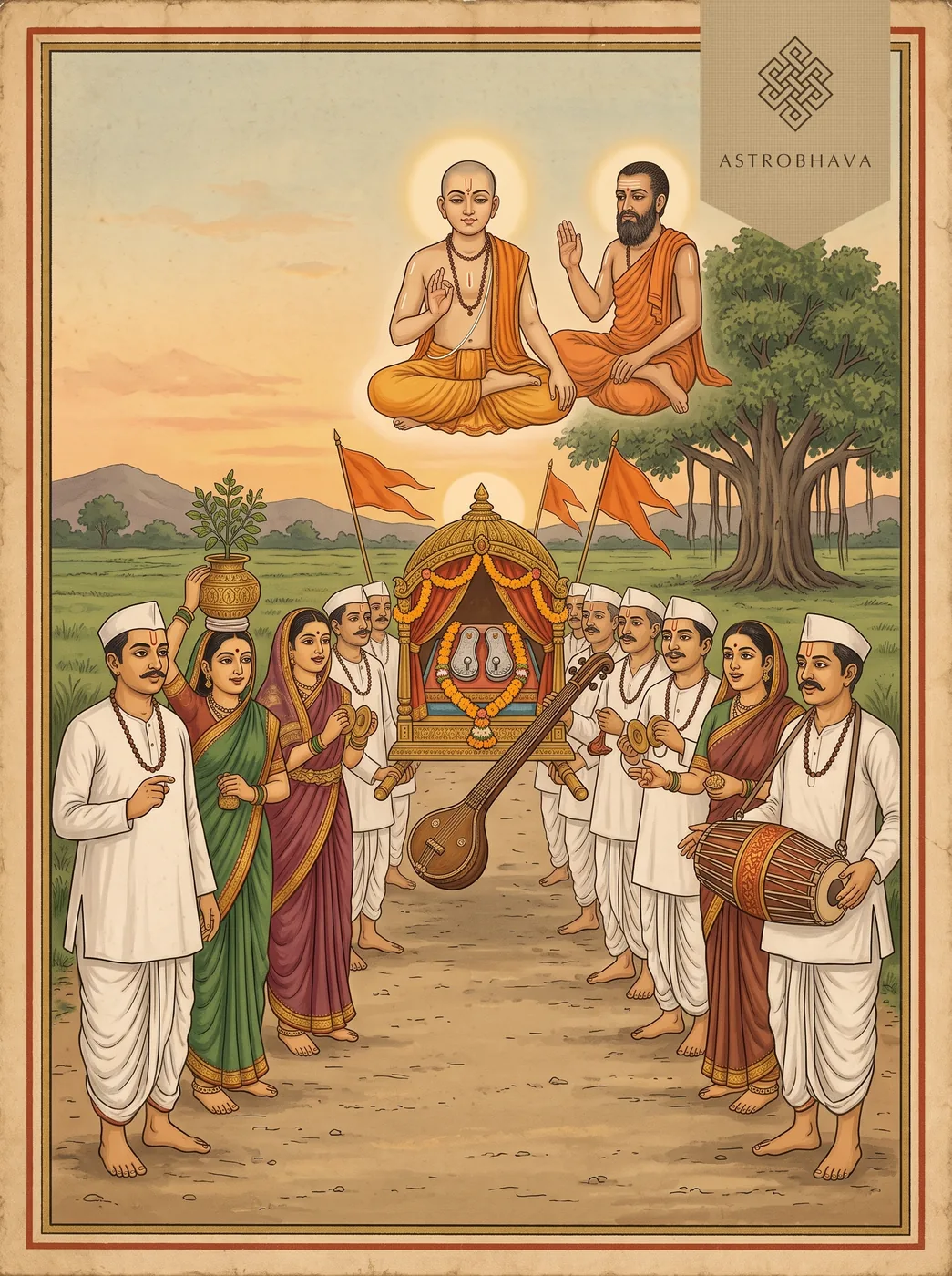
An evening chant on the road to Pandharpur
No account records the moment the Haripath was composed. The poet's own word, repeated in four abhangas, is that the teaching came from Nivritti, and Varkari tradition holds that its author is the Dnyaneshwar who entered sanjivan samadhi at Alandi in 1296, at about twenty-one. What is well documented is where the text lives. Each year a palkhi carries Dnyaneshwar's padukas from Alandi to the Vithoba temple at Pandharpur, arriving for Ashadhi Ekadashi. The French scholar Charlotte Vaudeville, who published a study of the Haripath in 1969, describes its place in that march: on every day of the pilgrimage it opens the first evening cycle of songs. It is less sung than chanted on a few notes over a steady tabla beat, usually dadra tal, and it quickens as it nears the end. The chant pauses twice. After the ninth abhanga the singers break into a call of 'Ramakrishna Hari', slow at first, then fast, then sinking to a murmur; after the eighteenth they do the same with 'Gopal Kumar'. When the twenty-seventh abhanga ends, each dindi, the walking group, lines up on both sides of the road facing its palkhi, repeats the closing line, Jnanadeva pramana, and bows to the saints' padukas. The same order is kept when Varkaris meet in a member's home on Ekadashi evenings.
The mantra, in six scripts
- देवाचिये
- devāciye — of God
- द्वारीं
- dvārīṃ — at the door
- उभा
- ubhā — standing
- क्षणभरीं
- kṣaṇabharīṃ — even for a moment
- तेणें
- teṇeṃ — by that
- मुक्ति
- mukti — liberations
- चारी
- cārī — all four
- साधियेल्या
- sādhiyelyā — are won
Haripath lyrics in full
The twenty-seven abhangas of Sant Dnyaneshwar as Varkaris chant them; the refrain 'hari mukhe mhana' is sung after every abhanga but printed once.
All 27 verses, in Marathi, Tamil, Telugu, Kannada, Malayalam and English, each with its meaning. Choose a script:
Download the Haripath PDFAll 27 verses with their meanings, in Marathi. Free to print and keep.
देवाचिये द्वारीं उभा क्षणभरीं । तेणें मुक्ति चारी साधियेल्या ॥
हरि मुखें म्हणा हरि मुखें म्हणा । पुण्याची गणना कोण करी ॥
असोनि संसारीं जिव्हें वेग करीं । वेदशास्त्र उभारी बाह्या सदा ॥
ज्ञानदेव म्हणे व्यासाचिया खुणा । द्वारकेचा राणा पांडवा घरीं ॥
தேவாசியே த்வாரீம் உபா க்ஷணபரீம் । தேணேம் முக்தி சாரீ ஸாதியேல்யா ॥
ஹரி முகேம் ம்ஹணா ஹரி முகேம் ம்ஹணா । புண்யாசீ கணநா கோண கரீ ॥
அஸோநி ஸம்ஸாரீம் ஜிவ்ஹேம் வேக கரீம் । வேதஶாஸ்த்ர உபாரீ பாஹ்யா ஸதா ॥
ஜ்ஞாநதேவ ம்ஹணே வ்யாஸாசியா குணா । த்வாரகேசா ராணா பாம்டவா கரீம் ॥
దేవాచియే ద్వారీం ఉభా క్షణభరీం । తేణేం ముక్తి చారీ సాధియేల్యా ॥
హరి ముఖేం మ్హణా హరి ముఖేం మ్హణా । పుణ్యాచీ గణనా కోణ కరీ ॥
అసోని సంసారీం జివ్హేం వేగ కరీం । వేదశాస్త్ర ఉభారీ బాహ్యా సదా ॥
జ్ఞానదేవ మ్హణే వ్యాసాచియా ఖుణా । ద్వారకేచా రాణా పాండవా ఘరీం ॥
ದೇವಾಚಿಯೇ ದ್ವಾರೀಂ ಉಭಾ ಕ್ಷಣಭರೀಂ । ತೇಣೇಂ ಮುಕ್ತಿ ಚಾರೀ ಸಾಧಿಯೇಲ್ಯಾ ॥
ಹರಿ ಮುಖೇಂ ಮ್ಹಣಾ ಹರಿ ಮುಖೇಂ ಮ್ಹಣಾ । ಪುಣ್ಯಾಚೀ ಗಣನಾ ಕೋಣ ಕರೀ ॥
ಅಸೋನಿ ಸಂಸಾರೀಂ ಜಿವ್ಹೇಂ ವೇಗ ಕರೀಂ । ವೇದಶಾಸ್ತ್ರ ಉಭಾರೀ ಬಾಹ್ಯಾ ಸದಾ ॥
ಜ್ಞಾನದೇವ ಮ್ಹಣೇ ವ್ಯಾಸಾಚಿಯಾ ಖುಣಾ । ದ್ವಾರಕೇಚಾ ರಾಣಾ ಪಾಂಡವಾ ಘರೀಂ ॥
ദേവാചിയേ ദ്വാരീം ഉഭാ ക്ഷണഭരീം । തേണേം മുക്തി ചാരീ സാധിയേല്യാ ॥
ഹരി മുഖേം മ്ഹണാ ഹരി മുഖേം മ്ഹണാ । പുണ്യാചീ ഗണനാ കോണ കരീ ॥
അസോനി സംസാരീം ജിവ്ഹേം വേഗ കരീം । വേദശാസ്ത്ര ഉഭാരീ ബാഹ്യാ സദാ ॥
ജ്ഞാനദേവ മ്ഹണേ വ്യാസാചിയാ ഖുണാ । ദ്വാരകേചാ രാണാ പാംഡവാ ഘരീം ॥
devāciye dvārīṃ ubhā kṣaṇabharīṃ | teṇeṃ mukti cārī sādhiyelyā ||
hari mukheṃ mhaṇā hari mukheṃ mhaṇā | puṇyācī gaṇanā koṇa karī ||
asoni saṃsārīṃ jivheṃ vega karīṃ | vedaśāstra ubhārī bāhyā sadā ||
jñānadeva mhaṇe vyāsāciyā khuṇā | dvārakecā rāṇā pāṃḍavā gharīṃ ||
Whoever stands even for a moment at the door of God has, the verse says, won all four kinds of liberation. Say Hari with your mouth, say Hari with your mouth: who can count the merit of it? Even while living in the world, keep the tongue busy with the Name; the Vedas and shastras raise their arms to proclaim this always. Dnyandev says these are the signs Vyasa gave: the King of Dwarka served in the house of the Pandavas.
चहूं वेदीं जाण साही शास्त्रीं कारण । अठराहीं पुराणें हरिसी गाती ॥
मंथुनी नवनीता तैसें घें अनंता । वायां व्यर्थ कथा सांडीं मार्ग ॥
एक हरि आत्मा जीवशिवसमा । वायां तूं दुर्गमा न घालीं मन ॥
ज्ञानदेवा पाठ हरि हा वैकुंठ । भरला घनदाट हरि दिसे ॥
சஹூம் வேதீம் ஜாண ஸாஹீ ஶாஸ்த்ரீம் காரண । அடராஹீம் புராணேம் ஹரிஸீ காதீ ॥
மம்துநீ நவநீதா தைஸேம் கேம் அநம்தா । வாயாம் வ்யர்த கதா ஸாம்டீம் மார்க ॥
ஏக ஹரி ஆத்மா ஜீவஶிவஸமா । வாயாம் தூம் துர்கமா ந காலீம் மந ॥
ஜ்ஞாநதேவா பாட ஹரி ஹா வைகும்ட । பரலா கநதாட ஹரி திஸே ॥
చహూం వేదీం జాణ సాహీ శాస్త్రీం కారణ । అఠరాహీం పురాణేం హరిసీ గాతీ ॥
మంథునీ నవనీతా తైసేం ఘేం అనంతా । వాయాం వ్యర్థ కథా సాండీం మార్గ ॥
ఏక హరి ఆత్మా జీవశివసమా । వాయాం తూం దుర్గమా న ఘాలీం మన ॥
జ్ఞానదేవా పాఠ హరి హా వైకుంఠ । భరలా ఘనదాట హరి దిసే ॥
ಚಹೂಂ ವೇದೀಂ ಜಾಣ ಸಾಹೀ ಶಾಸ್ತ್ರೀಂ ಕಾರಣ । ಅಠರಾಹೀಂ ಪುರಾಣೇಂ ಹರಿಸೀ ಗಾತೀ ॥
ಮಂಥುನೀ ನವನೀತಾ ತೈಸೇಂ ಘೇಂ ಅನಂತಾ । ವಾಯಾಂ ವ್ಯರ್ಥ ಕಥಾ ಸಾಂಡೀಂ ಮಾರ್ಗ ॥
ಏಕ ಹರಿ ಆತ್ಮಾ ಜೀವಶಿವಸಮಾ । ವಾಯಾಂ ತೂಂ ದುರ್ಗಮಾ ನ ಘಾಲೀಂ ಮನ ॥
ಜ್ಞಾನದೇವಾ ಪಾಠ ಹರಿ ಹಾ ವೈಕುಂಠ । ಭರಲಾ ಘನದಾಟ ಹರಿ ದಿಸೇ ॥
ചഹൂം വേദീം ജാണ സാഹീ ശാസ്ത്രീം കാരണ । അഠരാഹീം പുരാണേം ഹരിസീ ഗാതീ ॥
മംഥുനീ നവനീതാ തൈസേം ഘേം അനംതാ । വായാം വ്യര്ഥ കഥാ സാംഡീം മാര്ഗ ॥
ഏക ഹരി ആത്മാ ജീവശിവസമാ । വായാം തൂം ദുര്ഗമാ ന ഘാലീം മന ॥
ജ്ഞാനദേവാ പാഠ ഹരി ഹാ വൈകുംഠ । ഭരലാ ഘനദാട ഹരി ദിസേ ॥
cahūṃ vedīṃ jāṇa sāhī śāstrīṃ kāraṇa | aṭharāhīṃ purāṇeṃ harisī gātī ||
maṃthunī navanītā taiseṃ gheṃ anaṃtā | vāyāṃ vyartha kathā sāṃḍīṃ mārga ||
eka hari ātmā jīvaśivasamā | vāyāṃ tūṃ durgamā na ghālīṃ mana ||
jñānadevā pāṭha hari hā vaikuṃṭha | bharalā ghanadāṭa hari dise ||
Know that in all four Vedas and the six shastras the cause is one, and all eighteen Puranas sing of Hari. As butter is churned out of curd, take hold of the Infinite and leave the path of empty talk. Hari alone is the Self, the same in the individual soul and in Shiva; do not set your mind on hard and needless ways. For Dnyandev, the recitation of Hari is Vaikuntha itself, and Hari is seen filling everything densely.
त्रिगुण असार निर्गुण हें सार । सारासार विचार हरिपाठ ॥
सगुण निर्गुण गुणांचें अगुण । हरिवीण मन व्यर्थ जाय ॥
अव्यक्त निराकार नाहीं ज्या आकार । जेथोनि चराचर हरीसी भजें ॥
ज्ञानदेवा ध्यानीं रामकृष्ण मनीं । अनंत जन्मोनीं पुण्य होय ॥
த்ரிகுண அஸார நிர்குண ஹேம் ஸார । ஸாராஸார விசார ஹரிபாட ॥
ஸகுண நிர்குண குணாம்சேம் அகுண । ஹரிவீண மந வ்யர்த ஜாய ॥
அவ்யக்த நிராகார நாஹீம் ஜ்யா ஆகார । ஜேதோநி சராசர ஹரீஸீ பஜேம் ॥
ஜ்ஞாநதேவா த்யாநீம் ராமக்ருஷ்ண மநீம் । அநம்த ஜந்மோநீம் புண்ய ஹோய ॥
త్రిగుణ అసార నిర్గుణ హేం సార । సారాసార విచార హరిపాఠ ॥
సగుణ నిర్గుణ గుణాంచేం అగుణ । హరివీణ మన వ్యర్థ జాయ ॥
అవ్యక్త నిరాకార నాహీం జ్యా ఆకార । జేథోని చరాచర హరీసీ భజేం ॥
జ్ఞానదేవా ధ్యానీం రామకృష్ణ మనీం । అనంత జన్మోనీం పుణ్య హోయ ॥
ತ್ರಿಗುಣ ಅಸಾರ ನಿರ್ಗುಣ ಹೇಂ ಸಾರ । ಸಾರಾಸಾರ ವಿಚಾರ ಹರಿಪಾಠ ॥
ಸಗುಣ ನಿರ್ಗುಣ ಗುಣಾಂಚೇಂ ಅಗುಣ । ಹರಿವೀಣ ಮನ ವ್ಯರ್ಥ ಜಾಯ ॥
ಅವ್ಯಕ್ತ ನಿರಾಕಾರ ನಾಹೀಂ ಜ್ಯಾ ಆಕಾರ । ಜೇಥೋನಿ ಚರಾಚರ ಹರೀಸೀ ಭಜೇಂ ॥
ಜ್ಞಾನದೇವಾ ಧ್ಯಾನೀಂ ರಾಮಕೃಷ್ಣ ಮನೀಂ । ಅನಂತ ಜನ್ಮೋನೀಂ ಪುಣ್ಯ ಹೋಯ ॥
ത്രിഗുണ അസാര നിര്ഗുണ ഹേം സാര । സാരാസാര വിചാര ഹരിപാഠ ॥
സഗുണ നിര്ഗുണ ഗുണാംചേം അഗുണ । ഹരിവീണ മന വ്യര്ഥ ജായ ॥
അവ്യക്ത നിരാകാര നാഹീം ജ്യാ ആകാര । ജേഥോനി ചരാചര ഹരീസീ ഭജേം ॥
ജ്ഞാനദേവാ ധ്യാനീം രാമകൃഷ്ണ മനീം । അനംത ജന്മോനീം പുണ്യ ഹോയ ॥
triguṇa asāra nirguṇa heṃ sāra | sārāsāra vicāra haripāṭha ||
saguṇa nirguṇa guṇāṃceṃ aguṇa | harivīṇa mana vyartha jāya ||
avyakta nirākāra nāhīṃ jyā ākāra | jethoni carācara harīsī bhajeṃ ||
jñānadevā dhyānīṃ rāmakṛṣṇa manīṃ | anaṃta janmonīṃ puṇya hoya ||
The three gunas are without substance and the attributeless is the essence; telling essence from non-essence is what the Haripath is. Hari is beyond both form and formlessness; a mind without Hari goes to waste. Worship Him who is unmanifest and formless, from whom all moving and unmoving things arise. Dnyandev keeps Rama-Krishna in meditation and in mind, and says merit gathered over endless births comes to fruit this way.
भावेंवीण भक्ति भक्तिवीण मुक्ति । बळेंवीण शक्ति बोलूं नये ॥
कैसेनि दैवत प्रसन्न त्वरीत । उगा राहें निवांत शिणसी वायां ॥
सायासें करिसी प्रपंच दिननिशीं । हरिसीं न भजसी कवण्या गुणें ॥
ज्ञानदेव म्हणे हरिजप करणें । तुटेल धरणें प्रपंचाचें ॥
பாவேம்வீண பக்தி பக்திவீண முக்தி । பளேம்வீண ஶக்தி போலூம் நயே ॥
கைஸேநி தைவத ப்ரஸந்ந த்வரீத । உகா ராஹேம் நிவாம்த ஶிணஸீ வாயாம் ॥
ஸாயாஸேம் கரிஸீ ப்ரபம்ச திநநிஶீம் । ஹரிஸீம் ந பஜஸீ கவண்யா குணேம் ॥
ஜ்ஞாநதேவ ம்ஹணே ஹரிஜப கரணேம் । துடேல தரணேம் ப்ரபம்சாசேம் ॥
భావేంవీణ భక్తి భక్తివీణ ముక్తి । బళేంవీణ శక్తి బోలూం నయే ॥
కైసేని దైవత ప్రసన్న త్వరీత । ఉగా రాహేం నివాంత శిణసీ వాయాం ॥
సాయాసేం కరిసీ ప్రపంచ దిననిశీం । హరిసీం న భజసీ కవణ్యా గుణేం ॥
జ్ఞానదేవ మ్హణే హరిజప కరణేం । తుటేల ధరణేం ప్రపంచాచేం ॥
ಭಾವೇಂವೀಣ ಭಕ್ತಿ ಭಕ್ತಿವೀಣ ಮುಕ್ತಿ । ಬಳೇಂವೀಣ ಶಕ್ತಿ ಬೋಲೂಂ ನಯೇ ॥
ಕೈಸೇನಿ ದೈವತ ಪ್ರಸನ್ನ ತ್ವರೀತ । ಉಗಾ ರಾಹೇಂ ನಿವಾಂತ ಶಿಣಸೀ ವಾಯಾಂ ॥
ಸಾಯಾಸೇಂ ಕರಿಸೀ ಪ್ರಪಂಚ ದಿನನಿಶೀಂ । ಹರಿಸೀಂ ನ ಭಜಸೀ ಕವಣ್ಯಾ ಗುಣೇಂ ॥
ಜ್ಞಾನದೇವ ಮ್ಹಣೇ ಹರಿಜಪ ಕರಣೇಂ । ತುಟೇಲ ಧರಣೇಂ ಪ್ರಪಂಚಾಚೇಂ ॥
ഭാവേംവീണ ഭക്തി ഭക്തിവീണ മുക്തി । ബളേംവീണ ശക്തി ബോലൂം നയേ ॥
കൈസേനി ദൈവത പ്രസന്ന ത്വരീത । ഉഗാ രാഹേം നിവാംത ശിണസീ വായാം ॥
സായാസേം കരിസീ പ്രപംച ദിനനിശീം । ഹരിസീം ന ഭജസീ കവണ്യാ ഗുണേം ॥
ജ്ഞാനദേവ മ്ഹണേ ഹരിജപ കരണേം । തുടേല ധരണേം പ്രപംചാചേം ॥
bhāveṃvīṇa bhakti bhaktivīṇa mukti | baḷeṃvīṇa śakti bolūṃ naye ||
kaiseni daivata prasanna tvarīta | ugā rāheṃ nivāṃta śiṇasī vāyāṃ ||
sāyāseṃ karisī prapaṃca dinaniśīṃ | harisīṃ na bhajasī kavaṇyā guṇeṃ ||
jñānadeva mhaṇe harijapa karaṇeṃ | tuṭela dharaṇeṃ prapaṃcāceṃ ||
Without feeling there is no devotion, without devotion no liberation, and one should not speak of strength without strength. How can God be pleased quickly? Be still and quiet, or you tire yourself for nothing. You labour at worldly affairs day and night, so for what virtue do you fail to worship Hari? Dnyandev says: chant Hari, and the grip of worldly life will break.
योगयागविधी येणे नोहे सिद्धि । वायांचि उपाधि दंभ धर्म ॥
भावेंवीण देव न कळे निःसंदेह । गुरुवीण अनुभव कैसा कळे ॥
तपेंवीण दैवत दिधल्यावीण प्राप्त । गुजेंवीण हित कोण सांगे ॥
ज्ञानदेव सांगे दृष्टांताची मात । साधूंचे संगतीं तरणोपाय ॥
யோகயாகவிதீ யேணே நோஹே ஸித்தி । வாயாம்சி உபாதி தம்ப தர்ம ॥
பாவேம்வீண தேவ ந களே நிஃஸம்தேஹ । குருவீண அநுபவ கைஸா களே ॥
தபேம்வீண தைவத திதல்யாவீண ப்ராப்த । குஜேம்வீண ஹித கோண ஸாம்கே ॥
ஜ்ஞாநதேவ ஸாம்கே த்ருஷ்டாம்தாசீ மாத । ஸாதூம்சே ஸம்கதீம் தரணோபாய ॥
యోగయాగవిధీ యేణే నోహే సిద్ధి । వాయాంచి ఉపాధి దంభ ధర్మ ॥
భావేంవీణ దేవ న కళే నిఃసందేహ । గురువీణ అనుభవ కైసా కళే ॥
తపేంవీణ దైవత దిధల్యావీణ ప్రాప్త । గుజేంవీణ హిత కోణ సాంగే ॥
జ్ఞానదేవ సాంగే దృష్టాంతాచీ మాత । సాధూంచే సంగతీం తరణోపాయ ॥
ಯೋಗಯಾಗವಿಧೀ ಯೇಣೇ ನೋಹೇ ಸಿದ್ಧಿ । ವಾಯಾಂಚಿ ಉಪಾಧಿ ದಂಭ ಧರ್ಮ ॥
ಭಾವೇಂವೀಣ ದೇವ ನ ಕಳೇ ನಿಃಸಂದೇಹ । ಗುರುವೀಣ ಅನುಭವ ಕೈಸಾ ಕಳೇ ॥
ತಪೇಂವೀಣ ದೈವತ ದಿಧಲ್ಯಾವೀಣ ಪ್ರಾಪ್ತ । ಗುಜೇಂವೀಣ ಹಿತ ಕೋಣ ಸಾಂಗೇ ॥
ಜ್ಞಾನದೇವ ಸಾಂಗೇ ದೃಷ್ಟಾಂತಾಚೀ ಮಾತ । ಸಾಧೂಂಚೇ ಸಂಗತೀಂ ತರಣೋಪಾಯ ॥
യോഗയാഗവിധീ യേണേ നോഹേ സിദ്ധി । വായാംചി ഉപാധി ദംഭ ധര്മ ॥
ഭാവേംവീണ ദേവ ന കളേ നിഃസംദേഹ । ഗുരുവീണ അനുഭവ കൈസാ കളേ ॥
തപേംവീണ ദൈവത ദിധല്യാവീണ പ്രാപ്ത । ഗുജേംവീണ ഹിത കോണ സാംഗേ ॥
ജ്ഞാനദേവ സാംഗേ ദൃഷ്ടാംതാചീ മാത । സാധൂംചേ സംഗതീം തരണോപായ ॥
yogayāgavidhī yeṇe nohe siddhi | vāyāṃci upādhi daṃbha dharma ||
bhāveṃvīṇa deva na kaḷe niḥsaṃdeha | guruvīṇa anubhava kaisā kaḷe ||
tapeṃvīṇa daivata didhalyāvīṇa prāpta | gujeṃvīṇa hita koṇa sāṃge ||
jñānadeva sāṃge dṛṣṭāṃtācī māta | sādhūṃce saṃgatīṃ taraṇopāya ||
Yoga, sacrifice and ritual rules do not bring fulfilment; they are useless trappings and religion for show. Without feeling God is not known, beyond doubt, and without a guru how can experience come? Without austerity there is no divine grace, without giving nothing is gained, and without a confidant who will tell you your good. Dnyandev gives the example plainly: the company of saints is the way across.
साधुबोध झाला तो नुरोनियां ठेला । ठायींच मुराला अनुभव ॥
कापुराची वाती उजळली ज्योती । ठायींच समाप्ती झाली जैसीं ॥
मोक्षरेखें आला भाग्यें विनटला । साधूंचा अंकिला हरिभक्त ॥
ज्ञानदेवा गोडी संगती सज्जनीं । हरि दिसे जनीं वनीं आत्मतत्त्वीं ॥
ஸாதுபோத சாலா தோ நுரோநியாம் டேலா । டாயீம்ச முராலா அநுபவ ॥
காபுராசீ வாதீ உஜளலீ ஜ்யோதீ । டாயீம்ச ஸமாப்தீ சாலீ ஜைஸீம் ॥
மோக்ஷரேகேம் ஆலா பாக்யேம் விநடலா । ஸாதூம்சா அம்கிலா ஹரிபக்த ॥
ஜ்ஞாநதேவா கோடீ ஸம்கதீ ஸஜ்ஜநீம் । ஹரி திஸே ஜநீம் வநீம் ஆத்மதத்த்வீம் ॥
సాధుబోధ ఝాలా తో నురోనియాం ఠేలా । ఠాయీంచ మురాలా అనుభవ ॥
కాపురాచీ వాతీ ఉజళలీ జ్యోతీ । ఠాయీంచ సమాప్తీ ఝాలీ జైసీం ॥
మోక్షరేఖేం ఆలా భాగ్యేం వినటలా । సాధూంచా అంకిలా హరిభక్త ॥
జ్ఞానదేవా గోడీ సంగతీ సజ్జనీం । హరి దిసే జనీం వనీం ఆత్మతత్త్వీం ॥
ಸಾಧುಬೋಧ ಝಾಲಾ ತೋ ನುರೋನಿಯಾಂ ಠೇಲಾ । ಠಾಯೀಂಚ ಮುರಾಲಾ ಅನುಭವ ॥
ಕಾಪುರಾಚೀ ವಾತೀ ಉಜಳಲೀ ಜ್ಯೋತೀ । ಠಾಯೀಂಚ ಸಮಾಪ್ತೀ ಝಾಲೀ ಜೈಸೀಂ ॥
ಮೋಕ್ಷರೇಖೇಂ ಆಲಾ ಭಾಗ್ಯೇಂ ವಿನಟಲಾ । ಸಾಧೂಂಚಾ ಅಂಕಿಲಾ ಹರಿಭಕ್ತ ॥
ಜ್ಞಾನದೇವಾ ಗೋಡೀ ಸಂಗತೀ ಸಜ್ಜನೀಂ । ಹರಿ ದಿಸೇ ಜನೀಂ ವನೀಂ ಆತ್ಮತತ್ತ್ವೀಂ ॥
സാധുബോധ ഝാലാ തോ നുരോനിയാം ഠേലാ । ഠായീംച മുരാലാ അനുഭവ ॥
കാപുരാചീ വാതീ ഉജളലീ ജ്യോതീ । ഠായീംച സമാപ്തീ ഝാലീ ജൈസീം ॥
മോക്ഷരേഖേം ആലാ ഭാഗ്യേം വിനടലാ । സാധൂംചാ അംകിലാ ഹരിഭക്ത ॥
ജ്ഞാനദേവാ ഗോഡീ സംഗതീ സജ്ജനീം । ഹരി ദിസേ ജനീം വനീം ആത്മതത്ത്വീം ॥
sādhubodha jhālā to nuroniyāṃ ṭhelā | ṭhāyīṃca murālā anubhava ||
kāpurācī vātī ujaḷalī jyotī | ṭhāyīṃca samāptī jhālī jaisīṃ ||
mokṣarekheṃ ālā bhāgyeṃ vinaṭalā | sādhūṃcā aṃkilā haribhakta ||
jñānadevā goḍī saṃgatī sajjanīṃ | hari dise janīṃ vanīṃ ātmatattvīṃ ||
Once the teaching of the saints takes hold, the seeker stops, leaving nothing of himself, dissolved on the spot by experience. As a camphor wick, once lit, is wholly consumed into its flame, so it ends right there. Such a devotee of Hari, bound to the saints, has reached the line of liberation and is adorned by good fortune. Dnyandev delights in the company of the good, and Hari is seen in people, in the forest, and as the very Self.
पर्वताप्रमाणें पातक करणें । वज्रलेप होणें अभक्तांसी ॥
नाहीं ज्यांसी भक्ति ते पतित अभक्त । हरिसीं न भजत दैवहत ॥
अनंत वाचाळ बरळती बरळ । त्या कैसेनि गोपाळ पावे हरि ॥
ज्ञानदेवा प्रमाण आत्मा हा निधान । सर्वांघटीं पूर्ण एक नांदे ॥
பர்வதாப்ரமாணேம் பாதக கரணேம் । வஜ்ரலேப ஹோணேம் அபக்தாம்ஸீ ॥
நாஹீம் ஜ்யாம்ஸீ பக்தி தே பதித அபக்த । ஹரிஸீம் ந பஜத தைவஹத ॥
அநம்த வாசாள பரளதீ பரள । த்யா கைஸேநி கோபாள பாவே ஹரி ॥
ஜ்ஞாநதேவா ப்ரமாண ஆத்மா ஹா நிதாந । ஸர்வாம்கடீம் பூர்ண ஏக நாம்தே ॥
పర్వతాప్రమాణేం పాతక కరణేం । వజ్రలేప హోణేం అభక్తాంసీ ॥
నాహీం జ్యాంసీ భక్తి తే పతిత అభక్త । హరిసీం న భజత దైవహత ॥
అనంత వాచాళ బరళతీ బరళ । త్యా కైసేని గోపాళ పావే హరి ॥
జ్ఞానదేవా ప్రమాణ ఆత్మా హా నిధాన । సర్వాంఘటీం పూర్ణ ఏక నాందే ॥
ಪರ್ವತಾಪ್ರಮಾಣೇಂ ಪಾತಕ ಕರಣೇಂ । ವಜ್ರಲೇಪ ಹೋಣೇಂ ಅಭಕ್ತಾಂಸೀ ॥
ನಾಹೀಂ ಜ್ಯಾಂಸೀ ಭಕ್ತಿ ತೇ ಪತಿತ ಅಭಕ್ತ । ಹರಿಸೀಂ ನ ಭಜತ ದೈವಹತ ॥
ಅನಂತ ವಾಚಾಳ ಬರಳತೀ ಬರಳ । ತ್ಯಾ ಕೈಸೇನಿ ಗೋಪಾಳ ಪಾವೇ ಹರಿ ॥
ಜ್ಞಾನದೇವಾ ಪ್ರಮಾಣ ಆತ್ಮಾ ಹಾ ನಿಧಾನ । ಸರ್ವಾಂಘಟೀಂ ಪೂರ್ಣ ಏಕ ನಾಂದೇ ॥
പര്വതാപ്രമാണേം പാതക കരണേം । വജ്രലേപ ഹോണേം അഭക്താംസീ ॥
നാഹീം ജ്യാംസീ ഭക്തി തേ പതിത അഭക്ത । ഹരിസീം ന ഭജത ദൈവഹത ॥
അനംത വാചാള ബരളതീ ബരള । ത്യാ കൈസേനി ഗോപാള പാവേ ഹരി ॥
ജ്ഞാനദേവാ പ്രമാണ ആത്മാ ഹാ നിധാന । സര്വാംഘടീം പൂര്ണ ഏക നാംദേ ॥
parvatāpramāṇeṃ pātaka karaṇeṃ | vajralepa hoṇeṃ abhaktāṃsī ||
nāhīṃ jyāṃsī bhakti te patita abhakta | harisīṃ na bhajata daivahata ||
anaṃta vācāḷa baraḷatī baraḷa | tyā kaiseni gopāḷa pāve hari ||
jñānadevā pramāṇa ātmā hā nidhāna | sarvāṃghaṭīṃ pūrṇa eka nāṃde ||
Those without devotion commit sins as big as mountains, and these cling to them like hard plaster. Those who have no devotion are fallen; not worshipping Hari, they are struck by ill fortune. Those who babble endlessly, how will Hari, the cowherd Gopala, reach them? For Dnyandev the proof is this: the Self is the true treasure, one and whole, dwelling in every being.
संतांचे संगतीं मनोमार्ग गती । आकळावा श्रीपती येणें पंथें ॥
रामकृष्ण वाचा भाव हा जिवाचा । आत्मा जो शिवाचा रामजप ॥
एक तत्त्व नाम साधिती साधन । द्वैताचें बंधन न बाधिजे ॥
नामामृत गोडी वैष्णवां लाधली । योगियां साधली जीवनकळा ॥
सत्त्वर उच्चार प्रल्हादीं बिंबला । उद्धवा लाधला कृष्णदाता ॥
ज्ञानदेव म्हणे नाम हें सुलभ । सर्वत्र दुर्लभ विरळा जाणे ॥
ஸம்தாம்சே ஸம்கதீம் மநோமார்க கதீ । ஆகளாவா ஶ்ரீபதீ யேணேம் பம்தேம் ॥
ராமக்ருஷ்ண வாசா பாவ ஹா ஜிவாசா । ஆத்மா ஜோ ஶிவாசா ராமஜப ॥
ஏக தத்த்வ நாம ஸாதிதீ ஸாதந । த்வைதாசேம் பம்தந ந பாதிஜே ॥
நாமாம்ருத கோடீ வைஷ்ணவாம் லாதலீ । யோகியாம் ஸாதலீ ஜீவநகளா ॥
ஸத்த்வர உச்சார ப்ரல்ஹாதீம் பிம்பலா । உத்தவா லாதலா க்ருஷ்ணதாதா ॥
ஜ்ஞாநதேவ ம்ஹணே நாம ஹேம் ஸுலப । ஸர்வத்ர துர்லப விரளா ஜாணே ॥
సంతాంచే సంగతీం మనోమార్గ గతీ । ఆకళావా శ్రీపతీ యేణేం పంథేం ॥
రామకృష్ణ వాచా భావ హా జివాచా । ఆత్మా జో శివాచా రామజప ॥
ఏక తత్త్వ నామ సాధితీ సాధన । ద్వైతాచేం బంధన న బాధిజే ॥
నామామృత గోడీ వైష్ణవాం లాధలీ । యోగియాం సాధలీ జీవనకళా ॥
సత్త్వర ఉచ్చార ప్రల్హాదీం బింబలా । ఉద్ధవా లాధలా కృష్ణదాతా ॥
జ్ఞానదేవ మ్హణే నామ హేం సులభ । సర్వత్ర దుర్లభ విరళా జాణే ॥
ಸಂತಾಂಚೇ ಸಂಗತೀಂ ಮನೋಮಾರ್ಗ ಗತೀ । ಆಕಳಾವಾ ಶ್ರೀಪತೀ ಯೇಣೇಂ ಪಂಥೇಂ ॥
ರಾಮಕೃಷ್ಣ ವಾಚಾ ಭಾವ ಹಾ ಜಿವಾಚಾ । ಆತ್ಮಾ ಜೋ ಶಿವಾಚಾ ರಾಮಜಪ ॥
ಏಕ ತತ್ತ್ವ ನಾಮ ಸಾಧಿತೀ ಸಾಧನ । ದ್ವೈತಾಚೇಂ ಬಂಧನ ನ ಬಾಧಿಜೇ ॥
ನಾಮಾಮೃತ ಗೋಡೀ ವೈಷ್ಣವಾಂ ಲಾಧಲೀ । ಯೋಗಿಯಾಂ ಸಾಧಲೀ ಜೀವನಕಳಾ ॥
ಸತ್ತ್ವರ ಉಚ್ಚಾರ ಪ್ರಲ್ಹಾದೀಂ ಬಿಂಬಲಾ । ಉದ್ಧವಾ ಲಾಧಲಾ ಕೃಷ್ಣದಾತಾ ॥
ಜ್ಞಾನದೇವ ಮ್ಹಣೇ ನಾಮ ಹೇಂ ಸುಲಭ । ಸರ್ವತ್ರ ದುರ್ಲಭ ವಿರಳಾ ಜಾಣೇ ॥
സംതാംചേ സംഗതീം മനോമാര്ഗ ഗതീ । ആകളാവാ ശ്രീപതീ യേണേം പംഥേം ॥
രാമകൃഷ്ണ വാചാ ഭാവ ഹാ ജിവാചാ । ആത്മാ ജോ ശിവാചാ രാമജപ ॥
ഏക തത്ത്വ നാമ സാധിതീ സാധന । ദ്വൈതാചേം ബംധന ന ബാധിജേ ॥
നാമാമൃത ഗോഡീ വൈഷ്ണവാം ലാധലീ । യോഗിയാം സാധലീ ജീവനകളാ ॥
സത്ത്വര ഉച്ചാര പ്രല്ഹാദീം ബിംബലാ । ഉദ്ധവാ ലാധലാ കൃഷ്ണദാതാ ॥
ജ്ഞാനദേവ മ്ഹണേ നാമ ഹേം സുലഭ । സര്വത്ര ദുര്ലഭ വിരളാ ജാണേ ॥
saṃtāṃce saṃgatīṃ manomārga gatī | ākaḷāvā śrīpatī yeṇeṃ paṃtheṃ ||
rāmakṛṣṇa vācā bhāva hā jivācā | ātmā jo śivācā rāmajapa ||
eka tattva nāma sādhitī sādhana | dvaitāceṃ baṃdhana na bādhije ||
nāmāmṛta goḍī vaiṣṇavāṃ lādhalī | yogiyāṃ sādhalī jīvanakaḷā ||
sattvara uccāra pralhādīṃ biṃbalā | uddhavā lādhalā kṛṣṇadātā ||
jñānadeva mhaṇe nāma heṃ sulabha | sarvatra durlabha viraḷā jāṇe ||
In the company of saints the mind finds its way, and by this path Lakshmi's Lord is grasped. To say Rama-Krishna with the voice is the soul's true feeling; Rama is the chant of Shiva, who is the Self. Those who keep to the Name as the one truth complete their practice, and the bonds of duality do not bind them. Vaishnavas tasted the sweetness of the nectar of the Name, and yogis gained the art of life through it. Uttered quickly, it shone in Prahlada, and Uddhava received Krishna as his giver. Dnyandev says the Name is easy, yet rare everywhere; few understand it.
विष्णुवीण जप व्यर्थ त्याचें ज्ञान । रामकृष्णीं मन नाहीं ज्याचें ॥
उपजोनि करंटा नेणें अद्वैतवाटा । रामकृष्णीं पैठा कैसेनि होय ॥
द्वैताची झाडणी गुरुवीण ज्ञान । तया कैचें कीर्तन घडेल नामीं ॥
ज्ञानदेव ह्मणे सगुण हें ध्यान । नामपाठ मौन प्रपंचाचें ॥
விஷ்ணுவீண ஜப வ்யர்த த்யாசேம் ஜ்ஞாந । ராமக்ருஷ்ணீம் மந நாஹீம் ஜ்யாசேம் ॥
உபஜோநி கரம்டா நேணேம் அத்வைதவாடா । ராமக்ருஷ்ணீம் பைடா கைஸேநி ஹோய ॥
த்வைதாசீ சாடணீ குருவீண ஜ்ஞாந । தயா கைசேம் கீர்தந கடேல நாமீம் ॥
ஜ்ஞாநதேவ ஹ்மணே ஸகுண ஹேம் த்யாந । நாமபாட மௌந ப்ரபம்சாசேம் ॥
విష్ణువీణ జప వ్యర్థ త్యాచేం జ్ఞాన । రామకృష్ణీం మన నాహీం జ్యాచేం ॥
ఉపజోని కరంటా నేణేం అద్వైతవాటా । రామకృష్ణీం పైఠా కైసేని హోయ ॥
ద్వైతాచీ ఝాడణీ గురువీణ జ్ఞాన । తయా కైచేం కీర్తన ఘడేల నామీం ॥
జ్ఞానదేవ హ్మణే సగుణ హేం ధ్యాన । నామపాఠ మౌన ప్రపంచాచేం ॥
ವಿಷ್ಣುವೀಣ ಜಪ ವ್ಯರ್ಥ ತ್ಯಾಚೇಂ ಜ್ಞಾನ । ರಾಮಕೃಷ್ಣೀಂ ಮನ ನಾಹೀಂ ಜ್ಯಾಚೇಂ ॥
ಉಪಜೋನಿ ಕರಂಟಾ ನೇಣೇಂ ಅದ್ವೈತವಾಟಾ । ರಾಮಕೃಷ್ಣೀಂ ಪೈಠಾ ಕೈಸೇನಿ ಹೋಯ ॥
ದ್ವೈತಾಚೀ ಝಾಡಣೀ ಗುರುವೀಣ ಜ್ಞಾನ । ತಯಾ ಕೈಚೇಂ ಕೀರ್ತನ ಘಡೇಲ ನಾಮೀಂ ॥
ಜ್ಞಾನದೇವ ಹ್ಮಣೇ ಸಗುಣ ಹೇಂ ಧ್ಯಾನ । ನಾಮಪಾಠ ಮೌನ ಪ್ರಪಂಚಾಚೇಂ ॥
വിഷ്ണുവീണ ജപ വ്യര്ഥ ത്യാചേം ജ്ഞാന । രാമകൃഷ്ണീം മന നാഹീം ജ്യാചേം ॥
ഉപജോനി കരംടാ നേണേം അദ്വൈതവാടാ । രാമകൃഷ്ണീം പൈഠാ കൈസേനി ഹോയ ॥
ദ്വൈതാചീ ഝാഡണീ ഗുരുവീണ ജ്ഞാന । തയാ കൈചേം കീര്തന ഘഡേല നാമീം ॥
ജ്ഞാനദേവ ഹ്മണേ സഗുണ ഹേം ധ്യാന । നാമപാഠ മൌന പ്രപംചാചേം ॥
viṣṇuvīṇa japa vyartha tyāceṃ jñāna | rāmakṛṣṇīṃ mana nāhīṃ jyāceṃ ||
upajoni karaṃṭā neṇeṃ advaitavāṭā | rāmakṛṣṇīṃ paiṭhā kaiseni hoya ||
dvaitācī jhāḍaṇī guruvīṇa jñāna | tayā kaiceṃ kīrtana ghaḍela nāmīṃ ||
jñānadeva hmaṇe saguṇa heṃ dhyāna | nāmapāṭha mauna prapaṃcāceṃ ||
Without Vishnu, chanting is wasted and so is the knowledge of one whose mind is not on Rama-Krishna. Born unlucky, not knowing the path of non-duality, how can such a person enter into Rama-Krishna? Duality is swept away by knowledge from the guru; without that, how can praise of the Name happen? Dnyandev says: meditation on the form with qualities, and recitation of the Name, mean silence toward worldly affairs.
त्रिवेणीसंगमीं नाना तीर्थें भ्रमी । चित्त नाहीं नामीं तरी तें व्यर्थ ॥
नामासीं विन्मुख तो नर पापिया । हरिवीण धांवया न पावे कोणी ॥
पुराणप्रसिद्ध बोलिलें वाल्मिक । नामें तिन्ही लोक उद्धरती ॥
ज्ञानदेव म्हणे नाम जपा हरीचें । परंपरा त्याचें कुळ शुद्ध ॥
த்ரிவேணீஸம்கமீம் நாநா தீர்தேம் ப்ரமீ । சித்த நாஹீம் நாமீம் தரீ தேம் வ்யர்த ॥
நாமாஸீம் விந்முக தோ நர பாபியா । ஹரிவீண தாம்வயா ந பாவே கோணீ ॥
புராணப்ரஸித்த போலிலேம் வால்மிக । நாமேம் திந்ஹீ லோக உத்தரதீ ॥
ஜ்ஞாநதேவ ம்ஹணே நாம ஜபா ஹரீசேம் । பரம்பரா த்யாசேம் குள ஶுத்த ॥
త్రివేణీసంగమీం నానా తీర్థేం భ్రమీ । చిత్త నాహీం నామీం తరీ తేం వ్యర్థ ॥
నామాసీం విన్ముఖ తో నర పాపియా । హరివీణ ధాంవయా న పావే కోణీ ॥
పురాణప్రసిద్ధ బోలిలేం వాల్మిక । నామేం తిన్హీ లోక ఉద్ధరతీ ॥
జ్ఞానదేవ మ్హణే నామ జపా హరీచేం । పరంపరా త్యాచేం కుళ శుద్ధ ॥
ತ್ರಿವೇಣೀಸಂಗಮೀಂ ನಾನಾ ತೀರ್ಥೇಂ ಭ್ರಮೀ । ಚಿತ್ತ ನಾಹೀಂ ನಾಮೀಂ ತರೀ ತೇಂ ವ್ಯರ್ಥ ॥
ನಾಮಾಸೀಂ ವಿನ್ಮುಖ ತೋ ನರ ಪಾಪಿಯಾ । ಹರಿವೀಣ ಧಾಂವಯಾ ನ ಪಾವೇ ಕೋಣೀ ॥
ಪುರಾಣಪ್ರಸಿದ್ಧ ಬೋಲಿಲೇಂ ವಾಲ್ಮಿಕ । ನಾಮೇಂ ತಿನ್ಹೀ ಲೋಕ ಉದ್ಧರತೀ ॥
ಜ್ಞಾನದೇವ ಮ್ಹಣೇ ನಾಮ ಜಪಾ ಹರೀಚೇಂ । ಪರಂಪರಾ ತ್ಯಾಚೇಂ ಕುಳ ಶುದ್ಧ ॥
ത്രിവേണീസംഗമീം നാനാ തീര്ഥേം ഭ്രമീ । ചിത്ത നാഹീം നാമീം തരീ തേം വ്യര്ഥ ॥
നാമാസീം വിന്മുഖ തോ നര പാപിയാ । ഹരിവീണ ധാംവയാ ന പാവേ കോണീ ॥
പുരാണപ്രസിദ്ധ ബോലിലേം വാല്മിക । നാമേം തിന്ഹീ ലോക ഉദ്ധരതീ ॥
ജ്ഞാനദേവ മ്ഹണേ നാമ ജപാ ഹരീചേം । പരംപരാ ത്യാചേം കുള ശുദ്ധ ॥
triveṇīsaṃgamīṃ nānā tīrtheṃ bhramī | citta nāhīṃ nāmīṃ tarī teṃ vyartha ||
nāmāsīṃ vinmukha to nara pāpiyā | harivīṇa dhāṃvayā na pāve koṇī ||
purāṇaprasiddha bolileṃ vālmika | nāmeṃ tinhī loka uddharatī ||
jñānadeva mhaṇe nāma japā harīceṃ | paraṃparā tyāceṃ kuḷa śuddha ||
One may wander to the confluence of the three rivers and to many holy places, but if the mind is not on the Name it is all in vain. The man who turns away from the Name is a sinner; without Hari no one reaches the goal however they run. As Valmiki, famed in the Puranas, declared, the Name uplifts all three worlds. Dnyandev says: chant the Name of Hari, and the family line becomes pure for generations.
हरि उच्चारणीं अनंत पापराशी । जातील लयासी क्षणमात्रें ॥
तृण अग्निमेळें समरस झालें । तैसें नामें केलें जपतां हरि ॥
हरिउच्चारण मंत्र हा अगाध । पळे भूतबाध भेणें तेथें ॥
ज्ञानदेव ह्मणे हरि माझा समर्थ । न करवे अर्थ उपनिषदां ॥
ஹரி உச்சாரணீம் அநம்த பாபராஶீ । ஜாதீல லயாஸீ க்ஷணமாத்ரேம் ॥
த்ருண அக்நிமேளேம் ஸமரஸ சாலேம் । தைஸேம் நாமேம் கேலேம் ஜபதாம் ஹரி ॥
ஹரிஉச்சாரண மம்த்ர ஹா அகாத । பளே பூதபாத பேணேம் தேதேம் ॥
ஜ்ஞாநதேவ ஹ்மணே ஹரி மாசா ஸமர்த । ந கரவே அர்த உபநிஷதாம் ॥
హరి ఉచ్చారణీం అనంత పాపరాశీ । జాతీల లయాసీ క్షణమాత్రేం ॥
తృణ అగ్నిమేళేం సమరస ఝాలేం । తైసేం నామేం కేలేం జపతాం హరి ॥
హరిఉచ్చారణ మంత్ర హా అగాధ । పళే భూతబాధ భేణేం తేథేం ॥
జ్ఞానదేవ హ్మణే హరి మాఝా సమర్థ । న కరవే అర్థ ఉపనిషదాం ॥
ಹರಿ ಉಚ್ಚಾರಣೀಂ ಅನಂತ ಪಾಪರಾಶೀ । ಜಾತೀಲ ಲಯಾಸೀ ಕ್ಷಣಮಾತ್ರೇಂ ॥
ತೃಣ ಅಗ್ನಿಮೇಳೇಂ ಸಮರಸ ಝಾಲೇಂ । ತೈಸೇಂ ನಾಮೇಂ ಕೇಲೇಂ ಜಪತಾಂ ಹರಿ ॥
ಹರಿಉಚ್ಚಾರಣ ಮಂತ್ರ ಹಾ ಅಗಾಧ । ಪಳೇ ಭೂತಬಾಧ ಭೇಣೇಂ ತೇಥೇಂ ॥
ಜ್ಞಾನದೇವ ಹ್ಮಣೇ ಹರಿ ಮಾಝಾ ಸಮರ್ಥ । ನ ಕರವೇ ಅರ್ಥ ಉಪನಿಷದಾಂ ॥
ഹരി ഉച്ചാരണീം അനംത പാപരാശീ । ജാതീല ലയാസീ ക്ഷണമാത്രേം ॥
തൃണ അഗ്നിമേളേം സമരസ ഝാലേം । തൈസേം നാമേം കേലേം ജപതാം ഹരി ॥
ഹരിഉച്ചാരണ മംത്ര ഹാ അഗാധ । പളേ ഭൂതബാധ ഭേണേം തേഥേം ॥
ജ്ഞാനദേവ ഹ്മണേ ഹരി മാഝാ സമര്ഥ । ന കരവേ അര്ഥ ഉപനിഷദാം ॥
hari uccāraṇīṃ anaṃta pāparāśī | jātīla layāsī kṣaṇamātreṃ ||
tṛṇa agnimeḷeṃ samarasa jhāleṃ | taiseṃ nāmeṃ keleṃ japatāṃ hari ||
hariuccāraṇa maṃtra hā agādha | paḷe bhūtabādha bheṇeṃ tetheṃ ||
jñānadeva hmaṇe hari mājhā samartha | na karave artha upaniṣadāṃ ||
By uttering Hari, endless heaps of sin are destroyed in a moment. As straw meeting fire becomes fire, so the Name does when one chants Hari. The mantra of uttering Hari is unfathomable; ghosts and evil spirits flee from it in fear. Dnyandev says: my Hari is all-powerful; even the Upanishads cannot fully state His meaning.
तीर्थ व्रत नेम भावेंवीण सिद्धि । वायांचि उपाधि करिसी जना ॥
भावबळें आकळे येऱ्हवीं नाकळे । करतळीं आंवळे तैसा हरी ॥
पारियाचा रवा घेतां भूमीवरी । यत्न परोपरी साधन तैसें ॥
ज्ञानदेव ह्मणे निवृत्ति निर्गुण । दिधलें संपूर्ण माझ्या हातीं ॥
தீர்த வ்ரத நேம பாவேம்வீண ஸித்தி । வாயாம்சி உபாதி கரிஸீ ஜநா ॥
பாவபளேம் ஆகளே யேற்ஹவீம் நாகளே । கரதளீம் ஆம்வளே தைஸா ஹரீ ॥
பாரியாசா ரவா கேதாம் பூமீவரீ । யத்ந பரோபரீ ஸாதந தைஸேம் ॥
ஜ்ஞாநதேவ ஹ்மணே நிவ்ருத்தி நிர்குண । திதலேம் ஸம்பூர்ண மாச்யா ஹாதீம் ॥
తీర్థ వ్రత నేమ భావేంవీణ సిద్ధి । వాయాంచి ఉపాధి కరిసీ జనా ॥
భావబళేం ఆకళే యేఱ్హవీం నాకళే । కరతళీం ఆంవళే తైసా హరీ ॥
పారియాచా రవా ఘేతాం భూమీవరీ । యత్న పరోపరీ సాధన తైసేం ॥
జ్ఞానదేవ హ్మణే నివృత్తి నిర్గుణ । దిధలేం సంపూర్ణ మాఝ్యా హాతీం ॥
ತೀರ್ಥ ವ್ರತ ನೇಮ ಭಾವೇಂವೀಣ ಸಿದ್ಧಿ । ವಾಯಾಂಚಿ ಉಪಾಧಿ ಕರಿಸೀ ಜನಾ ॥
ಭಾವಬಳೇಂ ಆಕಳೇ ಯೇಱ್ಹವೀಂ ನಾಕಳೇ । ಕರತಳೀಂ ಆಂವಳೇ ತೈಸಾ ಹರೀ ॥
ಪಾರಿಯಾಚಾ ರವಾ ಘೇತಾಂ ಭೂಮೀವರೀ । ಯತ್ನ ಪರೋಪರೀ ಸಾಧನ ತೈಸೇಂ ॥
ಜ್ಞಾನದೇವ ಹ್ಮಣೇ ನಿವೃತ್ತಿ ನಿರ್ಗುಣ । ದಿಧಲೇಂ ಸಂಪೂರ್ಣ ಮಾಝ್ಯಾ ಹಾತೀಂ ॥
തീര്ഥ വ്രത നേമ ഭാവേംവീണ സിദ്ധി । വായാംചി ഉപാധി കരിസീ ജനാ ॥
ഭാവബളേം ആകളേ യേറ്ഹവീം നാകളേ । കരതളീം ആംവളേ തൈസാ ഹരീ ॥
പാരിയാചാ രവാ ഘേതാം ഭൂമീവരീ । യത്ന പരോപരീ സാധന തൈസേം ॥
ജ്ഞാനദേവ ഹ്മണേ നിവൃത്തി നിര്ഗുണ । ദിധലേം സംപൂര്ണ മാഝ്യാ ഹാതീം ॥
tīrtha vrata nema bhāveṃvīṇa siddhi | vāyāṃci upādhi karisī janā ||
bhāvabaḷeṃ ākaḷe yeṟhavīṃ nākaḷe | karataḷīṃ āṃvaḷe taisā harī ||
pāriyācā ravā ghetāṃ bhūmīvarī | yatna paroparī sādhana taiseṃ ||
jñānadeva hmaṇe nivṛtti nirguṇa | didhaleṃ saṃpūrṇa mājhyā hātīṃ ||
Pilgrimage, vows and rules bring no fulfilment without feeling; you only burden yourself in front of people. Hari is grasped by the strength of feeling and not otherwise, as plainly as a fruit held in the palm. It is like gathering spilled mercury from the ground: every kind of effort fails in the same way. Dnyandev says: Nivritti has placed the attributeless wholly in my hands.
समाधी हरीची समसुखेंवीण । न साधेल जाण द्वैतबुद्धी ॥
बुद्धीचें वैभव अन्य नाही दुजें । एका केशीराजें सकळ सिद्धी ॥
ऋद्धिसिद्धिनिधी अवघीच उपाधि । जंव त्या परमानंदीं मन नाहीं ॥
ज्ञानदेवीं रम्य रमलें समाधान । हरीचें चिंतन सर्वकाळ ॥
ஸமாதீ ஹரீசீ ஸமஸுகேம்வீண । ந ஸாதேல ஜாண த்வைதபுத்தீ ॥
புத்தீசேம் வைபவ அந்ய நாஹீ துஜேம் । ஏகா கேஶீராஜேம் ஸகள ஸித்தீ ॥
ருத்திஸித்திநிதீ அவகீச உபாதி । ஜம்வ த்யா பரமாநம்தீம் மந நாஹீம் ॥
ஜ்ஞாநதேவீம் ரம்ய ரமலேம் ஸமாதாந । ஹரீசேம் சிம்தந ஸர்வகாள ॥
సమాధీ హరీచీ సమసుఖేంవీణ । న సాధేల జాణ ద్వైతబుద్ధీ ॥
బుద్ధీచేం వైభవ అన్య నాహీ దుజేం । ఏకా కేశీరాజేం సకళ సిద్ధీ ॥
ఋద్ధిసిద్ధినిధీ అవఘీచ ఉపాధి । జంవ త్యా పరమానందీం మన నాహీం ॥
జ్ఞానదేవీం రమ్య రమలేం సమాధాన । హరీచేం చింతన సర్వకాళ ॥
ಸಮಾಧೀ ಹರೀಚೀ ಸಮಸುಖೇಂವೀಣ । ನ ಸಾಧೇಲ ಜಾಣ ದ್ವೈತಬುದ್ಧೀ ॥
ಬುದ್ಧೀಚೇಂ ವೈಭವ ಅನ್ಯ ನಾಹೀ ದುಜೇಂ । ಏಕಾ ಕೇಶೀರಾಜೇಂ ಸಕಳ ಸಿದ್ಧೀ ॥
ಋದ್ಧಿಸಿದ್ಧಿನಿಧೀ ಅವಘೀಚ ಉಪಾಧಿ । ಜಂವ ತ್ಯಾ ಪರಮಾನಂದೀಂ ಮನ ನಾಹೀಂ ॥
ಜ್ಞಾನದೇವೀಂ ರಮ್ಯ ರಮಲೇಂ ಸಮಾಧಾನ । ಹರೀಚೇಂ ಚಿಂತನ ಸರ್ವಕಾಳ ॥
സമാധീ ഹരീചീ സമസുഖേംവീണ । ന സാധേല ജാണ ദ്വൈതബുദ്ധീ ॥
ബുദ്ധീചേം വൈഭവ അന്യ നാഹീ ദുജേം । ഏകാ കേശീരാജേം സകള സിദ്ധീ ॥
ഋദ്ധിസിദ്ധിനിധീ അവഘീച ഉപാധി । ജംവ ത്യാ പരമാനംദീം മന നാഹീം ॥
ജ്ഞാനദേവീം രമ്യ രമലേം സമാധാന । ഹരീചേം ചിംതന സര്വകാള ॥
samādhī harīcī samasukheṃvīṇa | na sādhela jāṇa dvaitabuddhī ||
buddhīceṃ vaibhava anya nāhī dujeṃ | ekā keśīrājeṃ sakaḷa siddhī ||
ṛddhisiddhinidhī avaghīca upādhi | jaṃva tyā paramānaṃdīṃ mana nāhīṃ ||
jñānadevīṃ ramya ramaleṃ samādhāna | harīceṃ ciṃtana sarvakāḷa ||
Absorption in Hari is not reached with a mind of duality, without the bliss of sameness. There is no wealth of the intellect other than this; in the one Lord Keshiraja (Krishna) are all attainments. Powers, attainments and treasures are only burdens while the mind does not rest in supreme bliss. Dnyandev is content, delighting in the thought of Hari at all times.
नित्य सत्यामित हरिपाठ ज्यासीं । कळिकाळ त्यासीं न पाहे दृष्टी ॥
रामकृष्ण उच्चार अनंतराशी तप । पापाचें कळप पळती पुढें ॥
हरि हरि हरि हा मंत्र शिवाचा । म्हणती जे वाचा तयां मोक्ष ॥
ज्ञानदेवा पाठ नारायण नाम । पाविजे उत्तम निजस्थान ॥
நித்ய ஸத்யாமித ஹரிபாட ஜ்யாஸீம் । களிகாள த்யாஸீம் ந பாஹே த்ருஷ்டீ ॥
ராமக்ருஷ்ண உச்சார அநம்தராஶீ தப । பாபாசேம் களப பளதீ புடேம் ॥
ஹரி ஹரி ஹரி ஹா மம்த்ர ஶிவாசா । ம்ஹணதீ ஜே வாசா தயாம் மோக்ஷ ॥
ஜ்ஞாநதேவா பாட நாராயண நாம । பாவிஜே உத்தம நிஜஸ்தாந ॥
నిత్య సత్యామిత హరిపాఠ జ్యాసీం । కళికాళ త్యాసీం న పాహే దృష్టీ ॥
రామకృష్ణ ఉచ్చార అనంతరాశీ తప । పాపాచేం కళప పళతీ పుఢేం ॥
హరి హరి హరి హా మంత్ర శివాచా । మ్హణతీ జే వాచా తయాం మోక్ష ॥
జ్ఞానదేవా పాఠ నారాయణ నామ । పావిజే ఉత్తమ నిజస్థాన ॥
ನಿತ್ಯ ಸತ್ಯಾಮಿತ ಹರಿಪಾಠ ಜ್ಯಾಸೀಂ । ಕಳಿಕಾಳ ತ್ಯಾಸೀಂ ನ ಪಾಹೇ ದೃಷ್ಟೀ ॥
ರಾಮಕೃಷ್ಣ ಉಚ್ಚಾರ ಅನಂತರಾಶೀ ತಪ । ಪಾಪಾಚೇಂ ಕಳಪ ಪಳತೀ ಪುಢೇಂ ॥
ಹರಿ ಹರಿ ಹರಿ ಹಾ ಮಂತ್ರ ಶಿವಾಚಾ । ಮ್ಹಣತೀ ಜೇ ವಾಚಾ ತಯಾಂ ಮೋಕ್ಷ ॥
ಜ್ಞಾನದೇವಾ ಪಾಠ ನಾರಾಯಣ ನಾಮ । ಪಾವಿಜೇ ಉತ್ತಮ ನಿಜಸ್ಥಾನ ॥
നിത്യ സത്യാമിത ഹരിപാഠ ജ്യാസീം । കളികാള ത്യാസീം ന പാഹേ ദൃഷ്ടീ ॥
രാമകൃഷ്ണ ഉച്ചാര അനംതരാശീ തപ । പാപാചേം കളപ പളതീ പുഢേം ॥
ഹരി ഹരി ഹരി ഹാ മംത്ര ശിവാചാ । മ്ഹണതീ ജേ വാചാ തയാം മോക്ഷ ॥
ജ്ഞാനദേവാ പാഠ നാരായണ നാമ । പാവിജേ ഉത്തമ നിജസ്ഥാന ॥
nitya satyāmita haripāṭha jyāsīṃ | kaḷikāḷa tyāsīṃ na pāhe dṛṣṭī ||
rāmakṛṣṇa uccāra anaṃtarāśī tapa | pāpāceṃ kaḷapa paḷatī puḍheṃ ||
hari hari hari hā maṃtra śivācā | mhaṇatī je vācā tayāṃ mokṣa ||
jñānadevā pāṭha nārāyaṇa nāma | pāvije uttama nijasthāna ||
Whoever keeps the Haripath daily, truly and steadily is not even looked upon by time and death. Uttering Rama-Krishna is a vast store of austerity, and flocks of sins flee before it. Hari Hari Hari is the mantra of Shiva; the verse says those who speak it gain liberation. For Dnyandev the recitation is the Name of Narayana, by which the highest abode is reached.
एकनाम हरि द्वैतनाम दुरी । अद्वैतकुसरी विरळा जाणें ॥
समबुद्धि घेतां समान श्रीहरी । शमदमा वैरी हरि झाला ॥
सर्वांघटीं राम देहादेहीं एक । सूर्य प्रकाशक सहस्ररश्मीं ॥
ज्ञानदेवा चित्तीं हरिपाठ नेमा । मागिलिया जन्मा मुक्त झालों ॥
ஏகநாம ஹரி த்வைதநாம துரீ । அத்வைதகுஸரீ விரளா ஜாணேம் ॥
ஸமபுத்தி கேதாம் ஸமாந ஶ்ரீஹரீ । ஶமதமா வைரீ ஹரி சாலா ॥
ஸர்வாம்கடீம் ராம தேஹாதேஹீம் ஏக । ஸூர்ய ப்ரகாஶக ஸஹஸ்ரரஶ்மீம் ॥
ஜ்ஞாநதேவா சித்தீம் ஹரிபாட நேமா । மாகிலியா ஜந்மா முக்த சாலோம் ॥
ఏకనామ హరి ద్వైతనామ దురీ । అద్వైతకుసరీ విరళా జాణేం ॥
సమబుద్ధి ఘేతాం సమాన శ్రీహరీ । శమదమా వైరీ హరి ఝాలా ॥
సర్వాంఘటీం రామ దేహాదేహీం ఏక । సూర్య ప్రకాశక సహస్రరశ్మీం ॥
జ్ఞానదేవా చిత్తీం హరిపాఠ నేమా । మాగిలియా జన్మా ముక్త ఝాలోం ॥
ಏಕನಾಮ ಹರಿ ದ್ವೈತನಾಮ ದುರೀ । ಅದ್ವೈತಕುಸರೀ ವಿರಳಾ ಜಾಣೇಂ ॥
ಸಮಬುದ್ಧಿ ಘೇತಾಂ ಸಮಾನ ಶ್ರೀಹರೀ । ಶಮದಮಾ ವೈರೀ ಹರಿ ಝಾಲಾ ॥
ಸರ್ವಾಂಘಟೀಂ ರಾಮ ದೇಹಾದೇಹೀಂ ಏಕ । ಸೂರ್ಯ ಪ್ರಕಾಶಕ ಸಹಸ್ರರಶ್ಮೀಂ ॥
ಜ್ಞಾನದೇವಾ ಚಿತ್ತೀಂ ಹರಿಪಾಠ ನೇಮಾ । ಮಾಗಿಲಿಯಾ ಜನ್ಮಾ ಮುಕ್ತ ಝಾಲೋಂ ॥
ഏകനാമ ഹരി ദ്വൈതനാമ ദുരീ । അദ്വൈതകുസരീ വിരളാ ജാണേം ॥
സമബുദ്ധി ഘേതാം സമാന ശ്രീഹരീ । ശമദമാ വൈരീ ഹരി ഝാലാ ॥
സര്വാംഘടീം രാമ ദേഹാദേഹീം ഏക । സൂര്യ പ്രകാശക സഹസ്രരശ്മീം ॥
ജ്ഞാനദേവാ ചിത്തീം ഹരിപാഠ നേമാ । മാഗിലിയാ ജന്മാ മുക്ത ഝാലോം ॥
ekanāma hari dvaitanāma durī | advaitakusarī viraḷā jāṇeṃ ||
samabuddhi ghetāṃ samāna śrīharī | śamadamā vairī hari jhālā ||
sarvāṃghaṭīṃ rāma dehādehīṃ eka | sūrya prakāśaka sahasraraśmīṃ ||
jñānadevā cittīṃ haripāṭha nemā | māgiliyā janmā mukta jhāloṃ ||
Hari is the one Name, and the names of duality stay far away; few know the skill of non-duality. With an even mind one sees Hari as the same in all; Hari stands as the enemy of whatever disturbs calm and self-control. Rama is in every being, one in all bodies, like the thousand-rayed sun that lights everything. With the Haripath fixed in his mind as a rule, Dnyandev says he has been freed from past births.
हरि बुद्धी जपे तो नर दुर्लभ । वाचेसि सुलभ रामकृष्ण ॥
रामकृष्णनामीं उन्मनी साधिली । तयासी लाधली सकळ सिद्धि ॥
सिद्धि बुद्धि धर्म हरिपाठीं आले । प्रपंचीं निवाले साधुसंगें ॥
ज्ञानदेवीं नाम रामकृष्ण ठसा । येणें दशदिशा आत्माराम ॥
ஹரி புத்தீ ஜபே தோ நர துர்லப । வாசேஸி ஸுலப ராமக்ருஷ்ண ॥
ராமக்ருஷ்ணநாமீம் உந்மநீ ஸாதிலீ । தயாஸீ லாதலீ ஸகள ஸித்தி ॥
ஸித்தி புத்தி தர்ம ஹரிபாடீம் ஆலே । ப்ரபம்சீம் நிவாலே ஸாதுஸம்கேம் ॥
ஜ்ஞாநதேவீம் நாம ராமக்ருஷ்ண டஸா । யேணேம் தஶதிஶா ஆத்மாராம ॥
హరి బుద్ధీ జపే తో నర దుర్లభ । వాచేసి సులభ రామకృష్ణ ॥
రామకృష్ణనామీం ఉన్మనీ సాధిలీ । తయాసీ లాధలీ సకళ సిద్ధి ॥
సిద్ధి బుద్ధి ధర్మ హరిపాఠీం ఆలే । ప్రపంచీం నివాలే సాధుసంగేం ॥
జ్ఞానదేవీం నామ రామకృష్ణ ఠసా । యేణేం దశదిశా ఆత్మారామ ॥
ಹರಿ ಬುದ್ಧೀ ಜಪೇ ತೋ ನರ ದುರ್ಲಭ । ವಾಚೇಸಿ ಸುಲಭ ರಾಮಕೃಷ್ಣ ॥
ರಾಮಕೃಷ್ಣನಾಮೀಂ ಉನ್ಮನೀ ಸಾಧಿಲೀ । ತಯಾಸೀ ಲಾಧಲೀ ಸಕಳ ಸಿದ್ಧಿ ॥
ಸಿದ್ಧಿ ಬುದ್ಧಿ ಧರ್ಮ ಹರಿಪಾಠೀಂ ಆಲೇ । ಪ್ರಪಂಚೀಂ ನಿವಾಲೇ ಸಾಧುಸಂಗೇಂ ॥
ಜ್ಞಾನದೇವೀಂ ನಾಮ ರಾಮಕೃಷ್ಣ ಠಸಾ । ಯೇಣೇಂ ದಶದಿಶಾ ಆತ್ಮಾರಾಮ ॥
ഹരി ബുദ്ധീ ജപേ തോ നര ദുര്ലഭ । വാചേസി സുലഭ രാമകൃഷ്ണ ॥
രാമകൃഷ്ണനാമീം ഉന്മനീ സാധിലീ । തയാസീ ലാധലീ സകള സിദ്ധി ॥
സിദ്ധി ബുദ്ധി ധര്മ ഹരിപാഠീം ആലേ । പ്രപംചീം നിവാലേ സാധുസംഗേം ॥
ജ്ഞാനദേവീം നാമ രാമകൃഷ്ണ ഠസാ । യേണേം ദശദിശാ ആത്മാരാമ ॥
hari buddhī jape to nara durlabha | vācesi sulabha rāmakṛṣṇa ||
rāmakṛṣṇanāmīṃ unmanī sādhilī | tayāsī lādhalī sakaḷa siddhi ||
siddhi buddhi dharma haripāṭhīṃ āle | prapaṃcīṃ nivāle sādhusaṃgeṃ ||
jñānadevīṃ nāma rāmakṛṣṇa ṭhasā | yeṇeṃ daśadiśā ātmārāma ||
Rare is the person who chants with the mind set on Hari, though Rama-Krishna is easy for the tongue. Through the Name of Rama-Krishna he reached the highest state of mind, and all attainments came to him. Attainment, wisdom and dharma came by the Haripath, and through the company of saints worldly life grew calm. For Dnyandev the Name of Rama-Krishna is a seal, by which all ten directions are filled with the Self.
हरिपाठ कीर्ति मुखें जरी गाय । पवित्रचि होय देह त्याचा ॥
तपाचें सामर्थ्यें तपिन्नला अमूप । चिरंजीव कल्प वैकुंठीं नांदे ॥
मातृ पितृ भ्राता सगोत्र अपार । चतुर्भुज नर होऊनि ठेले ॥
ज्ञान गूढ गम्य ज्ञानदेवा लाधलें । निवृत्तीनें दिलें माझ्या हातीं ॥
ஹரிபாட கீர்தி முகேம் ஜரீ காய । பவித்ரசி ஹோய தேஹ த்யாசா ॥
தபாசேம் ஸாமர்த்யேம் தபிந்நலா அமூப । சிரம்ஜீவ கல்ப வைகும்டீம் நாம்தே ॥
மாத்ரு பித்ரு ப்ராதா ஸகோத்ர அபார । சதுர்புஜ நர ஹோஊநி டேலே ॥
ஜ்ஞாந கூட கம்ய ஜ்ஞாநதேவா லாதலேம் । நிவ்ருத்தீநேம் திலேம் மாச்யா ஹாதீம் ॥
హరిపాఠ కీర్తి ముఖేం జరీ గాయ । పవిత్రచి హోయ దేహ త్యాచా ॥
తపాచేం సామర్థ్యేం తపిన్నలా అమూప । చిరంజీవ కల్ప వైకుంఠీం నాందే ॥
మాతృ పితృ భ్రాతా సగోత్ర అపార । చతుర్భుజ నర హోఊని ఠేలే ॥
జ్ఞాన గూఢ గమ్య జ్ఞానదేవా లాధలేం । నివృత్తీనేం దిలేం మాఝ్యా హాతీం ॥
ಹರಿಪಾಠ ಕೀರ್ತಿ ಮುಖೇಂ ಜರೀ ಗಾಯ । ಪವಿತ್ರಚಿ ಹೋಯ ದೇಹ ತ್ಯಾಚಾ ॥
ತಪಾಚೇಂ ಸಾಮರ್ಥ್ಯೇಂ ತಪಿನ್ನಲಾ ಅಮೂಪ । ಚಿರಂಜೀವ ಕಲ್ಪ ವೈಕುಂಠೀಂ ನಾಂದೇ ॥
ಮಾತೃ ಪಿತೃ ಭ್ರಾತಾ ಸಗೋತ್ರ ಅಪಾರ । ಚತುರ್ಭುಜ ನರ ಹೋಊನಿ ಠೇಲೇ ॥
ಜ್ಞಾನ ಗೂಢ ಗಮ್ಯ ಜ್ಞಾನದೇವಾ ಲಾಧಲೇಂ । ನಿವೃತ್ತೀನೇಂ ದಿಲೇಂ ಮಾಝ್ಯಾ ಹಾತೀಂ ॥
ഹരിപാഠ കീര്തി മുഖേം ജരീ ഗായ । പവിത്രചി ഹോയ ദേഹ ത്യാചാ ॥
തപാചേം സാമര്ഥ്യേം തപിന്നലാ അമൂപ । ചിരംജീവ കല്പ വൈകുംഠീം നാംദേ ॥
മാതൃ പിതൃ ഭ്രാതാ സഗോത്ര അപാര । ചതുര്ഭുജ നര ഹോഊനി ഠേലേ ॥
ജ്ഞാന ഗൂഢ ഗമ്യ ജ്ഞാനദേവാ ലാധലേം । നിവൃത്തീനേം ദിലേം മാഝ്യാ ഹാതീം ॥
haripāṭha kīrti mukheṃ jarī gāya | pavitraci hoya deha tyācā ||
tapāceṃ sāmarthyeṃ tapinnalā amūpa | ciraṃjīva kalpa vaikuṃṭhīṃ nāṃde ||
mātṛ pitṛ bhrātā sagotra apāra | caturbhuja nara hoūni ṭhele ||
jñāna gūḍha gamya jñānadevā lādhaleṃ | nivṛttīneṃ dileṃ mājhyā hātīṃ ||
If one sings the glory of the Haripath with the mouth, the verse says that person's body becomes holy. By the power of this austerity he has grown boundlessly, living for an aeon in Vaikuntha. Mothers, fathers, brothers and countless kin have become four-armed beings. This deep, hidden knowledge came to Dnyandev; Nivritti placed it in my hands.
हरिवंशपुराण हरिनाम-संकीर्तन । हरिवीण सौजन्य नेणें कांहीं ॥
तया नरा लाधलें वैकुंठ जोडलें । सकळही घडलें तीर्थाटन ॥
मनोमार्गें गेला तो येथें मुकला । हरिपाठीं स्थिरावला तोचि धन्य ॥
ज्ञानदेवा गोडी हरिनामाची जोडी । रामकृष्णीं आवडी सर्वकाळ ॥
ஹரிவம்ஶபுராண ஹரிநாம-ஸம்கீர்தந । ஹரிவீண ஸௌஜந்ய நேணேம் காம்ஹீம் ॥
தயா நரா லாதலேம் வைகும்ட ஜோடலேம் । ஸகளஹீ கடலேம் தீர்தாடந ॥
மநோமார்கேம் கேலா தோ யேதேம் முகலா । ஹரிபாடீம் ஸ்திராவலா தோசி தந்ய ॥
ஜ்ஞாநதேவா கோடீ ஹரிநாமாசீ ஜோடீ । ராமக்ருஷ்ணீம் ஆவடீ ஸர்வகாள ॥
హరివంశపురాణ హరినామ-సంకీర్తన । హరివీణ సౌజన్య నేణేం కాంహీం ॥
తయా నరా లాధలేం వైకుంఠ జోడలేం । సకళహీ ఘడలేం తీర్థాటన ॥
మనోమార్గేం గేలా తో యేథేం ముకలా । హరిపాఠీం స్థిరావలా తోచి ధన్య ॥
జ్ఞానదేవా గోడీ హరినామాచీ జోడీ । రామకృష్ణీం ఆవడీ సర్వకాళ ॥
ಹರಿವಂಶಪುರಾಣ ಹರಿನಾಮ-ಸಂಕೀರ್ತನ । ಹರಿವೀಣ ಸೌಜನ್ಯ ನೇಣೇಂ ಕಾಂಹೀಂ ॥
ತಯಾ ನರಾ ಲಾಧಲೇಂ ವೈಕುಂಠ ಜೋಡಲೇಂ । ಸಕಳಹೀ ಘಡಲೇಂ ತೀರ್ಥಾಟನ ॥
ಮನೋಮಾರ್ಗೇಂ ಗೇಲಾ ತೋ ಯೇಥೇಂ ಮುಕಲಾ । ಹರಿಪಾಠೀಂ ಸ್ಥಿರಾವಲಾ ತೋಚಿ ಧನ್ಯ ॥
ಜ್ಞಾನದೇವಾ ಗೋಡೀ ಹರಿನಾಮಾಚೀ ಜೋಡೀ । ರಾಮಕೃಷ್ಣೀಂ ಆವಡೀ ಸರ್ವಕಾಳ ॥
ഹരിവംശപുരാണ ഹരിനാമ-സംകീര്തന । ഹരിവീണ സൌജന്യ നേണേം കാംഹീം ॥
തയാ നരാ ലാധലേം വൈകുംഠ ജോഡലേം । സകളഹീ ഘഡലേം തീര്ഥാടന ॥
മനോമാര്ഗേം ഗേലാ തോ യേഥേം മുകലാ । ഹരിപാഠീം സ്ഥിരാവലാ തോചി ധന്യ ॥
ജ്ഞാനദേവാ ഗോഡീ ഹരിനാമാചീ ജോഡീ । രാമകൃഷ്ണീം ആവഡീ സര്വകാള ॥
harivaṃśapurāṇa harināma-saṃkīrtana | harivīṇa saujanya neṇeṃ kāṃhīṃ ||
tayā narā lādhaleṃ vaikuṃṭha joḍaleṃ | sakaḷahī ghaḍaleṃ tīrthāṭana ||
manomārgeṃ gelā to yetheṃ mukalā | haripāṭhīṃ sthirāvalā toci dhanya ||
jñānadevā goḍī harināmācī joḍī | rāmakṛṣṇīṃ āvaḍī sarvakāḷa ||
The Harivamsha Purana and the singing of Hari's Name: without Hari, one knows no goodness at all. Such a person has gained and secured Vaikuntha, and all pilgrimages are accomplished. Whoever went by the mind's own road lost his way there; whoever stands firm in the Haripath is blessed. Dnyandev's delight is the treasure of Hari's Name, with love for Rama-Krishna at all times.
नामसंकीर्तन वैष्णवांची जोडी । पापें अनंत कोडी गेली त्यांचीं ॥
अनंत जन्मांचें तप एक नाम । सर्व मार्ग सुगम हरिपाठ ॥
योगयाग क्रिया धर्माधर्म माया । गेले ते विलया हरिपाठीं ॥
ज्ञानदेवीं यज्ञ याग क्रिया धर्म । हरिवीण नेम नाहीं दुजा ॥
நாமஸம்கீர்தந வைஷ்ணவாம்சீ ஜோடீ । பாபேம் அநம்த கோடீ கேலீ த்யாம்சீம் ॥
அநம்த ஜந்மாம்சேம் தப ஏக நாம । ஸர்வ மார்க ஸுகம ஹரிபாட ॥
யோகயாக க்ரியா தர்மாதர்ம மாயா । கேலே தே விலயா ஹரிபாடீம் ॥
ஜ்ஞாநதேவீம் யஜ்ஞ யாக க்ரியா தர்ம । ஹரிவீண நேம நாஹீம் துஜா ॥
నామసంకీర్తన వైష్ణవాంచీ జోడీ । పాపేం అనంత కోడీ గేలీ త్యాంచీం ॥
అనంత జన్మాంచేం తప ఏక నామ । సర్వ మార్గ సుగమ హరిపాఠ ॥
యోగయాగ క్రియా ధర్మాధర్మ మాయా । గేలే తే విలయా హరిపాఠీం ॥
జ్ఞానదేవీం యజ్ఞ యాగ క్రియా ధర్మ । హరివీణ నేమ నాహీం దుజా ॥
ನಾಮಸಂಕೀರ್ತನ ವೈಷ್ಣವಾಂಚೀ ಜೋಡೀ । ಪಾಪೇಂ ಅನಂತ ಕೋಡೀ ಗೇಲೀ ತ್ಯಾಂಚೀಂ ॥
ಅನಂತ ಜನ್ಮಾಂಚೇಂ ತಪ ಏಕ ನಾಮ । ಸರ್ವ ಮಾರ್ಗ ಸುಗಮ ಹರಿಪಾಠ ॥
ಯೋಗಯಾಗ ಕ್ರಿಯಾ ಧರ್ಮಾಧರ್ಮ ಮಾಯಾ । ಗೇಲೇ ತೇ ವಿಲಯಾ ಹರಿಪಾಠೀಂ ॥
ಜ್ಞಾನದೇವೀಂ ಯಜ್ಞ ಯಾಗ ಕ್ರಿಯಾ ಧರ್ಮ । ಹರಿವೀಣ ನೇಮ ನಾಹೀಂ ದುಜಾ ॥
നാമസംകീര്തന വൈഷ്ണവാംചീ ജോഡീ । പാപേം അനംത കോഡീ ഗേലീ ത്യാംചീം ॥
അനംത ജന്മാംചേം തപ ഏക നാമ । സര്വ മാര്ഗ സുഗമ ഹരിപാഠ ॥
യോഗയാഗ ക്രിയാ ധര്മാധര്മ മായാ । ഗേലേ തേ വിലയാ ഹരിപാഠീം ॥
ജ്ഞാനദേവീം യജ്ഞ യാഗ ക്രിയാ ധര്മ । ഹരിവീണ നേമ നാഹീം ദുജാ ॥
nāmasaṃkīrtana vaiṣṇavāṃcī joḍī | pāpeṃ anaṃta koḍī gelī tyāṃcīṃ ||
anaṃta janmāṃceṃ tapa eka nāma | sarva mārga sugama haripāṭha ||
yogayāga kriyā dharmādharma māyā | gele te vilayā haripāṭhīṃ ||
jñānadevīṃ yajña yāga kriyā dharma | harivīṇa nema nāhīṃ dujā ||
Singing the Name is the wealth of the Vaishnavas; countless millions of their sins have gone. One Name equals the austerity of endless births; every path is made easy by the Haripath. Yoga, sacrifice, ritual, merit and demerit and illusion all dissolve in the Haripath. For Dnyandev, sacrifice, ritual and duty are this: there is no other rule than Hari.
वेदशास्त्रप्रमाण श्रुतीचें वचन । एक नारायण सार जप ॥
जप तप कर्म हरिवीण धर्म । वाउगाचि श्रम व्यर्थ जाय ॥
हरिपाठीं गेलें ते निवांतचि ठेले । भ्रमर गुंतलें सुमनकळिके ॥
ज्ञानदेवीं मंत्र हरिनामाचें शस्त्र । यमें कुळगोत्र वर्जियलें ॥
வேதஶாஸ்த்ரப்ரமாண ஶ்ருதீசேம் வசந । ஏக நாராயண ஸார ஜப ॥
ஜப தப கர்ம ஹரிவீண தர்ம । வாஉகாசி ஶ்ரம வ்யர்த ஜாய ॥
ஹரிபாடீம் கேலேம் தே நிவாம்தசி டேலே । ப்ரமர கும்தலேம் ஸுமநகளிகே ॥
ஜ்ஞாநதேவீம் மம்த்ர ஹரிநாமாசேம் ஶஸ்த்ர । யமேம் குளகோத்ர வர்ஜியலேம் ॥
వేదశాస్త్రప్రమాణ శ్రుతీచేం వచన । ఏక నారాయణ సార జప ॥
జప తప కర్మ హరివీణ ధర్మ । వాఉగాచి శ్రమ వ్యర్థ జాయ ॥
హరిపాఠీం గేలేం తే నివాంతచి ఠేలే । భ్రమర గుంతలేం సుమనకళికే ॥
జ్ఞానదేవీం మంత్ర హరినామాచేం శస్త్ర । యమేం కుళగోత్ర వర్జియలేం ॥
ವೇದಶಾಸ್ತ್ರಪ್ರಮಾಣ ಶ್ರುತೀಚೇಂ ವಚನ । ಏಕ ನಾರಾಯಣ ಸಾರ ಜಪ ॥
ಜಪ ತಪ ಕರ್ಮ ಹರಿವೀಣ ಧರ್ಮ । ವಾಉಗಾಚಿ ಶ್ರಮ ವ್ಯರ್ಥ ಜಾಯ ॥
ಹರಿಪಾಠೀಂ ಗೇಲೇಂ ತೇ ನಿವಾಂತಚಿ ಠೇಲೇ । ಭ್ರಮರ ಗುಂತಲೇಂ ಸುಮನಕಳಿಕೇ ॥
ಜ್ಞಾನದೇವೀಂ ಮಂತ್ರ ಹರಿನಾಮಾಚೇಂ ಶಸ್ತ್ರ । ಯಮೇಂ ಕುಳಗೋತ್ರ ವರ್ಜಿಯಲೇಂ ॥
വേദശാസ്ത്രപ്രമാണ ശ്രുതീചേം വചന । ഏക നാരായണ സാര ജപ ॥
ജപ തപ കര്മ ഹരിവീണ ധര്മ । വാഉഗാചി ശ്രമ വ്യര്ഥ ജായ ॥
ഹരിപാഠീം ഗേലേം തേ നിവാംതചി ഠേലേ । ഭ്രമര ഗുംതലേം സുമനകളികേ ॥
ജ്ഞാനദേവീം മംത്ര ഹരിനാമാചേം ശസ്ത്ര । യമേം കുളഗോത്ര വര്ജിയലേം ॥
vedaśāstrapramāṇa śrutīceṃ vacana | eka nārāyaṇa sāra japa ||
japa tapa karma harivīṇa dharma | vāugāci śrama vyartha jāya ||
haripāṭhīṃ geleṃ te nivāṃtaci ṭhele | bhramara guṃtaleṃ sumanakaḷike ||
jñānadevīṃ maṃtra harināmāceṃ śastra | yameṃ kuḷagotra varjiyaleṃ ||
The authority of the Vedas and shastras and the word of scripture say the same: the one Narayana is the essence to chant. Chanting, austerity and ritual without Hari are useless effort that comes to nothing. Those who took to the Haripath found rest, like bees caught inside a flower bud. For Dnyandev the mantra of Hari's Name is a weapon; Yama has struck such a family line off his list.
काळ वेळ नाम उच्चारितां नाहीं । दोन्हीं पक्ष पाहीं उद्धरती ॥
रामकृष्णनाम सर्व दोषां हरण । जडजीवा तारण हरि एक ॥
नाम हरि सार जिव्हा या नामाची । उपमा त्या दैवाची कोण वानी ॥
ज्ञानदेवा सांग झाला हरिपाठ । पूर्वजां वैकुंठमार्ग सोपा ॥
காள வேள நாம உச்சாரிதாம் நாஹீம் । தோந்ஹீம் பக்ஷ பாஹீம் உத்தரதீ ॥
ராமக்ருஷ்ணநாம ஸர்வ தோஷாம் ஹரண । ஜடஜீவா தாரண ஹரி ஏக ॥
நாம ஹரி ஸார ஜிவ்ஹா யா நாமாசீ । உபமா த்யா தைவாசீ கோண வாநீ ॥
ஜ்ஞாநதேவா ஸாம்க சாலா ஹரிபாட । பூர்வஜாம் வைகும்டமார்க ஸோபா ॥
కాళ వేళ నామ ఉచ్చారితాం నాహీం । దోన్హీం పక్ష పాహీం ఉద్ధరతీ ॥
రామకృష్ణనామ సర్వ దోషాం హరణ । జడజీవా తారణ హరి ఏక ॥
నామ హరి సార జివ్హా యా నామాచీ । ఉపమా త్యా దైవాచీ కోణ వానీ ॥
జ్ఞానదేవా సాంగ ఝాలా హరిపాఠ । పూర్వజాం వైకుంఠమార్గ సోపా ॥
ಕಾಳ ವೇಳ ನಾಮ ಉಚ್ಚಾರಿತಾಂ ನಾಹೀಂ । ದೋನ್ಹೀಂ ಪಕ್ಷ ಪಾಹೀಂ ಉದ್ಧರತೀ ॥
ರಾಮಕೃಷ್ಣನಾಮ ಸರ್ವ ದೋಷಾಂ ಹರಣ । ಜಡಜೀವಾ ತಾರಣ ಹರಿ ಏಕ ॥
ನಾಮ ಹರಿ ಸಾರ ಜಿವ್ಹಾ ಯಾ ನಾಮಾಚೀ । ಉಪಮಾ ತ್ಯಾ ದೈವಾಚೀ ಕೋಣ ವಾನೀ ॥
ಜ್ಞಾನದೇವಾ ಸಾಂಗ ಝಾಲಾ ಹರಿಪಾಠ । ಪೂರ್ವಜಾಂ ವೈಕುಂಠಮಾರ್ಗ ಸೋಪಾ ॥
കാള വേള നാമ ഉച്ചാരിതാം നാഹീം । ദോന്ഹീം പക്ഷ പാഹീം ഉദ്ധരതീ ॥
രാമകൃഷ്ണനാമ സര്വ ദോഷാം ഹരണ । ജഡജീവാ താരണ ഹരി ഏക ॥
നാമ ഹരി സാര ജിവ്ഹാ യാ നാമാചീ । ഉപമാ ത്യാ ദൈവാചീ കോണ വാനീ ॥
ജ്ഞാനദേവാ സാംഗ ഝാലാ ഹരിപാഠ । പൂര്വജാം വൈകുംഠമാര്ഗ സോപാ ॥
kāḷa veḷa nāma uccāritāṃ nāhīṃ | donhīṃ pakṣa pāhīṃ uddharatī ||
rāmakṛṣṇanāma sarva doṣāṃ haraṇa | jaḍajīvā tāraṇa hari eka ||
nāma hari sāra jivhā yā nāmācī | upamā tyā daivācī koṇa vānī ||
jñānadevā sāṃga jhālā haripāṭha | pūrvajāṃ vaikuṃṭhamārga sopā ||
There is no right time or wrong time for uttering the Name; both sides of the family are uplifted by it. The Name of Rama-Krishna removes all faults; Hari alone saves even dull beings. The tongue that holds the Name of Hari, the essence, belongs to that Name; who can describe the likeness of such a God? For Dnyandev the Haripath is complete, and the road to Vaikuntha is easy for the ancestors.
नित्यनेम नामीं तो प्राणी दुर्लभ । लक्ष्मीवल्लभ तयाजवळीं ॥
नारायण हरि नारायण हरि । भक्ति मुक्ति चारी घरीं त्यांच्या ॥
हरिवीण जन्म तो नरकचि पैं जाणा । यमाचा पाहुणा प्राणी होय ॥
ज्ञानदेव पुसे निवृत्तीसीं चाड । गगनाहूनि वाड नाम आहे ॥
நித்யநேம நாமீம் தோ ப்ராணீ துர்லப । லக்ஷ்மீவல்லப தயாஜவளீம் ॥
நாராயண ஹரி நாராயண ஹரி । பக்தி முக்தி சாரீ கரீம் த்யாம்ச்யா ॥
ஹரிவீண ஜந்ம தோ நரகசி பைம் ஜாணா । யமாசா பாஹுணா ப்ராணீ ஹோய ॥
ஜ்ஞாநதேவ புஸே நிவ்ருத்தீஸீம் சாட । ககநாஹூநி வாட நாம ஆஹே ॥
నిత్యనేమ నామీం తో ప్రాణీ దుర్లభ । లక్ష్మీవల్లభ తయాజవళీం ॥
నారాయణ హరి నారాయణ హరి । భక్తి ముక్తి చారీ ఘరీం త్యాంచ్యా ॥
హరివీణ జన్మ తో నరకచి పైం జాణా । యమాచా పాహుణా ప్రాణీ హోయ ॥
జ్ఞానదేవ పుసే నివృత్తీసీం చాడ । గగనాహూని వాడ నామ ఆహే ॥
ನಿತ್ಯನೇಮ ನಾಮೀಂ ತೋ ಪ್ರಾಣೀ ದುರ್ಲಭ । ಲಕ್ಷ್ಮೀವಲ್ಲಭ ತಯಾಜವಳೀಂ ॥
ನಾರಾಯಣ ಹರಿ ನಾರಾಯಣ ಹರಿ । ಭಕ್ತಿ ಮುಕ್ತಿ ಚಾರೀ ಘರೀಂ ತ್ಯಾಂಚ್ಯಾ ॥
ಹರಿವೀಣ ಜನ್ಮ ತೋ ನರಕಚಿ ಪೈಂ ಜಾಣಾ । ಯಮಾಚಾ ಪಾಹುಣಾ ಪ್ರಾಣೀ ಹೋಯ ॥
ಜ್ಞಾನದೇವ ಪುಸೇ ನಿವೃತ್ತೀಸೀಂ ಚಾಡ । ಗಗನಾಹೂನಿ ವಾಡ ನಾಮ ಆಹೇ ॥
നിത്യനേമ നാമീം തോ പ്രാണീ ദുര്ലഭ । ലക്ഷ്മീവല്ലഭ തയാജവളീം ॥
നാരായണ ഹരി നാരായണ ഹരി । ഭക്തി മുക്തി ചാരീ ഘരീം ത്യാംച്യാ ॥
ഹരിവീണ ജന്മ തോ നരകചി പൈം ജാണാ । യമാചാ പാഹുണാ പ്രാണീ ഹോയ ॥
ജ്ഞാനദേവ പുസേ നിവൃത്തീസീം ചാഡ । ഗഗനാഹൂനി വാഡ നാമ ആഹേ ॥
nityanema nāmīṃ to prāṇī durlabha | lakṣmīvallabha tayājavaḷīṃ ||
nārāyaṇa hari nārāyaṇa hari | bhakti mukti cārī gharīṃ tyāṃcyā ||
harivīṇa janma to narakaci paiṃ jāṇā | yamācā pāhuṇā prāṇī hoya ||
jñānadeva puse nivṛttīsīṃ cāḍa | gaganāhūni vāḍa nāma āhe ||
Rare are those who keep the Name as a daily rule; Lakshmi's beloved stays close to them. Narayana Hari, Narayana Hari: devotion and the four liberations are in their homes. Without Hari a birth is simply hell; such a person becomes Yama's guest. Dnyandev, eager, asks Nivritti and learns that the Name is greater than the sky.
सात पांच तीन दशकांचा मेळा । एकतत्त्वीं कळा दावी हरि ॥
तैसें नव्हे नाम सर्व मार्गां वरिष्ठ । येथें कांहीं कष्ट न लागती ॥
अजपा जपणें उलट प्राणाचा । तेथेंही मनाचा निर्धारु असे ॥
ज्ञानदेवा जिणें नामेंवीण व्यर्थ । रामकृष्णीं पंथ क्रमीयेला ॥
ஸாத பாம்ச தீந தஶகாம்சா மேளா । ஏகதத்த்வீம் களா தாவீ ஹரி ॥
தைஸேம் நவ்ஹே நாம ஸர்வ மார்காம் வரிஷ்ட । யேதேம் காம்ஹீம் கஷ்ட ந லாகதீ ॥
அஜபா ஜபணேம் உலட ப்ராணாசா । தேதேம்ஹீ மநாசா நிர்தாரு அஸே ॥
ஜ்ஞாநதேவா ஜிணேம் நாமேம்வீண வ்யர்த । ராமக்ருஷ்ணீம் பம்த க்ரமீயேலா ॥
సాత పాంచ తీన దశకాంచా మేళా । ఏకతత్త్వీం కళా దావీ హరి ॥
తైసేం నవ్హే నామ సర్వ మార్గాం వరిష్ఠ । యేథేం కాంహీం కష్ట న లాగతీ ॥
అజపా జపణేం ఉలట ప్రాణాచా । తేథేంహీ మనాచా నిర్ధారు అసే ॥
జ్ఞానదేవా జిణేం నామేంవీణ వ్యర్థ । రామకృష్ణీం పంథ క్రమీయేలా ॥
ಸಾತ ಪಾಂಚ ತೀನ ದಶಕಾಂಚಾ ಮೇಳಾ । ಏಕತತ್ತ್ವೀಂ ಕಳಾ ದಾವೀ ಹರಿ ॥
ತೈಸೇಂ ನವ್ಹೇ ನಾಮ ಸರ್ವ ಮಾರ್ಗಾಂ ವರಿಷ್ಠ । ಯೇಥೇಂ ಕಾಂಹೀಂ ಕಷ್ಟ ನ ಲಾಗತೀ ॥
ಅಜಪಾ ಜಪಣೇಂ ಉಲಟ ಪ್ರಾಣಾಚಾ । ತೇಥೇಂಹೀ ಮನಾಚಾ ನಿರ್ಧಾರು ಅಸೇ ॥
ಜ್ಞಾನದೇವಾ ಜಿಣೇಂ ನಾಮೇಂವೀಣ ವ್ಯರ್ಥ । ರಾಮಕೃಷ್ಣೀಂ ಪಂಥ ಕ್ರಮೀಯೇಲಾ ॥
സാത പാംച തീന ദശകാംചാ മേളാ । ഏകതത്ത്വീം കളാ ദാവീ ഹരി ॥
തൈസേം നവ്ഹേ നാമ സര്വ മാര്ഗാം വരിഷ്ഠ । യേഥേം കാംഹീം കഷ്ട ന ലാഗതീ ॥
അജപാ ജപണേം ഉലട പ്രാണാചാ । തേഥേംഹീ മനാചാ നിര്ധാരു അസേ ॥
ജ്ഞാനദേവാ ജിണേം നാമേംവീണ വ്യര്ഥ । രാമകൃഷ്ണീം പംഥ ക്രമീയേലാ ॥
sāta pāṃca tīna daśakāṃcā meḷā | ekatattvīṃ kaḷā dāvī hari ||
taiseṃ navhe nāma sarva mārgāṃ variṣṭha | yetheṃ kāṃhīṃ kaṣṭa na lāgatī ||
ajapā japaṇeṃ ulaṭa prāṇācā | tetheṃhī manācā nirdhāru ase ||
jñānadevā jiṇeṃ nāmeṃvīṇa vyartha | rāmakṛṣṇīṃ paṃtha kramīyelā ||
Out of the gathering of seven, five, three and ten, Hari reveals the art of the one principle. The Name is not like that: it is the best of all paths, and no hardship is needed there. In ajapa, the silent chant that turns back the breath, the mind's firm resolve is still needed. For Dnyandev life without the Name is wasted; he has walked the path of Rama-Krishna.
जप तप कर्म क्रिया नेम धर्म । सर्वांघटीं राम भावशुद्ध ॥
न सोडी रे भावो टाकी रे संदेहो । रामकृष्णीं टाहो नित्य फोडी ॥
जात वित्त गोत कुळ शीळ मात । भजे कां त्वरित भावनायुक्त ॥
ज्ञानदेवा ध्यानीं रामकृष्ण मनीं । वैकुंठभुवनीं घर केलें ॥
ஜப தப கர்ம க்ரியா நேம தர்ம । ஸர்வாம்கடீம் ராம பாவஶுத்த ॥
ந ஸோடீ ரே பாவோ டாகீ ரே ஸம்தேஹோ । ராமக்ருஷ்ணீம் டாஹோ நித்ய போடீ ॥
ஜாத வித்த கோத குள ஶீள மாத । பஜே காம் த்வரித பாவநாயுக்த ॥
ஜ்ஞாநதேவா த்யாநீம் ராமக்ருஷ்ண மநீம் । வைகும்டபுவநீம் கர கேலேம் ॥
జప తప కర్మ క్రియా నేమ ధర్మ । సర్వాంఘటీం రామ భావశుద్ధ ॥
న సోడీ రే భావో టాకీ రే సందేహో । రామకృష్ణీం టాహో నిత్య ఫోడీ ॥
జాత విత్త గోత కుళ శీళ మాత । భజే కాం త్వరిత భావనాయుక్త ॥
జ్ఞానదేవా ధ్యానీం రామకృష్ణ మనీం । వైకుంఠభువనీం ఘర కేలేం ॥
ಜಪ ತಪ ಕರ್ಮ ಕ್ರಿಯಾ ನೇಮ ಧರ್ಮ । ಸರ್ವಾಂಘಟೀಂ ರಾಮ ಭಾವಶುದ್ಧ ॥
ನ ಸೋಡೀ ರೇ ಭಾವೋ ಟಾಕೀ ರೇ ಸಂದೇಹೋ । ರಾಮಕೃಷ್ಣೀಂ ಟಾಹೋ ನಿತ್ಯ ಫೋಡೀ ॥
ಜಾತ ವಿತ್ತ ಗೋತ ಕುಳ ಶೀಳ ಮಾತ । ಭಜೇ ಕಾಂ ತ್ವರಿತ ಭಾವನಾಯುಕ್ತ ॥
ಜ್ಞಾನದೇವಾ ಧ್ಯಾನೀಂ ರಾಮಕೃಷ್ಣ ಮನೀಂ । ವೈಕುಂಠಭುವನೀಂ ಘರ ಕೇಲೇಂ ॥
ജപ തപ കര്മ ക്രിയാ നേമ ധര്മ । സര്വാംഘടീം രാമ ഭാവശുദ്ധ ॥
ന സോഡീ രേ ഭാവോ ടാകീ രേ സംദേഹോ । രാമകൃഷ്ണീം ടാഹോ നിത്യ ഫോഡീ ॥
ജാത വിത്ത ഗോത കുള ശീള മാത । ഭജേ കാം ത്വരിത ഭാവനായുക്ത ॥
ജ്ഞാനദേവാ ധ്യാനീം രാമകൃഷ്ണ മനീം । വൈകുംഠഭുവനീം ഘര കേലേം ॥
japa tapa karma kriyā nema dharma | sarvāṃghaṭīṃ rāma bhāvaśuddha ||
na soḍī re bhāvo ṭākī re saṃdeho | rāmakṛṣṇīṃ ṭāho nitya phoḍī ||
jāta vitta gota kuḷa śīḷa māta | bhaje kāṃ tvarita bhāvanāyukta ||
jñānadevā dhyānīṃ rāmakṛṣṇa manīṃ | vaikuṃṭhabhuvanīṃ ghara keleṃ ||
Chanting, austerity, ritual, rules and duty: Rama is in every being, and pure feeling is what counts. Do not let go of this feeling, cast off doubt, and call out Rama-Krishna loudly every day. Whatever your caste, wealth, kin, family or conduct, why not worship at once, filled with feeling? With Rama-Krishna in his meditation and mind, Dnyandev has made his home in Vaikuntha.
जाणीव नेणीव भगवंतीं नाहीं । हरि उच्चारणीं पाहीं मोक्ष सदा ॥
नारायण हरि उच्चार नामाचा । तेथें कळिकाळाचा रीघ नाहीं ॥
तेथील प्रमाण नेणवे वेदांसीं । तें जीवजंतूंसीं केंवीं कळे ॥
ज्ञानदेवा फळ नारायण पाठ । सर्वत्र वैकुंठ केलें असें ॥
ஜாணீவ நேணீவ பகவம்தீம் நாஹீம் । ஹரி உச்சாரணீம் பாஹீம் மோக்ஷ ஸதா ॥
நாராயண ஹரி உச்சார நாமாசா । தேதேம் களிகாளாசா ரீக நாஹீம் ॥
தேதீல ப்ரமாண நேணவே வேதாம்ஸீம் । தேம் ஜீவஜம்தூம்ஸீம் கேம்வீம் களே ॥
ஜ்ஞாநதேவா பள நாராயண பாட । ஸர்வத்ர வைகும்ட கேலேம் அஸேம் ॥
జాణీవ నేణీవ భగవంతీం నాహీం । హరి ఉచ్చారణీం పాహీం మోక్ష సదా ॥
నారాయణ హరి ఉచ్చార నామాచా । తేథేం కళికాళాచా రీఘ నాహీం ॥
తేథీల ప్రమాణ నేణవే వేదాంసీం । తేం జీవజంతూంసీం కేంవీం కళే ॥
జ్ఞానదేవా ఫళ నారాయణ పాఠ । సర్వత్ర వైకుంఠ కేలేం అసేం ॥
ಜಾಣೀವ ನೇಣೀವ ಭಗವಂತೀಂ ನಾಹೀಂ । ಹರಿ ಉಚ್ಚಾರಣೀಂ ಪಾಹೀಂ ಮೋಕ್ಷ ಸದಾ ॥
ನಾರಾಯಣ ಹರಿ ಉಚ್ಚಾರ ನಾಮಾಚಾ । ತೇಥೇಂ ಕಳಿಕಾಳಾಚಾ ರೀಘ ನಾಹೀಂ ॥
ತೇಥೀಲ ಪ್ರಮಾಣ ನೇಣವೇ ವೇದಾಂಸೀಂ । ತೇಂ ಜೀವಜಂತೂಂಸೀಂ ಕೇಂವೀಂ ಕಳೇ ॥
ಜ್ಞಾನದೇವಾ ಫಳ ನಾರಾಯಣ ಪಾಠ । ಸರ್ವತ್ರ ವೈಕುಂಠ ಕೇಲೇಂ ಅಸೇಂ ॥
ജാണീവ നേണീവ ഭഗവംതീം നാഹീം । ഹരി ഉച്ചാരണീം പാഹീം മോക്ഷ സദാ ॥
നാരായണ ഹരി ഉച്ചാര നാമാചാ । തേഥേം കളികാളാചാ രീഘ നാഹീം ॥
തേഥീല പ്രമാണ നേണവേ വേദാംസീം । തേം ജീവജംതൂംസീം കേംവീം കളേ ॥
ജ്ഞാനദേവാ ഫള നാരായണ പാഠ । സര്വത്ര വൈകുംഠ കേലേം അസേം ॥
jāṇīva neṇīva bhagavaṃtīṃ nāhīṃ | hari uccāraṇīṃ pāhīṃ mokṣa sadā ||
nārāyaṇa hari uccāra nāmācā | tetheṃ kaḷikāḷācā rīgha nāhīṃ ||
tethīla pramāṇa neṇave vedāṃsīṃ | teṃ jīvajaṃtūṃsīṃ keṃvīṃ kaḷe ||
jñānadevā phaḷa nārāyaṇa pāṭha | sarvatra vaikuṃṭha keleṃ aseṃ ||
In God there is neither knowing nor not-knowing; see that in uttering Hari there is liberation always. Where the Name Narayana Hari is spoken, time and death cannot enter. Even the Vedas cannot measure it, so how could ordinary creatures know it? For Dnyandev the fruit of reciting Narayana is that Vaikuntha is made everywhere.
एक तत्त्व नाम दृढ धरीं मना । हरीसी करुणा येईल तुझी ॥
तें नाम सोपें रे रामकृष्ण गोविंद । वाचेशीं सद्गद जपें आधीं ॥
नामापरतें तत्त्व नाहीं रें अन्यथा । वायां आणिक पंथा जाशी झणी ॥
ज्ञानदेवा मौन जपमाळ अंतरीं । धरोनी श्रीहरि जपें सदा ॥
ஏக தத்த்வ நாம த்ருட தரீம் மநா । ஹரீஸீ கருணா யேஈல துசீ ॥
தேம் நாம ஸோபேம் ரே ராமக்ருஷ்ண கோவிம்த । வாசேஶீம் ஸத்கத ஜபேம் ஆதீம் ॥
நாமாபரதேம் தத்த்வ நாஹீம் ரேம் அந்யதா । வாயாம் ஆணிக பம்தா ஜாஶீ சணீ ॥
ஜ்ஞாநதேவா மௌந ஜபமாள அம்தரீம் । தரோநீ ஶ்ரீஹரி ஜபேம் ஸதா ॥
ఏక తత్త్వ నామ దృఢ ధరీం మనా । హరీసీ కరుణా యేఈల తుఝీ ॥
తేం నామ సోపేం రే రామకృష్ణ గోవింద । వాచేశీం సద్గద జపేం ఆధీం ॥
నామాపరతేం తత్త్వ నాహీం రేం అన్యథా । వాయాం ఆణిక పంథా జాశీ ఝణీ ॥
జ్ఞానదేవా మౌన జపమాళ అంతరీం । ధరోనీ శ్రీహరి జపేం సదా ॥
ಏಕ ತತ್ತ್ವ ನಾಮ ದೃಢ ಧರೀಂ ಮನಾ । ಹರೀಸೀ ಕರುಣಾ ಯೇಈಲ ತುಝೀ ॥
ತೇಂ ನಾಮ ಸೋಪೇಂ ರೇ ರಾಮಕೃಷ್ಣ ಗೋವಿಂದ । ವಾಚೇಶೀಂ ಸದ್ಗದ ಜಪೇಂ ಆಧೀಂ ॥
ನಾಮಾಪರತೇಂ ತತ್ತ್ವ ನಾಹೀಂ ರೇಂ ಅನ್ಯಥಾ । ವಾಯಾಂ ಆಣಿಕ ಪಂಥಾ ಜಾಶೀ ಝಣೀ ॥
ಜ್ಞಾನದೇವಾ ಮೌನ ಜಪಮಾಳ ಅಂತರೀಂ । ಧರೋನೀ ಶ್ರೀಹರಿ ಜಪೇಂ ಸದಾ ॥
ഏക തത്ത്വ നാമ ദൃഢ ധരീം മനാ । ഹരീസീ കരുണാ യേഈല തുഝീ ॥
തേം നാമ സോപേം രേ രാമകൃഷ്ണ ഗോവിംദ । വാചേശീം സദ്ഗദ ജപേം ആധീം ॥
നാമാപരതേം തത്ത്വ നാഹീം രേം അന്യഥാ । വായാം ആണിക പംഥാ ജാശീ ഝണീ ॥
ജ്ഞാനദേവാ മൌന ജപമാള അംതരീം । ധരോനീ ശ്രീഹരി ജപേം സദാ ॥
eka tattva nāma dṛḍha dharīṃ manā | harīsī karuṇā yeīla tujhī ||
teṃ nāma sopeṃ re rāmakṛṣṇa goviṃda | vāceśīṃ sadgada japeṃ ādhīṃ ||
nāmāparateṃ tattva nāhīṃ reṃ anyathā | vāyāṃ āṇika paṃthā jāśī jhaṇī ||
jñānadevā mauna japamāḷa aṃtarīṃ | dharonī śrīhari japeṃ sadā ||
O mind, hold firmly to the Name as the one truth, and Hari will feel compassion for you. That Name is easy: Rama, Krishna, Govinda; first chant it with a voice choked with feeling. There is no truth beyond the Name; otherwise you will go astray on other paths in vain. Silently Dnyandev keeps the rosary of the Name within and chants Hari always.
सर्वसुखगोडी साही शास्त्रें निवडी । रिकामा अर्धघडी राहूं नको ॥
लटिका व्यवहार सर्व हा संसार । वायां येरझार हरिवीण ॥
नाम मंत्र जप कोटी जाईल पाप । कृष्णनामीं संकल्प धरुनि राहें ॥
निजवृत्ति काढीं सर्व माया तोडीं । इंद्रियां सवडी लपों नको ॥
तीर्थव्रतीं भाव धरी रे करुणा । शांतिदयापाहुणा हरि करीं ॥
ज्ञानदेवा प्रमाण निवृत्तिदेवीं ज्ञान । समाधि संजीवन हरिपाठ ॥
ஸர்வஸுககோடீ ஸாஹீ ஶாஸ்த்ரேம் நிவடீ । ரிகாமா அர்தகடீ ராஹூம் நகோ ॥
லடிகா வ்யவஹார ஸர்வ ஹா ஸம்ஸார । வாயாம் யேரசார ஹரிவீண ॥
நாம மம்த்ர ஜப கோடீ ஜாஈல பாப । க்ருஷ்ணநாமீம் ஸம்கல்ப தருநி ராஹேம் ॥
நிஜவ்ருத்தி காடீம் ஸர்வ மாயா தோடீம் । இம்த்ரியாம் ஸவடீ லபோம் நகோ ॥
தீர்தவ்ரதீம் பாவ தரீ ரே கருணா । ஶாம்திதயாபாஹுணா ஹரி கரீம் ॥
ஜ்ஞாநதேவா ப்ரமாண நிவ்ருத்திதேவீம் ஜ்ஞாந । ஸமாதி ஸம்ஜீவந ஹரிபாட ॥
సర్వసుఖగోడీ సాహీ శాస్త్రేం నివడీ । రికామా అర్ధఘడీ రాహూం నకో ॥
లటికా వ్యవహార సర్వ హా సంసార । వాయాం యేరఝార హరివీణ ॥
నామ మంత్ర జప కోటీ జాఈల పాప । కృష్ణనామీం సంకల్ప ధరుని రాహేం ॥
నిజవృత్తి కాఢీం సర్వ మాయా తోడీం । ఇంద్రియాం సవడీ లపోం నకో ॥
తీర్థవ్రతీం భావ ధరీ రే కరుణా । శాంతిదయాపాహుణా హరి కరీం ॥
జ్ఞానదేవా ప్రమాణ నివృత్తిదేవీం జ్ఞాన । సమాధి సంజీవన హరిపాఠ ॥
ಸರ್ವಸುಖಗೋಡೀ ಸಾಹೀ ಶಾಸ್ತ್ರೇಂ ನಿವಡೀ । ರಿಕಾಮಾ ಅರ್ಧಘಡೀ ರಾಹೂಂ ನಕೋ ॥
ಲಟಿಕಾ ವ್ಯವಹಾರ ಸರ್ವ ಹಾ ಸಂಸಾರ । ವಾಯಾಂ ಯೇರಝಾರ ಹರಿವೀಣ ॥
ನಾಮ ಮಂತ್ರ ಜಪ ಕೋಟೀ ಜಾಈಲ ಪಾಪ । ಕೃಷ್ಣನಾಮೀಂ ಸಂಕಲ್ಪ ಧರುನಿ ರಾಹೇಂ ॥
ನಿಜವೃತ್ತಿ ಕಾಢೀಂ ಸರ್ವ ಮಾಯಾ ತೋಡೀಂ । ಇಂದ್ರಿಯಾಂ ಸವಡೀ ಲಪೋಂ ನಕೋ ॥
ತೀರ್ಥವ್ರತೀಂ ಭಾವ ಧರೀ ರೇ ಕರುಣಾ । ಶಾಂತಿದಯಾಪಾಹುಣಾ ಹರಿ ಕರೀಂ ॥
ಜ್ಞಾನದೇವಾ ಪ್ರಮಾಣ ನಿವೃತ್ತಿದೇವೀಂ ಜ್ಞಾನ । ಸಮಾಧಿ ಸಂಜೀವನ ಹರಿಪಾಠ ॥
സര്വസുഖഗോഡീ സാഹീ ശാസ്ത്രേം നിവഡീ । രികാമാ അര്ധഘഡീ രാഹൂം നകോ ॥
ലടികാ വ്യവഹാര സര്വ ഹാ സംസാര । വായാം യേരഝാര ഹരിവീണ ॥
നാമ മംത്ര ജപ കോടീ ജാഈല പാപ । കൃഷ്ണനാമീം സംകല്പ ധരുനി രാഹേം ॥
നിജവൃത്തി കാഢീം സര്വ മായാ തോഡീം । ഇംദ്രിയാം സവഡീ ലപോം നകോ ॥
തീര്ഥവ്രതീം ഭാവ ധരീ രേ കരുണാ । ശാംതിദയാപാഹുണാ ഹരി കരീം ॥
ജ്ഞാനദേവാ പ്രമാണ നിവൃത്തിദേവീം ജ്ഞാന । സമാധി സംജീവന ഹരിപാഠ ॥
sarvasukhagoḍī sāhī śāstreṃ nivaḍī | rikāmā ardhaghaḍī rāhūṃ nako ||
laṭikā vyavahāra sarva hā saṃsāra | vāyāṃ yerajhāra harivīṇa ||
nāma maṃtra japa koṭī jāīla pāpa | kṛṣṇanāmīṃ saṃkalpa dharuni rāheṃ ||
nijavṛtti kāḍhīṃ sarva māyā toḍīṃ | iṃdriyāṃ savaḍī lapoṃ nako ||
tīrthavratīṃ bhāva dharī re karuṇā | śāṃtidayāpāhuṇā hari karīṃ ||
jñānadevā pramāṇa nivṛttidevīṃ jñāna | samādhi saṃjīvana haripāṭha ||
The sweetness of every joy is what the six shastras sift out: do not stay idle even for half a moment. All worldly dealing is false, and without Hari the coming and going of births is wasted. Chanting the Name-mantra, the verse says, removes millions of sins; hold your resolve on the Name of Krishna. Draw in your inner tendencies, cut through all illusion, and do not hide behind the leisure of the senses. Hold true feeling in pilgrimage and vows, keep compassion, and with peace and kindness make Hari your guest. Dnyandev's authority is the knowledge from Nivrittidev: the Haripath is the life-giving herb of samadhi.
The syllable people get wrong
The signature ज्ञानदेव (jñānadeva), which closes every abhanga, is not said letter by letter as 'j-naana-deva': in modern Marathi the jñ cluster is pronounced 'dny', which is why the saint is called Dnyandev and Dnyaneshwar, so say it DNYAA-na-dev, with the dny sliding as one sound.
When the Haripath is chanted
Weekday. Thursday
Festival. Ashadhi Ekadashi (Pandharpur Vari)
Questions
Have your chart read before you decide
Chanting is yours to do, and free. But which deity your situation calls for — and whether a mantra alone is the right response — depends on your chart. Sometimes it is; sometimes it is not.
- Over 30 years in the Guru–Sishya Parampara, from the age of five
- He reads every chart himself — 60 minutes, one to one, never delegated
- Charts are read only between sunrise and sunset, following tradition