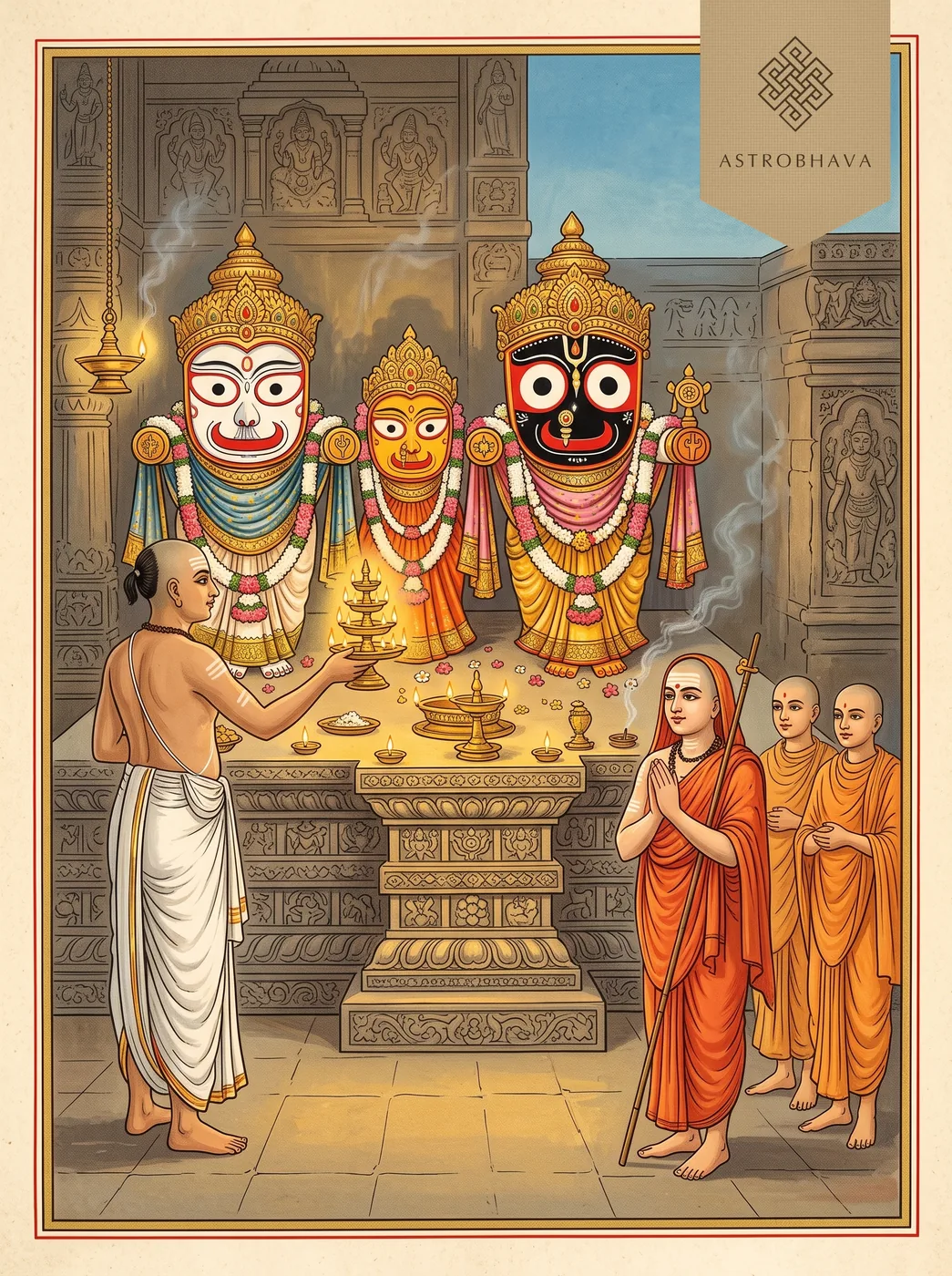
Jagannath Ashtakam
कदाचित्कालिन्दीतटविपिनसङ्गीतकरवो मुदाभीरीनारीवदनकमलास्वादमधुपः । रमाशम्भुब्रह्मामरपतिगणेशार्चितपदो जगन्नाथः स्वामी नयनपथगामी भवतु मे ॥Also known as Kadachit Kalindi
In Devanagari, Tamil, Telugu, Kannada, Malayalam and English — with the meaning of every word, and the one syllable most people pronounce wrongly.
What the Jagannath Ashtakam is
The Jagannath Ashtakam, printed in Sanskrit as the Jagannathashtakam, is a hymn of eight verses to Jagannatha, the Lord of the World enshrined at Puri on the coast of Odisha, and its colophons name Adi Shankaracharya as the author. It is written in the Shikharini metre, seventeen syllables to each quarter, and every verse ends on the same line: may Jagannatha, the Lord, come into the path of my eyes. The verses move from Vrindavana to Puri. Verses 1 and 2 show the Krishna of the Yamuna groves, with flute, peacock feather and silk at the waist. Verse 3 places him on the Blue Hill by the ocean, between his brother Balabhadra and his sister Subhadra. Verse 5 puts him on his chariot in the street. Verse 7 turns down a kingdom, wealth and a bride, and verse 8 asks to be freed from samsara. A single closing verse states the reward.
A hymn for the Lord of the Blue Hill
According to tradition, Shankara wrote these verses when he came to Puri on his journeys across India, and Puri remains one of the four seats he is held to have founded: the Govardhana Matha, whose presiding deity is Jagannatha himself. The hymn reads like the record of a visit. It names the ocean shore, the hill called Nilachala or Niladri, the temple building and the order of the three images on their jewelled platform, with Subhadra seated between her two brothers. Its fifth verse describes the Lord riding his chariot while Brahmins crowd the road singing, which is the scene of the Ratha Yatra, when Jagannatha, Balabhadra and Subhadra are drawn on three wooden chariots down the Bada Danda to the Gundicha temple in the bright half of Ashadha. The hymn's second life came in Bengal Vaishnavism. Gaudiya tradition holds that Chaitanya Mahaprabhu, who lived at Puri for some twenty-four years, recited this ashtakam before Jagannatha, and some of its devotional books go so far as to describe the verses as first spoken by Chaitanya. The printed colophons keep Shankara's name, and the two accounts are usually reconciled by calling Shankara the author and Chaitanya its most celebrated singer.
The mantra, in six scripts
- कदाचित्कालिन्दीतटविपिनसङ्गीतकरवो
- kadācitkālindītaṭavipinasaṅgītakaravo — who at times fills the groves on the Yamuna's bank with music
- मुदाभीरीनारीवदनकमलास्वादमधुपः
- mudābhīrīnārīvadanakamalāsvādamadhupaḥ — a joyful bee tasting the lotus faces of the cowherd women
- रमाशम्भुब्रह्मामरपतिगणेशार्चितपदो
- ramāśambhubrahmāmarapatigaṇeśārcitapado — whose feet Lakshmi, Shiva, Brahma, Indra and Ganesha worship
- जगन्नाथः
- jagannāthaḥ — Jagannatha, Lord of the world
- स्वामी
- svāmī — the Master
- नयनपथगामी
- nayanapathagāmī — travelling the path of the eyes, visible
- भवतु
- bhavatu — may he be
- मे
- me — to me
Jagannath Ashtakam lyrics in full
The eight verses as sung at Puri, followed by the closing phala shruti verse.
All 9 verses, in Sanskrit, Tamil, Telugu, Kannada, Malayalam and English, each with its meaning. Choose a script:
Download the Jagannath Ashtakam PDFAll 9 verses with their meanings, in Sanskrit. Free to print and keep.
कदाचित्कालिन्दीतटविपिनसङ्गीतकरवो मुदाभीरीनारीवदनकमलास्वादमधुपः ।
रमाशम्भुब्रह्मामरपतिगणेशार्चितपदो जगन्नाथः स्वामी नयनपथगामी भवतु मे ॥
கதாசித்காலிந்தீதடவிபிநஸங்கீதகரவோ முதாபீரீநாரீவதநகமலாஸ்வாதமதுபஃ ।
ரமாஶம்புப்ரஹ்மாமரபதிகணேஶார்சிதபதோ ஜகந்நாதஃ ஸ்வாமீ நயநபதகாமீ பவது மே ॥
కదాచిత్కాలిన్దీతటవిపినసఙ్గీతకరవో ముదాభీరీనారీవదనకమలాస్వాదమధుపః ।
రమాశమ్భుబ్రహ్మామరపతిగణేశార్చితపదో జగన్నాథః స్వామీ నయనపథగామీ భవతు మే ॥
ಕದಾಚಿತ್ಕಾಲಿನ್ದೀತಟವಿಪಿನಸಙ್ಗೀತಕರವೋ ಮುದಾಭೀರೀನಾರೀವದನಕಮಲಾಸ್ವಾದಮಧುಪಃ ।
ರಮಾಶಮ್ಭುಬ್ರಹ್ಮಾಮರಪತಿಗಣೇಶಾರ್ಚಿತಪದೋ ಜಗನ್ನಾಥಃ ಸ್ವಾಮೀ ನಯನಪಥಗಾಮೀ ಭವತು ಮೇ ॥
കദാചിത്കാലിന്ദീതടവിപിനസങ്ഗീതകരവോ മുദാഭീരീനാരീവദനകമലാസ്വാദമധുപഃ ।
രമാശമ്ഭുബ്രഹ്മാമരപതിഗണേശാര്ചിതപദോ ജഗന്നാഥഃ സ്വാമീ നയനപഥഗാമീ ഭവതു മേ ॥
kadācitkālindītaṭavipinasaṅgītakaravo mudābhīrīnārīvadanakamalāsvādamadhupaḥ |
ramāśambhubrahmāmarapatigaṇeśārcitapado jagannāthaḥ svāmī nayanapathagāmī bhavatu me ||
Now and then he fills the groves on the banks of the Yamuna with music, and like a joyful bee he savours the lotus faces of the cowherd women. His feet are worshipped by Lakshmi, Shiva, Brahma, Indra and Ganesha. May Jagannatha, the Lord, come into my sight.
भुजे सव्ये वेणुं शिरसि शिखिपिञ्छं कटितटे दुकूलं नेत्रान्ते सहचरकटाक्षं विदधते ।
सदा श्रीमद्वृन्दावनवसतिलीलापरिचयो जगन्नाथः स्वामी नयनपथगामी भवतु मे ॥
புஜே ஸவ்யே வேணும் ஶிரஸி ஶிகிபிஞ்சம் கடிதடே துகூலம் நேத்ராந்தே ஸஹசரகடாக்ஷம் விதததே ।
ஸதா ஶ்ரீமத்வ்ருந்தாவநவஸதிலீலாபரிசயோ ஜகந்நாதஃ ஸ்வாமீ நயநபதகாமீ பவது மே ॥
భుజే సవ్యే వేణుం శిరసి శిఖిపిఞ్ఛం కటితటే దుకూలం నేత్రాన్తే సహచరకటాక్షం విదధతే ।
సదా శ్రీమద్వృన్దావనవసతిలీలాపరిచయో జగన్నాథః స్వామీ నయనపథగామీ భవతు మే ॥
ಭುಜೇ ಸವ್ಯೇ ವೇಣುಂ ಶಿರಸಿ ಶಿಖಿಪಿಞ್ಛಂ ಕಟಿತಟೇ ದುಕೂಲಂ ನೇತ್ರಾನ್ತೇ ಸಹಚರಕಟಾಕ್ಷಂ ವಿದಧತೇ ।
ಸದಾ ಶ್ರೀಮದ್ವೃನ್ದಾವನವಸತಿಲೀಲಾಪರಿಚಯೋ ಜಗನ್ನಾಥಃ ಸ್ವಾಮೀ ನಯನಪಥಗಾಮೀ ಭವತು ಮೇ ॥
ഭുജേ സവ്യേ വേണും ശിരസി ശിഖിപിഞ്ഛം കടിതടേ ദുകൂലം നേത്രാന്തേ സഹചരകടാക്ഷം വിദധതേ ।
സദാ ശ്രീമദ്വൃന്ദാവനവസതിലീലാപരിചയോ ജഗന്നാഥഃ സ്വാമീ നയനപഥഗാമീ ഭവതു മേ ॥
bhuje savye veṇuṃ śirasi śikhipiñchaṃ kaṭitaṭe dukūlaṃ netrānte sahacarakaṭākṣaṃ vidadhate |
sadā śrīmadvṛndāvanavasatilīlāparicayo jagannāthaḥ svāmī nayanapathagāmī bhavatu me ||
He holds the flute in his left hand, wears a peacock feather on his head and fine silk at his waist, and casts sidelong glances at his companions from the corners of his eyes. He is ever known by his play while dwelling in lovely Vrindavana. May Jagannatha, the Lord, come into my sight.
महाम्भोधेस्तीरे कनकरुचिरे नीलशिखरे वसन् प्रासादान्तः सहजबलभद्रेण बलिना ।
सुभद्रामध्यस्थः सकलसुरसेवावसरदो जगन्नाथः स्वामी नयनपथगामी भवतु मे ॥
மஹாம்போதேஸ்தீரே கநகருசிரே நீலஶிகரே வஸந் ப்ராஸாதாந்தஃ ஸஹஜபலபத்ரேண பலிநா ।
ஸுபத்ராமத்யஸ்தஃ ஸகலஸுரஸேவாவஸரதோ ஜகந்நாதஃ ஸ்வாமீ நயநபதகாமீ பவது மே ॥
మహామ్భోధేస్తీరే కనకరుచిరే నీలశిఖరే వసన్ ప్రాసాదాన్తః సహజబలభద్రేణ బలినా ।
సుభద్రామధ్యస్థః సకలసురసేవావసరదో జగన్నాథః స్వామీ నయనపథగామీ భవతు మే ॥
ಮಹಾಮ್ಭೋಧೇಸ್ತೀರೇ ಕನಕರುಚಿರೇ ನೀಲಶಿಖರೇ ವಸನ್ ಪ್ರಾಸಾದಾನ್ತಃ ಸಹಜಬಲಭದ್ರೇಣ ಬಲಿನಾ ।
ಸುಭದ್ರಾಮಧ್ಯಸ್ಥಃ ಸಕಲಸುರಸೇವಾವಸರದೋ ಜಗನ್ನಾಥಃ ಸ್ವಾಮೀ ನಯನಪಥಗಾಮೀ ಭವತು ಮೇ ॥
മഹാമ്ഭോധേസ്തീരേ കനകരുചിരേ നീലശിഖരേ വസന് പ്രാസാദാന്തഃ സഹജബലഭദ്രേണ ബലിനാ ।
സുഭദ്രാമധ്യസ്ഥഃ സകലസുരസേവാവസരദോ ജഗന്നാഥഃ സ്വാമീ നയനപഥഗാമീ ഭവതു മേ ॥
mahāmbhodhestīre kanakarucire nīlaśikhare vasan prāsādāntaḥ sahajabalabhadreṇa balinā |
subhadrāmadhyasthaḥ sakalasurasevāvasarado jagannāthaḥ svāmī nayanapathagāmī bhavatu me ||
On the shore of the great ocean, on the Blue Hill shining like gold, he lives inside his temple with his mighty brother Balabhadra, with Subhadra between them. He grants every god the chance to serve him. May Jagannatha, the Lord, come into my sight.
कृपापारावारः सजलजलदश्रेणिरुचिरो रमावाणीरामः स्फुरदमलपङ्केरुहमुखः ।
सुरेन्द्रैराराध्यः श्रुतिगणशिखागीतचरितो जगन्नाथः स्वामी नयनपथगामी भवतु मे ॥
க்ருபாபாராவாரஃ ஸஜலஜலதஶ்ரேணிருசிரோ ரமாவாணீராமஃ ஸ்புரதமலபங்கேருஹமுகஃ ।
ஸுரேந்த்ரைராராத்யஃ ஶ்ருதிகணஶிகாகீதசரிதோ ஜகந்நாதஃ ஸ்வாமீ நயநபதகாமீ பவது மே ॥
కృపాపారావారః సజలజలదశ్రేణిరుచిరో రమావాణీరామః స్ఫురదమలపఙ్కేరుహముఖః ।
సురేన్ద్రైరారాధ్యః శ్రుతిగణశిఖాగీతచరితో జగన్నాథః స్వామీ నయనపథగామీ భవతు మే ॥
ಕೃಪಾಪಾರಾವಾರಃ ಸಜಲಜಲದಶ್ರೇಣಿರುಚಿರೋ ರಮಾವಾಣೀರಾಮಃ ಸ್ಫುರದಮಲಪಙ್ಕೇರುಹಮುಖಃ ।
ಸುರೇನ್ದ್ರೈರಾರಾಧ್ಯಃ ಶ್ರುತಿಗಣಶಿಖಾಗೀತಚರಿತೋ ಜಗನ್ನಾಥಃ ಸ್ವಾಮೀ ನಯನಪಥಗಾಮೀ ಭವತು ಮೇ ॥
കൃപാപാരാവാരഃ സജലജലദശ്രേണിരുചിരോ രമാവാണീരാമഃ സ്ഫുരദമലപങ്കേരുഹമുഖഃ ।
സുരേന്ദ്രൈരാരാധ്യഃ ശ്രുതിഗണശിഖാഗീതചരിതോ ജഗന്നാഥഃ സ്വാമീ നയനപഥഗാമീ ഭവതു മേ ॥
kṛpāpārāvāraḥ sajalajaladaśreṇiruciro ramāvāṇīrāmaḥ sphuradamalapaṅkeruhamukhaḥ |
surendrairārādhyaḥ śrutigaṇaśikhāgītacarito jagannāthaḥ svāmī nayanapathagāmī bhavatu me ||
He is an ocean of mercy, beautiful like a row of rain-filled clouds, the delight of Lakshmi and Sarasvati, with a face like a shining, spotless lotus. He is worshipped by the chief gods, and the summits of the Vedas sing of his deeds. May Jagannatha, the Lord, come into my sight.
रथारूढो गच्छन् पथि मिलितभूदेवपटलैः स्तुतिप्रादुर्भावं प्रतिपदमुपाकर्ण्य सदयः ।
दयासिन्धुर्बन्धुः सकलजगतां सिन्धुसुतया जगन्नाथः स्वामी नयनपथगामी भवतु मे ॥
ரதாரூடோ கச்சந் பதி மிலிதபூதேவபடலைஃ ஸ்துதிப்ராதுர்பாவம் ப்ரதிபதமுபாகர்ண்ய ஸதயஃ ।
தயாஸிந்துர்பந்துஃ ஸகலஜகதாம் ஸிந்துஸுதயா ஜகந்நாதஃ ஸ்வாமீ நயநபதகாமீ பவது மே ॥
రథారూఢో గచ్ఛన్ పథి మిలితభూదేవపటలైః స్తుతిప్రాదుర్భావం ప్రతిపదముపాకర్ణ్య సదయః ।
దయాసిన్ధుర్బన్ధుః సకలజగతాం సిన్ధుసుతయా జగన్నాథః స్వామీ నయనపథగామీ భవతు మే ॥
ರಥಾರೂಢೋ ಗಚ್ಛನ್ ಪಥಿ ಮಿಲಿತಭೂದೇವಪಟಲೈಃ ಸ್ತುತಿಪ್ರಾದುರ್ಭಾವಂ ಪ್ರತಿಪದಮುಪಾಕರ್ಣ್ಯ ಸದಯಃ ।
ದಯಾಸಿನ್ಧುರ್ಬನ್ಧುಃ ಸಕಲಜಗತಾಂ ಸಿನ್ಧುಸುತಯಾ ಜಗನ್ನಾಥಃ ಸ್ವಾಮೀ ನಯನಪಥಗಾಮೀ ಭವತು ಮೇ ॥
രഥാരൂഢോ ഗച്ഛന് പഥി മിലിതഭൂദേവപടലൈഃ സ്തുതിപ്രാദുര്ഭാവം പ്രതിപദമുപാകര്ണ്യ സദയഃ ।
ദയാസിന്ധുര്ബന്ധുഃ സകലജഗതാം സിന്ധുസുതയാ ജഗന്നാഥഃ സ്വാമീ നയനപഥഗാമീ ഭവതു മേ ॥
rathārūḍho gacchan pathi militabhūdevapaṭalaiḥ stutiprādurbhāvaṃ pratipadamupākarṇya sadayaḥ |
dayāsindhurbandhuḥ sakalajagatāṃ sindhusutayā jagannāthaḥ svāmī nayanapathagāmī bhavatu me ||
Riding on his chariot along the road, at every step he listens kindly to the hymns rising from the crowds of Brahmins gathered there. With Lakshmi, the daughter of the ocean, he is an ocean of compassion and the friend of all the worlds. May Jagannatha, the Lord, come into my sight.
परब्रह्मापीडः कुवलयदलोत्फुल्लनयनो निवासी नीलाद्रौ निहितचरणोऽनन्तशिरसि ।
रसानन्दो राधासरसवपुरालिङ्गनसुखो जगन्नाथः स्वामी नयनपथगामी भवतु मे ॥
பரப்ரஹ்மாபீடஃ குவலயதலோத்புல்லநயநோ நிவாஸீ நீலாத்ரௌ நிஹிதசரணோநந்தஶிரஸி ।
ரஸாநந்தோ ராதாஸரஸவபுராலிங்கநஸுகோ ஜகந்நாதஃ ஸ்வாமீ நயநபதகாமீ பவது மே ॥
పరబ్రహ్మాపీడః కువలయదలోత్ఫుల్లనయనో నివాసీ నీలాద్రౌ నిహితచరణోఽనన్తశిరసి ।
రసానన్దో రాధాసరసవపురాలిఙ్గనసుఖో జగన్నాథః స్వామీ నయనపథగామీ భవతు మే ॥
ಪರಬ್ರಹ್ಮಾಪೀಡಃ ಕುವಲಯದಲೋತ್ಫುಲ್ಲನಯನೋ ನಿವಾಸೀ ನೀಲಾದ್ರೌ ನಿಹಿತಚರಣೋಽನನ್ತಶಿರಸಿ ।
ರಸಾನನ್ದೋ ರಾಧಾಸರಸವಪುರಾಲಿಙ್ಗನಸುಖೋ ಜಗನ್ನಾಥಃ ಸ್ವಾಮೀ ನಯನಪಥಗಾಮೀ ಭವತು ಮೇ ॥
പരബ്രഹ്മാപീഡഃ കുവലയദലോത്ഫുല്ലനയനോ നിവാസീ നീലാദ്രൌ നിഹിതചരണോഽനന്തശിരസി ।
രസാനന്ദോ രാധാസരസവപുരാലിങ്ഗനസുഖോ ജഗന്നാഥഃ സ്വാമീ നയനപഥഗാമീ ഭവതു മേ ॥
parabrahmāpīḍaḥ kuvalayadalotphullanayano nivāsī nīlādrau nihitacaraṇo'nantaśirasi |
rasānando rādhāsarasavapurāliṅganasukho jagannāthaḥ svāmī nayanapathagāmī bhavatu me ||
He is the crown of the Supreme Brahman, with eyes wide open like blue lotus petals; he dwells on the Blue Hill and rests his feet on the head of Ananta. He is joy itself and delights in the loving embrace of Radha. May Jagannatha, the Lord, come into my sight.
न वै याचे राज्यं न च कनकमाणिक्यविभवं न याचेऽहं रम्यां निखिलजनकाम्यां वरवधूम् ।
सदा काले काले प्रमथपतिना गीतचरितो जगन्नाथः स्वामी नयनपथगामी भवतु मे ॥
ந வை யாசே ராஜ்யம் ந ச கநகமாணிக்யவிபவம் ந யாசேஹம் ரம்யாம் நிகிலஜநகாம்யாம் வரவதூம் ।
ஸதா காலே காலே ப்ரமதபதிநா கீதசரிதோ ஜகந்நாதஃ ஸ்வாமீ நயநபதகாமீ பவது மே ॥
న వై యాచే రాజ్యం న చ కనకమాణిక్యవిభవం న యాచేఽహం రమ్యాం నిఖిలజనకామ్యాం వరవధూమ్ ।
సదా కాలే కాలే ప్రమథపతినా గీతచరితో జగన్నాథః స్వామీ నయనపథగామీ భవతు మే ॥
ನ ವೈ ಯಾಚೇ ರಾಜ್ಯಂ ನ ಚ ಕನಕಮಾಣಿಕ್ಯವಿಭವಂ ನ ಯಾಚೇಽಹಂ ರಮ್ಯಾಂ ನಿಖಿಲಜನಕಾಮ್ಯಾಂ ವರವಧೂಮ್ ।
ಸದಾ ಕಾಲೇ ಕಾಲೇ ಪ್ರಮಥಪತಿನಾ ಗೀತಚರಿತೋ ಜಗನ್ನಾಥಃ ಸ್ವಾಮೀ ನಯನಪಥಗಾಮೀ ಭವತು ಮೇ ॥
ന വൈ യാചേ രാജ്യം ന ച കനകമാണിക്യവിഭവം ന യാചേഽഹം രമ്യാം നിഖിലജനകാമ്യാം വരവധൂമ് ।
സദാ കാലേ കാലേ പ്രമഥപതിനാ ഗീതചരിതോ ജഗന്നാഥഃ സ്വാമീ നയനപഥഗാമീ ഭവതു മേ ॥
na vai yāce rājyaṃ na ca kanakamāṇikyavibhavaṃ na yāce'haṃ ramyāṃ nikhilajanakāmyāṃ varavadhūm |
sadā kāle kāle pramathapatinā gītacarito jagannāthaḥ svāmī nayanapathagāmī bhavatu me ||
I do not ask for a kingdom, nor for riches of gold and rubies, nor for a beautiful bride desired by all people. I ask only this: may Jagannatha, the Lord whose deeds are sung at all times by Shiva, lord of the Pramathas, come into my sight.
हर त्वं संसारं द्रुततरमसारं सुरपते हर त्वं पापानां विततिमपरां यादवपते ।
अहो दीनेऽनाथे निहितचरणो निश्चितमिदं जगन्नाथः स्वामी नयनपथगामी भवतु मे ॥
ஹர த்வம் ஸம்ஸாரம் த்ருததரமஸாரம் ஸுரபதே ஹர த்வம் பாபாநாம் விததிமபராம் யாதவபதே ।
அஹோ தீநேநாதே நிஹிதசரணோ நிஶ்சிதமிதம் ஜகந்நாதஃ ஸ்வாமீ நயநபதகாமீ பவது மே ॥
హర త్వం సంసారం ద్రుతతరమసారం సురపతే హర త్వం పాపానాం వితతిమపరాం యాదవపతే ।
అహో దీనేఽనాథే నిహితచరణో నిశ్చితమిదం జగన్నాథః స్వామీ నయనపథగామీ భవతు మే ॥
ಹರ ತ್ವಂ ಸಂಸಾರಂ ದ್ರುತತರಮಸಾರಂ ಸುರಪತೇ ಹರ ತ್ವಂ ಪಾಪಾನಾಂ ವಿತತಿಮಪರಾಂ ಯಾದವಪತೇ ।
ಅಹೋ ದೀನೇಽನಾಥೇ ನಿಹಿತಚರಣೋ ನಿಶ್ಚಿತಮಿದಂ ಜಗನ್ನಾಥಃ ಸ್ವಾಮೀ ನಯನಪಥಗಾಮೀ ಭವತು ಮೇ ॥
ഹര ത്വം സംസാരം ദ്രുതതരമസാരം സുരപതേ ഹര ത്വം പാപാനാം വിതതിമപരാം യാദവപതേ ।
അഹോ ദീനേഽനാഥേ നിഹിതചരണോ നിശ്ചിതമിദം ജഗന്നാഥഃ സ്വാമീ നയനപഥഗാമീ ഭവതു മേ ॥
hara tvaṃ saṃsāraṃ drutataramasāraṃ surapate hara tvaṃ pāpānāṃ vitatimaparāṃ yādavapate |
aho dīne'nāthe nihitacaraṇo niścitamidaṃ jagannāthaḥ svāmī nayanapathagāmī bhavatu me ||
O Lord of the gods, quickly take away this worthless round of birth and death; O Lord of the Yadavas, take away the endless mass of my sins. Surely he sets his feet upon the lowly and the helpless. May Jagannatha, the Lord, come into my sight.
जगन्नाथाष्टकं पुण्यं यः पठेत् प्रयतः शुचिः ।
सर्वपापविशुद्धात्मा विष्णुलोकं स गच्छति ॥
ஜகந்நாதாஷ்டகம் புண்யம் யஃ படேத் ப்ரயதஃ ஶுசிஃ ।
ஸர்வபாபவிஶுத்தாத்மா விஷ்ணுலோகம் ஸ கச்சதி ॥
జగన్నాథాష్టకం పుణ్యం యః పఠేత్ ప్రయతః శుచిః ।
సర్వపాపవిశుద్ధాత్మా విష్ణులోకం స గచ్ఛతి ॥
ಜಗನ್ನಾಥಾಷ್ಟಕಂ ಪುಣ್ಯಂ ಯಃ ಪಠೇತ್ ಪ್ರಯತಃ ಶುಚಿಃ ।
ಸರ್ವಪಾಪವಿಶುದ್ಧಾತ್ಮಾ ವಿಷ್ಣುಲೋಕಂ ಸ ಗಚ್ಛತಿ ॥
ജഗന്നാഥാഷ്ടകം പുണ്യം യഃ പഠേത് പ്രയതഃ ശുചിഃ ।
സര്വപാപവിശുദ്ധാത്മാ വിഷ്ണുലോകം സ ഗച്ഛതി ॥
jagannāthāṣṭakaṃ puṇyaṃ yaḥ paṭhet prayataḥ śuciḥ |
sarvapāpaviśuddhātmā viṣṇulokaṃ sa gacchati ||
The verse says that whoever recites this sacred Jagannatha Ashtakam with care and purity is cleansed of all sins and goes to the world of Vishnu.
The syllable people get wrong
In the refrain, nayanapathagāmī is often clipped to 'nayan-path-gami', dropping the vowels after the n and the th as everyday Hindi speech does. Every syllable is sounded: na-ya-na-pa-tha-gā-mī, seven in all, with the long ā and long ī held, or the line loses its place in the metre.
When the Jagannath Ashtakam is chanted
Weekday. Thursday
Festival. Ratha Yatra at Puri
Questions
Have your chart read before you decide
Chanting is yours to do, and free. But which deity your situation calls for — and whether a mantra alone is the right response — depends on your chart. Sometimes it is; sometimes it is not.
- Over 30 years in the Guru–Sishya Parampara, from the age of five
- He reads every chart himself — 60 minutes, one to one, never delegated
- Charts are read only between sunrise and sunset, following tradition