Kamadeva Mantra
ॐ कामदेवाय विद्महे पुष्पबाणाय धीमहि । तन्नोऽनङ्गः प्रचोदयात् ॥Also known as Kamadeva Gayatri
In Devanagari, Tamil, Telugu, Kannada, Malayalam and English — with the meaning of every word, and the one syllable most people pronounce wrongly.
 The Kamadeva Homa, performed for youBook →
What the Kamadeva Mantra is
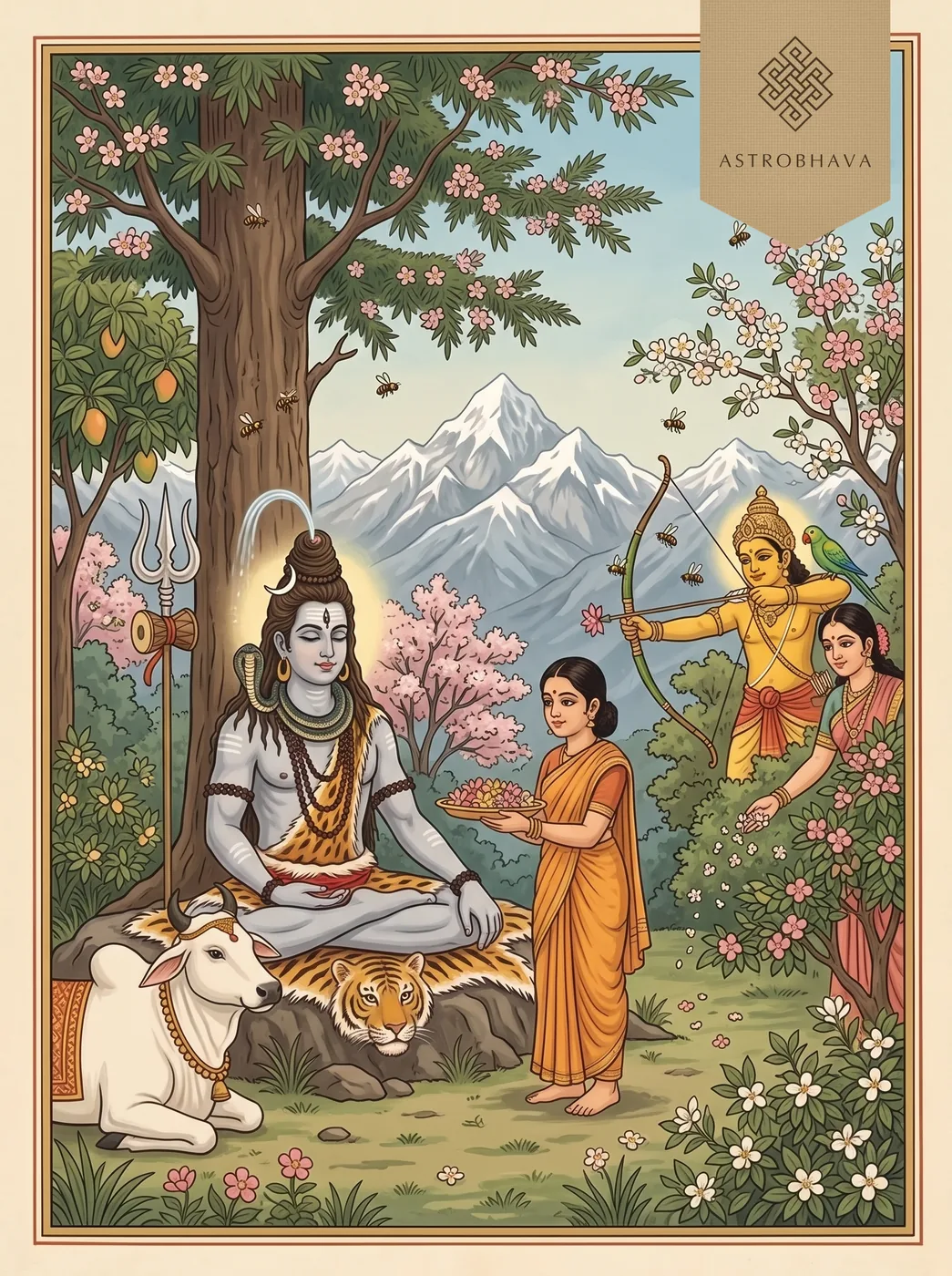
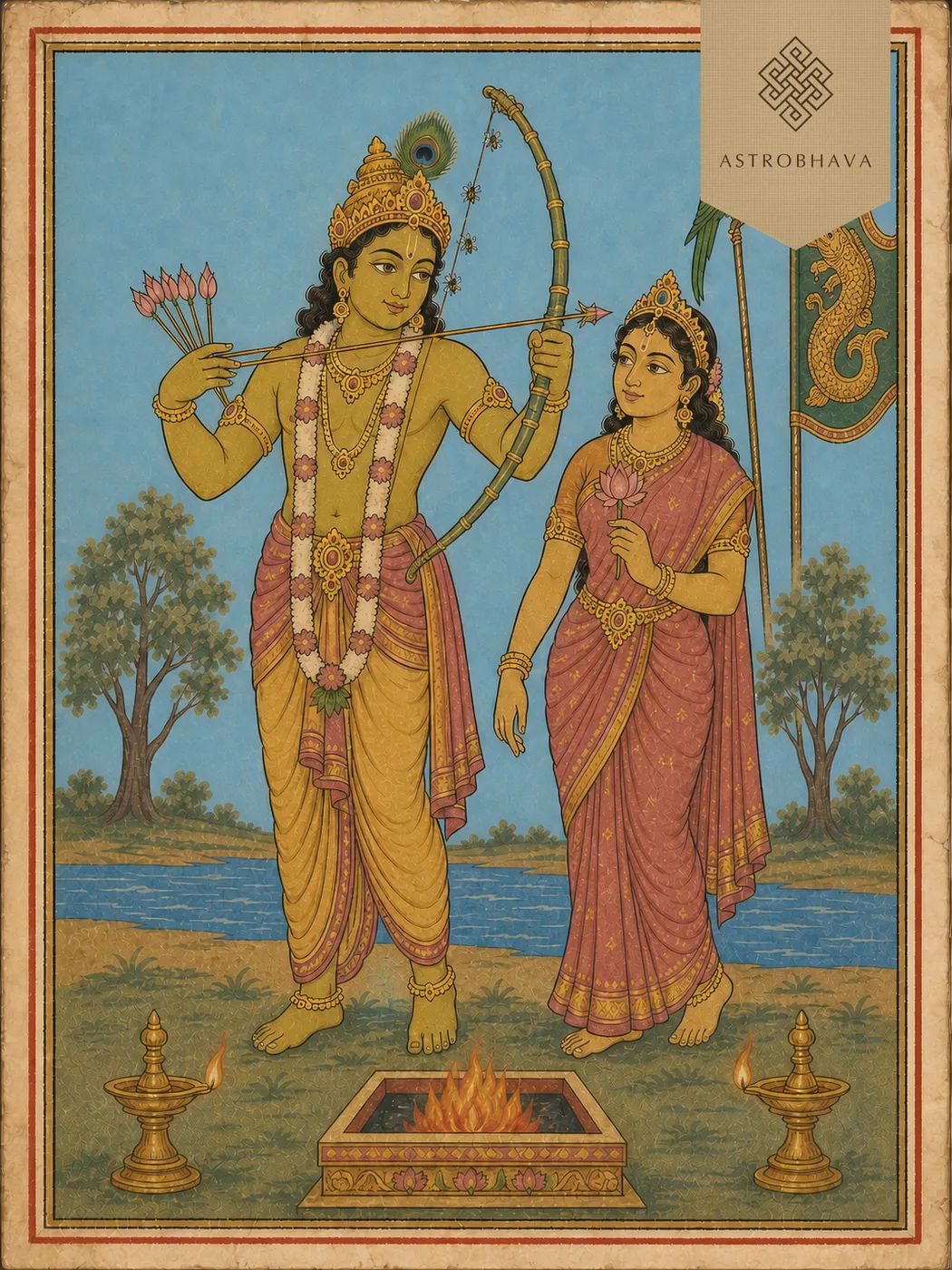
The Kamdev mantra most people mean is the Kamadeva Gayatri, a single line addressed to Kamadeva, the god of love whom much of South India calls Manmatha. It is built on the frame of the Vedic Gayatri: three verbs in sequence, vidmahe (may we know), dhimahi (may we meditate) and pracodayat (may he impel), each joined to one name of the god. The first name is Kamadeva, the god Desire. The second, Pushpabana, he whose arrows are flowers, recalls his sugarcane bow strung with bees and the five blossoms he shoots, which tradition lists as ashoka, mango, jasmine, blue lotus and white lotus. The third, Ananga, the bodiless, is the name he carried after Shiva's third eye burned him, so the line closes on the god as he survived that fire. No author is known. The mantra is kept in compilations of deity Gayatris drawn from the Linga Purana and the later mantra manuals, where it stands beside two other Gayatris to Kama: one calls him Manobhava, born in the mind, and Kandarpa, the other Manmathesha.
The Fire That Gave Kama a Second Name
The last name in the mantra comes from a story told in the Matsya, Shiva and other Puranas and retold by Kalidasa in the Kumarasambhava. The demon Taraka could be killed only by a son of Shiva, but Shiva sat in austerity in the Himalaya, with Parvati attending him and no thought of marriage. Indra sent Kama to stir him, and Kama took along his friend Vasanta, the spring, so that the forest flowered out of season and every creature turned toward its mate. As Kama aimed his arrow, Shiva felt his stillness break, looked for the cause, and fire from his third eye left Kama a heap of ash. In Kalidasa's fourth canto Rati, Kama's wife, asks Vasanta to build her a pyre, and a voice from the sky tells her the parting will end when Shiva weds Parvati. The sequel differs from text to text. The Shiva Purana has Kama restored at that wedding. The Bhagavata Purana has him reborn as Pradyumna, son of Krishna and Rukmini, stolen as an infant by the demon Shambara and raised by Rati, who was living in Shambara's house as Mayavati. The Kalika Purana says he regained his form in Assam, which is why that land was called Kamarupa. Every version keeps one point: the fire took his body, not his power, and the Gayatri calls on him by the bodiless name.
The mantra, in six scripts
- ॐ
- oṃ — Om, the sacred syllable
- कामदेवाय
- kāmadevāya — Kamadeva, the god of love
- विद्महे
- vidmahe — may we know
- पुष्पबाणाय
- puṣpabāṇāya — him whose arrows are flowers
- धीमहि
- dhīmahi — may we meditate on
- तन्नोऽनङ्गः
- tanno'naṅgaḥ — that Ananga, the bodiless one, for us
- प्रचोदयात्
- pracodayāt — may he impel, inspire
Kamadeva Mantra lyrics in full
The Kamadeva Gayatri, a single line in three parts.
All 1 verses, in Sanskrit, Tamil, Telugu, Kannada, Malayalam and English, each with its meaning. Choose a script:
Download the Kamadeva Mantra PDFAll 1 verses with their meanings, in Sanskrit. Free to print and keep.
ॐ कामदेवाय विद्महे पुष्पबाणाय धीमहि ।
तन्नोऽनङ्गः प्रचोदयात् ॥
ௐ காமதேவாய வித்மஹே புஷ்பபாணாய தீமஹி ।
தந்நோநங்கஃ ப்ரசோதயாத் ॥
ఓం కామదేవాయ విద్మహే పుష్పబాణాయ ధీమహి ।
తన్నోఽనఙ్గః ప్రచోదయాత్ ॥
ಓಂ ಕಾಮದೇವಾಯ ವಿದ್ಮಹೇ ಪುಷ್ಪಬಾಣಾಯ ಧೀಮಹಿ ।
ತನ್ನೋಽನಙ್ಗಃ ಪ್ರಚೋದಯಾತ್ ॥
ഓം കാമദേവായ വിദ്മഹേ പുഷ്പബാണായ ധീമഹി ।
തന്നോഽനങ്ഗഃ പ്രചോദയാത് ॥
oṃ kāmadevāya vidmahe puṣpabāṇāya dhīmahi |
tanno'naṅgaḥ pracodayāt ||
Om. May we know Kamadeva, the god of love; may we meditate on him whose arrows are flowers. May that bodiless one, Ananga, inspire and guide us.
The syllable people get wrong
In puṣpabāṇāya, 'to the one whose arrows are flowers', the word is often said 'pushpa-bana-ya' with short vowels and an English n, which turns bāṇa, arrow, into something else. Hold both ā long and curl the tongue back for the retroflex ṣ and ṇ: push-pa-BAA-ṇaa-ya.
When the Kamadeva Mantra is chanted
Festival. Holi, kept in Tamil Nadu as Kaman Pandigai (Kama Dahanam)
Questions
Have your chart read before you decide
Chanting is yours to do, and free. But which deity your situation calls for — and whether a mantra alone is the right response — depends on your chart. Sometimes it is; sometimes it is not.
- Over 30 years in the Guru–Sishya Parampara, from the age of five
- He reads every chart himself — 60 minutes, one to one, never delegated
- Charts are read only between sunrise and sunset, following tradition
