Kamadhenu Mantra
नमो गोभ्यः श्रीमतीभ्यः सौरभेयीभ्य एव च । नमो ब्रह्मसुताभ्यश्च पवित्राभ्यो नमो नमः ॥Also known as Surabhi Stotram
In Devanagari, Tamil, Telugu, Kannada, Malayalam and English — with the meaning of every word, and the one syllable most people pronounce wrongly.
 A reading of your birth chartBook →
What the Kamadhenu Mantra is
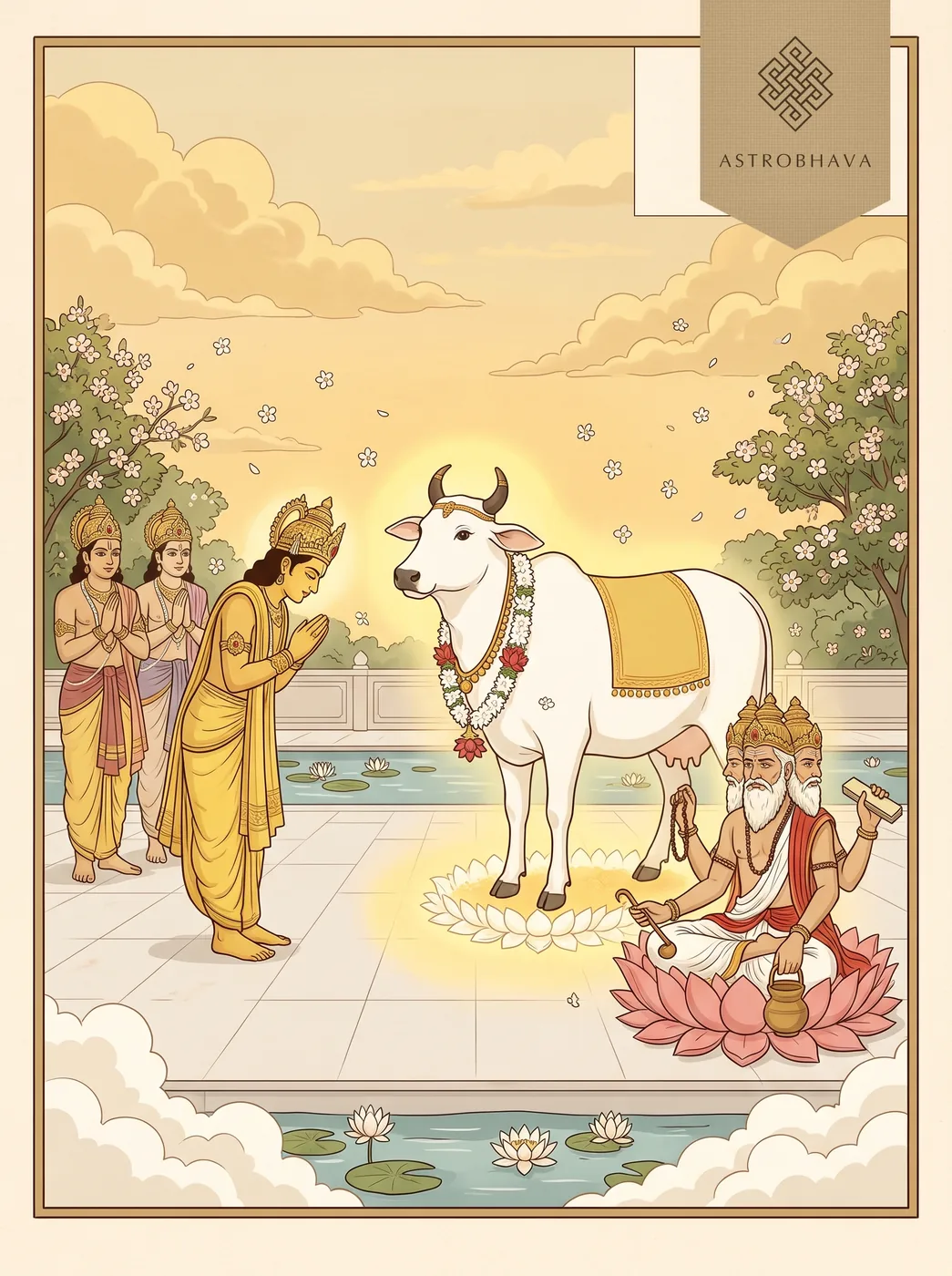
The Kamadhenu mantra, as most people search for it, is a small group of salutations to the sacred cow and to Surabhi, the divine mother of cows from whom the wish-yielding Kamadhenus descend. The page opens with three cow verses. Verse 1 comes from the go-shanti chapter of the Agni Purana, which begins by telling the king that cows and Brahmins must be protected; it bows to cows as the daughters of Surabhi and of Brahma. Verse 2 is spoken by the sage Vasishtha in the Anushasana Parva of the Mahabharata and asks that cows stand before, behind and all around the speaker. Verse 3 is a traditional go-puja shloka, carried in devotional printings, that hails the cow as the giver of every wish. Then comes the Surabhi block: the six-syllable mantra Om Surabhyai Namah, a two-verse dhyanam and Indra's four-verse stuti (Verses 4-7). This Surabhi stotram is shared by the Devi Bhagavata Purana and the Brahmavaivarta Purana.
Surabhi, brought forth by Krishna in Goloka
The Devi Bhagavata Purana gives the account as the sage Narayana tells it to Narada, and the Brahmavaivarta Purana carries the same narrative. In Goloka, Krishna was with Radha and the gopis when he wished to drink milk, and he brought forth Surabhi, with her calf, from his own left side. Shridama milked her into a new earthen jar. The milk that spilled as Krishna drank became a lake a hundred yojanas across, named Kshirasagara, where Radha and the gopis are said to play. From every pore of Surabhi's body came countless Kamadhenus, until each cowherd's house in Goloka had one and cows filled the universe. The Purana says Krishna himself worshipped her first, and it sets her worship on the morning after Diwali night. It also explains how Indra's hymn came to be. In the Varaha Kalpa, Surabhi stopped giving milk for a single day, moved by Vishnu's maya. The alarmed gods went to Brahma, and on his advice Indra praised her with the verses printed here as Verses 4-7. Surabhi appeared in Brahmaloka, granted Indra a boon and returned to Goloka, and the worlds again had milk, ghee and sacrifice. The passage closes by saying that reciting this praise equals bathing at every holy place.
The mantra, in six scripts
- नमो
- namo — salutation
- गोभ्यः
- gobhyaḥ — to the cows
- श्रीमतीभ्यः
- śrīmatībhyaḥ — to the glorious ones
- सौरभेयीभ्य
- saurabheyībhya — to the daughters of Surabhi
- एव
- eva — indeed
- च
- ca — and
- नमो
- namo — salutation
- ब्रह्मसुताभ्यश्च
- brahmasutābhyaśca — and to the daughters of Brahma
- पवित्राभ्यो
- pavitrābhyo — to the purifying ones
- नमो
- namo — salutation
- नमः
- namaḥ — salutation again
Kamadhenu Mantra lyrics in full
Three salutations to the cow, then the Surabhi mantra, its dhyanam and Indra's four-verse stuti. The printed closing line is given at the end.
All 11 verses, in Sanskrit, Tamil, Telugu, Kannada, Malayalam and English, each with its meaning. Choose a script:
Download the Kamadhenu Mantra PDFAll 11 verses with their meanings, in Sanskrit. Free to print and keep.
नमो गोभ्यः श्रीमतीभ्यः सौरभेयीभ्य एव च ।
नमो ब्रह्मसुताभ्यश्च पवित्राभ्यो नमो नमः ॥
நமோ கோப்யஃ ஶ்ரீமதீப்யஃ ஸௌரபேயீப்ய ஏவ ச ।
நமோ ப்ரஹ்மஸுதாப்யஶ்ச பவித்ராப்யோ நமோ நமஃ ॥
నమో గోభ్యః శ్రీమతీభ్యః సౌరభేయీభ్య ఏవ చ ।
నమో బ్రహ్మసుతాభ్యశ్చ పవిత్రాభ్యో నమో నమః ॥
ನಮೋ ಗೋಭ್ಯಃ ಶ್ರೀಮತೀಭ್ಯಃ ಸೌರಭೇಯೀಭ್ಯ ಏವ ಚ ।
ನಮೋ ಬ್ರಹ್ಮಸುತಾಭ್ಯಶ್ಚ ಪವಿತ್ರಾಭ್ಯೋ ನಮೋ ನಮಃ ॥
നമോ ഗോഭ്യഃ ശ്രീമതീഭ്യഃ സൌരഭേയീഭ്യ ഏവ ച ।
നമോ ബ്രഹ്മസുതാഭ്യശ്ച പവിത്രാഭ്യോ നമോ നമഃ ॥
namo gobhyaḥ śrīmatībhyaḥ saurabheyībhya eva ca |
namo brahmasutābhyaśca pavitrābhyo namo namaḥ ||
Salutations to the cows, the glorious ones, the daughters of Surabhi. Salutations to the daughters of Brahma, the purifying ones; salutations again and again.
गावो ममाग्रतो नित्यं गावः पृष्ठत एव च ।
गावो मे सर्वतश्चैव गवां मध्ये वसाम्यहम् ॥
காவோ மமாக்ரதோ நித்யம் காவஃ ப்ருஷ்டத ஏவ ச ।
காவோ மே ஸர்வதஶ்சைவ கவாம் மத்யே வஸாம்யஹம் ॥
గావో మమాగ్రతో నిత్యం గావః పృష్ఠత ఏవ చ ।
గావో మే సర్వతశ్చైవ గవాం మధ్యే వసామ్యహమ్ ॥
ಗಾವೋ ಮಮಾಗ್ರತೋ ನಿತ್ಯಂ ಗಾವಃ ಪೃಷ್ಠತ ಏವ ಚ ।
ಗಾವೋ ಮೇ ಸರ್ವತಶ್ಚೈವ ಗವಾಂ ಮಧ್ಯೇ ವಸಾಮ್ಯಹಮ್ ॥
ഗാവോ മമാഗ്രതോ നിത്യം ഗാവഃ പൃഷ്ഠത ഏവ ച ।
ഗാവോ മേ സര്വതശ്ചൈവ ഗവാം മധ്യേ വസാമ്യഹമ് ॥
gāvo mamāgrato nityaṃ gāvaḥ pṛṣṭhata eva ca |
gāvo me sarvataścaiva gavāṃ madhye vasāmyaham ||
May cows be always before me, and cows behind me as well. May cows be all around me; I live in the midst of cows.
सर्वकामदुधे देवि सर्वतीर्थाभिषेचनि ।
पावनि सुरभिश्रेष्ठे देवि तुभ्यं नमोऽस्तु ते ॥
ஸர்வகாமதுதே தேவி ஸர்வதீர்தாபிஷேசநி ।
பாவநி ஸுரபிஶ்ரேஷ்டே தேவி துப்யம் நமோஸ்து தே ॥
సర్వకామదుధే దేవి సర్వతీర్థాభిషేచని ।
పావని సురభిశ్రేష్ఠే దేవి తుభ్యం నమోఽస్తు తే ॥
ಸರ್ವಕಾಮದುಧೇ ದೇವಿ ಸರ್ವತೀರ್ಥಾಭಿಷೇಚನಿ ।
ಪಾವನಿ ಸುರಭಿಶ್ರೇಷ್ಠೇ ದೇವಿ ತುಭ್ಯಂ ನಮೋಽಸ್ತು ತೇ ॥
സര്വകാമദുധേ ദേവി സര്വതീര്ഥാഭിഷേചനി ।
പാവനി സുരഭിശ്രേഷ്ഠേ ദേവി തുഭ്യം നമോഽസ്തു തേ ॥
sarvakāmadudhe devi sarvatīrthābhiṣecani |
pāvani surabhiśreṣṭhe devi tubhyaṃ namo'stu te ||
O Goddess who yields every wish like milk, who gives the merit of bathing in all holy waters; O purifying one, O Surabhi, best of cows: O Goddess, salutation to you.
ॐ सुरभ्यै नमः ॥
ௐ ஸுரப்யை நமஃ ॥
ఓం సురభ్యై నమః ॥
ಓಂ ಸುರಭ್ಯೈ ನಮಃ ॥
ഓം സുരഭ്യൈ നമഃ ॥
oṃ surabhyai namaḥ ||
Om, salutation to Surabhi. The Purana calls this the six-syllable mantra of Surabhi, and the verse says that for devotees it is like the wish-granting tree.
लक्ष्मीस्वरूपां परमां राधासहचरीं पराम् ।
गवामधिष्ठातृदेवीं गवामाद्यां गवां प्रसूम् ॥
லக்ஷ்மீஸ்வரூபாம் பரமாம் ராதாஸஹசரீம் பராம் ।
கவாமதிஷ்டாத்ருதேவீம் கவாமாத்யாம் கவாம் ப்ரஸூம் ॥
లక్ష్మీస్వరూపాం పరమాం రాధాసహచరీం పరామ్ ।
గవామధిష్ఠాతృదేవీం గవామాద్యాం గవాం ప్రసూమ్ ॥
ಲಕ್ಷ್ಮೀಸ್ವರೂಪಾಂ ಪರಮಾಂ ರಾಧಾಸಹಚರೀಂ ಪರಾಮ್ ।
ಗವಾಮಧಿಷ್ಠಾತೃದೇವೀಂ ಗವಾಮಾದ್ಯಾಂ ಗವಾಂ ಪ್ರಸೂಮ್ ॥
ലക്ഷ്മീസ്വരൂപാം പരമാം രാധാസഹചരീം പരാമ് ।
ഗവാമധിഷ്ഠാതൃദേവീം ഗവാമാദ്യാം ഗവാം പ്രസൂമ് ॥
lakṣmīsvarūpāṃ paramāṃ rādhāsahacarīṃ parām |
gavāmadhiṣṭhātṛdevīṃ gavāmādyāṃ gavāṃ prasūm ||
She who is Lakshmi in form, the highest, the foremost companion of Radha; the presiding goddess of cows, the first of cows and the mother of cows.
पवित्ररूपां पूज्यां च भक्तानां सर्वकामदाम् ।
यया पूतं सर्वविश्वं तां देवीं सुरभीं भजे ॥
பவித்ரரூபாம் பூஜ்யாம் ச பக்தாநாம் ஸர்வகாமதாம் ।
யயா பூதம் ஸர்வவிஶ்வம் தாம் தேவீம் ஸுரபீம் பஜே ॥
పవిత్రరూపాం పూజ్యాం చ భక్తానాం సర్వకామదామ్ ।
యయా పూతం సర్వవిశ్వం తాం దేవీం సురభీం భజే ॥
ಪವಿತ್ರರೂಪಾಂ ಪೂಜ್ಯಾಂ ಚ ಭಕ್ತಾನಾಂ ಸರ್ವಕಾಮದಾಮ್ ।
ಯಯಾ ಪೂತಂ ಸರ್ವವಿಶ್ವಂ ತಾಂ ದೇವೀಂ ಸುರಭೀಂ ಭಜೇ ॥
പവിത്രരൂപാം പൂജ്യാം ച ഭക്താനാം സര്വകാമദാമ് ।
യയാ പൂതം സര്വവിശ്വം താം ദേവീം സുരഭീം ഭജേ ॥
pavitrarūpāṃ pūjyāṃ ca bhaktānāṃ sarvakāmadām |
yayā pūtaṃ sarvaviśvaṃ tāṃ devīṃ surabhīṃ bhaje ||
Pure in form, worthy of worship, granting every wish of her devotees, she by whom the whole universe is made pure: I worship that goddess, Surabhi.
नमो देव्यै महादेव्यै सुरभ्यै च नमो नमः ।
गवां बीजस्वरूपायै नमस्ते जगदम्बिके ॥
நமோ தேவ்யை மஹாதேவ்யை ஸுரப்யை ச நமோ நமஃ ।
கவாம் பீஜஸ்வரூபாயை நமஸ்தே ஜகதம்பிகே ॥
నమో దేవ్యై మహాదేవ్యై సురభ్యై చ నమో నమః ।
గవాం బీజస్వరూపాయై నమస్తే జగదమ్బికే ॥
ನಮೋ ದೇವ್ಯೈ ಮಹಾದೇವ್ಯೈ ಸುರಭ್ಯೈ ಚ ನಮೋ ನಮಃ ।
ಗವಾಂ ಬೀಜಸ್ವರೂಪಾಯೈ ನಮಸ್ತೇ ಜಗದಮ್ಬಿಕೇ ॥
നമോ ദേവ്യൈ മഹാദേവ്യൈ സുരഭ്യൈ ച നമോ നമഃ ।
ഗവാം ബീജസ്വരൂപായൈ നമസ്തേ ജഗദമ്ബികേ ॥
namo devyai mahādevyai surabhyai ca namo namaḥ |
gavāṃ bījasvarūpāyai namaste jagadambike ||
Indra says: Salutation to the Goddess, the Great Goddess; to Surabhi, salutation again and again. To her who is the seed of all cows, salutation to you, Mother of the world.
नमो राधाप्रियायै च पद्मांशायै नमो नमः ।
नमः कृष्णप्रियायै च गवां मात्रे नमो नमः ॥
நமோ ராதாப்ரியாயை ச பத்மாம்ஶாயை நமோ நமஃ ।
நமஃ க்ருஷ்ணப்ரியாயை ச கவாம் மாத்ரே நமோ நமஃ ॥
నమో రాధాప్రియాయై చ పద్మాంశాయై నమో నమః ।
నమః కృష్ణప్రియాయై చ గవాం మాత్రే నమో నమః ॥
ನಮೋ ರಾಧಾಪ್ರಿಯಾಯೈ ಚ ಪದ್ಮಾಂಶಾಯೈ ನಮೋ ನಮಃ ।
ನಮಃ ಕೃಷ್ಣಪ್ರಿಯಾಯೈ ಚ ಗವಾಂ ಮಾತ್ರೇ ನಮೋ ನಮಃ ॥
നമോ രാധാപ്രിയായൈ ച പദ്മാംശായൈ നമോ നമഃ ।
നമഃ കൃഷ്ണപ്രിയായൈ ച ഗവാം മാത്രേ നമോ നമഃ ॥
namo rādhāpriyāyai ca padmāṃśāyai namo namaḥ |
namaḥ kṛṣṇapriyāyai ca gavāṃ mātre namo namaḥ ||
Salutation to her who is dear to Radha, to her who is a part of Lakshmi, again and again. Salutation to her who is dear to Krishna, to the mother of cows, again and again.
कल्पवृक्षस्वरूपायै सर्वेषां सततं परम् ।
श्रीदायै धनदायै च बुद्धिदायै नमो नमः ॥
கல்பவ்ருக்ஷஸ்வரூபாயை ஸர்வேஷாம் ஸததம் பரம் ।
ஶ்ரீதாயை தநதாயை ச புத்திதாயை நமோ நமஃ ॥
కల్పవృక్షస్వరూపాయై సర్వేషాం సతతం పరమ్ ।
శ్రీదాయై ధనదాయై చ బుద్ధిదాయై నమో నమః ॥
ಕಲ್ಪವೃಕ್ಷಸ್ವರೂಪಾಯೈ ಸರ್ವೇಷಾಂ ಸತತಂ ಪರಮ್ ।
ಶ್ರೀದಾಯೈ ಧನದಾಯೈ ಚ ಬುದ್ಧಿದಾಯೈ ನಮೋ ನಮಃ ॥
കല്പവൃക്ഷസ്വരൂപായൈ സര്വേഷാം സതതം പരമ് ।
ശ്രീദായൈ ധനദായൈ ച ബുദ്ധിദായൈ നമോ നമഃ ॥
kalpavṛkṣasvarūpāyai sarveṣāṃ satataṃ param |
śrīdāyai dhanadāyai ca buddhidāyai namo namaḥ ||
To her who is the wish-granting tree for all, always and supremely; to her who gives prosperity, wealth and understanding, salutation again and again.
शुभदायै प्रसन्नायै गोप्रदायै नमो नमः ।
यशोदायै सौख्यदायै धर्मदायै नमो नमः ॥
ஶுபதாயை ப்ரஸந்நாயை கோப்ரதாயை நமோ நமஃ ।
யஶோதாயை ஸௌக்யதாயை தர்மதாயை நமோ நமஃ ॥
శుభదాయై ప్రసన్నాయై గోప్రదాయై నమో నమః ।
యశోదాయై సౌఖ్యదాయై ధర్మదాయై నమో నమః ॥
ಶುಭದಾಯೈ ಪ್ರಸನ್ನಾಯೈ ಗೋಪ್ರದಾಯೈ ನಮೋ ನಮಃ ।
ಯಶೋದಾಯೈ ಸೌಖ್ಯದಾಯೈ ಧರ್ಮದಾಯೈ ನಮೋ ನಮಃ ॥
ശുഭദായൈ പ്രസന്നായൈ ഗോപ്രദായൈ നമോ നമഃ ।
യശോദായൈ സൌഖ്യദായൈ ധര്മദായൈ നമോ നമഃ ॥
śubhadāyai prasannāyai gopradāyai namo namaḥ |
yaśodāyai saukhyadāyai dharmadāyai namo namaḥ ||
To her who gives what is auspicious, who is gracious, who gives cows, salutation again and again. To her who gives good name, happiness and dharma, salutation again and again.
इति श्रीब्रह्मवैवर्तपुराणे प्रकृतिखण्डे इन्द्रकृतं सुरभिस्तोत्रं समाप्तम् ॥
இதி ஶ்ரீப்ரஹ்மவைவர்தபுராணே ப்ரக்ருதிகண்டே இந்த்ரக்ருதம் ஸுரபிஸ்தோத்ரம் ஸமாப்தம் ॥
ఇతి శ్రీబ్రహ్మవైవర్తపురాణే ప్రకృతిఖణ్డే ఇన్ద్రకృతం సురభిస్తోత్రం సమాప్తమ్ ॥
ಇತಿ ಶ್ರೀಬ್ರಹ್ಮವೈವರ್ತಪುರಾಣೇ ಪ್ರಕೃತಿಖಣ್ಡೇ ಇನ್ದ್ರಕೃತಂ ಸುರಭಿಸ್ತೋತ್ರಂ ಸಮಾಪ್ತಮ್ ॥
ഇതി ശ്രീബ്രഹ്മവൈവര്തപുരാണേ പ്രകൃതിഖണ്ഡേ ഇന്ദ്രകൃതം സുരഭിസ്തോത്രം സമാപ്തമ് ॥
iti śrībrahmavaivartapurāṇe prakṛtikhaṇḍe indrakṛtaṃ surabhistotraṃ samāptam ||
Thus ends the hymn to Surabhi composed by Indra, in the Prakriti Khanda of the Brahmavaivarta Purana.
The syllable people get wrong
In Verse 1, saurabheyībhya ('to the daughters of Surabhi') is often clipped to 'saurabhebhya'; say all six syllables, sau-ra-bhe-yī-bhya, with 'au' as in 'cow', a long 'ī', and a breathy 'bh' both times.
When the Kamadhenu Mantra is chanted
Festival. The morning after Diwali (Kartika Pratipada)
Questions
Have your chart read before you decide
Chanting is yours to do, and free. But which deity your situation calls for — and whether a mantra alone is the right response — depends on your chart. Sometimes it is; sometimes it is not.
- Over 30 years in the Guru–Sishya Parampara, from the age of five
- He reads every chart himself — 60 minutes, one to one, never delegated
- Charts are read only between sunrise and sunset, following tradition
