Kamakhya Mantra
क्लीं क्लीं कामाख्या क्लीं क्लीं नमः ॥Also known as Kamakhya Devi Mantra
In Devanagari, Tamil, Telugu, Kannada, Malayalam and English — with the meaning of every word, and the one syllable most people pronounce wrongly.
 The Kamakhya Homam, performed for youBook →
What the Kamakhya Mantra is
The Kamakhya mantra, known in full as the Kamakhya Devi Mantra, is a set of three short invocations used in the worship of Kamakhya, the Goddess of the Nilachal hill above the Brahmaputra at Guwahati in Assam. No author is named for any of them; they are anonymous formulae handed down in the temple tradition. The first is a beeja (seed) line that sets the Goddess's name between four repetitions of klim, the syllable associated with desire and attraction. The second, opening kamakhye varade devi, is the main verse: it names her as the giver of boons who lives on the Blue Mountain, as mother of the worlds, and as the yoni-mudra, the seal of the source of birth, which is how she is worshipped in the sanctum. The third is the pranam verse, which calls her Kameshvari and beloved of Hara (Shiva) and asks her to grant the devotee's wishes always.
Why the verse names the Blue Mountain
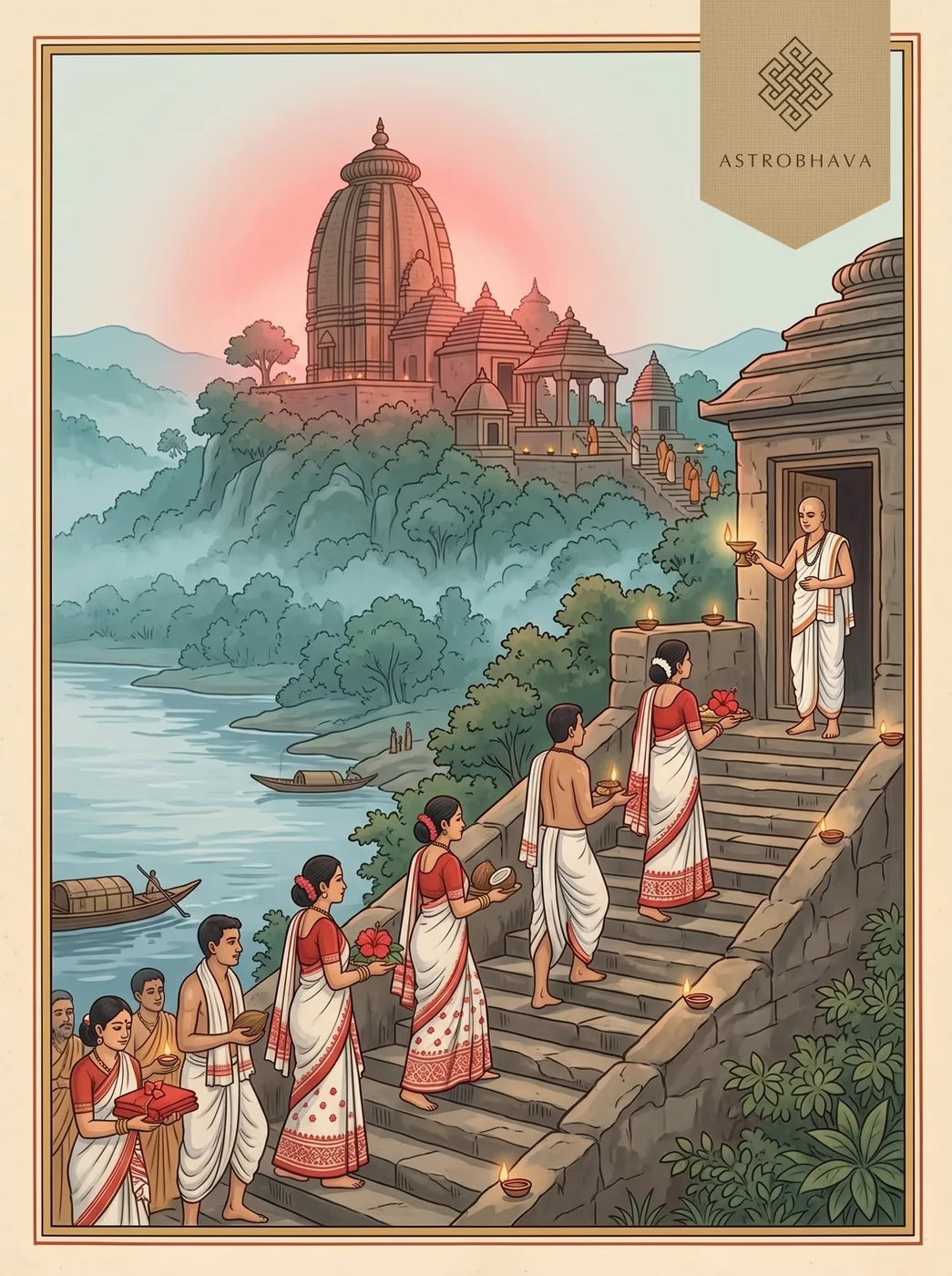
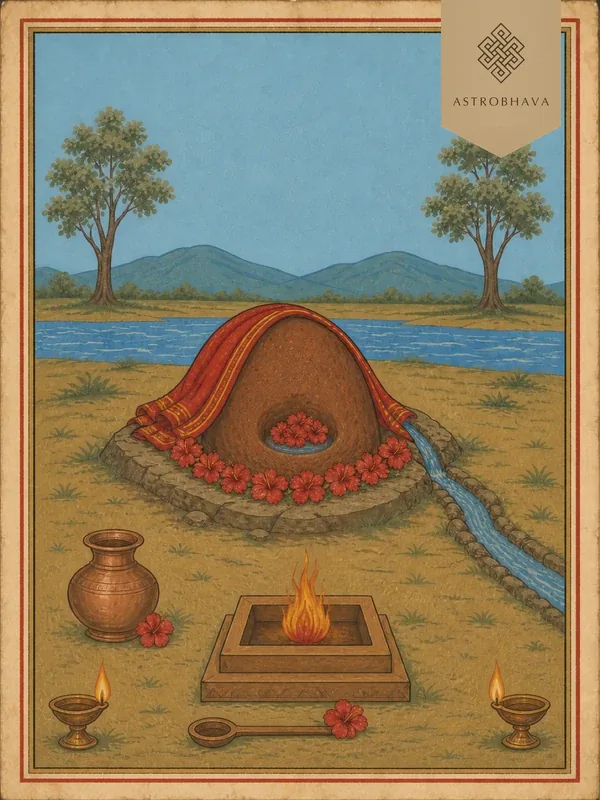
The main verse places the Goddess on the nila parvata, the Blue Mountain, which is Nilachal. The Kalika Purana tells how Shiva, grieving after Sati gave up her body at Daksha's sacrifice, carried her through the worlds in a destroying dance until Vishnu's Sudarshana discus cut the body apart. According to tradition her yoni fell on Nilachal, which is why the hill is counted among the foremost Shakti Peethas and why the sanctum holds no image at all: the Goddess is worshipped there as a yoni-shaped rock, kept moist by a spring that never runs dry. The word yonimudre in the verse points to exactly this form. Another local legend explains the land's name, Kamarupa: Kamadeva, burned to ash by Shiva's third eye, is said to have regained his form (rupa) here, and the temple's own account adds that he raised the first shrine over the spot. That temple tradition itself says the tale has no historical basis. The present building dates from about 1565, when the Koch rulers rebuilt the ruined shrine; accounts differ on whether King Naranarayana or his brother Chilarai led the work. Devotees call the Goddess Kameshvari, the name the pranam verse uses twice, and see her as a form of Tripura Sundari.
The mantra, in six scripts
- कामाख्ये
- kāmākhye — O Kamakhya
- वरदे
- varade — giver of boons
- देवि
- devi — O Goddess
- नीलपर्वतवासिनि
- nīlaparvatavāsini — dweller on the Blue Mountain
- त्वं
- tvaṃ — you
- देवि
- devi — O Goddess
- जगतां
- jagatāṃ — of the worlds
- माता
- mātā — mother
- योनिमुद्रे
- yonimudre — O seal of the source of birth
- नमोऽस्तु
- namo'stu — salutation be
- ते
- te — to you
Kamakhya Mantra lyrics in full
The seed mantra, the main verse and the pranam verse, in the order the Kamakhya temple gives them.
All 3 verses, in Sanskrit, Tamil, Telugu, Kannada, Malayalam and English, each with its meaning. Choose a script:
Download the Kamakhya Mantra PDFAll 3 verses with their meanings, in Sanskrit. Free to print and keep.
क्लीं क्लीं कामाख्या क्लीं क्लीं नमः ॥
க்லீம் க்லீம் காமாக்யா க்லீம் க்லீம் நமஃ ॥
క్లీం క్లీం కామాఖ్యా క్లీం క్లీం నమః ॥
ಕ್ಲೀಂ ಕ್ಲೀಂ ಕಾಮಾಖ್ಯಾ ಕ್ಲೀಂ ಕ್ಲೀಂ ನಮಃ ॥
ക്ലീം ക്ലീം കാമാഖ്യാ ക്ലീം ക്ലീം നമഃ ॥
klīṃ klīṃ kāmākhyā klīṃ klīṃ namaḥ ||
Klim, klim, Kamakhya, klim, klim: salutation. Klim is the seed syllable of desire and attraction, repeated around the Goddess's name.
कामाख्ये वरदे देवि नीलपर्वतवासिनि ।
त्वं देवि जगतां माता योनिमुद्रे नमोऽस्तु ते ॥
காமாக்யே வரதே தேவி நீலபர்வதவாஸிநி ।
த்வம் தேவி ஜகதாம் மாதா யோநிமுத்ரே நமோஸ்து தே ॥
కామాఖ్యే వరదే దేవి నీలపర్వతవాసిని ।
త్వం దేవి జగతాం మాతా యోనిముద్రే నమోఽస్తు తే ॥
ಕಾಮಾಖ್ಯೇ ವರದೇ ದೇವಿ ನೀಲಪರ್ವತವಾಸಿನಿ ।
ತ್ವಂ ದೇವಿ ಜಗತಾಂ ಮಾತಾ ಯೋನಿಮುದ್ರೇ ನಮೋಽಸ್ತು ತೇ ॥
കാമാഖ്യേ വരദേ ദേവി നീലപര്വതവാസിനി ।
ത്വം ദേവി ജഗതാം മാതാ യോനിമുദ്രേ നമോഽസ്തു തേ ॥
kāmākhye varade devi nīlaparvatavāsini |
tvaṃ devi jagatāṃ mātā yonimudre namo'stu te ||
O Kamakhya, giver of boons, O Goddess who dwells on the Blue Mountain (Nilachal). You, O Goddess, are the mother of all the worlds; O you who are the seal of the yoni, the source of birth, salutation to you.
कामाख्ये कामसम्पन्ने कामेश्वरि हरप्रिये ।
कामनां देहि मे नित्यं कामेश्वरि नमोऽस्तु ते ॥
காமாக்யே காமஸம்பந்நே காமேஶ்வரி ஹரப்ரியே ।
காமநாம் தேஹி மே நித்யம் காமேஶ்வரி நமோஸ்து தே ॥
కామాఖ్యే కామసమ్పన్నే కామేశ్వరి హరప్రియే ।
కామనాం దేహి మే నిత్యం కామేశ్వరి నమోఽస్తు తే ॥
ಕಾಮಾಖ್ಯೇ ಕಾಮಸಮ್ಪನ್ನೇ ಕಾಮೇಶ್ವರಿ ಹರಪ್ರಿಯೇ ।
ಕಾಮನಾಂ ದೇಹಿ ಮೇ ನಿತ್ಯಂ ಕಾಮೇಶ್ವರಿ ನಮೋಽಸ್ತು ತೇ ॥
കാമാഖ്യേ കാമസമ്പന്നേ കാമേശ്വരി ഹരപ്രിയേ ।
കാമനാം ദേഹി മേ നിത്യം കാമേശ്വരി നമോഽസ്തു തേ ॥
kāmākhye kāmasampanne kāmeśvari harapriye |
kāmanāṃ dehi me nityaṃ kāmeśvari namo'stu te ||
O Kamakhya, rich in every desire, O Kameshvari, beloved of Shiva. Grant me my wishes always; O Kameshvari, salutation to you.
The syllable people get wrong
The verses open with kāmākhye, not "Kamakhya": both a's are long (KAA-MAA), the kh is breathed, and the word ends in -e because it is the form of direct address, "O Kamakhya". Only the beeja line uses kāmākhyā with a final long a.
When the Kamakhya Mantra is chanted
Weekday. Friday
Festival. Ambubachi Mela
Questions
Have your chart read before you decide
Chanting is yours to do, and free. But which deity your situation calls for — and whether a mantra alone is the right response — depends on your chart. Sometimes it is; sometimes it is not.
- Over 30 years in the Guru–Sishya Parampara, from the age of five
- He reads every chart himself — 60 minutes, one to one, never delegated
- Charts are read only between sunrise and sunset, following tradition
