Kurma Mantra
ॐ कच्छपेशाय विद्महे महाबलाय धीमहि । तन्नो कूर्मः प्रचोदयात् ॥Also known as Kurma Gayatri
In Devanagari, Tamil, Telugu, Kannada, Malayalam and English — with the meaning of every word, and the one syllable most people pronounce wrongly.
 The Kurma Homam, performed for youBook →
What the Kurma Mantra is
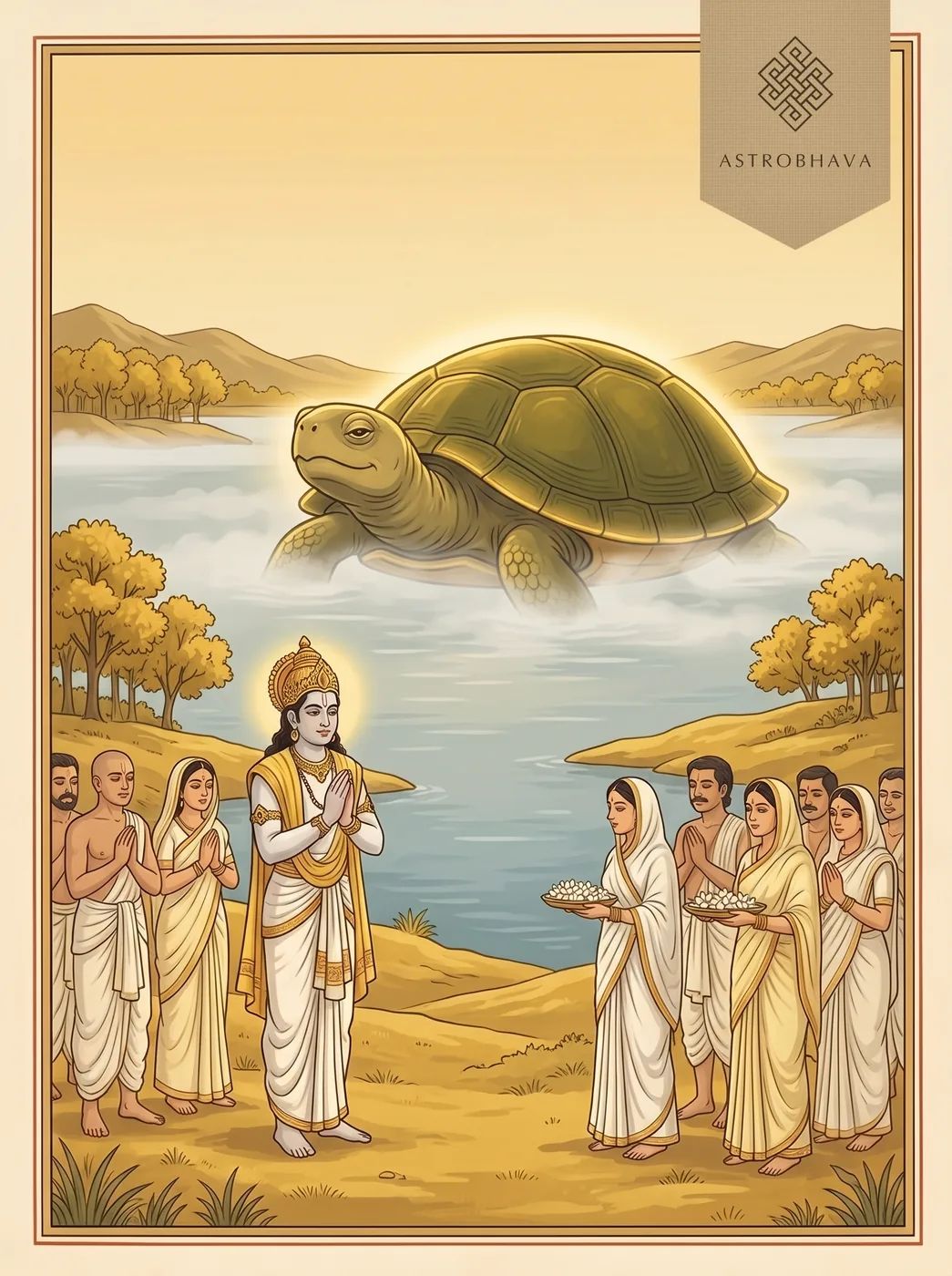
A Kurma avatar mantra is a prayer to Vishnu in his second descent, the tortoise, and this page gathers six of them in order. The Kurma Gayatri comes first: it follows the three-part pattern of the avatara Gayatris, knowing Kurma as master of tortoises and meditating on him as the one of great strength, and it is handed down in devotional editions that cite no scripture. The short name mantra Om Kurmaya Namah follows, also without a named source. The remaining items are scripture. A prose mantra and three verses form the hymn of Aryaman in Bhagavata Purana 5.18.30-33. It salutes Akupara, the tortoise whose dwelling cannot be seen, then holds that every class of being, every mountain, river, planet and star, is only a name for him, and closes by honouring him as the one the reckoning of the principles of creation points to. The last verse is Bhagavata 12.13.2, a blessing that asks the breath of the dozing tortoise to protect the listener.
Aryaman's hymn in the golden land
The fifth book of the Bhagavata Purana maps Jambudvipa as a ring of regions, or varshas, and names in each the form of Vishnu worshipped there and the devotee who leads that worship. In Hiranmaya-varsha, the text says, Vishnu dwells in a tortoise body, and Aryaman, chief of that land, worships the form together with its other inhabitants. The prose mantra and three verses printed here are the hymn the Purana gives to Aryaman (5.18.30-33). It is a reflective prayer rather than a retelling: the tortoise is praised less for a deed than as the unseen ground beneath a world of names and forms. The deed itself is told in the eighth book. When the gods and asuras set Mount Mandara turning in the milk ocean, it sank for want of a footing (8.7.6); Vishnu took the shape of a vast tortoise and raised it on his back (8.7.8-9), and the text adds that he felt the grinding of the mountain as a pleasant scratching (8.7.10). The Bhagavata comes back to that picture in its final chapter, which sings the greatness of the Purana itself. Verse 12.13.2 imagines the tortoise drowsing under the itch of the turning rock and says the ocean's tides still come and go in step with his breathing. Jayadeva's tortoise verse, sung with the other nine avatars, has its own place on the Dashavatara Stotram page.
The mantra, in six scripts
- ॐ
- oṃ — Om
- कच्छपेशाय
- kacchapeśāya — the master of tortoises
- विद्महे
- vidmahe — we come to know
- महाबलाय
- mahābalāya — the one of great strength
- धीमहि
- dhīmahi — we meditate on
- तन्नो
- tanno — may that one, us
- कूर्मः
- kūrmaḥ — Kurma, the tortoise
- प्रचोदयात्
- pracodayāt — inspire and guide
Kurma Mantra lyrics in full
The Kurma Gayatri and the name mantra, then Aryaman's hymn from Bhagavata Purana 5.18.30-33, and the tortoise verse of Bhagavata 12.13.2.
All 7 verses, in Sanskrit, Tamil, Telugu, Kannada, Malayalam and English, each with its meaning. Choose a script:
Download the Kurma Mantra PDFAll 7 verses with their meanings, in Sanskrit. Free to print and keep.
ॐ कच्छपेशाय विद्महे महाबलाय धीमहि ।
तन्नो कूर्मः प्रचोदयात् ॥
ௐ கச்சபேஶாய வித்மஹே மஹாபலாய தீமஹி ।
தந்நோ கூர்மஃ ப்ரசோதயாத் ॥
ఓం కచ్ఛపేశాయ విద్మహే మహాబలాయ ధీమహి ।
తన్నో కూర్మః ప్రచోదయాత్ ॥
ಓಂ ಕಚ್ಛಪೇಶಾಯ ವಿದ್ಮಹೇ ಮಹಾಬಲಾಯ ಧೀಮಹಿ ।
ತನ್ನೋ ಕೂರ್ಮಃ ಪ್ರಚೋದಯಾತ್ ॥
ഓം കച്ഛപേശായ വിദ്മഹേ മഹാബലായ ധീമഹി ।
തന്നോ കൂര്മഃ പ്രചോദയാത് ॥
oṃ kacchapeśāya vidmahe mahābalāya dhīmahi |
tanno kūrmaḥ pracodayāt ||
Om. We come to know the Lord of tortoises and meditate on the one of great strength; may that Kurma inspire and guide us. (The Kurma Gayatri.)
ॐ कूर्माय नमः ।
ௐ கூர்மாய நமஃ ।
ఓం కూర్మాయ నమః ।
ಓಂ ಕೂರ್ಮಾಯ ನಮಃ ।
ഓം കൂര്മായ നമഃ ।
oṃ kūrmāya namaḥ |
Om, salutation to Kurma, Vishnu in the form of the tortoise.
ॐ नमो भगवते अकूपाराय सर्वसत्त्वगुणविशेषणायानुपलक्षितस्थानाय ।
नमो वर्ष्मणे नमो भूम्ने नमो नमोऽवस्थानाय नमस्ते ॥
ௐ நமோ பகவதே அகூபாராய ஸர்வஸத்த்வகுணவிஶேஷணாயாநுபலக்ஷிதஸ்தாநாய ।
நமோ வர்ஷ்மணே நமோ பூம்நே நமோ நமோவஸ்தாநாய நமஸ்தே ॥
ఓం నమో భగవతే అకూపారాయ సర్వసత్త్వగుణవిశేషణాయానుపలక్షితస్థానాయ ।
నమో వర్ష్మణే నమో భూమ్నే నమో నమోఽవస్థానాయ నమస్తే ॥
ಓಂ ನಮೋ ಭಗವತೇ ಅಕೂಪಾರಾಯ ಸರ್ವಸತ್ತ್ವಗುಣವಿಶೇಷಣಾಯಾನುಪಲಕ್ಷಿತಸ್ಥಾನಾಯ ।
ನಮೋ ವರ್ಷ್ಮಣೇ ನಮೋ ಭೂಮ್ನೇ ನಮೋ ನಮೋಽವಸ್ಥಾನಾಯ ನಮಸ್ತೇ ॥
ഓം നമോ ഭഗവതേ അകൂപാരായ സര്വസത്ത്വഗുണവിശേഷണായാനുപലക്ഷിതസ്ഥാനായ ।
നമോ വര്ഷ്മണേ നമോ ഭൂമ്നേ നമോ നമോഽവസ്ഥാനായ നമസ്തേ ॥
oṃ namo bhagavate akūpārāya sarvasattvaguṇaviśeṣaṇāyānupalakṣitasthānāya |
namo varṣmaṇe namo bhūmne namo namo'vasthānāya namaste ||
Om, salutation to the Lord Akupara, the great tortoise, who is marked by pure goodness and whose dwelling place cannot be seen. Salutation to the one of vast body, to the all-pervading one, again and again to the support of all; salutation to you.
यद्रूपमेतन्निजमाययार्पितमर्थस्वरूपं बहुरूपरूपितम् ।
सङ्ख्या न यस्यास्त्ययथोपलम्भनात्तस्मै नमस्तेऽव्यपदेशरूपिणे ॥
யத்ரூபமேதந்நிஜமாயயார்பிதமர்தஸ்வரூபம் பஹுரூபரூபிதம் ।
ஸங்க்யா ந யஸ்யாஸ்த்யயதோபலம்பநாத்தஸ்மை நமஸ்தேவ்யபதேஶரூபிணே ॥
యద్రూపమేతన్నిజమాయయార్పితమర్థస్వరూపం బహురూపరూపితమ్ ।
సఙ్ఖ్యా న యస్యాస్త్యయథోపలమ్భనాత్తస్మై నమస్తేఽవ్యపదేశరూపిణే ॥
ಯದ್ರೂಪಮೇತನ್ನಿಜಮಾಯಯಾರ್ಪಿತಮರ್ಥಸ್ವರೂಪಂ ಬಹುರೂಪರೂಪಿತಮ್ ।
ಸಙ್ಖ್ಯಾ ನ ಯಸ್ಯಾಸ್ತ್ಯಯಥೋಪಲಮ್ಭನಾತ್ತಸ್ಮೈ ನಮಸ್ತೇಽವ್ಯಪದೇಶರೂಪಿಣೇ ॥
യദ്രൂപമേതന്നിജമായയാര്പിതമര്ഥസ്വരൂപം ബഹുരൂപരൂപിതമ് ।
സങ്ഖ്യാ ന യസ്യാസ്ത്യയഥോപലമ്ഭനാത്തസ്മൈ നമസ്തേഽവ്യപദേശരൂപിണേ ॥
yadrūpametannijamāyayārpitamarthasvarūpaṃ bahurūparūpitam |
saṅkhyā na yasyāstyayathopalambhanāttasmai namaste'vyapadeśarūpiṇe ||
This visible world of things, shown in many forms, is a form set out by your own power of illusion; because it is not perceived as it truly is, there is no counting it. Salutation to you, whose own form cannot be named or pointed out.
जरायुजं स्वेदजमण्डजोद्भिदं चराचरं देवर्षिपितृभूतमैन्द्रियम् ।
द्यौः खं क्षितिः शैलसरित्समुद्रद्वीपग्रहर्क्षेत्यभिधेय एकः ॥
ஜராயுஜம் ஸ்வேதஜமண்டஜோத்பிதம் சராசரம் தேவர்ஷிபித்ருபூதமைந்த்ரியம் ।
த்யௌஃ கம் க்ஷிதிஃ ஶைலஸரித்ஸமுத்ரத்வீபக்ரஹர்க்ஷேத்யபிதேய ஏகஃ ॥
జరాయుజం స్వేదజమణ్డజోద్భిదం చరాచరం దేవర్షిపితృభూతమైన్ద్రియమ్ ।
ద్యౌః ఖం క్షితిః శైలసరిత్సముద్రద్వీపగ్రహర్క్షేత్యభిధేయ ఏకః ॥
ಜರಾಯುಜಂ ಸ್ವೇದಜಮಣ್ಡಜೋದ್ಭಿದಂ ಚರಾಚರಂ ದೇವರ್ಷಿಪಿತೃಭೂತಮೈನ್ದ್ರಿಯಮ್ ।
ದ್ಯೌಃ ಖಂ ಕ್ಷಿತಿಃ ಶೈಲಸರಿತ್ಸಮುದ್ರದ್ವೀಪಗ್ರಹರ್ಕ್ಷೇತ್ಯಭಿಧೇಯ ಏಕಃ ॥
ജരായുജം സ്വേദജമണ്ഡജോദ്ഭിദം ചരാചരം ദേവര്ഷിപിതൃഭൂതമൈന്ദ്രിയമ് ।
ദ്യൌഃ ഖം ക്ഷിതിഃ ശൈലസരിത്സമുദ്രദ്വീപഗ്രഹര്ക്ഷേത്യഭിധേയ ഏകഃ ॥
jarāyujaṃ svedajamaṇḍajodbhidaṃ carācaraṃ devarṣipitṛbhūtamaindriyam |
dyauḥ khaṃ kṣitiḥ śailasaritsamudradvīpagraharkṣetyabhidheya ekaḥ ||
Beings born from the womb, from moisture, from eggs and from sprouting seeds, the moving and the unmoving, gods, sages, ancestors, the elements and the senses, heaven, sky and earth, mountains, rivers, oceans, islands, planets and stars: all these names point to you alone.
यस्मिन्नसङ्ख्येयविशेषनामरूपाकृतौ कविभिः कल्पितेयम् ।
सङ्ख्या यया तत्त्वदृशापनीयते तस्मै नमः साङ्ख्यनिदर्शनाय ते इति ॥
யஸ்மிந்நஸங்க்யேயவிஶேஷநாமரூபாக்ருதௌ கவிபிஃ கல்பிதேயம் ।
ஸங்க்யா யயா தத்த்வத்ருஶாபநீயதே தஸ்மை நமஃ ஸாங்க்யநிதர்ஶநாய தே இதி ॥
యస్మిన్నసఙ్ఖ్యేయవిశేషనామరూపాకృతౌ కవిభిః కల్పితేయమ్ ।
సఙ్ఖ్యా యయా తత్త్వదృశాపనీయతే తస్మై నమః సాఙ్ఖ్యనిదర్శనాయ తే ఇతి ॥
ಯಸ್ಮಿನ್ನಸಙ್ಖ್ಯೇಯವಿಶೇಷನಾಮರೂಪಾಕೃತೌ ಕವಿಭಿಃ ಕಲ್ಪಿತೇಯಮ್ ।
ಸಙ್ಖ್ಯಾ ಯಯಾ ತತ್ತ್ವದೃಶಾಪನೀಯತೇ ತಸ್ಮೈ ನಮಃ ಸಾಙ್ಖ್ಯನಿದರ್ಶನಾಯ ತೇ ಇತಿ ॥
യസ്മിന്നസങ്ഖ്യേയവിശേഷനാമരൂപാകൃതൌ കവിഭിഃ കല്പിതേയമ് ।
സങ്ഖ്യാ യയാ തത്ത്വദൃശാപനീയതേ തസ്മൈ നമഃ സാങ്ഖ്യനിദര്ശനായ തേ ഇതി ॥
yasminnasaṅkhyeyaviśeṣanāmarūpākṛtau kavibhiḥ kalpiteyam |
saṅkhyā yayā tattvadṛśāpanīyate tasmai namaḥ sāṅkhyanidarśanāya te iti ||
In you, who bear countless particular names, forms and shapes, the wise have set out this counting of the principles of creation; and by the sight of the truth that counting itself is set aside. Salutation to you, the one revealed by that reckoning.
पृष्ठे भ्राम्यदमन्दमन्दरगिरिग्रावाग्रकण्डूयनान्निद्रालोः कमठाकृतेर्भगवतः श्वासानिलाः पान्तु वः ।
यत्संस्कारकलानुवर्तनवशाद् वेलानिभेनाम्भसां यातायातमतन्द्रितं जलनिधेर्नाद्यापि विश्राम्यति ॥
ப்ருஷ்டே ப்ராம்யதமந்தமந்தரகிரிக்ராவாக்ரகண்டூயநாந்நித்ராலோஃ கமடாக்ருதேர்பகவதஃ ஶ்வாஸாநிலாஃ பாந்து வஃ ।
யத்ஸம்ஸ்காரகலாநுவர்தநவஶாத் வேலாநிபேநாம்பஸாம் யாதாயாதமதந்த்ரிதம் ஜலநிதேர்நாத்யாபி விஶ்ராம்யதி ॥
పృష్ఠే భ్రామ్యదమన్దమన్దరగిరిగ్రావాగ్రకణ్డూయనాన్నిద్రాలోః కమఠాకృతేర్భగవతః శ్వాసానిలాః పాన్తు వః ।
యత్సంస్కారకలానువర్తనవశాద్ వేలానిభేనామ్భసాం యాతాయాతమతన్ద్రితం జలనిధేర్నాద్యాపి విశ్రామ్యతి ॥
ಪೃಷ್ಠೇ ಭ್ರಾಮ್ಯದಮನ್ದಮನ್ದರಗಿರಿಗ್ರಾವಾಗ್ರಕಣ್ಡೂಯನಾನ್ನಿದ್ರಾಲೋಃ ಕಮಠಾಕೃತೇರ್ಭಗವತಃ ಶ್ವಾಸಾನಿಲಾಃ ಪಾನ್ತು ವಃ ।
ಯತ್ಸಂಸ್ಕಾರಕಲಾನುವರ್ತನವಶಾದ್ ವೇಲಾನಿಭೇನಾಮ್ಭಸಾಂ ಯಾತಾಯಾತಮತನ್ದ್ರಿತಂ ಜಲನಿಧೇರ್ನಾದ್ಯಾಪಿ ವಿಶ್ರಾಮ್ಯತಿ ॥
പൃഷ്ഠേ ഭ്രാമ്യദമന്ദമന്ദരഗിരിഗ്രാവാഗ്രകണ്ഡൂയനാന്നിദ്രാലോഃ കമഠാകൃതേര്ഭഗവതഃ ശ്വാസാനിലാഃ പാന്തു വഃ ।
യത്സംസ്കാരകലാനുവര്തനവശാദ് വേലാനിഭേനാമ്ഭസാം യാതായാതമതന്ദ്രിതം ജലനിധേര്നാദ്യാപി വിശ്രാമ്യതി ॥
pṛṣṭhe bhrāmyadamandamandaragirigrāvāgrakaṇḍūyanānnidrāloḥ kamaṭhākṛterbhagavataḥ śvāsānilāḥ pāntu vaḥ |
yatsaṃskārakalānuvartanavaśād velānibhenāmbhasāṃ yātāyātamatandritaṃ jalanidhernādyāpi viśrāmyati ||
May the breaths of the Lord in tortoise form protect you, breaths He drew as He dozed while the edges of the heavy, whirling Mandara mountain scratched His back. Following the trace of that breathing, the ocean's waters still come and go without rest as the tides, and even today they have not stopped.
The syllable people get wrong
In कच्छपेशाय (kacchapeśāya) the cch is a doubled, breathy 'ch-chh' and the ś is 'sh', not 's': say kach-chha-pay-SHAA-ya. The word is kacchapa (tortoise) joined to īśa (master), so the sh carries the meaning.
When the Kurma Mantra is chanted
Weekday. Thursday
Festival. Kurma Jayanti (Vaishakha Purnima)
Questions
Have your chart read before you decide
Chanting is yours to do, and free. But which deity your situation calls for — and whether a mantra alone is the right response — depends on your chart. Sometimes it is; sometimes it is not.
- Over 30 years in the Guru–Sishya Parampara, from the age of five
- He reads every chart himself — 60 minutes, one to one, never delegated
- Charts are read only between sunrise and sunset, following tradition
