Kushmanda Mantra
ॐ देवी कूष्माण्डायै नमः ॥Also known as Om Devi Kushmandayai Namah
In Devanagari, Tamil, Telugu, Kannada, Malayalam and English — with the meaning of every word, and the one syllable most people pronounce wrongly.
 The Kushmanda Homam, performed for youBook →
What the Kushmanda Mantra is
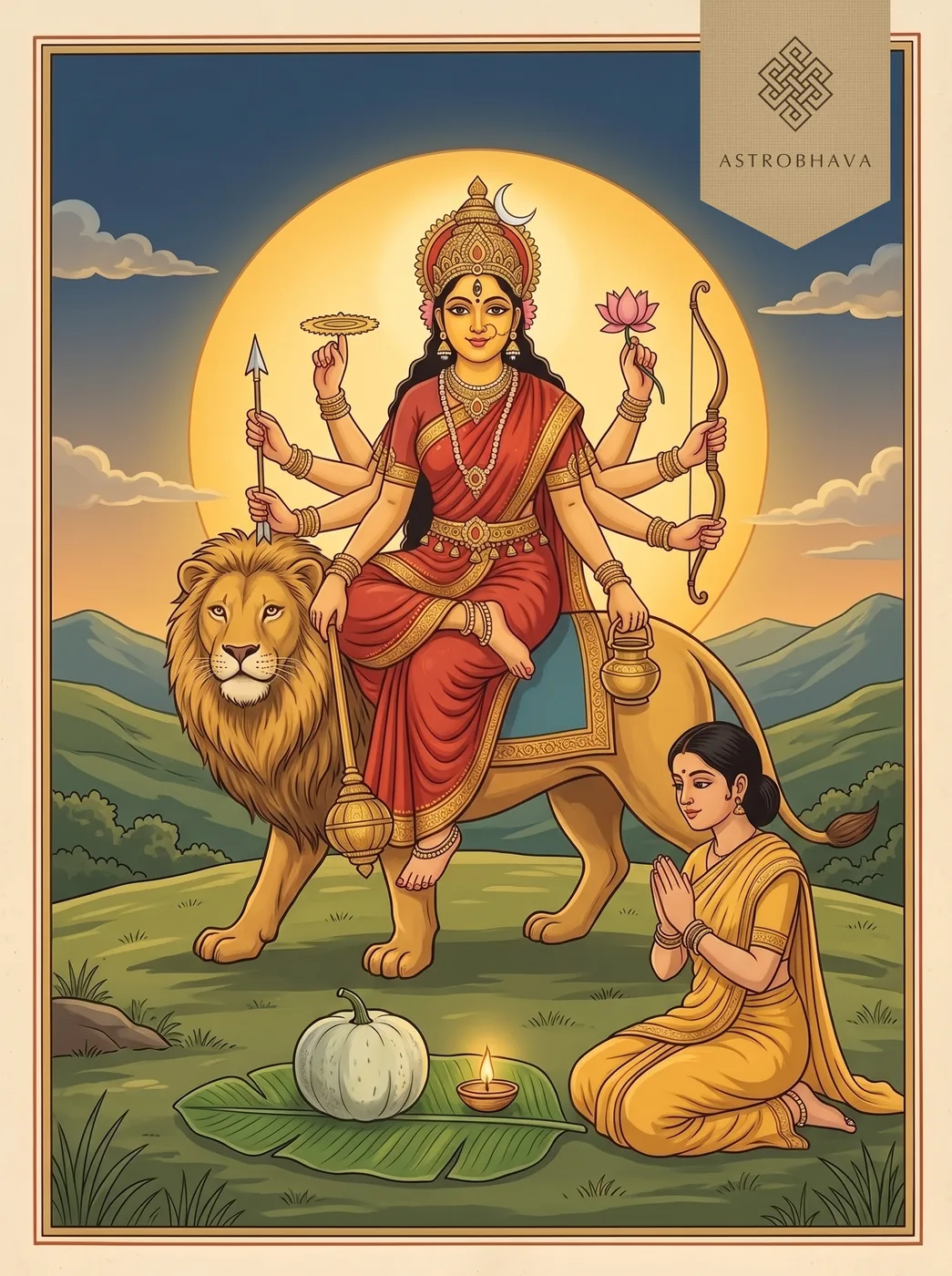
The Maa Kushmanda Mantra, given here as the Kushmanda Mantra set, gathers the short texts said on the fourth day of Navaratri to Kushmanda, the fourth of the nine Durgas. It opens with the name mantra, Om Devi Kushmandayai Namah. The second item, headed Prarthana in some printings and dhyana in others, pictures her holding two pots in her lotus hands, one brimming with sura and one steeped in blood, and asks her to be the giver of good. The third is the stuti, built on the 'Ya devi sarvabhuteshu' refrain of the fifth chapter of the Devi Mahatmya, with Maa Kushmanda in the changing slot. The last four shlokas make a longer dhyana opening 'Vande vanchhita kamarthe'. They seat her on a lion with eight arms and a half moon on her crest, place her in the Anahata chakra, call her the fourth Durga and name the eight things she holds. None of the seven items carries an author's name.
A gourd, a cosmic egg and Kashi
The Devi Kavacham, read before the Durga Saptashati, counts Kushmanda fourth among the nine Durgas but tells nothing about her. What devotees know of her comes from later devotional tradition, which explains her name in two ways. In the first, anda is the cosmic egg: before any world existed and darkness filled every direction, she is said to have brought that egg forth, and so she is honoured as the primordial power. The same tradition gives her the title Suryamandala-antarvasini, she who dwells inside the sphere of the sun, and holds that she alone can bear its heat. In the second reading, kushmanda is simply the ash gourd, the offering she is said to favour above others. The long dhyana on this page keeps the solar thread when it compares her to the blazing sun. Her best-known shrine has a separate story. The Devi Bhagavata Purana tells of Prince Sudarshana, who won Shashikala, daughter of the king of Kashi, and was attacked by a rival for her hand; Durga appeared on a lion and fought for him, and the grateful king asked her to remain in the city. Temple tradition at Kashi worships the Goddess of the red shrine beside Durga Kund, built in the eighteenth century by Rani Bhabani of Natore, as Kushmanda.
The mantra, in six scripts
- ॐ
- oṃ — Om, the sacred syllable
- देवी
- devī — Goddess
- कूष्माण्डायै
- kūṣmāṇḍāyai — to Kushmanda
- नमः
- namaḥ — salutations
Kushmanda Mantra lyrics in full
The name mantra, the prarthana, the stuti and the four-shloka dhyana for the fourth day of Navaratri, each with its meaning.
All 7 verses, in Sanskrit, Tamil, Telugu, Kannada, Malayalam and English, each with its meaning. Choose a script:
Download the Kushmanda Mantra PDFAll 7 verses with their meanings, in Sanskrit. Free to print and keep.
ॐ देवी कूष्माण्डायै नमः ॥
ௐ தேவீ கூஷ்மாண்டாயை நமஃ ॥
ఓం దేవీ కూష్మాణ్డాయై నమః ॥
ಓಂ ದೇವೀ ಕೂಷ್ಮಾಣ್ಡಾಯೈ ನಮಃ ॥
ഓം ദേവീ കൂഷ്മാണ്ഡായൈ നമഃ ॥
oṃ devī kūṣmāṇḍāyai namaḥ ||
Om, salutations to the Goddess Kushmanda.
सुरासम्पूर्णकलशं रुधिराप्लुतमेव च ।
दधाना हस्तपद्माभ्यां कूष्माण्डा शुभदास्तु मे ॥
ஸுராஸம்பூர்ணகலஶம் ருதிராப்லுதமேவ ச ।
ததாநா ஹஸ்தபத்மாப்யாம் கூஷ்மாண்டா ஶுபதாஸ்து மே ॥
సురాసమ్పూర్ణకలశం రుధిరాప్లుతమేవ చ ।
దధానా హస్తపద్మాభ్యాం కూష్మాణ్డా శుభదాస్తు మే ॥
ಸುರಾಸಮ್ಪೂರ್ಣಕಲಶಂ ರುಧಿರಾಪ್ಲುತಮೇವ ಚ ।
ದಧಾನಾ ಹಸ್ತಪದ್ಮಾಭ್ಯಾಂ ಕೂಷ್ಮಾಣ್ಡಾ ಶುಭದಾಸ್ತು ಮೇ ॥
സുരാസമ്പൂര്ണകലശം രുധിരാപ്ലുതമേവ ച ।
ദധാനാ ഹസ്തപദ്മാഭ്യാം കൂഷ്മാണ്ഡാ ശുഭദാസ്തു മേ ॥
surāsampūrṇakalaśaṃ rudhirāplutameva ca |
dadhānā hastapadmābhyāṃ kūṣmāṇḍā śubhadāstu me ||
Holding in her two lotus hands a pot brimming with sura, the divine drink, and another steeped in blood, may Kushmanda be the giver of good to me.
या देवी सर्वभूतेषु माँ कूष्माण्डा रूपेण संस्थिता ।
नमस्तस्यै नमस्तस्यै नमस्तस्यै नमो नमः ॥
யா தேவீ ஸர்வபூதேஷு மாம் கூஷ்மாண்டா ரூபேண ஸம்ஸ்திதா ।
நமஸ்தஸ்யை நமஸ்தஸ்யை நமஸ்தஸ்யை நமோ நமஃ ॥
యా దేవీ సర్వభూతేషు మాఁ కూష్మాణ్డా రూపేణ సంస్థితా ।
నమస్తస్యై నమస్తస్యై నమస్తస్యై నమో నమః ॥
ಯಾ ದೇವೀ ಸರ್ವಭೂತೇಷು ಮಾಁ ಕೂಷ್ಮಾಣ್ಡಾ ರೂಪೇಣ ಸಂಸ್ಥಿತಾ ।
ನಮಸ್ತಸ್ಯೈ ನಮಸ್ತಸ್ಯೈ ನಮಸ್ತಸ್ಯೈ ನಮೋ ನಮಃ ॥
യാ ദേവീ സര്വഭൂതേഷു മാഁ കൂഷ്മാണ്ഡാ രൂപേണ സംസ്ഥിതാ ।
നമസ്തസ്യൈ നമസ്തസ്യൈ നമസ്തസ്യൈ നമോ നമഃ ॥
yā devī sarvabhūteṣu māṃ kūṣmāṇḍā rūpeṇa saṃsthitā |
namastasyai namastasyai namastasyai namo namaḥ ||
To the Goddess who dwells in all beings in the form of Mother Kushmanda: salutations to her, salutations to her, salutations to her, salutations again and again.
वन्दे वाञ्छित कामार्थे चन्द्रार्धकृतशेखराम् ।
सिंहरूढ़ा अष्टभुजा कूष्माण्डा यशस्विनीम् ॥
வந்தே வாஞ்சித காமார்தே சந்த்ரார்தக்ருதஶேகராம் ।
ஸிம்ஹரூடா அஷ்டபுஜா கூஷ்மாண்டா யஶஸ்விநீம் ॥
వన్దే వాఞ్ఛిత కామార్థే చన్ద్రార్ధకృతశేఖరామ్ ।
సింహరూఢా అష్టభుజా కూష్మాణ్డా యశస్వినీమ్ ॥
ವನ್ದೇ ವಾಞ್ಛಿತ ಕಾಮಾರ್ಥೇ ಚನ್ದ್ರಾರ್ಧಕೃತಶೇಖರಾಮ್ ।
ಸಿಂಹರೂಢಾ ಅಷ್ಟಭುಜಾ ಕೂಷ್ಮಾಣ್ಡಾ ಯಶಸ್ವಿನೀಮ್ ॥
വന്ദേ വാഞ്ഛിത കാമാര്ഥേ ചന്ദ്രാര്ധകൃതശേഖരാമ് ।
സിംഹരൂഢാ അഷ്ടഭുജാ കൂഷ്മാണ്ഡാ യശസ്വിനീമ് ॥
vande vāñchita kāmārthe candrārdhakṛtaśekharām |
siṃharūṛhā aṣṭabhujā kūṣmāṇḍā yaśasvinīm ||
For the fulfilment of the wishes I hold, I bow to her who wears the half moon as a crest: Kushmanda the glorious, eight-armed and mounted on a lion.
भास्वर भानु निभाम् अनाहत स्थिताम् चतुर्थ दुर्गा त्रिनेत्राम् ।
कमण्डलु, चाप, बाण, पद्म, सुधाकलश, चक्र, गदा, जपवटीधराम् ॥
பாஸ்வர பாநு நிபாம் அநாஹத ஸ்திதாம் சதுர்த துர்கா த்ரிநேத்ராம் ।
கமண்டலு, சாப, பாண, பத்ம, ஸுதாகலஶ, சக்ர, கதா, ஜபவடீதராம் ॥
భాస్వర భాను నిభామ్ అనాహత స్థితామ్ చతుర్థ దుర్గా త్రినేత్రామ్ ।
కమణ్డలు, చాప, బాణ, పద్మ, సుధాకలశ, చక్ర, గదా, జపవటీధరామ్ ॥
ಭಾಸ್ವರ ಭಾನು ನಿಭಾಮ್ ಅನಾಹತ ಸ್ಥಿತಾಮ್ ಚತುರ್ಥ ದುರ್ಗಾ ತ್ರಿನೇತ್ರಾಮ್ ।
ಕಮಣ್ಡಲು, ಚಾಪ, ಬಾಣ, ಪದ್ಮ, ಸುಧಾಕಲಶ, ಚಕ್ರ, ಗದಾ, ಜಪವಟೀಧರಾಮ್ ॥
ഭാസ്വര ഭാനു നിഭാമ് അനാഹത സ്ഥിതാമ് ചതുര്ഥ ദുര്ഗാ ത്രിനേത്രാമ് ।
കമണ്ഡലു, ചാപ, ബാണ, പദ്മ, സുധാകലശ, ചക്ര, ഗദാ, ജപവടീധരാമ് ॥
bhāsvara bhānu nibhām anāhata sthitām caturtha durgā trinetrām |
kamaṇḍalu, cāpa, bāṇa, padma, sudhākalaśa, cakra, gadā, japavaṭīdharām ||
She shines like the blazing sun, abides in the Anahata chakra, and is the fourth Durga, the three-eyed one. She holds a water pot, a bow, an arrow, a lotus, a pot of nectar, a discus, a mace and a rosary.
पटाम्बर परिधानां कमनीयां मृदुहास्या नानालङ्कार भूषिताम् ।
मञ्जीर, हार, केयूर, किङ्किणि, रत्नकुण्डल, मण्डिताम् ॥
படாம்பர பரிதாநாம் கமநீயாம் ம்ருதுஹாஸ்யா நாநாலங்கார பூஷிதாம் ।
மஞ்ஜீர, ஹார, கேயூர, கிங்கிணி, ரத்நகுண்டல, மண்டிதாம் ॥
పటామ్బర పరిధానాం కమనీయాం మృదుహాస్యా నానాలఙ్కార భూషితామ్ ।
మఞ్జీర, హార, కేయూర, కిఙ్కిణి, రత్నకుణ్డల, మణ్డితామ్ ॥
ಪಟಾಮ್ಬರ ಪರಿಧಾನಾಂ ಕಮನೀಯಾಂ ಮೃದುಹಾಸ್ಯಾ ನಾನಾಲಙ್ಕಾರ ಭೂಷಿತಾಮ್ ।
ಮಞ್ಜೀರ, ಹಾರ, ಕೇಯೂರ, ಕಿಙ್ಕಿಣಿ, ರತ್ನಕುಣ್ಡಲ, ಮಣ್ಡಿತಾಮ್ ॥
പടാമ്ബര പരിധാനാം കമനീയാം മൃദുഹാസ്യാ നാനാലങ്കാര ഭൂഷിതാമ് ।
മഞ്ജീര, ഹാര, കേയൂര, കിങ്കിണി, രത്നകുണ്ഡല, മണ്ഡിതാമ് ॥
paṭāmbara paridhānāṃ kamanīyāṃ mṛduhāsyā nānālaṅkāra bhūṣitām |
mañjīra, hāra, keyūra, kiṅkiṇi, ratnakuṇḍala, maṇḍitām ||
She is clad in fine silk, lovely and gently smiling, adorned with many ornaments. She is decked with anklets, a necklace, armlets, small waist bells and jewelled earrings.
प्रफुल्ल वदनांचारू चिबुकां कान्त कपोलाम् तुंग कुचाम् ।
कोमलाङ्गी स्मेरमुखी श्रीकंटि निम्ननाभि नितम्बनीम् ॥
ப்ரபுல்ல வதநாம்சாரூ சிபுகாம் காந்த கபோலாம் தும்க குசாம் ।
கோமலாங்கீ ஸ்மேரமுகீ ஶ்ரீகம்டி நிம்நநாபி நிதம்பநீம் ॥
ప్రఫుల్ల వదనాంచారూ చిబుకాం కాన్త కపోలామ్ తుంగ కుచామ్ ।
కోమలాఙ్గీ స్మేరముఖీ శ్రీకంటి నిమ్ననాభి నితమ్బనీమ్ ॥
ಪ್ರಫುಲ್ಲ ವದನಾಂಚಾರೂ ಚಿಬುಕಾಂ ಕಾನ್ತ ಕಪೋಲಾಮ್ ತುಂಗ ಕುಚಾಮ್ ।
ಕೋಮಲಾಙ್ಗೀ ಸ್ಮೇರಮುಖೀ ಶ್ರೀಕಂಟಿ ನಿಮ್ನನಾಭಿ ನಿತಮ್ಬನೀಮ್ ॥
പ്രഫുല്ല വദനാംചാരൂ ചിബുകാം കാന്ത കപോലാമ് തുംഗ കുചാമ് ।
കോമലാങ്ഗീ സ്മേരമുഖീ ശ്രീകംടി നിമ്നനാഭി നിതമ്ബനീമ് ॥
praphulla vadanāṃcārū cibukāṃ kānta kapolām tuṃga kucām |
komalāṅgī smeramukhī śrīkaṃṭi nimnanābhi nitambanīm ||
Her face is bright as a full bloom, her chin fine, her cheeks lovely and her bosom high. She is tender of limb and smiling, graceful of neck, with a deep navel and shapely hips.
The syllable people get wrong
The name kūṣmāṇḍā is often said as a short 'Kush-manda'. It has three long vowels, a retroflex ṣ and a retroflex ṇḍ: say 'koosh-MAAN-daa', with the tongue curled back for the 'sh' and the 'nd'.
When the Kushmanda Mantra is chanted
Weekday. Friday
Festival. Navaratri Chaturthi, the fourth day of Navaratri
Questions
Have your chart read before you decide
Chanting is yours to do, and free. But which deity your situation calls for — and whether a mantra alone is the right response — depends on your chart. Sometimes it is; sometimes it is not.
- Over 30 years in the Guru–Sishya Parampara, from the age of five
- He reads every chart himself — 60 minutes, one to one, never delegated
- Charts are read only between sunrise and sunset, following tradition
