Mahavakyas
प्रज्ञानं ब्रह्म ॥Also known as Aham Brahmasmi
In Devanagari, Tamil, Telugu, Kannada, Malayalam and English — with the meaning of every word, and the one syllable most people pronounce wrongly.
What the Mahavakyas is
The Mahavakyas, the 'great sayings', are four short sentences lifted from four different Upanishads, one belonging to each Veda. Prajnanam Brahma, 'Consciousness is Brahman', closes a passage of the Aitareya Upanishad (3.3) of the Rig Veda. Aham Brahmasmi, 'I am Brahman', comes from the Brihadaranyaka Upanishad (1.4.10) of the Shukla Yajur Veda. Tattvamasi, 'That you are', is the refrain of the Chandogya Upanishad (6.8.7) of the Sama Veda. Ayamatma Brahma, 'This Self is Brahman', is the second verse of the Mandukya Upanishad of the Atharva Veda. None of them was composed as a hymn and none has a named author. Read in the order of the Vedas, the four move from a definition (Brahman is consciousness), to a first-person recognition (I am Brahman), to a teacher addressing a student (you are That), to a plain statement about the Self within (this Self is Brahman). Advaita Vedanta treats them as the summary of the whole Upanishadic teaching.
A father's lesson and a son's initiation
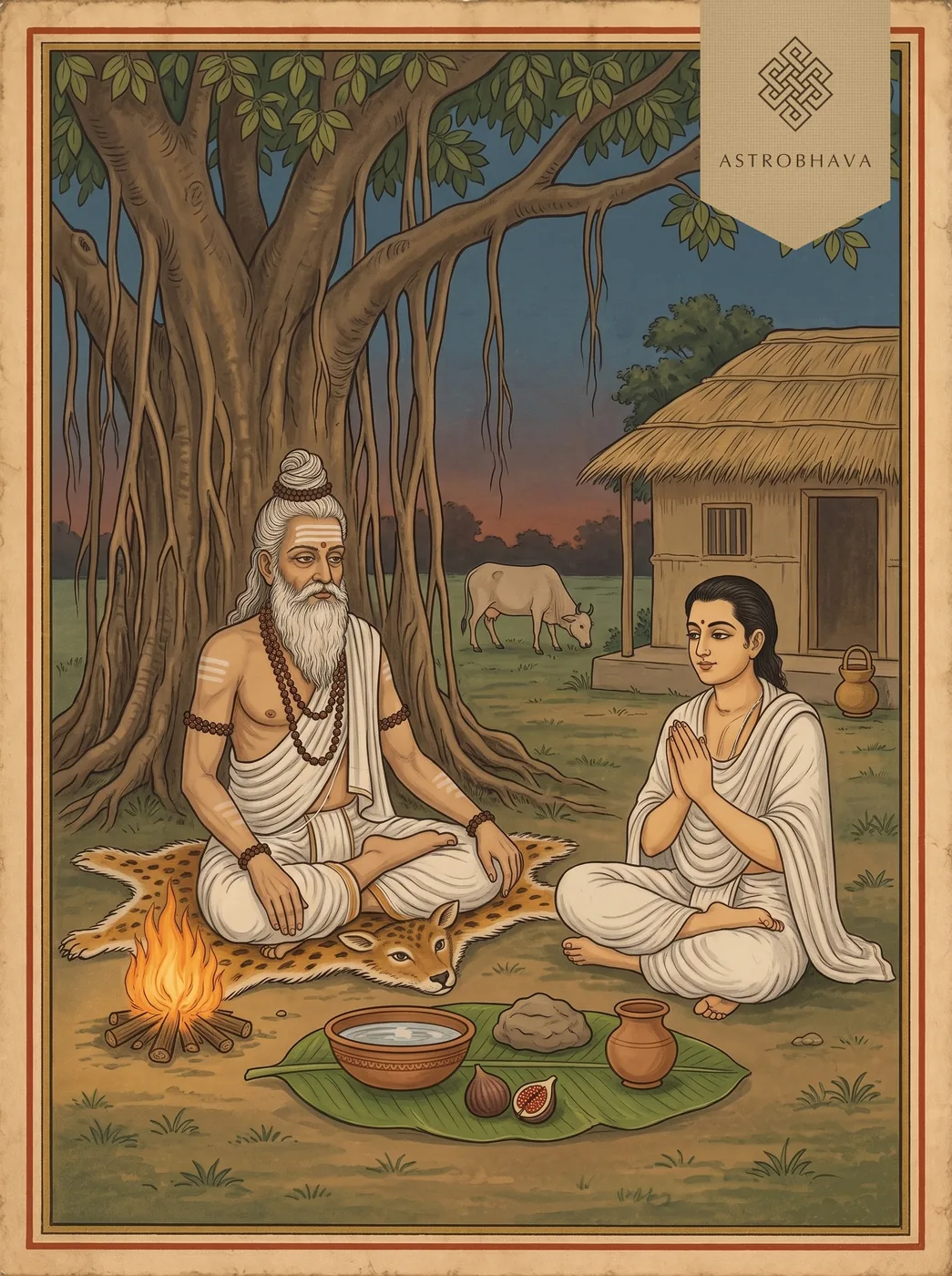
The best known of the four is spoken by a father to his son. In the sixth chapter of the Chandogya Upanishad, Shvetaketu is sent away to study at twelve and comes home at twenty-four, sure of his learning and rather pleased with himself. His father, the sage Uddalaka Aruni, asks whether he was ever taught the one thing by which the unheard becomes heard and the unknown becomes known. Shvetaketu admits he was not. Uddalaka then teaches through ordinary things: a lump of clay that explains every clay pot, salt that vanishes into water yet flavours every sip, the invisible essence inside a banyan seed from which the great tree stands. Each lesson ends with the same line, 'That you are, Shvetaketu', so the saying works as a refrain rather than a single announcement. The grouping of the four sayings as a set is later. The Shukarahasya Upanishad relates that Vyasa asked Shiva how to instruct his young son Shuka, and that Shiva taught the boy these four sentences, with Vyasa listening. According to that text, Shuka meditated on them and was freed while still living. In the Advaita monastic tradition the four are still given to a sannyasi at initiation.
The mantra, in six scripts
- प्रज्ञानं
- prajñānaṃ — consciousness, awareness
- ब्रह्म
- brahma — (is) Brahman, the absolute
Mahavakyas lyrics in full
The four sayings on their own, without their surrounding passages, in the order of the Vedas: Rig, Yajur, Sama and Atharva.
All 4 verses, in Sanskrit, Tamil, Telugu, Kannada, Malayalam and English, each with its meaning. Choose a script:
Download the Mahavakyas PDFAll 4 verses with their meanings, in Sanskrit. Free to print and keep.
प्रज्ञानं ब्रह्म ॥
ப்ரஜ்ஞாநம் ப்ரஹ்ம ॥
ప్రజ్ఞానం బ్రహ్మ ॥
ಪ್ರಜ್ಞಾನಂ ಬ್ರಹ್ಮ ॥
പ്രജ്ഞാനം ബ്രഹ്മ ॥
prajñānaṃ brahma ||
Consciousness is Brahman. Aitareya Upanishad 3.3 (Rig Veda), closing the passage that says everything that lives is guided by and rests on consciousness.
अहं ब्रह्मास्मि ॥
அஹம் ப்ரஹ்மாஸ்மி ॥
అహం బ్రహ్మాస్మి ॥
ಅಹಂ ಬ್ರಹ್ಮಾಸ್ಮಿ ॥
അഹം ബ്രഹ്മാസ്മി ॥
ahaṃ brahmāsmi ||
I am Brahman. Brihadaranyaka Upanishad 1.4.10 (Shukla Yajur Veda): in the beginning Brahman knew itself as 'I am Brahman' and so became the whole; the text says whoever knows this likewise becomes the whole.
तत्त्वमसि ॥
தத்த்வமஸி ॥
తత్త్వమసి ॥
ತತ್ತ್ವಮಸಿ ॥
തത്ത്വമസി ॥
tattvamasi ||
That you are. Chandogya Upanishad 6.8.7 (Sama Veda), the refrain of Uddalaka's teaching to his son Shvetaketu: the finest essence is the self of all this, it is the truth, it is the Self, and that is what you are.
अयमात्मा ब्रह्म ॥
அயமாத்மா ப்ரஹ்ம ॥
అయమాత్మా బ్రహ్మ ॥
ಅಯಮಾತ್ಮಾ ಬ್ರಹ್ಮ ॥
അയമാത്മാ ബ്രഹ്മ ॥
ayamātmā brahma ||
This Self is Brahman. Mandukya Upanishad 2 (Atharva Veda): all this is Brahman, this Self is Brahman, and this Self has four quarters.
The syllable people get wrong
In ahaṃ brahmāsmi the second word is brahma joined to asmi, so the long ā sits in the middle: say brah-MAA-smi, with the h after the r actually breathed, not 'bram-a-smee'. The joined vowel is what carries the meaning 'am', so shortening it blurs the two words together.
Questions
Have your chart read before you decide
Chanting is yours to do, and free. But which deity your situation calls for — and whether a mantra alone is the right response — depends on your chart. Sometimes it is; sometimes it is not.
- Over 30 years in the Guru–Sishya Parampara, from the age of five
- He reads every chart himself — 60 minutes, one to one, never delegated
- Charts are read only between sunrise and sunset, following tradition