Manyu Suktam
यस्ते मन्योऽविधद्वज्र सायक सह ओजः पुष्यति विश्वमानुषक् । साह्याम दासमार्यं त्वया युजा सहस्कृतेन सहसा सहस्वता ॥Also known as Yaste Manyo
In Devanagari, Tamil, Telugu, Kannada, Malayalam and English — with the meaning of every word, and the one syllable most people pronounce wrongly.
 A reading of your birth chartBook →
What the Manyu Suktam is
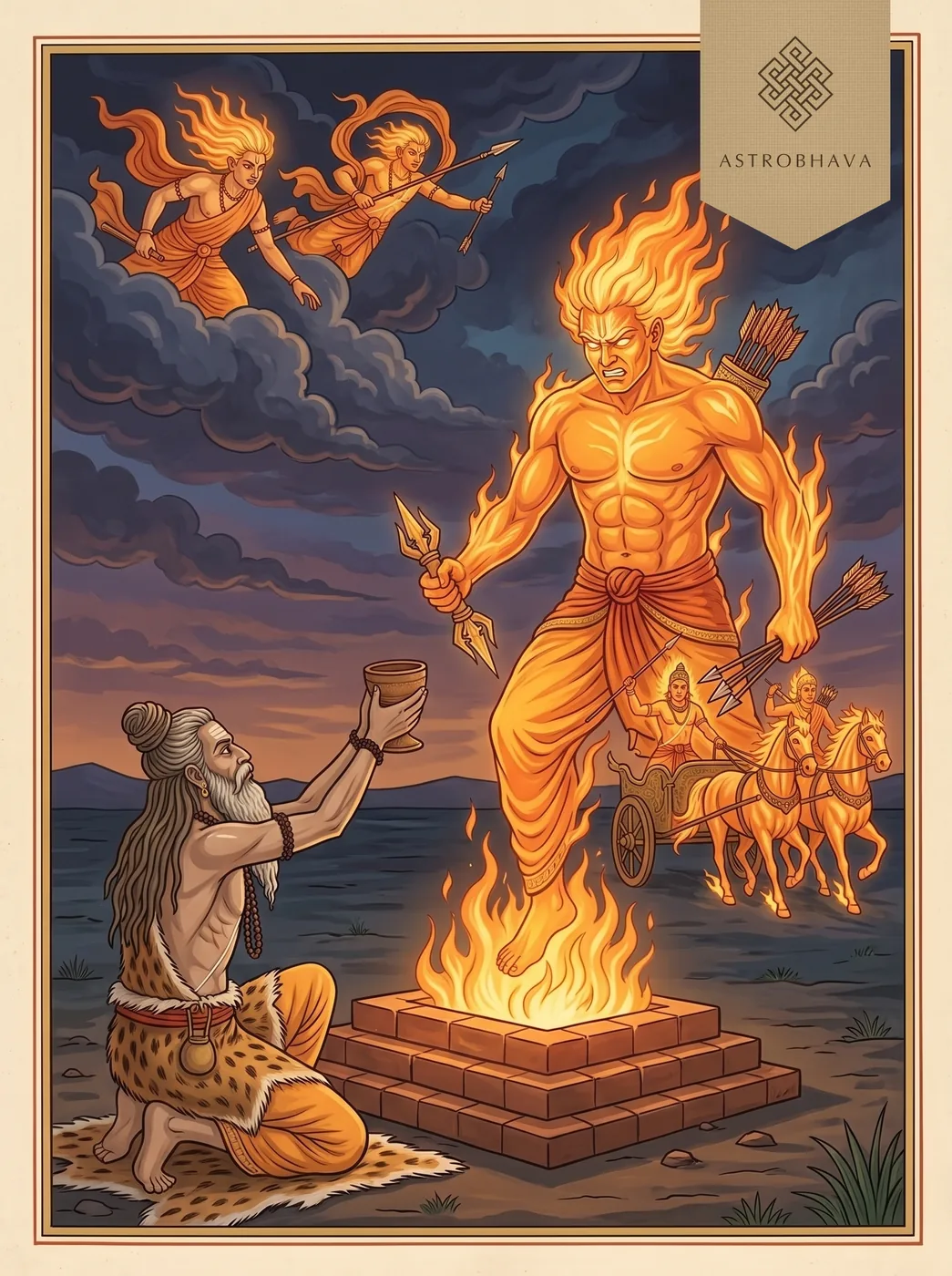
The Manyu Suktam is the pair of hymns 83 and 84 in the tenth book of the Rigveda, fourteen verses addressed to Manyu, whose name carries the sense of wrath and blazing spirit. The Rigvedic index names its seer as Manyu Tapasa, son of Tapas, so the sage who sees the hymn and the god he praises share one name. The first hymn opens on yaste manyo, its first verse in jagati and the rest in trishtubh; the second opens on tvaya manyo, with three trishtubh verses and then four in jagati. Verse 2 declares Manyu to be Indra, Varuna and Jatavedas at once. Verses 5 and 6 turn personal: the speaker admits to having angered Manyu through want of resolve and asks him to come back as the speaker's own body. The second hymn moves to the field of battle, with heroes in the form of fire sharing Manyu's chariot, and closes asking Varuna and Manyu for wealth of both kinds while the defeated slip away in fear.
How Manyu became Rudra and Narasimha
No tale of composition comes down with these hymns; what tradition keeps instead is a series of answers to the question of who Manyu is. Yaska's Nirukta derives the name from the root man, in its senses of shining, of anger and of striking down. The Shatapatha Brahmana relates that when the other offspring of Prajapati deserted him, Manyu alone remained; Prajapati's tears fell on him, and he became Rudra, hundred-headed, thousand-eyed, with a hundred quivers. Skanda Svamin, commenting on an earlier Rigvedic hymn, makes Manyu the son of Prajapati whom the creator appointed to lead the army of the gods, and through whose help Indra overcame his enemies. The Brahma Purana gives a later account: defeated by the asuras, the gods did penance to Shiva on the Gautami, the Godavari, and Shiva brought Manyu out of his third eye to win the next battle for them. Sayana, the fourteenth-century commentator, reads Manyu as the deity presiding over anger, present in every being of power, and records the hymns' use in the Ajira rite of the Shrauta ritual; the Rigvidhana assigns all fourteen mantras to one who seeks victory over rivals. In the Dvaita tradition of Madhvacharya, Manyu is a name of Narasimha, and Dhirendra Tirtha's commentary reads the whole sukta as his praise. Both hymns also stand in the Atharvaveda, as 4.31 and 4.32, in reverse order.
The mantra, in six scripts
- यस्ते
- yaste — whoever ... you
- मन्योऽविधद्वज्र
- manyo'vidhadvajra — O Manyu, has honoured, O thunderbolt
- सायक
- sāyaka — O arrow
- सह
- saha — might
- ओजः
- ojaḥ — and vigour
- पुष्यति
- puṣyati — gains, makes grow
- विश्वमानुषक्
- viśvamānuṣak — all of it, without a break
- साह्याम
- sāhyāma — may we overcome
- दासमार्यं
- dāsamāryaṃ — Dasa and Arya, hostile one and stranger alike
- त्वया
- tvayā — with you
- युजा
- yujā — as ally
- सहस्कृतेन
- sahaskṛtena — born of might
- सहसा
- sahasā — with might
- सहस्वता
- sahasvatā — mighty
Manyu Suktam lyrics in full
Rigveda 10.83 and 10.84 together, fourteen verses, printed without the Vedic accent marks.
All 14 verses, in Sanskrit, Tamil, Telugu, Kannada, Malayalam and English, each with its meaning. Choose a script:
Download the Manyu Suktam PDFAll 14 verses with their meanings, in Sanskrit. Free to print and keep.
यस्ते मन्योऽविधद्वज्र सायक सह ओजः पुष्यति विश्वमानुषक् ।
साह्याम दासमार्यं त्वया युजा सहस्कृतेन सहसा सहस्वता ॥
யஸ்தே மந்யோவிதத்வஜ்ர ஸாயக ஸஹ ஓஜஃ புஷ்யதி விஶ்வமாநுஷக் ।
ஸாஹ்யாம தாஸமார்யம் த்வயா யுஜா ஸஹஸ்க்ருதேந ஸஹஸா ஸஹஸ்வதா ॥
యస్తే మన్యోఽవిధద్వజ్ర సాయక సహ ఓజః పుష్యతి విశ్వమానుషక్ ।
సాహ్యామ దాసమార్యం త్వయా యుజా సహస్కృతేన సహసా సహస్వతా ॥
ಯಸ್ತೇ ಮನ್ಯೋಽವಿಧದ್ವಜ್ರ ಸಾಯಕ ಸಹ ಓಜಃ ಪುಷ್ಯತಿ ವಿಶ್ವಮಾನುಷಕ್ ।
ಸಾಹ್ಯಾಮ ದಾಸಮಾರ್ಯಂ ತ್ವಯಾ ಯುಜಾ ಸಹಸ್ಕೃತೇನ ಸಹಸಾ ಸಹಸ್ವತಾ ॥
യസ്തേ മന്യോഽവിധദ്വജ്ര സായക സഹ ഓജഃ പുഷ്യതി വിശ്വമാനുഷക് ।
സാഹ്യാമ ദാസമാര്യം ത്വയാ യുജാ സഹസ്കൃതേന സഹസാ സഹസ്വതാ ॥
yaste manyo'vidhadvajra sāyaka saha ojaḥ puṣyati viśvamānuṣak |
sāhyāma dāsamāryaṃ tvayā yujā sahaskṛtena sahasā sahasvatā ||
Manyu, thunderbolt and arrow, whoever honours you gains strength and vigour, all of it, without a break. With you as our ally, mighty and born of might, may we overcome the hostile one and the stranger alike.
मन्युरिन्द्रो मन्युरेवास देवो मन्युर्होता वरुणो जातवेदाः ।
मन्युं विश ईळते मानुषीर्याः पाहि नो मन्यो तपसा सजोषाः ॥
மந்யுரிந்த்ரோ மந்யுரேவாஸ தேவோ மந்யுர்ஹோதா வருணோ ஜாதவேதாஃ ।
மந்யும் விஶ ஈளதே மாநுஷீர்யாஃ பாஹி நோ மந்யோ தபஸா ஸஜோஷாஃ ॥
మన్యురిన్ద్రో మన్యురేవాస దేవో మన్యుర్హోతా వరుణో జాతవేదాః ।
మన్యుం విశ ఈళతే మానుషీర్యాః పాహి నో మన్యో తపసా సజోషాః ॥
ಮನ್ಯುರಿನ್ದ್ರೋ ಮನ್ಯುರೇವಾಸ ದೇವೋ ಮನ್ಯುರ್ಹೋತಾ ವರುಣೋ ಜಾತವೇದಾಃ ।
ಮನ್ಯುಂ ವಿಶ ಈಳತೇ ಮಾನುಷೀರ್ಯಾಃ ಪಾಹಿ ನೋ ಮನ್ಯೋ ತಪಸಾ ಸಜೋಷಾಃ ॥
മന്യുരിന്ദ്രോ മന്യുരേവാസ ദേവോ മന്യുര്ഹോതാ വരുണോ ജാതവേദാഃ ।
മന്യും വിശ ഈളതേ മാനുഷീര്യാഃ പാഹി നോ മന്യോ തപസാ സജോഷാഃ ॥
manyurindro manyurevāsa devo manyurhotā varuṇo jātavedāḥ |
manyuṃ viśa īḷate mānuṣīryāḥ pāhi no manyo tapasā sajoṣāḥ ||
Manyu is Indra; Manyu indeed was the god; Manyu is the priest of the offering, Varuna, Jatavedas the knower of all beings. The peoples of humankind praise Manyu. Protect us, Manyu, in one accord with Tapas.
अभीहि मन्यो तवसस्तवीयान्तपसा युजा वि जहि शत्रून् ।
अमित्रहा वृत्रहा दस्युहा च विश्वा वसून्या भरा त्वं नः ॥
அபீஹி மந்யோ தவஸஸ்தவீயாந்தபஸா யுஜா வி ஜஹி ஶத்ரூந் ।
அமித்ரஹா வ்ருத்ரஹா தஸ்யுஹா ச விஶ்வா வஸூந்யா பரா த்வம் நஃ ॥
అభీహి మన్యో తవసస్తవీయాన్తపసా యుజా వి జహి శత్రూన్ ।
అమిత్రహా వృత్రహా దస్యుహా చ విశ్వా వసూన్యా భరా త్వం నః ॥
ಅಭೀಹಿ ಮನ್ಯೋ ತವಸಸ್ತವೀಯಾನ್ತಪಸಾ ಯುಜಾ ವಿ ಜಹಿ ಶತ್ರೂನ್ ।
ಅಮಿತ್ರಹಾ ವೃತ್ರಹಾ ದಸ್ಯುಹಾ ಚ ವಿಶ್ವಾ ವಸೂನ್ಯಾ ಭರಾ ತ್ವಂ ನಃ ॥
അഭീഹി മന്യോ തവസസ്തവീയാന്തപസാ യുജാ വി ജഹി ശത്രൂന് ।
അമിത്രഹാ വൃത്രഹാ ദസ്യുഹാ ച വിശ്വാ വസൂന്യാ ഭരാ ത്വം നഃ ॥
abhīhi manyo tavasastavīyāntapasā yujā vi jahi śatrūn |
amitrahā vṛtrahā dasyuhā ca viśvā vasūnyā bharā tvaṃ naḥ ||
Come here, Manyu, stronger than the strong; with Tapas as your companion, strike down our foes. Slayer of enemies, slayer of Vritra, slayer of the Dasyus, bring us every kind of wealth.
त्वं हि मन्यो अभिभूत्योजाः स्वयम्भूर्भामो अभिमातिषाहः ।
विश्वचर्षणिः सहुरिः सहावानस्मास्वोजः पृतनासु धेहि ॥
த்வம் ஹி மந்யோ அபிபூத்யோஜாஃ ஸ்வயம்பூர்பாமோ அபிமாதிஷாஹஃ ।
விஶ்வசர்ஷணிஃ ஸஹுரிஃ ஸஹாவாநஸ்மாஸ்வோஜஃ ப்ருதநாஸு தேஹி ॥
త్వం హి మన్యో అభిభూత్యోజాః స్వయమ్భూర్భామో అభిమాతిషాహః ।
విశ్వచర్షణిః సహురిః సహావానస్మాస్వోజః పృతనాసు ధేహి ॥
ತ್ವಂ ಹಿ ಮನ್ಯೋ ಅಭಿಭೂತ್ಯೋಜಾಃ ಸ್ವಯಮ್ಭೂರ್ಭಾಮೋ ಅಭಿಮಾತಿಷಾಹಃ ।
ವಿಶ್ವಚರ್ಷಣಿಃ ಸಹುರಿಃ ಸಹಾವಾನಸ್ಮಾಸ್ವೋಜಃ ಪೃತನಾಸು ಧೇಹಿ ॥
ത്വം ഹി മന്യോ അഭിഭൂത്യോജാഃ സ്വയമ്ഭൂര്ഭാമോ അഭിമാതിഷാഹഃ ।
വിശ്വചര്ഷണിഃ സഹുരിഃ സഹാവാനസ്മാസ്വോജഃ പൃതനാസു ധേഹി ॥
tvaṃ hi manyo abhibhūtyojāḥ svayambhūrbhāmo abhimātiṣāhaḥ |
viśvacarṣaṇiḥ sahuriḥ sahāvānasmāsvojaḥ pṛtanāsu dhehi ||
For you, Manyu, have overpowering strength; self-born, blazing with wrath, conqueror of the hostile. Seen by all people, enduring and mighty, place vigour in us in the battles.
अभागः सन्नप परेतो अस्मि तव क्रत्वा तविषस्य प्रचेतः ।
तं त्वा मन्यो अक्रतुर्जिहीळाहं स्वा तनूर्बलदेयाय मेहि ॥
அபாகஃ ஸந்நப பரேதோ அஸ்மி தவ க்ரத்வா தவிஷஸ்ய ப்ரசேதஃ ।
தம் த்வா மந்யோ அக்ரதுர்ஜிஹீளாஹம் ஸ்வா தநூர்பலதேயாய மேஹி ॥
అభాగః సన్నప పరేతో అస్మి తవ క్రత్వా తవిషస్య ప్రచేతః ।
తం త్వా మన్యో అక్రతుర్జిహీళాహం స్వా తనూర్బలదేయాయ మేహి ॥
ಅಭಾಗಃ ಸನ್ನಪ ಪರೇತೋ ಅಸ್ಮಿ ತವ ಕ್ರತ್ವಾ ತವಿಷಸ್ಯ ಪ್ರಚೇತಃ ।
ತಂ ತ್ವಾ ಮನ್ಯೋ ಅಕ್ರತುರ್ಜಿಹೀಳಾಹಂ ಸ್ವಾ ತನೂರ್ಬಲದೇಯಾಯ ಮೇಹಿ ॥
അഭാഗഃ സന്നപ പരേതോ അസ്മി തവ ക്രത്വാ തവിഷസ്യ പ്രചേതഃ ।
തം ത്വാ മന്യോ അക്രതുര്ജിഹീളാഹം സ്വാ തനൂര്ബലദേയായ മേഹി ॥
abhāgaḥ sannapa pareto asmi tava kratvā taviṣasya pracetaḥ |
taṃ tvā manyo akraturjihīḷāhaṃ svā tanūrbaladeyāya mehi ||
Without a share in you, I have fled far away, through my want of devotion to you, the strong and wise one. Being without resolve, I angered you, Manyu; now come to me as my own body, to give me strength.
अयं ते अस्म्युप मेह्यर्वाङ्प्रतीचीनः सहुरे विश्वधायः ।
मन्यो वज्रिन्नभि मामा ववृत्स्व हनाव दस्यूँरुत बोध्यापेः ॥
அயம் தே அஸ்ம்யுப மேஹ்யர்வாங்ப்ரதீசீநஃ ஸஹுரே விஶ்வதாயஃ ।
மந்யோ வஜ்ரிந்நபி மாமா வவ்ருத்ஸ்வ ஹநாவ தஸ்யூம்ருத போத்யாபேஃ ॥
అయం తే అస్మ్యుప మేహ్యర్వాఙ్ప్రతీచీనః సహురే విశ్వధాయః ।
మన్యో వజ్రిన్నభి మామా వవృత్స్వ హనావ దస్యూఁరుత బోధ్యాపేః ॥
ಅಯಂ ತೇ ಅಸ್ಮ್ಯುಪ ಮೇಹ್ಯರ್ವಾಙ್ಪ್ರತೀಚೀನಃ ಸಹುರೇ ವಿಶ್ವಧಾಯಃ ।
ಮನ್ಯೋ ವಜ್ರಿನ್ನಭಿ ಮಾಮಾ ವವೃತ್ಸ್ವ ಹನಾವ ದಸ್ಯೂಁರುತ ಬೋಧ್ಯಾಪೇಃ ॥
അയം തേ അസ്മ്യുപ മേഹ്യര്വാങ്പ്രതീചീനഃ സഹുരേ വിശ്വധായഃ ।
മന്യോ വജ്രിന്നഭി മാമാ വവൃത്സ്വ ഹനാവ ദസ്യൂഁരുത ബോധ്യാപേഃ ॥
ayaṃ te asmyupa mehyarvāṅpratīcīnaḥ sahure viśvadhāyaḥ |
manyo vajrinnabhi māmā vavṛtsva hanāva dasyūṃruta bodhyāpeḥ ||
Here I am, yours; come near to me, turned towards me, enduring one who sustains all. Manyu, wielder of the thunderbolt, turn to me; let us two slay the Dasyus, and know me as your kin.
अभि प्रेहि दक्षिणतो भवा मेऽधा वृत्राणि जङ्घनाव भूरि ।
जुहोमि ते धरुणं मध्वो अग्रमुभा उपांशु प्रथमा पिबाव ॥
அபி ப்ரேஹி தக்ஷிணதோ பவா மேதா வ்ருத்ராணி ஜங்கநாவ பூரி ।
ஜுஹோமி தே தருணம் மத்வோ அக்ரமுபா உபாம்ஶு ப்ரதமா பிபாவ ॥
అభి ప్రేహి దక్షిణతో భవా మేఽధా వృత్రాణి జఙ్ఘనావ భూరి ।
జుహోమి తే ధరుణం మధ్వో అగ్రముభా ఉపాంశు ప్రథమా పిబావ ॥
ಅಭಿ ಪ್ರೇಹಿ ದಕ್ಷಿಣತೋ ಭವಾ ಮೇಽಧಾ ವೃತ್ರಾಣಿ ಜಙ್ಘನಾವ ಭೂರಿ ।
ಜುಹೋಮಿ ತೇ ಧರುಣಂ ಮಧ್ವೋ ಅಗ್ರಮುಭಾ ಉಪಾಂಶು ಪ್ರಥಮಾ ಪಿಬಾವ ॥
അഭി പ്രേഹി ദക്ഷിണതോ ഭവാ മേഽധാ വൃത്രാണി ജങ്ഘനാവ ഭൂരി ।
ജുഹോമി തേ ധരുണം മധ്വോ അഗ്രമുഭാ ഉപാംശു പ്രഥമാ പിബാവ ॥
abhi prehi dakṣiṇato bhavā me'dhā vṛtrāṇi jaṅghanāva bhūri |
juhomi te dharuṇaṃ madhvo agramubhā upāṃśu prathamā pibāva ||
Come forward, stand at my right side; then let us two strike down the foes in great number. I offer you the best support, the foremost of the sweet drink; let us two drink it first, quietly.
त्वया मन्यो सरथमारुजन्तो हर्षमाणासो धृषिता मरुत्वः ।
तिग्मेषव आयुधा संशिशाना अभि प्र यन्तु नरो अग्निरूपाः ॥
த்வயா மந்யோ ஸரதமாருஜந்தோ ஹர்ஷமாணாஸோ த்ருஷிதா மருத்வஃ ।
திக்மேஷவ ஆயுதா ஸம்ஶிஶாநா அபி ப்ர யந்து நரோ அக்நிரூபாஃ ॥
త్వయా మన్యో సరథమారుజన్తో హర్షమాణాసో ధృషితా మరుత్వః ।
తిగ్మేషవ ఆయుధా సంశిశానా అభి ప్ర యన్తు నరో అగ్నిరూపాః ॥
ತ್ವಯಾ ಮನ್ಯೋ ಸರಥಮಾರುಜನ್ತೋ ಹರ್ಷಮಾಣಾಸೋ ಧೃಷಿತಾ ಮರುತ್ವಃ ।
ತಿಗ್ಮೇಷವ ಆಯುಧಾ ಸಂಶಿಶಾನಾ ಅಭಿ ಪ್ರ ಯನ್ತು ನರೋ ಅಗ್ನಿರೂಪಾಃ ॥
ത്വയാ മന്യോ സരഥമാരുജന്തോ ഹര്ഷമാണാസോ ധൃഷിതാ മരുത്വഃ ।
തിഗ്മേഷവ ആയുധാ സംശിശാനാ അഭി പ്ര യന്തു നരോ അഗ്നിരൂപാഃ ॥
tvayā manyo sarathamārujanto harṣamāṇāso dhṛṣitā marutvaḥ |
tigmeṣava āyudhā saṃśiśānā abhi pra yantu naro agnirūpāḥ ||
With you on one chariot, Manyu, companion of the Maruts, breaking through, joyful and bold, let the heroes go forward with sharp arrows, whetting their weapons, in the form of fire.
अग्निरिव मन्यो त्विषितः सहस्व सेनानीर्नः सहुरे हूत एधि ।
हत्वाय शत्रून्वि भजस्व वेद ओजो मिमानो वि मृधो नुदस्व ॥
அக்நிரிவ மந்யோ த்விஷிதஃ ஸஹஸ்வ ஸேநாநீர்நஃ ஸஹுரே ஹூத ஏதி ।
ஹத்வாய ஶத்ரூந்வி பஜஸ்வ வேத ஓஜோ மிமாநோ வி ம்ருதோ நுதஸ்வ ॥
అగ్నిరివ మన్యో త్విషితః సహస్వ సేనానీర్నః సహురే హూత ఏధి ।
హత్వాయ శత్రూన్వి భజస్వ వేద ఓజో మిమానో వి మృధో నుదస్వ ॥
ಅಗ್ನಿರಿವ ಮನ್ಯೋ ತ್ವಿಷಿತಃ ಸಹಸ್ವ ಸೇನಾನೀರ್ನಃ ಸಹುರೇ ಹೂತ ಏಧಿ ।
ಹತ್ವಾಯ ಶತ್ರೂನ್ವಿ ಭಜಸ್ವ ವೇದ ಓಜೋ ಮಿಮಾನೋ ವಿ ಮೃಧೋ ನುದಸ್ವ ॥
അഗ്നിരിവ മന്യോ ത്വിഷിതഃ സഹസ്വ സേനാനീര്നഃ സഹുരേ ഹൂത ഏധി ।
ഹത്വായ ശത്രൂന്വി ഭജസ്വ വേദ ഓജോ മിമാനോ വി മൃധോ നുദസ്വ ॥
agniriva manyo tviṣitaḥ sahasva senānīrnaḥ sahure hūta edhi |
hatvāya śatrūnvi bhajasva veda ojo mimāno vi mṛdho nudasva ||
Blazing like fire, Manyu, overcome; when called, enduring one, be the leader of our army. Having struck down the foes, share out their wealth; showing your strength, drive the adversaries away.
सहस्व मन्यो अभिमातिमस्मे रुजन्मृणन्प्रमृणन्प्रेहि शत्रून् ।
उग्रं ते पाजो नन्वा रुरुध्रे वशी वशं नयस एकज त्वम् ॥
ஸஹஸ்வ மந்யோ அபிமாதிமஸ்மே ருஜந்ம்ருணந்ப்ரம்ருணந்ப்ரேஹி ஶத்ரூந் ।
உக்ரம் தே பாஜோ நந்வா ருருத்ரே வஶீ வஶம் நயஸ ஏகஜ த்வம் ॥
సహస్వ మన్యో అభిమాతిమస్మే రుజన్మృణన్ప్రమృణన్ప్రేహి శత్రూన్ ।
ఉగ్రం తే పాజో నన్వా రురుధ్రే వశీ వశం నయస ఏకజ త్వమ్ ॥
ಸಹಸ್ವ ಮನ್ಯೋ ಅಭಿಮಾತಿಮಸ್ಮೇ ರುಜನ್ಮೃಣನ್ಪ್ರಮೃಣನ್ಪ್ರೇಹಿ ಶತ್ರೂನ್ ।
ಉಗ್ರಂ ತೇ ಪಾಜೋ ನನ್ವಾ ರುರುಧ್ರೇ ವಶೀ ವಶಂ ನಯಸ ಏಕಜ ತ್ವಮ್ ॥
സഹസ്വ മന്യോ അഭിമാതിമസ്മേ രുജന്മൃണന്പ്രമൃണന്പ്രേഹി ശത്രൂന് ।
ഉഗ്രം തേ പാജോ നന്വാ രുരുധ്രേ വശീ വശം നയസ ഏകജ ത്വമ് ॥
sahasva manyo abhimātimasme rujanmṛṇanpramṛṇanprehi śatrūn |
ugraṃ te pājo nanvā rurudhre vaśī vaśaṃ nayasa ekaja tvam ||
Manyu, overpower the hostile one for us; breaking, crushing and grinding down, go against the foes. Who can withstand your fierce might? Alone-born, you, the master, bring them under your control.
एको बहूनामसि मन्यवीळितो विशंविशं युधये सं शिशाधि ।
अकृत्तरुक्त्वया युजा वयं द्युमन्तं घोषं विजयाय कृण्महे ॥
ஏகோ பஹூநாமஸி மந்யவீளிதோ விஶம்விஶம் யுதயே ஸம் ஶிஶாதி ।
அக்ருத்தருக்த்வயா யுஜா வயம் த்யுமந்தம் கோஷம் விஜயாய க்ருண்மஹே ॥
ఏకో బహూనామసి మన్యవీళితో విశంవిశం యుధయే సం శిశాధి ।
అకృత్తరుక్త్వయా యుజా వయం ద్యుమన్తం ఘోషం విజయాయ కృణ్మహే ॥
ಏಕೋ ಬಹೂನಾಮಸಿ ಮನ್ಯವೀಳಿತೋ ವಿಶಂವಿಶಂ ಯುಧಯೇ ಸಂ ಶಿಶಾಧಿ ।
ಅಕೃತ್ತರುಕ್ತ್ವಯಾ ಯುಜಾ ವಯಂ ದ್ಯುಮನ್ತಂ ಘೋಷಂ ವಿಜಯಾಯ ಕೃಣ್ಮಹೇ ॥
ഏകോ ബഹൂനാമസി മന്യവീളിതോ വിശംവിശം യുധയേ സം ശിശാധി ।
അകൃത്തരുക്ത്വയാ യുജാ വയം ദ്യുമന്തം ഘോഷം വിജയായ കൃണ്മഹേ ॥
eko bahūnāmasi manyavīḷito viśaṃviśaṃ yudhaye saṃ śiśādhi |
akṛttaruktvayā yujā vayaṃ dyumantaṃ ghoṣaṃ vijayāya kṛṇmahe ||
Manyu, praised as the one among many, sharpen each and every clan for the fight. With you as ally, our brightness unbroken, we raise a resounding shout for victory.
विजेषकृदिन्द्र इवानवब्रवोऽस्माकं मन्यो अधिपा भवेह ।
प्रियं ते नाम सहुरे गृणीमसि विद्मा तमुत्सं यत आबभूथ ॥
விஜேஷக்ருதிந்த்ர இவாநவப்ரவோஸ்மாகம் மந்யோ அதிபா பவேஹ ।
ப்ரியம் தே நாம ஸஹுரே க்ருணீமஸி வித்மா தமுத்ஸம் யத ஆபபூத ॥
విజేషకృదిన్ద్ర ఇవానవబ్రవోఽస్మాకం మన్యో అధిపా భవేహ ।
ప్రియం తే నామ సహురే గృణీమసి విద్మా తముత్సం యత ఆబభూథ ॥
ವಿಜೇಷಕೃದಿನ್ದ್ರ ಇವಾನವಬ್ರವೋಽಸ್ಮಾಕಂ ಮನ್ಯೋ ಅಧಿಪಾ ಭವೇಹ ।
ಪ್ರಿಯಂ ತೇ ನಾಮ ಸಹುರೇ ಗೃಣೀಮಸಿ ವಿದ್ಮಾ ತಮುತ್ಸಂ ಯತ ಆಬಭೂಥ ॥
വിജേഷകൃദിന്ദ്ര ഇവാനവബ്രവോഽസ്മാകം മന്യോ അധിപാ ഭവേഹ ।
പ്രിയം തേ നാമ സഹുരേ ഗൃണീമസി വിദ്മാ തമുത്സം യത ആബഭൂഥ ॥
vijeṣakṛdindra ivānavabravo'smākaṃ manyo adhipā bhaveha |
priyaṃ te nāma sahure gṛṇīmasi vidmā tamutsaṃ yata ābabhūtha ||
Winning victory like Indra, speaking no idle word, be our protector here, Manyu. Enduring one, we sing your dear name; we know the spring from which you came forth.
आभूत्या सहजा वज्र सायक सहो बिभर्ष्यभिभूत उत्तरम् ।
क्रत्वा नो मन्यो सह मेद्येधि महाधनस्य पुरुहूत संसृजि ॥
ஆபூத்யா ஸஹஜா வஜ்ர ஸாயக ஸஹோ பிபர்ஷ்யபிபூத உத்தரம் ।
க்ரத்வா நோ மந்யோ ஸஹ மேத்யேதி மஹாதநஸ்ய புருஹூத ஸம்ஸ்ருஜி ॥
ఆభూత్యా సహజా వజ్ర సాయక సహో బిభర్ష్యభిభూత ఉత్తరమ్ ।
క్రత్వా నో మన్యో సహ మేద్యేధి మహాధనస్య పురుహూత సంసృజి ॥
ಆಭೂತ್ಯಾ ಸಹಜಾ ವಜ್ರ ಸಾಯಕ ಸಹೋ ಬಿಭರ್ಷ್ಯಭಿಭೂತ ಉತ್ತರಮ್ ।
ಕ್ರತ್ವಾ ನೋ ಮನ್ಯೋ ಸಹ ಮೇದ್ಯೇಧಿ ಮಹಾಧನಸ್ಯ ಪುರುಹೂತ ಸಂಸೃಜಿ ॥
ആഭൂത്യാ സഹജാ വജ്ര സായക സഹോ ബിഭര്ഷ്യഭിഭൂത ഉത്തരമ് ।
ക്രത്വാ നോ മന്യോ സഹ മേദ്യേധി മഹാധനസ്യ പുരുഹൂത സംസൃജി ॥
ābhūtyā sahajā vajra sāyaka saho bibharṣyabhibhūta uttaram |
kratvā no manyo saha medyedhi mahādhanasya puruhūta saṃsṛji ||
Thunderbolt and arrow, born together with power, you bear overwhelming, superior strength, conqueror. Manyu, invoked by many, be our friend through your strength in the clash of the great prize.
संसृष्टं धनमुभयं समाकृतमस्मभ्यं दत्तां वरुणश्च मन्युः ।
भियं दधाना हृदयेषु शत्रवः पराजितासो अप नि लयन्ताम् ॥
ஸம்ஸ்ருஷ்டம் தநமுபயம் ஸமாக்ருதமஸ்மப்யம் தத்தாம் வருணஶ்ச மந்யுஃ ।
பியம் ததாநா ஹ்ருதயேஷு ஶத்ரவஃ பராஜிதாஸோ அப நி லயந்தாம் ॥
సంసృష్టం ధనముభయం సమాకృతమస్మభ్యం దత్తాం వరుణశ్చ మన్యుః ।
భియం దధానా హృదయేషు శత్రవః పరాజితాసో అప ని లయన్తామ్ ॥
ಸಂಸೃಷ್ಟಂ ಧನಮುಭಯಂ ಸಮಾಕೃತಮಸ್ಮಭ್ಯಂ ದತ್ತಾಂ ವರುಣಶ್ಚ ಮನ್ಯುಃ ।
ಭಿಯಂ ದಧಾನಾ ಹೃದಯೇಷು ಶತ್ರವಃ ಪರಾಜಿತಾಸೋ ಅಪ ನಿ ಲಯನ್ತಾಮ್ ॥
സംസൃഷ്ടം ധനമുഭയം സമാകൃതമസ്മഭ്യം ദത്താം വരുണശ്ച മന്യുഃ ।
ഭിയം ദധാനാ ഹൃദയേഷു ശത്രവഃ പരാജിതാസോ അപ നി ലയന്താമ് ॥
saṃsṛṣṭaṃ dhanamubhayaṃ samākṛtamasmabhyaṃ dattāṃ varuṇaśca manyuḥ |
bhiyaṃ dadhānā hṛdayeṣu śatravaḥ parājitāso apa ni layantām ||
May Varuna and Manyu give us the wealth of both kinds, gathered and secured. The verse says the enemies, carrying fear in their hearts, shall be defeated and slink away.
The syllable people get wrong
The verb īḷate in Verse 2 (also in jihīḷa, Verse 5, and manyavīḷito, Verse 11) is often read as a plain 'eelate' or as 'eedate'; the ḷ is the Rigvedic retroflex l that stands for ḍ between vowels, made by flicking the tongue tip from behind the hard palate: ee-LA-te, not the l of 'leaf'.
Questions
Have your chart read before you decide
Chanting is yours to do, and free. But which deity your situation calls for — and whether a mantra alone is the right response — depends on your chart. Sometimes it is; sometimes it is not.
- Over 30 years in the Guru–Sishya Parampara, from the age of five
- He reads every chart himself — 60 minutes, one to one, never delegated
- Charts are read only between sunrise and sunset, following tradition
