Medha Suktam
ॐ मेधादेवी जुषमाणा न आगाद्विश्वाची भद्रा सुमनस्यमाना । त्वया जुष्टा नुदमाना दुरुक्तान् बृहद्वदेम विदथे सुवीराः ॥Also known as Medha Devi Jushamana
In Devanagari, Tamil, Telugu, Kannada, Malayalam and English — with the meaning of every word, and the one syllable most people pronounce wrongly.
 The Medha Sukta Homa, performed for youBook →
What the Medha Suktam is
The Medha Suktam is a short Vedic hymn to Medha, the power of understanding and retention, imagined as a goddess who can arrive, accept and settle in a person. Its six verses stand in the Krishna Yajurveda's Taittiriya Aranyaka, in its tenth book, the one that circulates separately as the Mahanarayana Upanishad, at anuvakas 41 to 44 in the southern numbering. The sequence moves in a deliberate arc. The first two verses speak in the plural, asking Medha to come and naming what her favour makes of a person: a seer, a Brahmana, one who finds wealth. The third and fourth turn to particular givers, Indra, Sarasvati and the lotus-garlanded Ashvins, and to the Medha found among Apsaras and Gandharvas, closing with an offering word, svaha. The fifth paints her golden and fragrant. The sixth asks Agni, Indra and Surya, in turn, to place understanding, offspring and radiance in the one praying.
A prayer spoken by a class of students
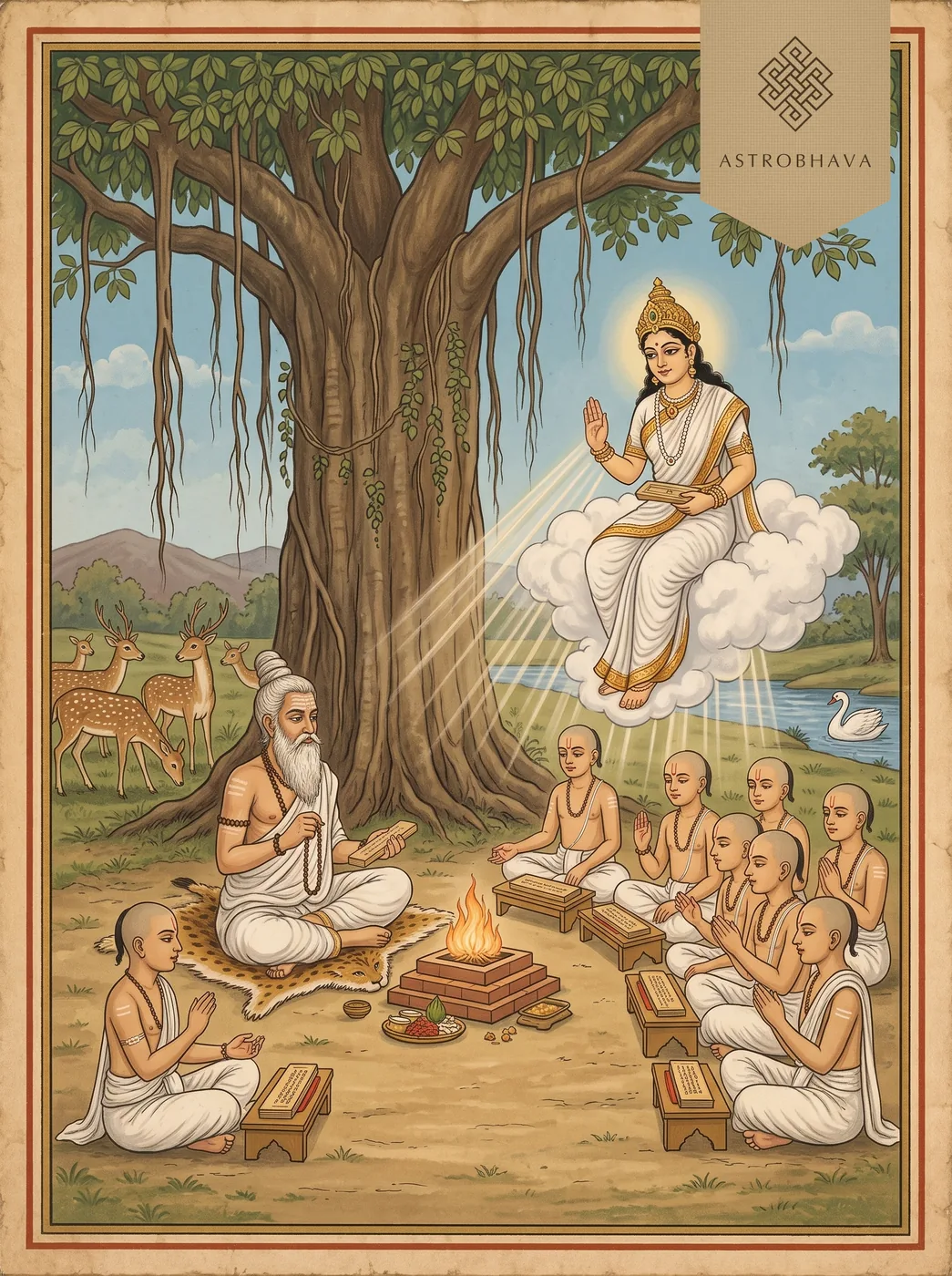
No legend of composition is attached to the Medha Suktam. Like the rest of the Taittiriya Aranyaka, it has no named author and belongs to the Aranyaka, or forest-book, layer of the Yajurveda. Its own wording gives the setting. The opening verse is in the first person plural and hopes that 'we' will speak great things in the vidatha, the Vedic assembly, with good companions around 'us'. For this reason the hymn is generally read as a collective prayer of students who are learning the sacred word together. The final verse changes voice to 'in me', so that each reciter claims the gift personally before the hymn ends. The Mahanarayana Upanishad itself survives in more than one form, a 64-chapter southern text and a longer Andhra text of 80 chapters, which is why anuvaka numbers for these verses differ between books. A separate Medha Sukta of nine mantras exists among the khila, or supplementary, hymns of the Rigveda; it calls on Angiras, the seven Rishis, Brahma, Varuna and others, and should not be confused with these six verses. Because Medha came to be seen as a form of Sarasvati, devotional editions often frame the Yajurveda verses with a Sarasvati Gayatri and a closing Shanti.
The mantra, in six scripts
- ॐ
- oṃ — Om
- मेधादेवी
- medhādevī — goddess Medha
- जुषमाणा
- juṣamāṇā — taking delight
- न
- na — to us
- आगाद्विश्वाची
- āgādviśvācī — has come, all-reaching
- भद्रा
- bhadrā — auspicious
- सुमनस्यमाना
- sumanasyamānā — kindly minded
- त्वया
- tvayā — by you
- जुष्टा
- juṣṭā — favoured
- नुदमाना
- nudamānā — driving away
- दुरुक्तान्
- duruktān — ill-spoken words
- बृहद्वदेम
- bṛhadvadema — may we speak greatly
- विदथे
- vidathe — in the assembly
- सुवीराः
- suvīrāḥ — with good companions
Medha Suktam lyrics in full
The six verses of the Taittiriya Aranyaka, from 'medha devi jushamana' to 'mayi medham mayi prajam', without the opening and closing prayers some devotional books add.
All 6 verses, in Sanskrit, Tamil, Telugu, Kannada, Malayalam and English, each with its meaning. Choose a script:
Download the Medha Suktam PDFAll 6 verses with their meanings, in Sanskrit. Free to print and keep.
ॐ मेधादेवी जुषमाणा न आगाद्विश्वाची भद्रा सुमनस्यमाना ।
त्वया जुष्टा नुदमाना दुरुक्तान् बृहद्वदेम विदथे सुवीराः ॥
ௐ மேதாதேவீ ஜுஷமாணா ந ஆகாத்விஶ்வாசீ பத்ரா ஸுமநஸ்யமாநா ।
த்வயா ஜுஷ்டா நுதமாநா துருக்தாந் ப்ருஹத்வதேம விததே ஸுவீராஃ ॥
ఓం మేధాదేవీ జుషమాణా న ఆగాద్విశ్వాచీ భద్రా సుమనస్యమానా ।
త్వయా జుష్టా నుదమానా దురుక్తాన్ బృహద్వదేమ విదథే సువీరాః ॥
ಓಂ ಮೇಧಾದೇವೀ ಜುಷಮಾಣಾ ನ ಆಗಾದ್ವಿಶ್ವಾಚೀ ಭದ್ರಾ ಸುಮನಸ್ಯಮಾನಾ ।
ತ್ವಯಾ ಜುಷ್ಟಾ ನುದಮಾನಾ ದುರುಕ್ತಾನ್ ಬೃಹದ್ವದೇಮ ವಿದಥೇ ಸುವೀರಾಃ ॥
ഓം മേധാദേവീ ജുഷമാണാ ന ആഗാദ്വിശ്വാചീ ഭദ്രാ സുമനസ്യമാനാ ।
ത്വയാ ജുഷ്ടാ നുദമാനാ ദുരുക്താന് ബൃഹദ്വദേമ വിദഥേ സുവീരാഃ ॥
oṃ medhādevī juṣamāṇā na āgādviśvācī bhadrā sumanasyamānā |
tvayā juṣṭā nudamānā duruktān bṛhadvadema vidathe suvīrāḥ ||
Om. May Medha, the goddess of understanding, come to us gladly, reaching everywhere, auspicious and kindly minded. Favoured by you, may we drive away ill-spoken words and speak great things in the assembly, with brave companions around us.
त्वया जुष्ट ऋषिर्भवति देवि त्वया ब्रह्माऽऽगतश्रीरुत त्वया ।
त्वया जुष्टश्चित्रं विन्दते वसु सा नो जुषस्व द्रविणो न मेधे ॥
த்வயா ஜுஷ்ட ருஷிர்பவதி தேவி த்வயா ப்ரஹ்மாகதஶ்ரீருத த்வயா ।
த்வயா ஜுஷ்டஶ்சித்ரம் விந்ததே வஸு ஸா நோ ஜுஷஸ்வ த்ரவிணோ ந மேதே ॥
త్వయా జుష్ట ఋషిర్భవతి దేవి త్వయా బ్రహ్మాఽఽగతశ్రీరుత త్వయా ।
త్వయా జుష్టశ్చిత్రం విన్దతే వసు సా నో జుషస్వ ద్రవిణో న మేధే ॥
ತ್ವಯಾ ಜುಷ್ಟ ಋಷಿರ್ಭವತಿ ದೇವಿ ತ್ವಯಾ ಬ್ರಹ್ಮಾಽಽಗತಶ್ರೀರುತ ತ್ವಯಾ ।
ತ್ವಯಾ ಜುಷ್ಟಶ್ಚಿತ್ರಂ ವಿನ್ದತೇ ವಸು ಸಾ ನೋ ಜುಷಸ್ವ ದ್ರವಿಣೋ ನ ಮೇಧೇ ॥
ത്വയാ ജുഷ്ട ഋഷിര്ഭവതി ദേവി ത്വയാ ബ്രഹ്മാഽഽഗതശ്രീരുത ത്വയാ ।
ത്വയാ ജുഷ്ടശ്ചിത്രം വിന്ദതേ വസു സാ നോ ജുഷസ്വ ദ്രവിണോ ന മേധേ ॥
tvayā juṣṭa ṛṣirbhavati devi tvayā brahmā''gataśrīruta tvayā |
tvayā juṣṭaścitraṃ vindate vasu sā no juṣasva draviṇo na medhe ||
Favoured by you, O goddess, a person becomes a seer; through you one becomes a Brahmana, a knower of the sacred word, and through you one gains good fortune. Favoured by you, one finds varied wealth; so, O Medha, take delight in us and grant us riches.
मेधां म इन्द्रो ददातु मेधां देवी सरस्वती ।
मेधां मे अश्विनावुभावाधत्तां पुष्करस्रजा ॥
மேதாம் ம இந்த்ரோ ததாது மேதாம் தேவீ ஸரஸ்வதீ ।
மேதாம் மே அஶ்விநாவுபாவாதத்தாம் புஷ்கரஸ்ரஜா ॥
మేధాం మ ఇన్ద్రో దదాతు మేధాం దేవీ సరస్వతీ ।
మేధాం మే అశ్వినావుభావాధత్తాం పుష్కరస్రజా ॥
ಮೇಧಾಂ ಮ ಇನ್ದ್ರೋ ದದಾತು ಮೇಧಾಂ ದೇವೀ ಸರಸ್ವತೀ ।
ಮೇಧಾಂ ಮೇ ಅಶ್ವಿನಾವುಭಾವಾಧತ್ತಾಂ ಪುಷ್ಕರಸ್ರಜಾ ॥
മേധാം മ ഇന്ദ്രോ ദദാതു മേധാം ദേവീ സരസ്വതീ ।
മേധാം മേ അശ്വിനാവുഭാവാധത്താം പുഷ്കരസ്രജാ ॥
medhāṃ ma indro dadātu medhāṃ devī sarasvatī |
medhāṃ me aśvināvubhāvādhattāṃ puṣkarasrajā ||
May Indra give me understanding; may the goddess Sarasvati give me understanding. May the two Ashvins, wearing garlands of lotuses, place understanding in me.
अप्सरासु च या मेधा गन्धर्वेषु च यन्मनः ।
दैवीं मेधा सरस्वती सा मां मेधा सुरभिर्जुषतां स्वाहा ॥
அப்ஸராஸு ச யா மேதா கந்தர்வேஷு ச யந்மநஃ ।
தைவீம் மேதா ஸரஸ்வதீ ஸா மாம் மேதா ஸுரபிர்ஜுஷதாம் ஸ்வாஹா ॥
అప్సరాసు చ యా మేధా గన్ధర్వేషు చ యన్మనః ।
దైవీం మేధా సరస్వతీ సా మాం మేధా సురభిర్జుషతాం స్వాహా ॥
ಅಪ್ಸರಾಸು ಚ ಯಾ ಮೇಧಾ ಗನ್ಧರ್ವೇಷು ಚ ಯನ್ಮನಃ ।
ದೈವೀಂ ಮೇಧಾ ಸರಸ್ವತೀ ಸಾ ಮಾಂ ಮೇಧಾ ಸುರಭಿರ್ಜುಷತಾಂ ಸ್ವಾಹಾ ॥
അപ്സരാസു ച യാ മേധാ ഗന്ധര്വേഷു ച യന്മനഃ ।
ദൈവീം മേധാ സരസ്വതീ സാ മാം മേധാ സുരഭിര്ജുഷതാം സ്വാഹാ ॥
apsarāsu ca yā medhā gandharveṣu ca yanmanaḥ |
daivīṃ medhā sarasvatī sā māṃ medhā surabhirjuṣatāṃ svāhā ||
The understanding that lives among the Apsaras, the mind that is among the Gandharvas, the divine understanding that is Sarasvati - may that fragrant Medha accept me with favour. Svaha.
आमां मेधा सुरभिर्विश्वरूपा हिरण्यवर्णा जगती जगम्या ।
ऊर्जस्वती पयसा पिन्वमाना सा मां मेधा सुप्रतीका जुषन्ताम् ॥
ஆமாம் மேதா ஸுரபிர்விஶ்வரூபா ஹிரண்யவர்ணா ஜகதீ ஜகம்யா ।
ஊர்ஜஸ்வதீ பயஸா பிந்வமாநா ஸா மாம் மேதா ஸுப்ரதீகா ஜுஷந்தாம் ॥
ఆమాం మేధా సురభిర్విశ్వరూపా హిరణ్యవర్ణా జగతీ జగమ్యా ।
ఊర్జస్వతీ పయసా పిన్వమానా సా మాం మేధా సుప్రతీకా జుషన్తామ్ ॥
ಆಮಾಂ ಮೇಧಾ ಸುರಭಿರ್ವಿಶ್ವರೂಪಾ ಹಿರಣ್ಯವರ್ಣಾ ಜಗತೀ ಜಗಮ್ಯಾ ।
ಊರ್ಜಸ್ವತೀ ಪಯಸಾ ಪಿನ್ವಮಾನಾ ಸಾ ಮಾಂ ಮೇಧಾ ಸುಪ್ರತೀಕಾ ಜುಷನ್ತಾಮ್ ॥
ആമാം മേധാ സുരഭിര്വിശ്വരൂപാ ഹിരണ്യവര്ണാ ജഗതീ ജഗമ്യാ ।
ഊര്ജസ്വതീ പയസാ പിന്വമാനാ സാ മാം മേധാ സുപ്രതീകാ ജുഷന്താമ് ॥
āmāṃ medhā surabhirviśvarūpā hiraṇyavarṇā jagatī jagamyā |
ūrjasvatī payasā pinvamānā sā māṃ medhā supratīkā juṣantām ||
May Medha come to me, fragrant, of every form, golden in colour, moving through the world and worthy to be approached, full of vigour and swelling with nourishment; may that lovely-faced Medha favour me.
मयि मेधां मयि प्रजां मय्यग्निस्तेजो दधातु ।
मयि मेधां मयि प्रजां मयीन्द्र इन्द्रियं दधातु ।
मयि मेधां मयि प्रजां मयि सूर्यो भ्राजो दधातु ॥
மயி மேதாம் மயி ப்ரஜாம் மய்யக்நிஸ்தேஜோ ததாது ।
மயி மேதாம் மயி ப்ரஜாம் மயீந்த்ர இந்த்ரியம் ததாது ।
மயி மேதாம் மயி ப்ரஜாம் மயி ஸூர்யோ ப்ராஜோ ததாது ॥
మయి మేధాం మయి ప్రజాం మయ్యగ్నిస్తేజో దధాతు ।
మయి మేధాం మయి ప్రజాం మయీన్ద్ర ఇన్ద్రియం దధాతు ।
మయి మేధాం మయి ప్రజాం మయి సూర్యో భ్రాజో దధాతు ॥
ಮಯಿ ಮೇಧಾಂ ಮಯಿ ಪ್ರಜಾಂ ಮಯ್ಯಗ್ನಿಸ್ತೇಜೋ ದಧಾತು ।
ಮಯಿ ಮೇಧಾಂ ಮಯಿ ಪ್ರಜಾಂ ಮಯೀನ್ದ್ರ ಇನ್ದ್ರಿಯಂ ದಧಾತು ।
ಮಯಿ ಮೇಧಾಂ ಮಯಿ ಪ್ರಜಾಂ ಮಯಿ ಸೂರ್ಯೋ ಭ್ರಾಜೋ ದಧಾತು ॥
മയി മേധാം മയി പ്രജാം മയ്യഗ്നിസ്തേജോ ദധാതു ।
മയി മേധാം മയി പ്രജാം മയീന്ദ്ര ഇന്ദ്രിയം ദധാതു ।
മയി മേധാം മയി പ്രജാം മയി സൂര്യോ ഭ്രാജോ ദധാതു ॥
mayi medhāṃ mayi prajāṃ mayyagnistejo dadhātu |
mayi medhāṃ mayi prajāṃ mayīndra indriyaṃ dadhātu |
mayi medhāṃ mayi prajāṃ mayi sūryo bhrājo dadhātu ||
May Agni place in me understanding, offspring and radiance. May Indra place in me understanding, offspring and the strength of the senses. May Surya place in me understanding, offspring and brilliance.
The syllable people get wrong
In the fourth verse, juṣatāṃ before svāhā is written in Taittiriya books with the special Vedic anusvara sign ꣳ, and it is chanted as juṣatāgm svāhā, with a soft nasal 'gm' rather than a plain 'm'. Reading it as an ordinary juṣatām flattens a sound the Taittiriya reciters keep.
Questions
Have your chart read before you decide
Chanting is yours to do, and free. But which deity your situation calls for — and whether a mantra alone is the right response — depends on your chart. Sometimes it is; sometimes it is not.
- Over 30 years in the Guru–Sishya Parampara, from the age of five
- He reads every chart himself — 60 minutes, one to one, never delegated
- Charts are read only between sunrise and sunset, following tradition
