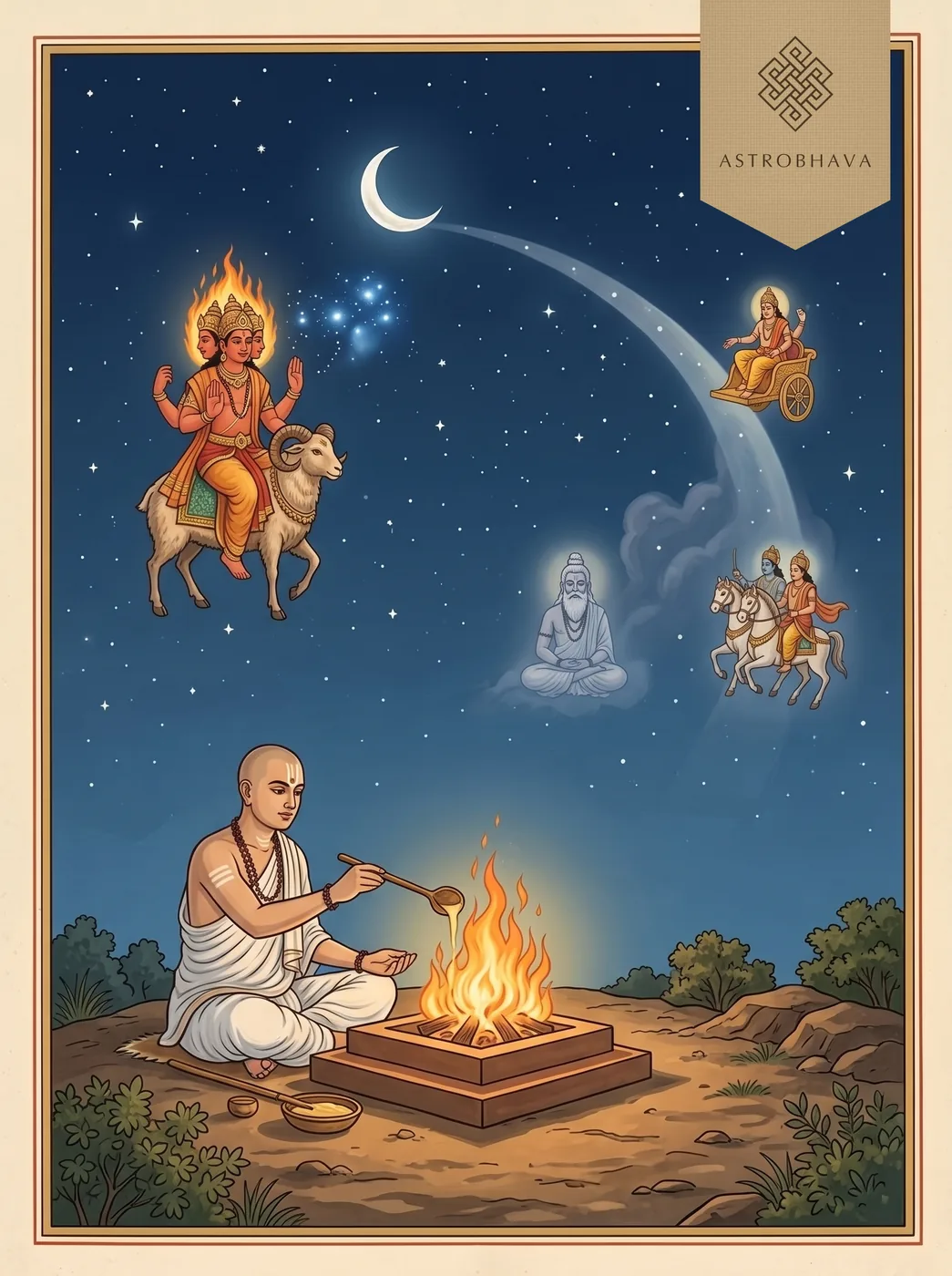
Nakshatra Suktam
अग्निर्नः पातु कृत्तिकाः । नक्षत्रं देवमिन्द्रियम् । इदमासां विचक्षणम् । हविरासं जुहोतन । यस्य भान्ति रश्मयो यस्य केतवः । यस्येमा विश्वा भुवनानि सर्वा । स कृत्तिकाभिरभिसंवसानः । अग्निर्नो देवस्सुविते दधातु ॥Also known as Agnir Nah Patu Krittikah
In Devanagari, Tamil, Telugu, Kannada, Malayalam and English — with the meaning of every word, and the one syllable most people pronounce wrongly.
 A reading of your birth chartBook →
What the Nakshatra Suktam is
The Nakshatra Suktam is the run of verses in the Taittiriya Brahmana of the Krishna Yajurveda (3.1.1-3.1.2) that greets each lunar mansion together with its presiding deity. The verses were composed for the Nakshatreshti, a series of rites in which every star received its own oblation. The sequence opens with Agni and the Krittikas, first in the old Vedic order, moves through Rohini under Prajapati, Mrigashira under Soma and Ardra under Rudra, and ends with Bharani under Yama. It counts twenty-eight stars, Abhijit under Brahma among them, and places a verse to the full moon after Vishakha, where the Brahmana's stars of the gods give way to its stars of Yama. Each group of eight lines names the star, praises its god and asks that the offering be received. Two closing verses address the night before the new moon and the new moon itself. The text is printed here without accent marks; chanting it with the svaras is learned from a teacher.
A wish for every god, won through a star
The verses tell no tale; the Brahmana prose that follows them (3.1.4-6) supplies one for nearly every star, always in the same pattern: a god desired something, made an offering to his star, and obtained it. Agni desired to become the eater of food among the gods and offered a cake on eight potsherds to himself and the Krittikas. Prajapati saw the creatures he had made turn away from him; he set his mind on Rohini, offered her a pot of cooked rice, and she came back to him. Brihaspati wished for the radiance of sacred learning and offered wild rice cooked in milk to Tishya. Tvashtr wanted manifold offspring and won them through Chitra; Vayu wanted to range the worlds at will and won it through Nishtya, the star later called Swati. Indra wished to be eldest among the gods and offered to Jyeshtha, the eldest. Vishnu asked for good fame with no evil report following him, and offered a cake on three potsherds to Shrona. Indra, wanting a heart that would not slacken, offered black rice to Varuna, to Shatabhishak and to the healing powers. Once, the Brahmana says, gods and asuras were at war, and the gods led the enemy away by offering barley gruel to the Serpents and the Ashleshas. Each account closes by saying the same comes to one who offers and knows this.
The mantra, in six scripts
- अग्निर्नः
- agnirnaḥ — Agni, us
- पातु
- pātu — may he guard
- कृत्तिकाः
- kṛttikāḥ — the Krittikas
- नक्षत्रं
- nakṣatraṃ — the star
- देवमिन्द्रियम्
- devamindriyam — divine, potent
- इदमासां
- idamāsāṃ — this, of them
- विचक्षणम्
- vicakṣaṇam — bright, far-seeing
- हविरासं
- havirāsaṃ — the oblation for them
- जुहोतन
- juhotana — offer into the fire
- यस्य
- yasya — whose
- भान्ति
- bhānti — shine
- रश्मयो
- raśmayo — rays
- यस्य
- yasya — whose
- केतवः
- ketavaḥ — banners
- यस्येमा
- yasyemā — whose are these
- विश्वा
- viśvā — all
- भुवनानि
- bhuvanāni — worlds
- सर्वा
- sarvā — entire
- स
- sa — he
- कृत्तिकाभिरभिसंवसानः
- kṛttikābhirabhisaṃvasānaḥ — dwelling with the Krittikas
- अग्निर्नो
- agnirno — Agni, us
- देवस्सुविते
- devassuvite — the god, in well-being
- दधातु
- dadhātu — may he place
Nakshatra Suktam lyrics in full
Twenty-eight stars from Krittika to Bharani with the full-moon verse among them, followed by the verses for the eve of the new moon and the new moon, printed without accent marks.
All 31 verses, in Sanskrit, Tamil, Telugu, Kannada, Malayalam and English, each with its meaning. Choose a script:
Download the Nakshatra Suktam PDFAll 31 verses with their meanings, in Sanskrit. Free to print and keep.
अग्निर्नः पातु कृत्तिकाः ।
नक्षत्रं देवमिन्द्रियम् ।
इदमासां विचक्षणम् ।
हविरासं जुहोतन ।
यस्य भान्ति रश्मयो यस्य केतवः ।
यस्येमा विश्वा भुवनानि सर्वा ।
स कृत्तिकाभिरभिसंवसानः ।
अग्निर्नो देवस्सुविते दधातु ॥
அக்நிர்நஃ பாது க்ருத்திகாஃ ।
நக்ஷத்ரம் தேவமிந்த்ரியம் ।
இதமாஸாம் விசக்ஷணம் ।
ஹவிராஸம் ஜுஹோதந ।
யஸ்ய பாந்தி ரஶ்மயோ யஸ்ய கேதவஃ ।
யஸ்யேமா விஶ்வா புவநாநி ஸர்வா ।
ஸ க்ருத்திகாபிரபிஸம்வஸாநஃ ।
அக்நிர்நோ தேவஸ்ஸுவிதே ததாது ॥
అగ్నిర్నః పాతు కృత్తికాః ।
నక్షత్రం దేవమిన్ద్రియమ్ ।
ఇదమాసాం విచక్షణమ్ ।
హవిరాసం జుహోతన ।
యస్య భాన్తి రశ్మయో యస్య కేతవః ।
యస్యేమా విశ్వా భువనాని సర్వా ।
స కృత్తికాభిరభిసంవసానః ।
అగ్నిర్నో దేవస్సువితే దధాతు ॥
ಅಗ್ನಿರ್ನಃ ಪಾತು ಕೃತ್ತಿಕಾಃ ।
ನಕ್ಷತ್ರಂ ದೇವಮಿನ್ದ್ರಿಯಮ್ ।
ಇದಮಾಸಾಂ ವಿಚಕ್ಷಣಮ್ ।
ಹವಿರಾಸಂ ಜುಹೋತನ ।
ಯಸ್ಯ ಭಾನ್ತಿ ರಶ್ಮಯೋ ಯಸ್ಯ ಕೇತವಃ ।
ಯಸ್ಯೇಮಾ ವಿಶ್ವಾ ಭುವನಾನಿ ಸರ್ವಾ ।
ಸ ಕೃತ್ತಿಕಾಭಿರಭಿಸಂವಸಾನಃ ।
ಅಗ್ನಿರ್ನೋ ದೇವಸ್ಸುವಿತೇ ದಧಾತು ॥
അഗ്നിര്നഃ പാതു കൃത്തികാഃ ।
നക്ഷത്രം ദേവമിന്ദ്രിയമ് ।
ഇദമാസാം വിചക്ഷണമ് ।
ഹവിരാസം ജുഹോതന ।
യസ്യ ഭാന്തി രശ്മയോ യസ്യ കേതവഃ ।
യസ്യേമാ വിശ്വാ ഭുവനാനി സര്വാ ।
സ കൃത്തികാഭിരഭിസംവസാനഃ ।
അഗ്നിര്നോ ദേവസ്സുവിതേ ദധാതു ॥
agnirnaḥ pātu kṛttikāḥ |
nakṣatraṃ devamindriyam |
idamāsāṃ vicakṣaṇam |
havirāsaṃ juhotana |
yasya bhānti raśmayo yasya ketavaḥ |
yasyemā viśvā bhuvanāni sarvā |
sa kṛttikābhirabhisaṃvasānaḥ |
agnirno devassuvite dadhātu ||
Krittika (deity Agni): May Agni guard us with the Krittikas; this is the bright, powerful star of the gods. Offer into the fire this oblation that is fitting for them. May Agni, whose rays and banners shine and to whom all these worlds belong, dwelling together with the Krittikas, place us in well-being.
प्रजापते रोहिणीवेतु पत्नी ।
विश्वरूपा बृहती चित्रभानुः ।
सा नो यज्ञस्य सुविते दधातु ।
यथा जीवेम शरदस्सवीराः ।
रोहिणी देव्युदगात्पुरस्तात् ।
विश्वा रूपाणि प्रतिमोदमाना ।
प्रजापतिं हविषा वर्धयन्ती ।
प्रिया देवानामुपयातु यज्ञम् ॥
ப்ரஜாபதே ரோஹிணீவேது பத்நீ ।
விஶ்வரூபா ப்ருஹதீ சித்ரபாநுஃ ।
ஸா நோ யஜ்ஞஸ்ய ஸுவிதே ததாது ।
யதா ஜீவேம ஶரதஸ்ஸவீராஃ ।
ரோஹிணீ தேவ்யுதகாத்புரஸ்தாத் ।
விஶ்வா ரூபாணி ப்ரதிமோதமாநா ।
ப்ரஜாபதிம் ஹவிஷா வர்தயந்தீ ।
ப்ரியா தேவாநாமுபயாது யஜ்ஞம் ॥
ప్రజాపతే రోహిణీవేతు పత్నీ ।
విశ్వరూపా బృహతీ చిత్రభానుః ।
సా నో యజ్ఞస్య సువితే దధాతు ।
యథా జీవేమ శరదస్సవీరాః ।
రోహిణీ దేవ్యుదగాత్పురస్తాత్ ।
విశ్వా రూపాణి ప్రతిమోదమానా ।
ప్రజాపతిం హవిషా వర్ధయన్తీ ।
ప్రియా దేవానాముపయాతు యజ్ఞమ్ ॥
ಪ್ರಜಾಪತೇ ರೋಹಿಣೀವೇತು ಪತ್ನೀ ।
ವಿಶ್ವರೂಪಾ ಬೃಹತೀ ಚಿತ್ರಭಾನುಃ ।
ಸಾ ನೋ ಯಜ್ಞಸ್ಯ ಸುವಿತೇ ದಧಾತು ।
ಯಥಾ ಜೀವೇಮ ಶರದಸ್ಸವೀರಾಃ ।
ರೋಹಿಣೀ ದೇವ್ಯುದಗಾತ್ಪುರಸ್ತಾತ್ ।
ವಿಶ್ವಾ ರೂಪಾಣಿ ಪ್ರತಿಮೋದಮಾನಾ ।
ಪ್ರಜಾಪತಿಂ ಹವಿಷಾ ವರ್ಧಯನ್ತೀ ।
ಪ್ರಿಯಾ ದೇವಾನಾಮುಪಯಾತು ಯಜ್ಞಮ್ ॥
പ്രജാപതേ രോഹിണീവേതു പത്നീ ।
വിശ്വരൂപാ ബൃഹതീ ചിത്രഭാനുഃ ।
സാ നോ യജ്ഞസ്യ സുവിതേ ദധാതു ।
യഥാ ജീവേമ ശരദസ്സവീരാഃ ।
രോഹിണീ ദേവ്യുദഗാത്പുരസ്താത് ।
വിശ്വാ രൂപാണി പ്രതിമോദമാനാ ।
പ്രജാപതിം ഹവിഷാ വര്ധയന്തീ ।
പ്രിയാ ദേവാനാമുപയാതു യജ്ഞമ് ॥
prajāpate rohiṇīvetu patnī |
viśvarūpā bṛhatī citrabhānuḥ |
sā no yajñasya suvite dadhātu |
yathā jīvema śaradassavīrāḥ |
rohiṇī devyudagātpurastāt |
viśvā rūpāṇi pratimodamānā |
prajāpatiṃ haviṣā vardhayantī |
priyā devānāmupayātu yajñam ||
Rohini (deity Prajapati): May Rohini, the consort, come to Prajapati: all-formed, great and bright with many lights; may she set our sacrifice in well-being, so that we may live many autumns with strong offspring. Rohini the goddess has risen in the east, delighting in all forms; strengthening Prajapati with the offering, may she, dear to the gods, come to the sacrifice.
सोमो राजा मृगशीर्षेण आगन्न् ।
शिवं नक्षत्रं प्रियमस्य धाम ।
आप्यायमानो बहुधा जनेषु ।
रेतः प्रजां यजमाने दधातु ।
यत्ते नक्षत्रं मृगशीर्षमस्ति ।
प्रियं राजन् प्रियतमं प्रियाणाम् ।
तस्मै ते सोम हविषा विधेम ।
शन्न एधि द्विपदे शं चतुष्पदे ॥
ஸோமோ ராஜா ம்ருகஶீர்ஷேண ஆகந்ந் ।
ஶிவம் நக்ஷத்ரம் ப்ரியமஸ்ய தாம ।
ஆப்யாயமாநோ பஹுதா ஜநேஷு ।
ரேதஃ ப்ரஜாம் யஜமாநே ததாது ।
யத்தே நக்ஷத்ரம் ம்ருகஶீர்ஷமஸ்தி ।
ப்ரியம் ராஜந் ப்ரியதமம் ப்ரியாணாம் ।
தஸ்மை தே ஸோம ஹவிஷா விதேம ।
ஶந்ந ஏதி த்விபதே ஶம் சதுஷ்பதே ॥
సోమో రాజా మృగశీర్షేణ ఆగన్న్ ।
శివం నక్షత్రం ప్రియమస్య ధామ ।
ఆప్యాయమానో బహుధా జనేషు ।
రేతః ప్రజాం యజమానే దధాతు ।
యత్తే నక్షత్రం మృగశీర్షమస్తి ।
ప్రియం రాజన్ ప్రియతమం ప్రియాణామ్ ।
తస్మై తే సోమ హవిషా విధేమ ।
శన్న ఏధి ద్విపదే శం చతుష్పదే ॥
ಸೋಮೋ ರಾಜಾ ಮೃಗಶೀರ್ಷೇಣ ಆಗನ್ನ್ ।
ಶಿವಂ ನಕ್ಷತ್ರಂ ಪ್ರಿಯಮಸ್ಯ ಧಾಮ ।
ಆಪ್ಯಾಯಮಾನೋ ಬಹುಧಾ ಜನೇಷು ।
ರೇತಃ ಪ್ರಜಾಂ ಯಜಮಾನೇ ದಧಾತು ।
ಯತ್ತೇ ನಕ್ಷತ್ರಂ ಮೃಗಶೀರ್ಷಮಸ್ತಿ ।
ಪ್ರಿಯಂ ರಾಜನ್ ಪ್ರಿಯತಮಂ ಪ್ರಿಯಾಣಾಮ್ ।
ತಸ್ಮೈ ತೇ ಸೋಮ ಹವಿಷಾ ವಿಧೇಮ ।
ಶನ್ನ ಏಧಿ ದ್ವಿಪದೇ ಶಂ ಚತುಷ್ಪದೇ ॥
സോമോ രാജാ മൃഗശീര്ഷേണ ആഗന്ന് ।
ശിവം നക്ഷത്രം പ്രിയമസ്യ ധാമ ।
ആപ്യായമാനോ ബഹുധാ ജനേഷു ।
രേതഃ പ്രജാം യജമാനേ ദധാതു ।
യത്തേ നക്ഷത്രം മൃഗശീര്ഷമസ്തി ।
പ്രിയം രാജന് പ്രിയതമം പ്രിയാണാമ് ।
തസ്മൈ തേ സോമ ഹവിഷാ വിധേമ ।
ശന്ന ഏധി ദ്വിപദേ ശം ചതുഷ്പദേ ॥
somo rājā mṛgaśīrṣeṇa āgann |
śivaṃ nakṣatraṃ priyamasya dhāma |
āpyāyamāno bahudhā janeṣu |
retaḥ prajāṃ yajamāne dadhātu |
yatte nakṣatraṃ mṛgaśīrṣamasti |
priyaṃ rājan priyatamaṃ priyāṇām |
tasmai te soma haviṣā vidhema |
śanna edhi dvipade śaṃ catuṣpade ||
Mrigashira (deity Soma): King Soma has come with Mrigashira, his auspicious star and beloved home; growing full in many ways among the people, may he give seed and offspring to the one who sacrifices. O King Soma, your star Mrigashira is the dearest of all things dear; we worship you with this offering. Be a blessing to our two-footed and four-footed ones.
आर्द्रया रुद्रः प्रथमा न एति ।
श्रेष्ठो देवानां पतिरघ्नियानाम् ।
नक्षत्रमस्य हविषा विधेम ।
मा नः प्रजां रीरिषन्मोत वीरान् ।
हेती रुद्रस्य परिणो वृणक्तु ।
आर्द्रा नक्षत्रं जुषतां हविर्नः ।
प्रमुञ्चमानौ दुरितानि विश्वा ।
अपाघशंसन्नुदतामरातिम् ॥
ஆர்த்ரயா ருத்ரஃ ப்ரதமா ந ஏதி ।
ஶ்ரேஷ்டோ தேவாநாம் பதிரக்நியாநாம் ।
நக்ஷத்ரமஸ்ய ஹவிஷா விதேம ।
மா நஃ ப்ரஜாம் ரீரிஷந்மோத வீராந் ।
ஹேதீ ருத்ரஸ்ய பரிணோ வ்ருணக்து ।
ஆர்த்ரா நக்ஷத்ரம் ஜுஷதாம் ஹவிர்நஃ ।
ப்ரமுஞ்சமாநௌ துரிதாநி விஶ்வா ।
அபாகஶம்ஸந்நுததாமராதிம் ॥
ఆర్ద్రయా రుద్రః ప్రథమా న ఏతి ।
శ్రేష్ఠో దేవానాం పతిరఘ్నియానామ్ ।
నక్షత్రమస్య హవిషా విధేమ ।
మా నః ప్రజాం రీరిషన్మోత వీరాన్ ।
హేతీ రుద్రస్య పరిణో వృణక్తు ।
ఆర్ద్రా నక్షత్రం జుషతాం హవిర్నః ।
ప్రముఞ్చమానౌ దురితాని విశ్వా ।
అపాఘశంసన్నుదతామరాతిమ్ ॥
ಆರ್ದ್ರಯಾ ರುದ್ರಃ ಪ್ರಥಮಾ ನ ಏತಿ ।
ಶ್ರೇಷ್ಠೋ ದೇವಾನಾಂ ಪತಿರಘ್ನಿಯಾನಾಮ್ ।
ನಕ್ಷತ್ರಮಸ್ಯ ಹವಿಷಾ ವಿಧೇಮ ।
ಮಾ ನಃ ಪ್ರಜಾಂ ರೀರಿಷನ್ಮೋತ ವೀರಾನ್ ।
ಹೇತೀ ರುದ್ರಸ್ಯ ಪರಿಣೋ ವೃಣಕ್ತು ।
ಆರ್ದ್ರಾ ನಕ್ಷತ್ರಂ ಜುಷತಾಂ ಹವಿರ್ನಃ ।
ಪ್ರಮುಞ್ಚಮಾನೌ ದುರಿತಾನಿ ವಿಶ್ವಾ ।
ಅಪಾಘಶಂಸನ್ನುದತಾಮರಾತಿಮ್ ॥
ആര്ദ്രയാ രുദ്രഃ പ്രഥമാ ന ഏതി ।
ശ്രേഷ്ഠോ ദേവാനാം പതിരഘ്നിയാനാമ് ।
നക്ഷത്രമസ്യ ഹവിഷാ വിധേമ ।
മാ നഃ പ്രജാം രീരിഷന്മോത വീരാന് ।
ഹേതീ രുദ്രസ്യ പരിണോ വൃണക്തു ।
ആര്ദ്രാ നക്ഷത്രം ജുഷതാം ഹവിര്നഃ ।
പ്രമുഞ്ചമാനൌ ദുരിതാനി വിശ്വാ ।
അപാഘശംസന്നുദതാമരാതിമ് ॥
ārdrayā rudraḥ prathamā na eti |
śreṣṭho devānāṃ patiraghniyānām |
nakṣatramasya haviṣā vidhema |
mā naḥ prajāṃ rīriṣanmota vīrān |
hetī rudrasya pariṇo vṛṇaktu |
ārdrā nakṣatraṃ juṣatāṃ havirnaḥ |
pramuñcamānau duritāni viśvā |
apāghaśaṃsannudatāmarātim ||
Ardra (deity Rudra): With Ardra comes Rudra first to us, the foremost of the gods and lord of the cattle; we worship his star with this offering, may he not harm our children or our men. May the weapon of Rudra pass us by, and may Ardra accept our offering. May the two, releasing us from all wrongs, drive away the evil-speaker and the foe.
पुनर्नो देव्यदितिस्पृणोतु ।
पुनर्वसूनः पुनरेतां यज्ञम् ।
पुनर्नो देवा अभियन्तु सर्वे ।
पुनः पुनर्वो हविषा यजामः ।
एवा न देव्यदितिरनर्वा ।
विश्वस्य भर्त्री जगतः प्रतिष्ठा ।
पुनर्वसू हविषा वर्धयन्ती ।
प्रियं देवानामप्येतु पाथः ॥
புநர்நோ தேவ்யதிதிஸ்ப்ருணோது ।
புநர்வஸூநஃ புநரேதாம் யஜ்ஞம் ।
புநர்நோ தேவா அபியந்து ஸர்வே ।
புநஃ புநர்வோ ஹவிஷா யஜாமஃ ।
ஏவா ந தேவ்யதிதிரநர்வா ।
விஶ்வஸ்ய பர்த்ரீ ஜகதஃ ப்ரதிஷ்டா ।
புநர்வஸூ ஹவிஷா வர்தயந்தீ ।
ப்ரியம் தேவாநாமப்யேது பாதஃ ॥
పునర్నో దేవ్యదితిస్పృణోతు ।
పునర్వసూనః పునరేతాం యజ్ఞమ్ ।
పునర్నో దేవా అభియన్తు సర్వే ।
పునః పునర్వో హవిషా యజామః ।
ఏవా న దేవ్యదితిరనర్వా ।
విశ్వస్య భర్త్రీ జగతః ప్రతిష్ఠా ।
పునర్వసూ హవిషా వర్ధయన్తీ ।
ప్రియం దేవానామప్యేతు పాథః ॥
ಪುನರ್ನೋ ದೇವ್ಯದಿತಿಸ್ಪೃಣೋತು ।
ಪುನರ್ವಸೂನಃ ಪುನರೇತಾಂ ಯಜ್ಞಮ್ ।
ಪುನರ್ನೋ ದೇವಾ ಅಭಿಯನ್ತು ಸರ್ವೇ ।
ಪುನಃ ಪುನರ್ವೋ ಹವಿಷಾ ಯಜಾಮಃ ।
ಏವಾ ನ ದೇವ್ಯದಿತಿರನರ್ವಾ ।
ವಿಶ್ವಸ್ಯ ಭರ್ತ್ರೀ ಜಗತಃ ಪ್ರತಿಷ್ಠಾ ।
ಪುನರ್ವಸೂ ಹವಿಷಾ ವರ್ಧಯನ್ತೀ ।
ಪ್ರಿಯಂ ದೇವಾನಾಮಪ್ಯೇತು ಪಾಥಃ ॥
പുനര്നോ ദേവ്യദിതിസ്പൃണോതു ।
പുനര്വസൂനഃ പുനരേതാം യജ്ഞമ് ।
പുനര്നോ ദേവാ അഭിയന്തു സര്വേ ।
പുനഃ പുനര്വോ ഹവിഷാ യജാമഃ ।
ഏവാ ന ദേവ്യദിതിരനര്വാ ।
വിശ്വസ്യ ഭര്ത്രീ ജഗതഃ പ്രതിഷ്ഠാ ।
പുനര്വസൂ ഹവിഷാ വര്ധയന്തീ ।
പ്രിയം ദേവാനാമപ്യേതു പാഥഃ ॥
punarno devyaditispṛṇotu |
punarvasūnaḥ punaretāṃ yajñam |
punarno devā abhiyantu sarve |
punaḥ punarvo haviṣā yajāmaḥ |
evā na devyaditiranarvā |
viśvasya bhartrī jagataḥ pratiṣṭhā |
punarvasū haviṣā vardhayantī |
priyaṃ devānāmapyetu pāthaḥ ||
Punarvasu (deity Aditi): May the goddess Aditi bring us fulfilment again, and may the Punarvasus come back again to this sacrifice; may all the gods come to us again, and again and again we worship you with offerings. So may the goddess Aditi, unassailable, the sustainer of all and the support of the world, together with the Punarvasus strengthened by the offering, reach the place dear to the gods.
बृहस्पतिः प्रथमं जायमानः ।
तिष्यं नक्षत्रमभि संबभूव ।
श्रेष्ठो देवानां पृतनासु जिष्णुः ।
दिशोऽनु सर्वा अभयन्नो अस्तु ।
तिष्यः पुरस्तादुत मध्यतो नः ।
बृहस्पतिर्नः परिपातु पश्चात् ।
बाधेतान्द्वेषो अभयं कृणुताम् ।
सुवीर्यस्य पतयस्याम ॥
ப்ருஹஸ்பதிஃ ப்ரதமம் ஜாயமாநஃ ।
திஷ்யம் நக்ஷத்ரமபி ஸம்பபூவ ।
ஶ்ரேஷ்டோ தேவாநாம் ப்ருதநாஸு ஜிஷ்ணுஃ ।
திஶோநு ஸர்வா அபயந்நோ அஸ்து ।
திஷ்யஃ புரஸ்தாதுத மத்யதோ நஃ ।
ப்ருஹஸ்பதிர்நஃ பரிபாது பஶ்சாத் ।
பாதேதாந்த்வேஷோ அபயம் க்ருணுதாம் ।
ஸுவீர்யஸ்ய பதயஸ்யாம ॥
బృహస్పతిః ప్రథమం జాయమానః ।
తిష్యం నక్షత్రమభి సంబభూవ ।
శ్రేష్ఠో దేవానాం పృతనాసు జిష్ణుః ।
దిశోఽను సర్వా అభయన్నో అస్తు ।
తిష్యః పురస్తాదుత మధ్యతో నః ।
బృహస్పతిర్నః పరిపాతు పశ్చాత్ ।
బాధేతాన్ద్వేషో అభయం కృణుతామ్ ।
సువీర్యస్య పతయస్యామ ॥
ಬೃಹಸ್ಪತಿಃ ಪ್ರಥಮಂ ಜಾಯಮಾನಃ ।
ತಿಷ್ಯಂ ನಕ್ಷತ್ರಮಭಿ ಸಂಬಭೂವ ।
ಶ್ರೇಷ್ಠೋ ದೇವಾನಾಂ ಪೃತನಾಸು ಜಿಷ್ಣುಃ ।
ದಿಶೋಽನು ಸರ್ವಾ ಅಭಯನ್ನೋ ಅಸ್ತು ।
ತಿಷ್ಯಃ ಪುರಸ್ತಾದುತ ಮಧ್ಯತೋ ನಃ ।
ಬೃಹಸ್ಪತಿರ್ನಃ ಪರಿಪಾತು ಪಶ್ಚಾತ್ ।
ಬಾಧೇತಾನ್ದ್ವೇಷೋ ಅಭಯಂ ಕೃಣುತಾಮ್ ।
ಸುವೀರ್ಯಸ್ಯ ಪತಯಸ್ಯಾಮ ॥
ബൃഹസ്പതിഃ പ്രഥമം ജായമാനഃ ।
തിഷ്യം നക്ഷത്രമഭി സംബഭൂവ ।
ശ്രേഷ്ഠോ ദേവാനാം പൃതനാസു ജിഷ്ണുഃ ।
ദിശോഽനു സര്വാ അഭയന്നോ അസ്തു ।
തിഷ്യഃ പുരസ്താദുത മധ്യതോ നഃ ।
ബൃഹസ്പതിര്നഃ പരിപാതു പശ്ചാത് ।
ബാധേതാന്ദ്വേഷോ അഭയം കൃണുതാമ് ।
സുവീര്യസ്യ പതയസ്യാമ ॥
bṛhaspatiḥ prathamaṃ jāyamānaḥ |
tiṣyaṃ nakṣatramabhi saṃbabhūva |
śreṣṭho devānāṃ pṛtanāsu jiṣṇuḥ |
diśo'nu sarvā abhayanno astu |
tiṣyaḥ purastāduta madhyato naḥ |
bṛhaspatirnaḥ paripātu paścāt |
bādhetāndveṣo abhayaṃ kṛṇutām |
suvīryasya patayasyāma ||
Pushya / Tishya (deity Brihaspati): Brihaspati, born first, came into being as the star Tishya; foremost of the gods and victorious in battles, may he grant us safety in every direction. May Tishya guard us in front and in the middle, and Brihaspati protect us from behind; may they drive off hatred and give us safety, and may we be masters of great strength.
इदं सर्पेभ्यो हविरस्तु जुष्टम् ।
आश्रेषा येषामनुयन्ति चेतः ।
ये अन्तरिक्षं पृथिवीं क्षियन्ति ।
ते नस्सर्पासो हवमागमिष्ठाः ।
ये रोचने सूर्यस्यापि सर्पाः ।
ये दिवं देवीमनुसञ्चरन्ति ।
येषामाश्रेषा अनुयन्ति कामम् ।
तेभ्यस्सर्पेभ्यो मधुमज्जुहोमि ॥
இதம் ஸர்பேப்யோ ஹவிரஸ்து ஜுஷ்டம் ।
ஆஶ்ரேஷா யேஷாமநுயந்தி சேதஃ ।
யே அந்தரிக்ஷம் ப்ருதிவீம் க்ஷியந்தி ।
தே நஸ்ஸர்பாஸோ ஹவமாகமிஷ்டாஃ ।
யே ரோசநே ஸூர்யஸ்யாபி ஸர்பாஃ ।
யே திவம் தேவீமநுஸஞ்சரந்தி ।
யேஷாமாஶ்ரேஷா அநுயந்தி காமம் ।
தேப்யஸ்ஸர்பேப்யோ மதுமஜ்ஜுஹோமி ॥
ఇదం సర్పేభ్యో హవిరస్తు జుష్టమ్ ।
ఆశ్రేషా యేషామనుయన్తి చేతః ।
యే అన్తరిక్షం పృథివీం క్షియన్తి ।
తే నస్సర్పాసో హవమాగమిష్ఠాః ।
యే రోచనే సూర్యస్యాపి సర్పాః ।
యే దివం దేవీమనుసఞ్చరన్తి ।
యేషామాశ్రేషా అనుయన్తి కామమ్ ।
తేభ్యస్సర్పేభ్యో మధుమజ్జుహోమి ॥
ಇದಂ ಸರ್ಪೇಭ್ಯೋ ಹವಿರಸ್ತು ಜುಷ್ಟಮ್ ।
ಆಶ್ರೇಷಾ ಯೇಷಾಮನುಯನ್ತಿ ಚೇತಃ ।
ಯೇ ಅನ್ತರಿಕ್ಷಂ ಪೃಥಿವೀಂ ಕ್ಷಿಯನ್ತಿ ।
ತೇ ನಸ್ಸರ್ಪಾಸೋ ಹವಮಾಗಮಿಷ್ಠಾಃ ।
ಯೇ ರೋಚನೇ ಸೂರ್ಯಸ್ಯಾಪಿ ಸರ್ಪಾಃ ।
ಯೇ ದಿವಂ ದೇವೀಮನುಸಞ್ಚರನ್ತಿ ।
ಯೇಷಾಮಾಶ್ರೇಷಾ ಅನುಯನ್ತಿ ಕಾಮಮ್ ।
ತೇಭ್ಯಸ್ಸರ್ಪೇಭ್ಯೋ ಮಧುಮಜ್ಜುಹೋಮಿ ॥
ഇദം സര്പേഭ്യോ ഹവിരസ്തു ജുഷ്ടമ് ।
ആശ്രേഷാ യേഷാമനുയന്തി ചേതഃ ।
യേ അന്തരിക്ഷം പൃഥിവീം ക്ഷിയന്തി ।
തേ നസ്സര്പാസോ ഹവമാഗമിഷ്ഠാഃ ।
യേ രോചനേ സൂര്യസ്യാപി സര്പാഃ ।
യേ ദിവം ദേവീമനുസഞ്ചരന്തി ।
യേഷാമാശ്രേഷാ അനുയന്തി കാമമ് ।
തേഭ്യസ്സര്പേഭ്യോ മധുമജ്ജുഹോമി ॥
idaṃ sarpebhyo havirastu juṣṭam |
āśreṣā yeṣāmanuyanti cetaḥ |
ye antarikṣaṃ pṛthivīṃ kṣiyanti |
te nassarpāso havamāgamiṣṭhāḥ |
ye rocane sūryasyāpi sarpāḥ |
ye divaṃ devīmanusañcaranti |
yeṣāmāśreṣā anuyanti kāmam |
tebhyassarpebhyo madhumajjuhomi ||
Ashlesha (deity the Serpents): May this offering be pleasing to the Serpents, whose minds Ashlesha follows: to those who dwell in the mid-air and on the earth, may those serpents come to our call. To the serpents in the light of the sun, who move along the bright heaven, whose wish Ashlesha follows, to those serpents I offer this sweet oblation.
उपहूताः पितरो ये मघासु ।
मनोजवसस्सुकृतस्सुकृत्याः ।
ते नो नक्षत्रे हवमागमिष्ठाः ।
स्वधाभिर्यज्ञं प्रयतं जुषन्ताम् ।
ये अग्निदग्धा येऽनग्निदग्धाः ।
येऽमुं लोकं पितरः क्षियन्ति ।
यांश्च विद्मयां उ च न प्रविद्म ।
मघासु यज्ञं सुकृतम् जुषन्ताम् ॥
உபஹூதாஃ பிதரோ யே மகாஸு ।
மநோஜவஸஸ்ஸுக்ருதஸ்ஸுக்ருத்யாஃ ।
தே நோ நக்ஷத்ரே ஹவமாகமிஷ்டாஃ ।
ஸ்வதாபிர்யஜ்ஞம் ப்ரயதம் ஜுஷந்தாம் ।
யே அக்நிதக்தா யேநக்நிதக்தாஃ ।
யேமும் லோகம் பிதரஃ க்ஷியந்தி ।
யாம்ஶ்ச வித்மயாம் உ ச ந ப்ரவித்ம ।
மகாஸு யஜ்ஞம் ஸுக்ருதம் ஜுஷந்தாம் ॥
ఉపహూతాః పితరో యే మఘాసు ।
మనోజవసస్సుకృతస్సుకృత్యాః ।
తే నో నక్షత్రే హవమాగమిష్ఠాః ।
స్వధాభిర్యజ్ఞం ప్రయతం జుషన్తామ్ ।
యే అగ్నిదగ్ధా యేఽనగ్నిదగ్ధాః ।
యేఽముం లోకం పితరః క్షియన్తి ।
యాంశ్చ విద్మయాం ఉ చ న ప్రవిద్మ ।
మఘాసు యజ్ఞం సుకృతమ్ జుషన్తామ్ ॥
ಉಪಹೂತಾಃ ಪಿತರೋ ಯೇ ಮಘಾಸು ।
ಮನೋಜವಸಸ್ಸುಕೃತಸ್ಸುಕೃತ್ಯಾಃ ।
ತೇ ನೋ ನಕ್ಷತ್ರೇ ಹವಮಾಗಮಿಷ್ಠಾಃ ।
ಸ್ವಧಾಭಿರ್ಯಜ್ಞಂ ಪ್ರಯತಂ ಜುಷನ್ತಾಮ್ ।
ಯೇ ಅಗ್ನಿದಗ್ಧಾ ಯೇಽನಗ್ನಿದಗ್ಧಾಃ ।
ಯೇಽಮುಂ ಲೋಕಂ ಪಿತರಃ ಕ್ಷಿಯನ್ತಿ ।
ಯಾಂಶ್ಚ ವಿದ್ಮಯಾಂ ಉ ಚ ನ ಪ್ರವಿದ್ಮ ।
ಮಘಾಸು ಯಜ್ಞಂ ಸುಕೃತಮ್ ಜುಷನ್ತಾಮ್ ॥
ഉപഹൂതാഃ പിതരോ യേ മഘാസു ।
മനോജവസസ്സുകൃതസ്സുകൃത്യാഃ ।
തേ നോ നക്ഷത്രേ ഹവമാഗമിഷ്ഠാഃ ।
സ്വധാഭിര്യജ്ഞം പ്രയതം ജുഷന്താമ് ।
യേ അഗ്നിദഗ്ധാ യേഽനഗ്നിദഗ്ധാഃ ।
യേഽമും ലോകം പിതരഃ ക്ഷിയന്തി ।
യാംശ്ച വിദ്മയാം ഉ ച ന പ്രവിദ്മ ।
മഘാസു യജ്ഞം സുകൃതമ് ജുഷന്താമ് ॥
upahūtāḥ pitaro ye maghāsu |
manojavasassukṛtassukṛtyāḥ |
te no nakṣatre havamāgamiṣṭhāḥ |
svadhābhiryajñaṃ prayataṃ juṣantām |
ye agnidagdhā ye'nagnidagdhāḥ |
ye'muṃ lokaṃ pitaraḥ kṣiyanti |
yāṃśca vidmayāṃ u ca na pravidma |
maghāsu yajñaṃ sukṛtam juṣantām ||
Magha (deity the Pitrs, the ancestors): The ancestors who dwell in Magha are invited, swift as thought, doers of good and worthy of good; may they come to our call at this star and accept, with the svadha offerings, the sacrifice set before them. Those burnt by fire and those not burnt by fire, the ancestors who live in the other world, those we know and those we do not know - may they accept the well-made sacrifice in Magha.
गवां पतिः फल्गुनीनामसि त्वम् ।
तदर्यमन्वरुणमित्र चारु ।
तं त्वा वयं सनितारं सनीनाम् ।
जीवा जीवन्तमुप संविशेम ।
येनेमा विश्वा भुवनानि सञ्जिता ।
यस्य देवा अनुसंयन्ति चेतः ।
अर्यमा राजाऽजरस्तु विष्मान् ।
फल्गुनीनामृषभो रोरवीति ॥
கவாம் பதிஃ பல்குநீநாமஸி த்வம் ।
ததர்யமந்வருணமித்ர சாரு ।
தம் த்வா வயம் ஸநிதாரம் ஸநீநாம் ।
ஜீவா ஜீவந்தமுப ஸம்விஶேம ।
யேநேமா விஶ்வா புவநாநி ஸஞ்ஜிதா ।
யஸ்ய தேவா அநுஸம்யந்தி சேதஃ ।
அர்யமா ராஜாஜரஸ்து விஷ்மாந் ।
பல்குநீநாம்ருஷபோ ரோரவீதி ॥
గవాం పతిః ఫల్గునీనామసి త్వమ్ ।
తదర్యమన్వరుణమిత్ర చారు ।
తం త్వా వయం సనితారం సనీనామ్ ।
జీవా జీవన్తముప సంవిశేమ ।
యేనేమా విశ్వా భువనాని సఞ్జితా ।
యస్య దేవా అనుసంయన్తి చేతః ।
అర్యమా రాజాఽజరస్తు విష్మాన్ ।
ఫల్గునీనామృషభో రోరవీతి ॥
ಗವಾಂ ಪತಿಃ ಫಲ್ಗುನೀನಾಮಸಿ ತ್ವಮ್ ।
ತದರ್ಯಮನ್ವರುಣಮಿತ್ರ ಚಾರು ।
ತಂ ತ್ವಾ ವಯಂ ಸನಿತಾರಂ ಸನೀನಾಮ್ ।
ಜೀವಾ ಜೀವನ್ತಮುಪ ಸಂವಿಶೇಮ ।
ಯೇನೇಮಾ ವಿಶ್ವಾ ಭುವನಾನಿ ಸಞ್ಜಿತಾ ।
ಯಸ್ಯ ದೇವಾ ಅನುಸಂಯನ್ತಿ ಚೇತಃ ।
ಅರ್ಯಮಾ ರಾಜಾಽಜರಸ್ತು ವಿಷ್ಮಾನ್ ।
ಫಲ್ಗುನೀನಾಮೃಷಭೋ ರೋರವೀತಿ ॥
ഗവാം പതിഃ ഫല്ഗുനീനാമസി ത്വമ് ।
തദര്യമന്വരുണമിത്ര ചാരു ।
തം ത്വാ വയം സനിതാരം സനീനാമ് ।
ജീവാ ജീവന്തമുപ സംവിശേമ ।
യേനേമാ വിശ്വാ ഭുവനാനി സഞ്ജിതാ ।
യസ്യ ദേവാ അനുസംയന്തി ചേതഃ ।
അര്യമാ രാജാഽജരസ്തു വിഷ്മാന് ।
ഫല്ഗുനീനാമൃഷഭോ രോരവീതി ॥
gavāṃ patiḥ phalgunīnāmasi tvam |
tadaryamanvaruṇamitra cāru |
taṃ tvā vayaṃ sanitāraṃ sanīnām |
jīvā jīvantamupa saṃviśema |
yenemā viśvā bhuvanāni sañjitā |
yasya devā anusaṃyanti cetaḥ |
aryamā rājā'jarastu viṣmān |
phalgunīnāmṛṣabho roravīti ||
Purva Phalguni (deity Aryaman): You are the lord of cattle of the Phalgunis, O Aryaman; that is your fair form, O Varuna and Mitra. Living, may we draw near to you, the living one, the winner of all gains. Aryaman, by whom all these worlds are won and whose mind the gods follow, is a king unaging and strong; the bull of the Phalgunis roars.
श्रेष्ठो देवानां भगवो भगासि ।
तत्त्वा विदुः फल्गुनीस्तस्य वित्तात् ।
अस्मभ्यं क्षत्रमजरं सुवीर्यम् ।
गोमदश्ववदुपसन्नुदेह ।
भगोह दाता भग इत्प्रदाता ।
भगो देवीः फल्गुनीराविवेश ।
भगस्येत्तं प्रसवं गमेम ।
यत्र देवैस्सधमादं मदेम ॥
ஶ்ரேஷ்டோ தேவாநாம் பகவோ பகாஸி ।
தத்த்வா விதுஃ பல்குநீஸ்தஸ்ய வித்தாத் ।
அஸ்மப்யம் க்ஷத்ரமஜரம் ஸுவீர்யம் ।
கோமதஶ்வவதுபஸந்நுதேஹ ।
பகோஹ தாதா பக இத்ப்ரதாதா ।
பகோ தேவீஃ பல்குநீராவிவேஶ ।
பகஸ்யேத்தம் ப்ரஸவம் கமேம ।
யத்ர தேவைஸ்ஸதமாதம் மதேம ॥
శ్రేష్ఠో దేవానాం భగవో భగాసి ।
తత్త్వా విదుః ఫల్గునీస్తస్య విత్తాత్ ।
అస్మభ్యం క్షత్రమజరం సువీర్యమ్ ।
గోమదశ్వవదుపసన్నుదేహ ।
భగోహ దాతా భగ ఇత్ప్రదాతా ।
భగో దేవీః ఫల్గునీరావివేశ ।
భగస్యేత్తం ప్రసవం గమేమ ।
యత్ర దేవైస్సధమాదం మదేమ ॥
ಶ್ರೇಷ್ಠೋ ದೇವಾನಾಂ ಭಗವೋ ಭಗಾಸಿ ।
ತತ್ತ್ವಾ ವಿದುಃ ಫಲ್ಗುನೀಸ್ತಸ್ಯ ವಿತ್ತಾತ್ ।
ಅಸ್ಮಭ್ಯಂ ಕ್ಷತ್ರಮಜರಂ ಸುವೀರ್ಯಮ್ ।
ಗೋಮದಶ್ವವದುಪಸನ್ನುದೇಹ ।
ಭಗೋಹ ದಾತಾ ಭಗ ಇತ್ಪ್ರದಾತಾ ।
ಭಗೋ ದೇವೀಃ ಫಲ್ಗುನೀರಾವಿವೇಶ ।
ಭಗಸ್ಯೇತ್ತಂ ಪ್ರಸವಂ ಗಮೇಮ ।
ಯತ್ರ ದೇವೈಸ್ಸಧಮಾದಂ ಮದೇಮ ॥
ശ്രേഷ്ഠോ ദേവാനാം ഭഗവോ ഭഗാസി ।
തത്ത്വാ വിദുഃ ഫല്ഗുനീസ്തസ്യ വിത്താത് ।
അസ്മഭ്യം ക്ഷത്രമജരം സുവീര്യമ് ।
ഗോമദശ്വവദുപസന്നുദേഹ ।
ഭഗോഹ ദാതാ ഭഗ ഇത്പ്രദാതാ ।
ഭഗോ ദേവീഃ ഫല്ഗുനീരാവിവേശ ।
ഭഗസ്യേത്തം പ്രസവം ഗമേമ ।
യത്ര ദേവൈസ്സധമാദം മദേമ ॥
śreṣṭho devānāṃ bhagavo bhagāsi |
tattvā viduḥ phalgunīstasya vittāt |
asmabhyaṃ kṣatramajaraṃ suvīryam |
gomadaśvavadupasannudeha |
bhagoha dātā bhaga itpradātā |
bhago devīḥ phalgunīrāviveśa |
bhagasyettaṃ prasavaṃ gamema |
yatra devaissadhamādaṃ madema ||
Uttara Phalguni (deity Bhaga): O Bhaga, you are the foremost of the gods; the Phalgunis know you, so know them too. Grant us here lasting power and strength, rich in cows and horses. Bhaga is the giver and Bhaga is the bestower; Bhaga has entered the divine Phalgunis. May we reach his blessing, where we may rejoice together with the gods.
आयातु देवस्सवितोपयातु ।
हिरण्ययेन सुवृता रथेन ।
वहन् हस्तं सुभगं विद्मनापसम् ।
प्रयच्छन्तं पपुरिं पुण्यमच्छ ।
हस्तः प्रयच्छ त्वमृतं वसीयः ।
दक्षिणेन प्रतिगृभ्णीम एनत् ।
दातारमद्य सविता विदेय ।
यो नो हस्ताय प्रसुवाति यज्ञम् ॥
ஆயாது தேவஸ்ஸவிதோபயாது ।
ஹிரண்யயேந ஸுவ்ருதா ரதேந ।
வஹந் ஹஸ்தம் ஸுபகம் வித்மநாபஸம் ।
ப்ரயச்சந்தம் பபுரிம் புண்யமச்ச ।
ஹஸ்தஃ ப்ரயச்ச த்வம்ருதம் வஸீயஃ ।
தக்ஷிணேந ப்ரதிக்ருப்ணீம ஏநத் ।
தாதாரமத்ய ஸவிதா விதேய ।
யோ நோ ஹஸ்தாய ப்ரஸுவாதி யஜ்ஞம் ॥
ఆయాతు దేవస్సవితోపయాతు ।
హిరణ్యయేన సువృతా రథేన ।
వహన్ హస్తం సుభగం విద్మనాపసమ్ ।
ప్రయచ్ఛన్తం పపురిం పుణ్యమచ్ఛ ।
హస్తః ప్రయచ్ఛ త్వమృతం వసీయః ।
దక్షిణేన ప్రతిగృభ్ణీమ ఏనత్ ।
దాతారమద్య సవితా విదేయ ।
యో నో హస్తాయ ప్రసువాతి యజ్ఞమ్ ॥
ಆಯಾತು ದೇವಸ್ಸವಿತೋಪಯಾತು ।
ಹಿರಣ್ಯಯೇನ ಸುವೃತಾ ರಥೇನ ।
ವಹನ್ ಹಸ್ತಂ ಸುಭಗಂ ವಿದ್ಮನಾಪಸಮ್ ।
ಪ್ರಯಚ್ಛನ್ತಂ ಪಪುರಿಂ ಪುಣ್ಯಮಚ್ಛ ।
ಹಸ್ತಃ ಪ್ರಯಚ್ಛ ತ್ವಮೃತಂ ವಸೀಯಃ ।
ದಕ್ಷಿಣೇನ ಪ್ರತಿಗೃಭ್ಣೀಮ ಏನತ್ ।
ದಾತಾರಮದ್ಯ ಸವಿತಾ ವಿದೇಯ ।
ಯೋ ನೋ ಹಸ್ತಾಯ ಪ್ರಸುವಾತಿ ಯಜ್ಞಮ್ ॥
ആയാതു ദേവസ്സവിതോപയാതു ।
ഹിരണ്യയേന സുവൃതാ രഥേന ।
വഹന് ഹസ്തം സുഭഗം വിദ്മനാപസമ് ।
പ്രയച്ഛന്തം പപുരിം പുണ്യമച്ഛ ।
ഹസ്തഃ പ്രയച്ഛ ത്വമൃതം വസീയഃ ।
ദക്ഷിണേന പ്രതിഗൃഭ്ണീമ ഏനത് ।
ദാതാരമദ്യ സവിതാ വിദേയ ।
യോ നോ ഹസ്തായ പ്രസുവാതി യജ്ഞമ് ॥
āyātu devassavitopayātu |
hiraṇyayena suvṛtā rathena |
vahan hastaṃ subhagaṃ vidmanāpasam |
prayacchantaṃ papuriṃ puṇyamaccha |
hastaḥ prayaccha tvamṛtaṃ vasīyaḥ |
dakṣiṇena pratigṛbhṇīma enat |
dātāramadya savitā videya |
yo no hastāya prasuvāti yajñam ||
Hasta (deity Savitr): May the god Savitr come to us on his golden, well-turning chariot, bringing Hasta, fortunate and skilled, who gives generously and brings what is good. O Hasta, give us the immortal and the better; we receive it with the right hand. May I find Savitr as the giver today, who sends the sacrifice forth to Hasta.
त्वष्टा नक्षत्रमभ्येति चित्राम् ।
सुभं ससंयुवतिं रोचमानाम् ।
निवेशयन्नमृतान्मर्त्यांश्च ।
रूपाणि पिंशन्भुवनानि विश्वा ।
तन्नस्त्वष्टा तदु चित्रा विचष्टाम् ।
तन्नक्षत्रं भूरिदा अस्तु मह्यम् ।
तन्नः प्रजां वीरवतीं सनोतु ।
गोभिर्नो अश्वैस्समनक्तु यज्ञम् ॥
த்வஷ்டா நக்ஷத்ரமப்யேதி சித்ராம் ।
ஸுபம் ஸஸம்யுவதிம் ரோசமாநாம் ।
நிவேஶயந்நம்ருதாந்மர்த்யாம்ஶ்ச ।
ரூபாணி பிம்ஶந்புவநாநி விஶ்வா ।
தந்நஸ்த்வஷ்டா தது சித்ரா விசஷ்டாம் ।
தந்நக்ஷத்ரம் பூரிதா அஸ்து மஹ்யம் ।
தந்நஃ ப்ரஜாம் வீரவதீம் ஸநோது ।
கோபிர்நோ அஶ்வைஸ்ஸமநக்து யஜ்ஞம் ॥
త్వష్టా నక్షత్రమభ్యేతి చిత్రామ్ ।
సుభం ససంయువతిం రోచమానామ్ ।
నివేశయన్నమృతాన్మర్త్యాంశ్చ ।
రూపాణి పింశన్భువనాని విశ్వా ।
తన్నస్త్వష్టా తదు చిత్రా విచష్టామ్ ।
తన్నక్షత్రం భూరిదా అస్తు మహ్యమ్ ।
తన్నః ప్రజాం వీరవతీం సనోతు ।
గోభిర్నో అశ్వైస్సమనక్తు యజ్ఞమ్ ॥
ತ್ವಷ್ಟಾ ನಕ್ಷತ್ರಮಭ್ಯೇತಿ ಚಿತ್ರಾಮ್ ।
ಸುಭಂ ಸಸಂಯುವತಿಂ ರೋಚಮಾನಾಮ್ ।
ನಿವೇಶಯನ್ನಮೃತಾನ್ಮರ್ತ್ಯಾಂಶ್ಚ ।
ರೂಪಾಣಿ ಪಿಂಶನ್ಭುವನಾನಿ ವಿಶ್ವಾ ।
ತನ್ನಸ್ತ್ವಷ್ಟಾ ತದು ಚಿತ್ರಾ ವಿಚಷ್ಟಾಮ್ ।
ತನ್ನಕ್ಷತ್ರಂ ಭೂರಿದಾ ಅಸ್ತು ಮಹ್ಯಮ್ ।
ತನ್ನಃ ಪ್ರಜಾಂ ವೀರವತೀಂ ಸನೋತು ।
ಗೋಭಿರ್ನೋ ಅಶ್ವೈಸ್ಸಮನಕ್ತು ಯಜ್ಞಮ್ ॥
ത്വഷ്ടാ നക്ഷത്രമഭ്യേതി ചിത്രാമ് ।
സുഭം സസംയുവതിം രോചമാനാമ് ।
നിവേശയന്നമൃതാന്മര്ത്യാംശ്ച ।
രൂപാണി പിംശന്ഭുവനാനി വിശ്വാ ।
തന്നസ്ത്വഷ്ടാ തദു ചിത്രാ വിചഷ്ടാമ് ।
തന്നക്ഷത്രം ഭൂരിദാ അസ്തു മഹ്യമ് ।
തന്നഃ പ്രജാം വീരവതീം സനോതു ।
ഗോഭിര്നോ അശ്വൈസ്സമനക്തു യജ്ഞമ് ॥
tvaṣṭā nakṣatramabhyeti citrām |
subhaṃ sasaṃyuvatiṃ rocamānām |
niveśayannamṛtānmartyāṃśca |
rūpāṇi piṃśanbhuvanāni viśvā |
tannastvaṣṭā tadu citrā vicaṣṭām |
tannakṣatraṃ bhūridā astu mahyam |
tannaḥ prajāṃ vīravatīṃ sanotu |
gobhirno aśvaissamanaktu yajñam ||
Chitra (deity Tvashtr): Tvashtr comes to his star Chitra, a radiant young maiden, settling the immortals and the mortals and shaping all forms and all worlds. May Tvashtr and Chitra look upon that for us; may that star give me plenty; may it grant us offspring with strong sons, and anoint our sacrifice with cows and horses.
वायुर्नक्षत्रमभ्येति निष्ट्याम् ।
तिग्मशृङ्गो वृषभो रोरुवाणः ।
समीरयन्भुवना मातरिश्वा ।
अप द्वेषांसि नुदतामरातीः ।
तन्नो वायुस्तदु निष्ट्या शृणोतु ।
तन्नक्षत्रं भूरिदा अस्तु मह्यम् ।
तन्नो देवासो अनुजानन्तु कामम् ।
यथा तरेम दुरितानि विश्वा ॥
வாயுர்நக்ஷத்ரமப்யேதி நிஷ்ட்யாம் ।
திக்மஶ்ருங்கோ வ்ருஷபோ ரோருவாணஃ ।
ஸமீரயந்புவநா மாதரிஶ்வா ।
அப த்வேஷாம்ஸி நுததாமராதீஃ ।
தந்நோ வாயுஸ்தது நிஷ்ட்யா ஶ்ருணோது ।
தந்நக்ஷத்ரம் பூரிதா அஸ்து மஹ்யம் ।
தந்நோ தேவாஸோ அநுஜாநந்து காமம் ।
யதா தரேம துரிதாநி விஶ்வா ॥
వాయుర్నక్షత్రమభ్యేతి నిష్ట్యామ్ ।
తిగ్మశృఙ్గో వృషభో రోరువాణః ।
సమీరయన్భువనా మాతరిశ్వా ।
అప ద్వేషాంసి నుదతామరాతీః ।
తన్నో వాయుస్తదు నిష్ట్యా శృణోతు ।
తన్నక్షత్రం భూరిదా అస్తు మహ్యమ్ ।
తన్నో దేవాసో అనుజానన్తు కామమ్ ।
యథా తరేమ దురితాని విశ్వా ॥
ವಾಯುರ್ನಕ್ಷತ್ರಮಭ್ಯೇತಿ ನಿಷ್ಟ್ಯಾಮ್ ।
ತಿಗ್ಮಶೃಙ್ಗೋ ವೃಷಭೋ ರೋರುವಾಣಃ ।
ಸಮೀರಯನ್ಭುವನಾ ಮಾತರಿಶ್ವಾ ।
ಅಪ ದ್ವೇಷಾಂಸಿ ನುದತಾಮರಾತೀಃ ।
ತನ್ನೋ ವಾಯುಸ್ತದು ನಿಷ್ಟ್ಯಾ ಶೃಣೋತು ।
ತನ್ನಕ್ಷತ್ರಂ ಭೂರಿದಾ ಅಸ್ತು ಮಹ್ಯಮ್ ।
ತನ್ನೋ ದೇವಾಸೋ ಅನುಜಾನನ್ತು ಕಾಮಮ್ ।
ಯಥಾ ತರೇಮ ದುರಿತಾನಿ ವಿಶ್ವಾ ॥
വായുര്നക്ഷത്രമഭ്യേതി നിഷ്ട്യാമ് ।
തിഗ്മശൃങ്ഗോ വൃഷഭോ രോരുവാണഃ ।
സമീരയന്ഭുവനാ മാതരിശ്വാ ।
അപ ദ്വേഷാംസി നുദതാമരാതീഃ ।
തന്നോ വായുസ്തദു നിഷ്ട്യാ ശൃണോതു ।
തന്നക്ഷത്രം ഭൂരിദാ അസ്തു മഹ്യമ് ।
തന്നോ ദേവാസോ അനുജാനന്തു കാമമ് ।
യഥാ തരേമ ദുരിതാനി വിശ്വാ ॥
vāyurnakṣatramabhyeti niṣṭyām |
tigmaśṛṅgo vṛṣabho roruvāṇaḥ |
samīrayanbhuvanā mātariśvā |
apa dveṣāṃsi nudatāmarātīḥ |
tanno vāyustadu niṣṭyā śṛṇotu |
tannakṣatraṃ bhūridā astu mahyam |
tanno devāso anujānantu kāmam |
yathā tarema duritāni viśvā ||
Swati / Nishtya (deity Vayu): Vayu comes to his star Nishtya, a sharp-horned bull that bellows; as Matarishvan, setting the worlds in motion, may he drive away hatred and enemies. May Vayu and Nishtya hear us; may that star give me plenty; may the gods grant our wish, so that we may cross over all wrongs.
दूरमस्मच्छत्रवो यन्तु भीताः ।
तदिन्द्राग्नी कृणुतां तद्विशाखे ।
तन्नो देवा अनुमदन्तु यज्ञम् ।
पश्चात् पुरस्तादभयन्नो अस्तु ।
नक्षत्राणामधिपत्नी विशाखे ।
श्रेष्ठाविन्द्राग्नी भुवनस्य गोपौ ।
विषूचश्शत्रूनपबाधमानौ ।
अपक्षुधन्नुदतामरातिम् ॥
தூரமஸ்மச்சத்ரவோ யந்து பீதாஃ ।
ததிந்த்ராக்நீ க்ருணுதாம் தத்விஶாகே ।
தந்நோ தேவா அநுமதந்து யஜ்ஞம் ।
பஶ்சாத் புரஸ்தாதபயந்நோ அஸ்து ।
நக்ஷத்ராணாமதிபத்நீ விஶாகே ।
ஶ்ரேஷ்டாவிந்த்ராக்நீ புவநஸ்ய கோபௌ ।
விஷூசஶ்ஶத்ரூநபபாதமாநௌ ।
அபக்ஷுதந்நுததாமராதிம் ॥
దూరమస్మచ్ఛత్రవో యన్తు భీతాః ।
తదిన్ద్రాగ్నీ కృణుతాం తద్విశాఖే ।
తన్నో దేవా అనుమదన్తు యజ్ఞమ్ ।
పశ్చాత్ పురస్తాదభయన్నో అస్తు ।
నక్షత్రాణామధిపత్నీ విశాఖే ।
శ్రేష్ఠావిన్ద్రాగ్నీ భువనస్య గోపౌ ।
విషూచశ్శత్రూనపబాధమానౌ ।
అపక్షుధన్నుదతామరాతిమ్ ॥
ದೂರಮಸ್ಮಚ್ಛತ್ರವೋ ಯನ್ತು ಭೀತಾಃ ।
ತದಿನ್ದ್ರಾಗ್ನೀ ಕೃಣುತಾಂ ತದ್ವಿಶಾಖೇ ।
ತನ್ನೋ ದೇವಾ ಅನುಮದನ್ತು ಯಜ್ಞಮ್ ।
ಪಶ್ಚಾತ್ ಪುರಸ್ತಾದಭಯನ್ನೋ ಅಸ್ತು ।
ನಕ್ಷತ್ರಾಣಾಮಧಿಪತ್ನೀ ವಿಶಾಖೇ ।
ಶ್ರೇಷ್ಠಾವಿನ್ದ್ರಾಗ್ನೀ ಭುವನಸ್ಯ ಗೋಪೌ ।
ವಿಷೂಚಶ್ಶತ್ರೂನಪಬಾಧಮಾನೌ ।
ಅಪಕ್ಷುಧನ್ನುದತಾಮರಾತಿಮ್ ॥
ദൂരമസ്മച്ഛത്രവോ യന്തു ഭീതാഃ ।
തദിന്ദ്രാഗ്നീ കൃണുതാം തദ്വിശാഖേ ।
തന്നോ ദേവാ അനുമദന്തു യജ്ഞമ് ।
പശ്ചാത് പുരസ്താദഭയന്നോ അസ്തു ।
നക്ഷത്രാണാമധിപത്നീ വിശാഖേ ।
ശ്രേഷ്ഠാവിന്ദ്രാഗ്നീ ഭുവനസ്യ ഗോപൌ ।
വിഷൂചശ്ശത്രൂനപബാധമാനൌ ।
അപക്ഷുധന്നുദതാമരാതിമ് ॥
dūramasmacchatravo yantu bhītāḥ |
tadindrāgnī kṛṇutāṃ tadviśākhe |
tanno devā anumadantu yajñam |
paścāt purastādabhayanno astu |
nakṣatrāṇāmadhipatnī viśākhe |
śreṣṭhāvindrāgnī bhuvanasya gopau |
viṣūcaśśatrūnapabādhamānau |
apakṣudhannudatāmarātim ||
Vishakha (deity Indra-Agni): May our enemies flee far away in fear; may Indra and Agni do this, and Vishakha do this. May the gods rejoice in our sacrifice, and may there be safety for us behind and in front. O Vishakha, queen of the stars, with Indra and Agni the foremost guardians of the world, driving off foes on every side, may they drive away hunger and enmity.
पूर्णा पश्चादुत पूर्णा पुरस्तात् ।
उन्मध्यतः पौर्णमासी जिगाय ।
तस्यां देवा अधिसंवसन्तः ।
उत्तमे नाक इह मादयन्ताम् ।
पृथ्वी सुवर्चा युवतिः सजोषाः ।
पौर्णमास्युदगाच्छोभमाना ।
आप्याययन्ती दुरितानि विश्वा ।
उरुं दुहां यजमानाय यज्ञम् ॥
பூர்ணா பஶ்சாதுத பூர்ணா புரஸ்தாத் ।
உந்மத்யதஃ பௌர்ணமாஸீ ஜிகாய ।
தஸ்யாம் தேவா அதிஸம்வஸந்தஃ ।
உத்தமே நாக இஹ மாதயந்தாம் ।
ப்ருத்வீ ஸுவர்சா யுவதிஃ ஸஜோஷாஃ ।
பௌர்ணமாஸ்யுதகாச்சோபமாநா ।
ஆப்யாயயந்தீ துரிதாநி விஶ்வா ।
உரும் துஹாம் யஜமாநாய யஜ்ஞம் ॥
పూర్ణా పశ్చాదుత పూర్ణా పురస్తాత్ ।
ఉన్మధ్యతః పౌర్ణమాసీ జిగాయ ।
తస్యాం దేవా అధిసంవసన్తః ।
ఉత్తమే నాక ఇహ మాదయన్తామ్ ।
పృథ్వీ సువర్చా యువతిః సజోషాః ।
పౌర్ణమాస్యుదగాచ్ఛోభమానా ।
ఆప్యాయయన్తీ దురితాని విశ్వా ।
ఉరుం దుహాం యజమానాయ యజ్ఞమ్ ॥
ಪೂರ್ಣಾ ಪಶ್ಚಾದುತ ಪೂರ್ಣಾ ಪುರಸ್ತಾತ್ ।
ಉನ್ಮಧ್ಯತಃ ಪೌರ್ಣಮಾಸೀ ಜಿಗಾಯ ।
ತಸ್ಯಾಂ ದೇವಾ ಅಧಿಸಂವಸನ್ತಃ ।
ಉತ್ತಮೇ ನಾಕ ಇಹ ಮಾದಯನ್ತಾಮ್ ।
ಪೃಥ್ವೀ ಸುವರ್ಚಾ ಯುವತಿಃ ಸಜೋಷಾಃ ।
ಪೌರ್ಣಮಾಸ್ಯುದಗಾಚ್ಛೋಭಮಾನಾ ।
ಆಪ್ಯಾಯಯನ್ತೀ ದುರಿತಾನಿ ವಿಶ್ವಾ ।
ಉರುಂ ದುಹಾಂ ಯಜಮಾನಾಯ ಯಜ್ಞಮ್ ॥
പൂര്ണാ പശ്ചാദുത പൂര്ണാ പുരസ്താത് ।
ഉന്മധ്യതഃ പൌര്ണമാസീ ജിഗായ ।
തസ്യാം ദേവാ അധിസംവസന്തഃ ।
ഉത്തമേ നാക ഇഹ മാദയന്താമ് ।
പൃഥ്വീ സുവര്ചാ യുവതിഃ സജോഷാഃ ।
പൌര്ണമാസ്യുദഗാച്ഛോഭമാനാ ।
ആപ്യായയന്തീ ദുരിതാനി വിശ്വാ ।
ഉരും ദുഹാം യജമാനായ യജ്ഞമ് ॥
pūrṇā paścāduta pūrṇā purastāt |
unmadhyataḥ paurṇamāsī jigāya |
tasyāṃ devā adhisaṃvasantaḥ |
uttame nāka iha mādayantām |
pṛthvī suvarcā yuvatiḥ sajoṣāḥ |
paurṇamāsyudagācchobhamānā |
āpyāyayantī duritāni viśvā |
uruṃ duhāṃ yajamānāya yajñam ||
Paurnamasi (the full moon): Full behind and full in front, the full moon has risen victorious in the middle; may the gods who dwell in her rejoice here as in the highest heaven. The earth, bright, youthful and loving, the full moon has risen shining; making all wrongs swell away, may she yield a wide sacrifice for the one who offers.
ऋद्ध्यास्म हव्यैर्नमसोपसद्य ।
मित्रं देवं मित्रधेयं नो अस्तु ।
अनूराधान् हविषा वर्धयन्तः ।
शतं जीवेम शरदः सवीराः ।
चित्रं नक्षत्रमुदगात्पुरस्तात् ।
अनूराधा स इति यद्वदन्ति ।
तन्मित्र एति पथिभिर्देवयानैः ।
हिरण्ययैर्विततैरन्तरिक्षे ॥
ருத்த்யாஸ்ம ஹவ்யைர்நமஸோபஸத்ய ।
மித்ரம் தேவம் மித்ரதேயம் நோ அஸ்து ।
அநூராதாந் ஹவிஷா வர்தயந்தஃ ।
ஶதம் ஜீவேம ஶரதஃ ஸவீராஃ ।
சித்ரம் நக்ஷத்ரமுதகாத்புரஸ்தாத் ।
அநூராதா ஸ இதி யத்வதந்தி ।
தந்மித்ர ஏதி பதிபிர்தேவயாநைஃ ।
ஹிரண்யயைர்விததைரந்தரிக்ஷே ॥
ఋద్ధ్యాస్మ హవ్యైర్నమసోపసద్య ।
మిత్రం దేవం మిత్రధేయం నో అస్తు ।
అనూరాధాన్ హవిషా వర్ధయన్తః ।
శతం జీవేమ శరదః సవీరాః ।
చిత్రం నక్షత్రముదగాత్పురస్తాత్ ।
అనూరాధా స ఇతి యద్వదన్తి ।
తన్మిత్ర ఏతి పథిభిర్దేవయానైః ।
హిరణ్యయైర్వితతైరన్తరిక్షే ॥
ಋದ್ಧ್ಯಾಸ್ಮ ಹವ್ಯೈರ್ನಮಸೋಪಸದ್ಯ ।
ಮಿತ್ರಂ ದೇವಂ ಮಿತ್ರಧೇಯಂ ನೋ ಅಸ್ತು ।
ಅನೂರಾಧಾನ್ ಹವಿಷಾ ವರ್ಧಯನ್ತಃ ।
ಶತಂ ಜೀವೇಮ ಶರದಃ ಸವೀರಾಃ ।
ಚಿತ್ರಂ ನಕ್ಷತ್ರಮುದಗಾತ್ಪುರಸ್ತಾತ್ ।
ಅನೂರಾಧಾ ಸ ಇತಿ ಯದ್ವದನ್ತಿ ।
ತನ್ಮಿತ್ರ ಏತಿ ಪಥಿಭಿರ್ದೇವಯಾನೈಃ ।
ಹಿರಣ್ಯಯೈರ್ವಿತತೈರನ್ತರಿಕ್ಷೇ ॥
ഋദ്ധ്യാസ്മ ഹവ്യൈര്നമസോപസദ്യ ।
മിത്രം ദേവം മിത്രധേയം നോ അസ്തു ।
അനൂരാധാന് ഹവിഷാ വര്ധയന്തഃ ।
ശതം ജീവേമ ശരദഃ സവീരാഃ ।
ചിത്രം നക്ഷത്രമുദഗാത്പുരസ്താത് ।
അനൂരാധാ സ ഇതി യദ്വദന്തി ।
തന്മിത്ര ഏതി പഥിഭിര്ദേവയാനൈഃ ।
ഹിരണ്യയൈര്വിതതൈരന്തരിക്ഷേ ॥
ṛddhyāsma havyairnamasopasadya |
mitraṃ devaṃ mitradheyaṃ no astu |
anūrādhān haviṣā vardhayantaḥ |
śataṃ jīvema śaradaḥ savīrāḥ |
citraṃ nakṣatramudagātpurastāt |
anūrādhā sa iti yadvadanti |
tanmitra eti pathibhirdevayānaiḥ |
hiraṇyayairvitatairantarikṣe ||
Anuradha (deity Mitra): May we prosper, approaching Mitra with offerings and reverence; may the god Mitra be our friend. Strengthening the Anuradhas with the offering, may we live a hundred autumns with strong offspring. A bright star has risen in the east, which they call Anuradha; Mitra travels along the paths of the gods, golden and spread across the mid-air.
इन्द्रो ज्येष्ठामनु नक्षत्रमेति ।
यस्मिन् वृत्रं वृत्र तूर्ये ततार ।
तस्मिन्वयममृतं दुहानाः ।
क्षुधन्तरेम दुरितिं दुरिष्टिम् ।
पुरन्दराय वृषभाय धृष्णवे ।
अषाढाय सहमानाय मीढुषे ।
इन्द्राय ज्येष्ठा मधुमद्दुहाना ।
उरुं कृणोतु यजमानाय लोकम् ॥
இந்த்ரோ ஜ்யேஷ்டாமநு நக்ஷத்ரமேதி ।
யஸ்மிந் வ்ருத்ரம் வ்ருத்ர தூர்யே ததார ।
தஸ்மிந்வயமம்ருதம் துஹாநாஃ ।
க்ஷுதந்தரேம துரிதிம் துரிஷ்டிம் ।
புரந்தராய வ்ருஷபாய த்ருஷ்ணவே ।
அஷாடாய ஸஹமாநாய மீடுஷே ।
இந்த்ராய ஜ்யேஷ்டா மதுமத்துஹாநா ।
உரும் க்ருணோது யஜமாநாய லோகம் ॥
ఇన్ద్రో జ్యేష్ఠామను నక్షత్రమేతి ।
యస్మిన్ వృత్రం వృత్ర తూర్యే తతార ।
తస్మిన్వయమమృతం దుహానాః ।
క్షుధన్తరేమ దురితిం దురిష్టిమ్ ।
పురన్దరాయ వృషభాయ ధృష్ణవే ।
అషాఢాయ సహమానాయ మీఢుషే ।
ఇన్ద్రాయ జ్యేష్ఠా మధుమద్దుహానా ।
ఉరుం కృణోతు యజమానాయ లోకమ్ ॥
ಇನ್ದ್ರೋ ಜ್ಯೇಷ್ಠಾಮನು ನಕ್ಷತ್ರಮೇತಿ ।
ಯಸ್ಮಿನ್ ವೃತ್ರಂ ವೃತ್ರ ತೂರ್ಯೇ ತತಾರ ।
ತಸ್ಮಿನ್ವಯಮಮೃತಂ ದುಹಾನಾಃ ।
ಕ್ಷುಧನ್ತರೇಮ ದುರಿತಿಂ ದುರಿಷ್ಟಿಮ್ ।
ಪುರನ್ದರಾಯ ವೃಷಭಾಯ ಧೃಷ್ಣವೇ ।
ಅಷಾಢಾಯ ಸಹಮಾನಾಯ ಮೀಢುಷೇ ।
ಇನ್ದ್ರಾಯ ಜ್ಯೇಷ್ಠಾ ಮಧುಮದ್ದುಹಾನಾ ।
ಉರುಂ ಕೃಣೋತು ಯಜಮಾನಾಯ ಲೋಕಮ್ ॥
ഇന്ദ്രോ ജ്യേഷ്ഠാമനു നക്ഷത്രമേതി ।
യസ്മിന് വൃത്രം വൃത്ര തൂര്യേ തതാര ।
തസ്മിന്വയമമൃതം ദുഹാനാഃ ।
ക്ഷുധന്തരേമ ദുരിതിം ദുരിഷ്ടിമ് ।
പുരന്ദരായ വൃഷഭായ ധൃഷ്ണവേ ।
അഷാഢായ സഹമാനായ മീഢുഷേ ।
ഇന്ദ്രായ ജ്യേഷ്ഠാ മധുമദ്ദുഹാനാ ।
ഉരും കൃണോതു യജമാനായ ലോകമ് ॥
indro jyeṣṭhāmanu nakṣatrameti |
yasmin vṛtraṃ vṛtra tūrye tatāra |
tasminvayamamṛtaṃ duhānāḥ |
kṣudhantarema duritiṃ duriṣṭim |
purandarāya vṛṣabhāya dhṛṣṇave |
aṣāḍhāya sahamānāya mīḍhuṣe |
indrāya jyeṣṭhā madhumadduhānā |
uruṃ kṛṇotu yajamānāya lokam ||
Jyeshtha (deity Indra): Indra goes along his star Jyeshtha, in which he, the slayer of Vritra, overcame Vritra; in it, drawing out immortality, may we cross over hunger, misfortune and ill-will. For Indra, the breaker of forts, the bull, the bold, the unconquered, the victorious, the bountiful, may Jyeshtha yield sweetness and make a wide world for the one who offers.
मूलं प्रजां वीरवतीं विदेय ।
पराच्येतु निरृतिः पराचा ।
गोभिर्नक्षत्रं पशुभिस्समक्तम् ।
अहर्भूयाद्यजमानाय मह्यम् ।
अहर्नो अद्य सुविते ददातु ।
मूलं नक्षत्रमिति यद्वदन्ति ।
पराचीं वाचा निरृतिं नुदामि ।
शिवं प्रजायै शिवमस्तु मह्यम् ॥
மூலம் ப்ரஜாம் வீரவதீம் விதேய ।
பராச்யேது நிர்ருதிஃ பராசா ।
கோபிர்நக்ஷத்ரம் பஶுபிஸ்ஸமக்தம் ।
அஹர்பூயாத்யஜமாநாய மஹ்யம் ।
அஹர்நோ அத்ய ஸுவிதே ததாது ।
மூலம் நக்ஷத்ரமிதி யத்வதந்தி ।
பராசீம் வாசா நிர்ருதிம் நுதாமி ।
ஶிவம் ப்ரஜாயை ஶிவமஸ்து மஹ்யம் ॥
మూలం ప్రజాం వీరవతీం విదేయ ।
పరాచ్యేతు నిరృతిః పరాచా ।
గోభిర్నక్షత్రం పశుభిస్సమక్తమ్ ।
అహర్భూయాద్యజమానాయ మహ్యమ్ ।
అహర్నో అద్య సువితే దదాతు ।
మూలం నక్షత్రమితి యద్వదన్తి ।
పరాచీం వాచా నిరృతిం నుదామి ।
శివం ప్రజాయై శివమస్తు మహ్యమ్ ॥
ಮೂಲಂ ಪ್ರಜಾಂ ವೀರವತೀಂ ವಿದೇಯ ।
ಪರಾಚ್ಯೇತು ನಿರೃತಿಃ ಪರಾಚಾ ।
ಗೋಭಿರ್ನಕ್ಷತ್ರಂ ಪಶುಭಿಸ್ಸಮಕ್ತಮ್ ।
ಅಹರ್ಭೂಯಾದ್ಯಜಮಾನಾಯ ಮಹ್ಯಮ್ ।
ಅಹರ್ನೋ ಅದ್ಯ ಸುವಿತೇ ದದಾತು ।
ಮೂಲಂ ನಕ್ಷತ್ರಮಿತಿ ಯದ್ವದನ್ತಿ ।
ಪರಾಚೀಂ ವಾಚಾ ನಿರೃತಿಂ ನುದಾಮಿ ।
ಶಿವಂ ಪ್ರಜಾಯೈ ಶಿವಮಸ್ತು ಮಹ್ಯಮ್ ॥
മൂലം പ്രജാം വീരവതീം വിദേയ ।
പരാച്യേതു നിരൃതിഃ പരാചാ ।
ഗോഭിര്നക്ഷത്രം പശുഭിസ്സമക്തമ് ।
അഹര്ഭൂയാദ്യജമാനായ മഹ്യമ് ।
അഹര്നോ അദ്യ സുവിതേ ദദാതു ।
മൂലം നക്ഷത്രമിതി യദ്വദന്തി ।
പരാചീം വാചാ നിരൃതിം നുദാമി ।
ശിവം പ്രജായൈ ശിവമസ്തു മഹ്യമ് ॥
mūlaṃ prajāṃ vīravatīṃ videya |
parācyetu nirṛtiḥ parācā |
gobhirnakṣatraṃ paśubhissamaktam |
aharbhūyādyajamānāya mahyam |
aharno adya suvite dadātu |
mūlaṃ nakṣatramiti yadvadanti |
parācīṃ vācā nirṛtiṃ nudāmi |
śivaṃ prajāyai śivamastu mahyam ||
Mula (deity Nirriti): May I find through Mula offspring rich in strong sons; may Nirriti, misfortune, go away far off. May the star, anointed with cows and cattle, become a good day for me, the one who offers; may it set our day in well-being. It is called the star Mula; with my words I drive Nirriti away. May there be good for my family, and good for me.
या दिव्या आपः पयसा सम्बभूवुः ।
या अन्तरिक्ष उत पार्थिवीर्याः ।
यासामषाढा अनुयन्ति कामम् ।
ता न आपश्शं स्योना भवन्तु ।
याश्च कूप्या याश्च नाद्यास्समुद्रियाः ।
याश्च वैशन्तीरुत प्रासचीर्याः ।
यासामषाढा मधु भक्षयन्ति ।
ता न आपश्शं स्योना भवन्तु ॥
யா திவ்யா ஆபஃ பயஸா ஸம்பபூவுஃ ।
யா அந்தரிக்ஷ உத பார்திவீர்யாஃ ।
யாஸாமஷாடா அநுயந்தி காமம் ।
தா ந ஆபஶ்ஶம் ஸ்யோநா பவந்து ।
யாஶ்ச கூப்யா யாஶ்ச நாத்யாஸ்ஸமுத்ரியாஃ ।
யாஶ்ச வைஶந்தீருத ப்ராஸசீர்யாஃ ।
யாஸாமஷாடா மது பக்ஷயந்தி ।
தா ந ஆபஶ்ஶம் ஸ்யோநா பவந்து ॥
యా దివ్యా ఆపః పయసా సమ్బభూవుః ।
యా అన్తరిక్ష ఉత పార్థివీర్యాః ।
యాసామషాఢా అనుయన్తి కామమ్ ।
తా న ఆపశ్శం స్యోనా భవన్తు ।
యాశ్చ కూప్యా యాశ్చ నాద్యాస్సముద్రియాః ।
యాశ్చ వైశన్తీరుత ప్రాసచీర్యాః ।
యాసామషాఢా మధు భక్షయన్తి ।
తా న ఆపశ్శం స్యోనా భవన్తు ॥
ಯಾ ದಿವ್ಯಾ ಆಪಃ ಪಯಸಾ ಸಮ್ಬಭೂವುಃ ।
ಯಾ ಅನ್ತರಿಕ್ಷ ಉತ ಪಾರ್ಥಿವೀರ್ಯಾಃ ।
ಯಾಸಾಮಷಾಢಾ ಅನುಯನ್ತಿ ಕಾಮಮ್ ।
ತಾ ನ ಆಪಶ್ಶಂ ಸ್ಯೋನಾ ಭವನ್ತು ।
ಯಾಶ್ಚ ಕೂಪ್ಯಾ ಯಾಶ್ಚ ನಾದ್ಯಾಸ್ಸಮುದ್ರಿಯಾಃ ।
ಯಾಶ್ಚ ವೈಶನ್ತೀರುತ ಪ್ರಾಸಚೀರ್ಯಾಃ ।
ಯಾಸಾಮಷಾಢಾ ಮಧು ಭಕ್ಷಯನ್ತಿ ।
ತಾ ನ ಆಪಶ್ಶಂ ಸ್ಯೋನಾ ಭವನ್ತು ॥
യാ ദിവ്യാ ആപഃ പയസാ സമ്ബഭൂവുഃ ।
യാ അന്തരിക്ഷ ഉത പാര്ഥിവീര്യാഃ ।
യാസാമഷാഢാ അനുയന്തി കാമമ് ।
താ ന ആപശ്ശം സ്യോനാ ഭവന്തു ।
യാശ്ച കൂപ്യാ യാശ്ച നാദ്യാസ്സമുദ്രിയാഃ ।
യാശ്ച വൈശന്തീരുത പ്രാസചീര്യാഃ ।
യാസാമഷാഢാ മധു ഭക്ഷയന്തി ।
താ ന ആപശ്ശം സ്യോനാ ഭവന്തു ॥
yā divyā āpaḥ payasā sambabhūvuḥ |
yā antarikṣa uta pārthivīryāḥ |
yāsāmaṣāḍhā anuyanti kāmam |
tā na āpaśśaṃ syonā bhavantu |
yāśca kūpyā yāśca nādyāssamudriyāḥ |
yāśca vaiśantīruta prāsacīryāḥ |
yāsāmaṣāḍhā madhu bhakṣayanti |
tā na āpaśśaṃ syonā bhavantu ||
Purva Ashadha (deity Apah, the Waters): The heavenly waters that came into being with milk, those of the mid-air and those of the earth, whose wish Ashadha follows - may those waters be kind and gentle to us. The waters of wells, of rivers and of the sea, of ponds and of springs, whose sweetness Ashadha enjoys - may those waters be kind and gentle to us.
तन्नो विश्वे उप शृण्वन्तु देवाः ।
तदषाढा अभिसंयन्तु यज्ञम् ।
तन्नक्षत्रं प्रथतां पशुभ्यः ।
कृषिर्वृष्टिर्यजमानाय कल्पताम् ।
शुभ्राः कन्या युवतयस्सुपेशसः ।
कर्मकृतस्सुकृतो वीर्यावतीः ।
विश्वान् देवान् हविषा वर्धयन्तीः ।
अषाढाः काममुपयान्तु यज्ञम् ॥
தந்நோ விஶ்வே உப ஶ்ருண்வந்து தேவாஃ ।
ததஷாடா அபிஸம்யந்து யஜ்ஞம் ।
தந்நக்ஷத்ரம் ப்ரததாம் பஶுப்யஃ ।
க்ருஷிர்வ்ருஷ்டிர்யஜமாநாய கல்பதாம் ।
ஶுப்ராஃ கந்யா யுவதயஸ்ஸுபேஶஸஃ ।
கர்மக்ருதஸ்ஸுக்ருதோ வீர்யாவதீஃ ।
விஶ்வாந் தேவாந் ஹவிஷா வர்தயந்தீஃ ।
அஷாடாஃ காமமுபயாந்து யஜ்ஞம் ॥
తన్నో విశ్వే ఉప శృణ్వన్తు దేవాః ।
తదషాఢా అభిసంయన్తు యజ్ఞమ్ ।
తన్నక్షత్రం ప్రథతాం పశుభ్యః ।
కృషిర్వృష్టిర్యజమానాయ కల్పతామ్ ।
శుభ్రాః కన్యా యువతయస్సుపేశసః ।
కర్మకృతస్సుకృతో వీర్యావతీః ।
విశ్వాన్ దేవాన్ హవిషా వర్ధయన్తీః ।
అషాఢాః కామముపయాన్తు యజ్ఞమ్ ॥
ತನ್ನೋ ವಿಶ್ವೇ ಉಪ ಶೃಣ್ವನ್ತು ದೇವಾಃ ।
ತದಷಾಢಾ ಅಭಿಸಂಯನ್ತು ಯಜ್ಞಮ್ ।
ತನ್ನಕ್ಷತ್ರಂ ಪ್ರಥತಾಂ ಪಶುಭ್ಯಃ ।
ಕೃಷಿರ್ವೃಷ್ಟಿರ್ಯಜಮಾನಾಯ ಕಲ್ಪತಾಮ್ ।
ಶುಭ್ರಾಃ ಕನ್ಯಾ ಯುವತಯಸ್ಸುಪೇಶಸಃ ।
ಕರ್ಮಕೃತಸ್ಸುಕೃತೋ ವೀರ್ಯಾವತೀಃ ।
ವಿಶ್ವಾನ್ ದೇವಾನ್ ಹವಿಷಾ ವರ್ಧಯನ್ತೀಃ ।
ಅಷಾಢಾಃ ಕಾಮಮುಪಯಾನ್ತು ಯಜ್ಞಮ್ ॥
തന്നോ വിശ്വേ ഉപ ശൃണ്വന്തു ദേവാഃ ।
തദഷാഢാ അഭിസംയന്തു യജ്ഞമ് ।
തന്നക്ഷത്രം പ്രഥതാം പശുഭ്യഃ ।
കൃഷിര്വൃഷ്ടിര്യജമാനായ കല്പതാമ് ।
ശുഭ്രാഃ കന്യാ യുവതയസ്സുപേശസഃ ।
കര്മകൃതസ്സുകൃതോ വീര്യാവതീഃ ।
വിശ്വാന് ദേവാന് ഹവിഷാ വര്ധയന്തീഃ ।
അഷാഢാഃ കാമമുപയാന്തു യജ്ഞമ് ॥
tanno viśve upa śṛṇvantu devāḥ |
tadaṣāḍhā abhisaṃyantu yajñam |
tannakṣatraṃ prathatāṃ paśubhyaḥ |
kṛṣirvṛṣṭiryajamānāya kalpatām |
śubhrāḥ kanyā yuvatayassupeśasaḥ |
karmakṛtassukṛto vīryāvatīḥ |
viśvān devān haviṣā vardhayantīḥ |
aṣāḍhāḥ kāmamupayāntu yajñam ||
Uttara Ashadha (deity the Vishvedevas): May all the gods listen to us; may the Ashadhas come to the sacrifice; may that star spread for the cattle, and may farming and rain prosper for the one who offers. Bright young maidens, beautiful, skilled in work, doing good and full of strength, strengthening all the gods with the offering - may the Ashadhas come to the sacrifice as wished.
यस्मिन् ब्रह्माभ्यजयत्सर्वमेतत् ।
अमुञ्च लोकमिदमूच सर्वम् ।
तन्नो नक्षत्रमभिजिद्विजित्य ।
श्रियं दधात्वहृणीयमानम् ।
उभौ लोकौ ब्रह्मणा सञ्जितेमौ ।
तन्नो नक्षत्रमभिजिद्विचष्टाम् ।
तस्मिन्वयं पृतनास्सञ्जयेम ।
तन्नो देवासो अनुजानन्तु कामम् ॥
யஸ்மிந் ப்ரஹ்மாப்யஜயத்ஸர்வமேதத் ।
அமுஞ்ச லோகமிதமூச ஸர்வம் ।
தந்நோ நக்ஷத்ரமபிஜித்விஜித்ய ।
ஶ்ரியம் ததாத்வஹ்ருணீயமாநம் ।
உபௌ லோகௌ ப்ரஹ்மணா ஸஞ்ஜிதேமௌ ।
தந்நோ நக்ஷத்ரமபிஜித்விசஷ்டாம் ।
தஸ்மிந்வயம் ப்ருதநாஸ்ஸஞ்ஜயேம ।
தந்நோ தேவாஸோ அநுஜாநந்து காமம் ॥
యస్మిన్ బ్రహ్మాభ్యజయత్సర్వమేతత్ ।
అముఞ్చ లోకమిదమూచ సర్వమ్ ।
తన్నో నక్షత్రమభిజిద్విజిత్య ।
శ్రియం దధాత్వహృణీయమానమ్ ।
ఉభౌ లోకౌ బ్రహ్మణా సఞ్జితేమౌ ।
తన్నో నక్షత్రమభిజిద్విచష్టామ్ ।
తస్మిన్వయం పృతనాస్సఞ్జయేమ ।
తన్నో దేవాసో అనుజానన్తు కామమ్ ॥
ಯಸ್ಮಿನ್ ಬ್ರಹ್ಮಾಭ್ಯಜಯತ್ಸರ್ವಮೇತತ್ ।
ಅಮುಞ್ಚ ಲೋಕಮಿದಮೂಚ ಸರ್ವಮ್ ।
ತನ್ನೋ ನಕ್ಷತ್ರಮಭಿಜಿದ್ವಿಜಿತ್ಯ ।
ಶ್ರಿಯಂ ದಧಾತ್ವಹೃಣೀಯಮಾನಮ್ ।
ಉಭೌ ಲೋಕೌ ಬ್ರಹ್ಮಣಾ ಸಞ್ಜಿತೇಮೌ ।
ತನ್ನೋ ನಕ್ಷತ್ರಮಭಿಜಿದ್ವಿಚಷ್ಟಾಮ್ ।
ತಸ್ಮಿನ್ವಯಂ ಪೃತನಾಸ್ಸಞ್ಜಯೇಮ ।
ತನ್ನೋ ದೇವಾಸೋ ಅನುಜಾನನ್ತು ಕಾಮಮ್ ॥
യസ്മിന് ബ്രഹ്മാഭ്യജയത്സര്വമേതത് ।
അമുഞ്ച ലോകമിദമൂച സര്വമ് ।
തന്നോ നക്ഷത്രമഭിജിദ്വിജിത്യ ।
ശ്രിയം ദധാത്വഹൃണീയമാനമ് ।
ഉഭൌ ലോകൌ ബ്രഹ്മണാ സഞ്ജിതേമൌ ।
തന്നോ നക്ഷത്രമഭിജിദ്വിചഷ്ടാമ് ।
തസ്മിന്വയം പൃതനാസ്സഞ്ജയേമ ।
തന്നോ ദേവാസോ അനുജാനന്തു കാമമ് ॥
yasmin brahmābhyajayatsarvametat |
amuñca lokamidamūca sarvam |
tanno nakṣatramabhijidvijitya |
śriyaṃ dadhātvahṛṇīyamānam |
ubhau lokau brahmaṇā sañjitemau |
tanno nakṣatramabhijidvicaṣṭām |
tasminvayaṃ pṛtanāssañjayema |
tanno devāso anujānantu kāmam ||
Abhijit (deity Brahma): In it Brahma won all this, this world and that, and spoke all of it; may that star Abhijit, having conquered, give us fortune that does not fade. Both worlds are won by Brahma; may the star Abhijit look upon us; in it may we win our battles, and may the gods grant our wish.
शृण्वन्ति श्रोणाममृतस्य गोपाम् ।
पुण्यामस्या उपशृणोमि वाचम् ।
महीं देवीं विष्णुपत्नीमजूर्याम् ।
प्रतीची मेनां हविषा यजामः ।
त्रेधा विष्णुरुरुगायो विचक्रमे ।
महीं दिवं पृथिवीमन्तरिक्षम् ।
तच्छ्रोणैतिश्रव इच्छमाना ।
पुण्यं श्लोकं यजमानाय कृण्वती ॥
ஶ்ருண்வந்தி ஶ்ரோணாமம்ருதஸ்ய கோபாம் ।
புண்யாமஸ்யா உபஶ்ருணோமி வாசம் ।
மஹீம் தேவீம் விஷ்ணுபத்நீமஜூர்யாம் ।
ப்ரதீசீ மேநாம் ஹவிஷா யஜாமஃ ।
த்ரேதா விஷ்ணுருருகாயோ விசக்ரமே ।
மஹீம் திவம் ப்ருதிவீமந்தரிக்ஷம் ।
தச்ச்ரோணைதிஶ்ரவ இச்சமாநா ।
புண்யம் ஶ்லோகம் யஜமாநாய க்ருண்வதீ ॥
శృణ్వన్తి శ్రోణామమృతస్య గోపామ్ ।
పుణ్యామస్యా ఉపశృణోమి వాచమ్ ।
మహీం దేవీం విష్ణుపత్నీమజూర్యామ్ ।
ప్రతీచీ మేనాం హవిషా యజామః ।
త్రేధా విష్ణురురుగాయో విచక్రమే ।
మహీం దివం పృథివీమన్తరిక్షమ్ ।
తచ్ఛ్రోణైతిశ్రవ ఇచ్ఛమానా ।
పుణ్యం శ్లోకం యజమానాయ కృణ్వతీ ॥
ಶೃಣ್ವನ್ತಿ ಶ್ರೋಣಾಮಮೃತಸ್ಯ ಗೋಪಾಮ್ ।
ಪುಣ್ಯಾಮಸ್ಯಾ ಉಪಶೃಣೋಮಿ ವಾಚಮ್ ।
ಮಹೀಂ ದೇವೀಂ ವಿಷ್ಣುಪತ್ನೀಮಜೂರ್ಯಾಮ್ ।
ಪ್ರತೀಚೀ ಮೇನಾಂ ಹವಿಷಾ ಯಜಾಮಃ ।
ತ್ರೇಧಾ ವಿಷ್ಣುರುರುಗಾಯೋ ವಿಚಕ್ರಮೇ ।
ಮಹೀಂ ದಿವಂ ಪೃಥಿವೀಮನ್ತರಿಕ್ಷಮ್ ।
ತಚ್ಛ್ರೋಣೈತಿಶ್ರವ ಇಚ್ಛಮಾನಾ ।
ಪುಣ್ಯಂ ಶ್ಲೋಕಂ ಯಜಮಾನಾಯ ಕೃಣ್ವತೀ ॥
ശൃണ്വന്തി ശ്രോണാമമൃതസ്യ ഗോപാമ് ।
പുണ്യാമസ്യാ ഉപശൃണോമി വാചമ് ।
മഹീം ദേവീം വിഷ്ണുപത്നീമജൂര്യാമ് ।
പ്രതീചീ മേനാം ഹവിഷാ യജാമഃ ।
ത്രേധാ വിഷ്ണുരുരുഗായോ വിചക്രമേ ।
മഹീം ദിവം പൃഥിവീമന്തരിക്ഷമ് ।
തച്ഛ്രോണൈതിശ്രവ ഇച്ഛമാനാ ।
പുണ്യം ശ്ലോകം യജമാനായ കൃണ്വതീ ॥
śṛṇvanti śroṇāmamṛtasya gopām |
puṇyāmasyā upaśṛṇomi vācam |
mahīṃ devīṃ viṣṇupatnīmajūryām |
pratīcī menāṃ haviṣā yajāmaḥ |
tredhā viṣṇururugāyo vicakrame |
mahīṃ divaṃ pṛthivīmantarikṣam |
tacchroṇaitiśrava icchamānā |
puṇyaṃ ślokaṃ yajamānāya kṛṇvatī ||
Shravana (deity Vishnu): They hear Shrona, guardian of the immortal; I hear her holy voice. We worship with offerings the great goddess, wife of Vishnu, unaging. Vishnu, the wide-striding, strode three times across the great heaven, the earth and the mid-air; Shrona goes seeking fame, making a holy name for the one who offers.
अष्टौ देवा वसवस्सोम्यासः ।
चतस्रो देवीरजराः श्रविष्ठाः ।
ते यज्ञं पान्तु रजसः परस्तात् ।
संवथ्सरीणममृतं स्वस्ति ।
यज्ञं नः पान्तु वसवः पुरस्तात् ।
दक्षिणतोऽभियन्तु श्रविष्ठाः ।
पुण्यं नक्षत्रमभि संविशाम ।
मा नो अरातिरघशंसाऽगन्न् ॥
அஷ்டௌ தேவா வஸவஸ்ஸோம்யாஸஃ ।
சதஸ்ரோ தேவீரஜராஃ ஶ்ரவிஷ்டாஃ ।
தே யஜ்ஞம் பாந்து ரஜஸஃ பரஸ்தாத் ।
ஸம்வத்ஸரீணமம்ருதம் ஸ்வஸ்தி ।
யஜ்ஞம் நஃ பாந்து வஸவஃ புரஸ்தாத் ।
தக்ஷிணதோபியந்து ஶ்ரவிஷ்டாஃ ।
புண்யம் நக்ஷத்ரமபி ஸம்விஶாம ।
மா நோ அராதிரகஶம்ஸாகந்ந் ॥
అష్టౌ దేవా వసవస్సోమ్యాసః ।
చతస్రో దేవీరజరాః శ్రవిష్ఠాః ।
తే యజ్ఞం పాన్తు రజసః పరస్తాత్ ।
సంవథ్సరీణమమృతం స్వస్తి ।
యజ్ఞం నః పాన్తు వసవః పురస్తాత్ ।
దక్షిణతోఽభియన్తు శ్రవిష్ఠాః ।
పుణ్యం నక్షత్రమభి సంవిశామ ।
మా నో అరాతిరఘశంసాఽగన్న్ ॥
ಅಷ್ಟೌ ದೇವಾ ವಸವಸ್ಸೋಮ್ಯಾಸಃ ।
ಚತಸ್ರೋ ದೇವೀರಜರಾಃ ಶ್ರವಿಷ್ಠಾಃ ।
ತೇ ಯಜ್ಞಂ ಪಾನ್ತು ರಜಸಃ ಪರಸ್ತಾತ್ ।
ಸಂವಥ್ಸರೀಣಮಮೃತಂ ಸ್ವಸ್ತಿ ।
ಯಜ್ಞಂ ನಃ ಪಾನ್ತು ವಸವಃ ಪುರಸ್ತಾತ್ ।
ದಕ್ಷಿಣತೋಽಭಿಯನ್ತು ಶ್ರವಿಷ್ಠಾಃ ।
ಪುಣ್ಯಂ ನಕ್ಷತ್ರಮಭಿ ಸಂವಿಶಾಮ ।
ಮಾ ನೋ ಅರಾತಿರಘಶಂಸಾಽಗನ್ನ್ ॥
അഷ്ടൌ ദേവാ വസവസ്സോമ്യാസഃ ।
ചതസ്രോ ദേവീരജരാഃ ശ്രവിഷ്ഠാഃ ।
തേ യജ്ഞം പാന്തു രജസഃ പരസ്താത് ।
സംവഥ്സരീണമമൃതം സ്വസ്തി ।
യജ്ഞം നഃ പാന്തു വസവഃ പുരസ്താത് ।
ദക്ഷിണതോഽഭിയന്തു ശ്രവിഷ്ഠാഃ ।
പുണ്യം നക്ഷത്രമഭി സംവിശാമ ।
മാ നോ അരാതിരഘശംസാഽഗന്ന് ॥
aṣṭau devā vasavassomyāsaḥ |
catasro devīrajarāḥ śraviṣṭhāḥ |
te yajñaṃ pāntu rajasaḥ parastāt |
saṃvathsarīṇamamṛtaṃ svasti |
yajñaṃ naḥ pāntu vasavaḥ purastāt |
dakṣiṇato'bhiyantu śraviṣṭhāḥ |
puṇyaṃ nakṣatramabhi saṃviśāma |
mā no arātiraghaśaṃsā'gann ||
Dhanishtha / Shravishtha (deity the Vasus): The eight gods, the Vasus, kind like Soma, and the four unaging goddesses, the Shravishthas - may they guard the sacrifice beyond the dark space, and the immortal well-being of the year. May the Vasus guard our sacrifice in front, and the Shravishthas come from the south. May we enter the holy star, and may no foe or evil-speaker reach us.
क्षत्रस्य राजा वरुणोऽधिराजः ।
नक्षत्राणां शतभिषग्वसिष्ठः ।
तौ देवेभ्यः कृणुतो दीर्घमायुः ।
शतं सहस्रा भेषजानि धत्तः ।
यज्ञन्नो राजा वरुण उपयातु ।
तन्नो विश्वे अभि संयन्तु देवाः ।
तन्नो नक्षत्रं शतभिषग्जुषाणम् ।
दीर्घमायुः प्रतिरद्भेषजानि ॥
க்ஷத்ரஸ்ய ராஜா வருணோதிராஜஃ ।
நக்ஷத்ராணாம் ஶதபிஷக்வஸிஷ்டஃ ।
தௌ தேவேப்யஃ க்ருணுதோ தீர்கமாயுஃ ।
ஶதம் ஸஹஸ்ரா பேஷஜாநி தத்தஃ ।
யஜ்ஞந்நோ ராஜா வருண உபயாது ।
தந்நோ விஶ்வே அபி ஸம்யந்து தேவாஃ ।
தந்நோ நக்ஷத்ரம் ஶதபிஷக்ஜுஷாணம் ।
தீர்கமாயுஃ ப்ரதிரத்பேஷஜாநி ॥
క్షత్రస్య రాజా వరుణోఽధిరాజః ।
నక్షత్రాణాం శతభిషగ్వసిష్ఠః ।
తౌ దేవేభ్యః కృణుతో దీర్ఘమాయుః ।
శతం సహస్రా భేషజాని ధత్తః ।
యజ్ఞన్నో రాజా వరుణ ఉపయాతు ।
తన్నో విశ్వే అభి సంయన్తు దేవాః ।
తన్నో నక్షత్రం శతభిషగ్జుషాణమ్ ।
దీర్ఘమాయుః ప్రతిరద్భేషజాని ॥
ಕ್ಷತ್ರಸ್ಯ ರಾಜಾ ವರುಣೋಽಧಿರಾಜಃ ।
ನಕ್ಷತ್ರಾಣಾಂ ಶತಭಿಷಗ್ವಸಿಷ್ಠಃ ।
ತೌ ದೇವೇಭ್ಯಃ ಕೃಣುತೋ ದೀರ್ಘಮಾಯುಃ ।
ಶತಂ ಸಹಸ್ರಾ ಭೇಷಜಾನಿ ಧತ್ತಃ ।
ಯಜ್ಞನ್ನೋ ರಾಜಾ ವರುಣ ಉಪಯಾತು ।
ತನ್ನೋ ವಿಶ್ವೇ ಅಭಿ ಸಂಯನ್ತು ದೇವಾಃ ।
ತನ್ನೋ ನಕ್ಷತ್ರಂ ಶತಭಿಷಗ್ಜುಷಾಣಮ್ ।
ದೀರ್ಘಮಾಯುಃ ಪ್ರತಿರದ್ಭೇಷಜಾನಿ ॥
ക്ഷത്രസ്യ രാജാ വരുണോഽധിരാജഃ ।
നക്ഷത്രാണാം ശതഭിഷഗ്വസിഷ്ഠഃ ।
തൌ ദേവേഭ്യഃ കൃണുതോ ദീര്ഘമായുഃ ।
ശതം സഹസ്രാ ഭേഷജാനി ധത്തഃ ।
യജ്ഞന്നോ രാജാ വരുണ ഉപയാതു ।
തന്നോ വിശ്വേ അഭി സംയന്തു ദേവാഃ ।
തന്നോ നക്ഷത്രം ശതഭിഷഗ്ജുഷാണമ് ।
ദീര്ഘമായുഃ പ്രതിരദ്ഭേഷജാനി ॥
kṣatrasya rājā varuṇo'dhirājaḥ |
nakṣatrāṇāṃ śatabhiṣagvasiṣṭhaḥ |
tau devebhyaḥ kṛṇuto dīrghamāyuḥ |
śataṃ sahasrā bheṣajāni dhattaḥ |
yajñanno rājā varuṇa upayātu |
tanno viśve abhi saṃyantu devāḥ |
tanno nakṣatraṃ śatabhiṣagjuṣāṇam |
dīrghamāyuḥ pratiradbheṣajāni ||
Shatabhishak (deity Varuna): Varuna is king of royal power and over-lord; Shatabhishak is the best of the stars. The two give the gods long life and hold a hundred, a thousand medicines. May King Varuna come to our sacrifice, may all the gods come together to us; may the star Shatabhishak, pleased, lengthen our life and our medicines.
अज एकपादुदगात्पुरस्तात् ।
विश्वा भूतानि प्रति मोदमानः ।
तस्य देवाः प्रसवं यन्ति सर्वे ।
प्रोष्ठपदासो अमृतस्य गोपाः ।
विभ्राजमानस्समिधा न उग्रः ।
आऽन्तरिक्षमरुहदगन्द्याम् ।
तं सूर्यं देवमजमेकपादम् ।
प्रोष्ठपदासो अनुयन्ति सर्वे ॥
அஜ ஏகபாதுதகாத்புரஸ்தாத் ।
விஶ்வா பூதாநி ப்ரதி மோதமாநஃ ।
தஸ்ய தேவாஃ ப்ரஸவம் யந்தி ஸர்வே ।
ப்ரோஷ்டபதாஸோ அம்ருதஸ்ய கோபாஃ ।
விப்ராஜமாநஸ்ஸமிதா ந உக்ரஃ ।
ஆந்தரிக்ஷமருஹதகந்த்யாம் ।
தம் ஸூர்யம் தேவமஜமேகபாதம் ।
ப்ரோஷ்டபதாஸோ அநுயந்தி ஸர்வே ॥
అజ ఏకపాదుదగాత్పురస్తాత్ ।
విశ్వా భూతాని ప్రతి మోదమానః ।
తస్య దేవాః ప్రసవం యన్తి సర్వే ।
ప్రోష్ఠపదాసో అమృతస్య గోపాః ।
విభ్రాజమానస్సమిధా న ఉగ్రః ।
ఆఽన్తరిక్షమరుహదగన్ద్యామ్ ।
తం సూర్యం దేవమజమేకపాదమ్ ।
ప్రోష్ఠపదాసో అనుయన్తి సర్వే ॥
ಅಜ ಏಕಪಾದುದಗಾತ್ಪುರಸ್ತಾತ್ ।
ವಿಶ್ವಾ ಭೂತಾನಿ ಪ್ರತಿ ಮೋದಮಾನಃ ।
ತಸ್ಯ ದೇವಾಃ ಪ್ರಸವಂ ಯನ್ತಿ ಸರ್ವೇ ।
ಪ್ರೋಷ್ಠಪದಾಸೋ ಅಮೃತಸ್ಯ ಗೋಪಾಃ ।
ವಿಭ್ರಾಜಮಾನಸ್ಸಮಿಧಾ ನ ಉಗ್ರಃ ।
ಆಽನ್ತರಿಕ್ಷಮರುಹದಗನ್ದ್ಯಾಮ್ ।
ತಂ ಸೂರ್ಯಂ ದೇವಮಜಮೇಕಪಾದಮ್ ।
ಪ್ರೋಷ್ಠಪದಾಸೋ ಅನುಯನ್ತಿ ಸರ್ವೇ ॥
അജ ഏകപാദുദഗാത്പുരസ്താത് ।
വിശ്വാ ഭൂതാനി പ്രതി മോദമാനഃ ।
തസ്യ ദേവാഃ പ്രസവം യന്തി സര്വേ ।
പ്രോഷ്ഠപദാസോ അമൃതസ്യ ഗോപാഃ ।
വിഭ്രാജമാനസ്സമിധാ ന ഉഗ്രഃ ।
ആഽന്തരിക്ഷമരുഹദഗന്ദ്യാമ് ।
തം സൂര്യം ദേവമജമേകപാദമ് ।
പ്രോഷ്ഠപദാസോ അനുയന്തി സര്വേ ॥
aja ekapādudagātpurastāt |
viśvā bhūtāni prati modamānaḥ |
tasya devāḥ prasavaṃ yanti sarve |
proṣṭhapadāso amṛtasya gopāḥ |
vibhrājamānassamidhā na ugraḥ |
ā'ntarikṣamaruhadagandyām |
taṃ sūryaṃ devamajamekapādam |
proṣṭhapadāso anuyanti sarve ||
Purva Bhadrapada (deity Aja Ekapad): Aja Ekapad has risen in the east, rejoicing in all beings; all the gods follow his impulse, and the Proshthapadas are the guardians of the immortal. Shining, fierce like a kindled fire, he has climbed the mid-air and reached the sky; all the Proshthapadas follow that sun-god, Aja Ekapad.
अहिर्बुध्नियः प्रथमा न एति ।
श्रेष्ठो देवानामुत मानुषाणाम् ।
तं ब्राह्मणास्सोमपास्सोम्यासः ।
प्रोष्ठपदासो अभिरक्षन्ति सर्वे ।
चत्वार एकमभि कर्म देवाः ।
प्रोष्ठपदा स इति यान् वदन्ति ।
ते बुध्नियं परिषद्यं स्तुवन्तः ।
अहिं रक्षन्ति नमसोपसद्य ॥
அஹிர்புத்நியஃ ப்ரதமா ந ஏதி ।
ஶ்ரேஷ்டோ தேவாநாமுத மாநுஷாணாம் ।
தம் ப்ராஹ்மணாஸ்ஸோமபாஸ்ஸோம்யாஸஃ ।
ப்ரோஷ்டபதாஸோ அபிரக்ஷந்தி ஸர்வே ।
சத்வார ஏகமபி கர்ம தேவாஃ ।
ப்ரோஷ்டபதா ஸ இதி யாந் வதந்தி ।
தே புத்நியம் பரிஷத்யம் ஸ்துவந்தஃ ।
அஹிம் ரக்ஷந்தி நமஸோபஸத்ய ॥
అహిర్బుధ్నియః ప్రథమా న ఏతి ।
శ్రేష్ఠో దేవానాముత మానుషాణామ్ ।
తం బ్రాహ్మణాస్సోమపాస్సోమ్యాసః ।
ప్రోష్ఠపదాసో అభిరక్షన్తి సర్వే ।
చత్వార ఏకమభి కర్మ దేవాః ।
ప్రోష్ఠపదా స ఇతి యాన్ వదన్తి ।
తే బుధ్నియం పరిషద్యం స్తువన్తః ।
అహిం రక్షన్తి నమసోపసద్య ॥
ಅಹಿರ್ಬುಧ್ನಿಯಃ ಪ್ರಥಮಾ ನ ಏತಿ ।
ಶ್ರೇಷ್ಠೋ ದೇವಾನಾಮುತ ಮಾನುಷಾಣಾಮ್ ।
ತಂ ಬ್ರಾಹ್ಮಣಾಸ್ಸೋಮಪಾಸ್ಸೋಮ್ಯಾಸಃ ।
ಪ್ರೋಷ್ಠಪದಾಸೋ ಅಭಿರಕ್ಷನ್ತಿ ಸರ್ವೇ ।
ಚತ್ವಾರ ಏಕಮಭಿ ಕರ್ಮ ದೇವಾಃ ।
ಪ್ರೋಷ್ಠಪದಾ ಸ ಇತಿ ಯಾನ್ ವದನ್ತಿ ।
ತೇ ಬುಧ್ನಿಯಂ ಪರಿಷದ್ಯಂ ಸ್ತುವನ್ತಃ ।
ಅಹಿಂ ರಕ್ಷನ್ತಿ ನಮಸೋಪಸದ್ಯ ॥
അഹിര്ബുധ്നിയഃ പ്രഥമാ ന ഏതി ।
ശ്രേഷ്ഠോ ദേവാനാമുത മാനുഷാണാമ് ।
തം ബ്രാഹ്മണാസ്സോമപാസ്സോമ്യാസഃ ।
പ്രോഷ്ഠപദാസോ അഭിരക്ഷന്തി സര്വേ ।
ചത്വാര ഏകമഭി കര്മ ദേവാഃ ।
പ്രോഷ്ഠപദാ സ ഇതി യാന് വദന്തി ।
തേ ബുധ്നിയം പരിഷദ്യം സ്തുവന്തഃ ।
അഹിം രക്ഷന്തി നമസോപസദ്യ ॥
ahirbudhniyaḥ prathamā na eti |
śreṣṭho devānāmuta mānuṣāṇām |
taṃ brāhmaṇāssomapāssomyāsaḥ |
proṣṭhapadāso abhirakṣanti sarve |
catvāra ekamabhi karma devāḥ |
proṣṭhapadā sa iti yān vadanti |
te budhniyaṃ pariṣadyaṃ stuvantaḥ |
ahiṃ rakṣanti namasopasadya ||
Uttara Bhadrapada (deity Ahirbudhnya): Ahirbudhnya comes first to us, the foremost of gods and of men; the Brahmanas who drink Soma, gentle like Soma, and all the Proshthapadas guard him. The four gods together do one work, whom they call the Proshthapadas; praising Budhnya in the assembly, they guard Ahi, approaching with reverence.
पूषा रेवत्यन्वेति पन्थाम् ।
पुष्टिपती पशुपा वाजबस्त्यौ ।
इमानि हव्या प्रयता जुषाणा ।
सुगैर्नो यानैरुपयातां यज्ञम् ।
क्षुद्रान् पशून् रक्षतु रेवती नः ।
गावो नो अश्वां अन्वेतु पूषा ।
अन्नं रक्षन्तौ बहुदा विरूपम् ।
वाजं सनुतां यजमानाय यज्ञम् ॥
பூஷா ரேவத்யந்வேதி பந்தாம் ।
புஷ்டிபதீ பஶுபா வாஜபஸ்த்யௌ ।
இமாநி ஹவ்யா ப்ரயதா ஜுஷாணா ।
ஸுகைர்நோ யாநைருபயாதாம் யஜ்ஞம் ।
க்ஷுத்ராந் பஶூந் ரக்ஷது ரேவதீ நஃ ।
காவோ நோ அஶ்வாம் அந்வேது பூஷா ।
அந்நம் ரக்ஷந்தௌ பஹுதா விரூபம் ।
வாஜம் ஸநுதாம் யஜமாநாய யஜ்ஞம் ॥
పూషా రేవత్యన్వేతి పన్థామ్ ।
పుష్టిపతీ పశుపా వాజబస్త్యౌ ।
ఇమాని హవ్యా ప్రయతా జుషాణా ।
సుగైర్నో యానైరుపయాతాం యజ్ఞమ్ ।
క్షుద్రాన్ పశూన్ రక్షతు రేవతీ నః ।
గావో నో అశ్వాం అన్వేతు పూషా ।
అన్నం రక్షన్తౌ బహుదా విరూపమ్ ।
వాజం సనుతాం యజమానాయ యజ్ఞమ్ ॥
ಪೂಷಾ ರೇವತ್ಯನ್ವೇತಿ ಪನ್ಥಾಮ್ ।
ಪುಷ್ಟಿಪತೀ ಪಶುಪಾ ವಾಜಬಸ್ತ್ಯೌ ।
ಇಮಾನಿ ಹವ್ಯಾ ಪ್ರಯತಾ ಜುಷಾಣಾ ।
ಸುಗೈರ್ನೋ ಯಾನೈರುಪಯಾತಾಂ ಯಜ್ಞಮ್ ।
ಕ್ಷುದ್ರಾನ್ ಪಶೂನ್ ರಕ್ಷತು ರೇವತೀ ನಃ ।
ಗಾವೋ ನೋ ಅಶ್ವಾಂ ಅನ್ವೇತು ಪೂಷಾ ।
ಅನ್ನಂ ರಕ್ಷನ್ತೌ ಬಹುದಾ ವಿರೂಪಮ್ ।
ವಾಜಂ ಸನುತಾಂ ಯಜಮಾನಾಯ ಯಜ್ಞಮ್ ॥
പൂഷാ രേവത്യന്വേതി പന്ഥാമ് ।
പുഷ്ടിപതീ പശുപാ വാജബസ്ത്യൌ ।
ഇമാനി ഹവ്യാ പ്രയതാ ജുഷാണാ ।
സുഗൈര്നോ യാനൈരുപയാതാം യജ്ഞമ് ।
ക്ഷുദ്രാന് പശൂന് രക്ഷതു രേവതീ നഃ ।
ഗാവോ നോ അശ്വാം അന്വേതു പൂഷാ ।
അന്നം രക്ഷന്തൌ ബഹുദാ വിരൂപമ് ।
വാജം സനുതാം യജമാനായ യജ്ഞമ് ॥
pūṣā revatyanveti panthām |
puṣṭipatī paśupā vājabastyau |
imāni havyā prayatā juṣāṇā |
sugairno yānairupayātāṃ yajñam |
kṣudrān paśūn rakṣatu revatī naḥ |
gāvo no aśvāṃ anvetu pūṣā |
annaṃ rakṣantau bahudā virūpam |
vājaṃ sanutāṃ yajamānāya yajñam ||
Revati (deity Pushan): Pushan follows the path along Revati; the two lords of nourishment, guardians of cattle, rich in strength, accepting these offered oblations, may they come to our sacrifice by easy roads. May Revati guard our small animals, and may Pushan follow our cows and horses; guarding food of many kinds, may the two win strength and sacrifice for the one who offers.
तदश्विनावश्वयुजोपयाताम् ।
शुभङ्गमिष्ठौ सुयमेभिरश्वैः ।
स्वं नक्षत्रं हविषा यजन्तौ ।
मध्वासम्पृक्तौ यजुषा समक्तौ ।
यौ देवानां भिषजौ हव्यवाहौ ।
विश्वस्य दूतावमृतस्य गोपौ ।
तौ नक्षत्रं जुजुषाणोपयाताम् ।
नमोऽश्विभ्यां कृणुमोऽश्वयुग्भ्याम् ॥
ததஶ்விநாவஶ்வயுஜோபயாதாம் ।
ஶுபங்கமிஷ்டௌ ஸுயமேபிரஶ்வைஃ ।
ஸ்வம் நக்ஷத்ரம் ஹவிஷா யஜந்தௌ ।
மத்வாஸம்ப்ருக்தௌ யஜுஷா ஸமக்தௌ ।
யௌ தேவாநாம் பிஷஜௌ ஹவ்யவாஹௌ ।
விஶ்வஸ்ய தூதாவம்ருதஸ்ய கோபௌ ।
தௌ நக்ஷத்ரம் ஜுஜுஷாணோபயாதாம் ।
நமோஶ்விப்யாம் க்ருணுமோஶ்வயுக்ப்யாம் ॥
తదశ్వినావశ్వయుజోపయాతామ్ ।
శుభఙ్గమిష్ఠౌ సుయమేభిరశ్వైః ।
స్వం నక్షత్రం హవిషా యజన్తౌ ।
మధ్వాసమ్పృక్తౌ యజుషా సమక్తౌ ।
యౌ దేవానాం భిషజౌ హవ్యవాహౌ ।
విశ్వస్య దూతావమృతస్య గోపౌ ।
తౌ నక్షత్రం జుజుషాణోపయాతామ్ ।
నమోఽశ్విభ్యాం కృణుమోఽశ్వయుగ్భ్యామ్ ॥
ತದಶ್ವಿನಾವಶ್ವಯುಜೋಪಯಾತಾಮ್ ।
ಶುಭಙ್ಗಮಿಷ್ಠೌ ಸುಯಮೇಭಿರಶ್ವೈಃ ।
ಸ್ವಂ ನಕ್ಷತ್ರಂ ಹವಿಷಾ ಯಜನ್ತೌ ।
ಮಧ್ವಾಸಮ್ಪೃಕ್ತೌ ಯಜುಷಾ ಸಮಕ್ತೌ ।
ಯೌ ದೇವಾನಾಂ ಭಿಷಜೌ ಹವ್ಯವಾಹೌ ।
ವಿಶ್ವಸ್ಯ ದೂತಾವಮೃತಸ್ಯ ಗೋಪೌ ।
ತೌ ನಕ್ಷತ್ರಂ ಜುಜುಷಾಣೋಪಯಾತಾಮ್ ।
ನಮೋಽಶ್ವಿಭ್ಯಾಂ ಕೃಣುಮೋಽಶ್ವಯುಗ್ಭ್ಯಾಮ್ ॥
തദശ്വിനാവശ്വയുജോപയാതാമ് ।
ശുഭങ്ഗമിഷ്ഠൌ സുയമേഭിരശ്വൈഃ ।
സ്വം നക്ഷത്രം ഹവിഷാ യജന്തൌ ।
മധ്വാസമ്പൃക്തൌ യജുഷാ സമക്തൌ ।
യൌ ദേവാനാം ഭിഷജൌ ഹവ്യവാഹൌ ।
വിശ്വസ്യ ദൂതാവമൃതസ്യ ഗോപൌ ।
തൌ നക്ഷത്രം ജുജുഷാണോപയാതാമ് ।
നമോഽശ്വിഭ്യാം കൃണുമോഽശ്വയുഗ്ഭ്യാമ് ॥
tadaśvināvaśvayujopayātām |
śubhaṅgamiṣṭhau suyamebhiraśvaiḥ |
svaṃ nakṣatraṃ haviṣā yajantau |
madhvāsampṛktau yajuṣā samaktau |
yau devānāṃ bhiṣajau havyavāhau |
viśvasya dūtāvamṛtasya gopau |
tau nakṣatraṃ jujuṣāṇopayātām |
namo'śvibhyāṃ kṛṇumo'śvayugbhyām ||
Ashvini (deity the Ashvins): May the two Ashvins come with Ashvayuj, going in splendour with well-reined horses, worshipping their own star with the offering, joined with honey and anointed with the sacred formula. The two physicians of the gods, bearers of offerings, messengers of all and guardians of the immortal - may they, pleased, come to the star. We bow to the Ashvins, to those who yoke horses.
अप पाप्मानं भरणीर्भरन्तु ।
तद्यमो राजा भगवान् विचष्टाम् ।
लोकस्य राजा महतो महान् हि ।
सुगं नः पन्थामभयं कृणोतु ।
यस्मिन्नक्षत्रे यम एति राजा ।
यस्मिन्नेनमभ्यषिञ्चन्त देवाः ।
तदस्य चित्रं हविषा यजाम ।
अप पाप्मानं भरणीर्भरन्तु ॥
அப பாப்மாநம் பரணீர்பரந்து ।
தத்யமோ ராஜா பகவாந் விசஷ்டாம் ।
லோகஸ்ய ராஜா மஹதோ மஹாந் ஹி ।
ஸுகம் நஃ பந்தாமபயம் க்ருணோது ।
யஸ்மிந்நக்ஷத்ரே யம ஏதி ராஜா ।
யஸ்மிந்நேநமப்யஷிஞ்சந்த தேவாஃ ।
ததஸ்ய சித்ரம் ஹவிஷா யஜாம ।
அப பாப்மாநம் பரணீர்பரந்து ॥
అప పాప్మానం భరణీర్భరన్తు ।
తద్యమో రాజా భగవాన్ విచష్టామ్ ।
లోకస్య రాజా మహతో మహాన్ హి ।
సుగం నః పన్థామభయం కృణోతు ।
యస్మిన్నక్షత్రే యమ ఏతి రాజా ।
యస్మిన్నేనమభ్యషిఞ్చన్త దేవాః ।
తదస్య చిత్రం హవిషా యజామ ।
అప పాప్మానం భరణీర్భరన్తు ॥
ಅಪ ಪಾಪ್ಮಾನಂ ಭರಣೀರ್ಭರನ್ತು ।
ತದ್ಯಮೋ ರಾಜಾ ಭಗವಾನ್ ವಿಚಷ್ಟಾಮ್ ।
ಲೋಕಸ್ಯ ರಾಜಾ ಮಹತೋ ಮಹಾನ್ ಹಿ ।
ಸುಗಂ ನಃ ಪನ್ಥಾಮಭಯಂ ಕೃಣೋತು ।
ಯಸ್ಮಿನ್ನಕ್ಷತ್ರೇ ಯಮ ಏತಿ ರಾಜಾ ।
ಯಸ್ಮಿನ್ನೇನಮಭ್ಯಷಿಞ್ಚನ್ತ ದೇವಾಃ ।
ತದಸ್ಯ ಚಿತ್ರಂ ಹವಿಷಾ ಯಜಾಮ ।
ಅಪ ಪಾಪ್ಮಾನಂ ಭರಣೀರ್ಭರನ್ತು ॥
അപ പാപ്മാനം ഭരണീര്ഭരന്തു ।
തദ്യമോ രാജാ ഭഗവാന് വിചഷ്ടാമ് ।
ലോകസ്യ രാജാ മഹതോ മഹാന് ഹി ।
സുഗം നഃ പന്ഥാമഭയം കൃണോതു ।
യസ്മിന്നക്ഷത്രേ യമ ഏതി രാജാ ।
യസ്മിന്നേനമഭ്യഷിഞ്ചന്ത ദേവാഃ ।
തദസ്യ ചിത്രം ഹവിഷാ യജാമ ।
അപ പാപ്മാനം ഭരണീര്ഭരന്തു ॥
apa pāpmānaṃ bharaṇīrbharantu |
tadyamo rājā bhagavān vicaṣṭām |
lokasya rājā mahato mahān hi |
sugaṃ naḥ panthāmabhayaṃ kṛṇotu |
yasminnakṣatre yama eti rājā |
yasminnenamabhyaṣiñcanta devāḥ |
tadasya citraṃ haviṣā yajāma |
apa pāpmānaṃ bharaṇīrbharantu ||
Bharani (deity Yama): May the Bharanis carry away evil; may King Yama, the lord, look upon it. King of the world, great among the great, may he make our path easy and free from fear. The star where King Yama goes, in which the gods anointed him - we worship its bright form with the offering; may the Bharanis carry away evil.
निवेशनी सङ्गमनी वसूनां विश्वा रूपाणि वसून्यावेशयन्ती ।
सहस्रपोषं सुभगा रराणा सा न आगन्वर्चसा संविदाना ॥
நிவேஶநீ ஸங்கமநீ வஸூநாம் விஶ்வா ரூபாணி வஸூந்யாவேஶயந்தீ ।
ஸஹஸ்ரபோஷம் ஸுபகா ரராணா ஸா ந ஆகந்வர்சஸா ஸம்விதாநா ॥
నివేశనీ సఙ్గమనీ వసూనాం విశ్వా రూపాణి వసూన్యావేశయన్తీ ।
సహస్రపోషం సుభగా రరాణా సా న ఆగన్వర్చసా సంవిదానా ॥
ನಿವೇಶನೀ ಸಙ್ಗಮನೀ ವಸೂನಾಂ ವಿಶ್ವಾ ರೂಪಾಣಿ ವಸೂನ್ಯಾವೇಶಯನ್ತೀ ।
ಸಹಸ್ರಪೋಷಂ ಸುಭಗಾ ರರಾಣಾ ಸಾ ನ ಆಗನ್ವರ್ಚಸಾ ಸಂವಿದಾನಾ ॥
നിവേശനീ സങ്ഗമനീ വസൂനാം വിശ്വാ രൂപാണി വസൂന്യാവേശയന്തീ ।
സഹസ്രപോഷം സുഭഗാ രരാണാ സാ ന ആഗന്വര്ചസാ സംവിദാനാ ॥
niveśanī saṅgamanī vasūnāṃ viśvā rūpāṇi vasūnyāveśayantī |
sahasrapoṣaṃ subhagā rarāṇā sā na āganvarcasā saṃvidānā ||
Krishna Chaturdashi (the night before the new moon): She who brings to rest, who gathers riches, settling all forms and all wealth, giving thousandfold increase, fortunate and generous - may she come to us, united with radiance.
यत्ते देवा अदधुर्भागधेयममावास्ये संवसन्तो महित्वा ।
सा नो यज्ञं पिपृहि विश्ववारे रयिन्नो धेहि सुभगे सुवीरम् ॥
யத்தே தேவா அததுர்பாகதேயமமாவாஸ்யே ஸம்வஸந்தோ மஹித்வா ।
ஸா நோ யஜ்ஞம் பிப்ருஹி விஶ்வவாரே ரயிந்நோ தேஹி ஸுபகே ஸுவீரம் ॥
యత్తే దేవా అదధుర్భాగధేయమమావాస్యే సంవసన్తో మహిత్వా ।
సా నో యజ్ఞం పిపృహి విశ్వవారే రయిన్నో ధేహి సుభగే సువీరమ్ ॥
ಯತ್ತೇ ದೇವಾ ಅದಧುರ್ಭಾಗಧೇಯಮಮಾವಾಸ್ಯೇ ಸಂವಸನ್ತೋ ಮಹಿತ್ವಾ ।
ಸಾ ನೋ ಯಜ್ಞಂ ಪಿಪೃಹಿ ವಿಶ್ವವಾರೇ ರಯಿನ್ನೋ ಧೇಹಿ ಸುಭಗೇ ಸುವೀರಮ್ ॥
യത്തേ ദേവാ അദധുര്ഭാഗധേയമമാവാസ്യേ സംവസന്തോ മഹിത്വാ ।
സാ നോ യജ്ഞം പിപൃഹി വിശ്വവാരേ രയിന്നോ ധേഹി സുഭഗേ സുവീരമ് ॥
yatte devā adadhurbhāgadheyamamāvāsye saṃvasanto mahitvā |
sā no yajñaṃ pipṛhi viśvavāre rayinno dhehi subhage suvīram ||
Amavasya (the new moon): O Amavasya, the share that the gods, dwelling together in greatness, have set in you - with it fill our sacrifice, O giver of every boon; O fortunate one, give us wealth with strong offspring.
The syllable people get wrong
Verse 7 names the serpent star as āśreṣā, with an r, the older Vedic form of the later name Āśleṣā; say it aa-SHRAY-shaa, with a long first aa and no l sound.
Questions
Have your chart read before you decide
Chanting is yours to do, and free. But which deity your situation calls for — and whether a mantra alone is the right response — depends on your chart. Sometimes it is; sometimes it is not.
- Over 30 years in the Guru–Sishya Parampara, from the age of five
- He reads every chart himself — 60 minutes, one to one, never delegated
- Charts are read only between sunrise and sunset, following tradition
