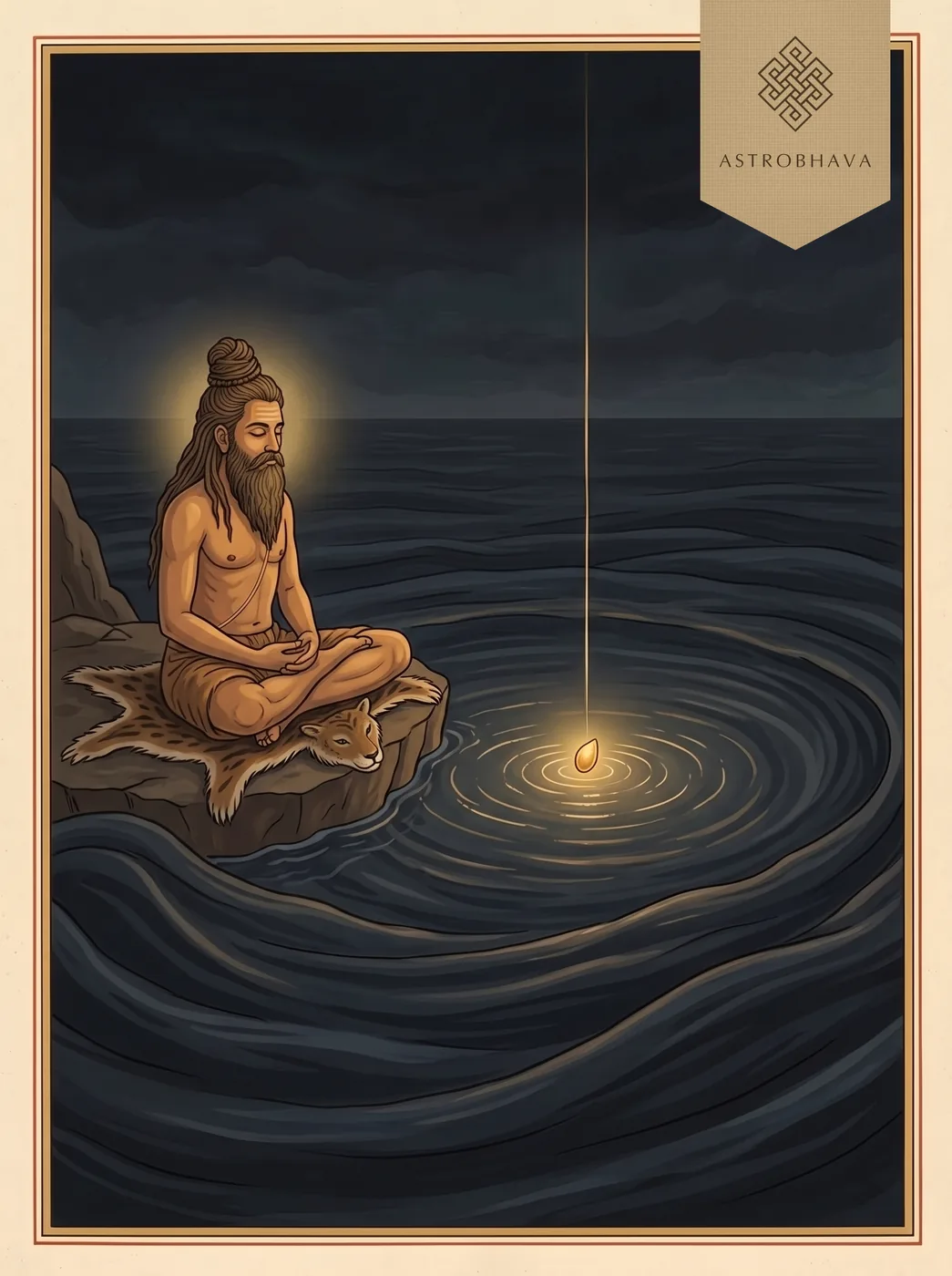
Nasadiya Suktam
नासदासीन्नो सदासीत्तदानीं नासीद्रजो नो व्योमा परो यत् । किमावरीवः कुह कस्य शर्मन्नम्भः किमासीद्गहनं गभीरम् ॥Also known as Hymn of Creation
In Devanagari, Tamil, Telugu, Kannada, Malayalam and English — with the meaning of every word, and the one syllable most people pronounce wrongly.
 A reading of your birth chartBook →
What the Nasadiya Suktam is
The Nasadiya Sukta, printed in many Rig Veda editions as the Nasadiya Suktam, is hymn 129 of the tenth mandala, and it takes its name from its first word, na asat, "not non-being". The Vedic index of seers, the Anukramani, assigns it to the rishi Prajapati Parameshthin, and the commentator Sayana names its subject Bhavavrittam, "that which came into being". It is not a prayer to a named deity: its seven verses in trishtubh metre move from negation to inquiry. Verses 1 and 2 strip away being, non-being, space, sky, death, deathlessness and the line between night and day, leaving only "That One" breathing without wind. Verses 3 to 5 describe darkness hidden in darkness, a seed stirred by tapas, desire as the first seed of mind, and a cord stretched between below and above. Verses 6 and 7 turn to the listener and ask who can know.
A Late Rig Veda Hymn That Questions
The Nasadiya Sukta belongs to the tenth and last mandala of the Rig Veda, the book scholars place latest in the collection, generally around 1200 to 1000 BCE. It has no narrative of a god shaping the world from a body or an egg. Instead its seer works by subtraction, and then by the image of poets searching inside their own hearts, who find "the bond of being in non-being". The hymn did not stay inside one school. The Taittiriya Brahmana of the Black Yajur Veda carries its own version, and Sayana wrote his commentary on that version; the two recensions differ in small readings, such as tamasah against the Rig Veda's tapasah in the last quarter of verse 3. In the closing line, the second half of verse 7 runs two syllables short of the metre, and the scholar Joel Brereton read that gap as deliberate, the verse itself faltering at the point where it admits that the overseer in the highest heaven may not know. Max Mueller translated it in 1859, A. L. Basham gave an English version in 1954, and Carl Sagan quoted it in Cosmos in 1980 as an example of humility before the origin of the universe.
The mantra, in six scripts
- नासदासीन्नो
- nāsadāsīnno — non-being was not, nor
- सदासीत्तदानीं
- sadāsīttadānīṃ — was being, at that time
- नासीद्रजो
- nāsīdrajo — there was no realm of space
- नो
- no — nor
- व्योमा
- vyomā — the sky
- परो
- paro — beyond
- यत्
- yat — which (is)
- किमावरीवः
- kimāvarīvaḥ — what stirred, covering
- कुह
- kuha — where
- कस्य
- kasya — of whom
- शर्मन्नम्भः
- śarmannambhaḥ — in the shelter; water
- किमासीद्गहनं
- kimāsīdgahanaṃ — was there, deep
- गभीरम्
- gabhīram — unfathomable
Nasadiya Suktam lyrics in full
All seven verses of Rig Veda 10.129, printed without the Vedic accent marks.
All 7 verses, in Sanskrit, Tamil, Telugu, Kannada, Malayalam and English, each with its meaning. Choose a script:
Download the Nasadiya Suktam PDFAll 7 verses with their meanings, in Sanskrit. Free to print and keep.
नासदासीन्नो सदासीत्तदानीं नासीद्रजो नो व्योमा परो यत् ।
किमावरीवः कुह कस्य शर्मन्नम्भः किमासीद्गहनं गभीरम् ॥
நாஸதாஸீந்நோ ஸதாஸீத்ததாநீம் நாஸீத்ரஜோ நோ வ்யோமா பரோ யத் ।
கிமாவரீவஃ குஹ கஸ்ய ஶர்மந்நம்பஃ கிமாஸீத்கஹநம் கபீரம் ॥
నాసదాసీన్నో సదాసీత్తదానీం నాసీద్రజో నో వ్యోమా పరో యత్ ।
కిమావరీవః కుహ కస్య శర్మన్నమ్భః కిమాసీద్గహనం గభీరమ్ ॥
ನಾಸದಾಸೀನ್ನೋ ಸದಾಸೀತ್ತದಾನೀಂ ನಾಸೀದ್ರಜೋ ನೋ ವ್ಯೋಮಾ ಪರೋ ಯತ್ ।
ಕಿಮಾವರೀವಃ ಕುಹ ಕಸ್ಯ ಶರ್ಮನ್ನಮ್ಭಃ ಕಿಮಾಸೀದ್ಗಹನಂ ಗಭೀರಮ್ ॥
നാസദാസീന്നോ സദാസീത്തദാനീം നാസീദ്രജോ നോ വ്യോമാ പരോ യത് ।
കിമാവരീവഃ കുഹ കസ്യ ശര്മന്നമ്ഭഃ കിമാസീദ്ഗഹനം ഗഭീരമ് ॥
nāsadāsīnno sadāsīttadānīṃ nāsīdrajo no vyomā paro yat |
kimāvarīvaḥ kuha kasya śarmannambhaḥ kimāsīdgahanaṃ gabhīram ||
At that time there was neither non-being nor being; there was no realm of space and no sky beyond it. What stirred, and where, and under whose shelter? Was there water, deep and unfathomable?
न मृत्युरासीदमृतं न तर्हि न रात्र्या अह्न आसीत्प्रकेतः ।
आनीदवातं स्वधया तदेकं तस्माद्धान्यन्न परः किं चनास ॥
ந ம்ருத்யுராஸீதம்ருதம் ந தர்ஹி ந ராத்ர்யா அஹ்ந ஆஸீத்ப்ரகேதஃ ।
ஆநீதவாதம் ஸ்வதயா ததேகம் தஸ்மாத்தாந்யந்ந பரஃ கிம் சநாஸ ॥
న మృత్యురాసీదమృతం న తర్హి న రాత్ర్యా అహ్న ఆసీత్ప్రకేతః ।
ఆనీదవాతం స్వధయా తదేకం తస్మాద్ధాన్యన్న పరః కిం చనాస ॥
ನ ಮೃತ್ಯುರಾಸೀದಮೃತಂ ನ ತರ್ಹಿ ನ ರಾತ್ರ್ಯಾ ಅಹ್ನ ಆಸೀತ್ಪ್ರಕೇತಃ ।
ಆನೀದವಾತಂ ಸ್ವಧಯಾ ತದೇಕಂ ತಸ್ಮಾದ್ಧಾನ್ಯನ್ನ ಪರಃ ಕಿಂ ಚನಾಸ ॥
ന മൃത്യുരാസീദമൃതം ന തര്ഹി ന രാത്ര്യാ അഹ്ന ആസീത്പ്രകേതഃ ।
ആനീദവാതം സ്വധയാ തദേകം തസ്മാദ്ധാന്യന്ന പരഃ കിം ചനാസ ॥
na mṛtyurāsīdamṛtaṃ na tarhi na rātryā ahna āsītpraketaḥ |
ānīdavātaṃ svadhayā tadekaṃ tasmāddhānyanna paraḥ kiṃ canāsa ||
There was neither death nor immortality then, and no sign to tell night from day. That One breathed without wind by its own inner power; apart from it there was nothing else at all.
तम आसीत्तमसा गूळ्हमग्रेऽप्रकेतं सलिलं सर्वमा इदम् ।
तुच्छ्येनाभ्वपिहितं यदासीत्तपसस्तन्महिनाजायतैकम् ॥
தம ஆஸீத்தமஸா கூள்ஹமக்ரேப்ரகேதம் ஸலிலம் ஸர்வமா இதம் ।
துச்ச்யேநாப்வபிஹிதம் யதாஸீத்தபஸஸ்தந்மஹிநாஜாயதைகம் ॥
తమ ఆసీత్తమసా గూళ్హమగ్రేఽప్రకేతం సలిలం సర్వమా ఇదమ్ ।
తుచ్ఛ్యేనాభ్వపిహితం యదాసీత్తపసస్తన్మహినాజాయతైకమ్ ॥
ತಮ ಆಸೀತ್ತಮಸಾ ಗೂಳ್ಹಮಗ್ರೇಽಪ್ರಕೇತಂ ಸಲಿಲಂ ಸರ್ವಮಾ ಇದಮ್ ।
ತುಚ್ಛ್ಯೇನಾಭ್ವಪಿಹಿತಂ ಯದಾಸೀತ್ತಪಸಸ್ತನ್ಮಹಿನಾಜಾಯತೈಕಮ್ ॥
തമ ആസീത്തമസാ ഗൂള്ഹമഗ്രേഽപ്രകേതം സലിലം സര്വമാ ഇദമ് ।
തുച്ഛ്യേനാഭ്വപിഹിതം യദാസീത്തപസസ്തന്മഹിനാജായതൈകമ് ॥
tama āsīttamasā gūḷhamagre'praketaṃ salilaṃ sarvamā idam |
tucchyenābhvapihitaṃ yadāsīttapasastanmahinājāyataikam ||
In the beginning darkness lay hidden in darkness; all this was an undistinguished flood. The living seed that was covered by emptiness, that One, was born through the power of tapas (inner heat).
कामस्तदग्रे समवर्तताधि मनसो रेतः प्रथमं यदासीत् ।
सतो बन्धुमसति निरविन्दन्हृदि प्रतीष्या कवयो मनीषा ॥
காமஸ்ததக்ரே ஸமவர்ததாதி மநஸோ ரேதஃ ப்ரதமம் யதாஸீத் ।
ஸதோ பந்துமஸதி நிரவிந்தந்ஹ்ருதி ப்ரதீஷ்யா கவயோ மநீஷா ॥
కామస్తదగ్రే సమవర్తతాధి మనసో రేతః ప్రథమం యదాసీత్ ।
సతో బన్ధుమసతి నిరవిన్దన్హృది ప్రతీష్యా కవయో మనీషా ॥
ಕಾಮಸ್ತದಗ್ರೇ ಸಮವರ್ತತಾಧಿ ಮನಸೋ ರೇತಃ ಪ್ರಥಮಂ ಯದಾಸೀತ್ ।
ಸತೋ ಬನ್ಧುಮಸತಿ ನಿರವಿನ್ದನ್ಹೃದಿ ಪ್ರತೀಷ್ಯಾ ಕವಯೋ ಮನೀಷಾ ॥
കാമസ്തദഗ്രേ സമവര്തതാധി മനസോ രേതഃ പ്രഥമം യദാസീത് ।
സതോ ബന്ധുമസതി നിരവിന്ദന്ഹൃദി പ്രതീഷ്യാ കവയോ മനീഷാ ॥
kāmastadagre samavartatādhi manaso retaḥ prathamaṃ yadāsīt |
sato bandhumasati niravindanhṛdi pratīṣyā kavayo manīṣā ||
In the beginning desire arose in it, desire that was the first seed of mind. Searching in their hearts with wisdom, the seers found the bond of being in non-being.
तिरश्चीनो विततो रश्मिरेषामधः स्विदासी३दुपरि स्विदासी३त् ।
रेतोधा आसन्महिमान आसन्स्वधा अवस्तात्प्रयतिः परस्तात् ॥
திரஶ்சீநோ விததோ ரஶ்மிரேஷாமதஃ ஸ்விதாஸீ௩துபரி ஸ்விதாஸீ௩த் ।
ரேதோதா ஆஸந்மஹிமாந ஆஸந்ஸ்வதா அவஸ்தாத்ப்ரயதிஃ பரஸ்தாத் ॥
తిరశ్చీనో వితతో రశ్మిరేషామధః స్విదాసీ౩దుపరి స్విదాసీ౩త్ ।
రేతోధా ఆసన్మహిమాన ఆసన్స్వధా అవస్తాత్ప్రయతిః పరస్తాత్ ॥
ತಿರಶ್ಚೀನೋ ವಿತತೋ ರಶ್ಮಿರೇಷಾಮಧಃ ಸ್ವಿದಾಸೀ೩ದುಪರಿ ಸ್ವಿದಾಸೀ೩ತ್ ।
ರೇತೋಧಾ ಆಸನ್ಮಹಿಮಾನ ಆಸನ್ಸ್ವಧಾ ಅವಸ್ತಾತ್ಪ್ರಯತಿಃ ಪರಸ್ತಾತ್ ॥
തിരശ്ചീനോ വിതതോ രശ്മിരേഷാമധഃ സ്വിദാസീ൩ദുപരി സ്വിദാസീ൩ത് ।
രേതോധാ ആസന്മഹിമാന ആസന്സ്വധാ അവസ്താത്പ്രയതിഃ പരസ്താത് ॥
tiraścīno vitato raśmireṣāmadhaḥ svidāsī3dupari svidāsī3t |
retodhā āsanmahimāna āsansvadhā avastātprayatiḥ parastāt ||
Their cord was stretched across; was there a below, was there an above? There were bearers of seed and there were great powers; self-power below, impulse above.
को अद्धा वेद क इह प्र वोचत्कुत आजाता कुत इयं विसृष्टिः ।
अर्वाग्देवा अस्य विसर्जनेनाथा को वेद यत आबभूव ॥
கோ அத்தா வேத க இஹ ப்ர வோசத்குத ஆஜாதா குத இயம் விஸ்ருஷ்டிஃ ।
அர்வாக்தேவா அஸ்ய விஸர்ஜநேநாதா கோ வேத யத ஆபபூவ ॥
కో అద్ధా వేద క ఇహ ప్ర వోచత్కుత ఆజాతా కుత ఇయం విసృష్టిః ।
అర్వాగ్దేవా అస్య విసర్జనేనాథా కో వేద యత ఆబభూవ ॥
ಕೋ ಅದ್ಧಾ ವೇದ ಕ ಇಹ ಪ್ರ ವೋಚತ್ಕುತ ಆಜಾತಾ ಕುತ ಇಯಂ ವಿಸೃಷ್ಟಿಃ ।
ಅರ್ವಾಗ್ದೇವಾ ಅಸ್ಯ ವಿಸರ್ಜನೇನಾಥಾ ಕೋ ವೇದ ಯತ ಆಬಭೂವ ॥
കോ അദ്ധാ വേദ ക ഇഹ പ്ര വോചത്കുത ആജാതാ കുത ഇയം വിസൃഷ്ടിഃ ।
അര്വാഗ്ദേവാ അസ്യ വിസര്ജനേനാഥാ കോ വേദ യത ആബഭൂവ ॥
ko addhā veda ka iha pra vocatkuta ājātā kuta iyaṃ visṛṣṭiḥ |
arvāgdevā asya visarjanenāthā ko veda yata ābabhūva ||
Who truly knows, and who here can declare it, from where it was born and from where this creation came? The gods came later than the creation of this world, so who knows from where it arose?
इयं विसृष्टिर्यत आबभूव यदि वा दधे यदि वा न ।
यो अस्याध्यक्षः परमे व्योमन्सो अङ्ग वेद यदि वा न वेद ॥
இயம் விஸ்ருஷ்டிர்யத ஆபபூவ யதி வா ததே யதி வா ந ।
யோ அஸ்யாத்யக்ஷஃ பரமே வ்யோமந்ஸோ அங்க வேத யதி வா ந வேத ॥
ఇయం విసృష్టిర్యత ఆబభూవ యది వా దధే యది వా న ।
యో అస్యాధ్యక్షః పరమే వ్యోమన్సో అఙ్గ వేద యది వా న వేద ॥
ಇಯಂ ವಿಸೃಷ್ಟಿರ್ಯತ ಆಬಭೂವ ಯದಿ ವಾ ದಧೇ ಯದಿ ವಾ ನ ।
ಯೋ ಅಸ್ಯಾಧ್ಯಕ್ಷಃ ಪರಮೇ ವ್ಯೋಮನ್ಸೋ ಅಙ್ಗ ವೇದ ಯದಿ ವಾ ನ ವೇದ ॥
ഇയം വിസൃഷ്ടിര്യത ആബഭൂവ യദി വാ ദധേ യദി വാ ന ।
യോ അസ്യാധ്യക്ഷഃ പരമേ വ്യോമന്സോ അങ്ഗ വേദ യദി വാ ന വേദ ॥
iyaṃ visṛṣṭiryata ābabhūva yadi vā dadhe yadi vā na |
yo asyādhyakṣaḥ parame vyomanso aṅga veda yadi vā na veda ||
From where this creation arose, whether it was made or whether it was not, the one who watches over it in the highest heaven, he surely knows; or perhaps even he does not know.
The syllable people get wrong
In verse 5 the word svidāsī3t is printed with a small 3: this is not a digit to read aloud but the pluta mark, meaning the final ī of āsī is drawn out to three beats as a question ("svid-aa-seeee-t"), the same in svidāsī3d just before it. Saying "three" or reading a short ī loses the hymn's only sounded question mark.
Questions
Have your chart read before you decide
Chanting is yours to do, and free. But which deity your situation calls for — and whether a mantra alone is the right response — depends on your chart. Sometimes it is; sometimes it is not.
- Over 30 years in the Guru–Sishya Parampara, from the age of five
- He reads every chart himself — 60 minutes, one to one, never delegated
- Charts are read only between sunrise and sunset, following tradition
