Nava Naga Stotram
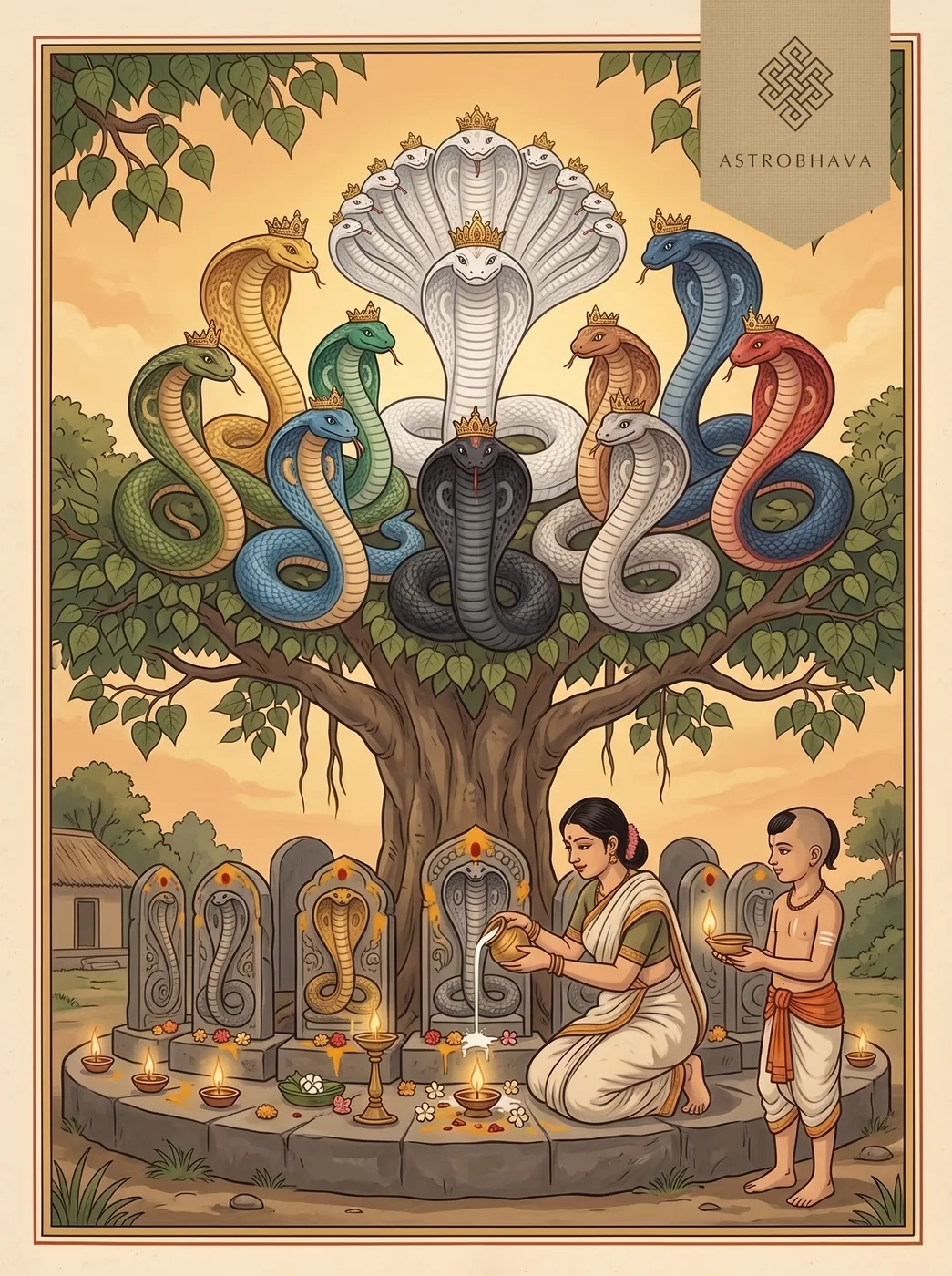
अनन्तं वासुकिं शेषं पद्मनाभं च कम्बलम् । शङ्खपालं धृतराष्ट्रं तक्षकं कालियं तथा ॥Also known as Navnag Stotra
In Devanagari, Tamil, Telugu, Kannada, Malayalam and English — with the meaning of every word, and the one syllable most people pronounce wrongly.
 The Kaala Sarpa Dosha Shanti Homa, performed for youBook →
What the Nava Naga Stotram is
The Nava Naga Stotram, also written Navnag Stotra, is the verse most often recited as the Kaal Sarp Dosh Mantra: a short traditional Sanskrit hymn that simply names nine serpent lords: Ananta, Vasuki, Shesha, Padmanabha, Kambala, Shankhapala, Dhritarashtra, Takshaka and Kaliya. No author or scripture is attached to it; it has come down as an anonymous devotional verse. Its first verse is the whole of the naming. The next lines are the phala shruti: they call these the nine names of the great-souled nagas and say that one who recites them evening and morning has no fear of poison and is victorious everywhere. Printed directly after it is a widely recited Naga Gayatri, 'Om Navakulaya Vidmahe', which addresses the serpent as lord of the nine clans and as the one with poison-bearing fangs. Kaal Sarp dosha itself is an astrological reading, made when all seven grahas fall between Rahu and Ketu in a birth chart; the hymn is recited by those whose chart is read this way.
The serpent sons of Kadru
The stotram has no story of its own composition, but every name in it carries one. The Mahabharata, in its opening book, makes the nagas the thousand sons of the sage Kashyapa and Kadru, with Shesha the eldest, followed by Vasuki and Takshaka. Kadru wagered with her sister Vinata over the colour of the tail of the divine horse Uchchaihshravas, and asked her sons to hang from it so that it would look black. Those who refused were cursed to burn in a king's sacrifice. Shesha left his kin for penance, and Brahma set him beneath the earth to hold it on his hood. The curse came due when Takshaka killed King Parikshit and his son Janamejaya began the Sarpa Satra, a fire meant to destroy every serpent. Vasuki had already given his sister Jaratkaru in marriage to a sage of the same name, because their son was foretold to save the nagas. That son, the boy Astika, halted the rite. According to tradition the day was the bright fifth of Shravana, which is why serpents are worshipped on Naga Panchami. Kaliya's tale is told separately in the Bhagavata Purana, tenth book, sixteenth chapter: Krishna danced on his hoods in the Yamuna, and the serpent was spared when his wives pleaded for him.
The mantra, in six scripts
- अनन्तं
- anantaṃ — Ananta, the endless one
- वासुकिं
- vāsukiṃ — Vasuki
- शेषं
- śeṣaṃ — Shesha
- पद्मनाभं
- padmanābhaṃ — Padmanabha
- च
- ca — and
- कम्बलम्
- kambalam — Kambala
- शङ्खपालं
- śaṅkhapālaṃ — Shankhapala
- धृतराष्ट्रं
- dhṛtarāṣṭraṃ — Dhritarashtra
- तक्षकं
- takṣakaṃ — Takshaka
- कालियं
- kāliyaṃ — Kaliya
- तथा
- tathā — likewise
Nava Naga Stotram lyrics in full
The nine names of the serpent lords and the lines of benefit that close them, followed by the Sarpa Gayatri.
All 4 verses, in Sanskrit, Tamil, Telugu, Kannada, Malayalam and English, each with its meaning. Choose a script:
Download the Nava Naga Stotram PDFAll 4 verses with their meanings, in Sanskrit. Free to print and keep.
अनन्तं वासुकिं शेषं पद्मनाभं च कम्बलम् ।
शङ्खपालं धृतराष्ट्रं तक्षकं कालियं तथा ॥
அநந்தம் வாஸுகிம் ஶேஷம் பத்மநாபம் ச கம்பலம் ।
ஶங்கபாலம் த்ருதராஷ்ட்ரம் தக்ஷகம் காலியம் ததா ॥
అనన్తం వాసుకిం శేషం పద్మనాభం చ కమ్బలమ్ ।
శఙ్ఖపాలం ధృతరాష్ట్రం తక్షకం కాలియం తథా ॥
ಅನನ್ತಂ ವಾಸುಕಿಂ ಶೇಷಂ ಪದ್ಮನಾಭಂ ಚ ಕಮ್ಬಲಮ್ ।
ಶಙ್ಖಪಾಲಂ ಧೃತರಾಷ್ಟ್ರಂ ತಕ್ಷಕಂ ಕಾಲಿಯಂ ತಥಾ ॥
അനന്തം വാസുകിം ശേഷം പദ്മനാഭം ച കമ്ബലമ് ।
ശങ്ഖപാലം ധൃതരാഷ്ട്രം തക്ഷകം കാലിയം തഥാ ॥
anantaṃ vāsukiṃ śeṣaṃ padmanābhaṃ ca kambalam |
śaṅkhapālaṃ dhṛtarāṣṭraṃ takṣakaṃ kāliyaṃ tathā ||
Ananta, Vasuki, Shesha, Padmanabha and Kambala; Shankhapala, Dhritarashtra, Takshaka and likewise Kaliya.
एतानि नवनामानि नागानां च महात्मनाम् ।
सायङ्काले पठेन्नित्यं प्रातःकाले विशेषतः ॥
ஏதாநி நவநாமாநி நாகாநாம் ச மஹாத்மநாம் ।
ஸாயங்காலே படேந்நித்யம் ப்ராதஃகாலே விஶேஷதஃ ॥
ఏతాని నవనామాని నాగానాం చ మహాత్మనామ్ ।
సాయఙ్కాలే పఠేన్నిత్యం ప్రాతఃకాలే విశేషతః ॥
ಏತಾನಿ ನವನಾಮಾನಿ ನಾಗಾನಾಂ ಚ ಮಹಾತ್ಮನಾಮ್ ।
ಸಾಯಙ್ಕಾಲೇ ಪಠೇನ್ನಿತ್ಯಂ ಪ್ರಾತಃಕಾಲೇ ವಿಶೇಷತಃ ॥
ഏതാനി നവനാമാനി നാഗാനാം ച മഹാത്മനാമ് ।
സായങ്കാലേ പഠേന്നിത്യം പ്രാതഃകാലേ വിശേഷതഃ ॥
etāni navanāmāni nāgānāṃ ca mahātmanām |
sāyaṅkāle paṭhennityaṃ prātaḥkāle viśeṣataḥ ||
These are the nine names of the great-souled serpent lords. One should recite them daily in the evening, and especially in the morning.
तस्य विषभयं नास्ति सर्वत्र विजयी भवेत् ॥
தஸ்ய விஷபயம் நாஸ்தி ஸர்வத்ர விஜயீ பவேத் ॥
తస్య విషభయం నాస్తి సర్వత్ర విజయీ భవేత్ ॥
ತಸ್ಯ ವಿಷಭಯಂ ನಾಸ್ತಿ ಸರ್ವತ್ರ ವಿಜಯೀ ಭವೇತ್ ॥
തസ്യ വിഷഭയം നാസ്തി സര്വത്ര വിജയീ ഭവേത് ॥
tasya viṣabhayaṃ nāsti sarvatra vijayī bhavet ||
The verse says that for such a person there is no fear of poison, and that he becomes victorious everywhere.
ॐ नवकुलाय विद्महे विषदन्ताय धीमहि ।
तन्नो सर्पः प्रचोदयात् ॥
ௐ நவகுலாய வித்மஹே விஷதந்தாய தீமஹி ।
தந்நோ ஸர்பஃ ப்ரசோதயாத் ॥
ఓం నవకులాయ విద్మహే విషదన్తాయ ధీమహి ।
తన్నో సర్పః ప్రచోదయాత్ ॥
ಓಂ ನವಕುಲಾಯ ವಿದ್ಮಹೇ ವಿಷದನ್ತಾಯ ಧೀಮಹಿ ।
ತನ್ನೋ ಸರ್ಪಃ ಪ್ರಚೋದಯಾತ್ ॥
ഓം നവകുലായ വിദ്മഹേ വിഷദന്തായ ധീമഹി ।
തന്നോ സര്പഃ പ്രചോദയാത് ॥
oṃ navakulāya vidmahe viṣadantāya dhīmahi |
tanno sarpaḥ pracodayāt ||
Om. We come to know the lord of the nine serpent clans; we meditate on the one with poison-bearing fangs. May the Serpent inspire and guide us.
The syllable people get wrong
In धृतराष्ट्रं (dhṛtarāṣṭraṃ) the ṛ is a short vowel, said as a quick 'ri' with no long 'oo' after the dh: dhri-ta-RAASH-tram, not 'dhroo-ta-rash-tra'. The cluster ṣṭr is one unbroken sound, with the tongue curled back for the ṣ and ṭ.
When the Nava Naga Stotram is chanted
Festival. Naga Panchami
Questions
Have your chart read before you decide
Chanting is yours to do, and free. But which deity your situation calls for — and whether a mantra alone is the right response — depends on your chart. Sometimes it is; sometimes it is not.
- Over 30 years in the Guru–Sishya Parampara, from the age of five
- He reads every chart himself — 60 minutes, one to one, never delegated
- Charts are read only between sunrise and sunset, following tradition
