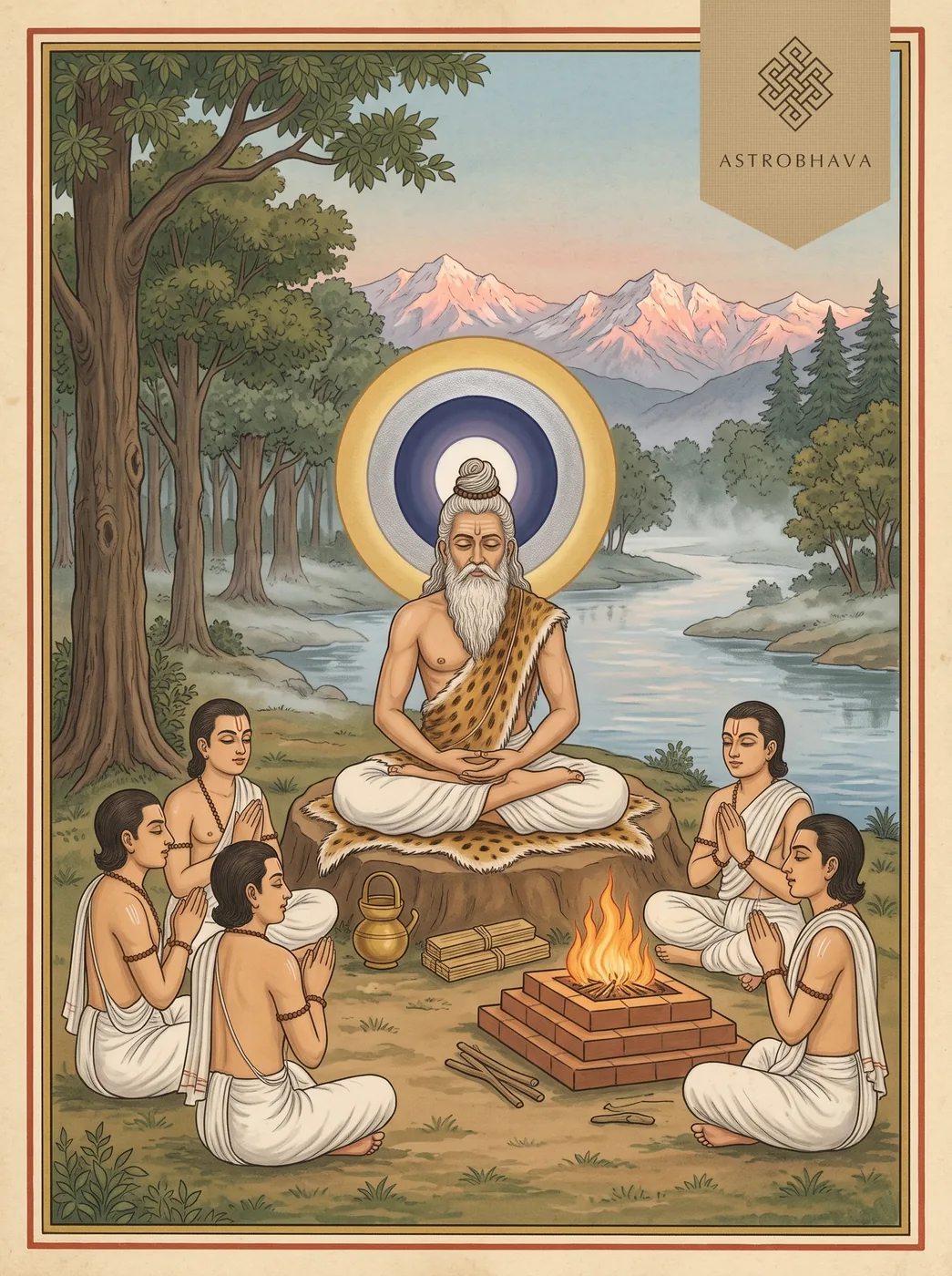
Om Mantra
ॐ भद्रं कर्णेभिः शृणुयाम देवा भद्रं पश्येमाक्षभिर्यजत्राः । स्थिरैरङ्गैस्तुष्टुवांसस्तनूभिर्व्यशेम देवहितं यदायुः ॥Also known as Mandukya Upanishad
In Devanagari, Tamil, Telugu, Kannada, Malayalam and English — with the meaning of every word, and the one syllable most people pronounce wrongly.
 A reading of your birth chartBook →
What the Om Mantra is
The Om mantra, the single syllable the Upanishads call the pranava, receives its fullest Vedic explanation in the Mandukya Upanishad, and that Upanishad is the text given here. It belongs to the Atharva Veda, names no author, and runs to twelve short prose verses, the shortest of the principal Upanishads. Its teaching moves in two passes. Verses 1 and 2 state that Om is all that was, is and will be, and that this Self is Brahman and has four quarters. Verses 3 to 7 describe the quarters: Vaishvanara in waking, Taijasa in dream, Prajna in dreamless sleep, and a fourth, called simply caturtha, which is none of the three. Verses 8 to 12 then lay the same quarters over the sounds of Om, A, U and M, with the fourth as the part of Om that has no sound. The text opens with the Atharva Veda peace invocation bhadram karnebhih, two verses taken from Rig Veda hymn 1.89.
A frog, Varuna and the Muktika's verdict
The Upanishad tells no story of its own; it is pure statement, and its setting has been supplied by later tradition. According to the Madhva tradition, the name comes from manduka, a frog: Varuna, lord of the waters, took the form of a frog and praised Hari with these verses. Other scholars connect the name with a Vedic line of teachers called the Mandukeyas, and the dating is disputed as well, with Hajime Nakamura and Patrick Olivelle placing the prose near the start of the common era and others several centuries earlier. Its standing rests on two later works. In the Muktika Upanishad, Rama tells Hanuman that the Mandukya alone is enough for one who seeks liberation; if knowledge does not come from it, the student should read the ten principal Upanishads, then thirty-two, then all one hundred and eight. In about the sixth or seventh century Gaudapada wrote 215 verses on it in four chapters, the first of which is read interleaved with the Upanishad's own prose. Adi Shankara, who called Gaudapada the teacher of his own teacher Govinda, commented on both together. The schools part ways here: Advaita treats the verses as Gaudapada's, while Madhva reads them as part of the revealed text itself.
The mantra, in six scripts
- ओमित्येतदक्षरमिदं
- omityetadakṣaramidaṃ — Om, this syllable, is this
- सर्वं
- sarvaṃ — all
- तस्योपव्याख्यानं
- tasyopavyākhyānaṃ — its explanation (follows)
- भूतं
- bhūtaṃ — what was
- भवद्
- bhavad — what is
- भविष्यदिति
- bhaviṣyaditi — what will be
- सर्वमोङ्कार
- sarvamoṅkāra — all is Om
- एव
- eva — alone
- यच्चान्यत्
- yaccānyat — and whatever else
- त्रिकालातीतं
- trikālātītaṃ — beyond the three times
- तदप्योङ्कार
- tadapyoṅkāra — that too is Om
- एव
- eva — alone
Om Mantra lyrics in full
The twelve verses of the Mandukya Upanishad, preceded by the two-verse Atharva Veda peace invocation with which it is chanted.
All 14 verses, in Sanskrit, Tamil, Telugu, Kannada, Malayalam and English, each with its meaning. Choose a script:
Download the Om Mantra PDFAll 14 verses with their meanings, in Sanskrit. Free to print and keep.
ॐ भद्रं कर्णेभिः शृणुयाम देवा भद्रं पश्येमाक्षभिर्यजत्राः ।
स्थिरैरङ्गैस्तुष्टुवांसस्तनूभिर्व्यशेम देवहितं यदायुः ॥
ௐ பத்ரம் கர்ணேபிஃ ஶ்ருணுயாம தேவா பத்ரம் பஶ்யேமாக்ஷபிர்யஜத்ராஃ ।
ஸ்திரைரங்கைஸ்துஷ்டுவாம்ஸஸ்தநூபிர்வ்யஶேம தேவஹிதம் யதாயுஃ ॥
ఓం భద్రం కర్ణేభిః శృణుయామ దేవా భద్రం పశ్యేమాక్షభిర్యజత్రాః ।
స్థిరైరఙ్గైస్తుష్టువాంసస్తనూభిర్వ్యశేమ దేవహితం యదాయుః ॥
ಓಂ ಭದ್ರಂ ಕರ್ಣೇಭಿಃ ಶೃಣುಯಾಮ ದೇವಾ ಭದ್ರಂ ಪಶ್ಯೇಮಾಕ್ಷಭಿರ್ಯಜತ್ರಾಃ ।
ಸ್ಥಿರೈರಙ್ಗೈಸ್ತುಷ್ಟುವಾಂಸಸ್ತನೂಭಿರ್ವ್ಯಶೇಮ ದೇವಹಿತಂ ಯದಾಯುಃ ॥
ഓം ഭദ്രം കര്ണേഭിഃ ശൃണുയാമ ദേവാ ഭദ്രം പശ്യേമാക്ഷഭിര്യജത്രാഃ ।
സ്ഥിരൈരങ്ഗൈസ്തുഷ്ടുവാംസസ്തനൂഭിര്വ്യശേമ ദേവഹിതം യദായുഃ ॥
oṃ bhadraṃ karṇebhiḥ śṛṇuyāma devā bhadraṃ paśyemākṣabhiryajatrāḥ |
sthirairaṅgaistuṣṭuvāṃsastanūbhirvyaśema devahitaṃ yadāyuḥ ||
Om. O gods, may we hear with our ears what is good; O you who are worthy of worship, may we see with our eyes what is good. With steady limbs and bodies, singing your praise, may we live out the life span the gods have granted.
स्वस्ति न इन्द्रो वृद्धश्रवाः स्वस्ति नः पूषा विश्ववेदाः ।
स्वस्ति नस्तार्क्ष्यो अरिष्टनेमिः स्वस्ति नो बृहस्पतिर्दधातु ॥ ॐ शान्तिः शान्तिः शान्तिः ॥
ஸ்வஸ்தி ந இந்த்ரோ வ்ருத்தஶ்ரவாஃ ஸ்வஸ்தி நஃ பூஷா விஶ்வவேதாஃ ।
ஸ்வஸ்தி நஸ்தார்க்ஷ்யோ அரிஷ்டநேமிஃ ஸ்வஸ்தி நோ ப்ருஹஸ்பதிர்ததாது ॥ ௐ ஶாந்திஃ ஶாந்திஃ ஶாந்திஃ ॥
స్వస్తి న ఇన్ద్రో వృద్ధశ్రవాః స్వస్తి నః పూషా విశ్వవేదాః ।
స్వస్తి నస్తార్క్ష్యో అరిష్టనేమిః స్వస్తి నో బృహస్పతిర్దధాతు ॥ ఓం శాన్తిః శాన్తిః శాన్తిః ॥
ಸ್ವಸ್ತಿ ನ ಇನ್ದ್ರೋ ವೃದ್ಧಶ್ರವಾಃ ಸ್ವಸ್ತಿ ನಃ ಪೂಷಾ ವಿಶ್ವವೇದಾಃ ।
ಸ್ವಸ್ತಿ ನಸ್ತಾರ್ಕ್ಷ್ಯೋ ಅರಿಷ್ಟನೇಮಿಃ ಸ್ವಸ್ತಿ ನೋ ಬೃಹಸ್ಪತಿರ್ದಧಾತು ॥ ಓಂ ಶಾನ್ತಿಃ ಶಾನ್ತಿಃ ಶಾನ್ತಿಃ ॥
സ്വസ്തി ന ഇന്ദ്രോ വൃദ്ധശ്രവാഃ സ്വസ്തി നഃ പൂഷാ വിശ്വവേദാഃ ।
സ്വസ്തി നസ്താര്ക്ഷ്യോ അരിഷ്ടനേമിഃ സ്വസ്തി നോ ബൃഹസ്പതിര്ദധാതു ॥ ഓം ശാന്തിഃ ശാന്തിഃ ശാന്തിഃ ॥
svasti na indro vṛddhaśravāḥ svasti naḥ pūṣā viśvavedāḥ |
svasti nastārkṣyo ariṣṭanemiḥ svasti no bṛhaspatirdadhātu || oṃ śāntiḥ śāntiḥ śāntiḥ ||
May Indra, of great fame, grant us well-being; may Pusha, who knows all, grant us well-being. May Tarkshya (Garuda), whose wheel is never broken, grant us well-being; may Brihaspati grant us well-being. Om, peace, peace, peace.
ओमित्येतदक्षरमिदं सर्वं तस्योपव्याख्यानं भूतं भवद् भविष्यदिति सर्वमोङ्कार एव ।
यच्चान्यत् त्रिकालातीतं तदप्योङ्कार एव ॥
ஓமித்யேததக்ஷரமிதம் ஸர்வம் தஸ்யோபவ்யாக்யாநம் பூதம் பவத் பவிஷ்யதிதி ஸர்வமோங்கார ஏவ ।
யச்சாந்யத் த்ரிகாலாதீதம் ததப்யோங்கார ஏவ ॥
ఓమిత్యేతదక్షరమిదం సర్వం తస్యోపవ్యాఖ్యానం భూతం భవద్ భవిష్యదితి సర్వమోఙ్కార ఏవ ।
యచ్చాన్యత్ త్రికాలాతీతం తదప్యోఙ్కార ఏవ ॥
ಓಮಿತ್ಯೇತದಕ್ಷರಮಿದಂ ಸರ್ವಂ ತಸ್ಯೋಪವ್ಯಾಖ್ಯಾನಂ ಭೂತಂ ಭವದ್ ಭವಿಷ್ಯದಿತಿ ಸರ್ವಮೋಙ್ಕಾರ ಏವ ।
ಯಚ್ಚಾನ್ಯತ್ ತ್ರಿಕಾಲಾತೀತಂ ತದಪ್ಯೋಙ್ಕಾರ ಏವ ॥
ഓമിത്യേതദക്ഷരമിദം സര്വം തസ്യോപവ്യാഖ്യാനം ഭൂതം ഭവദ് ഭവിഷ്യദിതി സര്വമോങ്കാര ഏവ ।
യച്ചാന്യത് ത്രികാലാതീതം തദപ്യോങ്കാര ഏവ ॥
omityetadakṣaramidaṃ sarvaṃ tasyopavyākhyānaṃ bhūtaṃ bhavad bhaviṣyaditi sarvamoṅkāra eva |
yaccānyat trikālātītaṃ tadapyoṅkāra eva ||
Om, this syllable, is all this. What follows is its explanation: all that was, all that is and all that will be is Om alone. And whatever else lies beyond the three times, that too is Om alone.
सर्वं ह्येतद् ब्रह्मायमात्मा ब्रह्म सोऽयमात्मा चतुष्पात् ॥
ஸர்வம் ஹ்யேதத் ப்ரஹ்மாயமாத்மா ப்ரஹ்ம ஸோயமாத்மா சதுஷ்பாத் ॥
సర్వం హ్యేతద్ బ్రహ్మాయమాత్మా బ్రహ్మ సోఽయమాత్మా చతుష్పాత్ ॥
ಸರ್ವಂ ಹ್ಯೇತದ್ ಬ್ರಹ್ಮಾಯಮಾತ್ಮಾ ಬ್ರಹ್ಮ ಸೋಽಯಮಾತ್ಮಾ ಚತುಷ್ಪಾತ್ ॥
സര്വം ഹ്യേതദ് ബ്രഹ്മായമാത്മാ ബ്രഹ്മ സോഽയമാത്മാ ചതുഷ്പാത് ॥
sarvaṃ hyetad brahmāyamātmā brahma so'yamātmā catuṣpāt ||
All this is indeed Brahman. This Self is Brahman. This Self has four quarters.
जागरितस्थानो बहिष्प्रज्ञः सप्ताङ्ग एकोनविंशतिमुखः स्थूलभुग्वैश्वानरः प्रथमः पादः ॥
ஜாகரிதஸ்தாநோ பஹிஷ்ப்ரஜ்ஞஃ ஸப்தாங்க ஏகோநவிம்ஶதிமுகஃ ஸ்தூலபுக்வைஶ்வாநரஃ ப்ரதமஃ பாதஃ ॥
జాగరితస్థానో బహిష్ప్రజ్ఞః సప్తాఙ్గ ఏకోనవింశతిముఖః స్థూలభుగ్వైశ్వానరః ప్రథమః పాదః ॥
ಜಾಗರಿತಸ್ಥಾನೋ ಬಹಿಷ್ಪ್ರಜ್ಞಃ ಸಪ್ತಾಙ್ಗ ಏಕೋನವಿಂಶತಿಮುಖಃ ಸ್ಥೂಲಭುಗ್ವೈಶ್ವಾನರಃ ಪ್ರಥಮಃ ಪಾದಃ ॥
ജാഗരിതസ്ഥാനോ ബഹിഷ്പ്രജ്ഞഃ സപ്താങ്ഗ ഏകോനവിംശതിമുഖഃ സ്ഥൂലഭുഗ്വൈശ്വാനരഃ പ്രഥമഃ പാദഃ ॥
jāgaritasthāno bahiṣprajñaḥ saptāṅga ekonaviṃśatimukhaḥ sthūlabhugvaiśvānaraḥ prathamaḥ pādaḥ ||
The first quarter is Vaishvanara, whose field is the waking state. Its awareness turns outward; it has seven limbs and nineteen mouths, and it enjoys gross objects.
स्वप्नस्थानोऽन्तःप्रज्ञः सप्ताङ्ग एकोनविंशतिमुखः प्रविविक्तभुक्तैजसो द्वितीयः पादः ॥
ஸ்வப்நஸ்தாநோந்தஃப்ரஜ்ஞஃ ஸப்தாங்க ஏகோநவிம்ஶதிமுகஃ ப்ரவிவிக்தபுக்தைஜஸோ த்விதீயஃ பாதஃ ॥
స్వప్నస్థానోఽన్తఃప్రజ్ఞః సప్తాఙ్గ ఏకోనవింశతిముఖః ప్రవివిక్తభుక్తైజసో ద్వితీయః పాదః ॥
ಸ್ವಪ್ನಸ್ಥಾನೋಽನ್ತಃಪ್ರಜ್ಞಃ ಸಪ್ತಾಙ್ಗ ಏಕೋನವಿಂಶತಿಮುಖಃ ಪ್ರವಿವಿಕ್ತಭುಕ್ತೈಜಸೋ ದ್ವಿತೀಯಃ ಪಾದಃ ॥
സ്വപ്നസ്ഥാനോഽന്തഃപ്രജ്ഞഃ സപ്താങ്ഗ ഏകോനവിംശതിമുഖഃ പ്രവിവിക്തഭുക്തൈജസോ ദ്വിതീയഃ പാദഃ ॥
svapnasthāno'ntaḥprajñaḥ saptāṅga ekonaviṃśatimukhaḥ praviviktabhuktaijaso dvitīyaḥ pādaḥ ||
The second quarter is Taijasa, whose field is the dream state. Its awareness turns inward; it has seven limbs and nineteen mouths, and it enjoys subtle objects.
यत्र सुप्तो न कञ्चन कामं कामयते न कञ्चन स्वप्नं पश्यति तत् सुषुप्तम् ।
सुषुप्तस्थान एकीभूतः प्रज्ञानघन एवानन्दमयो ह्यानन्दभुक् चेतोमुखः प्राज्ञस्तृतीयः पादः ॥
யத்ர ஸுப்தோ ந கஞ்சந காமம் காமயதே ந கஞ்சந ஸ்வப்நம் பஶ்யதி தத் ஸுஷுப்தம் ।
ஸுஷுப்தஸ்தாந ஏகீபூதஃ ப்ரஜ்ஞாநகந ஏவாநந்தமயோ ஹ்யாநந்தபுக் சேதோமுகஃ ப்ராஜ்ஞஸ்த்ருதீயஃ பாதஃ ॥
యత్ర సుప్తో న కఞ్చన కామం కామయతే న కఞ్చన స్వప్నం పశ్యతి తత్ సుషుప్తమ్ ।
సుషుప్తస్థాన ఏకీభూతః ప్రజ్ఞానఘన ఏవానన్దమయో హ్యానన్దభుక్ చేతోముఖః ప్రాజ్ఞస్తృతీయః పాదః ॥
ಯತ್ರ ಸುಪ್ತೋ ನ ಕಞ್ಚನ ಕಾಮಂ ಕಾಮಯತೇ ನ ಕಞ್ಚನ ಸ್ವಪ್ನಂ ಪಶ್ಯತಿ ತತ್ ಸುಷುಪ್ತಮ್ ।
ಸುಷುಪ್ತಸ್ಥಾನ ಏಕೀಭೂತಃ ಪ್ರಜ್ಞಾನಘನ ಏವಾನನ್ದಮಯೋ ಹ್ಯಾನನ್ದಭುಕ್ ಚೇತೋಮುಖಃ ಪ್ರಾಜ್ಞಸ್ತೃತೀಯಃ ಪಾದಃ ॥
യത്ര സുപ്തോ ന കഞ്ചന കാമം കാമയതേ ന കഞ്ചന സ്വപ്നം പശ്യതി തത് സുഷുപ്തമ് ।
സുഷുപ്തസ്ഥാന ഏകീഭൂതഃ പ്രജ്ഞാനഘന ഏവാനന്ദമയോ ഹ്യാനന്ദഭുക് ചേതോമുഖഃ പ്രാജ്ഞസ്തൃതീയഃ പാദഃ ॥
yatra supto na kañcana kāmaṃ kāmayate na kañcana svapnaṃ paśyati tat suṣuptam |
suṣuptasthāna ekībhūtaḥ prajñānaghana evānandamayo hyānandabhuk cetomukhaḥ prājñastṛtīyaḥ pādaḥ ||
Deep sleep is the state in which the sleeper desires nothing and sees no dream. The third quarter is Prajna, whose field is deep sleep: it has become one, a single mass of awareness, made of bliss and enjoying bliss, with consciousness as its doorway.
एष सर्वेश्वर एष सर्वज्ञ एषोऽन्तर्याम्येष योनिः सर्वस्य प्रभवाप्ययौ हि भूतानाम् ॥
ஏஷ ஸர்வேஶ்வர ஏஷ ஸர்வஜ்ஞ ஏஷோந்தர்யாம்யேஷ யோநிஃ ஸர்வஸ்ய ப்ரபவாப்யயௌ ஹி பூதாநாம் ॥
ఏష సర్వేశ్వర ఏష సర్వజ్ఞ ఏషోఽన్తర్యామ్యేష యోనిః సర్వస్య ప్రభవాప్యయౌ హి భూతానామ్ ॥
ಏಷ ಸರ್ವೇಶ್ವರ ಏಷ ಸರ್ವಜ್ಞ ಏಷೋಽನ್ತರ್ಯಾಮ್ಯೇಷ ಯೋನಿಃ ಸರ್ವಸ್ಯ ಪ್ರಭವಾಪ್ಯಯೌ ಹಿ ಭೂತಾನಾಮ್ ॥
ഏഷ സര്വേശ്വര ഏഷ സര്വജ്ഞ ഏഷോഽന്തര്യാമ്യേഷ യോനിഃ സര്വസ്യ പ്രഭവാപ്യയൌ ഹി ഭൂതാനാമ് ॥
eṣa sarveśvara eṣa sarvajña eṣo'ntaryāmyeṣa yoniḥ sarvasya prabhavāpyayau hi bhūtānām ||
This is the lord of all, this is the knower of all, this is the inner controller. This is the source of everything, for it is where beings arise and where they return.
नान्तःप्रज्ञं न बहिष्प्रज्ञं नोभयतःप्रज्ञं न प्रज्ञानघनं न प्रज्ञं नाप्रज्ञम् ।
अदृष्टमव्यवहार्यमग्राह्यमलक्षणमचिन्त्यमव्यपदेश्यमेकात्मप्रत्ययसारं प्रपञ्चोपशमं शान्तं शिवमद्वैतं चतुर्थं मन्यन्ते स आत्मा स विज्ञेयः ॥
நாந்தஃப்ரஜ்ஞம் ந பஹிஷ்ப்ரஜ்ஞம் நோபயதஃப்ரஜ்ஞம் ந ப்ரஜ்ஞாநகநம் ந ப்ரஜ்ஞம் நாப்ரஜ்ஞம் ।
அத்ருஷ்டமவ்யவஹார்யமக்ராஹ்யமலக்ஷணமசிந்த்யமவ்யபதேஶ்யமேகாத்மப்ரத்யயஸாரம் ப்ரபஞ்சோபஶமம் ஶாந்தம் ஶிவமத்வைதம் சதுர்தம் மந்யந்தே ஸ ஆத்மா ஸ விஜ்ஞேயஃ ॥
నాన్తఃప్రజ్ఞం న బహిష్ప్రజ్ఞం నోభయతఃప్రజ్ఞం న ప్రజ్ఞానఘనం న ప్రజ్ఞం నాప్రజ్ఞమ్ ।
అదృష్టమవ్యవహార్యమగ్రాహ్యమలక్షణమచిన్త్యమవ్యపదేశ్యమేకాత్మప్రత్యయసారం ప్రపఞ్చోపశమం శాన్తం శివమద్వైతం చతుర్థం మన్యన్తే స ఆత్మా స విజ్ఞేయః ॥
ನಾನ್ತಃಪ್ರಜ್ಞಂ ನ ಬಹಿಷ್ಪ್ರಜ್ಞಂ ನೋಭಯತಃಪ್ರಜ್ಞಂ ನ ಪ್ರಜ್ಞಾನಘನಂ ನ ಪ್ರಜ್ಞಂ ನಾಪ್ರಜ್ಞಮ್ ।
ಅದೃಷ್ಟಮವ್ಯವಹಾರ್ಯಮಗ್ರಾಹ್ಯಮಲಕ್ಷಣಮಚಿನ್ತ್ಯಮವ್ಯಪದೇಶ್ಯಮೇಕಾತ್ಮಪ್ರತ್ಯಯಸಾರಂ ಪ್ರಪಞ್ಚೋಪಶಮಂ ಶಾನ್ತಂ ಶಿವಮದ್ವೈತಂ ಚತುರ್ಥಂ ಮನ್ಯನ್ತೇ ಸ ಆತ್ಮಾ ಸ ವಿಜ್ಞೇಯಃ ॥
നാന്തഃപ്രജ്ഞം ന ബഹിഷ്പ്രജ്ഞം നോഭയതഃപ്രജ്ഞം ന പ്രജ്ഞാനഘനം ന പ്രജ്ഞം നാപ്രജ്ഞമ് ।
അദൃഷ്ടമവ്യവഹാര്യമഗ്രാഹ്യമലക്ഷണമചിന്ത്യമവ്യപദേശ്യമേകാത്മപ്രത്യയസാരം പ്രപഞ്ചോപശമം ശാന്തം ശിവമദ്വൈതം ചതുര്ഥം മന്യന്തേ സ ആത്മാ സ വിജ്ഞേയഃ ॥
nāntaḥprajñaṃ na bahiṣprajñaṃ nobhayataḥprajñaṃ na prajñānaghanaṃ na prajñaṃ nāprajñam |
adṛṣṭamavyavahāryamagrāhyamalakṣaṇamacintyamavyapadeśyamekātmapratyayasāraṃ prapañcopaśamaṃ śāntaṃ śivamadvaitaṃ caturthaṃ manyante sa ātmā sa vijñeyaḥ ||
Not aware inwardly, not aware outwardly, not aware both ways, not a mass of awareness, neither knowing nor unknowing. Unseen, beyond dealings, beyond grasp, without marks, unthinkable, beyond words, known only as the one Self, where the world comes to rest, peaceful, auspicious, without a second: this they call the fourth. That is the Self; that is what is to be known.
सोऽयमात्माध्यक्षरमोङ्कारोऽधिमात्रं पादा मात्रा मात्राश्च पादा अकार उकारो मकार इति ॥
ஸோயமாத்மாத்யக்ஷரமோங்காரோதிமாத்ரம் பாதா மாத்ரா மாத்ராஶ்ச பாதா அகார உகாரோ மகார இதி ॥
సోఽయమాత్మాధ్యక్షరమోఙ్కారోఽధిమాత్రం పాదా మాత్రా మాత్రాశ్చ పాదా అకార ఉకారో మకార ఇతి ॥
ಸೋಽಯಮಾತ್ಮಾಧ್ಯಕ್ಷರಮೋಙ್ಕಾರೋಽಧಿಮಾತ್ರಂ ಪಾದಾ ಮಾತ್ರಾ ಮಾತ್ರಾಶ್ಚ ಪಾದಾ ಅಕಾರ ಉಕಾರೋ ಮಕಾರ ಇತಿ ॥
സോഽയമാത്മാധ്യക്ഷരമോങ്കാരോഽധിമാത്രം പാദാ മാത്രാ മാത്രാശ്ച പാദാ അകാര ഉകാരോ മകാര ഇതി ॥
so'yamātmādhyakṣaramoṅkāro'dhimātraṃ pādā mātrā mātrāśca pādā akāra ukāro makāra iti ||
This same Self, seen as a syllable, is Om, taken by its sounds. The quarters are the sounds and the sounds are the quarters: A, U and M.
जागरितस्थानो वैश्वानरोऽकारः प्रथमा मात्राऽऽप्तेरादिमत्त्वाद्वाऽऽप्नोति ह वै सर्वान् कामानादिश्च भवति य एवं वेद ॥
ஜாகரிதஸ்தாநோ வைஶ்வாநரோகாரஃ ப்ரதமா மாத்ராப்தேராதிமத்த்வாத்வாப்நோதி ஹ வை ஸர்வாந் காமாநாதிஶ்ச பவதி ய ஏவம் வேத ॥
జాగరితస్థానో వైశ్వానరోఽకారః ప్రథమా మాత్రాఽఽప్తేరాదిమత్త్వాద్వాఽఽప్నోతి హ వై సర్వాన్ కామానాదిశ్చ భవతి య ఏవం వేద ॥
ಜಾಗರಿತಸ್ಥಾನೋ ವೈಶ್ವಾನರೋಽಕಾರಃ ಪ್ರಥಮಾ ಮಾತ್ರಾಽಽಪ್ತೇರಾದಿಮತ್ತ್ವಾದ್ವಾಽಽಪ್ನೋತಿ ಹ ವೈ ಸರ್ವಾನ್ ಕಾಮಾನಾದಿಶ್ಚ ಭವತಿ ಯ ಏವಂ ವೇದ ॥
ജാഗരിതസ്ഥാനോ വൈശ്വാനരോഽകാരഃ പ്രഥമാ മാത്രാഽഽപ്തേരാദിമത്ത്വാദ്വാഽഽപ്നോതി ഹ വൈ സര്വാന് കാമാനാദിശ്ച ഭവതി യ ഏവം വേദ ॥
jāgaritasthāno vaiśvānaro'kāraḥ prathamā mātrā''pterādimattvādvā''pnoti ha vai sarvān kāmānādiśca bhavati ya evaṃ veda ||
Vaishvanara, whose field is waking, is the sound A, the first sound, because it pervades and because it comes first. The verse says that one who knows this attains all desires and becomes first.
स्वप्नस्थानस्तैजस उकारो द्वितीया मात्रोत्कर्षादुभयत्वाद्वोत्कर्षति ह वै ज्ञानसन्ततिं समानश्च भवति नास्याब्रह्मवित्कुले भवति य एवं वेद ॥
ஸ்வப்நஸ்தாநஸ்தைஜஸ உகாரோ த்விதீயா மாத்ரோத்கர்ஷாதுபயத்வாத்வோத்கர்ஷதி ஹ வை ஜ்ஞாநஸந்ததிம் ஸமாநஶ்ச பவதி நாஸ்யாப்ரஹ்மவித்குலே பவதி ய ஏவம் வேத ॥
స్వప్నస్థానస్తైజస ఉకారో ద్వితీయా మాత్రోత్కర్షాదుభయత్వాద్వోత్కర్షతి హ వై జ్ఞానసన్తతిం సమానశ్చ భవతి నాస్యాబ్రహ్మవిత్కులే భవతి య ఏవం వేద ॥
ಸ್ವಪ್ನಸ್ಥಾನಸ್ತೈಜಸ ಉಕಾರೋ ದ್ವಿತೀಯಾ ಮಾತ್ರೋತ್ಕರ್ಷಾದುಭಯತ್ವಾದ್ವೋತ್ಕರ್ಷತಿ ಹ ವೈ ಜ್ಞಾನಸನ್ತತಿಂ ಸಮಾನಶ್ಚ ಭವತಿ ನಾಸ್ಯಾಬ್ರಹ್ಮವಿತ್ಕುಲೇ ಭವತಿ ಯ ಏವಂ ವೇದ ॥
സ്വപ്നസ്ഥാനസ്തൈജസ ഉകാരോ ദ്വിതീയാ മാത്രോത്കര്ഷാദുഭയത്വാദ്വോത്കര്ഷതി ഹ വൈ ജ്ഞാനസന്തതിം സമാനശ്ച ഭവതി നാസ്യാബ്രഹ്മവിത്കുലേ ഭവതി യ ഏവം വേദ ॥
svapnasthānastaijasa ukāro dvitīyā mātrotkarṣādubhayatvādvotkarṣati ha vai jñānasantatiṃ samānaśca bhavati nāsyābrahmavitkule bhavati ya evaṃ veda ||
Taijasa, whose field is dream, is the sound U, the second sound, because it is higher and because it stands between the two. The verse says that one who knows this raises the line of knowledge, is regarded equally by all, and that no one ignorant of Brahman is born in that family.
सुषुप्तस्थानः प्राज्ञो मकारस्तृतीया मात्रा मितेरपीतेर्वा मिनोति ह वा इदं सर्वमपीतिश्च भवति य एवं वेद ॥
ஸுஷுப்தஸ்தாநஃ ப்ராஜ்ஞோ மகாரஸ்த்ருதீயா மாத்ரா மிதேரபீதேர்வா மிநோதி ஹ வா இதம் ஸர்வமபீதிஶ்ச பவதி ய ஏவம் வேத ॥
సుషుప్తస్థానః ప్రాజ్ఞో మకారస్తృతీయా మాత్రా మితేరపీతేర్వా మినోతి హ వా ఇదం సర్వమపీతిశ్చ భవతి య ఏవం వేద ॥
ಸುಷುಪ್ತಸ್ಥಾನಃ ಪ್ರಾಜ್ಞೋ ಮಕಾರಸ್ತೃತೀಯಾ ಮಾತ್ರಾ ಮಿತೇರಪೀತೇರ್ವಾ ಮಿನೋತಿ ಹ ವಾ ಇದಂ ಸರ್ವಮಪೀತಿಶ್ಚ ಭವತಿ ಯ ಏವಂ ವೇದ ॥
സുഷുപ്തസ്ഥാനഃ പ്രാജ്ഞോ മകാരസ്തൃതീയാ മാത്രാ മിതേരപീതേര്വാ മിനോതി ഹ വാ ഇദം സര്വമപീതിശ്ച ഭവതി യ ഏവം വേദ ॥
suṣuptasthānaḥ prājño makārastṛtīyā mātrā miterapītervā minoti ha vā idaṃ sarvamapītiśca bhavati ya evaṃ veda ||
Prajna, whose field is deep sleep, is the sound M, the third sound, because it measures and because everything merges into it. The verse says that one who knows this measures all this and becomes the place where all merges.
अमात्रश्चतुर्थोऽव्यवहार्यः प्रपञ्चोपशमः शिवोऽद्वैत एवमोङ्कार आत्मैव संविशत्यात्मनाऽऽत्मानं य एवं वेद ॥
அமாத்ரஶ்சதுர்தோவ்யவஹார்யஃ ப்ரபஞ்சோபஶமஃ ஶிவோத்வைத ஏவமோங்கார ஆத்மைவ ஸம்விஶத்யாத்மநாத்மாநம் ய ஏவம் வேத ॥
అమాత్రశ్చతుర్థోఽవ్యవహార్యః ప్రపఞ్చోపశమః శివోఽద్వైత ఏవమోఙ్కార ఆత్మైవ సంవిశత్యాత్మనాఽఽత్మానం య ఏవం వేద ॥
ಅಮಾತ್ರಶ್ಚತುರ್ಥೋಽವ್ಯವಹಾರ್ಯಃ ಪ್ರಪಞ್ಚೋಪಶಮಃ ಶಿವೋಽದ್ವೈತ ಏವಮೋಙ್ಕಾರ ಆತ್ಮೈವ ಸಂವಿಶತ್ಯಾತ್ಮನಾಽಽತ್ಮಾನಂ ಯ ಏವಂ ವೇದ ॥
അമാത്രശ്ചതുര്ഥോഽവ്യവഹാര്യഃ പ്രപഞ്ചോപശമഃ ശിവോഽദ്വൈത ഏവമോങ്കാര ആത്മൈവ സംവിശത്യാത്മനാഽഽത്മാനം യ ഏവം വേദ ॥
amātraścaturtho'vyavahāryaḥ prapañcopaśamaḥ śivo'dvaita evamoṅkāra ātmaiva saṃviśatyātmanā''tmānaṃ ya evaṃ veda ||
The fourth has no sound; it is beyond all dealings, the stilling of the world, auspicious and without a second. So Om is the Self itself. The verse says that one who knows this enters the Self by the Self.
The syllable people get wrong
In sarvamoṅkāra (Verse 1) the m of Om changes to ṅ, the 'ng' of 'sing', because a k follows: say om-KAA-ra as ong-KAA-ra, with a long aa. Saying 'om-kar', with a closed m and a clipped final vowel, loses both the sandhi the text is written with and the long ā of kāra.
Questions
Have your chart read before you decide
Chanting is yours to do, and free. But which deity your situation calls for — and whether a mantra alone is the right response — depends on your chart. Sometimes it is; sometimes it is not.
- Over 30 years in the Guru–Sishya Parampara, from the age of five
- He reads every chart himself — 60 minutes, one to one, never delegated
- Charts are read only between sunrise and sunset, following tradition
