Parshuram Mantra
ॐ जामदग्न्याय विद्महे महावीराय धीमहि । तन्नः परशुराम प्रचोदयात् ॥Also known as Parashurama Mantra
In Devanagari, Tamil, Telugu, Kannada, Malayalam and English — with the meaning of every word, and the one syllable most people pronounce wrongly.
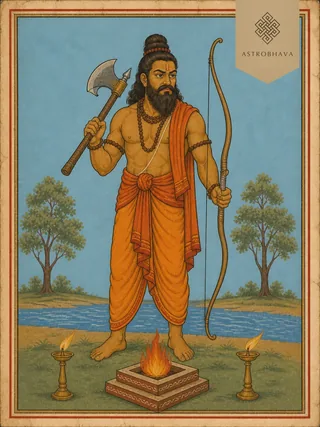 The Parasurama Homam, performed for youBook →
What the Parshuram Mantra is
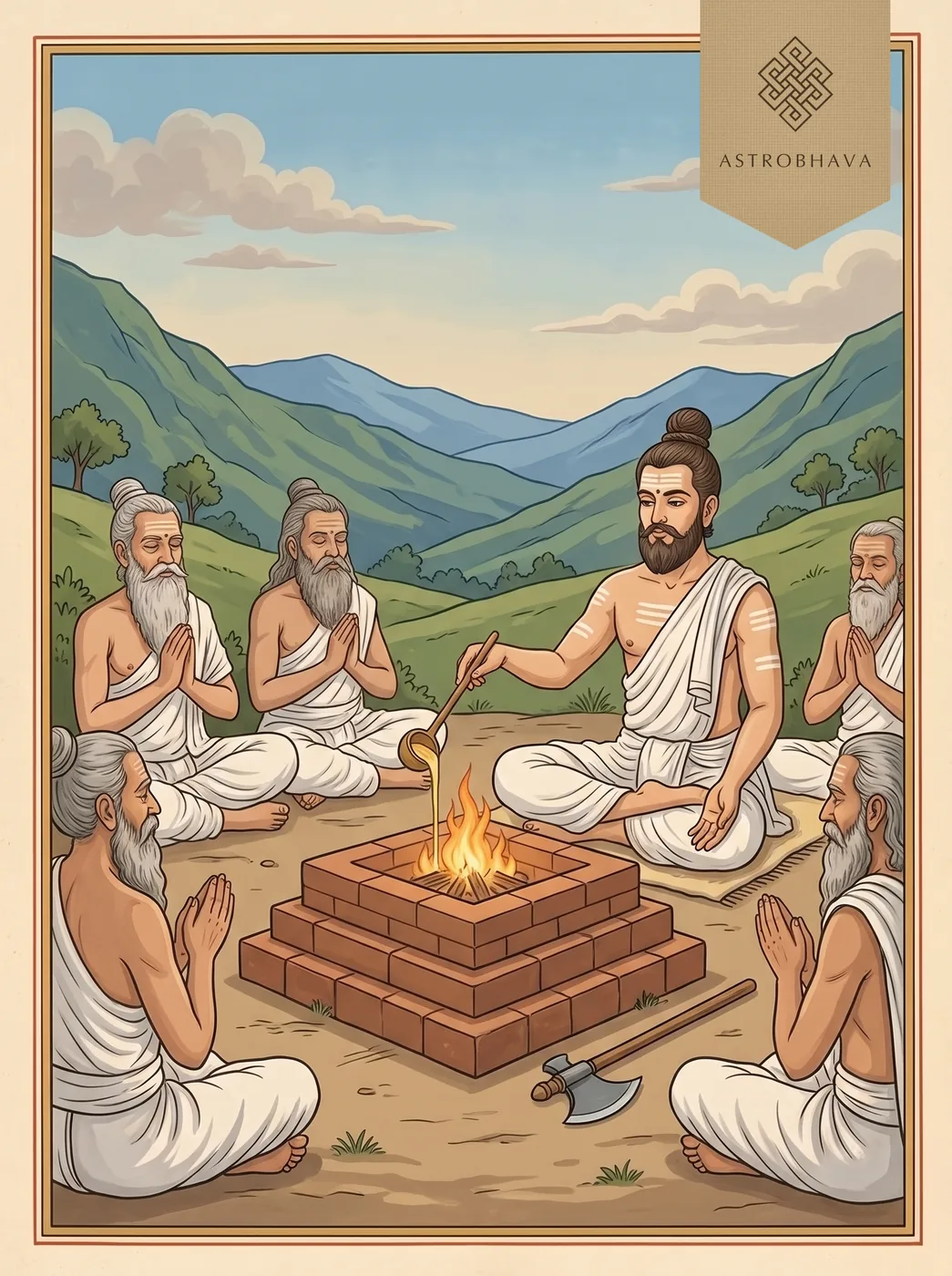
The Parshuram mantra, properly the Parashurama Mantra, is a small group of Sanskrit formulae addressed to Parashurama, the sixth avatar of Vishnu and the son of the sage Jamadagni. Five items are printed here. Mantra 1 is the Jamadagnya Gayatri, which names him by his father and calls him the great hero; it comes from the Mantra Maharnava, a tantric digest of mantras. Mantra 2 is a second Gayatri from the Rudrayamala Tantra, which assigns it to the rishi Bharadvaja and the Gayatri metre; its two epithets join his double nature, a Brahmin by birth who fought as a warrior. Mantra 3 is the plain name mantra of traditional usage. Mantra 4 is the mula, or root, mantra, built on the seed syllable raam and closing with a salute to the one who holds the axe, again in the Mantra Maharnava form. The Dhyanam is the Rudrayamala's sattvika meditation, which pictures him not in battle but calmly tending the sacred fire among sages.
The sage's son who carried Shiva's axe
The Vishnu Purana traces his warrior temper to an exchange of two consecrated rice offerings prepared by his grandfather, the sage Richika, one meant to give a son of priestly calm and the other a son of martial strength; the Vayu Purana says instead that the offering was made to Rudra and Vishnu together. According to tradition the boy, named Rama, received his axe from Shiva, and so became Parashurama, Rama of the axe. The Padma Purana relates that King Kartavirya Arjuna, the thousand-armed ruler, carried off Jamadagni's sacred cow while the son was away, and later struck the sage dead. Parashurama killed the king and then, the tradition counts, swept the land of tyrant kings twenty-one times, filling the five pools of Samantapanchaka near Kurukshetra. He gave the conquered earth to the Brahmin sages and withdrew to the Mahendra mountains. The Ramayana has him confront the young Rama after the wedding with Sita and yield when Rama strings his bow; the Mahabharata makes him the teacher of Bhishma, Drona and Karna. Malayalam tradition holds that the coast from Gokarna to Kanyakumari rose from the sea where he hurled his axe. The second Gayatri folds this whole history into one word, kshatriyantaya, the one who brought the warrior kings to an end.
The mantra, in six scripts
- ॐ
- oṃ — Om
- जामदग्न्याय
- jāmadagnyāya — the son of Jamadagni
- विद्महे
- vidmahe — we come to know
- महावीराय
- mahāvīrāya — the great hero
- धीमहि
- dhīmahi — we meditate on
- तन्नः
- tannaḥ — that one, us
- परशुराम
- paraśurāma — Parashurama, Rama of the axe
- प्रचोदयात्
- pracodayāt — may he inspire
Parshuram Mantra lyrics in full
Two Gayatris, the name mantra, the root mantra and one dhyana shloka. The root mantra is given with three Oms, as the Mantra Maharnava has it; many printings drop the last Om.
All 5 verses, in Sanskrit, Tamil, Telugu, Kannada, Malayalam and English, each with its meaning. Choose a script:
Download the Parshuram Mantra PDFAll 5 verses with their meanings, in Sanskrit. Free to print and keep.
ॐ जामदग्न्याय विद्महे महावीराय धीमहि ।
तन्नः परशुराम प्रचोदयात् ॥
ௐ ஜாமதக்ந்யாய வித்மஹே மஹாவீராய தீமஹி ।
தந்நஃ பரஶுராம ப்ரசோதயாத் ॥
ఓం జామదగ్న్యాయ విద్మహే మహావీరాయ ధీమహి ।
తన్నః పరశురామ ప్రచోదయాత్ ॥
ಓಂ ಜಾಮದಗ್ನ್ಯಾಯ ವಿದ್ಮಹೇ ಮಹಾವೀರಾಯ ಧೀಮಹಿ ।
ತನ್ನಃ ಪರಶುರಾಮ ಪ್ರಚೋದಯಾತ್ ॥
ഓം ജാമദഗ്ന്യായ വിദ്മഹേ മഹാവീരായ ധീമഹി ।
തന്നഃ പരശുരാമ പ്രചോദയാത് ॥
oṃ jāmadagnyāya vidmahe mahāvīrāya dhīmahi |
tannaḥ paraśurāma pracodayāt ||
Om. We come to know the son of Jamadagni; we meditate on the great hero. May that Parashurama stir and guide our understanding.
ॐ ब्रह्मक्षत्राय विद्महे क्षत्रियान्ताय धीमहि ।
तन्नो रामः प्रचोदयात् ॥
ௐ ப்ரஹ்மக்ஷத்ராய வித்மஹே க்ஷத்ரியாந்தாய தீமஹி ।
தந்நோ ராமஃ ப்ரசோதயாத் ॥
ఓం బ్రహ్మక్షత్రాయ విద్మహే క్షత్రియాన్తాయ ధీమహి ।
తన్నో రామః ప్రచోదయాత్ ॥
ಓಂ ಬ್ರಹ್ಮಕ್ಷತ್ರಾಯ ವಿದ್ಮಹೇ ಕ್ಷತ್ರಿಯಾನ್ತಾಯ ಧೀಮಹಿ ।
ತನ್ನೋ ರಾಮಃ ಪ್ರಚೋದಯಾತ್ ॥
ഓം ബ്രഹ്മക്ഷത്രായ വിദ്മഹേ ക്ഷത്രിയാന്തായ ധീമഹി ।
തന്നോ രാമഃ പ്രചോദയാത് ॥
oṃ brahmakṣatrāya vidmahe kṣatriyāntāya dhīmahi |
tanno rāmaḥ pracodayāt ||
Om. We come to know him who unites the priest and the warrior; we meditate on the one who ended the unjust warrior kings. May that Rama stir and guide our understanding.
ॐ परशुरामाय नमः ॥
ௐ பரஶுராமாய நமஃ ॥
ఓం పరశురామాయ నమః ॥
ಓಂ ಪರಶುರಾಮಾಯ ನಮಃ ॥
ഓം പരശുരാമായ നമഃ ॥
oṃ paraśurāmāya namaḥ ||
Om, salutations to Parashurama, Rama who bears the axe.
ॐ राँ राँ ॐ राँ राँ ॐ परशुहस्ताय नमः ॥
ௐ ராம் ராம் ௐ ராம் ராம் ௐ பரஶுஹஸ்தாய நமஃ ॥
ఓం రాఁ రాఁ ఓం రాఁ రాఁ ఓం పరశుహస్తాయ నమః ॥
ಓಂ ರಾಁ ರಾಁ ಓಂ ರಾಁ ರಾಁ ಓಂ ಪರಶುಹಸ್ತಾಯ ನಮಃ ॥
ഓം രാഁ രാഁ ഓം രാഁ രാഁ ഓം പരശുഹസ്തായ നമഃ ॥
oṃ rāṃ rāṃ oṃ rāṃ rāṃ oṃ paraśuhastāya namaḥ ||
Om, raam raam, Om, raam raam, Om: salutations to the one who holds the axe in his hand. Raam is the seed syllable of this root mantra.
सात्त्विकं श्वेतवर्णं च भस्मोद्धूलितविग्रहम् ।
अग्निहोत्रस्थलासीनं नानामुनिगणावृतम् ।
कम्बलासनमारूढं स्वर्णतारकुशाङ्गुलिम् ।
श्वेतवस्त्रद्वयोपेतं जुह्वन्तं राममाश्रये ॥
ஸாத்த்விகம் ஶ்வேதவர்ணம் ச பஸ்மோத்தூலிதவிக்ரஹம் ।
அக்நிஹோத்ரஸ்தலாஸீநம் நாநாமுநிகணாவ்ருதம் ।
கம்பலாஸநமாரூடம் ஸ்வர்ணதாரகுஶாங்குலிம் ।
ஶ்வேதவஸ்த்ரத்வயோபேதம் ஜுஹ்வந்தம் ராமமாஶ்ரயே ॥
సాత్త్వికం శ్వేతవర్ణం చ భస్మోద్ధూలితవిగ్రహమ్ ।
అగ్నిహోత్రస్థలాసీనం నానామునిగణావృతమ్ ।
కమ్బలాసనమారూఢం స్వర్ణతారకుశాఙ్గులిమ్ ।
శ్వేతవస్త్రద్వయోపేతం జుహ్వన్తం రామమాశ్రయే ॥
ಸಾತ್ತ್ವಿಕಂ ಶ್ವೇತವರ್ಣಂ ಚ ಭಸ್ಮೋದ್ಧೂಲಿತವಿಗ್ರಹಮ್ ।
ಅಗ್ನಿಹೋತ್ರಸ್ಥಲಾಸೀನಂ ನಾನಾಮುನಿಗಣಾವೃತಮ್ ।
ಕಮ್ಬಲಾಸನಮಾರೂಢಂ ಸ್ವರ್ಣತಾರಕುಶಾಙ್ಗುಲಿಮ್ ।
ಶ್ವೇತವಸ್ತ್ರದ್ವಯೋಪೇತಂ ಜುಹ್ವನ್ತಂ ರಾಮಮಾಶ್ರಯೇ ॥
സാത്ത്വികം ശ്വേതവര്ണം ച ഭസ്മോദ്ധൂലിതവിഗ്രഹമ് ।
അഗ്നിഹോത്രസ്ഥലാസീനം നാനാമുനിഗണാവൃതമ് ।
കമ്ബലാസനമാരൂഢം സ്വര്ണതാരകുശാങ്ഗുലിമ് ।
ശ്വേതവസ്ത്രദ്വയോപേതം ജുഹ്വന്തം രാമമാശ്രയേ ॥
sāttvikaṃ śvetavarṇaṃ ca bhasmoddhūlitavigraham |
agnihotrasthalāsīnaṃ nānāmunigaṇāvṛtam |
kambalāsanamārūḍhaṃ svarṇatārakuśāṅgulim |
śvetavastradvayopetaṃ juhvantaṃ rāmamāśraye ||
I take refuge in Rama in his serene form: fair of colour, his body smeared with sacred ash, seated at the place of the fire rite and surrounded by many sages. Seated on a woollen mat, with a ring of gold wire and kusha grass on his finger and clad in two white garments, he is offering oblations into the fire.
The syllable people get wrong
In Mantra 1 the word jāmadagnyāya is often flattened to "jamadagniya"; the gn and y form one cluster, so say it jaa-ma-DAG-nyaa-ya, with the first and last-but-one vowels long.
When the Parshuram Mantra is chanted
Weekday. Thursday
Festival. Parashurama Jayanti, on Akshaya Tritiya
Questions
Have your chart read before you decide
Chanting is yours to do, and free. But which deity your situation calls for — and whether a mantra alone is the right response — depends on your chart. Sometimes it is; sometimes it is not.
- Over 30 years in the Guru–Sishya Parampara, from the age of five
- He reads every chart himself — 60 minutes, one to one, never delegated
- Charts are read only between sunrise and sunset, following tradition
