Parvati Mantra
हे गौरि शंकरार्धाङ्गि यथा त्वं शंकरप्रिया । तथा मां कुरु कल्याणि कान्तकान्तां सुदुर्लभाम् ॥Also known as He Gauri Shankarardhangi
In Devanagari, Tamil, Telugu, Kannada, Malayalam and English — with the meaning of every word, and the one syllable most people pronounce wrongly.
 The Swayamvara Kala Parvathi Homam, performed for youBook →
What the Parvati Mantra is
The Parvati mantra for marriage most often quoted, 'He Gauri Shankarardhangi', is a single couplet of the Brahmavaivarta Purana, printed here beside its companion, the Katyayani prayer of the Bhagavata Purana. The first stands in the fourth book, the Shri Krishna-janma Khanda, chapter 27, verse 130, where Narayana teaches Narada the rules of the Gauri vow. A maiden says it with joined hands after invoking the Goddess and before the worship begins. It addresses Gauri as the half of Shankara's body and asks that, as she is dear to Shankara, the one praying be made dear to a husband. The second is Bhagavata Purana 10.22.4, the two lines the unmarried girls of Vraja repeated through their month-long vow, calling Katyayani Mahamaya, great yogini and sovereign, and asking for Nanda's son as husband. The half-line that follows in the Purana only reports that they chanted it, so it is not printed. The Katyayani verse also appears, with the Goddess's own story, on the Katyayani mantra page at /mantra/katyayani/.
One winter vow told by two Puranas
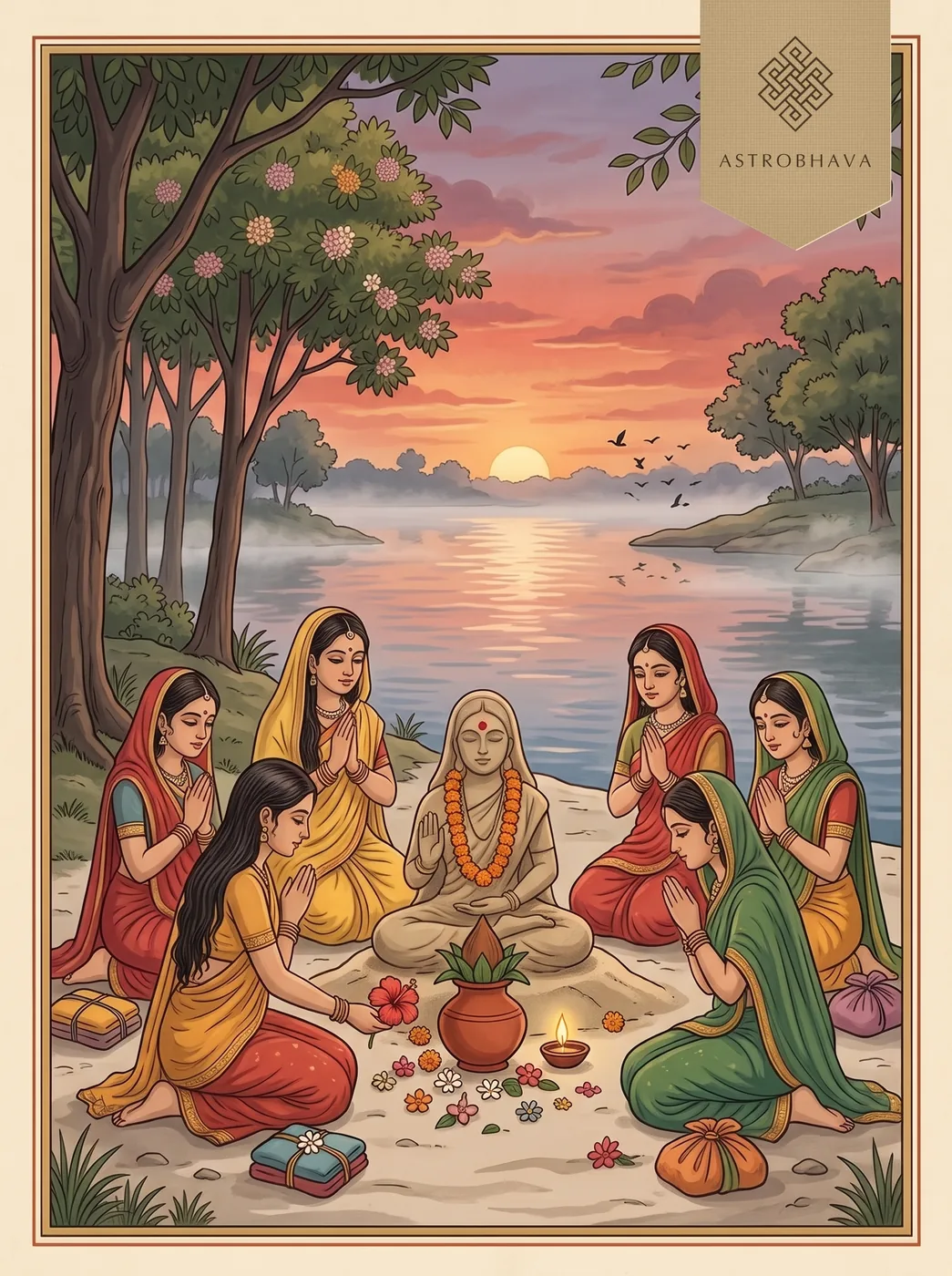
Both mantras belong to one episode: the month in which the cowherd girls of Vraja kept a vow beside the Yamuna to win Krishna, the episode that ends with his taking their clothes from the bank. The Bhagavata tells it in a few verses. In the first month of the cold season the girls lived on plain havishya food, bathed in the Kalindi as the sky reddened, shaped the Goddess from river sand and worshipped her as Katyayani, and in the next verse as Bhadrakali. The Brahmavaivarta Purana gives the same scene at greater length, in Narayana's words to Narada. There the girls worship a sand image of Parvati on the riverbank, and their own prayer asks the Mother of the worlds for Nanda's son as husband. When Narada asks how such a vow is kept, Narayana names it the Gauri-vrata of the month of Marga. A maiden fasts the day before, goes to a river at dawn on the Marga sankranti, bathes, and invokes six deities in a water pot: Ganesha, Surya, Agni, Narayana, Shiva and Durga. Below the pot she shapes a ten-armed Durga from sand, with vermilion on the forehead. Then, hands joined, she recites 'He Gauri Shankarardhangi', and a long dhyana follows that the Purana assigns to the Samaveda. The two texts thus give one Goddess two names, Gauri and Katyayani, for the same vow.
The mantra, in six scripts
- हे
- he — O
- गौरि
- gauri — Gauri, fair one
- शंकरार्धाङ्गि
- śaṃkarārdhāṅgi — half of Shankara's body
- यथा
- yathā — just as
- त्वं
- tvaṃ — you
- शंकरप्रिया
- śaṃkarapriyā — are dear to Shankara
- तथा
- tathā — so
- मां
- māṃ — me
- कुरु
- kuru — make
- कल्याणि
- kalyāṇi — O auspicious one
- कान्तकान्तां
- kāntakāntāṃ — beloved of my husband
- सुदुर्लभाम्
- sudurlabhām — rarely attained
Parvati Mantra lyrics in full
Two marriage prayers: the Gauri couplet of the Brahmavaivarta Purana and the gopis' Katyayani verse of the Bhagavata Purana.
All 2 verses, in Sanskrit, Tamil, Telugu, Kannada, Malayalam and English, each with its meaning. Choose a script:
Download the Parvati Mantra PDFAll 2 verses with their meanings, in Sanskrit. Free to print and keep.
हे गौरि शंकरार्धाङ्गि यथा त्वं शंकरप्रिया ।
तथा मां कुरु कल्याणि कान्तकान्तां सुदुर्लभाम् ॥
ஹே கௌரி ஶம்கரார்தாங்கி யதா த்வம் ஶம்கரப்ரியா ।
ததா மாம் குரு கல்யாணி காந்தகாந்தாம் ஸுதுர்லபாம் ॥
హే గౌరి శంకరార్ధాఙ్గి యథా త్వం శంకరప్రియా ।
తథా మాం కురు కల్యాణి కాన్తకాన్తాం సుదుర్లభామ్ ॥
ಹೇ ಗೌರಿ ಶಂಕರಾರ್ಧಾಙ್ಗಿ ಯಥಾ ತ್ವಂ ಶಂಕರಪ್ರಿಯಾ ।
ತಥಾ ಮಾಂ ಕುರು ಕಲ್ಯಾಣಿ ಕಾನ್ತಕಾನ್ತಾಂ ಸುದುರ್ಲಭಾಮ್ ॥
ഹേ ഗൌരി ശംകരാര്ധാങ്ഗി യഥാ ത്വം ശംകരപ്രിയാ ।
തഥാ മാം കുരു കല്യാണി കാന്തകാന്താം സുദുര്ലഭാമ് ॥
he gauri śaṃkarārdhāṅgi yathā tvaṃ śaṃkarapriyā |
tathā māṃ kuru kalyāṇi kāntakāntāṃ sudurlabhām ||
O Gauri, you who are half of Shankara's body, just as you are dear to Shankara, so, O auspicious one, make me the beloved of my husband, a love rarely won.
कात्यायनि महामाये महायोगिन्यधीश्वरि ।
नन्दगोपसुतं देवि पतिं मे कुरु ते नमः ॥
காத்யாயநி மஹாமாயே மஹாயோகிந்யதீஶ்வரி ।
நந்தகோபஸுதம் தேவி பதிம் மே குரு தே நமஃ ॥
కాత్యాయని మహామాయే మహాయోగిన్యధీశ్వరి ।
నన్దగోపసుతం దేవి పతిం మే కురు తే నమః ॥
ಕಾತ್ಯಾಯನಿ ಮಹಾಮಾಯೇ ಮಹಾಯೋಗಿನ್ಯಧೀಶ್ವರಿ ।
ನನ್ದಗೋಪಸುತಂ ದೇವಿ ಪತಿಂ ಮೇ ಕುರು ತೇ ನಮಃ ॥
കാത്യായനി മഹാമായേ മഹായോഗിന്യധീശ്വരി ।
നന്ദഗോപസുതം ദേവി പതിം മേ കുരു തേ നമഃ ॥
kātyāyani mahāmāye mahāyoginyadhīśvari |
nandagopasutaṃ devi patiṃ me kuru te namaḥ ||
O Katyayani, great power of illusion, great yogini and sovereign ruler, O Goddess, make the son of the cowherd Nanda my husband. Salutations to you.
The syllable people get wrong
In śaṃkarārdhāṅgi the last vowel is a short i, because the word is a vocative, 'O you who are half of Shankara'; popular printings and singers often stretch it to 'ardhangee'. The same short i closes gauri and kalyāṇi in this verse.
When the Parvati Mantra is chanted
Weekday. Friday
Festival. Margashirsha month (the Gauri and Katyayani vows)
Questions
Have your chart read before you decide
Chanting is yours to do, and free. But which deity your situation calls for — and whether a mantra alone is the right response — depends on your chart. Sometimes it is; sometimes it is not.
- Over 30 years in the Guru–Sishya Parampara, from the age of five
- He reads every chart himself — 60 minutes, one to one, never delegated
- Charts are read only between sunrise and sunset, following tradition
