Ratri Suktam
रात्री व्यख्यदायती पुरुत्रा देव्यक्षभिः । विश्वा अधि श्रियोऽधित ॥Also known as Ratri Sukta
In Devanagari, Tamil, Telugu, Kannada, Malayalam and English — with the meaning of every word, and the one syllable most people pronounce wrongly.
 A reading of your birth chartBook →
What the Ratri Suktam is
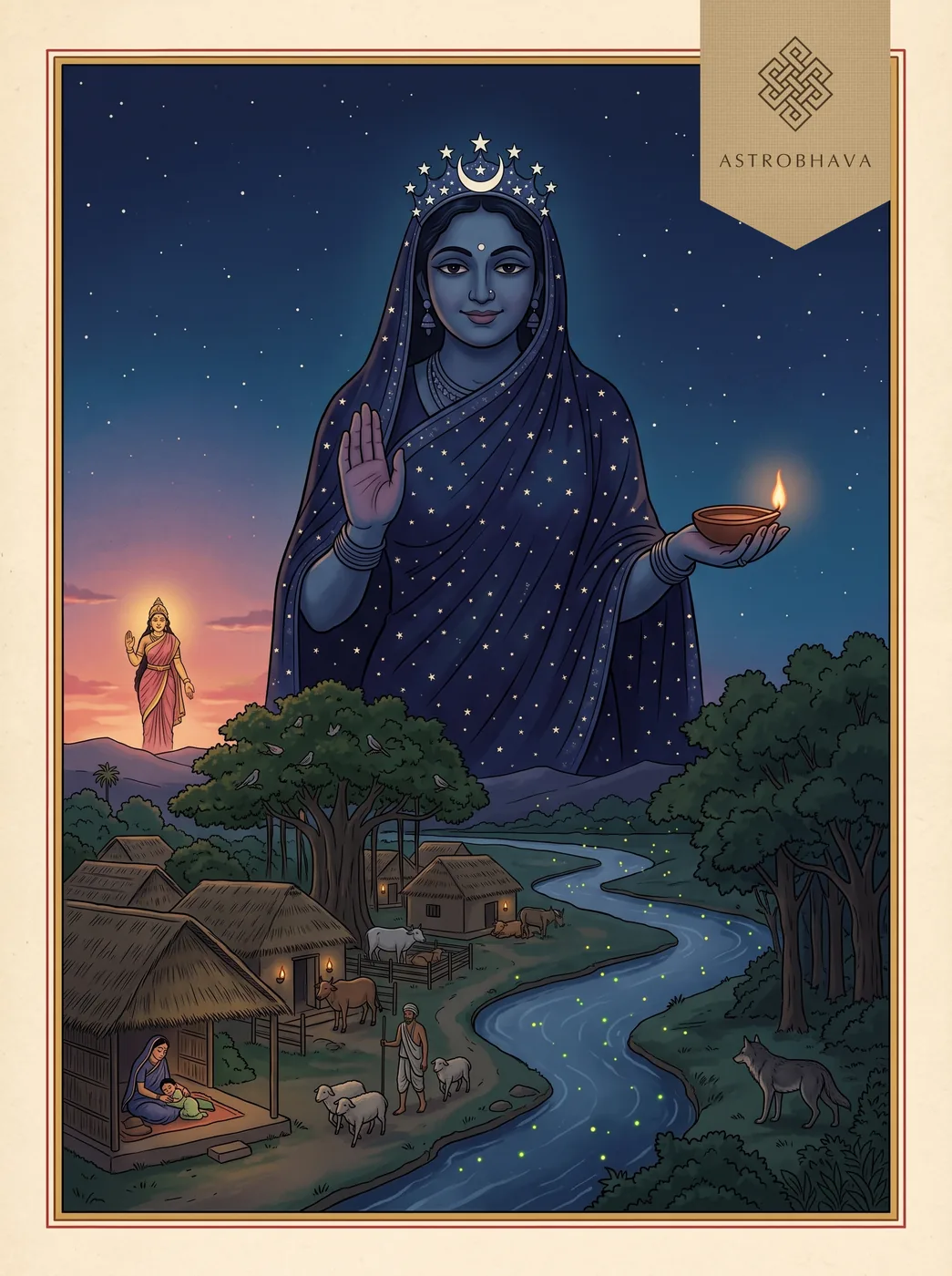
The Ratri Suktam is hymn 127 in the Rigveda's tenth book, eight short verses addressed to Ratri, the goddess who is Night itself. Its seer is given as Kushika Saubhara, and some headings add or substitute Ratri Bharadvaji; the metre is Gayatri. The hymn follows the night as it happens. Night arrives and looks out over the land with many eyes, which the commentators read as the stars. She fills the low ground and the heights, and her own light holds back the darkness. She makes room for her sister Dawn. Villages, walking creatures, birds and even the hunting hawk go to rest under her, as birds settle in a tree. The singer then asks her to keep off the wolf and the thief, calls on Dawn to clear the black darkness as one clears a debt, and offers the hymn to Night, the daughter of Heaven.
From a dawn rite to the Saptashati
The hymn carries no story of its composition; what tradition records is how it was used. The fourteenth-century commentator Sayana notes that the sukta was recited at an early-morning offering made by someone who had been troubled by bad dreams in the night, which fits the turn in verses 6 and 7 from the restful night to its dangers, and then to Dawn. The seer's name is itself carried in two forms. The heading tradition names Kushika Saubhara, and some editions name Ratri Bharadvaji, described as a daughter of the sage Bharadvaja, either alone or as a joint composer; on that reading the hymn is among the Rigvedic verses credited to a woman. In the Rigveda, Night and Dawn are sisters, daughters of the sky, and this is the one hymn of that collection given wholly to Ratri. Her later life came through the worship of the Devi. The standard printed edition of the Durga Saptashati sets this Vedic hymn among the texts read before the main recitation, beside the Kavacham, Argala, Kilakam and Devyatharvashirsha, and pairs it with a Tantric Ratri Suktam. In the svara edition of the Rigveda the eight verses are followed by a long khila supplement opening with the line 'a ratri parthivam rajah', which is not part of the sukta proper.
The mantra, in six scripts
- रात्री
- rātrī — Night
- व्यख्यदायती
- vyakhyadāyatī — coming, has looked out
- पुरुत्रा
- purutrā — in many places
- देव्यक्षभिः
- devyakṣabhiḥ — the goddess, with her eyes
- विश्वा
- viśvā — all
- अधि
- adhi — upon (herself)
- श्रियोऽधित
- śriyo'dhita — splendours she has put on
Ratri Suktam lyrics in full
The eight verses of Rigveda 10.127, without accent marks.
All 8 verses, in Sanskrit, Tamil, Telugu, Kannada, Malayalam and English, each with its meaning. Choose a script:
Download the Ratri Suktam PDFAll 8 verses with their meanings, in Sanskrit. Free to print and keep.
रात्री व्यख्यदायती पुरुत्रा देव्यक्षभिः ।
विश्वा अधि श्रियोऽधित ॥
ராத்ரீ வ்யக்யதாயதீ புருத்ரா தேவ்யக்ஷபிஃ ।
விஶ்வா அதி ஶ்ரியோதித ॥
రాత్రీ వ్యఖ్యదాయతీ పురుత్రా దేవ్యక్షభిః ।
విశ్వా అధి శ్రియోఽధిత ॥
ರಾತ್ರೀ ವ್ಯಖ್ಯದಾಯತೀ ಪುರುತ್ರಾ ದೇವ್ಯಕ್ಷಭಿಃ ।
ವಿಶ್ವಾ ಅಧಿ ಶ್ರಿಯೋಽಧಿತ ॥
രാത്രീ വ്യഖ്യദായതീ പുരുത്രാ ദേവ്യക്ഷഭിഃ ।
വിശ്വാ അധി ശ്രിയോഽധിത ॥
rātrī vyakhyadāyatī purutrā devyakṣabhiḥ |
viśvā adhi śriyo'dhita ||
The goddess Night, as she comes, has looked out in many places with her eyes, the stars. She has put on all her splendours.
ओर्वप्रा अमर्त्या निवतो देव्युद्वतः ।
ज्योतिषा बाधते तमः ॥
ஓர்வப்ரா அமர்த்யா நிவதோ தேவ்யுத்வதஃ ।
ஜ்யோதிஷா பாததே தமஃ ॥
ఓర్వప్రా అమర్త్యా నివతో దేవ్యుద్వతః ।
జ్యోతిషా బాధతే తమః ॥
ಓರ್ವಪ್ರಾ ಅಮರ್ತ್ಯಾ ನಿವತೋ ದೇವ್ಯುದ್ವತಃ ।
ಜ್ಯೋತಿಷಾ ಬಾಧತೇ ತಮಃ ॥
ഓര്വപ്രാ അമര്ത്യാ നിവതോ ദേവ്യുദ്വതഃ ।
ജ്യോതിഷാ ബാധതേ തമഃ ॥
orvaprā amartyā nivato devyudvataḥ |
jyotiṣā bādhate tamaḥ ||
The immortal goddess has filled the wide space, the low places and the heights. With her light she drives back the darkness.
निरु स्वसारमस्कृतोषसं देव्यायती ।
अपेदु हासते तमः ॥
நிரு ஸ்வஸாரமஸ்க்ருதோஷஸம் தேவ்யாயதீ ।
அபேது ஹாஸதே தமஃ ॥
నిరు స్వసారమస్కృతోషసం దేవ్యాయతీ ।
అపేదు హాసతే తమః ॥
ನಿರು ಸ್ವಸಾರಮಸ್ಕೃತೋಷಸಂ ದೇವ್ಯಾಯತೀ ।
ಅಪೇದು ಹಾಸತೇ ತಮಃ ॥
നിരു സ്വസാരമസ്കൃതോഷസം ദേവ്യായതീ ।
അപേദു ഹാസതേ തമഃ ॥
niru svasāramaskṛtoṣasaṃ devyāyatī |
apedu hāsate tamaḥ ||
As she comes, the goddess has made room for her sister, Dawn. The darkness, too, will then depart.
सा नो अद्य यस्या वयं नि ते यामन्नविक्ष्महि ।
वृक्षे न वसतिं वयः ॥
ஸா நோ அத்ய யஸ்யா வயம் நி தே யாமந்நவிக்ஷ்மஹி ।
வ்ருக்ஷே ந வஸதிம் வயஃ ॥
సా నో అద్య యస్యా వయం ని తే యామన్నవిక్ష్మహి ।
వృక్షే న వసతిం వయః ॥
ಸಾ ನೋ ಅದ್ಯ ಯಸ್ಯಾ ವಯಂ ನಿ ತೇ ಯಾಮನ್ನವಿಕ್ಷ್ಮಹಿ ।
ವೃಕ್ಷೇ ನ ವಸತಿಂ ವಯಃ ॥
സാ നോ അദ്യ യസ്യാ വയം നി തേ യാമന്നവിക്ഷ്മഹി ।
വൃക്ഷേ ന വസതിം വയഃ ॥
sā no adya yasyā vayaṃ ni te yāmannavikṣmahi |
vṛkṣe na vasatiṃ vayaḥ ||
May she be kind to us today, she at whose coming we have gone to rest, as birds go to their nest in a tree.
नि ग्रामासो अविक्षत नि पद्वन्तो नि पक्षिणः ।
नि श्येनासश्चिदर्थिनः ॥
நி க்ராமாஸோ அவிக்ஷத நி பத்வந்தோ நி பக்ஷிணஃ ।
நி ஶ்யேநாஸஶ்சிதர்திநஃ ॥
ని గ్రామాసో అవిక్షత ని పద్వన్తో ని పక్షిణః ।
ని శ్యేనాసశ్చిదర్థినః ॥
ನಿ ಗ್ರಾಮಾಸೋ ಅವಿಕ್ಷತ ನಿ ಪದ್ವನ್ತೋ ನಿ ಪಕ್ಷಿಣಃ ।
ನಿ ಶ್ಯೇನಾಸಶ್ಚಿದರ್ಥಿನಃ ॥
നി ഗ്രാമാസോ അവിക്ഷത നി പദ്വന്തോ നി പക്ഷിണഃ ।
നി ശ്യേനാസശ്ചിദര്ഥിനഃ ॥
ni grāmāso avikṣata ni padvanto ni pakṣiṇaḥ |
ni śyenāsaścidarthinaḥ ||
The villages have settled to rest, and all that walks on feet and all that flies on wings, even the hawks that hunt for prey.
यावया वृक्यं वृकं यवय स्तेनमूर्म्ये ।
अथा नः सुतरा भव ॥
யாவயா வ்ருக்யம் வ்ருகம் யவய ஸ்தேநமூர்ம்யே ।
அதா நஃ ஸுதரா பவ ॥
యావయా వృక్యం వృకం యవయ స్తేనమూర్మ్యే ।
అథా నః సుతరా భవ ॥
ಯಾವಯಾ ವೃಕ್ಯಂ ವೃಕಂ ಯವಯ ಸ್ತೇನಮೂರ್ಮ್ಯೇ ।
ಅಥಾ ನಃ ಸುತರಾ ಭವ ॥
യാവയാ വൃക്യം വൃകം യവയ സ്തേനമൂര്മ്യേ ।
അഥാ നഃ സുതരാ ഭവ ॥
yāvayā vṛkyaṃ vṛkaṃ yavaya stenamūrmye |
athā naḥ sutarā bhava ||
Keep away the she-wolf and the wolf, keep away the thief, O Night of the waves. Then be easy for us to pass through.
उप मा पेपिशत्तमः कृष्णं व्यक्तमस्थित ।
उष ऋणेव यातय ॥
உப மா பேபிஶத்தமஃ க்ருஷ்ணம் வ்யக்தமஸ்தித ।
உஷ ருணேவ யாதய ॥
ఉప మా పేపిశత్తమః కృష్ణం వ్యక్తమస్థిత ।
ఉష ఋణేవ యాతయ ॥
ಉಪ ಮಾ ಪೇಪಿಶತ್ತಮಃ ಕೃಷ್ಣಂ ವ್ಯಕ್ತಮಸ್ಥಿತ ।
ಉಷ ಋಣೇವ ಯಾತಯ ॥
ഉപ മാ പേപിശത്തമഃ കൃഷ്ണം വ്യക്തമസ്ഥിത ।
ഉഷ ഋണേവ യാതയ ॥
upa mā pepiśattamaḥ kṛṣṇaṃ vyaktamasthita |
uṣa ṛṇeva yātaya ||
The darkness, black and painting everything, has come close to me and become visible. O Dawn, clear it away as one clears debts.
उप ते गा इवाकरं वृणीष्व दुहितर्दिवः ।
रात्रि स्तोमं न जिग्युषे ॥
உப தே கா இவாகரம் வ்ருணீஷ்வ துஹிதர்திவஃ ।
ராத்ரி ஸ்தோமம் ந ஜிக்யுஷே ॥
ఉప తే గా ఇవాకరం వృణీష్వ దుహితర్దివః ।
రాత్రి స్తోమం న జిగ్యుషే ॥
ಉಪ ತೇ ಗಾ ಇವಾಕರಂ ವೃಣೀಷ್ವ ದುಹಿತರ್ದಿವಃ ।
ರಾತ್ರಿ ಸ್ತೋಮಂ ನ ಜಿಗ್ಯುಷೇ ॥
ഉപ തേ ഗാ ഇവാകരം വൃണീഷ്വ ദുഹിതര്ദിവഃ ।
രാത്രി സ്തോമം ന ജിഗ്യുഷേ ॥
upa te gā ivākaraṃ vṛṇīṣva duhitardivaḥ |
rātri stomaṃ na jigyuṣe ||
I have brought this hymn to you as one brings cattle; accept it, O daughter of Heaven. O Night, receive this praise as you would the song for a victor.
The syllable people get wrong
The goddess's name changes length inside the hymn: verse 1 has the nominative रात्री (rātrī), with a long final ī, while verse 8 addresses her as रात्रि (rātri), with a short final i. Say 'RAA-tree' with a held ending in the first verse and 'RAA-tri' with a clipped ending in the last.
When the Ratri Suktam is chanted
Weekday. Friday
Festival. Navaratri, read with the Durga Saptashati
Questions
Have your chart read before you decide
Chanting is yours to do, and free. But which deity your situation calls for — and whether a mantra alone is the right response — depends on your chart. Sometimes it is; sometimes it is not.
- Over 30 years in the Guru–Sishya Parampara, from the age of five
- He reads every chart himself — 60 minutes, one to one, never delegated
- Charts are read only between sunrise and sunset, following tradition
