Shirdi Sai Baba Aarti
आरती साईबाबा । सौख्यदातार जीवा । चरणरजातलीं । द्यावा दासां विसांवा भक्तां विसांवा ॥Also known as Aarti Saibaba
In Devanagari, Tamil, Telugu, Kannada, Malayalam and English — with the meaning of every word, and the one syllable most people pronounce wrongly.
What the Shirdi Sai Baba Aarti is
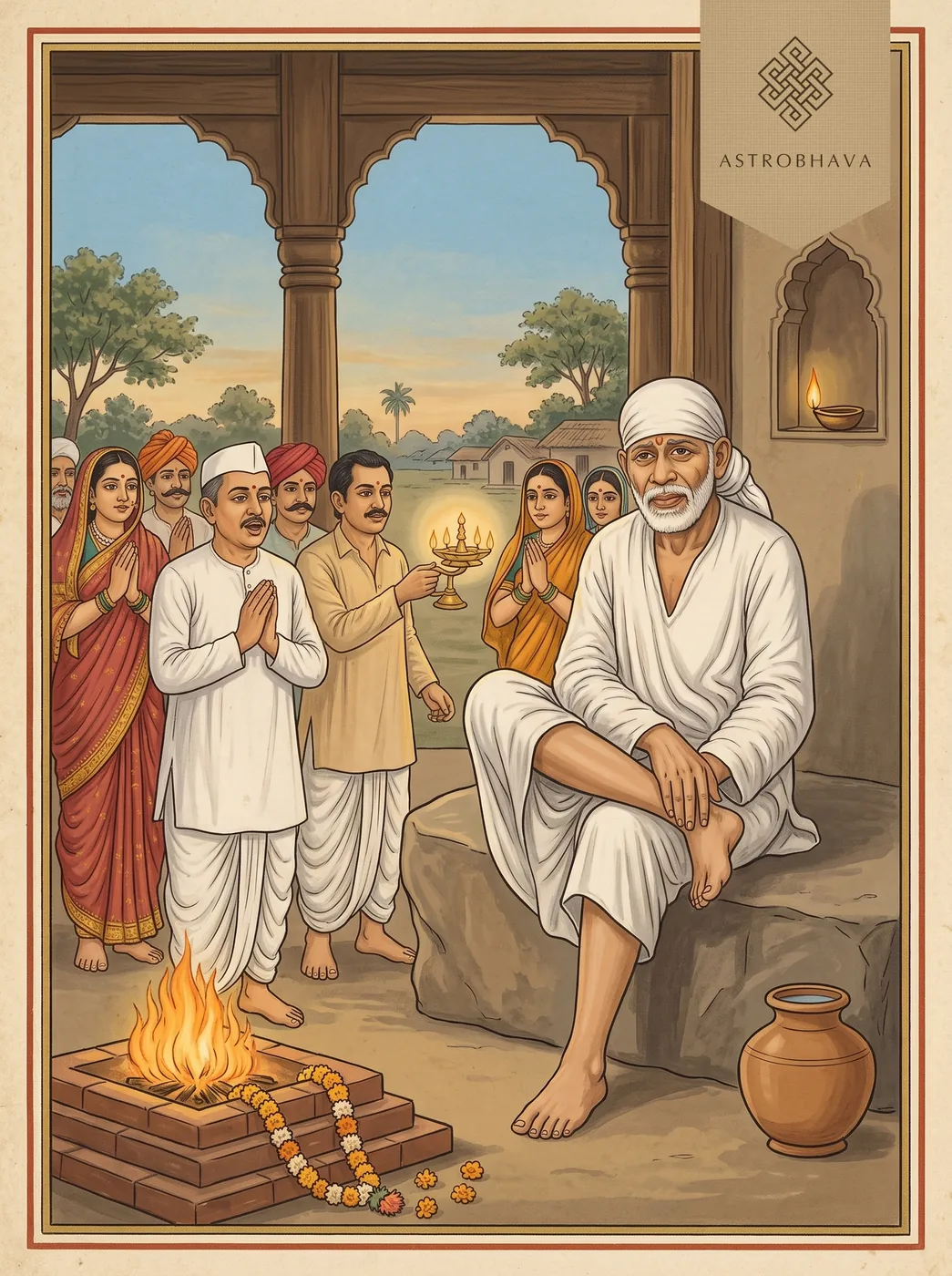
This is the Sai Baba aarti that opens with the words aarti Saibaba, saukhyadatara jiva, 'aarti to Sai Baba, giver of happiness to every living being'. It is in Marathi, not Hindi, and was written by Madhavrao Vamanrao Adkar, a devotee who lived at Shirdi in Sai Baba's lifetime; he signs it in the last stanza with his own name, Madhava. The form is a refrain and seven short stanzas. The refrain asks for rest in the dust beneath the saint's feet. Stanza 1 describes him as one who has burnt away Ananga, the bodiless god of desire, and rests in the Self. Stanza 2 states that each devotee meets him according to their own inner feeling. Stanza 4 names him Datta Digambara, an incarnation of Dattatreya in the Kali age, and stanza 5 records the Thursday pilgrimage to Shirdi. Stanzas 6 and 7 turn to the poet's own petition.
A wandering singer settles at Shirdi
Madhavrao Adkar was born on 5 September 1877 at Ahmednagar, the son of Vaman Rao and Godavari, and was trained early in singing and classical music. According to his family's account, his grandfather heard a voice in a temple announcing the birth, and the child was named after Madhava. In 1899, soon after his marriage to Gangubai, he left home without a word on pilgrimage. The family traced him to Kashi, then to Shegaon, and finally to Shirdi, where he had settled near Das Ganu Maharaj, teaching ten or twelve pupils and attending Sai Baba's darshan. Devotee histories say he wrote this aarti around 1903 or 1904, and that Das Ganu, hearing it, declared it would be sung every day at Shirdi. When relatives came to take him home, Baba is said to have sent him back with them and foretold the birth of a son to be named Ram; a son, Ramachandra, was born and later sat on Baba's lap. Adkar died at Loni on 18 November 1955. According to his family, he asked his son to sing Baba's aarti at his bedside and passed away while it was being sung. The text is kept today in the temple's own aarti book, Shri Sainath Sagunopasana.
The mantra, in six scripts
- आरती
- āratī — aarti, lamp-worship
- साईबाबा
- sāībābā — to Sai Baba
- सौख्यदातार
- saukhyadātāra — giver of happiness
- जीवा
- jīvā — to living beings
- चरणरजातलीं
- caraṇarajātalīṃ — beneath the dust of your feet
- द्यावा
- dyāvā — please give
- दासां
- dāsāṃ — to your servants
- विसांवा
- visāṃvā — rest
- भक्तां
- bhaktāṃ — to your devotees
- विसांवा
- visāṃvā — rest
Sai Baba Aarti lyrics in full
A refrain and seven stanzas in Marathi, as printed in the Shirdi temple's aarti book. When sung, the refrain returns after every stanza.
All 8 verses, in Marathi, Tamil, Telugu, Kannada, Malayalam and English, each with its meaning. Choose a script:
Download the Sai Baba Aarti PDFAll 8 verses with their meanings, in Marathi. Free to print and keep.
आरती साईबाबा । सौख्यदातार जीवा ।
चरणरजातलीं । द्यावा दासां विसांवा भक्तां विसांवा ॥
ஆரதீ ஸாஈபாபா । ஸௌக்யதாதார ஜீவா ।
சரணரஜாதலீம் । த்யாவா தாஸாம் விஸாம்வா பக்தாம் விஸாம்வா ॥
ఆరతీ సాఈబాబా । సౌఖ్యదాతార జీవా ।
చరణరజాతలీం । ద్యావా దాసాం విసాంవా భక్తాం విసాంవా ॥
ಆರತೀ ಸಾಈಬಾಬಾ । ಸೌಖ್ಯದಾತಾರ ಜೀವಾ ।
ಚರಣರಜಾತಲೀಂ । ದ್ಯಾವಾ ದಾಸಾಂ ವಿಸಾಂವಾ ಭಕ್ತಾಂ ವಿಸಾಂವಾ ॥
ആരതീ സാഈബാബാ । സൌഖ്യദാതാര ജീവാ ।
ചരണരജാതലീം । ദ്യാവാ ദാസാം വിസാംവാ ഭക്താം വിസാംവാ ॥
āratī sāībābā | saukhyadātāra jīvā |
caraṇarajātalīṃ | dyāvā dāsāṃ visāṃvā bhaktāṃ visāṃvā ||
Aarti to Sai Baba, giver of happiness to every living being. Beneath the dust of your feet, give rest to your servants; give rest to your devotees.
जाळुनियां अनंग । स्वस्वरूपीं राहे दंग ।
मुमुक्षुजनां दावी । निज डोळां श्रीरंग ॥
ஜாளுநியாம் அநம்க । ஸ்வஸ்வரூபீம் ராஹே தம்க ।
முமுக்ஷுஜநாம் தாவீ । நிஜ டோளாம் ஶ்ரீரம்க ॥
జాళునియాం అనంగ । స్వస్వరూపీం రాహే దంగ ।
ముముక్షుజనాం దావీ । నిజ డోళాం శ్రీరంగ ॥
ಜಾಳುನಿಯಾಂ ಅನಂಗ । ಸ್ವಸ್ವರೂಪೀಂ ರಾಹೇ ದಂಗ ।
ಮುಮುಕ್ಷುಜನಾಂ ದಾವೀ । ನಿಜ ಡೋಳಾಂ ಶ್ರೀರಂಗ ॥
ജാളുനിയാം അനംഗ । സ്വസ്വരൂപീം രാഹേ ദംഗ ।
മുമുക്ഷുജനാം ദാവീ । നിജ ഡോളാം ശ്രീരംഗ ॥
jāḷuniyāṃ anaṃga | svasvarūpīṃ rāhe daṃga |
mumukṣujanāṃ dāvī | nija ḍoḷāṃ śrīraṃga ||
Having burnt away Ananga, the bodiless god of desire, he stays absorbed in his own true Self. To those who seek liberation he shows Sri Ranga, the Lord, before their own eyes.
जया मनीं जैसा भाव । तया तैसा अनुभव ।
दाविसी दयाघना । ऐसी तुझी ही माव ॥
ஜயா மநீம் ஜைஸா பாவ । தயா தைஸா அநுபவ ।
தாவிஸீ தயாகநா । ஐஸீ துசீ ஹீ மாவ ॥
జయా మనీం జైసా భావ । తయా తైసా అనుభవ ।
దావిసీ దయాఘనా । ఐసీ తుఝీ హీ మావ ॥
ಜಯಾ ಮನೀಂ ಜೈಸಾ ಭಾವ । ತಯಾ ತೈಸಾ ಅನುಭವ ।
ದಾವಿಸೀ ದಯಾಘನಾ । ಐಸೀ ತುಝೀ ಹೀ ಮಾವ ॥
ജയാ മനീം ജൈസാ ഭാവ । തയാ തൈസാ അനുഭവ ।
ദാവിസീ ദയാഘനാ । ഐസീ തുഝീ ഹീ മാവ ॥
jayā manīṃ jaisā bhāva | tayā taisā anubhava |
dāvisī dayāghanā | aisī tujhī hī māva ||
As the feeling in a person's mind, so is the experience you show them, O cloud of compassion. Such is your wondrous way.
तुमचें नाम ध्यातां । हरे संसृतिव्यथा ।
अगाध तव करणी । मार्ग दाविसी अनाथा ॥
துமசேம் நாம த்யாதாம் । ஹரே ஸம்ஸ்ருதிவ்யதா ।
அகாத தவ கரணீ । மார்க தாவிஸீ அநாதா ॥
తుమచేం నామ ధ్యాతాం । హరే సంసృతివ్యథా ।
అగాధ తవ కరణీ । మార్గ దావిసీ అనాథా ॥
ತುಮಚೇಂ ನಾಮ ಧ್ಯಾತಾಂ । ಹರೇ ಸಂಸೃತಿವ್ಯಥಾ ।
ಅಗಾಧ ತವ ಕರಣೀ । ಮಾರ್ಗ ದಾವಿಸೀ ಅನಾಥಾ ॥
തുമചേം നാമ ധ്യാതാം । ഹരേ സംസൃതിവ്യഥാ ।
അഗാധ തവ കരണീ । മാര്ഗ ദാവിസീ അനാഥാ ॥
tumaceṃ nāma dhyātāṃ | hare saṃsṛtivyathā |
agādha tava karaṇī | mārga dāvisī anāthā ||
The verse says that meditating on your name takes away the pain of worldly existence. Your deeds are beyond measure; you show the way to those who have no protector.
कलियुगीं अवतार । सगुणब्रह्म साचार ।
अवतीर्ण झालासे । स्वामी दत्त दिगंबर ॥
கலியுகீம் அவதார । ஸகுணப்ரஹ்ம ஸாசார ।
அவதீர்ண சாலாஸே । ஸ்வாமீ தத்த திகம்பர ॥
కలియుగీం అవతార । సగుణబ్రహ్మ సాచార ।
అవతీర్ణ ఝాలాసే । స్వామీ దత్త దిగంబర ॥
ಕಲಿಯುಗೀಂ ಅವತಾರ । ಸಗುಣಬ್ರಹ್ಮ ಸಾಚಾರ ।
ಅವತೀರ್ಣ ಝಾಲಾಸೇ । ಸ್ವಾಮೀ ದತ್ತ ದಿಗಂಬರ ॥
കലിയുഗീം അവതാര । സഗുണബ്രഹ്മ സാചാര ।
അവതീര്ണ ഝാലാസേ । സ്വാമീ ദത്ത ദിഗംബര ॥
kaliyugīṃ avatāra | saguṇabrahma sācāra |
avatīrṇa jhālāse | svāmī datta digaṃbara ||
An incarnation in the Kali age, truly Brahman with form, you have come down among us as Swami Datta Digambara (Dattatreya).
आठां दिवसां गुरुवारीं । भक्त करिती वारी ।
प्रभुपद पहावया । भवभय निवारी ॥
ஆடாம் திவஸாம் குருவாரீம் । பக்த கரிதீ வாரீ ।
ப்ரபுபத பஹாவயா । பவபய நிவாரீ ॥
ఆఠాం దివసాం గురువారీం । భక్త కరితీ వారీ ।
ప్రభుపద పహావయా । భవభయ నివారీ ॥
ಆಠಾಂ ದಿವಸಾಂ ಗುರುವಾರೀಂ । ಭಕ್ತ ಕರಿತೀ ವಾರೀ ।
ಪ್ರಭುಪದ ಪಹಾವಯಾ । ಭವಭಯ ನಿವಾರೀ ॥
ആഠാം ദിവസാം ഗുരുവാരീം । ഭക്ത കരിതീ വാരീ ।
പ്രഭുപദ പഹാവയാ । ഭവഭയ നിവാരീ ॥
āṭhāṃ divasāṃ guruvārīṃ | bhakta karitī vārī |
prabhupada pahāvayā | bhavabhaya nivārī ||
Every eighth day, on Thursday, devotees make the pilgrimage to see the Lord's feet, which the verse says remove the fear of worldly existence.
माझा निजद्रव्यठेवा । तव चरणरजसेवा ।
मागणें हेंचि आतां । तुम्हां देवाधिदेवा ॥
மாசா நிஜத்ரவ்யடேவா । தவ சரணரஜஸேவா ।
மாகணேம் ஹேம்சி ஆதாம் । தும்ஹாம் தேவாதிதேவா ॥
మాఝా నిజద్రవ్యఠేవా । తవ చరణరజసేవా ।
మాగణేం హేంచి ఆతాం । తుమ్హాం దేవాధిదేవా ॥
ಮಾಝಾ ನಿಜದ್ರವ್ಯಠೇವಾ । ತವ ಚರಣರಜಸೇವಾ ।
ಮಾಗಣೇಂ ಹೇಂಚಿ ಆತಾಂ । ತುಮ್ಹಾಂ ದೇವಾಧಿದೇವಾ ॥
മാഝാ നിജദ്രവ്യഠേവാ । തവ ചരണരജസേവാ ।
മാഗണേം ഹേംചി ആതാം । തുമ്ഹാം ദേവാധിദേവാ ॥
mājhā nijadravyaṭhevā | tava caraṇarajasevā |
māgaṇeṃ heṃci ātāṃ | tumhāṃ devādhidevā ||
My own treasured wealth is service at the dust of your feet. This alone I now ask of you, O God of gods.
इच्छित दीन चातक । निर्मल तोय निजसुख ।
पाजावें माधवा या । सांभाळ आपुली भाक ॥
இச்சித தீந சாதக । நிர்மல தோய நிஜஸுக ।
பாஜாவேம் மாதவா யா । ஸாம்பாள ஆபுலீ பாக ॥
ఇచ్ఛిత దీన చాతక । నిర్మల తోయ నిజసుఖ ।
పాజావేం మాధవా యా । సాంభాళ ఆపులీ భాక ॥
ಇಚ್ಛಿತ ದೀನ ಚಾತಕ । ನಿರ್ಮಲ ತೋಯ ನಿಜಸುಖ ।
ಪಾಜಾವೇಂ ಮಾಧವಾ ಯಾ । ಸಾಂಭಾಳ ಆಪುಲೀ ಭಾಕ ॥
ഇച്ഛിത ദീന ചാതക । നിര്മല തോയ നിജസുഖ ।
പാജാവേം മാധവാ യാ । സാംഭാള ആപുലീ ഭാക ॥
icchita dīna cātaka | nirmala toya nijasukha |
pājāveṃ mādhavā yā | sāṃbhāḷa āpulī bhāka ||
Like a humble chataka bird longing for rain, Madhava longs for the pure water of the bliss of the Self. Give it to him to drink, and keep your promise. (Madhava is the poet's own signature.)
The syllable people get wrong
In jāḷuniyāṃ, the first word of stanza 1, and again in ḍoḷāṃ, the ḷ is the Marathi retroflex ळ, said with the tongue curled back to touch the roof of the mouth, not the plain l of 'jaluniyan'. The same sound returns in sāṃbhāḷa in the last stanza.
When the Shirdi Sai Baba Aarti is chanted
Festival. Thursday worship of Sai Baba
Questions
Have your chart read before you decide
Chanting is yours to do, and free. But which deity your situation calls for — and whether a mantra alone is the right response — depends on your chart. Sometimes it is; sometimes it is not.
- Over 30 years in the Guru–Sishya Parampara, from the age of five
- He reads every chart himself — 60 minutes, one to one, never delegated
- Charts are read only between sunrise and sunset, following tradition