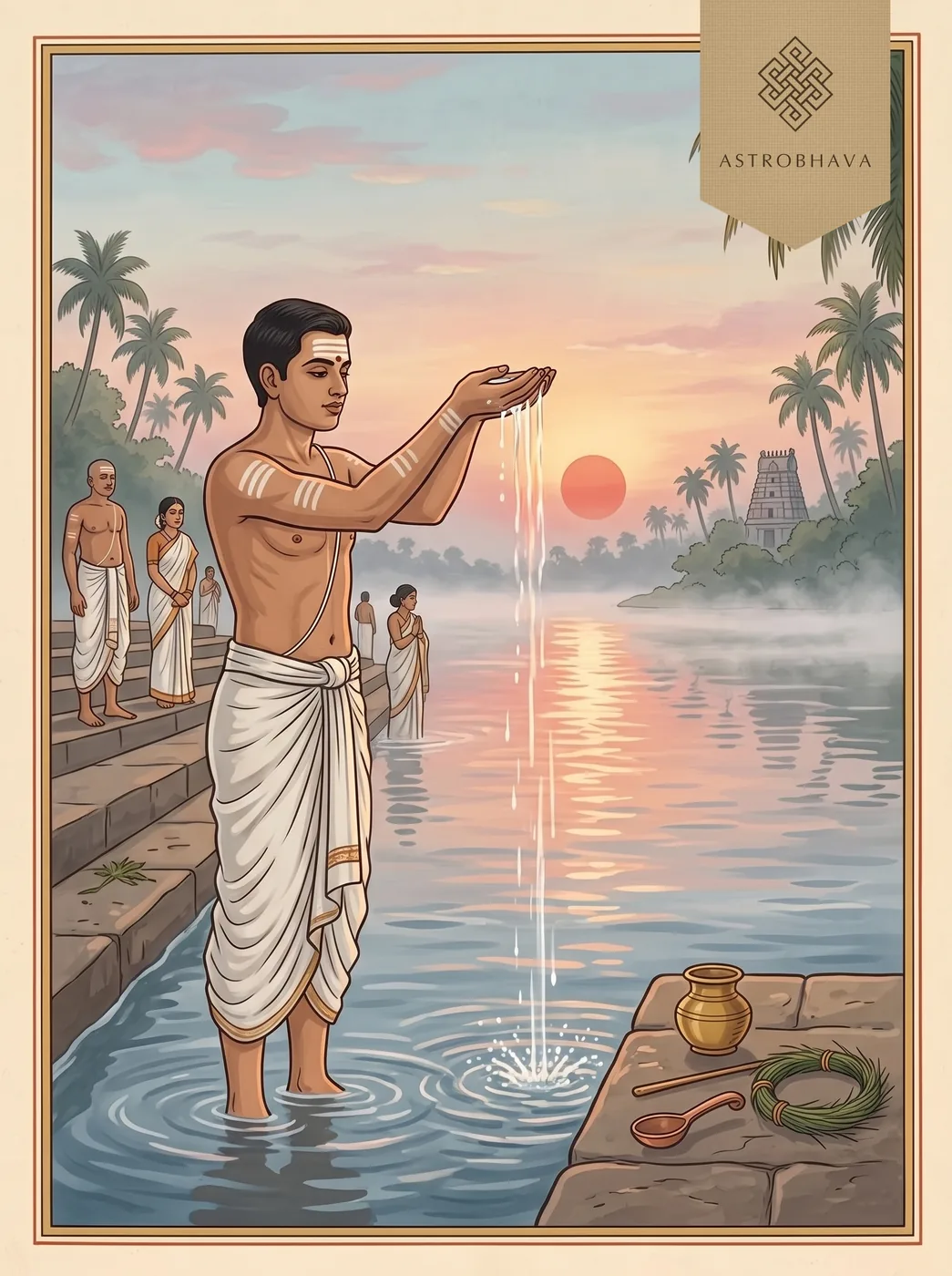
Sandhyavandanam Mantras
अच्युताय नमः । अनन्ताय नमः । गोविन्दाय नमः ॥Also known as Sandhya Vandanam
In Devanagari, Tamil, Telugu, Kannada, Malayalam and English — with the meaning of every word, and the one syllable most people pronounce wrongly.
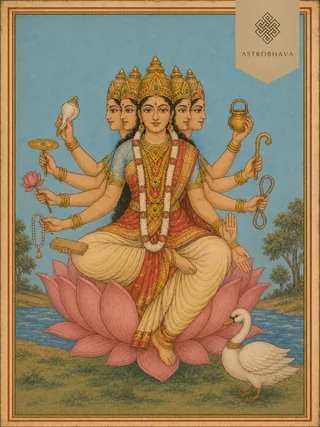 The Gayatri Homam, performed for youBook →
What the Sandhyavandanam Mantras is
Sandhyavandanam mantras are the words of the twilight worship that a householder of the Krishna Yajurveda (Taittiriya) school offers at dawn, and this page prints the morning sequence in the order of the nitya-karma manuals. It opens with achamanam: a sip of water on each of the names Achyuta, Ananta and Govinda, then twelve names of Vishnu said while touching the cheeks, eyes, nose, ears, shoulders, navel and head. In pranayama the breath is held over the seven vyahritis, the Gayatri and the formula 'Apo jyoti rasah'. The sankalpa states its purpose. In marjanam the worshipper sprinkles water while saying the three 'Apo hi shtha' verses to the Waters, then sips water in prashana with 'Suryashcha ma', a confession of the night's faults. After a second sprinkling, opened by the Dadhikravan verse, water is offered to the rising sun in arghya with the Gayatri. The goddess Gayatri is then invited, recited in japa and given leave, and the worshipper closes standing before the sun with three verses to Mitra.
Water thrown against the twilight demons
The Vishnu Purana, in its second book, explains why the twilight is never to be passed over. At each sandhya, it says, a host of rakshasas called the Mandehas try to devour the sun. Brahma had cursed them to perish by day and revive again, so the struggle is renewed at every dawn and dusk. At that moment the Brahmins scatter water purified by Om and consecrated by the Gayatri, and the water falls on the rakshasas like a thunderbolt. The Purana adds that when the first oblation of the morning is offered, the sun appears in unclouded splendour, and it warns that one who neglects the rite shares in the slaying of the sun. The arghya step on this page is that scattering of water. Tradition traces the tale further back, to a passage of the Taittiriya Aranyaka on rakshasas who assail the sun, and later retellings say the first offering of water kills their horses, the second breaks their weapons and the third slays them, until Brahma's boon raises them for the next twilight. The mantras reach further back still. The verses to the Waters and to Mitra belong to the Taittiriya Samhita, the Gayatri to the third book of the Rigveda, and the invocation of the goddess to the Mahanarayana section of the Taittiriya Aranyaka.
The mantra, in six scripts
- अच्युताय
- acyutāya — to Achyuta, the one who never falls
- नमः
- namaḥ — salutation
- अनन्ताय
- anantāya — to Ananta, the endless one
- नमः
- namaḥ — salutation
- गोविन्दाय
- govindāya — to Govinda
- नमः
- namaḥ — salutation
Sandhyavandanam lyrics in full
The morning Sandhyavandanam of the Krishna Yajurveda in twenty steps, printed without accent marks; at the second sprinkling the Apo hi shtha verses are said again. Chanting with the svaras is learned from a teacher.
All 20 verses, in Sanskrit, Tamil, Telugu, Kannada, Malayalam and English, each with its meaning. Choose a script:
Download the Sandhyavandanam PDFAll 20 verses with their meanings, in Sanskrit. Free to print and keep.
अच्युताय नमः ।
अनन्ताय नमः ।
गोविन्दाय नमः ॥
அச்யுதாய நமஃ ।
அநந்தாய நமஃ ।
கோவிந்தாய நமஃ ॥
అచ్యుతాయ నమః ।
అనన్తాయ నమః ।
గోవిన్దాయ నమః ॥
ಅಚ್ಯುತಾಯ ನಮಃ ।
ಅನನ್ತಾಯ ನಮಃ ।
ಗೋವಿನ್ದಾಯ ನಮಃ ॥
അച്യുതായ നമഃ ।
അനന്തായ നമഃ ।
ഗോവിന്ദായ നമഃ ॥
acyutāya namaḥ |
anantāya namaḥ |
govindāya namaḥ ||
Salutation to Achyuta, the one who never falls. Salutation to Ananta, the endless one. Salutation to Govinda. (A sip of water is taken with each name.)
केशव नारायण ।
माधव गोविन्द ।
विष्णो मधुसूदन ।
त्रिविक्रम वामन ।
श्रीधर हृषीकेश ।
पद्मनाभ दामोदर ॥
கேஶவ நாராயண ।
மாதவ கோவிந்த ।
விஷ்ணோ மதுஸூதந ।
த்ரிவிக்ரம வாமந ।
ஶ்ரீதர ஹ்ருஷீகேஶ ।
பத்மநாப தாமோதர ॥
కేశవ నారాయణ ।
మాధవ గోవిన్ద ।
విష్ణో మధుసూదన ।
త్రివిక్రమ వామన ।
శ్రీధర హృషీకేశ ।
పద్మనాభ దామోదర ॥
ಕೇಶವ ನಾರಾಯಣ ।
ಮಾಧವ ಗೋವಿನ್ದ ।
ವಿಷ್ಣೋ ಮಧುಸೂದನ ।
ತ್ರಿವಿಕ್ರಮ ವಾಮನ ।
ಶ್ರೀಧರ ಹೃಷೀಕೇಶ ।
ಪದ್ಮನಾಭ ದಾಮೋದರ ॥
കേശവ നാരായണ ।
മാധവ ഗോവിന്ദ ।
വിഷ്ണോ മധുസൂദന ।
ത്രിവിക്രമ വാമന ।
ശ്രീധര ഹൃഷീകേശ ।
പദ്മനാഭ ദാമോദര ॥
keśava nārāyaṇa |
mādhava govinda |
viṣṇo madhusūdana |
trivikrama vāmana |
śrīdhara hṛṣīkeśa |
padmanābha dāmodara ||
The twelve names of Vishnu - Keshava, Narayana, Madhava, Govinda, Vishnu, Madhusudana, Trivikrama, Vamana, Shridhara, Hrishikesha, Padmanabha and Damodara - said while touching the cheeks, eyes, nose, ears, shoulders, navel and head in turn.
ॐ भूः ।
ॐ भुवः ।
ॐ सुवः ।
ॐ महः ।
ॐ जनः ।
ॐ तपः ।
ॐ सत्यम् ॥
ௐ பூஃ ।
ௐ புவஃ ।
ௐ ஸுவஃ ।
ௐ மஹஃ ।
ௐ ஜநஃ ।
ௐ தபஃ ।
ௐ ஸத்யம் ॥
ఓం భూః ।
ఓం భువః ।
ఓం సువః ।
ఓం మహః ।
ఓం జనః ।
ఓం తపః ।
ఓం సత్యమ్ ॥
ಓಂ ಭೂಃ ।
ಓಂ ಭುವಃ ।
ಓಂ ಸುವಃ ।
ಓಂ ಮಹಃ ।
ಓಂ ಜನಃ ।
ಓಂ ತಪಃ ।
ಓಂ ಸತ್ಯಮ್ ॥
ഓം ഭൂഃ ।
ഓം ഭുവഃ ।
ഓം സുവഃ ।
ഓം മഹഃ ।
ഓം ജനഃ ।
ഓം തപഃ ।
ഓം സത്യമ് ॥
oṃ bhūḥ |
oṃ bhuvaḥ |
oṃ suvaḥ |
oṃ mahaḥ |
oṃ janaḥ |
oṃ tapaḥ |
oṃ satyam ||
Om, the earth. Om, the middle air. Om, the heaven. Om, the world of greatness. Om, the world of the born. Om, the world of austerity. Om, the world of truth.
ॐ तत्सवितुर्वरेण्यं भर्गो देवस्य धीमहि ।
धियो यो नः प्रचोदयात् ॥
ௐ தத்ஸவிதுர்வரேண்யம் பர்கோ தேவஸ்ய தீமஹி ।
தியோ யோ நஃ ப்ரசோதயாத் ॥
ఓం తత్సవితుర్వరేణ్యం భర్గో దేవస్య ధీమహి ।
ధియో యో నః ప్రచోదయాత్ ॥
ಓಂ ತತ್ಸವಿತುರ್ವರೇಣ್ಯಂ ಭರ್ಗೋ ದೇವಸ್ಯ ಧೀಮಹಿ ।
ಧಿಯೋ ಯೋ ನಃ ಪ್ರಚೋದಯಾತ್ ॥
ഓം തത്സവിതുര്വരേണ്യം ഭര്ഗോ ദേവസ്യ ധീമഹി ।
ധിയോ യോ നഃ പ്രചോദയാത് ॥
oṃ tatsaviturvareṇyaṃ bhargo devasya dhīmahi |
dhiyo yo naḥ pracodayāt ||
Om. We meditate on the adorable radiance of the divine Savitar, the sun as source of all. May he stir and direct our minds.
ओमापो ज्योती रसोऽमृतं ब्रह्म भूर्भुवस्सुवरोम् ॥
ஓமாபோ ஜ்யோதீ ரஸோம்ருதம் ப்ரஹ்ம பூர்புவஸ்ஸுவரோம் ॥
ఓమాపో జ్యోతీ రసోఽమృతం బ్రహ్మ భూర్భువస్సువరోమ్ ॥
ಓಮಾಪೋ ಜ್ಯೋತೀ ರಸೋಽಮೃತಂ ಬ್ರಹ್ಮ ಭೂರ್ಭುವಸ್ಸುವರೋಮ್ ॥
ഓമാപോ ജ്യോതീ രസോഽമൃതം ബ്രഹ്മ ഭൂര്ഭുവസ്സുവരോമ് ॥
omāpo jyotī raso'mṛtaṃ brahma bhūrbhuvassuvarom ||
Om. The supreme is water, light, essence and the deathless; it is Brahman, it is earth, middle air and heaven. Om.
ममोपात्त समस्त दुरितक्षयद्वारा श्रीपरमेश्वरप्रीत्यर्थं प्रातः सन्ध्यामुपासिष्ये ॥
மமோபாத்த ஸமஸ்த துரிதக்ஷயத்வாரா ஶ்ரீபரமேஶ்வரப்ரீத்யர்தம் ப்ராதஃ ஸந்த்யாமுபாஸிஷ்யே ॥
మమోపాత్త సమస్త దురితక్షయద్వారా శ్రీపరమేశ్వరప్రీత్యర్థం ప్రాతః సన్ధ్యాముపాసిష్యే ॥
ಮಮೋಪಾತ್ತ ಸಮಸ್ತ ದುರಿತಕ್ಷಯದ್ವಾರಾ ಶ್ರೀಪರಮೇಶ್ವರಪ್ರೀತ್ಯರ್ಥಂ ಪ್ರಾತಃ ಸನ್ಧ್ಯಾಮುಪಾಸಿಷ್ಯೇ ॥
മമോപാത്ത സമസ്ത ദുരിതക്ഷയദ്വാരാ ശ്രീപരമേശ്വരപ്രീത്യര്ഥം പ്രാതഃ സന്ധ്യാമുപാസിഷ്യേ ॥
mamopātta samasta duritakṣayadvārā śrīparameśvaraprītyarthaṃ prātaḥ sandhyāmupāsiṣye ||
So that all the wrongs I have gathered may be wiped away, and for the pleasure of the Supreme Lord, I shall perform the morning twilight worship.
आपो हि ष्ठा मयोभुवः ।
ता न ऊर्जे दधातन ।
महे रणाय चक्षसे ॥
ஆபோ ஹி ஷ்டா மயோபுவஃ ।
தா ந ஊர்ஜே ததாதந ।
மஹே ரணாய சக்ஷஸே ॥
ఆపో హి ష్ఠా మయోభువః ।
తా న ఊర్జే దధాతన ।
మహే రణాయ చక్షసే ॥
ಆಪೋ ಹಿ ಷ್ಠಾ ಮಯೋಭುವಃ ।
ತಾ ನ ಊರ್ಜೇ ದಧಾತನ ।
ಮಹೇ ರಣಾಯ ಚಕ್ಷಸೇ ॥
ആപോ ഹി ഷ്ഠാ മയോഭുവഃ ।
താ ന ഊര്ജേ ദധാതന ।
മഹേ രണായ ചക്ഷസേ ॥
āpo hi ṣṭhā mayobhuvaḥ |
tā na ūrje dadhātana |
mahe raṇāya cakṣase ||
O Waters, you are the bringers of well-being. Grant us strength and nourishment, that we may behold great joy.
यो वः शिवतमो रसः ।
तस्य भाजयतेह नः ।
उशतीरिव मातरः ॥
யோ வஃ ஶிவதமோ ரஸஃ ।
தஸ்ய பாஜயதேஹ நஃ ।
உஶதீரிவ மாதரஃ ॥
యో వః శివతమో రసః ।
తస్య భాజయతేహ నః ।
ఉశతీరివ మాతరః ॥
ಯೋ ವಃ ಶಿವತಮೋ ರಸಃ ।
ತಸ್ಯ ಭಾಜಯತೇಹ ನಃ ।
ಉಶತೀರಿವ ಮಾತರಃ ॥
യോ വഃ ശിവതമോ രസഃ ।
തസ്യ ഭാജയതേഹ നഃ ।
ഉശതീരിവ മാതരഃ ॥
yo vaḥ śivatamo rasaḥ |
tasya bhājayateha naḥ |
uśatīriva mātaraḥ ||
Give us here a share of your most auspicious essence, as loving mothers share with their children.
तस्मा अरं गमाम वः ।
यस्य क्षयाय जिन्वथ ।
आपो जनयथा च नः ॥
தஸ்மா அரம் கமாம வஃ ।
யஸ்ய க்ஷயாய ஜிந்வத ।
ஆபோ ஜநயதா ச நஃ ॥
తస్మా అరం గమామ వః ।
యస్య క్షయాయ జిన్వథ ।
ఆపో జనయథా చ నః ॥
ತಸ್ಮಾ ಅರಂ ಗಮಾಮ ವಃ ।
ಯಸ್ಯ ಕ್ಷಯಾಯ ಜಿನ್ವಥ ।
ಆಪೋ ಜನಯಥಾ ಚ ನಃ ॥
തസ്മാ അരം ഗമാമ വഃ ।
യസ്യ ക്ഷയായ ജിന്വഥ ।
ആപോ ജനയഥാ ച നഃ ॥
tasmā araṃ gamāma vaḥ |
yasya kṣayāya jinvatha |
āpo janayathā ca naḥ ||
We come to you gladly for that essence, by whose dwelling you give life and delight. O Waters, give us new birth.
ॐ भूर्भुवस्सुवः ॥
ௐ பூர்புவஸ்ஸுவஃ ॥
ఓం భూర్భువస్సువః ॥
ಓಂ ಭೂರ್ಭುವಸ್ಸುವಃ ॥
ഓം ഭൂര്ഭുവസ്സുവഃ ॥
oṃ bhūrbhuvassuvaḥ ||
Om, earth, middle air and heaven. (Said while sprinkling water around oneself.)
सूर्यश्च मा मन्युश्च मन्युपतयश्च मन्युकृतेभ्यः ।
पापेभ्यो रक्षन्ताम् ।
यद्रात्रिया पापमकार्षम् ।
मनसा वाचा हस्ताभ्याम् ।
पद्भ्यामुदरेण शिश्ना ।
रात्रिस्तदवलुम्पतु ।
यत्किञ्च दुरितं मयि ।
इदमहं माममृतयोनौ ।
सूर्ये ज्योतिषि जुहोमि स्वाहा ॥
ஸூர்யஶ்ச மா மந்யுஶ்ச மந்யுபதயஶ்ச மந்யுக்ருதேப்யஃ ।
பாபேப்யோ ரக்ஷந்தாம் ।
யத்ராத்ரியா பாபமகார்ஷம் ।
மநஸா வாசா ஹஸ்தாப்யாம் ।
பத்ப்யாமுதரேண ஶிஶ்நா ।
ராத்ரிஸ்ததவலும்பது ।
யத்கிஞ்ச துரிதம் மயி ।
இதமஹம் மாமம்ருதயோநௌ ।
ஸூர்யே ஜ்யோதிஷி ஜுஹோமி ஸ்வாஹா ॥
సూర్యశ్చ మా మన్యుశ్చ మన్యుపతయశ్చ మన్యుకృతేభ్యః ।
పాపేభ్యో రక్షన్తామ్ ।
యద్రాత్రియా పాపమకార్షమ్ ।
మనసా వాచా హస్తాభ్యామ్ ।
పద్భ్యాముదరేణ శిశ్నా ।
రాత్రిస్తదవలుమ్పతు ।
యత్కిఞ్చ దురితం మయి ।
ఇదమహం మామమృతయోనౌ ।
సూర్యే జ్యోతిషి జుహోమి స్వాహా ॥
ಸೂರ್ಯಶ್ಚ ಮಾ ಮನ್ಯುಶ್ಚ ಮನ್ಯುಪತಯಶ್ಚ ಮನ್ಯುಕೃತೇಭ್ಯಃ ।
ಪಾಪೇಭ್ಯೋ ರಕ್ಷನ್ತಾಮ್ ।
ಯದ್ರಾತ್ರಿಯಾ ಪಾಪಮಕಾರ್ಷಮ್ ।
ಮನಸಾ ವಾಚಾ ಹಸ್ತಾಭ್ಯಾಮ್ ।
ಪದ್ಭ್ಯಾಮುದರೇಣ ಶಿಶ್ನಾ ।
ರಾತ್ರಿಸ್ತದವಲುಮ್ಪತು ।
ಯತ್ಕಿಞ್ಚ ದುರಿತಂ ಮಯಿ ।
ಇದಮಹಂ ಮಾಮಮೃತಯೋನೌ ।
ಸೂರ್ಯೇ ಜ್ಯೋತಿಷಿ ಜುಹೋಮಿ ಸ್ವಾಹಾ ॥
സൂര്യശ്ച മാ മന്യുശ്ച മന്യുപതയശ്ച മന്യുകൃതേഭ്യഃ ।
പാപേഭ്യോ രക്ഷന്താമ് ।
യദ്രാത്രിയാ പാപമകാര്ഷമ് ।
മനസാ വാചാ ഹസ്താഭ്യാമ് ।
പദ്ഭ്യാമുദരേണ ശിശ്നാ ।
രാത്രിസ്തദവലുമ്പതു ।
യത്കിഞ്ച ദുരിതം മയി ।
ഇദമഹം മാമമൃതയോനൌ ।
സൂര്യേ ജ്യോതിഷി ജുഹോമി സ്വാഹാ ॥
sūryaśca mā manyuśca manyupatayaśca manyukṛtebhyaḥ |
pāpebhyo rakṣantām |
yadrātriyā pāpamakārṣam |
manasā vācā hastābhyām |
padbhyāmudareṇa śiśnā |
rātristadavalumpatu |
yatkiñca duritaṃ mayi |
idamahaṃ māmamṛtayonau |
sūrye jyotiṣi juhomi svāhā ||
May the Sun, Manyu and the lords of Manyu protect me from wrongs born of anger. Whatever wrong I did in the night, by mind, speech, hands, feet, belly or organ of generation, may the night wipe it away. Whatever fault is in me, I offer it, and myself, into the Sun, the light that is the source of immortality. Svaha.
दधिक्राव्ण्णो अकारिषं जिष्णोरश्वस्य वाजिनः ।
सुरभि नो मुखा करत् प्र ण आयूंषि तारिषत् ॥
ததிக்ராவ்ண்ணோ அகாரிஷம் ஜிஷ்ணோரஶ்வஸ்ய வாஜிநஃ ।
ஸுரபி நோ முகா கரத் ப்ர ண ஆயூம்ஷி தாரிஷத் ॥
దధిక్రావ్ణ్ణో అకారిషం జిష్ణోరశ్వస్య వాజినః ।
సురభి నో ముఖా కరత్ ప్ర ణ ఆయూంషి తారిషత్ ॥
ದಧಿಕ್ರಾವ್ಣ್ಣೋ ಅಕಾರಿಷಂ ಜಿಷ್ಣೋರಶ್ವಸ್ಯ ವಾಜಿನಃ ।
ಸುರಭಿ ನೋ ಮುಖಾ ಕರತ್ ಪ್ರ ಣ ಆಯೂಂಷಿ ತಾರಿಷತ್ ॥
ദധിക്രാവ്ണ്ണോ അകാരിഷം ജിഷ്ണോരശ്വസ്യ വാജിനഃ ।
സുരഭി നോ മുഖാ കരത് പ്ര ണ ആയൂംഷി താരിഷത് ॥
dadhikrāvṇṇo akāriṣaṃ jiṣṇoraśvasya vājinaḥ |
surabhi no mukhā karat pra ṇa āyūṃṣi tāriṣat ||
I have praised Dadhikravan, the victorious and swift divine horse. May he make our mouths fragrant and carry our lives forward. (The Apo hi shtha verses are then repeated for the second sprinkling.)
ॐ भूर्भुवस्सुवः ।
तत्सवितुर्वरेण्यं भर्गो देवस्य धीमहि ।
धियो यो नः प्रचोदयात् ॥
ௐ பூர்புவஸ்ஸுவஃ ।
தத்ஸவிதுர்வரேண்யம் பர்கோ தேவஸ்ய தீமஹி ।
தியோ யோ நஃ ப்ரசோதயாத் ॥
ఓం భూర్భువస్సువః ।
తత్సవితుర్వరేణ్యం భర్గో దేవస్య ధీమహి ।
ధియో యో నః ప్రచోదయాత్ ॥
ಓಂ ಭೂರ್ಭುವಸ್ಸುವಃ ।
ತತ್ಸವಿತುರ್ವರೇಣ್ಯಂ ಭರ್ಗೋ ದೇವಸ್ಯ ಧೀಮಹಿ ।
ಧಿಯೋ ಯೋ ನಃ ಪ್ರಚೋದಯಾತ್ ॥
ഓം ഭൂര്ഭുവസ്സുവഃ ।
തത്സവിതുര്വരേണ്യം ഭര്ഗോ ദേവസ്യ ധീമഹി ।
ധിയോ യോ നഃ പ്രചോദയാത് ॥
oṃ bhūrbhuvassuvaḥ |
tatsaviturvareṇyaṃ bhargo devasya dhīmahi |
dhiyo yo naḥ pracodayāt ||
Om, earth, middle air and heaven. We meditate on the adorable radiance of the divine Savitar; may he direct our minds. (Water is offered to the Sun with this mantra, three times in the morning.)
आयातु वरदा देवी अक्षरं ब्रह्मसम्मितम् ।
गायत्रीं छन्दसां मातेदं ब्रह्म जुषस्व नः ॥
ஆயாது வரதா தேவீ அக்ஷரம் ப்ரஹ்மஸம்மிதம் ।
காயத்ரீம் சந்தஸாம் மாதேதம் ப்ரஹ்ம ஜுஷஸ்வ நஃ ॥
ఆయాతు వరదా దేవీ అక్షరం బ్రహ్మసమ్మితమ్ ।
గాయత్రీం ఛన్దసాం మాతేదం బ్రహ్మ జుషస్వ నః ॥
ಆಯಾತು ವರದಾ ದೇವೀ ಅಕ್ಷರಂ ಬ್ರಹ್ಮಸಮ್ಮಿತಮ್ ।
ಗಾಯತ್ರೀಂ ಛನ್ದಸಾಂ ಮಾತೇದಂ ಬ್ರಹ್ಮ ಜುಷಸ್ವ ನಃ ॥
ആയാതു വരദാ ദേവീ അക്ഷരം ബ്രഹ്മസമ്മിതമ് ।
ഗായത്രീം ഛന്ദസാം മാതേദം ബ്രഹ്മ ജുഷസ്വ നഃ ॥
āyātu varadā devī akṣaraṃ brahmasammitam |
gāyatrīṃ chandasāṃ mātedaṃ brahma juṣasva naḥ ||
May the boon-giving Goddess come, the imperishable one, equal to Brahman. O Gayatri, mother of the Vedic metres, accept this prayer of ours.
ओजोऽसि सहोऽसि बलमसि भ्राजोऽसि देवानां धाम नामासि विश्वमसि विश्वायुः सर्वमसि सर्वायुरभिभूरोम् ।
गायत्रीमावाहयामि सावित्रीमावाहयामि सरस्वतीमावाहयामि ॥
ஓஜோஸி ஸஹோஸி பலமஸி ப்ராஜோஸி தேவாநாம் தாம நாமாஸி விஶ்வமஸி விஶ்வாயுஃ ஸர்வமஸி ஸர்வாயுரபிபூரோம் ।
காயத்ரீமாவாஹயாமி ஸாவித்ரீமாவாஹயாமி ஸரஸ்வதீமாவாஹயாமி ॥
ఓజోఽసి సహోఽసి బలమసి భ్రాజోఽసి దేవానాం ధామ నామాసి విశ్వమసి విశ్వాయుః సర్వమసి సర్వాయురభిభూరోమ్ ।
గాయత్రీమావాహయామి సావిత్రీమావాహయామి సరస్వతీమావాహయామి ॥
ಓಜೋಽಸಿ ಸಹೋಽಸಿ ಬಲಮಸಿ ಭ್ರಾಜೋಽಸಿ ದೇವಾನಾಂ ಧಾಮ ನಾಮಾಸಿ ವಿಶ್ವಮಸಿ ವಿಶ್ವಾಯುಃ ಸರ್ವಮಸಿ ಸರ್ವಾಯುರಭಿಭೂರೋಮ್ ।
ಗಾಯತ್ರೀಮಾವಾಹಯಾಮಿ ಸಾವಿತ್ರೀಮಾವಾಹಯಾಮಿ ಸರಸ್ವತೀಮಾವಾಹಯಾಮಿ ॥
ഓജോഽസി സഹോഽസി ബലമസി ഭ്രാജോഽസി ദേവാനാം ധാമ നാമാസി വിശ്വമസി വിശ്വായുഃ സര്വമസി സര്വായുരഭിഭൂരോമ് ।
ഗായത്രീമാവാഹയാമി സാവിത്രീമാവാഹയാമി സരസ്വതീമാവാഹയാമി ॥
ojo'si saho'si balamasi bhrājo'si devānāṃ dhāma nāmāsi viśvamasi viśvāyuḥ sarvamasi sarvāyurabhibhūrom |
gāyatrīmāvāhayāmi sāvitrīmāvāhayāmi sarasvatīmāvāhayāmi ||
You are vigour, you are endurance, you are strength, you are radiance; you are the abode and the name of the gods; you are the universe and the life of the universe; you are all and the life of all; you overcome all. Om. I invoke Gayatri, I invoke Savitri, I invoke Sarasvati.
ॐ भूर्भुवस्सुवः ।
तत्सवितुर्वरेण्यं भर्गो देवस्य धीमहि ।
धियो यो नः प्रचोदयात् ॥
ௐ பூர்புவஸ்ஸுவஃ ।
தத்ஸவிதுர்வரேண்யம் பர்கோ தேவஸ்ய தீமஹி ।
தியோ யோ நஃ ப்ரசோதயாத் ॥
ఓం భూర్భువస్సువః ।
తత్సవితుర్వరేణ్యం భర్గో దేవస్య ధీమహి ।
ధియో యో నః ప్రచోదయాత్ ॥
ಓಂ ಭೂರ್ಭುವಸ್ಸುವಃ ।
ತತ್ಸವಿತುರ್ವರೇಣ್ಯಂ ಭರ್ಗೋ ದೇವಸ್ಯ ಧೀಮಹಿ ।
ಧಿಯೋ ಯೋ ನಃ ಪ್ರಚೋದಯಾತ್ ॥
ഓം ഭൂര്ഭുവസ്സുവഃ ।
തത്സവിതുര്വരേണ്യം ഭര്ഗോ ദേവസ്യ ധീമഹി ।
ധിയോ യോ നഃ പ്രചോദയാത് ॥
oṃ bhūrbhuvassuvaḥ |
tatsaviturvareṇyaṃ bhargo devasya dhīmahi |
dhiyo yo naḥ pracodayāt ||
Om, earth, middle air and heaven. We meditate on the adorable radiance of the divine Savitar; may he direct our minds.
उत्तमे शिखरे जाते भूम्यां पर्वतमूर्धनि ।
ब्राह्मणेभ्योऽभ्यनुज्ञाता गच्छ देवि यथासुखम् ॥
உத்தமே ஶிகரே ஜாதே பூம்யாம் பர்வதமூர்தநி ।
ப்ராஹ்மணேப்யோப்யநுஜ்ஞாதா கச்ச தேவி யதாஸுகம் ॥
ఉత్తమే శిఖరే జాతే భూమ్యాం పర్వతమూర్ధని ।
బ్రాహ్మణేభ్యోఽభ్యనుజ్ఞాతా గచ్ఛ దేవి యథాసుఖమ్ ॥
ಉತ್ತಮೇ ಶಿಖರೇ ಜಾತೇ ಭೂಮ್ಯಾಂ ಪರ್ವತಮೂರ್ಧನಿ ।
ಬ್ರಾಹ್ಮಣೇಭ್ಯೋಽಭ್ಯನುಜ್ಞಾತಾ ಗಚ್ಛ ದೇವಿ ಯಥಾಸುಖಮ್ ॥
ഉത്തമേ ശിഖരേ ജാതേ ഭൂമ്യാം പര്വതമൂര്ധനി ।
ബ്രാഹ്മണേഭ്യോഽഭ്യനുജ്ഞാതാ ഗച്ഛ ദേവി യഥാസുഖമ് ॥
uttame śikhare jāte bhūmyāṃ parvatamūrdhani |
brāhmaṇebhyo'bhyanujñātā gaccha devi yathāsukham ||
O Goddess, born on the highest peak, on the summit of the mountain upon the earth, now take leave of your worshippers and go wherever you please.
मित्रस्य चर्षणीधृतः श्रवो देवस्य सानसिम् ।
सत्यं चित्रश्रवस्तमम् ॥
மித்ரஸ்ய சர்ஷணீத்ருதஃ ஶ்ரவோ தேவஸ்ய ஸாநஸிம் ।
ஸத்யம் சித்ரஶ்ரவஸ்தமம் ॥
మిత్రస్య చర్షణీధృతః శ్రవో దేవస్య సానసిమ్ ।
సత్యం చిత్రశ్రవస్తమమ్ ॥
ಮಿತ್ರಸ್ಯ ಚರ್ಷಣೀಧೃತಃ ಶ್ರವೋ ದೇವಸ್ಯ ಸಾನಸಿಮ್ ।
ಸತ್ಯಂ ಚಿತ್ರಶ್ರವಸ್ತಮಮ್ ॥
മിത്രസ്യ ചര്ഷണീധൃതഃ ശ്രവോ ദേവസ്യ സാനസിമ് ।
സത്യം ചിത്രശ്രവസ്തമമ് ॥
mitrasya carṣaṇīdhṛtaḥ śravo devasya sānasim |
satyaṃ citraśravastamam ||
We praise the glory of the god Mitra, upholder of men - a glory that is gained by seeking it, true, and the most wondrous in fame.
मित्रो जनान् यातयति प्रजानन्मित्रो दाधार पृथिवीमुत द्याम् ।
मित्रः कृष्टीरनिमिषाऽभि चष्टे सत्याय हव्यं घृतवद्विधेम ॥
மித்ரோ ஜநாந் யாதயதி ப்ரஜாநந்மித்ரோ தாதார ப்ருதிவீமுத த்யாம் ।
மித்ரஃ க்ருஷ்டீரநிமிஷாபி சஷ்டே ஸத்யாய ஹவ்யம் க்ருதவத்விதேம ॥
మిత్రో జనాన్ యాతయతి ప్రజానన్మిత్రో దాధార పృథివీముత ద్యామ్ ।
మిత్రః కృష్టీరనిమిషాఽభి చష్టే సత్యాయ హవ్యం ఘృతవద్విధేమ ॥
ಮಿತ್ರೋ ಜನಾನ್ ಯಾತಯತಿ ಪ್ರಜಾನನ್ಮಿತ್ರೋ ದಾಧಾರ ಪೃಥಿವೀಮುತ ದ್ಯಾಮ್ ।
ಮಿತ್ರಃ ಕೃಷ್ಟೀರನಿಮಿಷಾಽಭಿ ಚಷ್ಟೇ ಸತ್ಯಾಯ ಹವ್ಯಂ ಘೃತವದ್ವಿಧೇಮ ॥
മിത്രോ ജനാന് യാതയതി പ്രജാനന്മിത്രോ ദാധാര പൃഥിവീമുത ദ്യാമ് ।
മിത്രഃ കൃഷ്ടീരനിമിഷാഽഭി ചഷ്ടേ സത്യായ ഹവ്യം ഘൃതവദ്വിധേമ ॥
mitro janān yātayati prajānanmitro dādhāra pṛthivīmuta dyām |
mitraḥ kṛṣṭīranimiṣā'bhi caṣṭe satyāya havyaṃ ghṛtavadvidhema ||
Mitra, knowing all, sets people to their work; Mitra holds up the earth and the sky. Mitra watches over all peoples with unclosing eyes. To him, the true one, we offer our oblation rich with ghee.
प्र स मित्र मर्तो अस्तु प्रयस्वान् यस्त आदित्य शिक्षति व्रतेन ।
न हन्यते न जीयते त्वोतो नैनमंहो अश्नोत्यन्तितो न दूरात् ॥
ப்ர ஸ மித்ர மர்தோ அஸ்து ப்ரயஸ்வாந் யஸ்த ஆதித்ய ஶிக்ஷதி வ்ரதேந ।
ந ஹந்யதே ந ஜீயதே த்வோதோ நைநமம்ஹோ அஶ்நோத்யந்திதோ ந தூராத் ॥
ప్ర స మిత్ర మర్తో అస్తు ప్రయస్వాన్ యస్త ఆదిత్య శిక్షతి వ్రతేన ।
న హన్యతే న జీయతే త్వోతో నైనమంహో అశ్నోత్యన్తితో న దూరాత్ ॥
ಪ್ರ ಸ ಮಿತ್ರ ಮರ್ತೋ ಅಸ್ತು ಪ್ರಯಸ್ವಾನ್ ಯಸ್ತ ಆದಿತ್ಯ ಶಿಕ್ಷತಿ ವ್ರತೇನ ।
ನ ಹನ್ಯತೇ ನ ಜೀಯತೇ ತ್ವೋತೋ ನೈನಮಂಹೋ ಅಶ್ನೋತ್ಯನ್ತಿತೋ ನ ದೂರಾತ್ ॥
പ്ര സ മിത്ര മര്തോ അസ്തു പ്രയസ്വാന് യസ്ത ആദിത്യ ശിക്ഷതി വ്രതേന ।
ന ഹന്യതേ ന ജീയതേ ത്വോതോ നൈനമംഹോ അശ്നോത്യന്തിതോ ന ദൂരാത് ॥
pra sa mitra marto astu prayasvān yasta āditya śikṣati vratena |
na hanyate na jīyate tvoto nainamaṃho aśnotyantito na dūrāt ||
O Mitra, son of Aditi, may the mortal who serves you through your sacred law be rich in offerings. The verse says that one protected by you is not slain or overcome, and that distress does not reach him from near or from far.
The syllable people get wrong
In āpo hi ṣṭhā the cluster ṣṭh is retroflex, with the tongue tip curled back, yet it is often run together into a dental 'apohishta'. Keep hi as its own short syllable, then say ṣṭhā with the tongue turned up and a breath of aspiration before the long ā.
Questions
Have your chart read before you decide
Chanting is yours to do, and free. But which deity your situation calls for — and whether a mantra alone is the right response — depends on your chart. Sometimes it is; sometimes it is not.
- Over 30 years in the Guru–Sishya Parampara, from the age of five
- He reads every chart himself — 60 minutes, one to one, never delegated
- Charts are read only between sunrise and sunset, following tradition
