Santan Gopal Mantra
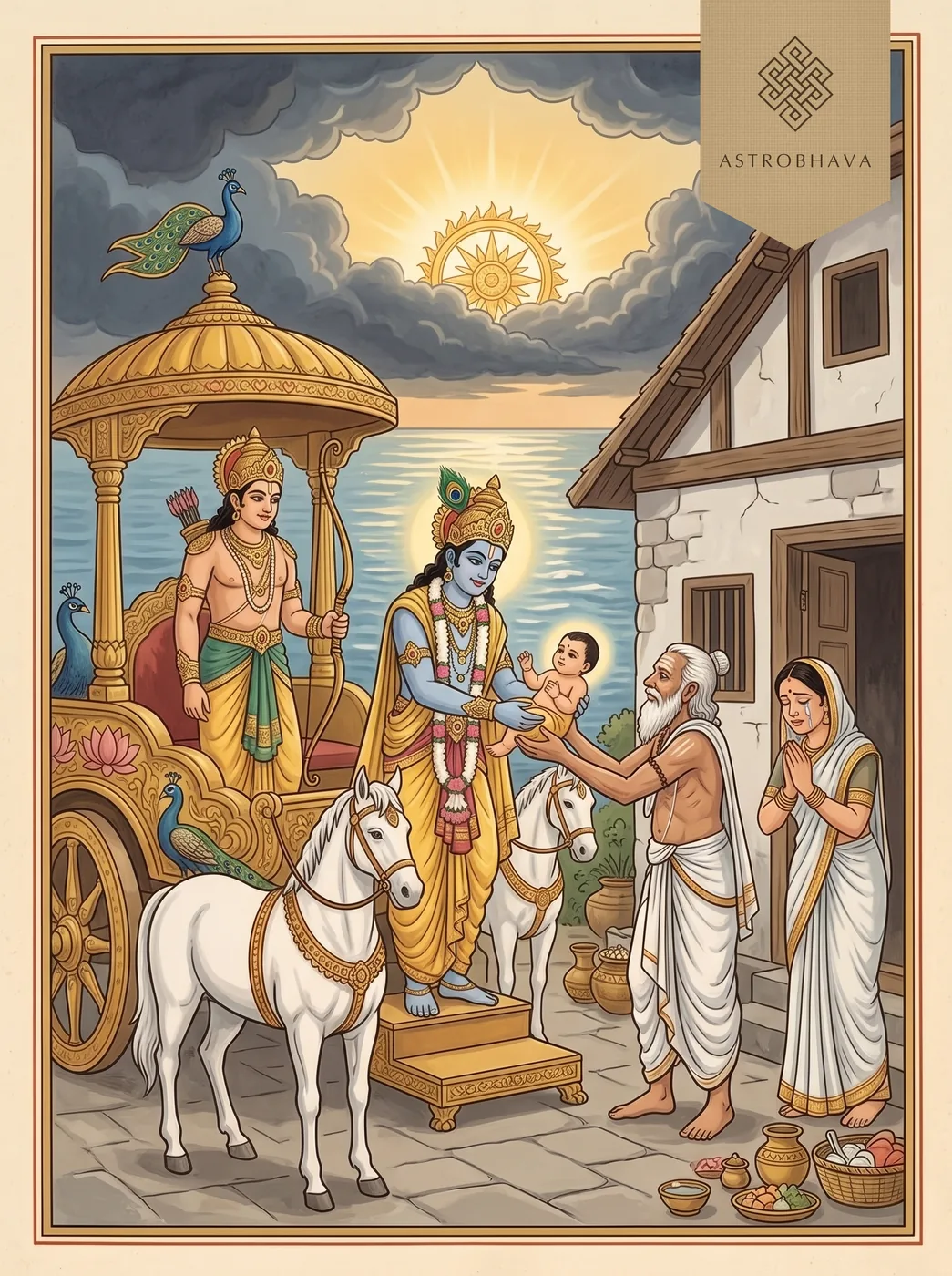
वैकुण्ठादागतं कृष्णं रथस्थं करुणानिधिम् । किरीटिसारथिं पुत्रमानयन्तं परात्परम् ॥Also known as Santana Gopala Mantra
In Devanagari, Tamil, Telugu, Kannada, Malayalam and English — with the meaning of every word, and the one syllable most people pronounce wrongly.
 The Santana Gopala Homam, performed for youBook →
What the Santan Gopal Mantra is
The Santan Gopal Mantra (Santana Gopala Mantra), 'Devakisuta Govinda Vasudeva Jagatpate', is a single anushtubh shloka of thirty-two syllables that calls Krishna by four titles, names him outright, and then asks plainly for a child. Its viniyoga gives Narada as the rishi, anushtubh as the metre and Sri Krishna as the deity, and states its use as japa for the sake of a son. The same shloka stands as verse 11 of the Santana Gopala Stotram, a hymn of 101 verses whose closing line places it in the khila portion of the Harivamsha, the appendix to the Mahabharata, as a conversation between Lakshmi and Keshava; the line returns there as verse 82. In the form printed here it follows a two-verse dhyana, a meditation picture in which Krishna comes back from Vaikuntha in Arjuna's chariot carrying a rescued infant. The request is made only after that scene is held in mind, and the verse closes in refuge rather than in a bargain.
The Brahmin's Lost Sons of Dvaraka
The dhyana does not picture Krishna as a baby. It recalls an episode told in the tenth book of the Bhagavata Purana, chapter 89. In Dvaraka a brahmin's wife bore son after son, and each infant died the moment it touched the ground. Every time, the father laid the small body at King Ugrasena's gate and blamed the ruler. After the ninth death Arjuna, then staying in the city, heard him and vowed to guard the next birth or enter fire in atonement. He closed the birthing room in a cage of arrows, yet the tenth child cried once and vanished bodily into the sky. Arjuna searched the cities of Yama, Indra, Agni and Varuna without finding him and prepared to keep his vow, until Krishna stopped him. Krishna then drove Arjuna westward past the seven oceans and the Lokaloka range into a darkness so thick that the horses lost their way, sending the Sudarshana disc ahead to cut a path. Beyond it, in a palace on the waters, Maha-Vishnu lay upon Ananta and said he had taken the boys only to draw the two of them to him. Krishna and Arjuna brought the children home in the very bodies in which they had disappeared. The dhyana's phrases 'the child who lay in the waters' and 'handing him to the Vedic brahmin' fix that moment of return.
The mantra, in six scripts
- देवकीसुत
- devakīsuta — son of Devaki
- गोविन्द
- govinda — Govinda, protector of cows
- वासुदेव
- vāsudeva — Vasudeva's son
- जगत्पते
- jagatpate — lord of the world
- देहि
- dehi — give
- मे
- me — to me
- तनयं
- tanayaṃ — a son
- कृष्ण
- kṛṣṇa — O Krishna
- त्वामहं
- tvāmahaṃ — I, to you
- शरणं
- śaraṇaṃ — for refuge
- गतः
- gataḥ — have come
Santan Gopal Mantra lyrics in full
The two-verse dhyana followed by the mantra-shloka, printed without the seed syllables some japa manuals place before it.
All 3 verses, in Sanskrit, Tamil, Telugu, Kannada, Malayalam and English, each with its meaning. Choose a script:
Download the Santan Gopal Mantra PDFAll 3 verses with their meanings, in Sanskrit. Free to print and keep.
वैकुण्ठादागतं कृष्णं रथस्थं करुणानिधिम् ।
किरीटिसारथिं पुत्रमानयन्तं परात्परम् ॥
வைகுண்டாதாகதம் க்ருஷ்ணம் ரதஸ்தம் கருணாநிதிம் ।
கிரீடிஸாரதிம் புத்ரமாநயந்தம் பராத்பரம் ॥
వైకుణ్ఠాదాగతం కృష్ణం రథస్థం కరుణానిధిమ్ ।
కిరీటిసారథిం పుత్రమానయన్తం పరాత్పరమ్ ॥
ವೈಕುಣ್ಠಾದಾಗತಂ ಕೃಷ್ಣಂ ರಥಸ್ಥಂ ಕರುಣಾನಿಧಿಮ್ ।
ಕಿರೀಟಿಸಾರಥಿಂ ಪುತ್ರಮಾನಯನ್ತಂ ಪರಾತ್ಪರಮ್ ॥
വൈകുണ്ഠാദാഗതം കൃഷ്ണം രഥസ്ഥം കരുണാനിധിമ് ।
കിരീടിസാരഥിം പുത്രമാനയന്തം പരാത്പരമ് ॥
vaikuṇṭhādāgataṃ kṛṣṇaṃ rathasthaṃ karuṇānidhim |
kirīṭisārathiṃ putramānayantaṃ parātparam ||
Krishna, the treasure-house of compassion, has come back from Vaikuntha seated in his chariot. He is the charioteer of Arjuna, the crowned one, the Supreme beyond the highest, and he is bringing back a lost son.
आदाय तं जलस्थं च गुरवे वैदिकाय च ।
अर्पयन्तं महाभागं ध्यायेत् पुत्रार्थमच्युतम् ॥
ஆதாய தம் ஜலஸ்தம் ச குரவே வைதிகாய ச ।
அர்பயந்தம் மஹாபாகம் த்யாயேத் புத்ரார்தமச்யுதம் ॥
ఆదాయ తం జలస్థం చ గురవే వైదికాయ చ ।
అర్పయన్తం మహాభాగం ధ్యాయేత్ పుత్రార్థమచ్యుతమ్ ॥
ಆದಾಯ ತಂ ಜಲಸ್ಥಂ ಚ ಗುರವೇ ವೈದಿಕಾಯ ಚ ।
ಅರ್ಪಯನ್ತಂ ಮಹಾಭಾಗಂ ಧ್ಯಾಯೇತ್ ಪುತ್ರಾರ್ಥಮಚ್ಯುತಮ್ ॥
ആദായ തം ജലസ്ഥം ച ഗുരവേ വൈദികായ ച ।
അര്പയന്തം മഹാഭാഗം ധ്യായേത് പുത്രാര്ഥമച്യുതമ് ॥
ādāya taṃ jalasthaṃ ca gurave vaidikāya ca |
arpayantaṃ mahābhāgaṃ dhyāyet putrārthamacyutam ||
Taking up that child who had lain in the waters, he hands him over to the venerable Vedic brahmin. One who longs for a child should meditate on this most gracious Achyuta.
देवकीसुत गोविन्द वासुदेव जगत्पते ।
देहि मे तनयं कृष्ण त्वामहं शरणं गतः ॥
தேவகீஸுத கோவிந்த வாஸுதேவ ஜகத்பதே ।
தேஹி மே தநயம் க்ருஷ்ண த்வாமஹம் ஶரணம் கதஃ ॥
దేవకీసుత గోవిన్ద వాసుదేవ జగత్పతే ।
దేహి మే తనయం కృష్ణ త్వామహం శరణం గతః ॥
ದೇವಕೀಸುತ ಗೋವಿನ್ದ ವಾಸುದೇವ ಜಗತ್ಪತೇ ।
ದೇಹಿ ಮೇ ತನಯಂ ಕೃಷ್ಣ ತ್ವಾಮಹಂ ಶರಣಂ ಗತಃ ॥
ദേവകീസുത ഗോവിന്ദ വാസുദേവ ജഗത്പതേ ।
ദേഹി മേ തനയം കൃഷ്ണ ത്വാമഹം ശരണം ഗതഃ ॥
devakīsuta govinda vāsudeva jagatpate |
dehi me tanayaṃ kṛṣṇa tvāmahaṃ śaraṇaṃ gataḥ ||
O son of Devaki, Govinda, Vasudeva, Lord of the universe! Grant me a child, O Krishna; I have come to you for refuge.
The syllable people get wrong
The word tvāmahaṃ (त्वामहं) is two words joined, tvām aham, 'I ... you', so the first a is long: say tvaa-ma-ham, not 'tva-ma-ham' and not 'tu-vaa-ma-ham' with an added vowel.
When the Santan Gopal Mantra is chanted
Weekday. Thursday
Festival. Putrada Ekadashi
Questions
Have your chart read before you decide
Chanting is yours to do, and free. But which deity your situation calls for — and whether a mantra alone is the right response — depends on your chart. Sometimes it is; sometimes it is not.
- Over 30 years in the Guru–Sishya Parampara, from the age of five
- He reads every chart himself — 60 minutes, one to one, never delegated
- Charts are read only between sunrise and sunset, following tradition
