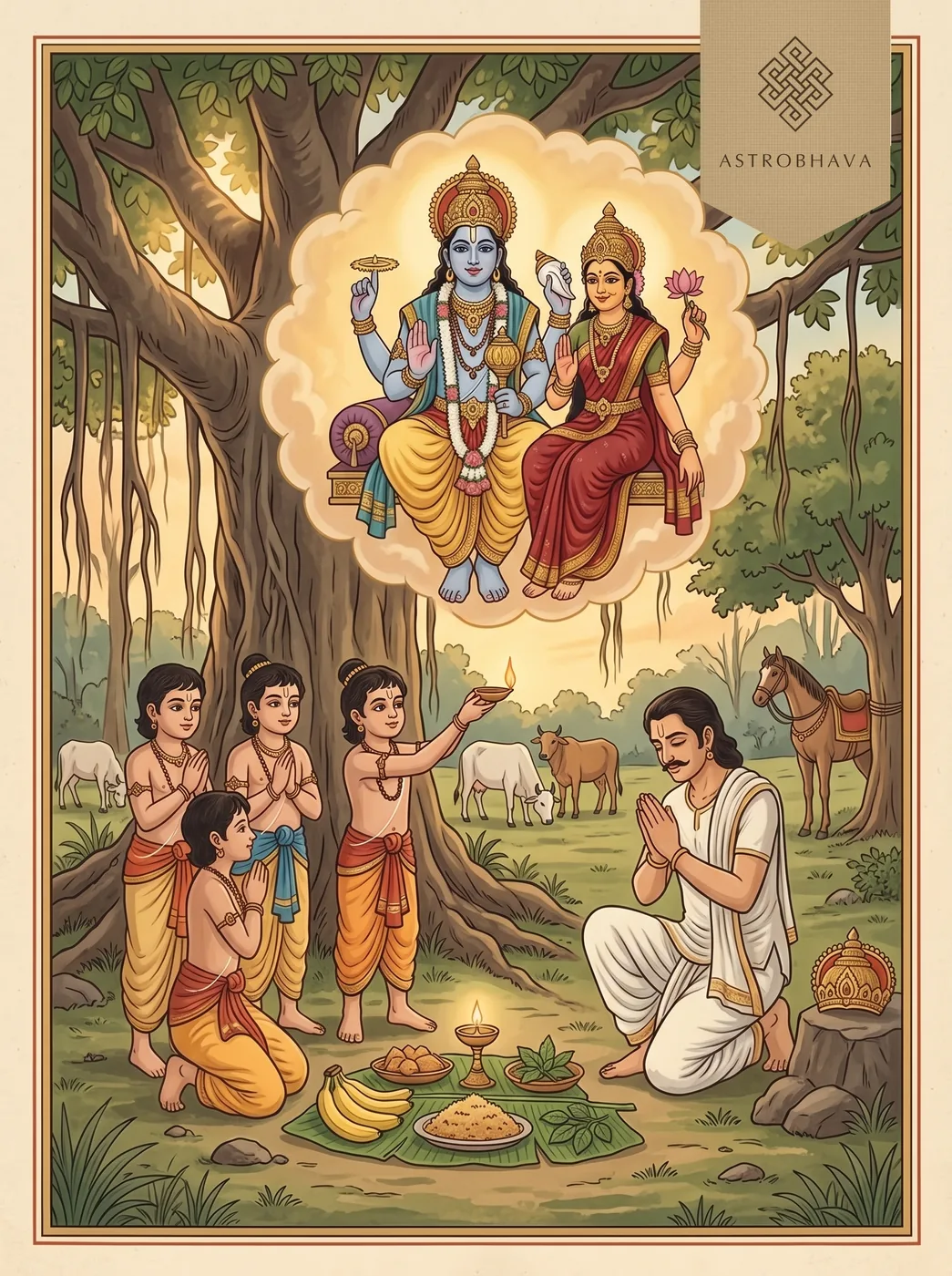
Satyanarayan Aarti
जय लक्ष्मी रमणा, स्वामी जय लक्ष्मी रमणा । सत्यनारायण स्वामी, जन पातक हरणा ॥Also known as Om Jai Lakshmi Ramana
In Devanagari, Tamil, Telugu, Kannada, Malayalam and English — with the meaning of every word, and the one syllable most people pronounce wrongly.
 A reading of your birth chartBook →
What the Satyanarayan Aarti is
The Satyanarayan Aarti, sung as 'Om Jai Lakshmi Ramana' and called Satyanarayan ji ki aarti in Hindi-speaking homes, is the lamp song that closes the Satyanarayan vrat katha. It addresses Vishnu as Satyanarayana, the Lord of Truth, under the name Lakshmi Ramana, the one in whom Lakshmi delights, and the refrain calls him the remover of the people's sins. The text is a traditional Hindi folk aarti with no known author: a refrain and eight short stanzas. The first stanza sets a heavenly scene, with Narada waving the lamp before a jewelled throne. Stanzas two to six then retell the katha in miniature, naming in turn the old Brahmin, the Bhil woodcutter, King Chandrachuda, the merchant who abandoned his vow, and the king who worshipped with cowherd boys. Stanza seven lists the offerings, and stanza eight carries the phala line. One family of the text closes instead with the signature 'kahat Shivanand Swami'; who that was has not been established.
The whole katha folded into stanzas
The aarti assumes its singers have just heard the Satyanarayan katha, so each stanza works as a one-line reminder of an episode. Most printed katha books present that story as five chapters of the Reva Khanda of the Skanda Purana, yet the chapters appear in the Bengali printings of that Purana and not in the Bombay edition, and Haraprasad Shastri judged them a late addition; a fuller form of the legend sits in the Pratisarga Parva of the Bhavishya Purana. According to the katha, Vishnu came to a poor Brahmin of Kashi in the guise of an old Brahmin and taught him the vrat, which stanza two compresses into the old Brahmin and the golden palace. A Bhil who carried firewood saw that worship and took it up: the 'durbal Bhil' of stanza three. The same stanza names King Chandrachuda, who follows the Bhavishya Purana, where a king of that name, beaten in the Vindhya hills, learns the rite and regains his throne; the Hindi katha books name other kings at this point, Ulkamukha and Chandraketu. Stanza four is the merchant who was granted a daughter, forgot his promise and suffered until he returned to the rite. Stanza six is King Tungadhvaja, who scorned the prasad of cowherds under a forest banyan, lost his fortune, and went back to worship beside them.
The mantra, in six scripts
- जय
- jaya — victory
- लक्ष्मी
- lakṣmī — Lakshmi
- रमणा
- ramaṇā — beloved, delighter of
- स्वामी
- svāmī — O Lord
- जय
- jaya — victory
- लक्ष्मी
- lakṣmī — Lakshmi
- रमणा
- ramaṇā — beloved, delighter of
- सत्यनारायण
- satyanārāyaṇa — Narayana, Lord of Truth
- स्वामी
- svāmī — O Lord
- जन
- jana — of the people
- पातक
- pātaka — sins
- हरणा
- haraṇā — remover
Satyanarayan Aarti lyrics in full
A refrain and eight stanzas. The line 'Om Jai Lakshmi Ramana, Swami Jai Lakshmi Ramana' is sung after every stanza, and the full refrain again at the close.
All 9 verses, in Hindi, Tamil, Telugu, Kannada, Malayalam and English, each with its meaning. Choose a script:
Download the Satyanarayan Aarti PDFAll 9 verses with their meanings, in Hindi. Free to print and keep.
जय लक्ष्मी रमणा, स्वामी जय लक्ष्मी रमणा ।
सत्यनारायण स्वामी, जन पातक हरणा ॥
ஜய லக்ஷ்மீ ரமணா, ஸ்வாமீ ஜய லக்ஷ்மீ ரமணா ।
ஸத்யநாராயண ஸ்வாமீ, ஜந பாதக ஹரணா ॥
జయ లక్ష్మీ రమణా, స్వామీ జయ లక్ష్మీ రమణా ।
సత్యనారాయణ స్వామీ, జన పాతక హరణా ॥
ಜಯ ಲಕ್ಷ್ಮೀ ರಮಣಾ, ಸ್ವಾಮೀ ಜಯ ಲಕ್ಷ್ಮೀ ರಮಣಾ ।
ಸತ್ಯನಾರಾಯಣ ಸ್ವಾಮೀ, ಜನ ಪಾತಕ ಹರಣಾ ॥
ജയ ലക്ഷ്മീ രമണാ, സ്വാമീ ജയ ലക്ഷ്മീ രമണാ ।
സത്യനാരായണ സ്വാമീ, ജന പാതക ഹരണാ ॥
jaya lakṣmī ramaṇā, svāmī jaya lakṣmī ramaṇā |
satyanārāyaṇa svāmī, jana pātaka haraṇā ||
Victory to the beloved of Lakshmi, O Lord, victory to the beloved of Lakshmi. O Lord Satyanarayana, remover of the sins of the people.
रत्न जड़ित सिंहासन, अद्भुत छवि राजै ।
नारद करत निराजन, घण्टा ध्वनि बाजै ॥
ரத்ந ஜடித ஸிம்ஹாஸந, அத்புத சவி ராஜை ।
நாரத கரத நிராஜந, கண்டா த்வநி பாஜை ॥
రత్న జడిత సింహాసన, అద్భుత ఛవి రాజై ।
నారద కరత నిరాజన, ఘణ్టా ధ్వని బాజై ॥
ರತ್ನ ಜಡಿತ ಸಿಂಹಾಸನ, ಅದ್ಭುತ ಛವಿ ರಾಜೈ ।
ನಾರದ ಕರತ ನಿರಾಜನ, ಘಣ್ಟಾ ಧ್ವನಿ ಬಾಜೈ ॥
രത്ന ജഡിത സിംഹാസന, അദ്ഭുത ഛവി രാജൈ ।
നാരദ കരത നിരാജന, ഘണ്ടാ ധ്വനി ബാജൈ ॥
ratna jaṛita siṃhāsana, adbhuta chavi rājai |
nārada karata nirājana, ghaṇṭā dhvani bājai ||
On a throne set with jewels your wondrous form shines. Narada waves the lamp before you and the sound of the bell rings out.
प्रकट भये कलि कारण, द्विज को दर्श दियो ।
बूढ़ा ब्राह्मण बनकर, कंचन महल कियो ॥
ப்ரகட பயே கலி காரண, த்விஜ கோ தர்ஶ தியோ ।
பூடா ப்ராஹ்மண பநகர, கம்சந மஹல கியோ ॥
ప్రకట భయే కలి కారణ, ద్విజ కో దర్శ దియో ।
బూఢా బ్రాహ్మణ బనకర, కంచన మహల కియో ॥
ಪ್ರಕಟ ಭಯೇ ಕಲಿ ಕಾರಣ, ದ್ವಿಜ ಕೋ ದರ್ಶ ದಿಯೋ ।
ಬೂಢಾ ಬ್ರಾಹ್ಮಣ ಬನಕರ, ಕಂಚನ ಮಹಲ ಕಿಯೋ ॥
പ്രകട ഭയേ കലി കാരണ, ദ്വിജ കോ ദര്ശ ദിയോ ।
ബൂഢാ ബ്രാഹ്മണ ബനകര, കംചന മഹല കിയോ ॥
prakaṭa bhaye kali kāraṇa, dvija ko darśa diyo |
būṛhā brāhmaṇa banakara, kaṃcana mahala kiyo ||
You appeared for the sake of the Kali age and gave your sight to a Brahmin. Taking the form of an old Brahmin, you turned his home into a golden palace.
दुर्बल भील कठारो, जिन पर कृपा करी ।
चन्द्रचूड़ एक राजा, तिनकी विपत्ति हरी ॥
துர்பல பீல கடாரோ, ஜிந பர க்ருபா கரீ ।
சந்த்ரசூட ஏக ராஜா, திநகீ விபத்தி ஹரீ ॥
దుర్బల భీల కఠారో, జిన పర కృపా కరీ ।
చన్ద్రచూడ ఏక రాజా, తినకీ విపత్తి హరీ ॥
ದುರ್ಬಲ ಭೀಲ ಕಠಾರೋ, ಜಿನ ಪರ ಕೃಪಾ ಕರೀ ।
ಚನ್ದ್ರಚೂಡ ಏಕ ರಾಜಾ, ತಿನಕೀ ವಿಪತ್ತಿ ಹರೀ ॥
ദുര്ബല ഭീല കഠാരോ, ജിന പര കൃപാ കരീ ।
ചന്ദ്രചൂഡ ഏക രാജാ, തിനകീ വിപത്തി ഹരീ ॥
durbala bhīla kaṭhāro, jina para kṛpā karī |
candracūṛa eka rājā, tinakī vipatti harī ||
You showed grace to the poor woodcutter of the Bhil people. You took away the misfortune of a king named Chandrachuda.
वैश्य मनोरथ पायो, श्रद्धा तज दीन्ही ।
सो फल भोग्यो प्रभुजी, फिर स्तुति कीन्हीं ॥
வைஶ்ய மநோரத பாயோ, ஶ்ரத்தா தஜ தீந்ஹீ ।
ஸோ பல போக்யோ ப்ரபுஜீ, பிர ஸ்துதி கீந்ஹீம் ॥
వైశ్య మనోరథ పాయో, శ్రద్ధా తజ దీన్హీ ।
సో ఫల భోగ్యో ప్రభుజీ, ఫిర స్తుతి కీన్హీం ॥
ವೈಶ್ಯ ಮನೋರಥ ಪಾಯೋ, ಶ್ರದ್ಧಾ ತಜ ದೀನ್ಹೀ ।
ಸೋ ಫಲ ಭೋಗ್ಯೋ ಪ್ರಭುಜೀ, ಫಿರ ಸ್ತುತಿ ಕೀನ್ಹೀಂ ॥
വൈശ്യ മനോരഥ പായോ, ശ്രദ്ധാ തജ ദീന്ഹീ ।
സോ ഫല ഭോഗ്യോ പ്രഭുജീ, ഫിര സ്തുതി കീന്ഹീം ॥
vaiśya manoratha pāyo, śraddhā taja dīnhī |
so phala bhogyo prabhujī, phira stuti kīnhīṃ ||
The merchant gained his wish, then gave up his faith. He suffered the result of that, O Lord, and then sang your praise again.
भाव भक्ति के कारण, छिन-छिन रूप धरयो ।
श्रद्धा धारण कीन्हीं, तिनको काज सरयो ॥
பாவ பக்தி கே காரண, சிந-சிந ரூப தரயோ ।
ஶ்ரத்தா தாரண கீந்ஹீம், திநகோ காஜ ஸரயோ ॥
భావ భక్తి కే కారణ, ఛిన-ఛిన రూప ధరయో ।
శ్రద్ధా ధారణ కీన్హీం, తినకో కాజ సరయో ॥
ಭಾವ ಭಕ್ತಿ ಕೇ ಕಾರಣ, ಛಿನ-ಛಿನ ರೂಪ ಧರಯೋ ।
ಶ್ರದ್ಧಾ ಧಾರಣ ಕೀನ್ಹೀಂ, ತಿನಕೋ ಕಾಜ ಸರಯೋ ॥
ഭാവ ഭക്തി കേ കാരണ, ഛിന-ഛിന രൂപ ധരയോ ।
ശ്രദ്ധാ ധാരണ കീന്ഹീം, തിനകോ കാജ സരയോ ॥
bhāva bhakti ke kāraṇa, china-china rūpa dharayo |
śraddhā dhāraṇa kīnhīṃ, tinako kāja sarayo ||
For the sake of heartfelt devotion you took on form after form, moment by moment. Those who held to faith had their work fulfilled.
ग्वाल-बाल संग राजा, वन में भक्ति करी ।
मनवांछित फल दीन्हों, दीनदयाल हरी ॥
க்வால-பால ஸம்க ராஜா, வந மேம் பக்தி கரீ ।
மநவாம்சித பல தீந்ஹோம், தீநதயால ஹரீ ॥
గ్వాల-బాల సంగ రాజా, వన మేం భక్తి కరీ ।
మనవాంఛిత ఫల దీన్హోం, దీనదయాల హరీ ॥
ಗ್ವಾಲ-ಬಾಲ ಸಂಗ ರಾಜಾ, ವನ ಮೇಂ ಭಕ್ತಿ ಕರೀ ।
ಮನವಾಂಛಿತ ಫಲ ದೀನ್ಹೋಂ, ದೀನದಯಾಲ ಹರೀ ॥
ഗ്വാല-ബാല സംഗ രാജാ, വന മേം ഭക്തി കരീ ।
മനവാംഛിത ഫല ദീന്ഹോം, ദീനദയാല ഹരീ ॥
gvāla-bāla saṃga rājā, vana meṃ bhakti karī |
manavāṃchita phala dīnhoṃ, dīnadayāla harī ||
A king worshipped you in the forest together with the cowherd boys. Hari, kind to the lowly, gave him the fruit his heart desired.
चढ़त प्रसाद सवायो, कदली फल, मेवा ।
धूप दीप तुलसी से, राजी सत्यदेवा ॥
சடத ப்ரஸாத ஸவாயோ, கதலீ பல, மேவா ।
தூப தீப துலஸீ ஸே, ராஜீ ஸத்யதேவா ॥
చఢత ప్రసాద సవాయో, కదలీ ఫల, మేవా ।
ధూప దీప తులసీ సే, రాజీ సత్యదేవా ॥
ಚಢತ ಪ್ರಸಾದ ಸವಾಯೋ, ಕದಲೀ ಫಲ, ಮೇವಾ ।
ಧೂಪ ದೀಪ ತುಲಸೀ ಸೇ, ರಾಜೀ ಸತ್ಯದೇವಾ ॥
ചഢത പ്രസാദ സവായോ, കദലീ ഫല, മേവാ ।
ധൂപ ദീപ തുലസീ സേ, രാജീ സത്യദേവാ ॥
caṛhata prasāda savāyo, kadalī phala, mevā |
dhūpa dīpa tulasī se, rājī satyadevā ||
Prasad is offered in a measure and a quarter, with bananas and dried fruits. With incense, lamp and tulasi, the Lord of Truth is pleased.
श्री सत्यनारायण जी की आरती, जो कोई नर गावै ।
ऋद्धि-सिद्धि सुख-संपत्ति, सहज रूप पावे ॥
ஶ்ரீ ஸத்யநாராயண ஜீ கீ ஆரதீ, ஜோ கோஈ நர காவை ।
ருத்தி-ஸித்தி ஸுக-ஸம்பத்தி, ஸஹஜ ரூப பாவே ॥
శ్రీ సత్యనారాయణ జీ కీ ఆరతీ, జో కోఈ నర గావై ।
ఋద్ధి-సిద్ధి సుఖ-సంపత్తి, సహజ రూప పావే ॥
ಶ್ರೀ ಸತ್ಯನಾರಾಯಣ ಜೀ ಕೀ ಆರತೀ, ಜೋ ಕೋಈ ನರ ಗಾವೈ ।
ಋದ್ಧಿ-ಸಿದ್ಧಿ ಸುಖ-ಸಂಪತ್ತಿ, ಸಹಜ ರೂಪ ಪಾವೇ ॥
ശ്രീ സത്യനാരായണ ജീ കീ ആരതീ, ജോ കോഈ നര ഗാവൈ ।
ഋദ്ധി-സിദ്ധി സുഖ-സംപത്തി, സഹജ രൂപ പാവേ ॥
śrī satyanārāyaṇa jī kī āratī, jo koī nara gāvai |
ṛddhi-siddhi sukha-saṃpatti, sahaja rūpa pāve ||
Whoever sings this aarti of Shri Satyanarayana - the verse says that person easily gains prosperity, success, happiness and wealth.
The syllable people get wrong
In stanza 3, kaṭhāro (कठारो), the woodcutter, has an aspirated retroflex ṭh: curl the tongue back and release a puff of air, ka-THAA-ro. Saying it with the soft dental th of kathā (story) turns the Bhil woodcutter into a word about storytelling.
When the Satyanarayan Aarti is chanted
Weekday. Thursday
Festival. Purnima Satyanarayan vrat katha
Questions
Have your chart read before you decide
Chanting is yours to do, and free. But which deity your situation calls for — and whether a mantra alone is the right response — depends on your chart. Sometimes it is; sometimes it is not.
- Over 30 years in the Guru–Sishya Parampara, from the age of five
- He reads every chart himself — 60 minutes, one to one, never delegated
- Charts are read only between sunrise and sunset, following tradition
