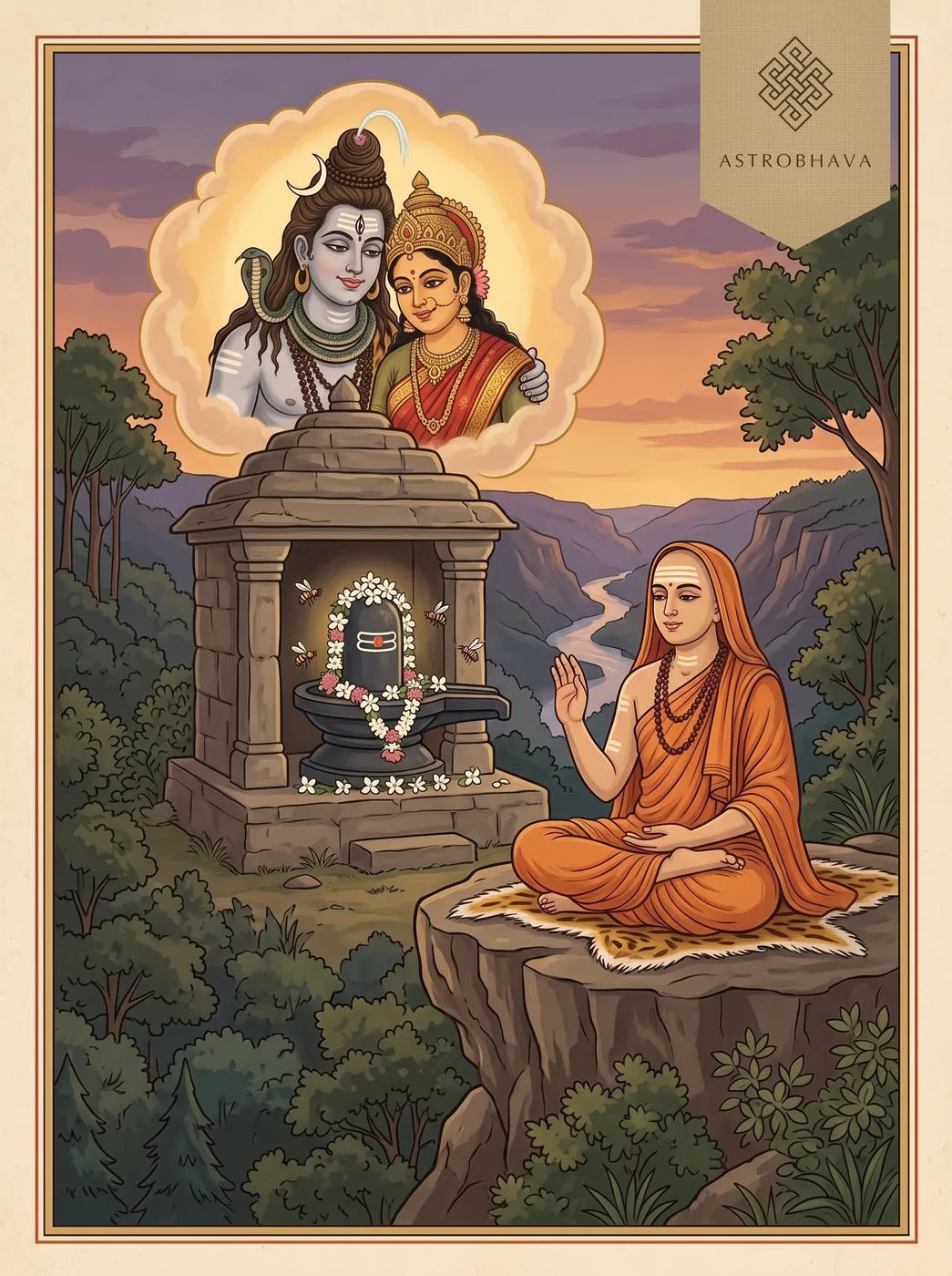
Shivananda Lahari
कलाभ्यां चूडालङ्कृतशशिकलाभ्यां निजतपःफलाभ्यां भक्तेषु प्रकटितफलाभ्यां भवतु मे । शिवाभ्यामस्तोकत्रिभुवनशिवाभ्यां हृदि पुनर्भवाभ्यामानन्दस्फुरदनुभवाभ्यां नतिरियम् ॥Also known as Sivanandalahari
In Devanagari, Tamil, Telugu, Kannada, Malayalam and English — with the meaning of every word, and the one syllable most people pronounce wrongly.
 A reading of your birth chartBook →
What the Shivananda Lahari is
The Shivananda Lahari, 'the wave of Shiva's bliss', is a Sanskrit hymn to Shiva in one hundred verses, traditionally attributed to Adi Shankaracharya. Its title is the last word of verse 2, which pictures a stream that rises from the river of Shiva's deeds and comes to rest in the lake of the poet's heart. Verse 1 bows to Shiva and Parvati together, every epithet in the grammatical dual. Verses 1 to 27 run in the shikharini metre; from verse 28 the longer shardulavikridita takes over, and the last third moves through shorter metres. The argument builds steadily: verse 6 dismisses the logician's pot and cloth, verses 11 and 12 say no stage of life and no dwelling matters if the mind rests at Shiva's feet, verse 20 asks him to tie down the monkey of the heart, verse 61 defines devotion, and verse 81 describes one freed while still alive. There is no closing phala shruti.
A hymn tied to the hill of Srisailam
According to tradition, Shankara composed the hymn while staying at Srisailam in the Kurnool district of Andhra Pradesh, the hill shrine of Mallikarjuna, one of the twelve Jyotirlingas, and of the goddess Bhramarambika. The text itself supports the link. Verse 50 salutes the great Linga Mallikarjuna of Srisailam, embraced by Parvati, playing on the jasmine (mallika) that opens at dusk, and verse 51 asks the Lord who dwells on Srisailam to roam like a king of bees in the lotus of the poet's mind. Commentators note that these two central verses of the hundred are the strongest internal sign of where it was written. A second temple lives inside verse 63. In four lines it compresses the story of Kannappa, the hunter of Srikalahasti, who walked to the linga in his sandals, bathed it with water carried in his mouth and offered meat he had tasted first, and who, the verse says, became the crown of devotees. Temple tradition at Srikalahasti still honours Kannappa before the presiding deity. The hymn found a wide readership in the Telugu country: Balijepalli Lakshmikantham Kavi published a Telugu translation with word-by-word explanation at Guntur in 1916, and Swami Tapasyananda of the Ramakrishna Order later issued an English translation with notes.
The mantra, in six scripts
- कलाभ्यां
- kalābhyāṃ — to the two who are all the arts
- चूडालङ्कृतशशिकलाभ्यां
- cūḍālaṅkṛtaśaśikalābhyāṃ — who wear the crescent moon as a crest
- निजतपःफलाभ्यां
- nijatapaḥphalābhyāṃ — each the fruit of the other's austerity
- भक्तेषु
- bhakteṣu — among devotees
- प्रकटितफलाभ्यां
- prakaṭitaphalābhyāṃ — who make the fruits appear
- भवतु
- bhavatu — may it be
- मे
- me — my
- शिवाभ्यामस्तोकत्रिभुवनशिवाभ्यां
- śivābhyāmastokatribhuvanaśivābhyāṃ — to Shiva and Shiva's consort, boundless good of the three worlds
- हृदि
- hṛdi — in the heart
- पुनर्भवाभ्यामानन्दस्फुरदनुभवाभ्यां
- punarbhavābhyāmānandasphuradanubhavābhyāṃ — who shine ever anew, known in blissful experience
- नतिरियम्
- natiriyam — this salutation
Shivananda Lahari lyrics in full
All one hundred verses, from the salutation to Shiva and Parvati to the closing verse that sets praise aside.
All 100 verses, in Sanskrit, Tamil, Telugu, Kannada, Malayalam and English, each with its meaning. Choose a script:
Download the Shivananda Lahari PDFAll 100 verses with their meanings, in Sanskrit. Free to print and keep.
कलाभ्यां चूडालङ्कृतशशिकलाभ्यां निजतपःफलाभ्यां भक्तेषु प्रकटितफलाभ्यां भवतु मे ।
शिवाभ्यामस्तोकत्रिभुवनशिवाभ्यां हृदि पुनर्भवाभ्यामानन्दस्फुरदनुभवाभ्यां नतिरियम् ॥
கலாப்யாம் சூடாலங்க்ருதஶஶிகலாப்யாம் நிஜதபஃபலாப்யாம் பக்தேஷு ப்ரகடிதபலாப்யாம் பவது மே ।
ஶிவாப்யாமஸ்தோகத்ரிபுவநஶிவாப்யாம் ஹ்ருதி புநர்பவாப்யாமாநந்தஸ்புரதநுபவாப்யாம் நதிரியம் ॥
కలాభ్యాం చూడాలఙ్కృతశశికలాభ్యాం నిజతపఃఫలాభ్యాం భక్తేషు ప్రకటితఫలాభ్యాం భవతు మే ।
శివాభ్యామస్తోకత్రిభువనశివాభ్యాం హృది పునర్భవాభ్యామానన్దస్ఫురదనుభవాభ్యాం నతిరియమ్ ॥
ಕಲಾಭ್ಯಾಂ ಚೂಡಾಲಙ್ಕೃತಶಶಿಕಲಾಭ್ಯಾಂ ನಿಜತಪಃಫಲಾಭ್ಯಾಂ ಭಕ್ತೇಷು ಪ್ರಕಟಿತಫಲಾಭ್ಯಾಂ ಭವತು ಮೇ ।
ಶಿವಾಭ್ಯಾಮಸ್ತೋಕತ್ರಿಭುವನಶಿವಾಭ್ಯಾಂ ಹೃದಿ ಪುನರ್ಭವಾಭ್ಯಾಮಾನನ್ದಸ್ಫುರದನುಭವಾಭ್ಯಾಂ ನತಿರಿಯಮ್ ॥
കലാഭ്യാം ചൂഡാലങ്കൃതശശികലാഭ്യാം നിജതപഃഫലാഭ്യാം ഭക്തേഷു പ്രകടിതഫലാഭ്യാം ഭവതു മേ ।
ശിവാഭ്യാമസ്തോകത്രിഭുവനശിവാഭ്യാം ഹൃദി പുനര്ഭവാഭ്യാമാനന്ദസ്ഫുരദനുഭവാഭ്യാം നതിരിയമ് ॥
kalābhyāṃ cūḍālaṅkṛtaśaśikalābhyāṃ nijatapaḥphalābhyāṃ bhakteṣu prakaṭitaphalābhyāṃ bhavatu me |
śivābhyāmastokatribhuvanaśivābhyāṃ hṛdi punarbhavābhyāmānandasphuradanubhavābhyāṃ natiriyam ||
I offer this salutation to Shiva and Parvati, the embodiments of all arts, who wear the crescent moon as a crest, who are the fruit of each other's austerity and grant fruits to their devotees. They bring boundless good to the three worlds, shine ever anew in my heart, and are known in the bliss of direct experience.
गलन्ती शम्भो त्वच्चरितसरितः किल्बिषरजो दलन्ती धीकुल्यासरणिषु पतन्ती विजयताम् ।
दिशन्ती संसारभ्रमणपरितापोपशमनं वसन्ती मच्चेतोह्रदभुवि शिवानन्दलहरी ॥
கலந்தீ ஶம்போ த்வச்சரிதஸரிதஃ கில்பிஷரஜோ தலந்தீ தீகுல்யாஸரணிஷு பதந்தீ விஜயதாம் ।
திஶந்தீ ஸம்ஸாரப்ரமணபரிதாபோபஶமநம் வஸந்தீ மச்சேதோஹ்ரதபுவி ஶிவாநந்தலஹரீ ॥
గలన్తీ శమ్భో త్వచ్చరితసరితః కిల్బిషరజో దలన్తీ ధీకుల్యాసరణిషు పతన్తీ విజయతామ్ ।
దిశన్తీ సంసారభ్రమణపరితాపోపశమనం వసన్తీ మచ్చేతోహ్రదభువి శివానన్దలహరీ ॥
ಗಲನ್ತೀ ಶಮ್ಭೋ ತ್ವಚ್ಚರಿತಸರಿತಃ ಕಿಲ್ಬಿಷರಜೋ ದಲನ್ತೀ ಧೀಕುಲ್ಯಾಸರಣಿಷು ಪತನ್ತೀ ವಿಜಯತಾಮ್ ।
ದಿಶನ್ತೀ ಸಂಸಾರಭ್ರಮಣಪರಿತಾಪೋಪಶಮನಂ ವಸನ್ತೀ ಮಚ್ಚೇತೋಹ್ರದಭುವಿ ಶಿವಾನನ್ದಲಹರೀ ॥
ഗലന്തീ ശമ്ഭോ ത്വച്ചരിതസരിതഃ കില്ബിഷരജോ ദലന്തീ ധീകുല്യാസരണിഷു പതന്തീ വിജയതാമ് ।
ദിശന്തീ സംസാരഭ്രമണപരിതാപോപശമനം വസന്തീ മച്ചേതോഹ്രദഭുവി ശിവാനന്ദലഹരീ ॥
galantī śambho tvaccaritasaritaḥ kilbiṣarajo dalantī dhīkulyāsaraṇiṣu patantī vijayatām |
diśantī saṃsārabhramaṇaparitāpopaśamanaṃ vasantī maccetohradabhuvi śivānandalaharī ||
May the stream of Shiva's bliss flow on victorious: it springs from the river of your deeds, O Shambhu, washes away the dust of sin, runs through the channels of the intellect, cools the fever of wandering in worldly life, and comes to rest in the lake of my heart.
त्रयीवेद्यं हृद्यं त्रिपुरहरमाद्यं त्रिनयनं जटाभारोदारं चलदुरगहारं मृगधरम् ।
महादेवं देवं मयि सदयभावं पशुपतिं चिदालम्बं साम्बं शिवमतिविडम्बं हृदि भजे ॥
த்ரயீவேத்யம் ஹ்ருத்யம் த்ரிபுரஹரமாத்யம் த்ரிநயநம் ஜடாபாரோதாரம் சலதுரகஹாரம் ம்ருகதரம் ।
மஹாதேவம் தேவம் மயி ஸதயபாவம் பஶுபதிம் சிதாலம்பம் ஸாம்பம் ஶிவமதிவிடம்பம் ஹ்ருதி பஜே ॥
త్రయీవేద్యం హృద్యం త్రిపురహరమాద్యం త్రినయనం జటాభారోదారం చలదురగహారం మృగధరమ్ ।
మహాదేవం దేవం మయి సదయభావం పశుపతిం చిదాలమ్బం సామ్బం శివమతివిడమ్బం హృది భజే ॥
ತ್ರಯೀವೇದ್ಯಂ ಹೃದ್ಯಂ ತ್ರಿಪುರಹರಮಾದ್ಯಂ ತ್ರಿನಯನಂ ಜಟಾಭಾರೋದಾರಂ ಚಲದುರಗಹಾರಂ ಮೃಗಧರಮ್ ।
ಮಹಾದೇವಂ ದೇವಂ ಮಯಿ ಸದಯಭಾವಂ ಪಶುಪತಿಂ ಚಿದಾಲಮ್ಬಂ ಸಾಮ್ಬಂ ಶಿವಮತಿವಿಡಮ್ಬಂ ಹೃದಿ ಭಜೇ ॥
ത്രയീവേദ്യം ഹൃദ്യം ത്രിപുരഹരമാദ്യം ത്രിനയനം ജടാഭാരോദാരം ചലദുരഗഹാരം മൃഗധരമ് ।
മഹാദേവം ദേവം മയി സദയഭാവം പശുപതിം ചിദാലമ്ബം സാമ്ബം ശിവമതിവിഡമ്ബം ഹൃദി ഭജേ ॥
trayīvedyaṃ hṛdyaṃ tripuraharamādyaṃ trinayanaṃ jaṭābhārodāraṃ caladuragahāraṃ mṛgadharam |
mahādevaṃ devaṃ mayi sadayabhāvaṃ paśupatiṃ cidālambaṃ sāmbaṃ śivamativiḍambaṃ hṛdi bhaje ||
In my heart I worship Shiva with Amba: known through the three Vedas, beloved, destroyer of the three cities, the first, three-eyed, splendid with matted locks, wearing a moving serpent as a garland and holding a deer. He is the great god, Lord of beings, kind toward me, the support of consciousness, beyond all imitation.
सहस्रं वर्तन्ते जगति विबुधाः क्षुद्रफलदा न मन्ये स्वप्ने वा तदनुसरणं तत्कृतफलम् ।
हरिब्रह्मादीनामपि निकटभाजामसुलभं चिरं याचे शम्भो शिव तव पदाम्भोजभजनम् ॥
ஸஹஸ்ரம் வர்தந்தே ஜகதி விபுதாஃ க்ஷுத்ரபலதா ந மந்யே ஸ்வப்நே வா ததநுஸரணம் தத்க்ருதபலம் ।
ஹரிப்ரஹ்மாதீநாமபி நிகடபாஜாமஸுலபம் சிரம் யாசே ஶம்போ ஶிவ தவ பதாம்போஜபஜநம் ॥
సహస్రం వర్తన్తే జగతి విబుధాః క్షుద్రఫలదా న మన్యే స్వప్నే వా తదనుసరణం తత్కృతఫలమ్ ।
హరిబ్రహ్మాదీనామపి నికటభాజామసులభం చిరం యాచే శమ్భో శివ తవ పదామ్భోజభజనమ్ ॥
ಸಹಸ್ರಂ ವರ್ತನ್ತೇ ಜಗತಿ ವಿಬುಧಾಃ ಕ್ಷುದ್ರಫಲದಾ ನ ಮನ್ಯೇ ಸ್ವಪ್ನೇ ವಾ ತದನುಸರಣಂ ತತ್ಕೃತಫಲಮ್ ।
ಹರಿಬ್ರಹ್ಮಾದೀನಾಮಪಿ ನಿಕಟಭಾಜಾಮಸುಲಭಂ ಚಿರಂ ಯಾಚೇ ಶಮ್ಭೋ ಶಿವ ತವ ಪದಾಮ್ಭೋಜಭಜನಮ್ ॥
സഹസ്രം വര്തന്തേ ജഗതി വിബുധാഃ ക്ഷുദ്രഫലദാ ന മന്യേ സ്വപ്നേ വാ തദനുസരണം തത്കൃതഫലമ് ।
ഹരിബ്രഹ്മാദീനാമപി നികടഭാജാമസുലഭം ചിരം യാചേ ശമ്ഭോ ശിവ തവ പദാമ്ഭോജഭജനമ് ॥
sahasraṃ vartante jagati vibudhāḥ kṣudraphaladā na manye svapne vā tadanusaraṇaṃ tatkṛtaphalam |
haribrahmādīnāmapi nikaṭabhājāmasulabhaṃ ciraṃ yāce śambho śiva tava padāmbhojabhajanam ||
There are thousands of gods in the world who give petty rewards; even in a dream I do not care to follow them or for what they give. O Shambhu, O Shiva, I ask always only for worship of your lotus feet, which is hard to obtain even for Vishnu, Brahma and those close to you.
स्मृतौ शास्त्रे वैद्ये शकुनकवितागानफणितौ पुराणे मन्त्रे वा स्तुतिनटनहास्येष्वचतुरः ।
कथं राज्ञां प्रीतिर्भवति मयि कोऽहं पशुपते पशुं मां सर्वज्ञ प्रथितकृपया पालय विभो ॥
ஸ்ம்ருதௌ ஶாஸ்த்ரே வைத்யே ஶகுநகவிதாகாநபணிதௌ புராணே மந்த்ரே வா ஸ்துதிநடநஹாஸ்யேஷ்வசதுரஃ ।
கதம் ராஜ்ஞாம் ப்ரீதிர்பவதி மயி கோஹம் பஶுபதே பஶும் மாம் ஸர்வஜ்ஞ ப்ரதிதக்ருபயா பாலய விபோ ॥
స్మృతౌ శాస్త్రే వైద్యే శకునకవితాగానఫణితౌ పురాణే మన్త్రే వా స్తుతినటనహాస్యేష్వచతురః ।
కథం రాజ్ఞాం ప్రీతిర్భవతి మయి కోఽహం పశుపతే పశుం మాం సర్వజ్ఞ ప్రథితకృపయా పాలయ విభో ॥
ಸ್ಮೃತೌ ಶಾಸ್ತ್ರೇ ವೈದ್ಯೇ ಶಕುನಕವಿತಾಗಾನಫಣಿತೌ ಪುರಾಣೇ ಮನ್ತ್ರೇ ವಾ ಸ್ತುತಿನಟನಹಾಸ್ಯೇಷ್ವಚತುರಃ ।
ಕಥಂ ರಾಜ್ಞಾಂ ಪ್ರೀತಿರ್ಭವತಿ ಮಯಿ ಕೋಽಹಂ ಪಶುಪತೇ ಪಶುಂ ಮಾಂ ಸರ್ವಜ್ಞ ಪ್ರಥಿತಕೃಪಯಾ ಪಾಲಯ ವಿಭೋ ॥
സ്മൃതൌ ശാസ്ത്രേ വൈദ്യേ ശകുനകവിതാഗാനഫണിതൌ പുരാണേ മന്ത്രേ വാ സ്തുതിനടനഹാസ്യേഷ്വചതുരഃ ।
കഥം രാജ്ഞാം പ്രീതിര്ഭവതി മയി കോഽഹം പശുപതേ പശും മാം സര്വജ്ഞ പ്രഥിതകൃപയാ പാലയ വിഭോ ॥
smṛtau śāstre vaidye śakunakavitāgānaphaṇitau purāṇe mantre vā stutinaṭanahāsyeṣvacaturaḥ |
kathaṃ rājñāṃ prītirbhavati mayi ko'haṃ paśupate paśuṃ māṃ sarvajña prathitakṛpayā pālaya vibho ||
I am unskilled in law, scripture, medicine, omens, poetry, song, Puranas, mantras, praise, dance and wit; how could kings ever be pleased with me? Who am I, O Pashupati? O all-knowing Lord of famed compassion, protect me, your creature.
घटो वा मृत्पिण्डोऽप्यणुरपि च धूमोऽग्निरचलः पटो वा तन्तुर्वा परिहरति किं घोरशमनम् ।
वृथा कण्ठक्षोभं वहसि तरसा तर्कवचसा पदाम्भोजं शम्भोर्भज परमसौख्यं व्रज सुधीः ॥
கடோ வா ம்ருத்பிண்டோப்யணுரபி ச தூமோக்நிரசலஃ படோ வா தந்துர்வா பரிஹரதி கிம் கோரஶமநம் ।
வ்ருதா கண்டக்ஷோபம் வஹஸி தரஸா தர்கவசஸா பதாம்போஜம் ஶம்போர்பஜ பரமஸௌக்யம் வ்ரஜ ஸுதீஃ ॥
ఘటో వా మృత్పిణ్డోఽప్యణురపి చ ధూమోఽగ్నిరచలః పటో వా తన్తుర్వా పరిహరతి కిం ఘోరశమనమ్ ।
వృథా కణ్ఠక్షోభం వహసి తరసా తర్కవచసా పదామ్భోజం శమ్భోర్భజ పరమసౌఖ్యం వ్రజ సుధీః ॥
ಘಟೋ ವಾ ಮೃತ್ಪಿಣ್ಡೋಽಪ್ಯಣುರಪಿ ಚ ಧೂಮೋಽಗ್ನಿರಚಲಃ ಪಟೋ ವಾ ತನ್ತುರ್ವಾ ಪರಿಹರತಿ ಕಿಂ ಘೋರಶಮನಮ್ ।
ವೃಥಾ ಕಣ್ಠಕ್ಷೋಭಂ ವಹಸಿ ತರಸಾ ತರ್ಕವಚಸಾ ಪದಾಮ್ಭೋಜಂ ಶಮ್ಭೋರ್ಭಜ ಪರಮಸೌಖ್ಯಂ ವ್ರಜ ಸುಧೀಃ ॥
ഘടോ വാ മൃത്പിണ്ഡോഽപ്യണുരപി ച ധൂമോഽഗ്നിരചലഃ പടോ വാ തന്തുര്വാ പരിഹരതി കിം ഘോരശമനമ് ।
വൃഥാ കണ്ഠക്ഷോഭം വഹസി തരസാ തര്കവചസാ പദാമ്ഭോജം ശമ്ഭോര്ഭജ പരമസൌഖ്യം വ്രജ സുധീഃ ॥
ghaṭo vā mṛtpiṇḍo'pyaṇurapi ca dhūmo'gniracalaḥ paṭo vā tanturvā pariharati kiṃ ghoraśamanam |
vṛthā kaṇṭhakṣobhaṃ vahasi tarasā tarkavacasā padāmbhojaṃ śambhorbhaja paramasaukhyaṃ vraja sudhīḥ ||
Pot, lump of clay, atom, smoke and fire, mountain, cloth and thread: can such arguments ward off fearsome death? You only strain your throat in hurried debate. Wise one, worship the lotus feet of Shambhu and reach the highest happiness.
मनस्ते पादाब्जे निवसतु वचः स्तोत्रफणितौ करौ चाभ्यर्चायां श्रुतिरपि कथाकर्णनविधौ ।
तव ध्याने बुद्धिर्नयनयुगलं मूर्तिविभवे परग्रन्थान् कैर्वा परमशिव जाने परमतः ॥
மநஸ்தே பாதாப்ஜே நிவஸது வசஃ ஸ்தோத்ரபணிதௌ கரௌ சாப்யர்சாயாம் ஶ்ருதிரபி கதாகர்ணநவிதௌ ।
தவ த்யாநே புத்திர்நயநயுகலம் மூர்திவிபவே பரக்ரந்தாந் கைர்வா பரமஶிவ ஜாநே பரமதஃ ॥
మనస్తే పాదాబ్జే నివసతు వచః స్తోత్రఫణితౌ కరౌ చాభ్యర్చాయాం శ్రుతిరపి కథాకర్ణనవిధౌ ।
తవ ధ్యానే బుద్ధిర్నయనయుగలం మూర్తివిభవే పరగ్రన్థాన్ కైర్వా పరమశివ జానే పరమతః ॥
ಮನಸ್ತೇ ಪಾದಾಬ್ಜೇ ನಿವಸತು ವಚಃ ಸ್ತೋತ್ರಫಣಿತೌ ಕರೌ ಚಾಭ್ಯರ್ಚಾಯಾಂ ಶ್ರುತಿರಪಿ ಕಥಾಕರ್ಣನವಿಧೌ ।
ತವ ಧ್ಯಾನೇ ಬುದ್ಧಿರ್ನಯನಯುಗಲಂ ಮೂರ್ತಿವಿಭವೇ ಪರಗ್ರನ್ಥಾನ್ ಕೈರ್ವಾ ಪರಮಶಿವ ಜಾನೇ ಪರಮತಃ ॥
മനസ്തേ പാദാബ്ജേ നിവസതു വചഃ സ്തോത്രഫണിതൌ കരൌ ചാഭ്യര്ചായാം ശ്രുതിരപി കഥാകര്ണനവിധൌ ।
തവ ധ്യാനേ ബുദ്ധിര്നയനയുഗലം മൂര്തിവിഭവേ പരഗ്രന്ഥാന് കൈര്വാ പരമശിവ ജാനേ പരമതഃ ॥
manaste pādābje nivasatu vacaḥ stotraphaṇitau karau cābhyarcāyāṃ śrutirapi kathākarṇanavidhau |
tava dhyāne buddhirnayanayugalaṃ mūrtivibhave paragranthān kairvā paramaśiva jāne paramataḥ ||
Let my mind dwell at your lotus feet, my speech in hymns to you, my hands in your worship, my ears in hearing your stories, my intellect in meditation on you and my eyes in the glory of your form. O Supreme Shiva, with what faculties then could I study other texts?
यथा बुद्धिः शुक्तौ रजतमिति काचाश्मनि मणिर्जले पैष्टे क्षीरं भवति मृगतृष्णासु सलिलम् ।
तथा देवभ्रान्त्या भजति भवदन्यं जडजनो महादेवेशं त्वां मनसि च न मत्वा पशुपते ॥
யதா புத்திஃ ஶுக்தௌ ரஜதமிதி காசாஶ்மநி மணிர்ஜலே பைஷ்டே க்ஷீரம் பவதி ம்ருகத்ருஷ்ணாஸு ஸலிலம் ।
ததா தேவப்ராந்த்யா பஜதி பவதந்யம் ஜடஜநோ மஹாதேவேஶம் த்வாம் மநஸி ச ந மத்வா பஶுபதே ॥
యథా బుద్ధిః శుక్తౌ రజతమితి కాచాశ్మని మణిర్జలే పైష్టే క్షీరం భవతి మృగతృష్ణాసు సలిలమ్ ।
తథా దేవభ్రాన్త్యా భజతి భవదన్యం జడజనో మహాదేవేశం త్వాం మనసి చ న మత్వా పశుపతే ॥
ಯಥಾ ಬುದ್ಧಿಃ ಶುಕ್ತೌ ರಜತಮಿತಿ ಕಾಚಾಶ್ಮನಿ ಮಣಿರ್ಜಲೇ ಪೈಷ್ಟೇ ಕ್ಷೀರಂ ಭವತಿ ಮೃಗತೃಷ್ಣಾಸು ಸಲಿಲಮ್ ।
ತಥಾ ದೇವಭ್ರಾನ್ತ್ಯಾ ಭಜತಿ ಭವದನ್ಯಂ ಜಡಜನೋ ಮಹಾದೇವೇಶಂ ತ್ವಾಂ ಮನಸಿ ಚ ನ ಮತ್ವಾ ಪಶುಪತೇ ॥
യഥാ ബുദ്ധിഃ ശുക്തൌ രജതമിതി കാചാശ്മനി മണിര്ജലേ പൈഷ്ടേ ക്ഷീരം ഭവതി മൃഗതൃഷ്ണാസു സലിലമ് ।
തഥാ ദേവഭ്രാന്ത്യാ ഭജതി ഭവദന്യം ജഡജനോ മഹാദേവേശം ത്വാം മനസി ച ന മത്വാ പശുപതേ ॥
yathā buddhiḥ śuktau rajatamiti kācāśmani maṇirjale paiṣṭe kṣīraṃ bhavati mṛgatṛṣṇāsu salilam |
tathā devabhrāntyā bhajati bhavadanyaṃ jaḍajano mahādeveśaṃ tvāṃ manasi ca na matvā paśupate ||
As one mistakes mother-of-pearl for silver, glass for a gem, water mixed with flour for milk, and a mirage for water, so the deluded person worships others as God, not holding you, the Lord of gods, in mind, O Pashupati.
गभीरे कासारे विशति विजने घोरविपिने विशाले शैले च भ्रमति कुसुमार्थं जडमतिः ।
समर्प्यैकं चेतः सरसिजमुमानाथ भवते सुखेनावस्थातुं जन इह न जानाति किमहो ॥
கபீரே காஸாரே விஶதி விஜநே கோரவிபிநே விஶாலே ஶைலே ச ப்ரமதி குஸுமார்தம் ஜடமதிஃ ।
ஸமர்ப்யைகம் சேதஃ ஸரஸிஜமுமாநாத பவதே ஸுகேநாவஸ்தாதும் ஜந இஹ ந ஜாநாதி கிமஹோ ॥
గభీరే కాసారే విశతి విజనే ఘోరవిపినే విశాలే శైలే చ భ్రమతి కుసుమార్థం జడమతిః ।
సమర్ప్యైకం చేతః సరసిజముమానాథ భవతే సుఖేనావస్థాతుం జన ఇహ న జానాతి కిమహో ॥
ಗಭೀರೇ ಕಾಸಾರೇ ವಿಶತಿ ವಿಜನೇ ಘೋರವಿಪಿನೇ ವಿಶಾಲೇ ಶೈಲೇ ಚ ಭ್ರಮತಿ ಕುಸುಮಾರ್ಥಂ ಜಡಮತಿಃ ।
ಸಮರ್ಪ್ಯೈಕಂ ಚೇತಃ ಸರಸಿಜಮುಮಾನಾಥ ಭವತೇ ಸುಖೇನಾವಸ್ಥಾತುಂ ಜನ ಇಹ ನ ಜಾನಾತಿ ಕಿಮಹೋ ॥
ഗഭീരേ കാസാരേ വിശതി വിജനേ ഘോരവിപിനേ വിശാലേ ശൈലേ ച ഭ്രമതി കുസുമാര്ഥം ജഡമതിഃ ।
സമര്പ്യൈകം ചേതഃ സരസിജമുമാനാഥ ഭവതേ സുഖേനാവസ്ഥാതും ജന ഇഹ ന ജാനാതി കിമഹോ ॥
gabhīre kāsāre viśati vijane ghoravipine viśāle śaile ca bhramati kusumārthaṃ jaḍamatiḥ |
samarpyaikaṃ cetaḥ sarasijamumānātha bhavate sukhenāvasthātuṃ jana iha na jānāti kimaho ||
The dull-witted man plunges into deep lakes, enters lonely fearful forests and wanders over vast mountains in search of flowers. Alas, he does not know how to offer you the single lotus of his heart, O Lord of Uma, and live here in peace.
नरत्वं देवत्वं नगवनमृगत्वं मशकता पशुत्वं कीटत्वं भवतु विहगत्वादि जननम् ।
सदा त्वत्पादाब्जस्मरणपरमानन्दलहरीविहारासक्तं चेद्धृदयमिह किं तेन वपुषा ॥
நரத்வம் தேவத்வம் நகவநம்ருகத்வம் மஶகதா பஶுத்வம் கீடத்வம் பவது விஹகத்வாதி ஜநநம் ।
ஸதா த்வத்பாதாப்ஜஸ்மரணபரமாநந்தலஹரீவிஹாராஸக்தம் சேத்த்ருதயமிஹ கிம் தேந வபுஷா ॥
నరత్వం దేవత్వం నగవనమృగత్వం మశకతా పశుత్వం కీటత్వం భవతు విహగత్వాది జననమ్ ।
సదా త్వత్పాదాబ్జస్మరణపరమానన్దలహరీవిహారాసక్తం చేద్ధృదయమిహ కిం తేన వపుషా ॥
ನರತ್ವಂ ದೇವತ್ವಂ ನಗವನಮೃಗತ್ವಂ ಮಶಕತಾ ಪಶುತ್ವಂ ಕೀಟತ್ವಂ ಭವತು ವಿಹಗತ್ವಾದಿ ಜನನಮ್ ।
ಸದಾ ತ್ವತ್ಪಾದಾಬ್ಜಸ್ಮರಣಪರಮಾನನ್ದಲಹರೀವಿಹಾರಾಸಕ್ತಂ ಚೇದ್ಧೃದಯಮಿಹ ಕಿಂ ತೇನ ವಪುಷಾ ॥
നരത്വം ദേവത്വം നഗവനമൃഗത്വം മശകതാ പശുത്വം കീടത്വം ഭവതു വിഹഗത്വാദി ജനനമ് ।
സദാ ത്വത്പാദാബ്ജസ്മരണപരമാനന്ദലഹരീവിഹാരാസക്തം ചേദ്ധൃദയമിഹ കിം തേന വപുഷാ ॥
naratvaṃ devatvaṃ nagavanamṛgatvaṃ maśakatā paśutvaṃ kīṭatvaṃ bhavatu vihagatvādi jananam |
sadā tvatpādābjasmaraṇaparamānandalaharīvihārāsaktaṃ ceddhṛdayamiha kiṃ tena vapuṣā ||
Let my birth be as a man, a god, a beast of the hill forests, a mosquito, an animal, a worm or a bird. If the heart is always absorbed in the waves of supreme bliss that come from remembering your lotus feet, what does the body matter?
वटुर्वा गेही वा यतिरपि जटी वा तदितरो नरो वा यः कश्चिद्भवतु भव किं तेन भवति ।
यदीयं हृत्पद्मं यदि भवदधीनं पशुपते तदीयस्त्वं शम्भो भवसि भवभारं च वहसि ॥
வடுர்வா கேஹீ வா யதிரபி ஜடீ வா ததிதரோ நரோ வா யஃ கஶ்சித்பவது பவ கிம் தேந பவதி ।
யதீயம் ஹ்ருத்பத்மம் யதி பவததீநம் பஶுபதே ததீயஸ்த்வம் ஶம்போ பவஸி பவபாரம் ச வஹஸி ॥
వటుర్వా గేహీ వా యతిరపి జటీ వా తదితరో నరో వా యః కశ్చిద్భవతు భవ కిం తేన భవతి ।
యదీయం హృత్పద్మం యది భవదధీనం పశుపతే తదీయస్త్వం శమ్భో భవసి భవభారం చ వహసి ॥
ವಟುರ್ವಾ ಗೇಹೀ ವಾ ಯತಿರಪಿ ಜಟೀ ವಾ ತದಿತರೋ ನರೋ ವಾ ಯಃ ಕಶ್ಚಿದ್ಭವತು ಭವ ಕಿಂ ತೇನ ಭವತಿ ।
ಯದೀಯಂ ಹೃತ್ಪದ್ಮಂ ಯದಿ ಭವದಧೀನಂ ಪಶುಪತೇ ತದೀಯಸ್ತ್ವಂ ಶಮ್ಭೋ ಭವಸಿ ಭವಭಾರಂ ಚ ವಹಸಿ ॥
വടുര്വാ ഗേഹീ വാ യതിരപി ജടീ വാ തദിതരോ നരോ വാ യഃ കശ്ചിദ്ഭവതു ഭവ കിം തേന ഭവതി ।
യദീയം ഹൃത്പദ്മം യദി ഭവദധീനം പശുപതേ തദീയസ്ത്വം ശമ്ഭോ ഭവസി ഭവഭാരം ച വഹസി ॥
vaṭurvā gehī vā yatirapi jaṭī vā taditaro naro vā yaḥ kaścidbhavatu bhava kiṃ tena bhavati |
yadīyaṃ hṛtpadmaṃ yadi bhavadadhīnaṃ paśupate tadīyastvaṃ śambho bhavasi bhavabhāraṃ ca vahasi ||
Whether one is a student, a householder, an ascetic, one with matted hair or anyone else, what difference does that make, O Lord? If a person's heart-lotus is given over to you, O Pashupati, then you become his, O Shambhu, and carry his burden of worldly life.
गुहायां गेहे वा बहिरपि वने वाद्रिशिखरे जले वा वह्नौ वा वसतु वसतेः किं वद फलम् ।
सदा यस्यैवान्तःकरणमपि शम्भो तव पदे स्थितं चेद्योगोऽसौ स च परमयोगी स च सुखी ॥
குஹாயாம் கேஹே வா பஹிரபி வநே வாத்ரிஶிகரே ஜலே வா வஹ்நௌ வா வஸது வஸதேஃ கிம் வத பலம் ।
ஸதா யஸ்யைவாந்தஃகரணமபி ஶம்போ தவ பதே ஸ்திதம் சேத்யோகோஸௌ ஸ ச பரமயோகீ ஸ ச ஸுகீ ॥
గుహాయాం గేహే వా బహిరపి వనే వాద్రిశిఖరే జలే వా వహ్నౌ వా వసతు వసతేః కిం వద ఫలమ్ ।
సదా యస్యైవాన్తఃకరణమపి శమ్భో తవ పదే స్థితం చేద్యోగోఽసౌ స చ పరమయోగీ స చ సుఖీ ॥
ಗುಹಾಯಾಂ ಗೇಹೇ ವಾ ಬಹಿರಪಿ ವನೇ ವಾದ್ರಿಶಿಖರೇ ಜಲೇ ವಾ ವಹ್ನೌ ವಾ ವಸತು ವಸತೇಃ ಕಿಂ ವದ ಫಲಮ್ ।
ಸದಾ ಯಸ್ಯೈವಾನ್ತಃಕರಣಮಪಿ ಶಮ್ಭೋ ತವ ಪದೇ ಸ್ಥಿತಂ ಚೇದ್ಯೋಗೋಽಸೌ ಸ ಚ ಪರಮಯೋಗೀ ಸ ಚ ಸುಖೀ ॥
ഗുഹായാം ഗേഹേ വാ ബഹിരപി വനേ വാദ്രിശിഖരേ ജലേ വാ വഹ്നൌ വാ വസതു വസതേഃ കിം വദ ഫലമ് ।
സദാ യസ്യൈവാന്തഃകരണമപി ശമ്ഭോ തവ പദേ സ്ഥിതം ചേദ്യോഗോഽസൌ സ ച പരമയോഗീ സ ച സുഖീ ॥
guhāyāṃ gehe vā bahirapi vane vādriśikhare jale vā vahnau vā vasatu vasateḥ kiṃ vada phalam |
sadā yasyaivāntaḥkaraṇamapi śambho tava pade sthitaṃ cedyogo'sau sa ca paramayogī sa ca sukhī ||
Whether one lives in a cave, a house, outdoors, in a forest, on a mountain peak, in water or in fire, tell me, what does the dwelling matter? If one's inner mind is always fixed at your feet, O Shambhu, that is yoga; such a person is the supreme yogi and is truly happy.
असारे संसारे निजभजनदूरे जडधिया भ्रमन्तं मामन्धं परमकृपया पातुमुचितम् ।
मदन्यः को दीनस्तव कृपणरक्षातिनिपुणस्त्वदन्यः को वा मे त्रिजगति शरण्यः पशुपते ॥
அஸாரே ஸம்ஸாரே நிஜபஜநதூரே ஜடதியா ப்ரமந்தம் மாமந்தம் பரமக்ருபயா பாதுமுசிதம் ।
மதந்யஃ கோ தீநஸ்தவ க்ருபணரக்ஷாதிநிபுணஸ்த்வதந்யஃ கோ வா மே த்ரிஜகதி ஶரண்யஃ பஶுபதே ॥
అసారే సంసారే నిజభజనదూరే జడధియా భ్రమన్తం మామన్ధం పరమకృపయా పాతుముచితమ్ ।
మదన్యః కో దీనస్తవ కృపణరక్షాతినిపుణస్త్వదన్యః కో వా మే త్రిజగతి శరణ్యః పశుపతే ॥
ಅಸಾರೇ ಸಂಸಾರೇ ನಿಜಭಜನದೂರೇ ಜಡಧಿಯಾ ಭ್ರಮನ್ತಂ ಮಾಮನ್ಧಂ ಪರಮಕೃಪಯಾ ಪಾತುಮುಚಿತಮ್ ।
ಮದನ್ಯಃ ಕೋ ದೀನಸ್ತವ ಕೃಪಣರಕ್ಷಾತಿನಿಪುಣಸ್ತ್ವದನ್ಯಃ ಕೋ ವಾ ಮೇ ತ್ರಿಜಗತಿ ಶರಣ್ಯಃ ಪಶುಪತೇ ॥
അസാരേ സംസാരേ നിജഭജനദൂരേ ജഡധിയാ ഭ്രമന്തം മാമന്ധം പരമകൃപയാ പാതുമുചിതമ് ।
മദന്യഃ കോ ദീനസ്തവ കൃപണരക്ഷാതിനിപുണസ്ത്വദന്യഃ കോ വാ മേ ത്രിജഗതി ശരണ്യഃ പശുപതേ ॥
asāre saṃsāre nijabhajanadūre jaḍadhiyā bhramantaṃ māmandhaṃ paramakṛpayā pātumucitam |
madanyaḥ ko dīnastava kṛpaṇarakṣātinipuṇastvadanyaḥ ko vā me trijagati śaraṇyaḥ paśupate ||
In this empty worldly life, far from your worship, I wander blind with a dull mind; it is fitting that you protect me out of your great compassion. Who is more wretched than I, and who but you, skilled in rescuing the helpless, is my refuge in the three worlds, O Pashupati?
प्रभुस्त्वं दीनानां खलु परमबन्धुः पशुपते प्रमुख्योऽहं तेषामपि किमुत बन्धुत्वमनयोः ।
त्वयैव क्षन्तव्याः शिव मदपराधाश्च सकलाः प्रयत्नात्कर्तव्यं मदवनमियं बन्धुसरणिः ॥
ப்ரபுஸ்த்வம் தீநாநாம் கலு பரமபந்துஃ பஶுபதே ப்ரமுக்யோஹம் தேஷாமபி கிமுத பந்துத்வமநயோஃ ।
த்வயைவ க்ஷந்தவ்யாஃ ஶிவ மதபராதாஶ்ச ஸகலாஃ ப்ரயத்நாத்கர்தவ்யம் மதவநமியம் பந்துஸரணிஃ ॥
ప్రభుస్త్వం దీనానాం ఖలు పరమబన్ధుః పశుపతే ప్రముఖ్యోఽహం తేషామపి కిముత బన్ధుత్వమనయోః ।
త్వయైవ క్షన్తవ్యాః శివ మదపరాధాశ్చ సకలాః ప్రయత్నాత్కర్తవ్యం మదవనమియం బన్ధుసరణిః ॥
ಪ್ರಭುಸ್ತ್ವಂ ದೀನಾನಾಂ ಖಲು ಪರಮಬನ್ಧುಃ ಪಶುಪತೇ ಪ್ರಮುಖ್ಯೋಽಹಂ ತೇಷಾಮಪಿ ಕಿಮುತ ಬನ್ಧುತ್ವಮನಯೋಃ ।
ತ್ವಯೈವ ಕ್ಷನ್ತವ್ಯಾಃ ಶಿವ ಮದಪರಾಧಾಶ್ಚ ಸಕಲಾಃ ಪ್ರಯತ್ನಾತ್ಕರ್ತವ್ಯಂ ಮದವನಮಿಯಂ ಬನ್ಧುಸರಣಿಃ ॥
പ്രഭുസ്ത്വം ദീനാനാം ഖലു പരമബന്ധുഃ പശുപതേ പ്രമുഖ്യോഽഹം തേഷാമപി കിമുത ബന്ധുത്വമനയോഃ ।
ത്വയൈവ ക്ഷന്തവ്യാഃ ശിവ മദപരാധാശ്ച സകലാഃ പ്രയത്നാത്കര്തവ്യം മദവനമിയം ബന്ധുസരണിഃ ॥
prabhustvaṃ dīnānāṃ khalu paramabandhuḥ paśupate pramukhyo'haṃ teṣāmapi kimuta bandhutvamanayoḥ |
tvayaiva kṣantavyāḥ śiva madaparādhāśca sakalāḥ prayatnātkartavyaṃ madavanamiyaṃ bandhusaraṇiḥ ||
You are the Lord of the helpless and their dearest kinsman, O Pashupati, and I am foremost among them; what more need be said of the bond between us? Shiva, all my faults are for you alone to forgive, and my protection is for you to take up with care; this is the way of kinship.
उपेक्षा नो चेत् किं न हरसि भवद्ध्यानविमुखां दुराशाभूयिष्ठां विधिलिपिमशक्तो यदि भवान् ।
शिरस्तद्वैधात्रं न न खलु सुवृत्तं पशुपते कथं वा निर्यत्नं करनखमुखेनैव लुलितम् ॥
உபேக்ஷா நோ சேத் கிம் ந ஹரஸி பவத்த்யாநவிமுகாம் துராஶாபூயிஷ்டாம் விதிலிபிமஶக்தோ யதி பவாந் ।
ஶிரஸ்தத்வைதாத்ரம் ந ந கலு ஸுவ்ருத்தம் பஶுபதே கதம் வா நிர்யத்நம் கரநகமுகேநைவ லுலிதம் ॥
ఉపేక్షా నో చేత్ కిం న హరసి భవద్ధ్యానవిముఖాం దురాశాభూయిష్ఠాం విధిలిపిమశక్తో యది భవాన్ ।
శిరస్తద్వైధాత్రం న న ఖలు సువృత్తం పశుపతే కథం వా నిర్యత్నం కరనఖముఖేనైవ లులితమ్ ॥
ಉಪೇಕ್ಷಾ ನೋ ಚೇತ್ ಕಿಂ ನ ಹರಸಿ ಭವದ್ಧ್ಯಾನವಿಮುಖಾಂ ದುರಾಶಾಭೂಯಿಷ್ಠಾಂ ವಿಧಿಲಿಪಿಮಶಕ್ತೋ ಯದಿ ಭವಾನ್ ।
ಶಿರಸ್ತದ್ವೈಧಾತ್ರಂ ನ ನ ಖಲು ಸುವೃತ್ತಂ ಪಶುಪತೇ ಕಥಂ ವಾ ನಿರ್ಯತ್ನಂ ಕರನಖಮುಖೇನೈವ ಲುಲಿತಮ್ ॥
ഉപേക്ഷാ നോ ചേത് കിം ന ഹരസി ഭവദ്ധ്യാനവിമുഖാം ദുരാശാഭൂയിഷ്ഠാം വിധിലിപിമശക്തോ യദി ഭവാന് ।
ശിരസ്തദ്വൈധാത്രം ന ന ഖലു സുവൃത്തം പശുപതേ കഥം വാ നിര്യത്നം കരനഖമുഖേനൈവ ലുലിതമ് ॥
upekṣā no cet kiṃ na harasi bhavaddhyānavimukhāṃ durāśābhūyiṣṭhāṃ vidhilipimaśakto yadi bhavān |
śirastadvaidhātraṃ na na khalu suvṛttaṃ paśupate kathaṃ vā niryatnaṃ karanakhamukhenaiva lulitam ||
If you are not indifferent to me, why do you not wipe out the writing of fate on my brow, full of evil hopes and turned away from your meditation? If you cannot, O Pashupati, how was it that you plucked off Brahma's fifth head, surely no small thing, so easily with just the tip of a fingernail?
विरिञ्चिर्दीर्घायुर्भवतु भवता तत्परशिरश्चतुष्कं संरक्ष्यं स खलु भुवि दैन्यं लिखितवान् ।
विचारः को वा मां विशद कृपया पाति शिव ते कटाक्षव्यापारः स्वयमपि च दीनावनपरः ॥
விரிஞ்சிர்தீர்காயுர்பவது பவதா தத்பரஶிரஶ்சதுஷ்கம் ஸம்ரக்ஷ்யம் ஸ கலு புவி தைந்யம் லிகிதவாந் ।
விசாரஃ கோ வா மாம் விஶத க்ருபயா பாதி ஶிவ தே கடாக்ஷவ்யாபாரஃ ஸ்வயமபி ச தீநாவநபரஃ ॥
విరిఞ్చిర్దీర్ఘాయుర్భవతు భవతా తత్పరశిరశ్చతుష్కం సంరక్ష్యం స ఖలు భువి దైన్యం లిఖితవాన్ ।
విచారః కో వా మాం విశద కృపయా పాతి శివ తే కటాక్షవ్యాపారః స్వయమపి చ దీనావనపరః ॥
ವಿರಿಞ್ಚಿರ್ದೀರ್ಘಾಯುರ್ಭವತು ಭವತಾ ತತ್ಪರಶಿರಶ್ಚತುಷ್ಕಂ ಸಂರಕ್ಷ್ಯಂ ಸ ಖಲು ಭುವಿ ದೈನ್ಯಂ ಲಿಖಿತವಾನ್ ।
ವಿಚಾರಃ ಕೋ ವಾ ಮಾಂ ವಿಶದ ಕೃಪಯಾ ಪಾತಿ ಶಿವ ತೇ ಕಟಾಕ್ಷವ್ಯಾಪಾರಃ ಸ್ವಯಮಪಿ ಚ ದೀನಾವನಪರಃ ॥
വിരിഞ്ചിര്ദീര്ഘായുര്ഭവതു ഭവതാ തത്പരശിരശ്ചതുഷ്കം സംരക്ഷ്യം സ ഖലു ഭുവി ദൈന്യം ലിഖിതവാന് ।
വിചാരഃ കോ വാ മാം വിശദ കൃപയാ പാതി ശിവ തേ കടാക്ഷവ്യാപാരഃ സ്വയമപി ച ദീനാവനപരഃ ॥
viriñcirdīrghāyurbhavatu bhavatā tatparaśiraścatuṣkaṃ saṃrakṣyaṃ sa khalu bhuvi dainyaṃ likhitavān |
vicāraḥ ko vā māṃ viśada kṛpayā pāti śiva te kaṭākṣavyāpāraḥ svayamapi ca dīnāvanaparaḥ ||
Let Brahma live long; you must protect his remaining four heads, for he wrote misery on my brow here on earth. Why should I think about it? O Shiva of pure grace, the working of your glance, which by its nature protects the helpless, will itself protect me.
फलाद्वा पुण्यानां मयि करुणया वा त्वयि विभो प्रसन्नेऽपि स्वामिन् भवदमलपादाब्जयुगलम् ।
कथं पश्येयं मां स्थगयति नमःसम्भ्रमजुषां निलिम्पानां श्रेणिर्निजकनकमाणिक्यमकुटैः ॥
பலாத்வா புண்யாநாம் மயி கருணயா வா த்வயி விபோ ப்ரஸந்நேபி ஸ்வாமிந் பவதமலபாதாப்ஜயுகலம் ।
கதம் பஶ்யேயம் மாம் ஸ்தகயதி நமஃஸம்ப்ரமஜுஷாம் நிலிம்பாநாம் ஶ்ரேணிர்நிஜகநகமாணிக்யமகுடைஃ ॥
ఫలాద్వా పుణ్యానాం మయి కరుణయా వా త్వయి విభో ప్రసన్నేఽపి స్వామిన్ భవదమలపాదాబ్జయుగలమ్ ।
కథం పశ్యేయం మాం స్థగయతి నమఃసమ్భ్రమజుషాం నిలిమ్పానాం శ్రేణిర్నిజకనకమాణిక్యమకుటైః ॥
ಫಲಾದ್ವಾ ಪುಣ್ಯಾನಾಂ ಮಯಿ ಕರುಣಯಾ ವಾ ತ್ವಯಿ ವಿಭೋ ಪ್ರಸನ್ನೇಽಪಿ ಸ್ವಾಮಿನ್ ಭವದಮಲಪಾದಾಬ್ಜಯುಗಲಮ್ ।
ಕಥಂ ಪಶ್ಯೇಯಂ ಮಾಂ ಸ್ಥಗಯತಿ ನಮಃಸಮ್ಭ್ರಮಜುಷಾಂ ನಿಲಿಮ್ಪಾನಾಂ ಶ್ರೇಣಿರ್ನಿಜಕನಕಮಾಣಿಕ್ಯಮಕುಟೈಃ ॥
ഫലാദ്വാ പുണ്യാനാം മയി കരുണയാ വാ ത്വയി വിഭോ പ്രസന്നേഽപി സ്വാമിന് ഭവദമലപാദാബ്ജയുഗലമ് ।
കഥം പശ്യേയം മാം സ്ഥഗയതി നമഃസമ്ഭ്രമജുഷാം നിലിമ്പാനാം ശ്രേണിര്നിജകനകമാണിക്യമകുടൈഃ ॥
phalādvā puṇyānāṃ mayi karuṇayā vā tvayi vibho prasanne'pi svāmin bhavadamalapādābjayugalam |
kathaṃ paśyeyaṃ māṃ sthagayati namaḥsambhramajuṣāṃ nilimpānāṃ śreṇirnijakanakamāṇikyamakuṭaiḥ ||
O all-pervading Lord, whether through the fruit of my merits or through your compassion for me, even when you are pleased, how can I see your pure lotus feet? The row of gods bowing in haste hides them from me with their gold and ruby crowns.
त्वमेको लोकानां परमफलदो दिव्यपदवीं वहन्तस्त्वन्मूलां पुनरपि भजन्ते हरिमुखाः ।
कियद्वा दाक्षिण्यं तव शिव मदाशा च कियती कदा वा मद्रक्षां वहसि करुणापूरितदृशा ॥
த்வமேகோ லோகாநாம் பரமபலதோ திவ்யபதவீம் வஹந்தஸ்த்வந்மூலாம் புநரபி பஜந்தே ஹரிமுகாஃ ।
கியத்வா தாக்ஷிண்யம் தவ ஶிவ மதாஶா ச கியதீ கதா வா மத்ரக்ஷாம் வஹஸி கருணாபூரிதத்ருஶா ॥
త్వమేకో లోకానాం పరమఫలదో దివ్యపదవీం వహన్తస్త్వన్మూలాం పునరపి భజన్తే హరిముఖాః ।
కియద్వా దాక్షిణ్యం తవ శివ మదాశా చ కియతీ కదా వా మద్రక్షాం వహసి కరుణాపూరితదృశా ॥
ತ್ವಮೇಕೋ ಲೋಕಾನಾಂ ಪರಮಫಲದೋ ದಿವ್ಯಪದವೀಂ ವಹನ್ತಸ್ತ್ವನ್ಮೂಲಾಂ ಪುನರಪಿ ಭಜನ್ತೇ ಹರಿಮುಖಾಃ ।
ಕಿಯದ್ವಾ ದಾಕ್ಷಿಣ್ಯಂ ತವ ಶಿವ ಮದಾಶಾ ಚ ಕಿಯತೀ ಕದಾ ವಾ ಮದ್ರಕ್ಷಾಂ ವಹಸಿ ಕರುಣಾಪೂರಿತದೃಶಾ ॥
ത്വമേകോ ലോകാനാം പരമഫലദോ ദിവ്യപദവീം വഹന്തസ്ത്വന്മൂലാം പുനരപി ഭജന്തേ ഹരിമുഖാഃ ।
കിയദ്വാ ദാക്ഷിണ്യം തവ ശിവ മദാശാ ച കിയതീ കദാ വാ മദ്രക്ഷാം വഹസി കരുണാപൂരിതദൃശാ ॥
tvameko lokānāṃ paramaphalado divyapadavīṃ vahantastvanmūlāṃ punarapi bhajante harimukhāḥ |
kiyadvā dākṣiṇyaṃ tava śiva madāśā ca kiyatī kadā vā madrakṣāṃ vahasi karuṇāpūritadṛśā ||
You alone give the highest fruit to the worlds; Vishnu and the other gods hold their divine stations, which rest on you, and still worship you again and again. How great is your kindness, Shiva, and how great my hope! When will you take up my protection with eyes full of compassion?
दुराशाभूयिष्ठे दुरधिपगृहद्वारघटके दुरन्ते संसारे दुरितनिलये दुःखजनके ।
मदायासं किं न व्यपनयसि कस्योपकृतये वदेयं प्रीतिश्चेत्तव शिव कृतार्थाः खलु वयम् ॥
துராஶாபூயிஷ்டே துரதிபக்ருஹத்வாரகடகே துரந்தே ஸம்ஸாரே துரிதநிலயே துஃகஜநகே ।
மதாயாஸம் கிம் ந வ்யபநயஸி கஸ்யோபக்ருதயே வதேயம் ப்ரீதிஶ்சேத்தவ ஶிவ க்ருதார்தாஃ கலு வயம் ॥
దురాశాభూయిష్ఠే దురధిపగృహద్వారఘటకే దురన్తే సంసారే దురితనిలయే దుఃఖజనకే ।
మదాయాసం కిం న వ్యపనయసి కస్యోపకృతయే వదేయం ప్రీతిశ్చేత్తవ శివ కృతార్థాః ఖలు వయమ్ ॥
ದುರಾಶಾಭೂಯಿಷ್ಠೇ ದುರಧಿಪಗೃಹದ್ವಾರಘಟಕೇ ದುರನ್ತೇ ಸಂಸಾರೇ ದುರಿತನಿಲಯೇ ದುಃಖಜನಕೇ ।
ಮದಾಯಾಸಂ ಕಿಂ ನ ವ್ಯಪನಯಸಿ ಕಸ್ಯೋಪಕೃತಯೇ ವದೇಯಂ ಪ್ರೀತಿಶ್ಚೇತ್ತವ ಶಿವ ಕೃತಾರ್ಥಾಃ ಖಲು ವಯಮ್ ॥
ദുരാശാഭൂയിഷ്ഠേ ദുരധിപഗൃഹദ്വാരഘടകേ ദുരന്തേ സംസാരേ ദുരിതനിലയേ ദുഃഖജനകേ ।
മദായാസം കിം ന വ്യപനയസി കസ്യോപകൃതയേ വദേയം പ്രീതിശ്ചേത്തവ ശിവ കൃതാര്ഥാഃ ഖലു വയമ് ॥
durāśābhūyiṣṭhe duradhipagṛhadvāraghaṭake durante saṃsāre duritanilaye duḥkhajanake |
madāyāsaṃ kiṃ na vyapanayasi kasyopakṛtaye vadeyaṃ prītiścettava śiva kṛtārthāḥ khalu vayam ||
In this worldly life, full of evil hopes, bringing me to the doors of bad masters, endless, a home of sin and a cause of sorrow, why do you not remove my toil? For whose benefit is it, tell me? If it pleases you, Shiva, then we are indeed fulfilled.
सदा मोहाटव्यां चरति युवतीनां कुचगिरौ नटत्याशाशाखास्वटति झटिति स्वैरमभितः ।
कपालिन् भिक्षो मे हृदयकपिमत्यन्तचपलं दृढं भक्त्या बद्ध्वा शिव भवदधीनं कुरु विभो ॥
ஸதா மோஹாடவ்யாம் சரதி யுவதீநாம் குசகிரௌ நடத்யாஶாஶாகாஸ்வடதி சடிதி ஸ்வைரமபிதஃ ।
கபாலிந் பிக்ஷோ மே ஹ்ருதயகபிமத்யந்தசபலம் த்ருடம் பக்த்யா பத்த்வா ஶிவ பவததீநம் குரு விபோ ॥
సదా మోహాటవ్యాం చరతి యువతీనాం కుచగిరౌ నటత్యాశాశాఖాస్వటతి ఝటితి స్వైరమభితః ।
కపాలిన్ భిక్షో మే హృదయకపిమత్యన్తచపలం దృఢం భక్త్యా బద్ధ్వా శివ భవదధీనం కురు విభో ॥
ಸದಾ ಮೋಹಾಟವ್ಯಾಂ ಚರತಿ ಯುವತೀನಾಂ ಕುಚಗಿರೌ ನಟತ್ಯಾಶಾಶಾಖಾಸ್ವಟತಿ ಝಟಿತಿ ಸ್ವೈರಮಭಿತಃ ।
ಕಪಾಲಿನ್ ಭಿಕ್ಷೋ ಮೇ ಹೃದಯಕಪಿಮತ್ಯನ್ತಚಪಲಂ ದೃಢಂ ಭಕ್ತ್ಯಾ ಬದ್ಧ್ವಾ ಶಿವ ಭವದಧೀನಂ ಕುರು ವಿಭೋ ॥
സദാ മോഹാടവ്യാം ചരതി യുവതീനാം കുചഗിരൌ നടത്യാശാശാഖാസ്വടതി ഝടിതി സ്വൈരമഭിതഃ ।
കപാലിന് ഭിക്ഷോ മേ ഹൃദയകപിമത്യന്തചപലം ദൃഢം ഭക്ത്യാ ബദ്ധ്വാ ശിവ ഭവദധീനം കുരു വിഭോ ॥
sadā mohāṭavyāṃ carati yuvatīnāṃ kucagirau naṭatyāśāśākhāsvaṭati jhaṭiti svairamabhitaḥ |
kapālin bhikṣo me hṛdayakapimatyantacapalaṃ dṛḍhaṃ bhaktyā baddhvā śiva bhavadadhīnaṃ kuru vibho ||
My heart is a monkey: it roams the forest of delusion, dances on the hills of young women's breasts, leaps among the branches of desire and runs off wherever it likes. O Kapali, O mendicant, bind this very restless monkey firmly with devotion, Shiva, and make it your own.
धृतिस्तम्भाधारां दृढगुणनिबद्धां सगमनां विचित्रां पद्माढ्यां प्रतिदिवससन्मार्गघटिताम् ।
स्मरारे मच्चेतःस्फुटपटकुटीं प्राप्य विशदां जय स्वामिन् शक्त्या सह शिव गणैः सेवित विभो ॥
த்ருதிஸ்தம்பாதாராம் த்ருடகுணநிபத்தாம் ஸகமநாம் விசித்ராம் பத்மாட்யாம் ப்ரதிதிவஸஸந்மார்ககடிதாம் ।
ஸ்மராரே மச்சேதஃஸ்புடபடகுடீம் ப்ராப்ய விஶதாம் ஜய ஸ்வாமிந் ஶக்த்யா ஸஹ ஶிவ கணைஃ ஸேவித விபோ ॥
ధృతిస్తమ్భాధారాం దృఢగుణనిబద్ధాం సగమనాం విచిత్రాం పద్మాఢ్యాం ప్రతిదివససన్మార్గఘటితామ్ ।
స్మరారే మచ్చేతఃస్ఫుటపటకుటీం ప్రాప్య విశదాం జయ స్వామిన్ శక్త్యా సహ శివ గణైః సేవిత విభో ॥
ಧೃತಿಸ್ತಮ್ಭಾಧಾರಾಂ ದೃಢಗುಣನಿಬದ್ಧಾಂ ಸಗಮನಾಂ ವಿಚಿತ್ರಾಂ ಪದ್ಮಾಢ್ಯಾಂ ಪ್ರತಿದಿವಸಸನ್ಮಾರ್ಗಘಟಿತಾಮ್ ।
ಸ್ಮರಾರೇ ಮಚ್ಚೇತಃಸ್ಫುಟಪಟಕುಟೀಂ ಪ್ರಾಪ್ಯ ವಿಶದಾಂ ಜಯ ಸ್ವಾಮಿನ್ ಶಕ್ತ್ಯಾ ಸಹ ಶಿವ ಗಣೈಃ ಸೇವಿತ ವಿಭೋ ॥
ധൃതിസ്തമ്ഭാധാരാം ദൃഢഗുണനിബദ്ധാം സഗമനാം വിചിത്രാം പദ്മാഢ്യാം പ്രതിദിവസസന്മാര്ഗഘടിതാമ് ।
സ്മരാരേ മച്ചേതഃസ്ഫുടപടകുടീം പ്രാപ്യ വിശദാം ജയ സ്വാമിന് ശക്ത്യാ സഹ ശിവ ഗണൈഃ സേവിത വിഭോ ॥
dhṛtistambhādhārāṃ dṛḍhaguṇanibaddhāṃ sagamanāṃ vicitrāṃ padmāḍhyāṃ pratidivasasanmārgaghaṭitām |
smarāre maccetaḥsphuṭapaṭakuṭīṃ prāpya viśadāṃ jaya svāmin śaktyā saha śiva gaṇaiḥ sevita vibho ||
O enemy of Kama, take this bright cloth tent of my mind, set on the pole of steadfastness, firmly tied with strong cords of virtue, portable, colourful, adorned with lotuses and pitched each day on the good path. Lord, Shiva, served by your attendants, dwell in it victorious with Shakti.
प्रलोभाद्यैरर्थाहरणपरतन्त्रो धनिगृहे प्रवेशोद्युक्तः सन् भ्रमति बहुधा तस्करपते ।
इमं चेतश्चोरं कथमिह सहे शङ्कर विभो तवाधीनं कृत्वा मयि निरपराधे कुरु कृपाम् ॥
ப்ரலோபாத்யைரர்தாஹரணபரதந்த்ரோ தநிக்ருஹே ப்ரவேஶோத்யுக்தஃ ஸந் ப்ரமதி பஹுதா தஸ்கரபதே ।
இமம் சேதஶ்சோரம் கதமிஹ ஸஹே ஶங்கர விபோ தவாதீநம் க்ருத்வா மயி நிரபராதே குரு க்ருபாம் ॥
ప్రలోభాద్యైరర్థాహరణపరతన్త్రో ధనిగృహే ప్రవేశోద్యుక్తః సన్ భ్రమతి బహుధా తస్కరపతే ।
ఇమం చేతశ్చోరం కథమిహ సహే శఙ్కర విభో తవాధీనం కృత్వా మయి నిరపరాధే కురు కృపామ్ ॥
ಪ್ರಲೋಭಾದ್ಯೈರರ್ಥಾಹರಣಪರತನ್ತ್ರೋ ಧನಿಗೃಹೇ ಪ್ರವೇಶೋದ್ಯುಕ್ತಃ ಸನ್ ಭ್ರಮತಿ ಬಹುಧಾ ತಸ್ಕರಪತೇ ।
ಇಮಂ ಚೇತಶ್ಚೋರಂ ಕಥಮಿಹ ಸಹೇ ಶಙ್ಕರ ವಿಭೋ ತವಾಧೀನಂ ಕೃತ್ವಾ ಮಯಿ ನಿರಪರಾಧೇ ಕುರು ಕೃಪಾಮ್ ॥
പ്രലോഭാദ്യൈരര്ഥാഹരണപരതന്ത്രോ ധനിഗൃഹേ പ്രവേശോദ്യുക്തഃ സന് ഭ്രമതി ബഹുധാ തസ്കരപതേ ।
ഇമം ചേതശ്ചോരം കഥമിഹ സഹേ ശങ്കര വിഭോ തവാധീനം കൃത്വാ മയി നിരപരാധേ കുരു കൃപാമ് ॥
pralobhādyairarthāharaṇaparatantro dhanigṛhe praveśodyuktaḥ san bhramati bahudhā taskarapate |
imaṃ cetaścoraṃ kathamiha sahe śaṅkara vibho tavādhīnaṃ kṛtvā mayi niraparādhe kuru kṛpām ||
O Lord of thieves, this thief of a mind, driven by greed and the like to steal wealth, wanders here and there eager to enter the houses of the rich. How can I bear it, Shankara? Take it under your control and be gracious to me, for the fault is not mine.
करोमि त्वत्पूजां सपदि सुखदो मे भव विभो विधित्वं विष्णुत्वं दिशसि खलु तस्याः फलमिति ।
पुनश्च त्वां द्रष्टुं दिवि भुवि वहन् पक्षिमृगतामदृष्ट्वा तत्खेदं कथमिह सहे शङ्कर विभो ॥
கரோமி த்வத்பூஜாம் ஸபதி ஸுகதோ மே பவ விபோ விதித்வம் விஷ்ணுத்வம் திஶஸி கலு தஸ்யாஃ பலமிதி ।
புநஶ்ச த்வாம் த்ரஷ்டும் திவி புவி வஹந் பக்ஷிம்ருகதாமத்ருஷ்ட்வா தத்கேதம் கதமிஹ ஸஹே ஶங்கர விபோ ॥
కరోమి త్వత్పూజాం సపది సుఖదో మే భవ విభో విధిత్వం విష్ణుత్వం దిశసి ఖలు తస్యాః ఫలమితి ।
పునశ్చ త్వాం ద్రష్టుం దివి భువి వహన్ పక్షిమృగతామదృష్ట్వా తత్ఖేదం కథమిహ సహే శఙ్కర విభో ॥
ಕರೋಮಿ ತ್ವತ್ಪೂಜಾಂ ಸಪದಿ ಸುಖದೋ ಮೇ ಭವ ವಿಭೋ ವಿಧಿತ್ವಂ ವಿಷ್ಣುತ್ವಂ ದಿಶಸಿ ಖಲು ತಸ್ಯಾಃ ಫಲಮಿತಿ ।
ಪುನಶ್ಚ ತ್ವಾಂ ದ್ರಷ್ಟುಂ ದಿವಿ ಭುವಿ ವಹನ್ ಪಕ್ಷಿಮೃಗತಾಮದೃಷ್ಟ್ವಾ ತತ್ಖೇದಂ ಕಥಮಿಹ ಸಹೇ ಶಙ್ಕರ ವಿಭೋ ॥
കരോമി ത്വത്പൂജാം സപദി സുഖദോ മേ ഭവ വിഭോ വിധിത്വം വിഷ്ണുത്വം ദിശസി ഖലു തസ്യാഃ ഫലമിതി ।
പുനശ്ച ത്വാം ദ്രഷ്ടും ദിവി ഭുവി വഹന് പക്ഷിമൃഗതാമദൃഷ്ട്വാ തത്ഖേദം കഥമിഹ സഹേ ശങ്കര വിഭോ ॥
karomi tvatpūjāṃ sapadi sukhado me bhava vibho vidhitvaṃ viṣṇutvaṃ diśasi khalu tasyāḥ phalamiti |
punaśca tvāṃ draṣṭuṃ divi bhuvi vahan pakṣimṛgatāmadṛṣṭvā tatkhedaṃ kathamiha sahe śaṅkara vibho ||
I worship you; be quick to give me happiness, O Lord. Surely you will grant the station of Brahma or Vishnu as its fruit. But then, to see you again, I would roam heaven and earth as a bird or a boar and fail to see you; how could I bear that sorrow, Shankara?
कदा वा कैलासे कनकमणिसौधे सह गणैर्वसन् शम्भोरग्रे स्फुटघटितमूर्धाञ्जलिपुटः ।
विभो साम्ब स्वामिन् परमशिव पाहीति निगदन् विधातॄणां कल्पान् क्षणमिव विनेष्यामि सुखतः ॥
கதா வா கைலாஸே கநகமணிஸௌதே ஸஹ கணைர்வஸந் ஶம்போரக்ரே ஸ்புடகடிதமூர்தாஞ்ஜலிபுடஃ ।
விபோ ஸாம்ப ஸ்வாமிந் பரமஶிவ பாஹீதி நிகதந் விதாத்ரூணாம் கல்பாந் க்ஷணமிவ விநேஷ்யாமி ஸுகதஃ ॥
కదా వా కైలాసే కనకమణిసౌధే సహ గణైర్వసన్ శమ్భోరగ్రే స్ఫుటఘటితమూర్ధాఞ్జలిపుటః ।
విభో సామ్బ స్వామిన్ పరమశివ పాహీతి నిగదన్ విధాతౄణాం కల్పాన్ క్షణమివ వినేష్యామి సుఖతః ॥
ಕದಾ ವಾ ಕೈಲಾಸೇ ಕನಕಮಣಿಸೌಧೇ ಸಹ ಗಣೈರ್ವಸನ್ ಶಮ್ಭೋರಗ್ರೇ ಸ್ಫುಟಘಟಿತಮೂರ್ಧಾಞ್ಜಲಿಪುಟಃ ।
ವಿಭೋ ಸಾಮ್ಬ ಸ್ವಾಮಿನ್ ಪರಮಶಿವ ಪಾಹೀತಿ ನಿಗದನ್ ವಿಧಾತೄಣಾಂ ಕಲ್ಪಾನ್ ಕ್ಷಣಮಿವ ವಿನೇಷ್ಯಾಮಿ ಸುಖತಃ ॥
കദാ വാ കൈലാസേ കനകമണിസൌധേ സഹ ഗണൈര്വസന് ശമ്ഭോരഗ്രേ സ്ഫുടഘടിതമൂര്ധാഞ്ജലിപുടഃ ।
വിഭോ സാമ്ബ സ്വാമിന് പരമശിവ പാഹീതി നിഗദന് വിധാതൄണാം കല്പാന് ക്ഷണമിവ വിനേഷ്യാമി സുഖതഃ ॥
kadā vā kailāse kanakamaṇisaudhe saha gaṇairvasan śambhoragre sphuṭaghaṭitamūrdhāñjalipuṭaḥ |
vibho sāmba svāmin paramaśiva pāhīti nigadan vidhātṝṇāṃ kalpān kṣaṇamiva vineṣyāmi sukhataḥ ||
When will I live on Kailasa in a palace of gold and gems with your attendants, standing before Shambhu with joined palms held over my head, crying out "Lord, Shiva with Amba, Master, Supreme Shiva, protect me", and pass the ages of the creators happily as if they were a moment?
स्तवैर्ब्रह्मादीनां जयजयवचोभिर्नियमिनां गणानां केलीभिर्मदकलमहोक्षस्य ककुदि ।
स्थितं नीलग्रीवं त्रिनयनमुमाश्लिष्टवपुषं कदा त्वां पश्येयं करधृतमृगं खण्डपरशुम् ॥
ஸ்தவைர்ப்ரஹ்மாதீநாம் ஜயஜயவசோபிர்நியமிநாம் கணாநாம் கேலீபிர்மதகலமஹோக்ஷஸ்ய ககுதி ।
ஸ்திதம் நீலக்ரீவம் த்ரிநயநமுமாஶ்லிஷ்டவபுஷம் கதா த்வாம் பஶ்யேயம் கரத்ருதம்ருகம் கண்டபரஶும் ॥
స్తవైర్బ్రహ్మాదీనాం జయజయవచోభిర్నియమినాం గణానాం కేలీభిర్మదకలమహోక్షస్య కకుది ।
స్థితం నీలగ్రీవం త్రినయనముమాశ్లిష్టవపుషం కదా త్వాం పశ్యేయం కరధృతమృగం ఖణ్డపరశుమ్ ॥
ಸ್ತವೈರ್ಬ್ರಹ್ಮಾದೀನಾಂ ಜಯಜಯವಚೋಭಿರ್ನಿಯಮಿನಾಂ ಗಣಾನಾಂ ಕೇಲೀಭಿರ್ಮದಕಲಮಹೋಕ್ಷಸ್ಯ ಕಕುದಿ ।
ಸ್ಥಿತಂ ನೀಲಗ್ರೀವಂ ತ್ರಿನಯನಮುಮಾಶ್ಲಿಷ್ಟವಪುಷಂ ಕದಾ ತ್ವಾಂ ಪಶ್ಯೇಯಂ ಕರಧೃತಮೃಗಂ ಖಣ್ಡಪರಶುಮ್ ॥
സ്തവൈര്ബ്രഹ്മാദീനാം ജയജയവചോഭിര്നിയമിനാം ഗണാനാം കേലീഭിര്മദകലമഹോക്ഷസ്യ കകുദി ।
സ്ഥിതം നീലഗ്രീവം ത്രിനയനമുമാശ്ലിഷ്ടവപുഷം കദാ ത്വാം പശ്യേയം കരധൃതമൃഗം ഖണ്ഡപരശുമ് ॥
stavairbrahmādīnāṃ jayajayavacobhirniyamināṃ gaṇānāṃ kelībhirmadakalamahokṣasya kakudi |
sthitaṃ nīlagrīvaṃ trinayanamumāśliṣṭavapuṣaṃ kadā tvāṃ paśyeyaṃ karadhṛtamṛgaṃ khaṇḍaparaśum ||
When will I see you, seated on the hump of the great mighty bull, praised by Brahma and others, hailed with cries of victory by the ascetics and surrounded by the play of your attendants, blue-throated, three-eyed, embraced by Uma, holding a deer and an axe?
कदा वा त्वां दृष्ट्वा गिरिश तव भव्याङ्घ्रियुगलं गृहीत्वा हस्ताभ्यां शिरसि नयने वक्षसि वहन् ।
समाश्लिष्याघ्राय स्फुटजलजगन्धान् परिमलानलभ्यां ब्रह्माद्यैर्मुदमनुभविष्यामि हृदये ॥
கதா வா த்வாம் த்ருஷ்ட்வா கிரிஶ தவ பவ்யாங்க்ரியுகலம் க்ருஹீத்வா ஹஸ்தாப்யாம் ஶிரஸி நயநே வக்ஷஸி வஹந் ।
ஸமாஶ்லிஷ்யாக்ராய ஸ்புடஜலஜகந்தாந் பரிமலாநலப்யாம் ப்ரஹ்மாத்யைர்முதமநுபவிஷ்யாமி ஹ்ருதயே ॥
కదా వా త్వాం దృష్ట్వా గిరిశ తవ భవ్యాఙ్ఘ్రియుగలం గృహీత్వా హస్తాభ్యాం శిరసి నయనే వక్షసి వహన్ ।
సమాశ్లిష్యాఘ్రాయ స్ఫుటజలజగన్ధాన్ పరిమలానలభ్యాం బ్రహ్మాద్యైర్ముదమనుభవిష్యామి హృదయే ॥
ಕದಾ ವಾ ತ್ವಾಂ ದೃಷ್ಟ್ವಾ ಗಿರಿಶ ತವ ಭವ್ಯಾಙ್ಘ್ರಿಯುಗಲಂ ಗೃಹೀತ್ವಾ ಹಸ್ತಾಭ್ಯಾಂ ಶಿರಸಿ ನಯನೇ ವಕ್ಷಸಿ ವಹನ್ ।
ಸಮಾಶ್ಲಿಷ್ಯಾಘ್ರಾಯ ಸ್ಫುಟಜಲಜಗನ್ಧಾನ್ ಪರಿಮಲಾನಲಭ್ಯಾಂ ಬ್ರಹ್ಮಾದ್ಯೈರ್ಮುದಮನುಭವಿಷ್ಯಾಮಿ ಹೃದಯೇ ॥
കദാ വാ ത്വാം ദൃഷ്ട്വാ ഗിരിശ തവ ഭവ്യാങ്ഘ്രിയുഗലം ഗൃഹീത്വാ ഹസ്താഭ്യാം ശിരസി നയനേ വക്ഷസി വഹന് ।
സമാശ്ലിഷ്യാഘ്രായ സ്ഫുടജലജഗന്ധാന് പരിമലാനലഭ്യാം ബ്രഹ്മാദ്യൈര്മുദമനുഭവിഷ്യാമി ഹൃദയേ ॥
kadā vā tvāṃ dṛṣṭvā giriśa tava bhavyāṅghriyugalaṃ gṛhītvā hastābhyāṃ śirasi nayane vakṣasi vahan |
samāśliṣyāghrāya sphuṭajalajagandhān parimalānalabhyāṃ brahmādyairmudamanubhaviṣyāmi hṛdaye ||
O lord of the mountain, when will I see you, take your auspicious feet in my hands and hold them on my head, eyes and chest, embrace them, breathe their fragrance like that of opened lotuses, and feel in my heart the joy that even Brahma and the gods do not attain?
करस्थे हेमाद्रौ गिरिश निकटस्थे धनपतौ गृहस्थे स्वर्भूजामरसुरभिचिन्तामणिगणे ।
शिरस्स्थे शीतांशौ चरणयुगलस्थेऽखिलशुभे कमर्थं दास्येऽहं भवतु भवदर्थं मम मनः ॥
கரஸ்தே ஹேமாத்ரௌ கிரிஶ நிகடஸ்தே தநபதௌ க்ருஹஸ்தே ஸ்வர்பூஜாமரஸுரபிசிந்தாமணிகணே ।
ஶிரஸ்ஸ்தே ஶீதாம்ஶௌ சரணயுகலஸ்தேகிலஶுபே கமர்தம் தாஸ்யேஹம் பவது பவதர்தம் மம மநஃ ॥
కరస్థే హేమాద్రౌ గిరిశ నికటస్థే ధనపతౌ గృహస్థే స్వర్భూజామరసురభిచిన్తామణిగణే ।
శిరస్స్థే శీతాంశౌ చరణయుగలస్థేఽఖిలశుభే కమర్థం దాస్యేఽహం భవతు భవదర్థం మమ మనః ॥
ಕರಸ್ಥೇ ಹೇಮಾದ್ರೌ ಗಿರಿಶ ನಿಕಟಸ್ಥೇ ಧನಪತೌ ಗೃಹಸ್ಥೇ ಸ್ವರ್ಭೂಜಾಮರಸುರಭಿಚಿನ್ತಾಮಣಿಗಣೇ ।
ಶಿರಸ್ಸ್ಥೇ ಶೀತಾಂಶೌ ಚರಣಯುಗಲಸ್ಥೇಽಖಿಲಶುಭೇ ಕಮರ್ಥಂ ದಾಸ್ಯೇಽಹಂ ಭವತು ಭವದರ್ಥಂ ಮಮ ಮನಃ ॥
കരസ്ഥേ ഹേമാദ്രൌ ഗിരിശ നികടസ്ഥേ ധനപതൌ ഗൃഹസ്ഥേ സ്വര്ഭൂജാമരസുരഭിചിന്താമണിഗണേ ।
ശിരസ്സ്ഥേ ശീതാംശൌ ചരണയുഗലസ്ഥേഽഖിലശുഭേ കമര്ഥം ദാസ്യേഽഹം ഭവതു ഭവദര്ഥം മമ മനഃ ॥
karasthe hemādrau giriśa nikaṭasthe dhanapatau gṛhasthe svarbhūjāmarasurabhicintāmaṇigaṇe |
śirassthe śītāṃśau caraṇayugalasthe'khilaśubhe kamarthaṃ dāsye'haṃ bhavatu bhavadarthaṃ mama manaḥ ||
When the golden mountain Meru is in your hand, the lord of wealth is near you, the wish-granting tree, cow and gem are in your home, the cool-rayed moon is on your head and all good things rest at your feet, what can I give you? Let my mind be yours.
सारूप्यं तव पूजने शिव महादेवेति सङ्कीर्तने सामीप्यं शिवभक्तिधुर्यजनतासाङ्गत्यसम्भाषणे ।
सालोक्यं च चराचरात्मकतनुध्याने भवानीपते सायुज्यं मम सिद्धमत्र भवति स्वामिन् कृतार्थोऽस्म्यहम् ॥
ஸாரூப்யம் தவ பூஜநே ஶிவ மஹாதேவேதி ஸங்கீர்தநே ஸாமீப்யம் ஶிவபக்திதுர்யஜநதாஸாங்கத்யஸம்பாஷணே ।
ஸாலோக்யம் ச சராசராத்மகதநுத்யாநே பவாநீபதே ஸாயுஜ்யம் மம ஸித்தமத்ர பவதி ஸ்வாமிந் க்ருதார்தோஸ்ம்யஹம் ॥
సారూప్యం తవ పూజనే శివ మహాదేవేతి సఙ్కీర్తనే సామీప్యం శివభక్తిధుర్యజనతాసాఙ్గత్యసమ్భాషణే ।
సాలోక్యం చ చరాచరాత్మకతనుధ్యానే భవానీపతే సాయుజ్యం మమ సిద్ధమత్ర భవతి స్వామిన్ కృతార్థోఽస్మ్యహమ్ ॥
ಸಾರೂಪ್ಯಂ ತವ ಪೂಜನೇ ಶಿವ ಮಹಾದೇವೇತಿ ಸಙ್ಕೀರ್ತನೇ ಸಾಮೀಪ್ಯಂ ಶಿವಭಕ್ತಿಧುರ್ಯಜನತಾಸಾಙ್ಗತ್ಯಸಮ್ಭಾಷಣೇ ।
ಸಾಲೋಕ್ಯಂ ಚ ಚರಾಚರಾತ್ಮಕತನುಧ್ಯಾನೇ ಭವಾನೀಪತೇ ಸಾಯುಜ್ಯಂ ಮಮ ಸಿದ್ಧಮತ್ರ ಭವತಿ ಸ್ವಾಮಿನ್ ಕೃತಾರ್ಥೋಽಸ್ಮ್ಯಹಮ್ ॥
സാരൂപ്യം തവ പൂജനേ ശിവ മഹാദേവേതി സങ്കീര്തനേ സാമീപ്യം ശിവഭക്തിധുര്യജനതാസാങ്ഗത്യസമ്ഭാഷണേ ।
സാലോക്യം ച ചരാചരാത്മകതനുധ്യാനേ ഭവാനീപതേ സായുജ്യം മമ സിദ്ധമത്ര ഭവതി സ്വാമിന് കൃതാര്ഥോഽസ്മ്യഹമ് ॥
sārūpyaṃ tava pūjane śiva mahādeveti saṅkīrtane sāmīpyaṃ śivabhaktidhuryajanatāsāṅgatyasambhāṣaṇe |
sālokyaṃ ca carācarātmakatanudhyāne bhavānīpate sāyujyaṃ mama siddhamatra bhavati svāmin kṛtārtho'smyaham ||
In your worship I gain sarupya, likeness of form; in chanting "Shiva, Mahadeva" I gain samipya, nearness; in the company and talk of your foremost devotees, salokya, dwelling in your world. Meditating on your form as all that moves and does not move, O Lord of Bhavani, I gain sayujya, union, here itself; I am fulfilled.
त्वत्पादाम्बुजमर्चयामि परमं त्वां चिन्तयाम्यन्वहं त्वामीशं शरणं व्रजामि वचसा त्वामेव याचे विभो ।
वीक्षां मे दिश चाक्षुषीं सकरुणां दिव्यैश्चिरं प्रार्थितां शम्भो लोकगुरो मदीयमनसः सौख्योपदेशं कुरु ॥
த்வத்பாதாம்புஜமர்சயாமி பரமம் த்வாம் சிந்தயாம்யந்வஹம் த்வாமீஶம் ஶரணம் வ்ரஜாமி வசஸா த்வாமேவ யாசே விபோ ।
வீக்ஷாம் மே திஶ சாக்ஷுஷீம் ஸகருணாம் திவ்யைஶ்சிரம் ப்ரார்திதாம் ஶம்போ லோககுரோ மதீயமநஸஃ ஸௌக்யோபதேஶம் குரு ॥
త్వత్పాదామ్బుజమర్చయామి పరమం త్వాం చిన్తయామ్యన్వహం త్వామీశం శరణం వ్రజామి వచసా త్వామేవ యాచే విభో ।
వీక్షాం మే దిశ చాక్షుషీం సకరుణాం దివ్యైశ్చిరం ప్రార్థితాం శమ్భో లోకగురో మదీయమనసః సౌఖ్యోపదేశం కురు ॥
ತ್ವತ್ಪಾದಾಮ್ಬುಜಮರ್ಚಯಾಮಿ ಪರಮಂ ತ್ವಾಂ ಚಿನ್ತಯಾಮ್ಯನ್ವಹಂ ತ್ವಾಮೀಶಂ ಶರಣಂ ವ್ರಜಾಮಿ ವಚಸಾ ತ್ವಾಮೇವ ಯಾಚೇ ವಿಭೋ ।
ವೀಕ್ಷಾಂ ಮೇ ದಿಶ ಚಾಕ್ಷುಷೀಂ ಸಕರುಣಾಂ ದಿವ್ಯೈಶ್ಚಿರಂ ಪ್ರಾರ್ಥಿತಾಂ ಶಮ್ಭೋ ಲೋಕಗುರೋ ಮದೀಯಮನಸಃ ಸೌಖ್ಯೋಪದೇಶಂ ಕುರು ॥
ത്വത്പാദാമ്ബുജമര്ചയാമി പരമം ത്വാം ചിന്തയാമ്യന്വഹം ത്വാമീശം ശരണം വ്രജാമി വചസാ ത്വാമേവ യാചേ വിഭോ ।
വീക്ഷാം മേ ദിശ ചാക്ഷുഷീം സകരുണാം ദിവ്യൈശ്ചിരം പ്രാര്ഥിതാം ശമ്ഭോ ലോകഗുരോ മദീയമനസഃ സൌഖ്യോപദേശം കുരു ॥
tvatpādāmbujamarcayāmi paramaṃ tvāṃ cintayāmyanvahaṃ tvāmīśaṃ śaraṇaṃ vrajāmi vacasā tvāmeva yāce vibho |
vīkṣāṃ me diśa cākṣuṣīṃ sakaruṇāṃ divyaiściraṃ prārthitāṃ śambho lokaguro madīyamanasaḥ saukhyopadeśaṃ kuru ||
I worship your lotus feet and think daily of you, the Supreme; I take refuge in you, the Lord, and in my speech I beg only of you. Grant me your compassionate glance, long prayed for by the gods, O Shambhu, teacher of the world, and teach my mind the way to happiness.
वस्त्रोद्धूतविधौ सहस्रकरता पुष्पार्चने विष्णुता गन्धे गन्धवहात्मतान्नपचने बर्हिर्मुखाध्यक्षता ।
पात्रे काञ्चनगर्भतास्ति मयि चेद् बालेन्दुचूडामणे शुश्रूषां करवाणि ते पशुपते स्वामिंस्त्रिलोकीगुरो ॥
வஸ்த்ரோத்தூதவிதௌ ஸஹஸ்ரகரதா புஷ்பார்சநே விஷ்ணுதா கந்தே கந்தவஹாத்மதாந்நபசநே பர்ஹிர்முகாத்யக்ஷதா ।
பாத்ரே காஞ்சநகர்பதாஸ்தி மயி சேத் பாலேந்துசூடாமணே ஶுஶ்ரூஷாம் கரவாணி தே பஶுபதே ஸ்வாமிம்ஸ்த்ரிலோகீகுரோ ॥
వస్త్రోద్ధూతవిధౌ సహస్రకరతా పుష్పార్చనే విష్ణుతా గన్ధే గన్ధవహాత్మతాన్నపచనే బర్హిర్ముఖాధ్యక్షతా ।
పాత్రే కాఞ్చనగర్భతాస్తి మయి చేద్ బాలేన్దుచూడామణే శుశ్రూషాం కరవాణి తే పశుపతే స్వామింస్త్రిలోకీగురో ॥
ವಸ್ತ್ರೋದ್ಧೂತವಿಧೌ ಸಹಸ್ರಕರತಾ ಪುಷ್ಪಾರ್ಚನೇ ವಿಷ್ಣುತಾ ಗನ್ಧೇ ಗನ್ಧವಹಾತ್ಮತಾನ್ನಪಚನೇ ಬರ್ಹಿರ್ಮುಖಾಧ್ಯಕ್ಷತಾ ।
ಪಾತ್ರೇ ಕಾಞ್ಚನಗರ್ಭತಾಸ್ತಿ ಮಯಿ ಚೇದ್ ಬಾಲೇನ್ದುಚೂಡಾಮಣೇ ಶುಶ್ರೂಷಾಂ ಕರವಾಣಿ ತೇ ಪಶುಪತೇ ಸ್ವಾಮಿಂಸ್ತ್ರಿಲೋಕೀಗುರೋ ॥
വസ്ത്രോദ്ധൂതവിധൌ സഹസ്രകരതാ പുഷ്പാര്ചനേ വിഷ്ണുതാ ഗന്ധേ ഗന്ധവഹാത്മതാന്നപചനേ ബര്ഹിര്മുഖാധ്യക്ഷതാ ।
പാത്രേ കാഞ്ചനഗര്ഭതാസ്തി മയി ചേദ് ബാലേന്ദുചൂഡാമണേ ശുശ്രൂഷാം കരവാണി തേ പശുപതേ സ്വാമിംസ്ത്രിലോകീഗുരോ ॥
vastroddhūtavidhau sahasrakaratā puṣpārcane viṣṇutā gandhe gandhavahātmatānnapacane barhirmukhādhyakṣatā |
pātre kāñcanagarbhatāsti mayi ced bālenducūḍāmaṇe śuśrūṣāṃ karavāṇi te paśupate svāmiṃstrilokīguro ||
If I had a thousand hands to wave the cloth, the form of Vishnu to offer flowers, the nature of the wind to offer fragrance, the lordship of Agni to cook the food offering, and the state of Brahma to offer the vessel, O Lord with the crescent crest-jewel, I would serve you, O Pashupati, Master, teacher of the three worlds.
नालं वा परमोपकारकमिदं त्वेकं पशूनां पते पश्यन् कुक्षिगतांश्चराचरगणान् बाह्यस्थितान् रक्षितुम् ।
सर्वामर्त्यपलायनौषधमतिज्वालाकरं भीकरं निक्षिप्तं गरलं गले न गिलितं नोद्गीर्णमेव त्वया ॥
நாலம் வா பரமோபகாரகமிதம் த்வேகம் பஶூநாம் பதே பஶ்யந் குக்ஷிகதாம்ஶ்சராசரகணாந் பாஹ்யஸ்திதாந் ரக்ஷிதும் ।
ஸர்வாமர்த்யபலாயநௌஷதமதிஜ்வாலாகரம் பீகரம் நிக்ஷிப்தம் கரலம் கலே ந கிலிதம் நோத்கீர்ணமேவ த்வயா ॥
నాలం వా పరమోపకారకమిదం త్వేకం పశూనాం పతే పశ్యన్ కుక్షిగతాంశ్చరాచరగణాన్ బాహ్యస్థితాన్ రక్షితుమ్ ।
సర్వామర్త్యపలాయనౌషధమతిజ్వాలాకరం భీకరం నిక్షిప్తం గరలం గలే న గిలితం నోద్గీర్ణమేవ త్వయా ॥
ನಾಲಂ ವಾ ಪರಮೋಪಕಾರಕಮಿದಂ ತ್ವೇಕಂ ಪಶೂನಾಂ ಪತೇ ಪಶ್ಯನ್ ಕುಕ್ಷಿಗತಾಂಶ್ಚರಾಚರಗಣಾನ್ ಬಾಹ್ಯಸ್ಥಿತಾನ್ ರಕ್ಷಿತುಮ್ ।
ಸರ್ವಾಮರ್ತ್ಯಪಲಾಯನೌಷಧಮತಿಜ್ವಾಲಾಕರಂ ಭೀಕರಂ ನಿಕ್ಷಿಪ್ತಂ ಗರಲಂ ಗಲೇ ನ ಗಿಲಿತಂ ನೋದ್ಗೀರ್ಣಮೇವ ತ್ವಯಾ ॥
നാലം വാ പരമോപകാരകമിദം ത്വേകം പശൂനാം പതേ പശ്യന് കുക്ഷിഗതാംശ്ചരാചരഗണാന് ബാഹ്യസ്ഥിതാന് രക്ഷിതുമ് ।
സര്വാമര്ത്യപലായനൌഷധമതിജ്വാലാകരം ഭീകരം നിക്ഷിപ്തം ഗരലം ഗലേ ന ഗിലിതം നോദ്ഗീര്ണമേവ ത്വയാ ॥
nālaṃ vā paramopakārakamidaṃ tvekaṃ paśūnāṃ pate paśyan kukṣigatāṃścarācaragaṇān bāhyasthitān rakṣitum |
sarvāmartyapalāyanauṣadhamatijvālākaraṃ bhīkaraṃ nikṣiptaṃ garalaṃ gale na gilitaṃ nodgīrṇameva tvayā ||
O Lord of beings, was it not a supreme kindness that, seeing the moving and unmoving beings within your belly and those outside, and wishing to protect them, you held in your throat the fearsome poison, blazing hot, which had made all the gods flee, neither swallowing nor spitting it out?
ज्वालोग्रः सकलामरातिभयदः क्ष्वेलः कथं वा त्वया दृष्टः किं च करे धृतः करतले किं पक्वजम्बूफलम् ।
जिह्वायां निहितश्च सिद्धघुटिका वा कण्ठदेशे भृतः किं ते नीलमणिर्विभूषणमयं शम्भो महात्मन् वद ॥
ஜ்வாலோக்ரஃ ஸகலாமராதிபயதஃ க்ஷ்வேலஃ கதம் வா த்வயா த்ருஷ்டஃ கிம் ச கரே த்ருதஃ கரதலே கிம் பக்வஜம்பூபலம் ।
ஜிஹ்வாயாம் நிஹிதஶ்ச ஸித்தகுடிகா வா கண்டதேஶே ப்ருதஃ கிம் தே நீலமணிர்விபூஷணமயம் ஶம்போ மஹாத்மந் வத ॥
జ్వాలోగ్రః సకలామరాతిభయదః క్ష్వేలః కథం వా త్వయా దృష్టః కిం చ కరే ధృతః కరతలే కిం పక్వజమ్బూఫలమ్ ।
జిహ్వాయాం నిహితశ్చ సిద్ధఘుటికా వా కణ్ఠదేశే భృతః కిం తే నీలమణిర్విభూషణమయం శమ్భో మహాత్మన్ వద ॥
ಜ್ವಾಲೋಗ್ರಃ ಸಕಲಾಮರಾತಿಭಯದಃ ಕ್ಷ್ವೇಲಃ ಕಥಂ ವಾ ತ್ವಯಾ ದೃಷ್ಟಃ ಕಿಂ ಚ ಕರೇ ಧೃತಃ ಕರತಲೇ ಕಿಂ ಪಕ್ವಜಮ್ಬೂಫಲಮ್ ।
ಜಿಹ್ವಾಯಾಂ ನಿಹಿತಶ್ಚ ಸಿದ್ಧಘುಟಿಕಾ ವಾ ಕಣ್ಠದೇಶೇ ಭೃತಃ ಕಿಂ ತೇ ನೀಲಮಣಿರ್ವಿಭೂಷಣಮಯಂ ಶಮ್ಭೋ ಮಹಾತ್ಮನ್ ವದ ॥
ജ്വാലോഗ്രഃ സകലാമരാതിഭയദഃ ക്ഷ്വേലഃ കഥം വാ ത്വയാ ദൃഷ്ടഃ കിം ച കരേ ധൃതഃ കരതലേ കിം പക്വജമ്ബൂഫലമ് ।
ജിഹ്വായാം നിഹിതശ്ച സിദ്ധഘുടികാ വാ കണ്ഠദേശേ ഭൃതഃ കിം തേ നീലമണിര്വിഭൂഷണമയം ശമ്ഭോ മഹാത്മന് വദ ॥
jvālograḥ sakalāmarātibhayadaḥ kṣvelaḥ kathaṃ vā tvayā dṛṣṭaḥ kiṃ ca kare dhṛtaḥ karatale kiṃ pakvajambūphalam |
jihvāyāṃ nihitaśca siddhaghuṭikā vā kaṇṭhadeśe bhṛtaḥ kiṃ te nīlamaṇirvibhūṣaṇamayaṃ śambho mahātman vada ||
O great Shambhu, tell me: how did you look at that poison, fiercely blazing and terrifying to all enemies of the gods? Did you hold it in your palm like a ripe rose-apple, put it on your tongue like a magic pill, or keep it in your throat as an ornament like a blue gem?
नालं वा सकृदेव देव भवतः सेवा नतिर्वा नुतिः पूजा वा स्मरणं कथाश्रवणमप्यालोकनं मादृशाम् ।
स्वामिन्नस्थिरदेवतानुसरणायासेन किं लभ्यते का वा मुक्तिरितः कुतो भवति चेत् किं प्रार्थनीयं तदा ॥
நாலம் வா ஸக்ருதேவ தேவ பவதஃ ஸேவா நதிர்வா நுதிஃ பூஜா வா ஸ்மரணம் கதாஶ்ரவணமப்யாலோகநம் மாத்ருஶாம் ।
ஸ்வாமிந்நஸ்திரதேவதாநுஸரணாயாஸேந கிம் லப்யதே கா வா முக்திரிதஃ குதோ பவதி சேத் கிம் ப்ரார்தநீயம் ததா ॥
నాలం వా సకృదేవ దేవ భవతః సేవా నతిర్వా నుతిః పూజా వా స్మరణం కథాశ్రవణమప్యాలోకనం మాదృశామ్ ।
స్వామిన్నస్థిరదేవతానుసరణాయాసేన కిం లభ్యతే కా వా ముక్తిరితః కుతో భవతి చేత్ కిం ప్రార్థనీయం తదా ॥
ನಾಲಂ ವಾ ಸಕೃದೇವ ದೇವ ಭವತಃ ಸೇವಾ ನತಿರ್ವಾ ನುತಿಃ ಪೂಜಾ ವಾ ಸ್ಮರಣಂ ಕಥಾಶ್ರವಣಮಪ್ಯಾಲೋಕನಂ ಮಾದೃಶಾಮ್ ।
ಸ್ವಾಮಿನ್ನಸ್ಥಿರದೇವತಾನುಸರಣಾಯಾಸೇನ ಕಿಂ ಲಭ್ಯತೇ ಕಾ ವಾ ಮುಕ್ತಿರಿತಃ ಕುತೋ ಭವತಿ ಚೇತ್ ಕಿಂ ಪ್ರಾರ್ಥನೀಯಂ ತದಾ ॥
നാലം വാ സകൃദേവ ദേവ ഭവതഃ സേവാ നതിര്വാ നുതിഃ പൂജാ വാ സ്മരണം കഥാശ്രവണമപ്യാലോകനം മാദൃശാമ് ।
സ്വാമിന്നസ്ഥിരദേവതാനുസരണായാസേന കിം ലഭ്യതേ കാ വാ മുക്തിരിതഃ കുതോ ഭവതി ചേത് കിം പ്രാര്ഥനീയം തദാ ॥
nālaṃ vā sakṛdeva deva bhavataḥ sevā natirvā nutiḥ pūjā vā smaraṇaṃ kathāśravaṇamapyālokanaṃ mādṛśām |
svāminnasthiradevatānusaraṇāyāsena kiṃ labhyate kā vā muktiritaḥ kuto bhavati cet kiṃ prārthanīyaṃ tadā ||
Is not even one act of service, a bow, a word of praise, worship, remembrance, hearing your story or a single sight of you enough for people like me, O Lord? What is gained by the labour of following passing gods? If liberation comes from here, what else is there to ask for?
किं ब्रूमस्तव साहसं पशुपते कस्यास्ति शम्भो भवद्धैर्यं चेदृशमात्मनः स्थितिरियं चान्यैः कथं लभ्यते ।
भ्रश्यद्देवगणं त्रसन्मुनिगणं नश्यत्प्रपञ्चं लयं पश्यन्निर्भय एक एव विहरत्यानन्दसान्द्रो भवान् ॥
கிம் ப்ரூமஸ்தவ ஸாஹஸம் பஶுபதே கஸ்யாஸ்தி ஶம்போ பவத்தைர்யம் சேத்ருஶமாத்மநஃ ஸ்திதிரியம் சாந்யைஃ கதம் லப்யதே ।
ப்ரஶ்யத்தேவகணம் த்ரஸந்முநிகணம் நஶ்யத்ப்ரபஞ்சம் லயம் பஶ்யந்நிர்பய ஏக ஏவ விஹரத்யாநந்தஸாந்த்ரோ பவாந் ॥
కిం బ్రూమస్తవ సాహసం పశుపతే కస్యాస్తి శమ్భో భవద్ధైర్యం చేదృశమాత్మనః స్థితిరియం చాన్యైః కథం లభ్యతే ।
భ్రశ్యద్దేవగణం త్రసన్మునిగణం నశ్యత్ప్రపఞ్చం లయం పశ్యన్నిర్భయ ఏక ఏవ విహరత్యానన్దసాన్ద్రో భవాన్ ॥
ಕಿಂ ಬ್ರೂಮಸ್ತವ ಸಾಹಸಂ ಪಶುಪತೇ ಕಸ್ಯಾಸ್ತಿ ಶಮ್ಭೋ ಭವದ್ಧೈರ್ಯಂ ಚೇದೃಶಮಾತ್ಮನಃ ಸ್ಥಿತಿರಿಯಂ ಚಾನ್ಯೈಃ ಕಥಂ ಲಭ್ಯತೇ ।
ಭ್ರಶ್ಯದ್ದೇವಗಣಂ ತ್ರಸನ್ಮುನಿಗಣಂ ನಶ್ಯತ್ಪ್ರಪಞ್ಚಂ ಲಯಂ ಪಶ್ಯನ್ನಿರ್ಭಯ ಏಕ ಏವ ವಿಹರತ್ಯಾನನ್ದಸಾನ್ದ್ರೋ ಭವಾನ್ ॥
കിം ബ്രൂമസ്തവ സാഹസം പശുപതേ കസ്യാസ്തി ശമ്ഭോ ഭവദ്ധൈര്യം ചേദൃശമാത്മനഃ സ്ഥിതിരിയം ചാന്യൈഃ കഥം ലഭ്യതേ ।
ഭ്രശ്യദ്ദേവഗണം ത്രസന്മുനിഗണം നശ്യത്പ്രപഞ്ചം ലയം പശ്യന്നിര്ഭയ ഏക ഏവ വിഹരത്യാനന്ദസാന്ദ്രോ ഭവാന് ॥
kiṃ brūmastava sāhasaṃ paśupate kasyāsti śambho bhavaddhairyaṃ cedṛśamātmanaḥ sthitiriyaṃ cānyaiḥ kathaṃ labhyate |
bhraśyaddevagaṇaṃ trasanmunigaṇaṃ naśyatprapañcaṃ layaṃ paśyannirbhaya eka eva viharatyānandasāndro bhavān ||
What can we say of your daring, O Pashupati? Who else has such courage, Shambhu, and how could others attain such a state? Watching the gods fall, the sages tremble and the universe dissolve, you alone move about fearless, full of bliss.
योगक्षेमधुरन्धरस्य सकलश्रेयःप्रदोद्योगिनो दृष्टादृष्टमतोपदेशकृतिनो बाह्यान्तरव्यापिनः ।
सर्वज्ञस्य दयाकरस्य भवतः किं वेदितव्यं मया शम्भो त्वं परमान्तरङ्ग इति मे चित्ते स्मराम्यन्वहम् ॥
யோகக்ஷேமதுரந்தரஸ்ய ஸகலஶ்ரேயஃப்ரதோத்யோகிநோ த்ருஷ்டாத்ருஷ்டமதோபதேஶக்ருதிநோ பாஹ்யாந்தரவ்யாபிநஃ ।
ஸர்வஜ்ஞஸ்ய தயாகரஸ்ய பவதஃ கிம் வேதிதவ்யம் மயா ஶம்போ த்வம் பரமாந்தரங்க இதி மே சித்தே ஸ்மராம்யந்வஹம் ॥
యోగక్షేమధురన్ధరస్య సకలశ్రేయఃప్రదోద్యోగినో దృష్టాదృష్టమతోపదేశకృతినో బాహ్యాన్తరవ్యాపినః ।
సర్వజ్ఞస్య దయాకరస్య భవతః కిం వేదితవ్యం మయా శమ్భో త్వం పరమాన్తరఙ్గ ఇతి మే చిత్తే స్మరామ్యన్వహమ్ ॥
ಯೋಗಕ್ಷೇಮಧುರನ್ಧರಸ್ಯ ಸಕಲಶ್ರೇಯಃಪ್ರದೋದ್ಯೋಗಿನೋ ದೃಷ್ಟಾದೃಷ್ಟಮತೋಪದೇಶಕೃತಿನೋ ಬಾಹ್ಯಾನ್ತರವ್ಯಾಪಿನಃ ।
ಸರ್ವಜ್ಞಸ್ಯ ದಯಾಕರಸ್ಯ ಭವತಃ ಕಿಂ ವೇದಿತವ್ಯಂ ಮಯಾ ಶಮ್ಭೋ ತ್ವಂ ಪರಮಾನ್ತರಙ್ಗ ಇತಿ ಮೇ ಚಿತ್ತೇ ಸ್ಮರಾಮ್ಯನ್ವಹಮ್ ॥
യോഗക്ഷേമധുരന്ധരസ്യ സകലശ്രേയഃപ്രദോദ്യോഗിനോ ദൃഷ്ടാദൃഷ്ടമതോപദേശകൃതിനോ ബാഹ്യാന്തരവ്യാപിനഃ ।
സര്വജ്ഞസ്യ ദയാകരസ്യ ഭവതഃ കിം വേദിതവ്യം മയാ ശമ്ഭോ ത്വം പരമാന്തരങ്ഗ ഇതി മേ ചിത്തേ സ്മരാമ്യന്വഹമ് ॥
yogakṣemadhurandharasya sakalaśreyaḥpradodyogino dṛṣṭādṛṣṭamatopadeśakṛtino bāhyāntaravyāpinaḥ |
sarvajñasya dayākarasya bhavataḥ kiṃ veditavyaṃ mayā śambho tvaṃ paramāntaraṅga iti me citte smarāmyanvaham ||
You bear the burden of gaining and keeping, strive to grant every good, teach the seen and unseen paths, and pervade all within and without; you are all-knowing and a mine of mercy. What do I need to tell you, Shambhu? Daily I hold in my mind that you are my innermost one.
भक्तो भक्तिगुणावृते मुदमृतापूर्णे प्रसन्ने मनःकुम्भे साम्ब तवाङ्घ्रिपल्लवयुगं संस्थाप्य संवित्फलम् ।
सत्त्वं मन्त्रमुदीरयन्निजशरीरागारशुद्धिं वहन् पुण्याहं प्रकटीकरोमि रुचिरं कल्याणमापादयन् ॥
பக்தோ பக்திகுணாவ்ருதே முதம்ருதாபூர்ணே ப்ரஸந்நே மநஃகும்பே ஸாம்ப தவாங்க்ரிபல்லவயுகம் ஸம்ஸ்தாப்ய ஸம்வித்பலம் ।
ஸத்த்வம் மந்த்ரமுதீரயந்நிஜஶரீராகாரஶுத்திம் வஹந் புண்யாஹம் ப்ரகடீகரோமி ருசிரம் கல்யாணமாபாதயந் ॥
భక్తో భక్తిగుణావృతే ముదమృతాపూర్ణే ప్రసన్నే మనఃకుమ్భే సామ్బ తవాఙ్ఘ్రిపల్లవయుగం సంస్థాప్య సంవిత్ఫలమ్ ।
సత్త్వం మన్త్రముదీరయన్నిజశరీరాగారశుద్ధిం వహన్ పుణ్యాహం ప్రకటీకరోమి రుచిరం కల్యాణమాపాదయన్ ॥
ಭಕ್ತೋ ಭಕ್ತಿಗುಣಾವೃತೇ ಮುದಮೃತಾಪೂರ್ಣೇ ಪ್ರಸನ್ನೇ ಮನಃಕುಮ್ಭೇ ಸಾಮ್ಬ ತವಾಙ್ಘ್ರಿಪಲ್ಲವಯುಗಂ ಸಂಸ್ಥಾಪ್ಯ ಸಂವಿತ್ಫಲಮ್ ।
ಸತ್ತ್ವಂ ಮನ್ತ್ರಮುದೀರಯನ್ನಿಜಶರೀರಾಗಾರಶುದ್ಧಿಂ ವಹನ್ ಪುಣ್ಯಾಹಂ ಪ್ರಕಟೀಕರೋಮಿ ರುಚಿರಂ ಕಲ್ಯಾಣಮಾಪಾದಯನ್ ॥
ഭക്തോ ഭക്തിഗുണാവൃതേ മുദമൃതാപൂര്ണേ പ്രസന്നേ മനഃകുമ്ഭേ സാമ്ബ തവാങ്ഘ്രിപല്ലവയുഗം സംസ്ഥാപ്യ സംവിത്ഫലമ് ।
സത്ത്വം മന്ത്രമുദീരയന്നിജശരീരാഗാരശുദ്ധിം വഹന് പുണ്യാഹം പ്രകടീകരോമി രുചിരം കല്യാണമാപാദയന് ॥
bhakto bhaktiguṇāvṛte mudamṛtāpūrṇe prasanne manaḥkumbhe sāmba tavāṅghripallavayugaṃ saṃsthāpya saṃvitphalam |
sattvaṃ mantramudīrayannijaśarīrāgāraśuddhiṃ vahan puṇyāhaṃ prakaṭīkaromi ruciraṃ kalyāṇamāpādayan ||
I, your devotee, set your sprout-like feet, O Lord with Amba, in the pure pot of my mind, wrapped in the thread of devotion and filled with the nectar of joy, with the fruit of knowledge on top. Reciting the mantra of goodness and purifying the house of my body, I perform the auspicious punyaha rite, bringing well-being.
आम्नायाम्बुधिमादरेण सुमनःसङ्घाः समुद्यन्मनोमन्थानं दृढभक्तिरज्जुसहितं कृत्वा मथित्वा ततः ।
सोमं कल्पतरुं सुपर्वसुरभिं चिन्तामणिं धीमतां नित्यानन्दसुधां निरन्तररमासौभाग्यमातन्वते ॥
ஆம்நாயாம்புதிமாதரேண ஸுமநஃஸங்காஃ ஸமுத்யந்மநோமந்தாநம் த்ருடபக்திரஜ்ஜுஸஹிதம் க்ருத்வா மதித்வா ததஃ ।
ஸோமம் கல்பதரும் ஸுபர்வஸுரபிம் சிந்தாமணிம் தீமதாம் நித்யாநந்தஸுதாம் நிரந்தரரமாஸௌபாக்யமாதந்வதே ॥
ఆమ్నాయామ్బుధిమాదరేణ సుమనఃసఙ్ఘాః సముద్యన్మనోమన్థానం దృఢభక్తిరజ్జుసహితం కృత్వా మథిత్వా తతః ।
సోమం కల్పతరుం సుపర్వసురభిం చిన్తామణిం ధీమతాం నిత్యానన్దసుధాం నిరన్తరరమాసౌభాగ్యమాతన్వతే ॥
ಆಮ್ನಾಯಾಮ್ಬುಧಿಮಾದರೇಣ ಸುಮನಃಸಙ್ಘಾಃ ಸಮುದ್ಯನ್ಮನೋಮನ್ಥಾನಂ ದೃಢಭಕ್ತಿರಜ್ಜುಸಹಿತಂ ಕೃತ್ವಾ ಮಥಿತ್ವಾ ತತಃ ।
ಸೋಮಂ ಕಲ್ಪತರುಂ ಸುಪರ್ವಸುರಭಿಂ ಚಿನ್ತಾಮಣಿಂ ಧೀಮತಾಂ ನಿತ್ಯಾನನ್ದಸುಧಾಂ ನಿರನ್ತರರಮಾಸೌಭಾಗ್ಯಮಾತನ್ವತೇ ॥
ആമ്നായാമ്ബുധിമാദരേണ സുമനഃസങ്ഘാഃ സമുദ്യന്മനോമന്ഥാനം ദൃഢഭക്തിരജ്ജുസഹിതം കൃത്വാ മഥിത്വാ തതഃ ।
സോമം കല്പതരും സുപര്വസുരഭിം ചിന്താമണിം ധീമതാം നിത്യാനന്ദസുധാം നിരന്തരരമാസൌഭാഗ്യമാതന്വതേ ॥
āmnāyāmbudhimādareṇa sumanaḥsaṅghāḥ samudyanmanomanthānaṃ dṛḍhabhaktirajjusahitaṃ kṛtvā mathitvā tataḥ |
somaṃ kalpataruṃ suparvasurabhiṃ cintāmaṇiṃ dhīmatāṃ nityānandasudhāṃ nirantararamāsaubhāgyamātanvate ||
The good ones, with reverence, make their rising mind the churning rod and firm devotion the rope, and churn the ocean of the Vedas. From it they bring forth for the wise the moon, the wish-granting tree, the heavenly cow, the wish-granting gem, the nectar of eternal bliss and lasting good fortune, namely Shiva himself.
प्राक्पुण्याचलमार्गदर्शितसुधामूर्तिः प्रसन्नः शिवः सोमः सद्गणसेवितो मृगधरः पूर्णस्तमोमोचकः ।
चेतः पुष्करलक्षितो भवति चेदानन्दपाथोनिधिः प्रागल्भ्येन विजृम्भते सुमनसां वृत्तिस्तदा जायते ॥
ப்ராக்புண்யாசலமார்கதர்ஶிதஸுதாமூர்திஃ ப்ரஸந்நஃ ஶிவஃ ஸோமஃ ஸத்கணஸேவிதோ ம்ருகதரஃ பூர்ணஸ்தமோமோசகஃ ।
சேதஃ புஷ்கரலக்ஷிதோ பவதி சேதாநந்தபாதோநிதிஃ ப்ராகல்ப்யேந விஜ்ரும்பதே ஸுமநஸாம் வ்ருத்திஸ்ததா ஜாயதே ॥
ప్రాక్పుణ్యాచలమార్గదర్శితసుధామూర్తిః ప్రసన్నః శివః సోమః సద్గణసేవితో మృగధరః పూర్ణస్తమోమోచకః ।
చేతః పుష్కరలక్షితో భవతి చేదానన్దపాథోనిధిః ప్రాగల్భ్యేన విజృమ్భతే సుమనసాం వృత్తిస్తదా జాయతే ॥
ಪ್ರಾಕ್ಪುಣ್ಯಾಚಲಮಾರ್ಗದರ್ಶಿತಸುಧಾಮೂರ್ತಿಃ ಪ್ರಸನ್ನಃ ಶಿವಃ ಸೋಮಃ ಸದ್ಗಣಸೇವಿತೋ ಮೃಗಧರಃ ಪೂರ್ಣಸ್ತಮೋಮೋಚಕಃ ।
ಚೇತಃ ಪುಷ್ಕರಲಕ್ಷಿತೋ ಭವತಿ ಚೇದಾನನ್ದಪಾಥೋನಿಧಿಃ ಪ್ರಾಗಲ್ಭ್ಯೇನ ವಿಜೃಮ್ಭತೇ ಸುಮನಸಾಂ ವೃತ್ತಿಸ್ತದಾ ಜಾಯತೇ ॥
പ്രാക്പുണ്യാചലമാര്ഗദര്ശിതസുധാമൂര്തിഃ പ്രസന്നഃ ശിവഃ സോമഃ സദ്ഗണസേവിതോ മൃഗധരഃ പൂര്ണസ്തമോമോചകഃ ।
ചേതഃ പുഷ്കരലക്ഷിതോ ഭവതി ചേദാനന്ദപാഥോനിധിഃ പ്രാഗല്ഭ്യേന വിജൃമ്ഭതേ സുമനസാം വൃത്തിസ്തദാ ജായതേ ॥
prākpuṇyācalamārgadarśitasudhāmūrtiḥ prasannaḥ śivaḥ somaḥ sadgaṇasevito mṛgadharaḥ pūrṇastamomocakaḥ |
cetaḥ puṣkaralakṣito bhavati cedānandapāthonidhiḥ prāgalbhyena vijṛmbhate sumanasāṃ vṛttistadā jāyate ||
Shiva is like the full moon: revealed on the eastern mountain of past merit, gracious, attended by the good, bearing the deer and dispelling darkness. When he is seen in the sky of the mind, the ocean of bliss surges with force and the good-hearted find their livelihood.
धर्मो मे चतुरङ्घ्रिकः सुचरितः पापं विनाशं गतं कामक्रोधमदादयो विगलिताः कालाः सुखाविष्कृताः ।
ज्ञानानन्दमहौषधिः सुफलिता कैवल्यनाथे सदा मान्ये मानसपुण्डरीकनगरे राजावतंसे स्थिते ॥
தர்மோ மே சதுரங்க்ரிகஃ ஸுசரிதஃ பாபம் விநாஶம் கதம் காமக்ரோதமதாதயோ விகலிதாஃ காலாஃ ஸுகாவிஷ்க்ருதாஃ ।
ஜ்ஞாநாநந்தமஹௌஷதிஃ ஸுபலிதா கைவல்யநாதே ஸதா மாந்யே மாநஸபுண்டரீகநகரே ராஜாவதம்ஸே ஸ்திதே ॥
ధర్మో మే చతురఙ్ఘ్రికః సుచరితః పాపం వినాశం గతం కామక్రోధమదాదయో విగలితాః కాలాః సుఖావిష్కృతాః ।
జ్ఞానానన్దమహౌషధిః సుఫలితా కైవల్యనాథే సదా మాన్యే మానసపుణ్డరీకనగరే రాజావతంసే స్థితే ॥
ಧರ್ಮೋ ಮೇ ಚತುರಙ್ಘ್ರಿಕಃ ಸುಚರಿತಃ ಪಾಪಂ ವಿನಾಶಂ ಗತಂ ಕಾಮಕ್ರೋಧಮದಾದಯೋ ವಿಗಲಿತಾಃ ಕಾಲಾಃ ಸುಖಾವಿಷ್ಕೃತಾಃ ।
ಜ್ಞಾನಾನನ್ದಮಹೌಷಧಿಃ ಸುಫಲಿತಾ ಕೈವಲ್ಯನಾಥೇ ಸದಾ ಮಾನ್ಯೇ ಮಾನಸಪುಣ್ಡರೀಕನಗರೇ ರಾಜಾವತಂಸೇ ಸ್ಥಿತೇ ॥
ധര്മോ മേ ചതുരങ്ഘ്രികഃ സുചരിതഃ പാപം വിനാശം ഗതം കാമക്രോധമദാദയോ വിഗലിതാഃ കാലാഃ സുഖാവിഷ്കൃതാഃ ।
ജ്ഞാനാനന്ദമഹൌഷധിഃ സുഫലിതാ കൈവല്യനാഥേ സദാ മാന്യേ മാനസപുണ്ഡരീകനഗരേ രാജാവതംസേ സ്ഥിതേ ॥
dharmo me caturaṅghrikaḥ sucaritaḥ pāpaṃ vināśaṃ gataṃ kāmakrodhamadādayo vigalitāḥ kālāḥ sukhāviṣkṛtāḥ |
jñānānandamahauṣadhiḥ suphalitā kaivalyanāthe sadā mānye mānasapuṇḍarīkanagare rājāvataṃse sthite ||
My dharma stands on its four feet, my conduct is good and my sin is destroyed; desire, anger, pride and the rest have melted away and my times are full of happiness. The great medicine of knowledge and bliss bears fruit, now that the Lord of liberation, the crest-jewel of kings, dwells always in the lotus city of my mind.
धीयन्त्रेण वचोघटेन कविताकुल्योपकुल्याक्रमैरानीतैश्च सदाशिवस्य चरिताम्भोराशिदिव्यामृतैः ।
हृत्केदारयुताश्च भक्तिकलमाः साफल्यमातन्वते दुर्भिक्षान्मम सेवकस्य भगवन् विश्वेश भीतिः कुतः ॥
தீயந்த்ரேண வசோகடேந கவிதாகுல்யோபகுல்யாக்ரமைராநீதைஶ்ச ஸதாஶிவஸ்ய சரிதாம்போராஶிதிவ்யாம்ருதைஃ ।
ஹ்ருத்கேதாரயுதாஶ்ச பக்திகலமாஃ ஸாபல்யமாதந்வதே துர்பிக்ஷாந்மம ஸேவகஸ்ய பகவந் விஶ்வேஶ பீதிஃ குதஃ ॥
ధీయన్త్రేణ వచోఘటేన కవితాకుల్యోపకుల్యాక్రమైరానీతైశ్చ సదాశివస్య చరితామ్భోరాశిదివ్యామృతైః ।
హృత్కేదారయుతాశ్చ భక్తికలమాః సాఫల్యమాతన్వతే దుర్భిక్షాన్మమ సేవకస్య భగవన్ విశ్వేశ భీతిః కుతః ॥
ಧೀಯನ್ತ್ರೇಣ ವಚೋಘಟೇನ ಕವಿತಾಕುಲ್ಯೋಪಕುಲ್ಯಾಕ್ರಮೈರಾನೀತೈಶ್ಚ ಸದಾಶಿವಸ್ಯ ಚರಿತಾಮ್ಭೋರಾಶಿದಿವ್ಯಾಮೃತೈಃ ।
ಹೃತ್ಕೇದಾರಯುತಾಶ್ಚ ಭಕ್ತಿಕಲಮಾಃ ಸಾಫಲ್ಯಮಾತನ್ವತೇ ದುರ್ಭಿಕ್ಷಾನ್ಮಮ ಸೇವಕಸ್ಯ ಭಗವನ್ ವಿಶ್ವೇಶ ಭೀತಿಃ ಕುತಃ ॥
ധീയന്ത്രേണ വചോഘടേന കവിതാകുല്യോപകുല്യാക്രമൈരാനീതൈശ്ച സദാശിവസ്യ ചരിതാമ്ഭോരാശിദിവ്യാമൃതൈഃ ।
ഹൃത്കേദാരയുതാശ്ച ഭക്തികലമാഃ സാഫല്യമാതന്വതേ ദുര്ഭിക്ഷാന്മമ സേവകസ്യ ഭഗവന് വിശ്വേശ ഭീതിഃ കുതഃ ॥
dhīyantreṇa vacoghaṭena kavitākulyopakulyākramairānītaiśca sadāśivasya caritāmbhorāśidivyāmṛtaiḥ |
hṛtkedārayutāśca bhaktikalamāḥ sāphalyamātanvate durbhikṣānmama sevakasya bhagavan viśveśa bhītiḥ kutaḥ ||
Water drawn by the machine of the intellect and the pot of speech, flowing through canals and channels of poetry, is the divine nectar of Sadashiva's deeds; the rice crop of devotion in the field of the heart then bears fruit. O Lord of the universe, how can I, your servant, fear famine?
पापोत्पातविमोचनाय रुचिरैश्वर्याय मृत्युञ्जय स्तोत्रध्याननतिप्रदक्षिणसपर्यालोकनाकर्णने ।
जिह्वाचित्तशिरोङ्घ्रिहस्तनयनश्रोत्रैरहं प्रार्थितो मामाज्ञापय तन्निरूपय मुहुर्मामेव मा मेऽवचः ॥
பாபோத்பாதவிமோசநாய ருசிரைஶ்வர்யாய ம்ருத்யுஞ்ஜய ஸ்தோத்ரத்யாநநதிப்ரதக்ஷிணஸபர்யாலோகநாகர்ணநே ।
ஜிஹ்வாசித்தஶிரோங்க்ரிஹஸ்தநயநஶ்ரோத்ரைரஹம் ப்ரார்திதோ மாமாஜ்ஞாபய தந்நிரூபய முஹுர்மாமேவ மா மேவசஃ ॥
పాపోత్పాతవిమోచనాయ రుచిరైశ్వర్యాయ మృత్యుఞ్జయ స్తోత్రధ్యాననతిప్రదక్షిణసపర్యాలోకనాకర్ణనే ।
జిహ్వాచిత్తశిరోఙ్ఘ్రిహస్తనయనశ్రోత్రైరహం ప్రార్థితో మామాజ్ఞాపయ తన్నిరూపయ ముహుర్మామేవ మా మేఽవచః ॥
ಪಾಪೋತ್ಪಾತವಿಮೋಚನಾಯ ರುಚಿರೈಶ್ವರ್ಯಾಯ ಮೃತ್ಯುಞ್ಜಯ ಸ್ತೋತ್ರಧ್ಯಾನನತಿಪ್ರದಕ್ಷಿಣಸಪರ್ಯಾಲೋಕನಾಕರ್ಣನೇ ।
ಜಿಹ್ವಾಚಿತ್ತಶಿರೋಙ್ಘ್ರಿಹಸ್ತನಯನಶ್ರೋತ್ರೈರಹಂ ಪ್ರಾರ್ಥಿತೋ ಮಾಮಾಜ್ಞಾಪಯ ತನ್ನಿರೂಪಯ ಮುಹುರ್ಮಾಮೇವ ಮಾ ಮೇಽವಚಃ ॥
പാപോത്പാതവിമോചനായ രുചിരൈശ്വര്യായ മൃത്യുഞ്ജയ സ്തോത്രധ്യാനനതിപ്രദക്ഷിണസപര്യാലോകനാകര്ണനേ ।
ജിഹ്വാചിത്തശിരോങ്ഘ്രിഹസ്തനയനശ്രോത്രൈരഹം പ്രാര്ഥിതോ മാമാജ്ഞാപയ തന്നിരൂപയ മുഹുര്മാമേവ മാ മേഽവചഃ ॥
pāpotpātavimocanāya ruciraiśvaryāya mṛtyuñjaya stotradhyānanatipradakṣiṇasaparyālokanākarṇane |
jihvācittaśiroṅghrihastanayanaśrotrairahaṃ prārthito māmājñāpaya tannirūpaya muhurmāmeva mā me'vacaḥ ||
O conqueror of death, to free me from calamities caused by sin and for true wealth, my tongue, mind, head, feet, hands, eyes and ears beg you for praise, meditation, bowing, circling, worship, seeing and hearing. Command me to these again and again, and do not be silent toward me.
गाम्भीर्यं परिखापदं घनधृतिः प्राकार उद्यद्गुणस्तोमश्चाप्तबलं घनेन्द्रियचयो द्वाराणि देहे स्थितः ।
विद्यावस्तुसमृद्धिरित्यखिलसामग्रीसमेते सदा दुर्गातिप्रियदेव मामकमनोदुर्गे निवासं कुरु ॥
காம்பீர்யம் பரிகாபதம் கநத்ருதிஃ ப்ராகார உத்யத்குணஸ்தோமஶ்சாப்தபலம் கநேந்த்ரியசயோ த்வாராணி தேஹே ஸ்திதஃ ।
வித்யாவஸ்துஸம்ருத்திரித்யகிலஸாமக்ரீஸமேதே ஸதா துர்காதிப்ரியதேவ மாமகமநோதுர்கே நிவாஸம் குரு ॥
గామ్భీర్యం పరిఖాపదం ఘనధృతిః ప్రాకార ఉద్యద్గుణస్తోమశ్చాప్తబలం ఘనేన్ద్రియచయో ద్వారాణి దేహే స్థితః ।
విద్యావస్తుసమృద్ధిరిత్యఖిలసామగ్రీసమేతే సదా దుర్గాతిప్రియదేవ మామకమనోదుర్గే నివాసం కురు ॥
ಗಾಮ್ಭೀರ್ಯಂ ಪರಿಖಾಪದಂ ಘನಧೃತಿಃ ಪ್ರಾಕಾರ ಉದ್ಯದ್ಗುಣಸ್ತೋಮಶ್ಚಾಪ್ತಬಲಂ ಘನೇನ್ದ್ರಿಯಚಯೋ ದ್ವಾರಾಣಿ ದೇಹೇ ಸ್ಥಿತಃ ।
ವಿದ್ಯಾವಸ್ತುಸಮೃದ್ಧಿರಿತ್ಯಖಿಲಸಾಮಗ್ರೀಸಮೇತೇ ಸದಾ ದುರ್ಗಾತಿಪ್ರಿಯದೇವ ಮಾಮಕಮನೋದುರ್ಗೇ ನಿವಾಸಂ ಕುರು ॥
ഗാമ്ഭീര്യം പരിഖാപദം ഘനധൃതിഃ പ്രാകാര ഉദ്യദ്ഗുണസ്തോമശ്ചാപ്തബലം ഘനേന്ദ്രിയചയോ ദ്വാരാണി ദേഹേ സ്ഥിതഃ ।
വിദ്യാവസ്തുസമൃദ്ധിരിത്യഖിലസാമഗ്രീസമേതേ സദാ ദുര്ഗാതിപ്രിയദേവ മാമകമനോദുര്ഗേ നിവാസം കുരു ॥
gāmbhīryaṃ parikhāpadaṃ ghanadhṛtiḥ prākāra udyadguṇastomaścāptabalaṃ ghanendriyacayo dvārāṇi dehe sthitaḥ |
vidyāvastusamṛddhirityakhilasāmagrīsamete sadā durgātipriyadeva māmakamanodurge nivāsaṃ kuru ||
Depth is the moat, firm resolve the rampart, rising virtues the trusted army, the strong senses the gates, all set within the body, and knowledge the store of goods. O god who loves the fortress, dwell always in the fortress of my mind, which has all these things.
मा गच्छ त्वमितस्ततो गिरिश भो मय्येव वासं कुरु स्वामिन्नादिकिरात मामकमनःकान्तारसीमान्तरे ।
वर्तन्ते बहुशो मृगा मदजुषो मात्सर्यमोहादयस्तान् हत्वा मृगयाविनोदरुचितालाभं च सम्प्राप्स्यसि ॥
மா கச்ச த்வமிதஸ்ததோ கிரிஶ போ மய்யேவ வாஸம் குரு ஸ்வாமிந்நாதிகிராத மாமகமநஃகாந்தாரஸீமாந்தரே ।
வர்தந்தே பஹுஶோ ம்ருகா மதஜுஷோ மாத்ஸர்யமோஹாதயஸ்தாந் ஹத்வா ம்ருகயாவிநோதருசிதாலாபம் ச ஸம்ப்ராப்ஸ்யஸி ॥
మా గచ్ఛ త్వమితస్తతో గిరిశ భో మయ్యేవ వాసం కురు స్వామిన్నాదికిరాత మామకమనఃకాన్తారసీమాన్తరే ।
వర్తన్తే బహుశో మృగా మదజుషో మాత్సర్యమోహాదయస్తాన్ హత్వా మృగయావినోదరుచితాలాభం చ సమ్ప్రాప్స్యసి ॥
ಮಾ ಗಚ್ಛ ತ್ವಮಿತಸ್ತತೋ ಗಿರಿಶ ಭೋ ಮಯ್ಯೇವ ವಾಸಂ ಕುರು ಸ್ವಾಮಿನ್ನಾದಿಕಿರಾತ ಮಾಮಕಮನಃಕಾನ್ತಾರಸೀಮಾನ್ತರೇ ।
ವರ್ತನ್ತೇ ಬಹುಶೋ ಮೃಗಾ ಮದಜುಷೋ ಮಾತ್ಸರ್ಯಮೋಹಾದಯಸ್ತಾನ್ ಹತ್ವಾ ಮೃಗಯಾವಿನೋದರುಚಿತಾಲಾಭಂ ಚ ಸಮ್ಪ್ರಾಪ್ಸ್ಯಸಿ ॥
മാ ഗച്ഛ ത്വമിതസ്തതോ ഗിരിശ ഭോ മയ്യേവ വാസം കുരു സ്വാമിന്നാദികിരാത മാമകമനഃകാന്താരസീമാന്തരേ ।
വര്തന്തേ ബഹുശോ മൃഗാ മദജുഷോ മാത്സര്യമോഹാദയസ്താന് ഹത്വാ മൃഗയാവിനോദരുചിതാലാഭം ച സമ്പ്രാപ്സ്യസി ॥
mā gaccha tvamitastato giriśa bho mayyeva vāsaṃ kuru svāminnādikirāta māmakamanaḥkāntārasīmāntare |
vartante bahuśo mṛgā madajuṣo mātsaryamohādayastān hatvā mṛgayāvinodarucitālābhaṃ ca samprāpsyasi ||
O lord of the mountain, do not go here and there; make your home in me alone, O Master, first Hunter, within the forest of my mind. Many wild beasts roam there, maddened, such as envy and delusion; slay them and you will enjoy the pleasure of the hunt.
करलग्नमृगः करीन्द्रभङ्गो घनशार्दूलविखण्डनोऽस्तजन्तुः ।
गिरिशो विशदाकृतिश्च चेतःकुहरे पञ्चमुखोऽस्ति मे कुतो भीः ॥
கரலக்நம்ருகஃ கரீந்த்ரபங்கோ கநஶார்தூலவிகண்டநோஸ்தஜந்துஃ ।
கிரிஶோ விஶதாக்ருதிஶ்ச சேதஃகுஹரே பஞ்சமுகோஸ்தி மே குதோ பீஃ ॥
కరలగ్నమృగః కరీన్ద్రభఙ్గో ఘనశార్దూలవిఖణ్డనోఽస్తజన్తుః ।
గిరిశో విశదాకృతిశ్చ చేతఃకుహరే పఞ్చముఖోఽస్తి మే కుతో భీః ॥
ಕರಲಗ್ನಮೃಗಃ ಕರೀನ್ದ್ರಭಙ್ಗೋ ಘನಶಾರ್ದೂಲವಿಖಣ್ಡನೋಽಸ್ತಜನ್ತುಃ ।
ಗಿರಿಶೋ ವಿಶದಾಕೃತಿಶ್ಚ ಚೇತಃಕುಹರೇ ಪಞ್ಚಮುಖೋಽಸ್ತಿ ಮೇ ಕುತೋ ಭೀಃ ॥
കരലഗ്നമൃഗഃ കരീന്ദ്രഭങ്ഗോ ഘനശാര്ദൂലവിഖണ്ഡനോഽസ്തജന്തുഃ ।
ഗിരിശോ വിശദാകൃതിശ്ച ചേതഃകുഹരേ പഞ്ചമുഖോഽസ്തി മേ കുതോ ഭീഃ ॥
karalagnamṛgaḥ karīndrabhaṅgo ghanaśārdūlavikhaṇḍano'stajantuḥ |
giriśo viśadākṛtiśca cetaḥkuhare pañcamukho'sti me kuto bhīḥ ||
Holding a deer in his hand, breaking the lord of elephants, tearing apart the mighty tiger and destroying living beings, the brilliant five-faced lion, Shiva of the mountains, dwells in the cave of my heart. What then is there to fear?
छन्दःशाखिशिखान्वितैर्द्विजवरैः संसेविते शाश्वते सौख्यापादिनि खेदभेदिनि सुधासारैः फलैर्दीपिते ।
चेतःपक्षिशिखामणे त्यज वृथासञ्चारमन्यैरलं नित्यं शङ्करपादपद्मयुगलीनीडे विहारं कुरु ॥
சந்தஃஶாகிஶிகாந்விதைர்த்விஜவரைஃ ஸம்ஸேவிதே ஶாஶ்வதே ஸௌக்யாபாதிநி கேதபேதிநி ஸுதாஸாரைஃ பலைர்தீபிதே ।
சேதஃபக்ஷிஶிகாமணே த்யஜ வ்ருதாஸஞ்சாரமந்யைரலம் நித்யம் ஶங்கரபாதபத்மயுகலீநீடே விஹாரம் குரு ॥
ఛన్దఃశాఖిశిఖాన్వితైర్ద్విజవరైః సంసేవితే శాశ్వతే సౌఖ్యాపాదిని ఖేదభేదిని సుధాసారైః ఫలైర్దీపితే ।
చేతఃపక్షిశిఖామణే త్యజ వృథాసఞ్చారమన్యైరలం నిత్యం శఙ్కరపాదపద్మయుగలీనీడే విహారం కురు ॥
ಛನ್ದಃಶಾಖಿಶಿಖಾನ್ವಿತೈರ್ದ್ವಿಜವರೈಃ ಸಂಸೇವಿತೇ ಶಾಶ್ವತೇ ಸೌಖ್ಯಾಪಾದಿನಿ ಖೇದಭೇದಿನಿ ಸುಧಾಸಾರೈಃ ಫಲೈರ್ದೀಪಿತೇ ।
ಚೇತಃಪಕ್ಷಿಶಿಖಾಮಣೇ ತ್ಯಜ ವೃಥಾಸಞ್ಚಾರಮನ್ಯೈರಲಂ ನಿತ್ಯಂ ಶಙ್ಕರಪಾದಪದ್ಮಯುಗಲೀನೀಡೇ ವಿಹಾರಂ ಕುರು ॥
ഛന്ദഃശാഖിശിഖാന്വിതൈര്ദ്വിജവരൈഃ സംസേവിതേ ശാശ്വതേ സൌഖ്യാപാദിനി ഖേദഭേദിനി സുധാസാരൈഃ ഫലൈര്ദീപിതേ ।
ചേതഃപക്ഷിശിഖാമണേ ത്യജ വൃഥാസഞ്ചാരമന്യൈരലം നിത്യം ശങ്കരപാദപദ്മയുഗലീനീഡേ വിഹാരം കുരു ॥
chandaḥśākhiśikhānvitairdvijavaraiḥ saṃsevite śāśvate saukhyāpādini khedabhedini sudhāsāraiḥ phalairdīpite |
cetaḥpakṣiśikhāmaṇe tyaja vṛthāsañcāramanyairalaṃ nityaṃ śaṅkarapādapadmayugalīnīḍe vihāraṃ kuru ||
O mind, best of birds, stop your useless roaming elsewhere. Always play in the nest of Shankara's two lotus feet, which is eternal, served by the best twice-born perched on the branches of the Vedas, giver of happiness, remover of grief, and bright with fruits that are streams of nectar.
आकीर्णे नखराजिकान्तिविभवैरुद्यत्सुधावैभवैराधौतेऽपि च पद्मरागललिते हंसव्रजैराश्रिते ।
नित्यं भक्तिवधूगणैश्च रहसि स्वेच्छाविहारं कुरु स्थित्वा मानसराजहंस गिरिजानाथाङ्घ्रिसौधान्तरे ॥
ஆகீர்ணே நகராஜிகாந்திவிபவைருத்யத்ஸுதாவைபவைராதௌதேபி ச பத்மராகலலிதே ஹம்ஸவ்ரஜைராஶ்ரிதே ।
நித்யம் பக்திவதூகணைஶ்ச ரஹஸி ஸ்வேச்சாவிஹாரம் குரு ஸ்தித்வா மாநஸராஜஹம்ஸ கிரிஜாநாதாங்க்ரிஸௌதாந்தரே ॥
ఆకీర్ణే నఖరాజికాన్తివిభవైరుద్యత్సుధావైభవైరాధౌతేఽపి చ పద్మరాగలలితే హంసవ్రజైరాశ్రితే ।
నిత్యం భక్తివధూగణైశ్చ రహసి స్వేచ్ఛావిహారం కురు స్థిత్వా మానసరాజహంస గిరిజానాథాఙ్ఘ్రిసౌధాన్తరే ॥
ಆಕೀರ್ಣೇ ನಖರಾಜಿಕಾನ್ತಿವಿಭವೈರುದ್ಯತ್ಸುಧಾವೈಭವೈರಾಧೌತೇಽಪಿ ಚ ಪದ್ಮರಾಗಲಲಿತೇ ಹಂಸವ್ರಜೈರಾಶ್ರಿತೇ ।
ನಿತ್ಯಂ ಭಕ್ತಿವಧೂಗಣೈಶ್ಚ ರಹಸಿ ಸ್ವೇಚ್ಛಾವಿಹಾರಂ ಕುರು ಸ್ಥಿತ್ವಾ ಮಾನಸರಾಜಹಂಸ ಗಿರಿಜಾನಾಥಾಙ್ಘ್ರಿಸೌಧಾನ್ತರೇ ॥
ആകീര്ണേ നഖരാജികാന്തിവിഭവൈരുദ്യത്സുധാവൈഭവൈരാധൌതേഽപി ച പദ്മരാഗലലിതേ ഹംസവ്രജൈരാശ്രിതേ ।
നിത്യം ഭക്തിവധൂഗണൈശ്ച രഹസി സ്വേച്ഛാവിഹാരം കുരു സ്ഥിത്വാ മാനസരാജഹംസ ഗിരിജാനാഥാങ്ഘ്രിസൌധാന്തരേ ॥
ākīrṇe nakharājikāntivibhavairudyatsudhāvaibhavairādhaute'pi ca padmarāgalalite haṃsavrajairāśrite |
nityaṃ bhaktivadhūgaṇaiśca rahasi svecchāvihāraṃ kuru sthitvā mānasarājahaṃsa girijānāthāṅghrisaudhāntare ||
O royal swan of the mind, live within the palace of the feet of Parvati's Lord, spread with the light of his rows of nails, washed by flowing nectar, lovely with ruby colour and visited by flocks of swans. Play there always as you wish, in private, with your companions of devotion.
शम्भुध्यानवसन्तसङ्गिनि हृदारामेऽघजीर्णच्छदाः स्रस्ता भक्तिलताच्छटा विलसिताः पुण्यप्रवालश्रिताः ।
दीप्यन्ते गुणकोरका जपवचःपुष्पाणि सद्वासना ज्ञानानन्दसुधामरन्दलहरी संवित्फलाभ्युन्नतिः ॥
ஶம்புத்யாநவஸந்தஸங்கிநி ஹ்ருதாராமேகஜீர்ணச்சதாஃ ஸ்ரஸ்தா பக்திலதாச்சடா விலஸிதாஃ புண்யப்ரவாலஶ்ரிதாஃ ।
தீப்யந்தே குணகோரகா ஜபவசஃபுஷ்பாணி ஸத்வாஸநா ஜ்ஞாநாநந்தஸுதாமரந்தலஹரீ ஸம்வித்பலாப்யுந்நதிஃ ॥
శమ్భుధ్యానవసన్తసఙ్గిని హృదారామేఽఘజీర్ణచ్ఛదాః స్రస్తా భక్తిలతాచ్ఛటా విలసితాః పుణ్యప్రవాలశ్రితాః ।
దీప్యన్తే గుణకోరకా జపవచఃపుష్పాణి సద్వాసనా జ్ఞానానన్దసుధామరన్దలహరీ సంవిత్ఫలాభ్యున్నతిః ॥
ಶಮ್ಭುಧ್ಯಾನವಸನ್ತಸಙ್ಗಿನಿ ಹೃದಾರಾಮೇಽಘಜೀರ್ಣಚ್ಛದಾಃ ಸ್ರಸ್ತಾ ಭಕ್ತಿಲತಾಚ್ಛಟಾ ವಿಲಸಿತಾಃ ಪುಣ್ಯಪ್ರವಾಲಶ್ರಿತಾಃ ।
ದೀಪ್ಯನ್ತೇ ಗುಣಕೋರಕಾ ಜಪವಚಃಪುಷ್ಪಾಣಿ ಸದ್ವಾಸನಾ ಜ್ಞಾನಾನನ್ದಸುಧಾಮರನ್ದಲಹರೀ ಸಂವಿತ್ಫಲಾಭ್ಯುನ್ನತಿಃ ॥
ശമ്ഭുധ്യാനവസന്തസങ്ഗിനി ഹൃദാരാമേഽഘജീര്ണച്ഛദാഃ സ്രസ്താ ഭക്തിലതാച്ഛടാ വിലസിതാഃ പുണ്യപ്രവാലശ്രിതാഃ ।
ദീപ്യന്തേ ഗുണകോരകാ ജപവചഃപുഷ്പാണി സദ്വാസനാ ജ്ഞാനാനന്ദസുധാമരന്ദലഹരീ സംവിത്ഫലാഭ്യുന്നതിഃ ॥
śambhudhyānavasantasaṅgini hṛdārāme'ghajīrṇacchadāḥ srastā bhaktilatācchaṭā vilasitāḥ puṇyapravālaśritāḥ |
dīpyante guṇakorakā japavacaḥpuṣpāṇi sadvāsanā jñānānandasudhāmarandalaharī saṃvitphalābhyunnatiḥ ||
In the heart's garden, touched by the spring of meditation on Shambhu, the old leaves of sin have fallen; clusters of devotion-creeper shine, covered with shoots of merit. The buds of virtue glow, the flowers are words of prayer, the fragrance is good impressions, the nectar is a stream of knowledge and bliss, and the fruit is awareness.
नित्यानन्दरसालयं सुरमुनिस्वान्ताम्बुजाताश्रयं स्वच्छं सद्द्विजसेवितं कलुषहृत्सद्वासनाविष्कृतम् ।
शम्भुध्यानसरोवरं व्रज मनो हंसावतंस स्थिरं किं क्षुद्राश्रयपल्वलभ्रमणसञ्जातश्रमं प्राप्स्यसि ॥
நித்யாநந்தரஸாலயம் ஸுரமுநிஸ்வாந்தாம்புஜாதாஶ்ரயம் ஸ்வச்சம் ஸத்த்விஜஸேவிதம் கலுஷஹ்ருத்ஸத்வாஸநாவிஷ்க்ருதம் ।
ஶம்புத்யாநஸரோவரம் வ்ரஜ மநோ ஹம்ஸாவதம்ஸ ஸ்திரம் கிம் க்ஷுத்ராஶ்ரயபல்வலப்ரமணஸஞ்ஜாதஶ்ரமம் ப்ராப்ஸ்யஸி ॥
నిత్యానన్దరసాలయం సురమునిస్వాన్తామ్బుజాతాశ్రయం స్వచ్ఛం సద్ద్విజసేవితం కలుషహృత్సద్వాసనావిష్కృతమ్ ।
శమ్భుధ్యానసరోవరం వ్రజ మనో హంసావతంస స్థిరం కిం క్షుద్రాశ్రయపల్వలభ్రమణసఞ్జాతశ్రమం ప్రాప్స్యసి ॥
ನಿತ್ಯಾನನ್ದರಸಾಲಯಂ ಸುರಮುನಿಸ್ವಾನ್ತಾಮ್ಬುಜಾತಾಶ್ರಯಂ ಸ್ವಚ್ಛಂ ಸದ್ದ್ವಿಜಸೇವಿತಂ ಕಲುಷಹೃತ್ಸದ್ವಾಸನಾವಿಷ್ಕೃತಮ್ ।
ಶಮ್ಭುಧ್ಯಾನಸರೋವರಂ ವ್ರಜ ಮನೋ ಹಂಸಾವತಂಸ ಸ್ಥಿರಂ ಕಿಂ ಕ್ಷುದ್ರಾಶ್ರಯಪಲ್ವಲಭ್ರಮಣಸಞ್ಜಾತಶ್ರಮಂ ಪ್ರಾಪ್ಸ್ಯಸಿ ॥
നിത്യാനന്ദരസാലയം സുരമുനിസ്വാന്താമ്ബുജാതാശ്രയം സ്വച്ഛം സദ്ദ്വിജസേവിതം കലുഷഹൃത്സദ്വാസനാവിഷ്കൃതമ് ।
ശമ്ഭുധ്യാനസരോവരം വ്രജ മനോ ഹംസാവതംസ സ്ഥിരം കിം ക്ഷുദ്രാശ്രയപല്വലഭ്രമണസഞ്ജാതശ്രമം പ്രാപ്സ്യസി ॥
nityānandarasālayaṃ suramunisvāntāmbujātāśrayaṃ svacchaṃ saddvijasevitaṃ kaluṣahṛtsadvāsanāviṣkṛtam |
śambhudhyānasarovaraṃ vraja mano haṃsāvataṃsa sthiraṃ kiṃ kṣudrāśrayapalvalabhramaṇasañjātaśramaṃ prāpsyasi ||
O mind, jewel among swans, go to the lake of meditation on Shambhu and stay there: it holds the essence of eternal bliss, bears the lotuses of the hearts of gods and sages, is clear, served by good birds and good brahmins, removes impurity and is full of good fragrance. Why tire yourself roaming about little ponds?
आनन्दामृतपूरिता हरपदाम्भोजालवालोद्यता स्थैर्योपघ्नमुपेत्य भक्तिलतिका शाखोपशाखान्विता ।
उच्चैर्मानसकायमानपटलीमाक्रम्य निष्कल्मषा नित्याभीष्टफलप्रदा भवतु मे सत्कर्मसंवर्धिता ॥
ஆநந்தாம்ருதபூரிதா ஹரபதாம்போஜாலவாலோத்யதா ஸ்தைர்யோபக்நமுபேத்ய பக்திலதிகா ஶாகோபஶாகாந்விதா ।
உச்சைர்மாநஸகாயமாநபடலீமாக்ரம்ய நிஷ்கல்மஷா நித்யாபீஷ்டபலப்ரதா பவது மே ஸத்கர்மஸம்வர்திதா ॥
ఆనన్దామృతపూరితా హరపదామ్భోజాలవాలోద్యతా స్థైర్యోపఘ్నముపేత్య భక్తిలతికా శాఖోపశాఖాన్వితా ।
ఉచ్చైర్మానసకాయమానపటలీమాక్రమ్య నిష్కల్మషా నిత్యాభీష్టఫలప్రదా భవతు మే సత్కర్మసంవర్ధితా ॥
ಆನನ್ದಾಮೃತಪೂರಿತಾ ಹರಪದಾಮ್ಭೋಜಾಲವಾಲೋದ್ಯತಾ ಸ್ಥೈರ್ಯೋಪಘ್ನಮುಪೇತ್ಯ ಭಕ್ತಿಲತಿಕಾ ಶಾಖೋಪಶಾಖಾನ್ವಿತಾ ।
ಉಚ್ಚೈರ್ಮಾನಸಕಾಯಮಾನಪಟಲೀಮಾಕ್ರಮ್ಯ ನಿಷ್ಕಲ್ಮಷಾ ನಿತ್ಯಾಭೀಷ್ಟಫಲಪ್ರದಾ ಭವತು ಮೇ ಸತ್ಕರ್ಮಸಂವರ್ಧಿತಾ ॥
ആനന്ദാമൃതപൂരിതാ ഹരപദാമ്ഭോജാലവാലോദ്യതാ സ്ഥൈര്യോപഘ്നമുപേത്യ ഭക്തിലതികാ ശാഖോപശാഖാന്വിതാ ।
ഉച്ചൈര്മാനസകായമാനപടലീമാക്രമ്യ നിഷ്കല്മഷാ നിത്യാഭീഷ്ടഫലപ്രദാ ഭവതു മേ സത്കര്മസംവര്ധിതാ ॥
ānandāmṛtapūritā harapadāmbhojālavālodyatā sthairyopaghnamupetya bhaktilatikā śākhopaśākhānvitā |
uccairmānasakāyamānapaṭalīmākramya niṣkalmaṣā nityābhīṣṭaphalapradā bhavatu me satkarmasaṃvardhitā ||
May the creeper of devotion, filled with the nectar of bliss, rising from the basin at Shiva's lotus feet, climbing on the support of steadiness and spreading branch upon branch, climb high over the trellis of the mind, stainless, nourished by good deeds, and always give me the fruit I desire.
सन्ध्यारम्भविजृम्भितं श्रुतिशिरःस्थानान्तराधिष्ठितं सप्रेमभ्रमराभिराममसकृत् सद्वासनाशोभितम् ।
भोगीन्द्राभरणं समस्तसुमनःपूज्यं गुणाविष्कृतं सेवे श्रीगिरिमल्लिकार्जुनमहालिङ्गं शिवालिङ्गितम् ॥
ஸந்த்யாரம்பவிஜ்ரும்பிதம் ஶ்ருதிஶிரஃஸ்தாநாந்தராதிஷ்டிதம் ஸப்ரேமப்ரமராபிராமமஸக்ருத் ஸத்வாஸநாஶோபிதம் ।
போகீந்த்ராபரணம் ஸமஸ்தஸுமநஃபூஜ்யம் குணாவிஷ்க்ருதம் ஸேவே ஶ்ரீகிரிமல்லிகார்ஜுநமஹாலிங்கம் ஶிவாலிங்கிதம் ॥
సన్ధ్యారమ్భవిజృమ్భితం శ్రుతిశిరఃస్థానాన్తరాధిష్ఠితం సప్రేమభ్రమరాభిరామమసకృత్ సద్వాసనాశోభితమ్ ।
భోగీన్ద్రాభరణం సమస్తసుమనఃపూజ్యం గుణావిష్కృతం సేవే శ్రీగిరిమల్లికార్జునమహాలిఙ్గం శివాలిఙ్గితమ్ ॥
ಸನ್ಧ್ಯಾರಮ್ಭವಿಜೃಮ್ಭಿತಂ ಶ್ರುತಿಶಿರಃಸ್ಥಾನಾನ್ತರಾಧಿಷ್ಠಿತಂ ಸಪ್ರೇಮಭ್ರಮರಾಭಿರಾಮಮಸಕೃತ್ ಸದ್ವಾಸನಾಶೋಭಿತಮ್ ।
ಭೋಗೀನ್ದ್ರಾಭರಣಂ ಸಮಸ್ತಸುಮನಃಪೂಜ್ಯಂ ಗುಣಾವಿಷ್ಕೃತಂ ಸೇವೇ ಶ್ರೀಗಿರಿಮಲ್ಲಿಕಾರ್ಜುನಮಹಾಲಿಙ್ಗಂ ಶಿವಾಲಿಙ್ಗಿತಮ್ ॥
സന്ധ്യാരമ്ഭവിജൃമ്ഭിതം ശ്രുതിശിരഃസ്ഥാനാന്തരാധിഷ്ഠിതം സപ്രേമഭ്രമരാഭിരാമമസകൃത് സദ്വാസനാശോഭിതമ് ।
ഭോഗീന്ദ്രാഭരണം സമസ്തസുമനഃപൂജ്യം ഗുണാവിഷ്കൃതം സേവേ ശ്രീഗിരിമല്ലികാര്ജുനമഹാലിങ്ഗം ശിവാലിങ്ഗിതമ് ॥
sandhyārambhavijṛmbhitaṃ śrutiśiraḥsthānāntarādhiṣṭhitaṃ sapremabhramarābhirāmamasakṛt sadvāsanāśobhitam |
bhogīndrābharaṇaṃ samastasumanaḥpūjyaṃ guṇāviṣkṛtaṃ seve śrīgirimallikārjunamahāliṅgaṃ śivāliṅgitam ||
I worship the great Linga Mallikarjuna of Srisailam, embraced by Parvati: it opens at dusk like the jasmine and shines high on the Vedas, ever lovely to loving bees, fragrant with good impressions, wearing the serpent king, worshipped with all flowers and by all the good, and revealed through its virtues.
भृङ्गीच्छानटनोत्कटः करिमदग्राही स्फुरन्माधवाह्लादो नादयुतो महासितवपुः पञ्चेषुणा चादृतः ।
सत्पक्षः सुमनोवनेषु स पुनः साक्षान्मदीये मनोराजीवे भ्रमराधिपो विहरतां श्रीशैलवासी विभुः ॥
ப்ருங்கீச்சாநடநோத்கடஃ கரிமதக்ராஹீ ஸ்புரந்மாதவாஹ்லாதோ நாதயுதோ மஹாஸிதவபுஃ பஞ்சேஷுணா சாத்ருதஃ ।
ஸத்பக்ஷஃ ஸுமநோவநேஷு ஸ புநஃ ஸாக்ஷாந்மதீயே மநோராஜீவே ப்ரமராதிபோ விஹரதாம் ஶ்ரீஶைலவாஸீ விபுஃ ॥
భృఙ్గీచ్ఛానటనోత్కటః కరిమదగ్రాహీ స్ఫురన్మాధవాహ్లాదో నాదయుతో మహాసితవపుః పఞ్చేషుణా చాదృతః ।
సత్పక్షః సుమనోవనేషు స పునః సాక్షాన్మదీయే మనోరాజీవే భ్రమరాధిపో విహరతాం శ్రీశైలవాసీ విభుః ॥
ಭೃಙ್ಗೀಚ್ಛಾನಟನೋತ್ಕಟಃ ಕರಿಮದಗ್ರಾಹೀ ಸ್ಫುರನ್ಮಾಧವಾಹ್ಲಾದೋ ನಾದಯುತೋ ಮಹಾಸಿತವಪುಃ ಪಞ್ಚೇಷುಣಾ ಚಾದೃತಃ ।
ಸತ್ಪಕ್ಷಃ ಸುಮನೋವನೇಷು ಸ ಪುನಃ ಸಾಕ್ಷಾನ್ಮದೀಯೇ ಮನೋರಾಜೀವೇ ಭ್ರಮರಾಧಿಪೋ ವಿಹರತಾಂ ಶ್ರೀಶೈಲವಾಸೀ ವಿಭುಃ ॥
ഭൃങ്ഗീച്ഛാനടനോത്കടഃ കരിമദഗ്രാഹീ സ്ഫുരന്മാധവാഹ്ലാദോ നാദയുതോ മഹാസിതവപുഃ പഞ്ചേഷുണാ ചാദൃതഃ ।
സത്പക്ഷഃ സുമനോവനേഷു സ പുനഃ സാക്ഷാന്മദീയേ മനോരാജീവേ ഭ്രമരാധിപോ വിഹരതാം ശ്രീശൈലവാസീ വിഭുഃ ॥
bhṛṅgīcchānaṭanotkaṭaḥ karimadagrāhī sphuranmādhavāhlādo nādayuto mahāsitavapuḥ pañceṣuṇā cādṛtaḥ |
satpakṣaḥ sumanovaneṣu sa punaḥ sākṣānmadīye manorājīve bhramarādhipo viharatāṃ śrīśailavāsī vibhuḥ ||
May the Lord who dwells on Srisailam roam as a king of bees in the lotus of my mind: he dances at Bhringi's wish, takes away the elephant's pride, delights Vishnu, is joined with sound, has a great white form and is honoured by Kama, and wanders in the forest of good minds with his good company.
कारुण्यामृतवर्षिणं घनविपद्ग्रीष्मच्छिदाकर्मठं विद्यासस्यफलोदयाय सुमनःसंसेव्यमिच्छाकृतिम् ।
नृत्यद्भक्तमयूरमद्रिनिलयं चञ्चज्जटामण्डलं शम्भो वाञ्छति नीलकन्धर सदा त्वां मे मनश्चातकः ॥
காருண்யாம்ருதவர்ஷிணம் கநவிபத்க்ரீஷ்மச்சிதாகர்மடம் வித்யாஸஸ்யபலோதயாய ஸுமநஃஸம்ஸேவ்யமிச்சாக்ருதிம் ।
ந்ருத்யத்பக்தமயூரமத்ரிநிலயம் சஞ்சஜ்ஜடாமண்டலம் ஶம்போ வாஞ்சதி நீலகந்தர ஸதா த்வாம் மே மநஶ்சாதகஃ ॥
కారుణ్యామృతవర్షిణం ఘనవిపద్గ్రీష్మచ్ఛిదాకర్మఠం విద్యాసస్యఫలోదయాయ సుమనఃసంసేవ్యమిచ్ఛాకృతిమ్ ।
నృత్యద్భక్తమయూరమద్రినిలయం చఞ్చజ్జటామణ్డలం శమ్భో వాఞ్ఛతి నీలకన్ధర సదా త్వాం మే మనశ్చాతకః ॥
ಕಾರುಣ್ಯಾಮೃತವರ್ಷಿಣಂ ಘನವಿಪದ್ಗ್ರೀಷ್ಮಚ್ಛಿದಾಕರ್ಮಠಂ ವಿದ್ಯಾಸಸ್ಯಫಲೋದಯಾಯ ಸುಮನಃಸಂಸೇವ್ಯಮಿಚ್ಛಾಕೃತಿಮ್ ।
ನೃತ್ಯದ್ಭಕ್ತಮಯೂರಮದ್ರಿನಿಲಯಂ ಚಞ್ಚಜ್ಜಟಾಮಣ್ಡಲಂ ಶಮ್ಭೋ ವಾಞ್ಛತಿ ನೀಲಕನ್ಧರ ಸದಾ ತ್ವಾಂ ಮೇ ಮನಶ್ಚಾತಕಃ ॥
കാരുണ്യാമൃതവര്ഷിണം ഘനവിപദ്ഗ്രീഷ്മച്ഛിദാകര്മഠം വിദ്യാസസ്യഫലോദയായ സുമനഃസംസേവ്യമിച്ഛാകൃതിമ് ।
നൃത്യദ്ഭക്തമയൂരമദ്രിനിലയം ചഞ്ചജ്ജടാമണ്ഡലം ശമ്ഭോ വാഞ്ഛതി നീലകന്ധര സദാ ത്വാം മേ മനശ്ചാതകഃ ॥
kāruṇyāmṛtavarṣiṇaṃ ghanavipadgrīṣmacchidākarmaṭhaṃ vidyāsasyaphalodayāya sumanaḥsaṃsevyamicchākṛtim |
nṛtyadbhaktamayūramadrinilayaṃ cañcajjaṭāmaṇḍalaṃ śambho vāñchati nīlakandhara sadā tvāṃ me manaścātakaḥ ||
O Shambhu with the blue throat, the chataka bird of my mind always longs for you, the cloud that rains the nectar of compassion, ends the summer heat of heavy trouble, is served by the good for the harvest of knowledge, takes any form at will, makes devotees dance like peacocks, dwells on the mountain and moves its matted locks.
आकाशेन शिखी समस्तफणिनां नेत्रा कलापी नतानुग्राहिप्रणवोपदेशनिनदैः केकीति यो गीयते ।
श्यामां शैलसमुद्भवां घनरुचिं दृष्ट्वा नटन्तं मुदा वेदान्तोपवने विहाररसिकं तं नीलकण्ठं भजे ॥
ஆகாஶேந ஶிகீ ஸமஸ்தபணிநாம் நேத்ரா கலாபீ நதாநுக்ராஹிப்ரணவோபதேஶநிநதைஃ கேகீதி யோ கீயதே ।
ஶ்யாமாம் ஶைலஸமுத்பவாம் கநருசிம் த்ருஷ்ட்வா நடந்தம் முதா வேதாந்தோபவநே விஹாரரஸிகம் தம் நீலகண்டம் பஜே ॥
ఆకాశేన శిఖీ సమస్తఫణినాం నేత్రా కలాపీ నతానుగ్రాహిప్రణవోపదేశనినదైః కేకీతి యో గీయతే ।
శ్యామాం శైలసముద్భవాం ఘనరుచిం దృష్ట్వా నటన్తం ముదా వేదాన్తోపవనే విహారరసికం తం నీలకణ్ఠం భజే ॥
ಆಕಾಶೇನ ಶಿಖೀ ಸಮಸ್ತಫಣಿನಾಂ ನೇತ್ರಾ ಕಲಾಪೀ ನತಾನುಗ್ರಾಹಿಪ್ರಣವೋಪದೇಶನಿನದೈಃ ಕೇಕೀತಿ ಯೋ ಗೀಯತೇ ।
ಶ್ಯಾಮಾಂ ಶೈಲಸಮುದ್ಭವಾಂ ಘನರುಚಿಂ ದೃಷ್ಟ್ವಾ ನಟನ್ತಂ ಮುದಾ ವೇದಾನ್ತೋಪವನೇ ವಿಹಾರರಸಿಕಂ ತಂ ನೀಲಕಣ್ಠಂ ಭಜೇ ॥
ആകാശേന ശിഖീ സമസ്തഫണിനാം നേത്രാ കലാപീ നതാനുഗ്രാഹിപ്രണവോപദേശനിനദൈഃ കേകീതി യോ ഗീയതേ ।
ശ്യാമാം ശൈലസമുദ്ഭവാം ഘനരുചിം ദൃഷ്ട്വാ നടന്തം മുദാ വേദാന്തോപവനേ വിഹാരരസികം തം നീലകണ്ഠം ഭജേ ॥
ākāśena śikhī samastaphaṇināṃ netrā kalāpī natānugrāhipraṇavopadeśaninadaiḥ kekīti yo gīyate |
śyāmāṃ śailasamudbhavāṃ ghanaruciṃ dṛṣṭvā naṭantaṃ mudā vedāntopavane vihārarasikaṃ taṃ nīlakaṇṭhaṃ bhaje ||
I worship the blue-throated Lord who, like a peacock, is called Shikhi: with the sky as his crest, master of all serpents, adorned with the moon's digit, and crying out the Pranava to grace those who bow. Seeing dark Parvati, born of the mountain, like a rain cloud, he dances with joy, delighting in play in the garden of Vedanta.
सन्ध्या घर्मदिनात्ययो हरिकराघातप्रभूतानकध्वानो वारिदगर्जितं दिविषदां दृष्टिच्छटा चञ्चला ।
भक्तानां परितोषबाष्पविततिर्वृष्टिर्मयूरी शिवा यस्मिन्नुज्ज्वलताण्डवं विजयते तं नीलकण्ठं भजे ॥
ஸந்த்யா கர்மதிநாத்யயோ ஹரிகராகாதப்ரபூதாநகத்வாநோ வாரிதகர்ஜிதம் திவிஷதாம் த்ருஷ்டிச்சடா சஞ்சலா ।
பக்தாநாம் பரிதோஷபாஷ்பவிததிர்வ்ருஷ்டிர்மயூரீ ஶிவா யஸ்மிந்நுஜ்ஜ்வலதாண்டவம் விஜயதே தம் நீலகண்டம் பஜே ॥
సన్ధ్యా ఘర్మదినాత్యయో హరికరాఘాతప్రభూతానకధ్వానో వారిదగర్జితం దివిషదాం దృష్టిచ్ఛటా చఞ్చలా ।
భక్తానాం పరితోషబాష్పవితతిర్వృష్టిర్మయూరీ శివా యస్మిన్నుజ్జ్వలతాణ్డవం విజయతే తం నీలకణ్ఠం భజే ॥
ಸನ್ಧ್ಯಾ ಘರ್ಮದಿನಾತ್ಯಯೋ ಹರಿಕರಾಘಾತಪ್ರಭೂತಾನಕಧ್ವಾನೋ ವಾರಿದಗರ್ಜಿತಂ ದಿವಿಷದಾಂ ದೃಷ್ಟಿಚ್ಛಟಾ ಚಞ್ಚಲಾ ।
ಭಕ್ತಾನಾಂ ಪರಿತೋಷಬಾಷ್ಪವಿತತಿರ್ವೃಷ್ಟಿರ್ಮಯೂರೀ ಶಿವಾ ಯಸ್ಮಿನ್ನುಜ್ಜ್ವಲತಾಣ್ಡವಂ ವಿಜಯತೇ ತಂ ನೀಲಕಣ್ಠಂ ಭಜೇ ॥
സന്ധ്യാ ഘര്മദിനാത്യയോ ഹരികരാഘാതപ്രഭൂതാനകധ്വാനോ വാരിദഗര്ജിതം ദിവിഷദാം ദൃഷ്ടിച്ഛടാ ചഞ്ചലാ ।
ഭക്താനാം പരിതോഷബാഷ്പവിതതിര്വൃഷ്ടിര്മയൂരീ ശിവാ യസ്മിന്നുജ്ജ്വലതാണ്ഡവം വിജയതേ തം നീലകണ്ഠം ഭജേ ॥
sandhyā gharmadinātyayo harikarāghātaprabhūtānakadhvāno vāridagarjitaṃ diviṣadāṃ dṛṣṭicchaṭā cañcalā |
bhaktānāṃ paritoṣabāṣpavitatirvṛṣṭirmayūrī śivā yasminnujjvalatāṇḍavaṃ vijayate taṃ nīlakaṇṭhaṃ bhaje ||
I worship the blue-throated Lord in whose dance of splendour the evening is the end of the hot day, Vishnu's drumbeats are the thunder of the clouds, the gods' glances are the lightning, the devotees' tears of joy are the rain, and Parvati is the peahen.
आद्यायामिततेजसे श्रुतिपदैर्वेद्याय साध्याय ते विद्यानन्दमयात्मने त्रिजगतः संरक्षणोद्योगिने ।
ध्येयायाखिलयोगिभिः सुरगणैर्गेयाय मायाविने सम्यक्ताण्डवसम्भ्रमाय जटिने सेयं नतिः शम्भवे ॥
ஆத்யாயாமிததேஜஸே ஶ்ருதிபதைர்வேத்யாய ஸாத்யாய தே வித்யாநந்தமயாத்மநே த்ரிஜகதஃ ஸம்ரக்ஷணோத்யோகிநே ।
த்யேயாயாகிலயோகிபிஃ ஸுரகணைர்கேயாய மாயாவிநே ஸம்யக்தாண்டவஸம்ப்ரமாய ஜடிநே ஸேயம் நதிஃ ஶம்பவே ॥
ఆద్యాయామితతేజసే శ్రుతిపదైర్వేద్యాయ సాధ్యాయ తే విద్యానన్దమయాత్మనే త్రిజగతః సంరక్షణోద్యోగినే ।
ధ్యేయాయాఖిలయోగిభిః సురగణైర్గేయాయ మాయావినే సమ్యక్తాణ్డవసమ్భ్రమాయ జటినే సేయం నతిః శమ్భవే ॥
ಆದ್ಯಾಯಾಮಿತತೇಜಸೇ ಶ್ರುತಿಪದೈರ್ವೇದ್ಯಾಯ ಸಾಧ್ಯಾಯ ತೇ ವಿದ್ಯಾನನ್ದಮಯಾತ್ಮನೇ ತ್ರಿಜಗತಃ ಸಂರಕ್ಷಣೋದ್ಯೋಗಿನೇ ।
ಧ್ಯೇಯಾಯಾಖಿಲಯೋಗಿಭಿಃ ಸುರಗಣೈರ್ಗೇಯಾಯ ಮಾಯಾವಿನೇ ಸಮ್ಯಕ್ತಾಣ್ಡವಸಮ್ಭ್ರಮಾಯ ಜಟಿನೇ ಸೇಯಂ ನತಿಃ ಶಮ್ಭವೇ ॥
ആദ്യായാമിതതേജസേ ശ്രുതിപദൈര്വേദ്യായ സാധ്യായ തേ വിദ്യാനന്ദമയാത്മനേ ത്രിജഗതഃ സംരക്ഷണോദ്യോഗിനേ ।
ധ്യേയായാഖിലയോഗിഭിഃ സുരഗണൈര്ഗേയായ മായാവിനേ സമ്യക്താണ്ഡവസമ്ഭ്രമായ ജടിനേ സേയം നതിഃ ശമ്ഭവേ ॥
ādyāyāmitatejase śrutipadairvedyāya sādhyāya te vidyānandamayātmane trijagataḥ saṃrakṣaṇodyogine |
dhyeyāyākhilayogibhiḥ suragaṇairgeyāya māyāvine samyaktāṇḍavasambhramāya jaṭine seyaṃ natiḥ śambhave ||
This salutation is to Shambhu: to the First, of boundless light, known by the words of the Vedas, the goal, whose self is knowledge and bliss, who strives to protect the three worlds, who is meditated on by all yogis and sung by the gods, master of maya, perfect in the dance, with matted hair.
नित्याय त्रिगुणात्मने पुरजिते कात्यायनीश्रेयसे सत्यायादिकुटुम्बिने मुनिमनः प्रत्यक्षचिन्मूर्तये ।
मायासृष्टजगत्त्रयाय सकलाम्नायान्तसञ्चारिणे सायन्ताण्डवसम्भ्रमाय जटिने सेयं नतिः शम्भवे ॥
நித்யாய த்ரிகுணாத்மநே புரஜிதே காத்யாயநீஶ்ரேயஸே ஸத்யாயாதிகுடும்பிநே முநிமநஃ ப்ரத்யக்ஷசிந்மூர்தயே ।
மாயாஸ்ருஷ்டஜகத்த்ரயாய ஸகலாம்நாயாந்தஸஞ்சாரிணே ஸாயந்தாண்டவஸம்ப்ரமாய ஜடிநே ஸேயம் நதிஃ ஶம்பவே ॥
నిత్యాయ త్రిగుణాత్మనే పురజితే కాత్యాయనీశ్రేయసే సత్యాయాదికుటుమ్బినే మునిమనః ప్రత్యక్షచిన్మూర్తయే ।
మాయాసృష్టజగత్త్రయాయ సకలామ్నాయాన్తసఞ్చారిణే సాయన్తాణ్డవసమ్భ్రమాయ జటినే సేయం నతిః శమ్భవే ॥
ನಿತ್ಯಾಯ ತ್ರಿಗುಣಾತ್ಮನೇ ಪುರಜಿತೇ ಕಾತ್ಯಾಯನೀಶ್ರೇಯಸೇ ಸತ್ಯಾಯಾದಿಕುಟುಮ್ಬಿನೇ ಮುನಿಮನಃ ಪ್ರತ್ಯಕ್ಷಚಿನ್ಮೂರ್ತಯೇ ।
ಮಾಯಾಸೃಷ್ಟಜಗತ್ತ್ರಯಾಯ ಸಕಲಾಮ್ನಾಯಾನ್ತಸಞ್ಚಾರಿಣೇ ಸಾಯನ್ತಾಣ್ಡವಸಮ್ಭ್ರಮಾಯ ಜಟಿನೇ ಸೇಯಂ ನತಿಃ ಶಮ್ಭವೇ ॥
നിത്യായ ത്രിഗുണാത്മനേ പുരജിതേ കാത്യായനീശ്രേയസേ സത്യായാദികുടുമ്ബിനേ മുനിമനഃ പ്രത്യക്ഷചിന്മൂര്തയേ ।
മായാസൃഷ്ടജഗത്ത്രയായ സകലാമ്നായാന്തസഞ്ചാരിണേ സായന്താണ്ഡവസമ്ഭ്രമായ ജടിനേ സേയം നതിഃ ശമ്ഭവേ ॥
nityāya triguṇātmane purajite kātyāyanīśreyase satyāyādikuṭumbine munimanaḥ pratyakṣacinmūrtaye |
māyāsṛṣṭajagattrayāya sakalāmnāyāntasañcāriṇe sāyantāṇḍavasambhramāya jaṭine seyaṃ natiḥ śambhave ||
This salutation is to Shambhu: eternal, whose self holds the three gunas, conqueror of the cities, the good fortune of Katyayani, the true, the first householder, the form of consciousness seen directly by the minds of sages, who made the three worlds through maya, who moves in the end of all the Vedas, who dances at dusk, with matted hair.
नित्यं स्वोदरपूरणाय सकलानुद्दिश्य वित्ताशया व्यर्थं पर्यटनं करोमि भवतः सेवां न जाने विभो ।
मज्जन्मान्तरपुण्यपाकबलतस्त्वं शर्व सर्वान्तरस्तिष्ठस्येव हि तेन वा पशुपते ते रक्षणीयोऽस्म्यहम् ॥
நித்யம் ஸ்வோதரபூரணாய ஸகலாநுத்திஶ்ய வித்தாஶயா வ்யர்தம் பர்யடநம் கரோமி பவதஃ ஸேவாம் ந ஜாநே விபோ ।
மஜ்ஜந்மாந்தரபுண்யபாகபலதஸ்த்வம் ஶர்வ ஸர்வாந்தரஸ்திஷ்டஸ்யேவ ஹி தேந வா பஶுபதே தே ரக்ஷணீயோஸ்ம்யஹம் ॥
నిత్యం స్వోదరపూరణాయ సకలానుద్దిశ్య విత్తాశయా వ్యర్థం పర్యటనం కరోమి భవతః సేవాం న జానే విభో ।
మజ్జన్మాన్తరపుణ్యపాకబలతస్త్వం శర్వ సర్వాన్తరస్తిష్ఠస్యేవ హి తేన వా పశుపతే తే రక్షణీయోఽస్మ్యహమ్ ॥
ನಿತ್ಯಂ ಸ್ವೋದರಪೂರಣಾಯ ಸಕಲಾನುದ್ದಿಶ್ಯ ವಿತ್ತಾಶಯಾ ವ್ಯರ್ಥಂ ಪರ್ಯಟನಂ ಕರೋಮಿ ಭವತಃ ಸೇವಾಂ ನ ಜಾನೇ ವಿಭೋ ।
ಮಜ್ಜನ್ಮಾನ್ತರಪುಣ್ಯಪಾಕಬಲತಸ್ತ್ವಂ ಶರ್ವ ಸರ್ವಾನ್ತರಸ್ತಿಷ್ಠಸ್ಯೇವ ಹಿ ತೇನ ವಾ ಪಶುಪತೇ ತೇ ರಕ್ಷಣೀಯೋಽಸ್ಮ್ಯಹಮ್ ॥
നിത്യം സ്വോദരപൂരണായ സകലാനുദ്ദിശ്യ വിത്താശയാ വ്യര്ഥം പര്യടനം കരോമി ഭവതഃ സേവാം ന ജാനേ വിഭോ ।
മജ്ജന്മാന്തരപുണ്യപാകബലതസ്ത്വം ശര്വ സര്വാന്തരസ്തിഷ്ഠസ്യേവ ഹി തേന വാ പശുപതേ തേ രക്ഷണീയോഽസ്മ്യഹമ് ॥
nityaṃ svodarapūraṇāya sakalānuddiśya vittāśayā vyarthaṃ paryaṭanaṃ karomi bhavataḥ sevāṃ na jāne vibho |
majjanmāntarapuṇyapākabalatastvaṃ śarva sarvāntarastiṣṭhasyeva hi tena vā paśupate te rakṣaṇīyo'smyaham ||
Every day, to fill my own belly, I wander uselessly to everyone in the hope of money, and I do not know how to serve you, O Lord. Yet by the force of merit ripened over past births you, Sharva, dwell within all, and so, O Pashupati, I am one you must protect.
एको वारिजबान्धवः क्षितिनभोव्याप्तं तमोमण्डलं भित्त्वा लोचनगोचरोऽपि भवति त्वं कोटिसूर्यप्रभः ।
वेद्यः किं न भवस्यहो घनतरं कीदृग्भवेन्मत्तमस्तत्सर्वं व्यपनीय मे पशुपते साक्षात् प्रसन्नो भव ॥
ஏகோ வாரிஜபாந்தவஃ க்ஷிதிநபோவ்யாப்தம் தமோமண்டலம் பித்த்வா லோசநகோசரோபி பவதி த்வம் கோடிஸூர்யப்ரபஃ ।
வேத்யஃ கிம் ந பவஸ்யஹோ கநதரம் கீத்ருக்பவேந்மத்தமஸ்தத்ஸர்வம் வ்யபநீய மே பஶுபதே ஸாக்ஷாத் ப்ரஸந்நோ பவ ॥
ఏకో వారిజబాన్ధవః క్షితినభోవ్యాప్తం తమోమణ్డలం భిత్త్వా లోచనగోచరోఽపి భవతి త్వం కోటిసూర్యప్రభః ।
వేద్యః కిం న భవస్యహో ఘనతరం కీదృగ్భవేన్మత్తమస్తత్సర్వం వ్యపనీయ మే పశుపతే సాక్షాత్ ప్రసన్నో భవ ॥
ಏಕೋ ವಾರಿಜಬಾನ್ಧವಃ ಕ್ಷಿತಿನಭೋವ್ಯಾಪ್ತಂ ತಮೋಮಣ್ಡಲಂ ಭಿತ್ತ್ವಾ ಲೋಚನಗೋಚರೋಽಪಿ ಭವತಿ ತ್ವಂ ಕೋಟಿಸೂರ್ಯಪ್ರಭಃ ।
ವೇದ್ಯಃ ಕಿಂ ನ ಭವಸ್ಯಹೋ ಘನತರಂ ಕೀದೃಗ್ಭವೇನ್ಮತ್ತಮಸ್ತತ್ಸರ್ವಂ ವ್ಯಪನೀಯ ಮೇ ಪಶುಪತೇ ಸಾಕ್ಷಾತ್ ಪ್ರಸನ್ನೋ ಭವ ॥
ഏകോ വാരിജബാന്ധവഃ ക്ഷിതിനഭോവ്യാപ്തം തമോമണ്ഡലം ഭിത്ത്വാ ലോചനഗോചരോഽപി ഭവതി ത്വം കോടിസൂര്യപ്രഭഃ ।
വേദ്യഃ കിം ന ഭവസ്യഹോ ഘനതരം കീദൃഗ്ഭവേന്മത്തമസ്തത്സര്വം വ്യപനീയ മേ പശുപതേ സാക്ഷാത് പ്രസന്നോ ഭവ ॥
eko vārijabāndhavaḥ kṣitinabhovyāptaṃ tamomaṇḍalaṃ bhittvā locanagocaro'pi bhavati tvaṃ koṭisūryaprabhaḥ |
vedyaḥ kiṃ na bhavasyaho ghanataraṃ kīdṛgbhavenmattamastatsarvaṃ vyapanīya me paśupate sākṣāt prasanno bhava ||
The single sun, friend of the lotus, splits the darkness spread over earth and sky and becomes visible to the eye. You shine like ten million suns; why, alas, are you not seen? How thick must my darkness be! Remove it all, O Pashupati, and appear to me in grace.
हंसः पद्मवनं समिच्छति यथा नीलाम्बुदं चातकः कोकः कोकनदप्रियं प्रतिदिनं चन्द्रं चकोरस्तथा ।
चेतो वाञ्छति मामकं पशुपते चिन्मार्गमृग्यं विभो गौरीनाथ भवत्पदाब्जयुगलं कैवल्यसौख्यप्रदम् ॥
ஹம்ஸஃ பத்மவநம் ஸமிச்சதி யதா நீலாம்புதம் சாதகஃ கோகஃ கோகநதப்ரியம் ப்ரதிதிநம் சந்த்ரம் சகோரஸ்ததா ।
சேதோ வாஞ்சதி மாமகம் பஶுபதே சிந்மார்கம்ருக்யம் விபோ கௌரீநாத பவத்பதாப்ஜயுகலம் கைவல்யஸௌக்யப்ரதம் ॥
హంసః పద్మవనం సమిచ్ఛతి యథా నీలామ్బుదం చాతకః కోకః కోకనదప్రియం ప్రతిదినం చన్ద్రం చకోరస్తథా ।
చేతో వాఞ్ఛతి మామకం పశుపతే చిన్మార్గమృగ్యం విభో గౌరీనాథ భవత్పదాబ్జయుగలం కైవల్యసౌఖ్యప్రదమ్ ॥
ಹಂಸಃ ಪದ್ಮವನಂ ಸಮಿಚ್ಛತಿ ಯಥಾ ನೀಲಾಮ್ಬುದಂ ಚಾತಕಃ ಕೋಕಃ ಕೋಕನದಪ್ರಿಯಂ ಪ್ರತಿದಿನಂ ಚನ್ದ್ರಂ ಚಕೋರಸ್ತಥಾ ।
ಚೇತೋ ವಾಞ್ಛತಿ ಮಾಮಕಂ ಪಶುಪತೇ ಚಿನ್ಮಾರ್ಗಮೃಗ್ಯಂ ವಿಭೋ ಗೌರೀನಾಥ ಭವತ್ಪದಾಬ್ಜಯುಗಲಂ ಕೈವಲ್ಯಸೌಖ್ಯಪ್ರದಮ್ ॥
ഹംസഃ പദ്മവനം സമിച്ഛതി യഥാ നീലാമ്ബുദം ചാതകഃ കോകഃ കോകനദപ്രിയം പ്രതിദിനം ചന്ദ്രം ചകോരസ്തഥാ ।
ചേതോ വാഞ്ഛതി മാമകം പശുപതേ ചിന്മാര്ഗമൃഗ്യം വിഭോ ഗൌരീനാഥ ഭവത്പദാബ്ജയുഗലം കൈവല്യസൌഖ്യപ്രദമ് ॥
haṃsaḥ padmavanaṃ samicchati yathā nīlāmbudaṃ cātakaḥ kokaḥ kokanadapriyaṃ pratidinaṃ candraṃ cakorastathā |
ceto vāñchati māmakaṃ paśupate cinmārgamṛgyaṃ vibho gaurīnātha bhavatpadābjayugalaṃ kaivalyasaukhyapradam ||
As the swan longs for a lotus pond, the chataka for a dark rain cloud, the chakravaka for the sun and the chakora for the moon each day, so my mind longs for your two lotus feet, O Lord of Gauri, sought on the path of knowledge, which give the happiness of liberation.
रोधस्तोयहृतः श्रमेण पथिकश्छायां तरोर्वृष्टितो भीतः स्वस्थगृहं गृहस्थमतिथिर्दीनः प्रभुं धार्मिकम् ।
दीपं सन्तमसाकुलश्च शिखिनं शीतावृतस्त्वं तथा चेतः सर्वभयापहं व्रज सुखं शम्भोः पदाम्भोरुहम् ॥
ரோதஸ்தோயஹ்ருதஃ ஶ்ரமேண பதிகஶ்சாயாம் தரோர்வ்ருஷ்டிதோ பீதஃ ஸ்வஸ்தக்ருஹம் க்ருஹஸ்தமதிதிர்தீநஃ ப்ரபும் தார்மிகம் ।
தீபம் ஸந்தமஸாகுலஶ்ச ஶிகிநம் ஶீதாவ்ருதஸ்த்வம் ததா சேதஃ ஸர்வபயாபஹம் வ்ரஜ ஸுகம் ஶம்போஃ பதாம்போருஹம் ॥
రోధస్తోయహృతః శ్రమేణ పథికశ్ఛాయాం తరోర్వృష్టితో భీతః స్వస్థగృహం గృహస్థమతిథిర్దీనః ప్రభుం ధార్మికమ్ ।
దీపం సన్తమసాకులశ్చ శిఖినం శీతావృతస్త్వం తథా చేతః సర్వభయాపహం వ్రజ సుఖం శమ్భోః పదామ్భోరుహమ్ ॥
ರೋಧಸ್ತೋಯಹೃತಃ ಶ್ರಮೇಣ ಪಥಿಕಶ್ಛಾಯಾಂ ತರೋರ್ವೃಷ್ಟಿತೋ ಭೀತಃ ಸ್ವಸ್ಥಗೃಹಂ ಗೃಹಸ್ಥಮತಿಥಿರ್ದೀನಃ ಪ್ರಭುಂ ಧಾರ್ಮಿಕಮ್ ।
ದೀಪಂ ಸನ್ತಮಸಾಕುಲಶ್ಚ ಶಿಖಿನಂ ಶೀತಾವೃತಸ್ತ್ವಂ ತಥಾ ಚೇತಃ ಸರ್ವಭಯಾಪಹಂ ವ್ರಜ ಸುಖಂ ಶಮ್ಭೋಃ ಪದಾಮ್ಭೋರುಹಮ್ ॥
രോധസ്തോയഹൃതഃ ശ്രമേണ പഥികശ്ഛായാം തരോര്വൃഷ്ടിതോ ഭീതഃ സ്വസ്ഥഗൃഹം ഗൃഹസ്ഥമതിഥിര്ദീനഃ പ്രഭും ധാര്മികമ് ।
ദീപം സന്തമസാകുലശ്ച ശിഖിനം ശീതാവൃതസ്ത്വം തഥാ ചേതഃ സര്വഭയാപഹം വ്രജ സുഖം ശമ്ഭോഃ പദാമ്ഭോരുഹമ് ॥
rodhastoyahṛtaḥ śrameṇa pathikaśchāyāṃ tarorvṛṣṭito bhītaḥ svasthagṛhaṃ gṛhasthamatithirdīnaḥ prabhuṃ dhārmikam |
dīpaṃ santamasākulaśca śikhinaṃ śītāvṛtastvaṃ tathā cetaḥ sarvabhayāpahaṃ vraja sukhaṃ śambhoḥ padāmbhoruham ||
As one swept off by a flood seeks the bank, a tired traveller the shade of a tree, one afraid of rain a safe house, a guest a householder, a poor man a righteous master, one in darkness a lamp and one in the cold a fire, so, O mind, go happily to Shambhu's lotus feet, which remove every fear.
अङ्कोलं निजबीजसन्ततिरयस्कान्तोपलं सूचिका साध्वी नैजविभुं लता क्षितिरुहं सिन्धुः सरिद्वल्लभम् ।
प्राप्नोतीह यथा तथा पशुपतेः पादारविन्दद्वयं चेतोवृत्तिरुपेत्य तिष्ठति सदा सा भक्तिरित्युच्यते ॥
அங்கோலம் நிஜபீஜஸந்ததிரயஸ்காந்தோபலம் ஸூசிகா ஸாத்வீ நைஜவிபும் லதா க்ஷிதிருஹம் ஸிந்துஃ ஸரித்வல்லபம் ।
ப்ராப்நோதீஹ யதா ததா பஶுபதேஃ பாதாரவிந்தத்வயம் சேதோவ்ருத்திருபேத்ய திஷ்டதி ஸதா ஸா பக்திரித்யுச்யதே ॥
అఙ్కోలం నిజబీజసన్తతిరయస్కాన్తోపలం సూచికా సాధ్వీ నైజవిభుం లతా క్షితిరుహం సిన్ధుః సరిద్వల్లభమ్ ।
ప్రాప్నోతీహ యథా తథా పశుపతేః పాదారవిన్దద్వయం చేతోవృత్తిరుపేత్య తిష్ఠతి సదా సా భక్తిరిత్యుచ్యతే ॥
ಅಙ್ಕೋಲಂ ನಿಜಬೀಜಸನ್ತತಿರಯಸ್ಕಾನ್ತೋಪಲಂ ಸೂಚಿಕಾ ಸಾಧ್ವೀ ನೈಜವಿಭುಂ ಲತಾ ಕ್ಷಿತಿರುಹಂ ಸಿನ್ಧುಃ ಸರಿದ್ವಲ್ಲಭಮ್ ।
ಪ್ರಾಪ್ನೋತೀಹ ಯಥಾ ತಥಾ ಪಶುಪತೇಃ ಪಾದಾರವಿನ್ದದ್ವಯಂ ಚೇತೋವೃತ್ತಿರುಪೇತ್ಯ ತಿಷ್ಠತಿ ಸದಾ ಸಾ ಭಕ್ತಿರಿತ್ಯುಚ್ಯತೇ ॥
അങ്കോലം നിജബീജസന്തതിരയസ്കാന്തോപലം സൂചികാ സാധ്വീ നൈജവിഭും ലതാ ക്ഷിതിരുഹം സിന്ധുഃ സരിദ്വല്ലഭമ് ।
പ്രാപ്നോതീഹ യഥാ തഥാ പശുപതേഃ പാദാരവിന്ദദ്വയം ചേതോവൃത്തിരുപേത്യ തിഷ്ഠതി സദാ സാ ഭക്തിരിത്യുച്യതേ ॥
aṅkolaṃ nijabījasantatirayaskāntopalaṃ sūcikā sādhvī naijavibhuṃ latā kṣitiruhaṃ sindhuḥ saridvallabham |
prāpnotīha yathā tathā paśupateḥ pādāravindadvayaṃ cetovṛttirupetya tiṣṭhati sadā sā bhaktirityucyate ||
As the ankola seeds return to their tree, the needle to the magnet, the faithful wife to her lord, the creeper to the tree and the river to the ocean, so when the movement of the mind reaches Pashupati's lotus feet and stays there always, that is called devotion.
आनन्दाश्रुभिरातनोति पुलकं नैर्मल्यतश्छादनं वाचाशङ्खमुखे स्थितैश्च जठरापूर्तिं चरित्रामृतैः ।
रुद्राक्षैर्भसितेन देव वपुषो रक्षां भवद्भावनापर्यङ्के विनिवेश्य भक्तिजननी भक्तार्भकं रक्षति ॥
ஆநந்தாஶ்ருபிராதநோதி புலகம் நைர்மல்யதஶ்சாதநம் வாசாஶங்கமுகே ஸ்திதைஶ்ச ஜடராபூர்திம் சரித்ராம்ருதைஃ ।
ருத்ராக்ஷைர்பஸிதேந தேவ வபுஷோ ரக்ஷாம் பவத்பாவநாபர்யங்கே விநிவேஶ்ய பக்திஜநநீ பக்தார்பகம் ரக்ஷதி ॥
ఆనన్దాశ్రుభిరాతనోతి పులకం నైర్మల్యతశ్ఛాదనం వాచాశఙ్ఖముఖే స్థితైశ్చ జఠరాపూర్తిం చరిత్రామృతైః ।
రుద్రాక్షైర్భసితేన దేవ వపుషో రక్షాం భవద్భావనాపర్యఙ్కే వినివేశ్య భక్తిజననీ భక్తార్భకం రక్షతి ॥
ಆನನ್ದಾಶ್ರುಭಿರಾತನೋತಿ ಪುಲಕಂ ನೈರ್ಮಲ್ಯತಶ್ಛಾದನಂ ವಾಚಾಶಙ್ಖಮುಖೇ ಸ್ಥಿತೈಶ್ಚ ಜಠರಾಪೂರ್ತಿಂ ಚರಿತ್ರಾಮೃತೈಃ ।
ರುದ್ರಾಕ್ಷೈರ್ಭಸಿತೇನ ದೇವ ವಪುಷೋ ರಕ್ಷಾಂ ಭವದ್ಭಾವನಾಪರ್ಯಙ್ಕೇ ವಿನಿವೇಶ್ಯ ಭಕ್ತಿಜನನೀ ಭಕ್ತಾರ್ಭಕಂ ರಕ್ಷತಿ ॥
ആനന്ദാശ്രുഭിരാതനോതി പുലകം നൈര്മല്യതശ്ഛാദനം വാചാശങ്ഖമുഖേ സ്ഥിതൈശ്ച ജഠരാപൂര്തിം ചരിത്രാമൃതൈഃ ।
രുദ്രാക്ഷൈര്ഭസിതേന ദേവ വപുഷോ രക്ഷാം ഭവദ്ഭാവനാപര്യങ്കേ വിനിവേശ്യ ഭക്തിജനനീ ഭക്താര്ഭകം രക്ഷതി ॥
ānandāśrubhirātanoti pulakaṃ nairmalyataśchādanaṃ vācāśaṅkhamukhe sthitaiśca jaṭharāpūrtiṃ caritrāmṛtaiḥ |
rudrākṣairbhasitena deva vapuṣo rakṣāṃ bhavadbhāvanāparyaṅke viniveśya bhaktijananī bhaktārbhakaṃ rakṣati ||
Devotion is like a mother caring for her child, the devotee: she bathes him with tears of joy, clothes him with thrills of purity, feeds him the nectar of your stories poured from the conch of speech, guards his body with rudraksha and sacred ash, and lays him in the cradle of meditation on you.
मार्गावर्तितपादुका पशुपतेरङ्गस्य कूर्चायते गण्डूषाम्बुनिषेचनं पुररिपोर्दिव्याभिषेकायते ।
किञ्चिद्भक्षितमांसशेषकबलं नव्योपहारायते भक्तिः किं न करोत्यहो वनचरो भक्तावतंसायते ॥
மார்காவர்திதபாதுகா பஶுபதேரங்கஸ்ய கூர்சாயதே கண்டூஷாம்புநிஷேசநம் புரரிபோர்திவ்யாபிஷேகாயதே ।
கிஞ்சித்பக்ஷிதமாம்ஸஶேஷகபலம் நவ்யோபஹாராயதே பக்திஃ கிம் ந கரோத்யஹோ வநசரோ பக்தாவதம்ஸாயதே ॥
మార్గావర్తితపాదుకా పశుపతేరఙ్గస్య కూర్చాయతే గణ్డూషామ్బునిషేచనం పురరిపోర్దివ్యాభిషేకాయతే ।
కిఞ్చిద్భక్షితమాంసశేషకబలం నవ్యోపహారాయతే భక్తిః కిం న కరోత్యహో వనచరో భక్తావతంసాయతే ॥
ಮಾರ್ಗಾವರ್ತಿತಪಾದುಕಾ ಪಶುಪತೇರಙ್ಗಸ್ಯ ಕೂರ್ಚಾಯತೇ ಗಣ್ಡೂಷಾಮ್ಬುನಿಷೇಚನಂ ಪುರರಿಪೋರ್ದಿವ್ಯಾಭಿಷೇಕಾಯತೇ ।
ಕಿಞ್ಚಿದ್ಭಕ್ಷಿತಮಾಂಸಶೇಷಕಬಲಂ ನವ್ಯೋಪಹಾರಾಯತೇ ಭಕ್ತಿಃ ಕಿಂ ನ ಕರೋತ್ಯಹೋ ವನಚರೋ ಭಕ್ತಾವತಂಸಾಯತೇ ॥
മാര്ഗാവര്തിതപാദുകാ പശുപതേരങ്ഗസ്യ കൂര്ചായതേ ഗണ്ഡൂഷാമ്ബുനിഷേചനം പുരരിപോര്ദിവ്യാഭിഷേകായതേ ।
കിഞ്ചിദ്ഭക്ഷിതമാംസശേഷകബലം നവ്യോപഹാരായതേ ഭക്തിഃ കിം ന കരോത്യഹോ വനചരോ ഭക്താവതംസായതേ ॥
mārgāvartitapādukā paśupateraṅgasya kūrcāyate gaṇḍūṣāmbuniṣecanaṃ puraripordivyābhiṣekāyate |
kiñcidbhakṣitamāṃsaśeṣakabalaṃ navyopahārāyate bhaktiḥ kiṃ na karotyaho vanacaro bhaktāvataṃsāyate ||
The sandal worn on the path becomes a brush for Pashupati's body, water spat from the mouth becomes the sacred bath of the destroyer of the cities, and a morsel of half-eaten meat becomes a fresh offering. What can devotion not do? Ah, a forest hunter becomes the crown of devotees.
वक्षस्ताडनमन्तकस्य कठिनापस्मारसम्मर्दनं भूभृत्पर्यटनं नमत्सुरशिरःकोटीरसङ्घर्षणम् ।
कर्मेदं मृदुलस्य तावकपदद्वन्द्वस्य किं वोचितं मच्चेतोमणिपादुकाविहरणं शम्भो सदाङ्गीकुरु ॥
வக்ஷஸ்தாடநமந்தகஸ்ய கடிநாபஸ்மாரஸம்மர்தநம் பூப்ருத்பர்யடநம் நமத்ஸுரஶிரஃகோடீரஸங்கர்ஷணம் ।
கர்மேதம் ம்ருதுலஸ்ய தாவகபதத்வந்த்வஸ்ய கிம் வோசிதம் மச்சேதோமணிபாதுகாவிஹரணம் ஶம்போ ஸதாங்கீகுரு ॥
వక్షస్తాడనమన్తకస్య కఠినాపస్మారసమ్మర్దనం భూభృత్పర్యటనం నమత్సురశిరఃకోటీరసఙ్ఘర్షణమ్ ।
కర్మేదం మృదులస్య తావకపదద్వన్ద్వస్య కిం వోచితం మచ్చేతోమణిపాదుకావిహరణం శమ్భో సదాఙ్గీకురు ॥
ವಕ್ಷಸ್ತಾಡನಮನ್ತಕಸ್ಯ ಕಠಿನಾಪಸ್ಮಾರಸಮ್ಮರ್ದನಂ ಭೂಭೃತ್ಪರ್ಯಟನಂ ನಮತ್ಸುರಶಿರಃಕೋಟೀರಸಙ್ಘರ್ಷಣಮ್ ।
ಕರ್ಮೇದಂ ಮೃದುಲಸ್ಯ ತಾವಕಪದದ್ವನ್ದ್ವಸ್ಯ ಕಿಂ ವೋಚಿತಂ ಮಚ್ಚೇತೋಮಣಿಪಾದುಕಾವಿಹರಣಂ ಶಮ್ಭೋ ಸದಾಙ್ಗೀಕುರು ॥
വക്ഷസ്താഡനമന്തകസ്യ കഠിനാപസ്മാരസമ്മര്ദനം ഭൂഭൃത്പര്യടനം നമത്സുരശിരഃകോടീരസങ്ഘര്ഷണമ് ।
കര്മേദം മൃദുലസ്യ താവകപദദ്വന്ദ്വസ്യ കിം വോചിതം മച്ചേതോമണിപാദുകാവിഹരണം ശമ്ഭോ സദാങ്ഗീകുരു ॥
vakṣastāḍanamantakasya kaṭhināpasmārasammardanaṃ bhūbhṛtparyaṭanaṃ namatsuraśiraḥkoṭīrasaṅgharṣaṇam |
karmedaṃ mṛdulasya tāvakapadadvandvasya kiṃ vocitaṃ maccetomaṇipādukāviharaṇaṃ śambho sadāṅgīkuru ||
Kicking the chest of Yama, crushing the hard demon Apasmara, walking the mountains and rubbing against the crowns of bowing gods: is such work fit for your tender feet? O Shambhu, accept instead to walk always in the jewelled sandal of my mind.
वक्षस्ताडनशङ्कया विचलितो वैवस्वतो निर्जराः कोटीरोज्ज्वलरत्नदीपकलिकानीराजनं कुर्वते ।
दृष्ट्वा मुक्तिवधूस्तनोति निभृताश्लेषं भवानीपते यच्चेतस्तव पादपद्मभजनं तस्येह किं दुर्लभम् ॥
வக்ஷஸ்தாடநஶங்கயா விசலிதோ வைவஸ்வதோ நிர்ஜராஃ கோடீரோஜ்ஜ்வலரத்நதீபகலிகாநீராஜநம் குர்வதே ।
த்ருஷ்ட்வா முக்திவதூஸ்தநோதி நிப்ருதாஶ்லேஷம் பவாநீபதே யச்சேதஸ்தவ பாதபத்மபஜநம் தஸ்யேஹ கிம் துர்லபம் ॥
వక్షస్తాడనశఙ్కయా విచలితో వైవస్వతో నిర్జరాః కోటీరోజ్జ్వలరత్నదీపకలికానీరాజనం కుర్వతే ।
దృష్ట్వా ముక్తివధూస్తనోతి నిభృతాశ్లేషం భవానీపతే యచ్చేతస్తవ పాదపద్మభజనం తస్యేహ కిం దుర్లభమ్ ॥
ವಕ್ಷಸ್ತಾಡನಶಙ್ಕಯಾ ವಿಚಲಿತೋ ವೈವಸ್ವತೋ ನಿರ್ಜರಾಃ ಕೋಟೀರೋಜ್ಜ್ವಲರತ್ನದೀಪಕಲಿಕಾನೀರಾಜನಂ ಕುರ್ವತೇ ।
ದೃಷ್ಟ್ವಾ ಮುಕ್ತಿವಧೂಸ್ತನೋತಿ ನಿಭೃತಾಶ್ಲೇಷಂ ಭವಾನೀಪತೇ ಯಚ್ಚೇತಸ್ತವ ಪಾದಪದ್ಮಭಜನಂ ತಸ್ಯೇಹ ಕಿಂ ದುರ್ಲಭಮ್ ॥
വക്ഷസ്താഡനശങ്കയാ വിചലിതോ വൈവസ്വതോ നിര്ജരാഃ കോടീരോജ്ജ്വലരത്നദീപകലികാനീരാജനം കുര്വതേ ।
ദൃഷ്ട്വാ മുക്തിവധൂസ്തനോതി നിഭൃതാശ്ലേഷം ഭവാനീപതേ യച്ചേതസ്തവ പാദപദ്മഭജനം തസ്യേഹ കിം ദുര്ലഭമ് ॥
vakṣastāḍanaśaṅkayā vicalito vaivasvato nirjarāḥ koṭīrojjvalaratnadīpakalikānīrājanaṃ kurvate |
dṛṣṭvā muktivadhūstanoti nibhṛtāśleṣaṃ bhavānīpate yaccetastava pādapadmabhajanaṃ tasyeha kiṃ durlabham ||
Fearing a kick to the chest, Yama runs away; the gods wave lights from the bright gems in their crowns; liberation, like a bride, embraces him closely, O Lord of Bhavani. For one whose mind worships your lotus feet, what here is hard to obtain?
क्रीडार्थं सृजसि प्रपञ्चमखिलं क्रीडामृगास्ते जना यत्कर्माचरितं मया च भवतः प्रीत्यै भवत्येव तत् ।
शम्भो स्वस्य कुतूहलस्य करणं मच्चेष्टितं निश्चितं तस्मान्मामकरक्षणं पशुपते कर्तव्यमेव त्वया ॥
க்ரீடார்தம் ஸ்ருஜஸி ப்ரபஞ்சமகிலம் க்ரீடாம்ருகாஸ்தே ஜநா யத்கர்மாசரிதம் மயா ச பவதஃ ப்ரீத்யை பவத்யேவ தத் ।
ஶம்போ ஸ்வஸ்ய குதூஹலஸ்ய கரணம் மச்சேஷ்டிதம் நிஶ்சிதம் தஸ்மாந்மாமகரக்ஷணம் பஶுபதே கர்தவ்யமேவ த்வயா ॥
క్రీడార్థం సృజసి ప్రపఞ్చమఖిలం క్రీడామృగాస్తే జనా యత్కర్మాచరితం మయా చ భవతః ప్రీత్యై భవత్యేవ తత్ ।
శమ్భో స్వస్య కుతూహలస్య కరణం మచ్చేష్టితం నిశ్చితం తస్మాన్మామకరక్షణం పశుపతే కర్తవ్యమేవ త్వయా ॥
ಕ್ರೀಡಾರ್ಥಂ ಸೃಜಸಿ ಪ್ರಪಞ್ಚಮಖಿಲಂ ಕ್ರೀಡಾಮೃಗಾಸ್ತೇ ಜನಾ ಯತ್ಕರ್ಮಾಚರಿತಂ ಮಯಾ ಚ ಭವತಃ ಪ್ರೀತ್ಯೈ ಭವತ್ಯೇವ ತತ್ ।
ಶಮ್ಭೋ ಸ್ವಸ್ಯ ಕುತೂಹಲಸ್ಯ ಕರಣಂ ಮಚ್ಚೇಷ್ಟಿತಂ ನಿಶ್ಚಿತಂ ತಸ್ಮಾನ್ಮಾಮಕರಕ್ಷಣಂ ಪಶುಪತೇ ಕರ್ತವ್ಯಮೇವ ತ್ವಯಾ ॥
ക്രീഡാര്ഥം സൃജസി പ്രപഞ്ചമഖിലം ക്രീഡാമൃഗാസ്തേ ജനാ യത്കര്മാചരിതം മയാ ച ഭവതഃ പ്രീത്യൈ ഭവത്യേവ തത് ।
ശമ്ഭോ സ്വസ്യ കുതൂഹലസ്യ കരണം മച്ചേഷ്ടിതം നിശ്ചിതം തസ്മാന്മാമകരക്ഷണം പശുപതേ കര്തവ്യമേവ ത്വയാ ॥
krīḍārthaṃ sṛjasi prapañcamakhilaṃ krīḍāmṛgāste janā yatkarmācaritaṃ mayā ca bhavataḥ prītyai bhavatyeva tat |
śambho svasya kutūhalasya karaṇaṃ macceṣṭitaṃ niścitaṃ tasmānmāmakarakṣaṇaṃ paśupate kartavyameva tvayā ||
You create this whole world for play, and people are your play-animals. Whatever I do surely serves to please you. O Shambhu, my actions are certainly a means of your own amusement; therefore protecting me is your duty, O Pashupati.
बहुविधपरितोषबाष्पपूरस्फुटपुलकाङ्कितचारुभोगभूमिम् ।
चिरपदफलकाङ्क्षिसेव्यमानां परमसदाशिवभावनां प्रपद्ये ॥
பஹுவிதபரிதோஷபாஷ்பபூரஸ்புடபுலகாங்கிதசாருபோகபூமிம் ।
சிரபதபலகாங்க்ஷிஸேவ்யமாநாம் பரமஸதாஶிவபாவநாம் ப்ரபத்யே ॥
బహువిధపరితోషబాష్పపూరస్ఫుటపులకాఙ్కితచారుభోగభూమిమ్ ।
చిరపదఫలకాఙ్క్షిసేవ్యమానాం పరమసదాశివభావనాం ప్రపద్యే ॥
ಬಹುವಿಧಪರಿತೋಷಬಾಷ್ಪಪೂರಸ್ಫುಟಪುಲಕಾಙ್ಕಿತಚಾರುಭೋಗಭೂಮಿಮ್ ।
ಚಿರಪದಫಲಕಾಙ್ಕ್ಷಿಸೇವ್ಯಮಾನಾಂ ಪರಮಸದಾಶಿವಭಾವನಾಂ ಪ್ರಪದ್ಯೇ ॥
ബഹുവിധപരിതോഷബാഷ്പപൂരസ്ഫുടപുലകാങ്കിതചാരുഭോഗഭൂമിമ് ।
ചിരപദഫലകാങ്ക്ഷിസേവ്യമാനാം പരമസദാശിവഭാവനാം പ്രപദ്യേ ॥
bahuvidhaparitoṣabāṣpapūrasphuṭapulakāṅkitacārubhogabhūmim |
cirapadaphalakāṅkṣisevyamānāṃ paramasadāśivabhāvanāṃ prapadye ||
I take refuge in meditation on the supreme Sadashiva, the lovely ground of enjoyment marked by many tears of joy and clear thrills of delight, sought by those who long for the lasting fruit.
अमितमुदमृतं मुहुर्दुहन्तीं विमलभवत्पदगोष्ठमावसन्तीम् ।
सदय पशुपते सुपुण्यपाकां मम परिपालय भक्तिधेनुमेकाम् ॥
அமிதமுதம்ருதம் முஹுர்துஹந்தீம் விமலபவத்பதகோஷ்டமாவஸந்தீம் ।
ஸதய பஶுபதே ஸுபுண்யபாகாம் மம பரிபாலய பக்திதேநுமேகாம் ॥
అమితముదమృతం ముహుర్దుహన్తీం విమలభవత్పదగోష్ఠమావసన్తీమ్ ।
సదయ పశుపతే సుపుణ్యపాకాం మమ పరిపాలయ భక్తిధేనుమేకామ్ ॥
ಅಮಿತಮುದಮೃತಂ ಮುಹುರ್ದುಹನ್ತೀಂ ವಿಮಲಭವತ್ಪದಗೋಷ್ಠಮಾವಸನ್ತೀಮ್ ।
ಸದಯ ಪಶುಪತೇ ಸುಪುಣ್ಯಪಾಕಾಂ ಮಮ ಪರಿಪಾಲಯ ಭಕ್ತಿಧೇನುಮೇಕಾಮ್ ॥
അമിതമുദമൃതം മുഹുര്ദുഹന്തീം വിമലഭവത്പദഗോഷ്ഠമാവസന്തീമ് ।
സദയ പശുപതേ സുപുണ്യപാകാം മമ പരിപാലയ ഭക്തിധേനുമേകാമ് ॥
amitamudamṛtaṃ muhurduhantīṃ vimalabhavatpadagoṣṭhamāvasantīm |
sadaya paśupate supuṇyapākāṃ mama paripālaya bhaktidhenumekām ||
O kind Pashupati, protect my one cow of devotion: she yields boundless nectar of joy again and again, lives in the pure cowshed of your feet and is the ripening of great merit.
जडता पशुता कलङ्किता कुटिलचरत्वं च नास्ति मयि देव ।
अस्ति यदि राजमौले भवदाभरणस्य नास्मि किं पात्रम् ॥
ஜடதா பஶுதா கலங்கிதா குடிலசரத்வம் ச நாஸ்தி மயி தேவ ।
அஸ்தி யதி ராஜமௌலே பவதாபரணஸ்ய நாஸ்மி கிம் பாத்ரம் ॥
జడతా పశుతా కలఙ్కితా కుటిలచరత్వం చ నాస్తి మయి దేవ ।
అస్తి యది రాజమౌలే భవదాభరణస్య నాస్మి కిం పాత్రమ్ ॥
ಜಡತಾ ಪಶುತಾ ಕಲಙ್ಕಿತಾ ಕುಟಿಲಚರತ್ವಂ ಚ ನಾಸ್ತಿ ಮಯಿ ದೇವ ।
ಅಸ್ತಿ ಯದಿ ರಾಜಮೌಲೇ ಭವದಾಭರಣಸ್ಯ ನಾಸ್ಮಿ ಕಿಂ ಪಾತ್ರಮ್ ॥
ജഡതാ പശുതാ കലങ്കിതാ കുടിലചരത്വം ച നാസ്തി മയി ദേവ ।
അസ്തി യദി രാജമൌലേ ഭവദാഭരണസ്യ നാസ്മി കിം പാത്രമ് ॥
jaḍatā paśutā kalaṅkitā kuṭilacaratvaṃ ca nāsti mayi deva |
asti yadi rājamaule bhavadābharaṇasya nāsmi kiṃ pātram ||
Dullness, beastliness, blemish and crooked movement, are these not in me, O god? If they are, O moon-crowned Lord, am I not fit to be your ornament, like the moon and the serpent you wear?
अरहसि रहसि स्वतन्त्रबुद्ध्या वरिवसितुं सुलभः प्रसन्नमूर्तिः ।
अगणितफलदायकः प्रभुर्मे जगदधिको हृदि राजशेखरोऽस्ति ॥
அரஹஸி ரஹஸி ஸ்வதந்த்ரபுத்த்யா வரிவஸிதும் ஸுலபஃ ப்ரஸந்நமூர்திஃ ।
அகணிதபலதாயகஃ ப்ரபுர்மே ஜகததிகோ ஹ்ருதி ராஜஶேகரோஸ்தி ॥
అరహసి రహసి స్వతన్త్రబుద్ధ్యా వరివసితుం సులభః ప్రసన్నమూర్తిః ।
అగణితఫలదాయకః ప్రభుర్మే జగదధికో హృది రాజశేఖరోఽస్తి ॥
ಅರಹಸಿ ರಹಸಿ ಸ್ವತನ್ತ್ರಬುದ್ಧ್ಯಾ ವರಿವಸಿತುಂ ಸುಲಭಃ ಪ್ರಸನ್ನಮೂರ್ತಿಃ ।
ಅಗಣಿತಫಲದಾಯಕಃ ಪ್ರಭುರ್ಮೇ ಜಗದಧಿಕೋ ಹೃದಿ ರಾಜಶೇಖರೋಽಸ್ತಿ ॥
അരഹസി രഹസി സ്വതന്ത്രബുദ്ധ്യാ വരിവസിതും സുലഭഃ പ്രസന്നമൂര്തിഃ ।
അഗണിതഫലദായകഃ പ്രഭുര്മേ ജഗദധികോ ഹൃദി രാജശേഖരോഽസ്തി ॥
arahasi rahasi svatantrabuddhyā varivasituṃ sulabhaḥ prasannamūrtiḥ |
agaṇitaphaladāyakaḥ prabhurme jagadadhiko hṛdi rājaśekharo'sti ||
In private or in public, one may worship him freely with an independent mind; he is easy to reach and gracious in form. My Lord, giver of countless rewards, greater than the world, crowned with the moon, is in my heart.
आरूढभक्तिगुणकुञ्चितभावचापयुक्तैः शिवस्मरणबाणगणैरमोघैः ।
निर्जित्य किल्बिषरिपून् विजयी सुधीन्द्रः सानन्दमावहति सुस्थिरराजलक्ष्मीम् ॥
ஆரூடபக்திகுணகுஞ்சிதபாவசாபயுக்தைஃ ஶிவஸ்மரணபாணகணைரமோகைஃ ।
நிர்ஜித்ய கில்பிஷரிபூந் விஜயீ ஸுதீந்த்ரஃ ஸாநந்தமாவஹதி ஸுஸ்திரராஜலக்ஷ்மீம் ॥
ఆరూఢభక్తిగుణకుఞ్చితభావచాపయుక్తైః శివస్మరణబాణగణైరమోఘైః ।
నిర్జిత్య కిల్బిషరిపూన్ విజయీ సుధీన్ద్రః సానన్దమావహతి సుస్థిరరాజలక్ష్మీమ్ ॥
ಆರೂಢಭಕ್ತಿಗುಣಕುಞ್ಚಿತಭಾವಚಾಪಯುಕ್ತೈಃ ಶಿವಸ್ಮರಣಬಾಣಗಣೈರಮೋಘೈಃ ।
ನಿರ್ಜಿತ್ಯ ಕಿಲ್ಬಿಷರಿಪೂನ್ ವಿಜಯೀ ಸುಧೀನ್ದ್ರಃ ಸಾನನ್ದಮಾವಹತಿ ಸುಸ್ಥಿರರಾಜಲಕ್ಷ್ಮೀಮ್ ॥
ആരൂഢഭക്തിഗുണകുഞ്ചിതഭാവചാപയുക്തൈഃ ശിവസ്മരണബാണഗണൈരമോഘൈഃ ।
നിര്ജിത്യ കില്ബിഷരിപൂന് വിജയീ സുധീന്ദ്രഃ സാനന്ദമാവഹതി സുസ്ഥിരരാജലക്ഷ്മീമ് ॥
ārūḍhabhaktiguṇakuñcitabhāvacāpayuktaiḥ śivasmaraṇabāṇagaṇairamoghaiḥ |
nirjitya kilbiṣaripūn vijayī sudhīndraḥ sānandamāvahati susthirarājalakṣmīm ||
With unfailing arrows of remembrance of Shiva, shot from the bow of feeling bent with the string of devotion, the wise one conquers the enemies called sins and, victorious, joyfully gains a firm royal fortune.
ध्यानाञ्जनेन समवेक्ष्य तमःप्रदेशं भित्त्वा महाबलिभिरीश्वरनाममन्त्रैः ।
दिव्याश्रितं भुजगभूषणमुद्वहन्ति ये पादपद्ममिह ते शिव ते कृतार्थाः ॥
த்யாநாஞ்ஜநேந ஸமவேக்ஷ்ய தமஃப்ரதேஶம் பித்த்வா மஹாபலிபிரீஶ்வரநாமமந்த்ரைஃ ।
திவ்யாஶ்ரிதம் புஜகபூஷணமுத்வஹந்தி யே பாதபத்மமிஹ தே ஶிவ தே க்ருதார்தாஃ ॥
ధ్యానాఞ్జనేన సమవేక్ష్య తమఃప్రదేశం భిత్త్వా మహాబలిభిరీశ్వరనామమన్త్రైః ।
దివ్యాశ్రితం భుజగభూషణముద్వహన్తి యే పాదపద్మమిహ తే శివ తే కృతార్థాః ॥
ಧ್ಯಾನಾಞ್ಜನೇನ ಸಮವೇಕ್ಷ್ಯ ತಮಃಪ್ರದೇಶಂ ಭಿತ್ತ್ವಾ ಮಹಾಬಲಿಭಿರೀಶ್ವರನಾಮಮನ್ತ್ರೈಃ ।
ದಿವ್ಯಾಶ್ರಿತಂ ಭುಜಗಭೂಷಣಮುದ್ವಹನ್ತಿ ಯೇ ಪಾದಪದ್ಮಮಿಹ ತೇ ಶಿವ ತೇ ಕೃತಾರ್ಥಾಃ ॥
ധ്യാനാഞ്ജനേന സമവേക്ഷ്യ തമഃപ്രദേശം ഭിത്ത്വാ മഹാബലിഭിരീശ്വരനാമമന്ത്രൈഃ ।
ദിവ്യാശ്രിതം ഭുജഗഭൂഷണമുദ്വഹന്തി യേ പാദപദ്മമിഹ തേ ശിവ തേ കൃതാര്ഥാഃ ॥
dhyānāñjanena samavekṣya tamaḥpradeśaṃ bhittvā mahābalibhirīśvaranāmamantraiḥ |
divyāśritaṃ bhujagabhūṣaṇamudvahanti ye pādapadmamiha te śiva te kṛtārthāḥ ||
Those who see the region of darkness with the eye-salve of meditation, break it open with the mighty mantras of the Lord's names and take up the divine treasure of your lotus feet, adorned with serpents, they are fulfilled, O Shiva.
भूदारतामुदवहद्यदपेक्षया श्रीभूदार एव किमतः सुमते लभस्व ।
केदारमाकलितमुक्तिमहौषधीनां पादारविन्दभजनं परमेश्वरस्य ॥
பூதாரதாமுதவஹத்யதபேக்ஷயா ஶ்ரீபூதார ஏவ கிமதஃ ஸுமதே லபஸ்வ ।
கேதாரமாகலிதமுக்திமஹௌஷதீநாம் பாதாரவிந்தபஜநம் பரமேஶ்வரஸ்ய ॥
భూదారతాముదవహద్యదపేక్షయా శ్రీభూదార ఏవ కిమతః సుమతే లభస్వ ।
కేదారమాకలితముక్తిమహౌషధీనాం పాదారవిన్దభజనం పరమేశ్వరస్య ॥
ಭೂದಾರತಾಮುದವಹದ್ಯದಪೇಕ್ಷಯಾ ಶ್ರೀಭೂದಾರ ಏವ ಕಿಮತಃ ಸುಮತೇ ಲಭಸ್ವ ।
ಕೇದಾರಮಾಕಲಿತಮುಕ್ತಿಮಹೌಷಧೀನಾಂ ಪಾದಾರವಿನ್ದಭಜನಂ ಪರಮೇಶ್ವರಸ್ಯ ॥
ഭൂദാരതാമുദവഹദ്യദപേക്ഷയാ ശ്രീഭൂദാര ഏവ കിമതഃ സുമതേ ലഭസ്വ ।
കേദാരമാകലിതമുക്തിമഹൌഷധീനാം പാദാരവിന്ദഭജനം പരമേശ്വരസ്യ ॥
bhūdāratāmudavahadyadapekṣayā śrībhūdāra eva kimataḥ sumate labhasva |
kedāramākalitamuktimahauṣadhīnāṃ pādāravindabhajanaṃ parameśvarasya ||
O wise one, worship the lotus feet of the Supreme Lord, the field where the herbs of liberation grow; for their sake Vishnu himself took the form of a boar to dig the earth. What more could you gain than this?
आशापाशक्लेशदुर्वासनादिभेदोद्युक्तैर्दिव्यगन्धैरमन्दैः ।
आशाशाटीकस्य पादारविन्दं चेतःपेटीं वासितां मे तनोतु ॥
ஆஶாபாஶக்லேஶதுர்வாஸநாதிபேதோத்யுக்தைர்திவ்யகந்தைரமந்தைஃ ।
ஆஶாஶாடீகஸ்ய பாதாரவிந்தம் சேதஃபேடீம் வாஸிதாம் மே தநோது ॥
ఆశాపాశక్లేశదుర్వాసనాదిభేదోద్యుక్తైర్దివ్యగన్ధైరమన్దైః ।
ఆశాశాటీకస్య పాదారవిన్దం చేతఃపేటీం వాసితాం మే తనోతు ॥
ಆಶಾಪಾಶಕ್ಲೇಶದುರ್ವಾಸನಾದಿಭೇದೋದ್ಯುಕ್ತೈರ್ದಿವ್ಯಗನ್ಧೈರಮನ್ದೈಃ ।
ಆಶಾಶಾಟೀಕಸ್ಯ ಪಾದಾರವಿನ್ದಂ ಚೇತಃಪೇಟೀಂ ವಾಸಿತಾಂ ಮೇ ತನೋತು ॥
ആശാപാശക്ലേശദുര്വാസനാദിഭേദോദ്യുക്തൈര്ദിവ്യഗന്ധൈരമന്ദൈഃ ।
ആശാശാടീകസ്യ പാദാരവിന്ദം ചേതഃപേടീം വാസിതാം മേ തനോതു ॥
āśāpāśakleśadurvāsanādibhedodyuktairdivyagandhairamandaiḥ |
āśāśāṭīkasya pādāravindaṃ cetaḥpeṭīṃ vāsitāṃ me tanotu ||
May the lotus feet of the Lord who wears the directions as his garment perfume the box of my mind with rich divine fragrance that breaks the snare of desire, suffering and bad impressions.
कल्याणिनं सरसचित्रगतिं सवेगं सर्वेङ्गितज्ञमनघं ध्रुवलक्षणाढ्यम् ।
चेतस्तुरङ्गमधिरुह्य चर स्मरारे नेतः समस्तजगतां वृषभाधिरूढ ॥
கல்யாணிநம் ஸரஸசித்ரகதிம் ஸவேகம் ஸர்வேங்கிதஜ்ஞமநகம் த்ருவலக்ஷணாட்யம் ।
சேதஸ்துரங்கமதிருஹ்ய சர ஸ்மராரே நேதஃ ஸமஸ்தஜகதாம் வ்ருஷபாதிரூட ॥
కల్యాణినం సరసచిత్రగతిం సవేగం సర్వేఙ్గితజ్ఞమనఘం ధ్రువలక్షణాఢ్యమ్ ।
చేతస్తురఙ్గమధిరుహ్య చర స్మరారే నేతః సమస్తజగతాం వృషభాధిరూఢ ॥
ಕಲ್ಯಾಣಿನಂ ಸರಸಚಿತ್ರಗತಿಂ ಸವೇಗಂ ಸರ್ವೇಙ್ಗಿತಜ್ಞಮನಘಂ ಧ್ರುವಲಕ್ಷಣಾಢ್ಯಮ್ ।
ಚೇತಸ್ತುರಙ್ಗಮಧಿರುಹ್ಯ ಚರ ಸ್ಮರಾರೇ ನೇತಃ ಸಮಸ್ತಜಗತಾಂ ವೃಷಭಾಧಿರೂಢ ॥
കല്യാണിനം സരസചിത്രഗതിം സവേഗം സര്വേങ്ഗിതജ്ഞമനഘം ധ്രുവലക്ഷണാഢ്യമ് ।
ചേതസ്തുരങ്ഗമധിരുഹ്യ ചര സ്മരാരേ നേതഃ സമസ്തജഗതാം വൃഷഭാധിരൂഢ ॥
kalyāṇinaṃ sarasacitragatiṃ savegaṃ sarveṅgitajñamanaghaṃ dhruvalakṣaṇāḍhyam |
cetasturaṅgamadhiruhya cara smarāre netaḥ samastajagatāṃ vṛṣabhādhirūḍha ||
O enemy of Kama, leader of all the worlds, rider of the bull, mount the horse of my mind and ride: it is auspicious, has graceful and varied paces, is swift, understands every sign, is faultless and full of steady marks.
भक्तिर्महेशपदपुष्करमावसन्ती कादम्बिनीव कुरुते परितोषवर्षम् ।
सम्पूरितो भवति यस्य मनस्तटाकस्तज्जन्मसस्यमखिलं सफलं च नान्यत् ॥
பக்திர்மஹேஶபதபுஷ்கரமாவஸந்தீ காதம்பிநீவ குருதே பரிதோஷவர்ஷம் ।
ஸம்பூரிதோ பவதி யஸ்ய மநஸ்தடாகஸ்தஜ்ஜந்மஸஸ்யமகிலம் ஸபலம் ச நாந்யத் ॥
భక్తిర్మహేశపదపుష్కరమావసన్తీ కాదమ్బినీవ కురుతే పరితోషవర్షమ్ ।
సమ్పూరితో భవతి యస్య మనస్తటాకస్తజ్జన్మసస్యమఖిలం సఫలం చ నాన్యత్ ॥
ಭಕ್ತಿರ್ಮಹೇಶಪದಪುಷ್ಕರಮಾವಸನ್ತೀ ಕಾದಮ್ಬಿನೀವ ಕುರುತೇ ಪರಿತೋಷವರ್ಷಮ್ ।
ಸಮ್ಪೂರಿತೋ ಭವತಿ ಯಸ್ಯ ಮನಸ್ತಟಾಕಸ್ತಜ್ಜನ್ಮಸಸ್ಯಮಖಿಲಂ ಸಫಲಂ ಚ ನಾನ್ಯತ್ ॥
ഭക്തിര്മഹേശപദപുഷ്കരമാവസന്തീ കാദമ്ബിനീവ കുരുതേ പരിതോഷവര്ഷമ് ।
സമ്പൂരിതോ ഭവതി യസ്യ മനസ്തടാകസ്തജ്ജന്മസസ്യമഖിലം സഫലം ച നാന്യത് ॥
bhaktirmaheśapadapuṣkaramāvasantī kādambinīva kurute paritoṣavarṣam |
sampūrito bhavati yasya manastaṭākastajjanmasasyamakhilaṃ saphalaṃ ca nānyat ||
Devotion that dwells at the Lord's lotus feet, like a bank of rain clouds, pours down a shower of joy. The one whose mind-lake is filled by it, his whole crop of life bears fruit; nothing else does.
बुद्धिः स्थिरा भवितुमीश्वरपादपद्मसक्ता वधूर्विरहिणीव सदा स्मरन्ती ।
सद्भावनास्मरणदर्शनकीर्तनादि सम्मोहितेव शिवमन्त्रजपेन विन्ते ॥
புத்திஃ ஸ்திரா பவிதுமீஶ்வரபாதபத்மஸக்தா வதூர்விரஹிணீவ ஸதா ஸ்மரந்தீ ।
ஸத்பாவநாஸ்மரணதர்ஶநகீர்தநாதி ஸம்மோஹிதேவ ஶிவமந்த்ரஜபேந விந்தே ॥
బుద్ధిః స్థిరా భవితుమీశ్వరపాదపద్మసక్తా వధూర్విరహిణీవ సదా స్మరన్తీ ।
సద్భావనాస్మరణదర్శనకీర్తనాది సమ్మోహితేవ శివమన్త్రజపేన విన్తే ॥
ಬುದ್ಧಿಃ ಸ್ಥಿರಾ ಭವಿತುಮೀಶ್ವರಪಾದಪದ್ಮಸಕ್ತಾ ವಧೂರ್ವಿರಹಿಣೀವ ಸದಾ ಸ್ಮರನ್ತೀ ।
ಸದ್ಭಾವನಾಸ್ಮರಣದರ್ಶನಕೀರ್ತನಾದಿ ಸಮ್ಮೋಹಿತೇವ ಶಿವಮನ್ತ್ರಜಪೇನ ವಿನ್ತೇ ॥
ബുദ്ധിഃ സ്ഥിരാ ഭവിതുമീശ്വരപാദപദ്മസക്താ വധൂര്വിരഹിണീവ സദാ സ്മരന്തീ ।
സദ്ഭാവനാസ്മരണദര്ശനകീര്തനാദി സമ്മോഹിതേവ ശിവമന്ത്രജപേന വിന്തേ ॥
buddhiḥ sthirā bhavitumīśvarapādapadmasaktā vadhūrvirahiṇīva sadā smarantī |
sadbhāvanāsmaraṇadarśanakīrtanādi sammohiteva śivamantrajapena vinte ||
To become steady, the intellect, attached to the Lord's lotus feet, keeps remembering him like a bride separated from her husband. Absorbed in good feeling, remembrance, seeing and singing, as if entranced, it finds him through the repetition of Shiva's mantra.
सदुपचारविधिष्वनुबोधितां सविनयां सुहृदं समुपाश्रिताम् ।
मम समुद्धर बुद्धिमिमां प्रभो वरगुणेन नवोढवधूमिव ॥
ஸதுபசாரவிதிஷ்வநுபோதிதாம் ஸவிநயாம் ஸுஹ்ருதம் ஸமுபாஶ்ரிதாம் ।
மம ஸமுத்தர புத்திமிமாம் ப்ரபோ வரகுணேந நவோடவதூமிவ ॥
సదుపచారవిధిష్వనుబోధితాం సవినయాం సుహృదం సముపాశ్రితామ్ ।
మమ సముద్ధర బుద్ధిమిమాం ప్రభో వరగుణేన నవోఢవధూమివ ॥
ಸದುಪಚಾರವಿಧಿಷ್ವನುಬೋಧಿತಾಂ ಸವಿನಯಾಂ ಸುಹೃದಂ ಸಮುಪಾಶ್ರಿತಾಮ್ ।
ಮಮ ಸಮುದ್ಧರ ಬುದ್ಧಿಮಿಮಾಂ ಪ್ರಭೋ ವರಗುಣೇನ ನವೋಢವಧೂಮಿವ ॥
സദുപചാരവിധിഷ്വനുബോധിതാം സവിനയാം സുഹൃദം സമുപാശ്രിതാമ് ।
മമ സമുദ്ധര ബുദ്ധിമിമാം പ്രഭോ വരഗുണേന നവോഢവധൂമിവ ॥
sadupacāravidhiṣvanubodhitāṃ savinayāṃ suhṛdaṃ samupāśritām |
mama samuddhara buddhimimāṃ prabho varaguṇena navoḍhavadhūmiva ||
O Lord, lift up this mind of mine, taught in the ways of right service, humble and devoted to the Friend, just as a husband of good qualities raises up a new bride.
नित्यं योगिमनः सरोजदलसञ्चारक्षमस्त्वत्क्रमः शम्भो तेन कथं कठोरयमराड्वक्षःकवाटक्षतिः ।
अत्यन्तं मृदुलं त्वदङ्घ्रियुगलं हा मे मनश्चिन्तयत्येतल्लोचनगोचरं कुरु विभो हस्तेन संवाहये ॥
நித்யம் யோகிமநஃ ஸரோஜதலஸஞ்சாரக்ஷமஸ்த்வத்க்ரமஃ ஶம்போ தேந கதம் கடோரயமராட்வக்ஷஃகவாடக்ஷதிஃ ।
அத்யந்தம் ம்ருதுலம் த்வதங்க்ரியுகலம் ஹா மே மநஶ்சிந்தயத்யேதல்லோசநகோசரம் குரு விபோ ஹஸ்தேந ஸம்வாஹயே ॥
నిత్యం యోగిమనః సరోజదలసఞ్చారక్షమస్త్వత్క్రమః శమ్భో తేన కథం కఠోరయమరాడ్వక్షఃకవాటక్షతిః ।
అత్యన్తం మృదులం త్వదఙ్ఘ్రియుగలం హా మే మనశ్చిన్తయత్యేతల్లోచనగోచరం కురు విభో హస్తేన సంవాహయే ॥
ನಿತ್ಯಂ ಯೋಗಿಮನಃ ಸರೋಜದಲಸಞ್ಚಾರಕ್ಷಮಸ್ತ್ವತ್ಕ್ರಮಃ ಶಮ್ಭೋ ತೇನ ಕಥಂ ಕಠೋರಯಮರಾಡ್ವಕ್ಷಃಕವಾಟಕ್ಷತಿಃ ।
ಅತ್ಯನ್ತಂ ಮೃದುಲಂ ತ್ವದಙ್ಘ್ರಿಯುಗಲಂ ಹಾ ಮೇ ಮನಶ್ಚಿನ್ತಯತ್ಯೇತಲ್ಲೋಚನಗೋಚರಂ ಕುರು ವಿಭೋ ಹಸ್ತೇನ ಸಂವಾಹಯೇ ॥
നിത്യം യോഗിമനഃ സരോജദലസഞ്ചാരക്ഷമസ്ത്വത്ക്രമഃ ശമ്ഭോ തേന കഥം കഠോരയമരാഡ്വക്ഷഃകവാടക്ഷതിഃ ।
അത്യന്തം മൃദുലം ത്വദങ്ഘ്രിയുഗലം ഹാ മേ മനശ്ചിന്തയത്യേതല്ലോചനഗോചരം കുരു വിഭോ ഹസ്തേന സംവാഹയേ ॥
nityaṃ yogimanaḥ sarojadalasañcārakṣamastvatkramaḥ śambho tena kathaṃ kaṭhorayamarāḍvakṣaḥkavāṭakṣatiḥ |
atyantaṃ mṛdulaṃ tvadaṅghriyugalaṃ hā me manaścintayatyetallocanagocaraṃ kuru vibho hastena saṃvāhaye ||
O Shambhu, your steps can move even on the lotus petals of yogis' minds; how then did they break the hard door of Yama's chest? My mind thinks with sorrow how very tender your feet are; let me see them, O Lord, and I will soothe them with my hand.
एष्यत्येष जनिं मनोऽस्य कठिनं तस्मिन्नटानीति मद्रक्षायै गिरिसीम्नि कोमलपदन्यासः पुराभ्यासितः ।
नो चेद्दिव्यगृहान्तरेषु सुमनस्तल्पेषु वेद्यादिषु प्रायः सत्सु शिलातलेषु नटनं शम्भो किमर्थं तव ॥
ஏஷ்யத்யேஷ ஜநிம் மநோஸ்ய கடிநம் தஸ்மிந்நடாநீதி மத்ரக்ஷாயை கிரிஸீம்நி கோமலபதந்யாஸஃ புராப்யாஸிதஃ ।
நோ சேத்திவ்யக்ருஹாந்தரேஷு ஸுமநஸ்தல்பேஷு வேத்யாதிஷு ப்ராயஃ ஸத்ஸு ஶிலாதலேஷு நடநம் ஶம்போ கிமர்தம் தவ ॥
ఏష్యత్యేష జనిం మనోఽస్య కఠినం తస్మిన్నటానీతి మద్రక్షాయై గిరిసీమ్ని కోమలపదన్యాసః పురాభ్యాసితః ।
నో చేద్దివ్యగృహాన్తరేషు సుమనస్తల్పేషు వేద్యాదిషు ప్రాయః సత్సు శిలాతలేషు నటనం శమ్భో కిమర్థం తవ ॥
ಏಷ್ಯತ್ಯೇಷ ಜನಿಂ ಮನೋಽಸ್ಯ ಕಠಿನಂ ತಸ್ಮಿನ್ನಟಾನೀತಿ ಮದ್ರಕ್ಷಾಯೈ ಗಿರಿಸೀಮ್ನಿ ಕೋಮಲಪದನ್ಯಾಸಃ ಪುರಾಭ್ಯಾಸಿತಃ ।
ನೋ ಚೇದ್ದಿವ್ಯಗೃಹಾನ್ತರೇಷು ಸುಮನಸ್ತಲ್ಪೇಷು ವೇದ್ಯಾದಿಷು ಪ್ರಾಯಃ ಸತ್ಸು ಶಿಲಾತಲೇಷು ನಟನಂ ಶಮ್ಭೋ ಕಿಮರ್ಥಂ ತವ ॥
ഏഷ്യത്യേഷ ജനിം മനോഽസ്യ കഠിനം തസ്മിന്നടാനീതി മദ്രക്ഷായൈ ഗിരിസീമ്നി കോമലപദന്യാസഃ പുരാഭ്യാസിതഃ ।
നോ ചേദ്ദിവ്യഗൃഹാന്തരേഷു സുമനസ്തല്പേഷു വേദ്യാദിഷു പ്രായഃ സത്സു ശിലാതലേഷു നടനം ശമ്ഭോ കിമര്ഥം തവ ॥
eṣyatyeṣa janiṃ mano'sya kaṭhinaṃ tasminnaṭānīti madrakṣāyai girisīmni komalapadanyāsaḥ purābhyāsitaḥ |
no ceddivyagṛhāntareṣu sumanastalpeṣu vedyādiṣu prāyaḥ satsu śilātaleṣu naṭanaṃ śambho kimarthaṃ tava ||
"This one will be born again and his mind will be hard; I will dance there." Thinking this, did you long ago practise soft steps on the mountain rocks for my protection? Otherwise, O Shambhu, with divine halls, flower beds and altars available, why do you dance on stone?
कञ्चित्कालमुमामहेश भवतः पादारविन्दार्चनैः कञ्चिद्ध्यानसमाधिभिश्च नतिभिः कञ्चित्कथाकर्णनैः ।
कञ्चित् कञ्चिदवेक्षणैश्च नुतिभिः कञ्चिद्दशामीदृशीं यः प्राप्नोति मुदा त्वदर्पितमना जीवन् स मुक्तः खलु ॥
கஞ்சித்காலமுமாமஹேஶ பவதஃ பாதாரவிந்தார்சநைஃ கஞ்சித்த்யாநஸமாதிபிஶ்ச நதிபிஃ கஞ்சித்கதாகர்ணநைஃ ।
கஞ்சித் கஞ்சிதவேக்ஷணைஶ்ச நுதிபிஃ கஞ்சித்தஶாமீத்ருஶீம் யஃ ப்ராப்நோதி முதா த்வதர்பிதமநா ஜீவந் ஸ முக்தஃ கலு ॥
కఞ్చిత్కాలముమామహేశ భవతః పాదారవిన్దార్చనైః కఞ్చిద్ధ్యానసమాధిభిశ్చ నతిభిః కఞ్చిత్కథాకర్ణనైః ।
కఞ్చిత్ కఞ్చిదవేక్షణైశ్చ నుతిభిః కఞ్చిద్దశామీదృశీం యః ప్రాప్నోతి ముదా త్వదర్పితమనా జీవన్ స ముక్తః ఖలు ॥
ಕಞ್ಚಿತ್ಕಾಲಮುಮಾಮಹೇಶ ಭವತಃ ಪಾದಾರವಿನ್ದಾರ್ಚನೈಃ ಕಞ್ಚಿದ್ಧ್ಯಾನಸಮಾಧಿಭಿಶ್ಚ ನತಿಭಿಃ ಕಞ್ಚಿತ್ಕಥಾಕರ್ಣನೈಃ ।
ಕಞ್ಚಿತ್ ಕಞ್ಚಿದವೇಕ್ಷಣೈಶ್ಚ ನುತಿಭಿಃ ಕಞ್ಚಿದ್ದಶಾಮೀದೃಶೀಂ ಯಃ ಪ್ರಾಪ್ನೋತಿ ಮುದಾ ತ್ವದರ್ಪಿತಮನಾ ಜೀವನ್ ಸ ಮುಕ್ತಃ ಖಲು ॥
കഞ്ചിത്കാലമുമാമഹേശ ഭവതഃ പാദാരവിന്ദാര്ചനൈഃ കഞ്ചിദ്ധ്യാനസമാധിഭിശ്ച നതിഭിഃ കഞ്ചിത്കഥാകര്ണനൈഃ ।
കഞ്ചിത് കഞ്ചിദവേക്ഷണൈശ്ച നുതിഭിഃ കഞ്ചിദ്ദശാമീദൃശീം യഃ പ്രാപ്നോതി മുദാ ത്വദര്പിതമനാ ജീവന് സ മുക്തഃ ഖലു ॥
kañcitkālamumāmaheśa bhavataḥ pādāravindārcanaiḥ kañciddhyānasamādhibhiśca natibhiḥ kañcitkathākarṇanaiḥ |
kañcit kañcidavekṣaṇaiśca nutibhiḥ kañciddaśāmīdṛśīṃ yaḥ prāpnoti mudā tvadarpitamanā jīvan sa muktaḥ khalu ||
Some time in worship of your lotus feet, O Lord of Uma, some in meditation and samadhi, some in bowing, some in hearing your stories, some in seeing you and some in praising you: whoever reaches such a state joyfully, with mind given to you, is free while still alive.
बाणत्वं वृषभत्वमर्धवपुषा भार्यात्वमार्यापते घोणित्वं सखिता मृदङ्गवहता चेत्यादि रूपं दधौ ।
त्वत्पादे नयनार्पणं च कृतवांस्त्वद्देहभागो हरिः पूज्यात्पूज्यतरः स एव हि न चेत् को वा तदन्योऽधिकः ॥
பாணத்வம் வ்ருஷபத்வமர்தவபுஷா பார்யாத்வமார்யாபதே கோணித்வம் ஸகிதா ம்ருதங்கவஹதா சேத்யாதி ரூபம் ததௌ ।
த்வத்பாதே நயநார்பணம் ச க்ருதவாம்ஸ்த்வத்தேஹபாகோ ஹரிஃ பூஜ்யாத்பூஜ்யதரஃ ஸ ஏவ ஹி ந சேத் கோ வா ததந்யோதிகஃ ॥
బాణత్వం వృషభత్వమర్ధవపుషా భార్యాత్వమార్యాపతే ఘోణిత్వం సఖితా మృదఙ్గవహతా చేత్యాది రూపం దధౌ ।
త్వత్పాదే నయనార్పణం చ కృతవాంస్త్వద్దేహభాగో హరిః పూజ్యాత్పూజ్యతరః స ఏవ హి న చేత్ కో వా తదన్యోఽధికః ॥
ಬಾಣತ್ವಂ ವೃಷಭತ್ವಮರ್ಧವಪುಷಾ ಭಾರ್ಯಾತ್ವಮಾರ್ಯಾಪತೇ ಘೋಣಿತ್ವಂ ಸಖಿತಾ ಮೃದಙ್ಗವಹತಾ ಚೇತ್ಯಾದಿ ರೂಪಂ ದಧೌ ।
ತ್ವತ್ಪಾದೇ ನಯನಾರ್ಪಣಂ ಚ ಕೃತವಾಂಸ್ತ್ವದ್ದೇಹಭಾಗೋ ಹರಿಃ ಪೂಜ್ಯಾತ್ಪೂಜ್ಯತರಃ ಸ ಏವ ಹಿ ನ ಚೇತ್ ಕೋ ವಾ ತದನ್ಯೋಽಧಿಕಃ ॥
ബാണത്വം വൃഷഭത്വമര്ധവപുഷാ ഭാര്യാത്വമാര്യാപതേ ഘോണിത്വം സഖിതാ മൃദങ്ഗവഹതാ ചേത്യാദി രൂപം ദധൌ ।
ത്വത്പാദേ നയനാര്പണം ച കൃതവാംസ്ത്വദ്ദേഹഭാഗോ ഹരിഃ പൂജ്യാത്പൂജ്യതരഃ സ ഏവ ഹി ന ചേത് കോ വാ തദന്യോഽധികഃ ॥
bāṇatvaṃ vṛṣabhatvamardhavapuṣā bhāryātvamāryāpate ghoṇitvaṃ sakhitā mṛdaṅgavahatā cetyādi rūpaṃ dadhau |
tvatpāde nayanārpaṇaṃ ca kṛtavāṃstvaddehabhāgo hariḥ pūjyātpūjyataraḥ sa eva hi na cet ko vā tadanyo'dhikaḥ ||
Vishnu, who is part of your body, became your arrow, your bull, your wife in half your body, a boar, your friend and your drum-bearer, and offered his eye at your feet. He is more worthy of worship than any; if not, who else is greater than him?
जननमृतियुतानां सेवया देवतानां न भवति सुखलेशः संशयो नास्ति तत्र ।
अजनिममृतरूपं साम्बमीशं भजन्ते य इह परमसौख्यं ते हि धन्या लभन्ते ॥
ஜநநம்ருதியுதாநாம் ஸேவயா தேவதாநாம் ந பவதி ஸுகலேஶஃ ஸம்ஶயோ நாஸ்தி தத்ர ।
அஜநிமம்ருதரூபம் ஸாம்பமீஶம் பஜந்தே ய இஹ பரமஸௌக்யம் தே ஹி தந்யா லபந்தே ॥
జననమృతియుతానాం సేవయా దేవతానాం న భవతి సుఖలేశః సంశయో నాస్తి తత్ర ।
అజనిమమృతరూపం సామ్బమీశం భజన్తే య ఇహ పరమసౌఖ్యం తే హి ధన్యా లభన్తే ॥
ಜನನಮೃತಿಯುತಾನಾಂ ಸೇವಯಾ ದೇವತಾನಾಂ ನ ಭವತಿ ಸುಖಲೇಶಃ ಸಂಶಯೋ ನಾಸ್ತಿ ತತ್ರ ।
ಅಜನಿಮಮೃತರೂಪಂ ಸಾಮ್ಬಮೀಶಂ ಭಜನ್ತೇ ಯ ಇಹ ಪರಮಸೌಖ್ಯಂ ತೇ ಹಿ ಧನ್ಯಾ ಲಭನ್ತೇ ॥
ജനനമൃതിയുതാനാം സേവയാ ദേവതാനാം ന ഭവതി സുഖലേശഃ സംശയോ നാസ്തി തത്ര ।
അജനിമമൃതരൂപം സാമ്ബമീശം ഭജന്തേ യ ഇഹ പരമസൌഖ്യം തേ ഹി ധന്യാ ലഭന്തേ ॥
jananamṛtiyutānāṃ sevayā devatānāṃ na bhavati sukhaleśaḥ saṃśayo nāsti tatra |
ajanimamṛtarūpaṃ sāmbamīśaṃ bhajante ya iha paramasaukhyaṃ te hi dhanyā labhante ||
The verse says there is not the slightest happiness in serving gods who are subject to birth and death; of this there is no doubt. Those blessed ones who worship the unborn, deathless Lord with Amba attain the highest happiness here.
शिव तव परिचर्यासन्निधानाय गौर्या भव मम गुणधुर्यां बुद्धिकन्यां प्रदास्ये ।
सकलभुवनबन्धो सच्चिदानन्दसिन्धो सदय हृदयगेहे सर्वदा संवस त्वम् ॥
ஶிவ தவ பரிசர்யாஸந்நிதாநாய கௌர்யா பவ மம குணதுர்யாம் புத்திகந்யாம் ப்ரதாஸ்யே ।
ஸகலபுவநபந்தோ ஸச்சிதாநந்தஸிந்தோ ஸதய ஹ்ருதயகேஹே ஸர்வதா ஸம்வஸ த்வம் ॥
శివ తవ పరిచర్యాసన్నిధానాయ గౌర్యా భవ మమ గుణధుర్యాం బుద్ధికన్యాం ప్రదాస్యే ।
సకలభువనబన్ధో సచ్చిదానన్దసిన్ధో సదయ హృదయగేహే సర్వదా సంవస త్వమ్ ॥
ಶಿವ ತವ ಪರಿಚರ್ಯಾಸನ್ನಿಧಾನಾಯ ಗೌರ್ಯಾ ಭವ ಮಮ ಗುಣಧುರ್ಯಾಂ ಬುದ್ಧಿಕನ್ಯಾಂ ಪ್ರದಾಸ್ಯೇ ।
ಸಕಲಭುವನಬನ್ಧೋ ಸಚ್ಚಿದಾನನ್ದಸಿನ್ಧೋ ಸದಯ ಹೃದಯಗೇಹೇ ಸರ್ವದಾ ಸಂವಸ ತ್ವಮ್ ॥
ശിവ തവ പരിചര്യാസന്നിധാനായ ഗൌര്യാ ഭവ മമ ഗുണധുര്യാം ബുദ്ധികന്യാം പ്രദാസ്യേ ।
സകലഭുവനബന്ധോ സച്ചിദാനന്ദസിന്ധോ സദയ ഹൃദയഗേഹേ സര്വദാ സംവസ ത്വമ് ॥
śiva tava paricaryāsannidhānāya gauryā bhava mama guṇadhuryāṃ buddhikanyāṃ pradāsye |
sakalabhuvanabandho saccidānandasindho sadaya hṛdayagehe sarvadā saṃvasa tvam ||
O Shiva, for your service near Gauri, I will give you my daughter, the intellect, rich in virtues. O kinsman of all worlds, ocean of being, consciousness and bliss, kind one, dwell always in the house of my heart.
जलधिमथनदक्षो नैव पातालभेदी न च वनमृगयायां नैव लुब्धः प्रवीणः ।
अशनकुसुमभूषावस्त्रमुख्यां सपर्यां कथय कथमहं ते कल्पयानीन्दुमौले ॥
ஜலதிமதநதக்ஷோ நைவ பாதாலபேதீ ந ச வநம்ருகயாயாம் நைவ லுப்தஃ ப்ரவீணஃ ।
அஶநகுஸுமபூஷாவஸ்த்ரமுக்யாம் ஸபர்யாம் கதய கதமஹம் தே கல்பயாநீந்துமௌலே ॥
జలధిమథనదక్షో నైవ పాతాలభేదీ న చ వనమృగయాయాం నైవ లుబ్ధః ప్రవీణః ।
అశనకుసుమభూషావస్త్రముఖ్యాం సపర్యాం కథయ కథమహం తే కల్పయానీన్దుమౌలే ॥
ಜಲಧಿಮಥನದಕ್ಷೋ ನೈವ ಪಾತಾಲಭೇದೀ ನ ಚ ವನಮೃಗಯಾಯಾಂ ನೈವ ಲುಬ್ಧಃ ಪ್ರವೀಣಃ ।
ಅಶನಕುಸುಮಭೂಷಾವಸ್ತ್ರಮುಖ್ಯಾಂ ಸಪರ್ಯಾಂ ಕಥಯ ಕಥಮಹಂ ತೇ ಕಲ್ಪಯಾನೀನ್ದುಮೌಲೇ ॥
ജലധിമഥനദക്ഷോ നൈവ പാതാലഭേദീ ന ച വനമൃഗയായാം നൈവ ലുബ്ധഃ പ്രവീണഃ ।
അശനകുസുമഭൂഷാവസ്ത്രമുഖ്യാം സപര്യാം കഥയ കഥമഹം തേ കല്പയാനീന്ദുമൌലേ ॥
jaladhimathanadakṣo naiva pātālabhedī na ca vanamṛgayāyāṃ naiva lubdhaḥ pravīṇaḥ |
aśanakusumabhūṣāvastramukhyāṃ saparyāṃ kathaya kathamahaṃ te kalpayānīndumaule ||
I am not skilled in churning the ocean, nor in breaking into the underworld, nor in hunting in the forest. Tell me, O moon-crowned Lord, how am I to arrange your worship with food, flowers, ornaments, clothes and the rest?
पूजाद्रव्यसमृद्धयो विरचिताः पूजां कथं कुर्महे पक्षित्वं न च वा किटित्वमपि न प्राप्तं मया दुर्लभम् ।
जाने मस्तकमङ्घ्रिपल्लवमुमाजाने न तेऽहं विभो न ज्ञातं हि पितामहेन हरिणा तत्त्वेन तद्रूपिणा ॥
பூஜாத்ரவ்யஸம்ருத்தயோ விரசிதாஃ பூஜாம் கதம் குர்மஹே பக்ஷித்வம் ந ச வா கிடித்வமபி ந ப்ராப்தம் மயா துர்லபம் ।
ஜாநே மஸ்தகமங்க்ரிபல்லவமுமாஜாநே ந தேஹம் விபோ ந ஜ்ஞாதம் ஹி பிதாமஹேந ஹரிணா தத்த்வேந தத்ரூபிணா ॥
పూజాద్రవ్యసమృద్ధయో విరచితాః పూజాం కథం కుర్మహే పక్షిత్వం న చ వా కిటిత్వమపి న ప్రాప్తం మయా దుర్లభమ్ ।
జానే మస్తకమఙ్ఘ్రిపల్లవముమాజానే న తేఽహం విభో న జ్ఞాతం హి పితామహేన హరిణా తత్త్వేన తద్రూపిణా ॥
ಪೂಜಾದ್ರವ್ಯಸಮೃದ್ಧಯೋ ವಿರಚಿತಾಃ ಪೂಜಾಂ ಕಥಂ ಕುರ್ಮಹೇ ಪಕ್ಷಿತ್ವಂ ನ ಚ ವಾ ಕಿಟಿತ್ವಮಪಿ ನ ಪ್ರಾಪ್ತಂ ಮಯಾ ದುರ್ಲಭಮ್ ।
ಜಾನೇ ಮಸ್ತಕಮಙ್ಘ್ರಿಪಲ್ಲವಮುಮಾಜಾನೇ ನ ತೇಽಹಂ ವಿಭೋ ನ ಜ್ಞಾತಂ ಹಿ ಪಿತಾಮಹೇನ ಹರಿಣಾ ತತ್ತ್ವೇನ ತದ್ರೂಪಿಣಾ ॥
പൂജാദ്രവ്യസമൃദ്ധയോ വിരചിതാഃ പൂജാം കഥം കുര്മഹേ പക്ഷിത്വം ന ച വാ കിടിത്വമപി ന പ്രാപ്തം മയാ ദുര്ലഭമ് ।
ജാനേ മസ്തകമങ്ഘ്രിപല്ലവമുമാജാനേ ന തേഽഹം വിഭോ ന ജ്ഞാതം ഹി പിതാമഹേന ഹരിണാ തത്ത്വേന തദ്രൂപിണാ ॥
pūjādravyasamṛddhayo viracitāḥ pūjāṃ kathaṃ kurmahe pakṣitvaṃ na ca vā kiṭitvamapi na prāptaṃ mayā durlabham |
jāne mastakamaṅghripallavamumājāne na te'haṃ vibho na jñātaṃ hi pitāmahena hariṇā tattvena tadrūpiṇā ||
The materials for worship are gathered, but how shall I worship? I have not gained the rare form of a bird or a boar. I do not know your head or your sprout-like feet, O Lord of Uma, for even Brahma and Vishnu did not know them in truth when they took those forms.
अशनं गरलं फणी कलापो वसनं चर्म च वाहनं महोक्षः ।
मम दास्यसि किं किमस्ति शम्भो तव पादाम्बुजभक्तिमेव देहि ॥
அஶநம் கரலம் பணீ கலாபோ வஸநம் சர்ம ச வாஹநம் மஹோக்ஷஃ ।
மம தாஸ்யஸி கிம் கிமஸ்தி ஶம்போ தவ பாதாம்புஜபக்திமேவ தேஹி ॥
అశనం గరలం ఫణీ కలాపో వసనం చర్మ చ వాహనం మహోక్షః ।
మమ దాస్యసి కిం కిమస్తి శమ్భో తవ పాదామ్బుజభక్తిమేవ దేహి ॥
ಅಶನಂ ಗರಲಂ ಫಣೀ ಕಲಾಪೋ ವಸನಂ ಚರ್ಮ ಚ ವಾಹನಂ ಮಹೋಕ್ಷಃ ।
ಮಮ ದಾಸ್ಯಸಿ ಕಿಂ ಕಿಮಸ್ತಿ ಶಮ್ಭೋ ತವ ಪಾದಾಮ್ಬುಜಭಕ್ತಿಮೇವ ದೇಹಿ ॥
അശനം ഗരലം ഫണീ കലാപോ വസനം ചര്മ ച വാഹനം മഹോക്ഷഃ ।
മമ ദാസ്യസി കിം കിമസ്തി ശമ്ഭോ തവ പാദാമ്ബുജഭക്തിമേവ ദേഹി ॥
aśanaṃ garalaṃ phaṇī kalāpo vasanaṃ carma ca vāhanaṃ mahokṣaḥ |
mama dāsyasi kiṃ kimasti śambho tava pādāmbujabhaktimeva dehi ||
Your food is poison, your ornament a serpent, your clothing hide and your vehicle a great bull. What will you give me, Shambhu, and what do you have? Give me only devotion to your lotus feet.
यदा कृताम्भोनिधिसेतुबन्धनः करस्थलाधःकृतपर्वताधिपः ।
भवानि ते लङ्घितपद्मसम्भवस्तदा शिवार्चास्तवभावनक्षमः ॥
யதா க்ருதாம்போநிதிஸேதுபந்தநஃ கரஸ்தலாதஃக்ருதபர்வதாதிபஃ ।
பவாநி தே லங்கிதபத்மஸம்பவஸ்ததா ஶிவார்சாஸ்தவபாவநக்ஷமஃ ॥
యదా కృతామ్భోనిధిసేతుబన్ధనః కరస్థలాధఃకృతపర్వతాధిపః ।
భవాని తే లఙ్ఘితపద్మసమ్భవస్తదా శివార్చాస్తవభావనక్షమః ॥
ಯದಾ ಕೃತಾಮ್ಭೋನಿಧಿಸೇತುಬನ್ಧನಃ ಕರಸ್ಥಲಾಧಃಕೃತಪರ್ವತಾಧಿಪಃ ।
ಭವಾನಿ ತೇ ಲಙ್ಘಿತಪದ್ಮಸಮ್ಭವಸ್ತದಾ ಶಿವಾರ್ಚಾಸ್ತವಭಾವನಕ್ಷಮಃ ॥
യദാ കൃതാമ്ഭോനിധിസേതുബന്ധനഃ കരസ്ഥലാധഃകൃതപര്വതാധിപഃ ।
ഭവാനി തേ ലങ്ഘിതപദ്മസമ്ഭവസ്തദാ ശിവാര്ചാസ്തവഭാവനക്ഷമഃ ॥
yadā kṛtāmbhonidhisetubandhanaḥ karasthalādhaḥkṛtaparvatādhipaḥ |
bhavāni te laṅghitapadmasambhavastadā śivārcāstavabhāvanakṣamaḥ ||
When I have bridged the ocean like Rama, pressed the king of mountains under my palm like Ravana and surpassed lotus-born Brahma, then I shall become fit to think of your worship and praise, O Shiva.
नतिभिर्नुतिभिस्त्वमीश पूजाविधिभिर्ध्यानसमाधिभिर्न तुष्टः ।
धनुषा मुसलेन चाश्मभिर्वा वद ते प्रीतिकरं तथा करोमि ॥
நதிபிர்நுதிபிஸ்த்வமீஶ பூஜாவிதிபிர்த்யாநஸமாதிபிர்ந துஷ்டஃ ।
தநுஷா முஸலேந சாஶ்மபிர்வா வத தே ப்ரீதிகரம் ததா கரோமி ॥
నతిభిర్నుతిభిస్త్వమీశ పూజావిధిభిర్ధ్యానసమాధిభిర్న తుష్టః ।
ధనుషా ముసలేన చాశ్మభిర్వా వద తే ప్రీతికరం తథా కరోమి ॥
ನತಿಭಿರ್ನುತಿಭಿಸ್ತ್ವಮೀಶ ಪೂಜಾವಿಧಿಭಿರ್ಧ್ಯಾನಸಮಾಧಿಭಿರ್ನ ತುಷ್ಟಃ ।
ಧನುಷಾ ಮುಸಲೇನ ಚಾಶ್ಮಭಿರ್ವಾ ವದ ತೇ ಪ್ರೀತಿಕರಂ ತಥಾ ಕರೋಮಿ ॥
നതിഭിര്നുതിഭിസ്ത്വമീശ പൂജാവിധിഭിര്ധ്യാനസമാധിഭിര്ന തുഷ്ടഃ ।
ധനുഷാ മുസലേന ചാശ്മഭിര്വാ വദ തേ പ്രീതികരം തഥാ കരോമി ॥
natibhirnutibhistvamīśa pūjāvidhibhirdhyānasamādhibhirna tuṣṭaḥ |
dhanuṣā musalena cāśmabhirvā vada te prītikaraṃ tathā karomi ||
O Lord, you are not pleased by bows, praises, rites of worship, meditation or samadhi. Should it be with a bow, a pestle or stones? Tell me what pleases you and I will do just that.
वचसा चरितं वदामि शम्भोरहमुद्योगविधासु तेऽप्रसक्तः ।
मनसाकृतिमीश्वरस्य सेवे शिरसा चैव सदाशिवं नमामि ॥
வசஸா சரிதம் வதாமி ஶம்போரஹமுத்யோகவிதாஸு தேப்ரஸக்தஃ ।
மநஸாக்ருதிமீஶ்வரஸ்ய ஸேவே ஶிரஸா சைவ ஸதாஶிவம் நமாமி ॥
వచసా చరితం వదామి శమ్భోరహముద్యోగవిధాసు తేఽప్రసక్తః ।
మనసాకృతిమీశ్వరస్య సేవే శిరసా చైవ సదాశివం నమామి ॥
ವಚಸಾ ಚರಿತಂ ವದಾಮಿ ಶಮ್ಭೋರಹಮುದ್ಯೋಗವಿಧಾಸು ತೇಽಪ್ರಸಕ್ತಃ ।
ಮನಸಾಕೃತಿಮೀಶ್ವರಸ್ಯ ಸೇವೇ ಶಿರಸಾ ಚೈವ ಸದಾಶಿವಂ ನಮಾಮಿ ॥
വചസാ ചരിതം വദാമി ശമ്ഭോരഹമുദ്യോഗവിധാസു തേഽപ്രസക്തഃ ।
മനസാകൃതിമീശ്വരസ്യ സേവേ ശിരസാ ചൈവ സദാശിവം നമാമി ॥
vacasā caritaṃ vadāmi śambhorahamudyogavidhāsu te'prasaktaḥ |
manasākṛtimīśvarasya seve śirasā caiva sadāśivaṃ namāmi ||
With my speech I tell Shambhu's deeds; I am not attached to the ways of striving for worldly gain. With my mind I serve the Lord's form, and with my head I bow to Sadashiva.
आद्याविद्या हृद्गता निर्गतासीद्विद्या हृद्या हृद्गता त्वत्प्रसादात् ।
सेवे नित्यं श्रीकरं त्वत्पदाब्जं भावे मुक्तेर्भाजनं राजमौले ॥
ஆத்யாவித்யா ஹ்ருத்கதா நிர்கதாஸீத்வித்யா ஹ்ருத்யா ஹ்ருத்கதா த்வத்ப்ரஸாதாத் ।
ஸேவே நித்யம் ஶ்ரீகரம் த்வத்பதாப்ஜம் பாவே முக்தேர்பாஜநம் ராஜமௌலே ॥
ఆద్యావిద్యా హృద్గతా నిర్గతాసీద్విద్యా హృద్యా హృద్గతా త్వత్ప్రసాదాత్ ।
సేవే నిత్యం శ్రీకరం త్వత్పదాబ్జం భావే ముక్తేర్భాజనం రాజమౌలే ॥
ಆದ್ಯಾವಿದ್ಯಾ ಹೃದ್ಗತಾ ನಿರ್ಗತಾಸೀದ್ವಿದ್ಯಾ ಹೃದ್ಯಾ ಹೃದ್ಗತಾ ತ್ವತ್ಪ್ರಸಾದಾತ್ ।
ಸೇವೇ ನಿತ್ಯಂ ಶ್ರೀಕರಂ ತ್ವತ್ಪದಾಬ್ಜಂ ಭಾವೇ ಮುಕ್ತೇರ್ಭಾಜನಂ ರಾಜಮೌಲೇ ॥
ആദ്യാവിദ്യാ ഹൃദ്ഗതാ നിര്ഗതാസീദ്വിദ്യാ ഹൃദ്യാ ഹൃദ്ഗതാ ത്വത്പ്രസാദാത് ।
സേവേ നിത്യം ശ്രീകരം ത്വത്പദാബ്ജം ഭാവേ മുക്തേര്ഭാജനം രാജമൌലേ ॥
ādyāvidyā hṛdgatā nirgatāsīdvidyā hṛdyā hṛdgatā tvatprasādāt |
seve nityaṃ śrīkaraṃ tvatpadābjaṃ bhāve mukterbhājanaṃ rājamaule ||
The primal ignorance that lived in my heart has left; by your grace, delightful knowledge has come into my heart. O moon-crowned Lord, I serve forever your lotus feet, which bring prosperity and which I see as the vessel of liberation.
दूरीकृतानि दुरितानि दुरक्षराणि दौर्भाग्यदुःखदुरहङ्कृतिदुर्वचांसि ।
सारं त्वदीयचरितं नितरां पिबन्तं गौरीश मामिह समुद्धर सत्कटाक्षैः ॥
தூரீக்ருதாநி துரிதாநி துரக்ஷராணி தௌர்பாக்யதுஃகதுரஹங்க்ருதிதுர்வசாம்ஸி ।
ஸாரம் த்வதீயசரிதம் நிதராம் பிபந்தம் கௌரீஶ மாமிஹ ஸமுத்தர ஸத்கடாக்ஷைஃ ॥
దూరీకృతాని దురితాని దురక్షరాణి దౌర్భాగ్యదుఃఖదురహఙ్కృతిదుర్వచాంసి ।
సారం త్వదీయచరితం నితరాం పిబన్తం గౌరీశ మామిహ సముద్ధర సత్కటాక్షైః ॥
ದೂರೀಕೃತಾನಿ ದುರಿತಾನಿ ದುರಕ್ಷರಾಣಿ ದೌರ್ಭಾಗ್ಯದುಃಖದುರಹಙ್ಕೃತಿದುರ್ವಚಾಂಸಿ ।
ಸಾರಂ ತ್ವದೀಯಚರಿತಂ ನಿತರಾಂ ಪಿಬನ್ತಂ ಗೌರೀಶ ಮಾಮಿಹ ಸಮುದ್ಧರ ಸತ್ಕಟಾಕ್ಷೈಃ ॥
ദൂരീകൃതാനി ദുരിതാനി ദുരക്ഷരാണി ദൌര്ഭാഗ്യദുഃഖദുരഹങ്കൃതിദുര്വചാംസി ।
സാരം ത്വദീയചരിതം നിതരാം പിബന്തം ഗൌരീശ മാമിഹ സമുദ്ധര സത്കടാക്ഷൈഃ ॥
dūrīkṛtāni duritāni durakṣarāṇi daurbhāgyaduḥkhadurahaṅkṛtidurvacāṃsi |
sāraṃ tvadīyacaritaṃ nitarāṃ pibantaṃ gaurīśa māmiha samuddhara satkaṭākṣaiḥ ||
Sins, ill fate written on the brow, misfortune, sorrow, bad pride and harsh words have been driven far away. O Lord of Gauri, lift me up with your kind glances as I drink deeply of the essence of your story.
सोमकलाधरमौलौ कोमलघनकन्धरे महामहसि ।
स्वामिनि गिरिजानाथे मामकहृदयं निरन्तरं रमताम् ॥
ஸோமகலாதரமௌலௌ கோமலகநகந்தரே மஹாமஹஸி ।
ஸ்வாமிநி கிரிஜாநாதே மாமகஹ்ருதயம் நிரந்தரம் ரமதாம் ॥
సోమకలాధరమౌలౌ కోమలఘనకన్ధరే మహామహసి ।
స్వామిని గిరిజానాథే మామకహృదయం నిరన్తరం రమతామ్ ॥
ಸೋಮಕಲಾಧರಮೌಲೌ ಕೋಮಲಘನಕನ್ಧರೇ ಮಹಾಮಹಸಿ ।
ಸ್ವಾಮಿನಿ ಗಿರಿಜಾನಾಥೇ ಮಾಮಕಹೃದಯಂ ನಿರನ್ತರಂ ರಮತಾಮ್ ॥
സോമകലാധരമൌലൌ കോമലഘനകന്ധരേ മഹാമഹസി ।
സ്വാമിനി ഗിരിജാനാഥേ മാമകഹൃദയം നിരന്തരം രമതാമ് ॥
somakalādharamaulau komalaghanakandhare mahāmahasi |
svāmini girijānāthe māmakahṛdayaṃ nirantaraṃ ramatām ||
May my heart always delight in the Lord of Parvati, the Master, who bears the moon's digit on his crown, has a soft dark throat and is of great splendour.
सा रसना ते नयने तावेव करौ स एव कृतकृत्यः ।
या ये यौ यो भर्गं वदतीक्षेते सदार्चतः स्मरति ॥
ஸா ரஸநா தே நயநே தாவேவ கரௌ ஸ ஏவ க்ருதக்ருத்யஃ ।
யா யே யௌ யோ பர்கம் வததீக்ஷேதே ஸதார்சதஃ ஸ்மரதி ॥
సా రసనా తే నయనే తావేవ కరౌ స ఏవ కృతకృత్యః ।
యా యే యౌ యో భర్గం వదతీక్షేతే సదార్చతః స్మరతి ॥
ಸಾ ರಸನಾ ತೇ ನಯನೇ ತಾವೇವ ಕರೌ ಸ ಏವ ಕೃತಕೃತ್ಯಃ ।
ಯಾ ಯೇ ಯೌ ಯೋ ಭರ್ಗಂ ವದತೀಕ್ಷೇತೇ ಸದಾರ್ಚತಃ ಸ್ಮರತಿ ॥
സാ രസനാ തേ നയനേ താവേവ കരൌ സ ഏവ കൃതകൃത്യഃ ।
യാ യേ യൌ യോ ഭര്ഗം വദതീക്ഷേതേ സദാര്ചതഃ സ്മരതി ॥
sā rasanā te nayane tāveva karau sa eva kṛtakṛtyaḥ |
yā ye yau yo bhargaṃ vadatīkṣete sadārcataḥ smarati ||
That tongue, those eyes, those hands and that person alone have done what needs doing: the tongue that speaks of Bharga, the eyes that see him, the hands that always worship him and the one who remembers him.
अतिमृदुलौ मम चरणावतिकठिनं ते मनो भवानीश ।
इति विचिकित्सां सन्त्यज शिव कथमासीद्गिरौ तथा वेशः ॥
அதிம்ருதுலௌ மம சரணாவதிகடிநம் தே மநோ பவாநீஶ ।
இதி விசிகித்ஸாம் ஸந்த்யஜ ஶிவ கதமாஸீத்கிரௌ ததா வேஶஃ ॥
అతిమృదులౌ మమ చరణావతికఠినం తే మనో భవానీశ ।
ఇతి విచికిత్సాం సన్త్యజ శివ కథమాసీద్గిరౌ తథా వేశః ॥
ಅತಿಮೃದುಲೌ ಮಮ ಚರಣಾವತಿಕಠಿನಂ ತೇ ಮನೋ ಭವಾನೀಶ ।
ಇತಿ ವಿಚಿಕಿತ್ಸಾಂ ಸನ್ತ್ಯಜ ಶಿವ ಕಥಮಾಸೀದ್ಗಿರೌ ತಥಾ ವೇಶಃ ॥
അതിമൃദുലൌ മമ ചരണാവതികഠിനം തേ മനോ ഭവാനീശ ।
ഇതി വിചികിത്സാം സന്ത്യജ ശിവ കഥമാസീദ്ഗിരൌ തഥാ വേശഃ ॥
atimṛdulau mama caraṇāvatikaṭhinaṃ te mano bhavānīśa |
iti vicikitsāṃ santyaja śiva kathamāsīdgirau tathā veśaḥ ||
My feet are very tender and your heart is very hard, O Lord of Bhavani; give up this doubt. Shiva, how else could you have walked about the mountain in that way?
धैर्याङ्कुशेन निभृतं रभसादाकृष्य भक्तिशृङ्खलया ।
पुरहर चरणालाने हृदयमदेभं बधान चिद्यन्त्रैः ॥
தைர்யாங்குஶேந நிப்ருதம் ரபஸாதாக்ருஷ்ய பக்திஶ்ருங்கலயா ।
புரஹர சரணாலாநே ஹ்ருதயமதேபம் பதாந சித்யந்த்ரைஃ ॥
ధైర్యాఙ్కుశేన నిభృతం రభసాదాకృష్య భక్తిశృఙ్ఖలయా ।
పురహర చరణాలానే హృదయమదేభం బధాన చిద్యన్త్రైః ॥
ಧೈರ್ಯಾಙ್ಕುಶೇನ ನಿಭೃತಂ ರಭಸಾದಾಕೃಷ್ಯ ಭಕ್ತಿಶೃಙ್ಖಲಯಾ ।
ಪುರಹರ ಚರಣಾಲಾನೇ ಹೃದಯಮದೇಭಂ ಬಧಾನ ಚಿದ್ಯನ್ತ್ರೈಃ ॥
ധൈര്യാങ്കുശേന നിഭൃതം രഭസാദാകൃഷ്യ ഭക്തിശൃങ്ഖലയാ ।
പുരഹര ചരണാലാനേ ഹൃദയമദേഭം ബധാന ചിദ്യന്ത്രൈഃ ॥
dhairyāṅkuśena nibhṛtaṃ rabhasādākṛṣya bhaktiśṛṅkhalayā |
purahara caraṇālāne hṛdayamadebhaṃ badhāna cidyantraiḥ ||
O destroyer of the cities, with the goad of courage draw firmly the elephant of my heart, maddened with passion, bind it with the chain of devotion to the post of your feet, and hold it fast with the ropes of awareness.
प्रचरत्यभितः प्रगल्भवृत्त्या मदवानेष मनःकरी गरीयान् ।
परिगृह्य नयेन भक्तिरज्ज्वा परम स्थाणुपदं दृढं नयामुम् ॥
ப்ரசரத்யபிதஃ ப்ரகல்பவ்ருத்த்யா மதவாநேஷ மநஃகரீ கரீயாந் ।
பரிக்ருஹ்ய நயேந பக்திரஜ்ஜ்வா பரம ஸ்தாணுபதம் த்ருடம் நயாமும் ॥
ప్రచరత్యభితః ప్రగల్భవృత్త్యా మదవానేష మనఃకరీ గరీయాన్ ।
పరిగృహ్య నయేన భక్తిరజ్జ్వా పరమ స్థాణుపదం దృఢం నయాముమ్ ॥
ಪ್ರಚರತ್ಯಭಿತಃ ಪ್ರಗಲ್ಭವೃತ್ತ್ಯಾ ಮದವಾನೇಷ ಮನಃಕರೀ ಗರೀಯಾನ್ ।
ಪರಿಗೃಹ್ಯ ನಯೇನ ಭಕ್ತಿರಜ್ಜ್ವಾ ಪರಮ ಸ್ಥಾಣುಪದಂ ದೃಢಂ ನಯಾಮುಮ್ ॥
പ്രചരത്യഭിതഃ പ്രഗല്ഭവൃത്ത്യാ മദവാനേഷ മനഃകരീ ഗരീയാന് ।
പരിഗൃഹ്യ നയേന ഭക്തിരജ്ജ്വാ പരമ സ്ഥാണുപദം ദൃഢം നയാമുമ് ॥
pracaratyabhitaḥ pragalbhavṛttyā madavāneṣa manaḥkarī garīyān |
parigṛhya nayena bhaktirajjvā parama sthāṇupadaṃ dṛḍhaṃ nayāmum ||
This mighty elephant, my mind, roams everywhere in its pride and passion. O Supreme One, catching it skilfully with the rope of devotion, I will lead it to the firm post that is your abode, O Sthanu.
सर्वालङ्कारयुक्तां सरलपदयुतां साधुवृत्तां सुवर्णां सद्भिः संस्तूयमानां सरसगुणयुतां लक्षितां लक्षणाढ्याम् ।
उद्यद्भूषाविशेषामुपगतविनयां द्योतमानार्थरेखां कल्याणीं देव गौरीप्रिय मम कविताकन्यकां त्वं गृहाण ॥
ஸர்வாலங்காரயுக்தாம் ஸரலபதயுதாம் ஸாதுவ்ருத்தாம் ஸுவர்ணாம் ஸத்பிஃ ஸம்ஸ்தூயமாநாம் ஸரஸகுணயுதாம் லக்ஷிதாம் லக்ஷணாட்யாம் ।
உத்யத்பூஷாவிஶேஷாமுபகதவிநயாம் த்யோதமாநார்தரேகாம் கல்யாணீம் தேவ கௌரீப்ரிய மம கவிதாகந்யகாம் த்வம் க்ருஹாண ॥
సర్వాలఙ్కారయుక్తాం సరలపదయుతాం సాధువృత్తాం సువర్ణాం సద్భిః సంస్తూయమానాం సరసగుణయుతాం లక్షితాం లక్షణాఢ్యామ్ ।
ఉద్యద్భూషావిశేషాముపగతవినయాం ద్యోతమానార్థరేఖాం కల్యాణీం దేవ గౌరీప్రియ మమ కవితాకన్యకాం త్వం గృహాణ ॥
ಸರ್ವಾಲಙ್ಕಾರಯುಕ್ತಾಂ ಸರಲಪದಯುತಾಂ ಸಾಧುವೃತ್ತಾಂ ಸುವರ್ಣಾಂ ಸದ್ಭಿಃ ಸಂಸ್ತೂಯಮಾನಾಂ ಸರಸಗುಣಯುತಾಂ ಲಕ್ಷಿತಾಂ ಲಕ್ಷಣಾಢ್ಯಾಮ್ ।
ಉದ್ಯದ್ಭೂಷಾವಿಶೇಷಾಮುಪಗತವಿನಯಾಂ ದ್ಯೋತಮಾನಾರ್ಥರೇಖಾಂ ಕಲ್ಯಾಣೀಂ ದೇವ ಗೌರೀಪ್ರಿಯ ಮಮ ಕವಿತಾಕನ್ಯಕಾಂ ತ್ವಂ ಗೃಹಾಣ ॥
സര്വാലങ്കാരയുക്താം സരലപദയുതാം സാധുവൃത്താം സുവര്ണാം സദ്ഭിഃ സംസ്തൂയമാനാം സരസഗുണയുതാം ലക്ഷിതാം ലക്ഷണാഢ്യാമ് ।
ഉദ്യദ്ഭൂഷാവിശേഷാമുപഗതവിനയാം ദ്യോതമാനാര്ഥരേഖാം കല്യാണീം ദേവ ഗൌരീപ്രിയ മമ കവിതാകന്യകാം ത്വം ഗൃഹാണ ॥
sarvālaṅkārayuktāṃ saralapadayutāṃ sādhuvṛttāṃ suvarṇāṃ sadbhiḥ saṃstūyamānāṃ sarasaguṇayutāṃ lakṣitāṃ lakṣaṇāḍhyām |
udyadbhūṣāviśeṣāmupagatavinayāṃ dyotamānārtharekhāṃ kalyāṇīṃ deva gaurīpriya mama kavitākanyakāṃ tvaṃ gṛhāṇa ||
O god, beloved of Gauri, accept the maiden of my poetry: adorned with all ornaments, with simple words, good metre and fine syllables, praised by the good, full of flavour and virtues, marked with good signs, rich in rising beauty, modest and shining with meaning.
इदं ते युक्तं वा परमशिव कारुण्यजलधे गतौ तिर्यग्रूपं तव पदशिरोदर्शनधिया ।
हरिब्रह्माणौ तौ दिवि भुवि चरन्तौ श्रमयुतौ कथं शम्भो स्वामिन् कथय मम वेद्योऽसि पुरतः ॥
இதம் தே யுக்தம் வா பரமஶிவ காருண்யஜலதே கதௌ திர்யக்ரூபம் தவ பதஶிரோதர்ஶநதியா ।
ஹரிப்ரஹ்மாணௌ தௌ திவி புவி சரந்தௌ ஶ்ரமயுதௌ கதம் ஶம்போ ஸ்வாமிந் கதய மம வேத்யோஸி புரதஃ ॥
ఇదం తే యుక్తం వా పరమశివ కారుణ్యజలధే గతౌ తిర్యగ్రూపం తవ పదశిరోదర్శనధియా ।
హరిబ్రహ్మాణౌ తౌ దివి భువి చరన్తౌ శ్రమయుతౌ కథం శమ్భో స్వామిన్ కథయ మమ వేద్యోఽసి పురతః ॥
ಇದಂ ತೇ ಯುಕ್ತಂ ವಾ ಪರಮಶಿವ ಕಾರುಣ್ಯಜಲಧೇ ಗತೌ ತಿರ್ಯಗ್ರೂಪಂ ತವ ಪದಶಿರೋದರ್ಶನಧಿಯಾ ।
ಹರಿಬ್ರಹ್ಮಾಣೌ ತೌ ದಿವಿ ಭುವಿ ಚರನ್ತೌ ಶ್ರಮಯುತೌ ಕಥಂ ಶಮ್ಭೋ ಸ್ವಾಮಿನ್ ಕಥಯ ಮಮ ವೇದ್ಯೋಽಸಿ ಪುರತಃ ॥
ഇദം തേ യുക്തം വാ പരമശിവ കാരുണ്യജലധേ ഗതൌ തിര്യഗ്രൂപം തവ പദശിരോദര്ശനധിയാ ।
ഹരിബ്രഹ്മാണൌ തൌ ദിവി ഭുവി ചരന്തൌ ശ്രമയുതൌ കഥം ശമ്ഭോ സ്വാമിന് കഥയ മമ വേദ്യോഽസി പുരതഃ ॥
idaṃ te yuktaṃ vā paramaśiva kāruṇyajaladhe gatau tiryagrūpaṃ tava padaśirodarśanadhiyā |
haribrahmāṇau tau divi bhuvi carantau śramayutau kathaṃ śambho svāmin kathaya mama vedyo'si purataḥ ||
Is this fitting for you, O Supreme Shiva, ocean of compassion? Vishnu and Brahma took the forms of animals to see your feet and head, and wandered wearily in heaven and on earth. Tell me, O Shambhu, my Master, how is it that you can be seen before me?
स्तोत्रेणालमहं प्रवच्मि न मृषा देवा विरिञ्चादयः स्तुत्यानां गणनाप्रसङ्गसमये त्वामग्रगण्यं विदुः ।
माहात्म्याग्रविचारणप्रकरणे धानातुषस्तोमवद्धूतास्त्वां विदुरुत्तमोत्तमफलं शम्भो भवत्सेवकाः ॥
ஸ்தோத்ரேணாலமஹம் ப்ரவச்மி ந ம்ருஷா தேவா விரிஞ்சாதயஃ ஸ்துத்யாநாம் கணநாப்ரஸங்கஸமயே த்வாமக்ரகண்யம் விதுஃ ।
மாஹாத்ம்யாக்ரவிசாரணப்ரகரணே தாநாதுஷஸ்தோமவத்தூதாஸ்த்வாம் விதுருத்தமோத்தமபலம் ஶம்போ பவத்ஸேவகாஃ ॥
స్తోత్రేణాలమహం ప్రవచ్మి న మృషా దేవా విరిఞ్చాదయః స్తుత్యానాం గణనాప్రసఙ్గసమయే త్వామగ్రగణ్యం విదుః ।
మాహాత్మ్యాగ్రవిచారణప్రకరణే ధానాతుషస్తోమవద్ధూతాస్త్వాం విదురుత్తమోత్తమఫలం శమ్భో భవత్సేవకాః ॥
ಸ್ತೋತ್ರೇಣಾಲಮಹಂ ಪ್ರವಚ್ಮಿ ನ ಮೃಷಾ ದೇವಾ ವಿರಿಞ್ಚಾದಯಃ ಸ್ತುತ್ಯಾನಾಂ ಗಣನಾಪ್ರಸಙ್ಗಸಮಯೇ ತ್ವಾಮಗ್ರಗಣ್ಯಂ ವಿದುಃ ।
ಮಾಹಾತ್ಮ್ಯಾಗ್ರವಿಚಾರಣಪ್ರಕರಣೇ ಧಾನಾತುಷಸ್ತೋಮವದ್ಧೂತಾಸ್ತ್ವಾಂ ವಿದುರುತ್ತಮೋತ್ತಮಫಲಂ ಶಮ್ಭೋ ಭವತ್ಸೇವಕಾಃ ॥
സ്തോത്രേണാലമഹം പ്രവച്മി ന മൃഷാ ദേവാ വിരിഞ്ചാദയഃ സ്തുത്യാനാം ഗണനാപ്രസങ്ഗസമയേ ത്വാമഗ്രഗണ്യം വിദുഃ ।
മാഹാത്മ്യാഗ്രവിചാരണപ്രകരണേ ധാനാതുഷസ്തോമവദ്ധൂതാസ്ത്വാം വിദുരുത്തമോത്തമഫലം ശമ്ഭോ ഭവത്സേവകാഃ ॥
stotreṇālamahaṃ pravacmi na mṛṣā devā viriñcādayaḥ stutyānāṃ gaṇanāprasaṅgasamaye tvāmagragaṇyaṃ viduḥ |
māhātmyāgravicāraṇaprakaraṇe dhānātuṣastomavaddhūtāstvāṃ viduruttamottamaphalaṃ śambho bhavatsevakāḥ ||
Enough of praise; I do not speak falsely. Brahma and the gods, when counting those worthy of praise, know you as the foremost. When the greatness of the gods is weighed, your servants, O Shambhu, know them blown away like chaff and know you as the highest fruit of all.
The syllable people get wrong
The opening word kalābhyāṃ (कलाभ्यां) is often broken into four syllables as 'ka-la-bi-yam'. It has three, ka-LAABH-yaam: both ā vowels are long, bh and y join in one cluster with no vowel between them, and the final ṃ is a nasal hum; the -ābhyāṃ ending, 'to the two', returns in five more words of the same verse.
When the Shivananda Lahari is chanted
Weekday. Monday
Festival. Maha Shivaratri
Questions
Have your chart read before you decide
Chanting is yours to do, and free. But which deity your situation calls for — and whether a mantra alone is the right response — depends on your chart. Sometimes it is; sometimes it is not.
- Over 30 years in the Guru–Sishya Parampara, from the age of five
- He reads every chart himself — 60 minutes, one to one, never delegated
- Charts are read only between sunrise and sunset, following tradition
