Shubham Karoti Kalyanam
शुभं करोति कल्याणमारोग्यं धनसंपदा । शत्रुबुद्धिविनाशाय दीपज्योतिर्नमोऽस्तुते ॥Also known as Deepa Jyoti Shloka
In Devanagari, Tamil, Telugu, Kannada, Malayalam and English — with the meaning of every word, and the one syllable most people pronounce wrongly.
 A reading of your birth chartBook →
What the Shubham Karoti Kalyanam is
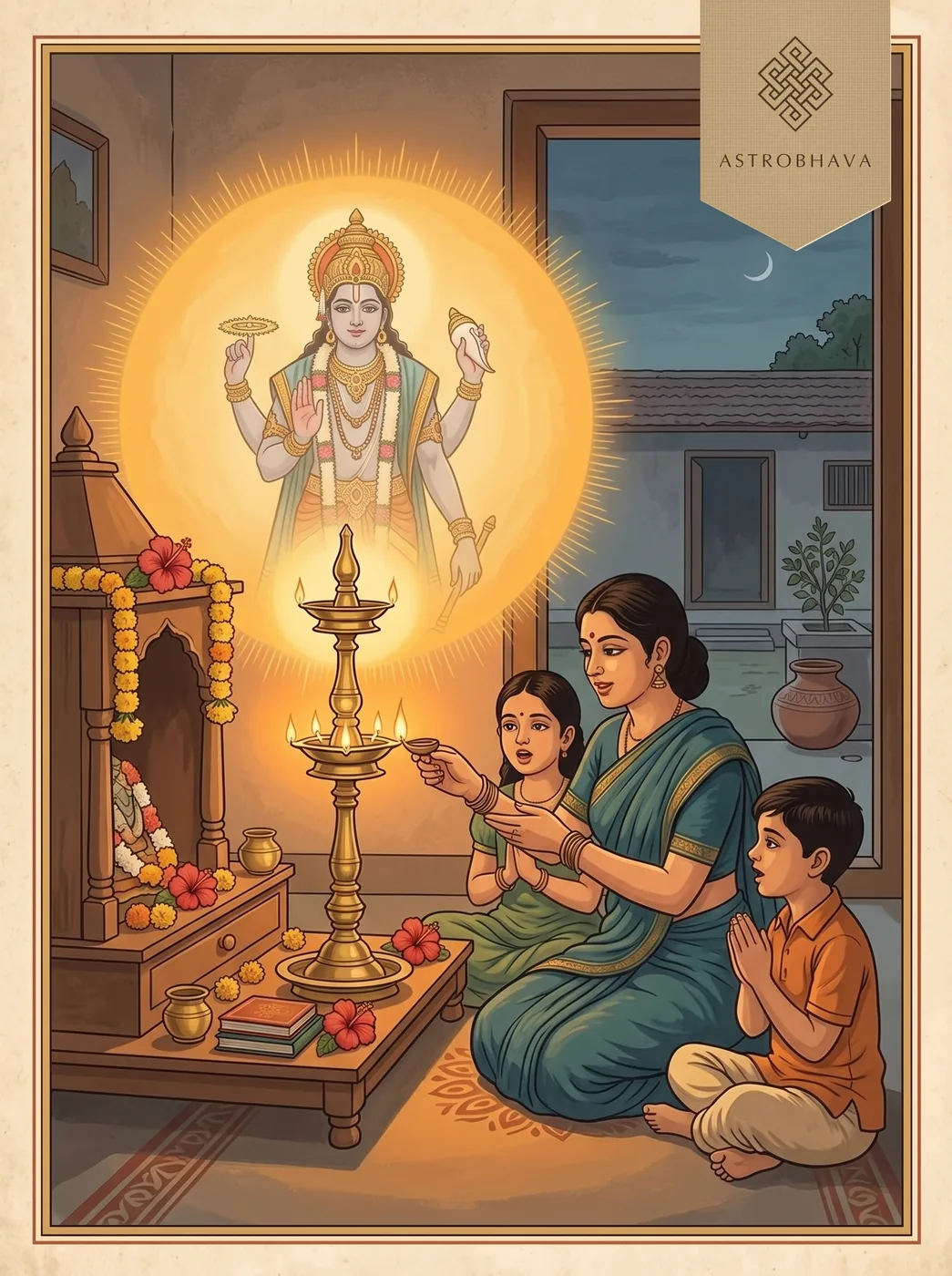
Shubham Karoti Kalyanam, also known as the Deepa Jyoti shloka, is the Sanskrit verse said in many Hindu homes as the oil lamp before the household deities is lit, and it is addressed to no named god but to the flame itself, dipa-jyoti, the light of the lamp. It is one couplet in the shloka metre of four eight-syllable quarters. The first line lists what the light brings: shubham, the good; kalyanam, the auspicious; arogyam, health; and dhanasampada, the wealth of riches. The second line adds one purpose, shatrubuddhi-vinashaya, for the destruction of hostile thinking, and closes with the salutation dipajyotir namo'stu te. Most printed collections of household prayers set a second couplet directly after it, and the two are recited together as one prayer. That verse turns from gifts to identity: the lamp's light is parabrahma, the Supreme Brahman, and it is Janardana, a name of Vishnu. It then asks the lamp to take away the speaker's sin and ends with the same salutation. No author, Purana or ritual manual is attached to either couplet in the printed collections; both are anonymous and have come down through family use.
One household prayer, several printed families
No composition story is told for this verse, and it is not traced to any Purana. Its setting is the lamp lit at dawn and at dusk, which tradition reads as knowledge driving out darkness and as the presence of the divine in the house. The verse belongs to a small family of lamp prayers that share lines. The Brihat Stotra Ratnakar, the hymn anthology edited by Shivadutta Shastri, prints a three-verse Dipastuti that begins with the Janardana couplet in the form 'dipo jyotih param brahma' and ends it with 'sandhyadipa namo'stu te', a salutation to the evening lamp in particular. Its second verse reads 'shubham karotu', may it bring, and in place of the household line about hostile thinking asks for 'mama buddhiprakasham', the brightening of one's own understanding. A third verse asks for awakening to the truth of the Self. The translator P. R. Ramachander rendered a longer four-verse Dheepa Lakshmi Sthuthi with the same opening, where later verses address Sri for gold and grain in the home. The order of the two couplets also varies: some Kannada-script versions from the Madhva tradition place 'Deepajyoti parabrahma' first. In Marathi-speaking homes the words 'shubham karoti' name the whole twilight recitation, which families follow with stotras such as the Ramaraksha and the Maruti Stotra.
The mantra, in six scripts
- शुभं
- śubhaṃ — the good
- करोति
- karoti — brings, does
- कल्याणमारोग्यं
- kalyāṇamārogyaṃ — auspiciousness and health
- धनसंपदा
- dhanasaṃpadā — the wealth of riches
- शत्रुबुद्धिविनाशाय
- śatrubuddhivināśāya — to destroy hostile thinking
- दीपज्योतिर्नमोऽस्तुते
- dīpajyotirnamo'stute — light of the lamp, salutations to you
- दीपज्योतिः
- dīpajyotiḥ — the light of the lamp
- परब्रह्म
- parabrahma — is the Supreme Brahman
- दीपज्योतिर्जनार्दनः
- dīpajyotirjanārdanaḥ — the lamp's light is Janardana (Vishnu)
- दीपो
- dīpo — the lamp
- हरतु
- haratu — may it take away
- मे
- me — my
- पापं
- pāpaṃ — sin
- दीपज्योतिर्नमोऽस्तुते
- dīpajyotirnamo'stute — light of the lamp, salutations to you
Shubham Karoti Kalyanam lyrics in full
The two couplets as recited together at the lighting of the household lamp.
All 2 verses, in Sanskrit, Tamil, Telugu, Kannada, Malayalam and English, each with its meaning. Choose a script:
Download the Shubham Karoti Kalyanam PDFAll 2 verses with their meanings, in Sanskrit. Free to print and keep.
शुभं करोति कल्याणमारोग्यं धनसंपदा ।
शत्रुबुद्धिविनाशाय दीपज्योतिर्नमोऽस्तुते ॥
ஶுபம் கரோதி கல்யாணமாரோக்யம் தநஸம்பதா ।
ஶத்ருபுத்திவிநாஶாய தீபஜ்யோதிர்நமோஸ்துதே ॥
శుభం కరోతి కల్యాణమారోగ్యం ధనసంపదా ।
శత్రుబుద్ధివినాశాయ దీపజ్యోతిర్నమోఽస్తుతే ॥
ಶುಭಂ ಕರೋತಿ ಕಲ್ಯಾಣಮಾರೋಗ್ಯಂ ಧನಸಂಪದಾ ।
ಶತ್ರುಬುದ್ಧಿವಿನಾಶಾಯ ದೀಪಜ್ಯೋತಿರ್ನಮೋಽಸ್ತುತೇ ॥
ശുഭം കരോതി കല്യാണമാരോഗ്യം ധനസംപദാ ।
ശത്രുബുദ്ധിവിനാശായ ദീപജ്യോതിര്നമോഽസ്തുതേ ॥
śubhaṃ karoti kalyāṇamārogyaṃ dhanasaṃpadā |
śatrubuddhivināśāya dīpajyotirnamo'stute ||
Salutations to the light of the lamp, which brings what is good and auspicious, health and the wealth of riches. I bow to the lamp's flame for the destruction of hostile thinking.
दीपज्योतिः परब्रह्म दीपज्योतिर्जनार्दनः ।
दीपो हरतु मे पापं दीपज्योतिर्नमोऽस्तुते ॥
தீபஜ்யோதிஃ பரப்ரஹ்ம தீபஜ்யோதிர்ஜநார்தநஃ ।
தீபோ ஹரது மே பாபம் தீபஜ்யோதிர்நமோஸ்துதே ॥
దీపజ్యోతిః పరబ్రహ్మ దీపజ్యోతిర్జనార్దనః ।
దీపో హరతు మే పాపం దీపజ్యోతిర్నమోఽస్తుతే ॥
ದೀಪಜ್ಯೋತಿಃ ಪರಬ್ರಹ್ಮ ದೀಪಜ್ಯೋತಿರ್ಜನಾರ್ದನಃ ।
ದೀಪೋ ಹರತು ಮೇ ಪಾಪಂ ದೀಪಜ್ಯೋತಿರ್ನಮೋಽಸ್ತುತೇ ॥
ദീപജ്യോതിഃ പരബ്രഹ്മ ദീപജ്യോതിര്ജനാര്ദനഃ ।
ദീപോ ഹരതു മേ പാപം ദീപജ്യോതിര്നമോഽസ്തുതേ ॥
dīpajyotiḥ parabrahma dīpajyotirjanārdanaḥ |
dīpo haratu me pāpaṃ dīpajyotirnamo'stute ||
The light of the lamp is the Supreme Brahman; the light of the lamp is Janardana (Vishnu). May the lamp take away my sins. Salutations to the light of the lamp.
The syllable people get wrong
In kalyāṇamārogyaṃ (कल्याणमारोग्यं) the n is the retroflex ṇ, said with the tongue curled back, and sandhi has joined kalyāṇam to ārogyaṃ, so the word runs on as kal-yaa-na-maa-rog-yam with no break and no 'h' sound after the k.
When the Shubham Karoti Kalyanam is chanted
Festival. Sandhya deepam, the household lamp lit at dusk
Questions
Have your chart read before you decide
Chanting is yours to do, and free. But which deity your situation calls for — and whether a mantra alone is the right response — depends on your chart. Sometimes it is; sometimes it is not.
- Over 30 years in the Guru–Sishya Parampara, from the age of five
- He reads every chart himself — 60 minutes, one to one, never delegated
- Charts are read only between sunrise and sunset, following tradition
