Siddhidatri Mantra
ॐ देवी सिद्धिदात्र्यै नमः ॥Also known as Om Devi Siddhidatryai Namah
In Devanagari, Tamil, Telugu, Kannada, Malayalam and English — with the meaning of every word, and the one syllable most people pronounce wrongly.
 The Siddhidatri Homam, performed for youBook →
What the Siddhidatri Mantra is
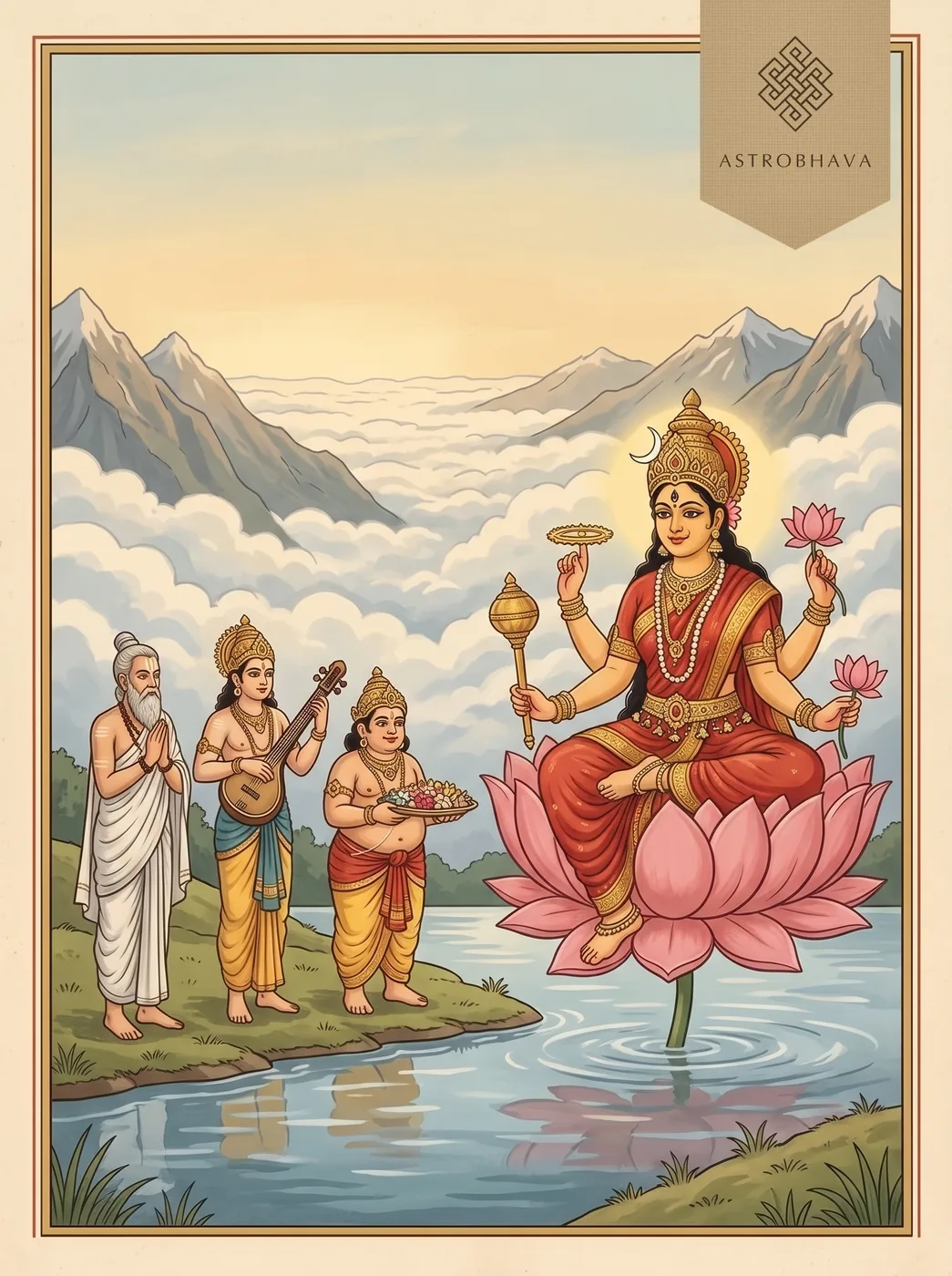
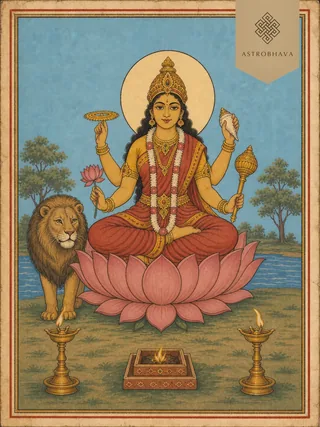
The Siddhidatri Mantra is the set of short texts addressed to Siddhidatri, the ninth of the nine Durgas, worshipped on the ninth day of Navaratri. Her name joins siddhi, attainment, with datri, she who gives. Four items are printed here in their customary order, and none has a named author. The name mantra is a single salutation with her name in the dative case. The prarthana is the closing verse of the Navadurga Stotram, in which Siddhas, Gandharvas, Yakshas, Asuras and gods all serve her. The stuti fits her name into the Ya Devi Sarvabhuteshu refrain of the Devi Mahatmya, a devotional use and not a line of that hymn. The four-shloka dhyana is the longest part, and no scripture is named for it. It moves from her lotus seat and half-moon crest to her golden colour and four emblems, then to her silk and jewellery, and closes on a portrait of her face and form.
When Shiva's left half became the Goddess
According to the popular Navaratri telling, at the start of creation Rudra worshipped the Supreme Goddess, who had no form of her own. She answered by emerging from the left half of his body as Siddhidatri. Through her grace he received the siddhis, and because she had come from his own side he became known as Ardhanarishvara, the one who is half woman. The telling is usually given without a chapter reference, and the verses on this page do not narrate it. They keep a different thread. The nine dhyanas of this series place each form at an inner centre: Anahata for the fourth Durga, the Soma chakra for the eighth, and for this ninth form the Nirvana chakra, where the second shloka says she abides. The prarthana adds a point of its own. It lists Asuras beside the gods among those who serve her, so the Goddess of the last night stands above the quarrel that fills the Devi Mahatmya. Her worship also has a place on the ground. Tradition speaks of a circuit of nine Durga shrines in Varanasi, and Siddhidatri's is the Siddheshwari temple in the lanes near Chowk, which also holds the Chandra Koop well and the shrine of Chandreshwar.
The mantra, in six scripts
- ॐ
- oṃ — the sacred syllable Om
- देवी
- devī — Goddess
- सिद्धिदात्र्यै
- siddhidātryai — to Siddhidatri, giver of attainments
- नमः
- namaḥ — salutations
Siddhidatri Mantra lyrics in full
The name mantra, the prarthana and the stuti, followed by the four shlokas of the dhyana.
All 7 verses, in Sanskrit, Tamil, Telugu, Kannada, Malayalam and English, each with its meaning. Choose a script:
Download the Siddhidatri Mantra PDFAll 7 verses with their meanings, in Sanskrit. Free to print and keep.
ॐ देवी सिद्धिदात्र्यै नमः ॥
ௐ தேவீ ஸித்திதாத்ர்யை நமஃ ॥
ఓం దేవీ సిద్ధిదాత్ర్యై నమః ॥
ಓಂ ದೇವೀ ಸಿದ್ಧಿದಾತ್ರ್ಯೈ ನಮಃ ॥
ഓം ദേവീ സിദ്ധിദാത്ര്യൈ നമഃ ॥
oṃ devī siddhidātryai namaḥ ||
Om, salutations to the Goddess Siddhidatri, the giver of attainments.
सिद्धगन्धर्वयक्षाद्यैरसुरैरमरैरपि ।
सेव्यमाना सदा भूयात् सिद्धिदा सिद्धिदायिनी ॥
ஸித்தகந்தர்வயக்ஷாத்யைரஸுரைரமரைரபி ।
ஸேவ்யமாநா ஸதா பூயாத் ஸித்திதா ஸித்திதாயிநீ ॥
సిద్ధగన్ధర్వయక్షాద్యైరసురైరమరైరపి ।
సేవ్యమానా సదా భూయాత్ సిద్ధిదా సిద్ధిదాయినీ ॥
ಸಿದ್ಧಗನ್ಧರ್ವಯಕ್ಷಾದ್ಯೈರಸುರೈರಮರೈರಪಿ ।
ಸೇವ್ಯಮಾನಾ ಸದಾ ಭೂಯಾತ್ ಸಿದ್ಧಿದಾ ಸಿದ್ಧಿದಾಯಿನೀ ॥
സിദ്ധഗന്ധര്വയക്ഷാദ്യൈരസുരൈരമരൈരപി ।
സേവ്യമാനാ സദാ ഭൂയാത് സിദ്ധിദാ സിദ്ധിദായിനീ ॥
siddhagandharvayakṣādyairasurairamarairapi |
sevyamānā sadā bhūyāt siddhidā siddhidāyinī ||
May she who is served always by Siddhas, Gandharvas, Yakshas and others, by Asuras and by the gods too, be with us: Siddhida, the bestower of attainments.
या देवी सर्वभूतेषु माँ सिद्धिदात्री रूपेण संस्थिता ।
नमस्तस्यै नमस्तस्यै नमस्तस्यै नमो नमः ॥
யா தேவீ ஸர்வபூதேஷு மாம் ஸித்திதாத்ரீ ரூபேண ஸம்ஸ்திதா ।
நமஸ்தஸ்யை நமஸ்தஸ்யை நமஸ்தஸ்யை நமோ நமஃ ॥
యా దేవీ సర్వభూతేషు మాఁ సిద్ధిదాత్రీ రూపేణ సంస్థితా ।
నమస్తస్యై నమస్తస్యై నమస్తస్యై నమో నమః ॥
ಯಾ ದೇವೀ ಸರ್ವಭೂತೇಷು ಮಾಁ ಸಿದ್ಧಿದಾತ್ರೀ ರೂಪೇಣ ಸಂಸ್ಥಿತಾ ।
ನಮಸ್ತಸ್ಯೈ ನಮಸ್ತಸ್ಯೈ ನಮಸ್ತಸ್ಯೈ ನಮೋ ನಮಃ ॥
യാ ദേവീ സര്വഭൂതേഷു മാഁ സിദ്ധിദാത്രീ രൂപേണ സംസ്ഥിതാ ।
നമസ്തസ്യൈ നമസ്തസ്യൈ നമസ്തസ്യൈ നമോ നമഃ ॥
yā devī sarvabhūteṣu māṃ siddhidātrī rūpeṇa saṃsthitā |
namastasyai namastasyai namastasyai namo namaḥ ||
To the Goddess who abides in all beings in the form of Mother Siddhidatri: salutations to her, salutations to her, salutations to her, salutations again and again.
वन्दे वाञ्छित मनोरथार्थ चन्द्रार्धकृतशेखराम् ।
कमलस्थिताम् चतुर्भुजा सिद्धीदात्री यशस्विनीम् ॥
வந்தே வாஞ்சித மநோரதார்த சந்த்ரார்தக்ருதஶேகராம் ।
கமலஸ்திதாம் சதுர்புஜா ஸித்தீதாத்ரீ யஶஸ்விநீம் ॥
వన్దే వాఞ్ఛిత మనోరథార్థ చన్ద్రార్ధకృతశేఖరామ్ ।
కమలస్థితామ్ చతుర్భుజా సిద్ధీదాత్రీ యశస్వినీమ్ ॥
ವನ್ದೇ ವಾಞ್ಛಿತ ಮನೋರಥಾರ್ಥ ಚನ್ದ್ರಾರ್ಧಕೃತಶೇಖರಾಮ್ ।
ಕಮಲಸ್ಥಿತಾಮ್ ಚತುರ್ಭುಜಾ ಸಿದ್ಧೀದಾತ್ರೀ ಯಶಸ್ವಿನೀಮ್ ॥
വന്ദേ വാഞ്ഛിത മനോരഥാര്ഥ ചന്ദ്രാര്ധകൃതശേഖരാമ് ।
കമലസ്ഥിതാമ് ചതുര്ഭുജാ സിദ്ധീദാത്രീ യശസ്വിനീമ് ॥
vande vāñchita manorathārtha candrārdhakṛtaśekharām |
kamalasthitām caturbhujā siddhīdātrī yaśasvinīm ||
For the fulfilment of the wishes I hold in my heart, I bow to her who wears the half moon as a crest. She is seated on a lotus, four-armed, Siddhidatri the glorious.
स्वर्णवर्णा निर्वाणचक्र स्थिताम् नवम् दुर्गा त्रिनेत्राम् ।
शङ्ख, चक्र, गदा, पद्मधरां सिद्धीदात्री भजेम् ॥
ஸ்வர்ணவர்ணா நிர்வாணசக்ர ஸ்திதாம் நவம் துர்கா த்ரிநேத்ராம் ।
ஶங்க, சக்ர, கதா, பத்மதராம் ஸித்தீதாத்ரீ பஜேம் ॥
స్వర్ణవర్ణా నిర్వాణచక్ర స్థితామ్ నవమ్ దుర్గా త్రినేత్రామ్ ।
శఙ్ఖ, చక్ర, గదా, పద్మధరాం సిద్ధీదాత్రీ భజేమ్ ॥
ಸ್ವರ್ಣವರ್ಣಾ ನಿರ್ವಾಣಚಕ್ರ ಸ್ಥಿತಾಮ್ ನವಮ್ ದುರ್ಗಾ ತ್ರಿನೇತ್ರಾಮ್ ।
ಶಙ್ಖ, ಚಕ್ರ, ಗದಾ, ಪದ್ಮಧರಾಂ ಸಿದ್ಧೀದಾತ್ರೀ ಭಜೇಮ್ ॥
സ്വര്ണവര്ണാ നിര്വാണചക്ര സ്ഥിതാമ് നവമ് ദുര്ഗാ ത്രിനേത്രാമ് ।
ശങ്ഖ, ചക്ര, ഗദാ, പദ്മധരാം സിദ്ധീദാത്രീ ഭജേമ് ॥
svarṇavarṇā nirvāṇacakra sthitām navam durgā trinetrām |
śaṅkha, cakra, gadā, padmadharāṃ siddhīdātrī bhajem ||
Golden in colour, abiding in the Nirvana chakra, the ninth Durga, the three-eyed one. I worship Siddhidatri, who holds the conch, the discus, the mace and the lotus.
पटाम्बर परिधानां मृदुहास्या नानालङ्कार भूषिताम् ।
मञ्जीर, हार, केयूर, किङ्किणि रत्नकुण्डल मण्डिताम् ॥
படாம்பர பரிதாநாம் ம்ருதுஹாஸ்யா நாநாலங்கார பூஷிதாம் ।
மஞ்ஜீர, ஹார, கேயூர, கிங்கிணி ரத்நகுண்டல மண்டிதாம் ॥
పటామ్బర పరిధానాం మృదుహాస్యా నానాలఙ్కార భూషితామ్ ।
మఞ్జీర, హార, కేయూర, కిఙ్కిణి రత్నకుణ్డల మణ్డితామ్ ॥
ಪಟಾಮ್ಬರ ಪರಿಧಾನಾಂ ಮೃದುಹಾಸ್ಯಾ ನಾನಾಲಙ್ಕಾರ ಭೂಷಿತಾಮ್ ।
ಮಞ್ಜೀರ, ಹಾರ, ಕೇಯೂರ, ಕಿಙ್ಕಿಣಿ ರತ್ನಕುಣ್ಡಲ ಮಣ್ಡಿತಾಮ್ ॥
പടാമ്ബര പരിധാനാം മൃദുഹാസ്യാ നാനാലങ്കാര ഭൂഷിതാമ് ।
മഞ്ജീര, ഹാര, കേയൂര, കിങ്കിണി രത്നകുണ്ഡല മണ്ഡിതാമ് ॥
paṭāmbara paridhānāṃ mṛduhāsyā nānālaṅkāra bhūṣitām |
mañjīra, hāra, keyūra, kiṅkiṇi ratnakuṇḍala maṇḍitām ||
She is clad in fine silk, gently smiling, adorned with many ornaments. She is decked with anklets, a necklace, armlets, small waist bells and jewelled earrings.
प्रफुल्ल वदना पल्लवाधरां कान्त कपोला पीन पयोधराम् ।
कमनीयां लावण्यां क्षीणकटिं निम्ननाभि नितम्बनीम् ॥
ப்ரபுல்ல வதநா பல்லவாதராம் காந்த கபோலா பீந பயோதராம் ।
கமநீயாம் லாவண்யாம் க்ஷீணகடிம் நிம்நநாபி நிதம்பநீம் ॥
ప్రఫుల్ల వదనా పల్లవాధరాం కాన్త కపోలా పీన పయోధరామ్ ।
కమనీయాం లావణ్యాం క్షీణకటిం నిమ్ననాభి నితమ్బనీమ్ ॥
ಪ್ರಫುಲ್ಲ ವದನಾ ಪಲ್ಲವಾಧರಾಂ ಕಾನ್ತ ಕಪೋಲಾ ಪೀನ ಪಯೋಧರಾಮ್ ।
ಕಮನೀಯಾಂ ಲಾವಣ್ಯಾಂ ಕ್ಷೀಣಕಟಿಂ ನಿಮ್ನನಾಭಿ ನಿತಮ್ಬನೀಮ್ ॥
പ്രഫുല്ല വദനാ പല്ലവാധരാം കാന്ത കപോലാ പീന പയോധരാമ് ।
കമനീയാം ലാവണ്യാം ക്ഷീണകടിം നിമ്നനാഭി നിതമ്ബനീമ് ॥
praphulla vadanā pallavādharāṃ kānta kapolā pīna payodharām |
kamanīyāṃ lāvaṇyāṃ kṣīṇakaṭiṃ nimnanābhi nitambanīm ||
Her face is radiant as a full bloom, her lips soft as young leaves, her cheeks lovely, her bosom full. She is beautiful and full of grace, slender at the waist, with a deep navel and shapely hips.
The syllable people get wrong
In Dhyanam 4, kṣīṇakaṭiṃ (slender-waisted) begins with the cluster kṣ and a long ī, and its ṭ is retroflex, so say kshee-na-ka-tim with the tongue curled back for the ṭ. Some printings spell the word with shr, which gives no meaning.
When the Siddhidatri Mantra is chanted
Weekday. Friday
Festival. Maha Navami, the ninth day of Navaratri
Questions
Have your chart read before you decide
Chanting is yours to do, and free. But which deity your situation calls for — and whether a mantra alone is the right response — depends on your chart. Sometimes it is; sometimes it is not.
- Over 30 years in the Guru–Sishya Parampara, from the age of five
- He reads every chart himself — 60 minutes, one to one, never delegated
- Charts are read only between sunrise and sunset, following tradition
