Sita Mantra
श्री सीतायै नमः ।Also known as Sita Gayatri
In Devanagari, Tamil, Telugu, Kannada, Malayalam and English — with the meaning of every word, and the one syllable most people pronounce wrongly.
 The Rama Homam, performed for youBook →
What the Sita Mantra is
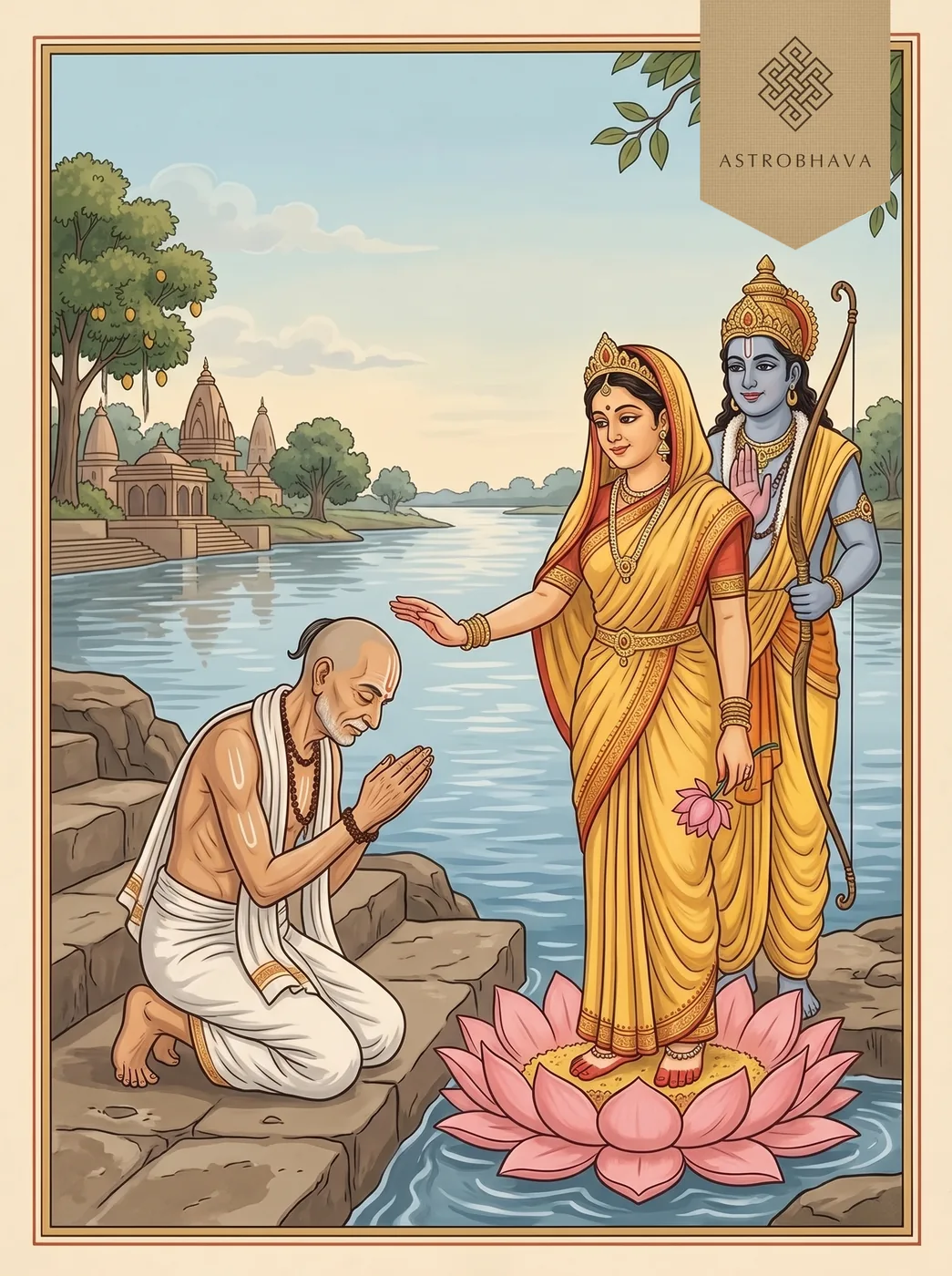
The Sita Mantra on this page is not a single formula but four short texts addressed to Sita, the daughter of King Janaka of Mithila and the wife of Rama. Mantra 1, Shri Sitayai Namah, is the plain name mantra: an honorific, her name in the dative case meaning "to Sita", and namah, a bow. It is printed without Om, as the standard printed forms give it. Mantra 2 is the Sita Gayatri, set in the three-step Gayatri frame of vidmahe, dhimahi and pracodayat; it names her as the beloved daughter of Janaka and as Bhumija, the one born of the Earth, and it comes down through devotional collections with no scripture named as its source. Verse 1 is Sanskrit by Goswami Tulsidas, the fifth of the seven shlokas that open the Bala Kanda of his Ramcharitmanas. Chaupai 1 is not Sanskrit but Awadhi: four lines from the same Bala Kanda in which Tulsidas asks Janaki for a pure mind.
Sita saluted just before Rama
Tulsidas began the Ramcharitmanas in 1574, and before the narrative opens he sets out an ordered chain of salutations. The Bala Kanda starts with seven Sanskrit shlokas. The first honours Vani and Vinayaka, the second Bhavani and Shankara, the third the guru, and the fourth Valmiki and Hanuman, the two who roam the forest of Sita and Rama's virtues. The fifth is to Sita, and only the sixth to Rama; the seventh is the poet's statement that he tells the story for his own inner happiness. The Sita shloka gives her the three works of creation, preservation and dissolution of the world, then closes on a human title, Ramavallabha, the one Rama loves. The poem then turns to Awadhi and salutes again on a wider scale. The line just before the chaupai names Shuka, Sanaka and the other sages, the devotees and Narada; then comes Janakasuta jaga janani Janaki, and the very next verse turns to Raghunayaka. In both places Sita stands directly before Rama. The name mantra and the Gayatri lean on an older account. In the Bala Kanda of the Valmiki Ramayana, sarga 66, Janaka tells the sage Vishvamitra at Mithila that the girl rose from the ritual field he was ploughing, that she was not born of a womb, and that he would give her only to a suitor whose valour was the bride-price.
The mantra, in six scripts
- श्री
- śrī — revered, auspicious (honorific)
- सीतायै
- sītāyai — to Sita
- नमः
- namaḥ — salutation, I bow
Sita Mantra lyrics in full
Four short items to Sita: the name mantra, the Sita Gayatri, and a Sanskrit shloka and an Awadhi chaupai from the Bala Kanda of the Ramcharitmanas.
All 4 verses, in Sanskrit, Tamil, Telugu, Kannada, Malayalam and English, each with its meaning. Choose a script:
Download the Sita Mantra PDFAll 4 verses with their meanings, in Sanskrit. Free to print and keep.
श्री सीतायै नमः ।
ஶ்ரீ ஸீதாயை நமஃ ।
శ్రీ సీతాయై నమః ।
ಶ್ರೀ ಸೀತಾಯೈ ನಮಃ ।
ശ്രീ സീതായൈ നമഃ ।
śrī sītāyai namaḥ |
Salutations to the revered Sita.
ॐ जनकनन्दिन्यै विद्महे भूमिजायै च धीमहि ।
तन्नः सीता प्रचोदयात् ॥
ௐ ஜநகநந்திந்யை வித்மஹே பூமிஜாயை ச தீமஹி ।
தந்நஃ ஸீதா ப்ரசோதயாத் ॥
ఓం జనకనన్దిన్యై విద్మహే భూమిజాయై చ ధీమహి ।
తన్నః సీతా ప్రచోదయాత్ ॥
ಓಂ ಜನಕನನ್ದಿನ್ಯೈ ವಿದ್ಮಹೇ ಭೂಮಿಜಾಯೈ ಚ ಧೀಮಹಿ ।
ತನ್ನಃ ಸೀತಾ ಪ್ರಚೋದಯಾತ್ ॥
ഓം ജനകനന്ദിന്യൈ വിദ്മഹേ ഭൂമിജായൈ ച ധീമഹി ।
തന്നഃ സീതാ പ്രചോദയാത് ॥
oṃ janakanandinyai vidmahe bhūmijāyai ca dhīmahi |
tannaḥ sītā pracodayāt ||
Om. We come to know the beloved daughter of Janaka, and we meditate on her who was born of the Earth. May Sita inspire and guide our minds.
उद्भवस्थितिसंहारकारिणीं क्लेशहारिणीम् ।
सर्वश्रेयस्करीं सीतां नतोऽहं रामवल्लभाम् ॥
உத்பவஸ்திதிஸம்ஹாரகாரிணீம் க்லேஶஹாரிணீம் ।
ஸர்வஶ்ரேயஸ்கரீம் ஸீதாம் நதோஹம் ராமவல்லபாம் ॥
ఉద్భవస్థితిసంహారకారిణీం క్లేశహారిణీమ్ ।
సర్వశ్రేయస్కరీం సీతాం నతోఽహం రామవల్లభామ్ ॥
ಉದ್ಭವಸ್ಥಿತಿಸಂಹಾರಕಾರಿಣೀಂ ಕ್ಲೇಶಹಾರಿಣೀಮ್ ।
ಸರ್ವಶ್ರೇಯಸ್ಕರೀಂ ಸೀತಾಂ ನತೋಽಹಂ ರಾಮವಲ್ಲಭಾಮ್ ॥
ഉദ്ഭവസ്ഥിതിസംഹാരകാരിണീം ക്ലേശഹാരിണീമ് ।
സര്വശ്രേയസ്കരീം സീതാം നതോഽഹം രാമവല്ലഭാമ് ॥
udbhavasthitisaṃhārakāriṇīṃ kleśahāriṇīm |
sarvaśreyaskarīṃ sītāṃ nato'haṃ rāmavallabhām ||
I bow to Sita, the beloved of Rama, who brings about the creation, preservation and dissolution of the world, who takes away suffering, and who brings about every good.
जनकसुता जग जननि जानकी ।
अतिसय प्रिय करुनानिधान की ॥ ताके जुग पद कमल मनावउँ ।
जासु कृपाँ निरमल मति पावउँ ॥
ஜநகஸுதா ஜக ஜநநி ஜாநகீ ।
அதிஸய ப்ரிய கருநாநிதாந கீ ॥ தாகே ஜுக பத கமல மநாவஉம் ।
ஜாஸு க்ருபாம் நிரமல மதி பாவஉம் ॥
జనకసుతా జగ జనని జానకీ ।
అతిసయ ప్రియ కరునానిధాన కీ ॥ తాకే జుగ పద కమల మనావఉఁ ।
జాసు కృపాఁ నిరమల మతి పావఉఁ ॥
ಜನಕಸುತಾ ಜಗ ಜನನಿ ಜಾನಕೀ ।
ಅತಿಸಯ ಪ್ರಿಯ ಕರುನಾನಿಧಾನ ಕೀ ॥ ತಾಕೇ ಜುಗ ಪದ ಕಮಲ ಮನಾವಉಁ ।
ಜಾಸು ಕೃಪಾಁ ನಿರಮಲ ಮತಿ ಪಾವಉಁ ॥
ജനകസുതാ ജഗ ജനനി ജാനകീ ।
അതിസയ പ്രിയ കരുനാനിധാന കീ ॥ താകേ ജുഗ പദ കമല മനാവഉഁ ।
ജാസു കൃപാഁ നിരമല മതി പാവഉഁ ॥
janakasutā jaga janani jānakī |
atisaya priya karunānidhāna kī || tāke juga pada kamala manāvauṃ |
jāsu kṛpāṃ niramala mati pāvauṃ ||
Janaki, daughter of Janaka and mother of the world, is most dear to Rama, the treasure of compassion. I pray to her two lotus feet, by whose grace I gain a pure mind.
The syllable people get wrong
In janakanandinyai (जनकनन्दिन्यै) the n of nandin runs straight into the y: say nan-din-yai, with -yai as one syllable, not nan-di-ni-ye as many romanized prints spell it. The ending -yai is the feminine dative, "to her", the same ending heard in sītāyai and bhūmijāyai.
When the Sita Mantra is chanted
Weekday. Friday
Festival. Sita Navami (Vaishakha Shukla Navami)
Questions
Have your chart read before you decide
Chanting is yours to do, and free. But which deity your situation calls for — and whether a mantra alone is the right response — depends on your chart. Sometimes it is; sometimes it is not.
- Over 30 years in the Guru–Sishya Parampara, from the age of five
- He reads every chart himself — 60 minutes, one to one, never delegated
- Charts are read only between sunrise and sunset, following tradition
