Skandamata Mantra
ॐ देवी स्कन्दमातायै नमः ॥Also known as Om Devi Skandamatayai Namah
In Devanagari, Tamil, Telugu, Kannada, Malayalam and English — with the meaning of every word, and the one syllable most people pronounce wrongly.
 The Skandamata Homam, performed for youBook →
What the Skandamata Mantra is
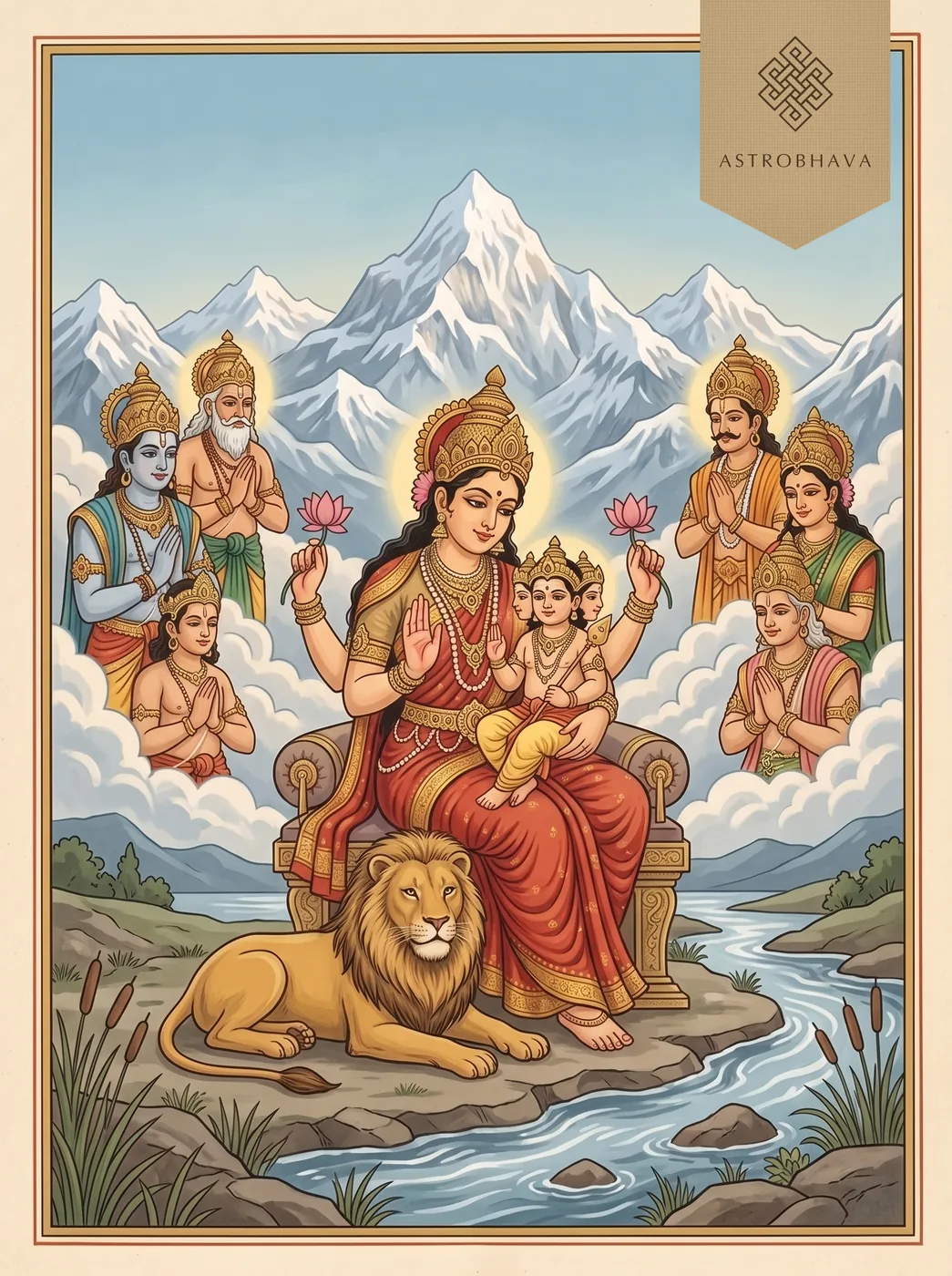
The Skandamata mantra is the short set of verses recited to Skandamata, the fifth of the nine Durgas, worshipped on the fifth day of Navaratri as the mother of Skanda, also called Kartikeya and Murugan. It has three parts, always given in the same order. The name-mantra, Om Devi Skandamatayai Namah, is a single salutation offered to her by name. The prarthana shloka, Simhasanagata nityam, is a two-line prayer in anushtubh metre that pictures her seated on a lion throne with a lotus in each of two hands, and asks that the glorious Goddess always be the giver of what is auspicious. The stuti borrows the Devi Mahatmya's fifth-chapter refrain, 'ya devi sarvabhuteshu', and sets her name inside it, so that the salutation goes to the Goddess present in every creature as Skandamata. None of the three has a named author. Her fifth place comes from the Devi Kavacham, whose list of the nine Durgas begins its third verse 'panchamam skandamateti'.
The mother who nursed Taraka's slayer
The Shiva Purana sets her story in a time when the asura Taraka held the gods in fear and only a son of Shiva could end him. Shiva and Parvati had withdrawn together on Kailasa for a thousand years, and Brahma and Vishnu led a delegation of gods there to plead their case. In the haste of that meeting Shiva's seed fell to the ground. Agni swallowed it in the form of a dove and could not bear its burning; he passed it to the wives of six of the seven sages, and the Ganga at last carried it to a bed of reeds, where a child of great radiance appeared. Parvati, angered at being disturbed, cursed the wives of the gods to remain childless. Yet when the boy came to Kailasa she took him as her own and nursed him, and it is this nursing, sheltering aspect of Parvati that tradition names Skandamata. The same account has her give him the spear called Shakti, the weapon destined for Taraka. Her image keeps that moment of care: the child sits in her lap while she holds the lotuses named in the prarthana. In Varanasi, temple tradition keeps a shrine to her within the Bageshwari Devi temple complex.
The mantra, in six scripts
- ॐ
- oṃ — Om, the sacred syllable
- देवी
- devī — Goddess
- स्कन्दमातायै
- skandamātāyai — to the mother of Skanda
- नमः
- namaḥ — salutations
Skandamata Mantra lyrics in full
The name-mantra, the prarthana shloka and the 'ya devi' stuti, in the order they are recited to her on the fifth day of Navaratri.
All 3 verses, in Sanskrit, Tamil, Telugu, Kannada, Malayalam and English, each with its meaning. Choose a script:
Download the Skandamata Mantra PDFAll 3 verses with their meanings, in Sanskrit. Free to print and keep.
ॐ देवी स्कन्दमातायै नमः ॥
ௐ தேவீ ஸ்கந்தமாதாயை நமஃ ॥
ఓం దేవీ స్కన్దమాతాయై నమః ॥
ಓಂ ದೇವೀ ಸ್ಕನ್ದಮಾತಾಯೈ ನಮಃ ॥
ഓം ദേവീ സ്കന്ദമാതായൈ നമഃ ॥
oṃ devī skandamātāyai namaḥ ||
Om, salutations to the Goddess Skandamata, the mother of Skanda.
सिंहासनगता नित्यं पद्माश्रितकरद्वया ।
शुभदास्तु सदा देवी स्कन्दमाता यशस्विनी ॥
ஸிம்ஹாஸநகதா நித்யம் பத்மாஶ்ரிதகரத்வயா ।
ஶுபதாஸ்து ஸதா தேவீ ஸ்கந்தமாதா யஶஸ்விநீ ॥
సింహాసనగతా నిత్యం పద్మాశ్రితకరద్వయా ।
శుభదాస్తు సదా దేవీ స్కన్దమాతా యశస్వినీ ॥
ಸಿಂಹಾಸನಗತಾ ನಿತ್ಯಂ ಪದ್ಮಾಶ್ರಿತಕರದ್ವಯಾ ।
ಶುಭದಾಸ್ತು ಸದಾ ದೇವೀ ಸ್ಕನ್ದಮಾತಾ ಯಶಸ್ವಿನೀ ॥
സിംഹാസനഗതാ നിത്യം പദ്മാശ്രിതകരദ്വയാ ।
ശുഭദാസ്തു സദാ ദേവീ സ്കന്ദമാതാ യശസ്വിനീ ॥
siṃhāsanagatā nityaṃ padmāśritakaradvayā |
śubhadāstu sadā devī skandamātā yaśasvinī ||
She is ever seated on the lion throne, and both her hands hold lotuses. May the glorious Goddess Skandamata always be the giver of what is auspicious.
या देवी सर्वभूतेषु स्कन्दमातारूपेण संस्थिता ।
नमस्तस्यै नमस्तस्यै नमस्तस्यै नमो नमः ॥
யா தேவீ ஸர்வபூதேஷு ஸ்கந்தமாதாரூபேண ஸம்ஸ்திதா ।
நமஸ்தஸ்யை நமஸ்தஸ்யை நமஸ்தஸ்யை நமோ நமஃ ॥
యా దేవీ సర్వభూతేషు స్కన్దమాతారూపేణ సంస్థితా ।
నమస్తస్యై నమస్తస్యై నమస్తస్యై నమో నమః ॥
ಯಾ ದೇವೀ ಸರ್ವಭೂತೇಷು ಸ್ಕನ್ದಮಾತಾರೂಪೇಣ ಸಂಸ್ಥಿತಾ ।
ನಮಸ್ತಸ್ಯೈ ನಮಸ್ತಸ್ಯೈ ನಮಸ್ತಸ್ಯೈ ನಮೋ ನಮಃ ॥
യാ ദേവീ സര്വഭൂതേഷു സ്കന്ദമാതാരൂപേണ സംസ്ഥിതാ ।
നമസ്തസ്യൈ നമസ്തസ്യൈ നമസ്തസ്യൈ നമോ നമഃ ॥
yā devī sarvabhūteṣu skandamātārūpeṇa saṃsthitā |
namastasyai namastasyai namastasyai namo namaḥ ||
To the Goddess who dwells in all beings in the form of Skandamata, salutations to her, salutations to her, salutations to her, salutations again and again.
The syllable people get wrong
In padmāśritakaradvayā the first word is padma plus āśrita, so the vowel after padm- is long and the sibilant is the palatal ś: say 'pad-maa-shri-ta', not 'pad-ma-sri-ta', or the phrase loses its sense of hands that rest on lotuses.
When the Skandamata Mantra is chanted
Weekday. Friday
Festival. Navaratri Panchami, the fifth day of Navaratri
Questions
Have your chart read before you decide
Chanting is yours to do, and free. But which deity your situation calls for — and whether a mantra alone is the right response — depends on your chart. Sometimes it is; sometimes it is not.
- Over 30 years in the Guru–Sishya Parampara, from the age of five
- He reads every chart himself — 60 minutes, one to one, never delegated
- Charts are read only between sunrise and sunset, following tradition
