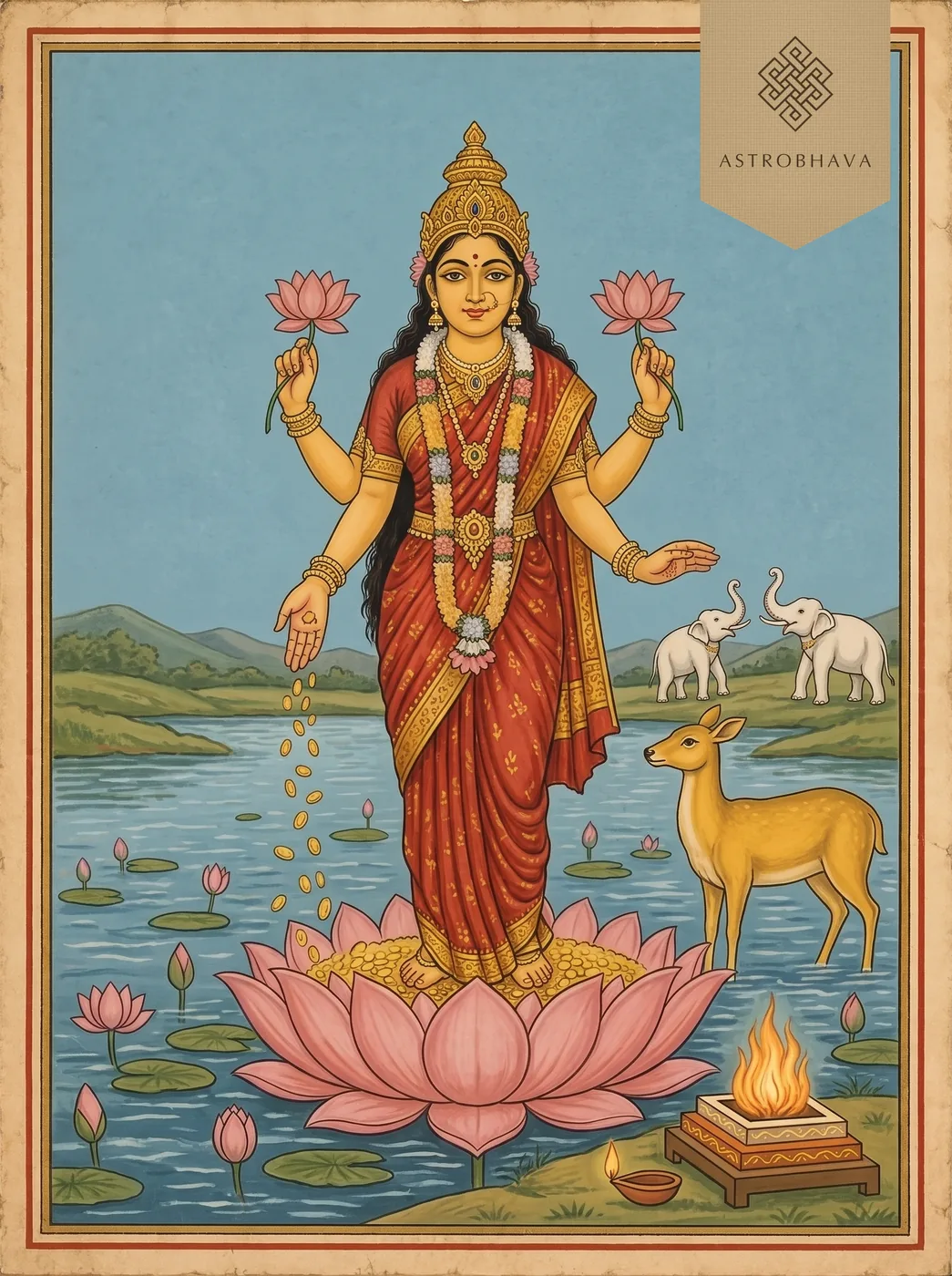
Sri Suktam
हिरण्यवर्णां हरिणीं सुवर्णरजतस्रजाम् । चन्द्रां हिरण्मयीं लक्ष्मीं जातवेदो म आवह ॥Also known as Shri Suktam
In Devanagari, Tamil, Telugu, Kannada, Malayalam and English — with the meaning of every word, and the one syllable most people pronounce wrongly.
What the Sri Suktam is
The Sri Suktam is a Vedic hymn, not a later stotra. It belongs to the khilani, the supplementary hymns of the Rigveda preserved in the Bashkala recension, and is usually set after the fifth mandala. Scholars place most of its verses in the period of the Brahmanas. It is often described as the earliest text to treat Shri and Lakshmi as one goddess. The fifteen rks printed here, in the South Indian chanted order, form a frame: verses 1, 2 and 13 to 15 call on Jatavedas, Agni the knower of all beings, to bring Lakshmi, while verses 3 to 12 speak of and to Shri herself. Inside that frame the hymn turns twice against Alakshmi, misfortune, and in verses 11 and 12 it addresses two seers, Kardama and Chiklita, asking them to settle their mother in the household. A closing verse, printed as the phala shruti, names the hymn as fifteen verses.
Shri, the sacrificial fire and her seer-sons
No account survives of a single moment when the Sri Suktam was composed, but the Vedic literature around it explains why its verses speak to the fire. The Shatapatha Brahmana (11.4.3) tells that Shri came forth from Prajapati as he grew heated in the labour of creation, shining and trembling. The gods wanted what she had, and ten of them each took one thing: Agni her food, Soma royal power, Indra strength, Pushan wealth, Tvashtri beautiful forms, and so on. On Prajapati's advice she won each back through an offering of ten dishes, with an oblation to every god in turn. The Sri Suktam keeps the same shape of approach: it asks Agni, as Jatavedas, to carry the goddess towards the one who offers, and its phala verse speaks of ghee poured into the fire. Tradition names the seers of the hymn as Ananda, Kardama and Chiklita, held to be mind-born sons of Shri; some lists add a fourth, Shrida. Kardama means fertile mud and Chiklita moist earth, which is why verses 11 and 12 can ask these sons to make their mother live in the house. At Tirumala the hymn is recited, as one of five suktas, during the Friday Thirumanjanam of Lord Venkateswara.
The mantra, in six scripts
- हिरण्यवर्णां
- hiraṇyavarṇāṃ — golden in colour
- हरिणीं
- hariṇīṃ — doe-like, radiant
- सुवर्णरजतस्रजाम्
- suvarṇarajatasrajām — wearing garlands of gold and silver
- चन्द्रां
- candrāṃ — shining like the moon
- हिरण्मयीं
- hiraṇmayīṃ — made of gold
- लक्ष्मीं
- lakṣmīṃ — Lakshmi
- जातवेदो
- jātavedo — O Jatavedas (Agni)
- म
- ma — to me
- आवह
- āvaha — bring
Sri Suktam lyrics in full
All 16 verses, in Sanskrit, Tamil, Telugu, Kannada, Malayalam and English, each with its meaning. Choose a script:
Download the Sri Suktam PDFAll 16 verses with their meanings, in Sanskrit. Free to print and keep.
हिरण्यवर्णां हरिणीं सुवर्णरजतस्रजाम् ।
चन्द्रां हिरण्मयीं लक्ष्मीं जातवेदो म आवह ॥
ஹிரண்யவர்ணாம் ஹரிணீம் ஸுவர்ணரஜதஸ்ரஜாம் ।
சந்த்ராம் ஹிரண்மயீம் லக்ஷ்மீம் ஜாதவேதோ ம ஆவஹ ॥
హిరణ్యవర్ణాం హరిణీం సువర్ణరజతస్రజామ్ ।
చన్ద్రాం హిరణ్మయీం లక్ష్మీం జాతవేదో మ ఆవహ ॥
ಹಿರಣ್ಯವರ್ಣಾಂ ಹರಿಣೀಂ ಸುವರ್ಣರಜತಸ್ರಜಾಮ್ ।
ಚನ್ದ್ರಾಂ ಹಿರಣ್ಮಯೀಂ ಲಕ್ಷ್ಮೀಂ ಜಾತವೇದೋ ಮ ಆವಹ ॥
ഹിരണ്യവര്ണാം ഹരിണീം സുവര്ണരജതസ്രജാമ് ।
ചന്ദ്രാം ഹിരണ്മയീം ലക്ഷ്മീം ജാതവേദോ മ ആവഹ ॥
hiraṇyavarṇāṃ hariṇīṃ suvarṇarajatasrajām |
candrāṃ hiraṇmayīṃ lakṣmīṃ jātavedo ma āvaha ||
O Jatavedas (Agni, knower of all), bring to me Lakshmi, golden in colour, radiant like a doe, wearing garlands of gold and silver, shining like the moon and made of gold.
तां म आवह जातवेदो लक्ष्मीमनपगामिनीम् ।
यस्यां हिरण्यं विन्देयं गामश्वं पुरुषानहम् ॥
தாம் ம ஆவஹ ஜாதவேதோ லக்ஷ்மீமநபகாமிநீம் ।
யஸ்யாம் ஹிரண்யம் விந்தேயம் காமஶ்வம் புருஷாநஹம் ॥
తాం మ ఆవహ జాతవేదో లక్ష్మీమనపగామినీమ్ ।
యస్యాం హిరణ్యం విన్దేయం గామశ్వం పురుషానహమ్ ॥
ತಾಂ ಮ ಆವಹ ಜಾತವೇದೋ ಲಕ್ಷ್ಮೀಮನಪಗಾಮಿನೀಮ್ ।
ಯಸ್ಯಾಂ ಹಿರಣ್ಯಂ ವಿನ್ದೇಯಂ ಗಾಮಶ್ವಂ ಪುರುಷಾನಹಮ್ ॥
താം മ ആവഹ ജാതവേദോ ലക്ഷ്മീമനപഗാമിനീമ് ।
യസ്യാം ഹിരണ്യം വിന്ദേയം ഗാമശ്വം പുരുഷാനഹമ് ॥
tāṃ ma āvaha jātavedo lakṣmīmanapagāminīm |
yasyāṃ hiraṇyaṃ vindeyaṃ gāmaśvaṃ puruṣānaham ||
O Jatavedas, bring to me that Lakshmi who never departs, through whom I may obtain gold, cattle, horses and people.
अश्वपूर्वां रथमध्यां हस्तिनादप्रबोधिनीम् ।
श्रियं देवीमुपह्वये श्रीर्मा देवीर्जुषताम् ॥
அஶ்வபூர்வாம் ரதமத்யாம் ஹஸ்திநாதப்ரபோதிநீம் ।
ஶ்ரியம் தேவீமுபஹ்வயே ஶ்ரீர்மா தேவீர்ஜுஷதாம் ॥
అశ్వపూర్వాం రథమధ్యాం హస్తినాదప్రబోధినీమ్ ।
శ్రియం దేవీముపహ్వయే శ్రీర్మా దేవీర్జుషతామ్ ॥
ಅಶ್ವಪೂರ್ವಾಂ ರಥಮಧ್ಯಾಂ ಹಸ್ತಿನಾದಪ್ರಬೋಧಿನೀಮ್ ।
ಶ್ರಿಯಂ ದೇವೀಮುಪಹ್ವಯೇ ಶ್ರೀರ್ಮಾ ದೇವೀರ್ಜುಷತಾಮ್ ॥
അശ്വപൂര്വാം രഥമധ്യാം ഹസ്തിനാദപ്രബോധിനീമ് ।
ശ്രിയം ദേവീമുപഹ്വയേ ശ്രീര്മാ ദേവീര്ജുഷതാമ് ॥
aśvapūrvāṃ rathamadhyāṃ hastinādaprabodhinīm |
śriyaṃ devīmupahvaye śrīrmā devīrjuṣatām ||
I invoke the goddess Shri, who has horses going before her and a chariot in her midst, and who is announced by the trumpeting of elephants. May the goddess Shri be gracious to me.
कां सोस्मितां हिरण्यप्राकारामार्द्रां ज्वलन्तीं तृप्तां तर्पयन्तीम् ।
पद्मे स्थितां पद्मवर्णां तामिहोपह्वये श्रियम् ॥
காம் ஸோஸ்மிதாம் ஹிரண்யப்ராகாராமார்த்ராம் ஜ்வலந்தீம் த்ருப்தாம் தர்பயந்தீம் ।
பத்மே ஸ்திதாம் பத்மவர்ணாம் தாமிஹோபஹ்வயே ஶ்ரியம் ॥
కాం సోస్మితాం హిరణ్యప్రాకారామార్ద్రాం జ్వలన్తీం తృప్తాం తర్పయన్తీమ్ ।
పద్మే స్థితాం పద్మవర్ణాం తామిహోపహ్వయే శ్రియమ్ ॥
ಕಾಂ ಸೋಸ್ಮಿತಾಂ ಹಿರಣ್ಯಪ್ರಾಕಾರಾಮಾರ್ದ್ರಾಂ ಜ್ವಲನ್ತೀಂ ತೃಪ್ತಾಂ ತರ್ಪಯನ್ತೀಮ್ ।
ಪದ್ಮೇ ಸ್ಥಿತಾಂ ಪದ್ಮವರ್ಣಾಂ ತಾಮಿಹೋಪಹ್ವಯೇ ಶ್ರಿಯಮ್ ॥
കാം സോസ്മിതാം ഹിരണ്യപ്രാകാരാമാര്ദ്രാം ജ്വലന്തീം തൃപ്താം തര്പയന്തീമ് ।
പദ്മേ സ്ഥിതാം പദ്മവര്ണാം താമിഹോപഹ്വയേ ശ്രിയമ് ॥
kāṃ sosmitāṃ hiraṇyaprākārāmārdrāṃ jvalantīṃ tṛptāṃ tarpayantīm |
padme sthitāṃ padmavarṇāṃ tāmihopahvaye śriyam ||
I invoke here that Shri who smiles gently, who is enclosed in a wall of gold, tender yet blazing, content and giving contentment, seated on the lotus and coloured like the lotus.
चन्द्रां प्रभासां यशसा ज्वलन्तीं श्रियं लोके देवजुष्टामुदाराम् ।
तां पद्मिनीमीं शरणमहं प्रपद्येऽलक्ष्मीर्मे नश्यतां त्वां वृणे ॥
சந்த்ராம் ப்ரபாஸாம் யஶஸா ஜ்வலந்தீம் ஶ்ரியம் லோகே தேவஜுஷ்டாமுதாராம் ।
தாம் பத்மிநீமீம் ஶரணமஹம் ப்ரபத்யேலக்ஷ்மீர்மே நஶ்யதாம் த்வாம் வ்ருணே ॥
చన్ద్రాం ప్రభాసాం యశసా జ్వలన్తీం శ్రియం లోకే దేవజుష్టాముదారామ్ ।
తాం పద్మినీమీం శరణమహం ప్రపద్యేఽలక్ష్మీర్మే నశ్యతాం త్వాం వృణే ॥
ಚನ್ದ್ರಾಂ ಪ್ರಭಾಸಾಂ ಯಶಸಾ ಜ್ವಲನ್ತೀಂ ಶ್ರಿಯಂ ಲೋಕೇ ದೇವಜುಷ್ಟಾಮುದಾರಾಮ್ ।
ತಾಂ ಪದ್ಮಿನೀಮೀಂ ಶರಣಮಹಂ ಪ್ರಪದ್ಯೇಽಲಕ್ಷ್ಮೀರ್ಮೇ ನಶ್ಯತಾಂ ತ್ವಾಂ ವೃಣೇ ॥
ചന്ദ്രാം പ്രഭാസാം യശസാ ജ്വലന്തീം ശ്രിയം ലോകേ ദേവജുഷ്ടാമുദാരാമ് ।
താം പദ്മിനീമീം ശരണമഹം പ്രപദ്യേഽലക്ഷ്മീര്മേ നശ്യതാം ത്വാം വൃണേ ॥
candrāṃ prabhāsāṃ yaśasā jvalantīṃ śriyaṃ loke devajuṣṭāmudārām |
tāṃ padminīmīṃ śaraṇamahaṃ prapadye'lakṣmīrme naśyatāṃ tvāṃ vṛṇe ||
I take refuge in Shri, lovely as the moon, shining, blazing with glory in the world, cherished by the gods and generous, the lotus-bearer. May my misfortune (Alakshmi) perish; I choose you.
आदित्यवर्णे तपसोऽधिजातो वनस्पतिस्तव वृक्षोऽथ बिल्वः ।
तस्य फलानि तपसा नुदन्तु मायान्तरायाश्च बाह्या अलक्ष्मीः ॥
ஆதித்யவர்ணே தபஸோதிஜாதோ வநஸ்பதிஸ்தவ வ்ருக்ஷோத பில்வஃ ।
தஸ்ய பலாநி தபஸா நுதந்து மாயாந்தராயாஶ்ச பாஹ்யா அலக்ஷ்மீஃ ॥
ఆదిత్యవర్ణే తపసోఽధిజాతో వనస్పతిస్తవ వృక్షోఽథ బిల్వః ।
తస్య ఫలాని తపసా నుదన్తు మాయాన్తరాయాశ్చ బాహ్యా అలక్ష్మీః ॥
ಆದಿತ್ಯವರ್ಣೇ ತಪಸೋಽಧಿಜಾತೋ ವನಸ್ಪತಿಸ್ತವ ವೃಕ್ಷೋಽಥ ಬಿಲ್ವಃ ।
ತಸ್ಯ ಫಲಾನಿ ತಪಸಾ ನುದನ್ತು ಮಾಯಾನ್ತರಾಯಾಶ್ಚ ಬಾಹ್ಯಾ ಅಲಕ್ಷ್ಮೀಃ ॥
ആദിത്യവര്ണേ തപസോഽധിജാതോ വനസ്പതിസ്തവ വൃക്ഷോഽഥ ബില്വഃ ।
തസ്യ ഫലാനി തപസാ നുദന്തു മായാന്തരായാശ്ച ബാഹ്യാ അലക്ഷ്മീഃ ॥
ādityavarṇe tapaso'dhijāto vanaspatistava vṛkṣo'tha bilvaḥ |
tasya phalāni tapasā nudantu māyāntarāyāśca bāhyā alakṣmīḥ ||
O sun-coloured one, from your austerity was born the lord of the forest, your tree, the bilva. May its fruits, through that austerity, drive away misfortune, both the inner obstacles of illusion and the outer ones.
उपैतु मां देवसखः कीर्तिश्च मणिना सह ।
प्रादुर्भूतोऽस्मि राष्ट्रेऽस्मिन् कीर्तिमृद्धिं ददातु मे ॥
உபைது மாம் தேவஸகஃ கீர்திஶ்ச மணிநா ஸஹ ।
ப்ராதுர்பூதோஸ்மி ராஷ்ட்ரேஸ்மிந் கீர்திம்ருத்திம் ததாது மே ॥
ఉపైతు మాం దేవసఖః కీర్తిశ్చ మణినా సహ ।
ప్రాదుర్భూతోఽస్మి రాష్ట్రేఽస్మిన్ కీర్తిమృద్ధిం దదాతు మే ॥
ಉಪೈತು ಮಾಂ ದೇವಸಖಃ ಕೀರ್ತಿಶ್ಚ ಮಣಿನಾ ಸಹ ।
ಪ್ರಾದುರ್ಭೂತೋಽಸ್ಮಿ ರಾಷ್ಟ್ರೇಽಸ್ಮಿನ್ ಕೀರ್ತಿಮೃದ್ಧಿಂ ದದಾತು ಮೇ ॥
ഉപൈതു മാം ദേവസഖഃ കീര്തിശ്ച മണിനാ സഹ ।
പ്രാദുര്ഭൂതോഽസ്മി രാഷ്ട്രേഽസ്മിന് കീര്തിമൃദ്ധിം ദദാതു മേ ॥
upaitu māṃ devasakhaḥ kīrtiśca maṇinā saha |
prādurbhūto'smi rāṣṭre'smin kīrtimṛddhiṃ dadātu me ||
May the friend of the gods come to me, with fame and with the jewel. I have been born in this land; may he grant me fame and prosperity.
क्षुत्पिपासामलां ज्येष्ठामलक्ष्मीं नाशयाम्यहम् ।
अभूतिमसमृद्धिं च सर्वां निर्णुद मे गृहात् ॥
க்ஷுத்பிபாஸாமலாம் ஜ்யேஷ்டாமலக்ஷ்மீம் நாஶயாம்யஹம் ।
அபூதிமஸம்ருத்திம் ச ஸர்வாம் நிர்ணுத மே க்ருஹாத் ॥
క్షుత్పిపాసామలాం జ్యేష్ఠామలక్ష్మీం నాశయామ్యహమ్ ।
అభూతిమసమృద్ధిం చ సర్వాం నిర్ణుద మే గృహాత్ ॥
ಕ್ಷುತ್ಪಿಪಾಸಾಮಲಾಂ ಜ್ಯೇಷ್ಠಾಮಲಕ್ಷ್ಮೀಂ ನಾಶಯಾಮ್ಯಹಮ್ ।
ಅಭೂತಿಮಸಮೃದ್ಧಿಂ ಚ ಸರ್ವಾಂ ನಿರ್ಣುದ ಮೇ ಗೃಹಾತ್ ॥
ക്ഷുത്പിപാസാമലാം ജ്യേഷ്ഠാമലക്ഷ്മീം നാശയാമ്യഹമ് ।
അഭൂതിമസമൃദ്ധിം ച സര്വാം നിര്ണുദ മേ ഗൃഹാത് ॥
kṣutpipāsāmalāṃ jyeṣṭhāmalakṣmīṃ nāśayāmyaham |
abhūtimasamṛddhiṃ ca sarvāṃ nirṇuda me gṛhāt ||
I destroy Alakshmi, the elder sister, who is the stain of hunger and thirst. Drive out from my house all want and lack of prosperity.
गन्धद्वारां दुराधर्षां नित्यपुष्टां करीषिणीम् ।
ईश्वरीं सर्वभूतानां तामिहोपह्वये श्रियम् ॥
கந்தத்வாராம் துராதர்ஷாம் நித்யபுஷ்டாம் கரீஷிணீம் ।
ஈஶ்வரீம் ஸர்வபூதாநாம் தாமிஹோபஹ்வயே ஶ்ரியம் ॥
గన్ధద్వారాం దురాధర్షాం నిత్యపుష్టాం కరీషిణీమ్ ।
ఈశ్వరీం సర్వభూతానాం తామిహోపహ్వయే శ్రియమ్ ॥
ಗನ್ಧದ್ವಾರಾಂ ದುರಾಧರ್ಷಾಂ ನಿತ್ಯಪುಷ್ಟಾಂ ಕರೀಷಿಣೀಮ್ ।
ಈಶ್ವರೀಂ ಸರ್ವಭೂತಾನಾಂ ತಾಮಿಹೋಪಹ್ವಯೇ ಶ್ರಿಯಮ್ ॥
ഗന്ധദ്വാരാം ദുരാധര്ഷാം നിത്യപുഷ്ടാം കരീഷിണീമ് ।
ഈശ്വരീം സര്വഭൂതാനാം താമിഹോപഹ്വയേ ശ്രിയമ് ॥
gandhadvārāṃ durādharṣāṃ nityapuṣṭāṃ karīṣiṇīm |
īśvarīṃ sarvabhūtānāṃ tāmihopahvaye śriyam ||
I invoke here that Shri, known by her fragrance, unassailable, ever-nourishing, abundant in harvest, the sovereign of all beings.
मनसः काममाकूतिं वाचः सत्यमशीमहि ।
पशूनां रूपमन्नस्य मयि श्रीः श्रयतां यशः ॥
மநஸஃ காமமாகூதிம் வாசஃ ஸத்யமஶீமஹி ।
பஶூநாம் ரூபமந்நஸ்ய மயி ஶ்ரீஃ ஶ்ரயதாம் யஶஃ ॥
మనసః కామమాకూతిం వాచః సత్యమశీమహి ।
పశూనాం రూపమన్నస్య మయి శ్రీః శ్రయతాం యశః ॥
ಮನಸಃ ಕಾಮಮಾಕೂತಿಂ ವಾಚಃ ಸತ್ಯಮಶೀಮಹಿ ।
ಪಶೂನಾಂ ರೂಪಮನ್ನಸ್ಯ ಮಯಿ ಶ್ರೀಃ ಶ್ರಯತಾಂ ಯಶಃ ॥
മനസഃ കാമമാകൂതിം വാചഃ സത്യമശീമഹി ।
പശൂനാം രൂപമന്നസ്യ മയി ശ്രീഃ ശ്രയതാം യശഃ ॥
manasaḥ kāmamākūtiṃ vācaḥ satyamaśīmahi |
paśūnāṃ rūpamannasya mayi śrīḥ śrayatāṃ yaśaḥ ||
May we attain the wishes and intentions of the mind and truth of speech. May Shri, with the beauty of cattle, food and glory, dwell in me.
कर्दमेन प्रजाभूता मयि सम्भव कर्दम ।
श्रियं वासय मे कुले मातरं पद्ममालिनीम् ॥
கர்தமேந ப்ரஜாபூதா மயி ஸம்பவ கர்தம ।
ஶ்ரியம் வாஸய மே குலே மாதரம் பத்மமாலிநீம் ॥
కర్దమేన ప్రజాభూతా మయి సమ్భవ కర్దమ ।
శ్రియం వాసయ మే కులే మాతరం పద్మమాలినీమ్ ॥
ಕರ್ದಮೇನ ಪ್ರಜಾಭೂತಾ ಮಯಿ ಸಮ್ಭವ ಕರ್ದಮ ।
ಶ್ರಿಯಂ ವಾಸಯ ಮೇ ಕುಲೇ ಮಾತರಂ ಪದ್ಮಮಾಲಿನೀಮ್ ॥
കര്ദമേന പ്രജാഭൂതാ മയി സമ്ഭവ കര്ദമ ।
ശ്രിയം വാസയ മേ കുലേ മാതരം പദ്മമാലിനീമ് ॥
kardamena prajābhūtā mayi sambhava kardama |
śriyaṃ vāsaya me kule mātaraṃ padmamālinīm ||
Through Kardama, Shri has become a mother of offspring. O Kardama, dwell in me, and make Shri, the mother wearing a garland of lotuses, dwell in my family.
आपः सृजन्तु स्निग्धानि चिक्लीत वस मे गृहे ।
नि च देवीं मातरं श्रियं वासय मे कुले ॥
ஆபஃ ஸ்ருஜந்து ஸ்நிக்தாநி சிக்லீத வஸ மே க்ருஹே ।
நி ச தேவீம் மாதரம் ஶ்ரியம் வாஸய மே குலே ॥
ఆపః సృజన్తు స్నిగ్ధాని చిక్లీత వస మే గృహే ।
ని చ దేవీం మాతరం శ్రియం వాసయ మే కులే ॥
ಆಪಃ ಸೃಜನ್ತು ಸ್ನಿಗ್ಧಾನಿ ಚಿಕ್ಲೀತ ವಸ ಮೇ ಗೃಹೇ ।
ನಿ ಚ ದೇವೀಂ ಮಾತರಂ ಶ್ರಿಯಂ ವಾಸಯ ಮೇ ಕುಲೇ ॥
ആപഃ സൃജന്തു സ്നിഗ്ധാനി ചിക്ലീത വസ മേ ഗൃഹേ ।
നി ച ദേവീം മാതരം ശ്രിയം വാസയ മേ കുലേ ॥
āpaḥ sṛjantu snigdhāni ciklīta vasa me gṛhe |
ni ca devīṃ mātaraṃ śriyaṃ vāsaya me kule ||
May the waters bring forth gentle, nourishing things. O Ciklita, dwell in my house, and make the divine mother Shri dwell in my family.
आर्द्रां पुष्करिणीं पुष्टिं पिङ्गलां पद्ममालिनीम् ।
चन्द्रां हिरण्मयीं लक्ष्मीं जातवेदो म आवह ॥
ஆர்த்ராம் புஷ்கரிணீம் புஷ்டிம் பிங்கலாம் பத்மமாலிநீம் ।
சந்த்ராம் ஹிரண்மயீம் லக்ஷ்மீம் ஜாதவேதோ ம ஆவஹ ॥
ఆర్ద్రాం పుష్కరిణీం పుష్టిం పిఙ్గలాం పద్మమాలినీమ్ ।
చన్ద్రాం హిరణ్మయీం లక్ష్మీం జాతవేదో మ ఆవహ ॥
ಆರ್ದ್ರಾಂ ಪುಷ್ಕರಿಣೀಂ ಪುಷ್ಟಿಂ ಪಿಙ್ಗಲಾಂ ಪದ್ಮಮಾಲಿನೀಮ್ ।
ಚನ್ದ್ರಾಂ ಹಿರಣ್ಮಯೀಂ ಲಕ್ಷ್ಮೀಂ ಜಾತವೇದೋ ಮ ಆವಹ ॥
ആര്ദ്രാം പുഷ്കരിണീം പുഷ്ടിം പിങ്ഗലാം പദ്മമാലിനീമ് ।
ചന്ദ്രാം ഹിരണ്മയീം ലക്ഷ്മീം ജാതവേദോ മ ആവഹ ॥
ārdrāṃ puṣkariṇīṃ puṣṭiṃ piṅgalāṃ padmamālinīm |
candrāṃ hiraṇmayīṃ lakṣmīṃ jātavedo ma āvaha ||
O Jatavedas, bring to me Lakshmi, moist and tender, dwelling among lotus ponds, nourishment itself, tawny-golden, wearing a lotus garland, moon-like and golden.
आर्द्रां यः करिणीं यष्टिं सुवर्णां हेममालिनीम् ।
सूर्यां हिरण्मयीं लक्ष्मीं जातवेदो म आवह ॥
ஆர்த்ராம் யஃ கரிணீம் யஷ்டிம் ஸுவர்ணாம் ஹேமமாலிநீம் ।
ஸூர்யாம் ஹிரண்மயீம் லக்ஷ்மீம் ஜாதவேதோ ம ஆவஹ ॥
ఆర్ద్రాం యః కరిణీం యష్టిం సువర్ణాం హేమమాలినీమ్ ।
సూర్యాం హిరణ్మయీం లక్ష్మీం జాతవేదో మ ఆవహ ॥
ಆರ್ದ್ರಾಂ ಯಃ ಕರಿಣೀಂ ಯಷ್ಟಿಂ ಸುವರ್ಣಾಂ ಹೇಮಮಾಲಿನೀಮ್ ।
ಸೂರ್ಯಾಂ ಹಿರಣ್ಮಯೀಂ ಲಕ್ಷ್ಮೀಂ ಜಾತವೇದೋ ಮ ಆವಹ ॥
ആര്ദ്രാം യഃ കരിണീം യഷ്ടിം സുവര്ണാം ഹേമമാലിനീമ് ।
സൂര്യാം ഹിരണ്മയീം ലക്ഷ്മീം ജാതവേദോ മ ആവഹ ॥
ārdrāṃ yaḥ kariṇīṃ yaṣṭiṃ suvarṇāṃ hemamālinīm |
sūryāṃ hiraṇmayīṃ lakṣmīṃ jātavedo ma āvaha ||
O Jatavedas, bring to me Lakshmi, moist and tender, who holds the staff, beautifully coloured, wearing a golden garland, radiant as the sun and golden.
तां म आवह जातवेदो लक्ष्मीमनपगामिनीम् ।
यस्यां हिरण्यं प्रभूतं गावो दास्योऽश्वान् विन्देयं पुरुषानहम् ॥
தாம் ம ஆவஹ ஜாதவேதோ லக்ஷ்மீமநபகாமிநீம் ।
யஸ்யாம் ஹிரண்யம் ப்ரபூதம் காவோ தாஸ்யோஶ்வாந் விந்தேயம் புருஷாநஹம் ॥
తాం మ ఆవహ జాతవేదో లక్ష్మీమనపగామినీమ్ ।
యస్యాం హిరణ్యం ప్రభూతం గావో దాస్యోఽశ్వాన్ విన్దేయం పురుషానహమ్ ॥
ತಾಂ ಮ ಆವಹ ಜಾತವೇದೋ ಲಕ್ಷ್ಮೀಮನಪಗಾಮಿನೀಮ್ ।
ಯಸ್ಯಾಂ ಹಿರಣ್ಯಂ ಪ್ರಭೂತಂ ಗಾವೋ ದಾಸ್ಯೋಽಶ್ವಾನ್ ವಿನ್ದೇಯಂ ಪುರುಷಾನಹಮ್ ॥
താം മ ആവഹ ജാതവേദോ ലക്ഷ്മീമനപഗാമിനീമ് ।
യസ്യാം ഹിരണ്യം പ്രഭൂതം ഗാവോ ദാസ്യോഽശ്വാന് വിന്ദേയം പുരുഷാനഹമ് ॥
tāṃ ma āvaha jātavedo lakṣmīmanapagāminīm |
yasyāṃ hiraṇyaṃ prabhūtaṃ gāvo dāsyo'śvān vindeyaṃ puruṣānaham ||
O Jatavedas, bring to me that Lakshmi who never departs, through whom I may obtain abundant gold, cattle, servants, horses and people.
यः शुचिः प्रयतो भूत्वा जुहुयादाज्यमन्वहम् ।
श्रियः पञ्चदशर्चं च श्रीकामः सततं जपेत् ॥
யஃ ஶுசிஃ ப்ரயதோ பூத்வா ஜுஹுயாதாஜ்யமந்வஹம் ।
ஶ்ரியஃ பஞ்சதஶர்சம் ச ஶ்ரீகாமஃ ஸததம் ஜபேத் ॥
యః శుచిః ప్రయతో భూత్వా జుహుయాదాజ్యమన్వహమ్ ।
శ్రియః పఞ్చదశర్చం చ శ్రీకామః సతతం జపేత్ ॥
ಯಃ ಶುಚಿಃ ಪ್ರಯತೋ ಭೂತ್ವಾ ಜುಹುಯಾದಾಜ್ಯಮನ್ವಹಮ್ ।
ಶ್ರಿಯಃ ಪಞ್ಚದಶರ್ಚಂ ಚ ಶ್ರೀಕಾಮಃ ಸತತಂ ಜಪೇತ್ ॥
യഃ ശുചിഃ പ്രയതോ ഭൂത്വാ ജുഹുയാദാജ്യമന്വഹമ് ।
ശ്രിയഃ പഞ്ചദശര്ചം ച ശ്രീകാമഃ സതതം ജപേത് ॥
yaḥ śuciḥ prayato bhūtvā juhuyādājyamanvaham |
śriyaḥ pañcadaśarcaṃ ca śrīkāmaḥ satataṃ japet ||
The verse says that one who desires Shri should, pure and self-controlled, offer ghee into the fire every day and constantly recite these fifteen verses of Shri.
The syllable people get wrong
Verse 1 has two similar golden words, hiraṇyavarṇām and hiraṇmayīm, and people often carry the y of the first into the second, saying 'hiranya-mayim'. In hiraṇmayīm there is no ya: the retroflex ṇ goes straight into m, hi-RAN-ma-yeem, with the final ī long.
When the Sri Suktam is chanted
Weekday. Friday
Festival. Varalakshmi Vratam
Questions
Have your chart read before you decide
Chanting is yours to do, and free. But which deity your situation calls for — and whether a mantra alone is the right response — depends on your chart. Sometimes it is; sometimes it is not.
- Over 30 years in the Guru–Sishya Parampara, from the age of five
- He reads every chart himself — 60 minutes, one to one, never delegated
- Charts are read only between sunrise and sunset, following tradition