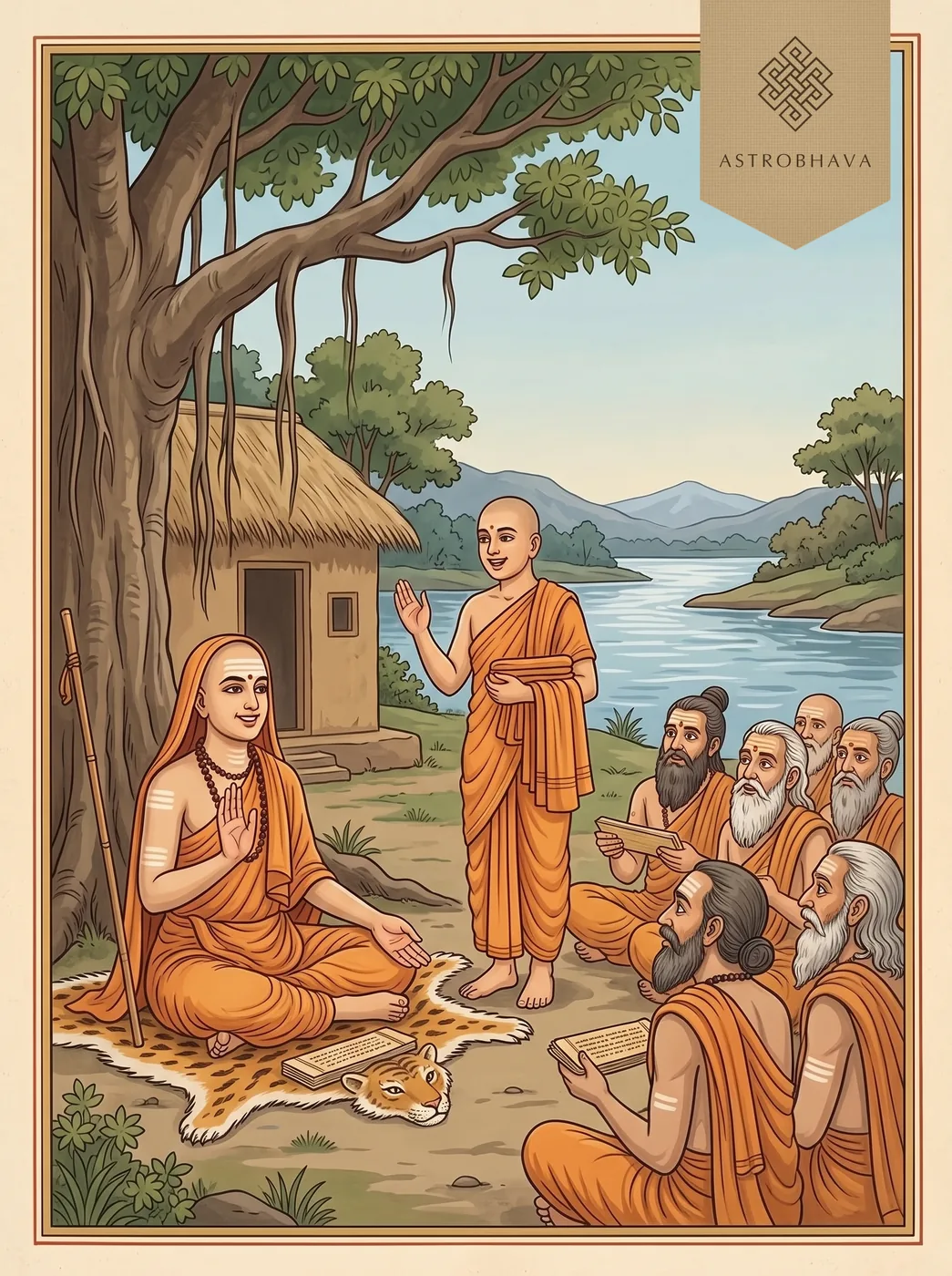
Totakashtakam
विदिताखिलशास्त्रसुधाजलधे महितोपनिषत् कथितार्थनिधे । हृदये कलये विमलं चरणं भव शंकर देशिक मे शरणम् ॥Also known as Shri Shankara Deshikashtakam
In Devanagari, Tamil, Telugu, Kannada, Malayalam and English — with the meaning of every word, and the one syllable most people pronounce wrongly.
 A reading of your birth chartBook →
What the Totakashtakam is
The Totakashtakam is the octave of eight verses that Totakacharya, born Giri, addressed to his own teacher, Adi Shankaracharya; some printings title it Shri Shankara Deshikashtakam, 'eight verses to the teacher Shankara'. It is written in the totaka metre, where each line runs as four feet of two light syllables and one heavy, which gives the hymn its quick, even step and gave its author his name. Every verse closes on the same plea, bhava shankara deshika me sharanam, 'O teacher Shankara, be my refuge'. The sequence moves from praise to petition: verses 1 and 2 hail Shankara as an ocean of scripture and of compassion, verses 3 and 4 ask him to teach the difference between God and the individual soul and to hold back delusion, verses 6 and 7 see Shiva himself in the teacher, and verse 8 ends with the poet admitting he has neither learning nor wealth to offer.
The disciple Padmapada called a wall
The episode is told in the Shankara Digvijaya attributed to Madhava-Vidyaranya and is retold in the Sringeri tradition. While Shankara was staying at Sringeri he accepted a young man named Giri as a disciple. Giri served the teacher with complete devotion but showed no gift for study, and the other disciples thought little of his mind. One day the class was ready to begin and Giri was absent; the Sringeri account says he had gone to the river to wash the teacher's clothes, while another telling has him out gathering flowers for worship. Shankara would not start without him. Padmapada, the senior disciple, is said to have pointed at a wall and asked why they should wait for someone no more able to learn than that. According to tradition, Shankara, moved by Giri's service, granted him in an instant a mastery of all the scriptures. When Giri returned he sang these eight verses on the spot, and from their metre he became known as Totakacharya. Tradition holds that Shankara later named him the first head of the northern seat at Jyotirmath in the Himalaya. A second work of his, the Shruti Sara Samuddharana, which condenses the teaching of the Upanishads, is also composed entirely in totaka verse.
The mantra, in six scripts
- विदिताखिलशास्त्रसुधाजलधे
- viditākhilaśāstrasudhājaladhe — O ocean of the nectar of all scriptures known
- महितोपनिषत्
- mahitopaniṣat — of the great Upanishads
- कथितार्थनिधे
- kathitārthanidhe — O treasure of the meaning taught
- हृदये
- hṛdaye — in the heart
- कलये
- kalaye — I meditate on
- विमलं
- vimalaṃ — spotless
- चरणं
- caraṇaṃ — feet
- भव
- bhava — be
- शंकर
- śaṃkara — O Shankara
- देशिक
- deśika — O teacher
- मे
- me — my
- शरणम्
- śaraṇam — refuge
Totakashtakam lyrics in full
The eight verses in totaka metre, each closing on the refrain to Shankara.
All 8 verses, in Sanskrit, Tamil, Telugu, Kannada, Malayalam and English, each with its meaning. Choose a script:
Download the Totakashtakam PDFAll 8 verses with their meanings, in Sanskrit. Free to print and keep.
विदिताखिलशास्त्रसुधाजलधे महितोपनिषत् कथितार्थनिधे ।
हृदये कलये विमलं चरणं भव शंकर देशिक मे शरणम् ॥
விதிதாகிலஶாஸ்த்ரஸுதாஜலதே மஹிதோபநிஷத் கதிதார்தநிதே ।
ஹ்ருதயே கலயே விமலம் சரணம் பவ ஶம்கர தேஶிக மே ஶரணம் ॥
విదితాఖిలశాస్త్రసుధాజలధే మహితోపనిషత్ కథితార్థనిధే ।
హృదయే కలయే విమలం చరణం భవ శంకర దేశిక మే శరణమ్ ॥
ವಿದಿತಾಖಿಲಶಾಸ್ತ್ರಸುಧಾಜಲಧೇ ಮಹಿತೋಪನಿಷತ್ ಕಥಿತಾರ್ಥನಿಧೇ ।
ಹೃದಯೇ ಕಲಯೇ ವಿಮಲಂ ಚರಣಂ ಭವ ಶಂಕರ ದೇಶಿಕ ಮೇ ಶರಣಮ್ ॥
വിദിതാഖിലശാസ്ത്രസുധാജലധേ മഹിതോപനിഷത് കഥിതാര്ഥനിധേ ।
ഹൃദയേ കലയേ വിമലം ചരണം ഭവ ശംകര ദേശിക മേ ശരണമ് ॥
viditākhilaśāstrasudhājaladhe mahitopaniṣat kathitārthanidhe |
hṛdaye kalaye vimalaṃ caraṇaṃ bhava śaṃkara deśika me śaraṇam ||
O ocean of the nectar of all the scriptures you have known, O treasure of the meaning taught in the great Upanishads! I meditate in my heart on your spotless feet. O teacher Shankara, be my refuge.
करुणावरुणालय पालय मां भवसागरदुःखविदूनहृदम् ।
रचयाखिलदर्शनतत्त्वविदं भव शंकर देशिक मे शरणम् ॥
கருணாவருணாலய பாலய மாம் பவஸாகரதுஃகவிதூநஹ்ருதம் ।
ரசயாகிலதர்ஶநதத்த்வவிதம் பவ ஶம்கர தேஶிக மே ஶரணம் ॥
కరుణావరుణాలయ పాలయ మాం భవసాగరదుఃఖవిదూనహృదమ్ ।
రచయాఖిలదర్శనతత్త్వవిదం భవ శంకర దేశిక మే శరణమ్ ॥
ಕರುಣಾವರುಣಾಲಯ ಪಾಲಯ ಮಾಂ ಭವಸಾಗರದುಃಖವಿದೂನಹೃದಮ್ ।
ರಚಯಾಖಿಲದರ್ಶನತತ್ತ್ವವಿದಂ ಭವ ಶಂಕರ ದೇಶಿಕ ಮೇ ಶರಣಮ್ ॥
കരുണാവരുണാലയ പാലയ മാം ഭവസാഗരദുഃഖവിദൂനഹൃദമ് ।
രചയാഖിലദര്ശനതത്ത്വവിദം ഭവ ശംകര ദേശിക മേ ശരണമ് ॥
karuṇāvaruṇālaya pālaya māṃ bhavasāgaraduḥkhavidūnahṛdam |
racayākhiladarśanatattvavidaṃ bhava śaṃkara deśika me śaraṇam ||
O ocean of compassion, protect me, whose heart is tormented by the sorrows of the sea of worldly life. Make me a knower of the truth of all the schools of philosophy. O teacher Shankara, be my refuge.
भवता जनता सुहिता भविता निजबोधविचारण चारुमते ।
कलयेश्वरजीवविवेकविदं भव शंकर देशिक मे शरणम् ॥
பவதா ஜநதா ஸுஹிதா பவிதா நிஜபோதவிசாரண சாருமதே ।
கலயேஶ்வரஜீவவிவேகவிதம் பவ ஶம்கர தேஶிக மே ஶரணம் ॥
భవతా జనతా సుహితా భవితా నిజబోధవిచారణ చారుమతే ।
కలయేశ్వరజీవవివేకవిదం భవ శంకర దేశిక మే శరణమ్ ॥
ಭವತಾ ಜನತಾ ಸುಹಿತಾ ಭವಿತಾ ನಿಜಬೋಧವಿಚಾರಣ ಚಾರುಮತೇ ।
ಕಲಯೇಶ್ವರಜೀವವಿವೇಕವಿದಂ ಭವ ಶಂಕರ ದೇಶಿಕ ಮೇ ಶರಣಮ್ ॥
ഭവതാ ജനതാ സുഹിതാ ഭവിതാ നിജബോധവിചാരണ ചാരുമതേ ।
കലയേശ്വരജീവവിവേകവിദം ഭവ ശംകര ദേശിക മേ ശരണമ് ॥
bhavatā janatā suhitā bhavitā nijabodhavicāraṇa cārumate |
kalayeśvarajīvavivekavidaṃ bhava śaṃkara deśika me śaraṇam ||
Through you the people will be made truly happy, O you whose mind is graceful in the inquiry into the knowledge of the Self. Make me understand the discernment between God and the individual soul. O teacher Shankara, be my refuge.
भव एव भवानिति मे नितरां समजायत चेतसि कौतुकिता ।
मम वारय मोहमहाजलधिं भव शंकर देशिक मे शरणम् ॥
பவ ஏவ பவாநிதி மே நிதராம் ஸமஜாயத சேதஸி கௌதுகிதா ।
மம வாரய மோஹமஹாஜலதிம் பவ ஶம்கர தேஶிக மே ஶரணம் ॥
భవ ఏవ భవానితి మే నితరాం సమజాయత చేతసి కౌతుకితా ।
మమ వారయ మోహమహాజలధిం భవ శంకర దేశిక మే శరణమ్ ॥
ಭವ ಏವ ಭವಾನಿತಿ ಮೇ ನಿತರಾಂ ಸಮಜಾಯತ ಚೇತಸಿ ಕೌತುಕಿತಾ ।
ಮಮ ವಾರಯ ಮೋಹಮಹಾಜಲಧಿಂ ಭವ ಶಂಕರ ದೇಶಿಕ ಮೇ ಶರಣಮ್ ॥
ഭവ ഏവ ഭവാനിതി മേ നിതരാം സമജായത ചേതസി കൌതുകിതാ ।
മമ വാരയ മോഹമഹാജലധിം ഭവ ശംകര ദേശിക മേ ശരണമ് ॥
bhava eva bhavāniti me nitarāṃ samajāyata cetasi kautukitā |
mama vāraya mohamahājaladhiṃ bhava śaṃkara deśika me śaraṇam ||
The wondering thought that you are Bhava (Shiva) himself has arisen strongly in my mind. Hold back my vast ocean of delusion. O teacher Shankara, be my refuge.
सुकृतेऽधिकृते बहुधा भवतो भविता समदर्शनलालसता ।
अतिदीनमिमं परिपालय मां भव शंकर देशिक मे शरणम् ॥
ஸுக்ருதேதிக்ருதே பஹுதா பவதோ பவிதா ஸமதர்ஶநலாலஸதா ।
அதிதீநமிமம் பரிபாலய மாம் பவ ஶம்கர தேஶிக மே ஶரணம் ॥
సుకృతేఽధికృతే బహుధా భవతో భవితా సమదర్శనలాలసతా ।
అతిదీనమిమం పరిపాలయ మాం భవ శంకర దేశిక మే శరణమ్ ॥
ಸುಕೃತೇಽಧಿಕೃತೇ ಬಹುಧಾ ಭವತೋ ಭವಿತಾ ಸಮದರ್ಶನಲಾಲಸತಾ ।
ಅತಿದೀನಮಿಮಂ ಪರಿಪಾಲಯ ಮಾಂ ಭವ ಶಂಕರ ದೇಶಿಕ ಮೇ ಶರಣಮ್ ॥
സുകൃതേഽധികൃതേ ബഹുധാ ഭവതോ ഭവിതാ സമദര്ശനലാലസതാ ।
അതിദീനമിമം പരിപാലയ മാം ഭവ ശംകര ദേശിക മേ ശരണമ് ॥
sukṛte'dhikṛte bahudhā bhavato bhavitā samadarśanalālasatā |
atidīnamimaṃ paripālaya māṃ bhava śaṃkara deśika me śaraṇam ||
Only when good deeds have been done in abundance and in many ways does the longing for the vision of oneness through you arise. Protect me, this utterly helpless one. O teacher Shankara, be my refuge.
जगतीमवितुं कलिताकृतयो विचरन्ति महामहसश्छलतः ।
अहिमांशुरिवात्र विभासि गुरो भव शंकर देशिक मे शरणम् ॥
ஜகதீமவிதும் கலிதாக்ருதயோ விசரந்தி மஹாமஹஸஶ்சலதஃ ।
அஹிமாம்ஶுரிவாத்ர விபாஸி குரோ பவ ஶம்கர தேஶிக மே ஶரணம் ॥
జగతీమవితుం కలితాకృతయో విచరన్తి మహామహసశ్ఛలతః ।
అహిమాంశురివాత్ర విభాసి గురో భవ శంకర దేశిక మే శరణమ్ ॥
ಜಗತೀಮವಿತುಂ ಕಲಿತಾಕೃತಯೋ ವಿಚರನ್ತಿ ಮಹಾಮಹಸಶ್ಛಲತಃ ।
ಅಹಿಮಾಂಶುರಿವಾತ್ರ ವಿಭಾಸಿ ಗುರೋ ಭವ ಶಂಕರ ದೇಶಿಕ ಮೇ ಶರಣಮ್ ॥
ജഗതീമവിതും കലിതാകൃതയോ വിചരന്തി മഹാമഹസശ്ഛലതഃ ।
അഹിമാംശുരിവാത്ര വിഭാസി ഗുരോ ഭവ ശംകര ദേശിക മേ ശരണമ് ॥
jagatīmavituṃ kalitākṛtayo vicaranti mahāmahasaśchalataḥ |
ahimāṃśurivātra vibhāsi guro bhava śaṃkara deśika me śaraṇam ||
To protect the world, great luminous beings take on forms and move about in disguise. Among them, O Guru, you shine here like the sun. O teacher Shankara, be my refuge.
गुरुपुंगव पुंगवकेतन ते समतामयतां नहि कोऽपि सुधीः ।
शरणागतवत्सल तत्त्वनिधे भव शंकर देशिक मे शरणम् ॥
குருபும்கவ பும்கவகேதந தே ஸமதாமயதாம் நஹி கோபி ஸுதீஃ ।
ஶரணாகதவத்ஸல தத்த்வநிதே பவ ஶம்கர தேஶிக மே ஶரணம் ॥
గురుపుంగవ పుంగవకేతన తే సమతామయతాం నహి కోఽపి సుధీః ।
శరణాగతవత్సల తత్త్వనిధే భవ శంకర దేశిక మే శరణమ్ ॥
ಗುರುಪುಂಗವ ಪುಂಗವಕೇತನ ತೇ ಸಮತಾಮಯತಾಂ ನಹಿ ಕೋಽಪಿ ಸುಧೀಃ ।
ಶರಣಾಗತವತ್ಸಲ ತತ್ತ್ವನಿಧೇ ಭವ ಶಂಕರ ದೇಶಿಕ ಮೇ ಶರಣಮ್ ॥
ഗുരുപുംഗവ പുംഗവകേതന തേ സമതാമയതാം നഹി കോഽപി സുധീഃ ।
ശരണാഗതവത്സല തത്ത്വനിധേ ഭവ ശംകര ദേശിക മേ ശരണമ് ॥
gurupuṃgava puṃgavaketana te samatāmayatāṃ nahi ko'pi sudhīḥ |
śaraṇāgatavatsala tattvanidhe bhava śaṃkara deśika me śaraṇam ||
O foremost of gurus, O you whose banner bears the bull (Shiva), no wise man attains equality with you. O you who cherish those who come for refuge, O treasure of truth, O teacher Shankara, be my refuge.
विदिता न मया विशदैककला न च किंचन काञ्चनमस्ति गुरो ।
द्रुतमेव विधेहि कृपां सहजां भव शंकर देशिक मे शरणम् ॥
விதிதா ந மயா விஶதைககலா ந ச கிம்சந காஞ்சநமஸ்தி குரோ ।
த்ருதமேவ விதேஹி க்ருபாம் ஸஹஜாம் பவ ஶம்கர தேஶிக மே ஶரணம் ॥
విదితా న మయా విశదైకకలా న చ కించన కాఞ్చనమస్తి గురో ।
ద్రుతమేవ విధేహి కృపాం సహజాం భవ శంకర దేశిక మే శరణమ్ ॥
ವಿದಿತಾ ನ ಮಯಾ ವಿಶದೈಕಕಲಾ ನ ಚ ಕಿಂಚನ ಕಾಞ್ಚನಮಸ್ತಿ ಗುರೋ ।
ದ್ರುತಮೇವ ವಿಧೇಹಿ ಕೃಪಾಂ ಸಹಜಾಂ ಭವ ಶಂಕರ ದೇಶಿಕ ಮೇ ಶರಣಮ್ ॥
വിദിതാ ന മയാ വിശദൈകകലാ ന ച കിംചന കാഞ്ചനമസ്തി ഗുരോ ।
ദ്രുതമേവ വിധേഹി കൃപാം സഹജാം ഭവ ശംകര ദേശിക മേ ശരണമ് ॥
viditā na mayā viśadaikakalā na ca kiṃcana kāñcanamasti guro |
drutameva vidhehi kṛpāṃ sahajāṃ bhava śaṃkara deśika me śaraṇam ||
I have not clearly mastered even a single branch of learning, nor do I possess any wealth at all, O Guru. Quickly bestow on me the grace that is natural to you. O teacher Shankara, be my refuge.
The syllable people get wrong
The refrain word deśika (देशिक, 'teacher') has three syllables with a long first vowel and a palatal sh: say it DAY-shi-ka, not 'deshik' or 'dee-sika'. The e in Sanskrit is always long, so the first syllable carries the weight.
When the Totakashtakam is chanted
Festival. Shankara Jayanti
Questions
Have your chart read before you decide
Chanting is yours to do, and free. But which deity your situation calls for — and whether a mantra alone is the right response — depends on your chart. Sometimes it is; sometimes it is not.
- Over 30 years in the Guru–Sishya Parampara, from the age of five
- He reads every chart himself — 60 minutes, one to one, never delegated
- Charts are read only between sunrise and sunset, following tradition
