Tulsi Mantra
जगद्धात्रि नमस्तुभ्यं विष्णोश्च प्रियवल्लभे । यतो ब्रह्मादयो देवाः सृष्टिस्थित्यन्तकारिणः ॥Also known as Jagaddhatri Namastubhyam
In Devanagari, Tamil, Telugu, Kannada, Malayalam and English — with the meaning of every word, and the one syllable most people pronounce wrongly.
 A reading of your birth chartBook →
What the Tulsi Mantra is
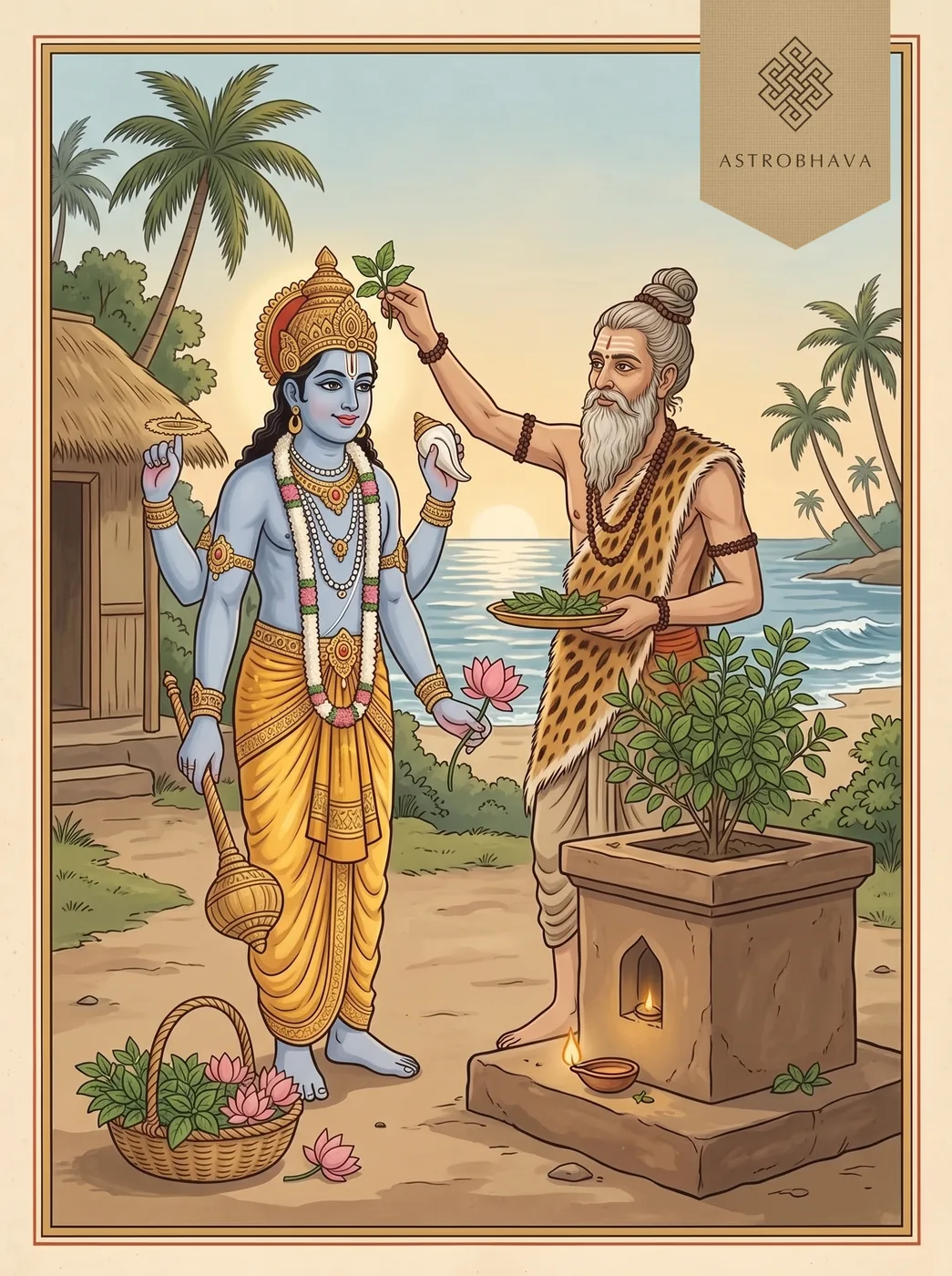
The Tulsi mantra most often recited in full is the Tulasi Stotram: fifteen Sanskrit verses to Tulasi, the holy basil worshipped as a goddess and as the beloved of Vishnu. It opens with the words Jagaddhatri namastubhyam, hailing her as the sustainer of the world through whom Brahma and the other gods create, preserve and dissolve. Verses 2 to 10 alternate between salutation and statements of her reach: she purifies whether praised aloud or only remembered, the sight of her frees wrongdoers, all the gods dwell in her, and a sprig of her leaves set on Vishnu's head is said to return every blessing to the one who offers it. Verse 11 names the singer as the sage Pundarika, who worshipped Vishnu daily with Tulasi leaves. Verses 12 to 14 give her sixteen names, among them Shri, Mahalakshmi, Vidya and Avidya, the heavens and the earth, and verse 15 closes on her as Lakshmi's friend, praised by Narada.
Pundarika and the Lord on bare ground
The hymn carries its own record of origin. Verse 11 says it was sung long ago by the wise Pundarika while he worshipped Vishnu each day with fresh Tulasi leaves. It gives no place or date, and the standard printed edition names no Purana behind it. One tradition identifies this singer with the sage Pundarika remembered at Thirukadalmallai, the old name of Mamallapuram on the Tamil coast. According to the temple's account, Pundarika came upon a pond full of lotuses during his penance and resolved to carry them to Vishnu in the Ocean of Milk. With no way across the sea, he began emptying it with the basket he used for gathering flowers. An old man stopped to tell him the work was pointless, then asked for food and offered to keep bailing while the sage went to fetch it. Pundarika returned to find Vishnu reclining on the bare ground, wearing the gathered lotuses as a garland. The deity there is worshipped as Sthalasayana Perumal, lying on the earth rather than on the serpent Adishesha, and the temple tank is still called Pundarika Teertham. Whether the singer of the Tulasi hymn and the sage of the lotus legend are one person rests on tradition, not record; the hymn itself speaks only of Tulasi leaves.
The mantra, in six scripts
- जगद्धात्रि
- jagaddhātri — O sustainer of the world
- नमस्तुभ्यं
- namastubhyaṃ — salutations to you
- विष्णोश्च
- viṣṇośca — and of Vishnu
- प्रियवल्लभे
- priyavallabhe — O dear beloved
- यतो
- yato — through whom
- ब्रह्मादयो
- brahmādayo — Brahma and the others
- देवाः
- devāḥ — the gods
- सृष्टिस्थित्यन्तकारिणः
- sṛṣṭisthityantakāriṇaḥ — who create, sustain and end the world
Tulsi Mantra lyrics in full
Fifteen verses: ten of praise, the verse naming Pundarika, three giving her sixteen names, and a closing salutation.
All 15 verses, in Sanskrit, Tamil, Telugu, Kannada, Malayalam and English, each with its meaning. Choose a script:
Download the Tulsi Mantra PDFAll 15 verses with their meanings, in Sanskrit. Free to print and keep.
जगद्धात्रि नमस्तुभ्यं विष्णोश्च प्रियवल्लभे ।
यतो ब्रह्मादयो देवाः सृष्टिस्थित्यन्तकारिणः ॥
ஜகத்தாத்ரி நமஸ்துப்யம் விஷ்ணோஶ்ச ப்ரியவல்லபே ।
யதோ ப்ரஹ்மாதயோ தேவாஃ ஸ்ருஷ்டிஸ்தித்யந்தகாரிணஃ ॥
జగద్ధాత్రి నమస్తుభ్యం విష్ణోశ్చ ప్రియవల్లభే ।
యతో బ్రహ్మాదయో దేవాః సృష్టిస్థిత్యన్తకారిణః ॥
ಜಗದ್ಧಾತ್ರಿ ನಮಸ್ತುಭ್ಯಂ ವಿಷ್ಣೋಶ್ಚ ಪ್ರಿಯವಲ್ಲಭೇ ।
ಯತೋ ಬ್ರಹ್ಮಾದಯೋ ದೇವಾಃ ಸೃಷ್ಟಿಸ್ಥಿತ್ಯನ್ತಕಾರಿಣಃ ॥
ജഗദ്ധാത്രി നമസ്തുഭ്യം വിഷ്ണോശ്ച പ്രിയവല്ലഭേ ।
യതോ ബ്രഹ്മാദയോ ദേവാഃ സൃഷ്ടിസ്ഥിത്യന്തകാരിണഃ ॥
jagaddhātri namastubhyaṃ viṣṇośca priyavallabhe |
yato brahmādayo devāḥ sṛṣṭisthityantakāriṇaḥ ||
Salutations to you, sustainer of the world and dear beloved of Vishnu, through whom Brahma and the other gods carry out creation, preservation and dissolution.
नमस्तुलसि कल्याणि नमो विष्णुप्रिये शुभे ।
नमो मोक्षप्रदे देवि नमः सम्पत्प्रदायिके ॥
நமஸ்துலஸி கல்யாணி நமோ விஷ்ணுப்ரியே ஶுபே ।
நமோ மோக்ஷப்ரதே தேவி நமஃ ஸம்பத்ப்ரதாயிகே ॥
నమస్తులసి కల్యాణి నమో విష్ణుప్రియే శుభే ।
నమో మోక్షప్రదే దేవి నమః సమ్పత్ప్రదాయికే ॥
ನಮಸ್ತುಲಸಿ ಕಲ್ಯಾಣಿ ನಮೋ ವಿಷ್ಣುಪ್ರಿಯೇ ಶುಭೇ ।
ನಮೋ ಮೋಕ್ಷಪ್ರದೇ ದೇವಿ ನಮಃ ಸಮ್ಪತ್ಪ್ರದಾಯಿಕೇ ॥
നമസ്തുലസി കല്യാണി നമോ വിഷ്ണുപ്രിയേ ശുഭേ ।
നമോ മോക്ഷപ്രദേ ദേവി നമഃ സമ്പത്പ്രദായികേ ॥
namastulasi kalyāṇi namo viṣṇupriye śubhe |
namo mokṣaprade devi namaḥ sampatpradāyike ||
Salutations to you, Tulasi, the auspicious one; salutations, beloved of Vishnu, the gracious one. Salutations, goddess who grants liberation; salutations to you who bestow prosperity.
तुलसी पातु मां नित्यं सर्वापद्भ्योऽपि सर्वदा ।
कीर्तितापि स्मृता वापि पवित्रयति मानवम् ॥
துலஸீ பாது மாம் நித்யம் ஸர்வாபத்ப்யோபி ஸர்வதா ।
கீர்திதாபி ஸ்ம்ருதா வாபி பவித்ரயதி மாநவம் ॥
తులసీ పాతు మాం నిత్యం సర్వాపద్భ్యోఽపి సర్వదా ।
కీర్తితాపి స్మృతా వాపి పవిత్రయతి మానవమ్ ॥
ತುಲಸೀ ಪಾತು ಮಾಂ ನಿತ್ಯಂ ಸರ್ವಾಪದ್ಭ್ಯೋಽಪಿ ಸರ್ವದಾ ।
ಕೀರ್ತಿತಾಪಿ ಸ್ಮೃತಾ ವಾಪಿ ಪವಿತ್ರಯತಿ ಮಾನವಮ್ ॥
തുലസീ പാതു മാം നിത്യം സര്വാപദ്ഭ്യോഽപി സര്വദാ ।
കീര്തിതാപി സ്മൃതാ വാപി പവിത്രയതി മാനവമ് ॥
tulasī pātu māṃ nityaṃ sarvāpadbhyo'pi sarvadā |
kīrtitāpi smṛtā vāpi pavitrayati mānavam ||
May Tulasi protect me always, at every time, from all misfortunes. The verse says that whether she is praised aloud or only remembered, she purifies a person.
नमामि शिरसा देवीं तुलसीं विलसत्तनुम् ।
यां दृष्ट्वा पापिनो मर्त्या मुच्यन्ते सर्वकिल्बिषात् ॥
நமாமி ஶிரஸா தேவீம் துலஸீம் விலஸத்தநும் ।
யாம் த்ருஷ்ட்வா பாபிநோ மர்த்யா முச்யந்தே ஸர்வகில்பிஷாத் ॥
నమామి శిరసా దేవీం తులసీం విలసత్తనుమ్ ।
యాం దృష్ట్వా పాపినో మర్త్యా ముచ్యన్తే సర్వకిల్బిషాత్ ॥
ನಮಾಮಿ ಶಿರಸಾ ದೇವೀಂ ತುಲಸೀಂ ವಿಲಸತ್ತನುಮ್ ।
ಯಾಂ ದೃಷ್ಟ್ವಾ ಪಾಪಿನೋ ಮರ್ತ್ಯಾ ಮುಚ್ಯನ್ತೇ ಸರ್ವಕಿಲ್ಬಿಷಾತ್ ॥
നമാമി ശിരസാ ദേവീം തുലസീം വിലസത്തനുമ് ।
യാം ദൃഷ്ട്വാ പാപിനോ മര്ത്യാ മുച്യന്തേ സര്വകില്ബിഷാത് ॥
namāmi śirasā devīṃ tulasīṃ vilasattanum |
yāṃ dṛṣṭvā pāpino martyā mucyante sarvakilbiṣāt ||
I bow my head to the goddess Tulasi, whose form shines with beauty. The verse says that on seeing her, even sinful mortals are freed from every wrong.
तुलस्या रक्षितं सर्वं जगदेतच्चराचरम् ।
या विनिहन्ति पापानि दृष्ट्वा वा पापिभिर्नरैः ॥
துலஸ்யா ரக்ஷிதம் ஸர்வம் ஜகதேதச்சராசரம் ।
யா விநிஹந்தி பாபாநி த்ருஷ்ட்வா வா பாபிபிர்நரைஃ ॥
తులస్యా రక్షితం సర్వం జగదేతచ్చరాచరమ్ ।
యా వినిహన్తి పాపాని దృష్ట్వా వా పాపిభిర్నరైః ॥
ತುಲಸ್ಯಾ ರಕ್ಷಿತಂ ಸರ್ವಂ ಜಗದೇತಚ್ಚರಾಚರಮ್ ।
ಯಾ ವಿನಿಹನ್ತಿ ಪಾಪಾನಿ ದೃಷ್ಟ್ವಾ ವಾ ಪಾಪಿಭಿರ್ನರೈಃ ॥
തുലസ്യാ രക്ഷിതം സര്വം ജഗദേതച്ചരാചരമ് ।
യാ വിനിഹന്തി പാപാനി ദൃഷ്ട്വാ വാ പാപിഭിര്നരൈഃ ॥
tulasyā rakṣitaṃ sarvaṃ jagadetaccarācaram |
yā vinihanti pāpāni dṛṣṭvā vā pāpibhirnaraiḥ ||
This whole world, moving and unmoving, is protected by Tulasi. The verse says she destroys the sins of wrongdoers who merely look upon her.
नमस्तुलस्यतितरां यस्यै बद्धाञ्जलिं कलौ ।
कलयन्ति सुखं सर्वं स्त्रियो वैश्यास्तथाऽपरे ॥
நமஸ்துலஸ்யதிதராம் யஸ்யை பத்தாஞ்ஜலிம் கலௌ ।
கலயந்தி ஸுகம் ஸர்வம் ஸ்த்ரியோ வைஶ்யாஸ்ததாபரே ॥
నమస్తులస్యతితరాం యస్యై బద్ధాఞ్జలిం కలౌ ।
కలయన్తి సుఖం సర్వం స్త్రియో వైశ్యాస్తథాఽపరే ॥
ನಮಸ್ತುಲಸ್ಯತಿತರಾಂ ಯಸ್ಯೈ ಬದ್ಧಾಞ್ಜಲಿಂ ಕಲೌ ।
ಕಲಯನ್ತಿ ಸುಖಂ ಸರ್ವಂ ಸ್ತ್ರಿಯೋ ವೈಶ್ಯಾಸ್ತಥಾಽಪರೇ ॥
നമസ്തുലസ്യതിതരാം യസ്യൈ ബദ്ധാഞ്ജലിം കലൌ ।
കലയന്തി സുഖം സര്വം സ്ത്രിയോ വൈശ്യാസ്തഥാഽപരേ ॥
namastulasyatitarāṃ yasyai baddhāñjaliṃ kalau |
kalayanti sukhaṃ sarvaṃ striyo vaiśyāstathā'pare ||
Salutations, again and again, to Tulasi. The verse says that in the Kali age, women, merchants and others who fold their hands to her obtain every happiness.
तुलस्या नापरं किञ्चिद्दैवतं जगतीतले ।
यथा पवित्रितो लोको विष्णुसङ्गेन वैष्णवः ॥
துலஸ்யா நாபரம் கிஞ்சித்தைவதம் ஜகதீதலே ।
யதா பவித்ரிதோ லோகோ விஷ்ணுஸங்கேந வைஷ்ணவஃ ॥
తులస్యా నాపరం కిఞ్చిద్దైవతం జగతీతలే ।
యథా పవిత్రితో లోకో విష్ణుసఙ్గేన వైష్ణవః ॥
ತುಲಸ್ಯಾ ನಾಪರಂ ಕಿಞ್ಚಿದ್ದೈವತಂ ಜಗತೀತಲೇ ।
ಯಥಾ ಪವಿತ್ರಿತೋ ಲೋಕೋ ವಿಷ್ಣುಸಙ್ಗೇನ ವೈಷ್ಣವಃ ॥
തുലസ്യാ നാപരം കിഞ്ചിദ്ദൈവതം ജഗതീതലേ ।
യഥാ പവിത്രിതോ ലോകോ വിഷ്ണുസങ്ഗേന വൈഷ്ണവഃ ॥
tulasyā nāparaṃ kiñciddaivataṃ jagatītale |
yathā pavitrito loko viṣṇusaṅgena vaiṣṇavaḥ ||
On the face of the earth there is no deity higher than Tulasi, by whom the world is purified, just as a devotee of Vishnu is purified by closeness to Vishnu.
तुलस्याः पल्लवं विष्णोः शिरस्यारोपितं कलौ ।
आरोपयति सर्वाणि श्रेयांसि वरमस्तके ॥
துலஸ்யாஃ பல்லவம் விஷ்ணோஃ ஶிரஸ்யாரோபிதம் கலௌ ।
ஆரோபயதி ஸர்வாணி ஶ்ரேயாம்ஸி வரமஸ்தகே ॥
తులస్యాః పల్లవం విష్ణోః శిరస్యారోపితం కలౌ ।
ఆరోపయతి సర్వాణి శ్రేయాంసి వరమస్తకే ॥
ತುಲಸ್ಯಾಃ ಪಲ್ಲವಂ ವಿಷ್ಣೋಃ ಶಿರಸ್ಯಾರೋಪಿತಂ ಕಲೌ ।
ಆರೋಪಯತಿ ಸರ್ವಾಣಿ ಶ್ರೇಯಾಂಸಿ ವರಮಸ್ತಕೇ ॥
തുലസ്യാഃ പല്ലവം വിഷ്ണോഃ ശിരസ്യാരോപിതം കലൌ ।
ആരോപയതി സര്വാണി ശ്രേയാംസി വരമസ്തകേ ॥
tulasyāḥ pallavaṃ viṣṇoḥ śirasyāropitaṃ kalau |
āropayati sarvāṇi śreyāṃsi varamastake ||
The verse says that in the Kali age, a sprig of Tulasi placed on the head of Vishnu places every blessing on the head of the one who offers it.
तुलस्यां सकला देवा वसन्ति सततं यतः ।
अतस्तामर्चयेल्लोके सर्वान् देवान् समर्चयन् ॥
துலஸ்யாம் ஸகலா தேவா வஸந்தி ஸததம் யதஃ ।
அதஸ்தாமர்சயேல்லோகே ஸர்வாந் தேவாந் ஸமர்சயந் ॥
తులస్యాం సకలా దేవా వసన్తి సతతం యతః ।
అతస్తామర్చయేల్లోకే సర్వాన్ దేవాన్ సమర్చయన్ ॥
ತುಲಸ್ಯಾಂ ಸಕಲಾ ದೇವಾ ವಸನ್ತಿ ಸತತಂ ಯತಃ ।
ಅತಸ್ತಾಮರ್ಚಯೇಲ್ಲೋಕೇ ಸರ್ವಾನ್ ದೇವಾನ್ ಸಮರ್ಚಯನ್ ॥
തുലസ്യാം സകലാ ദേവാ വസന്തി സതതം യതഃ ।
അതസ്താമര്ചയേല്ലോകേ സര്വാന് ദേവാന് സമര്ചയന് ॥
tulasyāṃ sakalā devā vasanti satataṃ yataḥ |
atastāmarcayelloke sarvān devān samarcayan ||
Since all the gods dwell in Tulasi at all times, one should worship her in this world; in doing so, the verse says, one worships all the gods.
नमस्तुलसि सर्वज्ञे पुरुषोत्तमवल्लभे ।
पाहि मां सर्वपापेभ्यः सर्वसम्पत्प्रदायिके ॥
நமஸ்துலஸி ஸர்வஜ்ஞே புருஷோத்தமவல்லபே ।
பாஹி மாம் ஸர்வபாபேப்யஃ ஸர்வஸம்பத்ப்ரதாயிகே ॥
నమస్తులసి సర్వజ్ఞే పురుషోత్తమవల్లభే ।
పాహి మాం సర్వపాపేభ్యః సర్వసమ్పత్ప్రదాయికే ॥
ನಮಸ್ತುಲಸಿ ಸರ್ವಜ್ಞೇ ಪುರುಷೋತ್ತಮವಲ್ಲಭೇ ।
ಪಾಹಿ ಮಾಂ ಸರ್ವಪಾಪೇಭ್ಯಃ ಸರ್ವಸಮ್ಪತ್ಪ್ರದಾಯಿಕೇ ॥
നമസ്തുലസി സര്വജ്ഞേ പുരുഷോത്തമവല്ലഭേ ।
പാഹി മാം സര്വപാപേഭ്യഃ സര്വസമ്പത്പ്രദായികേ ॥
namastulasi sarvajñe puruṣottamavallabhe |
pāhi māṃ sarvapāpebhyaḥ sarvasampatpradāyike ||
Salutations to you, Tulasi, all-knowing one, beloved of Vishnu the Supreme Person. Protect me from all sins, you who grant every kind of prosperity.
इति स्तोत्रं पुरा गीतं पुण्डरीकेण धीमता ।
विष्णुमर्चयता नित्यं शोभनैस्तुलसीदलैः ॥
இதி ஸ்தோத்ரம் புரா கீதம் புண்டரீகேண தீமதா ।
விஷ்ணுமர்சயதா நித்யம் ஶோபநைஸ்துலஸீதலைஃ ॥
ఇతి స్తోత్రం పురా గీతం పుణ్డరీకేణ ధీమతా ।
విష్ణుమర్చయతా నిత్యం శోభనైస్తులసీదలైః ॥
ಇತಿ ಸ್ತೋತ್ರಂ ಪುರಾ ಗೀತಂ ಪುಣ್ಡರೀಕೇಣ ಧೀಮತಾ ।
ವಿಷ್ಣುಮರ್ಚಯತಾ ನಿತ್ಯಂ ಶೋಭನೈಸ್ತುಲಸೀದಲೈಃ ॥
ഇതി സ്തോത്രം പുരാ ഗീതം പുണ്ഡരീകേണ ധീമതാ ।
വിഷ്ണുമര്ചയതാ നിത്യം ശോഭനൈസ്തുലസീദലൈഃ ॥
iti stotraṃ purā gītaṃ puṇḍarīkeṇa dhīmatā |
viṣṇumarcayatā nityaṃ śobhanaistulasīdalaiḥ ||
This hymn was sung long ago by the wise sage Pundarika, who worshipped Vishnu every day with beautiful Tulasi leaves.
तुलसी श्रीर्महालक्ष्मीर्विद्याविद्या यशस्विनी ।
धर्म्या धर्मानना देवी देवदेवमनःप्रिया ॥
துலஸீ ஶ்ரீர்மஹாலக்ஷ்மீர்வித்யாவித்யா யஶஸ்விநீ ।
தர்ம்யா தர்மாநநா தேவீ தேவதேவமநஃப்ரியா ॥
తులసీ శ్రీర్మహాలక్ష్మీర్విద్యావిద్యా యశస్వినీ ।
ధర్మ్యా ధర్మాననా దేవీ దేవదేవమనఃప్రియా ॥
ತುಲಸೀ ಶ್ರೀರ್ಮಹಾಲಕ್ಷ್ಮೀರ್ವಿದ್ಯಾವಿದ್ಯಾ ಯಶಸ್ವಿನೀ ।
ಧರ್ಮ್ಯಾ ಧರ್ಮಾನನಾ ದೇವೀ ದೇವದೇವಮನಃಪ್ರಿಯಾ ॥
തുലസീ ശ്രീര്മഹാലക്ഷ്മീര്വിദ്യാവിദ്യാ യശസ്വിനീ ।
ധര്മ്യാ ധര്മാനനാ ദേവീ ദേവദേവമനഃപ്രിയാ ॥
tulasī śrīrmahālakṣmīrvidyāvidyā yaśasvinī |
dharmyā dharmānanā devī devadevamanaḥpriyā ||
Her names: Tulasi, Shri, Mahalakshmi, Vidya, Avidya, Yashasvini (the glorious), Dharmya (the righteous), Dharmanana (whose face is dharma), Devi, and the one dear to the heart of the God of gods.
लक्ष्मीप्रियसखी देवी द्यौर्भूमिरचला चला ।
षोडशैतानि नामानि तुलस्याः कीर्तयन्नरः ॥
லக்ஷ்மீப்ரியஸகீ தேவீ த்யௌர்பூமிரசலா சலா ।
ஷோடஶைதாநி நாமாநி துலஸ்யாஃ கீர்தயந்நரஃ ॥
లక్ష్మీప్రియసఖీ దేవీ ద్యౌర్భూమిరచలా చలా ।
షోడశైతాని నామాని తులస్యాః కీర్తయన్నరః ॥
ಲಕ್ಷ್ಮೀಪ್ರಿಯಸಖೀ ದೇವೀ ದ್ಯೌರ್ಭೂಮಿರಚಲಾ ಚಲಾ ।
ಷೋಡಶೈತಾನಿ ನಾಮಾನಿ ತುಲಸ್ಯಾಃ ಕೀರ್ತಯನ್ನರಃ ॥
ലക്ഷ്മീപ്രിയസഖീ ദേവീ ദ്യൌര്ഭൂമിരചലാ ചലാ ।
ഷോഡശൈതാനി നാമാനി തുലസ്യാഃ കീര്തയന്നരഃ ॥
lakṣmīpriyasakhī devī dyaurbhūmiracalā calā |
ṣoḍaśaitāni nāmāni tulasyāḥ kīrtayannaraḥ ||
The dear friend of Lakshmi, the goddess, Dyau (the heavens), Bhumi (the earth), Achala (the steady) and Chala (the moving): a person who recites these sixteen names of Tulasi...
लभते सुतरां भक्तिमन्ते विष्णुपदं लभेत् ।
तुलसी भूर्महालक्ष्मीः पद्मिनी श्रीर्हरिप्रिया ॥
லபதே ஸுதராம் பக்திமந்தே விஷ்ணுபதம் லபேத் ।
துலஸீ பூர்மஹாலக்ஷ்மீஃ பத்மிநீ ஶ்ரீர்ஹரிப்ரியா ॥
లభతే సుతరాం భక్తిమన్తే విష్ణుపదం లభేత్ ।
తులసీ భూర్మహాలక్ష్మీః పద్మినీ శ్రీర్హరిప్రియా ॥
ಲಭತೇ ಸುತರಾಂ ಭಕ್ತಿಮನ್ತೇ ವಿಷ್ಣುಪದಂ ಲಭೇತ್ ।
ತುಲಸೀ ಭೂರ್ಮಹಾಲಕ್ಷ್ಮೀಃ ಪದ್ಮಿನೀ ಶ್ರೀರ್ಹರಿಪ್ರಿಯಾ ॥
ലഭതേ സുതരാം ഭക്തിമന്തേ വിഷ്ണുപദം ലഭേത് ।
തുലസീ ഭൂര്മഹാലക്ഷ്മീഃ പദ്മിനീ ശ്രീര്ഹരിപ്രിയാ ॥
labhate sutarāṃ bhaktimante viṣṇupadaṃ labhet |
tulasī bhūrmahālakṣmīḥ padminī śrīrharipriyā ||
...the verse says, gains deep devotion and at the end reaches the abode of Vishnu. Tulasi is the earth, Mahalakshmi, Padmini (the lotus one), Shri and the beloved of Hari.
तुलसि श्रीसखि शुभे पापहारिणि पुण्यदे ।
नमस्ते नारदनुते नारायणमनःप्रिये ॥
துலஸி ஶ்ரீஸகி ஶுபே பாபஹாரிணி புண்யதே ।
நமஸ்தே நாரதநுதே நாராயணமநஃப்ரியே ॥
తులసి శ్రీసఖి శుభే పాపహారిణి పుణ్యదే ।
నమస్తే నారదనుతే నారాయణమనఃప్రియే ॥
ತುಲಸಿ ಶ್ರೀಸಖಿ ಶುಭೇ ಪಾಪಹಾರಿಣಿ ಪುಣ್ಯದೇ ।
ನಮಸ್ತೇ ನಾರದನುತೇ ನಾರಾಯಣಮನಃಪ್ರಿಯೇ ॥
തുലസി ശ്രീസഖി ശുഭേ പാപഹാരിണി പുണ്യദേ ।
നമസ്തേ നാരദനുതേ നാരായണമനഃപ്രിയേ ॥
tulasi śrīsakhi śubhe pāpahāriṇi puṇyade |
namaste nāradanute nārāyaṇamanaḥpriye ||
O Tulasi, friend of Lakshmi, auspicious one, remover of sin and giver of merit: salutations to you, praised by Narada and dear to the heart of Narayana.
The syllable people get wrong
The everyday spelling Tulsi hides a vowel: the Sanskrit is tulasī, three syllables, tu-la-see, with the short middle a sounded and a long final ī; in the addresses of verses 2, 10 and 15 the vocative tulasi keeps all three syllables but ends on a short i.
When the Tulsi Mantra is chanted
Weekday. Thursday
Festival. Tulasi Vivah, in the bright fortnight of Kartika
Questions
Have your chart read before you decide
Chanting is yours to do, and free. But which deity your situation calls for — and whether a mantra alone is the right response — depends on your chart. Sometimes it is; sometimes it is not.
- Over 30 years in the Guru–Sishya Parampara, from the age of five
- He reads every chart himself — 60 minutes, one to one, never delegated
- Charts are read only between sunrise and sunset, following tradition
