Vaishno Devi Mantra
शङ्खचक्रगदाशार्ङ्गगृहीतपरमायुधे । प्रसीद वैष्णवीरूपे नारायणि नमोऽस्तु ते ॥Also known as Vaishnavi Mantra
In Devanagari, Tamil, Telugu, Kannada, Malayalam and English — with the meaning of every word, and the one syllable most people pronounce wrongly.
 The Vaishnavi Homam, performed for youBook →
What the Vaishno Devi Mantra is
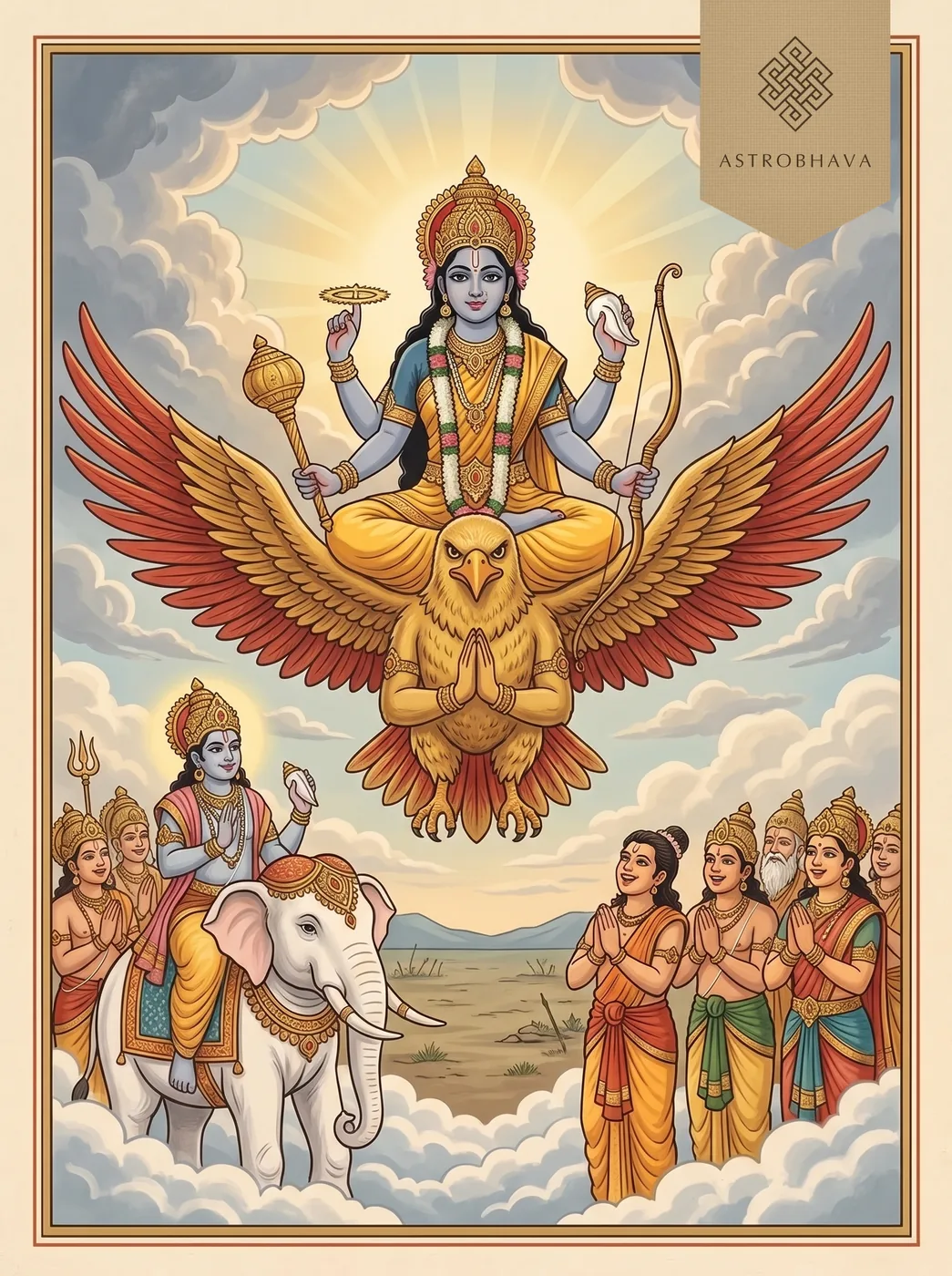
A Vaishno Devi mantra, in the sense used here, is a verse that names the Goddess as Vaishnavi, the power of Vishnu, the Sanskrit name behind the northern form Vaishno; this page gathers three such verses. All three come from the Devi Mahatmya, the 700-verse section of the Markandeya Purana printed as the Durga Saptashati. Mantra 1 is verse 16 of chapter 11, the Narayani Stuti: it pictures her holding the conch, discus, mace and Sharnga bow, the four weapons of Vishnu, and asks her to be gracious in the form of Vaishnavi. Mantra 2 is verse 5 of the same chapter and widens the name from a figure to a principle: she is Vishnu's power of endless strength, the seed of the universe and the supreme Maya, who holds the whole world in delusion and, when pleased, becomes the cause of its release. Mantra 3 is the opening stanza of the chapter 5 litany, verses 14 to 16, which salutes her as the one called Vishnumaya in all beings.
From the battlefield Vaishnavi to Trikuta
The Devi Mahatmya never names Trikuta or any cave; its Vaishnavi belongs to a battle. In chapter 8, as the Goddess faces Raktabija, the powers of the gods step out of their bodies to fight beside her, and Vaishnavi arrives seated on Garuda with conch, discus, mace, bow and sword. In chapter 11 the gods greet her again among these Mothers once the war is won. The link to the hill shrine above Katra in Jammu comes from the shrine's own legend, told in several versions. According to tradition, Mahakali, Mahalakshmi and Mahasaraswati joined their radiance to form a girl, born in the south in the house of Ratnakar Sagar, who longed for Vishnu as her husband. Rama, meeting her during his exile, declined because of his vow to Sita, promised to return as Kalki, and asked her to wait in meditation on the Trikuta hills. Local tradition adds the priest Shridhar of Hansali, whose feast she supplied; the tantric Bhairon Nath, who pursued her; nine months hidden in the narrow cave of Ardhkuwari; and his beheading at the cave, after which she forgave him and ruled that no pilgrimage to her is complete without visiting his temple. She then took the form of a rock with three heads, the pindis worshipped as Mahakali, Mahalakshmi and Mahasaraswati.
The mantra, in six scripts
- शङ्खचक्रगदाशार्ङ्गगृहीतपरमायुधे
- śaṅkhacakragadāśārṅgagṛhītaparamāyudhe — O you who hold the supreme weapons: conch, discus, mace and Sharnga bow
- प्रसीद
- prasīda — be gracious
- वैष्णवीरूपे
- vaiṣṇavīrūpe — O you in the form of Vaishnavi
- नारायणि
- nārāyaṇi — O Narayani
- नमोऽस्तु
- namo'stu — salutation be
- ते
- te — to you
Vaishno Devi Mantra lyrics in full
Three verses of the Devi Mahatmya, each addressing the Goddess as Vaishnavi or as the Maya of Vishnu.
All 3 verses, in Sanskrit, Tamil, Telugu, Kannada, Malayalam and English, each with its meaning. Choose a script:
Download the Vaishno Devi Mantra PDFAll 3 verses with their meanings, in Sanskrit. Free to print and keep.
शङ्खचक्रगदाशार्ङ्गगृहीतपरमायुधे ।
प्रसीद वैष्णवीरूपे नारायणि नमोऽस्तु ते ॥
ஶங்கசக்ரகதாஶார்ங்கக்ருஹீதபரமாயுதே ।
ப்ரஸீத வைஷ்ணவீரூபே நாராயணி நமோஸ்து தே ॥
శఙ్ఖచక్రగదాశార్ఙ్గగృహీతపరమాయుధే ।
ప్రసీద వైష్ణవీరూపే నారాయణి నమోఽస్తు తే ॥
ಶಙ್ಖಚಕ್ರಗದಾಶಾರ್ಙ್ಗಗೃಹೀತಪರಮಾಯುಧೇ ।
ಪ್ರಸೀದ ವೈಷ್ಣವೀರೂಪೇ ನಾರಾಯಣಿ ನಮೋಽಸ್ತು ತೇ ॥
ശങ്ഖചക്രഗദാശാര്ങ്ഗഗൃഹീതപരമായുധേ ।
പ്രസീദ വൈഷ്ണവീരൂപേ നാരായണി നമോഽസ്തു തേ ॥
śaṅkhacakragadāśārṅgagṛhītaparamāyudhe |
prasīda vaiṣṇavīrūpe nārāyaṇi namo'stu te ||
O Narayani, you who hold the supreme weapons - the conch, the discus, the mace and the Sharnga bow - be gracious, you who take the form of Vaishnavi. Salutations to you.
त्वं वैष्णवीशक्तिरनन्तवीर्या विश्वस्य बीजं परमासि माया ।
सम्मोहितं देवि समस्तमेतत् त्वं वै प्रसन्ना भुवि मुक्तिहेतुः ॥
த்வம் வைஷ்ணவீஶக்திரநந்தவீர்யா விஶ்வஸ்ய பீஜம் பரமாஸி மாயா ।
ஸம்மோஹிதம் தேவி ஸமஸ்தமேதத் த்வம் வை ப்ரஸந்நா புவி முக்திஹேதுஃ ॥
త్వం వైష్ణవీశక్తిరనన్తవీర్యా విశ్వస్య బీజం పరమాసి మాయా ।
సమ్మోహితం దేవి సమస్తమేతత్ త్వం వై ప్రసన్నా భువి ముక్తిహేతుః ॥
ತ್ವಂ ವೈಷ್ಣವೀಶಕ್ತಿರನನ್ತವೀರ್ಯಾ ವಿಶ್ವಸ್ಯ ಬೀಜಂ ಪರಮಾಸಿ ಮಾಯಾ ।
ಸಮ್ಮೋಹಿತಂ ದೇವಿ ಸಮಸ್ತಮೇತತ್ ತ್ವಂ ವೈ ಪ್ರಸನ್ನಾ ಭುವಿ ಮುಕ್ತಿಹೇತುಃ ॥
ത്വം വൈഷ്ണവീശക്തിരനന്തവീര്യാ വിശ്വസ്യ ബീജം പരമാസി മായാ ।
സമ്മോഹിതം ദേവി സമസ്തമേതത് ത്വം വൈ പ്രസന്നാ ഭുവി മുക്തിഹേതുഃ ॥
tvaṃ vaiṣṇavīśaktiranantavīryā viśvasya bījaṃ paramāsi māyā |
sammohitaṃ devi samastametat tvaṃ vai prasannā bhuvi muktihetuḥ ||
You are the power of Vishnu, of endless strength, the seed of the universe and the supreme Maya. O Devi, by you all this world is held in delusion; and when you are pleased, you become the cause of liberation on earth.
या देवी सर्वभूतेषु विष्णुमायेति शब्दिता ।
नमस्तस्यै नमस्तस्यै नमस्तस्यै नमो नमः ॥
யா தேவீ ஸர்வபூதேஷு விஷ்ணுமாயேதி ஶப்திதா ।
நமஸ்தஸ்யை நமஸ்தஸ்யை நமஸ்தஸ்யை நமோ நமஃ ॥
యా దేవీ సర్వభూతేషు విష్ణుమాయేతి శబ్దితా ।
నమస్తస్యై నమస్తస్యై నమస్తస్యై నమో నమః ॥
ಯಾ ದೇವೀ ಸರ್ವಭೂತೇಷು ವಿಷ್ಣುಮಾಯೇತಿ ಶಬ್ದಿತಾ ।
ನಮಸ್ತಸ್ಯೈ ನಮಸ್ತಸ್ಯೈ ನಮಸ್ತಸ್ಯೈ ನಮೋ ನಮಃ ॥
യാ ദേവീ സര്വഭൂതേഷു വിഷ്ണുമായേതി ശബ്ദിതാ ।
നമസ്തസ്യൈ നമസ്തസ്യൈ നമസ്തസ്യൈ നമോ നമഃ ॥
yā devī sarvabhūteṣu viṣṇumāyeti śabditā |
namastasyai namastasyai namastasyai namo namaḥ ||
To the Devi who in all beings is called the Maya of Vishnu - salutations to her, salutations to her, salutations to her, again and again salutations.
The syllable people get wrong
In Mantra 1, śārṅga (शार्ङ्ग), the name of Vishnu's bow, has a long ā followed by r and the nasal ṅ with no vowel before the g: say SHAARNG-ga, not 'sha-ran-ga' or 'sharanga'.
When the Vaishno Devi Mantra is chanted
Weekday. Friday
Festival. Navaratri
Questions
Have your chart read before you decide
Chanting is yours to do, and free. But which deity your situation calls for — and whether a mantra alone is the right response — depends on your chart. Sometimes it is; sometimes it is not.
- Over 30 years in the Guru–Sishya Parampara, from the age of five
- He reads every chart himself — 60 minutes, one to one, never delegated
- Charts are read only between sunrise and sunset, following tradition
