Vasavi Kanyaka Parameswari Stotram
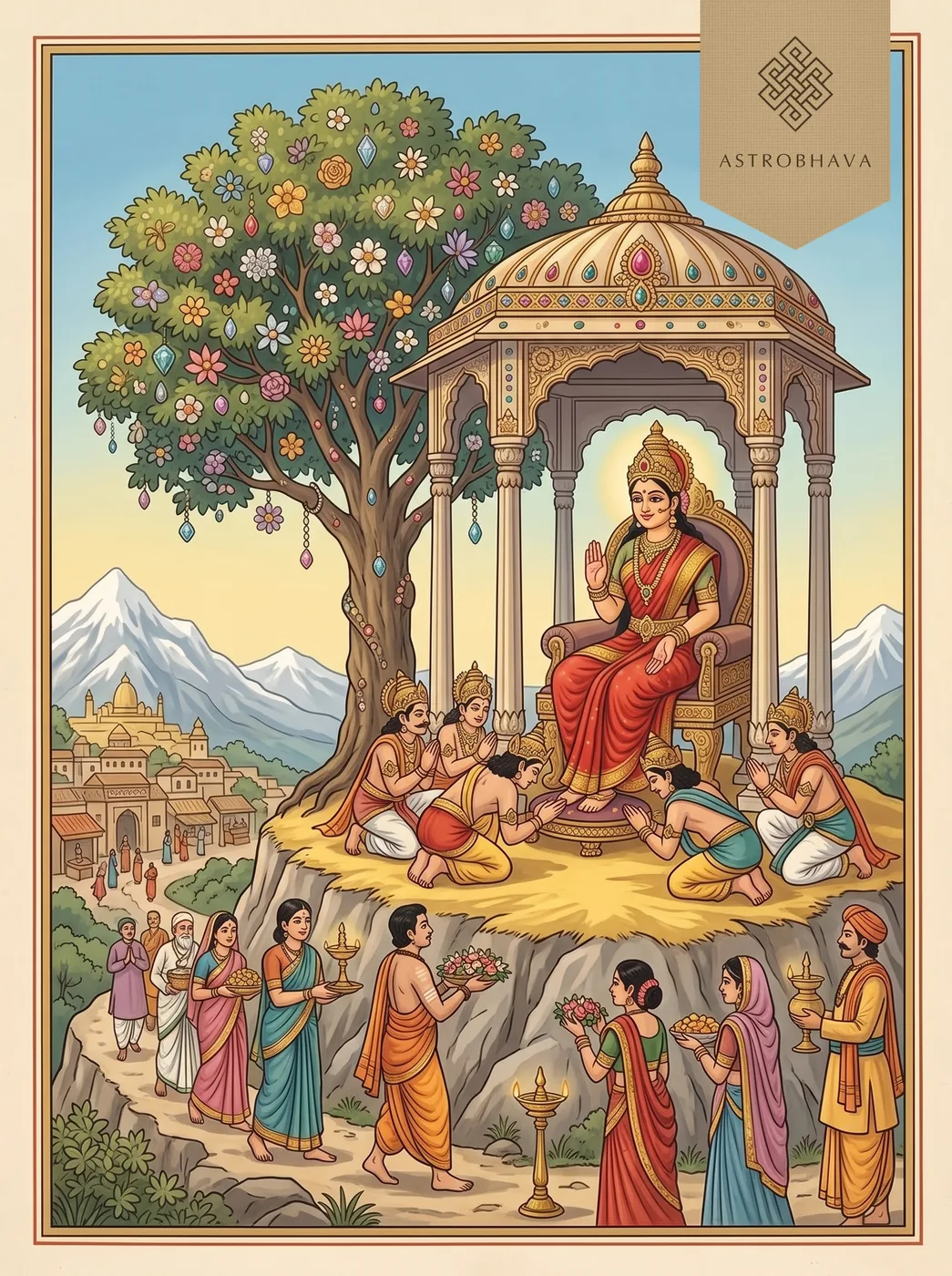
कैलासाचलसन्निभे गिरिपुरे सौवर्णशृङ्गे महस्तंभोद्यन्मणिमण्डपे सुरुतरुप्रान्ते च सिंहासने । आसीनां सकलामरार्चितपदां भक्तार्तिविध्वंसिनीं वन्दे वासविकन्यकां स्मितमुखीं सर्वार्थदामम्बिकाम् ॥Also known as Sri Vasavi Stotram
In Devanagari, Tamil, Telugu, Kannada, Malayalam and English — with the meaning of every word, and the one syllable most people pronounce wrongly.
 A reading of your birth chartBook →
What the Vasavi Kanyaka Parameswari Stotram is
The Vasavi Kanyaka Parameswari Stotram (also spelt Parameshwari) is the short Sanskrit hymn the Arya Vysya (Komati) community recites to Vasavi Kanyaka Parameswari, the maiden of Penugonda whom they honour as their kuladevata, or clan goddess. No author is named in any printing; it has come down as an anonymous prayer of the community. Its first verse, in the long shardulavikridita metre, is a dhyana: it seats the Goddess on a throne in a jewelled pavilion on the golden peak of a hill-city likened to Mount Kailasa, beside the wish-granting tree of the gods. Verses 2 to 9 change to the short anushtup metre and repeat "namaste" through a chain of titles: purifier of the world, the maiden bound by a vow, the merchant maiden (vani-kanye), Shankari and Sharvani. Verse 10 states the reward of the prayer, and a single closing line salutes her as Shrimata Kanyaka Parameshwari.
The maiden who refused a king's hand
According to tradition, Vasavi was born at Penugonda, a town on the Godavari in the West Godavari district of Andhra Pradesh, to Kusuma Shreshti, leader of the town's Vaishya merchants, and his wife Kusumamba, after the couple had long prayed for children; she had a brother, Virupaksha. The story is usually set in the eleventh century under a ruler named Vishnuvardhana, remembered as a Chalukya king of the Vengi country. Having seen Vasavi, the king demanded her in marriage. She wished to remain unmarried and give her life to devotion, and her family could not turn him aside. Tradition holds that the community's elders divided over the demand and that the leaders of 102 gotras stood with her refusal. Rather than answer force with force, Vasavi entered the fire on the day fixed for the wedding, and the families of those 102 gotras followed her; tellings speak of 103 fire pits in all. After this she was revered at Penugonda as the Goddess herself. Versions differ: the legend survives in Telugu Vasavi Puranas of the eighteenth century and in oral tellings that disagree on names and numbers. Shaiva Komatis see her as Parvati, Vaishnava groups as Lakshmi, and Jain Komatis as a teacher of non-violence.
The mantra, in six scripts
- कैलासाचलसन्निभे
- kailāsācalasannibhe — like Mount Kailasa
- गिरिपुरे
- giripure — in the hill-city
- सौवर्णशृङ्गे
- sauvarṇaśṛṅge — on the golden peak
- महस्तंभोद्यन्मणिमण्डपे
- mahastaṃbhodyanmaṇimaṇḍape — in a jewelled pavilion rising on great pillars
- सुरुतरुप्रान्ते
- surutaruprānte — beside the tree of the gods
- च
- ca — and
- सिंहासने
- siṃhāsane — on a throne
- आसीनां
- āsīnāṃ — seated
- सकलामरार्चितपदां
- sakalāmarārcitapadāṃ — whose feet all the gods worship
- भक्तार्तिविध्वंसिनीं
- bhaktārtividhvaṃsinīṃ — destroyer of devotees' distress
- वन्दे
- vande — I bow to
- वासविकन्यकां
- vāsavikanyakāṃ — the maiden Vasavi
- स्मितमुखीं
- smitamukhīṃ — smiling-faced
- सर्वार्थदामम्बिकाम्
- sarvārthadāmambikām — the Mother who grants every aim
Vasavi Kanyaka Parameswari Stotram lyrics in full
A dhyana verse picturing the Goddess enthroned, eight verses of salutation and a closing verse of benefit, followed by the customary salutation to Kanyaka Parameshwari.
All 11 verses, in Sanskrit, Tamil, Telugu, Kannada, Malayalam and English, each with its meaning. Choose a script:
Download the Vasavi Kanyaka Parameswari Stotram PDFAll 11 verses with their meanings, in Sanskrit. Free to print and keep.
कैलासाचलसन्निभे गिरिपुरे सौवर्णशृङ्गे महस्तंभोद्यन्मणिमण्डपे सुरुतरुप्रान्ते च सिंहासने ।
आसीनां सकलामरार्चितपदां भक्तार्तिविध्वंसिनीं वन्दे वासविकन्यकां स्मितमुखीं सर्वार्थदामम्बिकाम् ॥
கைலாஸாசலஸந்நிபே கிரிபுரே ஸௌவர்ணஶ்ருங்கே மஹஸ்தம்போத்யந்மணிமண்டபே ஸுருதருப்ராந்தே ச ஸிம்ஹாஸநே ।
ஆஸீநாம் ஸகலாமரார்சிதபதாம் பக்தார்திவித்வம்ஸிநீம் வந்தே வாஸவிகந்யகாம் ஸ்மிதமுகீம் ஸர்வார்ததாமம்பிகாம் ॥
కైలాసాచలసన్నిభే గిరిపురే సౌవర్ణశృఙ్గే మహస్తంభోద్యన్మణిమణ్డపే సురుతరుప్రాన్తే చ సింహాసనే ।
ఆసీనాం సకలామరార్చితపదాం భక్తార్తివిధ్వంసినీం వన్దే వాసవికన్యకాం స్మితముఖీం సర్వార్థదామమ్బికామ్ ॥
ಕೈಲಾಸಾಚಲಸನ್ನಿಭೇ ಗಿರಿಪುರೇ ಸೌವರ್ಣಶೃಙ್ಗೇ ಮಹಸ್ತಂಭೋದ್ಯನ್ಮಣಿಮಣ್ಡಪೇ ಸುರುತರುಪ್ರಾನ್ತೇ ಚ ಸಿಂಹಾಸನೇ ।
ಆಸೀನಾಂ ಸಕಲಾಮರಾರ್ಚಿತಪದಾಂ ಭಕ್ತಾರ್ತಿವಿಧ್ವಂಸಿನೀಂ ವನ್ದೇ ವಾಸವಿಕನ್ಯಕಾಂ ಸ್ಮಿತಮುಖೀಂ ಸರ್ವಾರ್ಥದಾಮಮ್ಬಿಕಾಮ್ ॥
കൈലാസാചലസന്നിഭേ ഗിരിപുരേ സൌവര്ണശൃങ്ഗേ മഹസ്തംഭോദ്യന്മണിമണ്ഡപേ സുരുതരുപ്രാന്തേ ച സിംഹാസനേ ।
ആസീനാം സകലാമരാര്ചിതപദാം ഭക്താര്തിവിധ്വംസിനീം വന്ദേ വാസവികന്യകാം സ്മിതമുഖീം സര്വാര്ഥദാമമ്ബികാമ് ॥
kailāsācalasannibhe giripure sauvarṇaśṛṅge mahastaṃbhodyanmaṇimaṇḍape surutaruprānte ca siṃhāsane |
āsīnāṃ sakalāmarārcitapadāṃ bhaktārtividhvaṃsinīṃ vande vāsavikanyakāṃ smitamukhīṃ sarvārthadāmambikām ||
On the golden peak of the hill-city that is like Mount Kailasa, in a jewelled pavilion rising on great pillars, she sits on a throne beside the heavenly tree. I bow to the maiden Vasavi, whose feet all the gods worship, who destroys the distress of her devotees, the smiling Mother who grants every aim.
नमस्ते वासवीदेवि नमस्ते विश्वपावनि ।
व्रतसम्बद्धकौमारि भक्तत्रात्रे नमो नमः ॥
நமஸ்தே வாஸவீதேவி நமஸ்தே விஶ்வபாவநி ।
வ்ரதஸம்பத்தகௌமாரி பக்தத்ராத்ரே நமோ நமஃ ॥
నమస్తే వాసవీదేవి నమస్తే విశ్వపావని ।
వ్రతసమ్బద్ధకౌమారి భక్తత్రాత్రే నమో నమః ॥
ನಮಸ್ತೇ ವಾಸವೀದೇವಿ ನಮಸ್ತೇ ವಿಶ್ವಪಾವನಿ ।
ವ್ರತಸಮ್ಬದ್ಧಕೌಮಾರಿ ಭಕ್ತತ್ರಾತ್ರೇ ನಮೋ ನಮಃ ॥
നമസ്തേ വാസവീദേവി നമസ്തേ വിശ്വപാവനി ।
വ്രതസമ്ബദ്ധകൌമാരി ഭക്തത്രാത്രേ നമോ നമഃ ॥
namaste vāsavīdevi namaste viśvapāvani |
vratasambaddhakaumāri bhaktatrātre namo namaḥ ||
Salutations to you, Goddess Vasavi; salutations to you who purify the whole world. O maiden bound by a sacred vow, protector of devotees, salutations again and again.
नमस्ते भयसंहारि नमस्ते भवनाशिनि ।
भाग्यदे सुखदे देवि वासवी ते नमो नमः ॥
நமஸ்தே பயஸம்ஹாரி நமஸ்தே பவநாஶிநி ।
பாக்யதே ஸுகதே தேவி வாஸவீ தே நமோ நமஃ ॥
నమస్తే భయసంహారి నమస్తే భవనాశిని ।
భాగ్యదే సుఖదే దేవి వాసవీ తే నమో నమః ॥
ನಮಸ್ತೇ ಭಯಸಂಹಾರಿ ನಮಸ್ತೇ ಭವನಾಶಿನಿ ।
ಭಾಗ್ಯದೇ ಸುಖದೇ ದೇವಿ ವಾಸವೀ ತೇ ನಮೋ ನಮಃ ॥
നമസ്തേ ഭയസംഹാരി നമസ്തേ ഭവനാശിനി ।
ഭാഗ്യദേ സുഖദേ ദേവി വാസവീ തേ നമോ നമഃ ॥
namaste bhayasaṃhāri namaste bhavanāśini |
bhāgyade sukhade devi vāsavī te namo namaḥ ||
Salutations to you who destroy fear; salutations to you who end the round of worldly birth. O Goddess who gives good fortune and happiness, O Vasavi, salutations to you again and again.
नमस्तेऽद्भुतसन्धाने नमस्ते भद्ररूपिणि ।
नमस्ते पद्मपत्राक्षि सुन्दराङ्गि नमो नमः ॥
நமஸ்தேத்புதஸந்தாநே நமஸ்தே பத்ரரூபிணி ।
நமஸ்தே பத்மபத்ராக்ஷி ஸுந்தராங்கி நமோ நமஃ ॥
నమస్తేఽద్భుతసన్ధానే నమస్తే భద్రరూపిణి ।
నమస్తే పద్మపత్రాక్షి సున్దరాఙ్గి నమో నమః ॥
ನಮಸ್ತೇಽದ್ಭುತಸನ್ಧಾನೇ ನಮಸ್ತೇ ಭದ್ರರೂಪಿಣಿ ।
ನಮಸ್ತೇ ಪದ್ಮಪತ್ರಾಕ್ಷಿ ಸುನ್ದರಾಙ್ಗಿ ನಮೋ ನಮಃ ॥
നമസ്തേഽദ്ഭുതസന്ധാനേ നമസ്തേ ഭദ്രരൂപിണി ।
നമസ്തേ പദ്മപത്രാക്ഷി സുന്ദരാങ്ഗി നമോ നമഃ ॥
namaste'dbhutasandhāne namaste bhadrarūpiṇi |
namaste padmapatrākṣi sundarāṅgi namo namaḥ ||
Salutations to you of wondrous resolve; salutations to you whose form is auspicious. Salutations to you with eyes like lotus petals; O lovely-limbed one, salutations again and again.
नमस्ते विबुधानन्दे नमस्ते भक्तरञ्जनि ।
नमस्ते योगसंयुक्ते वाणिकन्ये नमो नमः ॥
நமஸ்தே விபுதாநந்தே நமஸ்தே பக்தரஞ்ஜநி ।
நமஸ்தே யோகஸம்யுக்தே வாணிகந்யே நமோ நமஃ ॥
నమస్తే విబుధానన్దే నమస్తే భక్తరఞ్జని ।
నమస్తే యోగసంయుక్తే వాణికన్యే నమో నమః ॥
ನಮಸ್ತೇ ವಿಬುಧಾನನ್ದೇ ನಮಸ್ತೇ ಭಕ್ತರಞ್ಜನಿ ।
ನಮಸ್ತೇ ಯೋಗಸಂಯುಕ್ತೇ ವಾಣಿಕನ್ಯೇ ನಮೋ ನಮಃ ॥
നമസ്തേ വിബുധാനന്ദേ നമസ്തേ ഭക്തരഞ്ജനി ।
നമസ്തേ യോഗസംയുക്തേ വാണികന്യേ നമോ നമഃ ॥
namaste vibudhānande namaste bhaktarañjani |
namaste yogasaṃyukte vāṇikanye namo namaḥ ||
Salutations to you, the joy of the gods; salutations to you who delight your devotees. Salutations to you who are joined in yoga; O maiden of the merchant community, salutations again and again.
नमस्ते बुधसंसेव्ये नमस्ते मङ्गलप्रदे ।
नमस्ते शीतलापाङ्गि शङ्करि ते नमो नमः ॥
நமஸ்தே புதஸம்ஸேவ்யே நமஸ்தே மங்கலப்ரதே ।
நமஸ்தே ஶீதலாபாங்கி ஶங்கரி தே நமோ நமஃ ॥
నమస్తే బుధసంసేవ్యే నమస్తే మఙ్గలప్రదే ।
నమస్తే శీతలాపాఙ్గి శఙ్కరి తే నమో నమః ॥
ನಮಸ್ತೇ ಬುಧಸಂಸೇವ್ಯೇ ನಮಸ್ತೇ ಮಙ್ಗಲಪ್ರದೇ ।
ನಮಸ್ತೇ ಶೀತಲಾಪಾಙ್ಗಿ ಶಙ್ಕರಿ ತೇ ನಮೋ ನಮಃ ॥
നമസ്തേ ബുധസംസേവ്യേ നമസ്തേ മങ്ഗലപ്രദേ ।
നമസ്തേ ശീതലാപാങ്ഗി ശങ്കരി തേ നമോ നമഃ ॥
namaste budhasaṃsevye namaste maṅgalaprade |
namaste śītalāpāṅgi śaṅkari te namo namaḥ ||
Salutations to you who are served by the wise; salutations to you who bestow what is auspicious. Salutations to you of the cool, gentle glance; O Shankari, giver of welfare, salutations to you again and again.
नमस्ते च जगन्मातः नमस्ते कामदायिनि ।
नमस्ते भक्तनिलये वरदे ते नमो नमः ॥
நமஸ்தே ச ஜகந்மாதஃ நமஸ்தே காமதாயிநி ।
நமஸ்தே பக்தநிலயே வரதே தே நமோ நமஃ ॥
నమస్తే చ జగన్మాతః నమస్తే కామదాయిని ।
నమస్తే భక్తనిలయే వరదే తే నమో నమః ॥
ನಮಸ್ತೇ ಚ ಜಗನ್ಮಾತಃ ನಮಸ್ತೇ ಕಾಮದಾಯಿನಿ ।
ನಮಸ್ತೇ ಭಕ್ತನಿಲಯೇ ವರದೇ ತೇ ನಮೋ ನಮಃ ॥
നമസ്തേ ച ജഗന്മാതഃ നമസ്തേ കാമദായിനി ।
നമസ്തേ ഭക്തനിലയേ വരദേ തേ നമോ നമഃ ॥
namaste ca jaganmātaḥ namaste kāmadāyini |
namaste bhaktanilaye varade te namo namaḥ ||
Salutations to you, Mother of the world; salutations to you who grant what is desired. Salutations to you who dwell among your devotees; O giver of boons, salutations to you again and again.
नमस्ते सिद्धसंसेव्ये नमस्ते चारुहासिनि ।
नमस्तेऽद्भुतकल्याणि शर्वाणि ते नमो नमः ॥
நமஸ்தே ஸித்தஸம்ஸேவ்யே நமஸ்தே சாருஹாஸிநி ।
நமஸ்தேத்புதகல்யாணி ஶர்வாணி தே நமோ நமஃ ॥
నమస్తే సిద్ధసంసేవ్యే నమస్తే చారుహాసిని ।
నమస్తేఽద్భుతకల్యాణి శర్వాణి తే నమో నమః ॥
ನಮಸ್ತೇ ಸಿದ್ಧಸಂಸೇವ್ಯೇ ನಮಸ್ತೇ ಚಾರುಹಾಸಿನಿ ।
ನಮಸ್ತೇಽದ್ಭುತಕಲ್ಯಾಣಿ ಶರ್ವಾಣಿ ತೇ ನಮೋ ನಮಃ ॥
നമസ്തേ സിദ്ധസംസേവ്യേ നമസ്തേ ചാരുഹാസിനി ।
നമസ്തേഽദ്ഭുതകല്യാണി ശര്വാണി തേ നമോ നമഃ ॥
namaste siddhasaṃsevye namaste cāruhāsini |
namaste'dbhutakalyāṇi śarvāṇi te namo namaḥ ||
Salutations to you who are served by the perfected ones; salutations to you of the charming smile. Salutations to you of wondrous auspiciousness; O Sharvani, consort of Shiva, salutations to you again and again.
नमस्ते भक्तसंरक्षादीक्षासम्बद्धकङ्कणे ।
नमस्ते सर्वकाम्यार्थवरदे ते नमो नमः ॥
நமஸ்தே பக்தஸம்ரக்ஷாதீக்ஷாஸம்பத்தகங்கணே ।
நமஸ்தே ஸர்வகாம்யார்தவரதே தே நமோ நமஃ ॥
నమస్తే భక్తసంరక్షాదీక్షాసమ్బద్ధకఙ్కణే ।
నమస్తే సర్వకామ్యార్థవరదే తే నమో నమః ॥
ನಮಸ್ತೇ ಭಕ್ತಸಂರಕ್ಷಾದೀಕ್ಷಾಸಮ್ಬದ್ಧಕಙ್ಕಣೇ ।
ನಮಸ್ತೇ ಸರ್ವಕಾಮ್ಯಾರ್ಥವರದೇ ತೇ ನಮೋ ನಮಃ ॥
നമസ്തേ ഭക്തസംരക്ഷാദീക്ഷാസമ്ബദ്ധകങ്കണേ ।
നമസ്തേ സര്വകാമ്യാര്ഥവരദേ തേ നമോ നമഃ ॥
namaste bhaktasaṃrakṣādīkṣāsambaddhakaṅkaṇe |
namaste sarvakāmyārthavarade te namo namaḥ ||
Salutations to you who wear the sacred wrist-thread of a vow to protect your devotees. Salutations to you who grant every wished-for aim as a boon; salutations to you again and again.
देवीं प्रणम्य सद्भक्त्या सर्वकाम्यार्थसम्पदान् ।
लभते नात्र सन्देहो देहान्ते मुक्तिमान् भवेत् ॥
தேவீம் ப்ரணம்ய ஸத்பக்த்யா ஸர்வகாம்யார்தஸம்பதாந் ।
லபதே நாத்ர ஸந்தேஹோ தேஹாந்தே முக்திமாந் பவேத் ॥
దేవీం ప్రణమ్య సద్భక్త్యా సర్వకామ్యార్థసమ్పదాన్ ।
లభతే నాత్ర సన్దేహో దేహాన్తే ముక్తిమాన్ భవేత్ ॥
ದೇವೀಂ ಪ್ರಣಮ್ಯ ಸದ್ಭಕ್ತ್ಯಾ ಸರ್ವಕಾಮ್ಯಾರ್ಥಸಮ್ಪದಾನ್ ।
ಲಭತೇ ನಾತ್ರ ಸನ್ದೇಹೋ ದೇಹಾನ್ತೇ ಮುಕ್ತಿಮಾನ್ ಭವೇತ್ ॥
ദേവീം പ്രണമ്യ സദ്ഭക്ത്യാ സര്വകാമ്യാര്ഥസമ്പദാന് ।
ലഭതേ നാത്ര സന്ദേഹോ ദേഹാന്തേ മുക്തിമാന് ഭവേത് ॥
devīṃ praṇamya sadbhaktyā sarvakāmyārthasampadān |
labhate nātra sandeho dehānte muktimān bhavet ||
The verse says that one who bows to the Goddess with true devotion obtains the riches of every wished-for aim, without doubt, and at the end of the body's life attains liberation.
श्रीमाता कन्यकापरमेश्वरी देव्यै नमः ॥
ஶ்ரீமாதா கந்யகாபரமேஶ்வரீ தேவ்யை நமஃ ॥
శ్రీమాతా కన్యకాపరమేశ్వరీ దేవ్యై నమః ॥
ಶ್ರೀಮಾತಾ ಕನ್ಯಕಾಪರಮೇಶ್ವರೀ ದೇವ್ಯೈ ನಮಃ ॥
ശ്രീമാതാ കന്യകാപരമേശ്വരീ ദേവ്യൈ നമഃ ॥
śrīmātā kanyakāparameśvarī devyai namaḥ ||
Salutations to the Goddess, the sacred Mother, Kanyaka Parameshwari.
The syllable people get wrong
Vāsavī is said VAA-sa-vee, with a long first a and a long final i, not a flat VA-sa-vi. In verse 1 the metre needs the shortened compound vāsavikanyakāṃ, so the final i is short there, while verses 2 and 3 keep the long vāsavī.
When the Vasavi Kanyaka Parameswari Stotram is chanted
Weekday. Friday
Festival. Vasavi Jayanti, the tenth day of the lunar month Vaishakha
Questions
Have your chart read before you decide
Chanting is yours to do, and free. But which deity your situation calls for — and whether a mantra alone is the right response — depends on your chart. Sometimes it is; sometimes it is not.
- Over 30 years in the Guru–Sishya Parampara, from the age of five
- He reads every chart himself — 60 minutes, one to one, never delegated
- Charts are read only between sunrise and sunset, following tradition
