Yamunashtakam
नमामि यमुनामहं सकलसिद्धिहेतुं मुदा मुरारिपदपङ्कजस्फुरदमन्दरेणूत्कटाम् । तटस्थनवकाननप्रकटमोदपुष्पाम्बुना सुरासुरसुपूजितस्मरपितुः श्रियं बिभ्रतीम् ॥Also known as Namami Yamunam Aham
In Devanagari, Tamil, Telugu, Kannada, Malayalam and English — with the meaning of every word, and the one syllable most people pronounce wrongly.
 A reading of your birth chartBook →
What the Yamunashtakam is
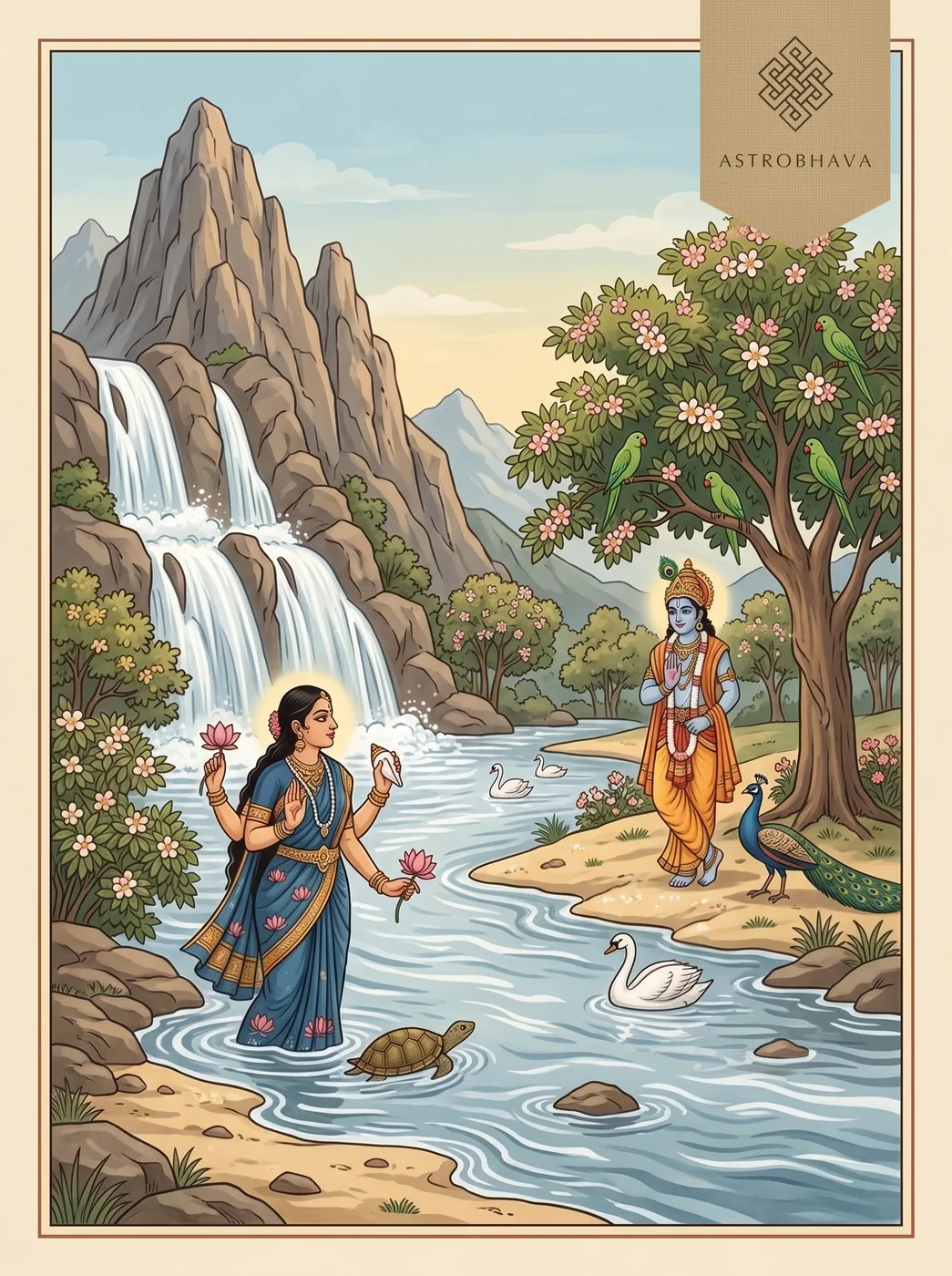
The Yamunashtakam of Shri Vallabhacharya (1479-1531), which opens namami yamunam aham, 'I bow to Yamuna', is the first of the Shodasha Granthas, the Sixteen Works in which the founder of the Pushtimarg set out the teaching of his path of grace. It addresses the river Yamuna as a goddess: daughter of the Sun, sister of Yama, and Kalindi, a beloved of Krishna. Eight verses in the long prithvi metre praise her, and a ninth, signed 'so says Vallabha', states the fruit of reading them. The verses move from the river to the goddess. Verse 2 follows her fall from the peak of Mount Kalinda, verse 3 turns her waves into arms and her pearl-like sand into bracelets, and verse 4 recalls Dhruva and Parashara, whose wishes she granted at Mathura. Verses 5 to 8 then measure her against Ganga and Lakshmi and ask for a body made new in her presence. Purushottamji, Hari Raiji and Goswami Dvarakesha are among its commentators.
A thanksgiving at Thakurani Ghat, Gokul
Pushtimarg tradition ties the hymn to Vallabhacharya's first arrival in Braj. According to tradition, the young teacher, travelling through India, came to the Yamuna just outside Gokul and stopped near the riverbank site remembered as Govind Ghat. There, the Braj account relates, Yamuna appeared to him in the form of a girl and showed him the spot beside it, saying that this was Thakurani Ghat, the bathing place of the queen. Vallabhacharya is said to have composed the Yamunashtakam on that ghat, and the tradition reads the hymn as his thanks to her: she was the go-between who led him to his first meeting with Krishna. Accounts differ on where that meeting happened. One places it at Thakurani Ghat itself, at midnight on Shravan shukla ekadashi, the eleventh lunar day of that month's bright half, when Krishna gave him the means to free souls in the age of Kali; another sets it at neighbouring Govind Ghat, where Krishna is said to have touched his face with the end of his yellow cloth. The Shah edition of the Shodasha Granthas dates the hymn to about 1492 CE (Vikrama Samvat 1549). Thakurani Ghat still has a baithak, a seat of Vallabhacharya, and a shrine to Yamuna and Shrinathji, and Vaishnavas of the Vallabha line visit it as the place where the hymn was first spoken.
The mantra, in six scripts
- नमामि
- namāmi — I bow to
- यमुनामहं
- yamunāmahaṃ — Yamuna, I
- सकलसिद्धिहेतुं
- sakalasiddhihetuṃ — cause of every attainment
- मुदा
- mudā — with joy
- मुरारिपदपङ्कजस्फुरदमन्दरेणूत्कटाम्
- murāripadapaṅkajasphuradamandareṇūtkaṭām — rich with the shining dust of Murari's lotus feet
- तटस्थनवकाननप्रकटमोदपुष्पाम्बुना
- taṭasthanavakānanaprakaṭamodapuṣpāmbunā — with water fragrant from flowers of fresh groves on her banks
- सुरासुरसुपूजितस्मरपितुः
- surāsurasupūjitasmarapituḥ — of Kama's father (Krishna), worshipped by gods and demons
- श्रियं
- śriyaṃ — the beauty
- बिभ्रतीम्
- bibhratīm — carrying
Yamunashtakam lyrics in full
Eight verses of praise and the ninth, signed by Vallabha, as printed at the head of the Shodasha Granthas.
All 9 verses, in Sanskrit, Tamil, Telugu, Kannada, Malayalam and English, each with its meaning. Choose a script:
Download the Yamunashtakam PDFAll 9 verses with their meanings, in Sanskrit. Free to print and keep.
नमामि यमुनामहं सकलसिद्धिहेतुं मुदा मुरारिपदपङ्कजस्फुरदमन्दरेणूत्कटाम् ।
तटस्थनवकाननप्रकटमोदपुष्पाम्बुना सुरासुरसुपूजितस्मरपितुः श्रियं बिभ्रतीम् ॥
நமாமி யமுநாமஹம் ஸகலஸித்திஹேதும் முதா முராரிபதபங்கஜஸ்புரதமந்தரேணூத்கடாம் ।
தடஸ்தநவகாநநப்ரகடமோதபுஷ்பாம்புநா ஸுராஸுரஸுபூஜிதஸ்மரபிதுஃ ஶ்ரியம் பிப்ரதீம் ॥
నమామి యమునామహం సకలసిద్ధిహేతుం ముదా మురారిపదపఙ్కజస్ఫురదమన్దరేణూత్కటామ్ ।
తటస్థనవకాననప్రకటమోదపుష్పామ్బునా సురాసురసుపూజితస్మరపితుః శ్రియం బిభ్రతీమ్ ॥
ನಮಾಮಿ ಯಮುನಾಮಹಂ ಸಕಲಸಿದ್ಧಿಹೇತುಂ ಮುದಾ ಮುರಾರಿಪದಪಙ್ಕಜಸ್ಫುರದಮನ್ದರೇಣೂತ್ಕಟಾಮ್ ।
ತಟಸ್ಥನವಕಾನನಪ್ರಕಟಮೋದಪುಷ್ಪಾಮ್ಬುನಾ ಸುರಾಸುರಸುಪೂಜಿತಸ್ಮರಪಿತುಃ ಶ್ರಿಯಂ ಬಿಭ್ರತೀಮ್ ॥
നമാമി യമുനാമഹം സകലസിദ്ധിഹേതും മുദാ മുരാരിപദപങ്കജസ്ഫുരദമന്ദരേണൂത്കടാമ് ।
തടസ്ഥനവകാനനപ്രകടമോദപുഷ്പാമ്ബുനാ സുരാസുരസുപൂജിതസ്മരപിതുഃ ശ്രിയം ബിഭ്രതീമ് ॥
namāmi yamunāmahaṃ sakalasiddhihetuṃ mudā murāripadapaṅkajasphuradamandareṇūtkaṭām |
taṭasthanavakānanaprakaṭamodapuṣpāmbunā surāsurasupūjitasmarapituḥ śriyaṃ bibhratīm ||
With joy I bow to Yamuna, the cause of every spiritual attainment, rich with the shining dust of the lotus feet of Murari (Krishna). Her water, fragrant with flowers from the fresh groves on her banks, carries the beauty of Krishna, the father of Kama, who is worshipped by gods and demons alike.
कलिन्दगिरिमस्तके पतदमन्दपूरोज्ज्वला विलासगमनोल्लसत्प्रकटगण्डशैलोन्नता ।
सघोषगतिदन्तुरा समधिरूढदोलोत्तमा मुकुन्दरतिवर्धिनी जयति पद्मबन्धोः सुता ॥
கலிந்தகிரிமஸ்தகே பததமந்தபூரோஜ்ஜ்வலா விலாஸகமநோல்லஸத்ப்ரகடகண்டஶைலோந்நதா ।
ஸகோஷகதிதந்துரா ஸமதிரூடதோலோத்தமா முகுந்தரதிவர்திநீ ஜயதி பத்மபந்தோஃ ஸுதா ॥
కలిన్దగిరిమస్తకే పతదమన్దపూరోజ్జ్వలా విలాసగమనోల్లసత్ప్రకటగణ్డశైలోన్నతా ।
సఘోషగతిదన్తురా సమధిరూఢదోలోత్తమా ముకున్దరతివర్ధినీ జయతి పద్మబన్ధోః సుతా ॥
ಕಲಿನ್ದಗಿರಿಮಸ್ತಕೇ ಪತದಮನ್ದಪೂರೋಜ್ಜ್ವಲಾ ವಿಲಾಸಗಮನೋಲ್ಲಸತ್ಪ್ರಕಟಗಣ್ಡಶೈಲೋನ್ನತಾ ।
ಸಘೋಷಗತಿದನ್ತುರಾ ಸಮಧಿರೂಢದೋಲೋತ್ತಮಾ ಮುಕುನ್ದರತಿವರ್ಧಿನೀ ಜಯತಿ ಪದ್ಮಬನ್ಧೋಃ ಸುತಾ ॥
കലിന്ദഗിരിമസ്തകേ പതദമന്ദപൂരോജ്ജ്വലാ വിലാസഗമനോല്ലസത്പ്രകടഗണ്ഡശൈലോന്നതാ ।
സഘോഷഗതിദന്തുരാ സമധിരൂഢദോലോത്തമാ മുകുന്ദരതിവര്ധിനീ ജയതി പദ്മബന്ധോഃ സുതാ ॥
kalindagirimastake patadamandapūrojjvalā vilāsagamanollasatprakaṭagaṇḍaśailonnatā |
saghoṣagatidanturā samadhirūḍhadolottamā mukundarativardhinī jayati padmabandhoḥ sutā ||
Bright with the great floods that fall on the summit of Mount Kalinda, raised high over the great boulders she plays across, uneven in her roaring course as if seated on a fine swing, the daughter of the Sun, who increases love for Mukunda, is victorious.
भुवं भुवनपावनीमधिगतामनेकस्वनैः प्रियाभिरिव सेवितां शुकमयूरहंसादिभिः ।
तरङ्गभुजकङ्कणप्रकटमुक्तिकावालुका-नितम्बतटसुन्दरीं नमत कृष्णतुर्यप्रियाम् ॥
புவம் புவநபாவநீமதிகதாமநேகஸ்வநைஃ ப்ரியாபிரிவ ஸேவிதாம் ஶுகமயூரஹம்ஸாதிபிஃ ।
தரங்கபுஜகங்கணப்ரகடமுக்திகாவாலுகா-நிதம்பதடஸுந்தரீம் நமத க்ருஷ்ணதுர்யப்ரியாம் ॥
భువం భువనపావనీమధిగతామనేకస్వనైః ప్రియాభిరివ సేవితాం శుకమయూరహంసాదిభిః ।
తరఙ్గభుజకఙ్కణప్రకటముక్తికావాలుకా-నితమ్బతటసున్దరీం నమత కృష్ణతుర్యప్రియామ్ ॥
ಭುವಂ ಭುವನಪಾವನೀಮಧಿಗತಾಮನೇಕಸ್ವನೈಃ ಪ್ರಿಯಾಭಿರಿವ ಸೇವಿತಾಂ ಶುಕಮಯೂರಹಂಸಾದಿಭಿಃ ।
ತರಙ್ಗಭುಜಕಙ್ಕಣಪ್ರಕಟಮುಕ್ತಿಕಾವಾಲುಕಾ-ನಿತಮ್ಬತಟಸುನ್ದರೀಂ ನಮತ ಕೃಷ್ಣತುರ್ಯಪ್ರಿಯಾಮ್ ॥
ഭുവം ഭുവനപാവനീമധിഗതാമനേകസ്വനൈഃ പ്രിയാഭിരിവ സേവിതാം ശുകമയൂരഹംസാദിഭിഃ ।
തരങ്ഗഭുജകങ്കണപ്രകടമുക്തികാവാലുകാ-നിതമ്ബതടസുന്ദരീം നമത കൃഷ്ണതുര്യപ്രിയാമ് ॥
bhuvaṃ bhuvanapāvanīmadhigatāmanekasvanaiḥ priyābhiriva sevitāṃ śukamayūrahaṃsādibhiḥ |
taraṅgabhujakaṅkaṇaprakaṭamuktikāvālukā-nitambataṭasundarīṃ namata kṛṣṇaturyapriyām ||
Bow to her who came down to earth to purify the worlds, attended by parrots, peacocks, swans and other birds with their many calls, as if by dear companions. Her waves are arms, the sand shining like pearls is their bracelets, and her banks are her lovely hips: bow to her, the fourth beloved of Krishna.
अनन्तगुणभूषिते शिवविरञ्चिदेवस्तुते घनाघननिभे सदा ध्रुवपराशराभीष्टदे ।
विशुद्धमथुरातटे सकलगोपगोपीवृते कृपाजलधिसंश्रिते मम मनः सुखं भावय ॥
அநந்தகுணபூஷிதே ஶிவவிரஞ்சிதேவஸ்துதே கநாகநநிபே ஸதா த்ருவபராஶராபீஷ்டதே ।
விஶுத்தமதுராதடே ஸகலகோபகோபீவ்ருதே க்ருபாஜலதிஸம்ஶ்ரிதே மம மநஃ ஸுகம் பாவய ॥
అనన్తగుణభూషితే శివవిరఞ్చిదేవస్తుతే ఘనాఘననిభే సదా ధ్రువపరాశరాభీష్టదే ।
విశుద్ధమథురాతటే సకలగోపగోపీవృతే కృపాజలధిసంశ్రితే మమ మనః సుఖం భావయ ॥
ಅನನ್ತಗುಣಭೂಷಿತೇ ಶಿವವಿರಞ್ಚಿದೇವಸ್ತುತೇ ಘನಾಘನನಿಭೇ ಸದಾ ಧ್ರುವಪರಾಶರಾಭೀಷ್ಟದೇ ।
ವಿಶುದ್ಧಮಥುರಾತಟೇ ಸಕಲಗೋಪಗೋಪೀವೃತೇ ಕೃಪಾಜಲಧಿಸಂಶ್ರಿತೇ ಮಮ ಮನಃ ಸುಖಂ ಭಾವಯ ॥
അനന്തഗുണഭൂഷിതേ ശിവവിരഞ്ചിദേവസ്തുതേ ഘനാഘനനിഭേ സദാ ധ്രുവപരാശരാഭീഷ്ടദേ ।
വിശുദ്ധമഥുരാതടേ സകലഗോപഗോപീവൃതേ കൃപാജലധിസംശ്രിതേ മമ മനഃ സുഖം ഭാവയ ॥
anantaguṇabhūṣite śivavirañcidevastute ghanāghananibhe sadā dhruvaparāśarābhīṣṭade |
viśuddhamathurātaṭe sakalagopagopīvṛte kṛpājaladhisaṃśrite mama manaḥ sukhaṃ bhāvaya ||
O you who are adorned with endless virtues, praised by Shiva, Brahma and the gods, dark as a rain cloud, who granted the wishes of Dhruva and Parashara, with holy Mathura on your bank, surrounded by all the cowherds and gopis, resting in Krishna, the ocean of mercy: always bring happiness to my mind.
यया चरणपद्मजा मुररिपोः प्रियं भावुका समागमनतोऽभवत् सकलसिद्धिदा सेवताम् ।
तया सदृशतामियात्कमलजा सपत्नीव य-द्धरिप्रियकलिन्दया मनसि मे सदा स्थीयताम् ॥
யயா சரணபத்மஜா முரரிபோஃ ப்ரியம் பாவுகா ஸமாகமநதோபவத் ஸகலஸித்திதா ஸேவதாம் ।
தயா ஸத்ருஶதாமியாத்கமலஜா ஸபத்நீவ ய-த்தரிப்ரியகலிந்தயா மநஸி மே ஸதா ஸ்தீயதாம் ॥
యయా చరణపద్మజా మురరిపోః ప్రియం భావుకా సమాగమనతోఽభవత్ సకలసిద్ధిదా సేవతామ్ ।
తయా సదృశతామియాత్కమలజా సపత్నీవ య-ద్ధరిప్రియకలిన్దయా మనసి మే సదా స్థీయతామ్ ॥
ಯಯಾ ಚರಣಪದ್ಮಜಾ ಮುರರಿಪೋಃ ಪ್ರಿಯಂ ಭಾವುಕಾ ಸಮಾಗಮನತೋಽಭವತ್ ಸಕಲಸಿದ್ಧಿದಾ ಸೇವತಾಮ್ ।
ತಯಾ ಸದೃಶತಾಮಿಯಾತ್ಕಮಲಜಾ ಸಪತ್ನೀವ ಯ-ದ್ಧರಿಪ್ರಿಯಕಲಿನ್ದಯಾ ಮನಸಿ ಮೇ ಸದಾ ಸ್ಥೀಯತಾಮ್ ॥
യയാ ചരണപദ്മജാ മുരരിപോഃ പ്രിയം ഭാവുകാ സമാഗമനതോഽഭവത് സകലസിദ്ധിദാ സേവതാമ് ।
തയാ സദൃശതാമിയാത്കമലജാ സപത്നീവ യ-ദ്ധരിപ്രിയകലിന്ദയാ മനസി മേ സദാ സ്ഥീയതാമ് ॥
yayā caraṇapadmajā muraripoḥ priyaṃ bhāvukā samāgamanato'bhavat sakalasiddhidā sevatām |
tayā sadṛśatāmiyātkamalajā sapatnīva ya-ddharipriyakalindayā manasi me sadā sthīyatām ||
Through meeting her, the Ganga, born from the lotus feet of Krishna, became dear to him and came to grant every attainment to those who serve her. Only Lakshmi could be her equal, as a co-wife; may she, Kalindi, beloved of Hari, always stay in my mind.
नमोऽस्तु यमुने सदा तव चरित्रमत्यद्भुतं न जातु यमयातना भवति ते पयः पानतः ।
यमोऽपि भगिनीसुतान्कथमु हन्ति दुष्टानपि प्रियो भवति सेवनात्तव हरेर्यथा गोपिकाः ॥
நமோஸ்து யமுநே ஸதா தவ சரித்ரமத்யத்புதம் ந ஜாது யமயாதநா பவதி தே பயஃ பாநதஃ ।
யமோபி பகிநீஸுதாந்கதமு ஹந்தி துஷ்டாநபி ப்ரியோ பவதி ஸேவநாத்தவ ஹரேர்யதா கோபிகாஃ ॥
నమోఽస్తు యమునే సదా తవ చరిత్రమత్యద్భుతం న జాతు యమయాతనా భవతి తే పయః పానతః ।
యమోఽపి భగినీసుతాన్కథము హన్తి దుష్టానపి ప్రియో భవతి సేవనాత్తవ హరేర్యథా గోపికాః ॥
ನಮೋಽಸ್ತು ಯಮುನೇ ಸದಾ ತವ ಚರಿತ್ರಮತ್ಯದ್ಭುತಂ ನ ಜಾತು ಯಮಯಾತನಾ ಭವತಿ ತೇ ಪಯಃ ಪಾನತಃ ।
ಯಮೋಽಪಿ ಭಗಿನೀಸುತಾನ್ಕಥಮು ಹನ್ತಿ ದುಷ್ಟಾನಪಿ ಪ್ರಿಯೋ ಭವತಿ ಸೇವನಾತ್ತವ ಹರೇರ್ಯಥಾ ಗೋಪಿಕಾಃ ॥
നമോഽസ്തു യമുനേ സദാ തവ ചരിത്രമത്യദ്ഭുതം ന ജാതു യമയാതനാ ഭവതി തേ പയഃ പാനതഃ ।
യമോഽപി ഭഗിനീസുതാന്കഥമു ഹന്തി ദുഷ്ടാനപി പ്രിയോ ഭവതി സേവനാത്തവ ഹരേര്യഥാ ഗോപികാഃ ॥
namo'stu yamune sadā tava caritramatyadbhutaṃ na jātu yamayātanā bhavati te payaḥ pānataḥ |
yamo'pi bhaginīsutānkathamu hanti duṣṭānapi priyo bhavati sevanāttava hareryathā gopikāḥ ||
O Yamuna, salutations to you always; your story is most wonderful. The verse says that one who drinks your water never suffers the torments of Yama, for how would Yama strike his own sister's children, even wicked ones? By serving you one becomes dear to Hari, as the gopis are.
ममास्तु तव सन्निधौ तनुनवत्वमेतावता न दुर्लभतमा रतिर्मुररिपौ मुकुन्दप्रिये ।
अतोऽस्तु तव लालना सुरधुनी परं सङ्गमा-त्तवैव भुवि कीर्तिता न तु कदापि पुष्टिस्थितैः ॥
மமாஸ்து தவ ஸந்நிதௌ தநுநவத்வமேதாவதா ந துர்லபதமா ரதிர்முரரிபௌ முகுந்தப்ரியே ।
அதோஸ்து தவ லாலநா ஸுரதுநீ பரம் ஸங்கமா-த்தவைவ புவி கீர்திதா ந து கதாபி புஷ்டிஸ்திதைஃ ॥
మమాస్తు తవ సన్నిధౌ తనునవత్వమేతావతా న దుర్లభతమా రతిర్మురరిపౌ ముకున్దప్రియే ।
అతోఽస్తు తవ లాలనా సురధునీ పరం సఙ్గమా-త్తవైవ భువి కీర్తితా న తు కదాపి పుష్టిస్థితైః ॥
ಮಮಾಸ್ತು ತವ ಸನ್ನಿಧೌ ತನುನವತ್ವಮೇತಾವತಾ ನ ದುರ್ಲಭತಮಾ ರತಿರ್ಮುರರಿಪೌ ಮುಕುನ್ದಪ್ರಿಯೇ ।
ಅತೋಽಸ್ತು ತವ ಲಾಲನಾ ಸುರಧುನೀ ಪರಂ ಸಙ್ಗಮಾ-ತ್ತವೈವ ಭುವಿ ಕೀರ್ತಿತಾ ನ ತು ಕದಾಪಿ ಪುಷ್ಟಿಸ್ಥಿತೈಃ ॥
മമാസ്തു തവ സന്നിധൌ തനുനവത്വമേതാവതാ ന ദുര്ലഭതമാ രതിര്മുരരിപൌ മുകുന്ദപ്രിയേ ।
അതോഽസ്തു തവ ലാലനാ സുരധുനീ പരം സങ്ഗമാ-ത്തവൈവ ഭുവി കീര്തിതാ ന തു കദാപി പുഷ്ടിസ്ഥിതൈഃ ॥
mamāstu tava sannidhau tanunavatvametāvatā na durlabhatamā ratirmuraripau mukundapriye |
ato'stu tava lālanā suradhunī paraṃ saṅgamā-ttavaiva bhuvi kīrtitā na tu kadāpi puṣṭisthitaiḥ ||
O beloved of Mukunda, may my body be made new in your presence; with that, love for Krishna is no longer hard to gain. So let me cherish you. The Ganga is praised on earth only because of her meeting with you, yet those on the path of grace (Pushti) never praise her by herself.
स्तुतिं तव करोति कः कमलजासपत्नि प्रिये हरेर्यदनुसेवया भवति सौख्यमामोक्षतः ।
इयं तव कथाधिका सकलगोपिकासङ्गम-स्मरश्रमजलाणुभिः सकलगात्रजैः सङ्गमः ॥
ஸ்துதிம் தவ கரோதி கஃ கமலஜாஸபத்நி ப்ரியே ஹரேர்யதநுஸேவயா பவதி ஸௌக்யமாமோக்ஷதஃ ।
இயம் தவ கதாதிகா ஸகலகோபிகாஸங்கம-ஸ்மரஶ்ரமஜலாணுபிஃ ஸகலகாத்ரஜைஃ ஸங்கமஃ ॥
స్తుతిం తవ కరోతి కః కమలజాసపత్ని ప్రియే హరేర్యదనుసేవయా భవతి సౌఖ్యమామోక్షతః ।
ఇయం తవ కథాధికా సకలగోపికాసఙ్గమ-స్మరశ్రమజలాణుభిః సకలగాత్రజైః సఙ్గమః ॥
ಸ್ತುತಿಂ ತವ ಕರೋತಿ ಕಃ ಕಮಲಜಾಸಪತ್ನಿ ಪ್ರಿಯೇ ಹರೇರ್ಯದನುಸೇವಯಾ ಭವತಿ ಸೌಖ್ಯಮಾಮೋಕ್ಷತಃ ।
ಇಯಂ ತವ ಕಥಾಧಿಕಾ ಸಕಲಗೋಪಿಕಾಸಙ್ಗಮ-ಸ್ಮರಶ್ರಮಜಲಾಣುಭಿಃ ಸಕಲಗಾತ್ರಜೈಃ ಸಙ್ಗಮಃ ॥
സ്തുതിം തവ കരോതി കഃ കമലജാസപത്നി പ്രിയേ ഹരേര്യദനുസേവയാ ഭവതി സൌഖ്യമാമോക്ഷതഃ ।
ഇയം തവ കഥാധികാ സകലഗോപികാസങ്ഗമ-സ്മരശ്രമജലാണുഭിഃ സകലഗാത്രജൈഃ സങ്ഗമഃ ॥
stutiṃ tava karoti kaḥ kamalajāsapatni priye hareryadanusevayā bhavati saukhyamāmokṣataḥ |
iyaṃ tava kathādhikā sakalagopikāsaṅgama-smaraśramajalāṇubhiḥ sakalagātrajaiḥ saṅgamaḥ ||
O co-wife of Lakshmi, beloved one, who can praise you? Serving Lakshmi together with Hari brings happiness only as far as liberation. Your glory is greater: you are united with the drops of loving toil that came from every limb of Krishna in his meeting with all the gopis.
तवाष्टकमिदं मुदा पठति सूरसूते सदा समस्तदुरितक्षयो भवति वै मुकुन्दे रतिः ।
तया सकलसिद्धयो मुररिपुश्च सन्तुष्यति स्वभावविजयो भवेद्वदति वल्लभः श्रीहरेः ॥
தவாஷ்டகமிதம் முதா படதி ஸூரஸூதே ஸதா ஸமஸ்ததுரிதக்ஷயோ பவதி வை முகுந்தே ரதிஃ ।
தயா ஸகலஸித்தயோ முரரிபுஶ்ச ஸந்துஷ்யதி ஸ்வபாவவிஜயோ பவேத்வததி வல்லபஃ ஶ்ரீஹரேஃ ॥
తవాష్టకమిదం ముదా పఠతి సూరసూతే సదా సమస్తదురితక్షయో భవతి వై ముకున్దే రతిః ।
తయా సకలసిద్ధయో మురరిపుశ్చ సన్తుష్యతి స్వభావవిజయో భవేద్వదతి వల్లభః శ్రీహరేః ॥
ತವಾಷ್ಟಕಮಿದಂ ಮುದಾ ಪಠತಿ ಸೂರಸೂತೇ ಸದಾ ಸಮಸ್ತದುರಿತಕ್ಷಯೋ ಭವತಿ ವೈ ಮುಕುನ್ದೇ ರತಿಃ ।
ತಯಾ ಸಕಲಸಿದ್ಧಯೋ ಮುರರಿಪುಶ್ಚ ಸನ್ತುಷ್ಯತಿ ಸ್ವಭಾವವಿಜಯೋ ಭವೇದ್ವದತಿ ವಲ್ಲಭಃ ಶ್ರೀಹರೇಃ ॥
തവാഷ്ടകമിദം മുദാ പഠതി സൂരസൂതേ സദാ സമസ്തദുരിതക്ഷയോ ഭവതി വൈ മുകുന്ദേ രതിഃ ।
തയാ സകലസിദ്ധയോ മുരരിപുശ്ച സന്തുഷ്യതി സ്വഭാവവിജയോ ഭവേദ്വദതി വല്ലഭഃ ശ്രീഹരേഃ ॥
tavāṣṭakamidaṃ mudā paṭhati sūrasūte sadā samastaduritakṣayo bhavati vai mukunde ratiḥ |
tayā sakalasiddhayo muraripuśca santuṣyati svabhāvavijayo bhavedvadati vallabhaḥ śrīhareḥ ||
O daughter of the Sun, the verse says that whoever reads this ashtakam of yours with joy every day has all faults destroyed and gains love for Mukunda; through that come all attainments, Krishna is pleased, and one's own nature is conquered. So says Vallabha, dear to Shri Hari.
The syllable people get wrong
In verse 3, kṛṣṇaturyapriyām (कृष्णतुर्यप्रियाम्) contains turya, 'fourth', which has two syllables: say TUR-ya, not tu-REE-ya. Adding the long i turns it into the separate word turīya and puts an extra syllable into the prithvi line.
When the Yamunashtakam is chanted
Weekday. Thursday
Festival. Yamuna Chhath (Yamuna Jayanti), Chaitra Shukla Shashthi
Questions
Have your chart read before you decide
Chanting is yours to do, and free. But which deity your situation calls for — and whether a mantra alone is the right response — depends on your chart. Sometimes it is; sometimes it is not.
- Over 30 years in the Guru–Sishya Parampara, from the age of five
- He reads every chart himself — 60 minutes, one to one, never delegated
- Charts are read only between sunrise and sunset, following tradition
