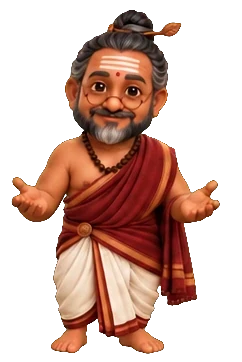
The Batuk Bhairava Mantra is a short Vedic and tantric invocation addressed to Batuk Bhairava, the youthful manifestation of Lord Bhairava. Bhairava himself is the fierce guardian form of Shiva; Batuk, whose name means a young boy, is described in the lineages as combining child-like approachability with unyielding protective force. Tradition presents him as the one who lifts the devotee out of apad—calamity, distress and obstruction.
The mantra is preserved in Bhairava-related tantras and in temple and household practice. It centres on the Shakti bija Hreem and the imperative kuru kuru (“do it, do it”), a formula that classical sources treat as a direct call for swift protective action. Householders, students and sadhakas recite it when facing unexplained setbacks, adversarial pressure or a sense of unseen opposition.
Those who wish to see whether planetary factors are involved may first generate a free birth chart or run a dosha check before deciding on further remedial steps.
The Mantra Text
The standard form of the Batuk Bhairava Mantra, as transmitted in contemporary Shaivite practice, is given below in Devanagari and in Roman transliteration.
Romanised English rendering used in many South Indian manuals:
Om Hreem Vatukaya Apad-uddharanaya Kuru Kuru Batukaaya Hreem
Regional scripts commonly printed alongside the Sanskrit text include Tamil (ஓம் ஹ்ரீம் வட்டுகாய ஆபதுத்தாரணாய குரு குரு வட்டுகாய ஹ்ரீம்) and Malayalam (ഓം ഹ്രീം വടുകായ ആപദുദ്ധാരണായ കുരു കുരു വടുകായ ഹ്രീം). The sound values remain the same; only the script changes.
Meaning of the Phrases
Each segment of the mantra carries a precise traditional sense:
- Om — the primordial syllable that opens the recitation and links the chanter to the wider field of mantra practice.
- Hreem — the bija of Shakti; it is understood to draw protective and creative energy into the invocation.
- Vatukaya / Batukaaya — the vocative address to Batuk Bhairava, the youthful form. “Batuk” denotes a boy, signalling purity and approachability together with latent power.
- Apad-uddharanaya — “to the one who lifts out of distress.” This is the heart of the petition: deliverance from calamity, obstacle, enmity or sudden reverse.
- Kuru Kuru — the doubled imperative “do it, do it,” adding urgency in the tantric manner.
- The closing Hreem seals the formula with the same Shakti bija that opened it.
Taken together, the line is traditionally glossed as: “Om, Hreem—to the youthful rescuer from all distress—act now, act now, O Batuka—Hreem.” It is treated not as a descriptive hymn but as a direct call that awakens the protective aspect of Bhairava.
astrobhava.com
Batuk Bhairava Mantra
A classical Shaivite invocation to the youthful form of Bhairava
Meaning of the Phrases
- Om — the primordial syllable that opens the recitation and links the chanter to the wider field of mantra practice
- Hreem — the bija of Shakti
- Vatukaya / Batukaaya — the vocative address to Batuk Bhairava
- Apad-uddharanaya — “to the one who lifts out of distress.” This is the heart of the petition: deliverance from calamity, obstacle, enmity or sudden reverse
- Kuru Kuru — the doubled imperative “do it, do it,” adding urgency in the tantric manner
Side by side
| Aspect | Traditional recommendation |
|---|---|
| Time of day | Brahma muhurta (pre-dawn) or Pradosha (evening twilight) |
| Preferred days | Tuesday; Ashtami tithi; Krishna paksha |
| Direction | Facing east or north |
| Seat | Padmasana or Sukhasana on a clean wool or silk asana |
| Mala | Rudraksha or sphatika, 108 beads |
When the chart shows heavy affliction from Rahu, Ketu or Saturn, priests often pair mantra japa with a fire offering such as the Kala Bhairava Homam rather than relying on recitation alone
Place in Remedial Practice
sankalpa · vidhi · agni
ASTROBHAVA.COMVedic rituals, never a group ceremony, telecast live
Origin and Scriptural Setting
References to Batuk Bhairava appear in the wider Bhairava corpus linked to the Shiva Purana and to tantric collections such as the Kularnava and texts associated with the Batuka tradition. In these sources Shiva’s fierce Bhairava form is said to manifest a youthful aspect specifically to guard devotees while remaining accessible to householders. Sages and later tantric masters transmitted the mantra through guru-shishya lines in both Kashmiri and South Indian streams.
Temple practice keeps the form alive. Batuk Bhairava (or closely related Kalabhairava) is honoured in Kashi and in numerous Shiva temples across Tamil Nadu, Kerala and neighbouring regions. Ashtami tithis and certain days of Navaratri are preferred for special worship. Medieval stotras and kavachams absorbed the mantra, and Siddhar and Nayanmar currents in the South helped carry it into ordinary household sadhana. Today it remains a standard item in remedial lists when sudden upheaval or malefic planetary pressure is indicated.
Traditional Method of Chanting
Classical manuals and living temple custom converge on a simple, disciplined procedure. A clean seat, a settled mind and a fixed count matter more than elaborate outer ritual. Guidance on posture, breath and mala use is set out in the house’s note on how to chant a mantra correctly.
| Aspect | Traditional recommendation |
|---|---|
| Time of day | Brahma muhurta (pre-dawn) or Pradosha (evening twilight) |
| Preferred days | Tuesday; Ashtami tithi; Krishna paksha |
| Direction | Facing east or north |
| Seat | Padmasana or Sukhasana on a clean wool or silk asana |
| Mala | Rudraksha or sphatika, 108 beads |
| Daily count | Minimum one mala (108); longer anushthanas of 21 000 over 40 days are also prescribed |
| Simple offerings | Ghee lamp, black sesame, incense, fresh flowers |
Purity of body and mind is insisted upon: bath, clean clothes, and a sattvic diet on days of intensive japa. Visualisation of the youthful Batuk form radiating a protective light is taught in many lineages. The session closes with a brief prayer for the welfare of all beings. For choosing an auspicious window, the daily panchang supplies tithi, nakshatra and rahukalam for the devotee’s own city.
Place in Remedial Practice
In contemporary remedial astrology the Batuk Bhairava Mantra is listed among measures prescribed when the native faces sudden blocks, adversarial situations, or the felt presence of negative influence. It is frequently recommended alongside examination of Rahu, Ketu and Saturn, and may be combined with broader protection or obstruction-removal rites. The full range of such fire offerings is collected under the house’s protection homas and obstruction-removal catalogues.
Tradition does not treat the mantra as a substitute for medical, legal or financial counsel; it is an interior and ritual discipline. Regular, attentive recitation is said to steady the mind, reinforce courage and keep the protective intention of Bhairava before the devotee. Longer anushthanas are undertaken only after clarifying the birth chart and, where needed, taking the guidance of a qualified astrologer or priest.
Questions devotees ask
The AstroBhava Editorial Desk chooses the topics for this blog and decides what is published.