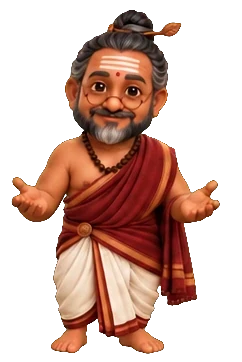
Magha Nakshatra is the tenth of the twenty-seven lunar mansions in Vedic astrology. It occupies 0°00′ to 13°20′ of Leo (Simha) and is classically linked with the royal throne—an emblem of authority, lineage and the duty to carry forward what the elders have built.
The nakshatra is ruled by Ketu, the south node of the Moon, and its deities are the Pitris, the ancestral fathers. That pairing gives Magha a distinctive character: outward command tempered by inward detachment, and a lifelong sense that personal honour is inseparable from family honour.
This article sets out the five key traits that jyotisha associates with Magha, and how those traits show in career, family life and the balance between material ambition and spiritual practice. To confirm whether Magha is your birth star, use the free nakshatra finder with your date, time and place of birth.
Symbolism and the Ancestral Seat
Magha’s principal symbol is the throne or royal seat. In the classical reading this is not only a mark of rank; it is the seat of the lineage—the place from which a family, clan or community is guided. The nakshatra therefore carries a double mandate: to exercise authority in the present, and to preserve the dignity of those who came before.
Because the Pitris are the deities of Magha, the mansion is closely tied to ancestral remembrance. Natives are often described as carrying an instinctive awareness of heritage—family stories, rites, names and standards of conduct. In traditional households this shows as a natural inclination toward shraddha, tarpan and other forms of pitru-karya, and toward keeping festival and samskara customs intact.
The throne also implies responsibility. Magha does not merely confer status; it asks the native to justify that status through conduct that does not diminish the name of the house. That ethical pressure is one of the reasons Magha personalities are frequently cast as custodians rather than mere beneficiaries of tradition.
Ketu’s Rule and Leo’s Fire
Magha is ruled by Ketu. Unlike the Sun, which rules Leo as a rashi and expresses visible selfhood, Ketu turns the attention inward. It favours detachment from pure display, an interest in what lies behind form, and a willingness to leave conventional paths when they no longer serve a deeper purpose. Under this influence, Magha leadership often has an unconventional or quietly radical edge: the native may hold a traditional office yet think in ways that surprise the establishment.
Leo’s solar quality supplies the other half of the picture—warmth, confidence, a natural ability to hold a room and a taste for roles that are seen. When Leo’s fire and Ketu’s mysticism meet, the result is a persona that can be outwardly commanding and inwardly reflective at once. Public ambition is tempered by private questioning; charisma is paired with a search for meaning that titles alone cannot satisfy.
Those who wish to see how Ketu is placed in the full chart, and how Magha’s pada interacts with the lagna and Moon, can generate a free birth chart on the kundli tool. Current nodal movement is tracked on the Rahu–Ketu transit page. Where the chart shows nodal stress, tradition often turns to pacification rites such as the Rahu-Ketu Shanti Homam, performed by the ashram priests and telecast live.
The Five Key Traits of Magha Nakshatra
Classical and modern descriptions of Magha converge on five traits. They appear in both men and women, though the outer style may differ.
1. Regal leadership
Magha natives are predisposed to take charge. They organise, decide and set direction with little prompting, and others often look to them when a group needs a clear head. Leadership here is less about noise and more about presence: a sense that someone is holding the seat and will not abandon it when difficulty arrives.
2. Ancestral pride and heritage
A deep regard for lineage runs through the nakshatra. Family honour, the memory of elders and the continuity of custom matter. Magha people frequently become the keepers of ritual, property stories and moral standards within the household, and they judge their own actions partly by whether those actions would shame or uphold the ancestors.
3. Dignity and self-respect
The throne symbolism instils a strong sense of personal dignity. Magha natives prefer to live and work in ways that preserve self-respect; they dislike situations that force them into undignified compromise. When this trait is mature it becomes ethical firmness. When it is unchecked it hardens into pride or an inability to apologise—one of Magha’s lifelong lessons.
4. Spiritual depth and detachment
Ketu’s mark shows as an inner life that is richer than the public role suggests. Many Magha natives are drawn to philosophy, meditation, mantra and questions about what endures beyond status. They can hold worldly office and still feel that the real work is inward. This dual nature—outer authority, inner seeking—is central to the nakshatra’s character.
5. Duty and custodianship
Magha is less about personal glory than about stewardship. The native feels tasked with protecting people, institutions, traditions or a family name. Duty is not an external imposition; it is experienced as identity. That same sense of duty can make Magha reliable in crisis and, at times, overburdened by obligations they will not set down.
astrobhava.com
The Throne of Magha
Tenth lunar mansion — Ketu, Leo and the Pitris
- 10THof twenty-seven nakshatras
- 0°–13°20′span within Leo
- KETUplanetary ruler
- PITRISpresiding ancestral deities
The five key traits
- Regal leadership — presence, not noise
- Ancestral pride and regard for lineage
- Dignity and firm self-respect
- Spiritual depth and Ketu's detachment
- Duty felt as identity, not imposition
Leo's solar fire
- Warmth and visible confidence
- A taste for roles that are seen
- Ability to hold a room
Ketu's inward pull
- Detachment from pure display
- Unconventional, quietly radical edge
- Search for meaning beyond titles
Where the traits constrain
- Pride hardening into ego
- Difficulty accepting correction or sharing credit
- Tradition slowing necessary adaptation
- Duty leaving no room for rest
- Detachment read as emotional distance
The corrective is deliberate humility — listening, and apologising without loss of face
Magha's lesson is balance: authority held, yet inwardly free of it
throne · lineage · stewardship
ASTROBHAVA.COMVedic rituals, never a group ceremony, telecast live
Career, Family and Social Life
In professional life Magha thrives where strategy, rank and responsibility meet—administration, public service, senior management, law, education, cultural institutions and any field in which a person is trusted to guard a standard. The work ethic is typically disciplined; the native prefers clear hierarchy and roles that allow decisive action. Creative and entrepreneurial paths also suit Magha when the venture can carry a sense of legacy rather than pure short-term gain.
In the family, Magha treats the household as a sacred trust. Natives often take protective or guiding roles—elder sibling, head of household, the one who settles disputes or funds rites. They invest heavily in bonds of blood and marriage, and they expect loyalty in return. Socially they are charismatic and usually respected, though assertiveness must be balanced with empathy if relationships are to remain warm rather than merely formal.
As custodians of culture, Magha people are frequently active in festivals, temple committees, community trusts and the transmission of language, music or ritual. Their influence in a locality often rests less on wealth than on the quiet assumption that they will stand for continuity when others drift.
For a wider view of rites prescribed when a birth nakshatra needs strengthening or when planetary periods press on the nodes, see the house’s nakshatra homam catalogue and the free guidance tool Ask Nirnaya.
Challenges and the Path of Balance
The same traits that elevate Magha can also constrain it. Pride, if unexamined, becomes ego; the native may struggle to accept correction or to share credit. Strong ties to tradition can slow adaptation when the world changes faster than custom allows. The weight of duty may leave little room for personal rest or for relationships that do not serve the family project.
Ketu’s detachment, while spiritually fruitful, can at times look like emotional distance. Partners and colleagues may feel the Magha native is present as a leader yet absent as a companion. The corrective is deliberate humility: learning to listen, to apologise without loss of face, and to treat other people’s wisdom as part of the lineage rather than a threat to it.
The central life lesson Magha is asked to learn is balance—between authority and softness, between ancestral loyalty and necessary change, and between outer achievement and inner quiet. Tradition does not ask the native to abandon the throne; it asks that the person on the throne remain inwardly free of it. When that balance is held, Magha’s leadership becomes stewardship in the fullest sense: firm, ethical and open to growth.
How the Traits Show in Women and Men
The five traits above are common to Magha as a whole. Gender colours the expression rather than the substance.
Women born under Magha often combine regal bearing with nurturing authority. They carry themselves with composure, hold family tradition together and lead teams with a mix of strategic clarity and emotional intelligence. Resilience and a reflective spiritual streak are frequently noted; many Magha women become mentors who show younger people how to honour the past without being trapped by it.
Men born under Magha more often display the archetype of the noble commander—charisma, decisive speech and a visible sense of rank. Pride in heritage guides major choices. At their best they pair strength with sensitivity and take mentoring roles seriously, seeing the next generation as the continuation of the seat they occupy. Ketu’s influence still draws many of them toward philosophical or meditative practice beneath the public role.
In both, the measure of maturity is the same: whether dignity has softened into humility, and whether duty has widened into care for people beyond the immediate circle of blood and status.
Questions devotees ask
The AstroBhava Editorial Desk chooses the topics for this blog and decides what is published.