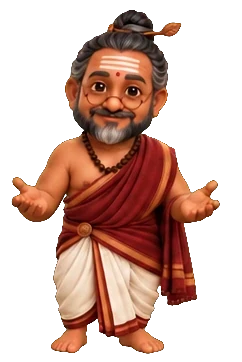
Lord Murugan, known also as Subramanya, Kartikeya and Skanda, is the son of Shiva and Parvati and the commander of the celestial armies. In the Skanda Purana and in Tamil devotion he is the vanquisher of Surapadman, a living image of dharma prevailing over adharma. His Vel is understood as the instrument that pierces confusion and obstruction.
When legal obstacles, enmity or prolonged conflict appear in a devotee’s life, tradition turns to Murugan mantras and to the supporting rites of japa and homam. The chants themselves are short; their force lies in steady repetition and in the discipline with which they are kept. This article gathers the principal mantras used for such purposes, explains their meaning, and notes how they sit within Subramanya worship.
Nothing here replaces counsel from a lawyer or an astrologer. The pages that follow simply record what the tradition prescribes and how the house performs the related rites.
Who Is Lord Murugan in This Context
Murugan is worshipped across South India and among Tamil communities worldwide as the youthful general who combines courage with discriminating intelligence. Classical lists of his attributes place victory over enemies, removal of obstacles and protection from hostile forces at the centre of his grace. Legal contention is treated as one form of such obstruction: the outer dispute is often read as the shadow of an inner or planetary agitation, especially when Mars (Kuja) is afflicted.
The Skanda Purana and the Tamil hymns of Arunagirinathar present him as the deity who grants the devotee a clear mind and an unshaken will. That is why his mantras appear in the remedial sections of many paddhatis whenever litigation, rivalry or prolonged enmity is under discussion. A free look at whether Mangal or related doshas are active in the chart can help a devotee decide how heavily to lean on these practices.
Principal Murugan Mantras and Their Meanings
Several short formulae are kept for daily use. Each is drawn from well-known stotras or from the moola mantra tradition; none requires elaborate initiation for simple japa.
This is the moola mantra. It recalls Murugan’s mythical birth from the six sparks of Shiva’s third eye and is the form most often repeated for protection and steady courage.
The Gayatri asks the great commander to illumine the intellect. It is traditionally preferred when decisions must be taken under pressure.
Two longer texts are also kept beside these seed mantras. The Sri Subramanya Bhujangam of Adi Shankaracharya praises Murugan in the coiled, serpent-like metre and is recited for the clearing of obstacles. The Kanda Sashti Kavacham functions as a protective armour and is often read on Tuesdays and during Skanda Sashti. A short Vel mantra, Om Velaya Namaha, is used when only a few minutes are available.
For the correct sound and pace of any of these, the house guide on how to chant a mantra sets out the ordinary rules of pronunciation and breath.
astrobhava.com
The Vel Against Obstruction
Murugan chants kept when dispute or litigation runs
- MARSplanet linked to Murugan
- TUESDAYclassically favoured weekday
- 108beginner's daily count
The Principal Mantras
- Om Sharavana-Bhavaya Namaha — the moola mantra
- Skanda Gayatri — illumines the intellect
- Sri Subramanya Bhujangam — clearing of obstacles
- Kanda Sashti Kavacham — protective armour
- Om Velaya Namaha — when minutes are few
Why Murugan in Contention
- victory over enemies
- removal of obstacles
- protection from hostile forces
- a clear mind and unshaken will
Beside Personal Japa
- Shatru Samhara Subramanya Trishati Homam
- same mantras offered into Agni with ghee
- conducted at the Yagna Ashram, telecast live
- home archana on Tuesdays with red flowers and Vel
No substitute for counsel from a lawyer or an astrologer
The force lies in steady repetition
japa · homam · sankalpa
ASTROBHAVA.COMVedic rituals, never a group ceremony, telecast live
Method and Auspicious Timing
Tradition favours the early morning, especially Brahma muhurta, and the weekday Tuesday, which is ruled by Mars and dedicated to Murugan. Many households also keep a short japa on the sixth tithi (Sashti) of each paksha. A quick check of the day’s panchang shows the running tithi, nakshatra and the intervals of Rahu Kalam so that the sitting can be placed cleanly.
A common beginner’s measure is 108 repetitions of the moola mantra on a rudraksha or spatika mala, once at dawn. Some extend the count to 1,008 or keep a fixed sankalpa of 10,000 over several weeks. The mind is held on the form of the Lord with the Vel, or simply on the sound itself. Silence for a few minutes after the last bead is part of the practice.
Japa, Homam and the Supporting Rites
Mantra japa is often paired with fire ritual. In a Subramanya or Shatru-samhara homam the same mantras are offered into Agni together with ghee and the prescribed samagri. The house performs the Shatru Samhara Subramanya Trishati Homam when the sankalpa concerns enmity, prolonged dispute or legal obstruction; the rite is conducted by named priests at the Yagna Ashram, and is telecast live.
Devotees who wish to see the full range of rites grouped by purpose may begin at the legal-issues homam hub or the wider catalogue of homas for success over enemies. Simple archana or a short Subramanya puja can be kept at home on Tuesdays with red flowers, a small spear or Vel symbol, and a lamp; the mantras above are sufficient for the recitation.
None of these acts is presented as a substitute for proper legal process. They are the traditional accompaniment a devotee brings to the difficulty.
Mars, Dosha and the Larger Chart Context
Murugan is closely linked with the planet Mars. When Kuja is weak, combust, or locked in certain doshas, classical texts note a rise in quarrels, litigation and impulsive speech. A chart-level check through the free dosha tool shows whether Mangal dosha, or related combinations, are present. The running dasha and the current transit of Mars or Rahu can then be read against the same background.
Where the astrology points strongly to adversarial tension, the mantras and the Shatru-samhara rites are the measures the tradition itself places first. A live consultation remains available for those who need a full reading before fixing a sankalpa.
Questions devotees ask
The AstroBhava Editorial Desk chooses the topics for this blog and decides what is published.