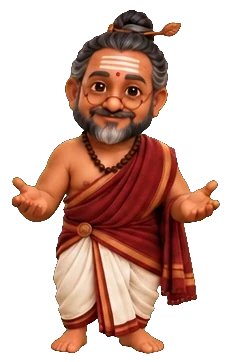
In Vedic astrology, Sanyasa Yoga marks a strong pull toward detachment, renunciation, and the spiritual path. Classical texts treat it as a rare and serious combination: for a seeker it can support a life of sadhana, while for a householder it may surface as isolation, strained relationships, career disruption, or emotional withdrawal.
The word sanyasa means renunciation. When the yoga is present in a birth chart, the native is often either drawn to, or pushed by circumstances toward, a simpler, more inward life. How that impulse plays out depends on the planets involved, the house of the cluster, the strength of the lagna, and the running dasha.
This article sets out how Sanyasa Yoga is formed, what tradition says about its effects, how it differs across ascendants, and which Vedic remedies are customarily used to keep its energy balanced rather than extreme.
What is Sanyasa Yoga and how is it formed?
Sanyasa Yoga is described in works such as the Brihat Parashara Hora Shastra and Phaladeepika as a powerful conjunction in which four or more planets occupy a single house or sign. The nature of those planets—benefic or malefic—shapes whether the renunciation is peaceful or abrupt.
Primary conditions traditionally listed are:
- Four or more planets joined in one house or one rashi. The 8th, 9th and 12th houses are especially noted, as they relate to transformation, dharma and moksha.
- Saturn or Ketu dominating or associating with the cluster. Both signify detachment, karmic clearing and withdrawal from ordinary ambition.
- A strong, unafflicted Jupiter often indicating that the turn inward is guided and constructive rather than forced by crisis.
- Sun or Mars mixed with malefics pointing to a sharper, more sudden break—sometimes after conflict, failure or an ego crisis.
Further classical notes: a cluster in the Dharma trikona (1st, 5th, 9th) tends to frame renunciation as purpose; the same yoga in artha or kama houses can unsettle material and relationship goals. A firm lagna lord or a benefic Moon can soften the extreme edge of the combination. You can check planetary groupings in your own chart with a free kundli before reading further.
Is Sanyasa Yoga always literal renunciation?
No. Not every chart with this yoga produces a monk or full-time renunciate. Expression depends on dasha and transit activation, cultural and personal context, the strength of the lagna and lagna lord, and whether cancelling or supporting yogas are also present.
For some natives it appears as spiritual leadership, mental simplicity, minimalist living or a service-oriented career. For others—especially when the planets are afflicted—it may show as emotional isolation, loss of drive, or difficulty sustaining close bonds. Timing matters: the yoga often becomes vivid only when the relevant dasha or antardasha runs, which is why a Vimshottari dasha reading is useful alongside the static chart.
Effects of Sanyasa Yoga in life
Depending on house placement and planetary dignity, the yoga can reshape inner life, relationships, work and social behaviour. Tradition describes several recurring patterns.
Mental detachment and emotional isolation
Natives often feel less pulled by worldly desire, status or even familiar relationships. This may look like weak bonding with family, withdrawal from social or romantic life, or a restless dissatisfaction with routine. When the Moon or the 4th house is also afflicted, the aloofness can deepen into low mood or loss of interest in ordinary pleasures. The same quality, held consciously, becomes ground for introspection and sadhana.
Marriage and family life
When the combination touches the 7th house or Venus, charts may show aversion to marital duty, emotional distance in partnership, a preference for celibacy or unmarried life, or separations that leave little lasting regret. Some marry yet still live with an inner solitude.
Spiritual orientation
On the higher side, the yoga opens interest in scripture, pilgrimage, meditation, yoga and the company of teachers. Vairagya toward possessions can arise without bitterness, especially when Jupiter or the Moon supports the combination. For those walking this path deliberately, rites grouped under spiritual growth homas are the traditional support.
Career and public life
When the 10th or 6th house is involved, or Saturn is prominent in the cluster, interest in ordinary employment may fade. Patterns include voluntary retirement, abrupt resignation, conflict that ends in withdrawal, or a shift toward teaching, healing, non-profit or ashram work. From a worldly view this can look like setback; from the chart’s view it is often a reordering of purpose.
Karmic clearing and the moksha axis
At root, classical writers treat Sanyasa Yoga as a sign that the soul is ready to loosen past burdens. Feelings of not belonging, indifference to fame and wealth, and a disinterest in praise or blame are common. When Rahu–Ketu or ancestral themes are also active, tradition often pairs chart work with a Rahu-Ketu Shanti Homam.
When the yoga becomes difficult
Sanyasa Yoga is not inherently adverse, yet a malefic-heavy or poorly supported combination can produce loneliness, broken commitments, neglect of health or family, and a cynical or nihilistic outlook. Early reading of the chart—and remedies chosen for the actual planets involved—is how tradition keeps the yoga from hardening into isolation.
Challenging outcomes are more often described when the Moon, 4th or 7th is afflicted, when Mars, Saturn and Ketu dominate the conjunction without benefic relief, and when the lagna itself is weak. Beneficial outcomes are more often described when Jupiter is strong and clean, the lagna and lagna lord are firm, Ketu or Saturn receive benefic influence, and dharma- or raja-related yogas also operate.
Sanyasa Yoga by ascendant
The lagna colours how the same yoga is lived. The notes below are classical tendencies, not fixed fate.
| Ascendant | Typical expression |
|---|---|
| Aries | Friction in leadership; energy redirected into spiritual mission |
| Taurus | Detachment from comfort and property; growth through material loss |
| Gemini | Emotional withdrawal; strong pull toward philosophy and meditation |
| Cancer | Renunciation after emotional shock; healing through sadhana |
| Leo | Ego tested before surrender; service through spiritual leadership |
| Virgo | Analytical renunciation; service, healing or monastic roles |
| Libra | Strain in partnership; search for inner balance |
| Scorpio | Intense path through crisis; deep transformative sadhana |
| Sagittarius | Natural lean toward dharma, teaching and pilgrimage |
| Capricorn | Renunciation after overwork; slow, disciplined spiritual growth |
| Aquarius | Intellectual detachment; reform, solitude or alternative paths |
| Pisces | Early renunciate bent; bhakti and mystical orientation |
Where Saturn is central to the combination for a Capricorn or Aquarius lagna, tradition often includes a Shani Homam among the prescribed rites. Planetary-level work more generally sits under the house’s planetary homam catalogue.
astrobhava.com
Sanyasa Yoga at a Glance
How the cluster forms and how it is lived
- 4+ PLANETSin one house or rashi
- 8 · 9 · 12houses especially noted
- SATURN · KETUclassic detachment drivers
Traditional conditions
- four or more planets joined in one sign
- Saturn or Ketu dominating the cluster
- strong Jupiter — a guided turn inward
- Sun or Mars with malefics — a sudden break
- Dharma trikona cluster frames it as purpose
Which way it tilts
Benefic support
- Jupiter strong and clean
- lagna and lagna lord firm
- Ketu or Saturn under benefic influence
- dharma or raja yogas also operating
Harsher expression
- Moon, 4th or 7th afflicted
- Mars, Saturn, Ketu without benefic relief
- weak lagna
- loneliness, broken commitments, cynicism
Where it shows
- mental detachment, withdrawal from routine
- 7th house or Venus — distance in partnership
- scripture, pilgrimage, meditation, teachers
- 10th or 6th, or Saturn — career withdrawal
- indifference to fame, praise or blame
Expression waits on dasha; a dormant combination speaks only in its period
Remedies follow the lagna, the house of the cluster and the running dasha
vairagya · viveka · balance
ASTROBHAVA.COMVedic rituals, never a group ceremony, telecast live
Vedic remedies tradition prescribes
Remedies do not erase a yoga; they are used to steady the mind, strengthen supporting grahas and reduce the harsh edge of malefic influence. What is chosen should follow the actual chart, not a generic list.
When many planets form the cluster, a Navagraha Homam is the classical whole-chart balancing rite. Where Ketu or the nodes drive sudden detachment, Rahu–Ketu shanti is prescribed. Where emotional crisis or fear of loss accompanies the yoga, Mrityunjaya-related rudra worship is traditionally used for steadiness. Jupiter-strengthening work is favoured when the native seeks clarity of dharma rather than escape. Saturn rites are indicated when duty, exhaustion and karmic weight are the main themes.
Daily discipline—japa, simple living, honest work and care of family duties—remains the householder’s way of holding Sanyasa Yoga without abandoning the world. Grihastha sanyasa, living in society while remaining inwardly ungrasping, is the middle path classical teachers recommend for most charts.
Reading the yoga in your own chart
Before assuming the yoga is active, confirm that four or more planets truly share one house or sign, note which of Saturn, Ketu and Jupiter participate, and check whether the lagna lord can hold the life together. Then look at dasha: a dormant combination often waits for its period to speak.
If relationship coldness, career withdrawal or a sharp spiritual turn is already underway, a full reading helps separate Sanyasa Yoga from other factors such as afflictions to Venus, the 7th, or the 10th. The house performs the named homam at its Yagna Ashram, and telecasts the rite live so the devotee can participate from wherever they are.
Questions devotees ask
The AstroBhava Editorial Desk chooses the topics for this blog and decides what is published.