Adivo Alladivo
अदिवो अल्लदिवो हरिवासमु पदिवेल शेषुल पडगलमयमुAlso known as Adivo Alladivo Sriharivasamu
In Devanagari, Tamil, Telugu, Kannada, Malayalam and English — with the meaning of every word, and the one syllable most people pronounce wrongly.
 The Sudarshana Homam, performed for youBook →
What the Adivo Alladivo is
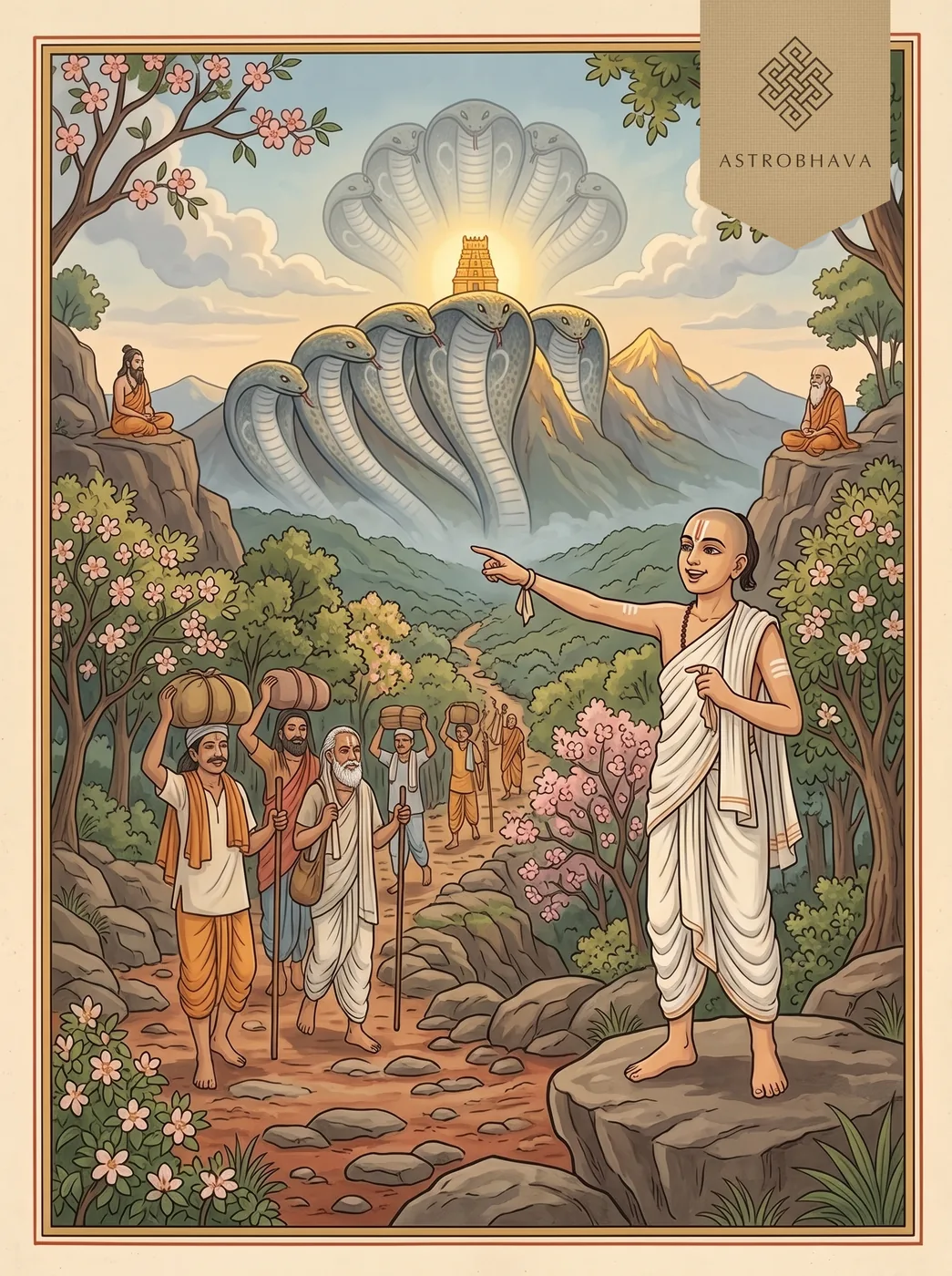
Adivo Alladivo is a Telugu sankirtana by Tallapaka Annamacharya (1408-1503), the poet of the Venkateswara temple at Tirumala, and its opening words mean 'There it is, look, over there'. The song never describes Venkateswara's image. Every line points at the hill. The pallavi calls it Hari's home, a mountain made of the hoods of ten thousand Sheshas, the serpent on whom Vishnu rests. The first charanam names the Venkata hill as higher than all others, a wonder even to Brahma and the gods, and the lasting home of the sages, and ends with two plain commands: see it, bow to it. The second turns to Seshachala close at hand, with golden peaks that are wholly the Supreme. The third calls the hill the place of liberation and the wealth of Sri Venkatapati, and closes on it as the most purifying of all purifying things.
A song for the first sight of Seshadri
Annamacharya was born at Tallapaka, near Rajampet in present-day Andhra Pradesh. According to tradition, at sixteen he cut his finger while gathering grass, took the pain as a sign that only the Lord gives lasting shelter, and left the family fields to follow a band of pilgrims walking to Tirumala, about a hundred kilometres away. The account written by his grandson Chinnanna, the Annamacharya Charitra, places the Lord's appearance to him at that age and says he began composing at the Lord's command. Popular tradition holds that this song broke out of him on the climb, at the moment the seven hills came into view, which would explain why it praises the mountain and not yet the image at the top. One early scholarly printing gives the song the heading 'Seshadri darshanamu', the sight of the Shesha hill, and sets it among the passages on his vision. Thousands of his songs survive because they were engraved on copper plates and kept inside the Tirumala temple, where they lay unnoticed until 1922. This song is on the fourth plate.
The mantra, in six scripts
- అదివో
- adivō — there it is
- అల్లదివో
- alladivō — there it is, over there
- హరివాసము
- harivāsamu — the dwelling of Hari
- పదివేల
- padivēla — of ten thousand
- శేషుల
- śēṣula — Sheshas (the divine serpent)
- పడగలమయము
- paḍagalamayamu — made of hoods
Adivo Alladivo lyrics in full
The pallavi and three charanams, as preserved on the Tallapaka copper plates at Tirumala.
All 4 verses, in Sanskrit, Tamil, Telugu, Kannada, Malayalam and English, each with its meaning. Choose a script:
Download the Adivo Alladivo PDFAll 4 verses with their meanings, in Sanskrit. Free to print and keep.
अदिवो अल्लदिवो हरिवासमु
पदिवेल शेषुल पडगलमयमु
அதிவோ அல்லதிவோ ஹரிவாஸமு
பதிவேல ஶேஷுல படகலமயமு
అదివో అల్లదివో హరివాసము
పదివేల శేషుల పడగలమయము
ಅದಿವೋ ಅಲ್ಲದಿವೋ ಹರಿವಾಸಮು
ಪದಿವೇಲ ಶೇಷುಲ ಪಡಗಲಮಯಮು
അദിവോ അല്ലദിവോ ഹരിവാസമു
പദിവേല ശേഷുല പഡഗലമയമു
adivō alladivō harivāsamu
padivēla śēṣula paḍagalamayamu
There it is, look, there it is: the home of Hari, a hill made of the hoods of ten thousand Sheshas.
अदॆ वेंकटाचल मखिलोन्नतमु
अदिवो ब्रह्मादुल कपुरूपमु
अदिवो नित्यनिवास मखिलमुनुलकु
नदॆ चूडुँ डदॆ म्रॊक्कुँ डानंदमयमु
அதெ வேம்கடாசல மகிலோந்நதமு
அதிவோ ப்ரஹ்மாதுல கபுரூபமு
அதிவோ நித்யநிவாஸ மகிலமுநுலகு
நதெ சூடும் டதெ ம்ரொக்கும் டாநம்தமயமு
అదె వేంకటాచల మఖిలోన్నతము
అదివో బ్రహ్మాదుల కపురూపము
అదివో నిత్యనివాస మఖిలమునులకు
నదె చూడుఁ డదె మ్రొక్కుఁ డానందమయము
ಅದೆ ವೇಂಕಟಾಚಲ ಮಖಿಲೋನ್ನತಮು
ಅದಿವೋ ಬ್ರಹ್ಮಾದುಲ ಕಪುರೂಪಮು
ಅದಿವೋ ನಿತ್ಯನಿವಾಸ ಮಖಿಲಮುನುಲಕು
ನದೆ ಚೂಡುಁ ಡದೆ ಮ್ರೊಕ್ಕುಁ ಡಾನಂದಮಯಮು
അദെ വേംകടാചല മഖിലോന്നതമു
അദിവോ ബ്രഹ്മാദുല കപുരൂപമു
അദിവോ നിത്യനിവാസ മഖിലമുനുലകു
നദെ ചൂഡുഁ ഡദെ മ്രൊക്കുഁ ഡാനംദമയമു
ade vēṃkaṭācala makhilōnnatamu
adivō brahmādula kapurūpamu
adivō nityanivāsa makhilamunulaku
nade cūḍu ḍade mrokku ḍānaṃdamayamu
That is the Venkata hill, the highest of all; that is a rare wonder even to Brahma and the gods; that is the lasting home of all the sages. See it there, bow to it there: it is filled with bliss.
चॆंगट नल्लदिवो शेषाचलमु
निंगि नुन्न देवतल निजवासमु
मुंगिट नल्लदिवो मूलनुन्नधनमु
बंगारुशिखराल बहुब्रह्ममयमु
செம்கட நல்லதிவோ ஶேஷாசலமு
நிம்கி நுந்ந தேவதல நிஜவாஸமு
மும்கிட நல்லதிவோ மூலநுந்நதநமு
பம்காருஶிகரால பஹுப்ரஹ்மமயமு
చెంగట నల్లదివో శేషాచలము
నింగి నున్న దేవతల నిజవాసము
ముంగిట నల్లదివో మూలనున్నధనము
బంగారుశిఖరాల బహుబ్రహ్మమయము
ಚೆಂಗಟ ನಲ್ಲದಿವೋ ಶೇಷಾಚಲಮು
ನಿಂಗಿ ನುನ್ನ ದೇವತಲ ನಿಜವಾಸಮು
ಮುಂಗಿಟ ನಲ್ಲದಿವೋ ಮೂಲನುನ್ನಧನಮು
ಬಂಗಾರುಶಿಖರಾಲ ಬಹುಬ್ರಹ್ಮಮಯಮು
ചെംഗട നല്ലദിവോ ശേഷാചലമു
നിംഗി നുന്ന ദേവതല നിജവാസമു
മുംഗിട നല്ലദിവോ മൂലനുന്നധനമു
ബംഗാരുശിഖരാല ബഹുബ്രഹ്മമയമു
ceṃgaṭa nalladivō śēṣācalamu
niṃgi nunna dēvatala nijavāsamu
muṃgiṭa nalladivō mūlanunnadhanamu
baṃgāruśikharāla bahubrahmamayamu
Close at hand, there stands Seshachala, the true dwelling of the gods who live in the sky. Right before you is the treasure laid up in store, a hill of golden peaks that is wholly the Supreme.
कैवल्यपदमु वेंकटनग मदिवो
श्रीवेंकटपतिकि सिरुलैनदि
भाविंप सकलसंपद रूपमदिवो
पावनमुल कॆल्लँ बावनमयमु
கைவல்யபதமு வேம்கடநக மதிவோ
ஶ்ரீவேம்கடபதிகி ஸிருலைநதி
பாவிம்ப ஸகலஸம்பத ரூபமதிவோ
பாவநமுல கெல்லம் பாவநமயமு
కైవల్యపదము వేంకటనగ మదివో
శ్రీవేంకటపతికి సిరులైనది
భావింప సకలసంపద రూపమదివో
పావనముల కెల్లఁ బావనమయము
ಕೈವಲ್ಯಪದಮು ವೇಂಕಟನಗ ಮದಿವೋ
ಶ್ರೀವೇಂಕಟಪತಿಕಿ ಸಿರುಲೈನದಿ
ಭಾವಿಂಪ ಸಕಲಸಂಪದ ರೂಪಮದಿವೋ
ಪಾವನಮುಲ ಕೆಲ್ಲಁ ಬಾವನಮಯಮು
കൈവല്യപദമു വേംകടനഗ മദിവോ
ശ്രീവേംകടപതികി സിരുലൈനദി
ഭാവിംപ സകലസംപദ രൂപമദിവോ
പാവനമുല കെല്ലഁ ബാവനമയമു
kaivalyapadamu vēṃkaṭanaga madivō
śrīvēṃkaṭapatiki sirulainadi
bhāviṃpa sakalasaṃpada rūpamadivō
pāvanamula kella bāvanamayamu
The Venkata hill is the abode of liberation; it has become the wealth of Sri Venkatapati, the Lord of Venkata. Think on it: it is the very form of all prosperity, the most purifying of all things that purify.
The syllable people get wrong
In alladivō the double l is held, al-la, and the final ō is long, so the word is al-la-di-VŌ; it is three words run together, alla (over there), adi (that) and ō (look). Clipping it to a short 'aladivo' blurs the pointing gesture the whole song is built on.
When the Adivo Alladivo is chanted
Weekday. Thursday
Questions
Have your chart read before you decide
Chanting is yours to do, and free. But which deity your situation calls for — and whether a mantra alone is the right response — depends on your chart. Sometimes it is; sometimes it is not.
- Over 30 years in the Guru–Sishya Parampara, from the age of five
- He reads every chart himself — 60 minutes, one to one, never delegated
- Charts are read only between sunrise and sunset, following tradition
