Aghora Mantra
अघोरेभ्योऽथ घोरेभ्यो घोरघोरतरेभ्यः । सर्वेभ्यः सर्वशर्वेभ्यो नमस्ते अस्तु रुद्ररूपेभ्यः ॥Also known as Aghorebhyo'tha Ghorebhyo
In Devanagari, Tamil, Telugu, Kannada, Malayalam and English — with the meaning of every word, and the one syllable most people pronounce wrongly.
 The Aghora Pasupatha Homam, performed for youBook →
What the Aghora Mantra is
The Aghora mantra, the Vedic salutation that opens with aghorebhyo'tha ghorebhyo, is the mantra of Aghora, the south-facing aspect of Shiva, in the set of five called the Pancha Brahma mantras. It belongs to the Krishna Yajurveda: the tenth book of the Taittiriya Aranyaka, also read as the Mahanarayana Upanishad, gives the five in sequence, with Aghora coming after Vamadeva and before Tatpurusha. The mantra is a single couplet. Its first line climbs in three steps, from the forms that are not fearsome to the fearsome and on to those beyond the fearsome; its second line gathers all of them under the name Sharva and bows to them as forms of Rudra. The Rudra nyasas recite it before the Rudram, and it is followed here by the dhyana verse that the Mahanyasa sets beside it, picturing the southern face. The text is printed without Vedic accent marks; tradition learns the svaras, and mantras of this kind, from a teacher.
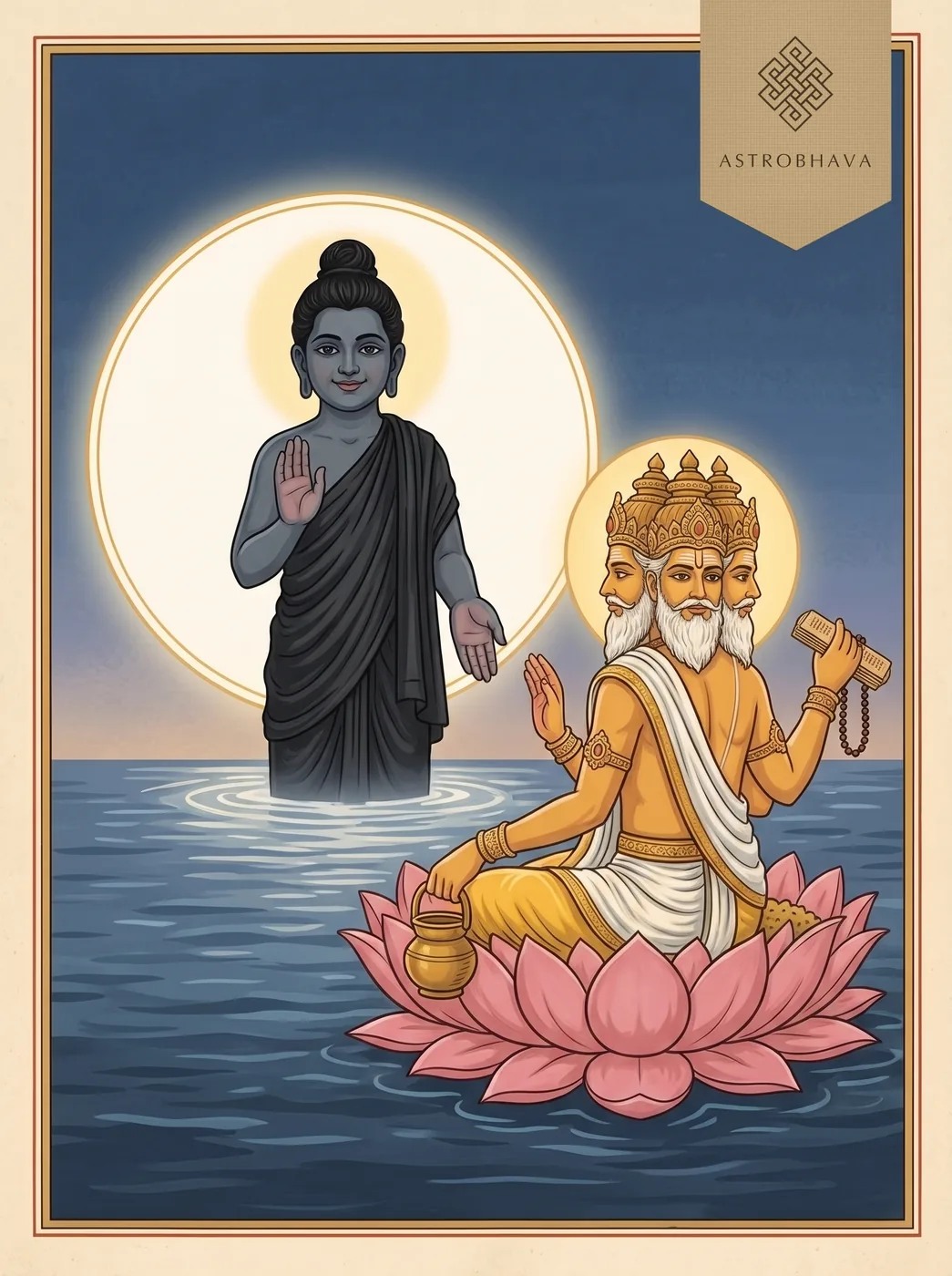
The dark youth who appeared to Brahma
The Puranas explain the five faces of Shiva through five ages of creation, and they tie the southern face to a dark appearance. According to the Linga Purana, Aghora appeared to Brahma as a youth dark in colour. The Shiva Purana tells the episode with water covering everything and Brahma unsure how to create; four dark sons, Krishna, Krishnashikha, Krishnasya and Krishnakanthadhrik, appear with Aghora and initiate Brahma into the discipline it calls the Ghora yoga. The texts do not agree on the number of that kalpa: one passage of the Vayu Purana counts it as the thirty-second. The ritual texts keep the same colour: the dhyana verse printed here, which the Mahanyasa recites directly after the mantra in its nyasa of the five faces, makes the southern face as dark as the Puranic youth. In the Mahanyasa the face is then saluted with the line om namo bhagavate rudraya dakshinanga mukhaya namah, a bow to the southern face of Rudra.
The mantra, in six scripts
- अघोरेभ्योऽथ
- aghorebhyo'tha — to the not-fearsome ones, and then
- घोरेभ्यो
- ghorebhyo — to the fearsome ones
- घोरघोरतरेभ्यः
- ghoraghoratarebhyaḥ — to those more fearsome than the fearsome
- सर्वेभ्यः
- sarvebhyaḥ — to all
- सर्वशर्वेभ्यो
- sarvaśarvebhyo — to every form of Sharva
- नमस्ते
- namaste — salutation to you
- अस्तु
- astu — may it be
- रुद्ररूपेभ्यः
- rudrarūpebhyaḥ — to the forms of Rudra
Aghora Mantra lyrics in full
The mantra is given as chanted in the Rudra nyasas, followed by the dhyana verse of the southern face. The Taittiriya Aranyaka itself, as Sayana comments on it, reads sarvatah sharva sarvebhyo in the second line.
All 2 verses, in Sanskrit, Tamil, Telugu, Kannada, Malayalam and English, each with its meaning. Choose a script:
Download the Aghora Mantra PDFAll 2 verses with their meanings, in Sanskrit. Free to print and keep.
अघोरेभ्योऽथ घोरेभ्यो घोरघोरतरेभ्यः ।
सर्वेभ्यः सर्वशर्वेभ्यो नमस्ते अस्तु रुद्ररूपेभ्यः ॥
அகோரேப்யோத கோரேப்யோ கோரகோரதரேப்யஃ ।
ஸர்வேப்யஃ ஸர்வஶர்வேப்யோ நமஸ்தே அஸ்து ருத்ரரூபேப்யஃ ॥
అఘోరేభ్యోఽథ ఘోరేభ్యో ఘోరఘోరతరేభ్యః ।
సర్వేభ్యః సర్వశర్వేభ్యో నమస్తే అస్తు రుద్రరూపేభ్యః ॥
ಅಘೋರೇಭ್ಯೋಽಥ ಘೋರೇಭ್ಯೋ ಘೋರಘೋರತರೇಭ್ಯಃ ।
ಸರ್ವೇಭ್ಯಃ ಸರ್ವಶರ್ವೇಭ್ಯೋ ನಮಸ್ತೇ ಅಸ್ತು ರುದ್ರರೂಪೇಭ್ಯಃ ॥
അഘോരേഭ്യോഽഥ ഘോരേഭ്യോ ഘോരഘോരതരേഭ്യഃ ।
സര്വേഭ്യഃ സര്വശര്വേഭ്യോ നമസ്തേ അസ്തു രുദ്രരൂപേഭ്യഃ ॥
aghorebhyo'tha ghorebhyo ghoraghoratarebhyaḥ |
sarvebhyaḥ sarvaśarvebhyo namaste astu rudrarūpebhyaḥ ||
To the forms that are not terrible, to the terrible ones, and to those more terrible than the terrible; to all of them, to every form of Sharva: salutations to you, to the forms of Rudra.
कालाभ्रभ्रमराञ्जनद्युतिनिभं व्यावृत्तपिङ्गेक्षणं कर्णोद्भासितभोगिमस्तकमणिप्रोद्भिन्नदंष्ट्राङ्कुरम् ।
सर्पप्रोतकपालशुक्तिशकलव्याकीर्णताशेखरं वन्दे दक्षिणमीश्वरस्य वदनं चाथर्वनादोदयम् ॥
காலாப்ரப்ரமராஞ்ஜநத்யுதிநிபம் வ்யாவ்ருத்தபிங்கேக்ஷணம் கர்ணோத்பாஸிதபோகிமஸ்தகமணிப்ரோத்பிந்நதம்ஷ்ட்ராங்குரம் ।
ஸர்பப்ரோதகபாலஶுக்திஶகலவ்யாகீர்ணதாஶேகரம் வந்தே தக்ஷிணமீஶ்வரஸ்ய வதநம் சாதர்வநாதோதயம் ॥
కాలాభ్రభ్రమరాఞ్జనద్యుతినిభం వ్యావృత్తపిఙ్గేక్షణం కర్ణోద్భాసితభోగిమస్తకమణిప్రోద్భిన్నదంష్ట్రాఙ్కురమ్ ।
సర్పప్రోతకపాలశుక్తిశకలవ్యాకీర్ణతాశేఖరం వన్దే దక్షిణమీశ్వరస్య వదనం చాథర్వనాదోదయమ్ ॥
ಕಾಲಾಭ್ರಭ್ರಮರಾಞ್ಜನದ್ಯುತಿನಿಭಂ ವ್ಯಾವೃತ್ತಪಿಙ್ಗೇಕ್ಷಣಂ ಕರ್ಣೋದ್ಭಾಸಿತಭೋಗಿಮಸ್ತಕಮಣಿಪ್ರೋದ್ಭಿನ್ನದಂಷ್ಟ್ರಾಙ್ಕುರಮ್ ।
ಸರ್ಪಪ್ರೋತಕಪಾಲಶುಕ್ತಿಶಕಲವ್ಯಾಕೀರ್ಣತಾಶೇಖರಂ ವನ್ದೇ ದಕ್ಷಿಣಮೀಶ್ವರಸ್ಯ ವದನಂ ಚಾಥರ್ವನಾದೋದಯಮ್ ॥
കാലാഭ്രഭ്രമരാഞ്ജനദ്യുതിനിഭം വ്യാവൃത്തപിങ്ഗേക്ഷണം കര്ണോദ്ഭാസിതഭോഗിമസ്തകമണിപ്രോദ്ഭിന്നദംഷ്ട്രാങ്കുരമ് ।
സര്പപ്രോതകപാലശുക്തിശകലവ്യാകീര്ണതാശേഖരം വന്ദേ ദക്ഷിണമീശ്വരസ്യ വദനം ചാഥര്വനാദോദയമ് ॥
kālābhrabhramarāñjanadyutinibhaṃ vyāvṛttapiṅgekṣaṇaṃ karṇodbhāsitabhogimastakamaṇiprodbhinnadaṃṣṭrāṅkuram |
sarpaprotakapālaśuktiśakalavyākīrṇatāśekharaṃ vande dakṣiṇamīśvarasya vadanaṃ cātharvanādodayam ||
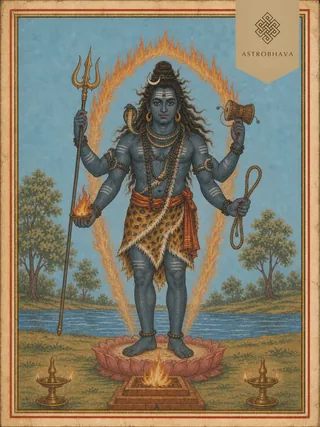
I bow to the southern face of the Lord, dark as a rain cloud, a black bee or collyrium, with rolling tawny eyes, its ears lit by the jewels on serpents' hoods, its fangs breaking forth. Its crest is strewn with skulls strung on serpents and with pieces of shell, and from it rises the sound of the Atharva Veda.
The syllable people get wrong
In aghorebhyo'tha (aghorebhyo 'tha) the avagraha marks the a of atha, 'then', merged into the o before it, so the word is said aghorebhyo-tha with no extra syllable, and the th is an aspirated t as in 'hothouse', never the English th of 'the'.
When the Aghora Mantra is chanted
Weekday. Monday
Questions
Have your chart read before you decide
Chanting is yours to do, and free. But which deity your situation calls for — and whether a mantra alone is the right response — depends on your chart. Sometimes it is; sometimes it is not.
- Over 30 years in the Guru–Sishya Parampara, from the age of five
- He reads every chart himself — 60 minutes, one to one, never delegated
- Charts are read only between sunrise and sunset, following tradition
