Pashupatastra Mantra
वक्ष्ये पाशुपतास्त्रेण शान्तिजापादि पूर्वतः । पादतः पूर्वनाशो हि फडन्तं चापदादिनुत् ॥Also known as Pashupatastra Stotram
In Devanagari, Tamil, Telugu, Kannada, Malayalam and English — with the meaning of every word, and the one syllable most people pronounce wrongly.
 The Aghora Pasupatha Homam, performed for youBook →
What the Pashupatastra Mantra is
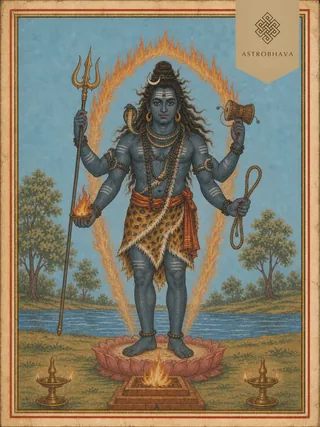
The Pashupatastra Mantra, printed in many collections as the Pashupatastra Stotram, is the weapon-mantra of Shiva as Pashupati, lord of all creatures, and it fills a chapter of the Agni Purana titled Pashupata Shanti, the Pashupata rite of peace. Shiva himself is its speaker, in chapter 322 (321 in an older printing). An opening verse announces the rite. Mantra 1 is a long prose salutation that pictures the deity: fifteen eyes, countless faces, arms and feet, eyes of sun, moon and fire, Vishnu for armour, and the staff of Yama, the noose of Varuna and the trident of Rudra in hand, ending 'Om krishnapingalaya phat'. Mantra 2 calls each weapon by name, from the weapon of the sound Hum to the weapons of Shiva's faces and of Narasimha. Mantra 3 joins 'phat' to single syllables and to the worlds from Bhuh to Tapah, and Mantra 4 ends in doubled commands against every evil. Two verses then state what the recitation is held to accomplish.
Arjuna, the Hunter and Shiva's Weapon
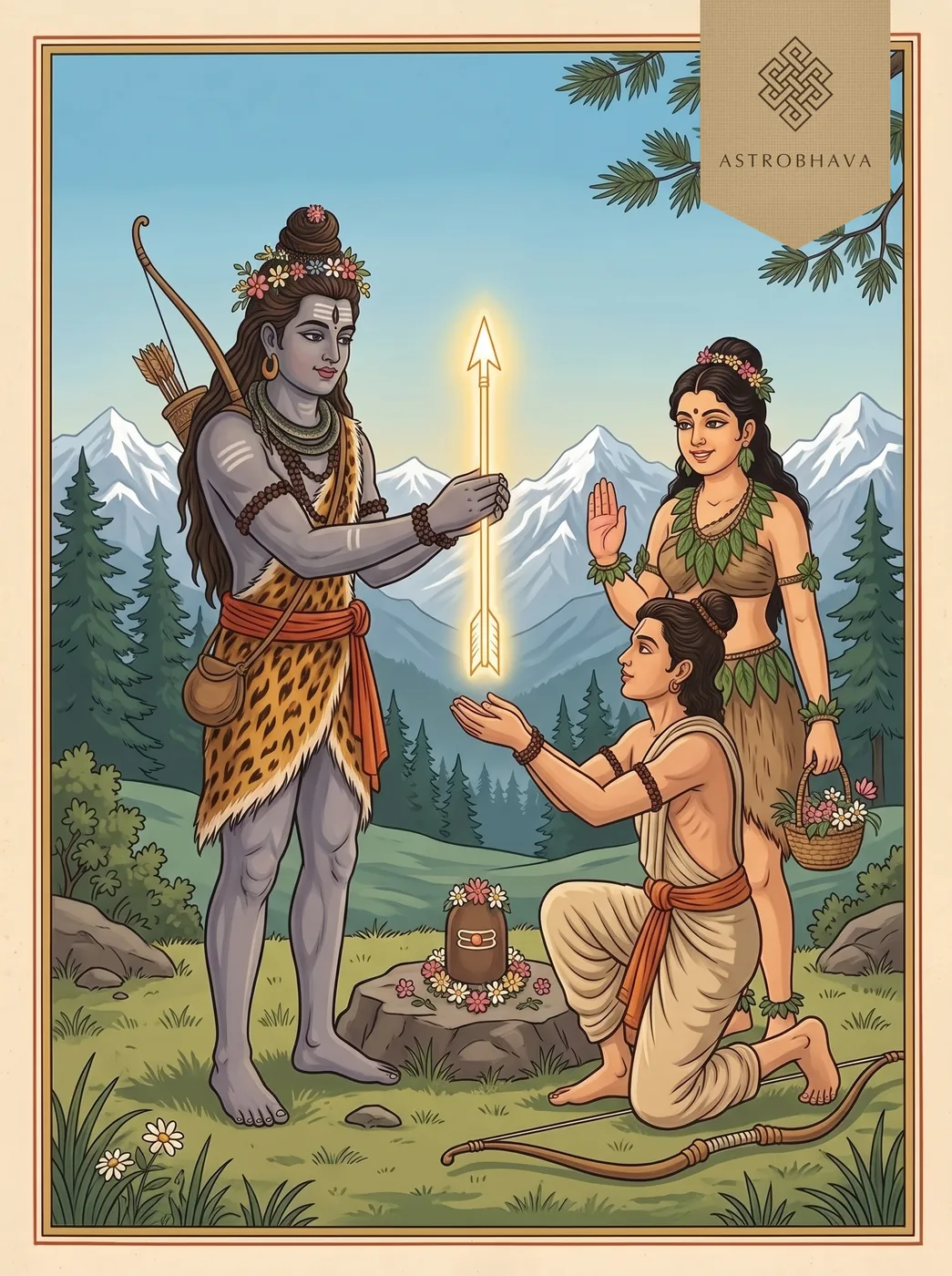
The weapon behind the name enters the epics in the Kirata episode of the Mahabharata's Vana Parva. Arjuna is living on the heights of the Himalaya with his bow Gandiva when a Danava named Muka charges him in the shape of a boar. A mountain hunter, a Kirata, looses an arrow at the same instant, and the two quarrel over the kill. Arjuna's arrows cannot wound the stranger, his sword breaks on the hunter's head, and he is beaten senseless. Coming round, he shapes a clay image of Shiva and garlands it, then sees that same garland on the hunter's crown and knows who stands before him. Shiva, with Uma beside him dressed as a huntress, grants him the Pashupata, which can be released by the mind, the eye, a word or the bow, and warns him never to loose it without due cause, because hurled at a weak foe it could destroy the world. The Drona Parva returns to it: after Arjuna vows to slay Jayadratha, he and Krishna go to Shiva, and Arjuna obtains the weapon once more. The Agni Purana carries the same weapon into ritual instead of war. Its Shaiva chapters set the Pashupata Shanti directly after a peace-rite of the Aghora weapon, and elsewhere the purana has the Mahapashupata recited as a newly consecrated linga is raised into its shrine.
The mantra, in six scripts
- ॐ
- oṃ — Om
- नमो
- namo — salutation
- भगवते
- bhagavate — to the Lord
- महापाशुपताय
- mahāpāśupatāya — to the great Pashupata
- अतुलबलवीर्यपराक्रमाय
- atulabalavīryaparākramāya — of matchless strength, valour and might
- त्रिपञ्चनयनाय
- tripañcanayanāya — with fifteen eyes
- नानारूपाय
- nānārūpāya — of many forms
- नानाप्रहरणोद्यताय
- nānāpraharaṇodyatāya — raised with many weapons
- सर्वाङ्गरक्ताय
- sarvāṅgaraktāya — red in every limb
- भिन्नाञ्जनचयप्रख्याय
- bhinnāñjanacayaprakhyāya — dark as crushed collyrium
- श्मशानवेतालप्रियाय
- śmaśānavetālapriyāya — fond of the cremation ground and its spirits
- सर्वविघ्ननिकृन्तरताय
- sarvavighnanikṛntaratāya — intent on cutting down all obstacles
- सर्वसिद्धिप्रदाय
- sarvasiddhipradāya — giver of every attainment
- भक्तानुकम्पिने
- bhaktānukampine — compassionate to devotees
- असंख्यवक्त्रभुजपादाय
- asaṃkhyavaktrabhujapādāya — with countless faces, arms and feet
- तस्मिन्सिद्धाय
- tasminsiddhāya — to him who is perfected
- वेतालवित्रासिने
- vetālavitrāsine — who terrifies the vetalas
- शाकिनीक्षोभजनकाय
- śākinīkṣobhajanakāya — who shakes the shakinis
- व्याधिनिग्रहकारिणे
- vyādhinigrahakāriṇe — who restrains disease
- पापभञ्जनाय
- pāpabhañjanāya — breaker of sin
- सूर्यसोमाग्निनेत्राय
- sūryasomāgninetrāya — whose eyes are sun, moon and fire
- विष्णुकवचाय
- viṣṇukavacāya — whose armour is Vishnu
- खड्गवज्रहस्ताय
- khaḍgavajrahastāya — holding sword and thunderbolt
- यमदण्डवरुणपाशाय
- yamadaṇḍavaruṇapāśāya — with Yama's staff and Varuna's noose
- रुद्रशूलाय
- rudraśūlāya — with Rudra's trident
- ज्वलज्जिह्वाय
- jvalajjihvāya — with blazing tongue
- सर्वरोगविद्रावणाय
- sarvarogavidrāvaṇāya — who drives away all disease
- ग्रहनिग्रहकारिणे
- grahanigrahakāriṇe — who restrains the planets
- दुष्टनागक्षयकारिणे
- duṣṭanāgakṣayakāriṇe — destroyer of evil serpents
- ॐ
- oṃ — Om
- कृष्णपिङ्गलाय
- kṛṣṇapiṅgalāya — to the dark and tawny one
- फट्
- phaṭ — phat (the weapon syllable)
Pashupatastra Mantra lyrics in full
The whole chapter is printed: the opening verse, the mantra in four parts and the two closing verses. The printed closing line is given at the end.
All 8 verses, in Sanskrit, Tamil, Telugu, Kannada, Malayalam and English, each with its meaning. Choose a script:
Download the Pashupatastra Mantra PDFAll 8 verses with their meanings, in Sanskrit. Free to print and keep.
वक्ष्ये पाशुपतास्त्रेण शान्तिजापादि पूर्वतः ।
पादतः पूर्वनाशो हि फडन्तं चापदादिनुत् ॥
வக்ஷ்யே பாஶுபதாஸ்த்ரேண ஶாந்திஜாபாதி பூர்வதஃ ।
பாததஃ பூர்வநாஶோ ஹி படந்தம் சாபதாதிநுத் ॥
వక్ష్యే పాశుపతాస్త్రేణ శాన్తిజాపాది పూర్వతః ।
పాదతః పూర్వనాశో హి ఫడన్తం చాపదాదినుత్ ॥
ವಕ್ಷ್ಯೇ ಪಾಶುಪತಾಸ್ತ್ರೇಣ ಶಾನ್ತಿಜಾಪಾದಿ ಪೂರ್ವತಃ ।
ಪಾದತಃ ಪೂರ್ವನಾಶೋ ಹಿ ಫಡನ್ತಂ ಚಾಪದಾದಿನುತ್ ॥
വക്ഷ്യേ പാശുപതാസ്ത്രേണ ശാന്തിജാപാദി പൂര്വതഃ ।
പാദതഃ പൂര്വനാശോ ഹി ഫഡന്തം ചാപദാദിനുത് ॥
vakṣye pāśupatāstreṇa śāntijāpādi pūrvataḥ |
pādataḥ pūrvanāśo hi phaḍantaṃ cāpadādinut ||
Ishvara (Shiva) says: Now I shall describe the rite of peace done with the Pashupata weapon-mantra, by recitation and the other acts, in due order. Recited from its first word to its closing 'phat', it removes misfortunes and calamities.
ॐ नमो भगवते महापाशुपताय अतुलबलवीर्यपराक्रमाय त्रिपञ्चनयनाय नानारूपाय नानाप्रहरणोद्यताय सर्वाङ्गरक्ताय भिन्नाञ्जनचयप्रख्याय श्मशानवेतालप्रियाय सर्वविघ्ननिकृन्तरताय सर्वसिद्धिप्रदाय भक्तानुकम्पिने असंख्यवक्त्रभुजपादाय तस्मिन्सिद्धाय वेतालवित्रासिने शाकिनीक्षोभजनकाय व्याधिनिग्रहकारिणे पापभञ्जनाय सूर्यसोमाग्निनेत्राय विष्णुकवचाय खड्गवज्रहस्ताय यमदण्डवरुणपाशाय रुद्रशूलाय ज्वलज्जिह्वाय सर्वरोगविद्रावणाय ग्रहनिग्रहकारिणे दुष्टनागक्षयकारिणे ॐ कृष्णपिङ्गलाय फट् ।
ௐ நமோ பகவதே மஹாபாஶுபதாய அதுலபலவீர்யபராக்ரமாய த்ரிபஞ்சநயநாய நாநாரூபாய நாநாப்ரஹரணோத்யதாய ஸர்வாங்கரக்தாய பிந்நாஞ்ஜநசயப்ரக்யாய ஶ்மஶாநவேதாலப்ரியாய ஸர்வவிக்நநிக்ருந்தரதாய ஸர்வஸித்திப்ரதாய பக்தாநுகம்பிநே அஸம்க்யவக்த்ரபுஜபாதாய தஸ்மிந்ஸித்தாய வேதாலவித்ராஸிநே ஶாகிநீக்ஷோபஜநகாய வ்யாதிநிக்ரஹகாரிணே பாபபஞ்ஜநாய ஸூர்யஸோமாக்நிநேத்ராய விஷ்ணுகவசாய கட்கவஜ்ரஹஸ்தாய யமதண்டவருணபாஶாய ருத்ரஶூலாய ஜ்வலஜ்ஜிஹ்வாய ஸர்வரோகவித்ராவணாய க்ரஹநிக்ரஹகாரிணே துஷ்டநாகக்ஷயகாரிணே ௐ க்ருஷ்ணபிங்கலாய பட் ।
ఓం నమో భగవతే మహాపాశుపతాయ అతులబలవీర్యపరాక్రమాయ త్రిపఞ్చనయనాయ నానారూపాయ నానాప్రహరణోద్యతాయ సర్వాఙ్గరక్తాయ భిన్నాఞ్జనచయప్రఖ్యాయ శ్మశానవేతాలప్రియాయ సర్వవిఘ్ననికృన్తరతాయ సర్వసిద్ధిప్రదాయ భక్తానుకమ్పినే అసంఖ్యవక్త్రభుజపాదాయ తస్మిన్సిద్ధాయ వేతాలవిత్రాసినే శాకినీక్షోభజనకాయ వ్యాధినిగ్రహకారిణే పాపభఞ్జనాయ సూర్యసోమాగ్నినేత్రాయ విష్ణుకవచాయ ఖడ్గవజ్రహస్తాయ యమదణ్డవరుణపాశాయ రుద్రశూలాయ జ్వలజ్జిహ్వాయ సర్వరోగవిద్రావణాయ గ్రహనిగ్రహకారిణే దుష్టనాగక్షయకారిణే ఓం కృష్ణపిఙ్గలాయ ఫట్ ।
ಓಂ ನಮೋ ಭಗವತೇ ಮಹಾಪಾಶುಪತಾಯ ಅತುಲಬಲವೀರ್ಯಪರಾಕ್ರಮಾಯ ತ್ರಿಪಞ್ಚನಯನಾಯ ನಾನಾರೂಪಾಯ ನಾನಾಪ್ರಹರಣೋದ್ಯತಾಯ ಸರ್ವಾಙ್ಗರಕ್ತಾಯ ಭಿನ್ನಾಞ್ಜನಚಯಪ್ರಖ್ಯಾಯ ಶ್ಮಶಾನವೇತಾಲಪ್ರಿಯಾಯ ಸರ್ವವಿಘ್ನನಿಕೃನ್ತರತಾಯ ಸರ್ವಸಿದ್ಧಿಪ್ರದಾಯ ಭಕ್ತಾನುಕಮ್ಪಿನೇ ಅಸಂಖ್ಯವಕ್ತ್ರಭುಜಪಾದಾಯ ತಸ್ಮಿನ್ಸಿದ್ಧಾಯ ವೇತಾಲವಿತ್ರಾಸಿನೇ ಶಾಕಿನೀಕ್ಷೋಭಜನಕಾಯ ವ್ಯಾಧಿನಿಗ್ರಹಕಾರಿಣೇ ಪಾಪಭಞ್ಜನಾಯ ಸೂರ್ಯಸೋಮಾಗ್ನಿನೇತ್ರಾಯ ವಿಷ್ಣುಕವಚಾಯ ಖಡ್ಗವಜ್ರಹಸ್ತಾಯ ಯಮದಣ್ಡವರುಣಪಾಶಾಯ ರುದ್ರಶೂಲಾಯ ಜ್ವಲಜ್ಜಿಹ್ವಾಯ ಸರ್ವರೋಗವಿದ್ರಾವಣಾಯ ಗ್ರಹನಿಗ್ರಹಕಾರಿಣೇ ದುಷ್ಟನಾಗಕ್ಷಯಕಾರಿಣೇ ಓಂ ಕೃಷ್ಣಪಿಙ್ಗಲಾಯ ಫಟ್ ।
ഓം നമോ ഭഗവതേ മഹാപാശുപതായ അതുലബലവീര്യപരാക്രമായ ത്രിപഞ്ചനയനായ നാനാരൂപായ നാനാപ്രഹരണോദ്യതായ സര്വാങ്ഗരക്തായ ഭിന്നാഞ്ജനചയപ്രഖ്യായ ശ്മശാനവേതാലപ്രിയായ സര്വവിഘ്നനികൃന്തരതായ സര്വസിദ്ധിപ്രദായ ഭക്താനുകമ്പിനേ അസംഖ്യവക്ത്രഭുജപാദായ തസ്മിന്സിദ്ധായ വേതാലവിത്രാസിനേ ശാകിനീക്ഷോഭജനകായ വ്യാധിനിഗ്രഹകാരിണേ പാപഭഞ്ജനായ സൂര്യസോമാഗ്നിനേത്രായ വിഷ്ണുകവചായ ഖഡ്ഗവജ്രഹസ്തായ യമദണ്ഡവരുണപാശായ രുദ്രശൂലായ ജ്വലജ്ജിഹ്വായ സര്വരോഗവിദ്രാവണായ ഗ്രഹനിഗ്രഹകാരിണേ ദുഷ്ടനാഗക്ഷയകാരിണേ ഓം കൃഷ്ണപിങ്ഗലായ ഫട് ।
oṃ namo bhagavate mahāpāśupatāya atulabalavīryaparākramāya tripañcanayanāya nānārūpāya nānāpraharaṇodyatāya sarvāṅgaraktāya bhinnāñjanacayaprakhyāya śmaśānavetālapriyāya sarvavighnanikṛntaratāya sarvasiddhipradāya bhaktānukampine asaṃkhyavaktrabhujapādāya tasminsiddhāya vetālavitrāsine śākinīkṣobhajanakāya vyādhinigrahakāriṇe pāpabhañjanāya sūryasomāgninetrāya viṣṇukavacāya khaḍgavajrahastāya yamadaṇḍavaruṇapāśāya rudraśūlāya jvalajjihvāya sarvarogavidrāvaṇāya grahanigrahakāriṇe duṣṭanāgakṣayakāriṇe oṃ kṛṣṇapiṅgalāya phaṭ |
Om, salutation to the Lord, the great Pashupata, of matchless strength, valour and might, with fifteen eyes and many forms, raised with many weapons, red in every limb and dark as a heap of crushed collyrium, fond of the cremation ground and its spirits, intent on cutting down every obstacle, giver of every attainment and compassionate to devotees, with countless faces, arms and feet. Salutation to him who is perfected, who terrifies the vetalas, shakes the shakinis, restrains disease and breaks sin, whose eyes are the sun, moon and fire, whose armour is Vishnu, who holds the sword and thunderbolt, Yama's staff, Varuna's noose and Rudra's trident, whose tongue blazes, who drives away all disease, restrains the planets and destroys evil serpents; Om, to the dark and tawny one, phat.
हूंकारास्त्राय फट् ।
वज्रहस्ताय फट् ।
शक्तये फट् ।
दण्डाय फट् ।
यमाय फट् ।
खड्गाय फट् ।
वारुणाय फट् ।
पाशाय फट् ।
ध्वजाय फट् ।
अङ्कुशाय फट् ।
गदायै फट् ।
कुबेराय फट् ।
त्रिशूलाय फट् ।
मुद्गराय फट् ।
चक्राय फट् ।
पद्माय फट् ।
नागास्त्राय फट् ।
ईशानाय फट् ।
खेटकास्त्राय फट् ।
मुण्डास्त्राय फट् ।
कङ्कालास्त्राय फट् ।
पिच्छिकास्त्राय फट् ।
क्षुरिकास्त्राय फट् ।
ब्रह्मास्त्राय फट् ।
शक्त्यस्त्राय फट् ।
गणास्त्राय फट् ।
पिलिपिच्छास्त्राय फट् ।
गन्धर्वास्त्राय फट् ।
मूर्वास्त्राय फट् ।
दक्षिणास्त्राय फट् ।
वामास्त्राय फट् ।
पश्चिमास्त्राय फट् ।
मन्त्रास्त्राय फट् ।
शाकिन्यस्त्राय फट् ।
योगिन्यस्त्राय फट् ।
दण्डास्त्राय फट् ।
महादण्डास्त्राय फट् ।
नानास्त्राय फट् ।
शिवास्त्राय फट् ।
ईशानास्त्राय फट् ।
पुरुषास्त्राय फट् ।
अघोरास्त्राय फट् ।
सद्योजातास्त्राय फट् ।
हृदयास्त्राय फट् ।
महास्त्राय फट् ।
गरुडास्त्राय फट् ।
राक्षसास्त्राय फट् ।
दानवास्त्राय फट् ।
क्षौं नरसिंहास्त्राय फट् ।
त्वष्ट्रस्त्राय फट् ।
सर्वास्त्राय फट् ।
ஹூம்காராஸ்த்ராய பட் ।
வஜ்ரஹஸ்தாய பட் ।
ஶக்தயே பட் ।
தண்டாய பட் ।
யமாய பட் ।
கட்காய பட் ।
வாருணாய பட் ।
பாஶாய பட் ।
த்வஜாய பட் ।
அங்குஶாய பட் ।
கதாயை பட் ।
குபேராய பட் ।
த்ரிஶூலாய பட் ।
முத்கராய பட் ।
சக்ராய பட் ।
பத்மாய பட் ।
நாகாஸ்த்ராய பட் ।
ஈஶாநாய பட் ।
கேடகாஸ்த்ராய பட் ।
முண்டாஸ்த்ராய பட் ।
கங்காலாஸ்த்ராய பட் ।
பிச்சிகாஸ்த்ராய பட் ।
க்ஷுரிகாஸ்த்ராய பட் ।
ப்ரஹ்மாஸ்த்ராய பட் ।
ஶக்த்யஸ்த்ராய பட் ।
கணாஸ்த்ராய பட் ।
பிலிபிச்சாஸ்த்ராய பட் ।
கந்தர்வாஸ்த்ராய பட் ।
மூர்வாஸ்த்ராய பட் ।
தக்ஷிணாஸ்த்ராய பட் ।
வாமாஸ்த்ராய பட் ।
பஶ்சிமாஸ்த்ராய பட் ।
மந்த்ராஸ்த்ராய பட் ।
ஶாகிந்யஸ்த்ராய பட் ।
யோகிந்யஸ்த்ராய பட் ।
தண்டாஸ்த்ராய பட் ।
மஹாதண்டாஸ்த்ராய பட் ।
நாநாஸ்த்ராய பட் ।
ஶிவாஸ்த்ராய பட் ।
ஈஶாநாஸ்த்ராய பட் ।
புருஷாஸ்த்ராய பட் ।
அகோராஸ்த்ராய பட் ।
ஸத்யோஜாதாஸ்த்ராய பட் ।
ஹ்ருதயாஸ்த்ராய பட் ।
மஹாஸ்த்ராய பட் ।
கருடாஸ்த்ராய பட் ।
ராக்ஷஸாஸ்த்ராய பட் ।
தாநவாஸ்த்ராய பட் ।
க்ஷௌம் நரஸிம்ஹாஸ்த்ராய பட் ।
த்வஷ்ட்ரஸ்த்ராய பட் ।
ஸர்வாஸ்த்ராய பட் ।
హూంకారాస్త్రాయ ఫట్ ।
వజ్రహస్తాయ ఫట్ ।
శక్తయే ఫట్ ।
దణ్డాయ ఫట్ ।
యమాయ ఫట్ ।
ఖడ్గాయ ఫట్ ।
వారుణాయ ఫట్ ।
పాశాయ ఫట్ ।
ధ్వజాయ ఫట్ ।
అఙ్కుశాయ ఫట్ ।
గదాయై ఫట్ ।
కుబేరాయ ఫట్ ।
త్రిశూలాయ ఫట్ ।
ముద్గరాయ ఫట్ ।
చక్రాయ ఫట్ ।
పద్మాయ ఫట్ ।
నాగాస్త్రాయ ఫట్ ।
ఈశానాయ ఫట్ ।
ఖేటకాస్త్రాయ ఫట్ ।
ముణ్డాస్త్రాయ ఫట్ ।
కఙ్కాలాస్త్రాయ ఫట్ ।
పిచ్ఛికాస్త్రాయ ఫట్ ।
క్షురికాస్త్రాయ ఫట్ ।
బ్రహ్మాస్త్రాయ ఫట్ ।
శక్త్యస్త్రాయ ఫట్ ।
గణాస్త్రాయ ఫట్ ।
పిలిపిచ్ఛాస్త్రాయ ఫట్ ।
గన్ధర్వాస్త్రాయ ఫట్ ।
మూర్వాస్త్రాయ ఫట్ ।
దక్షిణాస్త్రాయ ఫట్ ।
వామాస్త్రాయ ఫట్ ।
పశ్చిమాస్త్రాయ ఫట్ ।
మన్త్రాస్త్రాయ ఫట్ ।
శాకిన్యస్త్రాయ ఫట్ ।
యోగిన్యస్త్రాయ ఫట్ ।
దణ్డాస్త్రాయ ఫట్ ।
మహాదణ్డాస్త్రాయ ఫట్ ।
నానాస్త్రాయ ఫట్ ।
శివాస్త్రాయ ఫట్ ।
ఈశానాస్త్రాయ ఫట్ ।
పురుషాస్త్రాయ ఫట్ ।
అఘోరాస్త్రాయ ఫట్ ।
సద్యోజాతాస్త్రాయ ఫట్ ।
హృదయాస్త్రాయ ఫట్ ।
మహాస్త్రాయ ఫట్ ।
గరుడాస్త్రాయ ఫట్ ।
రాక్షసాస్త్రాయ ఫట్ ।
దానవాస్త్రాయ ఫట్ ।
క్షౌం నరసింహాస్త్రాయ ఫట్ ।
త్వష్ట్రస్త్రాయ ఫట్ ।
సర్వాస్త్రాయ ఫట్ ।
ಹೂಂಕಾರಾಸ್ತ್ರಾಯ ಫಟ್ ।
ವಜ್ರಹಸ್ತಾಯ ಫಟ್ ।
ಶಕ್ತಯೇ ಫಟ್ ।
ದಣ್ಡಾಯ ಫಟ್ ।
ಯಮಾಯ ಫಟ್ ।
ಖಡ್ಗಾಯ ಫಟ್ ।
ವಾರುಣಾಯ ಫಟ್ ।
ಪಾಶಾಯ ಫಟ್ ।
ಧ್ವಜಾಯ ಫಟ್ ।
ಅಙ್ಕುಶಾಯ ಫಟ್ ।
ಗದಾಯೈ ಫಟ್ ।
ಕುಬೇರಾಯ ಫಟ್ ।
ತ್ರಿಶೂಲಾಯ ಫಟ್ ।
ಮುದ್ಗರಾಯ ಫಟ್ ।
ಚಕ್ರಾಯ ಫಟ್ ।
ಪದ್ಮಾಯ ಫಟ್ ।
ನಾಗಾಸ್ತ್ರಾಯ ಫಟ್ ।
ಈಶಾನಾಯ ಫಟ್ ।
ಖೇಟಕಾಸ್ತ್ರಾಯ ಫಟ್ ।
ಮುಣ್ಡಾಸ್ತ್ರಾಯ ಫಟ್ ।
ಕಙ್ಕಾಲಾಸ್ತ್ರಾಯ ಫಟ್ ।
ಪಿಚ್ಛಿಕಾಸ್ತ್ರಾಯ ಫಟ್ ।
ಕ್ಷುರಿಕಾಸ್ತ್ರಾಯ ಫಟ್ ।
ಬ್ರಹ್ಮಾಸ್ತ್ರಾಯ ಫಟ್ ।
ಶಕ್ತ್ಯಸ್ತ್ರಾಯ ಫಟ್ ।
ಗಣಾಸ್ತ್ರಾಯ ಫಟ್ ।
ಪಿಲಿಪಿಚ್ಛಾಸ್ತ್ರಾಯ ಫಟ್ ।
ಗನ್ಧರ್ವಾಸ್ತ್ರಾಯ ಫಟ್ ।
ಮೂರ್ವಾಸ್ತ್ರಾಯ ಫಟ್ ।
ದಕ್ಷಿಣಾಸ್ತ್ರಾಯ ಫಟ್ ।
ವಾಮಾಸ್ತ್ರಾಯ ಫಟ್ ।
ಪಶ್ಚಿಮಾಸ್ತ್ರಾಯ ಫಟ್ ।
ಮನ್ತ್ರಾಸ್ತ್ರಾಯ ಫಟ್ ।
ಶಾಕಿನ್ಯಸ್ತ್ರಾಯ ಫಟ್ ।
ಯೋಗಿನ್ಯಸ್ತ್ರಾಯ ಫಟ್ ।
ದಣ್ಡಾಸ್ತ್ರಾಯ ಫಟ್ ।
ಮಹಾದಣ್ಡಾಸ್ತ್ರಾಯ ಫಟ್ ।
ನಾನಾಸ್ತ್ರಾಯ ಫಟ್ ।
ಶಿವಾಸ್ತ್ರಾಯ ಫಟ್ ।
ಈಶಾನಾಸ್ತ್ರಾಯ ಫಟ್ ।
ಪುರುಷಾಸ್ತ್ರಾಯ ಫಟ್ ।
ಅಘೋರಾಸ್ತ್ರಾಯ ಫಟ್ ।
ಸದ್ಯೋಜಾತಾಸ್ತ್ರಾಯ ಫಟ್ ।
ಹೃದಯಾಸ್ತ್ರಾಯ ಫಟ್ ।
ಮಹಾಸ್ತ್ರಾಯ ಫಟ್ ।
ಗರುಡಾಸ್ತ್ರಾಯ ಫಟ್ ।
ರಾಕ್ಷಸಾಸ್ತ್ರಾಯ ಫಟ್ ।
ದಾನವಾಸ್ತ್ರಾಯ ಫಟ್ ।
ಕ್ಷೌಂ ನರಸಿಂಹಾಸ್ತ್ರಾಯ ಫಟ್ ।
ತ್ವಷ್ಟ್ರಸ್ತ್ರಾಯ ಫಟ್ ।
ಸರ್ವಾಸ್ತ್ರಾಯ ಫಟ್ ।
ഹൂംകാരാസ്ത്രായ ഫട് ।
വജ്രഹസ്തായ ഫട് ।
ശക്തയേ ഫട് ।
ദണ്ഡായ ഫട് ।
യമായ ഫട് ।
ഖഡ്ഗായ ഫട് ।
വാരുണായ ഫട് ।
പാശായ ഫട് ।
ധ്വജായ ഫട് ।
അങ്കുശായ ഫട് ।
ഗദായൈ ഫട് ।
കുബേരായ ഫട് ।
ത്രിശൂലായ ഫട് ।
മുദ്ഗരായ ഫട് ।
ചക്രായ ഫട് ।
പദ്മായ ഫട് ।
നാഗാസ്ത്രായ ഫട് ।
ഈശാനായ ഫട് ।
ഖേടകാസ്ത്രായ ഫട് ।
മുണ്ഡാസ്ത്രായ ഫട് ।
കങ്കാലാസ്ത്രായ ഫട് ।
പിച്ഛികാസ്ത്രായ ഫട് ।
ക്ഷുരികാസ്ത്രായ ഫട് ।
ബ്രഹ്മാസ്ത്രായ ഫട് ।
ശക്ത്യസ്ത്രായ ഫട് ।
ഗണാസ്ത്രായ ഫട് ।
പിലിപിച്ഛാസ്ത്രായ ഫട് ।
ഗന്ധര്വാസ്ത്രായ ഫട് ।
മൂര്വാസ്ത്രായ ഫട് ।
ദക്ഷിണാസ്ത്രായ ഫട് ।
വാമാസ്ത്രായ ഫട് ।
പശ്ചിമാസ്ത്രായ ഫട് ।
മന്ത്രാസ്ത്രായ ഫട് ।
ശാകിന്യസ്ത്രായ ഫട് ।
യോഗിന്യസ്ത്രായ ഫട് ।
ദണ്ഡാസ്ത്രായ ഫട് ।
മഹാദണ്ഡാസ്ത്രായ ഫട് ।
നാനാസ്ത്രായ ഫട് ।
ശിവാസ്ത്രായ ഫട് ।
ഈശാനാസ്ത്രായ ഫട് ।
പുരുഷാസ്ത്രായ ഫട് ।
അഘോരാസ്ത്രായ ഫട് ।
സദ്യോജാതാസ്ത്രായ ഫട് ।
ഹൃദയാസ്ത്രായ ഫട് ।
മഹാസ്ത്രായ ഫട് ।
ഗരുഡാസ്ത്രായ ഫട് ।
രാക്ഷസാസ്ത്രായ ഫട് ।
ദാനവാസ്ത്രായ ഫട് ।
ക്ഷൌം നരസിംഹാസ്ത്രായ ഫട് ।
ത്വഷ്ട്രസ്ത്രായ ഫട് ।
സര്വാസ്ത്രായ ഫട് ।
hūṃkārāstrāya phaṭ |
vajrahastāya phaṭ |
śaktaye phaṭ |
daṇḍāya phaṭ |
yamāya phaṭ |
khaḍgāya phaṭ |
vāruṇāya phaṭ |
pāśāya phaṭ |
dhvajāya phaṭ |
aṅkuśāya phaṭ |
gadāyai phaṭ |
kuberāya phaṭ |
triśūlāya phaṭ |
mudgarāya phaṭ |
cakrāya phaṭ |
padmāya phaṭ |
nāgāstrāya phaṭ |
īśānāya phaṭ |
kheṭakāstrāya phaṭ |
muṇḍāstrāya phaṭ |
kaṅkālāstrāya phaṭ |
picchikāstrāya phaṭ |
kṣurikāstrāya phaṭ |
brahmāstrāya phaṭ |
śaktyastrāya phaṭ |
gaṇāstrāya phaṭ |
pilipicchāstrāya phaṭ |
gandharvāstrāya phaṭ |
mūrvāstrāya phaṭ |
dakṣiṇāstrāya phaṭ |
vāmāstrāya phaṭ |
paścimāstrāya phaṭ |
mantrāstrāya phaṭ |
śākinyastrāya phaṭ |
yoginyastrāya phaṭ |
daṇḍāstrāya phaṭ |
mahādaṇḍāstrāya phaṭ |
nānāstrāya phaṭ |
śivāstrāya phaṭ |
īśānāstrāya phaṭ |
puruṣāstrāya phaṭ |
aghorāstrāya phaṭ |
sadyojātāstrāya phaṭ |
hṛdayāstrāya phaṭ |
mahāstrāya phaṭ |
garuḍāstrāya phaṭ |
rākṣasāstrāya phaṭ |
dānavāstrāya phaṭ |
kṣauṃ narasiṃhāstrāya phaṭ |
tvaṣṭrastrāya phaṭ |
sarvāstrāya phaṭ |
Each name is called with 'phat', the syllable that drives off harm: the weapon of the sound Hum, the thunderbolt-holder, the spear, the staff, Yama, the sword, Varuna's weapon, the noose, the banner, the goad, the mace, Kubera, the trident, the hammer, the discus and the lotus. Then the weapons of the serpents, of Ishana, the shield, the skull, the skeleton, the feather-whisk, the knife, Brahma, Shakti, the ganas and the other named weapons of the four quarters, of the shakinis and yoginis, of the five faces of Shiva (Ishana, Tatpurusha, Aghora, Sadyojata), of the heart, of Garuda, of the rakshasas and danavas, of Narasimha with the syllable Kshaum, of Tvashtr, and finally the weapon of all weapons.
नः फट् ।
वः फट् ।
पः फट् ।
फः फट् ।
मः फट् ।
श्री फट् ।
फेः फट् ।
भूः फट् ।
भुवः फट् ।
स्वः फट् ।
महः फट् ।
जनः फट् ।
तपः फट् ।
सर्वलोक फट् ।
सर्वपाताल फट् ।
सर्वतत्त्व फट् ।
सर्वप्राण फट् ।
सर्वनाडी फट् ।
सर्वकारण फट् ।
सर्वदेव फट् ।
ह्रीं फट् ।
श्रीं फट् ।
हूं फट् ।
स्त्रुं फट् ।
स्वां फट् ।
लां फट् ।
நஃ பட் ।
வஃ பட் ।
பஃ பட் ।
பஃ பட் ।
மஃ பட் ।
ஶ்ரீ பட் ।
பேஃ பட் ।
பூஃ பட் ।
புவஃ பட் ।
ஸ்வஃ பட் ।
மஹஃ பட் ।
ஜநஃ பட் ।
தபஃ பட் ।
ஸர்வலோக பட் ।
ஸர்வபாதால பட் ।
ஸர்வதத்த்வ பட் ।
ஸர்வப்ராண பட் ।
ஸர்வநாடீ பட் ।
ஸர்வகாரண பட் ।
ஸர்வதேவ பட் ।
ஹ்ரீம் பட் ।
ஶ்ரீம் பட் ।
ஹூம் பட் ।
ஸ்த்ரும் பட் ।
ஸ்வாம் பட் ।
லாம் பட் ।
నః ఫట్ ।
వః ఫట్ ।
పః ఫట్ ।
ఫః ఫట్ ।
మః ఫట్ ।
శ్రీ ఫట్ ।
ఫేః ఫట్ ।
భూః ఫట్ ।
భువః ఫట్ ।
స్వః ఫట్ ।
మహః ఫట్ ।
జనః ఫట్ ।
తపః ఫట్ ।
సర్వలోక ఫట్ ।
సర్వపాతాల ఫట్ ।
సర్వతత్త్వ ఫట్ ।
సర్వప్రాణ ఫట్ ।
సర్వనాడీ ఫట్ ।
సర్వకారణ ఫట్ ।
సర్వదేవ ఫట్ ।
హ్రీం ఫట్ ।
శ్రీం ఫట్ ।
హూం ఫట్ ।
స్త్రుం ఫట్ ।
స్వాం ఫట్ ।
లాం ఫట్ ।
ನಃ ಫಟ್ ।
ವಃ ಫಟ್ ।
ಪಃ ಫಟ್ ।
ಫಃ ಫಟ್ ।
ಮಃ ಫಟ್ ।
ಶ್ರೀ ಫಟ್ ।
ಫೇಃ ಫಟ್ ।
ಭೂಃ ಫಟ್ ।
ಭುವಃ ಫಟ್ ।
ಸ್ವಃ ಫಟ್ ।
ಮಹಃ ಫಟ್ ।
ಜನಃ ಫಟ್ ।
ತಪಃ ಫಟ್ ।
ಸರ್ವಲೋಕ ಫಟ್ ।
ಸರ್ವಪಾತಾಲ ಫಟ್ ।
ಸರ್ವತತ್ತ್ವ ಫಟ್ ।
ಸರ್ವಪ್ರಾಣ ಫಟ್ ।
ಸರ್ವನಾಡೀ ಫಟ್ ।
ಸರ್ವಕಾರಣ ಫಟ್ ।
ಸರ್ವದೇವ ಫಟ್ ।
ಹ್ರೀಂ ಫಟ್ ।
ಶ್ರೀಂ ಫಟ್ ।
ಹೂಂ ಫಟ್ ।
ಸ್ತ್ರುಂ ಫಟ್ ।
ಸ್ವಾಂ ಫಟ್ ।
ಲಾಂ ಫಟ್ ।
നഃ ഫട് ।
വഃ ഫട് ।
പഃ ഫട് ।
ഫഃ ഫട് ।
മഃ ഫട് ।
ശ്രീ ഫട് ।
ഫേഃ ഫട് ।
ഭൂഃ ഫട് ।
ഭുവഃ ഫട് ।
സ്വഃ ഫട് ।
മഹഃ ഫട് ।
ജനഃ ഫട് ।
തപഃ ഫട് ।
സര്വലോക ഫട് ।
സര്വപാതാല ഫട് ।
സര്വതത്ത്വ ഫട് ।
സര്വപ്രാണ ഫട് ।
സര്വനാഡീ ഫട് ।
സര്വകാരണ ഫട് ।
സര്വദേവ ഫട് ।
ഹ്രീം ഫട് ।
ശ്രീം ഫട് ।
ഹൂം ഫട് ।
സ്ത്രും ഫട് ।
സ്വാം ഫട് ।
ലാം ഫട് ।
naḥ phaṭ |
vaḥ phaṭ |
paḥ phaṭ |
phaḥ phaṭ |
maḥ phaṭ |
śrī phaṭ |
pheḥ phaṭ |
bhūḥ phaṭ |
bhuvaḥ phaṭ |
svaḥ phaṭ |
mahaḥ phaṭ |
janaḥ phaṭ |
tapaḥ phaṭ |
sarvaloka phaṭ |
sarvapātāla phaṭ |
sarvatattva phaṭ |
sarvaprāṇa phaṭ |
sarvanāḍī phaṭ |
sarvakāraṇa phaṭ |
sarvadeva phaṭ |
hrīṃ phaṭ |
śrīṃ phaṭ |
hūṃ phaṭ |
struṃ phaṭ |
svāṃ phaṭ |
lāṃ phaṭ |
Phat is joined to single seed-syllables, then to the worlds Bhuh, Bhuvah, Svah, Mahah, Janah and Tapah, then to all worlds, all nether realms, all principles, all life-breaths, all channels of the body, all causes and all gods, and finally to the seed-syllables Hrim, Shrim, Hum, Strum, Svam and Lam.
वैराग्याय फट् ।
मायास्त्राय फट् ।
कामास्त्राय फट् ।
क्षेत्रपालास्त्राय फट् ।
हूंकारास्त्राय फट् ।
भास्करास्त्राय फट् ।
चन्द्रास्त्राय फट् ।
विघ्नेश्वरास्त्राय फट् ।
ख्रों ख्रौं फट् ।
ह्रौं ह्रों फट् ।
भ्रामय भ्रामय फट् ।
छादय छादय फट् ।
उन्मूलय उन्मूलय फट् ।
त्रासय त्रासय फट् ।
सञ्जीवय सञ्जीवय फट् ।
विद्रावय विद्रावय फट् ।
सर्वदुरितं नाशय नाशय फट् ॥
வைராக்யாய பட் ।
மாயாஸ்த்ராய பட் ।
காமாஸ்த்ராய பட் ।
க்ஷேத்ரபாலாஸ்த்ராய பட் ।
ஹூம்காராஸ்த்ராய பட் ।
பாஸ்கராஸ்த்ராய பட் ।
சந்த்ராஸ்த்ராய பட் ।
விக்நேஶ்வராஸ்த்ராய பட் ।
க்ரோம் க்ரௌம் பட் ।
ஹ்ரௌம் ஹ்ரோம் பட் ।
ப்ராமய ப்ராமய பட் ।
சாதய சாதய பட் ।
உந்மூலய உந்மூலய பட் ।
த்ராஸய த்ராஸய பட் ।
ஸஞ்ஜீவய ஸஞ்ஜீவய பட் ।
வித்ராவய வித்ராவய பட் ।
ஸர்வதுரிதம் நாஶய நாஶய பட் ॥
వైరాగ్యాయ ఫట్ ।
మాయాస్త్రాయ ఫట్ ।
కామాస్త్రాయ ఫట్ ।
క్షేత్రపాలాస్త్రాయ ఫట్ ।
హూంకారాస్త్రాయ ఫట్ ।
భాస్కరాస్త్రాయ ఫట్ ।
చన్ద్రాస్త్రాయ ఫట్ ।
విఘ్నేశ్వరాస్త్రాయ ఫట్ ।
ఖ్రోం ఖ్రౌం ఫట్ ।
హ్రౌం హ్రోం ఫట్ ।
భ్రామయ భ్రామయ ఫట్ ।
ఛాదయ ఛాదయ ఫట్ ।
ఉన్మూలయ ఉన్మూలయ ఫట్ ।
త్రాసయ త్రాసయ ఫట్ ।
సఞ్జీవయ సఞ్జీవయ ఫట్ ।
విద్రావయ విద్రావయ ఫట్ ।
సర్వదురితం నాశయ నాశయ ఫట్ ॥
ವೈರಾಗ್ಯಾಯ ಫಟ್ ।
ಮಾಯಾಸ್ತ್ರಾಯ ಫಟ್ ।
ಕಾಮಾಸ್ತ್ರಾಯ ಫಟ್ ।
ಕ್ಷೇತ್ರಪಾಲಾಸ್ತ್ರಾಯ ಫಟ್ ।
ಹೂಂಕಾರಾಸ್ತ್ರಾಯ ಫಟ್ ।
ಭಾಸ್ಕರಾಸ್ತ್ರಾಯ ಫಟ್ ।
ಚನ್ದ್ರಾಸ್ತ್ರಾಯ ಫಟ್ ।
ವಿಘ್ನೇಶ್ವರಾಸ್ತ್ರಾಯ ಫಟ್ ।
ಖ್ರೋಂ ಖ್ರೌಂ ಫಟ್ ।
ಹ್ರೌಂ ಹ್ರೋಂ ಫಟ್ ।
ಭ್ರಾಮಯ ಭ್ರಾಮಯ ಫಟ್ ।
ಛಾದಯ ಛಾದಯ ಫಟ್ ।
ಉನ್ಮೂಲಯ ಉನ್ಮೂಲಯ ಫಟ್ ।
ತ್ರಾಸಯ ತ್ರಾಸಯ ಫಟ್ ।
ಸಞ್ಜೀವಯ ಸಞ್ಜೀವಯ ಫಟ್ ।
ವಿದ್ರಾವಯ ವಿದ್ರಾವಯ ಫಟ್ ।
ಸರ್ವದುರಿತಂ ನಾಶಯ ನಾಶಯ ಫಟ್ ॥
വൈരാഗ്യായ ഫട് ।
മായാസ്ത്രായ ഫട് ।
കാമാസ്ത്രായ ഫട് ।
ക്ഷേത്രപാലാസ്ത്രായ ഫട് ।
ഹൂംകാരാസ്ത്രായ ഫട് ।
ഭാസ്കരാസ്ത്രായ ഫട് ।
ചന്ദ്രാസ്ത്രായ ഫട് ।
വിഘ്നേശ്വരാസ്ത്രായ ഫട് ।
ഖ്രോം ഖ്രൌം ഫട് ।
ഹ്രൌം ഹ്രോം ഫട് ।
ഭ്രാമയ ഭ്രാമയ ഫട് ।
ഛാദയ ഛാദയ ഫട് ।
ഉന്മൂലയ ഉന്മൂലയ ഫട് ।
ത്രാസയ ത്രാസയ ഫട് ।
സഞ്ജീവയ സഞ്ജീവയ ഫട് ।
വിദ്രാവയ വിദ്രാവയ ഫട് ।
സര്വദുരിതം നാശയ നാശയ ഫട് ॥
vairāgyāya phaṭ |
māyāstrāya phaṭ |
kāmāstrāya phaṭ |
kṣetrapālāstrāya phaṭ |
hūṃkārāstrāya phaṭ |
bhāskarāstrāya phaṭ |
candrāstrāya phaṭ |
vighneśvarāstrāya phaṭ |
khroṃ khrauṃ phaṭ |
hrauṃ hroṃ phaṭ |
bhrāmaya bhrāmaya phaṭ |
chādaya chādaya phaṭ |
unmūlaya unmūlaya phaṭ |
trāsaya trāsaya phaṭ |
sañjīvaya sañjīvaya phaṭ |
vidrāvaya vidrāvaya phaṭ |
sarvaduritaṃ nāśaya nāśaya phaṭ ||
Phat to dispassion, and to the weapons of Maya, of Kama, of the guardian of the sacred ground, of the sound Hum, of the Sun, of the Moon and of Vighneshvara (Ganesha), with the seed-syllables Khrom Khraum and Hraum Hrom. Whirl them away, cover, uproot, terrify, revive, put to flight - destroy, destroy every evil, phat.
सकृदावर्तनादेव सर्वविघ्नान् विनाशयेत् ।
शतावर्तेन चोत्पातान्रणादौ विजयो भवेत् ॥
ஸக்ருதாவர்தநாதேவ ஸர்வவிக்நாந் விநாஶயேத் ।
ஶதாவர்தேந சோத்பாதாந்ரணாதௌ விஜயோ பவேத் ॥
సకృదావర్తనాదేవ సర్వవిఘ్నాన్ వినాశయేత్ ।
శతావర్తేన చోత్పాతాన్రణాదౌ విజయో భవేత్ ॥
ಸಕೃದಾವರ್ತನಾದೇವ ಸರ್ವವಿಘ್ನಾನ್ ವಿನಾಶಯೇತ್ ।
ಶತಾವರ್ತೇನ ಚೋತ್ಪಾತಾನ್ರಣಾದೌ ವಿಜಯೋ ಭವೇತ್ ॥
സകൃദാവര്തനാദേവ സര്വവിഘ്നാന് വിനാശയേത് ।
ശതാവര്തേന ചോത്പാതാന്രണാദൌ വിജയോ ഭവേത് ॥
sakṛdāvartanādeva sarvavighnān vināśayet |
śatāvartena cotpātānraṇādau vijayo bhavet ||
The verse says that a single recitation destroys all obstacles, and that a hundred recitations overcome ill omens and bring victory in battle and similar contests.
घृतगुग्गुलुहोमाच्च असाध्यानपि साधयेत् ।
पठनात्सर्वशान्तिः स्याच्छस्त्रापाशुपतस्य च ॥
க்ருதகுக்குலுஹோமாச்ச அஸாத்யாநபி ஸாதயேத் ।
படநாத்ஸர்வஶாந்திஃ ஸ்யாச்சஸ்த்ராபாஶுபதஸ்ய ச ॥
ఘృతగుగ్గులుహోమాచ్చ అసాధ్యానపి సాధయేత్ ।
పఠనాత్సర్వశాన్తిః స్యాచ్ఛస్త్రాపాశుపతస్య చ ॥
ಘೃತಗುಗ್ಗುಲುಹೋಮಾಚ್ಚ ಅಸಾಧ್ಯಾನಪಿ ಸಾಧಯೇತ್ ।
ಪಠನಾತ್ಸರ್ವಶಾನ್ತಿಃ ಸ್ಯಾಚ್ಛಸ್ತ್ರಾಪಾಶುಪತಸ್ಯ ಚ ॥
ഘൃതഗുഗ്ഗുലുഹോമാച്ച അസാധ്യാനപി സാധയേത് ।
പഠനാത്സര്വശാന്തിഃ സ്യാച്ഛസ്ത്രാപാശുപതസ്യ ച ॥
ghṛtagugguluhomācca asādhyānapi sādhayet |
paṭhanātsarvaśāntiḥ syācchastrāpāśupatasya ca ||
The verse says that by a fire offering of ghee and guggulu resin one accomplishes even what seems impossible, and that reciting this Pashupata weapon-mantra brings peace in every respect.
इत्यादिमहापुराणे आग्नेये पाशुपतशान्तिर्नाम द्वाविंशत्यधिकत्रिशततमोऽध्यायः ॥
இத்யாதிமஹாபுராணே ஆக்நேயே பாஶுபதஶாந்திர்நாம த்வாவிம்ஶத்யதிகத்ரிஶததமோத்யாயஃ ॥
ఇత్యాదిమహాపురాణే ఆగ్నేయే పాశుపతశాన్తిర్నామ ద్వావింశత్యధికత్రిశతతమోఽధ్యాయః ॥
ಇತ್ಯಾದಿಮಹಾಪುರಾಣೇ ಆಗ್ನೇಯೇ ಪಾಶುಪತಶಾನ್ತಿರ್ನಾಮ ದ್ವಾವಿಂಶತ್ಯಧಿಕತ್ರಿಶತತಮೋಽಧ್ಯಾಯಃ ॥
ഇത്യാദിമഹാപുരാണേ ആഗ്നേയേ പാശുപതശാന്തിര്നാമ ദ്വാവിംശത്യധികത്രിശതതമോഽധ്യായഃ ॥
ityādimahāpurāṇe āgneye pāśupataśāntirnāma dvāviṃśatyadhikatriśatatamo'dhyāyaḥ ||
Thus ends the three hundred and twenty-second chapter, called the Pashupata rite of peace, in the Agni, the first of the great Puranas.
The syllable people get wrong
The word phaṭ, repeated through the whole text, begins with an aspirated p, as in 'uphill', not an f, and ends in a retroflex ṭ made with the tongue tip curled back; say 'puh-hut' run together, never 'fat'.
When the Pashupatastra Mantra is chanted
Weekday. Monday
Questions
Have your chart read before you decide
Chanting is yours to do, and free. But which deity your situation calls for — and whether a mantra alone is the right response — depends on your chart. Sometimes it is; sometimes it is not.
- Over 30 years in the Guru–Sishya Parampara, from the age of five
- He reads every chart himself — 60 minutes, one to one, never delegated
- Charts are read only between sunrise and sunset, following tradition
