Ashtalakshmi Mantra
ॐ आदिलक्ष्म्यै नमः ।Also known as Ashta Lakshmi Mantra
In Devanagari, Tamil, Telugu, Kannada, Malayalam and English — with the meaning of every word, and the one syllable most people pronounce wrongly.
 The Ashtalakshmi Homam, performed for youBook →
What the Ashtalakshmi Mantra is
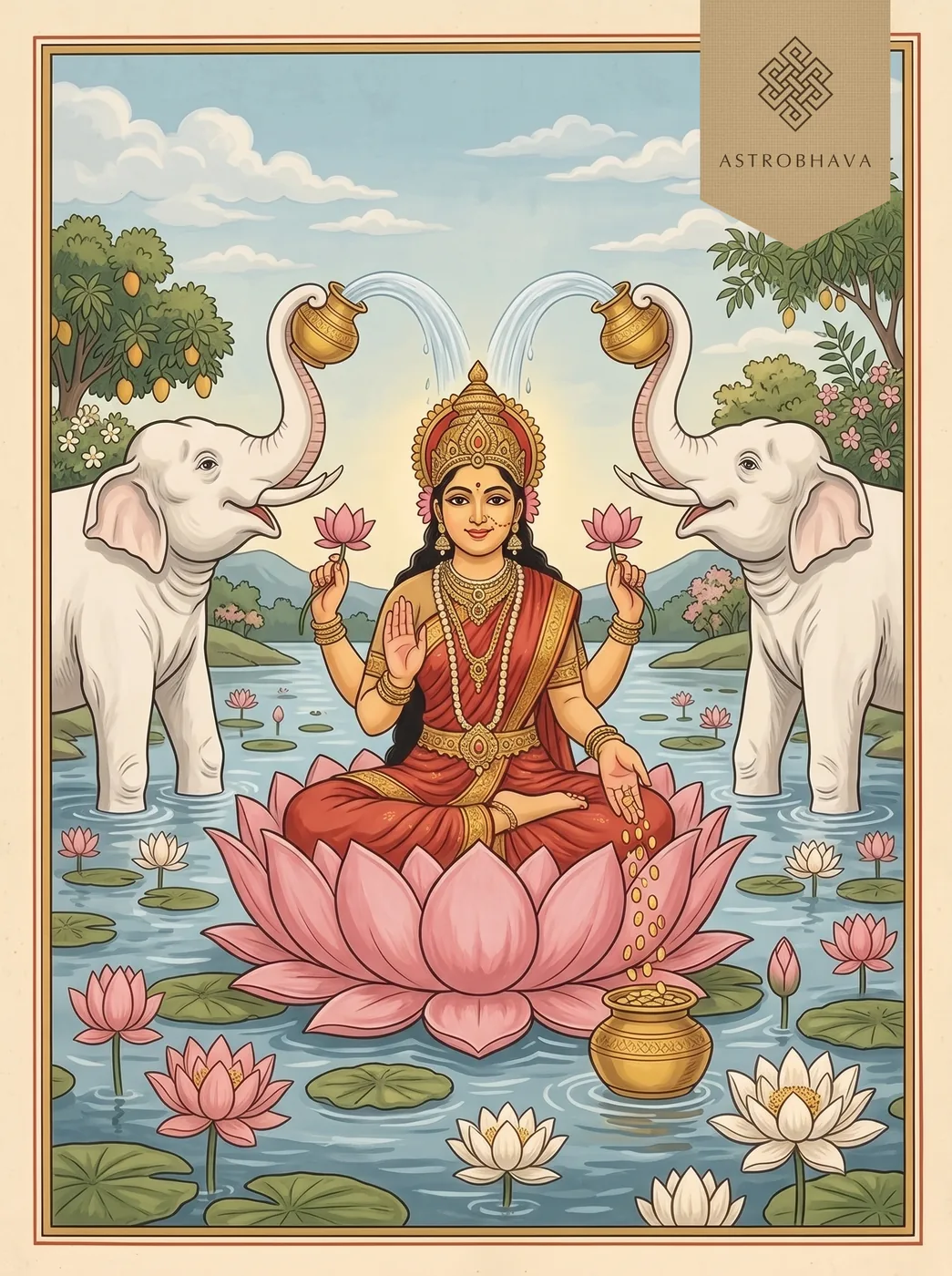
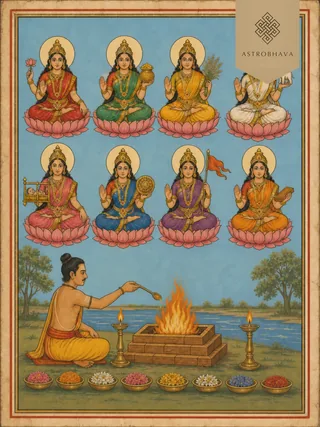
The Ashta Lakshmi Mantra, often searched as the Ashtalakshmi mantra, is eight short name mantras, each saluting one form of Lakshmi as 'Om ... lakshmyai namah'. Adi Lakshmi is the primordial goddess, the first form from which tradition says the others issue. Dhanya Lakshmi is the Lakshmi of grain and harvest, the food that sustains a household. Dhairya Lakshmi, also called Veera Lakshmi, is the form of courage and of steadiness in hardship. Gaja Lakshmi, bathed by elephants, stands for royal splendour and the wealth of herds. Santana Lakshmi is honoured for children and the continuity of a family line. Vijaya Lakshmi is the form of victory, over rivals and over obstacles in an undertaking. Dhana Lakshmi is wealth in its plainest sense, coins falling from her hand. Aishwarya Lakshmi, whose name comes from ishvara, 'ruler', stands for sovereignty and abundance together. Lakshmi's separate forms are old; grouping exactly these eight as a set of shrines and a sung hymn is a twentieth-century development. No author is named for the mantras.
Old forms, a modern circle of eight
The Sri Suktam, the hymn to Shri among the supplementary verses of the Rigveda, already asks the goddess for cattle, food, gold and offspring, and pictures her announced by the trumpeting of elephants. The image of the goddess on a lotus with two elephants pouring water over her is carved on the railings of the Buddhist site at Bharhut, dated to about 125-100 BCE, and appears on a coin of the Indo-Scythian king Azilises in the first century BCE. What is new is the fixed set of eight. A historian of the Sri Vaishnava tradition has observed that each attribute is found in older literature, but that this particular combination of eight is, as far as can be traced, recent. The idea spread in the twentieth century through a sung hymn and the temples built around it. The best known stands on the shore at Besant Nagar in Chennai: its foundation was laid in January 1974 and it was consecrated on 5 April 1976, with the forms in separate sanctums over four levels. Similar temples have since risen in Hyderabad, the United States and Sydney. The lists themselves still differ. The Chennai temple gives a sanctum to Vidya Lakshmi, the form of learning; other lists, including the one printed on this page, place Aishwarya Lakshmi eighth instead, and some add Saubhagya, Rajya or Vara Lakshmi.
The mantra, in six scripts
- ॐ
- oṃ — Om, the sacred syllable
- आदिलक्ष्म्यै
- ādilakṣmyai — to Adi Lakshmi, the primordial Lakshmi
- नमः
- namaḥ — salutations
Ashtalakshmi Mantra lyrics in full
Eight name mantras, one to each form of Lakshmi, in the order Adi, Dhanya, Dhairya (Veera), Gaja, Santana, Vijaya, Dhana and Aishwarya.
All 8 verses, in Sanskrit, Tamil, Telugu, Kannada, Malayalam and English, each with its meaning. Choose a script:
Download the Ashtalakshmi Mantra PDFAll 8 verses with their meanings, in Sanskrit. Free to print and keep.
ॐ आदिलक्ष्म्यै नमः ।
ௐ ஆதிலக்ஷ்ம்யை நமஃ ।
ఓం ఆదిలక్ష్మ్యై నమః ।
ಓಂ ಆದಿಲಕ್ಷ್ಮ್ಯೈ ನಮಃ ।
ഓം ആദിലക്ഷ്മ്യൈ നമഃ ।
oṃ ādilakṣmyai namaḥ |
Om, salutations to Adi Lakshmi, the primordial Lakshmi.
ॐ धान्यलक्ष्म्यै नमः ।
ௐ தாந்யலக்ஷ்ம்யை நமஃ ।
ఓం ధాన్యలక్ష్మ్యై నమః ।
ಓಂ ಧಾನ್ಯಲಕ್ಷ್ಮ್ಯೈ ನಮಃ ।
ഓം ധാന്യലക്ഷ്മ്യൈ നമഃ ।
oṃ dhānyalakṣmyai namaḥ |
Om, salutations to Dhanya Lakshmi, the Lakshmi of grain and harvest.
ॐ वीरलक्ष्म्यै नमः ।
ௐ வீரலக்ஷ்ம்யை நமஃ ।
ఓం వీరలక్ష్మ్యై నమః ।
ಓಂ ವೀರಲಕ್ಷ್ಮ್ಯೈ ನಮಃ ।
ഓം വീരലക്ഷ്മ്യൈ നമഃ ।
oṃ vīralakṣmyai namaḥ |
Om, salutations to Veera Lakshmi, the Lakshmi of courage (also called Dhairya Lakshmi).
ॐ गजलक्ष्म्यै नमः ।
ௐ கஜலக்ஷ்ம்யை நமஃ ।
ఓం గజలక్ష్మ్యై నమః ।
ಓಂ ಗಜಲಕ್ಷ್ಮ್ಯೈ ನಮಃ ।
ഓം ഗജലക്ഷ്മ്യൈ നമഃ ।
oṃ gajalakṣmyai namaḥ |
Om, salutations to Gaja Lakshmi, the Lakshmi honoured by elephants.
ॐ सन्तानलक्ष्म्यै नमः ।
ௐ ஸந்தாநலக்ஷ்ம்யை நமஃ ।
ఓం సన్తానలక్ష్మ్యై నమః ।
ಓಂ ಸನ್ತಾನಲಕ್ಷ್ಮ್ಯೈ ನಮಃ ।
ഓം സന്താനലക്ഷ്മ്യൈ നമഃ ।
oṃ santānalakṣmyai namaḥ |
Om, salutations to Santana Lakshmi, the Lakshmi of children and progeny.
ॐ विजयलक्ष्म्यै नमः ।
ௐ விஜயலக்ஷ்ம்யை நமஃ ।
ఓం విజయలక్ష్మ్యై నమః ।
ಓಂ ವಿಜಯಲಕ್ಷ್ಮ್ಯೈ ನಮಃ ।
ഓം വിജയലക്ഷ്മ്യൈ നമഃ ।
oṃ vijayalakṣmyai namaḥ |
Om, salutations to Vijaya Lakshmi, the Lakshmi of victory.
ॐ धनलक्ष्म्यै नमः ।
ௐ தநலக்ஷ்ம்யை நமஃ ।
ఓం ధనలక్ష్మ్యై నమః ।
ಓಂ ಧನಲಕ್ಷ್ಮ್ಯೈ ನಮಃ ।
ഓം ധനലക്ഷ്മ്യൈ നമഃ ।
oṃ dhanalakṣmyai namaḥ |
Om, salutations to Dhana Lakshmi, the Lakshmi of wealth.
ॐ ऐश्वर्यलक्ष्म्यै नमः ।
ௐ ஐஶ்வர்யலக்ஷ்ம்யை நமஃ ।
ఓం ఐశ్వర్యలక్ష్మ్యై నమః ।
ಓಂ ಐಶ್ವರ್ಯಲಕ್ಷ್ಮ್ಯೈ ನಮಃ ।
ഓം ഐശ്വര്യലക്ഷ്മ്യൈ നമഃ ।
oṃ aiśvaryalakṣmyai namaḥ |
Om, salutations to Aishwarya Lakshmi, the Lakshmi of prosperity and sovereignty.
The syllable people get wrong
In lakṣmyai, the dative 'to Lakshmi' that ends every name, there is no vowel between the m and the y: it is two syllables, laksh-myai, with the y gliding straight into a diphthong like the English 'eye', not 'lak-shmi-yai' or 'lakshmee-ai'.
When the Ashtalakshmi Mantra is chanted
Weekday. Friday
Questions
Have your chart read before you decide
Chanting is yours to do, and free. But which deity your situation calls for — and whether a mantra alone is the right response — depends on your chart. Sometimes it is; sometimes it is not.
- Over 30 years in the Guru–Sishya Parampara, from the age of five
- He reads every chart himself — 60 minutes, one to one, never delegated
- Charts are read only between sunrise and sunset, following tradition
