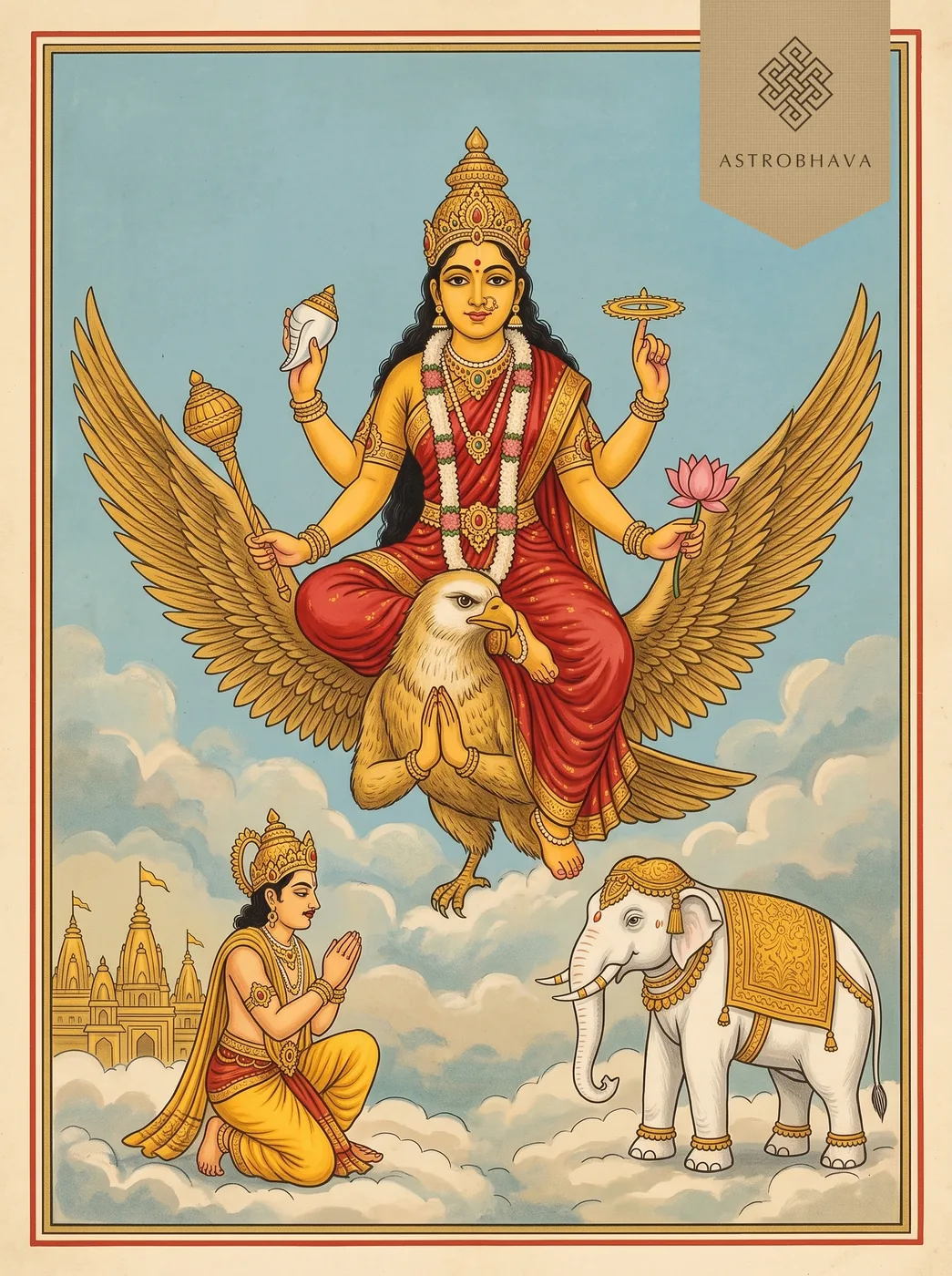
Mahalakshmi Ashtakam
नमस्तेऽस्तु महामाये श्रीपीठे सुरपूजिते । शङ्खचक्रगदाहस्ते महालक्ष्मि नमोऽस्तु ते ॥In Devanagari, Tamil, Telugu, Kannada, Malayalam and English — with the meaning of every word, and the one syllable most people pronounce wrongly.
What the Mahalakshmi Ashtakam is
The Mahalakshmi Ashtakam is eight short couplets of praise to Mahalakshmi, the consort of Vishnu, followed by three verses that state what reciting it brings. The couplets are in the eight-syllable anushtubh metre, and all eight close on the same refrain, mahalakshmi namo'stu te, 'O Mahalakshmi, salutations to you'. The heading printed above verse 1 is indra uvacha, 'Indra said', and its closing colophon calls it the hymn to Sri Mahalakshmi made by Indra. The sequence moves from her appearance to her nature. Verse 1 seats her on the sri-pitha holding conch, discus and mace, Vishnu's own emblems; verse 2 puts her on Garuda as the terror of the demon Kolasura. Verses 3 and 4 list what she grants, from knowledge to both worldly enjoyment and liberation. Verses 5 to 7 turn to philosophy: without beginning or end, the primal shakti, gross, subtle and fierce at once, one with the supreme Brahman. Verse 8 returns to her figure, dressed in white.
Indra, Kolasura and the city of Karavira
Most modern editions say the hymn comes from the Padma Purana and is spoken by Indra. Its printed colophons name Indra as its maker, but none cites a chapter, so the Puranic setting rests on tradition. According to popular retellings, the demon Kolasura had seized heaven and the weapons of the gods were useless against him. They turned to Mahalakshmi, who came out in a warrior form mounted on Garuda and destroyed him with his army, and Indra's praise followed the victory. Verse 2 keeps the memory in a single compound, kolasura-bhayankari, 'she who struck fear into Kolasura', the only enemy the hymn names. A related legend is set at Kolhapur in Maharashtra, still called Karavira locally. The Karveer Mahatmya, a later text told in the voice of Sage Agastya, describes the goddess's war with a demon named Kolhasur. Local tradition adds that he asked her to leave the land to him for a hundred years, misused that time, was killed by her, and with his last wish had the city named after him. The Kolhapur image differs from the hymn's picture: it holds a mace, a shield, a matulinga fruit and a bowl, with a lion behind it.
The mantra, in six scripts
- नमस्तेऽस्तु
- namaste'stu — salutations be to you
- महामाये
- mahāmāye — O great Maya
- श्रीपीठे
- śrīpīṭhe — seated on the auspicious throne
- सुरपूजिते
- surapūjite — worshipped by the gods
- शङ्खचक्रगदाहस्ते
- śaṅkhacakragadāhaste — holding conch, discus and mace
- महालक्ष्मि
- mahālakṣmi — O Mahalakshmi
- नमोऽस्तु
- namo'stu — salutation be
- ते
- te — to you
Mahalakshmi Ashtakam lyrics in full
Eight verses of praise, followed by three on the fruit of reciting the hymn.
All 11 verses, in Sanskrit, Tamil, Telugu, Kannada, Malayalam and English, each with its meaning. Choose a script:
Download the Mahalakshmi Ashtakam PDFAll 11 verses with their meanings, in Sanskrit. Free to print and keep.
नमस्तेऽस्तु महामाये श्रीपीठे सुरपूजिते ।
शङ्खचक्रगदाहस्ते महालक्ष्मि नमोऽस्तु ते ॥
நமஸ்தேஸ்து மஹாமாயே ஶ்ரீபீடே ஸுரபூஜிதே ।
ஶங்கசக்ரகதாஹஸ்தே மஹாலக்ஷ்மி நமோஸ்து தே ॥
నమస్తేఽస్తు మహామాయే శ్రీపీఠే సురపూజితే ।
శఙ్ఖచక్రగదాహస్తే మహాలక్ష్మి నమోఽస్తు తే ॥
ನಮಸ್ತೇಽಸ್ತು ಮಹಾಮಾಯೇ ಶ್ರೀಪೀಠೇ ಸುರಪೂಜಿತೇ ।
ಶಙ್ಖಚಕ್ರಗದಾಹಸ್ತೇ ಮಹಾಲಕ್ಷ್ಮಿ ನಮೋಽಸ್ತು ತೇ ॥
നമസ്തേഽസ്തു മഹാമായേ ശ്രീപീഠേ സുരപൂജിതേ ।
ശങ്ഖചക്രഗദാഹസ്തേ മഹാലക്ഷ്മി നമോഽസ്തു തേ ॥
namaste'stu mahāmāye śrīpīṭhe surapūjite |
śaṅkhacakragadāhaste mahālakṣmi namo'stu te ||
Salutations to you, great Maya, seated on the auspicious throne and worshipped by the gods. Holding conch, discus and mace in your hands, O Mahalakshmi, salutations to you.
नमस्ते गरुडारूढे कोलासुरभयङ्करि ।
सर्वपापहरे देवि महालक्ष्मि नमोऽस्तु ते ॥
நமஸ்தே கருடாரூடே கோலாஸுரபயங்கரி ।
ஸர்வபாபஹரே தேவி மஹாலக்ஷ்மி நமோஸ்து தே ॥
నమస్తే గరుడారూఢే కోలాసురభయఙ్కరి ।
సర్వపాపహరే దేవి మహాలక్ష్మి నమోఽస్తు తే ॥
ನಮಸ್ತೇ ಗರುಡಾರೂಢೇ ಕೋಲಾಸುರಭಯಙ್ಕರಿ ।
ಸರ್ವಪಾಪಹರೇ ದೇವಿ ಮಹಾಲಕ್ಷ್ಮಿ ನಮೋಽಸ್ತು ತೇ ॥
നമസ്തേ ഗരുഡാരൂഢേ കോലാസുരഭയങ്കരി ।
സര്വപാപഹരേ ദേവി മഹാലക്ഷ്മി നമോഽസ്തു തേ ॥
namaste garuḍārūḍhe kolāsurabhayaṅkari |
sarvapāpahare devi mahālakṣmi namo'stu te ||
Salutations to you who ride on Garuda and strike terror into the demon Kolasura. O Goddess who removes all sins, O Mahalakshmi, salutations to you.
सर्वज्ञे सर्ववरदे सर्वदुष्टभयङ्करि ।
सर्वदुःखहरे देवि महालक्ष्मि नमोऽस्तु ते ॥
ஸர்வஜ்ஞே ஸர்வவரதே ஸர்வதுஷ்டபயங்கரி ।
ஸர்வதுஃகஹரே தேவி மஹாலக்ஷ்மி நமோஸ்து தே ॥
సర్వజ్ఞే సర్వవరదే సర్వదుష్టభయఙ్కరి ।
సర్వదుఃఖహరే దేవి మహాలక్ష్మి నమోఽస్తు తే ॥
ಸರ್ವಜ್ಞೇ ಸರ್ವವರದೇ ಸರ್ವದುಷ್ಟಭಯಙ್ಕರಿ ।
ಸರ್ವದುಃಖಹರೇ ದೇವಿ ಮಹಾಲಕ್ಷ್ಮಿ ನಮೋಽಸ್ತು ತೇ ॥
സര്വജ്ഞേ സര്വവരദേ സര്വദുഷ്ടഭയങ്കരി ।
സര്വദുഃഖഹരേ ദേവി മഹാലക്ഷ്മി നമോഽസ്തു തേ ॥
sarvajñe sarvavarade sarvaduṣṭabhayaṅkari |
sarvaduḥkhahare devi mahālakṣmi namo'stu te ||
O all-knowing one, giver of every boon, terror to all the wicked. O Goddess who takes away all sorrow, O Mahalakshmi, salutations to you.
सिद्धिबुद्धिप्रदे देवि भुक्तिमुक्तिप्रदायिनि ।
मन्त्रमूर्ते सदा देवि महालक्ष्मि नमोऽस्तु ते ॥
ஸித்திபுத்திப்ரதே தேவி புக்திமுக்திப்ரதாயிநி ।
மந்த்ரமூர்தே ஸதா தேவி மஹாலக்ஷ்மி நமோஸ்து தே ॥
సిద్ధిబుద్ధిప్రదే దేవి భుక్తిముక్తిప్రదాయిని ।
మన్త్రమూర్తే సదా దేవి మహాలక్ష్మి నమోఽస్తు తే ॥
ಸಿದ್ಧಿಬುದ್ಧಿಪ್ರದೇ ದೇವಿ ಭುಕ್ತಿಮುಕ್ತಿಪ್ರದಾಯಿನಿ ।
ಮನ್ತ್ರಮೂರ್ತೇ ಸದಾ ದೇವಿ ಮಹಾಲಕ್ಷ್ಮಿ ನಮೋಽಸ್ತು ತೇ ॥
സിദ്ധിബുദ്ധിപ്രദേ ദേവി ഭുക്തിമുക്തിപ്രദായിനി ।
മന്ത്രമൂര്തേ സദാ ദേവി മഹാലക്ഷ്മി നമോഽസ്തു തേ ॥
siddhibuddhiprade devi bhuktimuktipradāyini |
mantramūrte sadā devi mahālakṣmi namo'stu te ||
O Goddess who grants success and understanding, who bestows both worldly enjoyment and liberation. O Goddess whose form is always the mantra, O Mahalakshmi, salutations to you.
आद्यन्तरहिते देवि आद्यशक्ति महेश्वरि ।
योगजे योगसम्भूते महालक्ष्मि नमोऽस्तु ते ॥
ஆத்யந்தரஹிதே தேவி ஆத்யஶக்தி மஹேஶ்வரி ।
யோகஜே யோகஸம்பூதே மஹாலக்ஷ்மி நமோஸ்து தே ॥
ఆద్యన్తరహితే దేవి ఆద్యశక్తి మహేశ్వరి ।
యోగజే యోగసమ్భూతే మహాలక్ష్మి నమోఽస్తు తే ॥
ಆದ್ಯನ್ತರಹಿತೇ ದೇವಿ ಆದ್ಯಶಕ್ತಿ ಮಹೇಶ್ವರಿ ।
ಯೋಗಜೇ ಯೋಗಸಮ್ಭೂತೇ ಮಹಾಲಕ್ಷ್ಮಿ ನಮೋಽಸ್ತು ತೇ ॥
ആദ്യന്തരഹിതേ ദേവി ആദ്യശക്തി മഹേശ്വരി ।
യോഗജേ യോഗസമ്ഭൂതേ മഹാലക്ഷ്മി നമോഽസ്തു തേ ॥
ādyantarahite devi ādyaśakti maheśvari |
yogaje yogasambhūte mahālakṣmi namo'stu te ||
O Goddess without beginning or end, primal power, great sovereign. Born of yoga and arising through yoga, O Mahalakshmi, salutations to you.
स्थूलसूक्ष्ममहारौद्रे महाशक्ति महोदरे ।
महापापहरे देवि महालक्ष्मि नमोऽस्तु ते ॥
ஸ்தூலஸூக்ஷ்மமஹாரௌத்ரே மஹாஶக்தி மஹோதரே ।
மஹாபாபஹரே தேவி மஹாலக்ஷ்மி நமோஸ்து தே ॥
స్థూలసూక్ష్మమహారౌద్రే మహాశక్తి మహోదరే ।
మహాపాపహరే దేవి మహాలక్ష్మి నమోఽస్తు తే ॥
ಸ್ಥೂಲಸೂಕ್ಷ್ಮಮಹಾರೌದ್ರೇ ಮಹಾಶಕ್ತಿ ಮಹೋದರೇ ।
ಮಹಾಪಾಪಹರೇ ದೇವಿ ಮಹಾಲಕ್ಷ್ಮಿ ನಮೋಽಸ್ತು ತೇ ॥
സ്ഥൂലസൂക്ഷ്മമഹാരൌദ്രേ മഹാശക്തി മഹോദരേ ।
മഹാപാപഹരേ ദേവി മഹാലക്ഷ്മി നമോഽസ്തു തേ ॥
sthūlasūkṣmamahāraudre mahāśakti mahodare |
mahāpāpahare devi mahālakṣmi namo'stu te ||
O you who are both gross and subtle, and supremely fierce; great power, vast in form. O Goddess who removes great sins, O Mahalakshmi, salutations to you.
पद्मासनस्थिते देवि परब्रह्मस्वरूपिणि ।
परमेशि जगन्मातर्महालक्ष्मि नमोऽस्तु ते ॥
பத்மாஸநஸ்திதே தேவி பரப்ரஹ்மஸ்வரூபிணி ।
பரமேஶி ஜகந்மாதர்மஹாலக்ஷ்மி நமோஸ்து தே ॥
పద్మాసనస్థితే దేవి పరబ్రహ్మస్వరూపిణి ।
పరమేశి జగన్మాతర్మహాలక్ష్మి నమోఽస్తు తే ॥
ಪದ್ಮಾಸನಸ್ಥಿತೇ ದೇವಿ ಪರಬ್ರಹ್ಮಸ್ವರೂಪಿಣಿ ।
ಪರಮೇಶಿ ಜಗನ್ಮಾತರ್ಮಹಾಲಕ್ಷ್ಮಿ ನಮೋಽಸ್ತು ತೇ ॥
പദ്മാസനസ്ഥിതേ ദേവി പരബ്രഹ്മസ്വരൂപിണി ।
പരമേശി ജഗന്മാതര്മഹാലക്ഷ്മി നമോഽസ്തു തേ ॥
padmāsanasthite devi parabrahmasvarūpiṇi |
parameśi jaganmātarmahālakṣmi namo'stu te ||
O Goddess seated on the lotus, whose very nature is the supreme Brahman. Supreme ruler, mother of the world, O Mahalakshmi, salutations to you.
श्वेताम्बरधरे देवि नानालङ्कारभूषिते ।
जगत्स्थिते जगन्मातर्महालक्ष्मि नमोऽस्तु ते ॥
ஶ்வேதாம்பரதரே தேவி நாநாலங்காரபூஷிதே ।
ஜகத்ஸ்திதே ஜகந்மாதர்மஹாலக்ஷ்மி நமோஸ்து தே ॥
శ్వేతామ్బరధరే దేవి నానాలఙ్కారభూషితే ।
జగత్స్థితే జగన్మాతర్మహాలక్ష్మి నమోఽస్తు తే ॥
ಶ್ವೇತಾಮ್ಬರಧರೇ ದೇವಿ ನಾನಾಲಙ್ಕಾರಭೂಷಿತೇ ।
ಜಗತ್ಸ್ಥಿತೇ ಜಗನ್ಮಾತರ್ಮಹಾಲಕ್ಷ್ಮಿ ನಮೋಽಸ್ತು ತೇ ॥
ശ്വേതാമ്ബരധരേ ദേവി നാനാലങ്കാരഭൂഷിതേ ।
ജഗത്സ്ഥിതേ ജഗന്മാതര്മഹാലക്ഷ്മി നമോഽസ്തു തേ ॥
śvetāmbaradhare devi nānālaṅkārabhūṣite |
jagatsthite jaganmātarmahālakṣmi namo'stu te ||
O Goddess clad in white, adorned with many ornaments. You who pervade the world, mother of the world, O Mahalakshmi, salutations to you.
महालक्ष्म्यष्टकं स्तोत्रं यः पठेद्भक्तिमान्नरः ।
सर्वसिद्धिमवाप्नोति राज्यं प्राप्नोति सर्वदा ॥
மஹாலக்ஷ்ம்யஷ்டகம் ஸ்தோத்ரம் யஃ படேத்பக்திமாந்நரஃ ।
ஸர்வஸித்திமவாப்நோதி ராஜ்யம் ப்ராப்நோதி ஸர்வதா ॥
మహాలక్ష్మ్యష్టకం స్తోత్రం యః పఠేద్భక్తిమాన్నరః ।
సర్వసిద్ధిమవాప్నోతి రాజ్యం ప్రాప్నోతి సర్వదా ॥
ಮಹಾಲಕ್ಷ್ಮ್ಯಷ್ಟಕಂ ಸ್ತೋತ್ರಂ ಯಃ ಪಠೇದ್ಭಕ್ತಿಮಾನ್ನರಃ ।
ಸರ್ವಸಿದ್ಧಿಮವಾಪ್ನೋತಿ ರಾಜ್ಯಂ ಪ್ರಾಪ್ನೋತಿ ಸರ್ವದಾ ॥
മഹാലക്ഷ്മ്യഷ്ടകം സ്തോത്രം യഃ പഠേദ്ഭക്തിമാന്നരഃ ।
സര്വസിദ്ധിമവാപ്നോതി രാജ്യം പ്രാപ്നോതി സര്വദാ ॥
mahālakṣmyaṣṭakaṃ stotraṃ yaḥ paṭhedbhaktimānnaraḥ |
sarvasiddhimavāpnoti rājyaṃ prāpnoti sarvadā ||
The verse says that a devoted person who recites this Mahalakshmi Ashtakam gains every accomplishment and always attains sovereignty.
एककाले पठेन्नित्यं महापापविनाशनम् ।
द्विकालं यः पठेन्नित्यं धनधान्यसमन्वितः ॥
ஏககாலே படேந்நித்யம் மஹாபாபவிநாஶநம் ।
த்விகாலம் யஃ படேந்நித்யம் தநதாந்யஸமந்விதஃ ॥
ఏకకాలే పఠేన్నిత్యం మహాపాపవినాశనమ్ ।
ద్వికాలం యః పఠేన్నిత్యం ధనధాన్యసమన్వితః ॥
ಏಕಕಾಲೇ ಪಠೇನ್ನಿತ್ಯಂ ಮಹಾಪಾಪವಿನಾಶನಮ್ ।
ದ್ವಿಕಾಲಂ ಯಃ ಪಠೇನ್ನಿತ್ಯಂ ಧನಧಾನ್ಯಸಮನ್ವಿತಃ ॥
ഏകകാലേ പഠേന്നിത്യം മഹാപാപവിനാശനമ് ।
ദ്വികാലം യഃ പഠേന്നിത്യം ധനധാന്യസമന്വിതഃ ॥
ekakāle paṭhennityaṃ mahāpāpavināśanam |
dvikālaṃ yaḥ paṭhennityaṃ dhanadhānyasamanvitaḥ ||
The verse says that reciting it daily at one time of day destroys great sins, and one who recites it daily at two times is endowed with wealth and grain.
त्रिकालं यः पठेन्नित्यं महाशत्रुविनाशनम् ।
महालक्ष्मीर्भवेन्नित्यं प्रसन्ना वरदा शुभा ॥
த்ரிகாலம் யஃ படேந்நித்யம் மஹாஶத்ருவிநாஶநம் ।
மஹாலக்ஷ்மீர்பவேந்நித்யம் ப்ரஸந்நா வரதா ஶுபா ॥
త్రికాలం యః పఠేన్నిత్యం మహాశత్రువినాశనమ్ ।
మహాలక్ష్మీర్భవేన్నిత్యం ప్రసన్నా వరదా శుభా ॥
ತ್ರಿಕಾಲಂ ಯಃ ಪಠೇನ್ನಿತ್ಯಂ ಮಹಾಶತ್ರುವಿನಾಶನಮ್ ।
ಮಹಾಲಕ್ಷ್ಮೀರ್ಭವೇನ್ನಿತ್ಯಂ ಪ್ರಸನ್ನಾ ವರದಾ ಶುಭಾ ॥
ത്രികാലം യഃ പഠേന്നിത്യം മഹാശത്രുവിനാശനമ് ।
മഹാലക്ഷ്മീര്ഭവേന്നിത്യം പ്രസന്നാ വരദാ ശുഭാ ॥
trikālaṃ yaḥ paṭhennityaṃ mahāśatruvināśanam |
mahālakṣmīrbhavennityaṃ prasannā varadā śubhā ||
The verse says that reciting it daily at three times of day destroys powerful enemies, and that Mahalakshmi remains ever pleased, auspicious and ready to grant boons.
The syllable people get wrong
In garuḍārūḍhe ('riding on Garuda', verse 2) both d-sounds are retroflex, ḍ and ḍh, with the tongue curled back, and the ā and ū are long, so it is said ga-ru-DAA-ROO-dhe. A flat dental 'garudarudhe' with short vowels loses the distinction the text is written with.
When the Mahalakshmi Ashtakam is chanted
Weekday. Friday
Questions
Have your chart read before you decide
Chanting is yours to do, and free. But which deity your situation calls for — and whether a mantra alone is the right response — depends on your chart. Sometimes it is; sometimes it is not.
- Over 30 years in the Guru–Sishya Parampara, from the age of five
- He reads every chart himself — 60 minutes, one to one, never delegated
- Charts are read only between sunrise and sunset, following tradition