Ayushya Suktam
यो ब्रह्मा ब्रह्मण उज्जहार प्राणैः शिरः कृत्तिवासाः पिनाकी । ईशानो देवः स न आयुर्दधातु तस्मै जुहोमि हविषा घृतेन ॥Also known as Yo Brahma Brahmana
In Devanagari, Tamil, Telugu, Kannada, Malayalam and English — with the meaning of every word, and the one syllable most people pronounce wrongly.
 The Ayush Homam, performed for youBook →
What the Ayushya Suktam is
The Ayushya Suktam, the hymn of the life-span in the South Indian Yajurveda chanting books, is eight Vedic mantras in which every offering of ghee is joined to a prayer for long life. Its seers are unnamed and no samhita passage is cited for it; it is known as a homam text, and for that reason is also called a Ghrita Sukta, a hymn of ghee. Verse 1 addresses Ishana, the hide-clad bearer of the Pinaka bow; Verse 2 a radiant one risen from the waters who loosens the nooses of death; Verse 3 the light of Brahman, praised as a golden sun. Verse 4 names Shri, Lakshmi, Ambika and Shashthi, Verse 5 the daughters of Daksha and their families. Verse 6 placates the ancient hosts that cut life short, Verse 7 turns to the One from whom the world arises, and Verse 8 lists every class of gods and ancestors. The text is printed here without accent marks; chanting with the svaras is learned from a teacher.
A birthday rite fed with ghee
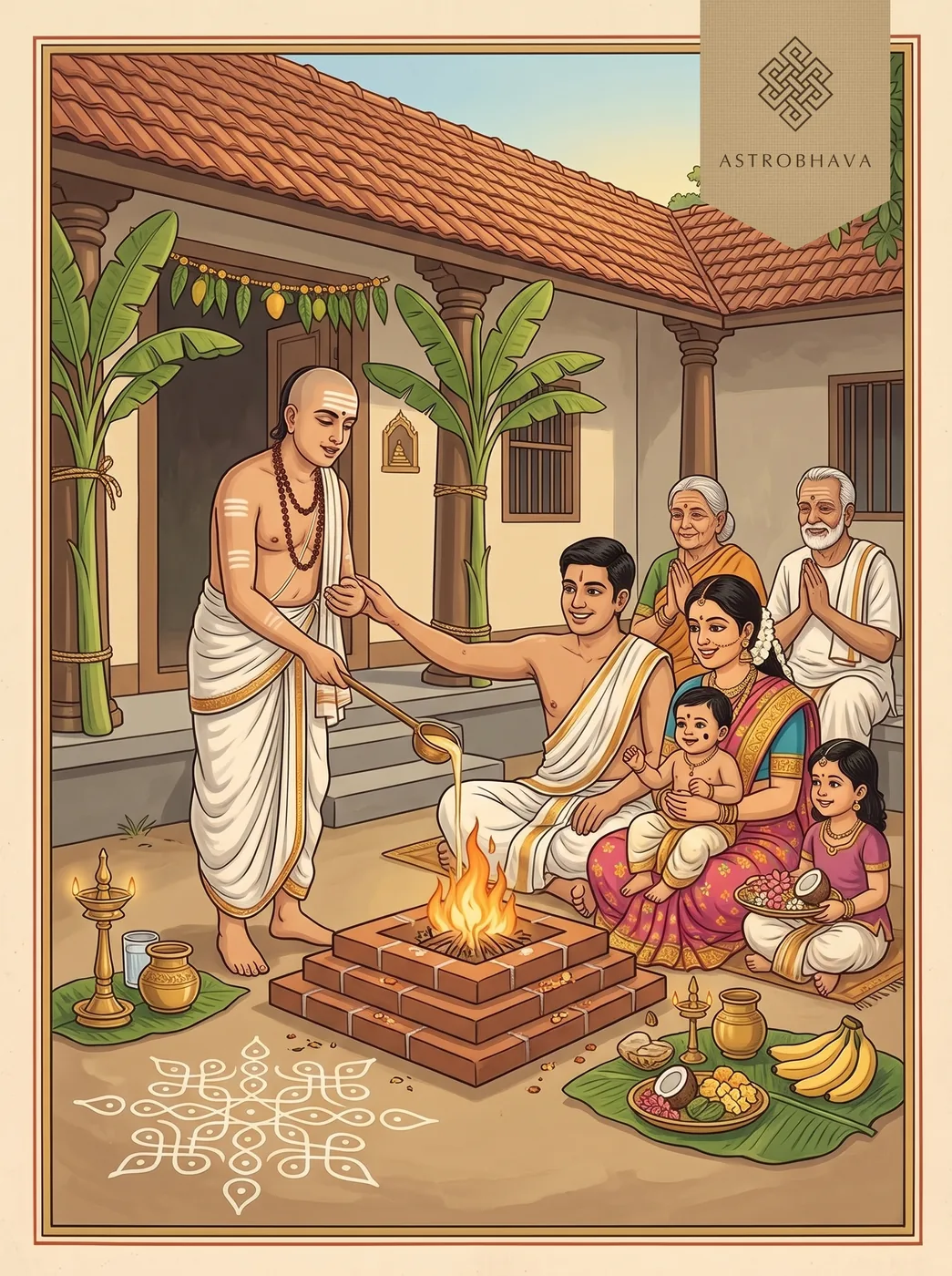
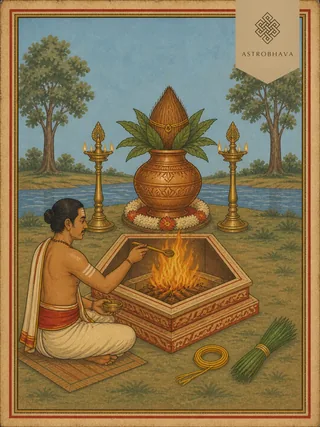
The Ayushya Suktam was made for the fire rather than for silent reading. According to tradition, the rite it accompanies, the Ayushya Homam, is among the household ceremonies set out in the Baudhayana Grihya Sutra (3.7), and the verbs of the hymn say plainly what is happening at the altar: "I offer", "we strengthen with ghee", "may they accept this ghee". In the rite, svaha is added as each offering is poured. The family custom in South India is to hold the Homam on a child's first birthday and afterwards on the day of the birth star each year. The choice of deities fits that setting. Verse 4 invokes Shashthi, whom folk tradition regards as the guardian of infants, and gives her the name Indrasena; the Mahabharata knows her as Devasena, consort of Skanda. Verse 6 asks the life-shortening hosts not to harm "our children, nor our men". The opening line carries a Puranic memory in a single clause, naming Shiva as the one who tore away Brahma's head. The Shiva Purana tells that episode at length as the origin of Bhairava; the sukta recalls it only to establish who holds power over life. Verse 7 then sets the prayer for more years inside the whole span of creation, naming the One into whom the world returns at its end.
The mantra, in six scripts
- यो
- yo — who
- ब्रह्मा
- brahmā — Brahma
- ब्रह्मण
- brahmaṇa — of Brahma
- उज्जहार
- ujjahāra — tore away
- प्राणैः
- prāṇaiḥ — with the life-breaths
- शिरः
- śiraḥ — the head
- कृत्तिवासाः
- kṛttivāsāḥ — clad in a hide
- पिनाकी
- pinākī — bearer of the Pinaka bow
- ईशानो
- īśāno — Ishana, the ruler
- देवः
- devaḥ — god
- स
- sa — he
- न
- na — to us
- आयुर्दधातु
- āyurdadhātu — may grant long life
- तस्मै
- tasmai — to him
- जुहोमि
- juhomi — I offer
- हविषा
- haviṣā — with oblation
- घृतेन
- ghṛtena — with ghee
Ayushya Suktam lyrics in full
The eight verses of the sukta, followed by the Vishnu mantra and the peace chant that most chanting books add.
All 10 verses, in Sanskrit, Tamil, Telugu, Kannada, Malayalam and English, each with its meaning. Choose a script:
Download the Ayushya Suktam PDFAll 10 verses with their meanings, in Sanskrit. Free to print and keep.
यो ब्रह्मा ब्रह्मण उज्जहार प्राणैः शिरः कृत्तिवासाः पिनाकी ।
ईशानो देवः स न आयुर्दधातु तस्मै जुहोमि हविषा घृतेन ॥
யோ ப்ரஹ்மா ப்ரஹ்மண உஜ்ஜஹார ப்ராணைஃ ஶிரஃ க்ருத்திவாஸாஃ பிநாகீ ।
ஈஶாநோ தேவஃ ஸ ந ஆயுர்ததாது தஸ்மை ஜுஹோமி ஹவிஷா க்ருதேந ॥
యో బ్రహ్మా బ్రహ్మణ ఉజ్జహార ప్రాణైః శిరః కృత్తివాసాః పినాకీ ।
ఈశానో దేవః స న ఆయుర్దధాతు తస్మై జుహోమి హవిషా ఘృతేన ॥
ಯೋ ಬ್ರಹ್ಮಾ ಬ್ರಹ್ಮಣ ಉಜ್ಜಹಾರ ಪ್ರಾಣೈಃ ಶಿರಃ ಕೃತ್ತಿವಾಸಾಃ ಪಿನಾಕೀ ।
ಈಶಾನೋ ದೇವಃ ಸ ನ ಆಯುರ್ದಧಾತು ತಸ್ಮೈ ಜುಹೋಮಿ ಹವಿಷಾ ಘೃತೇನ ॥
യോ ബ്രഹ്മാ ബ്രഹ്മണ ഉജ്ജഹാര പ്രാണൈഃ ശിരഃ കൃത്തിവാസാഃ പിനാകീ ।
ഈശാനോ ദേവഃ സ ന ആയുര്ദധാതു തസ്മൈ ജുഹോമി ഹവിഷാ ഘൃതേന ॥
yo brahmā brahmaṇa ujjahāra prāṇaiḥ śiraḥ kṛttivāsāḥ pinākī |
īśāno devaḥ sa na āyurdadhātu tasmai juhomi haviṣā ghṛtena ||
The god clad in a hide, the bearer of the Pinaka bow, who tore away the head of Brahma together with its life-breaths - may that god Ishana grant us long life. To him I offer oblation with ghee.
विभ्राजमानः सरिरस्य मध्या-द्रोचमानो घर्मरुचिर्य आगात् ।
स मृत्युपाशानपनुद्य घोरानिहायुषेणो घृतमत्तु देवः ॥
விப்ராஜமாநஃ ஸரிரஸ்ய மத்யா-த்ரோசமாநோ கர்மருசிர்ய ஆகாத் ।
ஸ ம்ருத்யுபாஶாநபநுத்ய கோராநிஹாயுஷேணோ க்ருதமத்து தேவஃ ॥
విభ్రాజమానః సరిరస్య మధ్యా-ద్రోచమానో ఘర్మరుచిర్య ఆగాత్ ।
స మృత్యుపాశానపనుద్య ఘోరానిహాయుషేణో ఘృతమత్తు దేవః ॥
ವಿಭ್ರಾಜಮಾನಃ ಸರಿರಸ್ಯ ಮಧ್ಯಾ-ದ್ರೋಚಮಾನೋ ಘರ್ಮರುಚಿರ್ಯ ಆಗಾತ್ ।
ಸ ಮೃತ್ಯುಪಾಶಾನಪನುದ್ಯ ಘೋರಾನಿಹಾಯುಷೇಣೋ ಘೃತಮತ್ತು ದೇವಃ ॥
വിഭ്രാജമാനഃ സരിരസ്യ മധ്യാ-ദ്രോചമാനോ ഘര്മരുചിര്യ ആഗാത് ।
സ മൃത്യുപാശാനപനുദ്യ ഘോരാനിഹായുഷേണോ ഘൃതമത്തു ദേവഃ ॥
vibhrājamānaḥ sarirasya madhyā-drocamāno gharmarucirya āgāt |
sa mṛtyupāśānapanudya ghorānihāyuṣeṇo ghṛtamattu devaḥ ||
The radiant one who came forth from the midst of the waters, shining with the glow of heat - may that god drive away the dreadful nooses of death and partake of this ghee here for our long life.
ब्रह्मज्योति-र्ब्रह्म-पत्नीषु गर्भं यमादधात् पुरुरूपं जयन्तम् ।
सुवर्णरम्भग्रह-मर्कमर्च्यं तमायुषे वर्धयामो घृतेन ॥
ப்ரஹ்மஜ்யோதி-ர்ப்ரஹ்ம-பத்நீஷு கர்பம் யமாததாத் புருரூபம் ஜயந்தம் ।
ஸுவர்ணரம்பக்ரஹ-மர்கமர்ச்யம் தமாயுஷே வர்தயாமோ க்ருதேந ॥
బ్రహ్మజ్యోతి-ర్బ్రహ్మ-పత్నీషు గర్భం యమాదధాత్ పురురూపం జయన్తమ్ ।
సువర్ణరమ్భగ్రహ-మర్కమర్చ్యం తమాయుషే వర్ధయామో ఘృతేన ॥
ಬ್ರಹ್ಮಜ್ಯೋತಿ-ರ್ಬ್ರಹ್ಮ-ಪತ್ನೀಷು ಗರ್ಭಂ ಯಮಾದಧಾತ್ ಪುರುರೂಪಂ ಜಯನ್ತಮ್ ।
ಸುವರ್ಣರಮ್ಭಗ್ರಹ-ಮರ್ಕಮರ್ಚ್ಯಂ ತಮಾಯುಷೇ ವರ್ಧಯಾಮೋ ಘೃತೇನ ॥
ബ്രഹ്മജ്യോതി-ര്ബ്രഹ്മ-പത്നീഷു ഗര്ഭം യമാദധാത് പുരുരൂപം ജയന്തമ് ।
സുവര്ണരമ്ഭഗ്രഹ-മര്കമര്ച്യം തമായുഷേ വര്ധയാമോ ഘൃതേന ॥
brahmajyoti-rbrahma-patnīṣu garbhaṃ yamādadhāt pururūpaṃ jayantam |
suvarṇarambhagraha-markamarcyaṃ tamāyuṣe vardhayāmo ghṛtena ||
The light of Brahman that placed in the wives of Brahma the embryo of many forms, the victorious one - that golden, shining sun who is worthy of worship we strengthen with ghee for long life.
श्रियं लक्ष्मी-मौबला-मम्बिकां गां षष्ठीं च यामिन्द्रसेनेत्युदाहुः ।
तां विद्यां ब्रह्मयोनिग्ं सरूपामिहायुषे तर्पयामो घृतेन ॥
ஶ்ரியம் லக்ஷ்மீ-மௌபலா-மம்பிகாம் காம் ஷஷ்டீம் ச யாமிந்த்ரஸேநேத்யுதாஹுஃ ।
தாம் வித்யாம் ப்ரஹ்மயோநிக்ம் ஸரூபாமிஹாயுஷே தர்பயாமோ க்ருதேந ॥
శ్రియం లక్ష్మీ-మౌబలా-మమ్బికాం గాం షష్ఠీం చ యామిన్ద్రసేనేత్యుదాహుః ।
తాం విద్యాం బ్రహ్మయోనిగ్ం సరూపామిహాయుషే తర్పయామో ఘృతేన ॥
ಶ್ರಿಯಂ ಲಕ್ಷ್ಮೀ-ಮೌಬಲಾ-ಮಮ್ಬಿಕಾಂ ಗಾಂ ಷಷ್ಠೀಂ ಚ ಯಾಮಿನ್ದ್ರಸೇನೇತ್ಯುದಾಹುಃ ।
ತಾಂ ವಿದ್ಯಾಂ ಬ್ರಹ್ಮಯೋನಿಗ್ಂ ಸರೂಪಾಮಿಹಾಯುಷೇ ತರ್ಪಯಾಮೋ ಘೃತೇನ ॥
ശ്രിയം ലക്ഷ്മീ-മൌബലാ-മമ്ബികാം ഗാം ഷഷ്ഠീം ച യാമിന്ദ്രസേനേത്യുദാഹുഃ ।
താം വിദ്യാം ബ്രഹ്മയോനിഗ്ം സരൂപാമിഹായുഷേ തര്പയാമോ ഘൃതേന ॥
śriyaṃ lakṣmī-maubalā-mambikāṃ gāṃ ṣaṣṭhīṃ ca yāmindrasenetyudāhuḥ |
tāṃ vidyāṃ brahmayonigṃ sarūpāmihāyuṣe tarpayāmo ghṛtena ||
Shri, Lakshmi, Aubala, Ambika, the Cow, and Shashthi whom they call Indrasena - that Vidya, born of Brahman and of like form, we satisfy here with ghee for long life.
दाक्षायण्यः सर्वयोन्यः स योन्यः सहस्रशो विश्वरूपा विरूपाः ।
ससूनवः सपतयः सयूथ्या आयुषेणो घृतमिदं जुषन्ताम् ॥
தாக்ஷாயண்யஃ ஸர்வயோந்யஃ ஸ யோந்யஃ ஸஹஸ்ரஶோ விஶ்வரூபா விரூபாஃ ।
ஸஸூநவஃ ஸபதயஃ ஸயூத்யா ஆயுஷேணோ க்ருதமிதம் ஜுஷந்தாம் ॥
దాక్షాయణ్యః సర్వయోన్యః స యోన్యః సహస్రశో విశ్వరూపా విరూపాః ।
ససూనవః సపతయః సయూథ్యా ఆయుషేణో ఘృతమిదం జుషన్తామ్ ॥
ದಾಕ್ಷಾಯಣ್ಯಃ ಸರ್ವಯೋನ್ಯಃ ಸ ಯೋನ್ಯಃ ಸಹಸ್ರಶೋ ವಿಶ್ವರೂಪಾ ವಿರೂಪಾಃ ।
ಸಸೂನವಃ ಸಪತಯಃ ಸಯೂಥ್ಯಾ ಆಯುಷೇಣೋ ಘೃತಮಿದಂ ಜುಷನ್ತಾಮ್ ॥
ദാക്ഷായണ്യഃ സര്വയോന്യഃ സ യോന്യഃ സഹസ്രശോ വിശ്വരൂപാ വിരൂപാഃ ।
സസൂനവഃ സപതയഃ സയൂഥ്യാ ആയുഷേണോ ഘൃതമിദം ജുഷന്താമ് ॥
dākṣāyaṇyaḥ sarvayonyaḥ sa yonyaḥ sahasraśo viśvarūpā virūpāḥ |
sasūnavaḥ sapatayaḥ sayūthyā āyuṣeṇo ghṛtamidaṃ juṣantām ||
The daughters of Daksha, sources of all beings, with their own offspring, in thousands, of every form and of varied forms - with their sons, their husbands and their hosts, may they accept this ghee for our long life.
दिव्या गणा बहुरूपाः पुराणा आयुश्छिदो नः प्रमथ्नन्तु वीरान् ।
तेभ्यो जुहोमि बहुधा घृतेन मा नः प्रजाग्ं रीरिषो मोत वीरान् ॥
திவ்யா கணா பஹுரூபாஃ புராணா ஆயுஶ்சிதோ நஃ ப்ரமத்நந்து வீராந் ।
தேப்யோ ஜுஹோமி பஹுதா க்ருதேந மா நஃ ப்ரஜாக்ம் ரீரிஷோ மோத வீராந் ॥
దివ్యా గణా బహురూపాః పురాణా ఆయుశ్ఛిదో నః ప్రమథ్నన్తు వీరాన్ ।
తేభ్యో జుహోమి బహుధా ఘృతేన మా నః ప్రజాగ్ం రీరిషో మోత వీరాన్ ॥
ದಿವ್ಯಾ ಗಣಾ ಬಹುರೂಪಾಃ ಪುರಾಣಾ ಆಯುಶ್ಛಿದೋ ನಃ ಪ್ರಮಥ್ನನ್ತು ವೀರಾನ್ ।
ತೇಭ್ಯೋ ಜುಹೋಮಿ ಬಹುಧಾ ಘೃತೇನ ಮಾ ನಃ ಪ್ರಜಾಗ್ಂ ರೀರಿಷೋ ಮೋತ ವೀರಾನ್ ॥
ദിവ്യാ ഗണാ ബഹുരൂപാഃ പുരാണാ ആയുശ്ഛിദോ നഃ പ്രമഥ്നന്തു വീരാന് ।
തേഭ്യോ ജുഹോമി ബഹുധാ ഘൃതേന മാ നഃ പ്രജാഗ്ം രീരിഷോ മോത വീരാന് ॥
divyā gaṇā bahurūpāḥ purāṇā āyuśchido naḥ pramathnantu vīrān |
tebhyo juhomi bahudhā ghṛtena mā naḥ prajāgṃ rīriṣo mota vīrān ||
The divine hosts of many forms, the ancient ones who cut life short and strike down our men - to them I offer ghee in many ways. Do not harm our children, nor our men.
एकः पुरस्तात् य इदं बभूव यतो बभूव भुवनस्य गोपाः ।
यमप्येति भुवनग्ं साम्पराये स नो हविर्घृत-मिहायुषेत्तु देवः ॥
ஏகஃ புரஸ்தாத் ய இதம் பபூவ யதோ பபூவ புவநஸ்ய கோபாஃ ।
யமப்யேதி புவநக்ம் ஸாம்பராயே ஸ நோ ஹவிர்க்ருத-மிஹாயுஷேத்து தேவஃ ॥
ఏకః పురస్తాత్ య ఇదం బభూవ యతో బభూవ భువనస్య గోపాః ।
యమప్యేతి భువనగ్ం సామ్పరాయే స నో హవిర్ఘృత-మిహాయుషేత్తు దేవః ॥
ಏಕಃ ಪುರಸ್ತಾತ್ ಯ ಇದಂ ಬಭೂವ ಯತೋ ಬಭೂವ ಭುವನಸ್ಯ ಗೋಪಾಃ ।
ಯಮಪ್ಯೇತಿ ಭುವನಗ್ಂ ಸಾಮ್ಪರಾಯೇ ಸ ನೋ ಹವಿರ್ಘೃತ-ಮಿಹಾಯುಷೇತ್ತು ದೇವಃ ॥
ഏകഃ പുരസ്താത് യ ഇദം ബഭൂവ യതോ ബഭൂവ ഭുവനസ്യ ഗോപാഃ ।
യമപ്യേതി ഭുവനഗ്ം സാമ്പരായേ സ നോ ഹവിര്ഘൃത-മിഹായുഷേത്തു ദേവഃ ॥
ekaḥ purastāt ya idaṃ babhūva yato babhūva bhuvanasya gopāḥ |
yamapyeti bhuvanagṃ sāmparāye sa no havirghṛta-mihāyuṣettu devaḥ ||
The One who was here before all, from whom the protector of the world came into being, and into whom the world returns at the end - may that god partake here of our oblation of ghee for long life.
वसून् रुद्रा-नादित्यान् मरुतोऽथ साध्यान् ऋभून् यक्षान् गन्धर्वाग्श्च पितॄग्श्च विश्वान् ।
भृगून् सर्पाग्श्चाङ्गिरसोऽथ सर्वान् घृतग्ं हुत्वा स्वायुष्या महयाम शश्वत् ॥
வஸூந் ருத்ரா-நாதித்யாந் மருதோத ஸாத்யாந் ருபூந் யக்ஷாந் கந்தர்வாக்ஶ்ச பித்ரூக்ஶ்ச விஶ்வாந் ।
ப்ருகூந் ஸர்பாக்ஶ்சாங்கிரஸோத ஸர்வாந் க்ருதக்ம் ஹுத்வா ஸ்வாயுஷ்யா மஹயாம ஶஶ்வத் ॥
వసూన్ రుద్రా-నాదిత్యాన్ మరుతోఽథ సాధ్యాన్ ఋభూన్ యక్షాన్ గన్ధర్వాగ్శ్చ పితౄగ్శ్చ విశ్వాన్ ।
భృగూన్ సర్పాగ్శ్చాఙ్గిరసోఽథ సర్వాన్ ఘృతగ్ం హుత్వా స్వాయుష్యా మహయామ శశ్వత్ ॥
ವಸೂನ್ ರುದ್ರಾ-ನಾದಿತ್ಯಾನ್ ಮರುತೋಽಥ ಸಾಧ್ಯಾನ್ ಋಭೂನ್ ಯಕ್ಷಾನ್ ಗನ್ಧರ್ವಾಗ್ಶ್ಚ ಪಿತೄಗ್ಶ್ಚ ವಿಶ್ವಾನ್ ।
ಭೃಗೂನ್ ಸರ್ಪಾಗ್ಶ್ಚಾಙ್ಗಿರಸೋಽಥ ಸರ್ವಾನ್ ಘೃತಗ್ಂ ಹುತ್ವಾ ಸ್ವಾಯುಷ್ಯಾ ಮಹಯಾಮ ಶಶ್ವತ್ ॥
വസൂന് രുദ്രാ-നാദിത്യാന് മരുതോഽഥ സാധ്യാന് ഋഭൂന് യക്ഷാന് ഗന്ധര്വാഗ്ശ്ച പിതൄഗ്ശ്ച വിശ്വാന് ।
ഭൃഗൂന് സര്പാഗ്ശ്ചാങ്ഗിരസോഽഥ സര്വാന് ഘൃതഗ്ം ഹുത്വാ സ്വായുഷ്യാ മഹയാമ ശശ്വത് ॥
vasūn rudrā-nādityān maruto'tha sādhyān ṛbhūn yakṣān gandharvāgśca pitṝgśca viśvān |
bhṛgūn sarpāgścāṅgiraso'tha sarvān ghṛtagṃ hutvā svāyuṣyā mahayāma śaśvat ||
The Vasus, Rudras, Adityas, Maruts and Sadhyas, the Ribhus, Yakshas, Gandharvas and all the ancestors, the Bhrigus, the serpents, the Angirasas and all the rest - having offered ghee, we honour them always for a good long life.
विष्णो त्वं नो अन्तमश्शर्मयच्छ सहन्त्य ।
प्रतेधारा मधुश्चुत उथ्सं दुह्रते अक्षितम् ॥
விஷ்ணோ த்வம் நோ அந்தமஶ்ஶர்மயச்ச ஸஹந்த்ய ।
ப்ரதேதாரா மதுஶ்சுத உத்ஸம் துஹ்ரதே அக்ஷிதம் ॥
విష్ణో త్వం నో అన్తమశ్శర్మయచ్ఛ సహన్త్య ।
ప్రతేధారా మధుశ్చుత ఉథ్సం దుహ్రతే అక్షితమ్ ॥
ವಿಷ್ಣೋ ತ್ವಂ ನೋ ಅನ್ತಮಶ್ಶರ್ಮಯಚ್ಛ ಸಹನ್ತ್ಯ ।
ಪ್ರತೇಧಾರಾ ಮಧುಶ್ಚುತ ಉಥ್ಸಂ ದುಹ್ರತೇ ಅಕ್ಷಿತಮ್ ॥
വിഷ്ണോ ത്വം നോ അന്തമശ്ശര്മയച്ഛ സഹന്ത്യ ।
പ്രതേധാരാ മധുശ്ചുത ഉഥ്സം ദുഹ്രതേ അക്ഷിതമ് ॥
viṣṇo tvaṃ no antamaśśarmayaccha sahantya |
pratedhārā madhuścuta uthsaṃ duhrate akṣitam ||
O Vishnu, conquering one, our nearest friend, grant us shelter. Your streams flowing with honey draw from the spring that never runs dry.
ॐ शान्तिः शान्तिः शान्तिः ॥
ௐ ஶாந்திஃ ஶாந்திஃ ஶாந்திஃ ॥
ఓం శాన్తిః శాన్తిః శాన్తిః ॥
ಓಂ ಶಾನ್ತಿಃ ಶಾನ್ತಿಃ ಶಾನ್ತಿಃ ॥
ഓം ശാന്തിഃ ശാന്തിഃ ശാന്തിഃ ॥
oṃ śāntiḥ śāntiḥ śāntiḥ ||
Om. Peace, peace, peace.
The syllable people get wrong
In Verse 4 the word brahmayonigṃ (ब्रह्मयोनिग्ं) is written with the Taittiriya sign for an anusvara before a sibilant; it is said as a soft nasal "gum", brahma-yo-ni-gum, not as a hard g followed by m. The same sound returns in prajāgṃ, bhuvanagṃ and ghṛtagṃ.
When the Ayushya Suktam is chanted
Festival. Ayushya Homam on a birthday or birth-star day
Questions
Have your chart read before you decide
Chanting is yours to do, and free. But which deity your situation calls for — and whether a mantra alone is the right response — depends on your chart. Sometimes it is; sometimes it is not.
- Over 30 years in the Guru–Sishya Parampara, from the age of five
- He reads every chart himself — 60 minutes, one to one, never delegated
- Charts are read only between sunrise and sunset, following tradition
