Brahmam Okkate
तंदनान आहि तंदनान पुरॆ तंदनान भळा तंदनानAlso known as Tandanana Ahi
In Devanagari, Tamil, Telugu, Kannada, Malayalam and English — with the meaning of every word, and the one syllable most people pronounce wrongly.
 The Sudarshana Homam, performed for youBook →
What the Brahmam Okkate is
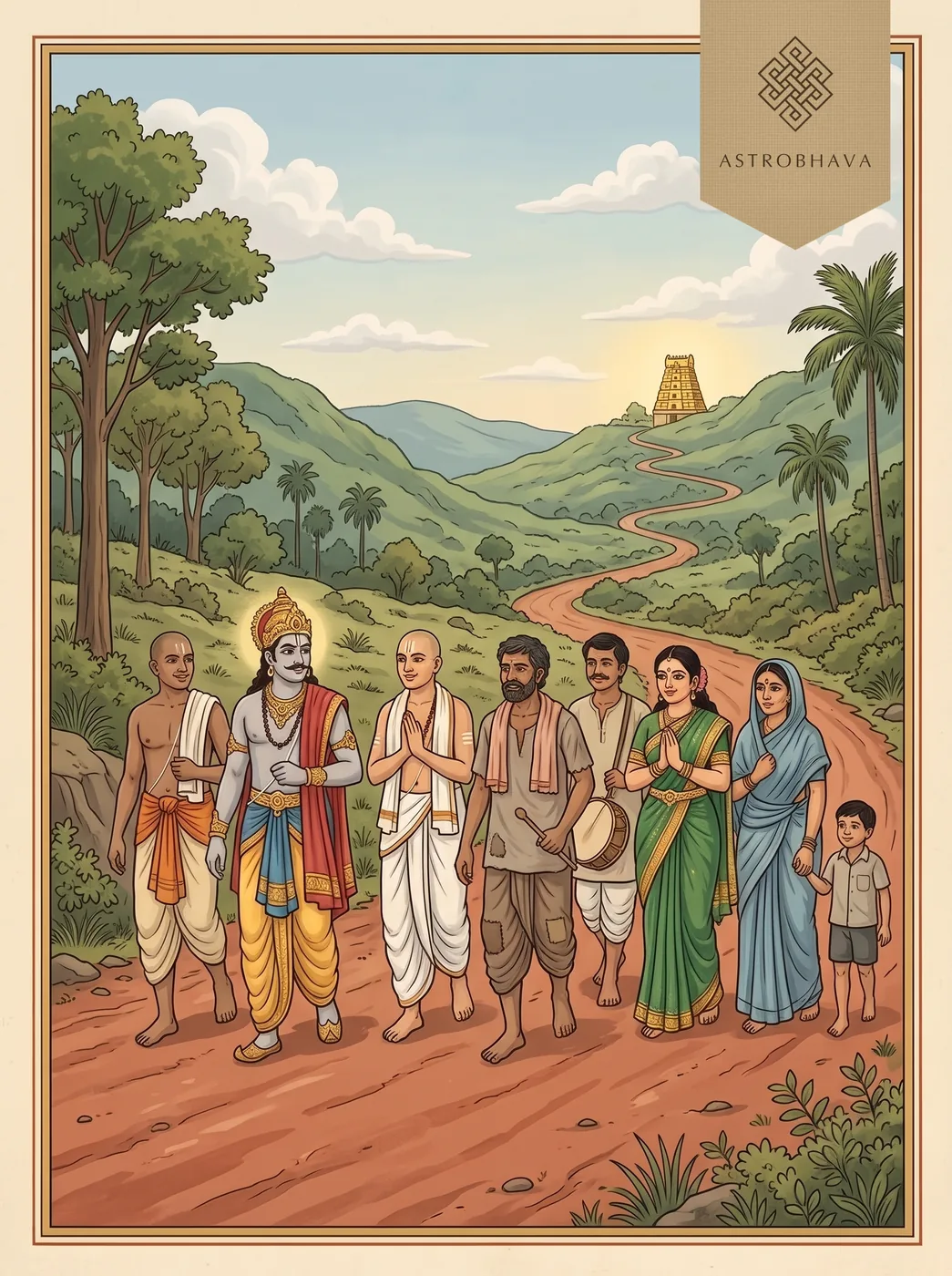
Brahmam Okkate, printed under its opening refrain Tandanana Ahi, is a Telugu sankirtana by Tallapaka Annamacharya in which every line argues that the one Brahman, Sri Hari, lives equally in every creature. It belongs to his adhyatma songs, the songs of spiritual teaching, as distinct from the sringara songs on the love of Venkateswara and Alamelu. The copper plate that preserves it names raga Bauli (Bowli), the raga it is still sung in, to Adi tala. Five charanams follow a pallavi of drum syllables. The first states the thesis: Brahman is one, there is no higher or lower, and Sri Hari is the antaratma, the inner Self, of all. The next three test it on paired opposites: a king's sleep and his servant's, the ground under a Brahmin and an outcaste, hunger for fine food and for spoilt, wind over stench and over fragrance. The fifth sets one sun on an elephant and a dog, and closes on the name of Sri Venkateswara, which shelters the virtuous and wrongdoers alike.
A village drum-song carrying Vedanta
The refrain gives the song its shape. Tandanana, ahi, pure and bhala carry no dictionary meaning; they are the beat-syllables and shouts of the tandana padam, a folk song kept to the dappu, the frame drum of village celebration. Annamacharya took that rough, danceable form and filled it with the central claim of Vedanta, so that people who already sang tandana songs could carry the teaching in their own rhythm. He had learned that teaching at Ahobilam, where, according to the accounts of his life, he studied the Tamil hymns of the Alvars and the Vishishtadvaita of Ramanuja's school under Satakopa Swami. Born into a Smarta family, he became a Sri Vaishnava, and his songs at Tirumala speak from that faith. The second charanam is the one most often quoted. It places the Brahmin and the chandala, the outcaste of medieval society, on one and the same earth, and the king and his servant in one and the same sleep. Annamacharya is counted among the first Telugu poets to speak against the stigma laid on the untouchable castes, and this song, with his E Kulajudainanemi ('whatever caste one is born in'), is the usual evidence. It survives because it was engraved on copper, on plate 177 of the Tallapaka plates. A 2017 recording by two child singers carried it to millions of new listeners.
The mantra, in six scripts
- తందనాన
- taṃdanāna — a drum syllable of the folk beat
- ఆహి
- āhi — ah, a cry of delight
- తందనాన
- taṃdanāna — a drum syllable of the folk beat
- పురె
- pure — come on, a shout of encouragement
- తందనాన
- taṃdanāna — a drum syllable of the folk beat
- భళా
- bhaḷā — bravo, well done
- తందనాన
- taṃdanāna — a drum syllable of the folk beat
Brahmam Okkate lyrics in full
The pallavi and five charanams as engraved on the Tallapaka copper plates, with the famous Brahmam okkate lines opening the first charanam.
All 6 verses, in Sanskrit, Tamil, Telugu, Kannada, Malayalam and English, each with its meaning. Choose a script:
Download the Brahmam Okkate PDFAll 6 verses with their meanings, in Sanskrit. Free to print and keep.
तंदनान आहि तंदनान पुरॆ
तंदनान भळा तंदनान
தம்தநாந ஆஹி தம்தநாந புரெ
தம்தநாந பளா தம்தநாந
తందనాన ఆహి తందనాన పురె
తందనాన భళా తందనాన
ತಂದನಾನ ಆಹಿ ತಂದನಾನ ಪುರೆ
ತಂದನಾನ ಭಳಾ ತಂದನಾನ
തംദനാന ആഹി തംദനാന പുരെ
തംദനാന ഭളാ തംദനാന
taṃdanāna āhi taṃdanāna pure
taṃdanāna bhaḷā taṃdanāna
Tandanana, ahi! Tandanana, pure! Tandanana, bhala! These are the rhythm syllables and cries of delight of a folk work-song, sung here in joy.
ब्रह्ममॊक्कटे परब्रह्ममॊक्कटॆ पर
परब्रह्ममॊकटे परब्रह्ममॊक्कटे
कंदुवगु हीनाधिकमुलिंदु लेवु
अंदरिकि श्रीहरे अंतरात्म
इंदुलो जंतुकुल मिंता नॊकटे
अंदरिकि श्रीहरे अंतरात्म
ப்ரஹ்மமொக்கடே பரப்ரஹ்மமொக்கடெ பர
பரப்ரஹ்மமொகடே பரப்ரஹ்மமொக்கடே
கம்துவகு ஹீநாதிகமுலிம்து லேவு
அம்தரிகி ஶ்ரீஹரே அம்தராத்ம
இம்துலோ ஜம்துகுல மிம்தா நொகடே
அம்தரிகி ஶ்ரீஹரே அம்தராத்ம
బ్రహ్మమొక్కటే పరబ్రహ్మమొక్కటె పర
పరబ్రహ్మమొకటే పరబ్రహ్మమొక్కటే
కందువగు హీనాధికములిందు లేవు
అందరికి శ్రీహరే అంతరాత్మ
ఇందులో జంతుకుల మింతా నొకటే
అందరికి శ్రీహరే అంతరాత్మ
ಬ್ರಹ್ಮಮೊಕ್ಕಟೇ ಪರಬ್ರಹ್ಮಮೊಕ್ಕಟೆ ಪರ
ಪರಬ್ರಹ್ಮಮೊಕಟೇ ಪರಬ್ರಹ್ಮಮೊಕ್ಕಟೇ
ಕಂದುವಗು ಹೀನಾಧಿಕಮುಲಿಂದು ಲೇವು
ಅಂದರಿಕಿ ಶ್ರೀಹರೇ ಅಂತರಾತ್ಮ
ಇಂದುಲೋ ಜಂತುಕುಲ ಮಿಂತಾ ನೊಕಟೇ
ಅಂದರಿಕಿ ಶ್ರೀಹರೇ ಅಂತರಾತ್ಮ
ബ്രഹ്മമൊക്കടേ പരബ്രഹ്മമൊക്കടെ പര
പരബ്രഹ്മമൊകടേ പരബ്രഹ്മമൊക്കടേ
കംദുവഗു ഹീനാധികമുലിംദു ലേവു
അംദരികി ശ്രീഹരേ അംതരാത്മ
ഇംദുലോ ജംതുകുല മിംതാ നൊകടേ
അംദരികി ശ്രീഹരേ അംതരാത്മ
brahmamokkaṭē parabrahmamokkaṭe para
parabrahmamokaṭē parabrahmamokkaṭē
kaṃduvagu hīnādhikamuliṃdu lēvu
aṃdariki śrīharē aṃtarātma
iṃdulō jaṃtukula miṃtā nokaṭē
aṃdariki śrīharē aṃtarātma
Brahman is one; the supreme Brahman is one, the highest Brahman alone is one. Here there is no higher and no lower: for everyone, Sri Hari is the inner Self. All the families of living creatures in this world are one, for in all of them Sri Hari is the indwelling Self.
निंडार राजु निद्रिंचु निद्रयु नॊकटे
अंडने बंटुनिद्रदियु नॊकटे
मॆंडैन ब्राह्मणुडु मॆट्टु भूमि यॊकटे
चंडालुडुंडेटि सरिभूमि यॊकटे
நிம்டார ராஜு நித்ரிம்சு நித்ரயு நொகடே
அம்டநே பம்டுநித்ரதியு நொகடே
மெம்டைந ப்ராஹ்மணுடு மெட்டு பூமி யொகடே
சம்டாலுடும்டேடி ஸரிபூமி யொகடே
నిండార రాజు నిద్రించు నిద్రయు నొకటే
అండనే బంటునిద్రదియు నొకటే
మెండైన బ్రాహ్మణుడు మెట్టు భూమి యొకటే
చండాలుడుండేటి సరిభూమి యొకటే
ನಿಂಡಾರ ರಾಜು ನಿದ್ರಿಂಚು ನಿದ್ರಯು ನೊಕಟೇ
ಅಂಡನೇ ಬಂಟುನಿದ್ರದಿಯು ನೊಕಟೇ
ಮೆಂಡೈನ ಬ್ರಾಹ್ಮಣುಡು ಮೆಟ್ಟು ಭೂಮಿ ಯೊಕಟೇ
ಚಂಡಾಲುಡುಂಡೇಟಿ ಸರಿಭೂಮಿ ಯೊಕಟೇ
നിംഡാര രാജു നിദ്രിംചു നിദ്രയു നൊകടേ
അംഡനേ ബംടുനിദ്രദിയു നൊകടേ
മെംഡൈന ബ്രാഹ്മണുഡു മെട്ടു ഭൂമി യൊകടേ
ചംഡാലുഡുംഡേടി സരിഭൂമി യൊകടേ
niṃḍāra rāju nidriṃcu nidrayu nokaṭē
aṃḍanē baṃṭunidradiyu nokaṭē
meṃḍaina brāhmaṇuḍu meṭṭu bhūmi yokaṭē
caṃḍāluḍuṃḍēṭi saribhūmi yokaṭē
The sleep a king sleeps in his full splendour is one, and the sleep of the servant at his side is that same sleep. The ground a high-born Brahmin walks on is one, and the ground where an outcaste lives is the very same earth.
अनुगुदेवतलकुनु अलकामसुख मॊकटे
घनकीटपशुवुलकु कामसुख मॊकटे
दिन महोरात्रमुलु तॆगि धनाढ्युन कॊकटे
वॊनर निरुँबेदकुनु वॊक्कटे अवियु
அநுகுதேவதலகுநு அலகாமஸுக மொகடே
கநகீடபஶுவுலகு காமஸுக மொகடே
திந மஹோராத்ரமுலு தெகி தநாட்யுந கொகடே
வொநர நிரும்பேதகுநு வொக்கடே அவியு
అనుగుదేవతలకును అలకామసుఖ మొకటే
ఘనకీటపశువులకు కామసుఖ మొకటే
దిన మహోరాత్రములు తెగి ధనాఢ్యున కొకటే
వొనర నిరుఁబేదకును వొక్కటే అవియు
ಅನುಗುದೇವತಲಕುನು ಅಲಕಾಮಸುಖ ಮೊಕಟೇ
ಘನಕೀಟಪಶುವುಲಕು ಕಾಮಸುಖ ಮೊಕಟೇ
ದಿನ ಮಹೋರಾತ್ರಮುಲು ತೆಗಿ ಧನಾಢ್ಯುನ ಕೊಕಟೇ
ವೊನರ ನಿರುಁಬೇದಕುನು ವೊಕ್ಕಟೇ ಅವಿಯು
അനുഗുദേവതലകുനു അലകാമസുഖ മൊകടേ
ഘനകീടപശുവുലകു കാമസുഖ മൊകടേ
ദിന മഹോരാത്രമുലു തെഗി ധനാഢ്യുന കൊകടേ
വൊനര നിരുഁബേദകുനു വൊക്കടേ അവിയു
anugudēvatalakunu alakāmasukha mokaṭē
ghanakīṭapaśuvulaku kāmasukha mokaṭē
dina mahōrātramulu tegi dhanāḍhyuna kokaṭē
vonara niruṃbēdakunu vokkaṭē aviyu
The pleasure of desire is one for the beloved gods and one for insects and beasts. Day and night pass alike for the rich man, and they pass in the same way for the poorest of the poor.
कॊरलि शिष्टान्नमुलु गॊनु नाँकलॊकटे
तिरुगु दुष्टान्नमुलु दिनु नाँकलॊकटे
परग दुर्गंधमुलपै वायुवु नॊकटे
वरुसँ बरिमळमुपै वायुवु नॊकटे
கொரலி ஶிஷ்டாந்நமுலு கொநு நாம்கலொகடே
திருகு துஷ்டாந்நமுலு திநு நாம்கலொகடே
பரக துர்கம்தமுலபை வாயுவு நொகடே
வருஸம் பரிமளமுபை வாயுவு நொகடே
కొరలి శిష్టాన్నములు గొను నాఁకలొకటే
తిరుగు దుష్టాన్నములు దిను నాఁకలొకటే
పరగ దుర్గంధములపై వాయువు నొకటే
వరుసఁ బరిమళముపై వాయువు నొకటే
ಕೊರಲಿ ಶಿಷ್ಟಾನ್ನಮುಲು ಗೊನು ನಾಁಕಲೊಕಟೇ
ತಿರುಗು ದುಷ್ಟಾನ್ನಮುಲು ದಿನು ನಾಁಕಲೊಕಟೇ
ಪರಗ ದುರ್ಗಂಧಮುಲಪೈ ವಾಯುವು ನೊಕಟೇ
ವರುಸಁ ಬರಿಮಳಮುಪೈ ವಾಯುವು ನೊಕಟೇ
കൊരലി ശിഷ്ടാന്നമുലു ഗൊനു നാഁകലൊകടേ
തിരുഗു ദുഷ്ടാന്നമുലു ദിനു നാഁകലൊകടേ
പരഗ ദുര്ഗംധമുലപൈ വായുവു നൊകടേ
വരുസഁ ബരിമളമുപൈ വായുവു നൊകടേ
korali śiṣṭānnamulu gonu nāṃkalokaṭē
tirugu duṣṭānnamulu dinu nāṃkalokaṭē
paraga durgaṃdhamulapai vāyuvu nokaṭē
varusaṃ barimaḷamupai vāyuvu nokaṭē
The hunger that seizes fine, pure food is one, and the hunger that eats rough, spoilt food is one. The wind that passes over foul smells is one, and the wind that passes over fragrance is the same.
कडगि येनुँगुमीँदँ गायु यॆंडॊकटे
पुडमि शुनकमुमीँदँ बॊलयु नॆंडॊकटे
कडुँबुण्युलनु पापकर्मुलनु सरिँ गाव
जडियु श्रीवेंकटेश्वरु नाम मॊकटे
கடகி யேநும்குமீம்தம் காயு யெம்டொகடே
புடமி ஶுநகமுமீம்தம் பொலயு நெம்டொகடே
கடும்புண்யுலநு பாபகர்முலநு ஸரிம் காவ
ஜடியு ஶ்ரீவேம்கடேஶ்வரு நாம மொகடே
కడగి యేనుఁగుమీఁదఁ గాయు యెండొకటే
పుడమి శునకముమీఁదఁ బొలయు నెండొకటే
కడుఁబుణ్యులను పాపకర్ములను సరిఁ గావ
జడియు శ్రీవేంకటేశ్వరు నామ మొకటే
ಕಡಗಿ ಯೇನುಁಗುಮೀಁದಁ ಗಾಯು ಯೆಂಡೊಕಟೇ
ಪುಡಮಿ ಶುನಕಮುಮೀಁದಁ ಬೊಲಯು ನೆಂಡೊಕಟೇ
ಕಡುಁಬುಣ್ಯುಲನು ಪಾಪಕರ್ಮುಲನು ಸರಿಁ ಗಾವ
ಜಡಿಯು ಶ್ರೀವೇಂಕಟೇಶ್ವರು ನಾಮ ಮೊಕಟೇ
കഡഗി യേനുഁഗുമീഁദഁ ഗായു യെംഡൊകടേ
പുഡമി ശുനകമുമീഁദഁ ബൊലയു നെംഡൊകടേ
കഡുഁബുണ്യുലനു പാപകര്മുലനു സരിഁ ഗാവ
ജഡിയു ശ്രീവേംകടേശ്വരു നാമ മൊകടേ
kaḍagi yēnuṃgumīṃdaṃ gāyu yeṃḍokaṭē
puḍami śunakamumīṃdaṃ bolayu neṃḍokaṭē
kaḍuṃbuṇyulanu pāpakarmulanu sariṃ gāva
jaḍiyu śrīvēṃkaṭēśvaru nāma mokaṭē
The sun that beats down on an elephant is one, and the sun that falls on a dog on the ground is one. To protect alike the very virtuous and those who have done wrong, the name of Sri Venkateswara is the one refuge.
The syllable people get wrong
The refrain word okkaṭē (in brahmamokkaṭē, 'Brahman is one') has a held double k, a retroflex ṭ made with the tongue curled back, and a long final ē: ok-ka-ṬĒ, not a soft English 'okate'. The printed text also has the single-k form mokaṭē in the second line; both mean the same.
When the Brahmam Okkate is chanted
Weekday. Thursday
Questions
Have your chart read before you decide
Chanting is yours to do, and free. But which deity your situation calls for — and whether a mantra alone is the right response — depends on your chart. Sometimes it is; sometimes it is not.
- Over 30 years in the Guru–Sishya Parampara, from the age of five
- He reads every chart himself — 60 minutes, one to one, never delegated
- Charts are read only between sunrise and sunset, following tradition
