Maa Chandraghanta Mantra
ॐ देवी चन्द्रघण्टायै नमः ॥Also known as Om Devi Chandraghantayai Namah
In Devanagari, Tamil, Telugu, Kannada, Malayalam and English — with the meaning of every word, and the one syllable most people pronounce wrongly.
 The Chandraghanta Homam, performed for youBook →
What the Maa Chandraghanta Mantra is
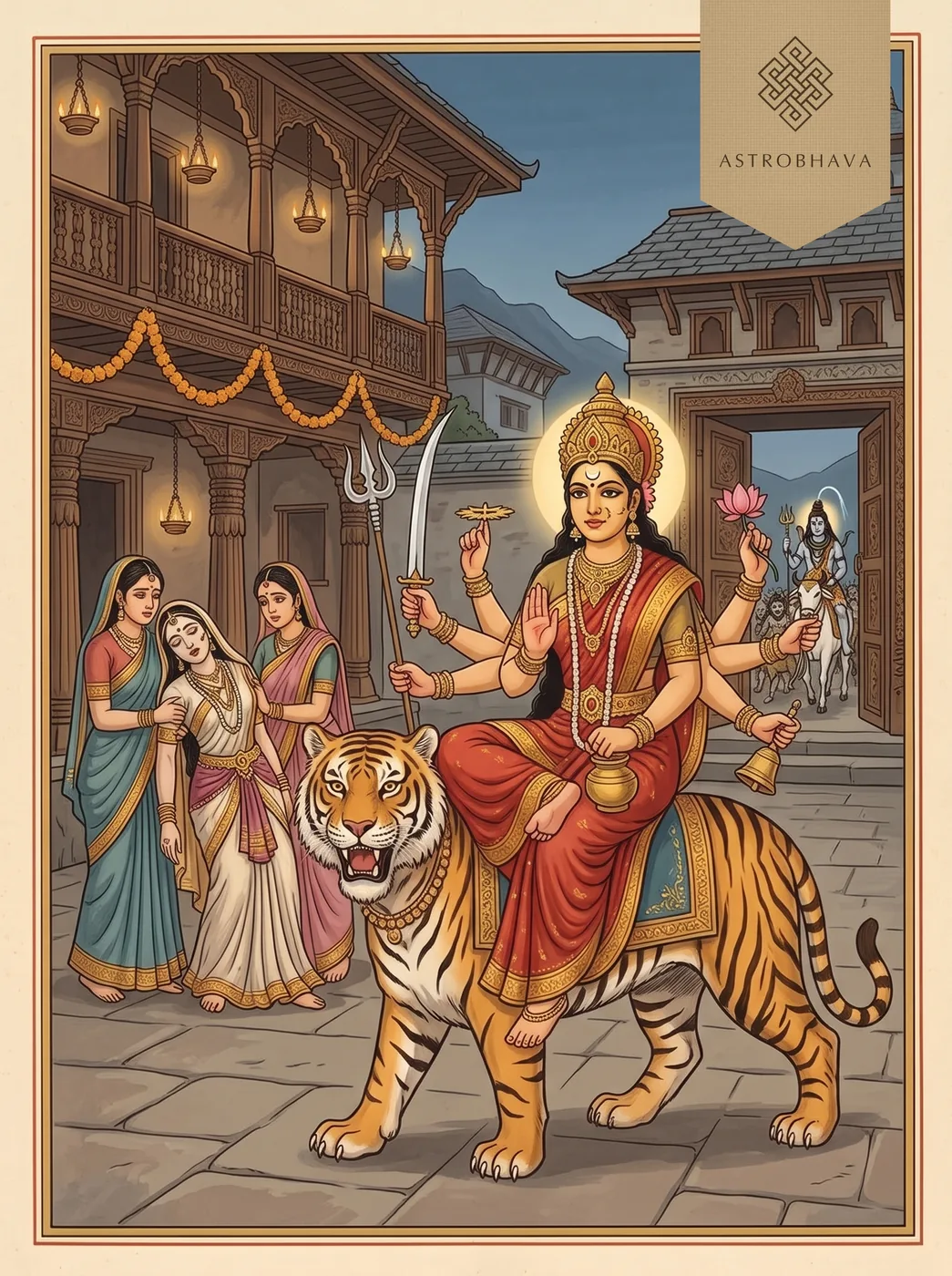
The Maa Chandraghanta mantra is the set of three texts offered to Chandraghanta, the third of the nine Durgas, on the third day of Navaratri. Her name joins chandra, the moon, with ghanta, a bell: her images show a half moon on her brow curved like the mouth of a temple bell. The name mantra, Om Devi Chandraghantayai Namah, sets her name in the dative after Om and her title, closing on namah. The dhyana shloka is her verse in the anonymous Navadurga Stotram, where it stands third, after the verses of Shailaputri and Brahmacharini. It draws her in two strokes, mounted on the foremost of womb-born creatures and armed with weapons of fierce anger, and then states that the Goddess renowned as Chandraghanta spreads her favour over the one who prays. The stuti line takes the frame of the gods' hymn in the fifth chapter of the Devi Mahatmya and places 'Maa Chandraghanta' where that hymn names a state of being. No author is attached to any of the three.
A wedding, a bell and a Kashi lane
No scripture gives Chandraghanta a story of her own. Her place is fixed by the Devi Kavacham, where Brahma, counting the nine Durgas for the sage Markandeya, says 'tritiyam chandraghanteti', the third is called Chandraghanta. The account told about her draws on the wedding of Shiva and Parvati in the Parvati Khanda of the Shiva Purana's Rudra Samhita. There Shiva reaches Himavat's city on his bull, five-faced, ash-smeared, matted hair crowned by the crescent, and Mena, Parvati's mother, faints at the sight. On waking she refuses him as a son-in-law; Narada's pleading fails, until Shiva takes a gracious form and Mena asks his pardon. The Purana itself does not name Chandraghanta in these chapters. Popular Navaratri telling adds that Parvati, seeing her family's distress, took on this armed form with the moon-bell at her brow and asked Shiva to come as a bridegroom her mother could receive. Another telling simply says she began to wear the crescent once married. In Varanasi she is worshipped as Chitraghanta Devi in a narrow lane of the Chowk quarter. Temple tradition there cites the Kashi Khanda, which joins her worship to a bath at the well called Chitra Koop and a visit to Chitragupteshwar, and the shrine draws its largest crowds on the third day of the autumn Navaratri.
The mantra, in six scripts
- ॐ
- oṃ — Om, the sacred syllable
- देवी
- devī — Goddess
- चन्द्रघण्टायै
- candraghaṇṭāyai — to Chandraghanta, she of the moon-bell
- नमः
- namaḥ — salutation
Maa Chandraghanta Mantra lyrics in full
Three short texts for the third night: her name mantra, her verse from the Navadurga Stotram, and the 'ya devi' line set to her name.
All 3 verses, in Sanskrit, Tamil, Telugu, Kannada, Malayalam and English, each with its meaning. Choose a script:
Download the Maa Chandraghanta Mantra PDFAll 3 verses with their meanings, in Sanskrit. Free to print and keep.
ॐ देवी चन्द्रघण्टायै नमः ॥
ௐ தேவீ சந்த்ரகண்டாயை நமஃ ॥
ఓం దేవీ చన్ద్రఘణ్టాయై నమః ॥
ಓಂ ದೇವೀ ಚನ್ದ್ರಘಣ್ಟಾಯೈ ನಮಃ ॥
ഓം ദേവീ ചന്ദ്രഘണ്ടായൈ നമഃ ॥
oṃ devī candraghaṇṭāyai namaḥ ||
Om, salutations to the Goddess Chandraghanta, she who wears the half-moon shaped like a bell on her forehead.
पिण्डजप्रवरारूढा चण्डकोपास्त्रकैर्युता ।
प्रसादं तनुते मह्यं चन्द्रघण्टेति विश्रुता ॥
பிண்டஜப்ரவராரூடா சண்டகோபாஸ்த்ரகைர்யுதா ।
ப்ரஸாதம் தநுதே மஹ்யம் சந்த்ரகண்டேதி விஶ்ருதா ॥
పిణ్డజప్రవరారూఢా చణ్డకోపాస్త్రకైర్యుతా ।
ప్రసాదం తనుతే మహ్యం చన్ద్రఘణ్టేతి విశ్రుతా ॥
ಪಿಣ್ಡಜಪ್ರವರಾರೂಢಾ ಚಣ್ಡಕೋಪಾಸ್ತ್ರಕೈರ್ಯುತಾ ।
ಪ್ರಸಾದಂ ತನುತೇ ಮಹ್ಯಂ ಚನ್ದ್ರಘಣ್ಟೇತಿ ವಿಶ್ರುತಾ ॥
പിണ്ഡജപ്രവരാരൂഢാ ചണ്ഡകോപാസ്ത്രകൈര്യുതാ ।
പ്രസാദം തനുതേ മഹ്യം ചന്ദ്രഘണ്ടേതി വിശ്രുതാ ॥
piṇḍajapravarārūḍhā caṇḍakopāstrakairyutā |
prasādaṃ tanute mahyaṃ candraghaṇṭeti viśrutā ||
She who rides the finest of beasts and holds weapons of fierce wrath, she who is renowned as Chandraghanta, extends her grace to me.
या देवी सर्वभूतेषु माँ चन्द्रघण्टा रूपेण संस्थिता ।
नमस्तस्यै नमस्तस्यै नमस्तस्यै नमो नमः ॥
யா தேவீ ஸர்வபூதேஷு மாம் சந்த்ரகண்டா ரூபேண ஸம்ஸ்திதா ।
நமஸ்தஸ்யை நமஸ்தஸ்யை நமஸ்தஸ்யை நமோ நமஃ ॥
యా దేవీ సర్వభూతేషు మాఁ చన్ద్రఘణ్టా రూపేణ సంస్థితా ।
నమస్తస్యై నమస్తస్యై నమస్తస్యై నమో నమః ॥
ಯಾ ದೇವೀ ಸರ್ವಭೂತೇಷು ಮಾಁ ಚನ್ದ್ರಘಣ್ಟಾ ರೂಪೇಣ ಸಂಸ್ಥಿತಾ ।
ನಮಸ್ತಸ್ಯೈ ನಮಸ್ತಸ್ಯೈ ನಮಸ್ತಸ್ಯೈ ನಮೋ ನಮಃ ॥
യാ ദേവീ സര്വഭൂതേഷു മാഁ ചന്ദ്രഘണ്ടാ രൂപേണ സംസ്ഥിതാ ।
നമസ്തസ്യൈ നമസ്തസ്യൈ നമസ്തസ്യൈ നമോ നമഃ ॥
yā devī sarvabhūteṣu māṃ candraghaṇṭā rūpeṇa saṃsthitā |
namastasyai namastasyai namastasyai namo namaḥ ||
To the Goddess who dwells in all beings in the form of Mother Chandraghanta: salutations to her, salutations to her, salutations to her, again and again salutations.
The syllable people get wrong
Chandraghantayai (candraghaṇṭāyai) ends in -āyai, two syllables only, 'taa-yai', with 'yai' rhyming with 'aisle'; it is not 'Chandraghantaye' or 'Chandraghantayayi'. The ṇṭ in the middle is retroflex, so curl the tongue back for the n and the t together.
When the Maa Chandraghanta Mantra is chanted
Weekday. Friday
Festival. Navaratri, third day (Tritiya)
Questions
Have your chart read before you decide
Chanting is yours to do, and free. But which deity your situation calls for — and whether a mantra alone is the right response — depends on your chart. Sometimes it is; sometimes it is not.
- Over 30 years in the Guru–Sishya Parampara, from the age of five
- He reads every chart himself — 60 minutes, one to one, never delegated
- Charts are read only between sunrise and sunset, following tradition
