Damodarashtakam
नमामीश्वरं सच्चिदानन्दरूपं लसत्कुण्डलं गोकुले भ्राजमानम् । यशोदाभियोलूखलाद्धावमानं परामृष्टमत्यन्ततो द्रुत्य गोप्या ॥Also known as Namamishvaram
In Devanagari, Tamil, Telugu, Kannada, Malayalam and English — with the meaning of every word, and the one syllable most people pronounce wrongly.
What the Damodarashtakam is
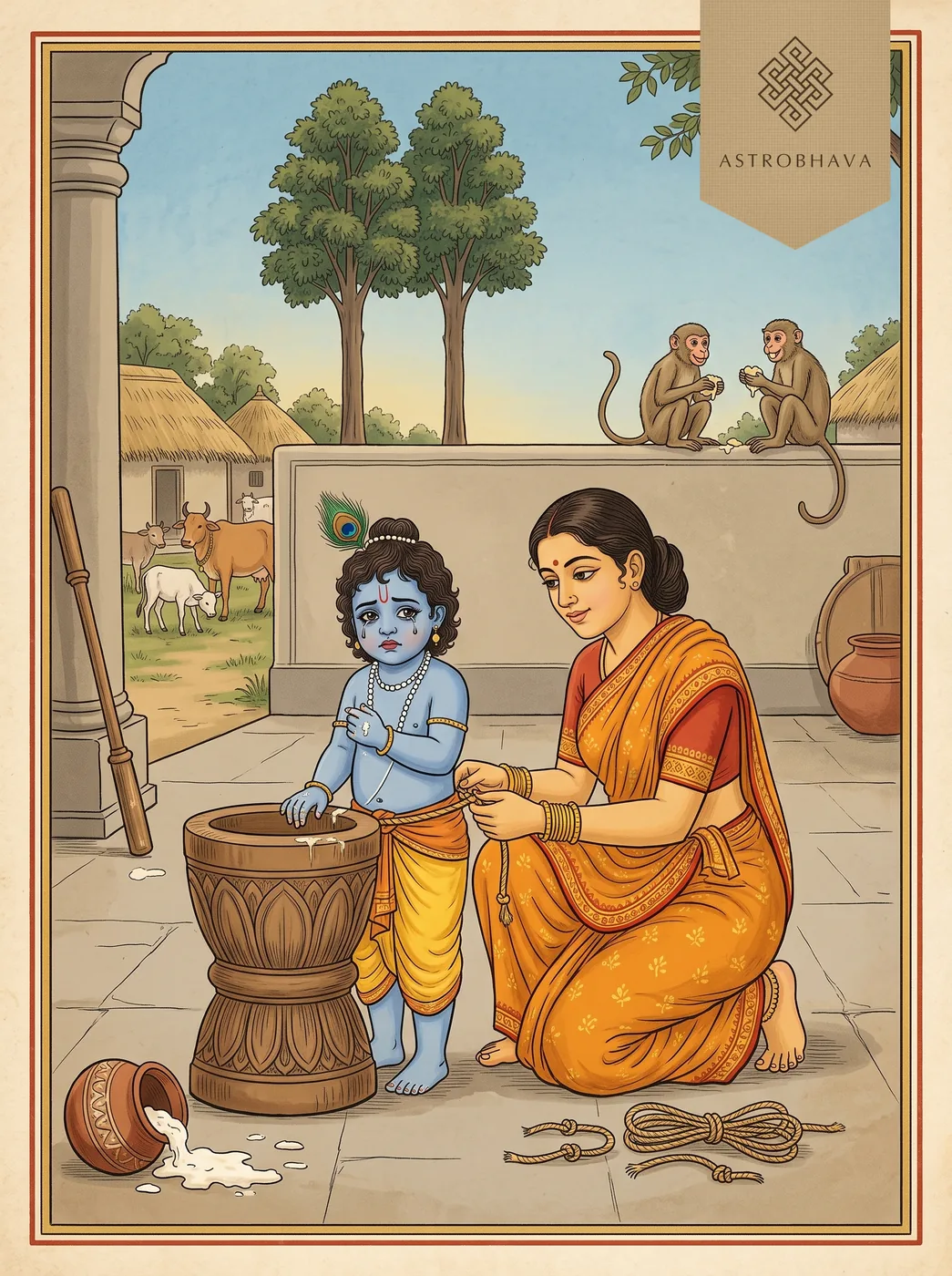
The Damodarashtakam praises Krishna in eight verses under the name Damodara, the child with a rope (dama) around his belly (udara), a name that also appears in the Vishnu Sahasranama. Tradition places it in the Kartika-mahatmya of the Padma Purana, spoken by the sage Satyavrata, and the Hari-bhakti-vilasa quotes it at 16.199-206 with Sanatana Gosvami's Dig-darshini commentary; the text here follows that printing. The verses move like a short scene. Verses 1 and 2 show the chase and the captured child sobbing, the necklace shaking on his three-lined throat. Verse 3 draws the point: he is won by devotion, not by knowledge of his lordship. Verses 4 and 5 decline liberation and ask only that this child's face stay in the mind. Verse 6 pleads for his glance, verse 7 recalls the two sons of Kubera he freed, and verse 8 salutes the rope, the belly that holds the universe, and Radhika.
Two fingers too short at Gokula
The scene the hymn praises is told in the tenth book of the Bhagavata Purana, chapters 9 and 10. Yashoda is churning curd when the child Krishna wants to nurse. She sets him down to save milk boiling over on the fire, and in a temper he cracks the curd pot, slips into a store-room and sits on an upturned mortar handing butter to the monkeys. When he sees her coming he runs; she catches him, and he cries, smearing the black ointment round his eyes. She decides to tie him to the mortar, but every rope she knots on comes up two fingers short, until, seeing her worn out, he lets himself be bound. Still tied, he crawls between two arjuna trees in the yard, the mortar wedges crosswise, and both trees come down. Out step Nalakuvara and Manigriva, sons of Kubera, whom Narada had cursed to stand as trees for a hundred years of the gods after finding them drunk and unclothed. According to tradition, the hymn itself was spoken later by the sage Satyavrata, in a dialogue with Narada and Shaunaka recorded in the Padma Purana. Some scholars instead see it as a product of the Bengal Vaishnava school that has kept it alive.
The mantra, in six scripts
- नमामीश्वरं
- namāmīśvaraṃ — I bow to the Lord
- सच्चिदानन्दरूपं
- saccidānandarūpaṃ — whose form is being, awareness, bliss
- लसत्कुण्डलं
- lasatkuṇḍalaṃ — with swinging earrings
- गोकुले
- gokule — in Gokula
- भ्राजमानम्
- bhrājamānam — shining
- यशोदाभियोलूखलाद्धावमानं
- yaśodābhiyolūkhalād dhāvamānaṃ — running from the mortar, afraid of Yashoda
- परामृष्टमत्यन्ततो
- parāmṛṣṭam atyantato — caught from behind, running even faster
- द्रुत्य
- drutya — having rushed
- गोप्या
- gopyā — by the cowherd mother
Damodarashtakam lyrics in full
The eight verses beginning namamishvaram, as sung daily through the month of Kartika; the Padma Purana's narrative verses around the hymn are not part of the chanted text.
All 8 verses, in Sanskrit, Tamil, Telugu, Kannada, Malayalam and English, each with its meaning. Choose a script:
Download the Damodarashtakam PDFAll 8 verses with their meanings, in Sanskrit. Free to print and keep.
नमामीश्वरं सच्चिदानन्दरूपं लसत्कुण्डलं गोकुले भ्राजमानम् ।
यशोदाभियोलूखलाद्धावमानं परामृष्टमत्यन्ततो द्रुत्य गोप्या ॥
நமாமீஶ்வரம் ஸச்சிதாநந்தரூபம் லஸத்குண்டலம் கோகுலே ப்ராஜமாநம் ।
யஶோதாபியோலூகலாத்தாவமாநம் பராம்ருஷ்டமத்யந்ததோ த்ருத்ய கோப்யா ॥
నమామీశ్వరం సచ్చిదానన్దరూపం లసత్కుణ్డలం గోకులే భ్రాజమానమ్ ।
యశోదాభియోలూఖలాద్ధావమానం పరామృష్టమత్యన్తతో ద్రుత్య గోప్యా ॥
ನಮಾಮೀಶ್ವರಂ ಸಚ್ಚಿದಾನನ್ದರೂಪಂ ಲಸತ್ಕುಣ್ಡಲಂ ಗೋಕುಲೇ ಭ್ರಾಜಮಾನಮ್ ।
ಯಶೋದಾಭಿಯೋಲೂಖಲಾದ್ಧಾವಮಾನಂ ಪರಾಮೃಷ್ಟಮತ್ಯನ್ತತೋ ದ್ರುತ್ಯ ಗೋಪ್ಯಾ ॥
നമാമീശ്വരം സച്ചിദാനന്ദരൂപം ലസത്കുണ്ഡലം ഗോകുലേ ഭ്രാജമാനമ് ।
യശോദാഭിയോലൂഖലാദ്ധാവമാനം പരാമൃഷ്ടമത്യന്തതോ ദ്രുത്യ ഗോപ്യാ ॥
namāmīśvaraṃ saccidānandarūpaṃ lasatkuṇḍalaṃ gokule bhrājamānam |
yaśodābhiyolūkhalād dhāvamānaṃ parāmṛṣṭam atyantato drutya gopyā ||
I bow to the Lord whose form is being, awareness and bliss, whose earrings swing as he shines in Gokula. Afraid of Yashoda, he runs from the mortar, and the cowherd mother, running even faster, catches him from behind.
रुदन्तं मुहुर्नेत्रयुग्मं मृजन्तं कराम्भोजयुग्मेन सातङ्कनेत्रम् ।
मुहुः श्वासकम्पत्रिरेखाङ्ककण्ठस्थितग्रैवं दामोदरं भक्तिबद्धम् ॥
ருதந்தம் முஹுர்நேத்ரயுக்மம் ம்ருஜந்தம் கராம்போஜயுக்மேந ஸாதங்கநேத்ரம் ।
முஹுஃ ஶ்வாஸகம்பத்ரிரேகாங்ககண்டஸ்திதக்ரைவம் தாமோதரம் பக்திபத்தம் ॥
రుదన్తం ముహుర్నేత్రయుగ్మం మృజన్తం కరామ్భోజయుగ్మేన సాతఙ్కనేత్రమ్ ।
ముహుః శ్వాసకమ్పత్రిరేఖాఙ్కకణ్ఠస్థితగ్రైవం దామోదరం భక్తిబద్ధమ్ ॥
ರುದನ್ತಂ ಮುಹುರ್ನೇತ್ರಯುಗ್ಮಂ ಮೃಜನ್ತಂ ಕರಾಮ್ಭೋಜಯುಗ್ಮೇನ ಸಾತಙ್ಕನೇತ್ರಮ್ ।
ಮುಹುಃ ಶ್ವಾಸಕಮ್ಪತ್ರಿರೇಖಾಙ್ಕಕಣ್ಠಸ್ಥಿತಗ್ರೈವಂ ದಾಮೋದರಂ ಭಕ್ತಿಬದ್ಧಮ್ ॥
രുദന്തം മുഹുര്നേത്രയുഗ്മം മൃജന്തം കരാമ്ഭോജയുഗ്മേന സാതങ്കനേത്രമ് ।
മുഹുഃ ശ്വാസകമ്പത്രിരേഖാങ്കകണ്ഠസ്ഥിതഗ്രൈവം ദാമോദരം ഭക്തിബദ്ധമ് ॥
rudantaṃ muhur netrayugmaṃ mṛjantaṃ karāmbhojayugmena sātaṅkanetram |
muhuḥ śvāsakampatrirekhāṅkakaṇṭhasthitagraivaṃ dāmodaraṃ bhaktibaddham ||
He is crying, rubbing both eyes again and again with his two lotus hands, his eyes full of fear. With each sob the necklace on his neck, marked with three lines, trembles. To that Damodara, bound by love, I bow.
इतीदृक्स्वलीलाभिरानन्दकुण्डे स्वघोषं निमज्जन्तमाख्यापयन्तम् ।
तदीयेशितज्ञेषु भक्तैर्जितत्वं पुनः प्रेमतस्तं शतावृत्ति वन्दे ॥
இதீத்ருக்ஸ்வலீலாபிராநந்தகுண்டே ஸ்வகோஷம் நிமஜ்ஜந்தமாக்யாபயந்தம் ।
ததீயேஶிதஜ்ஞேஷு பக்தைர்ஜிதத்வம் புநஃ ப்ரேமதஸ்தம் ஶதாவ்ருத்தி வந்தே ॥
ఇతీదృక్స్వలీలాభిరానన్దకుణ్డే స్వఘోషం నిమజ్జన్తమాఖ్యాపయన్తమ్ ।
తదీయేశితజ్ఞేషు భక్తైర్జితత్వం పునః ప్రేమతస్తం శతావృత్తి వన్దే ॥
ಇತೀದೃಕ್ಸ್ವಲೀಲಾಭಿರಾನನ್ದಕುಣ್ಡೇ ಸ್ವಘೋಷಂ ನಿಮಜ್ಜನ್ತಮಾಖ್ಯಾಪಯನ್ತಮ್ ।
ತದೀಯೇಶಿತಜ್ಞೇಷು ಭಕ್ತೈರ್ಜಿತತ್ವಂ ಪುನಃ ಪ್ರೇಮತಸ್ತಂ ಶತಾವೃತ್ತಿ ವನ್ದೇ ॥
ഇതീദൃക്സ്വലീലാഭിരാനന്ദകുണ്ഡേ സ്വഘോഷം നിമജ്ജന്തമാഖ്യാപയന്തമ് ।
തദീയേശിതജ്ഞേഷു ഭക്തൈര്ജിതത്വം പുനഃ പ്രേമതസ്തം ശതാവൃത്തി വന്ദേ ॥
itīdṛk svalīlābhir ānandakuṇḍe svaghoṣaṃ nimajjantam ākhyāpayantam |
tadīyeśitajñeṣu bhaktair jitatvaṃ punaḥ prematas taṃ śatāvṛtti vande ||
Through childhood play like this he plunges his own village of cowherds into a pool of joy, and shows those who know only his lordship that he is won over by his devotees. With love I bow to him again, a hundred times over.
वरं देव मोक्षं न मोक्षावधिं वा न चान्यं वृणेऽहं वरेशादपीह ।
इदं ते वपुर्नाथ गोपालबालं सदा मे मनस्याविरास्तां किमन्यैः ॥
வரம் தேவ மோக்ஷம் ந மோக்ஷாவதிம் வா ந சாந்யம் வ்ருணேஹம் வரேஶாதபீஹ ।
இதம் தே வபுர்நாத கோபாலபாலம் ஸதா மே மநஸ்யாவிராஸ்தாம் கிமந்யைஃ ॥
వరం దేవ మోక్షం న మోక్షావధిం వా న చాన్యం వృణేఽహం వరేశాదపీహ ।
ఇదం తే వపుర్నాథ గోపాలబాలం సదా మే మనస్యావిరాస్తాం కిమన్యైః ॥
ವರಂ ದೇವ ಮೋಕ್ಷಂ ನ ಮೋಕ್ಷಾವಧಿಂ ವಾ ನ ಚಾನ್ಯಂ ವೃಣೇಽಹಂ ವರೇಶಾದಪೀಹ ।
ಇದಂ ತೇ ವಪುರ್ನಾಥ ಗೋಪಾಲಬಾಲಂ ಸದಾ ಮೇ ಮನಸ್ಯಾವಿರಾಸ್ತಾಂ ಕಿಮನ್ಯೈಃ ॥
വരം ദേവ മോക്ഷം ന മോക്ഷാവധിം വാ ന ചാന്യം വൃണേഽഹം വരേശാദപീഹ ।
ഇദം തേ വപുര്നാഥ ഗോപാലബാലം സദാ മേ മനസ്യാവിരാസ്താം കിമന്യൈഃ ॥
varaṃ deva mokṣaṃ na mokṣāvadhiṃ vā na cānyaṃ vṛṇe'haṃ vareśād apīha |
idaṃ te vapur nātha gopālabālaṃ sadā me manasy āvirāstāṃ kim anyaiḥ ||
O God, though you are the lord of all boons, I ask you neither for liberation, nor for the highest heaven beyond it, nor for any other boon. O Lord, may this form of yours as the little cowherd boy always shine in my mind; what use is anything else?
इदं ते मुखाम्भोजमव्यक्तनीलैर्वृतं कुन्तलैः स्निग्धरक्तैश्च गोप्या ।
मुहुश्चुम्बितं बिम्बरक्ताधरं मे मनस्याविरास्तामलं लक्षलाभैः ॥
இதம் தே முகாம்போஜமவ்யக்தநீலைர்வ்ருதம் குந்தலைஃ ஸ்நிக்தரக்தைஶ்ச கோப்யா ।
முஹுஶ்சும்பிதம் பிம்பரக்தாதரம் மே மநஸ்யாவிராஸ்தாமலம் லக்ஷலாபைஃ ॥
ఇదం తే ముఖామ్భోజమవ్యక్తనీలైర్వృతం కున్తలైః స్నిగ్ధరక్తైశ్చ గోప్యా ।
ముహుశ్చుమ్బితం బిమ్బరక్తాధరం మే మనస్యావిరాస్తామలం లక్షలాభైః ॥
ಇದಂ ತೇ ಮುಖಾಮ್ಭೋಜಮವ್ಯಕ್ತನೀಲೈರ್ವೃತಂ ಕುನ್ತಲೈಃ ಸ್ನಿಗ್ಧರಕ್ತೈಶ್ಚ ಗೋಪ್ಯಾ ।
ಮುಹುಶ್ಚುಮ್ಬಿತಂ ಬಿಮ್ಬರಕ್ತಾಧರಂ ಮೇ ಮನಸ್ಯಾವಿರಾಸ್ತಾಮಲಂ ಲಕ್ಷಲಾಭೈಃ ॥
ഇദം തേ മുഖാമ്ഭോജമവ്യക്തനീലൈര്വൃതം കുന്തലൈഃ സ്നിഗ്ധരക്തൈശ്ച ഗോപ്യാ ।
മുഹുശ്ചുമ്ബിതം ബിമ്ബരക്താധരം മേ മനസ്യാവിരാസ്താമലം ലക്ഷലാഭൈഃ ॥
idaṃ te mukhāmbhojam avyaktanīlair vṛtaṃ kuntalaiḥ snigdharaktaiś ca gopyā |
muhuś cumbitaṃ bimbaraktādharaṃ me manasy āvirāstām alaṃ lakṣalābhaiḥ ||
May this lotus face of yours, framed by glossy, reddish curls of an indescribably deep dark hue, with lips red as the bimba fruit, kissed again and again by the cowherd mother, appear in my mind. Enough of a hundred thousand other gains.
नमो देव दामोदरानन्त विष्णो प्रसीद प्रभो दुःखजालाब्धिमग्नम् ।
कृपादृष्टिवृष्ट्यातिदीनं बतानुगृहाणेश मामज्ञमेध्यक्षिदृश्यः ॥
நமோ தேவ தாமோதராநந்த விஷ்ணோ ப்ரஸீத ப்ரபோ துஃகஜாலாப்திமக்நம் ।
க்ருபாத்ருஷ்டிவ்ருஷ்ட்யாதிதீநம் பதாநுக்ருஹாணேஶ மாமஜ்ஞமேத்யக்ஷித்ருஶ்யஃ ॥
నమో దేవ దామోదరానన్త విష్ణో ప్రసీద ప్రభో దుఃఖజాలాబ్ధిమగ్నమ్ ।
కృపాదృష్టివృష్ట్యాతిదీనం బతానుగృహాణేశ మామజ్ఞమేధ్యక్షిదృశ్యః ॥
ನಮೋ ದೇವ ದಾಮೋದರಾನನ್ತ ವಿಷ್ಣೋ ಪ್ರಸೀದ ಪ್ರಭೋ ದುಃಖಜಾಲಾಬ್ಧಿಮಗ್ನಮ್ ।
ಕೃಪಾದೃಷ್ಟಿವೃಷ್ಟ್ಯಾತಿದೀನಂ ಬತಾನುಗೃಹಾಣೇಶ ಮಾಮಜ್ಞಮೇಧ್ಯಕ್ಷಿದೃಶ್ಯಃ ॥
നമോ ദേവ ദാമോദരാനന്ത വിഷ്ണോ പ്രസീദ പ്രഭോ ദുഃഖജാലാബ്ധിമഗ്നമ് ।
കൃപാദൃഷ്ടിവൃഷ്ട്യാതിദീനം ബതാനുഗൃഹാണേശ മാമജ്ഞമേധ്യക്ഷിദൃശ്യഃ ॥
namo deva dāmodarānanta viṣṇo prasīda prabho duḥkhajālābdhimagnam |
kṛpādṛṣṭivṛṣṭyātidīnaṃ batānugṛhāṇeśa mām ajñam edhy akṣidṛśyaḥ ||
Salutations, O God, Damodara, Ananta, Vishnu. Be pleased, O Master, with me, sunk in an ocean of sorrows. Favour me, wretched and ignorant, with a shower of your merciful glance, O Lord, and become visible to my eyes.
कुवेरात्मजौ बद्धमूर्त्यैव यद्वत् त्वया मोचितौ भक्तिभाजौ कृतौ च ।
तथा प्रेमभक्तिं स्वकां मे प्रयच्छ न मोक्षे ग्रहो मेऽस्ति दामोदरेह ॥
குவேராத்மஜௌ பத்தமூர்த்யைவ யத்வத் த்வயா மோசிதௌ பக்திபாஜௌ க்ருதௌ ச ।
ததா ப்ரேமபக்திம் ஸ்வகாம் மே ப்ரயச்ச ந மோக்ஷே க்ரஹோ மேஸ்தி தாமோதரேஹ ॥
కువేరాత్మజౌ బద్ధమూర్త్యైవ యద్వత్ త్వయా మోచితౌ భక్తిభాజౌ కృతౌ చ ।
తథా ప్రేమభక్తిం స్వకాం మే ప్రయచ్ఛ న మోక్షే గ్రహో మేఽస్తి దామోదరేహ ॥
ಕುವೇರಾತ್ಮಜೌ ಬದ್ಧಮೂರ್ತ್ಯೈವ ಯದ್ವತ್ ತ್ವಯಾ ಮೋಚಿತೌ ಭಕ್ತಿಭಾಜೌ ಕೃತೌ ಚ ।
ತಥಾ ಪ್ರೇಮಭಕ್ತಿಂ ಸ್ವಕಾಂ ಮೇ ಪ್ರಯಚ್ಛ ನ ಮೋಕ್ಷೇ ಗ್ರಹೋ ಮೇಽಸ್ತಿ ದಾಮೋದರೇಹ ॥
കുവേരാത്മജൌ ബദ്ധമൂര്ത്യൈവ യദ്വത് ത്വയാ മോചിതൌ ഭക്തിഭാജൌ കൃതൌ ച ।
തഥാ പ്രേമഭക്തിം സ്വകാം മേ പ്രയച്ഛ ന മോക്ഷേ ഗ്രഹോ മേഽസ്തി ദാമോദരേഹ ॥
kuverātmajau baddhamūrtyaiva yadvat tvayā mocitau bhaktibhājau kṛtau ca |
tathā premabhaktiṃ svakāṃ me prayaccha na mokṣe graho me'sti dāmodareha ||
Just as you, while still bound to the mortar, freed the two sons of Kubera and made them devotees, so give me loving devotion to yourself. O Damodara, I have no longing here for liberation.
नमस्तेऽस्तु दाम्ने स्फुरद्दीप्तिधाम्ने त्वदीयोदरायाथ विश्वस्य धाम्ने ।
नमो राधिकायै त्वदीयप्रियायै नमोऽनन्तलीलाय देवाय तुभ्यम् ॥
நமஸ்தேஸ்து தாம்நே ஸ்புரத்தீப்திதாம்நே த்வதீயோதராயாத விஶ்வஸ்ய தாம்நே ।
நமோ ராதிகாயை த்வதீயப்ரியாயை நமோநந்தலீலாய தேவாய துப்யம் ॥
నమస్తేఽస్తు దామ్నే స్ఫురద్దీప్తిధామ్నే త్వదీయోదరాయాథ విశ్వస్య ధామ్నే ।
నమో రాధికాయై త్వదీయప్రియాయై నమోఽనన్తలీలాయ దేవాయ తుభ్యమ్ ॥
ನಮಸ್ತೇಽಸ್ತು ದಾಮ್ನೇ ಸ್ಫುರದ್ದೀಪ್ತಿಧಾಮ್ನೇ ತ್ವದೀಯೋದರಾಯಾಥ ವಿಶ್ವಸ್ಯ ಧಾಮ್ನೇ ।
ನಮೋ ರಾಧಿಕಾಯೈ ತ್ವದೀಯಪ್ರಿಯಾಯೈ ನಮೋಽನನ್ತಲೀಲಾಯ ದೇವಾಯ ತುಭ್ಯಮ್ ॥
നമസ്തേഽസ്തു ദാമ്നേ സ്ഫുരദ്ദീപ്തിധാമ്നേ ത്വദീയോദരായാഥ വിശ്വസ്യ ധാമ്നേ ।
നമോ രാധികായൈ ത്വദീയപ്രിയായൈ നമോഽനന്തലീലായ ദേവായ തുഭ്യമ് ॥
namaste'stu dāmne sphuraddīptidhāmne tvadīyodarāyātha viśvasya dhāmne |
namo rādhikāyai tvadīyapriyāyai namo'nantalīlāya devāya tubhyam ||
Salutations to the rope that binds you, shining with radiant light, and to your belly, the abode of the whole universe. Salutations to Radhika, your beloved, and salutations to you, the God whose play is endless.
The syllable people get wrong
In verse 1, yaśodābhiyolūkhalād joins yaśodābhiyā, 'out of fear of Yashoda', to ulūkhalāt, 'from the mortar', so the final ā and the u fuse into o. Say ya-SHO-daa-bhi-YO-loo-kha-laad as one flowing word with a breathy kh, not 'abhiya ulukalad' with a plain k.
When the Damodarashtakam is chanted
Weekday. Thursday
Festival. Kartika, also called Damodara month, with the evening lamp offering
Questions
Have your chart read before you decide
Chanting is yours to do, and free. But which deity your situation calls for — and whether a mantra alone is the right response — depends on your chart. Sometimes it is; sometimes it is not.
- Over 30 years in the Guru–Sishya Parampara, from the age of five
- He reads every chart himself — 60 minutes, one to one, never delegated
- Charts are read only between sunrise and sunset, following tradition